#OnThisDay: Erie Canal Opened, 1817

This may be the most unlikely topic addressed yet on my blog. Reading that the Erie Canal opened on this date in 1817 triggered a childhood memory of mine, and perhaps it will do the same for you.

One of the memories I have from elementary school is our class singing a song called “Erie Canal.” If you aren’t familiar with this folk song, you can go to YouTube and listen to Bruce Springsteen singing it. Yes! The Boss! It’s just a fun song about a man and his “mule named Sal” and their “fifteen miles on the Erie Canal.” It has a catchy chorus that we children liked to animate when we sang it.

As a child in North Carolina, I didn’t understand the importance of the Erie Canal. The canal was hundreds of miles away in New York. I’d never been to New York, and I didn’t have much of a concept of it at the time.

If you’re like me, you don’t know the history of the Erie Canal. Never fear. Today’s blog post isn’t going to give a detailed history of the canal, but it will hit the high points. I learned some interesting things about its current use and wanted to share that with you. Some of my readers live in New York or used to, so you probably already know all this. Let me know if you find any glaring errors.

When the concept of the Erie Canal formed

As early 1768 there was talk in New York of connecting the Hudson River to Lake Erie via a canal. The American Revolution delayed any such project.

In 1792, the New York legislature chartered a company to start the canal, but financial problems stymied most of the 363-mile project.

Fast forward to 1817. A study revealed that the Erie Canal would cost nearly $5 million. It would include 77 locks to accommodate the 661-foot rise and fall of the land over that 363 miles.

Ground was broken on July 4, 1817, for the section between Rome and Utica. It wasn’t until that central New York section of the canal was completed in 1819 that the state legislature approved funding for the rest of the canal.

The state was expecting funds from the federal government to make the whole canal possible. President James Madison vetoed the Bonus Bill, which would have given New York funds for internal improvements, on March 3, 1817. With that source of money gone, investors were sought to make up the gap.

The completed Erie Canal opened on October 26, 1825 – 195 years ago today. It opened up commerce from Lake Ontario and Lake Erie to the Hudson River and, therefore, to the Atlantic Ocean. It did wonders for the New York economy until the advent of the railroad. The St. Lawrence Seaway’s creation in 1959 further decreased the commercial need for the canal.

Is the Erie Canal obsolete?

My next question was, “Is the Erie Canal obsolete?” That led me to dig a little deeper.

That’s when I learned that the Erie Canal is still in operation, but only in the warm months. For instance, https://www.cruisingodyssey.com reported the following in an article on May 19, 2020: “The New York State Canal Corporation just announced the schedule for reopening the locks on the historic – and much-travelled – Erie Canal and the system’s other canals in the state. The corporation said it planned to have most of the locks open by July 4, but some may not open until much later.”

That online article continues, “The locks had been scheduled to open on May 15, but maintenance and repair work was stopped a month earlier due to the COVID-19 pandemic and shutdown. That work included seven locks on the Erie Canal and one of the Champlain Canal.”

How can you enjoy the Erie Canal?

I gather from the information gleaned from the Internet that it is primarily used in the summer months today (the months when the water isn’t frozen) by people who enjoy cruising in their boats.

The website https://www.nps.gov/erie/index.htm is a good source of information about the Erie Canal’s history as well as the opportunities for enjoyment offered today by the Erie Canalway National Heritage Corridor.

According to the May 19, 2020 report on https://www.niagara-gazette.com/, the Erie Canal bike tour was cancelled in 2020 but the annual ride is expected to return next July.

That led me to search for information about the Erie Canalway Bike Trail. A bike trail more than 350 miles long sounds wonderful! It goes from Buffalo to Albany, New York.
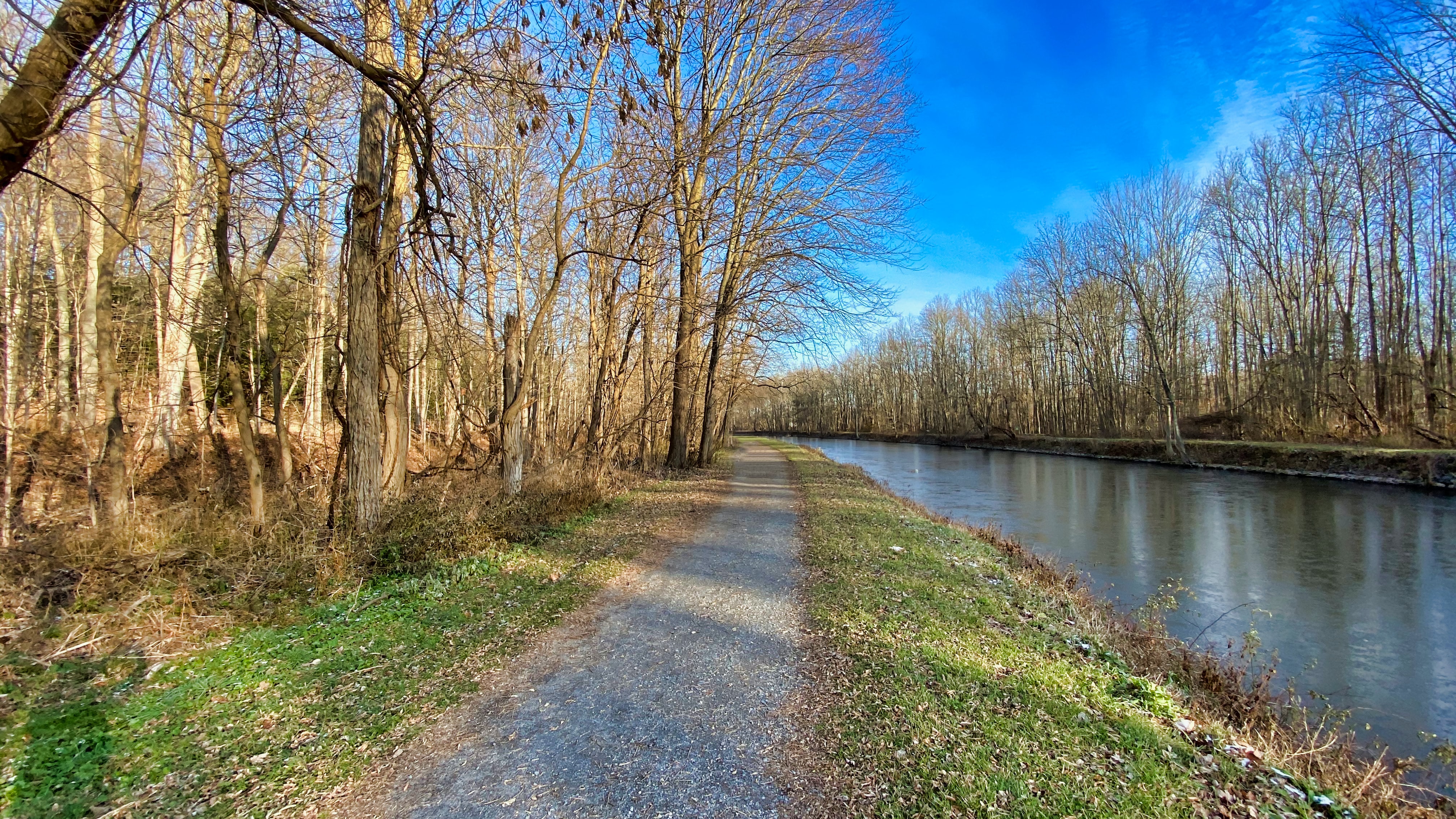
Photo source: Ryan Thorpe on Unsplash.com.

The website https://bikeeriecanal.com/ appears to be a good source of information for those of you who wish to add it to your “bucket list.”

Since my last blog post

My sister, Marie, is graciously helping me proofread my nonfiction book, Harrisburg, Did You Know? All 350 pages. I don’t even have to pay her!

I’m reading several books and taking notes for my November blog posts about them.

I’m counting the days until the 2020 political campaign ads disappear from our mail boxes, TV screens, phones, and all social media. Anyone with me on that?

Until my next blog post

I hope you have more good books to read than you can possibly read.

I hope you have satisfying creative time this week.

Continue to wear a mask and stay safe and well during this pandemic. For the sake of all of us, follow the science.

Janet

#OnThisDay: Yorktown, 1781

The American Revolution is akin to the story of David and Goliath. Who would have thought the 13 colonies on the edge of the American wilderness could defeat the most powerful country in the world?

Photo credit: James Giddins on Unsplash.com.

After a hard-fought war of more than five years, Great Britain had to admit defeat. It must have been a bitter pill to swallow 239 years ago today.

Although the British, under the command of Lieutenant General Lord Charles Cornwallis, won the Battle of Guilford Court House in North Carolina in March 1781, they suffered 25% casualties. Leaving Guilford County, Cornwallis led his beleaguered troops to Wilmington, NC to recover and regroup. While there, he decided to head for the coast of southeastern Virginia. Upon arriving there, Cornwallis established a base on the York River at Yorktown.

American General George Washington instructed the Marquis de Lafayette, who was in Virginia, to take his Continental Army troops and contain Cornwallis’ troops on the Yorktown Peninsula until Washington could get there from New York with additional troops.

Various American and French troops began to converge on the Yorktown Peninsula, some defeating British troops in engagements along the Chesapeake coast on their way from points north. By October 6, 1781, American and French forces were in place and ready to attack the British troops encamped at Yorktown and on ships there.

The siege of Yorktown began under the cover of darkness on the night of October 15, 1781. Cornwallis requested terms of surrender on October 17.

Photo credit: Jackson Simmer on Unsplash.com

On Friday afternoon, October 19, 1781, Lieutenant General Lord Charles Cornwallis led 7,000 British and Hessian troops down Hampton Road to Yorktown, Virginia to surrender to General George Washington, commander of the American and French troops.

Photo credit: Michael Barlow on Unsplash.com.

The peace treaty officially ending the war and recognizing American independence would be nearly two more years in coming, but the war was over and the difficult work of establishing the United States of America as a free and independent nation could begin.

Since my last blog post

My writing was derailed by a computer issue that lasted five days. Proofreading Harrisburg, Did You Know? was not quite 25% complete when all my documents and email disappeared. I’m trying to learn not to panic when such things happen. I know everything is backed up somewhere. Proofreading the manuscript for the e-book will pick by up today. I have one more photograph to track down for the book, and I haven’t done the cover yet. I’ll keep you posted.

On a happy note, I voted last week. What a privilege! 

Until my next blog post

I hope you have at least one good book to read for pleasure.

No matter what your vocation or hobby, I hope you have a productive week.

The Covid-19 pandemic continues to worsen in many parts of the world and the flu season has started here in North Carolina. Please wear a mask out of respect for other people, and please take all possible precautions to avoid catching the virus and passing it on to others. We’re all in this together!

Janet

Other Books I Read in September 2020

My blog last Monday was about Code Talker, by Chester Nez. Here’s the link to it: Navajo Code Talker Chester Nez. Today’s post is about the other books I read in September. I hope you’ll find at least one that is of interest to you.


Leaving Time, by Jodi Picoult

Leaving Time, by Jodi Picoult

Jodi Picoult is known for tackling hard issues. Leaving Time is about a young woman’s search for her mother who has been missing for 10 years. Jenna was three years old when her mother disappeared, so she is surprised to learn that her father never filed a missing person’s report. Her father is now in a facility for patients with dementia, so he’s not able to give Jenna any reliable answers.

Jenna’s mother was a well-known elephant expert, so Ms. Picoult deftly weaves into the story facts about elephants’ memories and grieving rituals. After piecing together the death of an unidentified woman coinciding with the time her mother disappeared, Jenna tracks down the former police detective who worked on the case. The case was never solved. The former detective reluctantly agrees to help Jenna.

Jenna eventually seeks the help of a psychic. The psychic is also reluctant to help the 13-year-old Jenna because her gift of “second sight” has waned. It turns out the psychic has her own backstory.

Leaving Time was published in 2014. It is not one of my favorite Jodi Picoult novels. I listened to it on Playaway from the public library while I walked each day. That’s probably not the optimal way to listen to any book, so my mode of listening possibly influenced my less-than-stunning impression of the book.


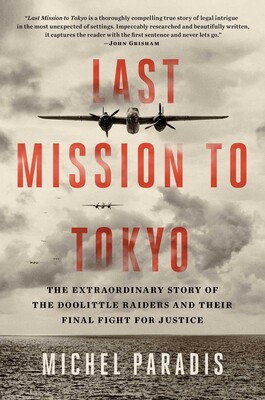
Last Mission to Tokyo: The Extraordinary Story of the Doolittle Raiders and Their Final Fight for Justice, by Michel Paradis

Last Mission to Tokyo, by Michel Paradis

This book was recommended by John Grisham, and that influenced my decision to read it. I listened to about 25% of it and put it aside. I found it difficult to follow on CD, so then I checked out the e-book. It was much easier to keep up with the various characters, especially the ones with Japanese names.

The early part of the book is quite interesting. It is the story of the Doolittle Raiders in World War II and how Doolittle and his “raiders” worked tirelessly to get the B-25 bombers down to a low enough weight and high enough speed that they could launch off an aircraft carrier with just enough fuel to complete their bombing missions in Japan and get to China where Chiang Kai-shek had promised them a landing strip.

That part of the book really grabbed my interest, but I soon discovered that the bulk of the book was about the trials of the Japanese who tortured the captured Doolittle Raiders. That didn’t interest me as much, although I can see how it would keep an attorney like John Grisham spellbound.

I don’t mean to leave a negative response to this book. It’s merely a matter of interest. It is an extremely well-researched book. There are more than 100 pages of footnotes.

If you’re not familiar with the heroics of the Doolittle Raiders, the early part of the book gives an excellent overview of their training and what they accomplished against all odds.


The Book of Lost Names, by Kristin Harmel

A coded list of names of Jewish children smuggled out of France.
The Book of Lost Names, by Kristin Harmel

Kristin Harmel’s new novel, The Book of Lost Names, was “right down my alley.” It is a beautifully-written historical novel inspired by the unsung heroes in France and Switzerland during World War II who risked their lives to try to smuggle Jewish children and adults out of France and to freedom in Switzerland as Germany was relentless in rounding up Jews for forced labor and the gas chambers.

Ms. Harmel has done extensive research about the World War II era, and this is evident in her writing. In The Book of Lost Names, she weaves a story of intrigue and personal loss through the protagonist, Eva Traube Abrams. I liked Eva from the beginning and pulled for her throughout the book. (As a writer, I strive to create such a protagonist!)

The personal losses Eva endures are huge and every time you think she’s going to find happiness, there is another twist in the story. She inadvertently of falls into the role of forging government documents for herself and other Jews while she and her mother are in hiding.

Eva works tirelessly to perfect her skills. In the process, though, she is driven by the need to leave a record of the children’s real names. Many of them are too young to remember their true identities or the names of their parents.

Eva and her fellow-forger, Remy, develop a code through which to record the children’s names in an old nondescript book on the shelf in the secret church library in which they do their work in a tiny French village hidden in the mountains. Eva and Remy use the Fibonacci sequence to code the names in the pages of the book.

Eva and The Book of Lost Names will stay with me for a long time. I love historical fiction for the way it entertains and educates me.

It was coincidental that I read Code Talker, by Chester Nez and The Book of Lost Names, by Kristin Harmel during the same month.

One by One, by Ruth Ware

One by One, by Ruth Ware

This is the fifth novel I’ve read by Ruth Ware, a British author. She is a modern-day master of suspense. In fact, David Baldacci has called her “The Agatha Christie of our generation.”

In One by One, Ms. Ware gives us a 21st century story of office colleagues going on a weeklong retreat at a French ski resort. There’s a snowstorm. There’s an avalanche. Communications are down, which is ironic because these people work for a tech startup in London.

The relaxing retreat is immediately thrown into chaos when a shareholder proposes a buyout. Tensions grow as rescue grows more and more unlikely. It’s cold. Food is running out. And the retreat participants are knocked off, one by one. Can you figure out who the killer is? #OfficeRetreatGoneBad

I was a little disappointed in this book, but I’ll read Ruth Ware’s next novel anyway. Since I wasn’t enthralled by three of the five books I read in September, perhaps it was my frame of mind and not the quality of the books that is to blame for my less-than-stellar impressions of the books.

Since my last blog post

I’m rounding up the photographs to include in my book of local history newspaper articles, Harrisburg, Did You Know? A couple of pictures and the cover are all that are still to be done to complete this book of historical tidbits from Township One and Harrisburg, North Carolina.

Instead of becoming more accustomed to my new daily schedule due to my dog’s diabetes diagnosis, it felt like all my fatigue caught up with me this past week. To quote a Pennsylvania Dutch saying, “My get up and go got up and went.”

There are many projects vying for my attention, but I am tired and I lack motivation. I think I’ll blame the pandemic. I think most of us have pandemic fatigue. Those of us living in the United States also have political campaign fatigue.

Until my next blog post

I hope you have a good book to read.

If you’re a writer or other artist, I hope you have satisfying creative time this week.

Now that flu season is coming to the northern hemisphere in addition to the on-going Covid-19 pandemic, please wear a mask. Not wearing a mask shouldn’t be a political statement; it merely tells me that you really don’t care about anyone but yourself. I’m probably “preaching to the choir” because the people who refuse to wear a mask because of their political or religious convictions probably don’t read my blog.

Thank you for your time.

Janet

Navajo Code Talker Chester Nez

I read five books in September, but Code Talker, by Chester Nez made such an impression me that I decided to just write about it today. I’ll blog about the other books I read last month in next week’s blog post.

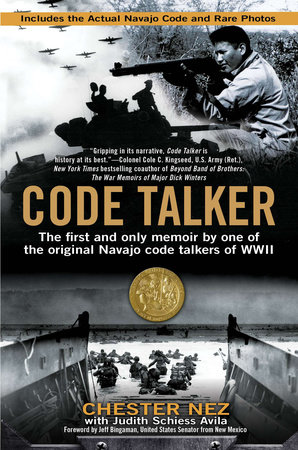
Code Talker, by Chester Nez with Judith Schiess Avila

Code Talker, by Chester Nez with Judith Schiess Avila is a wonderful book! It is a memoir written by one of the original 29 Navajo Code Talkers of World War II. The irony is that a language the US Government tried to eradicate ended up saving the US in World War II.

Navajo “Right Way Balance”

Early on in the book we’re told that Mr. Nez was a staunch believer in the traditional ways and beliefs of the Navajos. In the core of those beliefs is the “Right Way Balance” which calls for a balance between individuals and between the individual and the world.

Even though the United States government tried to take the Navajo culture and language out of him from an early age, his family ingrained in him the language and all aspects of their culture and heritage. Although the United States government and policies inflicted on the Navajos and other native peoples should have made him bitter, after December 7, 1941 attack on Pearl Harbor, he was eager to join the Marines and fight for his country.

Mr. Nez tells about his childhood. He tells that his mother was one of the Navajo forced to march 350 miles from Fort Defiance to Fort Sumner in New Mexico. That was after they’d been burned out and forced to surrender to Kit Carson and taken to Fort Defiance.

Mr. Nez writes about the Great Livestock Massacre, which he witnessed. That incident alone, should have made him hate the United States government. It was the gruesome slaughter of millions of sheep and cattle belonging to the Navajo.

When he was forced to go off to boarding school, a missionary told the school administrators that his name was Chester Nez. He was no longer allowed to use his clan’s name. He tells about being made to learn English and to speak only that language at school. This was seen as an insult and a punishment at the time; however, without a fluency in both languages, he couldn’t have become a Code Talker. All the Navajo Code Talkers had to be fluent in both languages in order for the project to work.

The Unbreakable Code

There were skeptics, but time after time the Code Talkers proved their inestimable value in the United States’ war effort against Japan. The outcome of the war in the Pacific theatre was very much in question the Navajo Code Talkers arrived on the scene. They went through intensive training in complete secrecy from their fellow Marines and the public. Developing the code was totally up to those 29 men.

The Japanese had been able to break every code the US military had tried. The situation was becoming desperate. The Battle of Savo Island was the worst defeat in the history of the US Navy. The Marines on Guadalcanal figured they were next. They felt like sitting ducks. But the Navajo Code Talkers arrived with the 1st Marine Division and the prospects for the US began to change for the good.

Mr. Nez tells about the old “Shackle” code, which “was written in English, encoded via a coding machine, and sent. Then the receiving end decoded the message, again via machine, and wrote it out in English. It took an hour to transmit and receive the test messages. When the same messages were transmitted and received in Navajo – with the men themselves acting as coding machines – it took only forty seconds for the information to be transmitted accurately.”

The above quote minimizes the complexity of the Navajo Code, but I hope you will read this book and find out the intricacies of how the code was developed. The training for the code talkers was intense. It was astounding how complicated, accurate, and fast the Navajo Code worked. It, no doubt, saved the lives of thousands of American military personnel.

All Over the Pacific

Mr. Nez’s book follows his service on New Caledonia, Guadalcanal, Bougainville, back to Guadalcanal for additional training for the planned assault on Guam, then on to Guam, Peleliu (a battle that General Roy Geiger called the worst battle of the South Pacific), Angaur (where some Navajo Code Talkers were loaned to the Army), then “back to the bloodbath on Peleliu,” and then back to Guadalcanal to train for Iwo Jima.

The description of the maze of underground tunnels filled with Japanese soldiers on Iwo Jima filled Mr. Nez with dread, but the surprise of his life came when his name was called. He was informed that he had “made his points.” Marines were “awarded points for each island invaded and wrested back from the Japanese.” He had earned more than enough points to be sent home.

After the War

Returning to the US was another bit of a culture shock for Mr. Nez. He was a proud Marine and war veteran when he returned to the US in 1945 but, because he was a Native American, he wasn’t granted the right to vote in New Mexico until 1948.

He was sworn to secrecy about what he had done in the war. He was sworn to secrecy about the Navajo Code Talkers. His family would have been so proud of what he had done in the war, but he could not tell them. By the end of World War II, 400 Navajos had served as Code Talkers. Thirteen of them were killed in action.

The last third of the book is about Mr. Nez’s life after World War II, including the nightmares he had about Japanese soldiers and what finally made them stop. The Navajo Code Talkers’ Dictionary is printed in the book’s appendix.

Information about the Navajo Code was declassified in 1968. The military decided they wouldn’t need to use it again. At last, the Code Talkers were free to talk about what they did in World War II.

Since my last blog post

Formatting my Harrisburg, Did You Know? collection of local history newspaper columns was intimidating, but I’ve been surprised at how smoothly it’s going. I’m adding photographs today. I can’t wait to have the e-book ready to publish! Then, I’ll work on the paperback edition!

Until my next blog post

I hope you have a good book to read. I suggest you try to find a copy of Code Talker, by Chester Nez.

If you’re a writer or other artist, I hope you have productive creative time.

Thank you for reading my blog. We all have busy schedules, so I appreciate the time you took today to read this blog post.

Please wear a mask out of respect for others during this Covid-19 pandemic. You could be contagious and not know it.

Janet