The Attraction of the “Warmth of the Other Sun” in Washington, DC

My planned topic for today’s blog post was #OnThisDay: World War I Treaty of Versailles; however, a book I started reading earlier this month and hope to finish in July pulled at my heartstrings and begged to be written about. The name of the book is The Warmth of Other Suns, by Isabel Wilkerson.

One of my blogger friends, Janet Givens (author of LEAPFROG: How to Hold a Civil C Conversation in an Uncivil Era) moderates a group on Zoom the second Wednesday night of each month for 10 months this year. I’m privileged to be in the group. We’re from varied backgrounds and regions of the country; however, I am the lone Southerner. This puts added pressure on me to make interesting and intelligent contributions to the discussions. Being the introvert that I am, this isn’t easy.

Each month, we discuss a different chapter in Janet’s book. The group is all-female and there are no people of color. Since race relations is such an important and difficult issue in our society today, our discussions often evolve into that subject matter. I’m making some strides to help the others in the group see that all white people from the South aren’t bigots.

During our group discussion in May, one of the members said she was reading and highly recommended The Warmth of Other Suns, by Isabel Wilkerson. I immediately got on the waitlist for it at the public library. I’m so glad I did.


The Warmth of Other Suns, by Isabel Wilkerson

I read the first 50 pages of this nonfiction book and the notes about the author’s methodology on my Kindle before it had to be returned to the library. I was captivated by the subject matter: The Great Migration of black Americans from the South to points north and west from 1910 into the 1970s.

The Warmth of Other Suns: The Epic Story of America’s Great Migration, by Isabel Wilkerson

The author interviewed more than 1,200 people and did extensive research. It had to be a labor of love and devotion because the miles and decades involved in The Great Migration would have deterred most researchers. The book is beautifully and artfully written and puts names and personalities on the stories of the hardships these migrants faced in the South and the courage and desperation it took for them to leave the only homes and people they knew and to strike out in search of a better life in other regions of the United States.

The Jim Crow laws and unwritten laws and policies in the South were the driving force in The Great Migration.


The Govan brothers of Harrisburg, North Carolina

Reading this book brought to mind a story a black man in his 90s told me around 2010 when I was a freelance local history columnist for Harrisburg Horizons newspaper in Harrisburg, North Carolina. Mr. George Govan graciously allowed me to visit him on numerous occasions and ask him anything I wanted to about his life. We talked about race, and he helped me realize what a privileged life I’d lived due to the color of my skin.

One of the stories Mr. Govan shared with me was about one of his older brothers. I won’t give his brother’s name in this blog post out of respect for the man’s privacy, although I’m quite certain he’s no longer living.

When I interviewed Mr. Govan, I’d never heard the term “The Great Migration,” so I didn’t make a connection at the time. A few pages into The Warmth of Other Suns, I couldn’t help but recall what Mr. Govan had told me about his brother.

Without giving any advance indication that he planned to leave Harrisburg, North Carolina, George Govan’s older brother stopped plowing with a mule in the middle of a field in 1929 or 1930, shrugged out of the straps of the plowing apparatus, walked several miles into town, and hopped a northbound train.

Photo credit: AG ZN on unsplash.com

When George got home from school that afternoon, his father told him that his brother had left and now, in the ninth grade, George would have to quit school and do the farm work his brother had been doing.

It would be two years before the family would learn that George’s brother had made it to Washington, DC. There, he struggled for years before making a good life for himself and his family.

What struck me about that story is that George Govan felt no ill will toward his brother. I’m not sure I would have been that gracious and forgiving if my older brother or sister had left me in a situation that made it necessary for me to have to quit school in the ninth grade.

In my many conversations with Mr. Govan, I never picked up on any bitterness in his heart although, as a black man born in 1917, he certainly had numerous excuses for being bitter if he had chosen that life path.

Since my last blog post

Our computer printer suddenly stopped working one day. Going a week without a printer can drive a writer to distraction. At least, that’s what it did to me.

I’ve been reading, reading, reading.

When I’m not reading, I’m eating tomatoes, squash, okra, and corn from the local farmers market. Nothing can beat that first tomato sandwich of the summer or that first bite of bi-color corn-on-the cob.

Until my next blog post

I would be remiss if I didn’t mention that tomorrow would have been my father’s 110th birthday. Unfortunately, he died at the age of 66 in 1977. He and Mama both instilled in me a love of history and reading. My mother was an author in her own right, and I’m very proud today of the church history she wrote in 1976.

I hope you have a good book to read. I’ve had many good ones to read in May, and I can’t wait to tell you about them in my blog posts on July 5 and 12.

Were you or were members of your family part of The Great Migration? Did you know people of color who left the South and moved west or north between 1910 and into the 1970s?  I’d love to hear your stories.

If you don’t wish to share your stories with me online, please take time to tell the younger people in your family about your experiences. Also, write them down. You can do it! Your written memories will be a wonderful gift to leave your family.

Janet

What’s Juneteenth and Why Did I Just Hear About It?

I had planned to blog about this being the 234th anniversary of the ratification of the United States Constitution today, but some of my #OnThisDay blog posts have not gone over very well. 

U.S. President Joe Biden signed Juneteenth into law as a federal holiday last week. It was celebrated on Saturday, June 19 as an official holiday for the first time. This seemed like a more timely topic than the ratification of the United States Constitution.


When I heard of Juneteenth

I’m not sure, but I think last year was the first I’d heard of Juneteenth. Or maybe it was mentioned on a news broadcast a year or two before that. The first time I heard of it is immaterial. My point is that I was approximately 65 years old when I first heard of the celebration, and that is inexcusable.

In order to understand the significance of Juneteenth, one must know about the Emancipation Proclamation.


What the Emancipation Proclamation Did and Didn’t Do

U.S. President Abraham Lincoln issued the Emancipation Proclamation on January 1, 1863. In part, it declared “that all persons held as slaves” within the rebellious states “are, and henceforward shall be free.”

Word of the freeing of the slaves spread slowly. Communication was much different in 1863 than in 2021. Plus, the Confederate States of America did not recognize Abraham Lincoln as their president.

The Emancipation Proclamation was limited in ways that are often glossed over. It only applied to the states that had seceded from the United States. That meant that slavery was still legal in the border states. Southern secessionist states that had come under Northern control by January 1, 1863, were also exempt. Additionally, the freedom of the slaves depended upon the eventual military victory of the United States over the Confederacy.

The Emancipation Proclamation gave the Northern troops and citizens an added incentive for victory over the South. As Northern troops advanced, the freedom of slaves expanded. The Proclamation also made it possible for black men to join the United States Army and Navy.


What is Juneteenth?

I’m ill-equipped to explain Juneteenth, but this is what I’ve learned so far…

Federal troops reached Galveston, Texas on June 19, 1865, and made it known to slaves there that President Lincoln had declared them free on January 1, 1863 – some two-and-a-half years earlier.

Since June 19, 1866, June 19 has been celebrated as Freedom Day, Emancipation Day, Juneteenth Independence Day, and Juneteenth by black Americans. Most of their white counterparts, though, remained ignorant of the date’s significance until very recent history.

I don’t recall the mention of June 19, 1865 or Juneteenth in any history text book I ever had in elementary school, high school, or college.

Why is that?

The answer is simple. History books have always been written by white men. (I started to say “white people,” but “white men” seemed more accurate. I don’t remember ever having a history textbook written by a woman.)

That’s why the American populous has not been taught about the accomplishments of black Americans. It’s why it is now necessary for us to have Black History Month in February.


Where do we go from here?

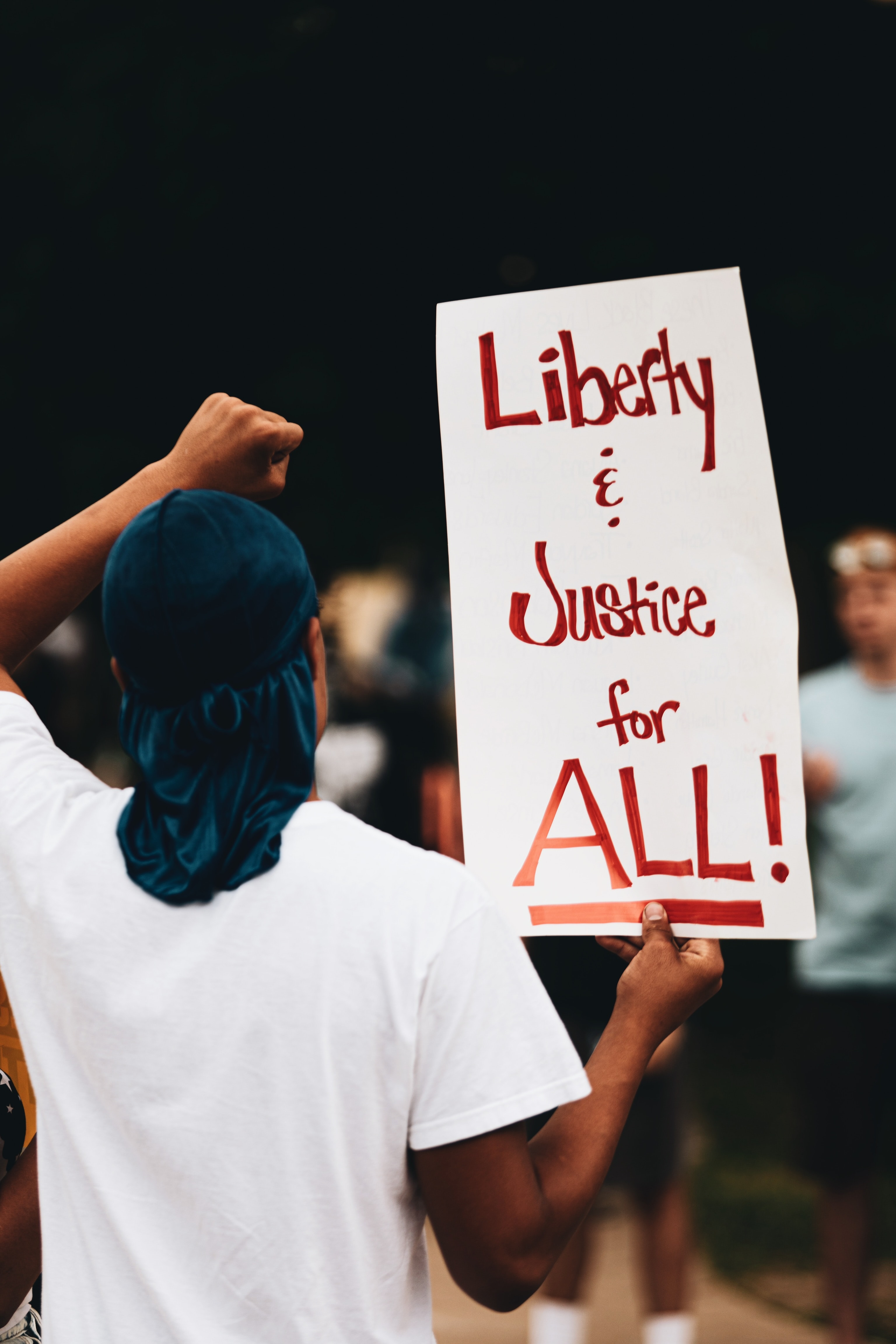
Photo credit: Logan Weaver on unsplash.com

As long as black and brown Americans are by in large excluded from the decision-making process (such as voter suppression) and are elected to public office in miniscule numbers compared to their proportion of the population, the entire population will suffer. We’ll continue to just learn the history of white America. We’ll all suffer because the talents and ideas of black and brown Americans will be excluded from the workings of government and business.

It’s not enough not to be a racist. We must strive to be anti-racists. And beyond that, those of us who are white need to take anti-racism a step further. We need to be allies. That means when we’re in a situation where someone says something derogatory about people of another race, it is incumbent upon us to speak up against such talk. We need to have the courage to speak up for our fellow human beings who are being maligned.

Our silence is not only complacency, it signals our agreement, compliance, and acquiescence.

Our silence will convict us.

Instead of making snide remarks or having malevolent thoughts about the new Juneteenth holiday, let’s embrace it and learn from it.


Since my last blog post

Our almost-13-year-old rescue dog is hanging in there. The week before last, he spent four days in the hospital due to erratic glucose levels. He’s a diabetic. We’re starting to understand how sick he can become in just a matter of minutes.


Until my next blog post

I hope you have a good book to read. Among other things, I’m reading The Girls in the Stilt House, a debut novel by Kelly Mustian. She really has a talent for painting pictures with words.

Those of you living in the northern hemisphere, I hope you have a pleasant summer. Those of you living in the southern hemisphere, I don’t envy you. You know I’m not fond of cold weather.

Wherever you live, make the most of this week. I intend to get back to work on my historical novel.

Janet

3 Books I Tried to Listen To in May

I tend to only borrow library books that I think I’ll like. Once in a while, I’m led astray. I attempted to read eight books in May. Five of them were winners. The other three just weren’t my “cup of tea” – at least the mode in which I tried to listen to two of them just didn’t work out.

After waiting for weeks to get to the top of the waitlist at the public library for most of the books I read or listen to, it’s disappointing when one doesn’t meet my expectations. Please read on, though, for one of these might be just what you’re looking for. And each of them might be great reads in print.


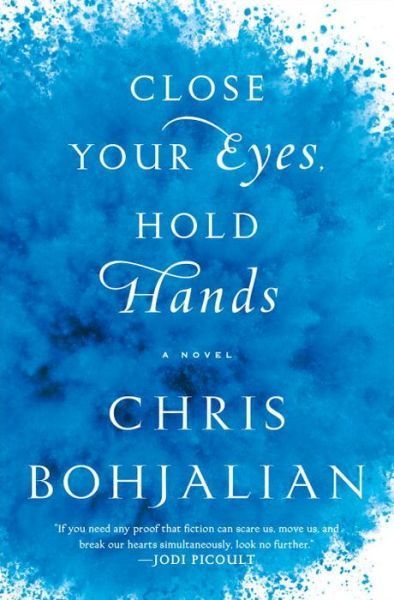
Close Your Eyes, Hold Hands by Chris Bohjalian

I’ll admit up front that I did not get through even half of this book. After hearing and seeing Chris Bohjalian interviewed online recently, I decided to give one of his novels a try. I found that the public library had Close Your Eyes, Hold Hands on Playaway and I needed a book I could listen to while I walk or do yardwork. This book fit the bill. I checked it out without knowing what the storyline was.

Close Your Eyes, Hold Hands, by Chris Bohjalian

It’s written in first person from the viewpoint of a teen girl. That can’t be easy for a male writer to do, but Mr. Bohjalian pulls it off.

Emily is at school when the nearby nuclear power plant experiences a meltdown. Her parents work at the plant and it is immediately speculated that her father is responsible for the accident. Knowing in her heart that both her parents were killed in the accident, Emily strikes out on her own rather than being evacuated to a shelter with her classmates.

I had problems with the Playaway device itself. It kept malfunctioning. At chapter nine, I gave up. I think there are 21 chapters.

My other problem with the book was the language. I know there are teen girls who use excessive foul language, but I decided I didn’t need to listen to anymore of it.

I’ll just leave it at that.


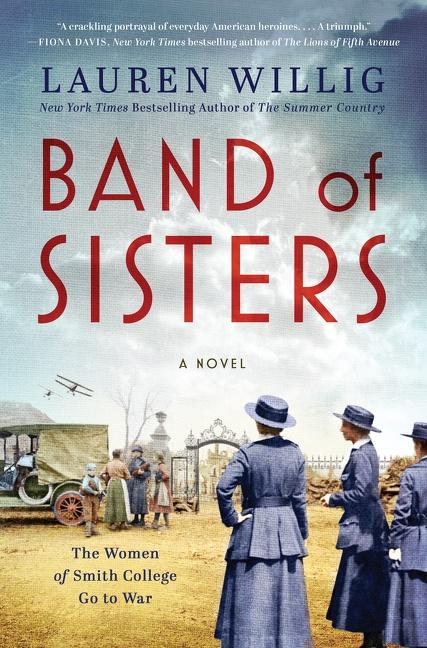
Band of Sisters, by Lauren Willig

Band of Sisters is Lauren Willig’s 27th published novel, but it’s the first one I’ve read. It has received rave reviews – and rightfully so. I listened to it on CD.

Band of Sisters, by Lauren Willig

This historical novel is based on a group of students from the all-female Smith College who volunteered to go to France during World War I to aide civilians displaced by the war. Being from Smith College, they came from wealthy families. I had trouble identifying with any of the students except for Katie, who was not from a rich family.

This failure on my part to identify with most of the characters left me feeling a little disappointed in the book. I just wasn’t able to suspend memories of my own experience of working my way through college and graduate school enough to put myself in the shoes of these wealthy young women. That’s my problem, not the author’s fault.

I will give Lauren Willig’s novels another chance. She is obviously a talented historical fiction author. Reading novels about wealthy people just isn’t interesting to me, usually. Reading about privileged white college women in 1918 didn’t interest me enough to finish listening to this book. It’s well-written and inspired by a true story, but the privileged attitudes of some of the students irritated me. I had to work my way through college, so I can’t identify with the students in this novel.


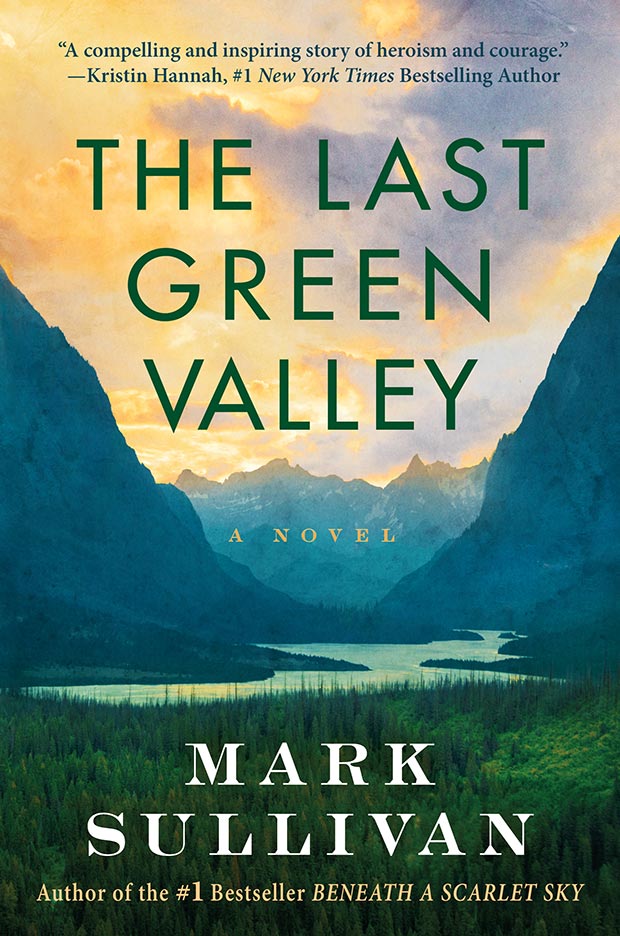
The Last Green Valley, by Mark T. Sullivan

This is a book I’d looked forward to listening to but, like I mentioned about the audio recording of Greenlights, by Matthew McConaughey in an earlier blog post, there were so many extremes in volume on this CD that I just couldn’t deal with it.

The Last Green Valley, by Mark Sullivan

I really liked Mark T. Sullivan’s earlier novel, Beneath a Scarlet Sky. If you’d like to read my comments about it, here’s a link to my January 13, 2019 blog post, The Other Books I Read in December 2019.

The Last Green Valley is probably equally as good as Beneath a Scarlet Sky. I just thought I’d mention my experience with this book on CD in case you also depend upon audiobooks.


Since my last blog post

Update on that new air fryer/toaster oven: I’m happy to report that I’ve gained confidence and understanding, and this new “gizmo” doesn’t intimidate me anymore. That said, I admit I haven’t yet tried the rotisserie feature.

We’ve weathered yet another health crisis with our almost 13-year-old diabetic rescue dog. He spent another night in a specialty veterinary hospital in Charlotte. If you live in the Charlotte area, I hope your regular vet will refer you to Charlotte Animal Referral and Emergency (CARE) when your pet needs specialized care. They’re great! They’ve saved our dog’s life three times since last August.

Except for printing spine labels for the five archival binders for our 96-year-old friend’s love letters between him and his wife during the Korean War, my sister and I have finished that project. Their more than 200 letters to each other from 1951 until early 1953 have now been organized and put in archival-quality sleeves in binders. He and we can only hope that his descendants will appreciate the treasure these letters are.

My fibromyalgia flare continues and is making it difficult to chew even soft food. I know this is probably just a temporary flare. It will pass. I just need faith and patience to supplement the pain medications.


Until my next blog post

I hope you have a good book to read. I’ve reached the top of the library waitlist for a half-dozen audiobooks at the same time. Too bad I can’t listen to one book with my right ear and another book with my left ear! I finished listening to The Elephant of Belfast, by S. Kirk Walsh. It’s a wonderful novel inspired by a true story about an elephant in the Belfast Zoo in 1940.

For those of you living in the northern hemisphere, I hope you’re having a splendid summer after being confined for so long due to the COVID-19 pandemic. I don’t have any trips planned, but I’m making the most of these warm, sunny days with fewer face-covering restrictions.

For those of you in the southern hemisphere, I learned on Friday that the National Geographic Society has named the Southern Ocean around Antarctica as Earth’s fifth ocean. I must be getting old. Since I was in school, Pluto has lost its designation as a planet and Earth no longer has just four oceans. This is proof that we should never stop learning new things.

Until next Monday,

Janet

5 Books I Read in May 2021

I had more books from the public library in May than I could read, but I gave it my best shot. Some appealed to me more than others, of course. I’ll dive right into the five I finished reading. The other three, I’ll save for next Monday’s blog post.


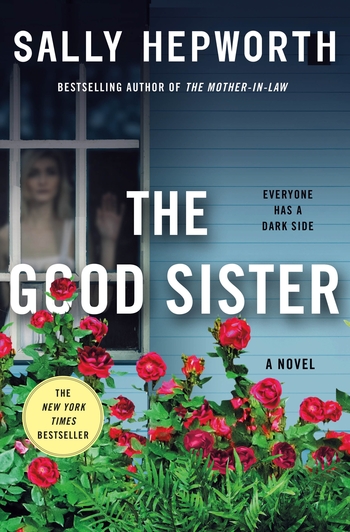
The Good Sister, by Sally Hepworth

The Good Sister, by Sally Hepworth

I listened to this new novel by Australian author Sally Hepworth. I’ve liked all her books. (The Things We Keep, The Mother-in-Law, The Mother’s Promise, and The Family Next Door.)

Rose and Fern Castle are twins in The Good Sister. Fern works in a library and is tied to a predictable routine. Rose has always sort of looked out for her. When it becomes clear that Rose cannot have children, Fern takes it upon herself to find a man with whom she can have a baby for Rose. This is her chance to do something for Rose.

The man Fern chooses for this mission is somewhat odd in his own right, and their unorthodox lifestyle together is cause for some raised eyebrows in the neighborhood. There are twists and turns in this story and it soon becomes difficult to discern which one is “the good sister.” It depends on what is meant by “good sister.”


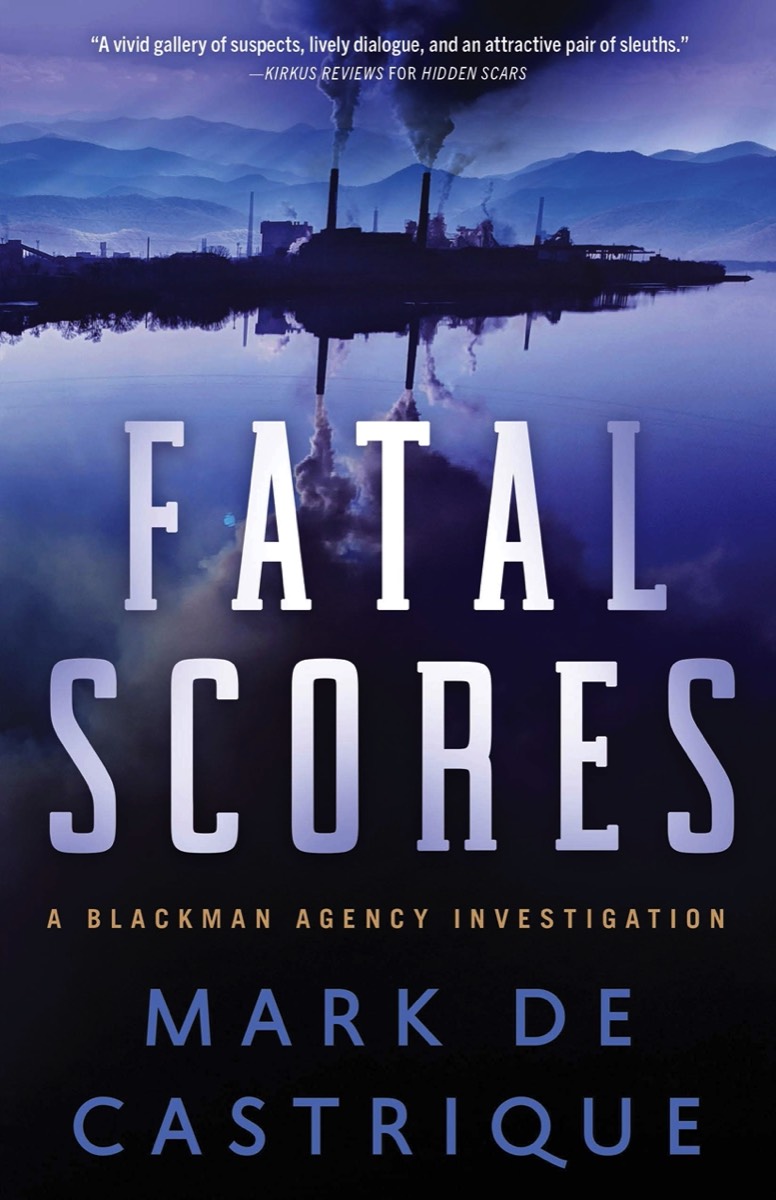
Fatal Scores, by Mark de Castrique

Fatal Scores, by Mark de Castrique

A member of the citizen volunteer organization River Watchers is discovered dead in the Pigeon River near Asheville, North Carolina, downstream from a paper mill. In the middle of investigating that death, private detectives Sam Blackman and Nakayla Robinson are recruited to investigate a death threat made against a visiting musician from Cincinnati.

At first, I wondered why Mr. de Castrique was taking me down the rabbit hole about the musician; however, there are some interesting turns of events through which certain characters are found to be acquaintances.

Fatal Scores is the eighth in Mr. de Castrique’s Sam Blackman series of novels. If you like a good mystery or books set in my native state of North Carolina, you’ll enjoy this book. It’s not necessary for you to have read the earlier books in the series, but they’re all entertaining.


A Million Reasons Why, by Jessica Strawser

A Million Reasons Why, by Jessica Strawser

Imagine you discover through a DNA analysis that you have a half-sibling through your father. Take it to the next step and ask your parents about it. Boom! Things don’t go well, to say the least.

In this age of DNA testing, this scenario isn’t so far-fetched. Jessica Strawser takes the idea and weaves a heart-wrenching novel in A Million Reasons Why.

Everyone in your family, including your husband, want you to just forget the whole thing. Take it another step and you find out your newfound half-sister needs a kidney.

I hope I’ve told you just enough that you’ll want to read the book. I’ve left out a lot of the twists and turns that will keep you turning the pages to see what happens next.

Like Fatal Scores, by Mark de Castrique, A Million Reasons Why primarily takes place in the mountains of western North Carolina – specifically in Brevard and Asheville.


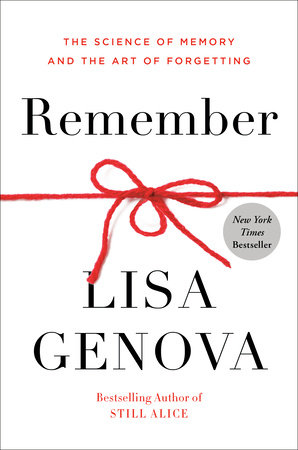
Remember: The Science of Memory and the Art of Forgetting, by Lisa Genova

Remember, by Lisa Genova

If you read my blog posts regularly, you may recall that I drew extensively from Remember: The Science of Memory and the Art of Forgetting, by Lisa Genova in my May 24, 2021 post, What’s Your Earliest Memory? Here’s Mine.

I won’t repeat the examples I used in that post, but suffice it to say this is little book is packed with understandable details about how our brains work – how memories are formed, how they’re stored, how they can be forgotten when Alzheimer’s Disease sets in.

The book says that retrieval of a memory is made easier if we put it in context, that is, in association with time or place. “We see this phenomenon with prospective (what you plan to do), episodic (what happened), semantic (information you know), and muscle (how to do things) memories.”

One of the many things I did not mention in my May 24 blog post was how Dr. Genova writes about how to best learn something new. How I wish someone had told me this when I was in high school or college! I never did know how to truly study.

Dr. Genova says in her book that the best way to commit something to memory is to do over it repeatedly and quiz yourself about it. If you do that, it’s much more likely to stay with you than my technique which was usually cramming the night before an exam.

Dr. Genova gives reassurance that we all have instances where something is on “the tip of the tongue,” but we can’t quite retrieve it. She says that’s normal and no reason to panic

The book also addresses forgetting. Dr. Genova says, “An intelligent memory system not only remembers information but also actively forgets whatever is no longer useful.”

In the book’s appendix, Dr. Genova gives 16 specific things you can do to improve your memory. She also lists seven pages of suggested reading, in case you want to learn more than she covers in her book.

Truly, fascinating stuff.

Lisa Genova will be interviewed by AARP online tomorrow at 7:00pm Eastern Time. Here’s a link, if you’d like to register to watch and listen to this interview for free: https://local.aarp.org/vcc-event/aarp-presents-a-conversation-with-lisa-genova-lnn7nlnny5l.html. According to the website, a recording of the live interview will be available for viewing for two weeks after the event.


Sooley, by John Grisham

Sooley, by John Grisham

I’m a basketball fan, but even I had trouble getting into this latest book by John Grisham. In fact, I came close to giving up on it and returning it to the public library before I finished listening to the first of the nine compact discs. I’m not sure someone who isn’t a basketball fan will hang in there long enough to start caring about the main character: Sooley.

That said, I’m so glad I gave it another chance. I was soon completely captivated by the gripping story of Sooley’s personal history in war-torn South Sudan. Sooley plays on a basketball team in South Sudan, but his coach thinks he has great potential and a possible opportunity to play in the United States.

While on a basketball trip to America, Sooley’s hometown is destroyed. He desperately wants to go home and look for his family, but it’s too dangerous. One thing leads to another, and coach of HBC (Historically Black College) North Carolina Central University (NCCU) in Durham takes a chance on him.

I don’t want to spoil the book for you, so I won’t give any other details. Mr. Grisham is a master of suspense. Even though Sooley is not his typical novel in that it’s not a legal thriller, it will keep you turning pages (or putting the next CD in the player) because you can’t wait to find out what happens next to Sooley and what happens next to his family members who survived the original attack but are still in Africa.

Part of the book is blow-by-blow accounts of the action in NCCU games against such collegiate basketball giants as “that other school in Durham.” It reminded me of the old days when few basketball games were televised and one’s only choice to follow away games was to listen on the radio.

That comparison really came to life since I was listening to the book on CD. The writing is spot-on and the professional reader who did the CD version, Dion Graham, did a superb job. I felt like I was listening to an actual game.

If you aren’t a basketball fan, please give this novel a chance anyway. It would be a shame for you to miss this story just because you aren’t a sports fan.

Dion Graham does a superb job reading Sooley for the audio version. He not only brought the ballgame play-by-play to life; he brought each character alive through the dialogue.


Since my last blog post

Life here in North Carolina is getting back to a semblance of normal, since the COVID-19 pandemic is getting under control. Those of us who have been fully vaccinated are under no restrictions except we must abide by any safeguards in place when we visit a grocery store, pharmacy, or other business or public building with strict rules about face masks, etc.

We had a cookout at our church last Wednesday night and it was great to be able to sit at a table and eat hamburgers, hotdogs, and watermelon with friends I’d rarely seen in the last 16 months. I look forward to the day I’ll feel it’s safe to sit in a restaurant around strangers again. I’m not there yet.

Our home toaster oven broke. Something on the inside broke (I heard it) and after that the door wouldn’t close. It served us well for many years, and I used it almost every day. It was so simple. I didn’t appreciate it until it broke. It had knobs on it so you could set the temperature, timer, and function. Life was good. It was a simpler time.

In looking online for a replacement, I had the bright idea to purchase a little appliance that is a combination toaster oven/air fryer. Well, let me tell you – there is a learning curve to operating this electronic gizmo. I believe it has more options than I’m capable of using, but I’m trying something new in it each day. It’s sort of like learning a new language, so perhaps it’s making my brain grow. Perhaps by this time next year I won’t have to read the owner’s manual every time I use it.

I follow the delightful blog of Sally Cronin of Ireland. Her blog, “Smorgasbord – Variety is the spice of life” is always something fresh and entertaining. I especially liked something she quoted from fantasy author D. Wallace Peach in her blog post on May 31, 2021 (https://smorgasbordinvitation.wordpress.com/2021/05/31/smorgasbord-blogger-daily-monday-31st-may-2021-bookreviews-d-wallace-peach-bookreviews-d-wallace-peach-planes-jim-borden-travel-pete-springer/,)

Ms. Peach had written that she and her husband named their deck “vacation” so they could “go on vacation” and read. Don’t you just love that? I think I’ll name our side porch “vacation,” so I can go on vacation this summer!


Until my next blog post

I hope you have a good book to read.

Look for the positives along your way this week. Try not to let the negatives get you down. Life is short.

If you don’t have a hobby, find one. Find something to do that will make your brain grow.

Janet