I write southern historical fiction, local history, and I've written a devotional book. The two novels I'm writing are set in Virginia and the Carolinas in the 1760s. My weekly blog started out to follow my journey as a writer and a reader, but in 2025 it has been greatly expanded to include current events and politics in the United States as I see our democracy under attack from within. The political science major in me cannot sit idly by and remain silent.
When we think about earthquakes in the United States, our thoughts usually jump to California, but 140 years ago today Charleston, South Carolina experienced a powerful one.
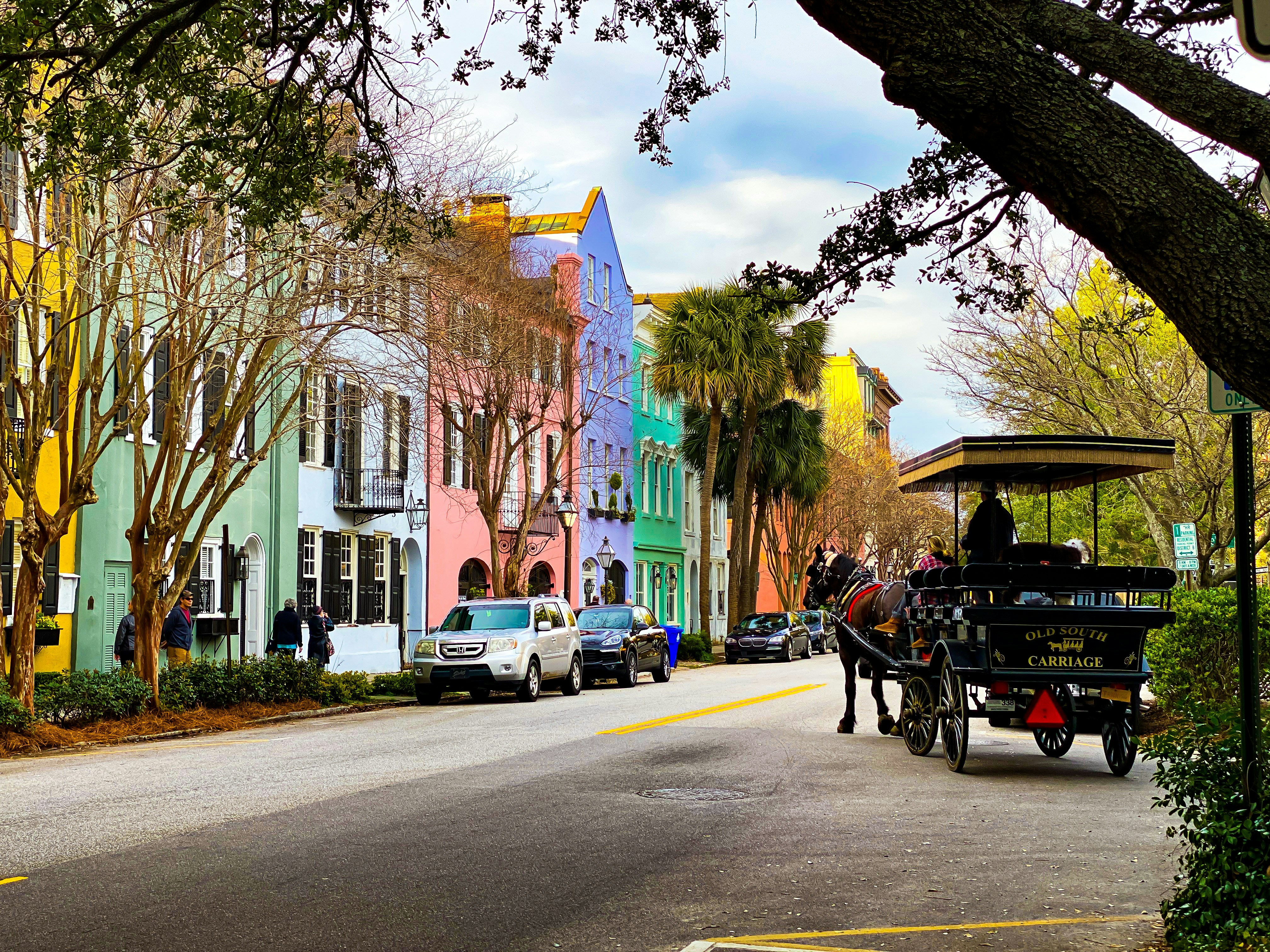
Present-day street scene in Charleston, South Carolina. Photo by Leo Heisenberg on Unsplash
The Charleston Earthquake predated the Richter Scale, but it is estimated now that it was probably a magnitude 6.9 to 7.3. It was felt as far north as Boston, as far west as New Orleans, as far south as Cuba, and as far east as Bermuda.
It was felt here in the southern piedmont of North Carolina, so I wrote about it in 2010 when I was writing a local history column for a newspaper. Therefore, my two-part newspaper series about “Earthquakes Felt Here” is included in my book, Harrisburg, Did You Know? Cabarrus History, Book 2.
Sand and water spewed from fissures in the ground approximately 12 miles west of Charleston, and it is believed that the earthquake was most intense in that area. The sound was compared to that of steam escaping from a boiler. The term for that is soil liquefaction.
Reading that was the first time I remembered hearing about that possible result of an earthquake.
The Times, a newspaper in Concord, North Carolina, reported that the first shock at 9:52 pm toppled chimneys and kerosene lamps in homes. That three-and-a-half-minute shock caused houses to crack and sway.
A second shock came fifteen minutes later, and a third one came about fifteen minutes later. Aftershocks were felt here in Cabarrus County, North Carolina (200 miles northwest of Charleston) through at least September 5.
Other topics in Harrisburg, Did You Know? Cabarrus History, Book 2 include the following: an 1849 meteorite, the 22-mile ring dike Harrisburg sits in, the building of the Rocky River Presbyterian Church’s fourth sanctuary in 1861, baseball, the Piedmont Area Development Association, the incorporation of Harrisburg in 1973, the Sauline Players, bridges built over Rocky River in the 1870s, Rocky River Academy, an attempted train robbery in 1907, a tribute to George L. Govan, a year without a summer (1816), gristmills, early schools, the push to get electricity in 1928, the coming of the “high-speed” rail in 2012, and the Pioneer Mills goldmining community.
Harrisburg, Did You Know? Cabarrus History, Book 2, by Janet Morrison
Janet
All history is local, but no history is just local
Note: I failed to include the following information in my original post: There were at least 60 deaths. Approximately 2,000 buildings were severely damaged and most of the chimneys in Charleston and the Summerville area were toppled. Damages were estimated at more than $5 million at the time of the earthquake, which would be around $200 million in today’s dollars.
I have heard it said that the 19th Amendment “gave” women the right to vote. The verb “gave” or “gives” is a slap in the face of all the women (and men) who risked their lives to have the right to vote.
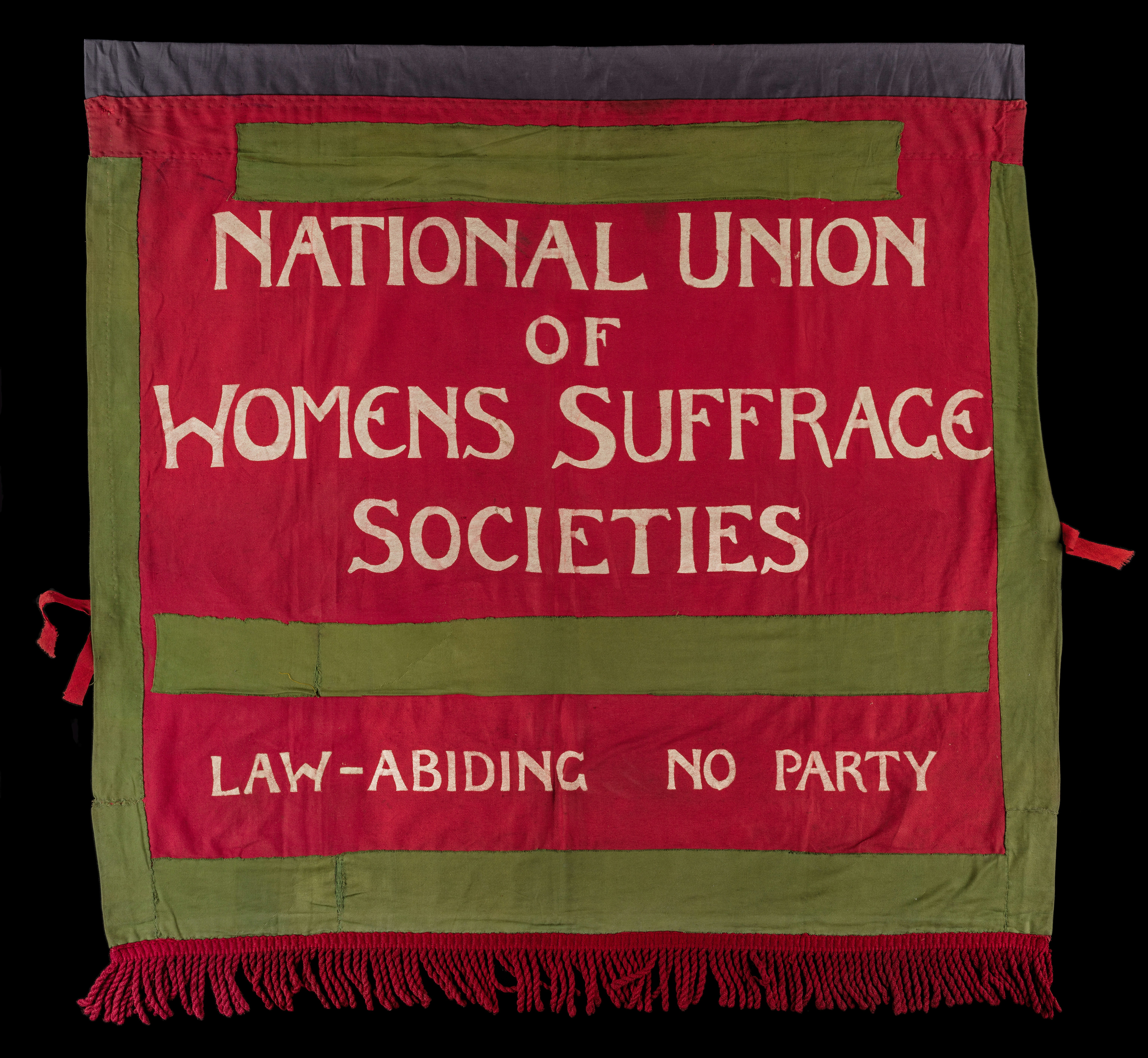
Photo by LSE Library on Unsplash
It would be tantamount to saying that black people in the United States were “given” civil rights in the 1960s. No, they earned every one of those rights. The word “give” in all its tenses and forms insinuates that rights were bestowed as a gift. Nothing could be further from the truth.
In July, I read an excellent little book, Roses and Radicals: The Epic Story of How American Women Won the Right to Vote, by Susan Zimet. I told you a little bit about it in my August 4, 2026 blog post, Books I read (or attempted to read) in July 2026. I urge you to read that book.
Roses and Radicals, by Susan Zimet
The road to women securing the right to vote in the United States started before the nation’s founding. In 1776, Abigail Adams famously told her husband, John Adams, to “remember the ladies” as the Declaration of Independence was being contemplated and written.
Of course, John Adams did not take her pleas to heart (and probably paid for his foolishness in various ways for the rest of his life.) The Declaration of Independence states that “all men were created equal.” Today, we (well, most of us) take that to mean “all people were created equal,” but women were technically and deliberately left out of the Declaration. But I digress
As is told in Roses and Radicals, it took women down a very long and winding road to secure the right to vote. There were women’s rights conventions and campaigns throughout the decades from 1840 until the 19th Amendment was finally made part of the U.S. Constitution in 1920.
Women were beaten and arrested for marching in the streets and simply for standing beside streets to protest the lawful discrimination that was holding them back from being all they could be. They had to fight for education, not just the right to vote.
That story cannot be condensed into a blog post. There’s just too much history – too much history that was never included in a single history textbook I ever read – for me to do it justice here.
It is an unbelievable story, akin to the story of how many centuries it took for people of color to get rights equal to their white counterparts in the United States. There is still racial discrimination that flies under the radar of the law. We see it every day. We also still see blatant racism in Trump wanting to plaster his name (no doubt, in giant gold letters) on the aircraft carrier that was already designated to be named in honor of World War II hero Mr. Doris Miller. Mr. Miller just happened to be black. His story of heroism during the Japanese attack on Pearl Harbor is extraordinary. Trump, on the other hand, dodged the draft because he claimed to have bone spurs.
Back to the 19th Amendment…
Those of us born after 1920 cannot fully appreciate the sacrifices made by women (and by people of color) to try to get the right to vote in this country.
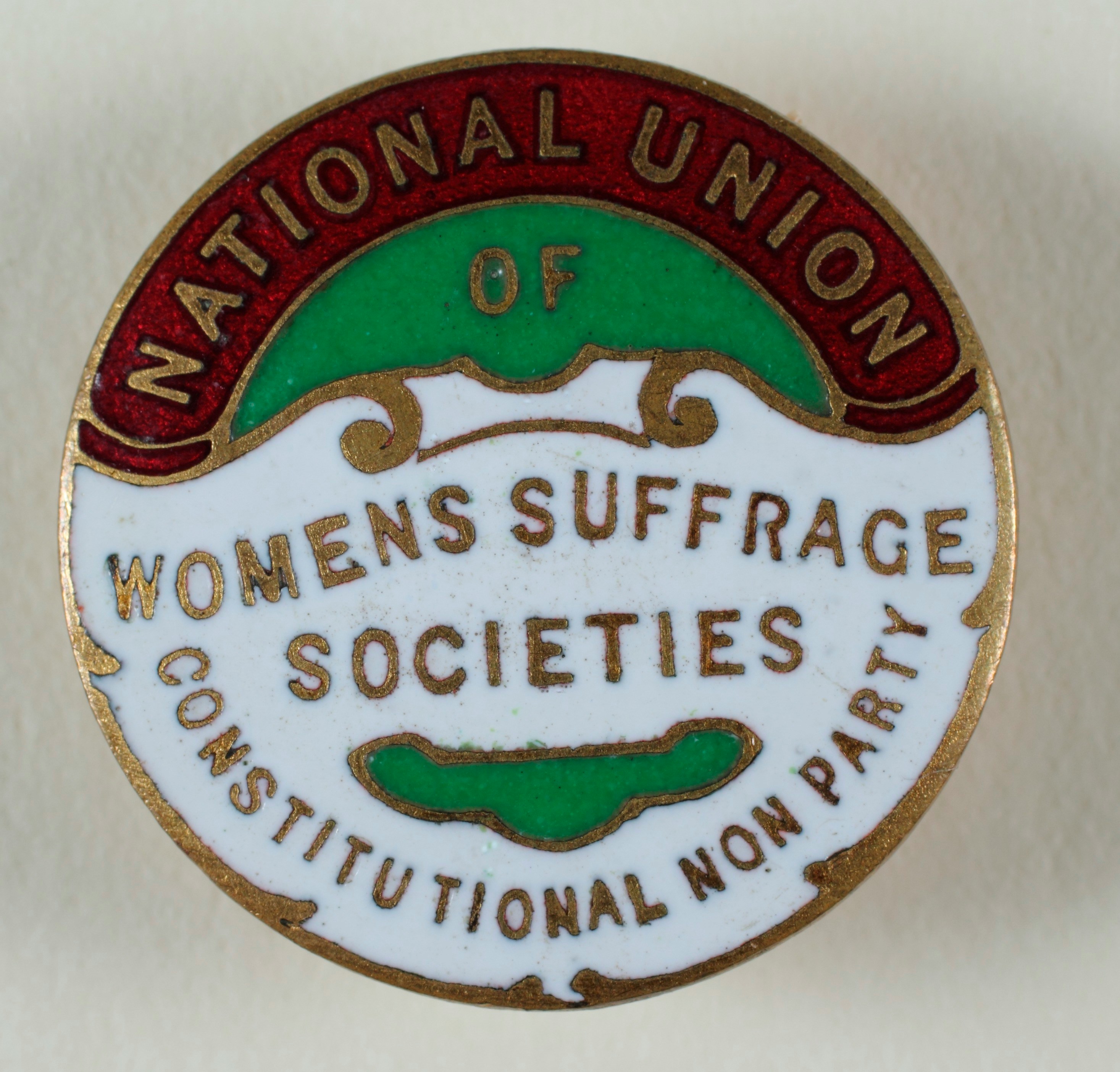
Photo by LSE Library on Unsplash
It astounds me to think that when my mother was born in 1912, women did not have the right to vote! The 19th Amendment to the U.S. Constitution was not ratified until 1920. That’s just 33 years before I was born! I simply cannot get my head around that fact. To put that 33 years in perspective, 33 years ago today it was 1993!
And now, in 2026 in the U.S. we have people in positions of power, including the U.S. President, who are pushing for a so-called SAVE America Act which will make it more difficult for married women in our country to vote. It goes well beyond “voter ID.” A married woman – or anyone whose name today does not match their birth certificate – will be required to produce documentation of every name change they’ve had.
This is primarily targeting married women, regardless of what supporters of the Act claim. It is an alleged solution to a problem that does not exist: voter fraud.
Don’t be fooled! The real crime is voter suppression.
After having a very good month of reading in June, I had high hopes for July, but sometimes our reading experiences don’t meet our expectations on all counts. July turned out to be a mixed bag.
The River Knows My Name, by Kelly Mustian
The River Knows My Name, by Kelly Mustian
After reading The Girls in the Stilt House, Kelly Mustian’s debut novel in 2021, I kept hoping she would write another historical novel. She came through for us last year with The River Knows My Name. I finally got around to reading it in July.
As the blurb on Amazon states, it is “a haunting Southern story about memory, family secrets, and fierce and fragile love.” Set in the early 1930s in Mississippi and 1971 in North Carolina and Mississippi, Mustian has woven a story of intrigue, family loss and love, and how one decision can affect generations to come.
Why did Evie appear at Nell’s house when they were young children and Evie never left? What did Evie’s hidden birth certificate reveal?
This is a dual timeline novel, which you know is not my favorite format, but I stayed with it because the characters and the plot drew me in from the beginning. Mustian did a masterful job of telling a complicated story of secrets, the passage of time, “where there’s a will there’s a way” perseverance, the love a mother has for her child, and how family isn’t necessarily based on biology.
I highly recommend The River Knows My Name, and I hope Kelly Mustian will gift historical novel fans with many more novels.
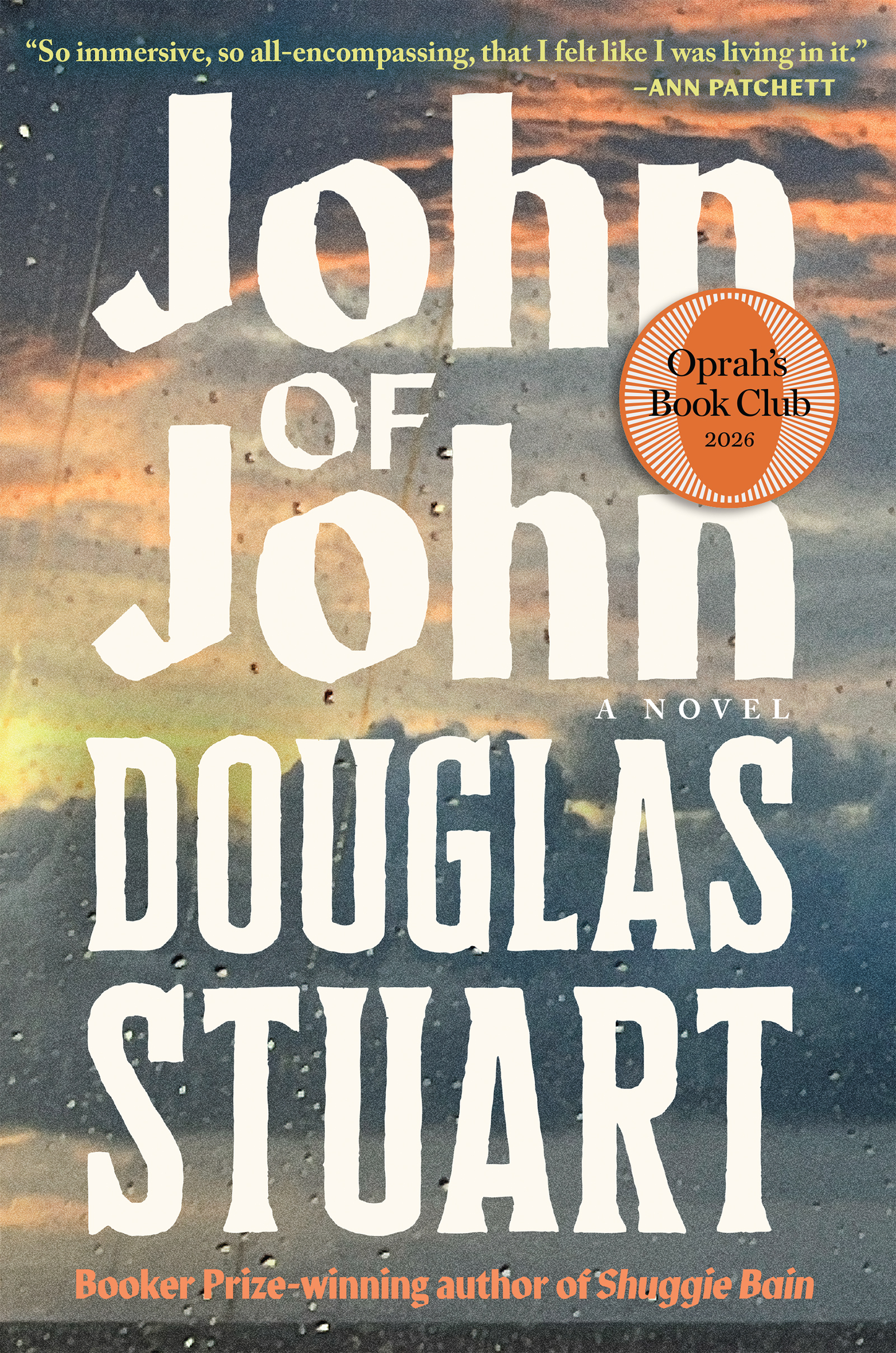
John of John,by Douglas Stuart
John of John, by Douglas Stuart
After watching an online interview of Douglas Stuart, I eagerly awaited my name reaching the top of the waitlist for John of John at the public library.
I have had the privilege of visiting the Outer Hebrides of Scotland. I have spent some time on the Isle of Lewis and visited the Isle of Harris. They are wild and stark and incredibly beautiful!
John of John, by Douglas Stuart is set on Harris. The author does a great job of giving you the setting. The moon-like starkness, the incessant wind coming off the Atlantic, the sometimes-rough ferry crossing of The Minch – the body of water between the mainland and the Outer Hebrides. The houses, the crofts, the weavers of Harris Tweed (which is also made in cottages on Lewis), the single-track roads, the sheep, the Gaelic native language, and the conservatism of the Free Presbyterian denomination (which is quite different from the Church of Scotland) are all brought to light in this novel.
The setting is almost a character in the book because to give the landscape and climate justice, one has to be immersed in it to truly appreciate the story.
The protagonist is John MacLeod, son of John MacLeod, son of Iain (John in Gaelic), son of Iain MacLeod. Young John has left the island to go to art school. He has gotten caught up in the fast life (life everywhere is “fast” compared to life in the Outer Hebrides) in Edinburgh. His father calls him home to care for his ailing maternal grandmother.
The younger John is not keen on the idea. The life he has lived on the mainland as a gay young man will surely upset his devout Free Presbyterian father to the point that he expects his father will disown him. How long can he keep his homosexuality a secret from his father.
But his father also has a secret.
If you are sensitive to “F-bombs,” you might not enjoy this book. I accepted them as apparently being part of the homosexual scene in which the younger John lived. Not that all homosexuals casually use this language, but it was part of the make up of the younger John – probably as part of his rebellion against the strict religious home in which he had been raised.
I tired of the story after 150 pages. There were other books I wanted to read, so I returned John of John to the public library. Kudos to the author for transporting me to the Outer Hebrides for a few hours.
Roses and Radicals: The Epic Story of How American Women Won the Right to Vote, by Susan Zimet
This book caught my eye when I was at the public library the week of July 4th. It was part of a display the librarians had assembled of books pertaining to the 250th birthday of the United States Declaration of Independence and related patriotic books and history books.
The book prompted me to pause and contemplate the incredible sacrifices the women (and a few men) made throughout the first fourteen decades of our country’s history to work toward the passage of a Constitutional Amendment that would make it unlawful for any state in the union to prohibit anyone from voting based on their sex.
I will write more about the 19th Amendment to the United States Constitution in my blog post on August 26 – the 126th anniversary of the ratification of that amendment.
Roses and Radicals is a relatively small book of barely 150 pages, including the bibliography and index. I thought it would be a quick read.
Sprinkled throughout the book are sidebar-like sections within chapters that tell the stories of individual including Susan B. Anthony, Elizabeth Cady Stanton, Anne Marbury Hutchinson, Lucretia Mott, Mary Wollstonecraft, Sisters Sarah and Angelina Grimké, Sojourner Truth, Lucy Stone, Victoria Woodhull, Matilda Joslyn Gage, Ida B. Wells, and Edith Wilson. A book could be written about each on of them.
Roses and Radicals begins with the World Anti-Slavery Convention in London in 1840. Elizabeth Cady Stanton accompanied her husband, who was a convention delegate. But her story began when she was five years old and her last brother died. Her father said to her, “Oh my daughter, I wish you were a boy.”
In response to that remark, she was determined to be the son her father had lost. That path served to show her how difficult it would be for a woman to fulfill the burden her father had placed on her because women were so restricted by law and society norms. Fathers held legal rights over daughters and husbands held legal rights over their wives and children.
But, getting back to the anti-slavery convention in 1840… The wives of delegates and the women delegates were not allowed on the main floor. They were relegated to a balcony. The women were so incensed that they began laying plans during the convention. If people from around the world could meet to work for the abolition of the slavery of Africans, the women concluded that they could organize themselves and fight for the rights of women.
The book tells how each of the women I named in an above paragraph worked for the equality of women, women’s rights in the eyes of the law in the United States, and ultimately for women to have the right to vote. It gives little-known details of how women worked behind-the-scenes as well as marching in the streets to secure women the right to vote.
Janet
Too many books. Not enough time. Not enough bookcases. Never take your right to read – or your right to vote — for granted.
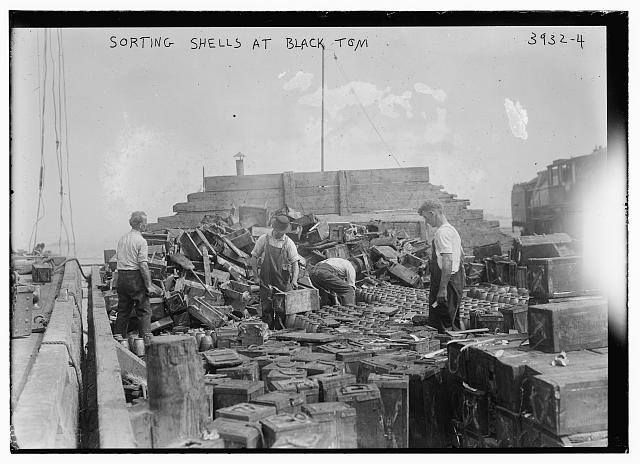
The United States was officially neutral regarding World War I when, on July 30, 1916, German agents blew up the Black Tom railyard on land that is now part of Liberty State Park in New Jersey.
A blogger friend of mine, Francisco Cabrera, brought this event to my attention a couple of years ago. I had to admit that the Black Tom Explosion in New York City did not sound familiar to me. That was embarrassing!
In an effort to prevent the U.S. from sending munitions to England, spies and the men they recruited had packed two million pounds of explosives in train cars destined for the depot on Black Tom Island. Germany knew tons of munitions were shipped out of Black Tom Island to the Allies, and they apparently knew security there was lax.
Men sorting munitions shells at Black Tom Island railyard. Photo from the Library of Congress.
The 2:08 a.m. explosion and the second one a half hour later shattered thousands of windows in lower Manhattan and Jersey City, New Jersey. I found conflicting casualty reports while researching this post, but at least four people were killed, including an infant.
The Statue of Liberty was pock-marked by shrapnel. The damage to the statue made it necessary to close Lady Liberty’s torch to the public, and it is still closed today.
Property damages in New York and New Jersey were estimated at $20 million, which would be equal to $500 million today. Hundreds of rail cars were destroyed, included 87 filled with dynamite. Thirteen huge warehouses and six piers were destroyed as well as barges tied to the dock.
The explosion registered 5.5 on the Richter scale and was felt in Pennsylvania and Maryland.
As a result of the attack, Congress passed the Espionage Act and in 1917 passed the Sabotage Act. Both Acts gave the Bureau of Investigation oversight jurisdiction.
Although not the only act of sabotage by German upon the United States, the attack on Black Tom Island was instrumental in turning public opinion in the United States against Germany.
It was a different time. For instance, the Bureau of Investigation – the forerunner of the Federal Bureau of Investigation (FBI) only had 260 employees. The FBI website states, “The most successful and experienced anti-sabotage investigators turned out to be the detectives of the New York Police Department’s Bomb Squad. Even so, the German agents who blew up Black Tom were not identified at the time.”
On July 6, 1921, The New York Times reported that Michael Kristoff, a non-citizen and immigrant from Slovakia who served in the U.S. Army in World War I had been arrested and was suspected of taking part in the attack. He had been recruited by a German intelligence operative. Kristoff admitted that he had worked with German agents by carrying suitcases and claimed that two guards at the Black Tom railyard were German agents.
Law enforcement agencies initially dismissed the possibility that it was instigated by Germany. It took lawyers years to pursue the attack for their clients before it was proven before the Mixed Claims Commission at The Hague in 1939 that Germany was behind the attack.
Germany was ordered to pay $50 million in damages but, of course, the Hitler regime did not pay. The case was renegotiated in the early 1950s, but it would be 1979 before the last reparations were made to claimants.
Janet
All history is local, but no history is just local
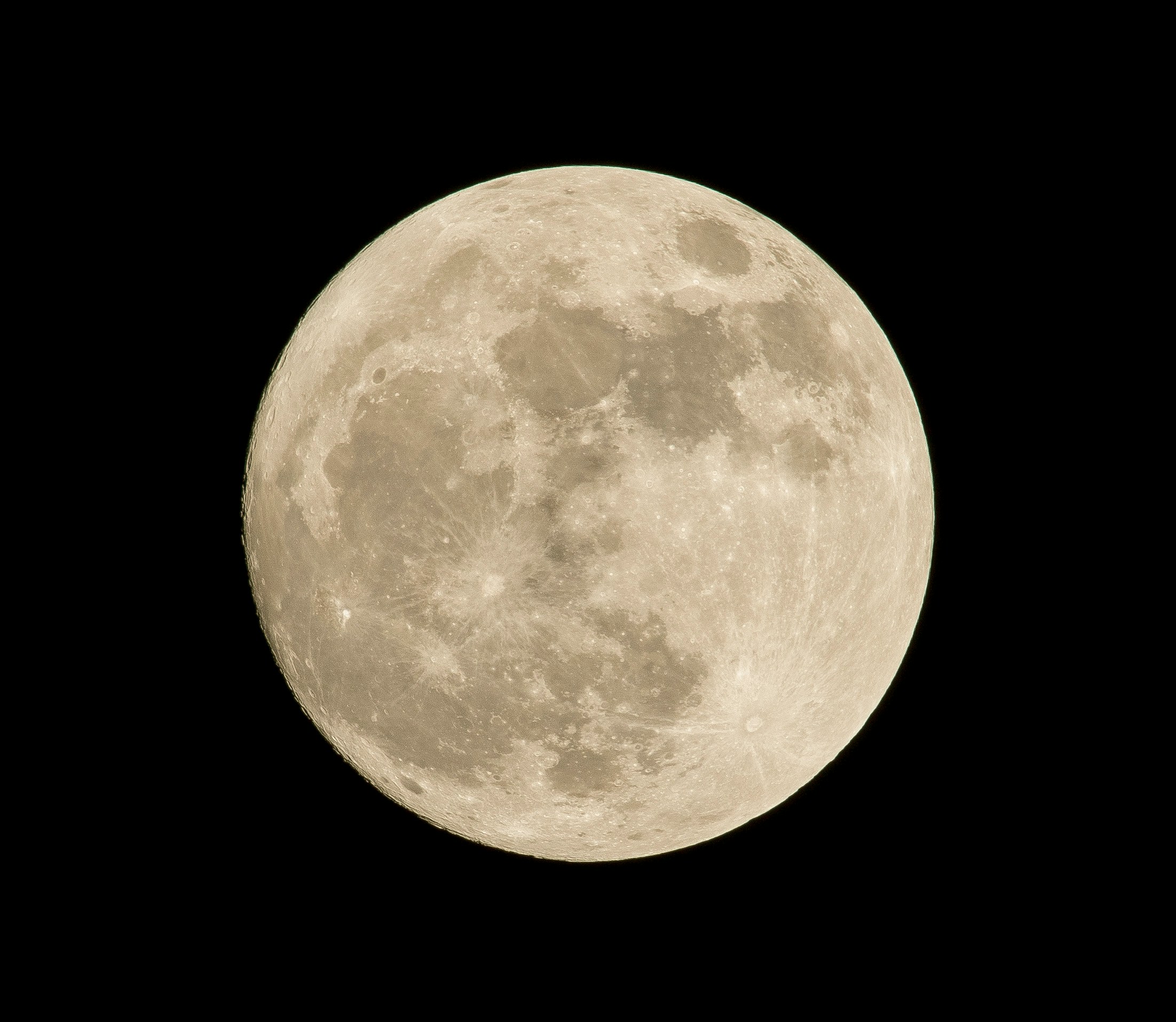
I’m old enough to remember very well July 20, 1969 – the day fifty-seven years ago that men walked on the moon for the first time. In fact, I was 16 years old and was keeping a journal. Our family was in southern Alabama visiting my brother and his young family.
Photo by Pedro Lastra on Unsplash
We were all excited to watch the television coverage of the event. Just by chance, last week I came across my 1969 journal. It was interesting and a bit comical to read a 16-year-old’s thoughts and reactions to various things. I was especially drawn to my entries from July of that year.
I was a real nerd when it came to following NASA and everything about the space program. It was an exciting time and stressful time. You will also notice that every week I took note of how many Americans were killed in the Vietnam War. Here’s a sampling from my journal:
Sunday, July 13, 1969
At 9:32 a.m., Wednesday, July 16, Apollo 11 will be launched from Cape Kennedy. My family will be on vacation in Alabama then, so Neil Armstrong will set foot on the moon at 1:17 a.m. Central Daylight Time. About 20 minutes later astronaut Aldrin will get out of “Eagle,” as the lunar module will be known. Astronaut Armstrong will be walking around on the moon for 2 hours and 40 minutes. It looks like I will be up until at least 4:00 a.m., Monday, July 21. After all, this is a once in a lifetime event. I imagine Queen Isabella would have stayed up all night when Christopher Columbus got to America, if she had had television to watch it on.
Something that puzzles me more than almost anything else is that some people are not interested at all in the space program.
4:00 p.m., Wednesday, July 16, 1969
What a day! Excitement is continually building up inside me! Blast-off of Apollo XI took place at 9:32 a.m. We watched the live TV coverage until about 11:30. NBC had live TV coverage until 1:10 p.m. About 12:30 it was “Go, for TLI!” (Go, for translunar injection!) Now the astronauts: Neil Armstrong, Edwin “Buzz” Aldrin, and Michael Collins are “coasting to the moon. Their speed dropped from more than 24,000 m.p.h. to 7,600 m.p.h. I can think of nothing to compare a spacecraft launch with.
I hope that someday I can witness a launch. There is such thrust that the ground trembles for miles. I would probably faint if I were really there.
At 4:00 this afternoon on the radio I heard that President Nixon has proclaimed Monday, July 21 as a National Holiday. Many nations of the world have already planned to do that. David Brinkley of NBC News reported that all countries of the world that have TVs, except maybe Russia and several others, will pick up the live TV transmission from the lunar surface Monday morning.
When Armstrong and Aldrin get out of the lunar module (“Eagle”) they will set up a TV camera, which will be on them all the time they’re on the moon. The three networks are going to have continuous coverage from noon Sunday until 6:00 p.m. Monday, Eastern Time. I don’t want to miss a thing!
6:00 p.m., July 16, 1969
25 million Americans saw the launch on TV. The space craft, rocket and all was 36 stories tall.
11:55 p.m., July 16, 1969
On the “Late News” we saw recorded TV pictures of Earth taken earlier this evening from Apollo XI. We got the pictures at 11:10.
11:50 p.m., Thursday, July 17, 1969
Bill Morrison of Harrisburg got our TV this afternoon to work on while we’re in Alabama. Marie and I went to Uncle Gene and Aunt Louise’s house tonight to watch the live TV transmission from Apollo XI, 150,000 miles from the earth, toward the moon. Pictures of Earth and inside the Apollo of the astronauts, their food cabinet, star chart, and instrument panels. We are getting up at 4:00 a.m. to drive to Andalusia, Alabama, so maybe I better use common sense and go to bed.
Announced today that in the week ending last Saturday, July 12, that 148 Americans were killed in Vietnam.
Friday, July 18, 1969
We saw about 15 minutes of an unscheduled TV transmission from Apollo XI. It was of “Buzz” Aldrin checking out things in the lunar module, and also of Mike Collins. Armstrong took the pictures.
Saturday, July 19, 1969
Apollo XI started orbiting the Moon today. Tomorrow is the big day. Tomorrow afternoon Neil Armstrong and Edwin Aldrin will land on the Moon – for the first time in history! – in the lunar module (LEM) which is called “Eagle.” The command module is called “Columbia.” I am so excited! I can’t wait for tomorrow!!
About 3:15 p.m., Sunday, July 20, 1969
Man is 4 minutes and 30 seconds from landing on the Moon for the first time! The descent engines were fired on “the Eagle” at T-12:00 (That’s T minus 12 minutes zero seconds.
“We’re on the Moon.” Armstrong and Aldrin had to drive “Eagle” manually a little; there were 2-foot boulders on the landing site. They got it over the rocks perfectly. They landed at 4:17:40 p.m. Eastern Daylight Time. It was announced about 5:00 Central Time that the Moon walk will start at 9:00 Eastern Time tonight, instead of about 2:00 a.m. tomorrow.
7:50 p.m., Central Time, July 20, 1969
It is estimated that 500,000,000 people in the world are watching Apollo XI coverage on TV today!
8:45 p.m. Central Time, July 20, 1969
Newsman (NBC) David Brinkley just said that we have finally found a place where Americans can go where there will be no pickets holding signs saying “Get out of Vietnam” or “Yankee, Go Home!”
My three-year-old nephew is really interested in Apollo XI. He is full of questions that I can’t answer.
9:55 p.m. Central Time, July 20, 1969
Neil Armstrong is on the “porch” of “Eagle” and will soon start down the ladder.
We saw on Live TV man’s first step on the Moon. Armstrong’s first words: “One small step for man. One giant leap for mankind.” It’s really fantastic. The official time was 9:56 p.m. Central Daylight Time, when Neil Armstrong first set foot on the Moon.
About 10:15 “Buzz” Aldrin is on the ground now. He first said, “Beautiful! Beautiful! Magnificent desolation!”
One just said there is a tendency to go backwards, for the ground is soft.
10:25 They just unveiled the plaque and one read it to us. They’ve put up the U.S. flag. We are getting incredible TV pictures from the Moon. About 10:50 C. Time we heard and saw President Nixon talking to them and they talked back. This is truly unbelievable. Before talking to President Nixon they were running and hopping to see what the best way of movement was.
9:20 a.m. Central Time, Monday, July 21, 1969
We watched TV coverage of the first manned moon landing until 12:30 a.m.. It was about 12:10 when Aldrin and Armstrong had to get back into “Eagle.” It was so unbelievable! This morning on TV we are watching the moon walk again.
Lift-off from the Moon is at 12:51 p.m. today, Central Daylight Time.
Tuesday, noon, July 22, 1969
Yesterday watched some Apollo coverage and napped some.
Wednesday, July 23, 1969
Went to the NASA Testing Center near Bay St. Louis. Did not wait for the 10:00 tour.
Went to Michoud Assembly Facility of NASA at New Orleans. Just rode by it. Was a big building.
We had three great hours in the French Quarter in New Orleans, 11:00 until 2:00 P.M. today Enjoyed watching artists sitting on sidewalks painting portraits of people. Really saw a lot of talent. Beautiful “lace” balconies. Narrow, crowded streets. Saw some long-haired, wildly-dressed hippies. I would like to stay there for a week. We went to Preservation Hall – a place which at night has traditional Dixieland Jazz. I wanted to go back tonight. Crossed the Mississippi River twice. Big disappointment! Only ½ mile wide. Fancy bridges, but the river was really no big thing.
We got on the longest bridge in the world at 3:07. It was the 24-mile bridge over Lake Ponchartrain. Had to pay $1.00 toll. Got off the bridge at 3:30. Staying at “LaGrace” Western Motel in Hattiesburg tonight. Have a COLOR TV in the motel room! Bought July 25 edition of Life tonight. About Apollo XI.
11:10 A.M., Thursday, July 24, 1969
182 Americans were killed in the last week of fighting in Vietnam.
11:30 A.M. Coverage of the splashdown and recovery of Apollo XI is starting. Sure wish I could watch on TV. This is the only one this summer and we have to be on vacation. Apollo XI is now going more than 24,000 m.p.h. Before splashdown it will near 25,000 m.p.h.
When Apollo entered “blackout” it was going 24,630 m.p.h. There is no communication during “black-out.” We’re in Jones, Mississippi now, got off Interstate 59.
Apollo XI has been sighted by recovery ship, the USS Hornet. It streaked through the sky. The heat shield was something like 4,900 degrees F.
Splashdown! They’re in the water. We’re in Laural, Mississippi. Apollo XI is 9 miles from the Hornet. It is upside down. Will bob around like that until floatation collar is inflated and rights it. No radio contact, for antenna is under water… Two inflated bags on top of Apollo XI have turned it right-side up.
2:45 P.M. The Apollo XI crew are all fine!
Reading my 1969 journal brought back a lot of memories and reminded me how obsessed I was with writing down the exact time we were learning things about the Apollo XI mission.
Space travel today gets little publicity, so it must be difficult for the 16-year-olds today to imagine how exciting it was to watch the first landing on the moon. No one knew in advance how solid the moon’s surface would be. I remember we marveled at the little clouds of dust Armstrong and Aldrin’s boots kicked up as they more or less bounced as they took steps.
I always felt bad for Michael Collins. He had to just keep orbiting the moon while the other two astronauts got to land on it and run around on it.
Back in the day, there was what today would be called an urban legend that the moon was made of green cheese. People stopped saying that after July 20, 1969.
By the way, it was a big deal that our motel room in Hattiesburg, Mississippi had a color TV. We had a black-and-white TV at home, and so did our brother in Alabama.
Note: This will be my last blog post for a while. There are just more pressing tasks – like cutting down sweetgum sprouts — that need my attention. One of the joys of country living. They multiply like rabbits and grow as fast as kudzu.
I will sorely miss getting to work on my blog posts every day, but life changes as we grow older and energy is limited.
Today’s blog is about the Ground Observer Corps and what I learned about it when I was writing a local history column for Harrisburg Horizons newspaper.
The Ground Observer Corps was formed during World War II. One source I found indicated than more than 1.5 million civilians volunteered to man 14,000 observation posts in the coastal states of the United States. Another source reported 800,000 volunteers manned the eventual 16,000 observation posts.
There was a Ground Observer Corps post in the little town of Harrisburg, North Carolina, so I did some research about it in 2007 when I was writing a local history column for Harrisburg Horizons newspaper.
Keep in mind that radar detection of aircraft was low during the war, so human eyes on the skies was a way to try to keep our country safe from foreign bombers.
The program was ended by the Army Air Forces in 1944 but was formed again during the Korean War in the 1950s.
Public service announcements were used to recruit volunteers who were instructed to call their local Civil Defense office.
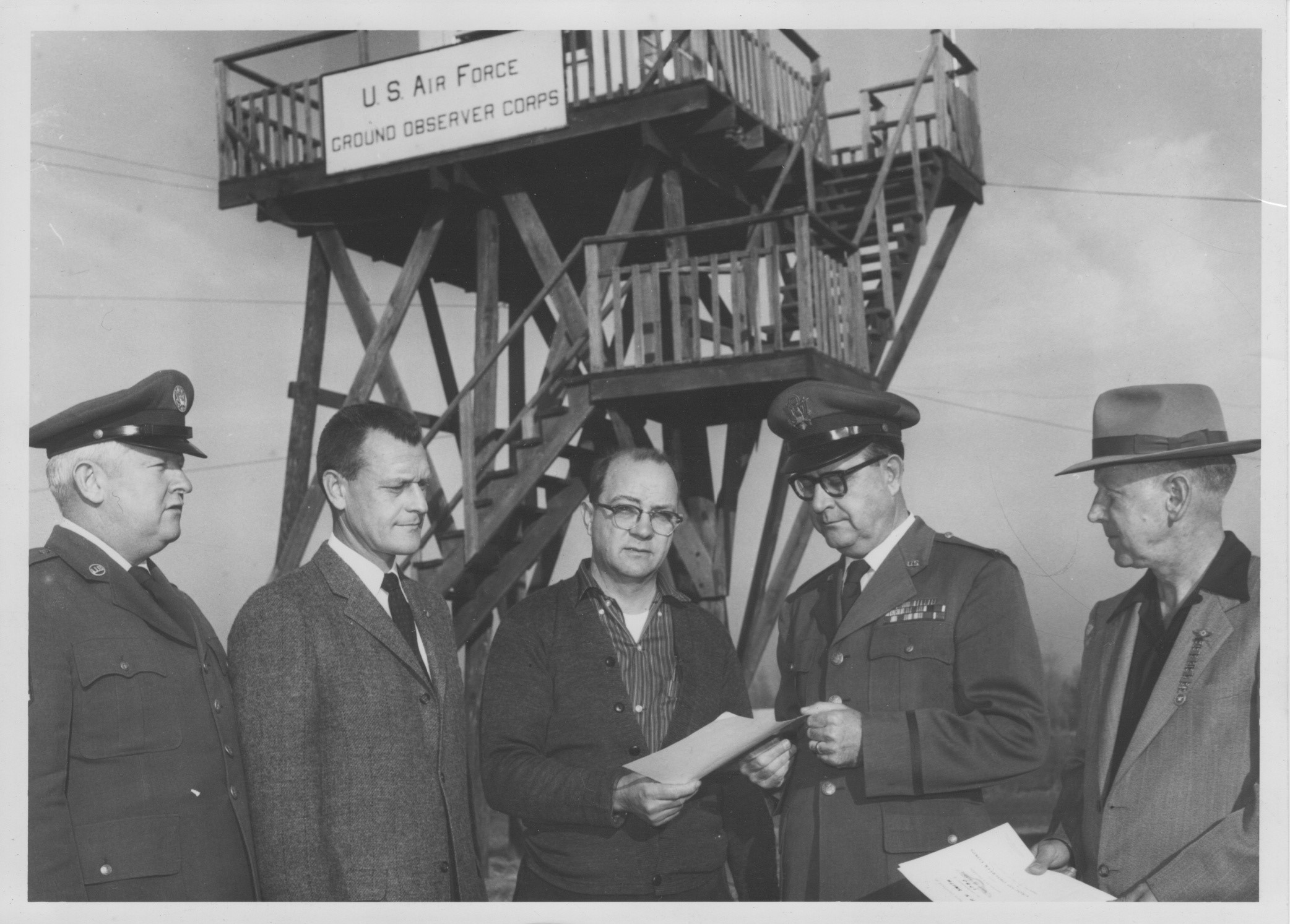
The Ground Observer Corps post in Harrisburg, NC was organized on July 14, 1955 through the Harrisburg Volunteer Fire Department. It was another civic service in which our local general practitioner, Dr. Nicholas “Nick” E. Lubchenko, played an important role.
Presentation of certificates of service to representatives of the Ground Observer Corps Station in Harrisburg, NC January 27, 1959. Pictured, left to right, are U.S. Air Force M/Sgt. M.L. Venable; Emmett C. Sapp, Jr.; J. David Blume; Lt. Col. James Brennan, Ground Observer Corps Coordinator for North Carolina; and P.V. “Pete” Smith.
John David Blume, Sr. was the post supervisor. Plato “Pete” V. Smith was chief observer. Emmett C. Sapp, Jr. was assistant chief. Mr. Sapp’s extensive experience in an Aircraft Battalion in North Africa, Italy, and Germany during World War II made him well-qualified to assist in training the volunteers in Harrisburg.
Volunteers signed up for whatever hours they could be at the fire station. The post had to be manned 24-hours-a-day, seven days-a-week. This was quite an undertaking in a town of just 300 people!
The volunteers constructed an observation tower in 1957 to make observations easier and more efficient. Duke Power Company (now Duke Energy) donated utility poles to support the tower. Mr. Sapp remembered digging holes by hand for the poles to be anchored in. The tower was 15 to 20 feet tall (to the floor of the platform) and the platform was 20 feet square.
Mr. Sapp told me that almost everybody who lived in Harrisburg at the time – men and women – volunteered and played a part in the program. Although primarily concerned about an invasion by enemy aircraft, all plane sightings were reported. “We couldn’t take any chances,” Mr. Sapp said.
Radar detection of low-flying planes improved enough by the late 1950s that the Ground Observer Corps was no longer needed. It was deactivated on January 31, 1959.
If you’d like to read more about the Ground Observation Corps’ operations in Harrisburg, look for Harrisburg, Did You Know? Cabarrus History, Book 1 on Amazon and at Second Look Books in Harrisburg. The book is available in paperback and e-book.
Janet
All history is local, but no history is just local
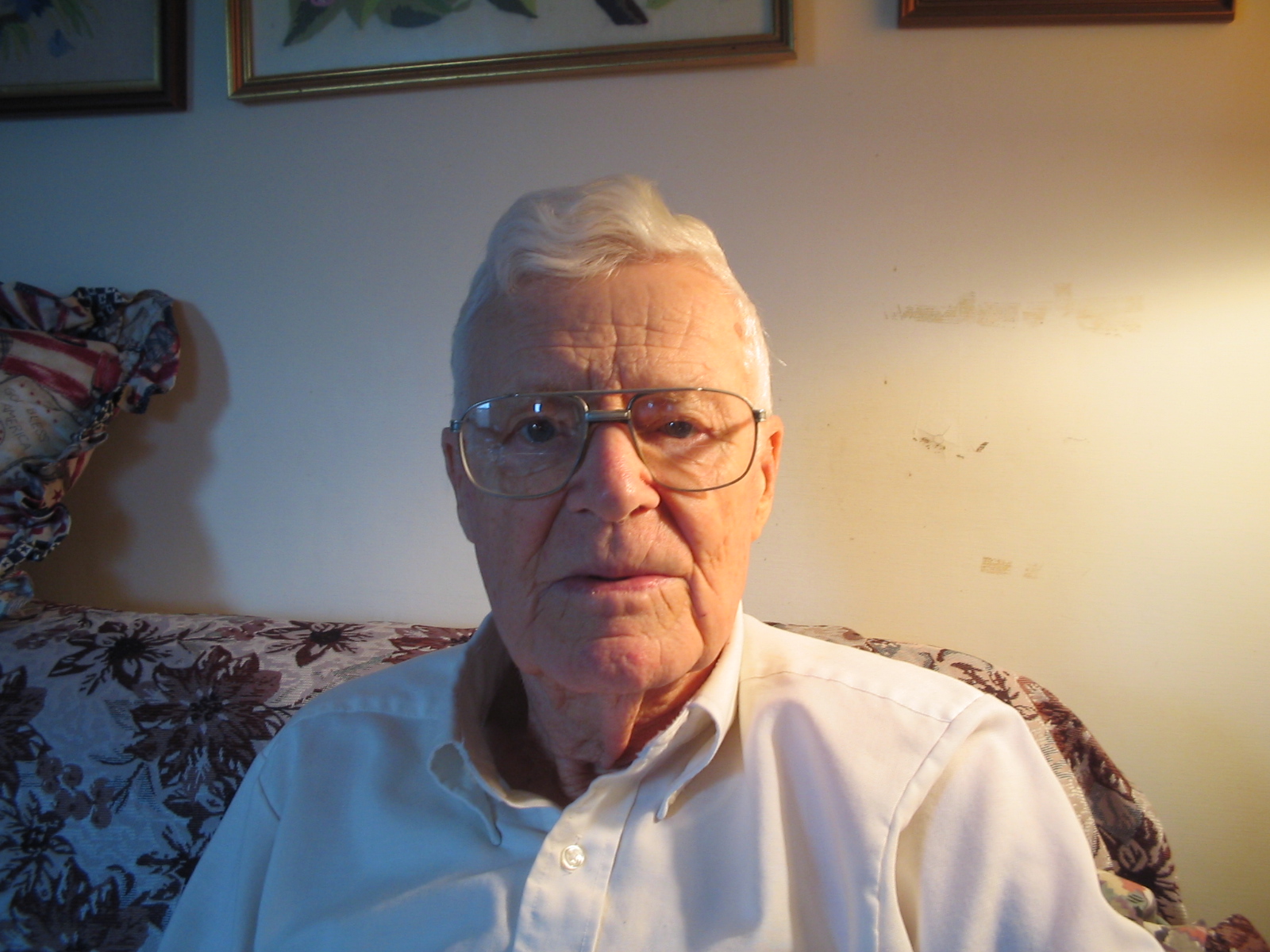
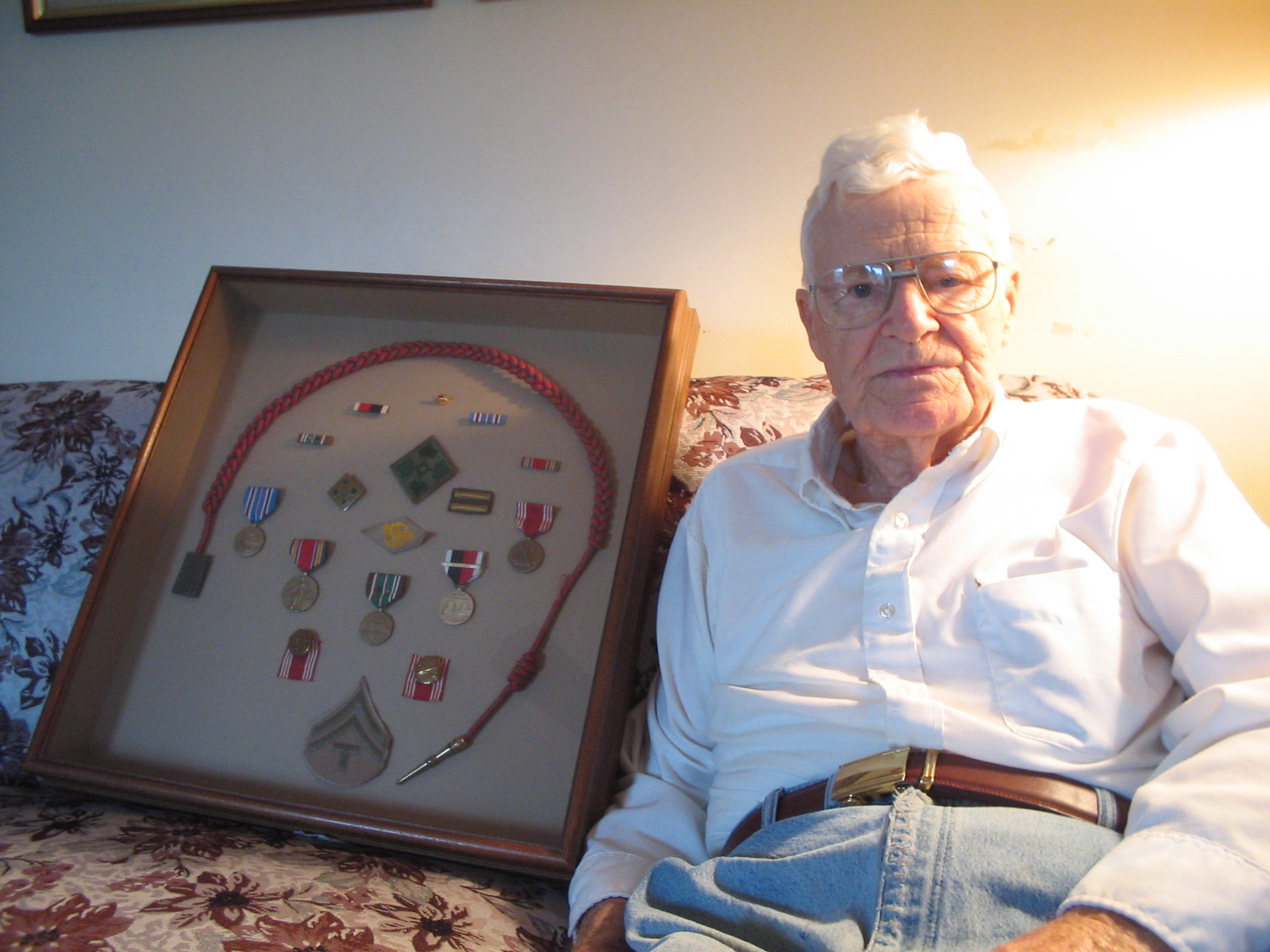
Today’s blog post is in honor and memory of all those brave soldiers who stormed the beaches of Normandy on June 6, 1944 — 82 years ago today. I knew one of them – Mr. Ira Lee Taylor of Harrisburg, North Carolina, and was privileged to interview him in 2007 about his World War II experiences while I was writing a local history column for Harrisburg Horizons newspaper. He was 93 years old.
I offer the following essay that I wrote in memory of Mr. Taylor:
“Memories of World War II”
His 93-year-old blue eyes were clear as his mind was sharp, though his back was bent and he relied on a walker to navigate inside his home. When I called and asked if I could interview him about his memories of World War II, he agreed without hesitation.
Born after the war, I was embarrassed by my ignorance of its details. It seemed that every year in school we started by studying Plymouth Rock and by the end of the year scarcely managed to get to Appomattox.
With pen in hand, I knocked on Mr. Taylor’s door. The only question I had in mind to ask him was, “What did you do in the war?” That question was enough for Mr. Taylor. Over the next several visits, he recounted in amazing chronological order the places he was sent and the things he saw, heard, smelled, tasted, and felt that forever changed his life. There was a reverence in his voice. We were treading on hallowed ground.
World War II Veteran and Harrisburg Mail Carrier, Ira Lee Taylor
Training for the war was thrilling and boring for a young man from a piedmont North Carolina community of fewer than 300 people. Although he had gone off to “State College” (now, North Carolina State University at Raleigh) and earned a degree in forestry, there was a naiveté about this army draftee that followed him through the battlefields of France, Belgium, and Germany. As he regaled me with his memories of the war, I sensed that many other recruits were as “wet behind the ears” as was Mr. Taylor. They shared a heavy responsibility and had in common the mindset, “You do what you have to do.” No self-pity in that generation!
It took 11 harrowing days for Mr. Taylor’s ship to cross the Atlantic along with other troop and liberty ships. German torpedoes picked off liberty ships on the perimeter of the convoy of more than 100 ships that transported and accompanied the U.S. Army 4th Division to England. The rough ocean made some men so seasick that they said if they survived the war they were going to stay in Europe.
Mr. Taylor recalled the training he got in England for the invasion of Normandy. He just didn’t know that was what he and thousands of others were being prepared for or when their skills would be put to the test. They were ordered to waterproof the trucks in the motor pool by packing something like Play-Doh around the sparkplugs and rigging up elbow pipes to the tailpipes that could carry exhaust up higher than the roof of the trucks in case the trucks were in deep water.
It was a time of “loose lips sink ships” and even journalists understood the necessity for complete secrecy of military plans and troop movements. The soldiers didn’t know much of what was going on in the war, but it wasn’t their business to know. It was their business to train, be ready, look out for one another, and follow orders.
The night before the scheduled invasion, the men of the 4th Division were briefed. They were told that they would make the landing on Normandy and it was expected that 80 percent of them would be killed in the process. They got halfway across the English Channel when a huge storm forced them to return to Plymouth, England.
Twenty-four hours later, Mr. Taylor was on one of the 499 vessels that took part in the invasion. Utah Beach was the code name of the speck of sand on the coast of France where he began his trek across continental Europe. “The beach was filled with black smoke, dust, dirt, and the smell of gunpowder. Boy, it smelled awful!” he said.
Another thing he mentioned that is not learned by reading a history book or watching a movie is the terrible smell of the fatigues the soldiers had to wear for the invasion and for the next several days. The fatigues were impregnated with chemicals to protect the soldiers in case they were gassed.
As Mr. Taylor’s narrative progressed through the war, he spoke of the ground quivering from the concussion of exploding bombs, booby-trapped bodies of American soldiers, countless nearly-impenetrable hedgerows, the French Resistance, foxholes, rumbling tanks, waves of blooming red poppies on Flanders Field, being surrounded at Bastogne in Belgium, The Battle for Huertgen Forest where the pine and fir trees in that beautiful forest were shirred off into matchsticks, shoe mines that would blow your foot off, the snow and cold of the Battle of the Bulge, Gen. Dwight D. Eisenhower walking up one day and talking to him like he was just another G.I., seeing the snow-capped Alps, and seeing lots of sights he had tried to forget.
Mr. Ira Lee Taylor of Harrisburg, North Carolina, with his framed military service medals
After a seven-day calm voyage back to the States during which the troops were treated to wonderful food and entertainment and sightings of whales and their waterspouts, the ship Mr. Taylor was on entered New York Harbor. Everyone rushed to one side of the ship to see the Statue of Liberty, but the ship started listing so badly that they were ordered to redistribute themselves on the deck.
Rewarded with a 30-day furlough, Mr. Taylor returned home to North Carolina where he got married and then boarded a bus bound for Camp Butner to be trained for the invasion of Japan. One of the men on the bus had a transistor radio over which came the announcement that Japan had surrendered and the war was over. That’s how close Mr. Taylor came to being shipped to Japan after what he had lived through in Europe.
The 4th Division suffered the third highest number of casualties of any United State military Division (22,600) in World War II. Mr. Taylor considered himself very fortunate to have come home alive. He delivered mail to my house for 32 years until he retired in 1980. It was only in 2007 that I learned that he had taken part in the largest military invasion in history.
If you want to read the whole story and other things I learned while writing the “Harrisburg, Did You Know?” local history column for Harrisburg Horizons newspaper, look for my books, Harrisburg, Did You Know? Cabarrus History, Book 1 and Book 2 on Amazon and at Second Look Books in Harrisburg, North Carolina.
Janet
All history is local, but no history is just local.
The fire hose of corruption and trickery continues from the White House. I’m trying to keep up, but it’s impossible.
The New Acting Director of National Intelligence
Saying that Bill Pulte, who Trump named as Acting Director of National Intelligence on Tuesday has no intelligence experience is not a joke. It’s true.
When the position of Director of National Intelligence was created by the U.S. Congress in 2004, the law stated that the holder of that title “shall have extensive national security expertise.” That seems like a no-brainer, right?
So much for the law.
We learned during Trump’s first term in office that he prefers to have “acting” directors because “acting” directors and “acting” secretaries of departments of the Executive branch do not have to go through a Congressional confirmation process.
Pulte is the grandson of the Pulte Group’s founder. The company is the nation’s largest residential developer. (In fact, it is developing an 1,100-home development near my home.)
His genealogy and Mr. Pulte’s loyalty to Trump (such as a social media campaign to oust Jerome Powell as Chairman of the Federal Reserve and pushing to get Trump’s non-supporters like Lisa D. Cook, a Federal Reserve Board of Governors member, prosecuted for fraud – which hasn’t panned out) landed him his current position as Director of the Federal Housing Finance Agency. In other words, he oversees Fannie Mae and Freddie Mac.
According to a June 2, 2026 New York Times report, Pulte will continue in that position while he also serves as Director of National Security.
Does that make sense to anyone?
Trump chose not to visit 14 veterans wounded in the Iran War
While Trump was at Walter Reed Medical Center last Tuesday for a physical examination, he chose not to visit 14 veterans who were wounded in the Iran War.
Trump has downplayed the sacrifices made by our military personnel and their families. He still prefers to call the war “an excursion.”
To admit that 13 American military personnel have been killed and somewhere between 140 and 400 American military personnel have been wounded would be a negative reflection on him and his perfect deal making and war-ending prowess. It is such a distasteful admission from Trump or the Pentagon to make that the public cannot find out how many have been wounded. Hence, the 140 to 400 figure. Just try finding a definitive number in an online search.
I remember back in the 1960s and 1970s when the Pentagon released such information weekly. Some said later that those reports were inaccurate, but at least they made an effort to keep the American people informed about war casualties.
Then there’s the 250th Birthday of America Great American State Fair
For starters, Trump wouldn’t know a state fair if he fell into one. This 10-day or 16-day celebration of the 250th anniversary of the signing of the Declaration of Independence was organized by Donald Trump’s nonprofit Freedom 250.
(“Donald Trump’s nonprofit…,” sounds like an oxymoron to me, but that is how Freedom 250 is described.)
Many singers and artists were invited to perform. Some of them, like Martina McBride, signed on because they thought it was a nonpartisan event.
Most of them, including Trump’s buddy, Kid Rock, have announced they aren’t going to participate. It’s pretty bad if Kid Rock won’t even show up.
I guess it will just be Lee Greenwood singing “I’m Proud to Be an American” over and over and over and over….
Of course, now Trump is calling the performers who have cancelled “third rate.” He wrote on social media that they were “overpriced singers, who nobody wants to hear, whose music is boring, and yet who do nothing but complain.”
So why did his nonprofit organization invite them?
He now says he might just host the whole thing and turn it into a MAGA Rally… as if that wasn’t what he wanted all along. It’s all about him.
The 4th of July was a nonpartisan celebration of freedom for 249 years. Of course, Trump had to do everything imaginable to try to ruin it this year. Of all the years for him to be in office!
This year’s celebration of a week or two won’t hold a candle to our bicentennial celebration in 1976, which lasted all year – no matter how Trump claims otherwise.
Don’t let him ruin our nation’s 250th birthday for you!
I wonder who told Trump this was our nation’s 250th birthday. I wish they hadn’t told him.
A spelling lesson
It was so classy for the U.S. President to spell “dumb” for us last week. He was excited to point out that “most people” don’t’ know that “dumb” ends in a “b,” then he went on and to claim he had coined the word “dumocrat.” In fact, he went into detail to explain to us exactly what he did to transform “democrat” to “dumocrat,” as if it rocket science.
Mr. President, I’ve heard the word “dumocrat” before you so proudly said it and explained to us in detail how you came up with it. I even had a cousin call me and my grandfather dumocrats in an email to me during Trump’s first term after she found out that I did not support his policies.
To say that I found that offensive is a gross understatement. My grandfather (her great-grandfather) died in 1956 when I was three years old. Frankly, I had no idea of Grandpa’s political leanings, and I don’t know if my cousin knows what she’s talking about. It does not matter to me how Grandpa voted. He’s the only one of my four grandparents who was still alive when I was born. I have only faint memories of him. It brings tears to my eyes as I type these words. For anyone to call him a “dumocrat” when he was a farmer born in the 1870s is abhorrent.
Trump thinking it was cute, clever, funny, mean – whatever his motivation – last week in bringing the word “dumocrat” back to my attention was like pouring gasoline into an old wound and then striking a match. The saddest part, though, is that this example of Trump’s name calling is probably the least offensive one he’s ever used. He is normalizing bad behavior. The derogatory names he calls and things he says about women, for starters.
Microsoft Word is even offended, for it keeps automatically changing “dumocrat” to “democrat” every time I type it. It will be a miracle if I get this published on WordPress the way I’ve written it.
Words are weighty. Words can be used like daggers. The “leader of the free world” should choose his words carefully. They perhaps carry more weight than those of anyone else in the world. And the world is watching and listening.
I cringe to imagine what horrors loom in the 10 days until Trump’s birthday and then the remaining three weeks until the 4th of July.
By the way, we have troops who were sent to the Middle East with very little notice in March and more were sent on April 19 for the war in Iran. No one is talking about them, but they were deployed, and they have no idea when they’ll get to come home.
Trump says he is in no hurry to reach a peace agreement (which he incorrectly calls “a deal.) He keeps drawing a line in the sand. A few minutes later, he moves the line. A businessman conducting a war….
Janet
The government should be afraid of its citizens, not the other way around.
It would be helpful for you to read my blog post from yesterday before you read today’s. Here’s the link to yesterday’s post: Public education is still under attack.
November 3, 2026 is Election Day in the United States. Political campaign ads will start any day now. We will be bombarded by hundreds of hours of smear campaigns
Photo by Cyrus Crossan on Unsplash
The GOP reportedly plans to spend $100 million to campaign against former Gov. Roy Cooper in North Carolina as he runs for the U.S. Senate seat currently held by Thom Tillis.
I think the right-wing conservatives have taken an ounce of misinformation and grotesquely twisted it to fit their agenda. What we have now are members of Congress making statements and laws denigrating public education. They probably don’t personally know a public-school teacher, a public-school administrator, or a public-school student.
That’s been part of the grand plan ever since the birth of the Tea Party. Day-by-day, these people chisel away at public education. We’ve certainly seen it played out by the North Carolina General Assembly!
I happen to know some public-school teachers. They are too busy trying to teach Johnny and Jane how to read and do basic math to spend time trying to force Johnny to become Jane or Jane to become Johnny.
It doesn’t help when we have a U.S. President who says that you send your son to school in the morning and he comes home that afternoon as a girl.
I know that transgenderism is an issue. I know that there are children and adults who feel trapped in a body with genitalia that does not feel right for them. My heart breaks for them. It has to be miserable to feel like you are not living in your authentic body.
Transgender people do not scare me, but right-wing regular folks and right-wing politicians who hate and fear transgender people do scare me.
As for their fear that a transgender person might enter a public restroom? That does not bother me as much as the time I was in a public women’s restroom when a man walked in and urinated in the sink.
The usage of keywords and catch phrases in campaign material should give you a clue where a candidate stands on a lot of issues.
I believe the Republican Party’s favorite word is indoctrination. Sadly, the “indoctrination” they seem most afraid of is that students might learn to be accepting of others.
They might learn that it is not right to bully others, even though the U.S. President does that daily.
They might learn that each individual should be allowed to aspire to and attain whatever occupation and level of achievement they strive for, even though daily the U.S. President berates journalists – especially those who are female and those who are female and of skin color other than white.
They might learn that girls have an equal opportunity to excel in education even though the U.S. President brags about grabbing women by their genitalia.
Politicians who spend their time worrying about non-existent problems while turning a blind eye to the horrendous corruption of the Trump Administration and its evil actions that cause the deaths of innocent people and animals do scare me.
All this right-wing broken record hoopla is pushed through the use of catch-words like “indoctrination,” “transparency,” and “parental rights.” But those hot-button words are not what’s behind this. They are just convenient ways the right-wing conservatives rely on to get our attention and try to scare us.
It will be tempting to turn off the TV from now until November 3 to avoid hearing the thousands of campaign ads. Don’t rely on what the ads say. Research a candidate’s track record. Look into the things they say when they think the microphones are muted. Look at their voting record if they’ve held public office before.
You owe it to yourself and everyone else living in the United States today and in the future.
Watch for my blog post tomorrow when I will write about a proposed anti-abortion bill under consideration in North Carolina.
Janet
The government should be afraid of its citizens, not the other way around.
Today is Memorial Day in the U.S. Take time to think about the members of our armed forces who have given their lives since 1775 so we can live in a free country.
Photo by Janne Simoes on Unsplash
Memorial Day used to be on May 31, but then the American people got spoiled and didn’t want a holiday to fall willy-nilly on just any day of the way, so now we remember our citizens who have died on the battlefield on a Monday so we can combine it with trips and furniture and car sales.
No excuse is too small for retailers to make a buck on such a sacred day.
My guess is that most Americans have no idea what Memorial Day is really about. When I hear someone say, “Happy Memorial Day,” I have to shake my head. What is happy about a day of remembrance of our war dead?
Since Memorial Day falls on May 25 this year, it shares the day with the opening of the 1777 Constitutional Convention in Philadelphia.
After we declared our independence from Great Britain, we needed a framework for a government to replace the monarchy. The Articles of Confederation were adopted by the Continental Congress in November 1777. It was in that document, penned by John Dickinson of Delaware, that the name “United States of America” first appeared.
The Continental Congress continued to govern the new country through the end of the Revolutionary War.
Janet
The government should be afraid of its citizens, not the other way around.