I write southern historical fiction, local history, and I've written a devotional book. The two novels I'm writing are set in Virginia and the Carolinas in the 1760s. My weekly blog started out to follow my journey as a writer and a reader, but in 2025 it has been greatly expanded to include current events and politics in the United States as I see our democracy under attack from within. The political science major in me cannot sit idly by and remain silent.
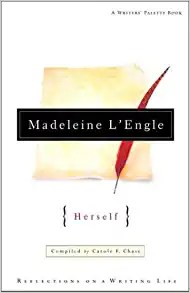
In today’s blog post, I’m revisiting a favorite book, Madeleine L’Engle {Herself}: Reflections on a Writing Life, compiled by Carole F. Chase. This little book is filled with gems from author Madeleine L’Engle.
Here’s a sampling of Ms. L’Engle’s quotes from the book:
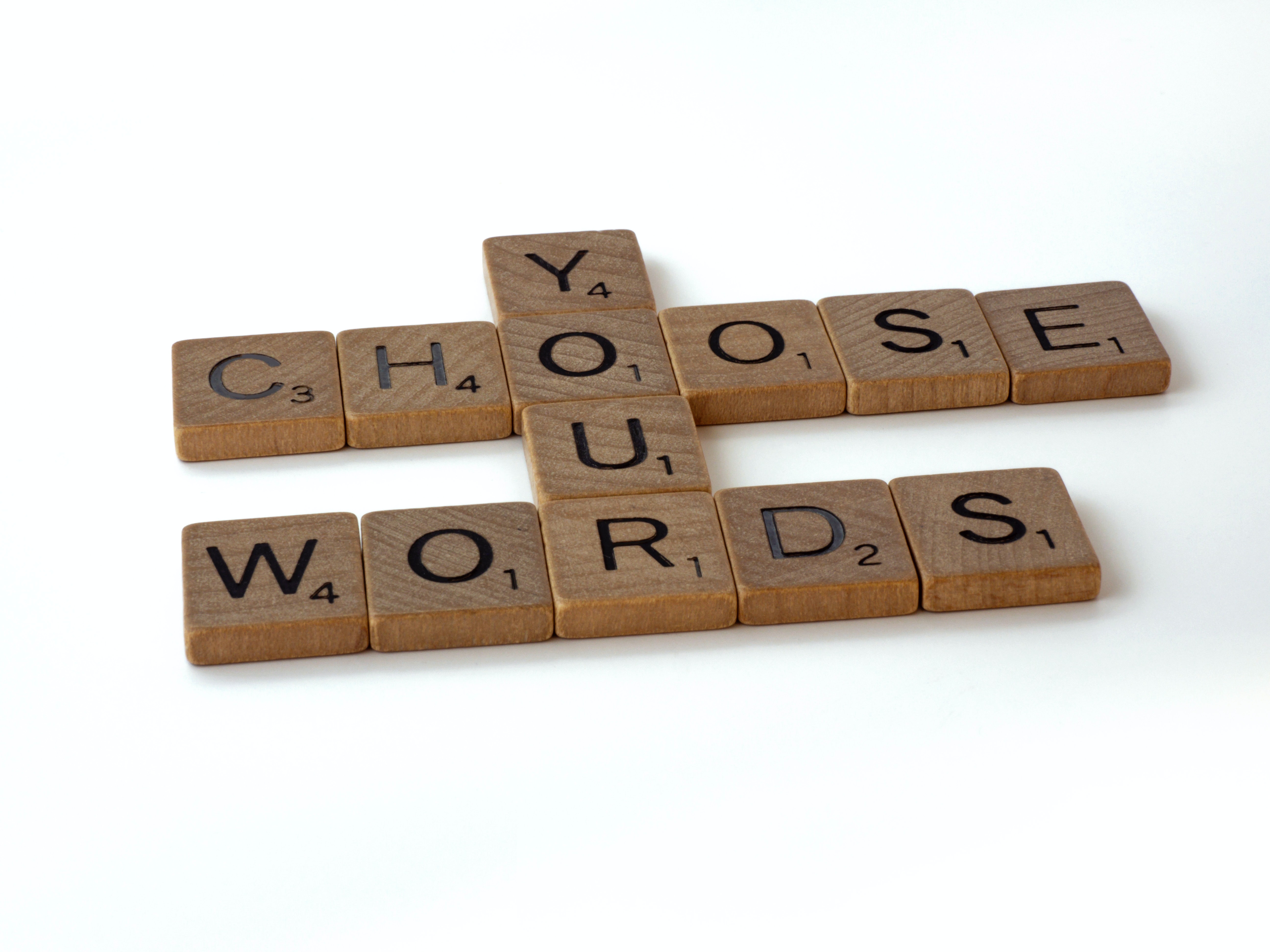
From page 287, “Avoid Limiting Vocabulary”
Photo by Brett Jordan on Unsplash
“I have a profound conviction that is it most dangerous to tamper with the word. I’ve been asked why it’s wrong to provide the author of a pleasure book, a non-textbook, with a controlled vocabulary list. First of all, to give an author at list of words and tell him to write a book for children using no word that is not on the list strikes me as blasphemy.”
She goes on to give the word soporific from Beatrix Potter’s description of the effect lettuce had on Peter Rabbit. Soporific was the perfect word and much better than saying, “Lettuce made Peter sleepy.”
From page 295, “Writers Are Dangerous”
Photo by Koshu Kunii on Unsplash
“When Hugh and I went on a trip to Russia I almost didn’t get a visa because our travel agent put down my occupation as writer. Writers think. Writers ask questions. Writers are dangerous. She finally persuaded ‘them’ that I write only for children and was not a threat. In any dictatorship, writers are among the first to be imprisoned, and vocabulary is quickly diminished and language deteriorates. Writers, if their vocabulary is not leashed, are quick to see injustice, and rouse the people to do something about it. We need words with which to think; kill words and we won’t be able to think and we’ll be easier to manipulate.”
From page 106, “The Pain of Rejection”
War and Peace, by Leo Tolstoy
“During that dreadful decade [of rejection’ I pinned on my workroom wall a cartoon in which a writer, bearing a rejected manuscript, is dejectedly leaving a publisher’s office; the caption says, ‘We’re very sorry, Mr. Tolstoy, but we aren’t in the market for a war story right now.’
From page 39, “A Work of Art Is Work”
“A young writer told me once that she was asked by a neighbor what she did; and when she replied that she writes poetry, the neighbor said, ‘Oh, I didn’t mean your hobby.’ A woman probing about how much a year I make in royalties remarked, ‘And to think most people would have had to work so hard for that.’
“Well, make no mistake about it, a work of art – great or small, major or minor – is work. It’s hard work. El Greco’s paintings didn’t just spring to the canvas in an hour. And it encourages me to think of the enormous amount of rewriting Dostoyevsky did – thousands of pages just thrown out.”
I think that’s a good Madeleine L’Engle quote to end my post. In case you want more of her quotes from Madeleine L’Engle {Herself}: Reflections on a Writing Life, compiled by Carole F. Chase, look for this delightful book in an independent bookstore or online. Also, here’s the link to my June 20, 2022 blog post, A Book Chock-Full of Gems.
Madeleine L’Engle {Herself}: Reflections on a Writing Life, compiled by Carole F. Chase
Since my last blog post
Along with almost everyone else in the northern hemisphere, I’m trying to stay cool during this very hot summer. My thoughts are with the people who have been affected by severe drought and wildfires, the people who have to work outside, and the people who don’t have air-conditioning.
I grew up without air-conditioning. When you’ve never had something, you just make do. Once you’ve grown accustomed to air-conditioning in the summer and central heat in the winter, though, it’s hard to give them up. I don’t want to go back to those hot, humid nights when it was too hot to sleep.
Until my next blog post
Read a good book. More than one, if you have the time and opportunity.
Don’t take a single day for granted.
Spend time with friends and family.
Remember the people of Ukraine, Uvalde, Highland Park, . . . .
Today’s topic is somewhat obscure and isn’t given much thought by the average citizen until it comes into play. When it needs to be put into action, it is of monumental importance.
The Presidential Succession Act of 1947 was signed into law by President Harry S. Truman on July 18, 1947. To fully appreciate US Presidential Succession, however, we need to first look at the United States Constitution and the Presidential Succession Acts prior to 1947. Later in this post, we’ll learn about what has happened on this matter since 1947.
My post today is longer than usual, but please read on. You might learn something. I did!
US Constitution, Article II, Section I, Clause 6
Photo by Brett Jordan on Unsplash
The vice president is designated as the first in the presidential line of succession by Clause 6 in Section I, Article II of the US Constitution. That is all many Americans know, since we’ve never lost a sitting president and sitting vice president at the same time… or lost a president who has assumed the office due to the death or incapacity of his predecessor.
Clause 6 also gives Congress the authority to provide for the line of succession after the vice president.
US Presidential Succession Act of 1792
The Presidential Succession Act of 1792 designated the US Senate president pro tempore as next in line after the vice president, followed by the Speaker of the House.
US Senate Practice in the 1800s
During most of the 19th century, the US Senate assumed it could elect a president pro tempore only during the absence of a vice president. With Congress only being in session approximately half the year at that time, concerns were raised over the high mortality rate of the era. What if the president and vice president both died or became incapacitated during Congress’ adjournment?
The solution was for the vice president to voluntarily exit the Senate chamber before the current session of Congress ended. While the vice president was out of the room, the Senate would elect a president pro tempore.
That scheme sort of worked for decades, but then vice presidents from the minority political party started fearing that in their absence from the Senate chamber, someone not from their political party might be elected. To remedy that, some vice presidents refused to leave the chamber while the vote was taken.
Congressional Action in 1886
Photo by Joshua Sukoff on Unsplash
No deed goes unpunished, and it seems that Congressional members are always looking for something they can change and take credit for. In 1886, Congress changed the presidential succession order after the vice president cabinet secretaries in the order in which their federal departments had been created.
No Act of Congress goes uncriticized. Proponents of the 1886 Act maintained that the office Senate pro tempore is filled based on parliamentary skills and not on the person’s executive skills.
The Death of President Franklin D. Roosevelt in 1945
Vice President Harry Truman was in House Speaker Sam Rayburn’s office enjoying a glass of bourbon when they received word that President Roosevelt had died and Truman was to take the oath of office for the Presidency as quickly as possible.
Mr. Truman was friends with Sam Rayburn and had a somewhat strained relationship with Senate President Pro Tempore Kenneth McKellar. It came as no surprise then when President Truman started campaigning for a change in presidential succession.
Arguing that Sam Rayburn had been chosen by his Congressional peers to be their leader in the office of Speaker of the House, Truman pushed for a change in the law.
This was completely political. Although Truman, Rayburn, and McKellar were all Democrats, Truman preferred Rayburn over McKellar and saw his chance to reinstate two elected officials in the line of succession after the vice president and before cabinet members. Cabinet members, of course, are not elected. They are nominated by the sitting US President and reflect the governing philosophy or the President.
The Presidential Succession Act of 1947
President Truman prevailed. The result was the Presidential Succession Act of 1947, which established the line of succession as the vice president, the Speaker of the House, the Senate President Pro Tempore, followed by the cabinet secretaries in the order in which their departments were created.
When House and Senate Leaders are in Opposition to the President
Of the 76 years since the Presidential Succession Act of 1947, the Speaker of the House has not been from the President’s political party 44 years. The President Pro Tempore of the Senate has not been from the President’s political party for 36 of those 76 years.
Photo by Andy Feliciotti on Unsplash
As we have witnessed in recent years, these situations can create stalemates in Congress when it comes to a US President being able to get his legislative issues passed into law. It boils down to the balance of power between the three branches of the federal government and the system of checks and balances. Sometimes it’s a good thing, and sometimes it’s a bad thing. It all depends on which political party or philosophy you align yourself with and how quickly you want to see the laws of the land changed.
The 25th Amendment to the US Constitution in 1967
Until the adoption of the 25th Amendment to the US Constitution in 1967, there was no way to replace a deceased, incapacitate, or resigned US vice president or one who had moved into the office of US president due to an unexpected vacancy in that office.
Prior to the 25th Amendment, therefore, the office of vice president remained vacant until the next presidential election. That meant the Speaker of the House was first in line if something happened to the president.
With the 25th Amendment in place when Vice President Spiro Agnew resigned, President Richard M. Nixon had the authority to nominate Gerald R. Ford on October 12, 1973. Mr. Ford was confirmed by Congress on December 6, 1973. It is ironic, then, that Gerald Ford became the president when Richard Nixon was forced to resign. I was majoring in political science in college at the time. It was a great time to participate in political debates. There was never a dull moment in poli sci class!
When Presidential Succession becomes a concern, it suddenly becomes a big concern
When President John F. Kennedy was assassinated in 1962, Vice President Lyndon B. Johnson became the President. Next in line for the office were 73-year-old Speaker of the House John W. McCormack and 86-year-old Senate President Pro Tempore Carl Hayden.
Photo by History in HD on Unsplash (I couldn’t help but notice there’s not a woman or a person of color in the entire photo. It’s an image that epitomizes government in the US in the early 1960s.)
Our current US president is 79 years old. He might run for reelection in 2024. Regardless of one’s political leanings, age is an issue. That said, though, I would be remiss if I didn’t point out that a 73-year-old and an 86-year-old in the year 1962 were definitely considered elderly. Seventy-three isn’t considered as old as it did in 1962 – and I’m not just saying that because I’m in my late 60s.
Spiro Agnew resigned as vice president in 1973. When that happened, Carl Albert was in line for the presidency. I’ve read that Mr. Albert had an alcohol problem and didn’t want to be president; however, when Gerald R. Ford became president less than a year later, Mr. Albert was still next in line. That was not a good situation for the country.
Think back to the beginning of the Covid-19 pandemic in 2020. “He who shall not be named” was the US president. He was hospitalized with Covid-19. What if he had died and Vice President Mike Pence had also succumbed to the virus? Speaker of the House Nancy Pelosi was next in line and from the other major political party. Even if you’re a Democrat, you must admit such a transition of power would have created political havoc in our country.
This possible scenario, along with the creation of the Department of Homeland Security in 2002 in response to the 9/11 terrorist attacks in 2001, raise the question of presidential succession anew. It has been suggested that the Secretary of Homeland Security should be elevated from last in the line of succession to a higher position in that line
What do you think?
Is it time for Congress to revisit the line of presidential succession?
I think it is, but members of Congress and the American public are too polarized in 2022 for anything of such importance to be considered. Everything today is decided along political party lines – even in the US Supreme Court and perhaps within the US Secret Service.
When the political pendulum swings back to a more moderate place of common sense and an adherence to the philosophy that all elected officials should only work for the common good, perhaps then the issue of Presidential Succession can be revisited.
Since my last blog post
My sister and I enjoyed an overnight trip to the Blue Ridge Mountains of North Carolina. (By the way, I wrote a vintage postcard book by that name a few years ago and it’s still available on Amazon and from Arcadia Publishing. You just might like to read it and see the postcards which all date prior to 1970, with most being from the 1940s and 1950s. Pardon the shameless plug for my book. I must blow my own horn.)
The Blue Ridge Mountains of North Carolina, by Janet Morrison
It poured rain on us most of the way to Boone on Sunday, and then dense fog set in and blocked our views along the Blue Ridge Parkway most of the way to Asheville. Even so, it was good to get away if just for a couple of days.
Upon returning home, I took the plunge and purchased access to Atticus writing software. I’ve started my first book on the platform, which formats one’s writing ready for electronic and print publication. That first book is tentatively called The Aunts in the Kitchen: Tried and True Recipes from the Aunts in Our Family.
I read a book that’s been on my “To Be Read” (TBR) list for several years. One down, 300+ books to go.
It’s been a good week.
Until my next blog post
I hope you have a good book or two to read. I’m listening to and reading books by some authors I’ve not read before.
Take time for family, friends, and a hobby.
Remember the four-year-old little girl in Ukraine who was pushing her baby stroller one minute and was killed by a Russian rocket the next; the surviving children in Uvalde and the parents who lost children in the domestic terrorist attack there; and the orphaned two-year-old boy, the partially-paralyzed little boy, and all the grieving and traumatized people in Highland Park. Unfortunately, the list could go on and on.
The month of June brought a nice variety of books to me. I found myself listening to one on a Playaway device while I walked, listening to one on CD, reading part of a very long print book, as well as parts of a couple of e-books.
Here are my thoughts on three of those books.
What Happened to the Bennetts, by Lisa Scottoline
What Happened to the Bennetts, by Lisa Scottoline
A pickup truck driver appears to want to carjack the Bennett family in this latest book by Lisa Scottoline, but nothing in this novel turns out to be as it seems. In the incident, the Bennett daughter is killed. Her parents and brother are put in the witness protection program, but it soon becomes clear that all the FBI agents aren’t on the up-and-up.
The book is written in first-person, from the viewpoint of Mr. Bennett.
For my taste, this novel was longer than it should have been. Perhaps that’s because I was listening to it on Playaway from the public library.
My main takeaway from the novel was how innocent, victimized people can have their lives turned upside down when forced to enter the witness protection program for their own safety.
A Sacred Oath, by Mark T. Esper
A Sacred Oath: Memoirs of a Secretary of Defense During Extraordinary Times, by Mark T. Esper
When I requested this book by former US Secretary of Defense Mark T. Esper, I didn’t realize it was more than 700 pages long. I admit that I didn’t read every word of it.
Secretary Esper writes about his efforts to modernize and improve the US military.
The book did refresh my memory about some things that Trump did while in the White House. Secretary Esper’s book gives some details of conflicts he had with Trump. Esper was especially irritated about Trump’s constant attempt to politicize the military.
He writes about how he and Gen. Mark A. Milley felt duped and used by Trump on June 1, 2020 when he instructed them to go with him to see the damage that had been done to St. John’s Episcopal Church the night before during protests against the murder of George Floyd. It turned out to just be a political photo op for Trump, which made Secretary Esper incredibly uncomfortable.
Secretary Esper writes about Trump’s dislike for Germany Chancellor Angela Merkel and the president’s knee-jerk request that the Department of Defense pull 9,500 military personnel and their 10,000 to 20,000 family members out of Germany in three months.
And there was Trump’s grandiose desire for a military parade in Washington, DC that would have rivaled those typical of Russia, China, and North Korea.
I hope Secretary Esper spoke for most of us when he wrote the following:
“The most shocking and troubling event of the Trump presidency was the organization and incitement of a pro-Trump mob that stormed the Capitol on January 6, 2021, and stopped the constitutional process Congress was following to affirm the election and transfer of power to a new president. I never thought I would see what happened on Capitol Hill that day.”
It’s a sad narrative when the US Secretary of Defense has to see himself as a buffer between the US President and the US Constitution. I’ve just hit the highlights.
The Alzheimer’s Prevention Food Guide, by Sue Stillman Linja, RDN LD and SeAnne Sefaii-Waite PhD RDN LD
The Alzheimer’s Prevention Food Guide, by Sue Stillman Linja, RDN LD and SeAnne Sefaii-Waite PhD RDN LD
After reading about the MIND diet, which is based on the theory that we might be able to postpone getting Alzheimer’s Disease for a few years by eating certain foods and avoiding certain other foods, I found The Alzheimer’s Prevention Food Guide at the public library.
I found it to be a thorough, yet simple, food guide. It is well organized and takes a great many foods one-by-one and tells exactly why each one is good for us and why it is particularly good if you’re trying to take steps to possibly postpone Alzheimer’s Disease. Among the benefits listed for each one are anti-inflammatory, cognitive function, nerve function, memory, cell regeneration, and sleep enhancement.
The foods addressed in the book are all healthy. Their connection to Alzheimer’s isn’t totally proven, but what do you have to lose by giving them a try?
I’m considering buying Atticus writing/book publishing software to help me get some of my projects e-published or possibly published in paperback form. I’ve been impressed with their customer service. I e-mailed them a question and have received two prompt and helpful replies!
Until my next blog post
I hope you have at least one good book to read and a rewarding hobby to relax with.
Spend some quality time with family and friends.
Remember the people of Ukraine; Uvalde, Texas; and the people of Highland Park, Illinois – especially the orphaned two-year-old boy and the partially-paralyzed little boy.
Since Independence Day in the United States falls on a Monday this year, I thought it only fitting to blog about it today. Next Monday, I’ll do my usual first-Monday-of-the-month blog about the books I read the previous month.
In an effort to take a slightly different approach to today’s topic, I decided to write about a few of the little-known facts about the Declaration of Independence.
Photo credit: Tim Mossholder on unsplash.com
1. The Declaration of Independence wasn’t signed on July 4, 1776. The Second Continental Congress voted on it on July 4, but it would be August 2 before most delegates signed it. One reason for the delay was that it took two weeks for the document to be written in a clear handwriting on a piece of parchment.
2. Five men – including Thomas Jefferson, John Adams, and Benjamin Franklin — were given the task of overseeing the reproduction of the document. The copies were printed by John Dunlap in his Philadelphia print shop and distributed to each of the 13 American colonies. Of the perhaps hundreds of copies printed at that time, only 26 remain.
3. When a copy of the Declaration of Independence reach New York City, George Washington read it aloud from in front of City Hall. That was on July 9. Before the day was over, a riot of sorts broke out and resulted in the tearing down of a statue of King George III. (That 4,000-pound statue was sent up the East River before British troops in New York harbor could stop them. It was eventually melted down and turned into 42,000 musket balls for the Continental Army.)
4. Richard Stockton, one of the Declaration signers from New Jersey, was captured by the British on November 30, 1776. For months, he was mistreated and nearly starved until he broke down and recanted. He swore his allegiance to King George III and was subsequently released. (He took an oath of loyalty to New Jersey in December 1777.)
5. In 1989, a man in Philadelphia purchased a picture frame for $4.00 at a flea market. Much to his surprise, in the back of the frame was an original John Dunlap Broadside of the Declaration of Independence! It was sold to TV producer Norman Lear in 2000 for $8.1 million.
6. In 2009, an original John Dunlap copy of the Declaration was found in a box of papers the British captured from the Americans during the Revolutionary War. It has since found a home at the National Archives in Washington, DC.
7. Just two or three weeks after the Japanese attack on Pearl Harbor on December 7, 1941, the Declaration of Independence and the United States Constitution were moved from the National Archives in Washington, DC to Fort Knox in Kentucky. The Declaration was encased in 150 pounds of protective material to ensure its transport by train from Washington to St. Louis. From St. Louis, it was taken by the 13th Armored Division of the U.S. Army to Fort Knox. Those documents were returned to the National Archives late in 1944.
8. Two signers of the Declaration of Independence were just 26 years old. They were Thomas Lynch, Jr. and Edward Rutledge, both of South Carolina.
9. The University of Virginia owns two rare copies of an early printing of the Declaration of Independence. One of those possibly belonged to George Washington. After Washington died in 1799, Tobias Lear (I wonder if he’s an ancestor of Norman Lear?) who was a personal secretary of Washington’s in his later years, is thought to have stolen some of Mr. Washington’s papers.
On this 4th of July, I wish all Americans at home and abroad a Happy Independence Day! On this 246th anniversary of the creation of the Declaration of Independence, this experiment in democracy is under attack from within the nation.
The Declaration of Independence and the U.S. Constitution held fast and survived the attempted coup on January 6, 2021, but there are those within our country’s borders who still believe “the big lie.” They proved on January 6, 2021 that they are willing to trample on the very ideals and human rights verbalized in those documents. Democracy is far more fragile than any of us realized until that infamous day.
The men who signed the Declaration of Independence (and the women in their families!) were willing to risk their reputations, their earthly possessions, and their very lives. The least we can do 246 years later is to stand up against our country’s enemies – both foreign and domestic — by letting our voices be heard in the public arena and, most importantly, at the polls.
Be sure to vote in all elections. You owe it to future generations. Otherwise, they might not have the luxury of voting, and July 4 could just become an insignificant average day for them. Don’t let that happen.
Happy 4th of July!
Photo credit: Jim Strasma on unsplash.com
Janet
P.S. Remember the people of Ukraine and the people of Uvalde, Texas.











 Janet's Writing Blog