I write southern historical fiction, local history, and I've written a devotional book. The two novels I'm writing are set in Virginia and the Carolinas in the 1760s. My weekly blog started out to follow my journey as a writer and a reader, but in 2025 it has been greatly expanded to include current events and politics in the United States as I see our democracy under attack from within. The political science major in me cannot sit idly by and remain silent.
I like to mix things up with a range of topics on my blog. When thinking about an idiom to write about today, I thought of a saying my father often said. Much to my surprise when I started researching it, I discovered… nothing.
I’m left not knowing if this saying was original with my father or perhaps it was so specifically local to our community that it didn’t make it into any books of idioms. I think this is the first time I’ve searched for something online and come up empty.
Nevertheless, I’ll write about it today and speculate about its origins. This promises to be my shortest blog post ever.
“They must have let the bars down.”
Have you ever heard that said? Do you have a clue what it means?
My father would say this if he drove up to a stop sign and there was so much traffic coming that he had to wait an inordinate amount of time before he could turn onto or cross the street.
This was a confusing thing to hear as a child. Not wanting to show my ignorance, though, I didn’t ask what he meant by that.
Photo by Derek Lee on Unsplash
It was something my father said so many times that it’s permanently ingrained in my head. When I come to a stop sign and there is so much traffic coming that I have to wait more than a little while to make my turn, “They must have let the bars down” flows through my brain and I can’t help but smile.
Photo by Monika Kubala on Unsplash
I think it was sometime after my father died that the saying came to mind and I asked my mother what it meant. Her explanation was that it referred to the letting down of the bars or gate keeping cows in an enclosure or pasture. With the bars let down (or pushed aside or the gate opened) the cows would likely see they had an escape route and break loose.
Photo by Jinen Shah on Unsplash
On a trip to Scotland, my sister and I were reminded as the saying. More than once, we saw where there were heavy iron bars in the ground the width of a gate or opening in a fence. Unable to get a steady footing on the bars, which were several inches apart, a cow would not be able to get to the opening and escape the pasture but a tractor, truck/lorry, or car could drive across and get through.
Our father grew up on a farm that in fact was a dairy farm during his teenage years. Did his father and older brothers utilize such bars in any of their pastures? Or perhaps he’d seen them used for that purpose elsewhere. Or maybe it was just a way of saying a gate made of iron bars had been opened to let the cows out of one enclosure to be led to another.
It’s too bad I didn’t have enough curiosity at the time to ask my father what he meant and whether he’d heard the expression used by others.
Is that it?
Is that it? Is that all there is?
That’s all I have for you.
If you’ve ever heard the saying and have a different explanation of it, please let me know.
Until my next blog post
Thank you for reading my blog
Keep reading good books.
Spend time with family, friends, and a hobby.
Perhaps above all, ask the older people in your life those questions you’ve put off asking. Ask them the questions you’ll wish someday that you had asked them because one day it will be too late. That day could be tomorrow.
Remember the people of Ukraine, Uvalde, Highland Park, ….
As the American society becomes increasingly polarized on politics, racial justice, abortion, gun rights, public education, and free speech on social media, this is a book we can all benefit from reading. You can benefit even more by discussing the book with a group.
The book I’m referring to is the Third Edition of L.E.A.P.F.R.O.G.: How to hold a civil conversation in an uncivil era, by Janet Givens. Ms. Givens is a sociologist and Gestalt psychotherapist.
L.E.A.P.F.R.O.G.: How to hold a civil conversation in an uncivil era, by Janet Givens, M.A.
Although my opening paragraph referred to the polarization of America, this book is intended to help people have any difficult conversation, whether it’s a disagreement you’ve had with your spouse or co-worker, a difference of opinion over a belief with a fellow church member, a conversation you need to have with a family member in the grips of substance abuse, or an honest discussion you want to have about a larger issue with a group, this book will help you get there.
How I learned about the book
Janet Givens and I had connected through our blogs. I was pleased last year when she invited me to participate in a Zoom group to read and discuss an earlier edition of the book. It was a small group – Ms. Givens, six others from across the United States, and me.
Ms. Givens told us up front that she wanted to make some changes in the book and publish a new edition. She wanted our input. It was a wonderful experience to be in such a group. We bonded through our monthly virtual meetings and I miss them now that the purpose that brought us together is completed.
In appreciation for our involvement, Ms. Givens sent each of us a copy of this year’s new edition. I’ve neglected to follow up with a review of the book for several months, for which I’m embarrassed. The best excuse I can concoct is that life and numerous library book due dates I was up against constantly took my attention away from L.E.A.P.F.R.O.G. It’s a poor excuse. I apologize, Janet. (By the way, I was known as “the other Janet” in the small group of eight.)
New introduction
This Third Edition of L.E.A.P.F.R.O.G.: How to hold a civil conversation in an uncivil era has a completely new introduction. Sometimes I’m tempted to skip a book’s introduction, but please be sure to read this one. You’ll learn why Ms. Givens wrote the book, how she envisioned it being used, and she asks several questions for you to consider before launching into the meat of the book.
It used to be Americans could agree to disagree with each other over various issues, but that has become the exception rather than the rule. In this “uncivil era” it can seem impossible to civilly discuss issues with someone with whom you hold differing views.
That’s the backdrop for the book. The title is an acronym for Listening, Empathy, Assessment, Perspective, Facts: Forget them for now; Respect, Observation, and Gratitude. Each of those gets its own chapter. The chapters should be read in order for it is in that order in which one should approach any “difficult conversation.”
Ms. Givens is quick to point out in the introduction that one shouldn’t go into such a conversation with the purpose of converting the other person to their way of thinking. Something our Zoom group discussed on several occasions was the need for both/all parties discussing a difficult or divisive topic to be genuinely curious about why the other person has an opinion not like their own.
In her acknowledgements at the back of the book, Ms. Givens indicated that the Zoom group was instrumental in the birth of her “Perspective” chapter and in the reworking of the “Respect” chapter. Let’s look at those chapters.
Perspective
The fourth chapter in the earlier editions of the book was titled “Paraphrase.” Readers were encouraged to listen to the other person with empathy, assess their own state of mind to make sure they were mentally in the right place to have the conversation, and then paraphrase what they thought they heard the other person say.
In this new edition, Ms. Givens replaced “Paraphrase” with “Perspective.” (You’ll also notice in earlier editions most of the chapter titles were action words like Listen, Empathize, Assess, Paraphrase, and Observe. The new chapter titles are mostly nouns, such as Listening, Empathy, Assessment, Perspective, Facts: Forget them for now, Respect, Observation, and Gratitude.) They’re presented more as concepts instead of calls to action.
In the “Perspective” chapter, Ms. Givens invites us to think about perspective – ours and the other person’s. In doing that we will probably listen more carefully to the other person and maybe see the other person’s perspective. I might not change my mind by listening to your perspective, but I might gain a level of understanding of why you think what you think and even a clearer understanding of my own thinking.
The ”Perspective” chapter also addresses unconscious bias. For instance, an experience we had in childhood can affect how we see an issue today. You don’t need to use that as an excuse though. Once we recognize a bias, we can change.
Respect
In the reworked “Respect” chapter, Ms. Givens enlightens the reader to think of respect as something each individual deserves because that’s the foundation of society. Respect isn’t something to be meted out after we’ve judged the other person.
She addresses “othering” – the “us versus them” mindset. One way to move toward genuinely respecting the other person is to tell them you hear them and you think you understand. Then, look for what you have in common. Find something positive to say.
A call to action
I hope my blog post today will prompt you to look for L.E.A.P.F.R.O.G.: How to hold a civil conversation in an uncivil era, Third Edition wherever you purchase books. You can also order it from the author at https://janetgivens.com/. I also recommend that you request that your local public library system purchases the book. Ask for it at your local independent bookstore if you don’t see it on the shelf.
Rare is the person who can’t benefit from reading it. Putting into practice the ideas Ms. Givens presents in her book will surely result in a more civil exchange of ideas within the United States or wherever you live – even if it’s just one person at a time.
Since my last blog post
I was struggling with a short story I was writing. It just wasn’t coming together. I did some brainstorming and the pieces finally felt into place. I hope to self-publish a collection of my historical short stories. I’ll keep you posted on my progress on that project.
I’ve completed my work to-date on two branches in my family tree. My sister helped me figure out these two lines. Both lines had some squirrelly dates and connections. We’re more than ready to move on to another family line and hope for less confusion!
Work has slowed on our The Aunts in the Kitchen family cookbook. I keep procrastinating getting the photograph made for the cover of the e-book. I can’t make it myself.
Our computer guy came and got our margins corrected in Word. It’s frustrating for a writer to not be able to set one-inch margins, especially since that’s the default setting. I’m back in business now typing my short stories and formatting them in Word ready to download into Atticus. I’m a happy camper once again!
I’m trying to participate on Twitter again, with limited success. If you’d like to follow me, I’m @janetmorrisonbk. (Think Janet Morrison book.) Just don’t expect me to Tweet every day or comment on what you post in a timely manner. I’m terrible at social media.
Until my next blog post
I hope you have a good book to read or listen to. I’m reading The Librarian Spy: A Novel of World War II, by Madeline Martin and Booth, by Karen Joy Fowler. I have other books checked out and two more ready to be picked up at the library. I can’t read fast enough!
Life is short. Spend time with family and friends, and make time for a hobby.
Don’t forget the people of Ukraine, Uvalde, and Highland Park, etc. and the people in Kentucky whose lives have been turned upside down by flooding.
After blogging about a heavy and complicated topic last week – the Wilmot Proviso – I decided to give my readers and myself a break this week. Let’s have some fun today with my brush with fame.
Do you remember a suspenseful television series from a decade ago that was filled with political intrigue? The name of the show was “Homeland.”
Before it was named. I had my brush of fame in it as an “extra.”
Most of the show’s early seasons were filmed in Charlotte. A segment was to be filmed at Avondale Presbyterian Church on Park Road because it resembled a New England church sanctuary.
Photo from Avondale Presbyterian Church website.
The production people wanted a full sanctuary for the filming of a funeral scene. An email went out to the churches in the Presbytery of Charlotte, part of the Presbyterian Church USA. The secretary at Rocky River Presbyterian Church sent out a notice to inform members of the congregation that extras were needed for the filming on August 12, 2011.
My sister and I had never considered doing anything like that, but it sounded interesting and exciting. We were advised to wear appropriate clothes for a funeral. We weren’t going to be paid, but lunch would be available.
We had nothing better to do that day, so off we went. It turned out to be a learning experience and one of those incidents that people who know me would probably be surprised to know.
Upon arrival, we were herded into the church’s fellowship hall. We sat with strangers around round tables. It was immediately time to “hurry up and wait.”
Photo by Ben White on Unsplash
After several hours, we were led into the sanctuary. Sound and lighting were tested. I can’t remember now if the stars of that episode of the show, Claire Danes and Damian Lewis, were involved in our first visit to the sanctuary.
We were told in no uncertain terms to memorize where we were sitting because later in the day we’d have to arrange ourselves exactly in the same place and in the same order. That was a bit stressful when you’re sitting on a church pew in a sanctuary you’ve never been in before and all the walls are covered in plastic to control the lighting.
It must have been at that point that we were served lunch. I can’t remember what it was, but I never turn down a free meal.
After that, we were left to just hang out in the fellowship hall. I’ve never had good timing. I took a minute to take a bathroom break. When I came back to the fellowship hall, my sister and a man we’d only met that morning were gone. The remaining extras at our table told me that someone came and asked them to go outside for the shooting of another scene.
This man had irritated us all morning, and now Marie was stuck being with him for filming outside. He was a loud know-it-all and we’d wished we could move to another table. Even so, I was a little envious because Marie was at least getting to do something, but I mostly pitied her for having to spend more time with this obnoxious man.
Marie and her new “husband” eventually returned to the fellowship hall. They’d had to walk together up the sidewalk leading to the church entrance over and over and over and over as if arriving for the funeral. Marie looked shell shocked and feared people would think they were an actual couple.
A little while later, we were instructed to return to the sanctuary. (All this time I’d been playing over in my head the clues I’d tried to detect that would help me sit exactly where I had earlier.)
As soon as everyone seated themselves where they’d sat that morning, members of the production crew started pointing and saying, “You. You, go sit over there. And you. You go sit over there.” This drill went on for a while until I’d completely lost sight of Marie and I was nowhere near where I’d started. I hoped she wasn’t being paired off with “obnoxious man.”
I liked where I ended up. I was near the aisle, and Claire Danes stood just feet away from me while she waited for her cue to walk forward. We even made eye contact while we waited. It was probably because I looked like a deer caught in headlights.
Photo by Avel Chuklanov on Unsplash
Filming finally started. Damian Lewis eulogized his deceased best friend from the Army. Over and over and over and over again. Claire Danes eventually got to walk up the aisle (over and over again) to her appointed seat.
In the middle of Damian Lewis’ eulogy, an actor portraying another of their Army buddies as noisily as possible dropped his crutches. The sound was quite startling to those of us in the audience who didn’t have a clue what was happening. That quite loud segment was filmed over and over again.
At one point, they were filming as if we were all sad and talking among ourselves about how sad it was that this Army veteran had died. It was hard to keep from laughing as we turned to the complete strangers sitting next to us and were instructed to quietly make specific comments about how tragic the whole thing was. By then it was late in the day and most of us were a bit sorry we’d volunteered for this unknown television show that probably would never even air.
“Homeland” did air. It was a successful series that lasted eight seasons. Marie and I watched almost every episode. It was fun to pick out local sights in the various episodes during the first several years when it was filmed in the Charlotte area. There was the staged explosion at Marshall Park in downtown Charlotte and even a scene at a small mom and pop motel in Mt. Pleasant here in Cabarrus County. And, of course, there was the episode that included the funeral at Avondale Presbyterian Church.
When the episode aired, we learned that Damian Lewis’ character had in fact murdered the man we heard him eulogizing.
It turned out that Marie and I were both seated so near the back of the sanctuary that we couldn’t even pick out ourselves in the crowd when the episode aired. Much to Marie’s relief, the entire segment of her and “obnoxious man” walking arm-in-arm to the church ended up on the cutting room floor.
Photo by GR Stocks on Unsplash
Nevertheless, we know we were in Season 1 Episode 6 (“Good Soldier”) of “Homeland” and in the process we learned that it can take eight hours to film a two-minute segment of a television show. I don’t know how actors stand it.
We came to like the part Mandy Patinkin played in the series and regretted that we didn’t get to see him during our day of hurry up and wait.
It was more than a bit out of character for Marie and me, but we were glad we did it. It wasn’t all it was cracked up to be, but parts of it were fun and it gave us a whole new appreciation for the tedium actors must endure.
Since my last blog post
I continue to work on the family cookbook, The Aunts in the Kitchen. It’s time to figure out the cover and write the bios for each of the aunts.
I also continue to work on my genealogy.
I hope you have a good book to read. I’m reading The Librarian Spy: A Novel of World War II, by Madeline Martin.
Until my next blog post
Find time for family, friends, and a hobby.
Don’t forget the people of Ukraine, Uvalde, and Highland Park, etc. and the people in Kentucky whose lives have been turned upside down by flooding.
“The what?” you say. I must admit I’m guilty, too. I had to look it up.
In a nutshell, the Wilmot Proviso of 1846 was a failed attempt in the US Congress to ban slavery in the western territories the US obtained as a result of the Mexican-American War. It was just this type action that paved the way for the American Civil War in 1861.
Photo by Tasha Jolley on Unsplash
The proviso was named for David Wilmot, the Congressman from Pennsylvania who introduced it on August 8, 1846. The proviso was a rider on a $2 million appropriations bill three months into the Mexican-American War. The bill passed in the House of Representatives but failed in the Senate.
Some background
Photo by Edgar Moran on Unsplash
Perhaps in the southwestern US states, the Mexican-American War is taught in elementary and high schools, but it was my experience in North Carolina that the two-year war in the 1840s was just mentioned in passing. Or perhaps I just wasn’t paying attention. Anyway, I had to do some research to find the details of the Wilmot Proviso.
The Missouri Compromise of 1820 prohibited slavery in the remaining Louisiana Territory above the 36th parallel, 30 north latitude line. The “compromise” was that Missouri was admitted to the Union as a slave state at the same time Maine was admitted as a free state.
Photo by Ray Shrewsberry on Unsplash
The controversy over the annexation of the Republic of Texas enters into the story, as did New Mexico and California, which had been captured by the US during the Mexican-American War. After substantial land area gains by the US early in the war, Congress started setting its sights on more expansion from the Atlantic to the Pacific.
Slavery was a hot button issue and Democrats and Whigs (the two main political parties in the US at that time) tried to keep it out of national politics. There was no way to avoid it, however. It was the proverbial “elephant in the room.”
Photo by Library of Congress on Unsplash
There was disagreement within the Democratic Party over the way Martin Van Buren had been denied the party’s nomination for US President in 1844 when southern delegates uncovered an old convention rule that required a nominee to receive a two-thirds vote by delegates. (I didn’t take time to thoroughly research that. I’m sure there’s more to the story than meets the eye.)
More and more over time, the Mexican-American War was more popular in the southern states than in the northern states. It was seen by many in the south as a way to gain more territory where slavery would be accepted.
Back to the Wilmot Proviso
President James K. Polk sent a request to Congress for $2 million to boost negotiations with Mexico to end the war. That was on Saturday, August 8, 1846. Congress was scheduled to adjourn two days later. A special night session was arranged by the Democrats so the request could be considered.
Photo by Library of Congress on Unsplash
Rules mandated that debate be limited to two hours. No one member of Congress could speak for more than ten minutes. A Polk supporter and friend to many southerners, David Wilmot was selected to present the bill to help ensure its passage.
The following language was included in the proviso that would apply to all territory the United States would acquire from Mexico by virtue of any peace treaty: “neither slavery nor involuntary servitude shall ever exist in any part of said territory, except for crime, whereof the party shall first be duly convicted.”
The Senate took up the House bill and there was a push to pass it with the exception of the Wilmot Proviso. The Democratic politicians thought the House would then be forced to pass the bill without the proviso due to the bewitching midnight hour when Congress had to adjourn.
Senator John Davis, a Massachusetts Whig, schemed that he would speak on the floor of the Senate so long that the Senate would have to vote on the bill as written because it would be too late to return the bill to the House of Representatives.
Does anyone know what time it is?
Photo by Jon Tyson on Unsplash
In a twist of fate (or by design?), there was an eight-minute difference in the official clocks of the Senate and the House. The clock in the House struck midnight before Davis could call for the vote in the Senate. The 1846 session of Congress had adjourned without full passage of the $2 million bill.
Proponents introduced the bill again in 1847 as a $3 million bill, but it had the same results. There were efforts to resurrect the proviso in 1848 as part of the Treaty of Guadalupe Hidalgo, but those efforts also failed.
The Wilmot Proviso would have effectively made the 1820 Missouri Compromise null and void.
What happened about slavery in the western territories/states?
California’s constitution banned slavery, so it was given statehood as a free state in 1850. Nevada was admitted to the Union as a free state in 1864. The US. acquired New Mexico and Utah in 1848, and slavery was legal in those territories until slavery was banned in all US territories in 1862.
How did Texas play into this?
My research about the Wilmot Proviso prompted me to delve into the history of Texas. The Republic of Texas was annexed by the United States and granted statehood in 1845 – just months before the debates over the Wilmot Proviso began. I knew there were slaves in Texas. We just recently celebrated Juneteenth, marking the anniversary of the slaves in Texas finally being told they were free.
I learned that there were African slaves in Texas as early as 1529. Texas joined the United States as a slave state. Slavery was a deciding factor in the annexation of the Republic of Texas while James K. Polk was US president.
Photo by Vivian Arcidiacono on Unsplash
Therefore, since Texas was already a US state prior to the debate over the Wilmot Proviso of 1846, slavery in Texas wouldn’t have been affected by the proviso, had it passed. It would have only pertained to territories the US gained as a result of the Mexican-American War.
What a difference one action or inaction can make
My research last week brought to mind how nations evolve and how peoples’ lives can turn on a dime with decisions made by governments. What if the Wilmot Proviso had passed in 1846 (or 1847 or 1848?) What if Texas had not been a state in 1846? What if the US had not won the Mexican-American War? What if the South had won the Civil War? What if African slaves had never been brought to North America? What if America had been defeated in the American Revolutionary War? What if Germany and Japan had won World War II?
How different world history would be if just one of those decisions or wars had gone the other way!
Aftermath of the Wilmot Proviso
If nothing else, the Wilmot Proviso brought to light how divided the United States was between the North and the South. The Democrats and Whigs were both split by regional loyalties.
Neither party wanted to vote on the issue of slavery, but the vote on the Wilmot Proviso pulled the cover off and began to lay bare the true division within the country. What had begun some 70 years earlier as an experiment in democracy was now under more pressure than ever and would ultimately be tested in a civil war just 15 years later.
Photo by Juan Manuel Merino on Unsplash
Even with the end of that civil war, the issue of race relations in the United States would not be settled and, sadly, remains a point of conflict to this day. It is still “the elephant in the room” – that difficult conversation we still struggle with in our society today.
Since my last blog post
As you might guess, I spent several hours researching the Wilmot Proviso and condensing my findings into a somewhat digestible blog post. You’re probably saying, “That was more than I wanted to know about the Wilmot Proviso.” I felt the same way as the history got increasingly complicated.
With the Wilmot Proviso out of the way, I turned my focus to working on my family cookbook project, my historical short stories, and some reading.
Until my next blog post
I hope you have a good book to read. I’ve already read a one this month and I’m ready to share my thoughts about it in my September 5 blog post.
Life is short. Make time for friends and family.
If you don’t have a hobby, find one.
Don’t forget the people of Ukraine, Uvalde, and Highland Park, etc. and the people in Kentucky whose lives have been turned upside down by flooding.
Suddenly, it’s the first Monday in August! Summer months fly back too quickly for me. (I’m not a fall or winter person.) Today’s blog post is about the books I read in July. I hope my comments will prompt you to read one or more of them.
I try to always point out that I’m not a book reviewer. I just like to share my thoughts about some of the books I read. I don’t follow any book review guidelines. I don’t receive books for review. I get 99.9% of my books from the public library. I’m not beholding to any of the authors I mention – or to any publishers. Reading is just part of my journey as a writer.
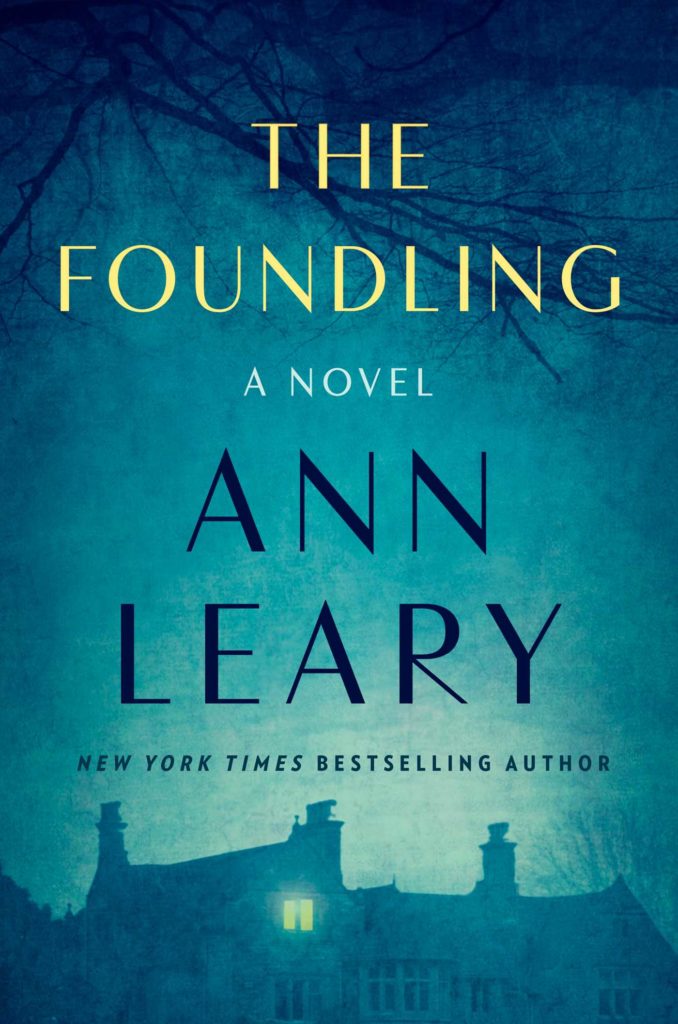
The Foundling, by Ann Leary
The Foundling, by Ann Leary
This novel is based on an experience of the author’s grandmother. It’s Ms. Leary’s fourth novel, but the first one of hers that I’ve read.
Set in 1927, The Foundling is the story of two women who grew up in the same orphanage.
As an adult, one of them is falsely accused of being “simple-minded” and is incarcerated in a facility for such women of child-bearing age. They’ll all be released when they can no longer have a child. The “reasoning” behind that policy is that a simple-minded woman will pass on her mental deficiencies to her children.
As an adult, the other woman gets a job working in the facility where her long ago childhood friend is being held against her will.
The female worker is determined to get her friend released because she knows she shouldn’t be in the facility. Along the way, the worker befriends a newspaper reporter who has always wanted to write an exposé about the facility.
At times, I found the worker to be too gullible, but I was completely drawn into the story and had to keep reading to find out what happened in the end.
Life is Like a Bowl of Cherries: Sometimes Bitter, Sometimes Sweet, by Sally Cronin
Life is Like a Bowl of Cherries: Sometimes Bitter, Sometimes Sweet, by Sally Cronin
I finally got around to reading one of her books. Life is Like a Bowl of Cherries: Sometimes Bitter, Sometimes Sweet is a delightful collection of Sally’s stories. They run the gamut from humorous to sad and bittersweet. I enjoyed each one and found it impossible to choose a favorite.
It’s not the only book of yours I’ll read, Sally! I promise!
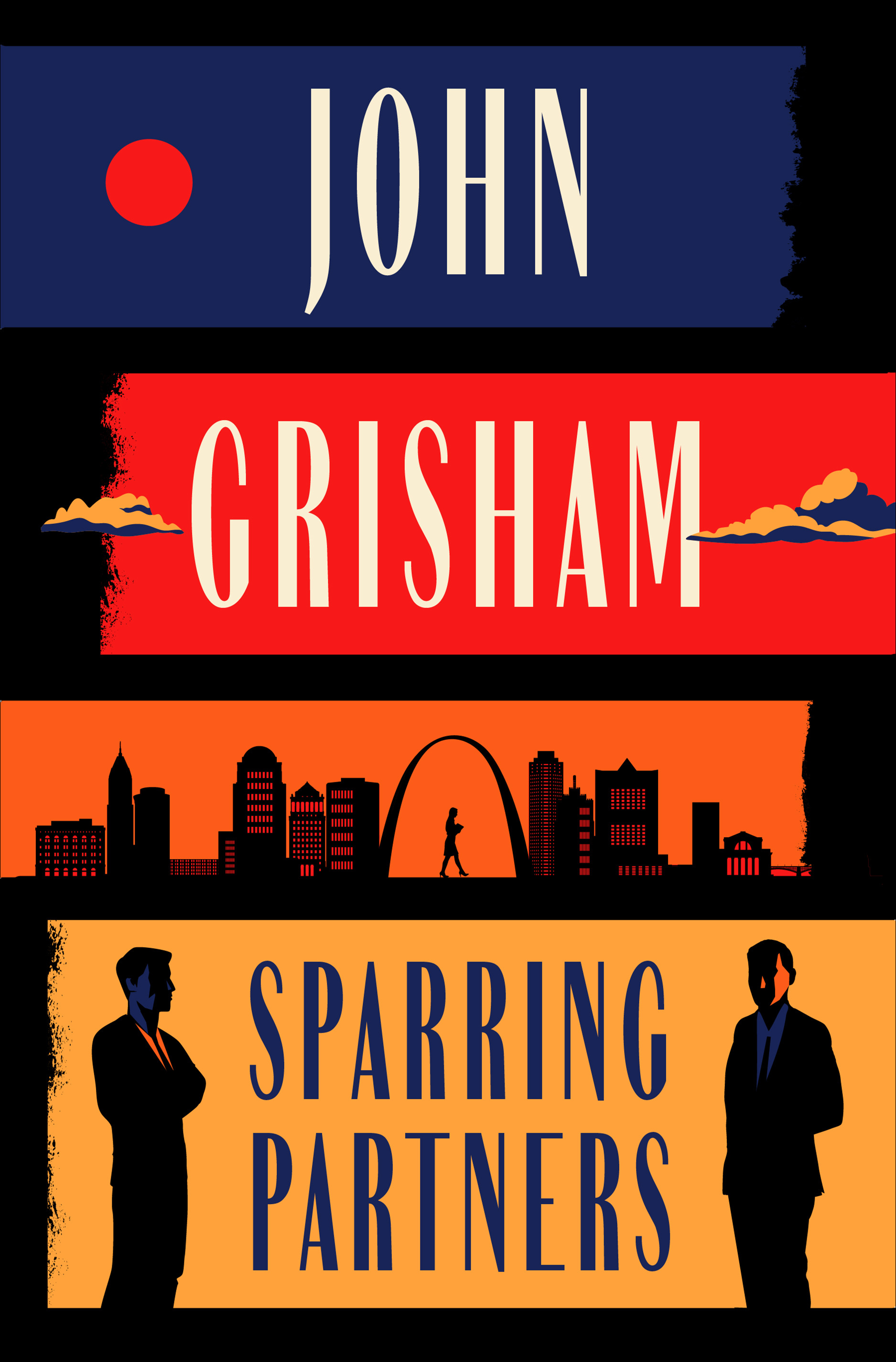
Sparring Partners, by John Grisham
Sparring Partners, by John Grisham
This latest book by John Grisham is a collection of three novellas. By definition, a novella is longer than a short story and shorter than a novel.
If you do an online search for guidelines about word counts, you’ll find there’s no ironclad publishing industry agreement. Trust me. I’ve tried to find definitive guidelines. I tend to give more credence to Brian A. Klems, the online editor for Writer’s Digest magazine than to some of the other sources. Mr. Klems said a short story is 1,500 to 30,000 words; a novella is 30,000 to 50,000 words; and a novel is 55,000 to 300,000 words. As you can see, there’s a lot of leeway in there.
That being said, I don’t know the word counts of Mr. Grisham’s novellas in Sparring Partners. The title of the book is a clue that each of the novellas is about lawyers.
The first one is the longest of the three novellas. It’s about a lawyer who steals settlement money from clients and then abandons his family and flees the United States. He’s had no contact with anyone for years. The plot gets quite involved. A local reporter is determined to unravel the mystery of the lawyer’s disappearance. Rumors swirl about the lawyer’s whereabouts and there’s speculation he has returned to the area. His wife is dying of cancer. One of their two daughters wants to talk to him. Is he being investigated or have the authorities just written him off?
The second novella is called “Strawberry Moon.” It was my favorite of the three, which probably qualifies me as a proverbial “bleeding heart liberal.” It is a touching story about a young man who is in the wrong place at the wrong time as a young teen and ends up on death row. That’s where he’s been for 15 years and he’s scheduled to be executed tonight.
Mr. Grisham has a knack for getting across his philosophy about a moral issue in his books – something that novice authors are advised to avoid. I love how Mr. Grisham is able to pull it off and remain one of America’s most prolific authors. The moral issue he tackles in “Strawberry Moon” is capital punishment. He also conveys the importance of books and how books (and a person who gets books into the hands of a death row prisoner) can have a profound impact on a prisoner.
“Strawberry Moon” brought me to tears – which a story rarely does.
The third novella in Sparring Partners is about a young man who enters a hospital for relatively routine surgery and leaves the hospital paralyzed. A lawyer wants to make a big splash by winning a tremendous settlement from the hospital for his client.
I had trouble getting into this novella and completely lost interest in the plot when it came to light that there was a snake in someone’s house. It was after midnight when I got to that part of the story. Not good! I didn’t read the rest of the story. Just sayin’.
I highly recommend the first two novellas in Sparring Partners. I’ve heard that Mr. Grisham enjoyed writing this format, so maybe he’ll write more novellas for us. I hope so – as long as he leaves the snakes out!
Gray Mountain, by John Grisham
Gray Mountain, by John Grisham
It was coincidental that I read two books last month by John Grisham. That can happen when you’re on the waitlist at the public library for multiple books by one author. Murphy’s Law sometimes kicks in, and you get both books at the same time.
When I logged into my Goodreads.com account to list this novel on my “Currently Reading” list, I discovered that I’d already read the book and given it four stars. The funny (and slightly frightening thing) is that I have no recollection of having read the book.
The “up” side of that is that I got to enjoy it all over again. With absolutely no memory of the plot, every twist, turn, and development was a surprise.
In true Grisham fashion, this legal thriller grabbed my interest from the beginning and never let me go. It took me back to the dark economic days of 2008 with the failures of huge financial institutions and the uncertainly of the time.
The book follows Samantha Cofer from the day she is laid off by a large financial institution in New York City and given the option of working for a short-listed nonprofit organization for free for one year. The reward would be that she might get a job again with the company that laid her off.
Samantha signs on with a nonprofit in southwestern Virginia’s coal country and is introduced to the underbelly of big coal companies and the way in which they rape the Appalachian Mountains and leave wildlife and people in dire straits and in worse conditions than they were before strip mining started destroying mountains from the top down with the resulting debris cutting off streams and the resulting slurry behind forever – or until a dam breaks and it crashes down the mountains to pollute the water, destroy homes, and wreck peoples’ lives.
I listened to Gray Mountain on a Playaway device while I took my daily walks. Some days I walked longer than planned, because I wanted to keep listening to the book. Books can be good for your physical health, as well as good for your mental health.
I highly recommend the book… even if you’ve read it. Or, especially if you’ve read it but forgotten all about it.
Since my last blog post
My sister and I have been busy compiling family favorite recipes and typing them in my new Atticus writing software program. We hope to publish them! I’ll keep you posted on our progress toward that goal.
I’ve also been organizing my thoughts toward publishing some historical short stories. One I’m considering writing has led me to early 18th century research about Essex County, Virginia – a place one of my ancestors lived in the early 1700s.
My historical novels are on the back burner but not forgotten as I turn my immediate attention to things I can start publishing on a smaller scale.
Until my next blog post
Keep reading! I hope you have at least one good book to read.
Make time for family, friends, and a hobby.
Start writing a journal or a book. You know you have a book in you that’s begging to come out!
Don’t forget the people of Ukraine, Uvalde, or Highland Park, etc.
Also, add to that list the people of eastern Kentucky as well as the wildfire areas in the western United States. Do what you can.













 Janet's Writing Blog