
When it comes to using dialect or regional accents in a novel, there are no definitive rules. It depends on the writer’s voice, the genre, and personal taste. Personal taste is where the rubber meets the road.
Too much of something like dialect in a novel sort of falls into the “I know it when I see it” category.
The rule of thumb
The rule of thumb is to avoid using it to the point of making the novel difficult to read. If the reader finds it exhausting to decipher the words, it means you have crossed that imaginary line. If the reader must wade through so much dialect that they are yanked out of the story, it means there is too much dialect.
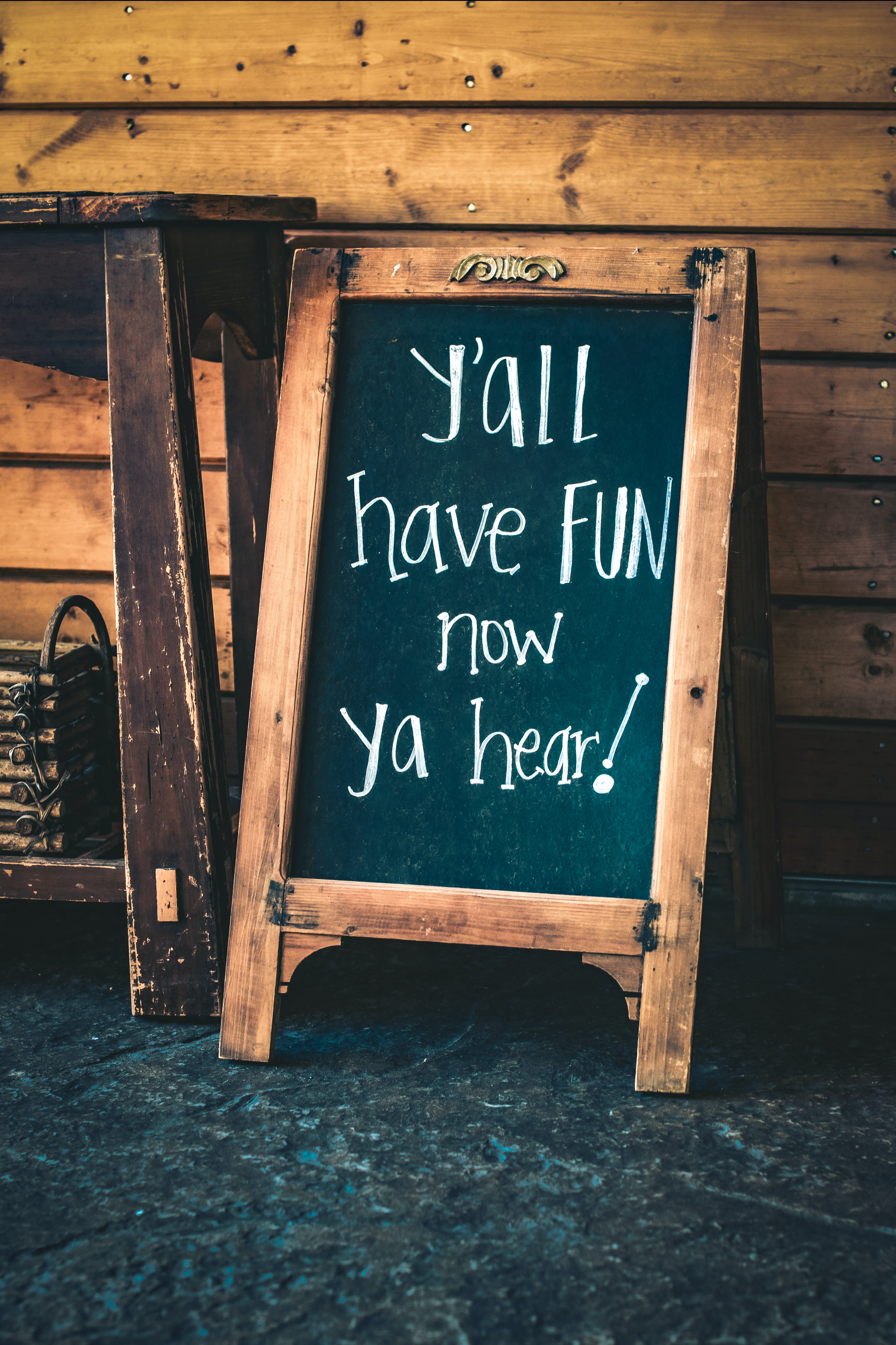
My experience with “y’all” in “Slip Sliding Away”
In my early drafts of my historical short story, “Slip Sliding Away,” I set the plot in the late 1700s. Something kept nagging at me, though. I wanted to use “y’all” in the story.
If you have read the story and you are from the southern part of the United States, you know the funeral scene with the intoxicated pallbearers struggling to get up the hill to the cemetery just screams out for the use of “y’all.”
There was a problem, though. My trusty resource for determining when a word came into common usage, English Through the Ages, by William Brohaugh, failed me! I did not find ‘y’all” in the book.
My second resource for such dilemmas is Merriam-Webster’s Collegiate Dictionary, Tenth Edition, for it tells when words came into common use. I looked up “y’all” and to my great disappointment, the dictionary just said, “var [variation] of you-all.”
I cringed. Why would anyone say, “You all” when there is a perfectly good contraction that just rolls off the southern tongue?
While I’m airing my grievances about the use and misuse of “y’all,” let me just say that if one is going to write the contraction, please put the apostrophe in the correct place. Don’t make me cringe by writing, “ya’ll.” I see it on all kinds of southern merch and it’s just not right. But I digress.
I turned several pages beyond “y’all” in the dictionary and looked up “you all.” First, I discovered it is hyphenated. Who knew? Then I learned that “you-all” was in common use in 1824. That information was helpful. It told me that I had to move my late-1700s story to 1824 or later.
I never did find anything definitive telling me when southerners started taking the easy way out by addressing two or more people as “y’all.” I figure that surely by the 1870s the word was in use, so I set the final draft of “Slip Sliding Away” in that decade.
Did you have any idea about the minutiae writers of historical fiction have to deal with? (Yes, I know. I’m not supposed to end a sentence with a preposition; however, it just seems awkward to write – or read – “Did you have any idea about the minutiae with which writers of historical fiction have to deal?” My mother was an English teacher, and I think she would agree with me on this one.)
What about the dialect in Where the Crawdads Sing, by Delia Owens?
After reading Where the Crawdads Sing, I found myself alone in the world in saying that novel contained too much dialect. Everyone else who read it absolutely loved it. I liked it, too, but I was distracted by the amount of dialect used. Maybe I had read too many articles and books about the craft of writing and I was just hyper aware of the dialect.
With more than 617,000 reviews with an average of 4.7 out of 5 stars on Amazon and 18 million copies sold worldwide, Where the Crawdads Sing is obviously an amazing novel. Apparently, Delia Owens knew exactly how much dialect to include in it to please millions of readers. I wish I were talented enough to have written it!
Since my last blog post
It was a busy week and I got to check off one big task that has been on my to-do list for months. On Friday, my church friend who took the cover photograph for my two local history books, Harrisburg, Did You Know? Cabarrus History, Book 1 and Harrisburg, Did You Know? Cabarrus History, Book 2, took photographs for the cover of the family cookbook my sister and I have been compiling for a couple of years. With the formatting finally completed, I felt safe in getting the cover designed. Look for an announcement regarding the publication of The Aunts in the Kitchen: Southern Family Recipes in a future blog post and in my November newsletter.
My sister and I took a day trip that was a combination Revolutionary War/genealogy trip. It was a wonderful day. I’ll tell you about in my November newsletter.
Speaking of my newsletter, you can find out about the cookbook, my various other writing projects, and the historical “field trips” I take if you simply go to https://www.janetmorrisonbooks.com and click on the “Subscribe” button. You will immediately receive a free downloadable copy of “Slip Sliding Away” as well as my future every-other-month newsletters. Thank you to all 42 of you who have taken the time to subscribe.
Until my next blog post
What do you have to say about the amount of regional accent or dialect in a novel? I would like to hear your thoughts on the topic.
Have you ordered my American Revolution e-ghost story? “Ghost of the Battle of Guilford Courthouse: An American Revolutionary War Ghost Story” is available from Amazon, along with my other books: https://www.amazon.com/dp/B0CH7JCP11/.
Take time for friends and family.
Thank you for taking time to read my blog post. Y’all come back now, ya hear?
Remember the people of Ukraine, Maui, Libya,….
Janet

 Janet's Writing Blog
I’m contending with the dialect dilemma as we speak. I was taught to suggest dialect rather than transcribe it. In addition, I found https://www.etymonline.com/ to look up when words came into common usage.
LikeLiked by 1 person
I have read, mostly stories, with too much regional accent or dialect which have left me wondering what the words were as I concluded that I only understood 50% of the story, at best. Although I think they add a lot of colour, if used with all characters, or too much, it can confuse the reader, especially if he is foreign to that area. Although I lived in the south (only geographically as South Florida is definitely the 6th New York borough) I never really understood southern speech too well so I got lost with the reading. However I did love the way they talked… I have also been quite engaged with preparations for my exhibition coming up in October (15 OCT 23 is opening day) so I haven’t had too much time for other things, and I did not want to neglect the blog… I will be making announcements as of tomorrow on WP and Instagram, and of course, locally much more. Wishing you all the best and I am looking forward to reading the ghost story, but after the expo… All the best Janet
F.
LikeLiked by 1 person
When I think of a book with a great deal of dialogue I think of The Girl With the Louding Voice. It took me some time for my brain and ear to acclimate. I honestly can’t remember the dialogue in Crawdads so it must not have bothered me! I seem to remember dialogue in Book Woman of Troublesome Creek. Dialogue doesn’t usually interfere with my reading experience. It enhances it.
LikeLiked by 1 person
Thank you Janet.🌷🙏
LikeLiked by 1 person
So glad y’all is getting the attention it deserves. Miss it very much after living in Texas a decade. I read an article that argued it came from Scotch-Irish ye aw in the 1700s. Hard to track the changes in the spoken word, when so few folks were literate then. Here’s the article in case y’all would like to read it: http://dialectblog.com/2011/02/15/the-remarkable-history-of-yall/
LikeLiked by 1 person
I appreciate your thoughts on this, Carol. My fiction writing instructor recommended that we pick just two or three words of dialect to illustrate a character’s speech so we don’t distract the reader or exhaust the reader. There’s a fine line there that I struggle with as an aspiring novelist. Perhaps my writing instructor made me too concerned about this. What to do? What to do? LOL!
LikeLiked by 1 person
Thank you for your thoughts on this topic, Francis. What you expressed about regional accent or dialect is exactly what I’m trying to get a handle on in my writing. I want to give the flavor of the region without going overboard and turning the reader off. There’s a fine line in there somewhere. I hope I can find it! I can only imagine how busy you are with preparations for your October exhibition! I wish you much success with it!
LikeLiked by 1 person
It’s a hard nut to crack, isn’t it? Thank you for sharing that website. I wasn’t aware of it.
LikeLiked by 1 person
Thank you for your thoughts on this from your own experience. I’m playing catch up today, so I look forward to reading the article you referenced. I wish I could get to the bottom of “y’all” so I can use it more in my writing. Since I’m concentrating on the 1760s-1770s, my hands are tied. However, I will read the article you found and I’ll continue to look into the history of “y’all.” I would love to be able to incorporate it into the novel I’m working on that’s set in VA and NC in the 1760s.
LikeLiked by 1 person
I think there may be a case for earlier use, if you count ye aw, according to the article. Happy hunting!
LikeLiked by 1 person
It is! You’re welcome.
LikeLiked by 1 person
Thank you so much Janet. I am sure you will fine that perfect mix of regionalisms and neutral language. It’s one of the things that will determine your work and make it stand out, but for the good things. Yes, we are quite busy with many preparations. I’ve never had to do all the preparations but with this museum its like your own gallery, and that means you must do everything, from setting up the paintings to public relations to preparing the vernisage to invitations etcetera etcetera. It’s challenging and also a learning experience. Wishing you all the best.
LikeLiked by 1 person
It makes my head spin to think of everything you must do to get ready for the exhibition, but I have every faith in you that it will be a smashing success. I hope you will get to see old acquaintances and also make new friends just discovering your work. All the best to you.
LikeLiked by 1 person
I agree, since reading that article you sent me. Wow! Makes sense to me! I had to switch gears and get the photographs for the cover of the cookbook taken over. They just needed a little tweaking. Ended up selecting a completely different background for the cover after getting the new photos on Wednesday night. More proofreading, etc. All the book details I’d put in Kindle Direct Publishing was nowhere to be found last night when I was ready to pull it up and just plug in the cover and the manuscript. I love doing everything twice! Finished around 3 a.m. and ordered a proof copy. It should arrive on Tuesday. Fingers crossed my sister and I are pleased with the cover and don’t find anything to correct. Recreated the d-Book cover today with the new background and new front cover photo. Created a bookmark to go with the cookbook. I love BookBrush.com for the graphics. It’s user-friendly enough for me to even do most of the things I want to do. My brain is fried. I hope to jump back on “y’all” research ASAP. I’m fascinated by the evolution of the English language and regionalisms. Have a wonderful weekend!
LikeLiked by 1 person
In my progress today, I purchased a copy of your Did You Know? It will arrive next week!
LikeLiked by 1 person
Thank you so much Janet. It is a learning experience to do all the preparations. I am very thankful that my wife, who manages my business and does the publicity is working hard to get everything in order… take good care and a lovely weekend to you.
LikeLiked by 1 person
Yes, they say behind every successful man is a good wife and soulmate. I’m glad you are so very blessed. We’re getting waves of light rain and breezes now from Hurricane Ophelia, but nothing like what eastern North Carolina is experiencing. I finished formatting the family cookbook and submitted it to Amazon in the wee hours Friday morning. Expecting to receive the proof copy on Tuesday. It will be a day of hopeful and apprehensive anticipation. Enjoy your Sunday.
LikeLiked by 1 person
Oh my goodness! Thank you, Rebecca! I didn’t expect you way off in Wisconsin to buy the book. I sincerely appreciate it, though. I hope you’ll find it to be worth the price of admission.
LikeLiked by 1 person
Wonderful Janet! I know the cookbook will be a success! I had not heard of Hurricane Ophelia, but our prayers are with you and all those on Eastern NC. Hopefully nothing bad will happen. Thank you so much for your good wishes. And I wish you all the success! Have a blessed Sunday evening, and a peaceful night.
LikeLiked by 1 person
Thank you, Francis. Yes, Ophelia formed rather quickly off the NC coast. It’s heading north along the eastern seaboard. More like a tropical storm.
LikeLiked by 1 person
I got a message today it will arrive Monday!
LikeLiked by 1 person
Hope it goes towards the Atlantic and away from people. There’s been enough floods, fires, landslides, and other disasters all over the world. And unfortunately they are getting worse and bigger than ever. I just cannot understand. I never recall in all my years so many and so often and all over the world… Have a great Sunday Janet. Here the day is quite lovely indeed. It is a nice brisk 18 degrees with plenty of sunshine, just the weather to be outdoors… All the best.
LikeLiked by 1 person
Fantastic! Thank you so much! I do hope you enjoy it.
LikeLiked by 1 person
I probably called Ophelia a hurricane when she was “just” a tropical storm. She dumped a ton of rain on coastal North Carolina and a fairly large area inland. We were spared here and, as such storms do, left us very pleasant bright sunshine today. At this rate, we’ll go all the way through the alphabet naming storms this year. Like you said in your comment, it just didn’t used to be this way. For instance, in 1989 Hurricane Hugo hit Charleston, SC and continued right through here 200 miles later on September 22. “H” versus “O” — something is definitely changing. Have a pleasant and productive week ahead.
LikeLiked by 1 person
Absolutely. So good to hear that your area was spared. Thank you Janet. Take good care and have a blessed and productive week. All the best.
LikeLiked by 1 person