I write southern historical fiction, local history, and I've written a devotional book. The two novels I'm writing are set in Virginia and the Carolinas in the 1760s. My weekly blog started out to follow my journey as a writer and a reader, but in 2025 it has been greatly expanded to include current events and politics in the United States as I see our democracy under attack from within. The political science major in me cannot sit idly by and remain silent.
When I started Janet’s Writing Blog more than a decade ago, I didn’t know what I was doing. I had not read many blogs, but I thought I was ready to jump in and write my own after being prompted by my niece’s husband. Craig is much more tech savvy than I. He designed my website as it served me well for 20 years. His interests, time, and business responsibilities changed over the years, so in January 2023 my website was redesigned by Carolina Custom Designs.
My blog floundered for several years in the beginning as I tried to find my niche. I played around with how often to blog and how long a blog post should be. Things have gone more smoothly since I settled on posting every Monday.
Photo by Kaitlyn Baker on Unsplash
I have slowly realized the potential my blog. In fact, I know I haven’t yet fully understood its potential.
It astounds me that people all over the world read my blog! In January 2024, for example, people in 36 countries read my blog.
I’m fortunate to live in the United States of America where I have freedom of speech and freedom to read anything I want.
I don’t want to run out of subject matter. I usually plan my blog post topics as much as a year in advance, but this year my editorial calendar just isn’t coming together like it has in the past.
Should I make some changes in my blog?
Last year was a busy year of getting my website redesigned; starting a newsletter in March; offering a free downloadable copy of my short story, “Slip Sliding Away” to everyone who subscribes to my newsletter; publishing a local history book, Harrisburg, Did You Know? Cabarrus History, Book 2; publishing my first ghost story, “Ghost of the Battle of Guilford Courthouse: An American Revolutionary War Ghost Story”; and, with my sister, Marie, published a cookbook, The Aunts in the Kitchen: Southern Family Recipes.
With all I had going on, I failed to keep expanding my editorial calendar. Having Covid in December, a health scare of a different nature at the same time which lapped over into January, and intermittent internet and telephone service for two weeks after a January 9 storm, I was in a mental fog until the first week in March. I do have the next four weekly blog posts planned and partially written; however, some weeks in the rest of 2024 need to be fleshed out.
More than 1,100 “follow” my blog, but most of them probably don’t read it every week. I try to keep in mind that although I have some loyal readers every week, there is always the chance (and hope!) that this will be the week when someone reads my blog for the first time. What can I write this week that will please my regular readers but also grab the attention of a first-time reader so much that they become a subscriber?
I don’t want to bore my loyal readers with references to my books, short stories, and website; however, I want that new reader to be aware of what I’ve written. It is a delicate balancing act.
What Ryan Lanz says a blogger should do
A list I keep in front of me as I plan my blog topics is Ryan Lanz’s “22 Ways to Impress a First-Time Blog Reader With Any Post.” Lanz sets the bar high! I don’t have Mr. Lanz’s permission to quote his list, but I’ll throw out several items on the list to give you an idea of what a blogger is challenged to do with every post:
“Tell them something they don’t know.”
“Tell them something they DO know.”
“Help them solve a problem.”
It only gets more challenging as you read the other 19 items on his list! The one that always trips me up is number 3. I have a feeling in my more than 13 years of blogging, I have probably never solved anyone’s problem! I just don’t see that as my responsibility.
My plan
The first months in a calendar year tend to prompt us into new beginnings and reflection. That’s what I will continue to do over the coming weeks, and I hope I’ll find enough topics of interest to keep blogging every Monday for the foreseeable future.
Stay tuned. Next week I will blog about the books I read in April.
Until my next blog post
I hope you have a good book to read.
If you are a blogger, you can probably identify with today’s post.
Don’t forget the people of Ukraine.
Remember to subscribe to my e-newsletter before the May issue if you want to learn about an on-going archaeological dig in North Carolina! Just visit https://www.janetmorrisonbooks.com and click on “Subscribe.” My thank-you gift to you is a downloadable copy of my historical short story, “Slip Sliding Away.”
I am working my way through How to Write The Short Story, by Jack M. Bickham. As the title indicates, it is a book I expect to enhance my short story writing skills. However, the first 14 pages surprised me by offering self-inventory guidelines that I think anyone – not just writers – can benefit from practicing.
Mr. Bickham was the author of 75 novels and a host of books about the craft of writing.
It would not be fair to the current owner of Mr. Bickham’s copyright to the book for me to list all 10 steps in his guidelines for self-evaluation, but I’ll try to hit enough high spots to pique your interest even if you aren’t a writer.
Since I thought I could read this 200-page book in several days, imagine my surprise when I spent that amount of time working my way through the first 14 pages!
The root premise of How to Write The Short Story is that writers cannot write to their best form without knowing what they are passionate about deep down inside. The book systematically walks the reader through Mr. Bickham’s theory of how to do a thorough self-evaluation.
The secondary premise of the book is that once writers seriously go through this exercise and the remaining recommended steps in the book, they will be able to draw on their responses to write any story.
Mr. Bickham recommends jotting down on index cards (the book was published in 1994 when personal computers were still in their infancy) the reader’s responses to the series of questions he provides. He wants this information to be written in a form that can be accessed occasionally to remind yourself what makes you tick. Your responses might be added to or deleted as you live your life.
Mr. Bickham also strongly recommends that you not move on to the next step until you have completed the prior step. Even so, I don’t think I should take the liberty of listing all 10 steps. From the five steps I’m listing, you will get the jest of the exercise and perhaps be interested enough to look for the book.
Photo by Simone Secci on Unsplash
Step 1
The first step in this self-evaluation is to write down 10 “things or ideas or places or actions that you feel very deeply about.” You might want to stop reading this blog post and do this step. You need to take your time and really think about what you feel deeply about. You might easily think of three to five things, but then it can take some thought to come up with the other five to seven ideas or places or actions. If taken seriously, this should prompt you to identify your core values.
Step 3
What are five ideas or concept in which you deeply believe? This is different from Step 1, but there will probably be some overlap.
Step 8
Write a paragraph about an event that brought you great sadness.
Step 9
Describe “a time and place that made you very angry.”
Step 10
Write about “a time and place that frightened you.”
I found this exercise helpful, did you?
If you are like me, it has been a long time – if ever – that you took the time to honestly address the above questions and requests.
Did you discover any surprises?
Since my last blog post
I have added several thousand words to the manuscript for The Heirloom after finding some historical information that was helpful and specific to the story. It was rewarding to put words on the page.
I visited Hart Square Village in Vale, North Carolina once again. I took a lot of pictures, learned about the composition of daubing used by the early settlers in the Catawba Valley, and learned about the best practices there today for the preservation of 200-year-old log structures. Again… useful for me to know as a writer of southern colonial American history.
Until my next blog post
Get back to that book you started reading but put aside.
As promised in my April 1, 2024 blog post, Three of the Six Books I Read in March 2024, today I’m blogging about the other books I read last month. I received some comments of interest two weeks ago, and I hope you will also find some books you want to read today.
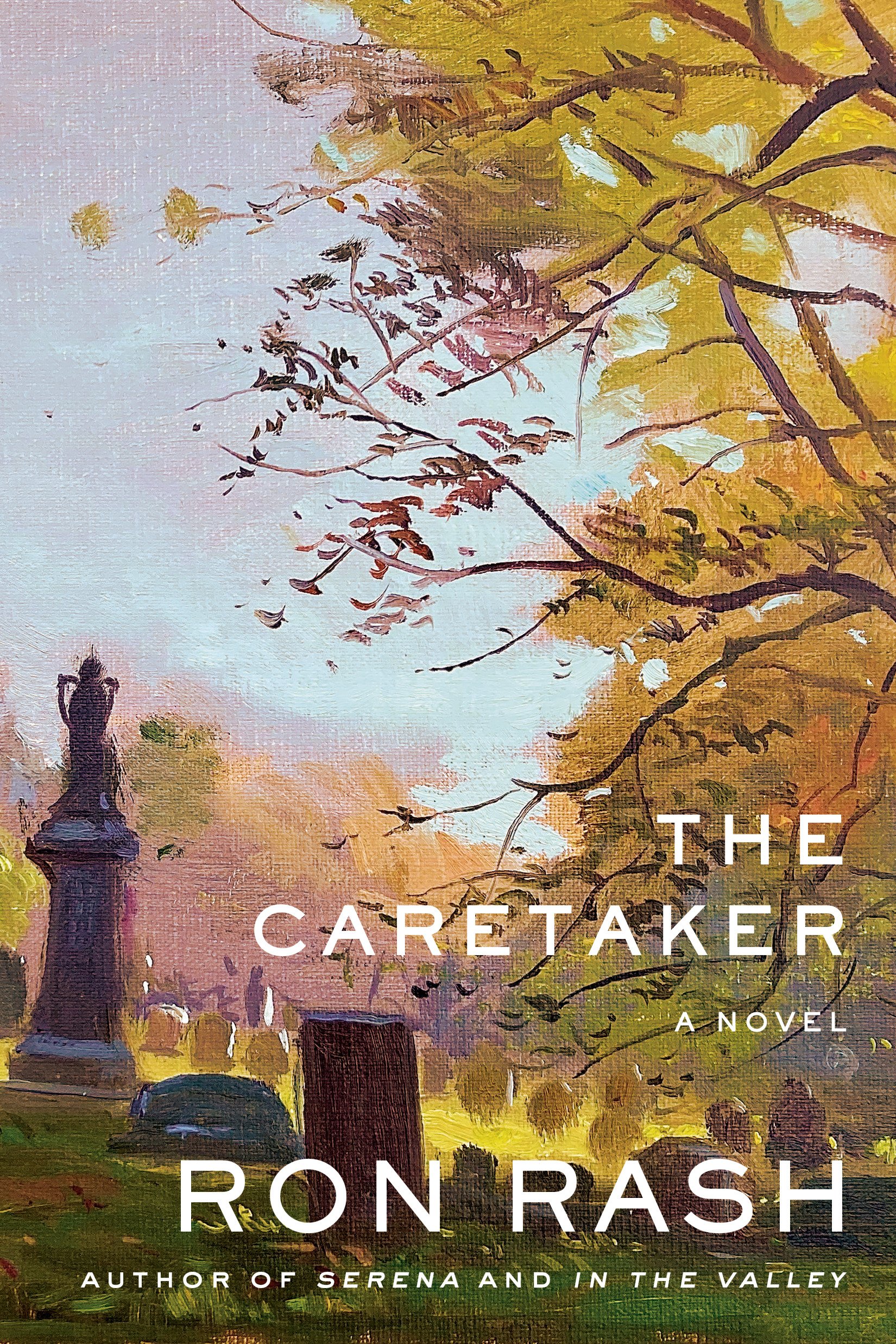
The Caretaker, by Ron Rash
The Caretaker, by Ron Rash
I have read most of Ron Rash’s novels. Some I liked more than others. This one is my favorite.
The Caretaker is shorter than his other novels at 252 pages. It takes place during the Korean War and is an examination of family and friendship in the small Blue Ridge Mountain town of Blowing Rock, North Carolina.
Having attended college at Appalachian State University just eight miles up the mountain from Blowing Rock, I was familiar with the place names and surnames Rash used in the book. For example, references to the Brown Mountain Lights brought back a fond memory I have of the time I got to see that natural phenomenon for myself many years ago.
In The Caretaker, Rash weaves a gripping story of the things people are capable of doing in the name of love for family. Jacob is drafted and sent to Korea where he almost gets killed. His desire to get home to his wife and their unborn child gives him the fortitude to try to beat the odds and not die from the injuries he sustained.
Jacob leaves his good friend, Blackburn, the caretaker of the church and cemetery, to look out for his wife while he is deployed.
The story Rash weaves about what Jacob’s conniving parents do in the name of loving him while he is in Korea will make you gasp! You will keep turning the pages to see just how this bizarre turn of events will end.
I really enjoyed this book, and I hope you will check it out.
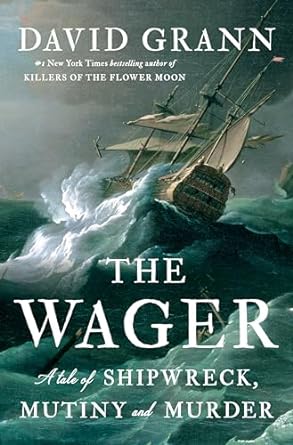
The Wager: A Tale of Shipwreck, Mutiny and Murder, by David Grann
The Wager: A Tale of Shipwreck, Mutiny and Murder, by David Grann
This book was voted by readers on Goodreads.com as being the “Best History & Biography” in 2023. Many of you have probably read Killers of the Flower Moon, also by David Grann, or perhaps you saw the movie adaptation. David Grann is a master at writing creative nonfiction – nonfiction that reads much like fiction.
I listened to The Wager: A Tale of Shipwreck, Mutiny and Murder on CD. The story kept me reaching for the next disc as soon as I finished listening to another one. The audio reading was done by Dion Graham. Mr. Graham did a spectacular job of reading this book for the recording. The written words and the verbal inflections of the voice made for a memorable listening.
The Wager was the name of a British ship. In 1740 it left England as part of a squadron on a secret mission to chase a Spanish ship laden with treasure around Cape Horn and hunt down Spanish interests in the Pacific.
Rounding the cape was thrillingly and shockingly illustrated by tales of the vengeance of the meeting of the Atlantic and Pacific oceans at the tip of South America; however, the stories the captain and crew had heard paled in comparison to the baptizing they received at the hands of the ocean’s fury. When The Wager wrecks ff the coast of Patagonia, the reader thinks all is lost, but that is just the beginning of the story.
As the subtitle indicates, there is also mutiny and murder as the survivors of the shipwreck become desperate. There are twists and turns to the story resembling a modern-day thriller. Each survivor had his own description of what had transpired in the end. And did I mention there was a court-martial.?
Martin Scorsese and Leonardo DiCaprio have bought the movie rights to the book.
Change Your Brain Every Day, by Daniel G. Amen, MD
Change Your Brain Every Day, by Daniel G. Amen, MD
After catching a few minutes of Dr. Daniel G. Amen’s program on PBS, I checked the public library for his book. I want to give my brain a chance at being healthy. I would like to say I’m giving it “every chance” to be healthy, but I do indulge in an occasional salty or sugary snack.
After reading Dr. Amen’s book, though, I do feel more inspired to work on this. The essence of the book is that we can make little changes or small practices in our daily lives that are good for our brains. Of course, most of us slip up even when we have good intentions.
I won’t steal Dr. Amen’s thunder by telling you his specific recommendations. The book is made up of 366 daily steps to better brain health you can take, theoretically, over a year’s time. Being a book I borrowed from the public library, I could not take a year to read it. I’m not sure I have the discipline to do that. I took notes on the things that struck a chord with me… and there were many!
Over the coming weeks and months, I will try to take some of Dr. Amen’s recommendations to heart and take better care of my brain. The book is an interesting read. Dr. Amen does not just throw out suggestions; he explains from a medical viewpoint exactly what he bases those recommendations on. In concise, understandable terms, he tells you how the different systems in the body work and how your brain health effects and is affected by those various connections.
In this era, when we are bombarded by written and verbal media telling us things we ought to know and things we really shouldn’t be concerned about, Dr. Amen tells us how to calm the noise as much as possible and be assertive and kind in how we treat ourselves, others, and specifically how we treat our brains.
If you desire to have a healthy brain, I recommend this book. If nothing else, it will make you more aware as you make decisions regarding what you eat, drink, listen to, and breathe. Every little bit of effort helps.
Reading the book prompted me to start playing my dulcimer every day after not touching it for maybe a year. I’m knitting again, too. It is surprising some of the things we can do that make new connections in the brain.
Until my next blog post
I hope you are reading a book that is so good you can hardly put it down.
It looks like I won’t have as many novels as usual to blog about in May. I have neglected some of the books I needed to read for research, so I changed my focus this month to support the fiction I am writing. April is already half over, and I don’t have a very long reading list to show for it. We’ll all find out together on May 6 how many books I read in April.
Speaking of reading… be sure to let me know what you’re reading so I can mention it (and you!) in my May e-newsletter. We all learn from each other.
In today’s blog post, I am revisiting my blog post from April 8, 2016. I had been asked to share 10 random facts about myself. It is interesting exactly eight years later to reread that post and see that little has changed.
Here are the 10 random facts about myself as I offered them eight years ago today, with new insights and details added within brackets:
1. I have what is called Chronic Fatigue Syndrome (CFS) in the United States but is known as Myalgic Encephalomyelitis (ME) in the rest of the world. My energy and stamina are limited, and my memory problems and mental fog make my research and writing tedious and time consuming. I often feel as if I live in a vat of molasses. Nothing comes easily.
2. I started working on the manuscript of my proposed historical novel, The Doubloon/The Spanish Coin, in 2005. I am still tweaking it. [I was startled to be reminded that I started writing The Doubloon/The Spanish Coin 19 years ago! After editing that manuscript down from 120,000 to 96,600 words, I am now concentrating on turning the main character’s backstory into a novel to publish before I publish The Doubloon/The Spanish Coin. The tentative title of that novel is The Heirloom.]
3. As a young adult, I was a “fiction snob.” I thought there was nothing to learn or gain by reading fiction. You can imagine how shocked my sister was when, at the age of 48 in 2001, I told her that I had registered for a fiction writing class! That’s when I started learning to write [and truly appreciate and enjoy reading] fiction.
4. Although my appearance, manner, and personality give the impression that I am conservative, I am a liberal when it comes to politics.
5. After wanting to play the Appalachian lap dulcimer since first being introduced to the instrument as a college freshman, I finally purchased one and attended a four-day dulcimer workshop in 2010. Due to random fact #1, I still don’t play well and probably never will; however, I do play for my own enjoyment. I often listen to dulcimer music while I write. (I’m listening to some as I write this blog post.) [I still don’t play the dulcimer very well, but I am once again trying to practice almost every day. This is for my own enjoyment. A huge “plus” is that learning to play a musical instrument is supposed to be good for one’s brain.]
6. I live on land that has been in my family since the 1760s.
7. I sleep in a bed that my father made using timber from our land in the 1940s.
8. I wish I could sing.
9. I could drive a tractor before I was old enough to drive a car.
10. Taking the fiction writing course and attending the dulcimer workshop were life-changing experiences for me, and I will forever be grateful that I got out of my comfort zone and took advantage of both opportunities.
No matter your age, stretch yourself and follow your dreams.
What do you have to lose?
Since my last blog post
Photo by Janet Morrison at Joara
I participated in my first archaeological dig! I checked it off my “bucket list,” but I hope it won’t be my last one. If you want to read all about it, please subscribe to my every-other-month e-newsletter by going to https://www.janetmorrisonbooks.com and clicking on the “Subscribe” button. You will also receive my free downloadable historical short story, “Slip Sliding Away.” I will write about the archaeological dig in my May 2024 e-newsletter.
I submitted a 3,575-word contemporary short story to an international short story competition recently. It was the first time I entered a piece of fiction written in first-person to a competition, so I was pleased when I learned that my story was judged to be in the top 10% of submittals. In spite of that “top 10%” label, I opened the critique with some trepidation.
Photo by Christin Hume on Unsplash
In a nutshell, the critique only had two negative comments: (1) The title (“Someone is Trying to Kill Me”) gave too much away and (2) I wrapped up the protagonist’s dilemma too quickly. The positive comments included, “It’s rare that I tell an author that the story we turned down needs to be significantly longer, because many of our entries drag a very thin, uninteresting idea out for many more pages than it is worth. But I think “Kill” needs to be a lot longer…. Detailed, interesting, step-by-step… this story has ‘detective novel’ written all over it… I’d read that story. It would be far too long for our magazine, but so what? Get it published somewhere else, or publish it yourself on Amazon or he web or something. Finish the story and put it out there.”
What a morale booster!
Until my next blog post
If there is a novel in you that is begging to be written… WRITE IT!
Read a good book or two this week.
Support your local public library and independent bookstore.
The first Monday of the month seems to roll around faster and faster, and it’s time for me to blog about all or some of the books I read the preceding month. Today’s post is about three of the six books I read in March. I plan to blog about the other three on April 15.
I started last month reading an incredible and much-anticipated novel. Would the rest of the books I read in March measure up to the bar set by Kristin Hannah?
Read on to find out.
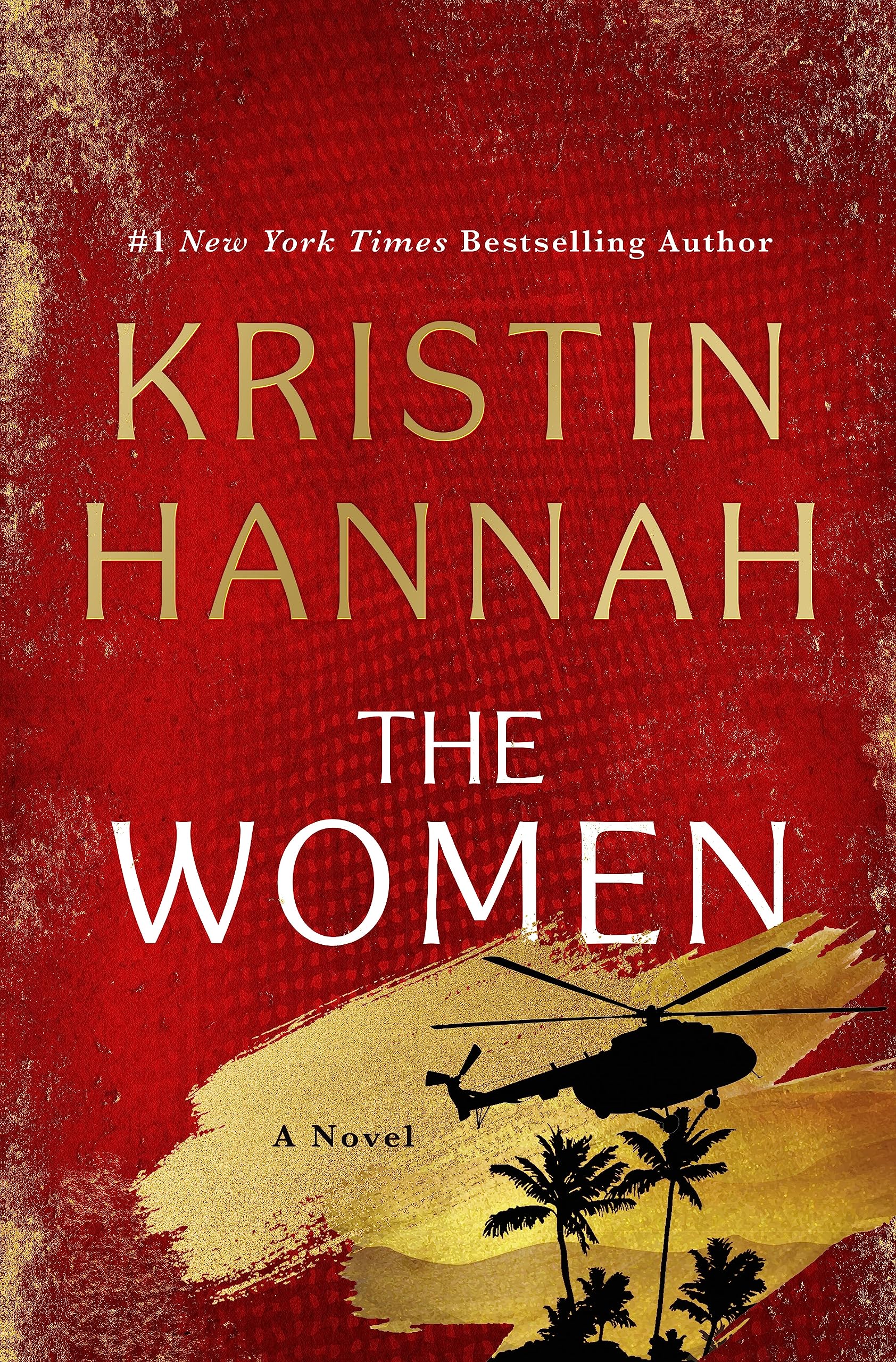
The Women, by Kristin Hannah
The Women, by Kristin Hannah
I got on the waitlist for this novel as soon as it showed up in the Charlotte-Mecklenburg Public Library online catalog. That was months ago. Last time I checked on Friday evening, there were 4,314 people on that waitlist for the 873 copies in multiple formats. It seems to grow longer each day, so I was fortunate to get to read it soon after it was released.
Unless you live under a rock or have absolutely no interest in historical fiction, you probably know that The Women is about the American women who served in the military in-country (Vietnam) during the Vietnam War. That’s all I knew about it until I really got into the 468-page novel.
I don’t recall the last time I was so affected by a novel. Ms. Hannah writes in a way that puts the reader inside the main character, Frankie, a US Army nurse. This book grabbed me by the throat. I felt like I was right there in a US Army hospital or MASH unit during the war. It brought back memories of watching the news reports of the war on TV every night in my teenage and college years. The names of places and battles I had not thought about in decades were suddenly fresh again.
The book starts out to follow this young nurse throughout her tour of duty. I don’t want to give anything away, but I want to share that it also follows her return to the United States. These were the days of a lot of anti-war protests and the Vietnam veterans did not receive a hero’s welcome when they came home. To compound that situation, people repeatedly told Frankie she wasn’t a veteran because “there weren’t any women in Vietnam.”
Frankie went through loss after loss. Every time I thought things were finally going to go well for her, she suffered another setback.
This is an amazingly well-researched and well-written novel. Ms. Hannah’s descriptions of unspeakable combat injuries and the overwhelming number of severely injured soldiers and civilians the doctors and nurses had to deal with will take your breath away.
It seems impossible to me that the 1960s and early 1970s now qualify for historical fiction. It’s the first time I’ve been so taken aback by reading an historical novel set in my lifetime.
I especially recommend this novel to anyone with a romanticized concept of war.
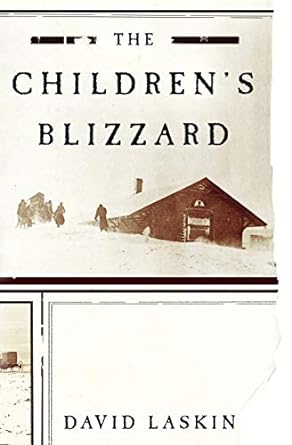
The Children’s Blizzard, by David Laskin
The Children’s Blizzard, by David Laskin
I mentioned this book on my blog on March 11, 2024 (#OnThisDay: The Blizzard of 1888) but saved the details for today. This is a nonfiction book that reads like a novel. I love this kind of creative nonfiction!
The book emphasizes the fact that the temperatures were unseasonably warm on the morning the blizzard hit, so the school children had not worn their heaviest winter clothes. That fact put them at greater risk than on a normal January day.
I will quote a little from the prologue to give you the flavor of David Laskin’s writing style.
“On January 12, 1888, a blizzard broke over the center of the North American continent. Out of nowhere, a soot gray cloud appeared over the northwest horizon. The air grew still for a long, eerie measure, then the sky began to roar and a wall of ice dust blasted the prairie. Every crevice, every gap and orifice instantly filled with shattered crystals, blinding, smothering, suffocating, burying anything exposed to the wind. The cold front raced down the undefended grasslands like a crack unstoppable army. Montana fell before dawn; North Dakota went while farmers were out doing their early morning chores; South Dakota, during morning recess; Nebraska as school clocks rounded toward dismissal. In three minutes, the front subtracted 18 degrees from the air’s temperature…. Before midnight, windchills were down to 40 below zero…. By morning… hundreds of people lay dead…, many of them children who had fled – or been dismissed from – country schools….”
In the early pages of the book, the author explains that many of the people affected by this storm were immigrants from eastern Europe. They had taken advantage of the Homestead Act, which gave each one 160 acres of land in the region in exchange for a small filing fee and a promise to farm their land for five years. This was a recipe for every family to be isolated and children to have to walk miles to the nearest one-room school.
Much to my surprise, there was a national weather service in 1888. It was attached to the US Army. Such things as barometric pressure, wind speed, and temperatures were recorded and tracked, but this storm out-paced the warning system of flags emblazoned with a single black square and the telegraph system. I dare say it was a monstrous storm moving with such speed that it would challenge 2024 technology to sufficiently warn the populous.
The book gives details about specific families and individuals in the early chapters and then moves into how each one was affected by the storm.
The details of how individual school teachers – many of whom were scarcely older than their students – were faced with impossible decisions of whether to keep their students in the school houses where they were at risk of freezing to death or to send the children out to walk home at the risk of freezing to death.
The individual stories Mr. Laskin shares in this book are powerfully written and show us feats of heroism by children and adults alike. It was a mix of quick thinking and sheer luck that saved the ones who survived. Many survivors lost limbs to frostbite. Many who survived hypothermia succumbed to the warming of their bodies after being rescued.
The author weaves in details of how weather systems are created and how they interact with each other, as well as interesting details of the process the human body goes through when subjected to various temperatures that take the body below 95 degrees F.
People whose ancestors lived in the Great Plains states in January 1888 still tell the stories about this storm. It was interviews and family records that enabled Mr. Laskin to include such details in his book.
This is the first book by David Laskin that I have read. I will definitely look for his other books.
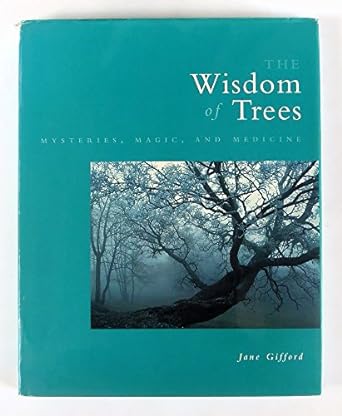
The Wisdom of Trees: Mysteries, Magic, and Medicine, by Jane Gifford
The Wisdom of Trees, by Jane Gifford
I happened upon this book at the public library. The title caught my eye. Trees fascinate me. I am intrigued by the different properties each species has. Since I am writing historical fiction set in the backcountry of Virginia and the Carolinas in the 1700s, I need some knowledge of trees and how they were used by pioneers.
My Morrison ancestors worked with trees a lot and were, no doubt, very knowledgeable about which trees were best used for what purpose. My grandfather had a sawmill. My father enjoyed woodworking and made some beautiful furniture.
Unfortunately, I was not interested in the properties of trees until recent years, so I have had to read and take notes about things my ancestors just knew. It was a necessity for pioneers, farmers, sawmillers, and woodworkers to know about trees. At a glance, my father could identify any tree by its leaf or its bark and any piece of lumber by its color, grain, or fragrance.
I have only recently been able to identify an ash tree, and there are many on our property. My newfound interest in ash trees is a result of many of them succumbing to the invasive emerald ash borer that was introduced from its native range in Asia. This is a costly loss to our environment.
Ash trees were so plentiful here 100 years ago that there was a factory in Harrisburg, North Carolina that made baseball bats and spokes for wagon wheels. (I write about that in Harrisburg, Did You Know? Cabarrus History, Book 2, which is available from Amazon and at Second Look Books in Harrisburg.)
Back to The Wisdom of Trees: Mysteries, Magic, and Medicine, by Jane Gifford… in the words from page six: “This book celebrates the enormous cultural and medicinal value of the trees most familiar to modern-day Europe from the point of view of our Celtic ancestors.” It goes into some history of the Druids, poets in Ireland, and the basic Celtic tree alphabet. In other words, the book was not what I thought it was going to be. Only a few species of trees were addressed, and some of them are not found in North Carolina.
For the information the book covered, it is probably a good resource. I’m not sure I learned anything that will help me in writing historical fiction set in North Carolina.
Since my last blog post
I attended a book discussion at the public library in Harrisburg. Homegoing, by Yaa Gyasi was selected as this year’s “Big Read” by the National Endowment of the Arts (NEA). I have not finished reading the novel, but I thoroughly enjoyed the group discussion. The library branch manager had listened to the book and said the recording was outstanding.
Homegoing, by Yaa Gyasi
Until my next blog post
Read a good book or two.
Support your local public library and independent bookstore.
Check with your local public library system to see if it is offering special programming in conjunction with the NEA’s “Big Read.”









 Janet's Writing Blog