
Several weeks ago, my sister and I spent several days in Cherokee, North Carolina. We have visited Cherokee many times, but I had never seen the “Unto These Hills” outdoor drama. Since the drama was rewritten a few years ago to give a truer presentation of the Cherokee Indian perspective on their history, I was eager to see it.
A leisurely drive on the Blue Ridge Parkway is always an activity we enjoy, so we got on the parkway on the southern edge of Asheville and took it to its end at Soco Gap. We went through 15 tunnels on that 80 or so southernmost miles of the Blue Ridge Parkway. Various wildflowers, including the Flame Azalea (or native/wild azalea) was at or just past its peak.


We had perfect weather all week, including the night we had tickets to see “Unto These Hills.” The acting was superb. It was amazing to see the history of the Cherokee people presented in two hours.
The play emphasized how the Cherokee and the European explorers, traders, and settlers had a congenial relationship in the beginning. It wasn’t until the Europeans started cheating the Cherokee and tricking them into poor decisions and hollow treaties that things deteriorated.

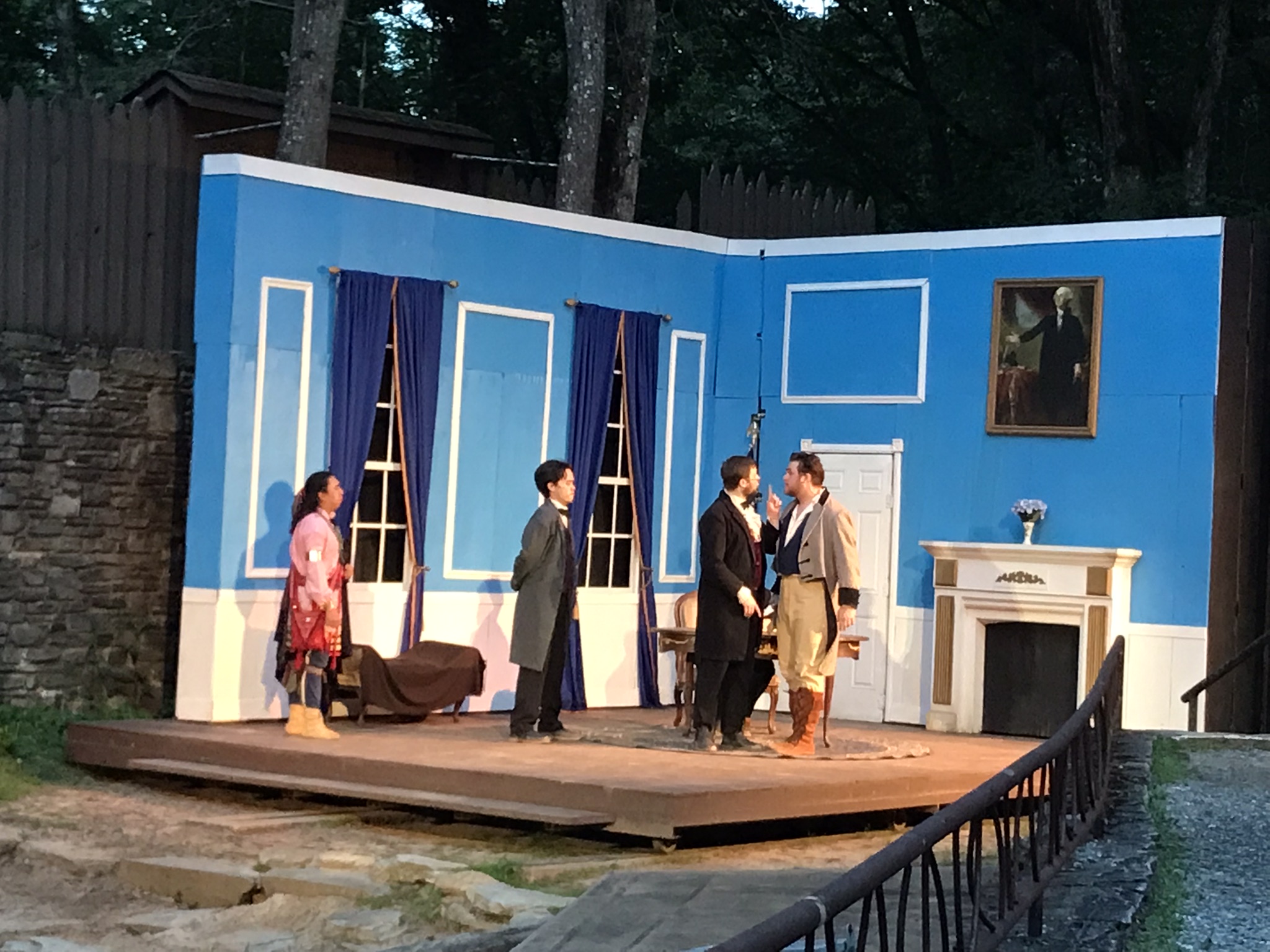
The last straw, of course, was when the United States forced the Cherokee to give up their beautiful and lush ancestral lands for what turned out to be a death march to the Indian Territory of present-day Oklahoma. They were promised a good life, but it was just another broken promise by the white man.

The Cherokee people who refused to leave the Great Smoky Mountains hid in the hills. It is the descendants of those brave souls who now populate the Qualla Boundary and are officially known as the Eastern Band of the Cherokee Indians.
By visiting the Museum of the Cherokee Indian and the Oconaluftee Indian Village, you can learn a great deal about the Cherokee Indians’ rich history and traditions. For instance, they lived in houses, not teepees. They did not wear elaborate feather headdresses like the Plains Indians. Cherokee men back in the day were up to seven feet tall and the women averaged only a few inches shorter.


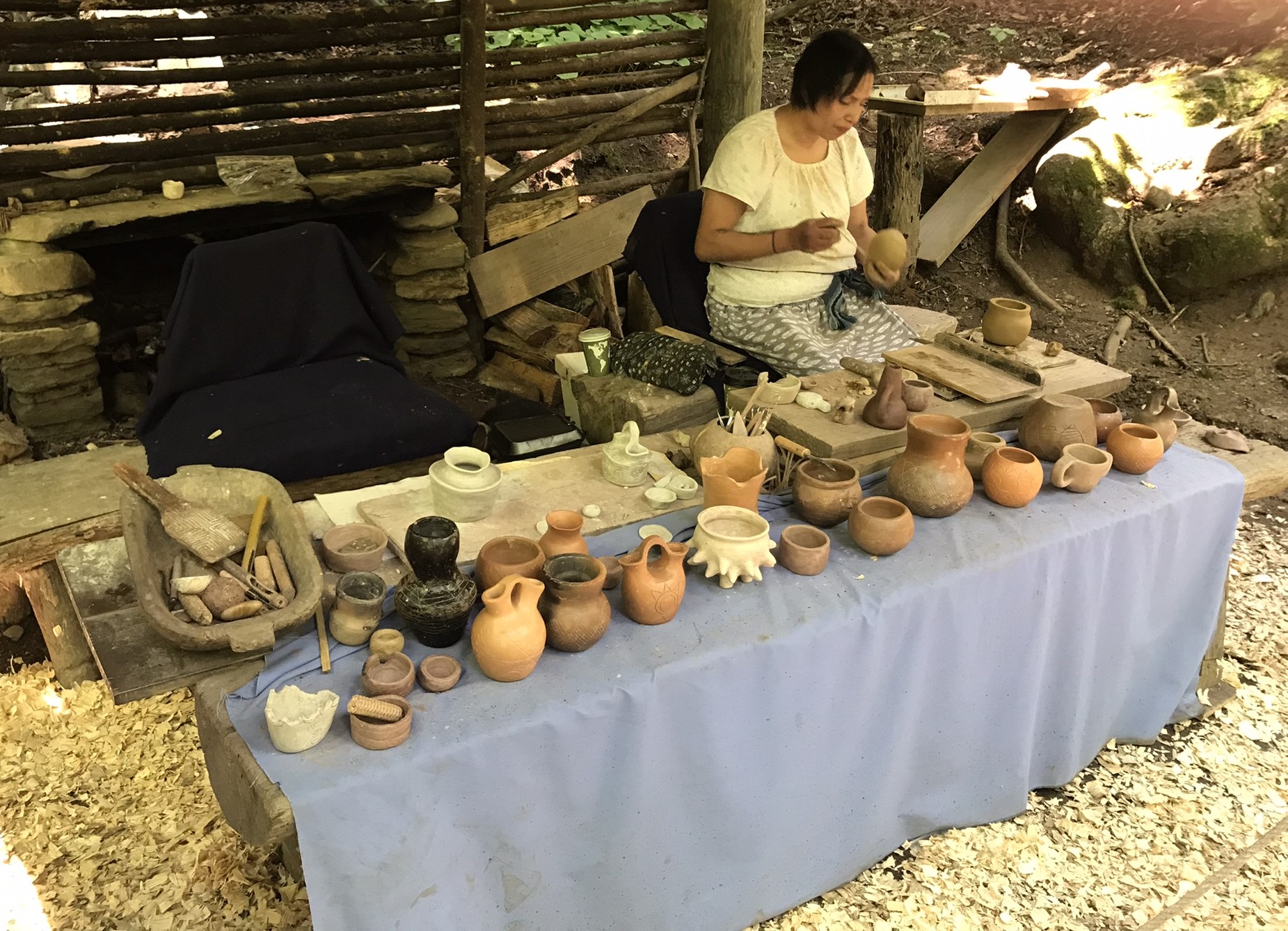
Many Cherokee people continue to master the time-honored crafts of making clay pottery, intricate bead work, exquisite basketweaving, and wood carving. It takes weeks and sometimes months for the native plants and other natural resources for these items to be gathered and prepared, not to mention the intricate work to create the finished products. Those priceless items can be admired and purchased at the Qualla Arts and Crafts Mutual, Inc.
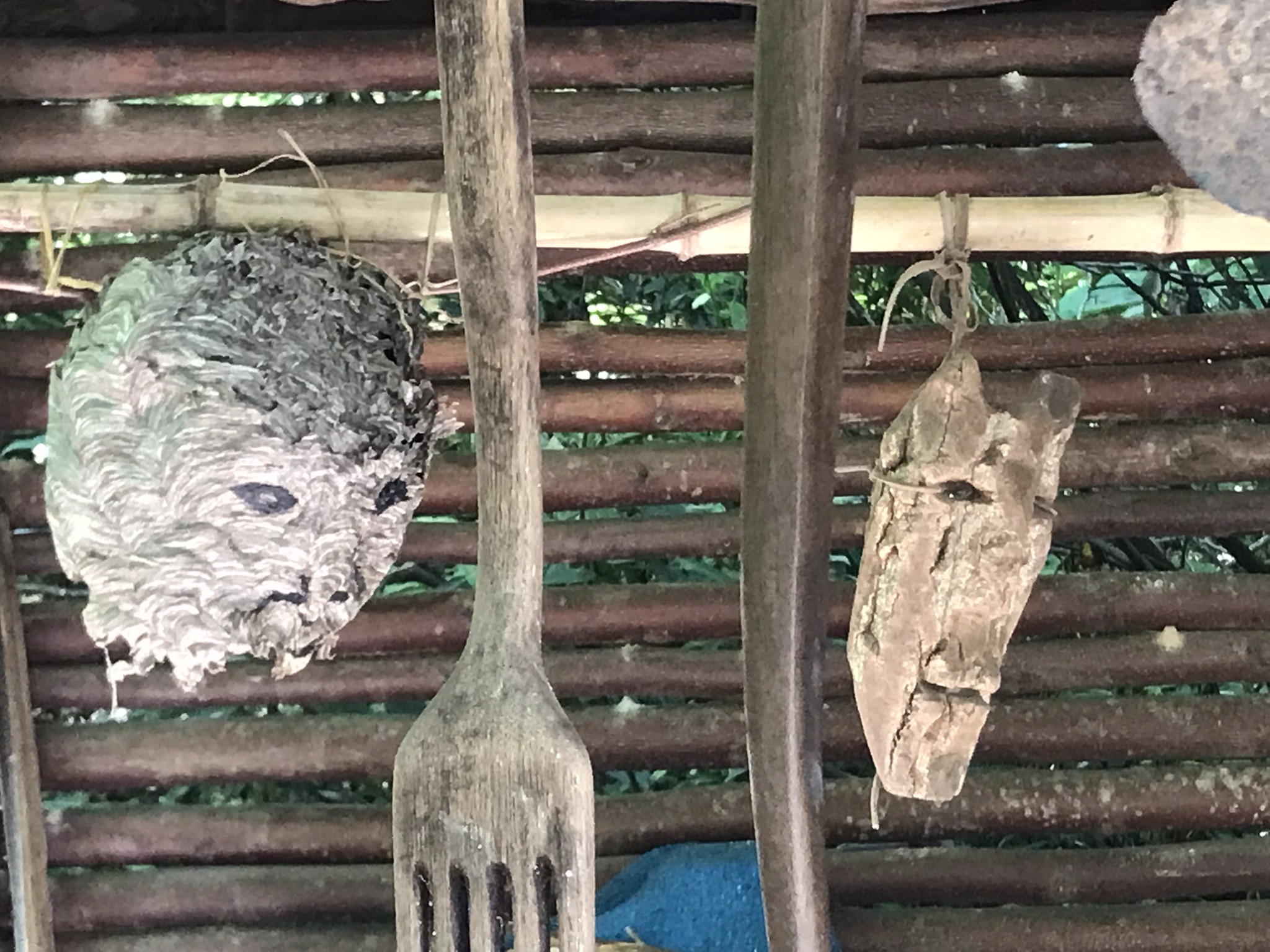
Although some of the signage indicates otherwise, the Qualla Boundary is not a reservation. The Cherokee people own their land and the Qualla Boundary is held in trust for them by the United States Government.
The Cherokee not only had their own written language; they also had their own newspaper starting February 21, 1828. Although the United States Government tried to eradicate the Cherokee language and traditions, that policy failed. Today the Cherokee language is making a comeback. There is even a Cherokee immersion school in which only Cherokee is spoken.
On our recent visit, we used Cherokee as our base. One day we drove through the center of the Great Smoky Mountains National Park to and including Little River Road and Clingman’s Dome and back to Cherokee.
Another day we drove 10 miles to Bryson City, North Carolina and the Deep Creek entrance to the Great Smoky Mountains National Park. We hiked to three waterfalls we’d never seen before and enjoyed learning lots of facts about the park along the way to two of them with a park ranger.
When planning your trip, check online for the planned hikes and lectures offered by park rangers at the Oconaluftee Visitors Center near Cherokee, NC, the Sugarlands Visitors Center near Gatlinburg, Tennessee, Cades Cove near Townsend, Tennessee, and at the Deep Creek entrance to the park at Bryson City.
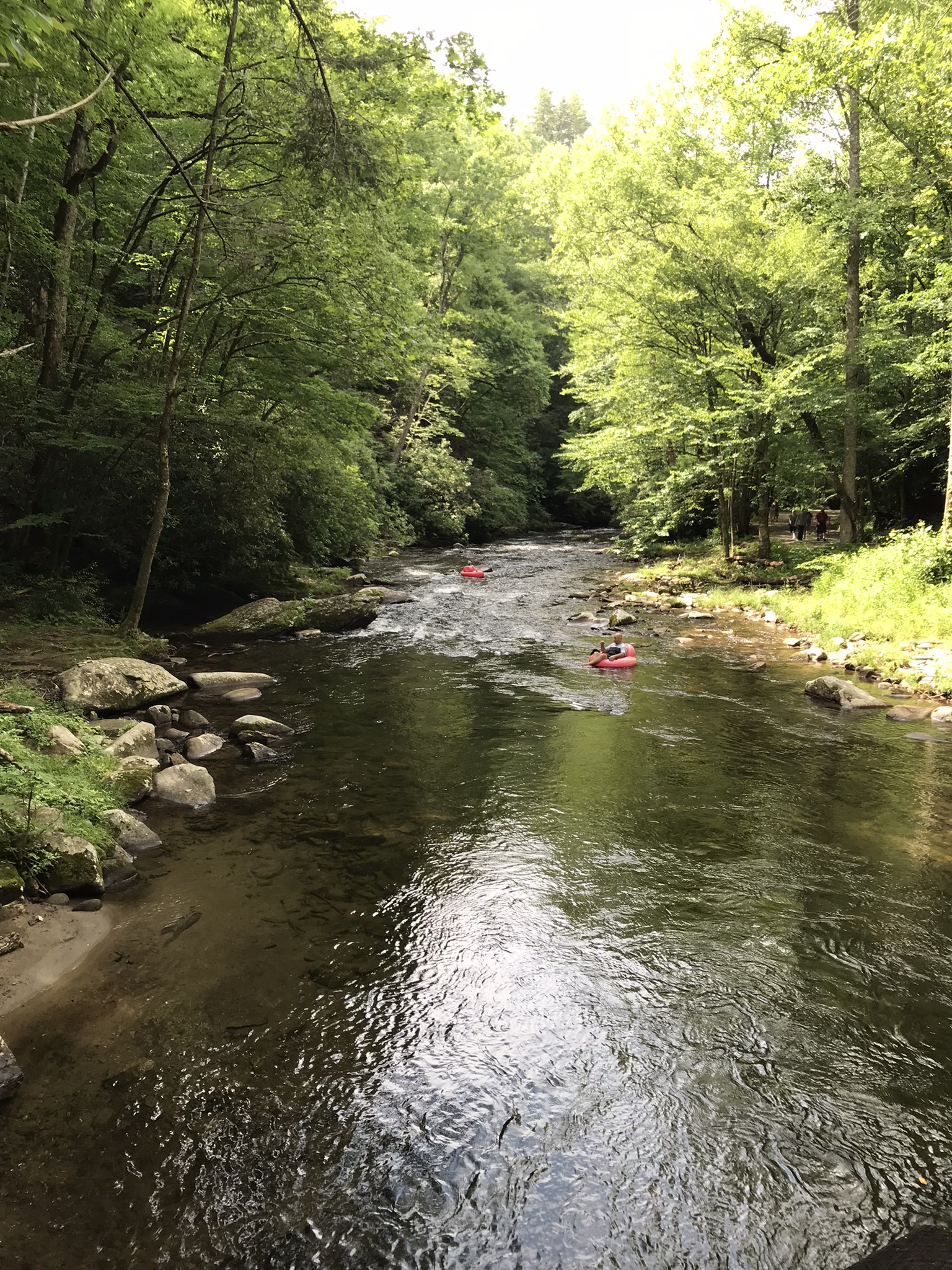
The Cherokee honor water and the residents and visitors alike are blessed to have the Oconaluftee River flowing right through the town of Cherokee. This shallow, wide, rocky river is the perfect place for tubing and splashing around in the water. I have memories of enjoying the river on my first trip to Cherokee when I was a young girl.
Deep Creek in the section of the national park is a popular creek for tubing. Many families were taking advantage of the creek for tubing on the very warm day we were there. If I were just younger and braver…. It looked like a lot of fun!
All that hiking and tubing will make you hungry. My sister and I enjoyed the buffet at Granny’s Kitchen Restaurant on US-19 North going from Cherokee toward Maggie Valley. The wife in the couple who own and operate the restaurant is a Cherokee Indian. It is said if you want to find a good place to eat, look where the locals eat. This was certainly the case at Granny’s. (I am receiving no compensation for publicizing the restaurant. It is a good value and experience for the money. You will not leave hungry!)
People from all over the United States enjoy the Blue Ridge Parkway, the Qualla Boundary, and the Great Smoky Mountains National Park. We kept track of the different license plates we saw. When the trip was over, we had seen cars from 42 of the 50 states and several from Ontario, Canada.
Great Smoky Mountains National Park is the most-visited national park in the country. People are drawn to it by its beauty and biodiversity.
If you wish to learn more about Cherokee, the Great Smoky Mountains National Park, and the Blue Ridge Parkway, I recommend my vintage postcard book, The Blue Ridge Mountains of North Carolina. I packed as many facts and as much history into the book as Arcadia Publishing would allow. The book is available in paperback and e-Book from Amazon.
Since my last blog post
I continue to declutter by going through closets, old magazines, and boxes of memorabilia, photographs, newspaper clippings, and recipes. It is satisfying to look at what I’ve accomplished. My fiction writing has suffered for it, but this really needed to be done.
Until my next blog post
Keep reading and traveling every chance you get.
Visit your local public library, if you are fortunate enough to have one. If you haven’t visited it recently, you might be surprised to find some of the things it offers: Internet access, free access to software such as Ancestry.com, magazines you would like to read but cannot afford to subscribe to, music CDs, used books for sale, a magazine swap, ….
Remember the people of Ukraine.
Janet

 Janet's Writing Blog
The Qualla Boundary is a wonderful place to experience, and the museum is a treasure, as is the village.
LikeLiked by 1 person
Wow! Beautiful post! Loved the pics of the play and the idea of representing the history of the Cherokee people. It sounds like you and your sister had a phenomenal time in a very nice and interesting place. I am halfway through “Spider Woman’s Daughter” by Anne Hillerman. All the best!
LikeLiked by 1 person
Sounds like a wonderful trip; great combination of history through the play and wildlife to sustain you.
LikeLiked by 1 person
Your trip sounds wonderful! My husband and I drove the Blue Ridge Parkway once. It was incredibly beautiful.
LikeLiked by 1 person
The Blue Ridge Parkway is so relaxing and beautiful! I love driving in the mountains and the parkway is one of my favorite places. I’m glad you got to experience it.
LikeLiked by 1 person
Yes, that combination was right down my alley! The perfect weather was the icing on the cake!
LikeLiked by 1 person
It was indeed a great trip! Halfway through a book? You? LOL! You’re doing better than I am this month. I think my sister has read some of Anne Hillerman’s books. If I’m thinking of the right writer, I think her father was an author, too. I haven’t gotten halfway through any of the books I’ve tried to read. Just started Phantom Orbit by David Ignatius over the weekend. It’s holding my interest so far. It’s a thriller about a Russian who goes to a university in China, but the professors are pressuring him to change majors and help them track US satellites. It’s not quite so hot this week, but very humid because we’ve had more than six inches of rain in the last ten days.
LikeLiked by 1 person
Absolutely, Vicki! Since the main gallery was closed for extensive renovations, we skipped the museum this trip. We always learn something new in the Oconaluftee Village.
LikeLike
My husband and I would like to go back some day.
LikeLiked by 1 person
Yes, Anne Hillerman’s father, Tony Hillerman is my favourite author. I have read all his books and now I have them in my e-books library. Love the stories of the Southwest and the Navajo Indians he wrote about and I was so happy to see that his daughter has stepped right in and did not miss a beat in continuing with his stories about the Navajo in those areas. Areas that I’ve never seen but have “seen” through the prism of his and now her books. It is scorching hot here in the Aegean Coast of Turkey! Even the usual cool breezes have abandoned us! The book you are reading sounds quite engaging. Well, enjoy it and I am sure that pretty soon you will be posting many other books you have read or are reading. Now that I am back on the path to reading I will be taking notes of the titles. All the best Janet and enjoy the summer!
LikeLiked by 1 person
I hope you can. One of the best trips my sister and I took with our mother in her later years was down the full length of the Blue Ridge Parkway. We enjoyed the variety of wildflowers each day. I have great memories of that trip from some 40 years ago.
LikeLiked by 1 person
I shared your response just now with my sister, Marie. She was happy to hear that you have enjoyed Tony and Anne Hillerman’s books as much as she has. It is quite “muggy” here — if you remember that description of hot, humid weather in the South. The ground is saturated from more than six inches of rain in the last week and a half, but when the sun comes out it is steamy! I’ll still take a hot July day over a cold day in winter any time I can get it. Enjoy your summer. Maybe the cool breezes will return to the Aegean Coast soon!
LikeLiked by 1 person
Oh yes, I remember muggy well, especially in Florida! Well, if that’s the weather you enjoy then I hope it lasts. Actually when it’s hot and humid my bones and joints feel great, arthritis eases up, so I’ll take it too. All the best Janet, and your sister, like me, a fan of Chee and Leaphorn.
LikeLiked by 1 person
My favorite trip with my mother was to Economy, Nova Scotia, where her mother grew up.
LikeLiked by 1 person
What an amazing journey.👏😍
LikeLiked by 1 person
Nova Scotia used to be on my bucket list, but not anymore. I’ll never get to travel that far again. Fascinating that your mother grew up there!
LikeLiked by 1 person
Cold weather makes me hurt, too, and I can never get warm if it’s below 74 degrees! I’ll pass along your best wishes to Marie. Thanks!
LikeLiked by 1 person
Have a great Friday and weekend Janet and Marie too. All the best!
LikeLiked by 1 person
That’s too bad. It’s such a beautiful place. You just wouldn’t want to go there in the winter!
LikeLiked by 1 person
You’re right about that, Liz! I don’t like cold weather!
LikeLiked by 1 person
Can’t believe I haven’t checked blog comments in three days! My apologies. Thank you for your good wishes for Marie and me. We’ve had a good weekend… not as hot as it had been… and enjoying watching some of the Olympics.
LikeLiked by 1 person
Wonderful Janet! A great week to you both!
LikeLiked by 1 person
The North Indian languages, shaped by historical evolution, have made significant contributions to Indian literature and culture. From ancient Sanskrit to the modern vernaculars like Hindi, Punjabi, and Urdu, these languages continue to preserve the region’s cultural richness and diversity. Their literature and cultural significance remain integral to the identity and heritage of North India.
https://www.indianetzone.com/39/north_indian_languages.htm
LikeLiked by 1 person
That’s interesting. Thank you for sharing.
LikeLiked by 1 person