Clean energy backlash on a state level

I started writing this blog post almost exactly a year ago, when it looked like a law was going to change in North Carolina. NC House Bill 729 is still being debated, and it is a direct result of Donald Trump’s hatred of solar power.
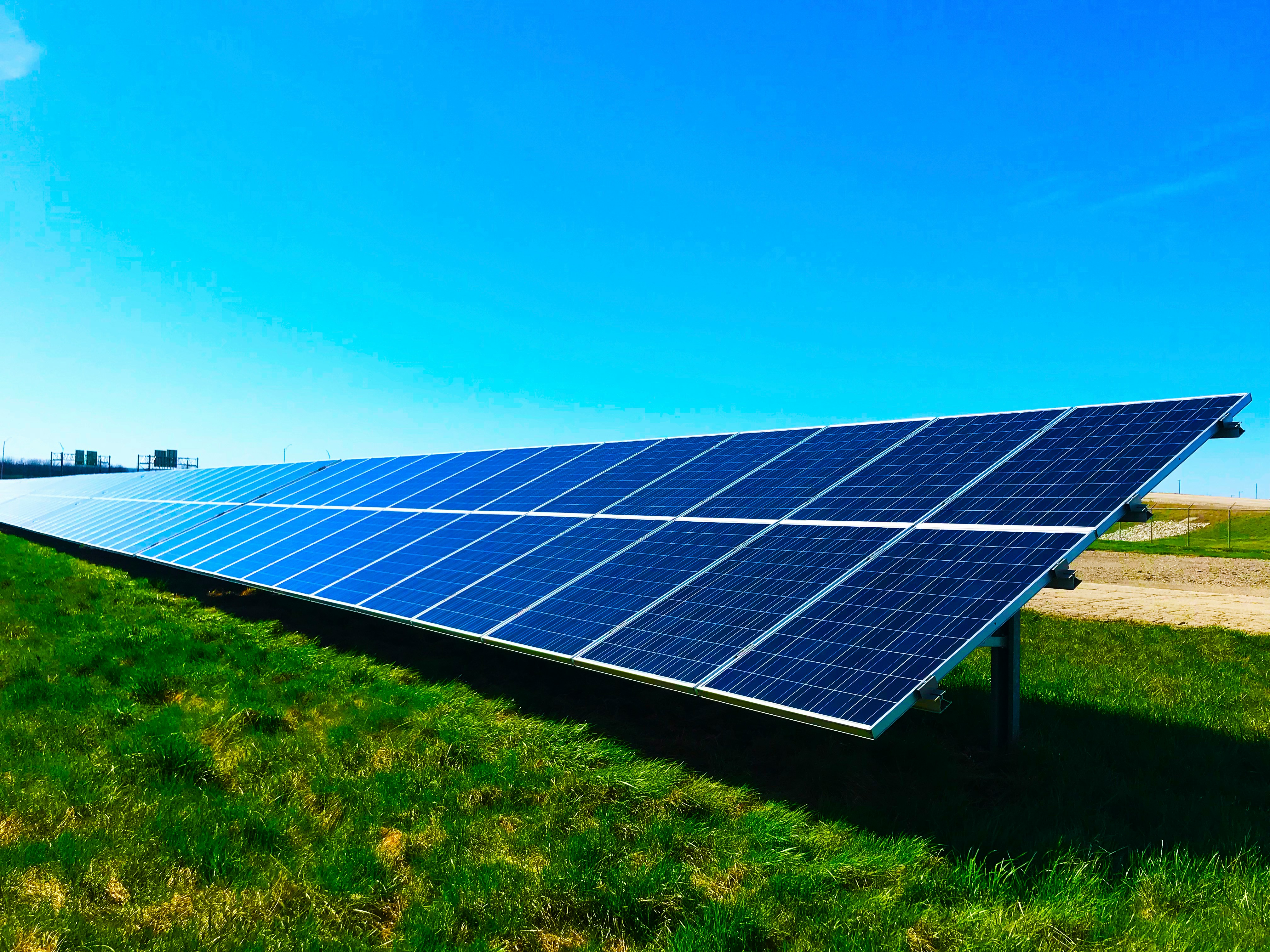
Photo by Chelsea on Unsplash

The state legislature in North Carolina is known for quietly doing its work and voting on legislation under the cover of darkness. You know, those wee hours of the night when most taxpayers are asleep. That’s not a good thing.

Being in the Metro Charlotte TV news region and not in the Raleigh-Durham-Chapel Hill TV broadcast region puts me at a disadvantage when it comes to keeping up with bills under consideration in Raleigh.

That’s the way state legislators like it, since the center of power has always been in the eastern part of the state due to how the colony was settled in the early 1700s.

But that’s not the point of my blog post today. I offer today’s post as an example of how the Trump anti-clean energy policies can and have sifted down to the state level. If your state legislature hasn’t jumped on the bandwagon, just wait!

I was pleased to see WSOC-TV in Charlotte report this particular bill. Michelle Alfini pinned the station’s online report on this. Joe Bruno does a yeoman’s job reporting on the General Assembly, though based in Charlotte.

I lived in Raleigh for two years. The difference in news coverage of the state legislature there and in Charlotte is like night and day. The TV stations in Charlotte pretty much ignore what’s happening in the state capital some 125 miles away, and the media in Raleigh ignore what’s happening in the state’s largest city. It’s a tug-of-war as old as colonial North Carolina. But I digress.

The Farmland Protection Bill (NC House Bill 729)

The Farmland Protection Bill is slowly moving through committees in the North Carolina State House. It was introduced on April 30, 2025. That’s not a typo. It was introduced more than a year ago and was supposed to take effect on July 1, 2025.

It has a nice ring to it, doesn’t it? The Farmland Protection Bill. Who among us wouldn’t want to protect farmland? (Except real estate developers and state legislators!)

Photo by Iga Palacz on Unsplash

But this bill is the undoing of earlier legislation that gave farmers income options when it was becoming more and more difficult for them to make ends meet.

It’s sort of like the Farm Bill under consideration in the U.S. House of Representatives. The name of the bill sounds like a good thing, but in the fine print it decreases money for SNAP (i.e., food for children and poor people.) That’s a topic for a different blog post.

NC House Bill 729 is a case of the North Carolina General Assembly – if the bill is passed – pulling the rug out from under farmers effective July 1, 2026.

It seems there are some members of the NC House of Representatives who are alarmed that too much of the state’s farmland is disappearing. Instead of blaming the real threats – urban development approved by local government boards and councils like a bunch of drunken sailors and the challenges that small farmers face as their profits cannot keep pace with their expenses – the NC House of Representatives has chosen to blame solar energy.

It’s a bill right out of the Trump playbook

The original bill, as reported in May 2025, would have repealed an 80% tax abatement on utility scale solar projects over a four-year period. At the end of four years, farmers who had invested in solar energy generation projects on their land would no longer receive a tax break.

After a full year of haggling and working its way through committees, the current substitute bill under consideration as of April 30, 2026, gives farmers a sliding scale of tax abatements per year until it is repealed – completely disappears – in 2029.

As reported by WSOC-TV last May, “Stakeholders with the sustainable energy industry and farmers who have chosen to lease to solar companies expressed their concerns that the bill would unfairly penalize a single industry for farmland loss, which occurs primarily through housing development, while interfering with agreements property owners and solar companies entered in good faith.”

We aren’t talking about huge solar farms here. We’re talking about farmers who own 100 acres of land who signed on to put a few feet of solar panels on their land. There’s one just up the road from my house.

Legislators are touting this bill as a windfall for local governments because counties are poised to receive a huge property tax increase from the affected farmers.

It is, apparently, beside the point that the North Carolina Sustainable Energy Association reported in 2022 that solar energy apparatus only covered 0.28% of agricultural land in the state.

NC Secretary of Agriculture Steve Troxler supports the bill, as does the North Carolina Farm Bureau; however, having come from a family of small farms, I tend to identify with the individual farmers who took advantage of a way to survive financially a few years ago and are now facing the repeal of the program and income they have come to depend on.

The May 2025 WSOC-TV report highlights the following example:

“Joel Olsen, who runs an agrivoltaics facility in Montgomery County that Channel 9 visited earlier this month, spoke at the committee hearing, taking issue with the idea that he is not paying his fair share in taxes.”

Mr. Olsen said, “When I bought the land, we paid $972 a year in property taxes,” he said. “Once we completed the solar farm, we paid three years of back taxes. We paid 100% of the real property taxes, and we paid over $100,000 in personal property taxes.”

The report stated, “He said he built his solar project with agriculture in mind, with sheep grazing alongside the panels. Olsen said this bill and rhetoric pitting solar against farming doesn’t take farms like his into account.”

Photo by Sam Carter on Unsplash

In conclusion

I admit that I don’t know the minute details of the history of this issue, but it sems to me that a compromise could be worked out so there’s not an “either/or” outcome.

It seems to me that solar energy panels and farming could co-exist, but politicians had to get involved and ruin a thing that appeared to be working well.

At a time now in May 2026 when farmers in North Carolina are battling drought conditions and skyrocketing costs for diesel fuel and fertilizer due to Trump’s short-sighted war with Iran, perhaps this is not a good time for the legislators to remove an optional stream of income some of them had taken advantage of under the law. Perhaps legislators will remember this is an election year and put the Farmland Protection Bill on the back burner or in the trash can.

If you wish to read the current wording in NC Bill 729 or keep up with its status, you can do so by visiting https://webservices.ncleg.gov/ViewBillDocument/2025/5298/0/H729-PCS30424-TQxf-20.

Janet Morrison

The government should be afraid of its citizens, not the other way around.

Revisiting Julian Francis Abele, Black Architect of Duke University’s West Campus

In honor of one of my great-nieces, who is graduating this weekend from Duke University, I am reblogging (with some different photographs and an updating of the reference to a birthday anniversary) my post from April 25, 2022 about Julian Francis Abele, the black architect who never got the recognition he deserved for designing the university’s iconic West Campus.

Everyone reading my blog has probably heard of Duke University. It’s a world-renowned university located in Durham, North Carolina. You might not know of its meager beginnings, and you might not know that the architect responsible for its magnificent West Campus was a black man.

I’ve lived in North Carolina my entire life, and I only recently l learned who Julian Francis Abele was.

First, here’s a very brief early history of the university.

In 1838, a subscription-supported school called Brown’s Schoolhouse was established in the Randolph County community of Trinity. The school’s name changed a couple of times over the years but was settled as Trinity College in 1859.

In 1892, Trinity College moved to Durham, North Carolina. With heavy financial support from Washington Duke and Julian S. Carr – both Methodists – the name was changed to Duke in December 1924. That was then James B. Duke, son of Washington Duke, established The Duke Endowment. It was a $40 million trust fund set up for its interest to be divided between various hospitals, orphanages, the Methodist Church, three colleges, and the university to be built around Trinity College. In today’s dollars, the $40 million endowment would be equivalent to more than $630 million.

But what did Julian Francis Abele have to do with this?

Julian Francis Abele was born April 30, 1881 in Philadelphia, Pennsylvania – so Thursday of last week would have been the 145th anniversary of his birth. In 1902, Abele was the first black graduate of the University of Pennsylvania School of Design. All four years of undergraduate school there, Abele worked in the mornings as a designer at the Louis Hickman Architectural Firm and took afternoon and evening classes at the university.

Horace Trumbauer, a nationally-recognized Philadelphia architect, hired Abele. He sent Abele to study abroad for three years. Upon returning from Europe in 1906, Abele joined Trumbauer’s firm and by 1909 had become the company’s chief designer. When Trumbauer died in 1938, Abele became head of the company.

The company designed numerous buildings in Philadelphia, a number of mansions in Newport and New York, and the Widener Memorial Library at Harvard University.

But my interest in writing about Julian Francis Abele today is his contributions to the gorgeous English Gothic and Georgian buildings at Duke University. Over the 30-year period of 1924 to 1954, he was the primary designer of the university’s West Campus.

Photo by Zamir Karimov on Unsplash

If you’ve not had the pleasure of visiting Duke University…

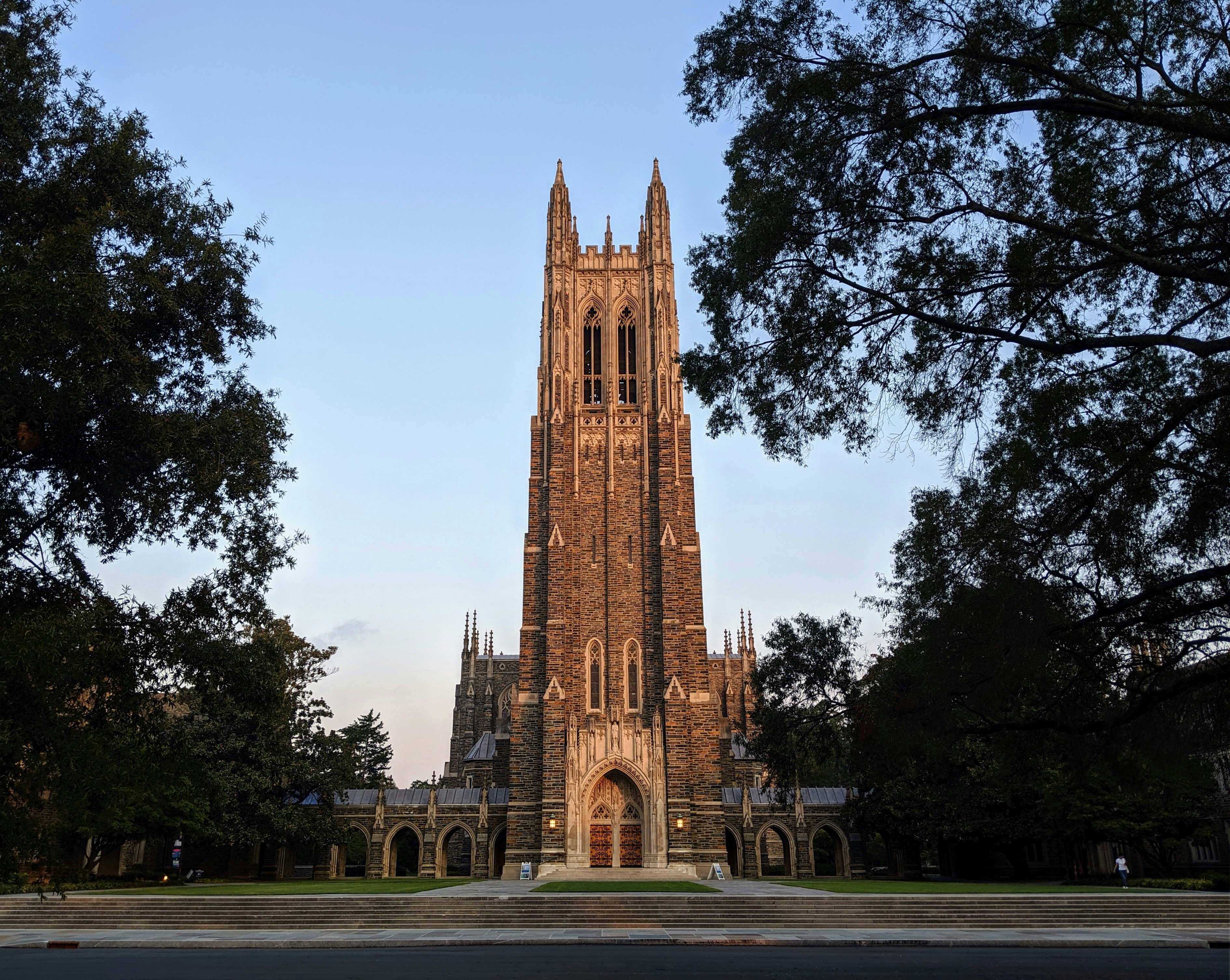
Photographs of the buildings on the Duke University campus don’t do justice to the beauty of the architecture. The centerpiece of the campus and grandest example of Julian Francis Abele’s work is Duke Chapel.

Duke Chapel.
Photo by Charles Givens on Unsplash

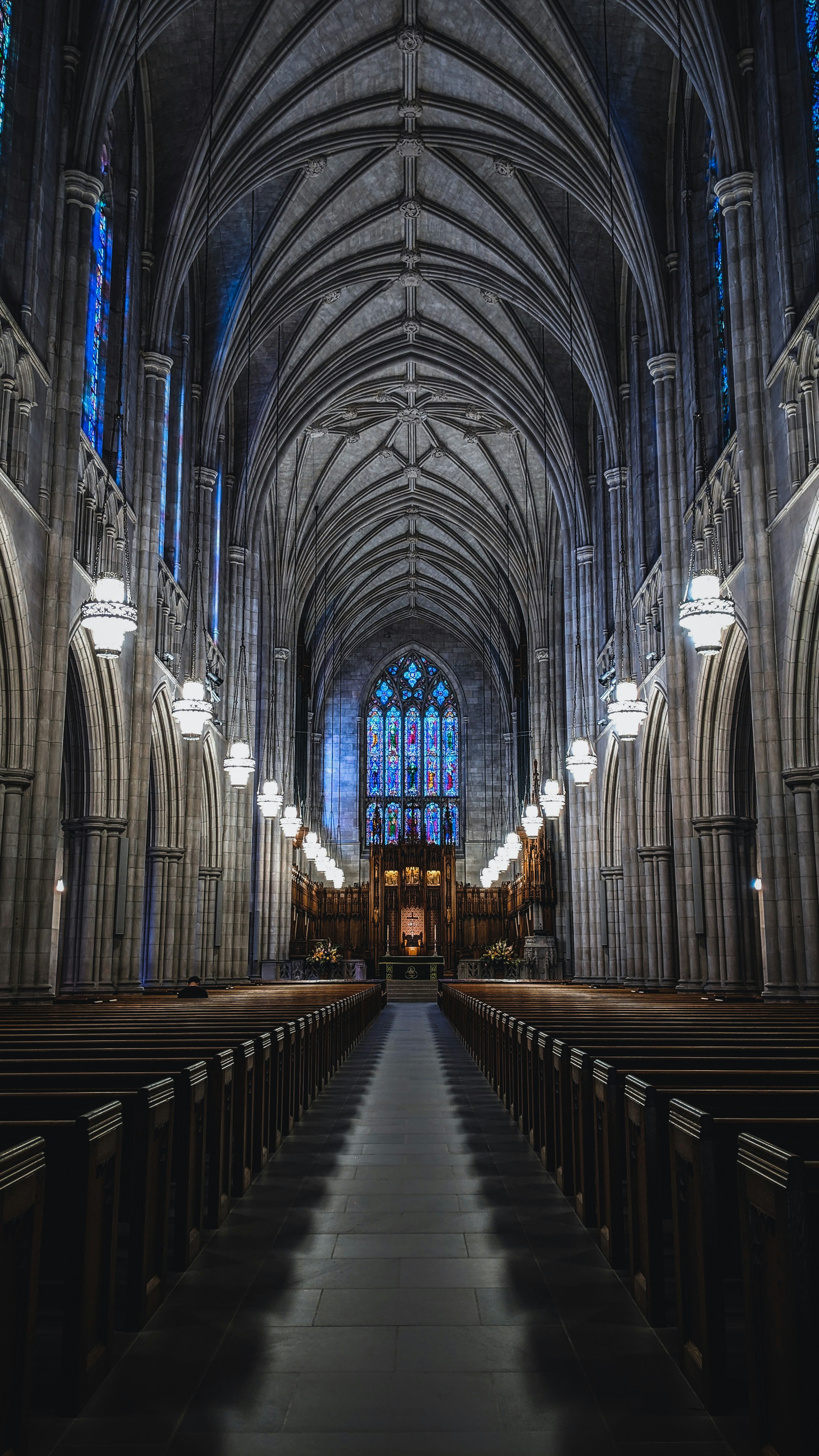
“Chapel” in this case is an understatement, for the chapel is more of a cathedral than a chapel in the common sense of the word. The chapel interior is 63 feet wide, 291 feet long, and the nave proper is 73 feet tall.

Inside Duke Chapel.
Photo by Charles Givens on Unsplash

Standing on the highest point on the planned campus in 1925, James B. Duke said that it was on that place that the chapel should be built. It would be the highest point and the center of the campus. The cornerstone was laid in 1930, and it is said that students enjoyed watching the stone cutters and the progression of construction of the chapel over the next two years. Little did those white students know that the chief designer of the edifice was a black man.

In fact, it wasn’t until Julian Francis Abele’s granddaughter, Susan Cook, brought to public light in 1986 that a person of color had designed the magnificent focal point of the Duke campus. While students protested apartheid in South Africa, Susan Cook wrote a letter to the student newspaper to make it known that her grandfather had designed their beloved West Campus.

Portraits of Abele now hang in the main administration building on campus and in the Gothic Reading Room in Rubenstein Library alongside those of former Duke presidents and board chairs. In 2016, and the main quadrangle on campus, which stretches from the Clocktower Quad to the Davison Quad – and to the Chapel Quad – was named the Abele Quad.

As quoted from https://today.duke.edu/2016/03/abele, upon the naming of the Abele Quad in 2016, Duke University President Richard H. Brodhead said, “Julian Abele brought the idea of Duke University to life. It is an astonishing face that, in the deepest days of racial segregation, a black architect designed the beauty of this campus. Now, everyone who lives, works, studies and visits the heart of Duke’s campus will be reminded of Abele’s role in its creation.”

Shocking to our 21st century minds, is the fact that the racial prejudices of the early- and mid-20th century deterred Mr. Abele from visiting the Duke University campus to see his designs come to fruition and caused him not to be admitted to the American Institute of Architects until 1942.

Mr. Abele died in Philadelphia on April 23, 1950, which was 72 years ago this past Saturday.

Visit Duke University in person or virtually

If you’re ever zipping along on Interstates 40 or 85 in Durham, take several hours to leave the hustle and bustle behind and visit the Duke University campus. Duke Chapel is open every day from 10:00 a.m. until 6:00 p.m. Stroll around the campus and be sure to visit the Sarah P. Duke Gardens. (Visit https://gardens.duke.edu/ for information about parking and what’s in bloom.)

Photo by Charles Givens on Unsplash

Visit https://chapel.duke.edu/about-chapel/history-architecture/ to take a virtual tour of the Duke University campus and to watch a tour of Duke Chapel. Scroll down to the bottom of the page and click on the links to various aspects of the chapel to learn more about the 77 stained-glass windows, the portal, the carillon, and the four pipe organs (including the diminutive 2014 153-wooden pipe positive organ that can be moved about within the chapel for small concerts.

Janet

The government should be afraid of its citizens, not the other way around.
“Magic Paint” and Other Trump Administration Plans

Here are a few random things Trump and his administration have going on this week, in case you have turned off the news.

Bison

The Trump Administration wants to move more than 1,000 bison off federally-owned grazing lands in Montana so the land can be sold to individuals. We’ll be lucky if we have 100 acres of federal land left when Trump vacates the White House.

Ballroom

After telling us for more than a year that the $100 million $200 million $400 million ballroom would not cost the American taxpayer one cent (if you don’t count maintenance – which apparently doesn’t count), Trump now has supporters in Congress proposing that we pay $1 billion for it. Don’t forget that Trump sees the White House as his personal property and tore down the East Wing almost overnight without permission from anyone. If I so much as wrote graffiti on a federal government building, I would be fined and imprisoned. Must be nice to be above the law.

“Magic Paint”

President Trump wants to use some selicate-based “magic paint” to brighten up the granite exterior of the Eisenhower Executive Office Building, ignoring some experts who have said it might not be compatible with granite.

This may or may not be magic paint. Photo by Taelynn Christopher on Unsplash

The War in Iran

Trump flipflops between saying we won the war, the war is over, the ceasefire is working, the Strait of Hormuz is open, the Strait of Hormuz is closed, the price of gasoline isn’t up, the price of gasoline will plummet when the war is over. (Wait! I thought in March you said it was over.) He even said this week that the war started six weeks ago, although it started ten weeks ago. Perhaps he stopped calling it “an excursion” and started calling it a war six weeks ago. No one knows what he means or what he thinks. He says he’s talking to the leadership in Iran. The Iranian leadership says they haven’t talked to him. When both parties deal regularly in lies, we are left with no one to believe.

Another key problem, in addition to Trump getting us into this war without Congressional approval or a forthright reason for going to war, is that he insists on talking about the ending of the war as “a deal.” Mr. Trump, it takes diplomacy to end wars in which there will be no military victory. That’s what the U.S. Department of State did for almost 250 years. It’s called diplomacy. It’s called negotiations. It is not and has never been called “a deal.” It is not a business transaction. It is international relations. Perhaps you should have stayed out of politics and continued to just try to enter business deals. You obviously don’t know the difference. A few civics and history classes would serve you well.

After weeks of this “excursion,” all we have accomplished is the closing of the Strait of Hormuz and probably gaining more enemies around the world.

Continued Oil Embargo of Cuba

Trump is almost silently enforcing an oil embargo in Cuba. Although he seems to think it will bring the Cuban government to its knees, what it is accomplishing so far is an almost complete lack of electricity on the island nation and $40-a-gallon gasoline. And Americans are complaining about $4.50-a-gallon gasoline. I guess the endgame is to take Cuba in as part of the United States. One must wonder if the Cubans who survive the embargo will desire to become citizens of a country that elected Donald Trump as President … twice.

Children in the Oval Office

This week Trump regaled a group of children with details of the murder of 42,000 protesters in Iran. Seems like unusual behavior for someone who brags about making a perfect score on the Montreal Cognitive Assessment Test three times. Just because he can identify a horse, a tiger, and a duck and draw the face of a clock doesn’t mean he should be turned lose unfiltered to talk to children. He went on to brag that his doctor gives that test for a living and told him that he rarely sees someone ace it.

A note about my Congressman

I occasionally mention my Congressman’s e-newsletters in my blogs. I’m not a fan of his, so I thought it was appropriate that his weekly newsletter last Saturday went to my spam box with a bright red warning: “This message might be dangerous. It contains a suspicious link that was used to steal people’s personal information. Avoid clicking links or replying with personal information.”

You can’t make this stuff up.

Janet

The government should be afraid of its citizens, not the other way around.
Books I Finished Reading in April 2026

May is Get Caught Reading Month, Mystery Month, National Share a Story Month, and Latino Book Month, so I wish you a happy May in all those ways and the other ways you celebrate it.

Here in the northern hemisphere, it is truly the month when we transition into summer. What’s not to love about that? (I know… humidity, snakes, and mosquitoes, but let’s not go there.)

As has been my practice (some months and years more so than others), I like to blog early in the month about some of the books I read the previous month.

I will point out (again) that I am not a book reviewer. There are people who do that as a profession, and I am not one of them. Occasionally, I receive an email from a stranger asking me to review their book. I don’t do that. My reading time is precious and I only read the books I choose to read.

My fiction reading has been sparse for several months now due to the brain fog that is part of ME/CFS, which I have lived with for 39 years.

This is frustrating, to say the least. I used to love to read and, as a fiction writer, it is especially difficult for me to admit that I have difficulty reading a novel and remembering what I’ve read on a page – much less to try to remember the plot of a story.

This makes for embarrassing times at book club, where I feel like an intruder in a group where everyone else knows the minute details of novels. All I can do is marvel at what extraordinary memories they have as I sit quietly and listen to the discussion.

You may wonder how and why I’m trying to write novels. I have spent years working on two novels, and I have no idea when either of them will be completed. It is only because I have worked with this story and these characters for so long that I am able to believe I can finish writing the book. It is challenging work, but writing brings me joy and a sense of accomplishment.

That said, I will share a little of what I read, or more accurately, finished reading in April.

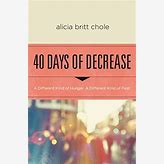
40 Days of Decrease: A Different Kind of Hunger, A Different Kind of Fast, by Alicia Britt Chole

40 Days of Decrease: A Different Kind of Hunger, A Different Kind of Fast, by Alicia Britt Chole

I’ve been a Presbyterian all my life, so fasting for Lent has never been a thing for me. There has been a growing emphasis on Lent in the Presbyterian Church USA in recent decades, but fasting or “giving up something for Lent” is not part of that emphasis. 

I was drawn to the title of this book several years ago. I finally purchased a used copy of it and looked forward to reading it in the 40 days of Lent leading up to Easter this year.

I am a flawed human being and a flawed Christian. I read it “religiously” (pardon the pun) for the first 20 days. Then, I got distracted. I lost my focus and read the last 20 chapters on a hit-and-miss basis. That is not a reflection of the book. It is merely a reflection on me and my failings.

This book is excellent! If you want to give up eating chocolate or something for Lent, that’s quite all right, but this book takes a different approach. I believe it takes a deeper approach.

For each day during Lent, the book encourages the reader to give up something in their lives.

For instance, on Day 1, we are encouraged to give up Lent “as a project” with a beginning and ending date. On Day 2, we are encouraged to give up regrets. That is a huge one! Especially if you are in your later years. Another day we are encouraged to not speed up sorrow. Give yourself and others time to grieve. Don’t rush it.

As you can see, this book is packed with baggage we all have. Each day gave me something to ponder and to try to get rid of.

I highly recommend 40 Days of Decrease: A Different Kind of Hunger, A Different Kind of Fast, by Alicia Britt Chole. I don’t plan to wait until Lent 2027 to re-read it. Most of the topics in the book are things that I need to work on constantly. I think many of us could benefit from reading it throughout the year. Some of the daily topics could be dwelt on for a week.

Even though the book was designed to be read in daily increments during Lent, I refuse to feel guilty for taking several extra weeks to finish reading it. In fact, I think that’s perfectly okay.

It takes some of us longer than 40 days to get our lives straightened out. I’m a work in progress.

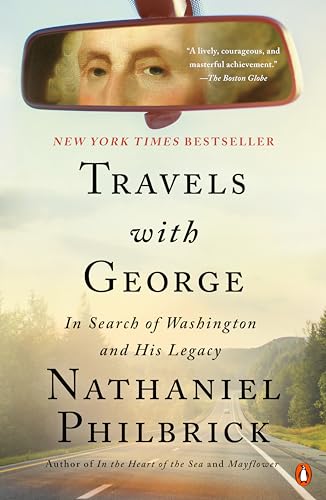
Travels with George: In Search of Washington and His Legacy,by Nathaniel Philbrick

Travels with George: In Search of Washington and His Legacy, by Nathaniel Philbrick

I wanted to read the entire book, but I was unable to devote the time necessary to do that. My reading for pleasure tends to just be for the pleasure in the moment of reading a well-written, interesting novel. This book is not a novel but a retracing of George Washington’s 1791 tour of the southern states. I was especially interested in his travels in South Carolina and North Carolina in light of the novel I’m writing.

I enjoyed that part of the book and took some notes for future reference. I was disappointed, though, that the book jumped from Washington’s time with the Catawba Indians to “his next stop in Salisbury.”

Washington’s next stop was not Salisbury. He traveled to Charlotte, and spent the next night (May 29, 1791) as a personal guest of Red Hill Tavern owner Martin Phifer, Jr. near the present-day intersection of US-29 and Poplar Tent Road in Concord, Cabarrus County.

Mr. Phifer had served with Washington at Valley Forge, so they were more than acquaintances.

I’m puzzled over why the author skipped over Mecklenburg and Cabarrus counties and went directly to Rowan County.

Otherwise, what he covered that I got to read was very interesting and easy to follow. I think anyone interested in George Washington or his tour of The South in 1791 would enjoy this book.

Until my next blog post

I hope you have one or more good books that you’re reading! I’m reading The Mad Wife, by Meagan Church and Brawler: Stories, by Lauren Groff.

Janet

The government should be afraid of its citizens, not the other way around.
Tomorrow is World Press Freedom Day

The free press is under attack in the United States. President Trump and his followers never miss an opportunity to criticize journalists. Trump delights in telling falsehoods about specific news organizations, and one of his favorite pastimes is to publicly say nasty things to female reporters.

If you take time to watch his press conferences, speeches, and interviews, you know what I’m talking about.

We have not in my 73 years had any other U.S. President who had a personal vendetta against the free press. His contempt for the First Amendment of the U.S. Constitution is frightening to those of us who treasure freedom of speech and freedom of the press.

A meme with the words of the First Amendment with the American flag in the background
The First Amendment to the Constitution of the United States of America

To mark World Press Freedom Day tomorrow, I will give just two examples of what we were made aware of this week thanks to the free press.

Defense Department Drone Deal

Bloomberg reported on Thursday that the U.S. Department of Defense is going to purchase drones from a company owned by Donald Trump, Jr. and Eric Trump.

You did not get that information from The White House or from the U.S. Department of Defense.

You got it from a free press.

1,000-Year-old UNESCO Site Damaged by Department of Homeland Security

The Washington Post reported that a bulldozer cut a 60-foot swath out of a 200-foot Native American archeological treasure on Friday, April 24, 2026.

Did The White House report it? Did the U.S. Department of Homeland Security report it?

No, the free press reported it.

The priceless site in in the Cabeza Prieta National Wildlife Refuge in Arizona. The United Nations Educational, Scientific and Cultural Organization (UNESCO) treasure that was partially destroyed was an etching in the desert sand known as an intaglio.

At least 1,000 years ago, ancestors of the Hia-ced O’odham Indigenous People scraped down to white soil under the desert sand to create a 200-foot long etching of a fish.

Thanks to the U.S. Department of Homeland Security issuing waivers for the construction of Trump’s border wall, the Trump Administration does not have to abide by the federal laws protecting the environment or sacred Indigenous sites while building the wall.

Now, thanks to those waivers and a President’s administration devoid of respect for history, nature, or indigenous peoples, a 60-foot swath has been ripped through the etching as the construction of the Trump wall between the United States and Mexico continues at the rate of three miles per week.

The Cabeza Prieta National Wildlife Refuge is administered by the U.S. Department of the Interior. An anonymous employee of that department confirmed to The Washington Post that the damage had been done by the Department of Homeland Security.

The Tohono O’odham Nation was able to prevent the first Trump Administration from building the wall across its reservation. They were able to protect the intaglio and a sacred burial site then, but that protection has been ignored by the second Trump Administration.

Archaeologist Rick Martynec, who has studied the site over the last 20 years, reported that the Refuge had been in discussions with the Department of Homeland Security to make sure the intaglio was not damaged. When he visited the site a couple of weeks ago, he saw stakes in place that marked the boundaries of the etching.

Various people and groups were actively working to make sure the Department of Homeland Security did not destroy the site, but it was all to no avail.

And we would not know it if not for the free press.

Janet

The government should be afraid of its citizens, not the other way around.