Do you associate volcanoes with North Carolina?

Now that I have your attention… today’s blog post is about ancient history. This is one of the topics I wrote about in Harrisburg, Did You Know? Cabarrus History, Book 2.

Photo of a volcano by Guille Pozzi on Unsplash.com.
Photo by guille pozzi on Unsplash

Harrisburg, North Carolina sits inside a 22-mile syenite or ring dike. One can get a feel for it from several high points in the area, such as when traveling south from Concord on US-29 near the intersection with Union Cemetery Road. It’s like looking across a gigantic bowl.

Another possible place from which to catch a glimpse of the “bowl” is on NC-49 southbound after you pass Old Charlotte Road. The Charlotte downtown skyline is visible briefly from that location as well as the one referenced above on US-29.

Harrisburg, Did You Know? Cabarrus History, Book 2, by Janet Morrison

What, you may ask, is a syenite or ring dike? I’m no expert on volcanology, but my understanding is that it is a circular dike around a volcano.

According to 2001 Encyclopedia of Earthquakes and Volcanoes, by David Ritchie and Alexander E. Gates, Ph.D.:

“If magma is removed from the magma chamber beneath a volcano, it can undergo caldera collapse. The volcano and the area around it collapse because they are no longer being held up by the liquid. A series of concentric faults and cracks develop around the collapsing volcano. As they do, magma will squeeze up around the cracks and faults forming ring dikes.”

I’ll take their word for it.

In 1966, U.S. Geological Survey geologist Harry E. LeGrand and Henry Bell III led a scientific excursion in Cabarrus County to study our ring dike and other interesting rock and mineral deposits in the county.

You might be able to access a pdf of “Guidebook of Excursion in Cabarrus County, North Carolina, October 22-23,1966” by going to https://www.carolinageologicalsociety.org. Search for “1960s Field Trip Guidebooks” and then scroll down to find that particular guidebook.

The Harrisburg area has experienced a population explosion since 1966. The landmarks noted in the 1966 guidebook are either gone or more difficult to locate today. The concentric rings that were reportedly visible from the air in 1960 by R.G. Ray might not still be intact.

If you’d like to know more about this topic, the 1849 meteorite; Harrisburg’s first organized housing and business development of 100 years ago; the Morrison-Sims Store and Old Post Office; the flood of 1886, the Piedmont Area Development Association (P.A.D.A) of the 1960s; earthquakes that have been felt here; McCachren’s Store; Rocky River bridges in the 1870s; the Sauline Players; a tribute to George L. Govan; Rocky River Academy; the Rocky River Presbyterian Church’s fourth sanctuary which was completed in 1861; a 1777 estate sale; Hugh Smith Pharr and his mill; a 1907 attempted train robbery; 1816 – the year without a summer;

Also: items such as milk, apples, and dry cleaning that were all delivered to homes in the mid-1900s; Blume’s Store; high-speed trains; the boundaries of Township 1; early Harrisburg education; Pharr Grist Mill on Back Creek; how electricity came to Harrisburg; a 1912 church homecoming; Pioneer Mills Gold Mine and Community; a fellow named Collett Leventhorpe; a 1911-1912 debating society; and the tenth anniversary of the Harrisburg Branch of the Cabarrus County Public Library system… please purchase Harrisburg, Did You Know? Cabarrus History, Book 2.

The book also contains nearly 150 pages of my research notes on subjects I didn’t get to write about when I wrote a local history newspaper column from 2006-2012.

Harrisburg, Did You Know? Cabarrus History, Book 1 and Book 2 are available in paperback at Second Look Books, 4519 School House Commons in Harrisburg, NC.
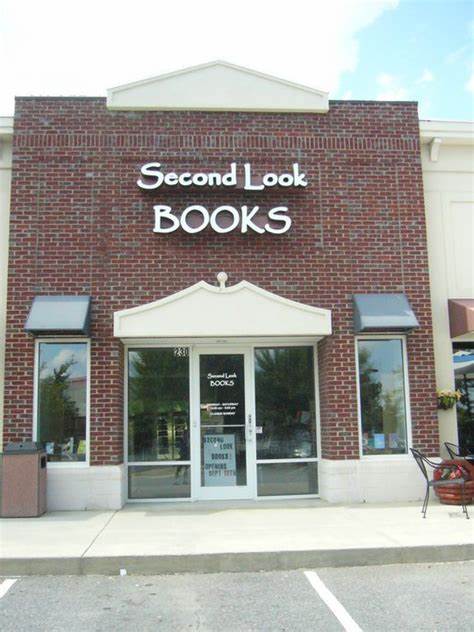
Second Look Books, 4519 School House Commons, Harrisburg, NC

They are also available in paperback and e-Book from Amazon at https://www.amazon.com/dp/B0BW2QMLHC/.
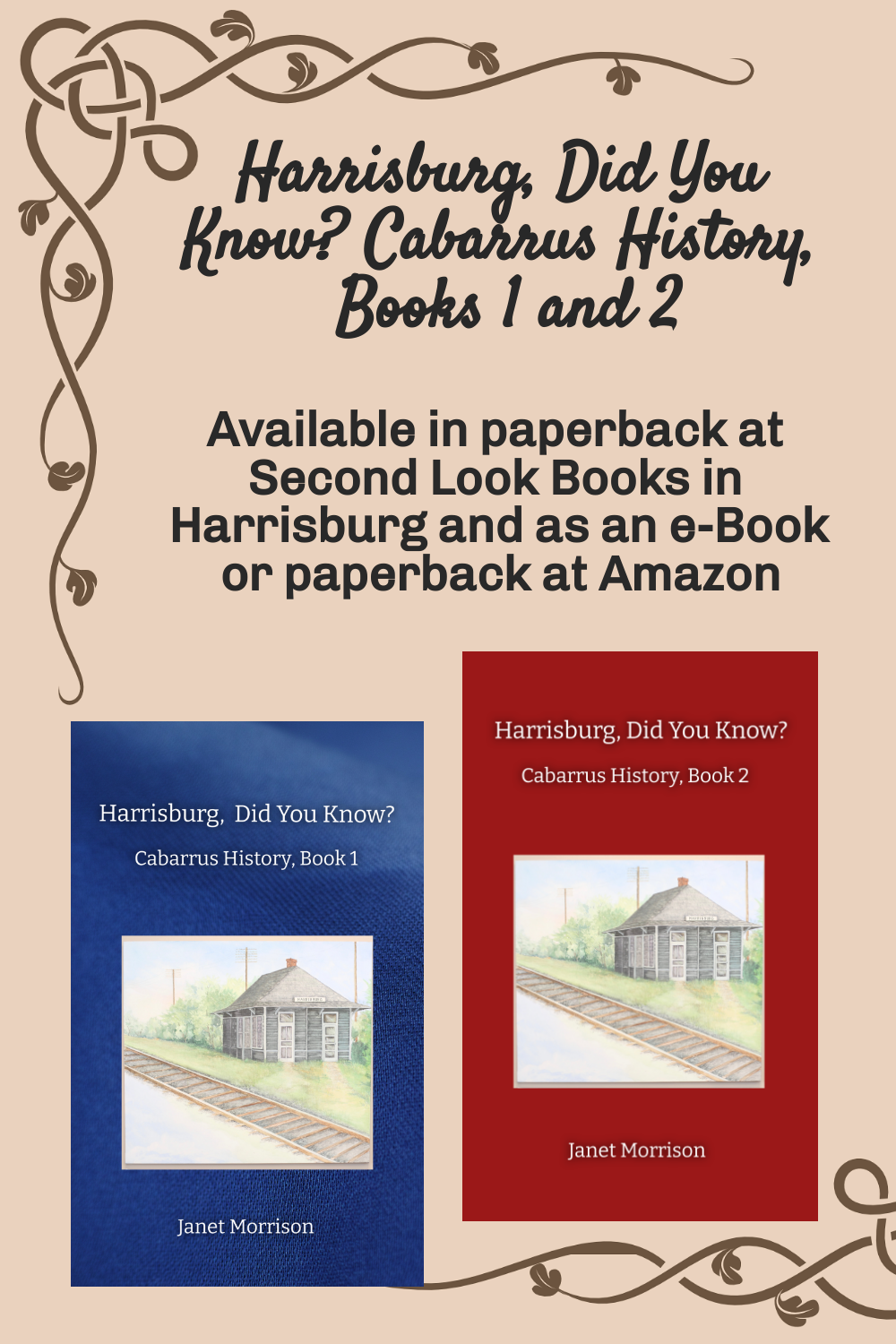
An infographic ad for Harrisburg, Did You Know? Cabarrus History, Books 1 and 2

Until my next blog post

I hope you have a good book to read.

I hope you get to spend quality time with friends and family.

Remember the people of Ukraine.

Janet

P.S. Please visit https://www.janetmorrisonbooks.com and subscribe to my e-Newsletter. Next issue due out the first week of January!

Three Other Books I Read in November 2023

As I said in last week’s blog post in which I wrote about three books I read last month, I read a variety of genres in November. I hope you will find something of interest in the three books I’m blogging about today.

The Plot to Kill Hitler: Dietrich Bonhoeffer: Pastor, Spy, Unlikely Hero, by  Patricia McCormick

The Plot to Kill Hitler: Dietrich Bonhoeffer: Pastor, Spy, Unlikely Hero, by Patricia McCormick

This book is a painful reminder of the evil wrought by Adolf Hitler and how a dictator like Hitler demands complete allegiance from all who live in their realm. It is specifically about the life of Dietrich Bonhoeffer. I have read quotes from Bonhoeffer, references to him in sermons, and things about him. This 150-page book pulls it all together from his childhood in the lap of luxury, to his struggles with the great questions of life and ethics, to the courage he demonstrated in the face of pure evil in Nazi Germany.

In The Plot to Kill Hitler, Patricia McCormick weaves together the many strands of history that resulted in some unlikely people finding a shared sense of right and wrong and the courage to stand up against the genocide of the Jews. Several attempts to murder Hitler failed for various reasons before the authorities put all the clues together in an effort to identify all the conspirators.

The parallels between Hitler and a recent past US president who is seeking reelection are startling and impossible to miss. I highly recommend this book.

If Patricia McCormick’s name sounds familiar to you, it might be because I wrote an entire blog post about Sold, by her, on November 13, 2023: One of the Most Banned Books in the US: Sold, by Patricia McCormick. Reading Sold prompted me to look for what else she has written.      

The Exchange After the Firm (The Firm Series Book 2), by John Grisham

The Exchange: After the Firm, by John Grisham
The Exchange: After The Firm, by John Grisham

The Exchange is the latest novel by John Grisham that all his fans are talking about. We get to re-engage with Mitch and Abby McDeere from The Firm. Mitch and Abby have tried to put the terrible memories of how things ended in Memphis behind them. Mitch swore he’d never return to that city but the head of the law firm’s health is failing and he needs Mitch to take a case in Libya. As one would expect, things do not go well. (If they did, it wouldn’t be a very interesting novel!)

If you read The Firm and have enjoyed scores of Grisham’s other novels, you’ll certainly enjoy The Exchange.

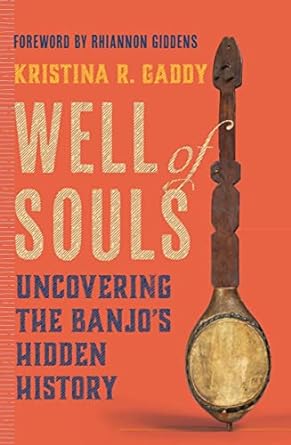
Well of Souls: Uncovering the Banjo’s Hidden History, by Kristina R. Gaddy. Foreword by Rhiannon Giddens

Well of Souls: Uncovering the Banjo's Hidden History, by Kristina R. Gaddy
Well of Souls: Uncovering the Banjo’s Hidden History, by Kristina R. Gaddy

I was drawn to this book for two reasons. First, I needed to learn more about the history of the banjo because there is an early African-American constructed banjo in the historical novel series I am working on. In fact, a segment on the Public Broadcasting System’s “History Detectives” years ago about the early African-American banjos was one of two initial sparks that inspired me to write the novels I’ve been working on for more than a decade.

Second, when I saw that Riannon Giddens had written the foreword, I knew I had to read the book. If you have not discovered the musical talent of Riannon Giddens, please look for her music on YouTube and her CDs. My favorite concert of hers on YouTube is with Francesco Turrisi from October 4, 2019: https://www.youtube.com/watch?v=Ignhso0iv9U.

Since my last blog post

I continue to hone my skills at creating memes on Bookbrush.com to use for pins on Pinterest to publicize my writing. I enjoy doing it, but it consumes more of my time than I would like. I’m trying to create enough ahead each day to enable me to schedule at least one every day through the end of December when things tend to get hectic with holiday activities. I’d rather be writing than creating memes and pins, but it seems to go with the territory. No two days are the same, which keeps me motivated.

Until my next blog post

I hope you have at least one good book to read. I’m enjoying Dangerous Women, a political thriller by Mark de Castrique. It’s the second book in his Ethel Crestwater series.

Dangerous Women, by Mark de Castrique

Maybe it’s just me and/or the age I am, but it seems like there’s a lot of sickness going around. I wish you well.

Remember the people of Ukraine.

Janet

Three Books I Read in November 2023

I am trying to broaden my reading horizons by reading a variety of genres. I made progress toward that goal in November, as you will see from three of the books I read.

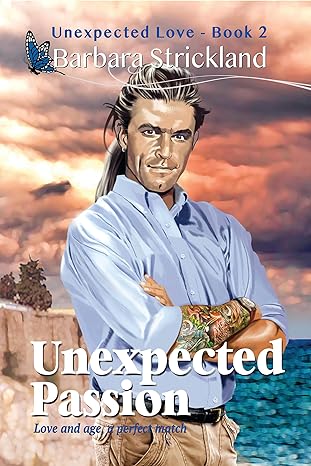
Unexpected Passion, by Barbara Strickland

Reading Unexpected Passion, by Barbara Strickland was a reading stretch for me. I’m not usually drawn to romance novels.

Unexpected Passion: Love and age a perfect match, by Barbara Strickland

Unexpected Passion is Book 2 in Barbara Strickland’s Unexpected Love Series, I love the book’s premise. Ricardo, part owner in a tour company, comes across as a real lady’s man, but his trust issues make it difficult for him to have a meaningful, honest relationship. Lexi is not a “spring chicken” either. Her friends are determined to pull her out of her comfort zone. She finally gives in and agrees to go on one of Ricardo’s tours of Greece and Italy.

The novel follows the hot and cold relationship between Ricardo and Lexi as the tour takes them to fascinating locations in the two countries. Ms. Strickland weaves in references to the places we have always read about, seen pictures of, and would love to visit while following the flirtations and misunderstandings/wrong assumptions made by Ricardo and Lexi about each other along with their interactions with others on the trip.

I felt like I was on the tour myself, which is a sign of a good book!

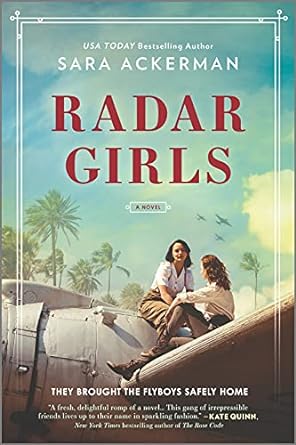
Radar Girls, by Sara Ackerman

Radar Girls, by Sara Ackerman is a novel about the women who did top-secret work in Hawaii during the early days of radar use by the US military in World War II. The women could, of course, tell no one what they were doing. And, being women, they had to claim to be doing clerical work when pressed about their occupations.

Radar Girls: A Novel, by Sara Ackerman

The novel follows the private lives and individual stresses of each of the women.

They had personal stress and collective stress and worry over the troops they were directly responsible for supporting. They were responsible for guiding US bomber pilots for safe landings upon the planes’ return to the base after bombing runs. The books includes their individual worries for husbands and other loved one serving in the war zone.

Carol of the Reading Ladies Blog did a great job of reviewing the novel. I think you would enjoy reading Carol’s review: http://Radar Girls [Book Review] #HistoricalFiction @HarlequinBooks #NetGalley #WW2 #BookTwitter #BookBlogger – Reading Ladies. Carol’s 5-star rating of the historical novel prompted me to get on the waitlist for it at the public library.

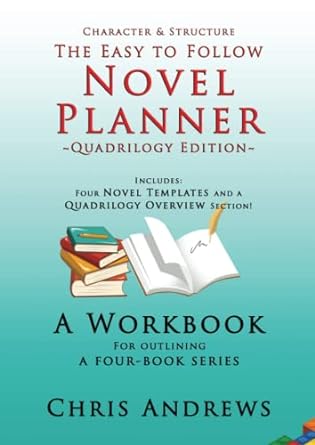
Character & Structure: The Easy to Follow Novel Planner – Quadrilogy Edition, by Chris Andrews

As I will explain below, I am attempting to write a novel series. Originally, I thought in terms of writing a trilogy, but then the story said it needed at least four books. I was thrilled to find this book by Chris Andrews. It is a wonderfully-organized workbook for outlining a four-book series. I’d never seen or heard the word “Quadrilogy” before, so I immediately felt this was just the workbook I needed.

Character & Structure: The Easy to Follow Novel Planner – Quadrilogy Edition, by Chris Andrews

This workbook is a companion to Andrews’ book, Character & Structure: An Unholy Alliance, which I read a couple of years ago. In the workbook’s 64 pages, Andrews walks the writer – whether a novice or a seasoned published author – through a systematic way to make sure the novel they envision or are already writing is constructed on a structure that will support it from beginning to end.

The workbook prompts the writer to give appropriate attention to subplots and how each one fits into the larger picture. It helps the writer to plan each chapter and to map out how the characters and plot flow.

Novel outlines are not set in concrete. Characters sometimes balk at the writer’s plans. In some cases, the characters have better ideas for the plot twists and turns than the writer, but having the big picture of a novel quadrilogy down in black and white will certainly help the author stay on track with structure. The workbook also has pages for you to jot down dialogue ideas. (You know you will forget those jewels if you don’t write them down!)

In case you’re writing a trilogy, Chris Andrews also have a Trilogy Edition of this workbook. Look for his writing books and his fantasy novels on Amazon.

Since my last blog post

Did last week fly by, or was it just me? It’s already December. How is that possible?

I got down to brass tacks outlining my novel series. Yes, I said series. As you probably already know, the main character in the first novel I drafted had so much backstory that I concluded her life as a younger person needed a separate book. I also finally worked out a plot problem in the second book in the series – the one for which I’ve already written 90,000+ words. It was a part of the plot dealing with the freedom of a slave. After stewing over this particular plot point for literally years, I took a walk last week to talk through it with myself (for the hundredth time) and concluded that George, the slave has to instigate his own path to freedom – or his attempt at freedom. Hmmm… do you think George will be successful? Geoge is a strong character. He and I have wrestled over his actions for years.

I had already toyed with continuing the main character’s story in two or three books in addition to the first two. I have outlined a total of five novels for the series. Now I have to figure out a way to write a lot faster or I can’t possibly live long enough to write all five! Time will tell if I have enough writing skill and imagination to write that many novels.

Until my next blog post

I hope you have at least one good book to read this week. Support your local public library and your local independent bookstore.

Don’t forget the people of Ukraine.

Janet

#Idiom: Barking up the wrong tree

It’s been a while since I blogged about an idiom. For a bit of variety, I decided to blog about one today. “Barking up the wrong tree” is an idiom I’ve heard all my life. For my blog readers in other countries, please tell me if there is a comparable saying in your language or country.

This idiom is known to date back at least to the early 1800s in the United States. It can be found in at least five written sources from the 1830s. “Barking up the wrong tree” is used to describe a wrong assumption.

Photo of a hunting dog
Photo by Ivett Szabo on Unsplash

Raccoon hunters trained their hunting dogs to chase a raccoon. The raccoon would climb a tree to get away from the dogs, but in the dark a raccoon can trick a dog into thinking it has gone up one tree when it has climbed a different tree. The hunting dog is trained to stand at the base of the tree and bark until its owner catches up. It is then that the hunter discovers that the dog is “barking up the wrong tree.”

Less colorful synonyms for the idiom

I found the following list of synonyms for “barking up the wrong tree, but as a fiction writer I much prefer the idiom:

Miscalculate

Misjudge

Misconstrue

Misunderstand

Overestimate

Overrate

Underestimate

Confound

Each of those is a perfectly good word and should be used in serious nonfiction writing, but don’t be surprised if you find “barking up the wrong tree” in one of my historical short stories or novels.

Since my last blog post

I created an online JanetMorrisonBooks.com merchandise store on Bonfire.com! I have set prices as low as possible because I see this as a way to help get the word out about my website. It’s not a money-maker for me. If you need a tee shirt, sweatshirt, or a sweatshirt with a hoodie and don’t mind having an open book and “JanetMorrisonBooks.com – Southern Historical Fiction and Local History” tastefully written across the chest, please visit my new shop at https://www.bonfire.com/store/janet-morrison-books/.

Marie and I delivered several copies of The Aunts in the Kitchen: Southern Family Recipes to Main Street Books in Davidson, NC last week. If you’re in the Lake Norman area north of Charlotte, please support this independent bookstore or order our cookbook directly from the shop by visiting https://www.mainstreetbooksdavidson.com/item/-aQgEatI944P43K8gZe2ow. Of course, the cookbook is also available at Second Look Books in Harrisburg and on Amazon.

Some thoughts about Thanksgiving Day

In the United States, we celebrated Thanksgiving Day last Thursday. It is a day set aside for us to reflect on our many blessings and give thanks for them. It is also a day to eat too much turkey, dressing, mashed potatoes, giblet gravy, sweet potatoes, green bean casserole, bread, and pumpkin pie. It is also a day to watch Christmas parades on television in the morning and a variety of football games in the afternoon and evening as we try to stay awake after enjoying too much.

It turns out that the holiday is based on a myth we were taught in elementary school. The story has always been that the Pilgrims and the indigenous people of Massachusetts sat down together to celebrate the fall harvest in 1621.

Apparently, a more accurate story is that the Pilgrims were celebrating the harvest by shooting off their muskets. The nearby Native American Wampanoag people heard the commotion and went to investigate. They all ended up sharing some food, but it is not as the story was passed down by white Americans for 402 years. The Pilgrims did not invite the Wampanoag people to come for a big mutual celebration.

In fact, the day is marked by indigenous Americans as a National Day of Mourning. We all know that since the first European settlers arrived in what is now the United States, the settlers disregarded the indigenous people and the government only served to legalize the mistreatment and removal of those people who had lived here for tens of thousands of years.

Perhaps a more fitting way for us to mark Thanksgiving Day is to acknowledge the wrongs of our European ancestors as we count our blessings. We cannot undo history, but we owe it to future generations to record it and pass it on as accurately as possible. When we know better, we should do better.

I’m glad we have a day as a nation when we are supposed to stop and be thankful for all we have. Corporate America tries to trick us into thinking Thanksgiving is only about the start of the Christmas gift-buying season, but they are barking up the wrong tree.

Until my next blog post

I hope you have a good book to read. I have several that are all due today at the public library.

Make a point to study reliable accounts of history, if for no other reason than to avoid repeating it.

Don’t forget to visit my new merch store: https://www.bonfire.com/store/janet-morrison-books/

With all the emphasis on Israel and Gaza now, don’t forget the people of Ukraine.

Janet

How Can Genealogy Influence Historical Fiction?

Since I have published very little historical fiction, you probably haven’t read anything yet that was influenced or inspired by my genealogy; however, I hope to remedy that with the publication of a collection of my short stories in 2024.

I’ll give you an example. People often ask fiction writers where they get their ideas. The answers run the gamut, but I have drawn on research into my family history for at least one historical short story.

Many people like to brag about their Scottish ancestors living in castles. Folks, why would someone leave a castle in Scotland in the 1700s and come to America to start life over as a farmer? Just sayin.’

Eilean Donan Castle in Scotland (Photo credit: Nicholad Beel on Unsplash.com
Eilean Donan Castle in Scotland (Photo credit: Nicholas Beel on Unsplash.com

I brag on most of my ancestors because they were farmers. They were farmers in Scotland and Ireland, and they bought land to farm when they got to America.

Cornfield. Photo Credit: Steven Weeks on Unsplash.com
Photo Credit: Steven Weeks on Unsplash.com

After having grown up out in the country and worked a vegetable garden, I have immense respect and admiration for anyone who is able to support a family and make a living by farming – especially back in the days before tractors and other mass-produced farm equipment.

Today I’m blogging about one of my immigrant ancestors who inspired me to write a short story.

He left Ireland (we think) and came to Virginia in the early 1700s. He had obviously not lived in a castle. Doing research on him in coastal Virginia was an eye-opening adventure. By following all the government records I could find about him, I learned a great deal of early Virginia history.

His court records made the fact that in colonial Virginia there was no separation of church and state very real to me. When said ancestor found himself on the wrong side of the law, he was fined a certain poundage of tobacco (or “tobo”) to be paid to the Anglican church.

Tobacco hanging in a barn to cure. Photo Credit: Rusty Watson on Unsplash.com
Photo Credit: Rusty Watson on Unsplash.com

I learned that tobacco was as good as money in colonial Virginia. My g-g-g-g-g-grandfather was on the wrong side of the law more than once, and he was always fined a certain number of pounds of tobacco.

Just so you’ll know, he wasn’t a terrible or dangerous person. He was fined for such offenses as playing cards on the Sabbath. You can read what I think will be an entertaining story about him in my (hopefully) upcoming book in 2024, Traveling through History: A Collection of Historical Short Stories.

You might want to subscribe to my every-other-month e-Newsletter so you can learn more about the research I do. One thing I love about writing historical fiction is the research it requires.

Visit my website, https://www.janetmorrisonbooks.com and click on the “Subscribe” button. You’ll immediately receive a free downloaded copy of my short story, “Slip Sliding Away” – a Southern historical short story set in the Appalachian Mountains in the 1870s.

Since my last blog post

Drumroll! Main Street Books in Davidson, North Carolina has accepted The Aunts in the Kitchen: Southern Family Recipes on consignment for the next six months. Marie and I are excited about this new opportunity.

I appreciate the comments some of you let after reading my blog last Monday about book banning – specifically, Sold, by Patricia McCormick. I’m glad I introduced the book to some of you.

In last Monday’s blog, I indicated that I had submitted a request to the Cabarrus County Public Library for Sold to be ordered. One of the librarians thanked me for bringing it to her attention. It seems that the system used to have a copy. After it was lost, they failed to order a replacement copy. That is now being rectified.

See? Sometimes all you need to do is ask your local library system to consider adding a book to the collection. In a time when too many people do nothing but criticize “the government” and express their disrespect for government employees, I’m giving a shout-out for the Cabarrus County Public Library System and its dedicated employees

Until my next blog post

I wish my fellow Americans a wonderful Thanksgiving holiday this week. It’s good that we set aside a day every year to stop and think about all we have to be thankful for.

I hope you have a good book and time to read it. If there’s a book you wish you can check out of your local public library but it’s not in the system, request that it be purchased. Your request might be turned down due to monetary restraints or another reason, but you won’t know until you try.

Remember the people of Ukraine and other parts of the world where innocent citizens are suffering due to the actions of dictators and terrorists.

Janet

One of the Most Banned Books in the US: Sold, by Patricia McCormick

It is seldom that a character in a book grabs me by the throat and won’t let me go, but that’s exactly what happened the moment I started reading Sold, by Patricia McCormick.

Sold, by Patricia McCormick

In case you don’t know, this is one of the most banned books in the United States. Knowing that makes me furious and heart-broken.

Sold, by Patricia McCormick was a National Book Award Finalist for Young People’s Literature.

This book is categorized as a YA (Young Adult) book. I think it should be required reading for “young adults” which includes teens. In fact, I think it should be required reading for ‘tweens.”

If a girl is old enough to be sold into the sex trade, by golly she is old enough to read this book!

I have blogged about book banning several times recently, and I will probably blog about it in the future. It is a practice I do not understand. It is a practice I abhor. It is a practice that, if left unchallenged, will destroy our democracy. Organizations such as Moms for Liberty are trying to take our liberty away under the guise of looking out for children.

Where I come from, you don’t look out for children by taking books away from them. If your narrow-minded self wants to take books away from your own children, you have the right to do that. However, you don’t have the right to take books away from all children.

According to PEN America, Sold, by Patricia McCormick is tied for the sixth most banned book in the United States. It is banned in 11 school districts in six states.

In Sold, Lakshmi, a 12-year-old girl in Nepal is sold by her stepfather. She is taken to India where she is locked in a brothel. She is tricked into thinking that if she works in the brothel long enough, she will eventually be able to pay off the “debt” she owes the madam.

This, of course, is a myth. It works sort of like the tenant farmer system in the United States. The farm owner keeps adding charges to the tenant’s account, so the tenant never gets out of debt. In Sold, the madam keeps adding charges for clothes, make up, electricity, etc. to Lakshmi’s account. Lakshmi thinks part of the money she is earning is going to her mother. She wants her mother to be able to replace the thatched roof on their house with a tin roof. Of course, none of the money she’s earning is being sent to her mother.

This book is written in a short pieces. Each piece gives the reader another glimpse into the miserable life Lakshmi endures.

There is a satisfying ending, in case you shy away from books that don’t resolve in a way you wish; however, most girls like Lakshmi do not experience a happy ending.

The author’s note at the end of the book gives the following statistics (among others) for the time of its writing (2006):

“Each year, nearly 12,000 Nepali girls are sold by their families, intentionally or unwittingly, into a life of sexual slavery in the brothels in India. Worldwide, the U.S. State Department estimates that nearly half a million children are trafficked into the sex trade annually.”

“It won’t happen to my child.”

If you don’t want your 12-year-old daughter to know there is such a thing as sex trafficking, that’s your prerogative. Bury your head in the sand and hers, too, while you’re at it.

That does not mean she won’t fall victim to this sickening crime one day.

Don’t you owe it to her to tell her there are dangerous people out there who are very charming — some are even women — but don’t have her best interest at heart? Just because she doesn’t know sex trafficking exists doesn’t mean she won’t learn about it the hard way.

Since my last blog post

I’ve worked to make my books more visible on Pinterest. Since a free workshop about Pinterest for authors offered by Bookbrush.com helped me realize that Pinterest is a search engine and not social media, I’ve tried to utilize the platform more than I have in the past to publicize my writing. Visit my boards and pins on Pinterest at https://www.pinterest.com/janet5049/.

I found another local independent bookstore that takes self-published books that are published by Kindle Direct Publishing on consignment! I hope to be able to announce in a future blog post that The Aunts in the Kitchen: Southern Family Recipes is available at Main Street Books in Davidson, North Carolina!

I continued to try to get back on Facebook, but there are several forces beyond my control working against me – including the iCloud. All this nearly six-month long saga started with a data breach at Windstream. I miss being able to publicize my blog, website, books, and short stories on Facebook.

Until my next blog post

If Sold is not on the shelf for circulation in your local library system, request that the system purchase it. That is exactly what I did. I hope it will soon be available in the Cabarrus County Public Library system.

I hope you will read Sold, by Patricia McCormick.

For a 2020 US State Department report about human trafficking in Nepal, go to https://www.state.gov/reports/2020-trafficking-in-persons-report/nepal/. For a US State Department report on global human trafficking, so to https://www.state.gov/humantrafficking-about-human-trafficking/#human_trafficking_U_S. The statistics are overwhelming!

Look for other often-challenged or banned books and make a point to buy them or check them out of the library. Together, we can make a statement louder than that of Moms for Liberty – just like voters across the nation did in last Tuesday’s local school board elections.

Spend time in person or virtually with friends and family, even if they have views that are different from yours. Try to find a way to engage them in conversation about those topics. Try to understand why they believe what they believe.

Last, but not least… remember the people of Ukraine and the Middle East who are victims of dictators, terrorists, and wars they didn’t ask for.

Janet

Some books I read in October 2023

Being the first Monday in November, it’s time for me to blog about some of the books I read in October. Although October seemed to fly by, it also seems like a long time since I listened to the first book on my reading list for the month. Time is a steady yet elusive thing.

The First Ladies, by Marie Benedict and Victoria Christopher Murray

The First Ladies, by Marie Benedict and Victoria Christopher Murray

I liked the format of this novel, as it alternated telling the story of the friendship of Eleanor Roosevelt and Mrs. Mary McLeod Bethune. Thoroughly researched by the two authors who teamed up for this joint writing project, the book tells about many of the behind-the-scenes events, conflicts, and efforts to fight racism in the United States during the first half of the 20th century.

I listened to the book on CD. I only got midway through disc 7 of 12 before I decided I knew the jest of the story and had too many other books vying for my attention for me to finish this novel. The writing is engaging and the personalities of the two protagonists shine through on every page. It was just a little long for my liking just now.

I was glad that Mrs. Mary McLeod Bethune voiced that she had found racial discrimination in the northern states and not just in the southern states. It was obvious that Eleanor Roosevelt relegated the sin of racial discrimination to southern democrats. Mrs. Roosevelt’s presumption is a fallacy that still thrives in the United States today.

I was delighted that Mrs. Bethune’s college education at Scotia Seminary in Concord, North Carolina was mentioned at least twice in the first half of the book. Now Barber-Scotia College, the historically black college is on the verge of extinction as it has lost its accreditation and most of its students. Founded in 1867, it was the first historically black institution of higher education for women.

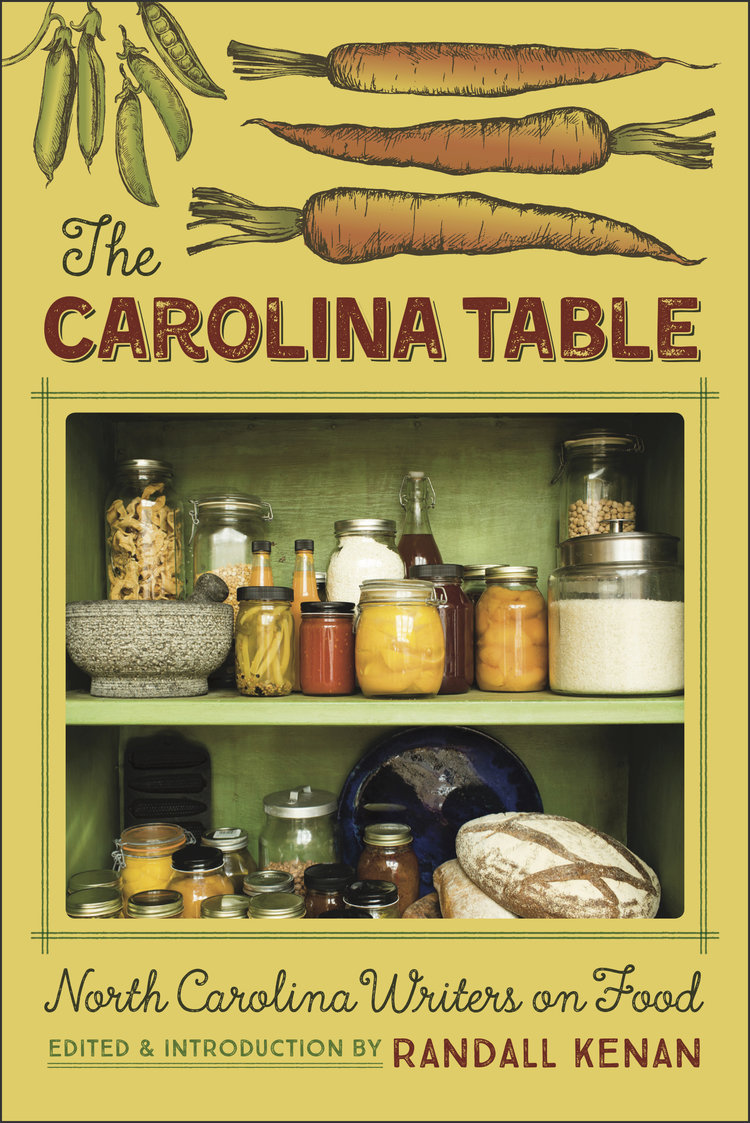
The Carolina Table: North Carolina Writers on Food

The Carolina Table: North Carolina Writers on Food, edited and introduction by Randall Kenan

This is a fun little 180-page book edited by Randall Kenan in which 32 writers with a connection to North Carolina wrote about their memories of food. Some wrote about a particular recipe they recalled from childhood, while others wrote about family traditions associated with a particular dish.

I enjoyed being able to pick up this book and read a story or two at a time when my reading time was limited.

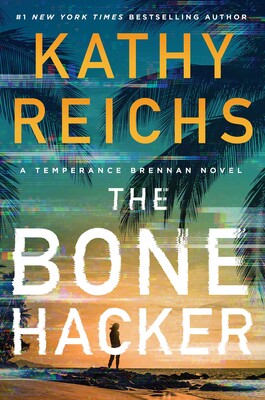
The Bone Hacker: A Temperance Brennan Novel, by Kathy Reichs

The Bone Hacker, by Kathy Reichs: A Temperance Brennan Novel
The Bone Hacker: A Temperance Brennan Novel, by Kathy Reichs

The Bone Hacker is Kathy Reichs’ latest novel in the Temperance Brennan Series. This one is set on the islands of Turks and Caicos instead of the forensic anthropologist’s usual locations in Charlotte or Montreal. I sort of missed the familiarity of specific places and streets in Charlotte but, on the other hand, it was interesting to vicariously visit a very different setting.

I didn’t get into this story as much as I usually do with Kathy Reichs’ books, but I think I was just distracted by too many projects. I don’t want to leave a negative perception of the book.

Sold, by Patricia McCormick

Sold, by Patricia McCormick

I read one other book in October, but it deserves its own blog post. I plan to write about Sold, by Patricia McCormick next Monday.

Since my last blog post

I sent out my latest e-newsletter on November 2. You should have received it via email if you subscribed to it through my website (https://janetmorrisonbooks.com) before November 1.

If you have not subscribed, you missed reading about my “field trip” to Kings Mountain National Military Park, Kings Mountains State Park, and the cemetery at Bethany Associate Reformed Presbyterian Church near Clover, South Carolina. I love it when family history and American history are woven together!

Second Look Books in Harrisburg, NC hosted a Meet & Greet for my sister and me on Saturday afternoon. We got to chat with several long-time friends and we met two distant cousins. One of them came all the way from Winston-Salem just to meet us and thank us or the Morrison genealogy book, The Descendants of Robert & Sarah Morrison of Rocky River, we published in 1996! What a pleasant surprise!

Until my next blog post

Keep reading! Let children see you reading so they’ll see it as a pleasurable activity.

Value time with friends and family. A visit from cousins who live in New York City was wonderful yesterday. We picked up where we left off in July.

Remember the brave people of Ukraine and the people in the Middle East who are suffering due to terrorists.

Janet

How do you decide what to read next?

My question for you today is, “How do you decide what to read next?”

Is it FOMO (fear of missing out)? Do you scan the NY Times Bestseller List every week and take your reading cues from it? Do you just read books in a certain genre and never dip your toes in something different to shake things up? For instance, instead of just reading western romance novels, do you ever check out a science fiction book from the library?

Photo by Susan Q Yin on Unsplash.

Do you gravitate to the “New Releases” section in your public library? Do you pick up a free copy of Book Page at the public library each month to learn about new books? Do you ask a librarian for recommendations? Do you and your friends tell each other about books you or they have enjoyed?

How I decide what to read

I got the idea for today’s topic from a blog post I read back in May: https://readingladies.com/2023/05/23/10-things-that-make-me-instantly-want-to-read-a-certain-book-toptentuesday/. It got me to thinking about how I decide what to read next. I honestly didn’t connect it with book banning at the time.

I recently divided my to-be-read (TBR) list into four categories: books about the craft of writing; books I need to read for historical research to enhance my historical fiction writing, novels and short story collections; fiction; and nonfiction books of general interest.

I listed the books in each category in the order in which I want or need to read them.

This was no easy task. There are more than 300 books on my TBR. Chances are, I won’t get to read all of them. You see, I add titles to my TBR faster than I can read the books already on the list. I console myself by thinking it’s a nice “problem” to have.

Everyone has preferences

I must admit, I don’t care for sappy romance, science fiction, horror, or fantasy, but I’ll march in the street to defend your right to read those genres. My “go to” genre is historical fiction – especially set in colonial and revolutionary America, but I also enjoy World War II historical fiction, some thrillers, and an occasional memoir.

I enjoy following a number of book review bloggers. I often learn of new authors or books that have slipped in under my radar.

More and more, I’m becoming a fan of certain authors. I try to stay on top of when their next novels will be published. Armed with that information, I get on the waitlist at the public library for those books as soon as they show up in the system’s online catalog.

The authors I tend to look for (in no particular order) include Sally Hepworth, Vicki Lane, Lelah Chini, Isabel Allende, Anna Jean Mayhew, Pam Jenoff, Diane Chamberlain, John Grisham, Kathleen Grissom, Kelly Rimmer, Mark de Castrique, Annette Saunooke Clapsaddle, Susan Meissner, Erik Larson, Barbara Kyle, Lisa Wingate, Anne Weisgarber, Aimie K. Runyan, John Hart, Jennifer Ryan, Kristin Hannah, Andrew Gross, Ann Patchett, Heather Morris, Mark Sullivan, Wiley Cash, Kathy Reichs, Jennifer Chiaverini, V.S. Alexander, Jodi Picoult, Kate Quinn, Ron Rash, Jamie Ford, Leah Weiss, and Kelly Mustian.

Whew! That’s 35, or about 25 more than I would have guessed! I’m sure I’ve left others off my list. Some authors come and go from my list.

Are any of those 35 names on your list of favorites?

Who are your favorite authors?

What’s your favorite genre?

Back to my original question

How do you decide what to read next? Is it based on the cover, an author you’ve read and liked before, the blurb on the back of the book, a positive review you read, the genre, or something else?

I’d like to hear your thoughts on this.

Since my last blog post

I’ve had a productive week. I haven’t put many words on paper, but I have done some on-site historical research for the historical novel I’m writing. Be sure to subscribe to my e-Newsletter if you want to read about where I went and why.

Until my next blog post

If you are going to be in the Charlotte area between 2:00 and 4:00 next Saturday afternoon, November 4, please drop by Second Look Books at 4519 School House Commons in Harrisburg for our Meet & Greet highlighting The Aunts in the Kitchen: Southern Family Recipes.

I hope you have access to so many good books that you don’t have time to read all of them.

My November e-Newsletter will be sent via email in a couple of days. If you have not subscribed to it, please do so by visiting https://www.janetmorrisonbooks.com and clicking on the “Subscribe” button. Just for subscribing, you’ll receive a downloadable e-copy of my American historical short story, “Slip Sliding Away.”

Make time for friends and relatives, even if you don’t agree with them about politics.

Remember the brave people of Ukraine as a cold winter is racing toward them and the innocent people in the Middle East. People in both these areas are the victims of dictators and terrorists.

And, of course, remember the people of Maine in light of last week’s mass shooting. When will the elected officials in the US learn that most Americans want tighter gun regulations? When is enough, enough?

Janet

How publishing a cookbook helped me as a writer

Since my main interests in writing are historical fiction and history, it would seem that publishing a cookbook has nothing to do with either one of those or my pursuit of a career as a writer. I beg to differ.

If one wants practice in proofreading, I recommend they proofread a cookbook. At least two typos got past my sister and me in the proofreading stages. Proofreading a cookbook is a humbling experience. It should serve me well in my next short stories and books.

The Aunts (A U N T S) in the Kitchen: Southern Family Recipes, by Janet and Marie Morrison
The Aunts in the Kitchen: Southern Family Recipes, by Janet Morrison and Marie Morrison

Proofreading a cookbook is part paying extreme detail to numbers and part writing directions in a concise yet thorough way. It means trying to put yourself in the shoes of someone making the recipe for the first time – or even a novice cook or baker.

Are the instructions not only correct in sequence of method but also clear enough to give the cook the best chance to follow the directions with ease instead of confusion and frustration? Are the recipes presented in a way to give the cook the best chance to be pleased with the final product?

Proofreading is tedious work and it is always a good idea to have a second set of eyes. In fact, if my sister and I had not worked together proofreading the 289 recipes in our cookbook, half the errors we found probably would have slipped past us.

A few words about the software I use

Is there a book in you that is begging to come out? Do you think self-publishing is not within your reach? That is where I was two years ago. I never expected to be able to format a book in a form acceptable for Amazon or any other self-publication platform.

The Atticus.io app has enabled me to publish two local history books (Harrisburg, Did You Know? Cabarrus History, Books 1 and 2); two short stories (“Slip Sliding Away” and “Ghost of the Battle of Guilford Courthouse: An American Revolutionary War Ghost Story”); and a cookbook (The Aunts in the Kitchen: Southern Family Recipes) since last November!

BookBrush.com has made it possible for me to design the book covers for each of those books. I am not computer savvy, in the big scheme of things; however, I have been able to accomplish all this self-publishing in a little less than one year.

In addition, I have created memes for Facebook and bookmarks related to my books on BookBrush.com. That is just a fraction of what one can do through BookBrush.com tools.

Disclaimer: I am receiving no compensation in any form whatsoever for mentioning Atticus.io or BookBrush.com. I just want other writers who are considering going the self-publishing route to know about these tools I have used. What they have made possible for me has been life-changing.

The formatting and book design tools are not without challenges. There are learning curves with both but, if I can do it, anyone can do it.

The Atticus.io support team is extraordinary. Hands down, they are the best tech support group of people I have ever worked with. They have job security as long as I am self-publishing books!

Both BookBrush.com and Atticus.io have free workshops to help you understand how to use their various features.

Self-publishing is an education, and I have found it to be a beneficial introduction into the publishing world. It remains to be seen if any of my current projects (historical short stories, a devotional book, and historical novels) will be self- or traditionally-published.

Regardless of which path my current and future writing projects take, my self-publishing experience will serve me well. That definitely includes proofreading!

The rewards

So far, I have learned that by the time I paid for:

  • website redesign;
  • maintaining a website and blog;
  • the right to use Atticus.io and BookBrush.com;
  • printing bookmarks designed on BookBrush.com
  • printing and shipping costs for author copies;
  • books about the craft of writing;
  • online writing courses;
  • etc…

it can be difficult to break even financially.

I consider the two short stories I have self-published to be ways to get my name out there as an historical fiction writer. It all falls under the adage: “To make money, you have to spend money.” I offer one of my short stories as a gift to everyone who subscribes to my e-newsletter.

It is not easy to get established as a writer. It has been a winding road and at times a daunting endeavor; however, my reward already is to see my name as the author on the spine of several books.

If I accomplish nothing else, I am happy that someday my heirs will know that I had a dream to write and I persevered to realize that dream.

Since my last blog post

Some weeks I can’t remember what I’ve done since my last blog post. It isn’t until I look back over my to-do list and find items checked off as completed that I realize I am making steady progress in my writing.

I did research for a short story I’m writing; typed notes from The Author Estate Handbook, by M.L. Ronn and added to the list of the things I need to take care of before I update my will; researched Fort Dobbs State Historic Site near Statesville, NC, Shallow Ford on the Yadkin River, and Bethabara State Historic Site for the novel I am writing; and planned a trip to visit several sites pertinent to that novel.

I watched a BookBrush.com free presentation on Zoom about book marketing on Pinterest. It was a real eye-opener. Good news/bad news: Now I have a thousand new tasks to add to my to-do list.

Until my next blog post

If you want to write a book, do it!

I hope you have at least one good book to read this week. I have more than I can find time to read!

Make time for your friends and family.

Don’t forget to visit https://www.janetmorrisonbooks.com and subscribe to my e-newsletter.

Remember the innocent people of Ukraine and the Middle East. It is the innocent citizens who are so often caught in the middle and pay the ultimate price for the actions of dictators and terrorists.

Janet

As a Reader of Historical Novels, Do You Read the Author’s Notes Before or After you Read the Book?

Do you like having Author’s Notes at the end of an historical novel so you’ll know what was true, what was fiction, and what actually happened but was adjusted time-wise or by location to fit the flow of the story?

The Author’s Notes are almost always found at the back of an historical novel. I used to wait and read the Author’s Notes after I had finished reading an historical novel, but now I always read those notes first. The notes not only give insight about the story, but also make clear which parts of the book are based on fact and which parts are fictional.

Do you read the Author’s Notes before or after you read an historical novel?

An example from my ghost story

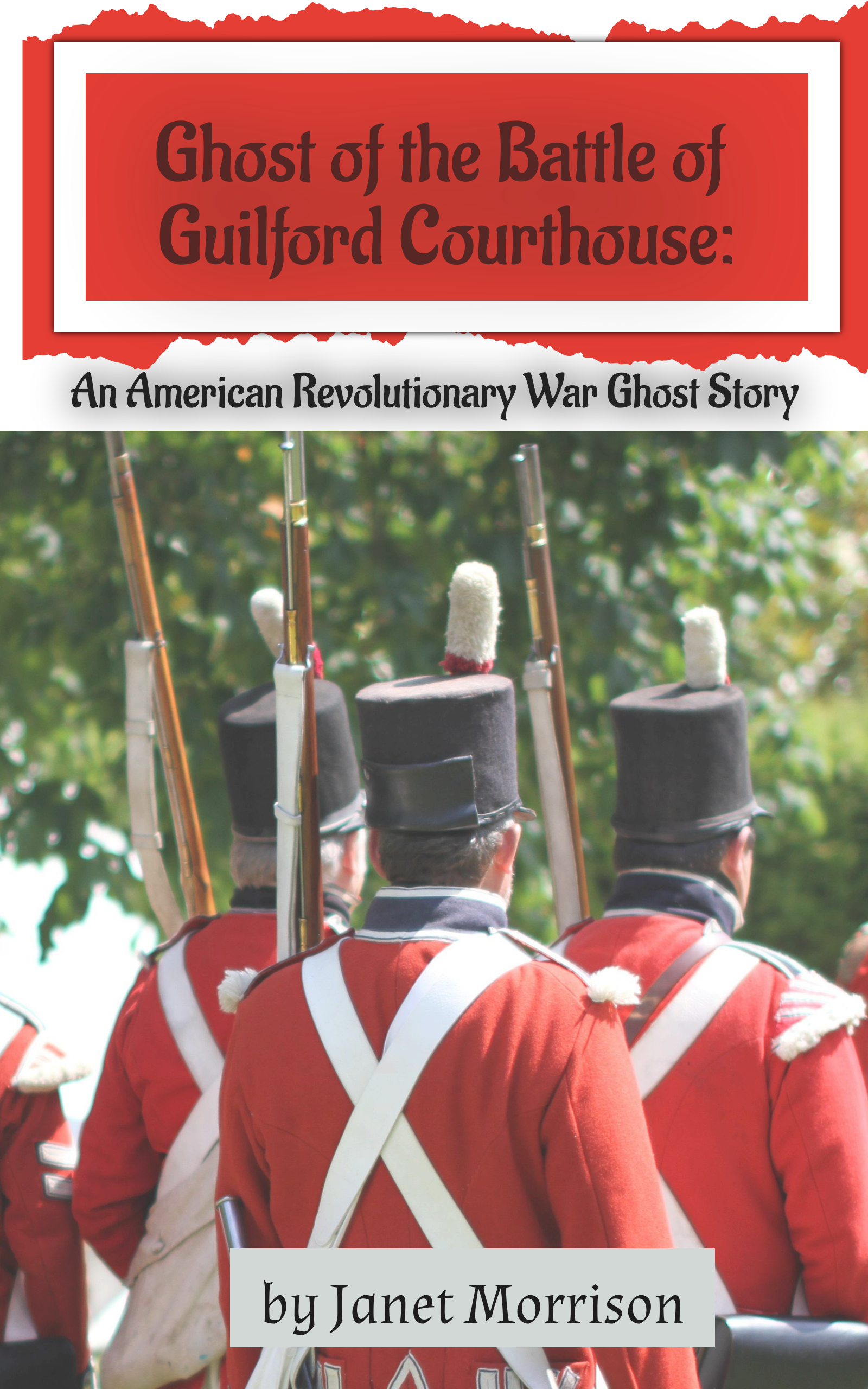
I thought it only fitting to include Author’s Notes at the end of my short story: Ghost of the Battle of Guilford Courthouse: An American Revolutionary War Ghost Story. In case you haven’t purchased the short story yet, here is my Author’s Note from the ghost story:

“I’ve never believed in ghosts, but this story is based on the events my sister and her housemate experienced in their condominium in Greensboro, North Carolina in the 1980s. The upstairs commode would flush when no one was upstairs. Cans occasionally fell off the pantry shelf. A house guest was frightened by the sensation that someone had walked into her bedroom and stood at the foot of the bed. In fact, she thought this person had called her by name – Mary. She had no knowledge of the unexplained incidents the residents had experienced.

“Peter Francisco was an actual American soldier in the Battle of Guilford Courthouse. At six-feet-six-inches tall and 260 pounds, he was much larger than the average American man during that era. He was credited with being ruthless with his broadsword. There is a visitors’ center on the grounds of the Battle of Guilford Courthouse; however, the rest of the story is fiction.”

After reading my Author’s Note, are you more interested or less interested in reading my ghost story?

Since my last blog post

I’ve edited three of the historical short stories I drafted a few months ago. I took inventory of my historical short stories. I want to write five more from scratch before I publish the collection. Something to look forward to in 2024!

I’ve done more research about the colonial settlement of Bethabara, North Carolina and read more resources about Shallowford on the Yadkin River. This is needed research for my first historical novel. Something else to look forward to!

Until my next blog post

If you haven’t subscribed to my newsletter through my website, https://www.janetmorrisonbooks.com, please do so before you miss any more newsletters. The next one will go out around November 1. For subscribing, you’ll receive a free downloadable copy of “Slip Sliding Away: A Southern Historical Short Story,” so you can get a feel for my historical fiction writing. I have a “field trip” planned before October is over, but you’ll have to subscribe to my newsletter to hear about it.

Have you ordered my American Revolution e-ghost story?  “Ghost of the Battle of Guilford Courthouse: An American Revolutionary War Ghost Story” is available from Amazon, along with my other books: https://www.amazon.com/dp/B0CH7JCP11/. October is the perfect time to read a ghost story!

Anytime is the perfect time to purchase a cookbook! Have you ordered your copy of The Aunts I the Kitchen: Southern Family Recipes? Order one for yourself and one for each of your aunts at https://www.amazon.com/dp/B0CJLKFDPR/. (It’s not too early to start your Christmas shopping.)

Make time for your friends and family.

Remember the people of Ukraine and Israel. Terrorism has no place in our world.

Janet