A Line from Child 44, by Tom Rob Smith

Child44cover
Child 44, by Tom Rob Smith

Today’s blog post features a line I liked in Tom Rob Smith’s novel, Child 44.

“Their mother, a stout, tough-looking woman who looked like she could swallow bullets and spit them back out, was in front of them, shielding them with one hand on each of their chests.” From Child 44, by Tom Rob Smith

Don’t you just love the way Tom Rob Smith described this woman in Child 44, the first book in his Child 44 Trilogy? I aspire to write descriptions like that – descriptions that conjure up an image in your mind.

What a writer shouldn’t do

As I continue to learn the craft of writing, I make a note of sentences that grab my attention in books I read. Yes, it sometimes takes me out of the story, but I read now as someone who is learning to write fiction. Writers are told not to write anything that will pull the reader out of the story, but I take an exception to that for myself at this stage in my journey as a writer.

A few words about Child 44

As I stated in my February 14, 2017 blog post (The First Line from a Novel by Tom Rob Smith), Child 44, is about a serial child killer in Stalinist Russia. It is the first book in Mr. Smith’s Child 44 Trilogy. I haven’t had a chance to read the other books in the trilogy. My February 14, 2017 blog post was about the first line in Child 44 and its being a good literary “hook.”

Until my next blog post

I hope you have a good book to read. I just finished reading Grief Cottage, by Gail Godwin. Now I have the joy of deciding which library book in that stack on my desk I will start reading next. Due dates will influence my decision.

If you’re a writer, I hope you have productive writing time.

I invite you to share my blog by word-of-mouth and by clicking on the social media icons below.

Janet

You Must Read (Some of) These Books!

First, I wish all my fellow Americans a Happy Independence Day or Happy 4th of July tomorrow!
ben-white-197668(1)

Photo by Ben White on Unsplash

I read some good books in June, so I will share my thoughts about them in today’s blog post. You might want to read one or more of them.

The Stars Are Fire, by Anita Shreve

I was drawn to this novel by the title. I got on the waitlist for it at the library as soon as it was on order. The book was inspired by the wildfires in Maine in October, 1947. I didn’t know about those fires, so I learned something.

The book is suspenseful as it follows Grace, a young mother whose husband has gone to fight the fire. Suddenly, the fire is upon the small coastal town where they live and Grace is forced to run for her life with a child in tow. I don’t want to spoil the book, in case you haven’t read it. If you prefer to read “happy books,” this is not the book for you. Much of the story is dark, yet the reader can’t help but cheer for Grace as she overcomes tragedy. It was a page-turner for me.

The Things We Keep, by Sally Hepworth

As with The Stars Are Fire, by Anita Shreve, The Things We Keep, by Sally Hepworth, is not what I would call a “happy book.” Ms. Hepworth follows a 38-year-old woman, Anna, who is diagnosed with Alzheimer’s Disease. The book chronicles Anna journey from diagnosis, through the months that she is very much aware of her diagnosis and the mental and physical deterioration that will be her future. Anna accepts her illness with humor as she adjusts to living in a residential facility where most of the other residents are decades older than she. The other young resident, Luke, befriends Anna, and the main plot of the book is their friendship, which grows into romantic love and how their relatives and the facility’s staff deal with that.

A subplot is about the widow of a businessman who loses everything and has to create a new life for herself and her young daughter. She takes a job at the facility where Anna and Luke live and gets more involved in their lives than the administrator wishes.

Although the subject matter of dementia is a frightening diagnosis, I found the book to be almost delightful due to Ms. Hepworth’s writing style. Each chapter was written from a different character’s point-of-view, which allows the reader to get into the head of Anna and to get a better understanding of what a person in the early stages of Alzheimer’s Disease thinks – their feelings and emotions.

As someone with Chronic Fatigue Syndrome/Myalgic Encephalomyelitis (CFS/ME), I could identify with some of the issues Anna faced. I have memory problems and, when put on the spot, I have trouble formulating a comment or an answer to an unexpected question. When Anna talked about not being able to think fast enough to join in a conversation, I immediately identified with that. Ms. Hepworth let Anna articulate so well how it feels when by the time you formulate a comment, the conversation has moved on to something else. That was a paragraph that made my mouth drop open because I felt like the book was describing me. It was eerie to realize that some of my CFS/ME symptoms overlap some early Alzheimer’s Disease symptoms.

The Things We Keep, by Sally Hepworth, was June’s selection for Rocky River Readers Book Club. We had a good discussion about the book on June 26.

The Sound of a Wild Snail Eating, by Elisabeth Tova Bailey

By the time I remembered to check this out from the public library, I’d forgotten how I’d heard about the book or why I wanted to read it. It had a catchy title, so I dived in. Lo and behold, the author, among other ailments, has Chronic Fatigue Syndrome.

This is a unique book. It probably wouldn’t appeal to everyone, but I enjoyed it. It is the true story of the author’s months of being bedridden. One of her friends comes to visit one day and brings wild violets and a snail. The snail started out living in a flowerpot with the violets. Much to Ms. Bailey’s surprise, she developed quite an attachment to the snail.

She realized one day that she could hear the snail eating. One thing led to another, and the author was soon reading everything she could get her hands on about snails. She studied the habits of the snail and by so doing, along with her readings, learned a great deal about the species. In the course of reading the book, so did I! I had no idea there was so much to learn about snails.

Being a “country girl” for most of my life since birth, I have encountered many snails, but until reading this book I did not know that they have row-upon-row of teeth, their eyes are on the tips of their tentacles, they cannot hear, they have an acute sense of smell, and their one foot is called a gastropod. That’s just the tip of the iceberg so, if you’d like to know more about snails – and what it’s like to be bedridden with Chronic Fatigue Syndrome, I recommend The Sound of a Wild Snail Eating, by Elisabeth Tova Bailey.

Although I’ve been ill for 30 years, Ms. Bailey was able to articulate some of my feelings better than I have ever been able to in writing or verbally.

Camino Island, by John Grisham

John Grisham’s latest novel, Camino Island, is a little different from most of his novels. There’s still suspense and there are still bad guys, but the hero isn’t a lawyer this time. The story is about the underworld of those who deal in buying, selling – and sometimes stealing – rare books. The book takes place in New Jersey, Pennsylvania, North Carolina, Florida, and France. The book held my interest, as all John Grisham books do. If John Grisham’s legal thrillers aren’t your “cup of tea,” you might want to give Camino Island a try. I think anyone interested in books will enjoy it.

And Every Morning the Way Home Gets Longer and Longer: A Novella, by Fredrik Backman

After liking A Man Called Ove, by Fredrik Backman in May, I was eager to read another of his books. In June I read And Every Morning the Way Home Gets Longer and Longer: A Novella, by him. It is about a man with dementia, his son, and his grandson and how the man’s dementia affects his relationships with his son and grandson.

Perhaps it was just me, but I had some confusion keeping up with when we were in real life and when we were in the thoughts inside the man’s brain. For that reason, I had trouble getting into the book. The longer I read, though, the more I got out of it.

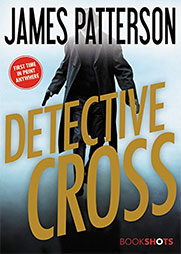
Detective Cross (a BookShot), by James Patterson

I wrote about a BookShot by James Patterson, Detective Cross, in my June 16, 2017 blog post, “What’s the Verdict on BookShots?” (What’s the Verdict on BookShots?) I read it out of curiosity. I wanted to know what a BookShot was like, and I’m one of the last people in the world to read a book by James Patterson. His books are known for their fast pace, and this BookShot was no different.

Mr. Patterson’s BookShots are designed to be read in one sitting. It took me longer than that because, as I’ve mentioned before, I am a slow reader. I guess you could say that a BookShot is longer than a short story and shorter than a novella, but don’t quote me on that. I’m no expert.

As I pointed out in my June 16 blog post, Mr. Patterson has long been a champion of children’s literacy, and his BookShots are an attempt to put short books in the hands of adults who might not otherwise pick up a book to read. I hope they accomplish that!

Put the Cat in the Oven Before You Describe the Kitchen:  A Concise No-Bull Guide to Writing Fiction, by Jake Vander Ark

I must admit that I was drawn to this book by its title. I would never put a cat in an oven, but I just had to see what the author had to say about writing fiction. It was a humorous book, and it held my attention. The jest of it was that you need to get your reader’s attention before you start giving a lot of description.

Among other points, the author said if a minor character doesn’t have an effect on the main character, take them out of the story. I’m trying to keep that in mind as I rewrite the manuscript for The Spanish Coin. Another thing he said was, “You need to scare your protagonist and shock your audience.”

He also said that a writer should let the “protagonist determine the placement of the #$%! Moment.” (This is usually called the “inciting incident.”) He suggests to hit the reader with the inciting incident the moment the reader grasps what “normal” is for the protagonist. I picked up a few other tips from the book, but I don’t want to bore non-writers with the details. If you’re a beginning writer, you might look for this e-book yourself.

Until my next blog post

I hope you have a good book to read. If you’re a writer, I hope you have productive writing time.

Janet

Where My Blog and Novel Stand

Photo by Kari Shea on Unsplash


Janet’s Writing Blog

Since writing Friday’s blog post (Getting Blog Traffic in 2017,) I’ve decided to change my routine and just blog on Mondays. When I read that blogging once-a-week was ideal for someone trying to establish their brand, I thought, “That’s not for me. I like blogging twice-a-week.” I couldn’t get the theory out of my head. By late Friday night I had decided to start blogging just once-a-week.

I’ve chosen Mondays. I wanted to choose Tuesdays, but for those of us who manage the WordPress.com blogs we read by getting them in a weekly format, they arrive on Monday. If I wait until Tuesday to blog, some readers won’t receive my post until the following Monday. That’s not good. I’ll try early Mondays (right after midnight on Sundays) for a while and see how that works. The great thing about a blog is that the blogger makes up her own rules. My kind of activity!

The Spanish Coin

Something happened on Saturday that told me I’d made the right decision about my blog. Or, perhaps what happened on Saturday came about as the result of the stress relief Friday night’s decision gave me. Follow?

If you’ve been following my blog for very long, you know I’ve been working on a novel manuscript with the working title of The Spanish Coin for more than a decade. (I’m not only a slow reader, I’m a slow writer!) Several months ago I discovered some facts that made it clear that I needed to make major changes in my historical novel. Another name for that is REWRITE, as in START OVER! After 10 years of work, this realization knocked the wind out of my sails. I have struggled over this for about three months – maybe longer. (It feels like three years.)

I knew I had to change the names and location of my novel. I believed I could keep the working title, The Spanish Coin, but many of the details of the story and perhaps most importantly, the climax, had to change. After kicking around ideas for weeks, on Saturday I finally settled on a new location for the story. I changed the names of most of the characters, and I changed the year it happened. Those decisions freed me up to start writing the new outline. By the time I turned off the computer at 2:30 a.m. on Sunday, June 25, I had written 300 words of backstory, more than 2,500 words of outline, and 250 words of character sketches. I felt like a weight had been lifted from my shoulders!

Saturday was just the beginning, but I can’t tell you how invigorated I feel knowing that I have started the rewrite. I’m optimistic about what I will get accomplished this week!

Until my next blog post on July 3

I hope you have a good book to read. I’m reading The Secret Speech, by Tom Rob Smith.

If you’re a writer, I hope you have productive writing time and feel as optimistic about your work in progress as I do mine.

Janet

Getting Blog Traffic in 2017

Tomorrow is my blog’s 7th blogaversary. My first blog post was on June 24, 2010. It doesn’t seem like I’ve been blogging for seven years. There’s a good reason for that. In 2010 I only blogged four times. I blogged once in 2011. In 2011 I blogged only seven times. It wasn’t until July 7, 2014 that I started blogging on a regular basis. That was the month before the publication of my vintage postcard book, The Blue Ridge Mountains of North Carolina. I finally felt like I had something to write about!


annie-spratt-96527
Happy 7th Blogaversary to Janet’s Writing Blog!

Photo by Annie Spratt on Unsplash

I am constantly learning more about blogging. You may have noticed that I’ve started trying to write catchier blog post titles. I’m also trying to limit my post titles to five words. I read somewhere that’s ideal, but now I don’t remember why. Seems like it has something to do with showing up in a Google search.

MostlyBlogging.com

Janice Wald’s blog post on June 10, 2017 (http://www.mostlyblogging.com/generate-better-traffic) said something that made me stop in my tracks and reread a couple of paragraphs. The post was written by Raymond Crain, who works for E2M, a social media marketing agency based in San Diego.

In a nutshell, Mr. Crain said that blogging daily is out and blogging good content is in. Yay! I don’t have to feel guilty for only blogging twice-a-week!

He said Google now puts more emphasis on the “intent” of the searcher and the “quality” of the blog post. If you’re blogging for your own enjoyment, posting daily is fine, but if you’re trying to get your brand out there and drive more traffic to your blog you might want to read Mr. Crain’s article. This was just one of his five recommendations.

A Writer’s Path blog

Guest post contributor Shelley Widhalm said on Ryan Lanz’s A Writer’s Path blog on June 13, 2017 (https://ryanlanz.com/2017/06/13/why-blogging-is-important-for-writers/) that blogs are here to stay, but that it is quality and not quantity that’s important when establishing your brand and your credentials as a blogger worth reading. Therefore, there is more to blogging than attaining high search engine optimization (SEO.)

Ms. Widhalm stated, “Research shows that blogs should be posted once a week on the same day of the week . . . .”

She did not cite that specific research, but I will take the statement under consideration and continue to watch to see what becomes standard practice. Blogging is a creative outlet for me, so I won’t promise to conform to recommended schedules.

What do you think?

Would you prefer that I only blog once-a-week? I might give that some thought.

Until my next blog post

I hope you have good book to read. I’ve just finished reading Camino Island, by John Grisham and Put the Cat in the Oven Before You Describe the Kitchen, by Jake Vander Ark. (More on that in July when I blog about the books I read in June.)

If you’re a writer, I hope you have productive writing time.

Janet
Words That Give Me Trouble

Words-That-Give-Me

Writing keeps me humble. There are words I worry about now in my writing that I used to not be concerned about. Since I’ve claimed aloud to be a writer, I feel the spotlight on all my written words. Sometimes I come up short.

Memory and Age

Memory and age begin to take a toll. Words that I used to spell or remember the definition of without a second thought now fall into the “need to look it up” category. Some words I’ve thought to be synonymous aren’t quite equal when examined. I continually learn of words I have used incorrectly all my life. It happens often enough that I’m losing my confidence.

Mark Nichol’s list

After creating an account on StumbleUpon last week, I stumbled upon Mark Nichol’s article, “50 Problem Words and Phrases” https://www.dailywritingtips.com/50-problem-words-and-phrases/. In today’s blog post, I’ll share a few examples of words that give me trouble.

  1. Compare to / compare with – Compare to implies only similarity; whereas, compare with   implies similarity and contrast.
  2. Each other / one another – Use one another when more than two are involved. (Who knew?)
  3. Jealousy / envy – If I am jealous of you, I resent your having something. If I envy you, I   covet something you have. (I’ve didn’t realize there was a difference until reading Mr. Nichol’s article cited above.)
  4. Since / because – As stated by Mr. Nichol in his article, “Informally, these terms are  interchangeable, but in formal writing, since should be used only to refer to time.” (This one from Mr. Nichol’s article was new to me, too.)
  5. Transcript / transcription – Mr. Nichol stated, “A transcript is a thing; a transcription is the process of creating it.” (I know I’ve been guilty of using “transcription” when I  should have written “transcript.”

I need to keep Mark Nichol’s list of “50 Problem Words and Phrases” handy as I’m writing. The more I read about the sometimes subtle nuances of words, the less confident I am in my writing.

chicago-manual-of-style-008

Self-Editing The Blue Ridge Mountains of North Carolina

I’m having flashbacks of the days when I had to follow the 1,000+-page gold standard of American English, The Chicago Manual of Style, as I self-edited the manuscript for my vintage postcard book, The Blue Ridge Mountains of North Carolina.* That’s when I began to realize that I didn’t know as much as I thought I did.

Writing-keeps-me-humble

Writing keeps me humble.

Until my next blog post

I hope you have a good book to read. (Among other things, I’m reading Camino Island, by John Grisham.)

If you’re a writer, I hope you have quality writing time and a better memory than I have for spelling and proper word usage.

Janet

*Shameless Plug:  In case you haven’t purchased a copy of my vintage postcard book, The Blue Ridge Mountains of North Carolina, please look for it at any independent bookstore. If it’s not on the shelf, please request it. If that doesn’t work, you can order it from Amazon.com.


What’s the Verdict on BookShots?

James Patterson launched a new idea in publishing a year ago. Anthony Mason interviewed Patterson on “CBS Sunday Morning” on June 5, 2016, and I just happened to watch. That was the first I’d heard of Patterson’s BookShots. The first BookShots book was released on June 7, 2016.

The idea of BookShots caught my interest enough that I made a note of it, but it was a year before I checked one out at the public library and read it. I read Detective Cross this week. I read it for a couple of reasons:  (1) I was curious to read a BookShot and (2) I’m probably the last person in the world to read a James Patterson book. It was about time.

lg-bookshots-detective-cross
Detective Cross, a BookShot by James Patterson

What BookShots isn’t

I thought a BookShot book might be comparable to a Kindle Singles short story, but Kindle Singles are much shorter than a BookShot. For instance, Witness to a Trial:  A Short Story Prequel to The Whistler, by John Grisham is 36 pages and No Time Left, by David Baldacci is 15 pages.

What’s a BookShot?

Dianna Dilworth described BookShots this way in her article, “James Patterson’s New Imprint Has Sold 1 Million Titles” on [http://www.adweek.com/galleycat/james-pattersons-new-imprint-has-sold-1-million-titles/123220]on August 2, 2016:

BookShots, is a line of novella-length titles designed to get people that don’t read to pick up a book. The imprint, which is under the Little, Brown and Company, features titles that have less than 150 pages and the books cost less than $5.”

Has Bookshots been successful?

Daisy Maryles reported the following in “The Year in Bestsellers 2016” on https://www.PublishersWeekly.com on January 13, 2017:

“Innovative bestselling author James Patterson came up with a new idea to promote reading: a series of thrillers that are short (150 pages or less), cheap (around $5), and fast paced. Called BookShots, the idea looks like a quick success: 16 titles held 53 spots on the bestseller lists in 2016. Patterson is hoping to soon have them at grocery store checkout lines.”

Patterson’s first BookShots release, Cross Kill, sold 18,000 copies the first week! BookShots sales have been good, but are BookShots getting in the hands of people who never or rarely read a book? Are they being read by people who don’t desire to or have time to read a novel of several hundred pages? That was Patterson’s objective in launching the idea.

I suppose it’s too early to get a reading on that. I couldn’t find any progress reports or even any speculation about that. Patterson has long been a childhood literacy advocate, and this is apparently a tangible attempt by him to encourage adults to read.

A naysayer might say that Patterson came up with the BookShots idea to increase his bank account, but I can’t imagine that is the case. According to Natalie Robehmed, writing “The World’s Highest-Paid Authors 2016:  James Patterson, Jeff Kinney and J.K. Rowling Top Ranking” on the Forbes website on August 3, 2016 [https://www.forbes.com/sites/natalierobehmed/2016/08/03/the-worlds-highest-paid-authors-2016-james-patterson-jeff-kinney-and-j-k-rowling-top-ranking/#450fb5cd711c] “Patterson topped our list for the third straight year, earning $95 million pretax,” so it’s not that he needed the money.

Call to action

Have you read a BookShot? What’s your opinion of BookShots? Leave a comment below. Share this blog post on social media by using the icons below. Thank you for sharing.

In closing

I hope BookShots will be successful. If they are sold in drug stores and other retail outlets that traditionally have not gone for the hardback several-hundred-page novel, I believe it will fill a niche and reach people who aren’t avid book readers. I’m in favor of almost anything that gets people to read!

Until my next blog post

I hope you have a good book to read. I’m reading Camino Island, by John Grisham.

If you’re a writer, I hope you have productive writing time.

Janet

“Not a rope . . . if drowning”

prayers-the-devil-answers-9781476772813_lg
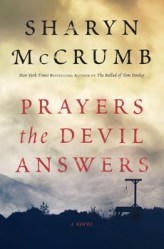
Prayers the Devil Answers, A novel by Sharyn McCrumb

My blog post today takes a look at a line I like from a novel, Prayers the Devil Answers, by Sharyn McCrumb. Ms. McCrumb has mastered the art of capturing the independent spirit of the people of the southern Appalachian Mountains in the following sentence:

“Not a one of the folks from up there would ask for anything – not food if they were hungry, not a rope if they were drowning.”  From Prayers the Devil Answers, by Sharyn McCrumb.

How succinctly Ms. McCrumb gets to the core character of the people who live in those mountains and whose ancestors have lived there for up to 250 years! As a writer, I think anyone would be hard-pressed to state it any better.

What do you think?

Have a go at it. Try to write one sentence that sums up that southern Appalachian independent spirit.

Until my next blog post

I hope you have a good book to read. I just finished reading The Things We Keep, by Sally Hepworth and Fredrik Backman’s novella, And Every Morning the Way Home Gets Longer and Longer.

If you’re a writer, I hope you have productive writing time.

Janet

6 Things Learned about Google+

In my January 20, 2017 blog post My 2017 Writing Plan of Action, I said that I needed to give Google+ a fair chance. I thought it was one more platform I could use to establish my brand as a writer.

andrew-neel-237802
Photo credit: Andrew Neel via unsplash.com

When I did the research for my April 22, 2017 blog post S is for Social Media, I learned that being active on Google+ will help people find me on the Google search engine. Actually, I did not learn that. I stated it in my blog post but promptly forgot it. When I remember to, I put my blog posts on Google+.

With today’s blog post in mind, on May 18, 2017 and several times since then, I took another look at my account on Google+ and learned some things:

(1)  Lo and behold, I hadn’t put links to my blog, my website, or my Twitter name in my profile. Duh! That was an easy fix.

(2)  I learned that when my novel gets published, I can only give it one plug on Google+.

(3)  I explored the “communities” on Google+ and joined several: Writers’ Blogs, Read Banned Books,  Writers’ Coffeehouse, and Self-Publishing Your Book. In addition, I’m following WordPress.

  • Writers’ Blogs should be a place where I can post my blogs about writing or reading, and I can find and connect with other writers with blogs. So far, I haven’t made any connections with other writing bloggers through this Google+ community. I’ve seen pictures of cats and a number of blogs about the TV sitcom “Big Bang Theory.” I’m having to look too hard and long to find posts about writing blogs.
  • The WordPress community should be a place where I can learn how to better use my blog and the features of WordPress.com. So far, I haven’t found what I need.
  • Banned Books is where I should be able to discuss banned books with other readers; however, from what I’ve seen so far, most posts are about anything but books – banned or otherwise.
  • Writers’ Coffeehouse is where I should be able to ask questions about the writing process or specific problems I’m having as I rewrite my novel, and join in conversations started by other writers. There seem to be more poetry posts on there than fiction writing, so I’m still not sure this is the place for me.

(4)  There are communities for just about any interest you can think of. If you don’t find one you’re looking for, create it!

(5)  I hate to be negative, but I think Google+ communities are going to be more work for me than they’re worth. It’s just not my cup of tea. (Maybe I shouldn’t post that on Google+.)

(6)  On the positive side, I am following “Writing Tips” by Rob Bignell, Editor on Google+. He seems to put a lot of helpful articles on there to help writers.

Until my next blog post

I hope you have a good book to read. I’m reading The Things We Keep, by Sally Hepworth.

If you’re a writer, I hope you have productive writing time.

Janet

“Like a Throwback to Dracula”

I’ve been reading about describing characters. There are two schools of thought regarding that. Since writers write for readers, some readers were asked what they thought about character descriptions in novels.

Some readers want every last detail about the physical appearance of a character to be spelled out, but it seems that most readers don’t want a lot of physical details. They prefer to take what the author gives them and take it from there. They like to imagine in their minds what each character looks like.

damaged-front-cover
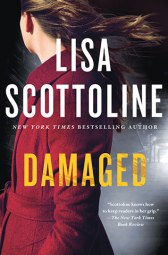
Damaged, by Lisa Scottoline

In Damaged, by Lisa Scottoline, protagonist Mary DiNunzio managed in the following quote to give just enough description of fellow lawyer Nick Machiavelli:

“He wore his hair slicked back, like a throwback to Dracula, and his eyes were narrow slits, with dark brown irises that were the exact color of baking chocolate, and Mary would know.” – from Damaged, by Lisa Scottoline.

Ms. Scottoline could have written, “Nick Machiavelli was greasy” or “Nick Machiavelli was a greaser” and I would have conjured a picture in my mind; however, the phrase “like a throwback to Dracula” and his eyes that were narrow slits paints a more vivid picture of him in my mind.

“the exact color of baking chocolate”

Ms. Scottoline also cleverly threw in that Machiavelli’s irises “were the exact color of baking chocolate, and Mary would know.” That is more accurate than her just saying that he had brown eyes, and I love the phrase “and Mary would know.”

If that’s all we knew about Mary, we’d know that she either likes to bake with chocolate or she likes to eat things made with baking chocolate. Maybe both. Any chocolate-loving reader will immediately identify with Mary!

As I start to rewrite my novel, The Spanish Coin, and flesh out all the characters, I’m learning from writers and from readers what readers prefer. Therefore, I will minimize physical details and concentrate on describing them through their words and actions.

Until my next blog post

I hope you have a good book to read. I’m reading The Stars Are Fire, by Anita Shreve. If you’re a writer, I hope you have productive writing time.

Janet

You Need to Read These Books!

I had another good month of reading in May. I’m on a roll for 2017! If I were a faster reader, I could devour more books. In the meantime, though, I’ll enjoy as many as I can.

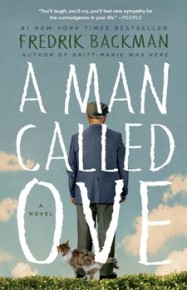
A Man Called Ove, by Fredrik Backman

I’m running out of superlatives for the books I’ve read this year. I kept hearing about A Man Called Ove, by Fredrik Backman, so I got on the waitlist for it at the public library. It’s a popular book, so it took a while for my name to gravitate to the top of the list.

a-man-called-ove-9781476738024_lg

I thoroughly enjoyed this book. At times outrageously funny and at times heartwarming and touching, it held my interest from start to finish. Ove is a 59-year-old man. I could see my father, my brother, and even myself in him. I could see myself in his late wife when he recalled how it drove him up the wall because she delighted in planning the details of a trip to the extreme. That’s me! Thank goodness I have a sense of humor! Poor Ove is at odds with the world and having trouble keeping up with the modern world. For the most part, he’s not even trying to keep up.

The author, Fredrik Backman, is from Sweden, where his books have gained much acclaim. I am amazed at how well the humor in this book translated so well from Swedish into English. Although I don’t speak or read Swedish, I don’t believe the book lost anything in the translation. I look forward to reading Mr. Backman’s other books.

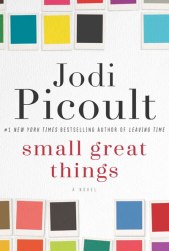
Small Great Things, by Jodi Picoult

Maybe it’s because Mother’s Day was approaching when I was reading this book, or maybe the sentence would have struck me like a ton of bricks any time of the year. Ms. Picoult has an uncommon gift when it comes to writing. Her books tackle some of the most heart-wrenching issues of our day, and she has a wonderful way with words.

small-great-things-hc-400w

I featured the following sentence in my Being the Balloon blog post on May 5, 2017:

“What it’s like to be the balloon, when someone lets go of the string.”   – from Small Great Things, by Jodi Picoult

The context of that sentence is that Ruth, the protagonist who is a seasoned labor and delivery nurse, a mother, and the widow of an American soldier killed in Afghanistan, reacts to the death of her mother with, “What it’s like to be the balloon, when someone lets go of the string.”

I highly recommend Small Great Things. In it, Ms. Picoult takes on the issue of race in America, and she has an uncanny talent for getting inside the skin of individuals from one end of that spectrum to the other in Small Great Things. The line that I focused on from the book in my blog on May 5 speaks to the humanity of us all.

In a nutshell, Small Great Things is about an African-American nurse in Connecticut who is barred from caring for the newborn infant of a white supremacist couple. Author Jodi Picoult masterfully writes from the point-of-view of the nurse, the white-supremacist father, and the white lawyer who defends the nurse. There is an explosive trial during which all kinds of raw emotions erupt. I think we all can learn some life lessons by reading and pondering Small Great Things, by Jodi Picoult!

The Hidden Life of Trees, by Peter Wohlleben

I kept hearing good things about this book, which had been translated into English from its original German. I finally got it from the public library, but with too many other books to read and a lot I was trying to learn about the craft or writing. Therefore, I only got 40% of the book read before I had to return it to the library for the next person on the wait list. I will definitely check it out again so I can finish it.

index

The Hidden Life of Trees:  How They Feel, How They Communicate – Discoveries from a Secret World might not appeal to everyone, but I thought it was very interesting. That might be because I grew up and again live out in the country. My parents instilled an appreciation and respect for trees in us. We have a variety of trees in our yard – dogwood, pine, ash, poplar, cedar, several varieties of oak, mulberry, sycamore, black walnut, sweet gum, holly, persimmon, and maple.

I thought I knew a lot about trees until I started reading Peter Wohlleben’s book. I now know that there’s a whole world out there I can’t see or hear. The book explains how certain tree species work together and how other tree species work against one another. It talks about how trees pump water out of the ground. It talks a lot about fungi and how fungal networks underground help trees in numerous ways. It really is quite fascinating!

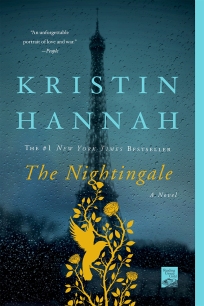
The Nightingale, by Kristin Hannah

I highly recommend The Nightingale, by Kristin Hannah. It is a historical novel about two sisters in France during the German occupation in World War II. The sisters cope with the occupation and resulting cruelties of war very differently.

Nightingale-PB-658

One sister joins the French Resistance and risks her life helping shot down Allied airmen across the Pyrennes and into Spain. The other sister’s nerves and wits are pushed to the limits as two German officers are billeted in her home. The book was inspired by a 19-year-old Belgian woman, Andrée De Jongh, who created an escape route out of Nazi-occupied France.

This book will pull on all your emotions. When the characters are cold and hungry – which was most of the time – you will feel cold and hungry, although I’m certain that I truly can’t imagine the level of hunger or fear the people who lived through the ordeal actually endured.

When we study World War II or hear stories about it, the emphasis is almost always on the battles. The Nightingale gives a paints a picture of life on the home front in France. It was this month’s book for discussion by Rocky River Readers Book Club. Everyone at our meeting had only praise for the book – how much it taught us and how well-written it was.

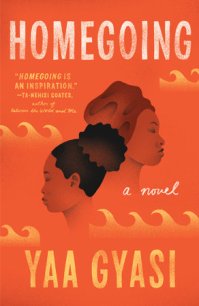
Homegoing, by Yaa Gyasi

This historical novel is Yaa Gyasi’s debut as a fiction writer. It is different from any novel I’ve ever read. It is set in Africa. As part of my 2017 Reading Challenge I wanted to read a book set on each of the continents this year, so I was drawn to this novel. Unfortunately, I couldn’t finish reading it before it was due at the public library.

9781101971062

Each chapter is about a different member of this family. It is about family ties and the horrible conditions in the slave trade. It puts a human face on slavery – a subject we tend to think of in terms of numbers and not the families that were torn apart in Africa. If I get a chance, I’d like to check this book out again.

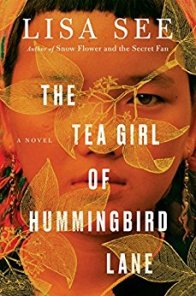
The Tea Girl of Hummingbird Lane, by Lisa See

Like Homegoing and The Hidden Life of Trees, I didn’t get to finish reading The Tea Girl of Hummingbird Lane before it had to be returned to the library. I couldn’t renew any of the three books because there were people on the wait list. The part of The Tea Girl of Hummingbird Lane that I got read was fascinating in how it shed light on some of the superstitions held by the Chinese. I had no idea!

51nbXr3ZbXL._SY346_

The novel follows a young Chinese girl who is painfully aware from birth that she is not valued because she is female. Her family has to walk for hours to pick tea leaves for a meager amount of income. It is a difficult life. Her mother is the local midwife and she tells her daughter that she must follow in her footsteps in that occupation.

There is a ray of hope, though, because the girl’s teacher tells her that she can leave the harsh mountain environment and make something of herself. I look forward to checking the book out again in order to see how her life turns out!

Until my next blog post

I hope you have a good book to read. I have come to the conclusion this week that I am trying to read too many books and not spending enough time on my writing. My goal in June is to strike a happy medium.

If you’re a writer, I hope you have productive writing time. I’m writing bios of my characters in the “new and improved” The Spanish Coin.

Janet