My 2017 Writing Plan of Action

Here it is the end of the third week in January and I’m just now articulating my 2017 writing plan of action. The name itself sounds arrogant, but that isn’t my intention. As an aspiring author, I need a plan and I need to act. I call it a “plan of action” for my own encouragement and not to impress anyone.

My 2016 Plan of Action was short and to the point. In this year’s plan I’ve tried to get into specifics and goals for various social media. Here’s my 2017 plan:

Consistency, Consistency, Consistency

In real estate, the maxim is “Location, Location, Location.” If I am to establish my “brand” as a writer, my maxim must be, “Consistency, Consistency, Consistency.” Just as a character in a work of fiction has a distinguishable voice or way of speaking, my voice on social media needs to be consistent. My style of writing needs to be authentic and not all over the place. Likewise, I need to be consistent in my presence on social media. If I just blog on a whim, my audience will fall by the wayside. If I Tweet with no regularity, I’ll lose my followers. My challenge in 2017 will be to use social media on a consistent basis while making time to write. Being a relative newbie in the world of social media and not being technologically savvy, most days I feel overwhelmed by how much I have to learn. My actual writing has been taking a back seat lately. I must strike a healthy and productive balance in 2017 as I work toward getting my novel manuscript published. If I don’t, all the years I’ve spent writing the book and all the months I’ve spent sharpening my social media skills are all for naught.

My ideal reader

Writers are instructed to identify an ideal reader. This isn’t a real person. This is an imaginary person you write for. Some writers give this ideal reader a name and they have a visual concept of what that person looks like. I’ve concluded that my ideal reader is complex. Ultimately, my ideal reader is someone who enjoys southern historical fiction, has an interest in history but also keeps up with current events. My ideal reader is a well-informed citizen and not just a spectator. My ideal reader is not offended if I occasionally reveal my beliefs or civic concerns on social media. My ideal reader is not only willing to have his or her assumptions questioned but actually seeks out such literature. Does such a person exist? I’m counting on it!

It’s easy to sit here and wax poetic about my plans, but now comes the hard part. From what I’ve read, I need to determine on which social media platform(s) my ideal reader hangs out and then concentrate my efforts there.

http://www.janetswritingblog.com

Study my end-of-year 2016 reports, stats, etc. & determine what worked & what didn’t work & what I need to do differently in 2017. (I considered blogging three times a week; however, I concluded that’s too much for me. Instead, in addition to my regular Tuesday and Friday blog posts, I will occasionally blog on other days with no set schedule for these random posts.)

Plan blog topics for the year. (By that I mean, my first blog each month will be about what I read the previous month. My second blog each month will be a line I like from a book. My third blog each month will be a list of things I’ve learned about a particular topic. In other words, there will be a            pattern to my blog posts every month. If the plan doesn’t produce results, I need to make adjustments.)

Try to use my blog to increase my exposure as a writer & establish my brand. Set goals for number of followers & number of bloggers following my blog.

Make a list of blogs I’d like to guest blog on.

Figure out how to make necessary changes to my blog’s set up to improve its Search Engine Optimization.

By the way, if you have trouble reading my blog on your cell phone or tablet, please let me know so I can take actions to rectify the situation. Please let me know if you have difficulty seeing or downloading photos I include in some of my blog posts. I need feedback about any issues you’re having.

Twitter @janetmorrisonbk

Study my end-of-year 2016 reports, stats, etc. & determine what worked & what didn’t work & what I need to do differently in 2017.

Try to use Twitter to increase my exposure as a writer & establish my brand. In order to establish my brand, I need to create more original content as opposed to primarily retweeting content generated by others.

Set goals for number of Tweets and number of followers.

Pinterest:  http://www.pinterest.com/janet5049

Study my end-of-year 2016 reports, stats, etc. & determine what worked & what didn’t work & what I need to do differently in 2017.

Try to use Pinterest to increase my exposure as a writer & establish my brand. As with Twitter, I need to create more original Pins. Janet’s Writing Blog is my only Pinterest board that is 100% original content.

Evaluate my boards and the order in which I display them.

Set goals for number of followers for these boards: The Writing Life; Novel in Progress: The Spanish Coin; Blue Ridge Mountains; Great Smoky Mountains; I Need the Light; Sequel to The Spanish Coin; Janet’s Writing Blog; and Blog Odds & Ends.

Facebook:  Janet Morrison, Writer

Try to use Facebook to increase my exposure as a writer & establish my brand. My personal page is just what it sounds like. My “Janet Morrison, Writer” page is where people who are interested in my writing can “Like” me.

Set goal for number of “Likes” by Dec. 31, 2017.

Goodreads.com

Goodreads.com is a website I enjoy as a writer and as a reader. It’s free to create an account and then to participate as much or as little as you wish. You can search for books or authors and create a list of books you’ve read, are currently reading, or want to read. Book reviews and book ratings on a one- to five-star system are encouraged but not mandatory. I have been lax in writing reviews, and I don’t always rate books I’ve read. I need to increase my activity in 2017 in order to get the most benefit from this completely free website. Oh – and there are a multitude of book giveaway contests for account holders.

LinkedIn

Learn about the potential LinkedIn holds for a writer. (To say I rarely use LinkedIn now would be a huge  understatement.)

Try to use LinkedIn to increase my exposure as a writer & establish my brand.

Google+

Learn about the potential Google+ holds for a writer. (As with LinkedIn, I rarely use Google+.)

Try to use Google+ to increase my exposure as a writer & establish my brand.

Website:  www.JanetMorrisonBooks.com

Review analysis for end of 2016.

Figure out which changes I can make and how to accomplish them.

The Spanish Coin southern historical mystery novel manuscript

Get 2 beta readers to give me feedback.

Hire a professional editor to do a developmental edit.

Pursue getting a literary agent or self-publishing.

Only time will tell how successful I am in carrying out this grandiose plan. All these social media activities are touted as being necessary for authors. Truth be told, I’d rather just write!

If you took the time to read this entire blog post, you deserve a prize. I don’t have any to offer, but you do have my sincere appreciation.

Until my next blog post . . .

I hope you have a good book to read. If you’re a writer, I hope you have productive writing time.

In your chosen work, do you make an annual written plan?

Janet

What is a logline, and why do I need one?

I’m still learning the terminology used in the publishing business. The publishing business is changing every day, so I’ll always be playing catch up.

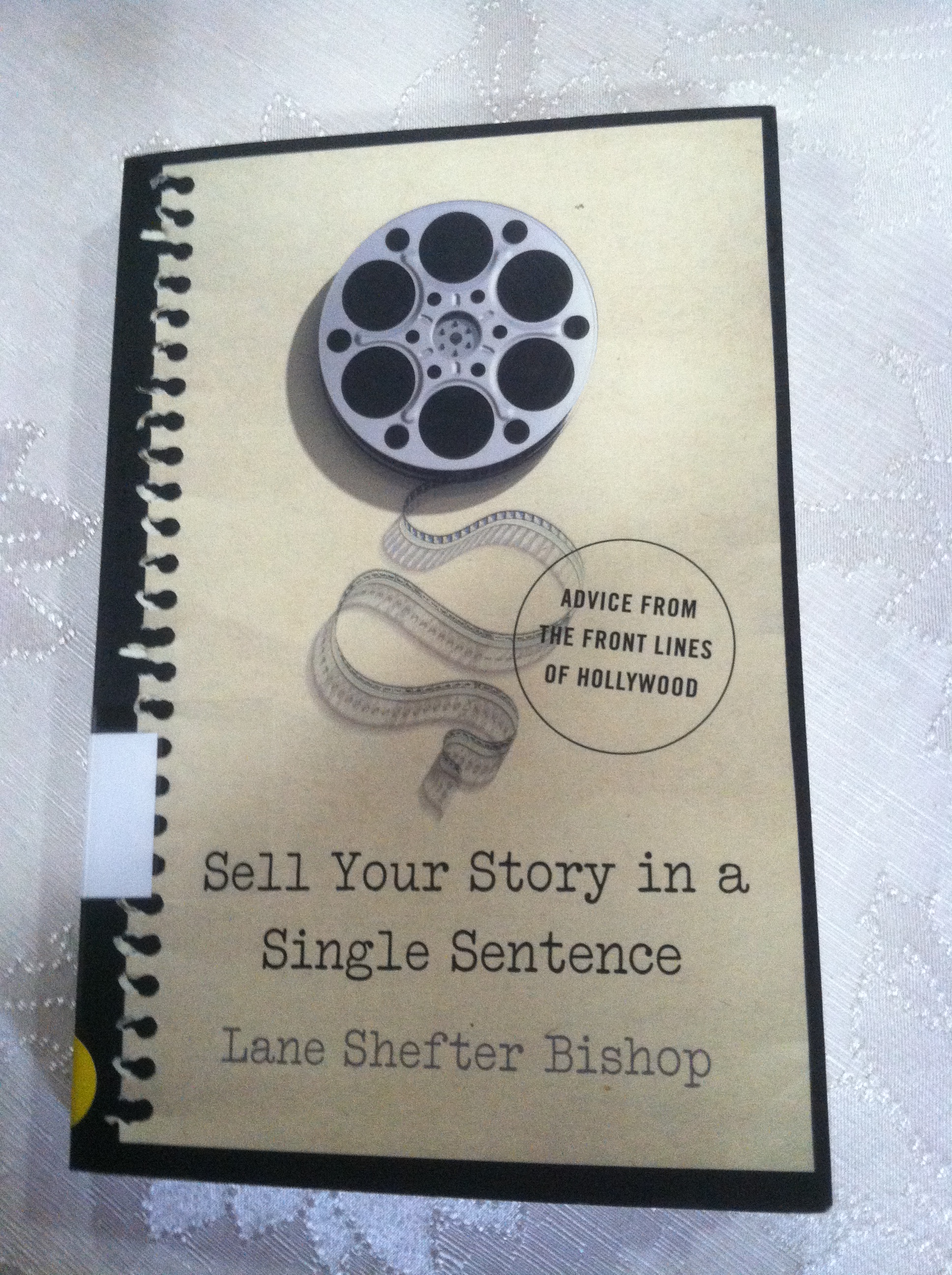
Sell Your Story in a Single Sentence

A library book caught my attention last week, so I checked it out. Sell Your Story in a Single Sentence, by Lane Shefter Bishop turned out to be one of the most helpful writing books I’ve read. Perhaps I feel that way because it was timely. It would have been even more beneficial if I could have read it a decade ago before I started writing my southern historical novel manuscript with the working title, The Spanish Coin. (Since Ms. Bishop published the book in 2016, that would have been impossible — but you get my point.)

Sell Your Story in a Single Sentence, by Lane Shefter Bishop
Sell Your Story in a Single  Sentence, by Lane Shefter   Bishop                                                                                                                         

Speaking of getting to the point . . .

Sell Your Story in a Single Sentence is an excellent “how to” book about the process of writing a logline. A logline is a single sentence that identifies a story’s protagonist, what the protagonist wants, and what’s at stake. Sounds easy?  Actually, it’s quite a process that involves many revisions and lots of rewriting.

When to write your logline

If I had known to create a logline before writing my novel’s manuscript, it would have helped me focus. Writing the logline after the fact, though, will help me evaluate my 97,000-word manuscript. I’ll have to make the best of having the cart before the horse. Next time I write a book, I’ll know to start with the logline.

Why do I need a logline?

I need a logline so I can precisely answer the question, “What’s your book about?” I will also need it to open my query letters to prospective literary agents or publishers. In that respect, the logline is like the “hook” or first line of a novel. If well written, it grabs the agent’s attention and makes him want to hear more. Ultimately, it makes a literary agent want to read my manuscript — or not read it.

My logline for The Spanish Coin

The following sentence is my logline in progress for The Spanish Coin:

When a widow is accused of her husband’s murder in the Carolina backcountry in 1771, she will stop at nothing to save herself and her unborn child.

Until my next blog post . . .

I hope you have a good book to read. If you’re a writer, I hope you have quality writing time.

Janet

P.S. Does my logline make you want to read The Spanish Coin? I would love to have your comments!

Save

First line from a novel by Jenny Milchman

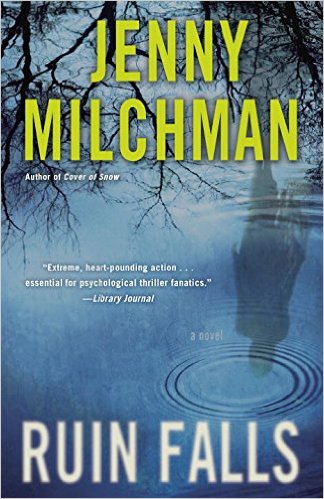
“The children had never been this far from home before.” ~ from Ruin Falls, by Jenny Milchman

What thoughts does this first line from Jenny Milchman’s Ruin Falls bring to your mind?

Ruin Falls, by Jenny Milchman

Cue from title

Indeed, the title gives a cue about the tone of the book. I don’t want to give too much away and spoil it for you, but I can say that the book involves the disappearance of two children and their mother’s desperate search for them. It is a book of suspense. Sometimes a reader can tell by the title what kind of book a novel is, but we all know that isn’t always true. “You can’t judge a book by its cover” comes to mind.

Speaking of judging a book . . .

Ruin Falls was an Indie Next Pick and a “Top Ten of 2014” selection by Suspense Magazine.

Author, Jenny Milchman

I decided to read Ruin Falls last year primarily because it fulfilled one of the 19 categories in the 2016 Mint Hill Library Reading Challenge — Read a book whose author has your initials. It was either that or read a book by James A. Michener. Time was not on my side, so I opted for Jenny Milchman. I’d read another of her books — Cover of Snow — several ears ago and liked it, so Ruin Falls was not a random choice. I will read other books she writes. I have not read her novel published in 2015 titled As Night Falls. It seems to be another suspense novel.

In addition to her writing talent, I admire Jenny Milchman for founding “Take Your Child to a Bookstore Day” in 2010.

Until my next blog post . . .

I hope you have a good book to read. If you’re a writer, I hope you have productive writing time.

Janet

Save

Save

Save

11 Things I’ve Learned about Grammar & Spelling

  1. Everyday is an adjective. (Spell-check wants me to change “everyday” to two words. Don’t trust spell-check.)
  2. Every day is a noun.
  3. Spell-check cannot be trusted when it comes to possessive tense. It thinks every “s” should be preceded by an apostrophe. (Pet peeve alert!)
  4. Anytime is an adverb that means “at any time.” Anytime is sometimes a subordinating conjunction. When used as the latter, it generally means “every time that.” The Merriam-Webster Dictionary gives 1926 as the year the word “anytime” came into general use. It is not found in The Oxford Dictionary.
  5. Any time must be two words when used in an adverbial phrase, such as “at any time” because “at” must be followed by a noun or a noun phrase. (Okay. I admit it. I’m lost!) Bottom line: When in doubt, use “any time.”
  6. When you have placed an apostrophe after a noun that ends in an “s” for more than 50 years, it is difficult to adopt the new practice of adding an apostrophe and an “s” in such cases.
  7. The Chicago Manual of Style is an excellent 1,000-plus-page grammar guide. It will confirm that you know how to write while simultaneously confounding you and teaching you that you haven’t mastered grammar after all.
  8. After being taught that “President” is always capitalized when naming the president of the United States of America, I learned the hard way while editing my vintage postcard book, The Blue Ridge Mountains of North Carolina, for Arcadia Publishing in 2014 that The Chicago Manual of Style demands a lower case “p.” I had to swallow my pride and write “president Andrew Jackson” and president Franklin D. Roosevelt” in my postcard book. The new lower case rule will never look correct to me!
  9. The older I get, the less confident I am about spelling.
  10. I’ve learned more about punctuation by studying the craft of writing in my middle age than I learned in school.
  11. As demonstrated by The Chicago Manual of Style, there are way too many grammar and punctuation rules for the English language! I have, no doubt, broken a dozen of those rules in this list of 11 items.

chicago-manual-of-style-005

Until my next blog post, I hope you have a good book to read. (***Shameless book promotion alert!***  Have you read The Blue Ridge Mountains of North Carolina? Ask for it at your favorite bookstore, or order it from Amazon.) If you are a writer, I wish you productive writing time.

Janet

Twitter:  @janetmorrisonbk

Facebook:  Janet Morrison, Writer

Pinterest:  https://www.pinterest.com/janet5049 (I have boards on writing, blogging, the Blue Ridge Mountains, the Great Smoky Mountains, music I like, quilting, knitting, needlepoint, crocheting, politics, health, hearing loss, Southernisms, books, authors, Scotland, faith, penmanship, dogs, Maxine-isms, genealogy, the Carolina Panthers, and lots of recipes. I invite you to follow my boards that interest you.)

Save

Save

Save

Save

Save

Save

Save

Save

A line I like from a novel by Anthony Doerr

“His voice was low and soft, a piece of silk you might keep in a drawer and pull out only on rare occasions, just to feel it between your fingers.” – from All the Light We Cannot See, by Anthony Doerr

The source of the sentence

That is Marie-Laure describing her great-uncle in All the Light We Cannot See, by Anthony Doerr. It would be a beautiful piece of imagery even if Marie-Laure were not blind. Knowing she cannot see with her eyes gives the sentence a deeper meaning.

What does this sentence make me do?

As a reader, it makes me shut my eyes and pretend I have a piece of silk to gently rub between my fingers. What a clever way to describe the heightened hearing of a person without sight!

As a lover of rich prose, the sentence makes me stop and read it again.

As a writer, it makes me grab a pen and write it in my writer’s notebook so I can revisit it any time I want to.

Pro or Con?

If you’ve followed my blog very long, you know I’m not a fast reader. Perhaps my noticing this particular line from Pulitzer Prize winner All the Light We Cannot See is a benefit of being a slow reader — something I’ve always considered a fault.

Until my next blog post . . .

I hope you have a good book to read. If you’re a writer, I wish you productive writing time.

Janet

Save

Save

Save

What I read in December

I’ve struggled over what to blog about today. It’s my custom for my first blog post of a new month to be about what I read the previous month. It has occurred to me that my blog readers might not care what I read.

Three books read

I only read the following three books in December:  Without Mercy, by Jefferson Bass; The Ghosts of Belfast, by Stuart Neville; and Silent Night, Deadly Night, by Richard L. Mabry, M.D.

Jefferson Bass is one of my favorite author or, more accurately, author teams. (More on that later.) Conversely, I had never read books by Stuart Neville or Richard L. Mabry, M.D. before.

Silent Night, Deadly Night, by Richard L. Mabry, M.D.

I follow Richard L. Mabry, M.D.’s blog. He is a retired physician whose new occupation is that of medical mystery writer. His medical expertise gives him a unique perspective on what violent murder does to the human body. In this Christmas novel, an older woman’s body is found in the snow. There are twists and turns as it becomes obvious that someone is also trying to kill her heirs.

The Ghosts of Belfast, by Stuart Neville

Stuart Neville was recommended to me by my ophthalmologist. My doctor, who guided me through my 2016 bout with shingles in my right eye (and will continue to direct my care as the pain and itching is lapping over into 2017) is a collector of first editions of mystery novels. At my most recent appointment he noticed I had a book with me and inquired about its title and author. It was The One Man, by Andrew Gross. When I explained the premise of the book to him, he asked if I had read any Stuart Neville books. I had not, so we both came out of my appointment with notes about new authors to try. He said that The Ghosts of Belfast was perhaps Mr. Neville’s best book, so I checked it out at the public library.

The protagonist in The Ghosts of Belfast is tormented and egged on by the ghosts of the 12 people he killed during the conflicts between the Protestants and Catholics in Northern Ireland. The only way he can escape from the 12 ghosts is to kill the men who forced him to kill them. There was more violence in The Ghosts of Belfast than I usually read, but the story line kept me too interested to not finish it. It was the first novel in Mr. Neville’s Jack Lennon Investigations Series.

Without Mercy, by Jefferson Bass

As stated earlier, Jefferson Bass is one of my favorite author duos. Jon Jefferson is the writer and Dr. William Bass is the expert adviser, forming the pen name, Jefferson Bass. Dr. Bass started the The Body Farm at the University of Tennessee at Knoxville in 1971 to advance the study of human decomposition and forensic science.

I have read all of The Body Farm series of novels by Jefferson Bass. If forensic science interests you and you enjoy reading mysteries, I recommend this series of books. I also recommend that you read them in their order of publication. It’s not absolutely necessary; however, in some cases it is helpful to know the personal and professional history of protagonist, Dr. Bill Brockton.

Without Mercy repeated a little too much of Dr. Brockton’s history to suit me. At times it seemed the rehashing of murder cases from earlier books in the series was being used to stretch this book. That was disappointing. The author’s note at the end of the novel indicated that Jefferson Bass, like Dr. Bill Brockton, was taking a sabbatical, leaving me to wonder if Without Mercy will be the last book written by this entertaining writing team. I hope not, because by next fall I’ll be going through “Jefferson Bass withdrawal” and yearning for another dose of East Tennessee murder drama.

Until my next blog post. . . I hope you have a good book to read and, if you’re a writer, I wish you productive writing time.

Janet

Did you meet your 2016 reading challenge?

Did you participate in a 2016 reading challenge and, if so, did you meet the challenge?

I blogged on March 11, 2016 and June 24, 2016 (How’s that 2016 reading challenge working for you?) that I was participating in the 2016 reading challenge offered by the Mint Hill Branch of the Charlotte-Mecklenburg Public Library. I had high hopes of reading books in at least 12 of the 19 categories. Unfortunately, I only read books in the following nine categories:

  1. Book published in 2015: The Bookseller, by Cynthia Swanson
  2. Book with a number in title: Tricky Twenty-Two, by Janet Evanovich
  3. Nonfiction book: No Better Friend: One Man, One Dog, and Their Extraordinary Story of Courage and Survival in World War II, by Robert Weintraub
  4. Book with a color in title: Gray Mountain, by John Grisham
  5. A humorous book: Miss Julia Delivers the Goods, by Ann B. Ross
  6. Book with a one-word title: Damaged, by Lisa Scottoline
  7. Mystery or thriller: Don’t Go, by Lisa Scottoline
  8. Book that might scare you: The Woman in Cabin 10, by Ruth Ware
  9. Book written by an author with my initials: Ruin Falls, by Jenny Milchman

I also read 36% of a 2015 Pulitzer Prize winner by Anthony Doerr, All the Light We Cannot See, before it had to be returned to the public library. I’m back on the wait list for it, so I hope to finish reading it in 2017. What was the book I read in 2016 that I still think about? No Better Friend: One Man, One Dog, and Their Extraordinary Story of Courage and Survival in World War II, by Robert Weintraub. I highly recommend it.

My personal reading goal for 2016 was to read 52 books. I read 31 books which, ironically, is the same number I read in 2015. My next blog post in a few days will be about the three books I’ve read so far in December.

I look forward to reading many interesting and entertaining books in 2017. If you missed my December 27, 2016 blog post, it was about the 2017 reading challenge I designed for myself. Feel free to adopt it or write your own challenge.

Until my next blog post, I hope you have a good book to read. If you’re a writer, I hope you have productive writing time.

Janet

Want a reading challenge for 2017?

Throughout 2016 I’ve enjoyed participating in the reading challenge issued by the Mint Hill Branch of the Charlotte-Mecklenburg Public Library. The year is quickly drawing to a close. I have not yet fully met the challenge, but I have four days left.

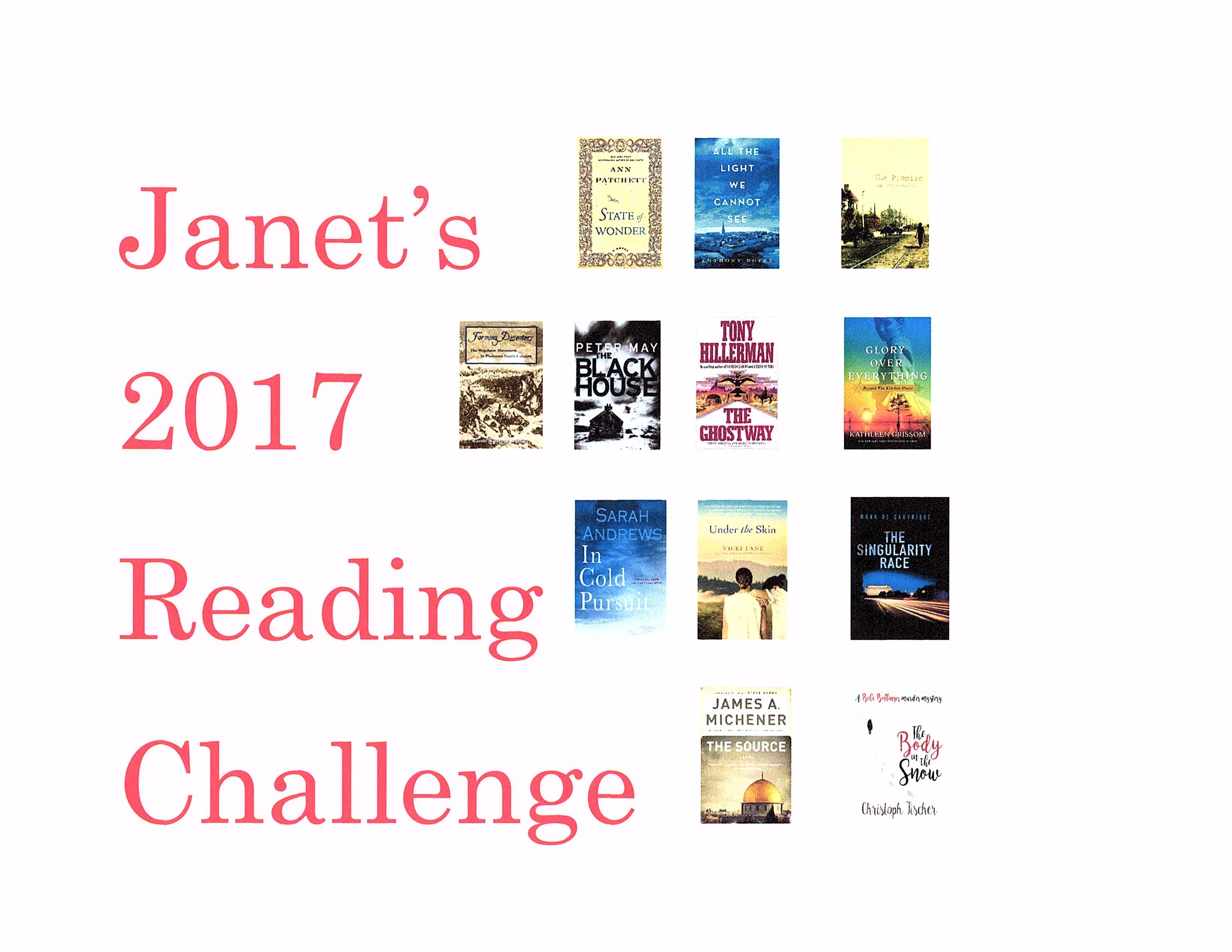
img086

I designed the following reading challenge for 2017:

  1. A book of poetry
  2. A Sci-Fi book
  3. A nonfiction book
  4. Books by 12 authors I’ve never read
  5. A novel set in each of the seven continents
  6. A novel by a North Carolina author
  7. A novel set in North Carolina
  8. Re-read a favorite book
  9. A book written in the 1700s
  10. A book written in the 1800s
  11. A book written in the 1900s
  12. A biography, autobiography, or memoir
  13. A book about a religion other than my own
  14. A book that might change my mind
  15. A book just for fun
  16. A book that will teach me a new skill
  17. A book that was originally written in a language other than English
  18. A book written in Spanish (a language I haven’t studied since 1973)
  19. A book published in 1953 (the year I was born)
  20. A book that is the first in a series I haven’t read any of before
  21. The second book in a series of which I’ve read the first book
  22. A book written by an author I’ve met
  23. A book of short stories
  24. A book published in 2017
  25. A book about the craft of writing historical fiction
  26. A Nobel Prize winner
  27. A political thriller
  28. A sequel to a book I’ve read

 2017 – My Goal and Objective

I used to set a goal of reading a book every week, but in 2017 I’m going for quality and variety instead of volume. My goal isn’t to check off every category. My reading goal is to expand into areas and subjects I might not normally consider. My personal objective in 2017 is to become less judgmental. I think reaching my reading challenge goal will enable me to accomplish my objective. It will, no doubt, be an objective I will never fully attain. I am a work in progress.

Join me for the 2017 reading challenge I’ve planned or design one of your own.  Tell your friends about my blog and my reading challenge. Let’s get some conversations going about the books we’re all reading!

Everyone in the world does not have equal access to books so, now more than ever, it is incumbent upon those of us blessed to live in free societies and those of us blessed to live in countries with free public libraries and/or the financial means to have access to books to make the most of that privilege.

Until my next blog post, I hope you have a good book to read. If you’re a writer, I hope you have productive writing time.

Janet

Save

Save

How important is a novel’s ending?

How important is a novel’s ending? Just as important as the “hook” at the beginning.

Once a month I write about the first line in a different novel. I must admit that I have worked harder on, done more “how to” reading about, and lost more sleep over the opening scene in my manuscript for The Spanish Coin than I have for the ending.

A good beginning “hooks” the reader’s attention and draws him into the story. A good ending leaves the reader satisfied and, hopefully, exhausted. A good ending makes the reader contact the author and ask, “You are writing a sequel, aren’t you?” The ending of a novel should either tie up all the loose ends for your main characters or cause the reader to wonder what happened to those characters later. Did they find justice, acceptance, love, or whatever they were seeking? The reader should still think about those characters weeks after reading the book. How many of us thought about Scout in To Kill a Mockingbird years later and wondered how her life turned out? Like it or not, we got our answer in 2015 when the long lost Go Set a Watchman manuscript by Harper Lee was discovered and published.

As with the writing of the other parts of a piece of fiction, there are rules to guide an author in crafting the ending.

  • Don’t introduce new characters
  • Do increase the suspense
  • Do surprise the reader, but do it in a way in which he can think back to foreshadowing earlier in the book
  • Know the ending before you write the beginning

The rule I listed last is one I need to keep in mind when I write my next book. I did not know about that rule when I started writing The Spanish Coin. I didn’t have a clue how that story was going to end. In fact, it made me exceedingly sad to see how the story unfolded. I had become quite fond of the character who turned out to be the villain.

Until my next blog post, I hope you have a good book to read and, if you’re a writer, I hope you have productive writing time.

Janet


A Quote from an Author — Lee Smith

I try to blog a quote from an author once a month. Today’s quote is taken from Lee Smith’s autobiographical book, Dimestore:  A Writer’s Life:

“For a writer cannot pick her material any more than she can pick her parents; her material is given to her by circumstances of her birth, by how she first hears language.” — Lee Smith

Dimestore: A Writer's Life

While working to identify my author brand recently, I came to appreciate that quote from Lee Smith even more than when I first read it and was immediately prompted to write it down in my writer’s notebook.

I invite you to follow my blog and to follow me on social media by using the icons to the right. I welcome you to share this blog post by clicking on the social media icons below.

Until my next blog post, I hope you have a good book to read and, if you’re a writer, I hope you have productive writing time.

Janet