Books Banned at U.S. Department of Defense Schools

Not to be outdone by the State of Tennessee (see yesterday’s blog post: https://janetswritingblog.com/2025/07/24/public-school-libraries-in-texas-and-monroe-county-tennessee/), the U.S. Department of Defense is doubling down on books in the schools it operates for children of military personnel.

Black and White photo of an old outdoor sign that says, "Books"
Photo by Paolo Chiabrando on Unsplash

On July 14, 2025, the Defense Department banned 596 books from its schools.

Here’s an article about it: https://www.military.com/daily-news/2025/07/14/here-are-596-books-being-banned-defense-department-schools.html.

Here’s a link to the court case with a list of the 596 books: https://drive.google.com/file/d/1iKxUEllBpsap4cmH_vfWtzv0h069jkSc/view. (If this link does not work, you can get to it through the military.com article linked above.)


If you don’t have time to read the complete list, here are 70 of them:

(I guess it goes without saying that many books on the list were obviously about gender identity, but the following are books that don’t all into that assumed category.)

A History of Racism in America, by Craig E. Blohm;

A Smart Girl’s Guide to Racism & Inclusion: Standing Up to Racism and Building a Better World, by Deana Singh and Shellene Rodney;

Ab(solutely) normal: short stories that smash mental health Stereotypes, by Nora Carpenter and Ricky Callen;

All You Need is Love: Celebrating Families of All Shapes and Sizes, by Shanni Collins;

Anti-Racism: Powerful Voices, Inspiring Ideas, by Kenrya Rankin;

Be Your True Self: Social Justice and You, by Maribel Valdez Gonzalez;

Better Than We Found It: Conversations to Help Save the World, by Frederick Joseph, Porsche Joseph, and Taylor Denise Richarson;

Biased: Uncovering the Hidden Prejudice That Shapes What We See, Thinks, and Do, by Jennifer L. Eberhardt;

Black Friend: On Being a Better White Person, by Frederick Joseph;

Black Lives Matter, by Marty Gitlin;

Bless the Blood: A Cancer Memoir, by Walela Nehanda;

Caste: The Origins of Our Discontents, by Isabel Wilkerson;

Confronting Racism, by Scientific American Editors;

Critical Perspectives on Social Justice, by Jennifer Peters;

Discrimination, by Jacqueline Langwith;

Equality and Diversity, by Charlie Ogden;

Equality, Social Justice, and Our Future, by Sabrina Adams;

Gender Inequality in Sports: From Title IX to World Titles, by Kirstin Cronn-Mills;

Heads Up Sociology, by Chris Yuill and Christopher Thorpe;

How to Be a (Young) Antiracist and How to Be An Antiracist, by Ibram W. Kendi;

I Am An Antiracist Superhero, by Jennifer Nicole Bacon and Leticia Moreno;

It Doesn’t Have to Be Awkward: Dealing with Relationships, Consent, and Other Hard-To-Talk About Stuff, by Drew Pinsky and Paulina Pinsky;

Male Privilege, by Duchess Harris and Heidi Deal;

Me and White Supremacy, by Layla F. Saad;

Racial Bias: Is Change Possible? by Barbara Diggs;

Racial Discrimination, by Peggy J. Parks;

Racial Justice in America: Topics for Change, by Hedreich, Leigh Ann Erickson, and Kelisa Wing;

Racism in America: A Long History of Hate, by Meghan Green;

Say the Right Thing: How to Talk about Identity, Diversity, and Justice, by Kenji Yoshino and David Glasgow;

So You Want to Talk About Race, by Ijeoma Oluo;

Symptoms of Being Human, by Jeff Garvin;

The Antiracism Handbook: Practical Tools to Shift Your Mindset and Uproot Racism in Your Life and Community, by Thema Brayant-Davis and Edith Arrington;

The Antiracist Kid: A Book about Identity, Justice, and Activism, by Tiffany Jewell and Nicole Miles;

The Book of Radical Answers: Real Questions from Real Kids Just Like You, by Sonya Renee Taylor;

The Divide: American Injustice in the Age of the Wealth Gap, by Matt Taibbi and Molly Crabapple;

The Dog Knight, by Jeremy Whitley and Bre Indigo;

The Feeling of Falling in Love, by Mason Deaver;

The Feminism Book, by Georgie Carroll and Hannah McCann;

The Greatest Superpower, by Alex Sanchez;

The New Jim Crow: Mass Incarceration in the Age of Colorblindness, by Michelle Alexander;

The Other Talk: Reckoning With Our White Privilege, by Brendan Kiely;

The Ship We Built, by Lexie Bean and Noah Grigni;

The Sociology Book, by Christopher Thorpe, Chris Yuill, Mitchel Hobbs, Megan Todd, Sarah Temley, and Marcus Weeks;

The Sum of Us: How Racism Hurts Everyone: Adapted for Young Readers, by Heather C. McGhee;

This Book is Anti-Racist, by Tiffany Jewell and Aurelia Durand;

Under the Skin: The Hidden Toll of Racism on American Lives and on the Health of Our Nation, by Lind Villarosa;

We Were Eight Years in Power: An American Tragedy, by Ta-Nehisi Coates;

What is Anti-Racism? by Hendreich Nichols and Kelisa Wing;

What is the Black Lives Matter Movement? by Hendreich Nicols and Kelisa Wing;

What is White Privilege? by Leigh Ann Erickson and Kelisa Wing;

When Women Stood: The Untold Story of Females Who Changed Sports and the World, by Alexandra Powe Allred;

White Fragility: Why It’s So Hard for White People to Talk about Racism, by Robin J. DiAngelo;

White Privilege, by M.T. Blakemore;

White Privilege Unmasked: How to Be Part of the Solution, by Judy Ryde;

J is for Justice! by Veronica Arreola;

Why Are All the Black Kids Sitting Together in the Cafeteria? And Other Conversations About Race, by Beverly Daniel Tatum;

How Can I Be an Ally? by El-Mekki Fatima;

Long Time Coming: Reckoning with Race in America, by Michael Dyson;

How to Fight Racism: A Guide to Standing Up for Racial Justice, by Jemar Tisby;

Racial Justice, by Virginia Loh-hagan;

An ABC of Equality, by Chana Ewing;

Coping with Hate and Intolerance, by Avery Elizabeth Hurt;

Confronting Racism, by Maryellen Lo Bosco;

Respecting Diversity, by Anastasia Suen;

Tell Me Who You Are: Sharing Our Stories of Race, Culture, and Identity, by Winona Guo and Priya Vulchi;

What is Diversity, by David Anthony;

When a Bully is President: Truth and Creativity for Oppressive Times, by Maya Christina Gonzalez;

This is Your Brain on Stereotypes: How Science is Tackling Unconscious Bias, by Tanya Lloyd Kyi and Drew Shannon;

Prejudice, by Izzi Howell;

You Call This Democracy?: How to Fix Our Government and Deliver Power to the People, by Elizabeth Rusch;

There were also seven AP Psychology books on the list.


In conclusion

There is a definite pattern here.

The very topics that are tearing our country apart are being banned from Defense Department schools, grades kindergarten through 12th grade.

Ignoring that racism, diversity, gender inequality, and gender identity exist will not make them go away, no matter how much the white supremacists, misogynists, history deniers, and evangelicals want them to.

If we as citizens of the United States cannot read about our problems and differences, face them, acknowledge them, and have an honest conversation about them, how will we ever overcome them?


Until my next blog post

Find a book on this list and read it!

Remember the people of Ukraine and western North Carolina.

Janet

Public School Libraries in Texas and Monroe County, Tennessee

I was flabbergasted a couple of weeks ago to learn that a law had passed in Texas that will turn public school library book selection on its head.

Photo of opened books scattered on the floor
Photo by Vrînceanu Iulia on Unsplash

As of September 1, 2025, school boards in Texas will select all books for public school libraries instead of professional librarians. I’ll bet the Texas state legislators thought it would be easy-peazy, so let’s just let the local school board members do it.

Local school board members tend to be just regular people. Most of them do not have college degrees in library science. Dare I go out on a limb and say that none of them do? How many course hours have they studied library collection development?

Why is it that humans assume their job takes a high degree of training and skill, but no one else’s job carries any requirements?


Since I live with a retired public school librarian, I have a ton of questions.

Can all the local school board members in Texas read on a 12th grade level?

What do they know about reading levels?

What do they know about age appropriateness?

Do they know how time-consuming the book selection process is?

Do they know anything about book selection, such as where to even get a list of books available for school libraries?

Do they know how to balance book selection against a budget?

Do they know who the award-winning authors and illustrators are?

Do they know what books are already on the shelves in all the schools in their district so they can avoid duplication and maintain a balance of subject matter?

Do they know everything that is taught on every grade level so they can be sure to order books that will supplement or enhance what is being taught in every classroom?

Does a school board have to be unanimous and vote on each book?

I could list more questions. Those 10 are just the ones that came to me immediately when I read the news report.


What are they thinking in Monroe County, Tennessee?

I read on Sunday that in a report from PEN America that book banners are going after books about cats. No one seems to know why book banners have a vendetta against our little feline friends, but it is happening in Iowa, Florida, and in Monroe County, Tennessee.

Monroe County has banned almost 600 books from its public schools. The Complete Book of Cats and The New Encyclopedia of the Cat are just two of the cat-related titles being pulled from the school library shelves.

I don’t even know what to say about that. I love dogs. I don’t like cats very much (aside from being fascinated by the beauty of tigers), but I would never want books about cats to disappear from libraries.

But wait! On Monday, I learned that one of the books banned from schools in Monroe County is The Complete Book of Dogs, by Rosie Pilbeam! Now they have gone too far!

You can’t go around banning books about dogs! You just can’t! That’s un-American. Dogs are love universally. Every library in the world should have books about dogs – and even cats.

Why in the name of everything reasonable is Monroe County, Tennessee banning cat and dog “encyclopedias” from school libraries? What if that 8th grader or 12th grader aspires to be a veterinarian? Is that student not supposed to learn about animals until they get to college? How ridiculous!

In what universe does it make sense to ban books about cats and dog?

In what world does it make sense to ban ANY books?

Digging deeper into this on the internet, I found that this is the result of Tennessee’s Age-Appropriate Materials Act, which went into effect this summer.

In addition to apparently any book about cats or dogs, the usual book banners’ target are on the list: To Kill a Mockingbird, Of Mice and Men, Fahrenheit 451, Lord of the Flies, Grapes of Wrath, Hidden Figures, Brave New World, Animal Farm; and Aztec, Inca, and Maya.

In my opinion the book above all others that should not be on anyone’s banned books list is Hidden Figures, by Margot Lee Shetterley. Heaven forbid a young black girl (or brown girl, or white girl) reads that book and is inspired to be a mathematician!

All kidding aside about dogs and cats, how dare they take Hidden Figures off the public school library shelves! How dare they!

There is such a thing as age appropriateness, but books should not be banned anywhere.

What are they afraid of?

Fortunately, Monroe County, Tennessee, only has a population of 46,250 as of the 2020 U.S. Census, so it’s book banning decisions won’t affect a huge number of children. But, since the Tennessee Age-Appropriate Materials Act applies to the entire state, will other county school systems follow Monroe County’s lead and ban the same 574 books?

North Carolina has some faults, but I’m so glad I don’t live in Texas or Monroe County, Tennessee! How embarrassing for the people there.


A bit of good news out of Washington, DC!

North Carolina Attorney General Jeff Jackson announced on Monday that the U.S. Department of Education decided to unfreeze the money it froze a week or two ago that was earmarked for after-school programs. This means North Carolina will get $36 million of the $165 million the Department of Education originally said it was freezing.

Jackson vowed he will see the U.S. Department of Education in court to try to recover the other $130 million.


Until my next blog post

Read anything and everything you can get your hands on.

Don’t let anyone tell you what you should not read.

Look for my blog post tomorrow about the 596 books the U.S Department of Defense has banned this month from the schools it operates for the children of our military personnel.

Remember the people of Ukraine and western North Carolina.

Janet

A Recent Attack on an Historical Novel

Here I go again, blogging about book banning. It’s too important to sweep under the rug.

Today’s blog post is longer than most of mine, but this is a topic that is near and dear to my heart. It is a topic that is indicative of the trouble our world is in today.

A small but vocal segment of our society believes it is wrong to teach young people about slavery, the Holocaust, or any part of history that makes them uneasy. They start by asking that books be removed from public school libraries and classrooms. They complain if certain books and plays written by Shakespeare are read in the classroom or assigned as required reading. Then they move on to public libraries. Then they start attacking authors and book publishers.

They believe that their freedom of speech trumps my freedom to read. They believe they have the right to deny you and me the right to read anything we want. Some of them don’t mind using violence to get their point across.

Photo by Kristina V on Unsplash

As I stated in an earlier blog post, they have the right to regulate what their own children read, but they don’t have the right to deny my great-nieces the right to read what they want and need to read.

Where does it end? Just look at 1930s Germany, if you want to know. Just look at countries where groups like the Taliban have gained political control.

It’s time for reasonable people to pay attention

I hear too many people say, “I never use the public library. I buy the books I want to read.” As a writer, I want people to purchase my books. I also want public libraries to purchase my books. But that’s not the point.

The point is that public libraries are integral to the very foundation of our country and our society. I read an article last week that quoted the American Library Association (ALA) as reporting that book challenging at public libraries in 2022 amounted to 16% of all book challenges in the United States, but in 2023 public libraries are receiving approximately 50% of the book challenges in the US.

Let that sink in. Also, let it sink in that the Proud Boys have disrupted reading hours at public libraries and librarians have received death threats. Is that what you want at your local public library?

Well-meaning, misguided people are taking away your right to read. Many of them are even doing it in the name of God. It makes them feel good to say that. It makes them feel good to say they’re doing it “to protect the children.”

I understand the need for age-appropriate books; however, today’s right-wing activists are hiding behind that political campaign sound bite and are using it to nitpick and challenge every book that comes down the pike. Their “holier than thou” attitude is wearing thin with me.

They’re on a mission to dumb us down, to dictate what we can and cannot have access to, to limit our intellectual potential. They are on a mission to erase the ugly and uncomfortable parts of our nation’s history.

Many historical novels have been challenged and banned in various places over the years, and it seems like all fiction is fair game for the book banners today. In my blog post today I highlight three historical novels that have been challenged and banned in various locations.

These three immediately came to mind

To Kill a Mockingbird, by Harper Lee
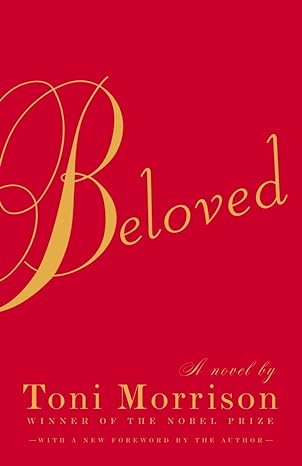
Beloved, by Toni Morrison
The Grapes of Wrath, by John Steinbeck

I have read each of those novels and not one of them warped my mind. Were you damaged by reading any of these novels? I doubt it. Were you moved to understand and see the world differently by reading these novels? Probably.

To Kill a Mockingbird teaches us about racial discrimination and injustice while also teaching us that Atticus Finch had integrity and maybe we should, too.

Beloved teaches us about the horrors of slavery and that the horrors did not end with the Civil War. It teaches us the lengths desperate people will go to prevent their children from being enslaved and living in horrible circumstances. That’s being demonstrated daily at the US-Mexican border.

The Grapes of Wrath teaches us what can happen after a decade of affluence and decadence and a time of drought as it illustrates a side of life during The Great Depression.

It’s one thing to read that thousands of people lost their farms and everything they had during the “Dust Bowl,” but it’s altogether different to read The Grapes of Wrath and live with the novel’s characters.

The Snow Forest, by Elizabeth Gilbert

In July of this year, an historical novel scheduled to be released in February 2024 was attacked on the author’s Goodreads account to the point that she chose to cancel its publication.

Elizabeth Gilbert, who wrote Eat, Pray, Love had written a novel set in Russia in the 1930s. With all the current interest in the war in Ukraine today, it would seem an opportune time to release a book set in 1930s Russia.

But author Elizabeth Gilbert learned that was not the case. She got so much blowback from her fans, that she pulled The Snow Forest even after some of her readers had pre-ordered the book. Her fans in Ukraine (or at least enough of them) said it was not the right time to release a book set in Russia. In response, the author suspended the publication of the book.

Author Alina Adams’s Thought on this

I read a blog post by author Alina Adams who was born in Odessa, Ukraine. Ms. Adams’ post maintains that historical fiction can make an important statement about the world and not just be a source of entertainment.

Ms. Adams wrote, “And as someone who loves to read historical fiction taking place all over the world in all sorts of different time periods, I am wary of a mindset which might lead to authors and publishers censoring themselves, shying away from setting stories in regions where there is ongoing political strife.”

In addition to specific examples of historical novels that have been challenged and banned, Ms. Adams’ blog post contained several succinct statements about the potential historical fiction holds, including the following: “Sometimes, historical fiction can tell a truth non-fiction isn’t equipped to deliver.” Also, “It doesn’t just make you think, it makes you feel. And it makes you empathize.”

My thoughts on this

Reading an historical novel might not change your political stance or religious beliefs but, if you give it a chance, it just might help you see the other side of an issue.

It might at least help you realize that people with views that oppose yours are not necessarily your enemies. They just might be human beings with a different perspective and life experience.

Please take a couple of minutes to read Alina Adams’ complete blog post from July 27, 2023 on M.K. Tod’s blog, A Writer of History: Why Historical Fiction Must Keep Tackling Controversial Topics | A Writer of History.

A quote from author Barbara Kyle

I printed this quote from Barbara Kyle and have it taped to my computer:

“The move to self-censorship for fear of ‘cultural appropriation’ is a sad state of affairs. Author Morgan Jones eloquently champions the opposite position: ‘Fiction remains the best means we have of finding connection where there seems to be none; and the novel, of all forms, encourages a search that’s deep and sustained. By reading (or writing) one, you’ve travelled somewhere else. You’ve moved, if only slightly, toward others. In a world that finds and increasingly exploits division and difference, this is an invaluable, precious exercise.”

Since my last blog post

Marie and I finished proofreading and creating the cover for our upcoming cookbook, The Aunts in the Kitchen: Southern Family Recipes. We submitted it to Amazon on Friday and requested a proof copy. It should arrive this week and, if we are pleased with it, we’ll give Amazon the go ahead to publish it. Look for an update and perhaps a cover reveal in next Monday’s blog post.

Until my next blog post

Be aware of what is going on in your community and state related to book challenges and book bannings. Speak up for books. Speak up for the freedom to read. Speak up for public libraries and librarians.

Have you ordered my American Revolution e-ghost story?  “Ghost of the Battle of Guilford Courthouse: An American Revolutionary War Ghost Story” is available from Amazon, along with my other books: https://www.amazon.com/dp/B0CH7JCP11/. It’s only available as an e-Booklet.

“Ghost of the Battle of Guilford Courthouse: An American Revolutionary War Ghost Story,” by Janet Morrison

If you don’t have a good book to read, visit your local public library. Or, from the comfort of your home, go to its website and search for books you would like to read or subjects you want to learn more about. You will be amazed at what is available at your fingertips!

Take time for friends and family.

Thank you for taking time to read this long blog post.

Remember the people of Ukraine, Maui, Libya,….

Janet

Who decides what you have access to at the library?

A few weeks ago I blogged about book banning. (See Book Banning is Democracy Banning! June 19, 2023.) I planned to blog about “How do you decide what to read next?” on July 14, but my computer had other ideas. I’m saving that post for August because I felt compelled to take a different approach today.


Book challenges and book banning

I didn’t plan to bash anyone in this post; however, I keep reading about more and more cases of book challenges and book banning across the United States and how various state legislatures (Arkansas, to name one) are passing laws that are putting our society on the slippery slope of censorship.

Fortunately, on Saturday, in response to a lawsuit filed by libraries, librarians, bookstore, and publishing companies,  a federal judge temporarily blocked portions of Act 372 in Arkansas, which would criminalize librarians who knowingly let a minor see objectionable sexual content.

Senate Bill 90 in North Carolina is tame by comparison to Arkansas’s Act 372, which had been scheduled to become law tomorrow. NC Senate Bill 90 is still under review and, if signed into law, will add new constraints on public libraries and public school libraries, and will add additional hoops through which librarians, school superintendents, and local school boards must jump. As if their jobs weren’t challenging enough!

Warren County, Virginia and the Houston Independent School District in Texas have been in the news recently, too, on this topic.

This terrifies me! This is the United States of America, and a vocal narrow-minded group of people are yanking local and state governing bodies around as if they have rings in their noses.


Book by book…

Book by book, library by library, school system by school system, the whittling away of our right to read is eating away the foundations on which our country was founded. If not for public education in the United States, how many of our citizens would know how to read?

Public education is under attack by many state legislatures, including the one here in North Carolina. Vouchers to give parents money to send their children to private school? Give me a break! Why would a state legislature give money for private education when one of its responsibilities is to fund and support public education?

The ignorant few will soon decide what we can read and cannot read. Politicians are usurping the roll of professional librarians in deciding which books can go on library shelves.

Pay attention! What’s happening in your state and in your county? The state legislature in North Carolina has a history of voting in the dead of the night. You just never know what you’re going to wake up to in the morning.

This leads me to the question I ask in the blog post title today: Who decides what you can and cannot read?

There’s a connection between today’s question and the current trend toward banning books in the United States.

Do you want politicians deciding what you can and cannot read? Do you want local politicians deciding what your child can or cannot read?


Since my last blog post

I didn’t intend to take a three-week break from blogging this month, but my computer had other ideas. I won’t bore you with the details. I’ll just say, it was unsettling and frustrating being unable to log into my WordPress account for 18 days.

I hope you missed me. I missed y’all!


Until my next blog post

If you haven’t subscribed to my newsletter through my website, https://www.janetmorrisonbooks.com, please do so before you miss any more newsletters. For subscribing, you’ll receive a free downloadable copy of “Slip Sliding Away: A Southern Historical Short Story,” so you can get a feel for my historical fiction writing.

I hope you have a good book to read and time to read it. Read! Read! Read! And please support your local public library!

Make time for friends and relatives, even if you don’t agree with them about politics.

Remember the brave people of Ukraine.

Janet