Is this MAGA or MAHA or MIGA?

On Friday, July 18, I started gathering bits of news to share in a blog post on Friday, July 25, but by Saturday morning I had accumulated more than enough for a blog post. Therefore, this Friday’s post became today’s post.

With legislation, Executive Orders, Executive Proclamations, and changes to the U.S. Tax Code coming down the pike daily, it is difficult to tell whether some of the items are MAGA (Make America Great Again) or MAHA (Make America Healthy Again).


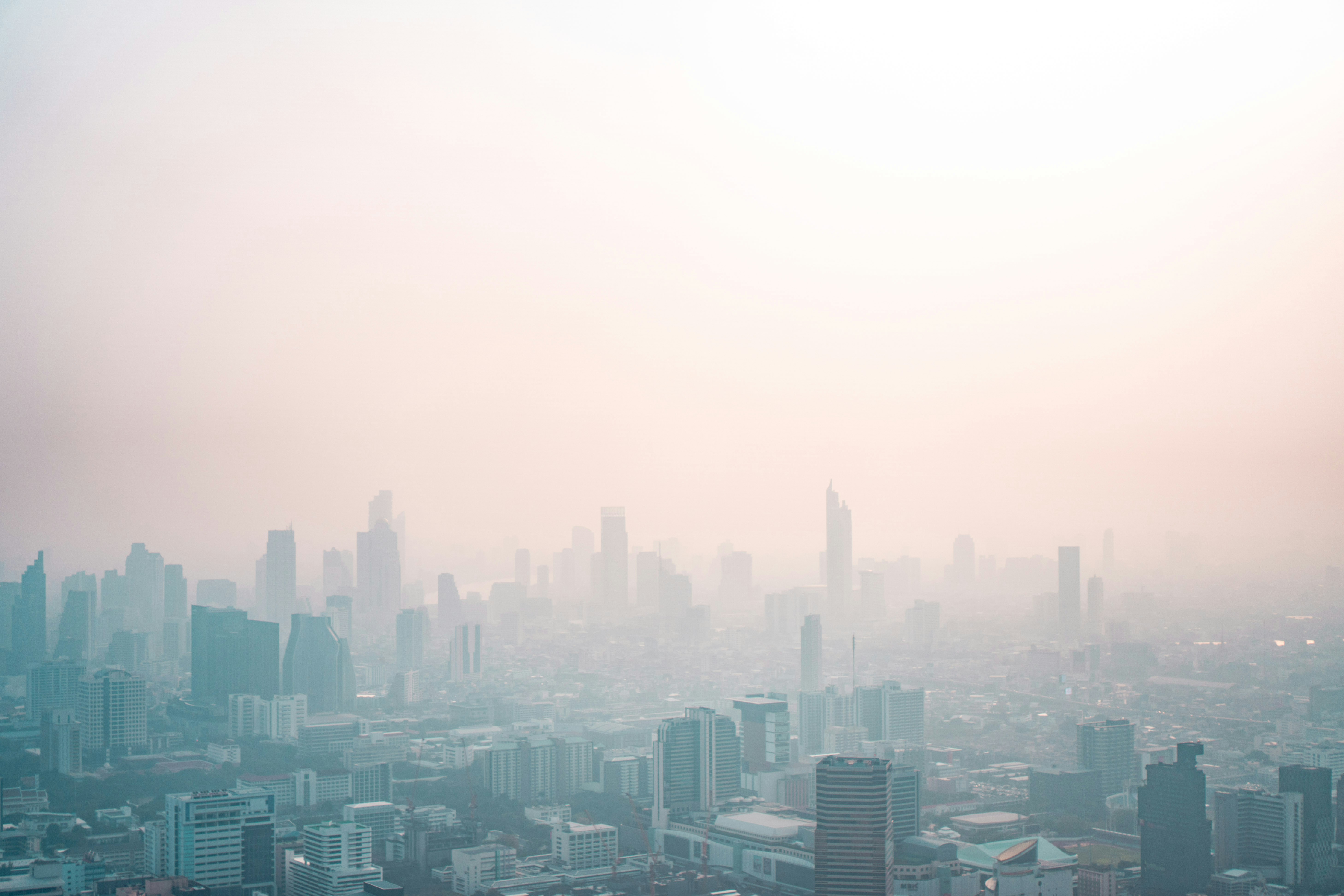
Air Pollution

Bloomberg reported that Trump signed a proclamation last Thursday night “allowing chemical makers, coal-fired power plants and other facilities to bypass a range of environmental regulations on grounds that the waivers are needed for national security purposes.”

It is amazing what falls into the “national security” category in 2025!

The facilities have been given a two-year waiver from adhering to Environmental Protection Agency rules.

Included in the waiver are certain facilities of United States Steel Corp., Cleveland-Cliffs, Inc., Dow, Inc., BASF SE, Phillips 66, and Citgo Petroleum Corp. Also, coal-fired power plants in Ohio, Illinois, and Colorado were exempted from air pollution mandates that limit emission of mercury and other toxins.

It seems Trump is determined to take us back to the “good old days” of choking air pollution that his followers younger than 60 years old don’t understand because they are too young to remember them.

Photo of a large city enshrouded in smog
Photo by Nick van den Berg on Unsplash

I’m confused. Is this MAGA (Make America Great Again) or MAHA (Make American Healthy Again)?


Personal Medical Debt

I thought Trump didn’t like for one judge to have the power to make a ruling that affects the whole country, but I guess it depends on the ruling and how it fits into Trump’s desires.

A Trump-appointed judge has overturned a Biden-era rule that removed medical debt from individuals’ credit reports.

So now, if you’ve had a catastrophic illness or accident, that medical debt will now show up on your credit report. It’s one more way for Trump to kick people when they’re down.

Is this Making American Great Again or Making America Healthy Again?

Environmental Protection Agency Firings

The New York Times reported, “The EPA said that it would eliminate its scientific research arm and begin firing hundreds of chemists, biologists, toxicologists and other scientists, after denying for months that it intended to do so.”

Someone tell me: Is this Making America Great Again or Making America Healthy Again? I’m at a loss to know how this fits into either one of those grandiose Trump slogans.


New $250 “Visa Integrity Fee”

As if people in other countries already didn’t want to visit the United States under the current political climate, it just came to light that Trump’s “Big, Beautiful Bill” which Congress adopted slaps a new $250 “visa integrity fee’ on visitors to the United States.

After September 30, 2025, U.S. Homeland Security Secretary Kristi Noem can increase the fee at her discretion.

Trump and Professional Sports Mascots

Trump is demanding that the Washington Commanders of the National Football League and the Cleveland Guardians of the Major League Baseball change their mascots back, respectively, to the Redskins and Indians. He claims Native Americans are “clamoring” for the name changes.

As usual, it is a case of blackmail. The Washington Redskins now play at a stadium in Landover, Maryland. But in April the franchise started working on a deal to move the team back to the District of Columbia if a new stadium can be built on the site of the old Robert F. Kennedy Memorial Stadium.

Now, Trump is threatening to put the skids on the stadium deal if the franchise owners do not change the team’s name back to the Washington Redskins.

I’m not sure what his beef is with Cleveland, but his new slogan yesterday was MIGA (Make Indians Great Again.) The Cleveland Indians changed their name to the Cleveland Guardians in 2021 after Native Americans had called for them to drop “Indians” as their mascot for decades.

Hurricane Helene Update

North Carolina Governor Josh Stein and his wife, North Carolina First Lady Anna Stein, spent last week in western North Carolina to take advantage of the beauty and recreational opportunities the region offers and to draw attention to the fact that most of the area is reopened now and in need of the economic support that tourists bring.

As of Friday, of the 1,457 roads that were closed in western North Carolina last September due to Hurricane Helene, all but 34 are now completely open! That’s the full opening of 10 roads just last week. Forty-three roads have partial access.

I-40 at the Tennessee line is still just opened with a total of two lanes and a 35 m.p.h. speed limit, and most of the Blue Ridge Parkway in North Carolina is still closed.


Until my next blog post

Support the First Amendment rights that comedians have… or had until last Thursday. The First Amendment might not always be there.

Support your local public library system. It might not always be there.

Read whatever you want to read. The day may come when you cannot do that.

Pay attention to current events as reported by reputable news media. (By the way, the orange narcissist’s propaganda outlets do not fall into that category.)

Don’t be too distracted by the political chaos and dismantling of our democracy that you forget the people of Ukraine, western North Carolina, and the Hill Country of Texas.

Janet

Getting a local history lesson in a round-about way

Two weeks ago today, I read one of Tangie Woods’ informative blog posts (https://tangietwoods.blog/2025/06/30/dr-william-b-sawyer-founder-of-first-hospital-for-black-americans-miami-fl/).

Tangie’s blog was about the man who, in 1920, started the first hospital for black people in Miami. After reading her post, I wanted to find out more about the first hospital for blacks in my area.

You just never know where a little research is going to take you. I started out looking for the history of Good Samaritan Hospital in Charlotte and in the process I learned about a train wreck in 1911, the murder by a mob in 1913, and a woman who was instrumental in the establishment of the hospital. The hospital and that July 17, 1911, train wreck are connected, so I decided to write about both during this anniversary week.

I was aware of Good Samaritan Hospital because it was still in existence when I was growing up. It makes me feel ancient to remember that when I was born there was still racial segregation in medical care.

Good Samaritan Hospital, or “Good Sam” as it was affectionately called, was built in Charlotte in 1891 after the project was spearheaded by the congregation of St. Peter’s Episcopal Church. The first hospital for white people in Charlotte, St. Peter’s Hospital, was built in 1876.

I learned much from an online article written by Brandon Lunsford (https://charlottemuseum.org/learn/articles/good-samaritan-hospital/). Lunsford is the archivist for Johnson C. Smith University.

In the beginning, Good Samaritan Hospital had 20 beds. A School of Nursing was established there in 1903, which trained nurses for the next 50 years.

With the help of the Duke Foundation and the Colored Sunday School Union, it more than doubled in size in 1925. A major expansion was completed in 1937, bringing the bed count to 100.


Good Samaritan Hospital’s response to a train wreck

The importance of Good Samaritan being the only hospital to serve black people in North Carolina was brought to the forefront on July 17, 1911, when a freight train and a passenger train collided head-on near Hamlet, North Carolina, some 75 miles east of Charlotte.

Brandon Lunsford’s article indicates that 83 black patients were brought from the train wreck to Good Samaritan Hospital. Eighty of the 83 survived their injuries. The way in which medical care was given to the victims of the train wreck raised Good Samaritan’s reputation.

I found conflicting information about the number of people injured in the train wreck. Brandon Lunsford reports that 83 black passengers (and I’m thinking there were probably railway employees included in that number transported to Good Samaritan Hospital in Charlotte), while another online article (https://www.yourdailyjournal.com/news/108231/pair-of-researchers-seeking-more-information-on-train-wreck-from-1111-years-ago) says that 25 people were injured.

(I don’t have the time right now to take a deep dive into that discrepancy. It could be something as simple as a typographical error in the resource material used for either article. I hope it is not because so many of those injured were black people. I couldn’t help but wonder if the early newspaper accounts only reported the number of white people injured. I’ll leave it to someone else to go down that rabbit hole.)

Regardless of the total number injured, all of the black people injured in the accident had to be transported 75 miles to Charlotte to the only hospital serving black patients in the North Carolina, and Good Samaritan Hospital should be remembered and celebrated for that.

The Richmond County, NC newspaper article cited above states, “Many of the injured were members of St. Joseph’s AME Church. They were located in an inferior, wooden passenger train [car] due to segregation laws at the time.”


Back to the history of Good Samaritan Hospital

Good Samaritan Hospital was in the news again on August 26, 1913. Brandon Lunsford’s article reports the following: “A mob of about thirty-five armed men stormed the hospital and captured a black man named Joe McNeely, who was arrested five days earlier for the shooting of Charlotte policeman L.L. Wilson. McNeely, who was also shot and recovering at Good Samaritan, was dragged out into the street by the angry mob, shot and mortally wounded. No one was ever convicted for McNeely’s death, and the crime remains an ugly mark on Charlotte’s history.” (That is another piece of local history I was not aware of.)

The Episcopal churches in Charlotte continued to support and take administrative responsibilities for Good Samaritan Hospital in to the 1950s, but the financial burden was making that increasingly difficult.

In 1961, the City of Charlotte and Charlotte Memorial Hospital took ownership of Good Samaritan. Its name was changed to Charlotte Community Hospital. It closed in 1982 and became the Magnolias Rest Home.

To make land available for the construction of Bank of America Stadium (formerly, Ericsson Stadium), the former Good Samaritan Hospital was demolished in 1996.


Good Samaritan Hospital Historical Marker

The Richmond County Daily Journal article cited above includes a photograph of the historical marker outside Bank of America Stadium in downtown Charlotte. It reads as follows: “Good Samaritan Hospital (1891-1961) Site of the first independent private hospital in North Carolina built exclusively for African-Americans. Established by Jane Renwick Smedburg Wilkes of St. Peter’s Episcopal Church. One of the oldest black hospitals then in operation in the U.S.”


Jane Renwick Smedburg Wilkes?

Who was Jane Renwick Smedburg Wilkes and why am I just now hearing about her?

You’ll have to read my blog post scheduled for tomorrow to find out who she was.


Hurricane Helene Update

The North Carolina Department of Transportation has changed how it is reporting road closures on its website, so my weekly updates will change accordingly. At least, I could not find the detail presented in quite the same way as it was in the past. Also, there was lots of flooding in the northern piedmont and eastern parts of the state due to Tropical Storm Chantal last week.

As of Friday, 37 roads in North Carolina were still closed due to Hurricane Helene and 50 had limited access. Five road were reopened last week.

Of course, I-40 through the Pigeon River Gorge is still just two lanes with a 35-mph speed limit, and most of the Blue Ridge Parkway in North Carolina is still closed.


Until my next blog post

I hope you have a good book to read.

Remember the people of Ukraine and western North Carolina.

Janet

Two Other Books I Read in June 2025

After my blog post for yesterday got too long for anyone to want to read, I split it up into two posts.

The books I write about today will sound familiar to those of you who follow my blog, but I think both warrant a revisit.


White Hoods and Broken Badges, by Joe Moore

Photo of book cover for White Robes and Broken Badges by Joe Moore
White Robes and Broken Badges,
by Joe Moore

If this book sounds familiar, it might because I blogged about it on October 7, 2024, in What I Read Last Month & a Hurricane Helene Update .  I read it again last month because on my recommendation it was the June book for the book club I’m in.

It was sobering the first time I read it, but it was even more chilling to read it during Donald Trump’s second term in the White House. All the things Moore anticipated and predicted about a second Trump term are coming to fruition right before our eyes.

We are in a bad place in the United States, and we have the 2024 voters to blame. I’m beyond mincing words about the people who brought authoritarianism down upon us when they put on their red MAGA baseball caps and voted last fall.

After reading White Hoods and Broken Badges, I have a better understanding of just how deeply embedded in our government and all levels of law enforcement the Ku Klux Klan and all the various allied white supremacy and white nationalist people are.

Moore says whereas the KKK and militia groups like the Proud Boys used to not mix or associate with each other, now they have joined forces under a common cause: the destruction of our democracy. Their goal is a second civil war in the US, and it has already started. All it needed was the blessing of a second Trump term as US President.

Moore says that whereas it used to be that white supremacist tried to infiltrate law enforcement, now there are people in law enforcement who recruit them. Therein lies the KKK’s power. He writes about the part white nationalist groups played in the January 6, 2021, insurrection and how they fueled the mob attack on the US Capitol.

He went so far as to state, “It’s estimated that somewhere between half and three quarters of all self-identifying Republicans either identify as white nationalists or hold white nationalist beliefs. That means as much as 30 percent of the United States population wants to see the country burn.”

 He knows whereof he speaks. As a confidential informant for the FBI, he infiltrated the KKK twice over a ten-year period. He and his family are living under assumed names.

Please read this book. The statistics I’ve cited are in the opening pages of the book. The book itself is a well-written account of Moore’s time infiltrating the KKK and the things he witnessed. You won’t be able to be complacent after reading it.


How We Learn to Be Brave: Decisive Moments in Life and Faith, by Mariann Edgar Budde.

Photo of the cover of How We Learn to Be Brave by Mariann Edgar Budd
How We Learn to Be Brave: Decisive Moments in Live and Faith, by Mariann Edgar Budde

I blogged about the fourth chapter in this book in my June 20, 2025 blog post, Reacting to the Cards You Are Dealt. I invite you to read that book and the post I wrote in response to reading the fourth chapter. I hope to eventually read the entire book.


Until my next blog post

Get a good book to read. Your local public library has lots of them, and a library card is free!

Don’t forget the people of Ukraine and western North Carolina.

Janet

A 4th of July like no other

Tomorrow marks the 249th birthday of the United States of America. It was on July 4, 1776 that our national Declaration of Independence was signed in Philadelphia.

Photo of dark clouds over the dome of the US Capitol Building
Photo by Kyle Mills on Unsplash

This has been a tough year so far. In the months leading up to July 4, I wasn’t sure how festive this year’s celebration would or could be. Many of us are embarrassed by the actions and words of the current US President, the US Congress, and the US Supreme Court.

Many of us are worried about the future of our country and its standing in the world. Many of us are worried about our financial security as individuals. Many of us are grieving for the rights and benefits we and the poorest of the poor in the world have lost at the hands of the Turmp Administration. People are starving and dying unnecessary of preventable diseases because the aid that the United States had funded and promised has been halted in the name of efficiency, waste, fraud, and diversity.

What should I blog about just hours before Independence Day?

A week or so ago, I decided to mark this Independence Day by posting “A Light and Lively Look at Independence Day in America.” I had the whole post written, illustrated, and scheduled for 5 a.m., July 4, 2025.

I included links to comedian Nate Bargatze’s skits on the iconic TV show, “Saturday Night Live” or “SNL.” Both skits featured Bargatze as General George Washington and four regular SNL cast members (Bowen Yang, Mikey Day, Kenan Thompson, and James Austin Johnson) as American soldiers under his command in 1776 and 1777.

Bargatze’s trademark deadpan delivery made the skits hilarious. I thought sharing links to video recordings of the skits would be a good way to remind Americans that we need to laugh at ourselves. We shouldn’t take ourselves too seriously.

But as the days went by this week, I had a nagging feeling that I could not in good conscience go forward with that post tomorrow. It didn’t feel right. We have nothing to laugh about on this Independence Day.

Our country is in a precarious place. Our democracy and everything we thought we knew about our country are crumbling in front of our eyes.

This is my 73rd Independence Day. Until this year, it has always been a happy day – a day to be proud of my country, a day to pick wild blackberries, a night to hold a sparkler with close adult supervision when I was a young child, a day to go to a parade, a day to eat hotdogs and hamburgers, a day to watch a fireworks display, a day to sing patriotic songs, a day to wave the flag, a day to celebrate our freedoms.

Not this year. Now, none of that feels right. Oh, we still have some freedoms, but the current U.S. President and his minions have them in a vice grip. They are tightening the screws more each day. Those freedoms are being crushed and trampled on.

The last straw for me was seeing “Alligator Alcatraz” on TV and hearing some Republicans in high places of power making jokes about it. They’re making jokes about how the alligators and pythons will keep the detainees in line.

They joke about how the human beings detained there — and yes, although they are here illegally, they are human beings – will have to learn to run in a zigzag fashion while being chased by alligators. They joke about how security will be a small expense because the alligators and pythons work for free. They are human beings with names and families and very few of them are criminals. Coming into the United States without the proper paperwork is not a felony. It is a misdemeanor.

Even with all that “free” security provided by wildlife, we are told that “Alligator Alcatraz” will cost the American taxpayers $450 million-a-year. Florida will pay that upfront and then be reimbursed by FEMA. Personally, I don’t think that was why the Federal Emergency Management Administration was intended for. Even so, the cost in money is beside the point.

This “Alligator Alcatraz” detention center looks like a concentration camp. The human beings will be kept in cages – just like the first Trump Administration kept detainees in the first time. The wire cages are inside tents, and the Trump Administration claims these tents can survive a category 2 hurricane. We might find out over the next five months if that claim is valid.

While in Florida to visit “Alligator Alcatraz” in the Everglades, Trump was asked by a reporter how long individuals would be held there. He gave a long and typically incoherent response that did not address the question at all. He talked about how he lives in Florida and will spend “a lot of time here…” and how he has redecorated the Oval Office. It was a bizarre response to a simple question, but in its bizarre-ness it was one of his typical nonsensical “weaves”

Where are the people who called President Joe Biden incompetent? Where are they now that we have a U.S. President who is incapable of forming a complete sentence or staying on topic?

But that is not my main point.

My thoughts today and each day this week as I anticipated the 4th of July are… disbelief and horror. I am horrified that the United States of America is constructing a concentration camp – just as it did during World War II. Then the camps were built to restrict the movement of people of Japanese descent. In 2025, they are for anyone with brown skin or a Spanish accent.

The photographs of the masked ICE agents are horrifying. They look exactly like the masked Boko Haram self-proclaimed jihadist militant group in Nigeria, except those thugs were black and most of the ICE agents are white. What they have in common in addition to their face coverings is a penchant for terrorizing people, including little children. What they appear to have in common is hate and a personal delight in inflicting pain and terror.

Police officers in the United States don’t wear face masks. People who are ashamed of what they are doing wear face masks. People who don’t want to be caught or recognized wear face masks. Have the dark face coverings of ICE agents in 2025 replaced the white hoods of the Ku Klux Klan? The sight of the masked ICE agents triggers that comparison in my mind, and the first word that comes to mind is “cowardice.”

What kind of person – mostly men – takes a job as an ICE agent? Who takes a job in which they have to trade their souls for a mask and a pair of handcuffs or wad of zip ties? Are they so filled with hate and racism that they enjoy terrorizing families and children?

And those ICE agents? They will, no doubt, say they were just following orders. If that lame excuse rings a bell, it is because that’s what Hitler’s henchmen cried at the Nuremberg Trials in 1945 and 1946.

I don’t recognize this America. I don’t understand this America. I cannot celebrate this America.

Janet

#OnThisDay: 26th Amendment Ratified, 1971 – Part Two

As I indicated in my blog post yesterday, #OnThisDay: 26th Amendment Ratified, 1971 – Part One, when I started researching the history of the 1971 ratification of the 26th Amendment, which lowered the voting age in federal elections in the US from 21 to 18 years of age, I got in over my head quickly and the blog post grew like topsy.

Therefore, I split the post into two posts. My post yesterday gives important background information which helps to put today’s post in perspective.

Starting with the beginning of America’s involvement in World War II, here is how the 26th Amendment finally came about. As I said in yesterday’s blog post, the military draft and the setting of the voting age in the United States became intertwined decades ago.


World War II

Japan attacked Pearl Harbor in Hawaii on December 7, 1941. Congress gave President Franklin D. Roosevelt the authority to send US military personnel anywhere in the world. The distinctions between draftees, regular army, National Guardsmen, and Reservists were removed for the war. They were all part of the army.

Eleven months after the attack on Pearl Harbor, Congress lowered the draft age to 18 and raised the upper limit to the age of 37.

Also in 1942, West Virginia Congressman Jennings Randolph introduced a bill in the House of Representatives to lower the voting age from 21 to 18. That was the first of 11 times that Randolph would introduce such legislation in his political career which eventually found him in the US Senate.

It seems that Randolph had a particular faith in the youth of America. He is quoted as saying that American young people, “possess a great social conscience, are perplexed by the injustices in the world and are anxious to rectify those ills.”

What seems idiotic to us in 2025 is the fact that black men were not considered for the draft until 1943. The so-called reasoning for that was the assumption that white men and black men could not work together in a military setting and white racists believed that black men were not capable of serving in the military!

As a result, in 1943 a racial quota system was put in place under which black men were drafted in numbers to coincide with their percentage of the general population. At that time, just over ten percent of the US population was black.

But even with this new quota, black soldiers were restricted to serving in “labor units.” That changed, though, as World War II progressed and they were needed in combat positions.

President Franklin D. Roosevelt lowered the minimum age for the age to the age of 18 during World War II, but the minimum voting age held at the age of 21. At that time voting age was set by each state.

The slogan, “Old enough to fight, old enough to vote” gained momentum in 1943, and George became the first state to lower voting age for state and local elections from 21 to 18.

By the end of World War II, of the 34 million men registered for the draft, 10 million had been inducted into the military.

Post-World War II until the Korean War

In 1947, President Harry S. Truman asked Congress to let the 1940 Selective Training and Service Act expire and recommended that the US military could rely on voluntary enlistments.

However, in 1948, the minimum number of military personnel was not reached, so Truman asks for the draft to be reinstated. The new act called for the drafting of men between 19 and 26 years old for twelve months of active service.

Korean War (June 25, 1950-July 27, 1953)

Mean between 18½ and 35 were drafted for an average of two years. Men who had served in World War II were not required to sign up for the Korean War draft; however, I know a fighter pilot who served in World War II who was called back into active service during the Korean War. (By the way, he is 100 years old now.)

The Universal Military Training and Service Act passed in 1951. It required men from 18 to 26 years old to register. The next year, Congress enacted the Reserve Forces Act. It required every draftee and every enlisted man to an eight-year military service obligation. That obligation meant that after their term of active duty, they were assigned to standby reserve and knew they could be called back into active duty upon a declaration of war or a national emergency.

Post-Korean War until Vietnam War

In his 1954 State of the Union address, President Dwight D. Eisenhower said, “For years our citizens between the ages of 18 and 21 have, in time of peril, been summoned to fight for America. They should participate in the political process that produces this fateful summons.”

Jennings Randolph (mentioned above in the US Congress in the 1940s) was a Democrat. As a US Army General, Dwight Eisenhower had led US forces in the European Theatre in World War II and was a Republican. So why did it take until 1971 for the 26th Amendment to the US Constitution to come about?

Vietnam War, Civil Rights, and Voting Rights

The US provided military advisors in South Vietnam beginning in the early 1950. The war in North and South Vietnam, Cambodia, and Laos continued.

President Lyndon B. Johnson started pressuring Congress to let him send active-duty troops to Vietnam after a military incident in the Gulf of Tonkin on August 2, 1964. The US was carrying out a covert amphibious operation near North Vietnamese territorial waters. North Vietnam responded, and then based on skewed intelligence the US falsely claimed that another incident occurred on August 4, 1964.

There was very little support in the US for America to send troops to fight in that war, but what a tangled web we weave once we set out to deceive!

The first US Marines landed in DaNang, South Vietnam on March 8, 1965. The first anti-war demonstrations took place in the US since the end of the Civil War. Ironically, that was the same day that the US Supreme Court handed down its decision in US v. Seeger, which broadened the definition of conscientious objection but it was still based on religious beliefs.

Although President Johnson appointed a study commission to come up with changes to the Selective Service system, the war raged on and thousands of young men left the US to avoid the draft.

Photo by Ryan Stone on Unsplash

The Civil Rights Act of 1964 make discriminatory practices based on race illegal; however, some states continued to enforce poll taxes and literacy tests. That necessitated the adoption of the 24th Amendment to the US Constitution in 1964 which outlawed poll taxes.

Some states still had literacy tests that had to be passed before a person could register to vote. It was seen as a way to prevent black people from voting. Therefore, the Voting Rights Act of 1965 was necessary. It prohibits any racial discrimination in voting in the United States.

Photo of people -- mostly black people -- marching with signs demanding the right to vote.
Photo by Unseen Histories on Unsplash

And yet, if you were under 21 years old, you could be drafted and sent to fight in Vietnam but you still could not vote.

In 1969, President Richard M. Nixon ordered a “random selection” lottery system for the draft in place of drafting men at the age of 19. In 1970, Nixon wanted Congress to end student deferments.

On June 15, 1970, in US v. Welsh, the US Supreme Court ruled that men holding ethical and moral beliefs against the war could be exempt as conscientious objectors.

The US Supreme Court handed down its decision in Oregon v. Mitchell (a case brought by Oregon, Arizona, Texas, and Idaho) on December 21, 1970. In a 5 to 4 decision, the Court ruled that the federal government can set voting age in federal elections but not on the state and local level. It also made it illegal for states to require passage of a literacy test in order for an individual to register to vote. Oregon v. Mitchell

There was no end in sight for the US sending troops, which included female nurses, to Vietnam, but they could not vote until they reached the age of 21. Sadly, many of the soldiers in all the wars up to and including most of the war in Vietnam never got the chance to vote because they died before the 26th Amendment was ratified.

Photo of a section of the Vietnam Memorial wall in Washington, DC with flowers laid at the base
Photo by Ryan Stone on Unsplash

Ratification of the 26th Amendment

Under increasing pressure to lower the federal voting age to 18, on March 10, 1971, the US Senate unanimously voted in favor of the proposed 26th Amendment. Thirteen days later, the US House of Representatives voted overwhelmingly in favor of it. It went to the states for ratification, and in a record-setting two months, the required three-fourths of the state legislatures ratified the amendment. It went into effect on July 1, 1971, and President Nixon signed it into law on July 5, 1971.

Photo of a white banner with the letters V O T E in big black ink.

Post-Vietnam War (for a military and draft perspective)

A cease-fire was reached between the US and North Vietnam on January 27, 1973, and US prisoners-of-war began to return home. The last US combat troops left South Vietnam on March 29, 1973.

The 1967 Selective Service Act, which had been extended by Congressional action, was allowed to expire in 1973. Therefore, the draft ended.

The United States operates with an all-volunteer armed forces now; however, all male citizens between 18 and 26 years of age are required to register for the draft and are liable for training and service until they reach the age of 35.


Until my next blog post

Keep reading that novel or nonfiction book that has you captivated. We all need an escape from daily worries and current events.

Never take your family or friends for granted.

Don’t forget the people of Ukraine and western North Carolina.

Janet

#OnThisDay: 26th Amendment Ratified, 1971 – Part One

I can always remember the year the 26th Amendment to the United States Constitution was ratified. It lowered the legal voting age in the United States from 21 years old to the age of 18.

Photo by Element5 Digital on Unsplash

The argument that ultimately won the day and the ratification of the 26th Amendment was that if 18-year-olds were old enough to fight a war in Vietnam, they were old enough to vote.

I just happened to turn 18 years old in 1971. My high school male classmates were receiving draft notices (and at least two of the females in my senior class did, too, because their first names could also be the first names of males), so the argument made sense to me.

What puzzled me was the fact that 18-year-old males had been drafted and sent to war as early as 1778, so why did the voting age not get lowered to 18 before the last years of the Vietnam War?

To find the answer to that question, I went down a rabbit hole. When will I learn that nothing has a simple answer?

It turns out that the question of the draft and the question of at what age an American should be given the right to vote have been intertwined for a very long time and started coming to a head during World War II.

I found it impossible to address the voting age without addressing the age of conscription.

Keep in mind that until 1920 women could not vote in the United States, and black men were not drafted until 1943. And black men and women were not allowed to vote in various states until the 1960s despite the adoption of the 15th Amendment in 1870 which gave black men the right to vote.

Depending upon your age, this might seem like ancient history, but I assure you it is not.

I have divided today’s post by wars or eras up to but not including World War II, in case you aren’t interested in the total progression of this and how the 26th Amendment became part of the US Constitution in 1971.

Tomorrow’s post will pick up with World War II to the ratification of the 26th Amendment.


Revolutionary War

A regular army (the Continental Army) was raised from 1775 until 1783 by men who enlisted given cash bonuses and a promise of land “on the western waters) when the war was over.

My great-great-great-great-grandfather Morrison’s youngest brother took advantage of that offer. After 84 months of service, he was awarded 640 acres of land “on the western waters”, i.e. in Tennessee. Six of his 11 children pulled up stakes in piedmont North Carolina and moved to that land approximately 400 miles away in Tennessee.

War of 1812

The US Government recruited men to serve for 13 months. They were given a $16 sign-up bonus and were promised three months’ pay and 160 acres of land after their service. The US Congress authorized President James Madison to call up 100,000 militiamen from the states, but some of the states refused to cooperate.

Mexican War (1846-1848)

One-year enlistment times for many troops expired and military operations had to wait for replacements to arrive.

Civil War

In the North, Congress authorized President Abraham Lincoln to draft men from 20 to 45 years old. For $300, a rich man could hire another man to serve in his place. Draft riots occurred for four days in New York City on July 13, 1863, after Governor Horatio Seymour declared the conscription act unconstitutional. Government offices were burned, shops were looted, and black men and anyone else refusing to join the protest were tortured. Less than two weeks after the Battle of Gettysburg, New York soldiers there were called home to put down the riot. Approximately 1,000 people died! Governor Seymour finally gave in and the draft in New York started again.

In the South, the Congress of the Confederate States of America passed a conscription law in April 1862. All white men ages 18 to 35 were required to serve for three years in the military. As in the North, substitutes were allowed which contributed to low morale and low number. That eventually resulted in conscription between the ages of 17 and 50. By 1865, slaves were being called into service.

Spanish-American War (1898)

The US Congress made all white men between the ages of 18 and 45 subject to the draft.

World War I

In May 1917, the Selective Service Act was passed by the US Congress. It established local, district, state, and territorial civilian boards to register white men between the ages of 21 and 30 to serve in World War I. There was widespread opposition to the Act which resulted in tens of thousands of men applying for exemptions. More than 250,000 men did not even register. Arrests were made, including one round-up of 16,000 men in New York City in 1918. In light of all that, all attempts to set up military training standards and service were defeated in Congress in the years immediately after the war.

The National Defense Act of 1920

That act established a system of voluntary military service. After all, World War I/The Great War was supposed to be “the war to end all wars.”

Leading up to World War II

The US was reticent to get involved militarily in World War II. The Burke-Wadsworth Act passed in both houses of the US Congress in September 1940. It imposed the first peacetime military draft in US history. In December 1940, all white men ages 21 to 36 were required to register for the draft. Although 20 million men fell into that category, half of them were rejected for military service during the first year due to either health reasons or illiteracy. (An astounding 20 percent of them were illiterate!)


Hurricane Helene Update

Surprise news: I-40 reopened on Friday, just two days after Tennessee Department of Transportation indicated they were trying to get it reopened by July 4.

More good news: Chimney Rock State Park has reopened after being closed for nine months due to hurricane damage to the park and the Town of Chimney Rock.

As of Friday, 62 roads in North Carolina were still closed due to Hurricane Helene. That count included five US highways, nine state highways, and 48 state roads.

Like my report as of Friday, June 20 showed an increase in closures due to Hurricane Helene over the Friday before, this report is a slight increase in closures over the one for June 20. There is no explanation, just a chart showing each category of closures by NC DOT district. I assume some damages were longer showing up than others and/or some roads that were passable for the months immediately after the storm have now been closed for repairs.


Until my next blog post, which will be tomorrow

I hope you have a good book to read.

Keep family and friends close in your thought, prayers, and activities.

Remember the people of Ukraine and western North Carolina.

Janet

A little fascism here, a little fascism there…

I’ve read that some people who blindly voted for Donald Trump are having buyer’s remorse now. As far as I know, I don’t know any of them personally. If you now wish you had not voted for Trump, please tell me.

Not a day passes that we don’t learn of another fascist step the Trump regime has taken.

It is exhausting to watch the news. It is exhausting to try to digest it and condense it into a blog post. I refuse to stop. I love my country too much to give up or give in.

I love my four young adult great nieces too much to stop watching the news and scanning the internet for multiple reputable resources. I love them too much to leave them a tyrannical government in which they are commanded to march lockstep with the-power hungry freedom haters in charge.

I worked too hard to get an education and they have worked too hard to get an education for them to be doomed to a life of barefoot and pregnant, which is what the Trumpers apparently want for them.

Wannabe dictators don’t sweep in and convert a democracy into an authoritarian state overnight. They chip away at rights bit by bit. They ban a few books today, and they ban more books tomorrow. They institute laws that make it more difficult for citizens to register to vote.

They call the press “the enemy of the people.” They attack education. They push the envelope to see what they can get away with. They attack judges. They slowly but surely undermine the citizens’ confidence in everything until those citizens start questioning their own instincts.

They normalize lies and hate.

They exaggerate civil unrest so they can bypass a state governor and send in the National Guard. They overwhelming exaggerate civil unrest so they can deploy the United States Marines to a city.

They invent crises so they can declare martial law.

I am trying to sound the alarm bell out of a place of low and not anger.

Last Monday, June 16: Dr. Fiona Havers, a top scientist at the Centers for Disease Control and Prevention, resigned because she could not in good conscience stay with the agency after Department of Health and Human Services Robert F. Kennedy fired all 17 members of the Advisory Committee for Immunization Practices on June 9.

Photo of a nurse giving a little girl a shot.
Photo by CDC on Unsplash

Huffpost.com (https://www.huffpost.com/entry/cdc-vaccine-expert-resigns-warning_n_6853013ee4b0ed75e67535cd) quoted Dr. Havers as saying, “It is a very transparent, rigorous process, and they have just taken a sledgehammer to it in the last several weeks. “CDC processes are being corrupted in a way that I haven’t seen before.”

Reuters reported that Dr. Havers’ email to her colleagues said that she had lost of confidence that her team’s output would “be used objectively or evaluated with appropriate scientific rigor to make evidence-based vaccine policy decisions.”

Dr. Havers’ fear is that “a lot of Americans are going to die as a result of vaccine-preventable diseases.”

She told The New York Times, “I could not be party to legitimizing this new committee.”

On June 11, Secretary Kennedy appointed eight new members to the Advisory Committee for Immunization Practices. Several of them have questionable qualifications for developing vaccine policy for the United States.

If you wish to read about the backgrounds of the eight new members, here is a link: https://www.advisory.com/daily-briefing/2025/06/12/acip-members.

Last Wednesday, June 18: The Associated Press (https://www.npr.org/2025/06/19/g-s1-73572/us-resumes-visas-foreign-students-access-social-media) reported that the US State Department will restart the process of vetting foreigners who apply for student visas. The new restriction is that applicants will have to set their social media accounts to “public” so they can be reviewed by US officials.

The report said, “The department says consular officers will be looking for activity, posts and messages showing ‘any indications of hostility toward the citizens, culture, government, institutions, or founding principles of the United States.’”

That would probably prevent me from coming here to study. So much for free speech.

Last Thursday, June 19: Homeland Security Secretary Kristi Noem instituted a new policy (https://www.nytimes.com/2025/06/19/us/politics/ice-congress.html) that members of Congress must give 72 hours’ notice if they wish to fulfill their duty and responsibility to visit ICE Field Office. That is in direct violation of the annual appropriation act that states that members of Congress are not required “to provide prior notice of the intent to enter a facility.”

The ICE Field Offices and detention centers house undocumented immigrants, sometimes legal immigrants, and sometimes American citizens because the ICE agents who are clothed in black glasses and face masks apparently cannot see or hear well enough through all their Gestapo-reminiscent garb to tell a citizen from a non-citizen. Why don’t they just wear white hoods like many of them probably do when they are off the clock?

What do they want to hide from the members of Congress?

This is another in a long line of cases in which Trump or one of his appointees decided they don’t have to obey the law.

Also on last Thursday, June 19: Trump put on social media that we have too many holidays in the United States. Posting that on Juneteenth was no accident. He posted that “the workers don’t want it [a holiday] either.”

Photo of a couple enjoying the beach with their toddler. The little boy is sitting on his father's shoulders and laughing.
Photo by CDC on Unsplash

If you work for the government, at a bank, or the stock market and don’t want a paid holiday, raise your hand. Go ahead. Raise your hand.

Last Friday, June 21: Axios reported that on June 12 Trump pulled the plug on the 2023 Resilient Columbia Basin Agreement. The Biden Administration dedicated $1 billion through 2033 toward restoring salmon to the Columbia River Basin along with supporting tribal-led clean energy projects in the region. Trump called the agreement “radical environmentalism.”

It’s certainly not the first time the federal government has broken its promises to indigenous peoples, and it won’t be the last. Apparently, the hydroelectric industry, agriculture, and shipping had a stronger lobby at the White House than the Yakama Tribal Council. (https://apnews.com/article/columbia-river-snake-river-dams-tribes-salmon-745894c815e8951e9897b7a5a3544bfb) Money talks; salmon don’t.

Also last Friday, June 21: NBC News reported that on social media that day Trump called for a special prosecutor to investigate the 2020 elections. That’s the one he lost. Despite a raft load of lawsuits filed by the Trump campaign since then, no evidence of mass voter fraud has come to light. (https://www.nbcnews.com/politics/justice-department/trump-posts-social-media-calling-special-prosecutor-investigate-2020-e-rcna214099) Here we go again….

Also last Friday, June 21: It came to light on several media outlets that the US Ambassador to Senegal had denied visas for two representatives of the Senegalese basketball federation, the team doctor, a physiotherapist, five players, a steward, the general manager, and the ministerial delegate. They were scheduled to come to the United States for ten days to train for the biennial AfroBasket Tournament to be played July 26 – August 3 in Abidjan, Ivory Coast. No reason was given for the visa denials.

This does not bode well for the 2028 Summer Olympics in Los Angeles. In fact, nothing that has happened since January 20 bodes well for those games.

Also last Friday, June 21: I desperately look for signs of hope. I found one on Friday. It has been reported that the section in Trump’s “Big, Beautiful Bill” that would make it almost impossible for the Trump Administration to be sued for dictatorial behavior or almost anything else in federal court – has been removed from the bill being considered by the US Senate. The US House of Representatives passed the bill, but a few Senators and the Senate Parliamentarian have removed some parts of it. (https://www.msn.com/en-us/news/politics/senate-parliamentarian-knocks-pieces-out-of-trump-s-megabill/ar-AA1H6dqB)

Last Saturday, June 22: In a statement that would be laughable if it weren’t so dangerous, this was published by The Washington Post:  “President Trump is restoring the integrity of the Executive Branch following four years of relentless abuse through weaponization, lawfare, and unelected bureaucrats running the nation via autopen,” [White House spokesperson] Harrison [Fields] said in a statement. “The President and his administration are the most transparent in American history, seamlessly executing the will of the American people in accordance with their constitutional authority.”

The article contrasted the post-Watergate actions the US Congress took to rein in the power of the president with the undoing of power of the legislative branch by Trump.

The article, written by Naftali Bendavid and which can be found at https://www.msn.com/en-us/news/politics/trump-undermines-watergate-laws-in-massive-shift-of-ethics-system/ar-AA1H8Xbx. The article includes this example: “Watergate-era lawmakers, furious at Nixon for refusing to spend money they had authorized, passed a law forbidding “impoundment.” Trump ignored that when he temporarily froze government grants, and he has all but dismantled an agency created by Congress, the U.S. Agency for International Development.”

It goes on to say, “In response to Nixon’s push to replace civil servants with political loyalists, Congress created the Merit Systems Protection Board in 1978 to hear cases of federal employees claiming unjust termination. Trump, who wants to force out thousands of workers, has dismissed a key member of the board and sought to neutralize it.”

On Monday, June 23: The US Supreme Court struck down a lower court ruling and said that it is perfectly find for the Trump Administration (and, therefore, all future administrations) to deport eight immigrants from various countries, including Vietnam and Cuba, to South Sudan even though none of them are from that country.

Photo of US Supreme Court Building in Washington, DC
Photo by Brad Weaver on Unsplash

Imagine being deported to a country where you know no one and don’t speak that language! It turns out the eight people had already been deported to Djibouti before the US Supreme Court handed down its 6-3 ruling on Monday. 


Until my next blog post

I will give you my weekly post-Hurricane Helene in North Carolina road update when I blog about my historical fiction writing and the little about the devotional book I’ve written but not yet published.

I hope you are reading a book that has you so captivated you can’t put it down except long enough to read my blog!

Don’t take anything or anyone for granted.

Remember the people of Ukraine and western North Carolina.

Janet

How do we get out of this mess?

Many of my blog posts this year have been about the mess we’re in. American democracy is being challenged like no other time in recent history, if ever.

Some people have been known to say in the last six months that we could have another civil war in the United States. Perhaps you’ve thought it yourself or heard someone else say those words.


Series of Webinars Sponsored by The Carter Center

Photo of President Jimmy Carter
President Jimmy Carter Photo by Library of Congress on Unsplash

This spring I watched a series of webinars sponsored by The Carter Center about our divided country. Panelists explored how we got to this place, how we can learn from other countries, what we can do to avoid what other countries have experienced, and where we can start.

The country that served as the example in the four webinars was Northern Ireland.

The facilitator for the webinars was the Rev. Dr. Gary Mason, a Methodist minister, peacemaker, and peacebuilder from Northern Ireland. Dr. Mason founded Rethinking Conflict in 2015. It seeks to model the principles of Northern Ireland’s Good Friday Agreement.

That agreement finally ended the conflict on Good Friday, April 10, 1998. Dr. Mason has taken this model to the Middle East and now, to the United States.

Dr. Mason spoke from personal experience growing up during “The Troubles.”

If you are interested in watching the four “Why are we divided?” webinars, here’s the link: https://georgiadrn.org/divided-webinar/.


What if “The Troubles” happened in the United States?

British troops occupied Northern Ireland in August 1969. Everyone thought it would be over before Christmas, but there was an amazing amount of violence over the next 30 years. It was the longest occupation by the British Army in history.

To give Americans some perspective on the amount of violence that took place in Northern Ireland during “The Troubles,” Dr. Mason gave the following statistics: At that time, Northern Ireland had a population of 1.5 million. During The Troubles, nearly 4,000 were killed, 47,000 were injured, there were 37,000 shootings, 30,000 people went through the penal system, there were 22,000 armed robberies, and 16,000 bombings.

He extrapolated that out to compare with the population of the United States over a 30-year conflict. If we had such a civil war in the US, we could see 800,000 killed, 9 million injuries, 7 million shootings, 6 million political prisoners, 4 million armed robberies, and 3 million bombings.

Imagine that level of carnage in America. I can’t.

An estimated 618,000 Americans died in our Civil War in the 1860s. To bring it “home,” I’ve studied the local losses in my own church in that war. Out of a membership of 400 white members and 200 black enslaved members, the congregation lost 74 men in the war. I cannot imagine that number of deaths in this community.

Just like it, undoubtedly, took decades for my community to recover from the war, 27 years after the Good Friday Agreement, Dr. Mason says in Northern Ireland “we are still wrestling with the legacy of the conflict. It’s really the one piece of unfinished business of the peace process.”

Indeed, in the United States we’re still wrestling with the legacy of our civil war. Confederate statues were taken down, but Trump wants them put back in place. Confederate names were removed from US military installations, but now the names are being restored, albeit technically they are not being renamed for the Confederates.

For example, Fort Bragg here in North Carolina was originally named for Braxton Bragg, a Confederate Army General who owned slaves. His name was removed, all the signs and letterhead replaced to say “Fort Liberty” in June 2023, and then in February 2025, Fort Liberty was renamed Fort Bragg but this time for a decorated Private in World War II, Roland X. Bragg.

We are still wrestling with the legacy of our Civil War, so it is not surprising that 27 years after the fact, the people of Northern Ireland are wrestling with theirs.


In Northern Ireland, People Hated Each Other

When peace talks began in Northern Ireland, the people in the room hated each other. No wonder it took so many years for them to develop a peace agreement.

Is that where we are today in the United States of America?

In polite society, we generally get along with each other. But, as I wrote about in my April 17, 2025, blog post, Is your family getting together during Holy Week? Brace yourself!, it only takes one person making an inflammatory remark and a heated argument can break out even among a group of friends or a family gathering.


Do Americans hate each other?

I don’t hate anyone, but I hate what some individuals and groups are doing to our country.

I hate that the US Congress has relinquished its legislative responsibilities to a US President who is legislating via Executive Orders.

I hate that thousands of federal employees have been fired or forced to take early retirement.

I hate that medical research funds and researchers have been eliminated.

I hate that people are being shipped off to a prison in El Salvador without due process.

I hate when people are shipped off to a prison El Salvador by mistake, the US President says he is powerless to do anything about it.

I hate that USAID was halted and will result in people starving.

I hate that universities, museums, and libraries are being targeted and punished.

I hate that Moms for Liberty think they have the right to dictate which books should not be read.

I hate that the Heritage Foundation was able to slide Project 2025 into the White House while the Republican Presidential nominee denied having anything to do with it.

I hate that many of the most vocally hateful voices in this country come from people who claim to be Christians. They give Christianity and Christians a bad name.


So how do we get out of this mess?

If we take the peacemaking and peacebuilding experience of Dr. Gary Mason into consideration, since he has lived through a civil war, we will open avenues of communication with people with whom we disagree.

The core advice from How to Have That Difficult Conversation in Uncivil Times, by Janet Givens is that we start by finding common ground to break the ice with people we need to have that difficult conversation with. Surely, there is something you and they have in common. (See my August 22, 2022, blog post, <em>L.E.A.P.F.R.O.G.: How to hold a civil conversation in an uncivil era</em>, <em>Third Edition, </em>by Janet Givens.)

Photo of cover of L.E.A.P.F.R.O.G.: How to hold a civil conversation in an uncivil era, by Janet Givens
LEAPFROG: How to hold a civil conversation in an uncivil era, by Janet Givens, M.A.

Taking Dr. Mason’s advice, we will then calmly and sincerely ask the person or persons why they feel the way they do about the topic with which we know we disagree with them, and then we will respectfully listen to their story.

Hopefully, they will be equally curious about our story and allow us to explain our position and why or how we arrived at it. Without honesty by both parties and a genuine curiosity by both parties, and a real listening by both parties… it won’t be a successful conversation.

Then, we move on to another person with whom we disagree and repeat the process.

Hmmm. Sounds easy on paper?

No, it doesn’t even sound easy on paper, much less in real life.

Bottom line is, I don’t know how we get out of this mess.

It has been my experience that people who stand on the opposite end of the political spectrum from where I stand, are not interested in hearing my story. They tend to be loud, rude, and condescending. They tend to call names and belittle, like their political leader on Pennsylvania Avenue.

So I really don’t know how we will get out of this mess. When I consider having “that difficult conversation” with anyone I know who supports Trump, I honestly cannot imagine that I would be able to have a productive conversation with them about politics. Our worldviews and core beliefs about democracy are just that far apart.


A chilling perspective

I just reread White Robes and Broken Badges: Infiltrating the KKK and Exposing the Evil Among Us, by Joe Moore. I blogged about that book on October 7, 2024, in What I Read Last Month & a Hurricane Helene Update, and I will blog about it again on July 7.

Photo of book cover for White Robes and Broken Badges by Joe Moore
White Robes and Broken Badges, by Joe Moore

Speaking from the unique place of having infiltrated the Ku Klux Klan twice for the FBI, Moore stated in his book, “The radical right cares nothing about process, only outcome. They’re not interested in a civil discussion to work out differences, because they are so consumed by ideology that it has hijacked their civility. They have a clear vision of what they want the country to look like, and democracy itself is the only thing standing in their way.”

That leaves us in a hopeless situation. I don’t want to be hopeless, but I admit I don’t know how to have a productive conversation about politics with anyone who supports Donald Trump.

Even when Donald Trump is no longer in office, the people who agree with his tactics will still be with us. Our mess is bigger than an election or two can clean up.


Until my next blog post

How do you think we can get out of this mess?

What have you tried? Did it work?

It is going to take all of us to get our country out of this mess. The politicians certainly aren’t going to save us!

Remember the people of Northern Ireland, Ukraine, and western North Carolina.

Janet

P.S. I wrote and scheduled today’s blog post before the United States bombed three nuclear facilities in Iran on Saturday night, Eastern Time.

Concerns over the Smithsonian on Juneteenth

There are more pressing worries today in the Middle East than what is happening at the Smithsonian Institute, but I am posting this as planned.

I mentioned my concerns about the Smithsonian Institution in my March 31, 2025, blog post, Words Trump wants federal agencies to “limit or avoid”, but like many parts of the US Government that don’t directly affect our lives on a daily basis, the Smithsonian has dropped from the headlines.

Photo of The Castle -- the most iconic building of the Smithsonian Institution in Washington, DC
“The Castle” – the most iconic building of the Smithsonian Institution in Washington, DC.
Photo by Sara Cottle on Unsplash

My only other substantive mention of the Smithsonian in my blog since then was on June 3, 2025, when I wrote, “On Friday, Trump fired Kim Sajet, the Director of the Smithsonian’s National Portrait Gallery. She had held the position for 12 years. Her crime, according to Trump was for being ‘a highly partisan person, and a strong supporter of DEI.’”

President Trump replaced Ms. Sajet with Lindsey Halligan, Esq.

I have wondered since then what Ms. Halligan is up to, but I’m afraid to ask. Plus, who would I ask? My United States Senators and my US Representative certainly would not know.

Just out of curiosity, I wondered what Lindsey Halligan’s qualifications were for being named Director of the Smithsonian’s National Portrait Gallery. I found most of my answers in The Washington Post’s online article on April 21, 2025: https://www.msn.com/en-us/news/politics/she-told-trump-the-smithsonian-needs-changing-he-s-ordered-her-to-do-it/ar-AA1DiUy4.

Photo of the National Portrait Gallery in Washington, DC
The National Portrait Gallery in Washington, DC
Photo by Sung Jin Cho on Unsplash

On March 27, President Trump signed an Executive Order titled “Restoring Truth and Sanity to American History.” I don’t know about you, but as a student of history, the title alone makes me cringe.

It turns out there is one person mentioned by name in that Executive Order: Lindsey Halligan, Esq.

The Executive Order states that Halligan will consult with Vice President J.D. Vance to “remove improper ideology” from Smithsonian properties. That sounds like she is going to have some say so in more than the National Portraits Gallery.

So, again, what are her qualifications? I ask, because so many of Trump’s appointees have no qualifications for their jobs. You know who they are, and they know who they are.

According to Maura Judkis’s article in The Washington Post, Halligan is a Trump attorney who moved to Washington in January. She visited the Smithsonian museums of Natural History, American History, and American Art and she did not like what she saw.

It seems that she thought the Smithsonian was “weaponizing history.” To me, those words coming from a Trump associate translate into “We don’t want to be reminded that America was never perfect.” Halligan told the newspaper that she reported her concerns to the President.

Poof! She is now consulting with the Vice President to apparently rid the Smithsonian of collections and exhibits that offend her sensitivities.

But how did she get in a position to have such a level of access to and influence over Donald Trump? She competed in the Miss Colorado USA Pageant back in 2009 when Trump co-owned the parent organization of the Miss Universe pageant, for which the state Miss USA pageants is a preliminary event.

Ms. Halligan might be a well-qualified attorney. What she knows about art or portraits was not covered in the newspaper article.


The Smithsonian’s Mission

According to the website for The Smithsonian Institution (https://www.si.edu/), its purpose is: “The increase and diffusion of knowledge.”

The Smithsonian’s stated vision: “Through our unparalleled collections and research capabilities, and the insight and creativity we foster through art, history, and culture, the Smithsonian strives to provide Americans and the world with the tools and information they need to forge Our Shared Future.”

In other words, the Smithsonian Institution is for the whole world. Keep that in mind, as we delve into what Lindsey Halligan did not like when she visited a few of its museums in January.


What is “improper ideology” at the Smithsonian?

More troublesome than Ms. Halligan’s credentials is, “What is considered ‘improper ideology’ for the Smithsonian?”

I will quote two paragraphs from Maura Judkis’s newspaper article:

“During her visits to the museums, Halligan says she saw ‘exhibits that have to do with either another country’s history entirely or art and sculpture that describes on the placards next to it that America and sculpture are inherently racist,’ though she did not offer specific details.

“She says she also saw exhibitions that did not focus on America at all. ‘There’s a lot about other countries’ history that has nothing to do with America, and I think, you know, America is so special,’ she says, adding: ‘We should all be focused on how amazing our country is and how much America has to offer.’”


What happens to the history of slavery in the US?

Today we mark the 160th anniversary of the day that the last black slaves in the state of Texas found out that they were free: June 19, 1865. That’s the day U.S. Army Major General Gordon Granger ordered the final enforcement of the Emancipation Proclamation in Texas. It is now a recognized holiday known as Juneteenth, a portmanteau of “June” and “nineteenth.”

But what is happening to the history of slavery in the United States, when the Trump Administration wants to erase all traces of the unpleasant chapters in our national history?

Photo of a rope around an up held wrist below a fist
Photo by Tasha Jolley on Unsplash

We know certain museum exhibits have been removed from the Smithsonian. What happened to them? Were they thrown in the trash?

We know the Trump Administration doesn’t want any mention of slavery in our children’s history textbooks or any discussion of such things in our classrooms because it might make the white children feel bad. That is absurd, short-sighted, and evil.


Need we know more?

If you want to know more, Ms. Judkis’s article gives many more details, but I think those two paragraphs tell us everything I need to know.

Ms. Halligan’s statements as quoted above are in direct conflict with the stated purpose and vision of the Smithsonian.

I hope when the Trump regime is a distant memory, people who have knowledge of world history and how to operate museums will be able to piece the Smithsonian back together.


Crackdown on ideology to the extreme

It has been reported that there are now signs up (or will be soon) at the National Zoo in Washington, DC instructing visitors to report anything they see that they think is in conflict with the ideology of the US Government.

It is a zoo, people! It. is. a. zoo.

This does not bode well for Bao Li and Qing Bao, the two pandas on loan from China. I hope they will keep their anti-American thoughts to themselves!

Photo of a panda at a zoo
Photo by Harrison Mitchell on Unsplash

If they aren’t careful, Trump will place a tariff on them like he did that island inhabited only by penguins.

You can read more about the Executive Order on the White House website: https://www.whitehouse.gov/fact-sheets/2025/03/fact-sheet-president-donald-j-trump-restores-truth-and-sanity-to-american-history/.


Until my next blog post

Read everything you can get your hands on. Watch a little bit of the news every day.

Learn the history of your country and the world. Your democracy and way of life might depend on that someday. The knowledge of history needs to influence for whom you vote on every level of government.

Do whatever you can to make this world a better place.

Remember the people of Ukraine and eastern Tennessee and western North Carolina. I-40 in Cocke County, Tennessee sustained major flooding again yesterday and a new landslide. The interstate highway is closed in both directions near the TN/NC line until damage can be cleaned up and assessed. Motorists must use I-40 to I-81 in TN to I-26 to Asheville, NC to I-40. The Hurricane Helene saga continues. That area just can’t seem to get a break as we approach ten months since the hurricane.

Janet

Blackmail & Scare Tactics are the rule of the day

I had hoped to not blog today, but here I am.

I decided yesterday to write a blog post for today about how Trump blackmails people, universities, states, etc., and I will get to that in a minute.

Calling up the Marines

But first, after a seven-hour power outage when I was blissfully unaware of what was going on in the world, Trump decided to ramp things up in Los Angeles. When my electricity was restored around 8:30 last night, I turned on the TV and lo and behold on the bottom of the screen it said, “700 active-duty US Marines being sent to Los Angeles.”

Sending active-duty US military personnel to scare the American citizens into submission? Is this what it has come to in the country I love? Will the two active-duty US Marines I know answer the call?

I pray for all who serve today in all the branches of the US military. I pray that when the current Commander-in-Chief orders them to turn on their fellow citizens they will do the right thing.

We are in a very bad place in the United States, and I don’t think I can forgive the people who voted for this. God, help me.

Blackmail

Day-by-day, our democracy in the United States takes another hit. The people in charge are taking chisels, sledgehammers, and chainsaws to the foundations of our long-held values and way of life.

When the US President can boldly say without any outcry from his political party that if Elon Musk gives any money to support Democrats, there will be “serious consequences,” we are in a dangerous place.

The public spat Musk and Trump had last week should have embarrassed both of them, but I doubt either of them can be embarrassed.

Trump has already threatened to halt all the contracts Musk has with the US Government. Granted, that wouldn’t be an altogether bad thing, but I don’t like to see a US President blackmailing anyone… not even Elon Musk.

Trump tired to blackmail other countries by threatening tariffs up to 145%. All he did was make all our allies mad… and rightfully so. You have to be pretty low on diplomatic smarts to attack Canada.

Trump’s blackmailing of universities has been going on for weeks now. His latest threats are against not only the university system in California, but he threatens to withhold all federal funds from the state because a transperson was allowed to participate in a sporting event.

By the way, California sends more money to Washington, DC than it gets in return.

The President thinks he can bully corporations, states, cities, and countries to cave to his lame desires and threats. So far, it has worked with the US Congress, and some days it appears to have worked with the US Supreme Court.

It is his modus operandi. He does not know any other way to operate, and it is a disgusting and hideous way to run the greatest experiment in democracy the world has ever seen.

Where does this end?

Until my next blog post on Friday…

I hope you have a pleasant and peaceful week in preparation for June 14. I fully intend not to blog again until Friday. I will explain later.

Remember what the core values of our country are and be ready to defend them.

Take courage from the people of Ukraine.

Janet