What does a month in the life of a would-be author look like?

In my first blog of the month I almost always write about the books I read the previous month. If I did that today, this would be my shortest blog post ever.

Near the end of this post, I’ll do just that; however, first I need to let off some steam.

If, after reading my blog post last week, How can I attract readers when I write about my author’s platform?, you thought it might be easy to build an author’s platform, just read today’s rant.


January 2023 from where I sit

January was a month filled with distractions and frustrations. The redesigning of my website has gone more slowly than I had hoped, mainly because I’m not very computer savvy. There were answers to technical questions I couldn’t readily figure out.

Plus, I had to learn a lot of technology in January so I can enable readers to subscribe to my email list and receive a free ebook, That’s still a work in progress because the good people at the very well-known email marketing service I’m using required me to fill out a long survey before they can answer two of my three basic questions. At least, they seemed basic to me.

I’m still not sure I’ve figured out how to give away the ebook. Maybe I’ll have to just reward my subscribers with a link to it so they can purchase it on Amazon for 99 cents. At least that remains an option.

Bless their hearts, the folks at the very well-known email marketing service I’m using are more interested in such things as my top three goals, how many subscribers I’ll be downloading (right now, it looks like zero), and what software I anticipate “integrating” with them. I’ve already asked them about Zapier, but they can’t answer me until I fill out the survey and tell them the best time to call me. I thought my question about Zapier was a yes or no question. Apparently, I was wrong.

Due to my moderate hearing loss and the fact that I just prefer having answers in writing, I much prefer answers in writing. I wish I’d gone with ConvertKit. Perhaps there’s still that option – which I told the good people at the very well-known email marketing service in my last email to them on Friday.

On an equally frustrating note, the very well-known print-on-demand company that prints my books has also forced me to learn more technology than I ever wanted to know. However, even with my best efforts in responding to each of their emails and supplying them with 20+ digital photographs, all the order numbers, etc. more times than I can remember since January 5, I have now given up on ever being reimbursed for the 14 damaged books I received on December 21, 2022 because there was no packing material in the boxes.

I worked my way up to a supervisor, but she has chosen not to respond to my latest plea for a refund. I paid the cost of printing, tax, and shipping for those books but I can’t sell them. And who wants to give away a damaged book that has your name on it as the author?

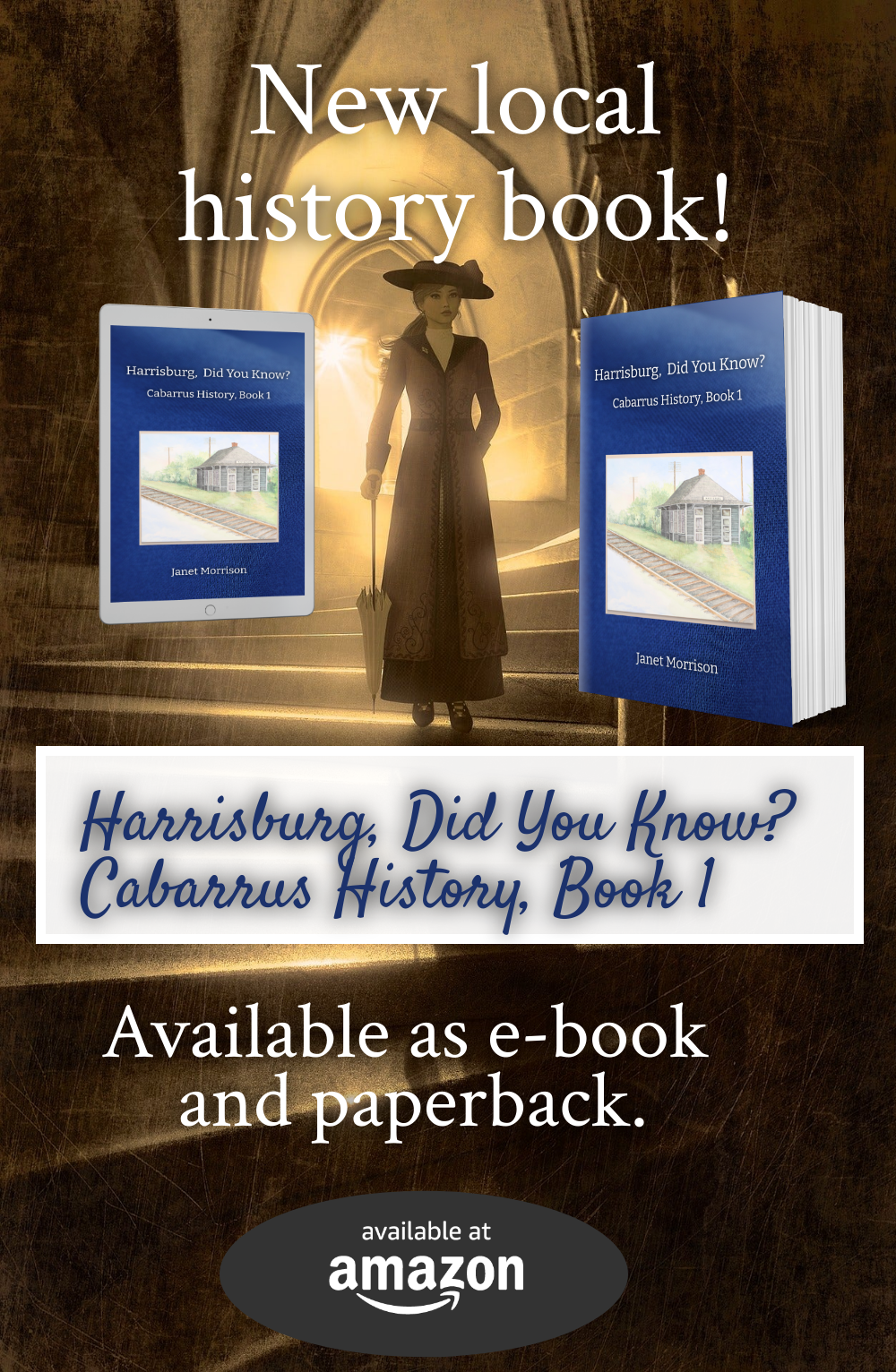
Harrisburg, Did You Know? Cabarrus History, Book 1 is selling very well at Second Look Books in Harrisburg, but I dread all future shipments of it and of Book 2, which I hope to have published by April. It sort of takes the fun out of being an author.

(By the way, don’t bother to send the very well-known print-on-demand company that prints my books photos of the condition the box is in when you receive damaged author copies or a photo of the inside of the box showing the four inches of empty space in which your $25 books were allowed to bounce around in while they were in transit for 600 miles from Indianapolis because the company doesn’t want to know such things. You have the benefit of learning from my silly assumptions that someone in the company would want to know why so many of the books they print arrive at the author’s home in unsellable condition. But if they don’t have to issue a refund to the author, I guess they really don’t need to know what the books arrived damaged.)

I spent the entire month of January formatting Harrisburg, Did You Know? Cabarrus History, Book 2, trying my best to learn how to giveaway an ebook via a very well-known email marketing service, and attempting to get a refund from the company that prints my books for 14 unsellable copies of Book 1. That left very little time for reading for pleasure, but numerous opportunities for screaming.

Photo by Simran Sood on Unsplash

What I read in January 2023

However, when I wasn’t screaming, I read part of The Shadow Box, by Louanne Rice. It was the January book for the Rocky River Readers book club. Time ran out and I didn’t get to finish it.

I tried to read one chapter in Black Raven, by Ann Cleeves every night. Unfortunately, I only got to do that for three nights before the ebook went back to the public library.

I read Chasing the Ripper: A Kindle Single, by Patricia Cornwell. She wrote it in 2014 about her research about Jack the Ripper after her book, Portrait of a Killer: Jack the Ripper – Case Closed was published. This 57-page Kindle Single was interesting even though I haven’t read her Portrait… book. Her Kindle Single is sort of a prelude to her 2017 book, Ripper: The Secret Life of Walter Sickert. The Kindle Single made me curious about the details Ms. Cornwell has pieced together lending credence to the theory that British artist Walter Sickert was indeed Jack the Ripper.

The other book I actually read in its very short entirety was The Boy, the Mole, the Fox and the Horse, by Charlie Mackesy. I can’t describe it better than the blurb on Amazon, so I’ll just quote it, in case you aren’t familiar with the wee book:   “From the revered British illustrator, a modern fable for all ages that explores life’s universal lessons, featuring 100 color and black-and-white drawings.”


What I’d thought about blogging about today

An alternative subject for today was the 89th anniversary of the ratification of the 20th Amendment to the US Constitution. I hesitated to write about that, since just two weeks ago I blogged about the ratification of the 24th Amendment in #OnThisDay: The US Constitutional Amendment that Put an End to Poll Taxes. Plus, I couldn’t seem to set aside enough quiet time to refresh my memory about the 20th Amendment enough to blog about it. Please take time to Google it and refresh your memory. That’s all I had time to do.


Until my next blog post

I hope you have a good book to read. I’m listening to The Diamond Eye, by Kate Quinn. I’m thoroughly enjoying it, and I hope to have time to finish listening to it.

Take time to relax. If you figure out how to do that while dealing with this technologically-mishandled world, please let me know your secret.

And in all seriousness, I remind you and myself not to forget the freezing, suffering, weary, much-abused-by-Putin-and-his-henchmen, and terrorized people of Ukraine.

My problems don’t hold a candle to what the Ukrainians are dealing with 24/7. Remembering that helps put my concerns in perspective. Come to think of it, I have nothing to scream about.

Janet
How can I attract readers when I write about my author’s platform?

What comes to mind when you hear author’s platform? Two-by-fours and a hammer? Actually, it’s how an author connects with his or her audience.

Photo by jesse orrico on Unsplash

I’ve been trying to build my author’s platform for years, but building a name for myself as a novelist before any of my novels are published has been a challenge. I could probably write a book about how not to build a author’s platform.

Six months or so ago I made the decision to publish my local history books before concentrating on my historical fiction writing. I reasoned that proving to readers that I’m somewhat knowledgeable about history would lend credence to my historical short stories and historical novels later. That remains to be seen, but I hope I made the right choice.

I’m not tech savvy. I tend to procrastinate, especially when it comes to doing things out of my comfort zone.

Where is my comfort zone? It’s sitting in the chair at my computer desk doing research, reading about how I can improve my writing skills, and writing.

My comfort zone is not talking on the phone, trying to figure out something clever and helpful to Tweet, Instagramming (I have an account, but I’ve never used it), Tweeting, or Facebooking. I tend to go down rabbit holes when I get on Twitter or Facebook, so I’ve been using them less and less recently. I like Goodreads.com, but I don’t interact much with other readers there.

I started writing this blog post months ago. I’ve scheduled it and rescheduled it more times than I want to admit. Today is the day for it to see the light of day. It’s all part of my journey as a writer.


An Insightful Perspective from Lisa Norman

I follow the Writers in the Storm blog (https:writersinthestormblog.com), and one post by Lisa Norman on June 20, 2022 caught my attention and fits nicely into my post today. Here’s the link, in case you want to read the entire post: Why You Want People to Hate Your Website | WITS (writersinthestormblog.com)

In a nutshell, Ms. Norman’s blog post opened my eyes to the fact that as a writer I don’t want to attract every reader and, specifically, I don’t want to attract everyone to my website. She presented four reasons, but the thing that really grabbed my interest was in the introduction. Ms. Norman said about many writers, “They have a unique take on life and story. But they also want everyone to like them.”

She then makes her point by quoting from the book of Revelation in the Bible, chapter 3, verses 14-16: “I know your works, that you are neither cold nor hot. I wish you were cold or hot. So because you are lukewarm, and neither hot nor cold, I will vomit you out of my mouth.”

It doesn’t get much clearer than that!

Instead of being neither cold nor hot – by not stating clearly on my website what I write and why I write it – no one knows enough about me and my writing to know if they like me and my writing. In that situation, they’re likely to move on to another website – one they can identify with.


Joel Friedlander’s Perspective

On WriteToDone.com, Joel Friedlander of TheBookDesigner.com wrote in the Creating Author Websites: The Definitive Guide | WTD (writetodone.com) post, “The key things to consider when building an author platform are the persona you plan to inhabit; consistency of message, branding, and tone; and focusing your efforts on the places and methods of communication your specific readers prefer.


Kimberly Grabas’ Helpful Articles on the Topic

Kimberly Grabas puts lots of helpful articles about the craft and business of writing online. One of her pieces that appeared to be written just for me was titled, “How to Build a Writer’s Platform with No Time, No Credentials and No Book.” Here’s the link to it on WriteToDone.com: How To Build A Writer Platform | WritetoDone.

Reading that article recently helped me to at least get my writer’s platform back on my radar. Here are my thoughts on the topic.


No Time?

Reading Ms. Grabas’ article inspired me to do better. At least, I did better for a little while. The first thing she addressed was “No Time.” I thought about skipping that section because time is not my problem. I have plenty of time, but I decided to read that section anyway.

Glad I did. It wasn’t about trying to write a novel while also having a full-time job, which was my assumption. You know what assuming will get you! What Ms. Grabas was talking about was committing time to building your writer’s platform.

The nitty-gritty of what she said is that I need to get out of my comfort zone and put in the work and the time. In other words, it means I need to schedule and commit to time for social media. It also means I need to toot my own horn and make my goals known.

Photo by Piotr Cichosz on Unsplash

Truth be known, I spent last summer with daily and weekly to-do lists regarding my writing. I tried to Tweet on a schedule. I hated the whole process, so I failed miserably.

On the other hand, it seems like the last couple of months have been consumed with getting my new website up and going. That means learning a lot of new technology so I can answer the website developer’s questions and supply him with what he needs from me.

Before that, I learned how to use Atticus.io to format a book to publish on Amazon. I also learned on BookBrush.com how to create a book cover, a QR code, memes, and bookmarks. I’ve learned more technology in the last six months than in my entire life up to that point. Of course, my technology bar was set very low.

More on social media later in this blog post.


No Credentials?

Next, Ms. Grabas addressed “No Credentials.” She said a writer needs to “focus on earning credibility by providing useful content to your audience.”

I think I’ve been going about this all wrong. I’ve been thinking I didn’t have anything to offer another writer. It’s not about me! I need to spend more time writing reviews of the books I like and letting those authors know I enjoy their work.

Photo by Nick Morrison on Unsplash

Writing blog posts about the books I read isn’t enough. I’ll continue to do that, but I need to write more reviews on Goodreads.com, Amazon, and public library websites.

Since I’m writing historical fiction, I need to find my target audience. To do that, I need to figure out where they hang out. I need to learn which keywords they use when they’re looking for 18th century American historical fiction and use those keywords in my blog posts and Tweets. I need to find out what my target audience wants to read and then write it. Since this is the genre I like to read, I should be able to figure it out.


No Books?

My first thought when I got to that section of Ms. Grabas’s article was, “Yes. The only books I’ve published are Harrisburg, Did You Know? Cabarrus History, Book 1; The Blue Ridge Mountains of North Carolina (a vintage postcard book); three Morrison genealogy books (along with my sister); and several booklets related to the history of Rocky River Presbyterian Church. Until I publish my first novel, how can I establish my writer’s platform?

Ms. Grabas explained that it’s not about selling books, it’s about forming relationships, defining my author brand, and locating my potential readers.

These six items were my takeaways from Kimberly Grabas’ article:

1. Define my author brand;

2. Identify the reader I’m trying to reach;

3. Update my author website, http://www.JanetMorrisonBooks.com;

4. Start building my author email list for my newsletter;

5. Determine where my target audience hangs out on social media;

6. Hang out where my target audience hangs out.


First things first

#3 – I’m in the process of having my website redesigned. I have a new direction for my writing and it was time for a fresh look. Look for the unveiling of the new website in early February.

#4 – As soon as my new website goes live, I’ll start actively building my email list. Stay tuned. There’ll be a free gift for everyone who signs up, but please wait until I announce the new website is up and running.

#1 – I hope my new website will go a long way in defining my author brand.

#2 – My reader is someone interested in history – primarily in American history. As I turn from creative nonfiction, such as my local history books, to fiction, you’ll find that I’ll concentrate on southern historical fiction. When we peel away all those layers, my reader is someone who loves to read southern historical fiction.

That leaves #5, and #6. I’m learning where that lover of southern historical fiction hangs out and I’m making an effort to hang out at the same places on social media.

In a future blog post I’ll share Colleen M. Story’s perspective on the topic of author platform and Penny Sansevieri’s thoughts on how to balance the venues I should focus my efforts on.


Since my last blog post

I’ve learned more technology as the process of having my website redesigned is progressing. My brain hurts from all this new knowledge. I hope I can remember how to do a fraction of it.

I’m still formatting Harrisburg, Did You Know? Cabarrus History, Book 2.

Harrisburg, Did You Know? Cabarrus History, Book 1 continues to sell well on Amazon and at Second Look Books in Harrisburg, NC.

Where did January go?


Until my next blog post

I hope you have a good book to read. I’m listening to The Diamond Eye, by Kate Quinn.

Don’t work all the time.

Thank you for taking the time to read my blog.

Remember the people of Ukraine.

Janet
How to Write Better Attention-Grabbing Blog Post Titles

A couple of months ago I found a free online headline improvement program. Have you noticed? The jury’s still out, though, as to how it’s working.

Funny thing is, “they” used to tell bloggers to never give a blog post a title containing more than five words. I’ve tried to follow that for years. Lo and behold, now we’re supposed to have seven- to 12-word titles. It’s hard to keep up with what’s acceptable. Who knew blogging would be so complicated and have so many rules?

This free program I’ve started using analyzes headlines and gives each one a numeric score. I’ve had some fun playing around with it and taking its “advice.” I don’t know that my higher-scoring blog post titles have attracted attention or not.

In fact, as my posts have turned more toward publicizing my writing and concentrating less on the art and craft of writing, my blog has lost some popularity. I continued to attract new followers at a slow but steady rate, but my posts are getting fewer “likes” from other bloggers.

My subtle change in direction was a decision I had to make. Was my purpose as a writer to attract the attention of other writers or was it to attract readers?

I hope to continue to attract the attention of other writers but, if I’m going to establish myself as a writer I must find and attract readers.


Headline Studio by Co-Schedule

This isn’t an ad for Headline Studio by Co-Schedule, and I’m getting no compensation for writing about the program in my blog. This is the program I’m using. It’s been a real eye opener.

The program analyzes the headlines or titles you enter and gives you a score from 0 to 100. Today’s blog post title rated a moderately good score of 67, whereas the blog post title I used on January 9, 2023 was my all-time high at 80.

Photo by Annie Spratt on Unsplash

Things taken into consideration in rating title include strength of words, number of characters, number of words, use of emotional words, and readability. The readability aspect is the one that troubles me enough. Some blog post titles I’ve created receive low scores because I used words that someone reading on a fifth-grade level would not understand. How sad is that?

Even sadder is the rating I got when I plugged in today’s blog post title. Read it again. Do you find it difficult to understand? The Headline Studio program gave me the following analysis for this title: “Your headline reads at a 10th grade or higher reading level, which may make it difficult for many readers to comprehend. Switch out the complex words in your headline to improve readability.”

To that, I say, “You must be kidding!” If you can’t understand the title, you probably wouldn’t be able to read my blog. It’s a sad commentary on the state of education.


#OnThisDay:  Operation Desert Storm Began in 1991


Since my last blog post

My book sales are going well on Amazon and at Second Look Books in Harrisburg, NC. Here’s a photo I took one day of my book on the shelf with books by other local authors.

I took the picture the only day I visited the store and it wasn’t sold out! Notice that my book was displayed next to Teachers are Amazing: The ABCs of Teachers, by Tierney Fairchild.

Harrisburg, Did You Know? Cabarrus History, Book 1 on the shelf at Second Look Books in Harrisburg, NC!

If you’re a teacher, know a teacher, or aspire to be a teacher, I recommend Tierney’s book to you. In addition to Second Look Books, her book is also available on Amazon. Tierney is a lifelong educator and is dedicated to the profession.

Harrisburg, Did You Know? Cabarrus History, Book 1, by Janet Morrison, next to Teachers are Amazing! The ABCs of Teachers, by Tierney Fairchild at Second Look Books in Harrisburg, NC!
I’ve been busy this week writing content for the “Home,” “Books,” and “History in Photographs” pages on my website that’s being redesigned. I continue to learn more technology. I created a folder on Google Drive to house the media kit for Harrisburg, Did You Know? Cabarrus History, Book 1. I know this sounds easy to many of you, but it was another milestone for me. I can’t wait to unveil the new website… soon!

I want to offer a free e-novelette to people who sign up for my email list when the new website goes live. My next hurdle is learning how to do that!


Until my next blog post

I hope you’re reading a good book. I’m reading The Shadow Box, by Louanne Rice for Rocky River Readers this month. I’ve also started reading Raven Black, by Ann Cleeves.

Thank you to each and every one of you for supporting me and my new local history book!

Remember the freezing people in Ukraine.

Janet
2022 is in the Rear-View Mirror

2022 has been a good year for me. Coming out of the worst days of the Covid 19 Pandemic has given me a chance to try to get back into my normal routine.

Being able to once again go out in public (except to medical facilities) without wearing an N-95 mask is a nice change from 2020 and 2021. It still feels odd to eat inside a restaurant or travel. All the things I used to take for granted are more appreciated now.

2022 was a year of accomplishment for me as I published Harrisburg, Did You Know? Cabarrus History, Book 1 the last week in November. It’s been exciting to see it well-received and appreciated.

Publishing the book gave me a sense of accomplishment I didn’t expect as I was able to format it and design the cover. I even learned how to make a QR Code that will take people to my website! I still have trouble remembering what the “Q” and the “R” stand for, but I’m making progress. Those are small technological accomplishments in the big scheme of things, but they are huge for me!

The formatting of Harrisburg, Did You Know? Cabarrus History, Book 2 is coming along nicely, so watch for it perhaps in February. I’m on my own schedule for that, so that lessens the pressure of meeting someone else’s deadline.

I hired a company to redesign my website. I’ve now seen the home page and the “about” page, so it’s coming together. I look forward to unveiling the new website in a few weeks. The URL will still be JanetMorrisonBooks.com.

I’ve made progress working on my family genealogy and putting the information in a software program that will allow me to easily share the information with others in the family. They might not appreciate it now, but I’d like to think they will later.

The decluttering I did early in the year is but a distant memory now. (Why did I keep this stuff?) My writing projects sidetracked me. I must make time for more decluttering in the new year.

I’ve read some good books this year, but my writing has derailed my reading list the last several months. Too many books, not enough time!

The historical short stories I’m writing have taken a back seat to the Harrisburg local history books, but I look forward to turning my attention back to them now that Book 1 is out. In fact, I edited one of my stories on Saturday.

The older I get, the more I realize I’m racing against the clock to get all my projects finished. Too many interests and projects, not enough time!

As you look back over 2022, I hope you remember the good times and all your blessings. I can’t forget the sad times or the difficult times but, when I stop and think, I know I’ve been truly blessed this year. I hope you feel the same way about 2022 as we prepare for a new year.

Until my next blog post

I hope you have a good book to read! I’m reading a book of poetry by Ray Griffin. The name of it is Threshold. I’ll write more about it in my next blog post.

It’s been an unusually cold past week here in the United States. I hope you’ve stayed safe and warm wherever you are.

Remember the cold and brave people of Ukraine.

I hope you’re having a nice holiday season, no matter your beliefs.

Janet

Reflections on America’s Thanksgiving Day

There are many things that make the United States of America a special place. One of those is the Thanksgiving holiday we celebrated last Thursday.

Thanksgiving Day is a wonderful concept. It’s a holiday most workers get to enjoy as businesses close for the day. It’s a day set aside to reflect on the things you’re thankful for. It’s a day to gather with friends and relatives. It’s a day on which many of us eat more than we should.

Photo by Diliara Garifullina on Unsplash

It’s a day most of us think back on the Thanksgiving Days in the past. We remember loved ones who are no longer here. We remember the aromas in the kitchens of our childhoods.

Even in the chaos that sometimes accompanies large family gatherings on Thanksgiving Day, most of us are prompted to take a moment to think about our blessings.

Life is hard. Things – good and bad – happen. Illness and loss set us back, change our plans, and sometimes change the trajectory of our lives. The life we envisioned isn’t how things turned out.

One of the things I was thankful for on Thanksgiving Day last Thursday was the opportunity life has given me to pursue whatever interests I’ve had. Illness derailed my professional life when I was a young adult, but God has continued to open doors for me. I’ve learned from every experience.

There’s an old adage that says “you can’t teach an old dog new tricks,” but I’m living proof that you can.

I’ve heard it’s good for one’s brain to learn new skills. My brain must be about to explode. I’ve really been stretching its limits lately.

Photo by Diliara Garifullina on Unsplash

Since my blog post last week, I created a cover for a paperback nonfiction book. And it’s not just any old cover. The back cover sports a QR Code I created for my website! Not bad for this 69-year-old non-techy person.

Those of us fortunate to reach that age need to keep reinventing ourselves for as long as physical and mental health and our life circumstances permit. It’s easy to take those things for granted until they aren’t there.

Since my last blog post

I continued to work toward the publication of Harrisburg, Did You Know? Cabarrus History, Book 1. I continued to format and proofread Harrisburg, Did You Know? Cabarrus History, Book 2.

I revisited a short story I wrote several months ago. It’s beneficial to let a piece of writing rest for a while and then read it with fresh eyes and tweak it where it can be improved. I hope to publish a collection of short stories in 2023.

Until my next blog post

I hope you have a good book to read. If I finish reading a book in November, I’ll blog about it next Monday. Writing and learning technology left little time for reading this month.

Remember the brave, freezing people of Ukraine.

Photo by Blake Dunn on Unsplash

Janet

To Nitpick or Not to Nitpick? That is the Question.

Are you as surprised as I am to learn that the word “nitpicking” first came into use in 1956? That means I’m older than the word nitpicking!

          It also means I can’t use “nitpick” or any form of the word in my historical fiction writing.

Nitwit

          One of my characters wanted to call another character a nitwit. That’s what led me to my discovery about nitpicking. It turned out that I can’t use nitpick, nitpicking, or nitwit in my historical fiction writing, unless I move my stories from the 1760s to the 1960s. That’s just not possible, unless I plunge my characters into a time warp.

          In case you care, “nitwit” wasn’t in common usage until around 1922. I don’t propose that you or I call people hurtful names, but I can’t help what my fictional characters do or say.

Guidelines for historical fiction

          There are words we use in everyday life without giving (or needing to give) any thought to their origins. That would make life beyond tedious. That’s not what I’m talking about here.

Photo by Brett Jordan on Unsplash

          As a writer of historical fiction, I must be careful not to include a word not in common usage at the time of my short story or novel. If one of my 18th century characters used the word “nitwit,” you might not notice; however, if one of my 18th century characters said “telephone” it would yank you right out of the story and it would ruin my credibility. It is through that process of checking on certain words that I’ve happened upon many surprises.

          My surprises fall all along a spectrum. There are words such as nitpick that I would’ve guessed had been in use for centuries. On the other hand, I didn’t expect that the term “fast lane” was in common use before the year 1050. (That’s not a typo. The year 1050.) After seeing that while I was looking up a different word, I began to doubt myself and wondered if I needed to look up every word I wrote.

          Of course, that’s not practical. By writing about this today I’ve probably opened myself up to a great deal of scrutiny when my historical short stories and my first historical novel are eventually published. Knock yourself out! I’m doing the best I can.

Concerted effort

          Today’s blog post falls into the same quirky category as an earlier one. In the title of one of my 2018 blog posts I asked if an individual can make a concerted effort. The point of that post was that by its very definition it takes two or more people working together to make a concerted effort.

          One of my blog readers took me to task on that one. She insisted that she always made a concerted effort in everything she did. She seemed insulted by my blog post and missed my point.

          It wasn’t my intent to insult anyone or hurt anyone’s feelings. I was merely pointing out a nuance in the English language. I’m attempting to be a writer. It comes with the territory.

          Words are fascinating!

Until my next blog post

Keep reading books.

When you read a good book, be sure to tell the author by writing a review or even writing a letter to the author. You should be able to reach them through their website.

Remember the brave people of Ukraine. It saddens me that only 49% of registered voters in North Carolina voted in the mid-term election last Tuesday. Democracy is a fragile thing. We don’t have to share a border with Russia to know that.

Thank you for reading my blog today! I hope to see you here again next Monday.

Janet

Using ALL your senses in your writing

One of my favorite quotes about writing is this one from Russian playwright and short story writer, Anton Pavlovich Chekhov: “Don’t tell me the moon is shining, show me the glint of light on broken glass.”

I included that quote when I touched on the topic of writing all the senses in my February 14, 2022, blog post, Can Movies Help You Write? Today I’m going a bit deeper into the subject.

As an aspiring novelist, I have a lot to learn. To try to remember all the things a scene needs to include can be overwhelming. It’s not enough to stay in the head of your point-of-view character at all times. It’s not enough to be cognizant of pacing. It’s not enough to remember to throw in a red herring once in a while or to vary the length of your sentences and paragraphs. It’s not enough to include all characters’ body language (but only what the point-of-view character notices.) A writer must also remember to include what the point-of-view character sees, hears, smells, tastes, and touches.

In addition, a writer today is told to keep in mind that today’s reader has a short attention span. If that’s true, I probably lost most of my audience midway through the previous paragraph.

For those of you still reading this blog post, I’ll continue. I say all this (1) to make fiction readers appreciate some of the work it takes to write a novel you’ll enjoy; and (2) to lead up to a recommended blog series you might benefit from if you’re studying the art and craft of writing.

In 2020, Joan Hall wrote a series of blog posts about using all the senses, including the 6th Sense, in your writing. Here are the links to Ms. Hall’s six blog posts about the senses:

Sight: Photo Credit: Davidson Luna on Unsplash.com

Post number one in Joan Hall’s Story Empire blog series about the senses: https://storyempirecom.wordpress.com/2020/02/14/using-the-five-senses-sight/.


Smell: Photo Credit: Motunrayo Babtunde on Unsplash.com

Post number two in Joan Hall’s Story Empire blog series about the senses: https://storyempirecom.wordpress.com/2020/02/26/using-the-five-senses-smell/.

Taste: Photo Credit: Engin Akyurt on Unsplash.com

Post number three in Joan Hall’s Story Empire blog series about the senses: https://storyempirecom.wordpress.com/2020/03/11/using-the-five-senses-taste/.

Sound: Photo Credit: Marcus Woodbridge on Unsplash.com

Post number four in Joan Hall’s Story Empire blog series about the senses: https://storyempirecom.wordpress.com/2020/03/27/using-the-five-senses-sound/.

Touch: Photo Credit: Jocelyn Morales on Unsplash.com

Post number five in Joan Hall’s Story Empire blog series about the senses: https://storyempirecom.wordpress.com/2020/04/13/using-the-five-senses-touch/.

I couldn’t find a photo to represent the Sixth Sense in the way I wanted to here, so use your own imagination for the sense of knowing in advance that something is going to happen. Have you experienced it? I have, and it can be unsettling.

Post number six in Joan Hall’s Story Empire blog series about the senses: https://storyempirecom.wordpress.com/2020/04/29/the-sixth-sense/.

I might be accused of cheating here by giving you the links to Joan Hall’s blog posts about writing the senses, but she’s far more experienced in writing and more knowledgeable of the subject than I.

The Internet has made it possible for writers to learn from others in ways that weren’t possible before the 1990s. It gives us a marvelous platform on which to share ideas and give each other feedback. I’ve learned a great deal from writers like Joan Hall through blog posts and online articles.

I hope you find Joan Hall’s blog series helpful if, like me, you’re learning to write. I started to say, “write fiction,” but creative nonfiction also entails using all the senses.

I felt vindicated when I read Ms. Hall’s article about the sixth sense, for I was already using it in my The Doubloon novel manuscript. I was pleased that I thought to do that before being told that I should consider it.


Since my last blog post

I took a short break from writing last week to work on a project I started 20 years ago for my church. It involves taking photographs of the grave markers in four of the church’s cemeteries. When a congregation has a 271-years history, it can end up with multiple cemeteries on the different sides of various creeks.

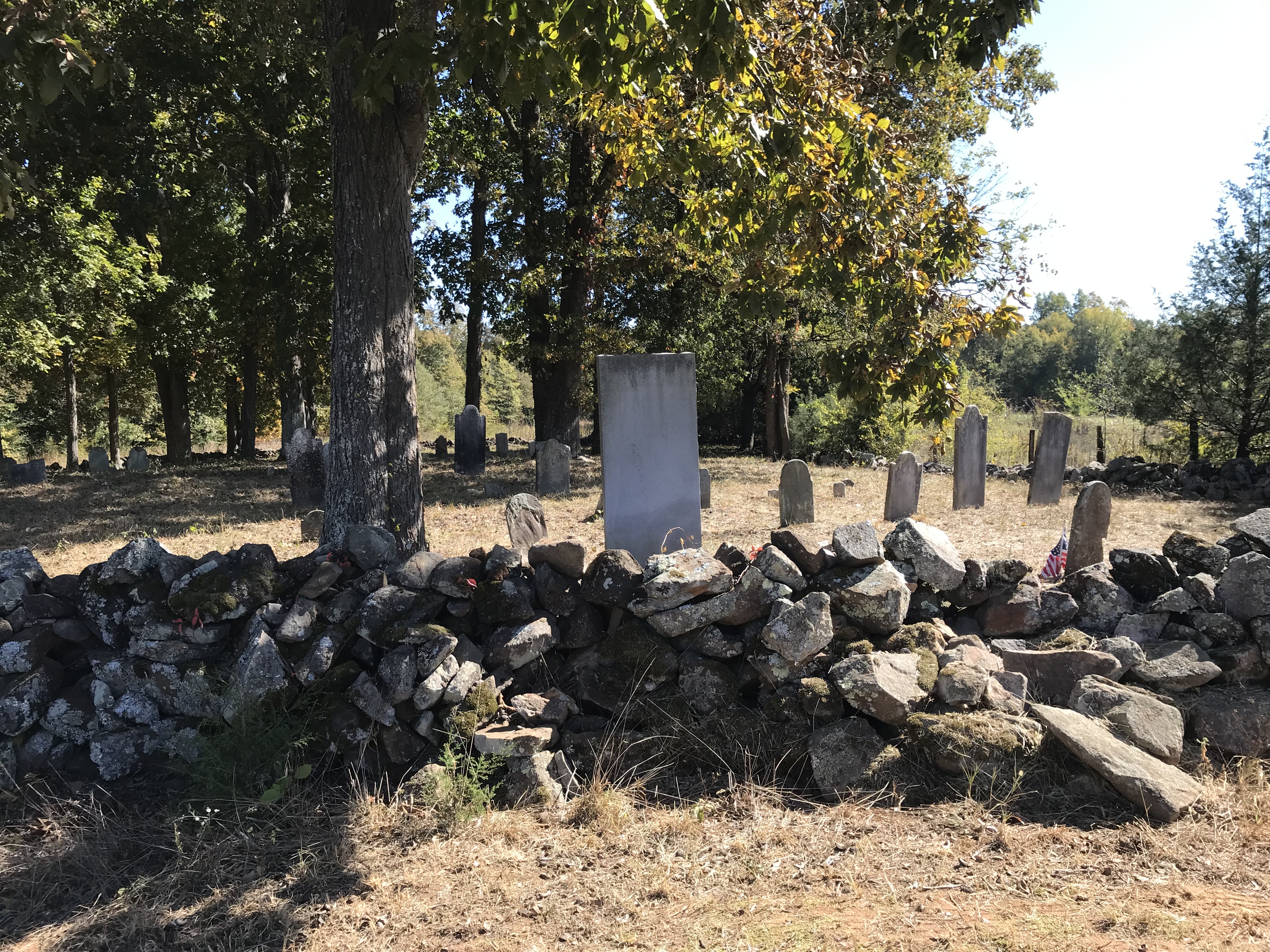
Old Rocky River Graveyard, October 2021

Digital photography allows me to read the inscription on many of the markers that cannot be read in person due to the ravages of time. March and October are the best months to take pictures in these rural cemeteries due to the angle of the sunlight and the number of large trees that surround and have grown up inside them. I’m taking advantage of the month of March to get back to a project I’ve neglected for a few years.

My project might sound morbid to some of you, but I don’t see it like that at all. Some of my immigrant ancestors are buried in each of the four cemeteries, so I feel like I’m honoring them in a small way by making a permanent record of the inscriptions on their grave markers.


Until my next blog post

I hope you have a good book to read — one that you can’t wait to get back to.

If you’re writing, painting, or endeavoring to do anything creative, I hope you produce some rewarding and satisfying work this week.

Stay safe and well. Please come back next week to see what my next blog post is about.

By the way, on Wednesday, pause to consider that it’s National Book Smuggler Day in Lithuania. Here’s the scoop:

In 1864, Russian authorities outlawed the printing of books using the Latin alphabet in Lithuania and tried to force the Cyrillic alphabet on Lithuanian speakers. A newspaperman, Jurgis Bielinis, created an underground network to get Lithuanian books smuggled into the country. Some who were caught were banished to Siberia or shot in the head. The ban lasted until 1904 but is still remembered on March 16, which is the date of Bielinis’ birth. You can find more about this online. It’s an inspiring bit of history I wasn’t aware of until recently.

There are two lessons we can learn from this: (1) The Russian government never stops being Russia; and (2) Regardless of what a book contains, it’s never a good idea to withhold access to it, for book banning and the banning of knowledge never have positive results.

May the free world continue to support the people of Ukraine.

Janet

Trying to Get Novel Structure Right

Several times in my blog posts in December I mentioned that I was working on novel structure. Thanks to the writings of K.M. Weiland online and in her books, the light bulb finally came on in my head. Everything fell into place and made sense. At least, I think everything fell into place.

As a reader of fiction, I just knew when I liked a story and when I didn’t. I never gave the structure of a novel any thought. I didn’t know a novel was supposed to hang on a framework. Call me slow, but I just didn’t.

Over the years, I’ve read about novel structure; however, I started writing a novel without giving structure any thought. I thought the words would just naturally flow in chronological order and, when I had written 100,000 or so of them, it would be a novel.

That’s an over-simplification, but it’s not too far off the point.

Photo credit: Alain Pham on unsplash.com

I read numerous articles that said a novel has to have a beginning, a middle, and an end. Well, duh! Of course. How hard can that be, right?

But there’s a lot more to novel structure than that – and I’m still learning.

I worked on the manuscript for the novel mentioned above for more years than I want to admit. (The working title is either The Spanish Coin or The Doubloon.) Then, I made some major changes in the story because what I thought was a fact turned out to be a legend. There was an ounce of truth in it, but I didn’t want to perpetuate a myth.

I didn’t write for about a year. I didn’t think I could face starting over, but that’s what I did early in 2019. New story, new characters, same old location, and same time period.

Yet again, I plunged into writing without any structure. I wrote a long and detailed outline and thought I had everything right. Some 90,000 words later, in December 2021 the concept of novel structure kept gnawing at me. It wouldn’t let me go until I put everything else aside and focused on it.

When I thought I had a fairly good grasp of novel structure, I set about to compare it to my manuscript. I was relieved to discover I had some things in the correct order and the correct place. There were some scenes, though that had to be moved. That was a scary proposition! Thank goodness for the “cut and paste” buttons on the computer. If this had happened to me in 1990, I probably would have just thrown the manuscript and my typewriter in the trash.

So, what are the basics of novel structure, as I understand them?

Photo credit: Ricardo Gomez Angel on unsplash.com

Remember – I’m still trying to grasp all the details and nuances. Don’t use me as your source. Please use K.M. Weiland’s books and online articles as your source if you plan to follow this structure to write a novel. Here’s the link to her website: https://www.kmweiland.com/book/structuring-your-novel/. Here’s the link to her series of online articles about novel structure: https://www.helpingwritersbecomeauthors.com/secrets-story-structure-complete-series/.

The following percentages are approximations, and the explanations are very brief and written to the best of my understanding.

Hook – Close enough to the beginning to “hook” the reader.

Inciting Event – Approximately 12% into the novel. Introduction to the main conflict.

Key Event – The protagonist’s response to the inciting event.

1St Plot Point – Approximately 25% into the novel. Ms. Weiland calls this the “Doorway of No Return.’ This is when the protagonist decides she’s all in. There’s no turning back.

1st Pinch Point – Approximately 37% into the novel. This is a small turning point. The protagonist is “pinched” by the force of the antagonist.

The Midpoint/2nd Plot Point – Approximately 50% into the novel. (No surprise there.) Internal and external conflict come together and the point of the story comes together. New information is revealed to the protagonist resulting in a paradigm shift. She has a clearer understanding of the threat against her.

2nd Pinch Point – Approximately 62% into the novel. The protagonist realizes like never before just what is at stake.

3rd Plot Point – Approximately 75% into the novel. Ms. Weiland says this includes the “dark night of the soul.” The protagonist must decide if she has it in her to keep fighting for her goal. She might make some progress toward reaching her goal, but then there will be a “low moment” where a lie she’s been telling herself all this time will die. She must face the facts.

Climax – Approximately 88% into the novel. This is where the protagonist confronts the antagonist and we find out if she achieves her goal.

Resolution – Loose ends from the story are tied up, unless the book ends with a cliffhanger to entice the reader to want to know more about this character.

It almost takes the fun out of writing a novel! Writing is hard work, but I’m happiest when I’m writing.

Where my novel stands now

As I mentioned in last week’s blog post, I’ve been inspired to write a novel series. After brainstorming the backstories of my protagonist in The Spanish Coin/The Doubloon, I realized her backstory would make a good novel.

Photo credit: Aaron Burden on unsplash.com

I don’t outline my writing projects in a rigid outline form like I was taught in school. I outline in paragraphs, throwing in bits and pieces of dialogue. The first draft of my outline for “Book One” now stands at nearly 4,000 words, and I’m eager to expand that into a scenic plot outline. (That outline is also in paragraph form, but gets into more detail than the first outline.) Next, comes the writing of Book One.

Book One takes my protagonist back to her childhood in Virginia, moving to Salisbury, North Carolina in 1766, and meeting her first husband. The Spanish Coin/The Doubloon will be the second book in the series. I have the bare bones of the third, fourth, and fifth books planned.

Call me overly optimistic, but that’s where things stand today. If my novel(s) never see the light of day, at least I’ve had the utter enjoyment of researching and writing them.

Since my last blog post, in addition to the above outlining

I’ve done a lot of decluttering since last Monday’s post. I’m getting to the age when I need to think about the fact that someday someone is going to have to dispose of my stuff. I need to make that task as easy for him/her/them as I can. I organized my stash of fabric and filled one large plastic storage bin with “unfinished sewing/quilting projects.”

I scanned some old photographs using the Photomyne app on my cell phone. I watched an hour-long webinar about organizing a large collection of photographs.

It seems like half the things I do these days are to decrease the amount of “stuff” my niece and nephew will have to deal with when I’m gone. I’m not trying to be morbid, but the closer I get to 70 the more I need to realize I’m not going to live forever. I’ve already lived longer than my father.

Until my next blog post

I hope you have a good book to read.

I hope to spend as much time writing as I do reading in the coming week. I hope you also have productive creative time.

Stay safe and well. Let me know what you’ve been doing.

Janet

Some Odd Books Read in October 2021

The titles of the books I read in September are way off the beaten path. Since I’m writing a novel that includes a murder, I need to make sure I have certain details as accurate as possible.

Actually, I want to get all the details right, but my research and study in October concentrated on (1) the details about the dead body in the first chapter; (2) the ways in which the murderer tries to present himself as innocent; and (3) writing in deep point-of-view.

Hence, I read the books listed below. They aren’t exactly the kind of books one wants to curl up with on a lazy Sunday afternoon, but they were helpful (or, not-so-helpful) for what I needed them for.

Acting: The First Six Lessons, by Richard Boleslavsky

I checked this book out from the library in hopes that it would give pointers on how an actor “gets into character.” It did not.

In order to write a novel in deep point-of-view, I must get into character. I must write everything through the ears, eyes, and emotions of each of my point-of-view characters.

Badass Acting, by Tice Allison

I had the same hopes for this book. It failed to deliver.

Seven Pillars of Acting, by Sonya Cooke

I thought surely this acting book would include what I was looking for, but it didn’t.

I think I know what I’m doing in writing deep point-of-view. I just thought reading pointers on how an actor gets into character might be helpful. The best way to grasp this element of writing is to read the work of authors who do it well.

All these acting books might be helpful to someone learning the art of acting. They just didn’t cover what I was looking for.

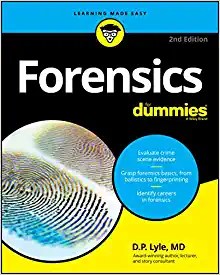
Forensics for Dummies, by D.P. Lyle, M.D.

Forensics for Dummies, by D.P. Lyle, M.D.

This book contained a bit of technical information I needed to know about the timeline for the body in my novel.

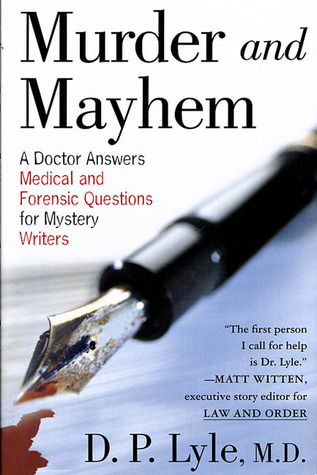
Murder and Mayhem: A Doctor Answers Medical and Forensic Questions for Mystery Writers, by D.P.

Lyle, M.D.

Murder and Mayhem: A Doctor Answers Medical and Forensic Questions for Mystery Writers, by D.P. Lyle, M.D.

Like Forensics for Dummies, this book had bits and pieces of helpful information.

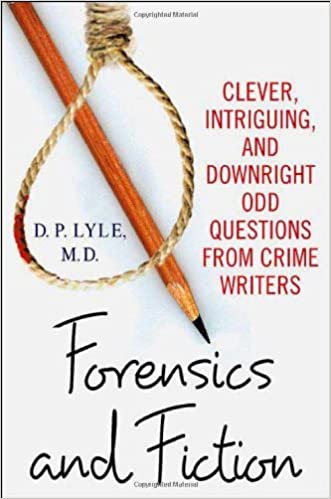
Forensics and Fiction: Clever, Intriguing, and Downright Odd Questions from Crime Writers, by D.P. Lyle,

M.D.

Forensics and Fiction: Clever, Intriguing, and Downright Odd Questions from Crime Writers, by D.P. Lyle, M.D.

You’ve maybe noticed a pattern here. Dr. D.P. Lyle is the leading expert in the field of forensics in writing books for writers and other laypersons.

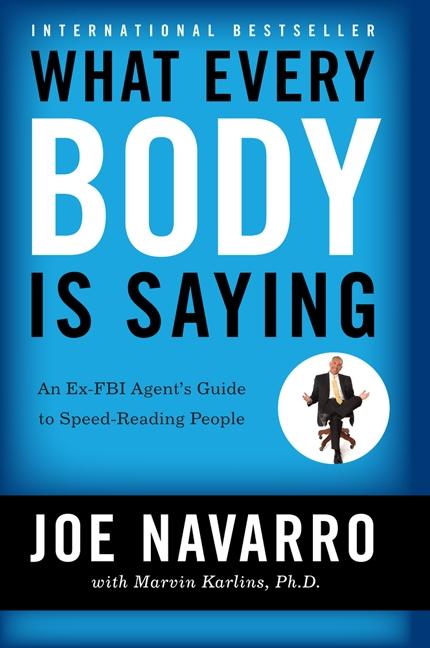
What Every BODY is Saying, by Joe Navarro with Marvin Karlins, Ph.D.

I wanted to read this book to get pointers on how to tell if a person is lying. I wanted to incorporate “dead giveaways” in the words, body language, and behavior of the murderer in my novel. It was an interesting book. It gave some suggestions, but the bottom line was that you need to read more than one book to become an expert in spotting a lie.

What Every BODY is Saying: An Ex-FBI Agent’s Guide to Speed-Reading People, by Joe Navarro with Marvin Karlins, Ph.D.

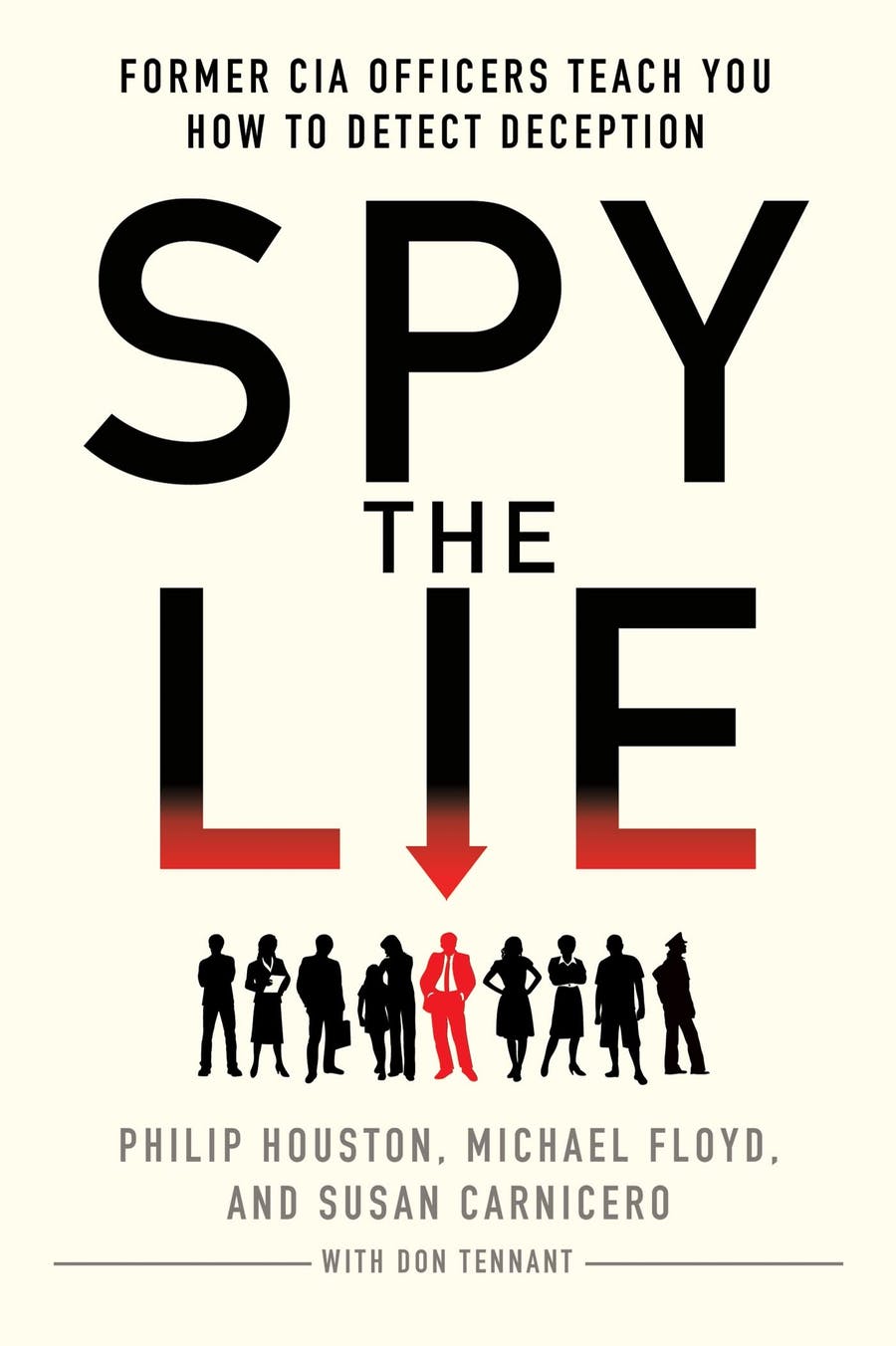
Spy the Lie, by Philip Houston, Michael Floyd, and Susan Carnicero, with Don Tennant

This book is very much like What Every BODY is Saying, by Joe Navarro. It’s a little more indepth but gives the same admonitions that you need to do more than read a couple of books in order to become an expert at telling when someone is lying. I don’t need to be an expert, so I think I’ll end my research there.

Spy the Lie: Former CIA Officers Teach You How to Detect Deception, by Philip Houston, Michael Floyd, and Susan Carnicero, with Don Tennant.

I won’t give any examples from the book because you can’t take just one or two hints and make a definitive decision about whether a person is lying to you. I hope most of us rarely are lied to, so it’s not a huge problem for us. On second thought, if we watch certain TV networks, are on Facebook, or hear any political campaign ads, we’re lied to every day.

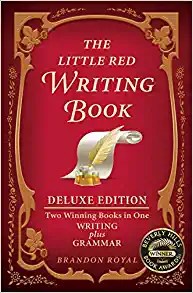
The Little Red Writing Book, by Brandon Royal

The Little Red Writing Book, by Brandon Royal

The most helpful part of this tiny book is the pages of often-made-mistakes in grammar. For instance, you’d think by now I’d know when to use “who” and when to use “whom,” but I always have to look it up when I’m writing. When I’m talking, I probably get it wrong every time. Now I have a cheat sheet.

Breathing Life into Your Characters: How to Give Your Characters Emotional & Psychological Depth, by Rachel Ballon, Ph.D.

You probably recognize the name of this book, since I’ve referred to it a number of times in my blog this summer and fall. I started reading and working my way through it early this summer.

Breathing Life into Your Characters: How to Give Your Characters Emotional & Psychological Depth, by Rachel Ballon, Ph.D.

The online writing course I took for eight weeks pulled me away from it, but I did finish it in October. I highly recommend it to anyone writing their first novel.


Since my last blog post

I got my Moderna Covid-19 booster shot on Tuesday. I’m happy to still be fully-vaccinated. I just wish all the people I’d like to be around at church, etc. were vaccinated. That’s not going to happen, since the Covid-19 vaccine has been politicized in the United States. Although I still wore a mask, it was nice to get back to in-person worship yesterday after a long absence.


Until my next blog post

I hope you have a good book to read. At the recommendation of one of my Australian blogger friends, Chris Andrews, I’m finally reading The Silk Roads: A New History of the World, by Peter Frankopan. It’s excellent and a nice change of pace after the books I read in October.

Note: November is National Novel Writing Month, National Family Literacy Month, National Memoir Writing Month.

Note: Today is National Family Literacy Day and Author’s Day.

Wherever you are, thank you for reading my blog. Have you read any odd books or good books lately?

Janet

Giving God the Right of Way

I plan. I make lists. I find great satisfaction in checking off the items I complete on my to-do list. There are some problems with this.

First, I always think I can accomplish more in a day than I can. This leads to frustration and feelings of guilt.

Second, I don’t allow for “down days.” Even if I didn’t have chronic fatigue syndrome and fibromyalgia, having a rigid daily to-do list would be foolish.

Third, and most importantly, I tend to leave God out of the process.

If you followed my blog this summer, you know I’ve gone through some upheaval with the novel I’m writing. I started writing it more than a decade ago. I honestly don’t know when I started it. It languished on my computer for the last several years.

In July, I decided it was “no or never.” I hired a professional editor to critique the first 50 pages of my 303-page manuscript. The feedback I got from her was constructive and attention-grabbing. At the same time, it was disheartening yet exactly what I needed to hear.

A failed plan

That detailed critique prompted me to stop procrastinating and start focusing my attention and energy on learning the skills I needed to learn so I could finally finish that novel. I made a plan. I made a daily (Monday through Saturday) to-do list for what to study and what to practice or write each day. I thought by not working on my book on Sundays I was doing the Christian thing. I would give myself Sundays off and, thereby, do what was pleasing to God. That worked fairly well for a couple of weeks.

But guess what happened. I became a slave to my plan. It was my plan. I thought I had been clever to create this plan with its one-day-a-week set aside not to work on my writing. By doing so, I thought I was “keeping the Sabbath.”

It was my plan, but it was wearing me out.

Photo credit: Glenn Carstens Peters on unsplash.com

I fell behind on August 16. I’d assigned myself too much reading, too much writing, and way too much nuts-and-bolts work on my novel regarding details about my characters.

I’d set myself up for failure.

By pushing myself to do everything on my list, I threw myself into a chronic fatigue syndrome relapse for the next three weeks; however, I read something on August 17 that got my attention. It was the third chapter in Seven Things That Steal Your Joy: Overcoming the Obstacles to Your Happiness, by Joyce Meyer.

Led by the Spirit

Ms. Meyer wrote the book in 2004. I’d bought it as a used book many years later and kept meaning to read it. I read the first chapter on August 15 and the second chapter on August 16. It was “on my list” to read the third chapter on August 17.

Little did I know that God had a reason for leading me to Chapter Three on August 17. I don’t believe in happenstance when it comes to such things. The title of that chapter is “Joy Keeper: Be Led of the Spirit.” By “Spirit,” Ms. Meyer is referring to the Holy Spirit.

The Holy Spirit is our Helper, if we are just open to It. From the first sentence in Chapter Three (“One of the most dynamic ways to keep our joy is to allow the Holy Spirit to lead us in the way we should go.”) to the last sentence in the chapter (“God will write His laws on your heart, then you won’t need reminders to keep your joy.”), that chapter was exactly what I needed to read in the emotional and physical place I was in on August 17.

It didn’t take me long to realize that my six days-a-week reading and writing plan – as detailed and as carefully- and methodically-planned as it was – lacked one thing. It lacked the most important thing. It lacked God. I spent hours working out a plan that I thought would lead me to a point next February when I’d have all this knowledge in my head and be ready to rewrite my novel’s outline and then start rewriting the manuscript.

But aside from setting aside the Sabbath to not work on my novel or my writing skills, I’d left God and the Holy Spirit out of my grandiose plan. I shredded my plan.

What’s next?

Don’t get me wrong – I still believe in having a plan, but what’s new is that I want to start each day by seeking God’s will for me that day. He may want me to tackle the next item on my novel “to-do” list, or He might have a better “to-do” list for me for that day.

I still believe God wants me to write. He might want me to write the novel I’ve had in my head and on paper for 10+ years. He might have an entirely different novel in His plan for me. He might have something else altogether in store for me.

Ms. Meyer wrote in the third chapter of her book, “If you keep your plan before the Lord, you must be ready to let Him change anything at any time. If you do this, your path will always be right and prosperous.”

She also wrote, “… and we will never find joy if we think we have to know everything before we take our first step in the direction He is leading us.”

Today is the last class in the “Eight Weeks to Writing a Commercially Successful Novel” online course I started on September 6, so it’s time for me to create a new plan.

This time, though, I’ll try to be reasonable, and I’ll try to remember to seek God’s will every morning and be ready to ditch my plan for His plan.

Since my last blog post

I’ve always been a pack rat. I keep things “because I might need it someday.” I’ve transitioned into, “I’m never going to need this.” Last week I concentrated on my file cabinets. That alone dates me. I’ve purged file folders of all descriptions.

I don’t need the paperwork for the car insurance I had in 1995. I don’t need most of the recipes I kept in the 1980s. I don’t have the energy to do much cooking. Plus, I’m trying to eat healthier in 2021 than I did in 1981. The list goes on.

This is a work in progress, but it feels good to let go of some things.

Until my next blog post

I hope you have a good book to read or productive time if you’re writing one.

Whatever season you’re transitioning into where you live, try to enjoy the gift each day is. This is a challenge for me. You know I don’t like cold weather.

Thank you for taking time out of your day to read my blog post.

I’ll leave you with this short sentence from the third chapter of Joyce Meyer’s book: “To walk in the presence of God, we must give the Holy Spirit the right of way.”  I love that!

Until my next blog post – which I have planned for next Monday – I hope you and I both give the Holy Spirit the right of way.

And wait on tiptoe to see what happens.

Janet