I write southern historical fiction, local history, and I've written a devotional book. The two novels I'm writing are set in Virginia and the Carolinas in the 1760s. My weekly blog started out to follow my journey as a writer and a reader, but in 2025 it has been greatly expanded to include current events and politics in the United States as I see our democracy under attack from within. The political science major in me cannot sit idly by and remain silent.
My first blog post about an idiom was on January 25, 2021. It was #Idioms: Reading the Riot Act. Today’s blog post is about the idiom “as all get out.” It’s an expression I don’t hear as much as I used to.
When was it first used?
Other people have researched this, and I’ll rely on their findings. It appears that the expression
“as get out” was first used by American writer Joseph C. Neal in his Character Sketches in 1838.
In that piece, he wrote, “We look as elegant and as beautiful as get out.”
“As get out” sounds odd today because we know the expression as “as all get out.” Without the “all,” it just sounds strange. Or, perhaps you’ve never heard the expression before, so it sounds strange to you either way.
What does it mean?
The idiom “as all get out” is used to describe something taken to it’s extreme.
When it became “as all get out”
Credit goes to American author Mark Twain for adding the word “all” to the expression. In the 38th chapter of Huckleberry Finn, Huck, Tom Sawyer, and Jim are working on a coat-of-arms. Tom says to Huck, “We got to dig in like all git-out.” Of course, Twain wrote in dialect in that novel.
It would be interesting to know if Twain coined the new phrase. Perhaps people were already saying, “All get out” and Twain just incorporated it into his writing in 1884.
Some examples of how the idiom is used
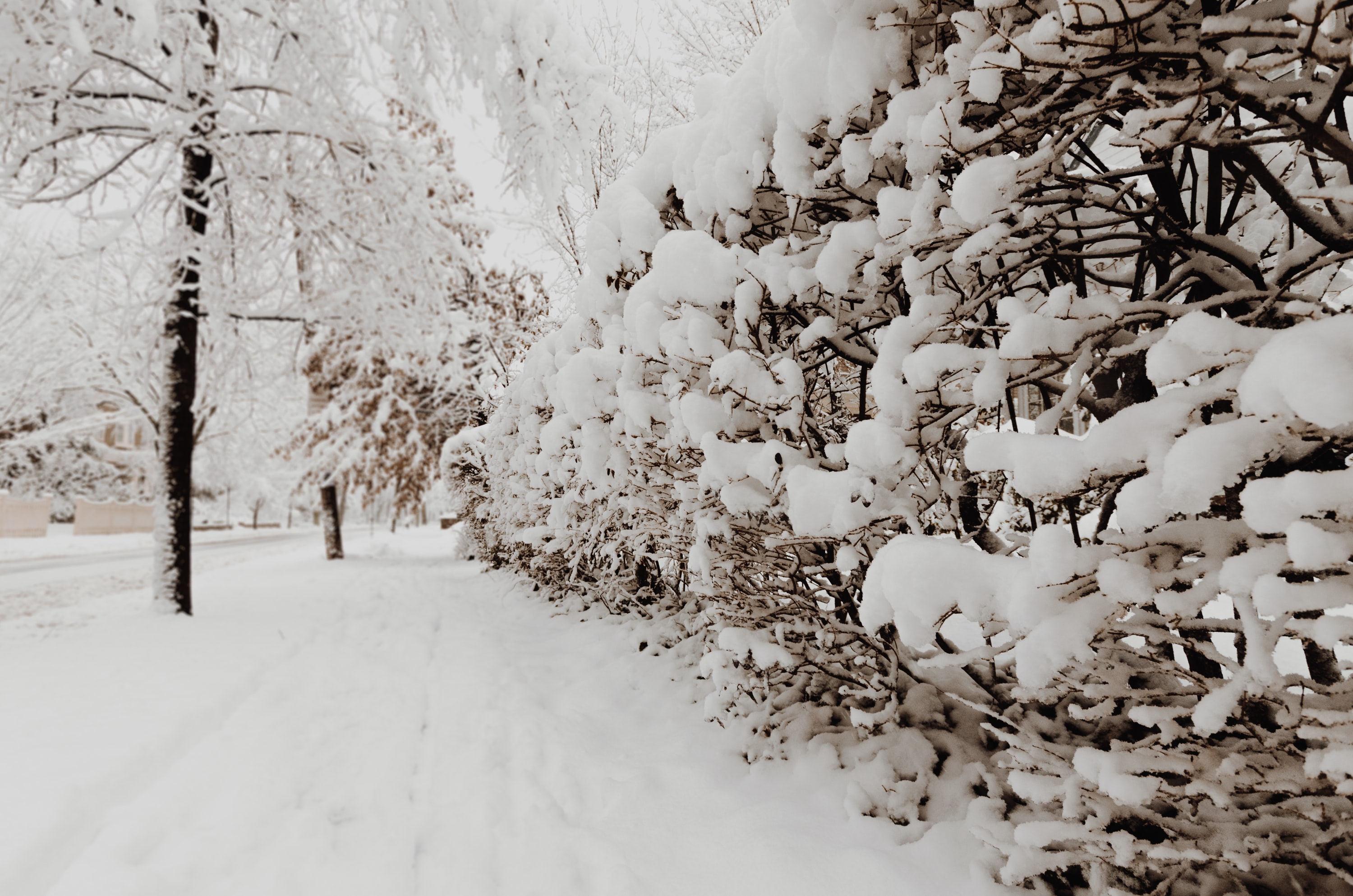
It was cold as all get out.
Photo credit: Kelly Sikkemaon unsplash.com
The track stars ran fast as all get out.
Photo credit: Jonathan Chng on unsplash.com
The red velvet cake was good as all get out.
Photo credit: Estefania Escalante Fernandez on unsplash.com
As language loses its color
As I commented at the beginning of this blog post, I don’t hear “all get out” as much as I used to. I’m afraid English becomes a less colorful language as we lose such expressions. That’s why I chose “all get out” for my topic today.
Is “all get out” an expression you’re familiar with? Is it an idiom that’s used all across the United States? Have those of you who live in other English-speaking countries heard this expression?
Since my last blog post
It looks and feels more like spring by the day, but there’s a possible hard freeze in the weather prediction for later in the week. That will be a shame, since my peonies have sprouted and the blueberry bushes are in bloom. It’s my favorite time of the year.
I stirred up a bit of a hornet’s nest on Facebook by posting a meme I borrowed from someone else. It is about the gun problem we have here in the United States. Just by saying “gun problem,” I’ve probably offended some people. I don’t know what else to call it. One of my high school classmates and a fellow church member have responded by educating me about the intricacies of firearms and gun registration.
At first, I was taken aback and wished I hadn’t posted the meme, but as days passed and I reflected on the issue and got deeper into the discussion I was glad I’d done it. Without being my intention, it has turned into “that difficult conversation” Janet Givens’ Zoom discussion group is addressing this year in monthly meetings. The basis for our meetings is Ms. Givens’ book, LEAPFROG: How to Hold a Civil Conversation in an Uncivil Era.
How do you have “that difficult conversation” with someone with whom your opinion or world view differs greatly? How do you have “that difficult conversation” with someone when you suddenly find yourself in the middle of a discussion that you and the other party or parties maybe weren’t in the best mood to have?
People rarely react to anything I put on Facebook, so it was shocking when this particular meme created as much discussion as it has continued to have since I posted it on Thursday. Lessons I’ve learned: Fact check memes before you post them, and don’t post anything controversial unless you’re ready to defend your viewpoint and calmly listen to the viewpoints of others.
I returned to church yesterday for the first time in 14 months. It felt great going back into the sanctuary in which I’ve worshipped my entire life and in which my ancestors have worshipped since 1861, and it brought tears to my eyes.
Until my next blog post
I hope you have at least one good book to read this week. As usual, I’m reading several at the same time. My mood and library due dates determine which one I pick up.
I hope you have time to follow your passion this week and spend some relaxing time on a hobby.
It’s now been more than two weeks since I got my second Covid-19 vaccination. I look forward to getting out in public more than I have in the last 14 months.
Note: Get ready for April. It’s D.E.A.R. Month (Drop Everything and Read Month), so let’s all give it our best shot starting on Thursday!
I was tempted to write about the Stamp Act of 1765 today, but I was afraid I’d scare off my audience. Let it suffice for me to say that today is the 256th anniversary of the Stamp Act of 1765 that contributed so much to the American Revolution.
Photo credit: Brett Jordan on unsplash.com
Today’s blog post is a little less serious than the last two. As a writer and the daughter of a former English teacher, I have many grammar pet peeves. Today I’m writing about 11 of my favorites. (By the way, this started out as my three favorites. I need to put this out there in cyberspace soon before my list becomes unmanageable.)
February 8, 2021 was National Grammar Day here in the United States. I mentioned it in my blog post that day but, due to the length of the post, I didn’t elaborate as much as I wanted. Therefore, I’m taking the opportunity to air my grammar grievances today.
I’ve found a new “label” for myself. It has come to my attention that I am on the verge of becoming a pedant. I sometimes get distracted by minutiae. I can’t see the forest for the trees. You get the point. Below, I offer examples of what I mean.
Who hijacked “fewer?”
Have you noticed that reporters on TV and some of the people they interview have completely abandoned the word “fewer” and have replaced it with “less?” Is this a new guideline? Whatever it is, I don’t like it. It is my newest grammar pet peeve.
I’m a native-born American. I was taught at an early age that “fewer” was used when referring to something that could be counted and “less” was used when referring to something that could be measured. That’s a little vague, and is probably a difficult concept for anyone learning English as a second language. To a native-born American, though, one grows up with certain things just sounding right.
For instance, I would say “fewer minutes” but “less time.” I would say “fewer dollars” but “less money.” I would say “fewer people” but “less population.” Substituting “less” for “fewer” in each of those examples just sounds wrong to me; however, the English language is ever-evolving. If the general consensus is to abandon the word “fewer” and use “less” in every instance, the day may come when it will no longer sound wrong to me. But I doubt it.
Right near
Another relatively recent pet peeve of mine is the use of the term “right near.” TV news anchors tend to say it. “The accident was right near the intersection of ….” “Our reporter is right near the scene of the crime.” Why and when did people start saying that? The word “right” is unnecessary. Think about it.
So
It was maybe eight or ten years ago that I first heard someone start a presentation or speech with the word, “So.” She was a young college student. The first word out of her mouth was, “So.” It wasn’t long until I heard other people falling into that habit. Today it has become so widespread I fear it’s here to stay.
Lie or Lay
Please take a minute to think about this one, people. You know who you are. You don’t think “lie” is a verb. You think it’s only a noun. A liar tells lies. I’m here to tell you that you also lie down. I lie down. He lies down. I don’t lay down. You don’t lay down. He doesn’t lay down. I lay down a book. You lay down a book. He lays down a book. All God’s children lay things down, but they don’t lay down. They lie down. Got it?
I want to…OR I’d like to…
This pet peeve is one I hear speakers make. It is in speeches or interviews on TV that I usually hear this. It causes me to talk back to the TV, usually at a higher volume than my usual speaking voice.
If you want to apologize, say, “I apologize for…” or “I’m sorry for.…” Don’t say, “I want to apologize” or “I’d like to apologize” and then not follow that with an apology. When I hear someone say they want to apologize but then they don’t, this is what goes through my mind: “What you’re saying is, ‘I want to apologize, but I can’t.’”
If you say, “I want to thank you…” but that’s not followed by an expression of appreciation, what I hear you say is, “I want to thank you but I can’t” or “I want to thank you but I’m not going to.”
Just go ahead and tell me you’re sorry. Just go ahead and say, “Thank you.” Don’t just say you want to.
Very unique, most unique
I suppose I’m nitpicking here, but something is either unique or it isn’t. There are no gradations in uniqueness.
Awesome
God is awesome. God’s creation is awesome. Your team winning a ballgame is not awesome, although the Carolina Panthers winning the Super Bowl would be something to celebrate. A new outfit is not awesome. McDonald’s fries taste good, but they aren’t awesome. The overuse of any such word weakens it and leaves it powerless. That’s what’s happened to awesome.
Normalcy vs. Normality
This is a new one for me. Apparently, the two words are interchangeable. I’ve heard “normalcy” all my life, but it seems like the last several months we’ve been inundated with people on TV saying “normality” instead. Is it just me, or have you noticed a change? “Normality” sounds more hoity-toity to me, but maybe that’s just me.
Come on guys, it’s prostate
This illustrates prostrate. Get it? Photo credit: Naassom Azevedo on unsplash.com
Maybe it’s none of my business, guys, but the name of that gland y’all have is a prostate. It’s not a prostrate. This mistake is made so often that when you search for the word prostrate on Microsoft Bing, it comes up with a kazillion sites about prostate and asks, “Do you want results only for prostrate?” I’m not kidding.
Hot water heater
It’s just a water heater. It’s not a hot water heater unless there’s such a thing as a cold water heater. The term “hot water heater” is especially irritating when it is used in printed material from a large electric utility company.
Apostrophe s
I hope I’m not stepping on your toes, but whoever wrote the computer program for the automated grammar checker got this completely wrong and has confused people to no end. The program insists that an s at the end of a word should always, always, always be preceded by an apostrophe.
Sometimes, a word is simply a plural. An apostrophe indicates a possessive. If you ever receive a Christmas card from “The Morrison’s” instead of “The Morrisons,” you’ll know I’ve gone around the bend.
A confession
I make grammatical errors. I still have to look up “affect” and “effect” because I’m unsure which one to use when. I still have to stop and think sometimes to figure out if I should say “I” or “me.” I make many punctuation errors. The use of commas has always tripped me up. My errors are probably some of your pet peeves. Point them out to me in your comments below. Go ahead. I can take it.
I feel better now. Thank you.
Since my last blog post
I had several rough days after getting my second Covid-19 shot, but it sure beats getting a bad case of the virus! The high fever was the worst part for me. It varies from one person to another. Some people just have a sore arm. Don’t let my experience deter you from getting vaccinated.
Until my next blog post
Try not to get too hung up on grammatical errors. In the big scheme of things, they aren’t life-and-death matters. On the other hand, ….
I hope you have a good book or two to read. I’m listening to Truths I Never Told You, by Kelly Rimmer, and I’m reading The Train to Crystal City: FDR’s Secret Prisoner Exchange Program and America’s Only Family Internment Camp During World War II, by Jan Jarboe Russell. Ms. Russell’s nonfiction book has been a real eye-opener for me. I’ll share more about it in my April 5, 2021 blog post.
Last week I blogged about four of the books I read last month. Today, I write about the other four books I read in February.
The Unwilling, by John Hart
The Unwilling, by John Hart
John Hart being a southern piedmont North Carolina writer, I looked forward to his new novel, The Unwilling. It did not disappoint. I listened to it on CD. It is a slice of American history when we were divided over the Vietnam War.
It is a riveting story about three brothers. Two were in the military and served in Vietnam. One didn’t survive the war, and the other one came home with problems for the rest of his life. Their youngest brother, Gibby, is the main character. At 18 years old, he is struggling to find his way in life. His mother is over-protective, and his father is a police detective in Charlotte. His parents want him to stay away from the middle brother, Jason, but Gibby can’t help but idolize him and is drawn to hang out with him. This leads to untold trouble.
The seedy, corruptive underbelly of the prison systems comes into play in a gruesome way. This novel is not for the squeamish, but the story really drew me in, and I couldn’t stop listening to it because I wanted to know what was going to happen next to Gibby and Jason. If you like a coming-of-age story wrapped in a police thriller, set in the winding down years of the Vietnam War, with some troubled family dynamics and prison time thrown in, this should be your next read.
Mr. Hart’s inspiration for this novel was Hugh Thompson, the US Army helicopter pilot credited with stopped the My Lai Massacre on March 16, 1968. It is not a war story per se but is the story of what a soldier sees and does that follows him or her home — the things those who have not been there cannot imagine; but more than that, it is a story of a small city in which the evil one fears isn’t always faraway but sometimes just up the street.
Southern Writers on Writing, edited by Susan Cushman
Southern Writers on Writing, edited by Susan Cushman
This delightful book is a collection of 26 essays by Southern writers, each giving their unique take on writing and how The South influences their writing.
One of my favorite essays in the book is “Southern Fiction: A Tool to Stretch the Soul and Soften the Heart,” by author Julie Cantrell.
Ms. Cantrell hails from Louisiana and writes vividly in her essay about the extremes of life in her home state. I love what she writes about Southern fiction about halfway down page 53 in the book:
“In literature, the South works as a lure by tapping all the senses. When we set a story here, we not only deliver a cast of colorful characters, we share their sinful secrets while serving a mouth-watering meal. We draw readers in with soul-stirring music and landscapes that would make anyone want to disappear beneath the mossy oaks. The South offers a fantasy, a place where time slows and anxieties melt like the ice in a glass of sugar cane rum.”
On page 54, Ms. Cantrell writes: “Many in life say the earth is our mother. If that’s the case, then the South is the lap into which we all crawl to hear her story…. The South is nothing less than a sanctuary for story. It is the porch swing, the rocking chair, the barstool, the back pew. It is everything that made me and shaped me and saved me. As a southern writer, I aim only to invite my readers to enter this sacred space.”
And then I read “The Burden of Southern Literature,” by Katherine Clark. She concisely explained how Southern literature came to be – how the South was looked down on after the Civil War and why would anyone want to read about such a place? Southern writers were weighed down by the region’s history. Writers like William Faulkner struggled to “strike a chord with a national audience.” Then, Faulkner and other southern writers learned to embrace the South and their southern-ness.
Ms. Clark writes on page 56, “Now, at the beginning of the twenty-first century, the writer in the South is not plagued by the burden of southern history, but by the burden of southern literature. Our literary tradition is revered all over the world and has produced many of the best writers to come out of our country. Southern literature is the strongest tradition in American literature, and one of the greatest gifts that American culture has given the world.”
What the southern writer is left with today is the burden not so much of the history of the South, but the wealth of literature that has come out of the South. To paraphrase Ms. Clark, it is inspiring and intimidating. I can vouch for that!
I also liked what Ms. Clark writes about not wallowing in what she calls, “southern-ness.” Here’s a little of what she writes on the topic:
“Whereas 100 years ago, writers had to learn to embrace the differences of the South, nowadays the tendency can be to positively wallow in the eccentricities and grotesqueries of the southern experience, usually of an earlier era. We shouldn’t be wallowing in southern-ness, and we don’t need to embrace it either, because that’s been done. That’s a given now, thanks to our great literary ancestors. Our job today is not to stick to the foundation they laid for us, but to use it as a springboard launching us in the new and different directions demanded by a changing culture.”
River Jordan, another author contributing to Southern Writers on Writing, writes the following about how she can tell when she’s reading the work of a southern writer and when she’s reading the work of New York writer: “…when I read a writer from say New York I think, oh, they are so smart. I could swear I actually hear their brain ticking. But when I read a southern writer I can feel their heart beating. That’s how I know it’s southern. By the heartbeat.”
Ms. Jordan also writes the following about the danger of southern writing disappearing as our lifestyles change: “When the porches all finally disappear, when the backyard steps are replaced with the kind of yards manicured to perfection, then the days of real southern writers will shift and slip away. Assimilation will be complete and southern will be no more.”
I hope she’s wrong, but I worry about the assimilation. I worry as I hear aspects of southern accents disappearing. I worry when I notice that my great-nieces in metro Atlanta sound much less southern than I do.
Speaking of southern accents, the next contributor in Southern Writers on Writing is Lee Smith. I love to hear her talk. Her contribution to the book is from her book, Dimestore: A Writer’s Life, which I thoroughly enjoyed reading five or six years ago. Ms. Smith is southern through-and-through, and her writing oozes “southern.”
About writing, Ms. Smith writes, “Whether we are writing fiction or nonfiction, journaling or writing for publication, writing itself is an inherently therapeutic activity. Simply to line up words one after another upon a page is to create some order where it did not exist, to give a recognizable shape to the chaos of our lives.”
30 Short Stories, by Laleh Chini
30 Short Stories, by Laleh Chini
My blogger friend, Laleh Chini, just keeps writing books. You may recall in last week’s blog post (4 Books I Read in February 2021) I told you about her new novel, Soroosh. Also, I’ve blogged about her book Climbing Over Grit in my November 5, 2018 blog post, Many Good Books Read in October!
Laleh is a fantastic storyteller. 30 Short Stories is her new picture book. I don’t often read picture books now, but I just had to purchase and read Laleh’s. Although written for children, this book can be enjoyed by people of all ages. Each of the 30 stories teaches a life lesson. My favorite was the last story in the book, “Racism.” In it, Laleh relates a story of how as a Muslim from Iran she experienced racism in a store in Canada, where she has lived for decades. It’s heartbreaking.
In the spirit of cultural acceptance and respecting and valuing people, no matter their ethnicity or religion, I recommend this book to everyone who is open to seeing that people are just people. We need to take a step back and stop making snap judgments about people just because they are of a different culture than ours.
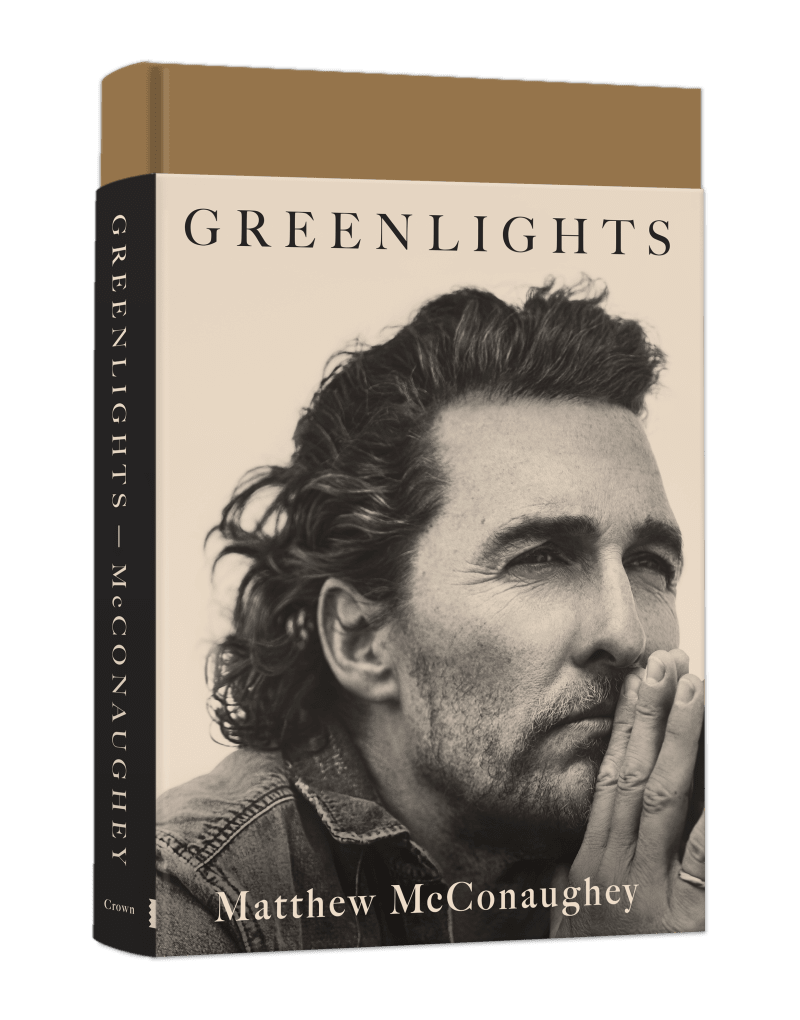
Greenlights, by Matthew McConaughey
Greenlights, by Matthew McConaughey
From TV interviews, I know that actor Matthew McConaughey is a good storyteller. Wanting to hear his book in his own voice, I got on the waitlist for the CD edition of Greenlights at the public library as soon as it showed up on the online catalog.
I must admit that listening to Greenlights on CD was probably not the best way to read the book. Mr. McConaughey is an enthusiastic storyteller, and he relates many very entertaining stories in Greenlights; however, as a good storyteller is prone to do, Mr. McConaughey varies the volume of his voice greatly as he spins a yarn. This can create discomfort while listening to the book on CD.
I read a review on Goodreads.com that gave the book a very high rating and recommended listening to it instead of reading it but with the caveat that it should be listened to in a quiet environment. That’s good advice. I would also say you shouldn’t attempt to listen to it with headphones or earbuds. Also, trying to listen to it in one room while someone is trying to sleep in the next room is not a good idea. Just sayin’.
I also admit that I have moderate hearing loss, but I don’t think that was the root of the problem I had in listening to Greenlights. If I set the volume to a comfortable level for the shouting, I could not hear much of the rest of the book. This meant I couldn’t hear the near-whisper parts at all. I had to constantly adjust the volume, so the CD edition of the book was a great disappointment.
Early on, the book talks about Mr. McConaughey’s home life as a child and teen. His parents had a volatile relationship, which couldn’t help but have a profound effect on him. He relates some very funny experiences he had as an exchange student in Australia. In fact, that was my favorite part of the book. He tells interesting and humorous stories about his world travels and how he more or less fell into the occupation of actor.
The overriding theme of the book is that we should learn from all life’s experiences. Don’t let the obstacles in life keep you down. Learn from them and keep going.
If you’re a Matthew McConaughey fan, you’ll enjoy reading the book. Listening to it? Maybe not so much.
Since my last blog post
I’m still reading good books and working on my historical novel manuscript for a partial critique by a professional editor.
I got my second Moderna Covid 19 shot on Saturday. I’m grateful that I live in a country where such things are available, and I’m grateful to all the people who worked to develop and distribute the vaccine. I had some unpleasantness for about 48 hours after the shot, but it surely beats contracting a bad case of Covid-19.
On Wednesday night, I enjoyed participating in the third virtual gathering of a group discussing Janet Givens’ book, LEAPFROG: How to have a civil conversation during an uncivil era. We had an interesting conversation about racial prejudice and our common humanity. I mentioned Ms. Givens’ book in my blog posts on January 18, 2021 ( Fictional Characters Can Take on Lives of Their Own), on December 14, 2020 (Favorite Books Read in 2020), and on April 13, 2020 (LEAPFROG and The Immoral Majority.)
Until my next blog post
I hope you have a good book to read. I’m listening to In the Garden of Beasts, by Erik Larson, and I’m reading Cicely Tyson’s memoir, Just As I Am. Other library books are piling up and calling my name. What a wonderful “problem” to have!
I hope you have some time for creativity and hobbies this week.
Wear a mask and get vaccinated as soon as that’s possible for your age and location so we can rediscover “normal.”
Here I am, with another little history lesson. I hope I’m not losing my audience. My blog is about my journey as a writer. I write history and historical fiction, so continuing to study history and sharing some of what I learn is an integral part of my blog.
Last week I admitted how little I knew about the Spanish-American War. In today’s blog, I’ll admit how little I knew, or at least remembered, about the Florida Purchase. If history could be taught in story form instead of lists of battles and dates, I think we’d all retain more of it later in life.
As you read my post, I want you to think about what the map of the United States would look like today if not for this 1819 treaty.
In case you’re ever on “Jeopardy!”
The Adams-Onis Treaty was negotiated and signed by U.S. Secretary of State John Quincy Adams on February 22, 1819. That’s 202 years ago today. Luis de Onis, the 1809-1819 Spanish Envoy to the United States, negotiated and signed for Spain; hence, the name Adams-Onis Treaty. It’s also known as the Florida Purchase Treaty, the Treaty of 1819, and the Trans-Continental Treaty.
What the treaty accomplished
The United States was still in its infancy as a nation in 1819. It had won two major wars against Great Britain, but it was just 40 years old. The map of the United States was still in flux. In fact, it still is with the possibility of the District of Columbia and Puerto Rico possibly gaining statehood status. In 1819, the vast West was still occupied by native peoples and enormous herds of bison and other native animals.
Under this treaty, Spain gave up its claim to the Florida peninsula as well as the panhandle of Florida, the coastal lands of Alabama and Mississippi, and part of Louisiana. The United States temporarily gave up Texas. The boundaries of the Louisiana Purchase were more accurately defined, and the boundary between Spanish Mexico and the United States was settled. Spain relinquished its claim to the lands north of the 42nd parallel known as the Oregon Territory. (The 42nd parallel later formed the northern boundaries of California, Nevada, and Utah.)
What if…?
When I’m writing fiction, I often ask myself, “What if…?” Asking myself that questions leads to plot twists in my fiction, but it can lead to some fascinating theories of how history could have turned out differently if certain events had not happened. I touched on this question in last week’s blog post, #OnThisDay: Remember the Maine! What you might not know, when I asked how history would have unfolded if the Americans had known that the sinking of the Maine was an internal accident and not an act of war by Spain.
Imagine how the United States would look today if the Adams-Onis Florida Purchase Treaty hadn’t been signed and ratified.
There would be no Disney World or Cape Canaveral. Or, if there were, they’d be in Spanish Florida.
Photo credit: Justin Novello on unsplash.com
There would be no white sandy Gulf of Mexico beaches in the United States.
There would be nowhere in the southeast for people from the cold northern states to retire to or spend their winters.
The 55th Super Bowl wouldn’t have been held in Tampa, Florida earlier this month.
There would be no American Floridians creeping along at a snail’s pace on the curvy mountain roads in western North Carolina because they’re terrified of curves and hills. They’d be Spanish Floridians.
All jokes aside, we’d be importing lots of vegetables and citrus fruits from Spain because that’s who would still own what we know now as the state of Florida. And perhaps Spain would still control the Oregon Territory. The map of the United States would look quite different than it does today. Our history would be quite different, and we would lack many of the natural and cultural resources we enjoy today that make our country what it is.
I have given a simplified description of the Adams-Onis Florida Purchase Treaty in this blog post, but on this 202nd anniversary of its signing, I believe we Americans can be glad it was negotiated and signed.
Since my last blog post
I’ve been reading, writing, and enjoying both. The part of North Carolina I live in, dodged the snow and ice that much of the U.S. has been dealing with. The people of Texas and other areas without electricity and safe drinking water are in my prayers. Mississippi was hit hard, too, but hasn’t received much national publicity.
The first crocus of the year opened near our side porch and the daffodils are coming up. I look forward to spring with great anticipation.
Until my next blog post
I hope you have a good book to read. I’m reading Soroosh, a new novel by Laleh Chini, and listening to The Unwilling, by John Hart.
Find time for your favorite pastime.
Even if you won’t wear a mask to protect yourself, please wear one out of respect for others. We’re all in this Covid-19 pandemic together and it will take all of us working together to get out of it faster.
Note to my neighbors and friends in Canada (including author Laleh Chini): This is “Freedom to Read Week” in your country.
My custom is to share with you my thoughts about the books I read during one calendar month in my first blog of the following month. Last Monday’s post, My thoughts on Stones from the River, by Ursula Hegi, was about the novel Stones from the River, by Ursula Hegi. In today’s post, I’ll tell you what I thought about the other four books I read in January. It’s a nice mix of fiction and nonfiction books.
After the attempted coup at the US Capitol on January 6, it was difficult to concentrate. My reading suffered, but my writing time suffered even more. I was surprised at the end of the month to discover I’d read five books.
I ran into some problems while trying to insert images of the books I’m blogging about today. Ironically, (or not?) the message I got when I tried to copy the publisher’s image of The Spy and the Traitor said “for security reasons” I was not allowed to use it. I had to laugh. I could download it to my computer, but I couldn’t insert it in today’s blog post. It’s recommended that all blog posts have images, so I’m disappointed to present a post today that has no illustrations.
The Spy and the Traitor: The Greatest Espionage Story of the Cold War, by Ben MacIntyre
On a scale of one-to-five stars, I give this nonfiction book six stars. The research that backs up this detailed account of the life of double-agent Oleg Gordievsky is stunning. The book reads like a spy novel but is all the more riveting because the reader knows it is true.
I learned about this book when I saw a list of the top five books of 2020 that Bill Gates recommended. This one sounded intriguing, and it didn’t disappoint.
Oleg Gordievsky started out as a KGB agent. Fascinated by the West, though, he read and learned all he could about Great Britain. He also read works of such Soviet dissidents as Aleksandr Solzhenitsyn, even though reading those works or having them in your possession was against the law in the Soviet Union. Gordievsky’s world opened up when he landed an assignment in England. It is there that he became a double agent and became the crown jewel in Great Britain’s MI6 spy network.
I learned how close we came to nuclear war in 1983 when the Soviet Union misinterpreted a NATO war game with the code name ABLE ARCHER 83. The book says on page 181, “Both Reagan and Thatcher understood the Cold War in terms of a Communist threat to peaceful Western democracy; thanks to Gordievsky, they were now aware that Soviet anxiety might represent a greater danger to the world than Soviet aggression.”
It is not common for an individual spy to have a profound impact on world history, but Oleg Gordievsky falls into that category. As the book says of Gordievsky on page 183, “…he opened up the inner workings of the KGB at a pivotal juncture in history, revealing not just what Soviet intelligence was doing (and not doing), but what the Kremlin was thinking and planning, and in so doing transformed the way the West thought about the Soviet Union. He risked his life to betray his country, and made the world a little safer.”
The story is far from over at that point, and the book takes the reader on an edge-of-your-seat nail-biting ride. Will Gordievsky be outed? Will Great Britain succeed in smuggling him out of the Soviet Union? What happens to his wife and daughters? Who turns out to be an American double agent? Is that spy still alive and, if so, where is he? Is Gordievsky still alive and, if so, where is he?
All these questions and more are answered in the book, but I don’t want to spoil the fun for you. I highly recommend The Spy and the Traitor: The Greatest Espionage Story of the Cold War, by Ben MacIntyre. I listened to the book on CD while keeping a print copy in front of me. That made it easier for me to keep up with the unpronounceable Russian names.
My Grandmother Asked Me to Tell You She’s Sorry, by Fredrik Backman
Told from the point-of-view of seven-year-old Elsa, this is another somewhat quirky novel from Fredrik Backman. I think it was clever for Mr. Backman to give us a novel told from a child’s viewpoint. It was an interesting read, but not one of my favorite novels.
I listened to this book on CD. My favorite part of the book turned out to be the first disc, as it included Elsa’s feisty grandmother before she died. It was funny. Elsa’s grandmother wasn’t a typical grandmother or a typical old woman. She delighted in upsetting the powers that be. She thrilled at dragging Elsa into her various escapades.
Since both of my grandmothers died before I was born, I had trouble identifying with Elsa. I don’t have a firm grasp of the personalities of either of my grandmothers; however, since they were farm wives and were born in the second half of the 19th century, they probably didn’t resemble Elsa’s grandmother in any way, shape, or form.
Of course, the reason for this novel was not to entertain the reader with the antics of an old lady. It was to show the ramifications of a life lived as this woman lived it. This woman lived her entire life insulting people, but somewhere deep down inside she wanted to apologize. The burden of making those apologies fell on her granddaughter.
Step into the Circle: Writers in Modern Appalachia, edited by Amy Greene and Trent Thomson
This is a book of profiles about nine writers of present-day Appalachia written by writers of present-day Appalachia. It is beautifully illustrated with photographs of the writers and the mountains from which they came. The writers highlighted are Wendell Berry, Crystal Wilkinson, Ron Rash, Adriana Trigiani, Silas House, George Ella Lyon, Frank X. Walker, Marie Junaluska, and Lee Smith.
Some of these writers were familiar to me, while others were not. I was glad to learn about each of them; however, the book did not live up to its promise as far as I was concerned. At least one of the “profiles” turned out to be more about the profiler than the writer being profiled. Therefore, the book ended on a sour note for me. Nevertheless, it’s worth checking out of the public library and giving it your attention.
The book addresses the influence of an author’s geographic upbringing and the importance of writing the truth that one knows. The importance of Appalachian writers to write the truth in order to dispel the myths about the people of Appalachia is an overriding theme.
The most interesting profile for me was that of Marie Junaluska, a Cherokee language teacher and translator.
The Fix, by David Baldacci
I’m attempting to whittle away at the 300 books on my To Be Read list (TBR.) I thought it might be a good idea to try to read one book from my TBR each month. But then I did the math and discovered that, at that rate, it will take me 25 years to read those 300 books. That doesn’t sound doable because I would be 103 years old by then. Also, I tend to add more than one book to my TBR each month, so the list is literally never-ending.
The Fix has been on my TBR for several years. It is the third in David Baldacci’s Amos Decker series. Labeled a thriller, I found The Fix to be more of a spy mystery. It did not keep me on the edge of my chair anxious to see what happened next. Perhaps it just wasn’t the right time for me to read this book, since I had trouble concentrating all month.
I’ve listened to many novels in the last year or two, which is quite a change for me. A lot depends on the professional recording reader. In addition to that, something that jumped out at me in listening to The Fix was how the “he said/she said” tags can distract. When reading a print book, our eyes often leap over those tags. In listening to The Fix, I was very distracted by them. There were several readers – male and female. When I female voice read a line, it was terribly jarring to have the male reader follow it by saying, “she said.” It reminded me that I was listening to a book – and that’s not a good thing. I’m not sure what the remedy is for this, but it continually took me out of the story in this novel.
National Grammar Day in the USA
No, that’s not the name of a book. Today is National Grammar Day in the United States It gives me an opportunity to share with you something I learned recently from a blog post.
I took courage from reading Melissa Donovan’s December 15, 2020 blog post. She opened my eyes to the difference between grammar rules and grammar guidelines. Here’s a link to her blog post: Grammar Guidelines Versus Grammar Rules | Writing Forward.
If grammar grabs your attention, please take time to read Ms. Donovan’s blog post. Like me, you might be surprised to learn that some things you think are grammar rules are just guidelines. You must follow the rules, but you don’t have to follow the guidelines. I wish someone had told me that years ago.
I have stressed over some guidelines because I thought they were rules. One of my favorites is that you should never end a sentence with a preposition. It turns out that rule of earlier centuries is now a guideline. Hurrah! I’ve twisted myself into a pretzel on occasion trying not to break that guideline because I thought it was a rule. What I’ve ended up with are awkward sentences. From now on, I’ll end sentences with a preposition when it makes better sense to do so.
And, by the way, you probably noticed that I used the numeral “4” in my blog post title today instead of “four.” I was taught to write out numbers one through nine in a written document – and always when it is the first word in a title or sentence — and to use numerals for 10 and higher.
I learned recently though, that when writing the title of a blog post, I should always use numerals because they make a bigger impact. They help my SEO (Search Engine Optimization). In those mysterious algorithms of cyberspace, they help my blog posts move up and get seen. They grab a person’s attention. That’s what “they” say.
Bear with me, folks. I’m in my 60s (or sixties?) and I’m trying to learn new things and adapt to the world of technology. When I was born, black and white television, black and white photography, and manual typewriters were cutting edge. And Caribbean was pronounced Ca-rah-be-in.
Since my last blog post
I’ve continued to read and I have some excellent books to share with you in March when I blog about the books I read in February. I have been entertained and educated by these books, and the month is just one-week old. I’ve read two historical novels this week that I can’t wait to tell you about.
I tried my hand at a new recipe for no-knead whole wheat sandwich bread. It held much promise in the beginning, but it turned out the size of half-of-a-sandwich bread. It tastes okay, but looks pitiful. I was disappointed but had to laugh.
We came within a few miles of having snow on Saturday night but only got rain. That’s the way it often is in the piedmont of North Carolina.
Until my next blog post
I hope you have at least one good book to read this week – one that will not only entertain you but also educate you. Our learning should never end.
Wear a mask and get the Covid-19 vaccination as soon as it’s your turn and you can get an appointment.
Stay safe, and be respectful of others’ desire to stay safe and well.
I finished reading Stones from the River, by Ursula Hegi a few days ago. It made such an impression on me that I decided to write about it today and share my thoughts on the other books I read in January in next Monday’s blog post.
I enjoy following the blogs of book reviewers. Their reviews often pique my interest in books I might have otherwise overlooked. From a review, I can be fairly sure a particular book is or isn’t for me. My fellow blogger, Stella Maud Maurer (https://stellamaudmaurer.wordpress.com/,) wrote about author Ursula Hegi a couple of months ago. It was that blog post that nudged me to read Stones from the River.
I don’t consider myself a book reviewer. I just enjoy sharing my impressions of the books I read. I don’t abide by the rules that book reviewers adhere to. (And if you think I shouldn’t have ended that sentence with a preposition, I’m excited to tell you that I recently learned that “rule” is now just a “guideline.” Look for more on that in a future blog post.)
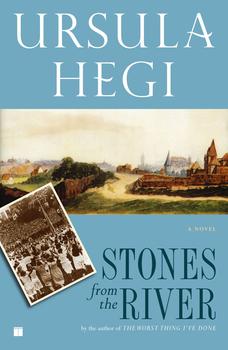
Stones from the River, by Ursula Hegi
Stones from the River, by Ursula Hegi
After reading Stella’s blog post, I wanted to read something by Ursula Hegi. I decided to start with the first novel in her Borgdorf Cycle series, Stones from the River. It wasn’t long before I was captivated by her prose.
Oh, to be able to write descriptions like Ms. Hegi does! She deftly weaves phrases of description into sentences in a way that you hardly notice. I admit, I was reading the book as a writer and not as a reader. The writing really isn’t supposed to pull the reader out of the story, but I just couldn’t help myself.
Trudi, the main character, is a little person. Her mother had what sounds like post-partem depression after Trudi’s birth. Her father, Leo, never gave up on bringing his wife and their daughter into a loving relationship. As a young girl in the late 1910s in Germany, Trudi yearns to grow tall. Her childhood isn’t an easy one, not only because she is different but because her mother is different, too. Her mother’s depression spirals out of control and she takes to hiding under the house, sometimes taking Trudi with her.
And then there’s the neighbor boy, Georg, whose mother wants him to be a girl. She dresses him like a girl and doesn’t cut his hair. Trudi starts to realize that she’s different, her mother’s different, and Georg is also different.
Through it all, Trudi has a priceless sense of humor that comes through especially in her dealings with her friend, Ingrid. Ingrid is tall and beautiful. Trudi would give anything to look like Ingrid; however, Ingrid thinks Trudi is the lucky one.
Trudi works in her father’s “pay library.” 1933 brings Hitler’s orders to destroy all books written by the great authors and thinkers of the day. She and her father hide some of his prized books under rental books in boxes. After all, what better place to hide books than in a library?
One day, Trudi discovers a woman and her little boy hiding under the house that she and her father still share along with the pay-library. They start hiding Jews in their cellar.
Due to her small stature, Trudi never expected to find romantic love. That yearning for love and a family of her own is a thread throughout the novel. I’ll just leave it at that and not spoil the story for you if you wish to read it.
This is a story of the unpredictability of life. It’s a story of thinking you know someone, but then realizing you don’t really know them. The constant backdrop was Nazi Germany. Step-by-step, day-by-day, year-by-year life became more precarious not only for the Jews but for everyone living in Germany in the 1930s and 1940s. Every word and action was suspect, and you never knew who was listening and watching.
What struck me, though, about this novel was the parallels I saw between Germany in the 1930s until the end of World War II and the United States in 2020 and 2021. If I’d read it when it was published in 1994, it wouldn’t have affected me like it did as I read it in December 2020 and January 2021. Over and over, sentences and paragraphs jumped out at me as if to say, “Wake up, America!”
It’s almost as if Ursula Hegi wrote pointed phrases and sentences in Stones from the River to serve as a cautionary tale for Americans living in the last five years.
The following sentence from Stones from the River stopped me in my tracks, since it rang so true for the United States in 2020: “She fought him by reminding herself what her father had said to Emil Hesping – that they lived in a country where believing had taken the place of knowing.” It seemed in 2020 and still today that nearly half of Americans believed what they were being told by the right-wing media and the Trump Administration instead of believing what they should have known to be true – what they saw and heard with their own eyes and ears. I’m not sure how that gets corrected, but I pray it will be.
There were several other quotes from the book that caught my attention. These three, in light of January 6, 2021: (1) “…breaking of windows….” (2) “Maybe now, she thought, now in the blaze of fire, they surely would have to see. But it was as if they’d come to take the horrible for granted, mistaking it for the ordinary.” And (3) “Their allegiance to one powerful leader now became their excuse: since they had not made decisions but merely obeyed orders, they were not to blame.”
And this quote from the book parallels the fear some members of Congress now live with because they know that some other members of Congress wish them dead: “‘The Jews in this country,’ she corrected him one Saturday afternoon when he followed her into the garden, lecturing her, ‘are Germans and far more decent than those – those friends of yours who terrorize them –.’”
Since my last blog post
I almost finished the research necessary for the writing of one of my historical short stories. A little more research is needed in order to fill in some blanks. The story morphed into an essay. I had a lot of fun writing the 2,800-word piece on Saturday. The point-of-view “character” is a house. No more clues. I hope before the year is out, I’ll get to turn my stories and essays into a book. You’ll learn it here first, so don’t miss any of my blog posts!
Until my next blog post
Note: Tomorrow through February 8 is “Read an E-Book Week”. If you’ve been wanting to take the plunge and try reading a book on your electronic device, this is the perfect week to do it. Don’t be an “I only read printed books” snob.
Note: Next Saturday, February 6 is “Take Your Child to the Library Day”. If your local public library is open and you feel safe to take your child there, perhaps you can do so. But if the Covid-19 pandemic has closed your library to in-person service – or you don’t feel safe going there yet – take next Saturday as an opportunity to explore the online resources your local public library system offers. Get your child excited about using the library online now and in-person as soon as that is safe. It will be a gift that keeps on giving for the rest of their lives.
I hope you have a good book to read (in print or on an electronic device) or a good one to write.
Wear a mask and get the Covid-19 vaccination as soon as it’s your turn and you can get an appointment.
Stay safe, and be respectful of others’ desire to stay safe and well.
Just so you’ll know, I wrote this blog post, except for the “Since my last blog post” and “Until my next blog post” a month or more ago when I had no idea there would be an attempted coup at the US Capitol in Washington, DC on January 6, 2021. There had been rumors of political demonstrations in support of the man who lived in the White House until he moved to Florida on January 20, but I had no idea it would be a day of insurrection against the United States of America.
Photo Credit: Little Plant on Unsplash.com
The word “riot” does not adequately describe what happened on January 6, 2021. The word “riot” is far too tame to use in talking about that event. What happened that day outside and inside the US Capitol was not a riot; it was an act of domestic terrorism, an insurrection, and attempted coup incited by the man poorly-holding the office of president of the United States at the time.
Nevertheless, the following gives some of the background for the “Reading the Riot Act” idiom.
Reading the Riot Act
Have you ever wondered where the idiomatic expression, “reading the riot act” and its variations originated? I’ve heard the expression all my life, but I couldn’t have given a definitive answer if asked about its origins. As I’ve said before, the evolution of the English language fascinates me, so this will probably be the first of many blog posts I’ll write about idioms.
Another reason for my interest in idioms is, as a writer of historical fiction, I must be careful not to use a word or phrase in a story set at a time before that particular word or phrase came into usage. For many years, I’ve relied on English Through the Ages, by William Brohaugh, to guide me in the use of individual words and their meanings through time. Published by Writers Digest Books in 1997, this is an invaluable resource for writers of historical fiction.
However, I’ve recently come to know the book, The American Heritage Dictionary of Idioms: The Most Comprehensive Collection of Idiomatic Expressions and Phrases, by Christine Ammer. That collection of idioms and idiomatic expressions has opened my eyes to a whole new aspect of my need to be mindful of the use of words and phrases as I write fiction mostly set in America in the 18th and 19th centuries.
I’ve been surprised over and over again by the advent of some familiar idioms. And it’s made me feel old to find so many have only just come into general use during my lifetime. English is an ever-changing and evolving language.
What’s an Idiom or Idiomatic Expression?
An idiom or idiomatic expression is a group of words in usage whose meaning is not self-evident by considering the individual words.
If you’re familiar with the expression, “reading the riot act,” you probably know its meaning. According to The American Heritage Dictionary of Idioms: The Most Comprehensive Collection of Idiomatic Expressions and Phrases, by Christine Ammer, to read the riot act means to “warn or reprimand forcefully or severely.
It is thought that the first use of the figurative phrase “read the riot act” in print was in William Bradford’s Letters in 1819. This idiom has been in common use since the early 1800s, but exactly what was the riot act that inspired the expression?
The Riot Act of 1714
There was much unrest in Britain early in the eighteenth century. There were riots in 1710, 1714, and 1715, and the existing laws were inadequate to control the situation. The Riot Act of 1714 gave local officials a proclamation that was part of an Act of Parliament to read to a group of 12 or more people who were illegally assembled.
Here’s the wording of the proclamation that had to be read:
“Our Sovereign Lord the King chargeth and commandeth all persons, being assembled, immediately to disperse themselves, and peaceably to depart to their habitations, or to their lawful business, upon the pains contained in the act made in the first year of King George, for preventing tumults and riotous assemblies. God Save the King!”
You may recall the reading of Miranda Rights I blogged about on December 21, 2020 — Who said the world would end today? — . In like manner of police officers reading the Miranda Rights to a crime suspect in the United States today, a magistrate, mayor, bailiff, sheriff, or justice of the peace in Britain had to read the Riot Act in an effort to break up an unruly crowd. But that’s where the similarity ends.
The Riot Act of 1714 mandated that the people had an hour to disperse or otherwise be charged with a felony. The punishment for noncompliance was the death penalty! That was also the punishment for anyone interfering with the reading of the proclamation.
In actuality, if an assembled group’s rabble rousing escalated, the authorities didn’t have to wait an hour before making arrests.
What precipitated the Riot Act of 1714 ?
Parliament passed the Riot Act in 1714 – the same year George I became King of Britain – and it took effect in August 1715. The Crown feared that Jacobites (Scottish Roman Catholics – mostly Highlanders — who wanted to return James II of England and VII of Scotland and his descendants to the throne in London) would overthrow the government. In fact, the Jacobites invaded England in 1715 and again in 1745. They were eventually defeated at the Battle of Culloden. If the Jacobites had been successful, Roman Catholicism would have become the official religion throughout Britain. But I digress.
Was the Riot Act of 1714 always effective?
Of course not. I found the following two examples:
(1) There’s conflicting information regarding the act’s effectiveness in 1839 at the Newport Rising. Some reports say the mayor was able to read the entire proclamation, while other reports say he was shot was attempting to read it from a hotel window; and
(2) It is thought that the last time a sheriff tried to read the Riot Act was at the Battle of George Square in Glasgow, Scotland. People were protesting for shorter work hours on January 31, 1919. There was a confrontation with police. While the sheriff attempted to read the Riot Act, the piece of paper was grabbed out of his hands by protestors. That was apparently the proverbial last straw for the Riot Act of 1714.
According to the UK Parliament website, The Riot Act of 1714 was repealed in 1973, but it hadn’t been enforced in more than a half century. A version is still on the books in Canada.
Since my last blog post
I checked several weeks ago to see just how many blog posts I’d written. Much to my surprise, today’s post is my 500th. Yes, five hundredth! Thank you to those of you who have stuck with me through thick and thin since my first blog in 2010.
Joseph R. Biden has been sworn in as President of the United States, and Kamala Harris has been sworn in as the first female and the first person of African and Asian descent to the office of Vice President of the United States. I think the world took a collective sigh of relief at 11:49 a.m. Eastern Standard Time on January 20, 2021. I know I did!
I had a bit of a health scare last week, which prompted me to get an appointment on Saturday for a Covid-19 test at a local pharmacy. I’m feeling much better now, so I’m fairly confident that the results will come back “negative.” Better safe than sorry, though. I was pleased with how easy it was to schedule the test. Too bad it’s not as easy and timely to schedule an appointment to receive the vaccine. I believe that’s improving, though, here in the United States.
Until my next blog post
I hope you have a good book to read or a good book to write.
Find your passion and make time to pursue it in a creative way.
Wear a mask and get the Covid-19 vaccine as soon as you can.
In the aftermath of January 6, 2021, today’s topic seems frivolous; however, life goes on and I’m trying to stay true to the purpose of my blog. I want to write about the reading and the writing of books. I don’t want to dwell on politics in my blog postings even though it dominates my thinking.
Happy Birthday, A.A. Milne!
Today is Alan Alexander Milne’s birthday, or to put it more accurately, this is the 139th anniversary of the birth of British author A.A. Milne. He was, of course, the creator of Winnie the Pooh. A stuffed bear Milne named Winnie the Pooh has entertained children and adults since the book by that name was published October 14, 1926.
Photo Credit: Annie Spratt on Unsplash.com
Did you know that Milne originally called Christopher Robin’s stuffed bear Edward? There’s an interesting World War I story there, if you want to look it up. There’s a connection with a black bear from Canada named “Winnie” for Winnipeg.
In addition to Winnie the Pooh, there are numerous other fictional characters that have taken on lives of their own. Here’s a short list: Superman, Huck Finn, Tom Sawyer, Mother Goose, Little Orphan Annie, Friar Tuck, Robin Hood, Atticus Finch, Nancy Drew, Harry Potter, Darth Vader, Hawkeye Pierce, Mary Poppins, Gandalf, The Joker, Forrest Gump, Frankenstein, Sherlock Holmes, Spider-Man, Bugs Bunny, James Bond, Cinderella, Mickey Mouse, Goofy, Snow White, The Hulk, The Grinch, Indiana Jones, Paul Bunyan, Spock, Archie Bunker, King Kong, Popeye, Charlie Brown, Big Bird, Yoda, Kermit the Frog, Shrek, Porky Pig, Lassie, and even the GEICO Geiko.
The list could go on and on. I’m sure I’ve overlooked some of the characters from the last decade or two that someone from a younger generation would readily name.
My point is that it takes great care and imagination to create a fictional character that will strike such a chord with the general audience that their name and/or image becomes an icon. As a writer, I can’t imagine creating such a character.
Did Harper Lee know in her gut that Atticus Finch would go down in history as the iconic wise father and lawyer that he was? I doubt it.
I’ve read that Mickey Mouse went through several revisions before Walt Disney settled on the iconic figure we think of today. Charles Schulz adjusted Charlie Brown’s features before developing the Charlie Brown we all know and love. No doubt, the same is true for many of the other characters listed above.
And which came first? The image or the character in words? I imagine there’s a combination of both in the above list.
Since my last blog post
On January 13, I started participating via Zoom in a discussion of Janet Given’s book, LEAPFROG: How to have a civil conversation during an uncivil era. Janet is a blogger friend of mine, and she invited me to join this group sponsored by the Lorain Historical Society in Ohio. The timing couldn’t be better. Too bad the entire American citizenry aren’t participating. In conjunction with this discussion on Zoom, I’m re-reading Ms. Givens’ book, one chapter per month. I invite you to read it, too. Until the group’s next Zoom meeting, I’m practicing listening.
Now that anyone 65 years old or older in the US is eligible to receive the Covid-19 vaccine, I’ve been checking my county’s online scheduling tool numerous times every day. I haven’t been able to grab an appointment yet, but I’ll persevere. In the meantime, yesterday I was able to schedule my two doses in March through one of our local hospital systems.
Until my next blog post
I hope you have a good book to read or write. I’m listening to The Fix, by David Baldacci.
Make time to care for yourself during these stressful times.
Wear a mask out of respect for others.
Let’s all practice listening to each other. Really listening.
I saved two books I read in December for today’s blog post, not wanting to make last week’s post too long. One is a new novel and the other was from my to-be-read (TBR) list. I continue to add more books to my TBR than I check off. That’s just the way it is. My TBR hovers around 300, give or take 10-20 books. I need to ignore the number. Stressing over it isn’t beneficial.
The following two books transported me to England and Mississippi in December without leaving the Covid-19-free safety of my home.
Then She Was Gone, by Lisa Jewell
The first book I read by British author Lisa Jewell was The Family Upstairs in November 2019. I didn’t particularly enjoy listening to that book because one of the characters had a limited vocabulary. By that, I’m referring to the fact that the character used “the f-word” to such excess that I found it distracting. (Here’s the link to my blog post about the books I read in November 2019: Four Other Books I Read in November 2019.) Nevertheless, I decided to give Lisa Jewell another chance, so I listened to her new novel, And Then She Was Gone. I’m glad I did.
Then She Was Gone, by Lisa Jewell
Then She Was Gone is a cleverly-developed psychological thriller. A little girl disappears shortly after her tutor is let go. The little girl’s mother never gives up hope of finding her daughter. Many years later she is introduced to a young girl. She is the spitting image of her missing daughter. I was hooked by this story early on, and I wanted to see it through to the end. The longer I listened to this book, the more I was eager to see what would happen next.
Having a female predator made this novel different from the norm. We just don’t expect a woman to fill that role in real life or in fiction. Did the tutor have something to do with the little girl’s disappearance? If so, why did she do it? There are some surprises in the end that made me wish I had time to reread the book from the beginning to look for bits of foreshadowing I possibly missed the first time.
The Appeal, by John Grisham
This novel by John Grisham has been on my TBR for years. I finally got around to reading it. Actually, I listened to it. Michael Beck does such a good job recording John Grisham’s books, I’ve come to prefer to listen to his novels instead of reading the printed word.
The Appeal deals with a number of trials and appeals. The main one is an appeal filed after a jury in Mississippi finds a chemical company guilty of causing a cluster of cancer cases. The owner of the company decides to “purchase” a seat on the Mississippi State Supreme Court.
This book shines a bright light on the problems that can be created by making judgeships elected positions. When a judge is put in the position of needing to raise money for his or her campaign, it opens the door for all kinds of corruption. Mr. Grisham usually has a point he wants to get across, and I believe that was the one that stood out in The Appeal.
There is also a moral dilemma revealed near the end of the book.
Since my last blog post
Since my last blog post, insurrectionists and domestic terrorists stormed the US Capitol on January 6, 2021. I’m so angry and stunned that I’m still searching for words to attempt to describe how I feel. I’ve tried very hard the last four years not to make comments about politics in my blog posts; however, what happened last Wednesday, January 6, 2021, in Washington, DC was done at the direction and encouragement of Donald J. Trump, Sr., the sitting president of the United States of America.
It was a failed coup. There is no punishment for Trump and his enablers that is equal to their crimes.
The United States Capitol Photo credit: Ajay Parthasarathy on unsplash.com
I can almost forgive the people who voted for Trump in 2016. With time, maybe I’ll be able to completely forgive them. For the people who voted for him again in November 2020, you knew exactly what you were voting for and you got it on January 6. Unfortunately, we all got it on January 6—and we didn’t deserve it. As a Christian, I’m supposed to forgive you. Let’s just say I’m a work in progress. May God have mercy on my soul. May God have mercy on you.
Until my next blog post
I hope you have a good book to read or a good one to write – or both.
Make time to do something you’re really passionate about. For me, that’s writing.
Wear a mask, and get the Covid-19 vaccination as soon as you’re eligible. That’s still a few weeks or months away for me.
Thank you for taking the time to read my blog post today.
I’m glad we don’t know what the future holds. If we did, most of us would have approached the year 2020 with uncommon dread. I entered the year with what I thought was reasonable positivity. My last blog post in 2019 was one in which I stated a goal of finding contentment and peace in 2020. Here’s the link to that post: Contentment and Peace in 2020.
After writing that post for December 30, 2019, I typed the title for today’s post in my editorial calendar to remind myself to evaluate the progress I made in 2020 in finding contentment and peace.
Could it be I picked the wrong year to seek contentment and peace?
Photo Credit: Kelly Sikkema on unsplash.com
Did I Find Contentment in 2020?
Am I content? That’s a loaded question. Am I content with my life? If so, does that mean I’ve settled for whatever my life looks like? That’s not how I choose to look at it. Writing to the Philippians, the Apostle Paul wrote (Phil. 4:12-13), he encouraged the Christians there to rejoice in the Lord no matter their circumstances.
It has been a stressful year in many respects – the broken leg in January, the pulmonary embolism in February, the death of a high school classmate and friend in Belgium that same day, 13 weeks of not being able to put any weight on my right leg followed by months of rehabilitation and recovery, the death of a dear lifelong friend in July, my dog’s diabetes diagnosis in August, a planned beach trip in September had to be cancelled due to the pandemic, the tendon problem in my wrist (ongoing), my fibromyalgia flared big time in October when summer transitioned into fall, a dear cousin’s cancer diagnosis in November, a US presidential election in November that seems to never end, and tooth sensitivity that led to a root canal in November.
Oh, and there was a pandemic. There was and is the Covid-19 pandemic. When history books are written, 2020 will stand out as a troubling year in the entire world.
I have a good life, though. In 2020, I never wondered where my next meal was coming from. I had a roof over my head every day. I had access to the medical attention I needed. I have friends. I have the world’s best sister and wonderful family a couple of hundred miles away. How could I be anything but content?
Looking back over my December 30, 2019, blog post, did I get my To-Be-Read List under control? No. In fact, that list on my Goodreads.com account has grown from 302 to 318.
Did I cut back on my weekly blog? No. I considered decreasing the number of blog posts, but I couldn’t get excited about doing that. For now, it’s still every Monday.
Did I “get my novel on the road to publication” in 2020? No. I’m afraid it has been neglected in 2020 as I pursued other writing opportunities. Neglected, but not forgotten.
Did I make time for all my hobbies? No. I made a little time to work on genealogy but my other hobbies fell by the wayside. I thought on December 30, 2019, that making time for my hobbies would lead to peace and contentment in 2020.
Motivation was harder to come by in 2020 than I anticipated.
Did I Find Peace in 2020?
For purposes of this goal and its evaluation I’m referring to inner peace.
I broke my leg, but it has almost completely healed. Thanks to modern medicine and an on-the-ball hospital emergency room doctor, my pulmonary embolism dissolved. Even though I could only get around with the use of a walker for 13 weeks, I did have access to a walker and my left leg was good and strong. I’m retired, so I could stay at home. I share a home with my sister, and she and our dog took great care of me.
I will forever miss the two friends I lost, but I know they’re both in a better place and I’ll see them again.
Our dog has access to some of the best animal veterinary care on the planet. He is doing splendidly again!
I took advantage of my fibromyalgia flare in October to get back into one of my favorite hobbies – genealogy.
On Christmas Eve, my cousin received the best report possible following her cancer surgery. She is a very strong and determined person. She will beat cancer.
Another cousin’s first baby was due last week in California but, apparently, it’s heard about this year and doesn’t want to have anything to do with 2020. I can’t blame it. I am excited beyond words over this much-anticipated event!
The last four years have been a contentious time in our country. November 3 finally came and it was Election Day! There were several nail-biter days. Really. I chewed off three fingernails. We are more polarized politically than any other time in my life. It has been an ugly time that I hope never to experience again. The election continues to be a source of ugliness from the man who lost the presidential election. How embarrassing for the US! Better days and years lie ahead of us, though, starting on January 20, 2021 – Inauguration Day in Washington, DC.
December came with the Covid-19 pandemic still growing daily in the US and other countries around the world, so I continued to stay at home as much as possible. However, scientists worked around-the-clock in 2020 and developed more than one Covid-19 vaccine in record time! In the coming year, it is hoped that these vaccines will get the pandemic under control. I will patiently await my turn.
Photo Credit: Daniel Schludi on unsplash.com
My fractured leg in January caused me to miss a haircut appointment. Ditto for the blood clot in my lung in February. In March, the pandemic closed the beauty shops. I decided to take this opportunity to let my hair grow longer to see how I liked it. My experiment lasted until the day before yesterday, when I finally raised the white flag and got my hair cut. It’s very short again – and I love it! I won’t have to do that experiment again.
My sister and I went to the church one day and the pastor videoed our lighting the third Advent candle. The video was incorporated into the Facebook Live broadcast of the December 13 worship service. It was a joy to be in the sanctuary again and to see it decorated with greenery and poinsettias for the Advent Season. Due to my broken leg, I hadn’t been in the sanctuary since January 26. It was wonderful to be included in the worship service, even if on video.
I’ve enjoyed listening to the music of the Christmas Season, and the lights and ornaments on our Christmas tree have lifted my spirits. We might just leave it up until next Christmas. And I will continue to listen to Christmas music for a while.
This year of hibernation allowed me to plunge into the world of self-publishing. I learned how to format an e-book and I anticipate publishing the 174 local history columns from 2006 through 2012 in the coming months. I started writing historical short stories with another self-published book in mind.
I have a renewed purpose in life through my writing, and that has truly brought me joy during an otherwise dark and daunting year. I found that I’m happiest when I’m writing.
Okay. What’s the verdict? Did I find peace and contentment in 2020?
Photo Credit: Mar Cerdeira on unsplash.com
In many ways, I did. I’m fairly content with my life, but I’m not settling for the way it is. I’m not giving up on my dreams. I want to publish my Harrisburg, Did You Know? book of history columns. I want to publish a collection of my historical short stories. I want to see my historical novel in print. I want to quilt. I want to get all our genealogy notes together in a form that my niece’s and nephew’s descendants can make sense of their family history. I want to play the dulcimer. I want to read more books. If only I had the energy to pursue all my interests!
I think I learned some patience in 2020. I have a new appreciation for peace and quiet. I’m fortunate to have a slower pace of life now. Except for feeding the dog and administering his shots every 12 hours, I’m not on much of a schedule. Most days I get to do what I want to do, and most people in the world don’t have that luxury. Of course, it helps that I prefer to spend time at home, and retirement makes that possible.
In spite of all the mishaps in my life and the sadness that accompanies the pandemic, 2020 wasn’t such a bad year after all. My sister and I have not had Covid-19 or any other life-threatening medical diagnoses, except for my blood clot. We still have the love of family and friends. I have truly been blessed this year and throughout my life.
I know, more than ever before in my life that, as the Apostle Paul wrote to the Christians in Rome in Romans 8:38-39, “For I am convinced that neither death nor life, neither angels nor demons, neither the present nor the future, nor any powers, neither height nor depth, nor anything else in all creation, will be able to separate us from the love of God that is in Christ Jesus our Lord.”
What do I want in 2021?
I want to be a better person in 2021. I want to remember the words of Romans 8:38-39 every day. I want to take Micah 6:8 to heart and “act justly and to love mercy and to walk humbly with [my] God.”
I want the same things I wanted in 2020: peace and contentment. And that’s my wish for you in the coming year, too.















 Janet's Writing Blog