I write southern historical fiction, local history, and I've written a devotional book. The two novels I'm writing are set in Virginia and the Carolinas in the 1760s. My weekly blog started out to follow my journey as a writer and a reader, but in 2025 it has been greatly expanded to include current events and politics in the United States as I see our democracy under attack from within. The political science major in me cannot sit idly by and remain silent.
Writers are advised to start a novel with a hook – something that will grab the reader by the throat and compel them to keep reading. The first sentence doesn’t necessarily serve as the hook, but when that happens the reader is usually in for a great ride.
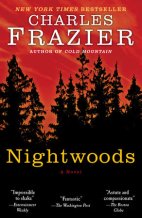
I recently read Nightwoods, by Charles Frazier. For me at least, his first sentence got my full attention and I couldn’t wait to see what was going to happen in this story.
“Luce’s new stranger children were small and beautiful and violent.” – The first sentence in Nightwoods, by Charles Frazier.
Nightwoods, by Charles Frazier
I’d be hard pressed to think of the opening line of another novel that piqued my interest or struck me quite like that one. In 10 words – just five more than the title of this blog post – Mr. Frazier introduced the book’s main character; told us that there are new children in her life who are strangers to her; and not only are those new stranger children small and beautiful, but they are also violent.
Do I have your attention? Okay, okay. Here’s the second sentence in Nightwoods: “She learned early that it wasn’t smart to leave them unattended in the yard with the chickens.” Now you know that the misbehavior of those children will surely be a recurring theme in this book.
It turns out that Luce has “inherited” the son and daughter of her deceased sister, and they are wild.
Since my last blog post
I have made good progress with my work in progress, The Spanish Coin. Rather than being measured in number of words written, last week’s progress was made as I worked on character profiles and my book’s thematic statement. I realized that I had not tried to put the novel’s theme into words. Maybe I didn’t even know what the theme was?
I had to come to grips with the theme of my novel in order to be sure I had chosen the right protagonist, or main character. Discerning that the theme of The Spanish Coin is slavery was a milepost and surprise for me. I thought I was writing a murder mystery set in the Carolinas in the 1760s – and I am; however, the theme of the book has turned out to be slavery.
Five people have signed up for my newsletter since my February 19 blog post. This was given a boost, no doubt, by the fact that David J. Rogers reblogged my post on his site, https://davidjrogersftw.com. As far as I know, this was the first time a post of mine has been reblogged. Thanks, David. Thank you, Philip, Gary, Katherine, Paul, Michelle, and Kay for signing up for my newsletters.
Until my next blog post
Speaking of my newsletters – which have neither been scheduled nor written – if you wish to be added to my mailing list, please fill out the form at the end of this blog post. With your encouragement, I believe The Spanish Coin will indeed be rewritten and published, giving me some news to put in a newsletter.
I will continue to put meat and bones on the characters in The Spanish Coin and perhaps get back into the outline. All the while, in the back of my mind I’ll continue to mull over my book’s hook.
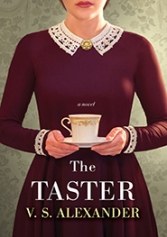
I hope you have a good book to read. I’m reading The Taster, by V.S. Alexander.
If you’re a writer, I hope you have quality writing time.
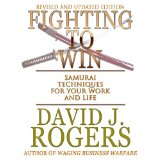
Based on the title alone, I doubt that I would have considered reading Fighting to Win: Samurai Techniques For Your Work and Life, by David J. Rogers. After all, what could I possibly learn from Samurai Techniques that I could apply to my life at my age?
Fighting to Win: Samurai Techniques For Your Work and Life, by David J. Rogers
I follow David J. Rogers’s blog and he follows mine. Visiting his website, https://davidjrogersftw.com, I discovered his books and decided to give this one a try.
It turned out that the timing was perfect. My writing had floundered for nearly a year since I came to the conclusion last April that I needed to make such massive changes in the manuscript of my historical novel work-in-progress, The Spanish Coin, that it amounted to a complete rewrite. This was devastating. I had written 120,000 words and edited it down to 96,000. I knew my characters better than I knew some of my close relatives. I was overwhelmed by the prospect of starting over, and I wrote almost nothing but my blog for the next 10 months.
I’ve always been a world-class procrastinator, so I put my novel on the back burner along with a number of other projects including some areas of housekeeping. Then, I read Fighting to Win: Samurai Techniques For Your Life and Work. I started putting into practice some of those techniques long before I finished reading the book. For one thing, I had to get my spirit in the right place. I had to move from, “I probably can’t do this” to “I can do this!”
Examples (and I’m simplifying and paraphrasing) of Samurai principles and techniques that I’ve come away with after reading David’s book include the following: keep one’s body, mind, emotions, and spirit under control; never let your fears get the best of you; don’t personalize problems or opponents (i.e., it’s a problem, not your problem); don’t whine; when you have a task to do, concentrate on it; do the most difficult or most feared task first and get it over with; always strive for self-improvement; and never hesitate or procrastinate.
The book prompted me to evaluate what is holding me back externally (such as having a chronic illness) and internally (such as fear of failure). A fiction writer does or doesn’t make her living, as the case may be, by asking, “What if?” in order to make her protagonist’s life as difficult as possible; however, she can be paralyzed in her personal life if she dwells too much on the “what-ifs” of life. (I need to make a sign that reminds me of that every day.)
After identifying my “inner dragons,” I was prompted to list the things in my life that I’ve been avoiding instead of doing. It turned out to be a longer list than I anticipated, but I’ve begun to put some Samurai techniques and principles into practice. By attacking the items on my list in an orderly fashion I’ve already made some incremental progress toward getting some things off the list. Ironically, this is pretty much the way my mother approached life and her tasks. She never knew she was using Samurai techniques! Her philosophy of life was, “You do what you have to do and you don’t complain about it.”
The most rewarding aspect of reading David’s book is that I got my focus back on my novel! Writing is hard work, but I have regained the joy of writing this month thanks in great part to reading this book. By focusing on my book idea again and determining a logical order in which to “attack” the work of writing a novel, I have made a good start and I no longer feel overwhelmed by the entirety of the task.
David’s book gives the history of the Samurai in bits and pieces, and I found that aspect very interesting. About all I knew about the Samurai was what I picked up in 1980 by watching the TV miniseries “Shōgun” starring Richard Chamberlain. Since I’m a history buff, I enjoyed the historical aspect of the book, too. It includes many intriguing examples.
If I can overcome my fear of failure, as well as my fear of success (yes, you heard me right!) and my fear of having to pitch my book to literary agents, I just might get my novel written and published, get some quilts finished, lose some weight, and get the clutter in my house under control.
David J. Rogers is going to be surprised when he reads this blog post. I hope I have described portions of his book accurately. In fewer than 1,000 words, I have merely touched on a few of the highlights and lessons in his book.
Since my last blog post
I have joyfully worked on my novel, done some reading, and attended five basketball games in a weekend tournament in Charlotte that one of my great-nieces played in, after which I crashed twice for hours due to Chronic Fatigue Syndrome. It’s been a great week! The crocuses and daffodils are blooming, promising that spring is on the way.
Until my next blog post
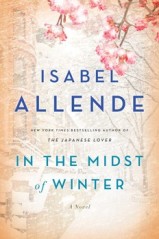
I hope you have a good book to read. I’m into several books to varying degrees. The one I’m most enjoying is In the Midst of Winter, by Isabel Allende.
If you’re a writer, I hope you have productive writing time.
If you’d like to be on my mailing list for future news about my writing, please fill out the form below. I thank those of you who have already done so.
I’m attempting to be a writer, so it’s my business to ponder such things. After reading three different times recently about someone making a concerted effort, it hit me that it just didn’t sound right.
“Concerted” comes from “in concert.” Can an individual be in concert with himself?
What did Google say?
I went to my friend, Google, to see what I could find on the subject. Grammarians say an individual cannot make a concerted effort because it takes more than one person to work in concert. Less picky people who took the time to comment online said a person can make a concerted effort if they put all they have into the effort. In other words, all their concentration, physical strength, mental capabilities, etc. can work in concert.
I’m not convinced. “He made a concerted effort” just doesn’t sound quite right to me.
I can hear what you’re thinking again: Janet has too much time on her hands. No wonder she can’t finish writing her novel!
You’re right, but writers do have to consider such minute issues as they strive to choose exactly the right words.
Since my last blog post
Thank you, Ann G., Ann A., Cheryl, and David for signing up for my mailing list!
I couldn’t help but laugh. Several new people “liked” my January 29, 2018 blog post – the one about my wrinkled 65-year-old face – “Left in the dryer too long” including someone who sells wrinkle cream. I should have seen that coming.
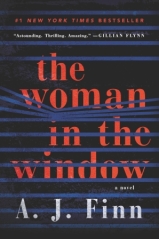
I finished reading A.J. Finn’s debut psychological thriller, The Woman in the Window. If you like that genre, I highly recommend it.
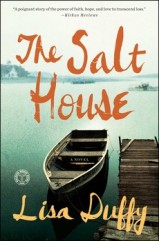
I also finished reading The Salt House, by Lisa Duffy. I liked it, too. It’s about a family dealing with grief after the unexpected death of their toddler.
Until my next blog post
I hope you have a good book to read. I’m still reading Fighting to Win: Samurai Techniques for Your Work and Life, by fellow blogger David J. Rogers. I’m taking lots of notes, David, and the book has already helped me get some things accomplished that had been hanging over my head for a long time. I’m getting a lot out of this book!
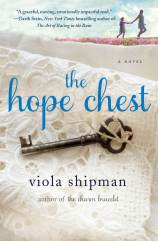
I haven’t given up on finishing Beartown, by Fredrik Backman. I’m just having trouble getting to it and into it. I’ve started reading The Hope Chest, by Viola Shipman, for Rocky River Readers Book Club.
If you’re a writer, I hope you have quality writing time. (I hope I do, too!)
If you’d still like to sign up for my newsletter, please fill out the form below. I promise not to burden your inbox with a bunch of e-mails. I’m told I need to have a following before I get my novel published and that I need to send occasional newsletters to interested parties. Right now, I don’t have anything to put in a newsletter.
January is over, so it’s time for me to “fess up” about how I spent the month. Perhaps a better way to say that is “what I accomplished.” In my January 8, 2018 blog post (2018 Reading, Writing, & Living Plans) I felt I needed to be accountable to my blog readers. In order to do that, I said I’d set monthly writing goals. For January, I set a modest goal of adding 2,000 to the scenic plot outline for my historical novel, The Spanish Coin.
My writing
For starters, I failed miserably on reaching my 2,000-word goal. What I did, though, was brainstorm about story location. I continue to wrestle with what direction to take in re-writing my historical novel manuscript. The working title remains The Spanish Coin.
Historical novel progress
In January I settled on a location for the story. At least, I hope I will not change from this latest locale. I did some 1700s research on the place and worked on the story’s timeline. Location plays an important role in historical fiction. The era for the novel is the 1760’s, which is a decade earlier than my original plan.
Spanish Coin location reveal
Curious about the story’s setting? The Camden District of South Carolina. Choosing a location for the story has freed me to proceed with the outline.
Goal for February
I tend to write detailed outlines, so I’ll go out on a limb and set a goal of 6,000 words for February.
My reading
I got my concentration back and had fun reading in January. I read what I wanted to read instead of tying myself down to any particular reading challenge.
That said, I picked up the rules for the 2018 reading challenges for the public libraries in Harrisburg and Mint Hill (I couldn’t help myself!), but I don’t plan to let them dictate what I read. With 500+ books on my “want to read” list, though, I might meet those two challenges without really trying. Incidentally, even though I read seven books in January, my “want to read” list had a net gain of 39. I realize this is not sustainable. I would have to be a speed reader and live to be a centenarian to finish my ever-growing list.
52 Small Changes: One Year to a Happier, Healthier You, by Brett Blumenthal
The book title says it all. I took note of the suggested change for each week. This week seems like a good week to start, since I didn’t begin in January. This week’s small change: Drink enough water to stay hydrated. I’m told I should drink approximately 80 ounces of water every day. Since I normally drink less than half that amount, this constitutes more than a “small” change for me.
The Rooster Bar, by John Grisham
This latest John Grisham novel took a little different tack from his earlier books in that The Rooster Bar is about a group of law school dropouts practicing law without licenses. I found it to be more humorous than other Grisham novels I’ve read, but it was still full of suspense.
Perennial Seller: The Art of Making and Marketing Work that Lasts, by Ryan Holiday
I blogged about this book on January 22, 2018, so I direct you to that blog post if you missed it: (Works That Last.)
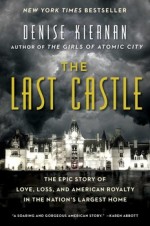
The Last Castle: The Epic Story of Love, Loss, and American Royalty in the Nation’s Largest Home, by Denise Kiernan
The Last Castle, by Denise Kiernan
I’ve been reading so many novels the last couple of years that I’d forgotten how long nonfiction book titles tend to be. Or maybe it’s just the three I read in January.
I thoroughly enjoyed reading this book about the Vanderbilt family and the Biltmore Estate. Living in North Carolina, I have toured the Biltmore House four times. The first time was on a sixth grade field trip. Motion sickness on the bus as it wound around the endless curves on old US-74 east of Asheville is my main memory from that day, but I digress.
My other visits to the Biltmore Estate have been very enjoyable. Reading this book made me want to plan another trip to Asheville and tour the mansion again. It is a delightful book.
Before We Were Yours, by Lisa Wingate
This novel was inspired by the shocking history of the Tennessee Children’s Home Society during the first half of the 20th century. It is a gripping story and is expertly written. It is not a happy read, but I highly recommend this book.
The King of Lies, by John Hart
This was the January book choice of the Rocky River Readers Book Club. The novel is set in Salisbury, North Carolina, so I was familiar with some of the streets and buildings referenced in the book. It’s fun sometimes to read a book set in a location you have visited.
I though Mr. Hart could have omitted some of the “woe is me” theme in the first third of the book. The narrator’s whining about the wealthy people in this small town got old after a while. If you’ll hang in there, though, you’ll probably get so involved in trying to identify the killer that you’ll get to the point you can’t put the book down. You’ll think several times that you’ve figured out the villain’s identity but, chances are, you haven’t.
Nightwoods, by Charles Frazier
This novel has been on my “to read” list for several years, so I felt a sense of accomplishment when I finally read it. It is set in the mountains in western North Carolina.
Nightwoods is a tale about a woman who unexpectedly “inherits” her deceased sister’s twin boy and girl. The children give their aunt/new mother a challenge every day – and then her late sister’s widowed husband/killer comes to try to get the large sum of money he thinks the children took with them. The children are wild and uncommunicative. Add to that the fact that the aunt has no idea why her ne’er do well ex-brother-in-law has suddenly shown an interest in his children and has come to hunt them down.
What about December?
I just remembered that I never did blog about the books I read in December. They were a mixed bag of novels: The Quantum Spy, by David Ignatius; Hardcore Twenty-Four, by Janet Evanovich; and The Secret, Book and Scone Society, by Ellery Adams.
David Ignatius’s political thrillers never disappoint me. The Quantum Spy was no exception.
The last two Stephanie Plum novels by Janet Evanovich disappointed me. I used to eagerly await her annual next installment of these funny novels, but “Twenty-Three” and “Twenty-Four” were too predictable.
The Ellery Adams novel is an entertaining read about four women who want to form a friendship, but each one is required to reveal a secret about herself before they can truly trust one another.
Until my next blog post
I hope you have a good book to read. I’m reading Fighting to Win: Samurai Techniques for Your Work and Life, by my fellow-blogger David J. Rogers; The Salt House, by Lisa Duffy, which was recommended by my friend Karen; Beartown, by Frekrik Backman, which is the February pick for The Apostrophe S Coffee Chat online book community; and The Woman in the Window, by A.J. Finn. That’s about one book too many for me to read at the same time, but they are different enough that I’m not getting the story lines confused.
If you’re a writer, I hope you have productive writing time.
If you subscribed to my mailing list last week, you renewed my faith in mankind. Thank you, Vicki, Colby, Katrina, and Glen!
In case you haven’t signed up for my mailing list, you have another opportunity to do so using the fill-in form below. I appreciate it!
My blog post today highlights a line I like from a book written by the late Sue Grafton. Ms. Grafton died last month after a two-year battle with cancer. She was known for her alphabetical book series. The first book in the series is A is for Alibi. Ms. Grafton had written her way all the way through the letter “Y” at the time of her death. Her fans are disappointed that there won’t be a “Z” book.
A is for Alibi
I was late to jump on Ms. Grafton’s bandwagon and have only read A is for Alibi and B is for Burglar. I was in my early 60s when I read A is for Alibi, so the following line from that book resonated with me. Today is my 65th birthday, so I wanted to share that line with you.
“She was probably 65, with a finely wrinkled face, like something that had been left in the dryer too long.” From A is for Alibi, by Sue Grafton.
I love that line! I have a finely wrinkled face, but that is the least of my worries. In the grand scheme of things, wrinkles don’t matter to me.
Out of curiosity, I looked online to see how old Sue Grafton was when she wrote A is for Alibi. Since she was 41 years old when it was published, I guess she wasn’t dealing with wrinkles yet. It would have been interesting to ask her about her thoughts on the matter when she turned 65 in 2005.
Photo by Jennifer Latuperisa-Andresen on Unsplash
I truly cannot believe I’m 65 years old, even though over the last few months I have received mail from just about every insurance company in the United States proclaiming in bold and large font that I would soon be turning 65 and it was time for me to select Medicare supplemental insurance.
It seems that two or three times a week I receive notices via Facebook that more and more of my high school classmates are having birthdays – and I can’t believe any of them are turning 65 either.
I celebrate today, and in the coming days and weeks I’ll try to embrace my age and remember to say or write “65” when asked my age. With a little luck, I’ll continue to think Ms. Grafton’s “left in the dryer too long” line is funny.
Can you do me a favor?
At the end of last Monday’s blog post I included a request for your name, your e-mail address, your location (because I’m curious about where in the world you are), and a comment so I can start building a mailing list. I filled it out myself, just so I could test it and make sure it was working. I received an e-mail letting me know that I had signed up for my own mailing list. I didn’t hear from anyone else, as in zip… zero.
I’m including the same form at the end of today’s post, except I’m going to try to override the required comment.
If you filled out the form last week, please let me know so I can try to determine why I wasn’t notified.
If you follow my blog via e-mail you probably think I already have your name and address, but I don’t have access to that information.
Until my next blog post
I hope you have a good book to read. I just finished reading Nightwoods, by Charles Frazier.
If you’re a writer, I hope you have productive writing time.
If you are also 65 years old, I hope you’re happy in your own skin, and that includes not minding if you have “a finely wrinkled face, like something that had been left in the dryer too long.”
Janet
P.S. Please fill out the form below. I promise I will not overload your inbox with e-mail.
You’ve heard the saying, “A job worth doing is worth doing well.” That’s one of those old sayings that will always ring true. I was reminded of that saying a couple of weeks ago as I read Perennial Seller: The Art of Making and Marketing Work That Lasts, by Ryan Holiday.
Perennial Seller: The Art of Making and Marketing Work that Lasts, by Ryan Holiday
As a writer, the book spoke to me, but it can be applied to any walk of life. By “work that lasts,” Mr. Holiday refers to a creative work or product that isn’t a “flash in the pan.” It is a work that might not be an overnight sensation, but it steadily draws an audience or buyers. It is a book that you want to read again. You recommend it to friends. It does not depend on hype or fancy advertising, but rather builds a fan base via word of mouth.
Part 1 – The Creative Process
Mr. Holiday quotes his mentor, Robert Greene, as saying, “ʻIt starts by wanting to create a classic.’” Mr. Holiday maintains that this doesn’t happen by accident. It happens when you study the classics in your field, and it demands that you know your purpose in creating the book, the painting, or a gadget that will someday make people wonder how they lived without it.
While creating your work, Mr. Holiday says you must ask yourself, “What am I willing to sacrifice in order to do it?”
He also writes about identifying your audience, and the importance of aiming at that target audience instead of the masses. For instance, in my case, I need to be able to say, “I am writing The Spanish Coin for thesepeople. I can’t wait until I have finished writing the novel (or even the outline) before knowing for whom I am writing. I would love to think that everyone will want to read my book, but if I write it with that in mind, Mr. Holiday says I will have written it for no one.
“Who is this for?” is just one of the questions you must ask yourself during the creative process. Another question you must answer is, “How will it improve the lives of the people who buy it?”
Mr. Holiday takes it another step as he offers a list of four more questions that go deeper. They are along the lines of, “What sacred cows am I slaying?” The writers of classics don’t play it safe!
Part 2
The second part of Perennial Seller: The Art of Making and Marketing Work That Lasts addresses “Positioning: From Polishing to Perfecting to Packaging.” This cannot be left to chance. If not positioned for success by making it the best you can make it and packaging it in the best possible light, your hard work of creating will be for naught.
For a writer, this means that the editing of your book will take a long time. Your manuscript means a lot to you. You have to make sure it will also mean a lot to others – for years to come. You want it to stand out.
Mr. Holiday talks about the importance of a writer finding a good editor and being able to take constructive criticism. He writes, “Only you know how to fix it – but you’ll only find out what’s wrong if you open yourself up to collaboration and input.”
I should make a sign that features that quote and put it by the computer where I do my writing. Along with that, I need a sign with the following quote from Mr. Holiday’s book: “Nobody creates flawless first drafts. And nobody creates better second drafts without the intervention of someone else. Nobody.”
The book goes on to address the writer or inventor being able to succinctly fill in the blanks in the following sentence: “This is a ______ that does _______. This helps people ______.” You must know into which genre your book falls. If you aren’t clear in your own mind how to fill in these blanks about your manuscript, you need to “adjust either the audience or the product until there’s a perfect match. The intended audience is the final blank” in the above two-sentence exercise.
Until you determine who your book is for and what it will do for them, you are aiming at a target you can’t see. Chances are, you won’t hit the target.
Once you identify your target audience, you need to find them and quantify them. I found Mr. Holiday’s personal example for this a bit off-putting. He wrote, “Who is buying the first one thousand copies of this thing?” It’s daunting to think of 1,000 people who will want to buy my novel, but I read on and it got worse.
Mr. Holiday wrote, “For books the superagent and publishing entrepreneur Shawn Coyne (Robert McKee, Jon Krakauer, Michael Connelly) likes to use ten thousand readers as his benchmark. That’s what it takes, in his experience, for a book to successfully break through and for the ideas in it to take hold.”
With those numbers in the back of my mind, I will continue to work on the scenic plot outline for the rewriting of my manuscript titled The Spanish Coin. Another important point Mr. Holiday makes is that the book you write is not only competing with every other book that’s ever been written but with every book that will be written in the future. It’s enough to make me want to throw away my keyboard and concentrate on reading, sleeping, eating, and sewing.
Today’s blog post has hit just a few highlights of Perennial Seller: The Art of Making and Marketing Work That Lasts, by Ryan Holiday. If you aspire to be a writer, artist, or an inventor, I recommend you read this book. (Disclaimer: I have not been compensated in any way for endorsing this book. I read it and got a lot out of it. Come to think of it, word of mouth is important!)
There’s a Part 3?
In this blog post I didn’t even get to Part 3 of the book. Part 3 is about marketing, where he says people do actually judge a book by its cover and the writer must put as much energy into marketing or they do in creating the book. Most writers would rather spend their time writing and leave the marketing to salespeople, but that’s not the way it works. Even bestselling authors have to make personal appearances and pitch their latest books.
And Part 4?
I didn’t get to write about Part 4 of Perennial Seller: The Art of Making and Marketing Work That Lasts, by Ryan Holiday in today’s blog. It’s about “Platform: From Fans to Friends and a Full-Fledged Career.”
Ryan Holiday packs a lot into a relatively small (231-page) book — far too much for me to cover in a blog post.
Until my next blog post
I hope you have a good book to read. I’m finishing The King of Lies, by John Hart, for tonight’s meeting of the Rocky River Readers Book Club. If you’re in the Harrisburg/Concord area, you are welcome to join us for our discussion tonight at 7pm at Rocky River Presbyterian Church at 7940 Rocky River Road, Concord, North Carolina 28025.
If you’re a writer, I hope you have quality writing time.
I’m told that I need to start building a mailing list. If my blog disappears, I want to be able to communicate with you. I promise not to burden you with a bunch of e-mail. In the event I have an announcement to make or I start writing a newsletter, I want to be able to send it to you. Please fill out the contact form found below. At least, I hope it appears below. (You know I’m not computer savvy!)
Today I’m highlighting the opening sentence from the novel Redemption Road, by John Hart. You might have to be “from the country” to fully appreciate this turn of a phrase.
“Bushes were overgrown, but the grass had been cut often enough to hold the forest back.” – opening sentence in Redemption Road, by John Hart
I like how Mr. Hart wrapped that idea up in a simple sentence. Using the phrase, “to hold the forest back” gets the thought across perfectly and succinctly.
If I had written it, I probably would have gone into a detailed explanation of sweet gum sprouts trying to take over the property. Can you guess what we have a problem with in our yard? It seems like the woods are constantly trying to gain more of a foothold on the cleared land that we consider to be our yard.
Until my next blog post
I hope you have a good book to read. I’m reading The Last Castle: The Epic Story of Love, Loss, and American Royalty in the Nation’s Largest Home, by Denise Kieman. I’m also reading Perennial Seller: The Art of Making and Marketing Work that Lasts, by Ryan Holiday. I had to put The King of Lies, by John Hart, on the back burner and switch off to the Kieman and Holiday books because they’re due back at the library before the Hart book. There is method to my madness. I’m able to concentrate enough to read more now than a couple of months ago.
If you’re a writer, I hope you have productive writing time.
Last year I made up my own reading challenge for the year. On January 1, 2018, I reported to you how I’d done. I fell a little short of my goals, but overall I was pleased. I enjoyed many books last year and found lots of new authors to follow.
My 2018 Approach
I’m taking a different approach in 2018. A couple of months ago I made a list of books I wanted to read. Finding nearly 500 books on the list was more than a little daunting. (I’m not kidding!) Rather than setting goals for reading certain books by genre or category in 2018, I plan to just work on that ever-growing list of books I want to read. No doubt, the list will grow more than enough throughout 2018 to counteract the number of books I read during the year. How fortunate I am that I can read and I have free access to most of the books I’d like to read through local public library systems!
The other change I made for 2018 is to include a monthly writing goal. I recently read that a task will fill up the time allotted for its completion. There’s a lot of truth in that for procrastinators like myself. I will never finish writing my southern historical novel if I don’t give myself some measurable goals and deadlines. I’m excited to see how the year and my manuscript go!
January Goals
I hope to add an additional 2,000 words to my scenic plot outline for my historical novel with the working title, The Spanish Coin. That’s a conservative goal for the remainder of January. On a good writing day, I can turn out 4,000 words. I haven’t had a good writing day in quite a while, so I’m starting out small this year.
Photo by Aaron Burden on Unsplash
I hope to read three books.
If I’m accountable to my blog readers for my reading and writing in my first blog post each month, that should be enough incentive for me to get a lot of reading and writing done in 2018. However, I also want to sew, quilt, and play the dulcimer – three hobbies I neglected in 2017. Watch for my February 5, 2018 blog post to see how I did.
I got my dulcimer out of its case last Thursday and felt like I was starting all over learning how to play it. I definitely need to practice at least several times a week or I’ll lose everything I ever knew about playing it.
Until my next blog post
I hope you have a good book to read. I’m reading The King of Lies, by John Hart. It’s the January pick for Rocky River Readers Book Club.
If you’re a writer, I hope you have productive writing time.
As 2017 approached, I took ideas from other reading challenges and developed “Janet’s 2017 Reading Challenge.” If you took my challenge, [Want a reading challenge for 2017?] I commend and thank you. I had some success with this challenge, but I fell short in many areas.
Here’s a recap of Janet’s 2017 Reading Challenge, and a report of sorts on how I did.
A book of poetry – I did well with this for a few months. I read a poem every day, but then I missed a few days and this fell off my radar. The book of poetry I chose was A Little Book of Cherished Poems, compiled by Kay Anne Carson. Reading poetry is supposed to help me be a better writer, even though I’m not a poet.
A Sci-Fi book – As I said in my blog on December 26, 2017, I’m not a sci-fi fan and this didn’t happen.
A nonfiction book – I read several, but the one I’ll list here is Killers of the Flower Moon: The Osage Murders and the Birth of the FBI, by David Grann.
Books by 12 authors I’ve never read – This one was easy. Of the 63 books I read in 2017, 43 of them were written by authors I’d never read before. The following are 12 examples:
The Body in the Snow (A Bebe Bollinger Murder Mystery), by Christoph Fischer;
The Underground Railroad: A Novel, by Colson Whitehead;
A novel set in each of the seven continents – I read the following:
North America – too numerous to list here;
South America – State of Wonder, by Ann Patchett;
Europe – There were many good ones, including The Saboteur, by Andrew Gross; The Chilbury Ladies’ Choir, by Jennifer Ryan; and The Magdalen Girls, by V.S. Alexander; and The Orphan’s Tale, by Pam Jenoff.
Asia – I started reading The Tea Girl of Hummingbird Lane, by Lisa Lee. I didn’t get it finished. It’s still on my “want to read” list.
Africa – The Lost History of Stars, by Dave Boling;
Australia – The Light Between Oceans, by M.L. Stedman.
Antartica – I wanted to read In Cold Pursuit (Em Hansen Mysteries), by Sarah Andrews. I didn’t get around to it.
A novel by a North Carolina author – This one was easy. There are an abundance of good writers in North Carolina. To name just two novels I read by North Carolina authors in 2017: The Silent Sister, by Diane Chamberlain and Chasing the North Star, by Robert Morgan.
A novel set in North Carolina – The Stolen Marriage, by Diane Chamberlain, and The Last Ballad, by Wiley Cash, to name just two.
Re-read a favorite book – I couldn’t decide between The Help, by Kathryn Stockett; Roots, by Alex Haley; Tom Sawyer, by Mark Twain; and The Adventures of Huck Finn, by Mark Twain, so I didn’t re-read any of them. There were too many new books I wanted to read.
A book written in the 1700s – I never got around to this one.
A book written in the 1800s – I never got around to this one.
A book written in the 1900s – I can’t believe I never got around to this one. It seems like just yesterday it was 1999. I did read Bird-by-Bird: Some Instructions on Writing and Life, by Anne Lamott, 1994; but my intention was to read a novel written in the 1900s.
A biography, autobiography, or memoir – In Order to Live: A North Korean Girl’s Journey to Freedom, by Yeonmi Park. (I highly recommend this one.)
A book about a religion other than my own – I wanted to read If the Oceans Were Ink: An Unlikely Friendship and a Journey to the Heart of the Quran, by Carla Power, but didn’t get to it.
A book that might change my mind – I read Same Kind of Different as Me, by Ron Hall and Denver Moore. This book helped me to see homeless people in a new light. Tears We Cannot Stop: A Sermon to White America, by Michael Eric Dyson, gave me a lot to think about and helped me be more cognizant of the advantages I’ve had in my life in America due to white privilege.
A book just for fun – I read Turbo Twenty-Three by Janet Evanovich and Hardcore Twenty-Four, by Janet Evanovich. Both were disappointing because after this many books in the Stephanie Plum Series, the plot is too predictable. The next time I want to read an entertaining book, I might go with Mark Twain.
A book that will teach me a new skill – Since I am losing my hearing and don’t know what the future holds, I thought it might be a good idea to learn sign language. I soon discovered this was easier said than done at the age of 64. I have sporadically studied The American Sign Language Phrase Book, by Louie J. Fant.
A book that was originally written in a language other than English – A Man Called Ove, by Fredrik Backman.
A book written in Spanish (a language I haven’t studied since 1973) – I started re-reading Don Quijote de la Mancha, by Miguel de Cervantes, in January. That’s as far as I got.
A book published in 1953 (the year I was born) – It’s not easy to find books that old! Go Tell it on the Mountain, by James Baldwin, was on my list. I didn’t get it read.
A book that is the first in a series I haven’t read any of before – I started reading Death of a Gossip, by M.C. Beaton, but it didn’t grab my interest.
The second book in a series of which I’ve read the first book — Everything Over Glory, by Kathleen Grissom
A book written by an author I’ve met – The 13th Target, by Mark de Castrique.
A book of short stories – Nothing Gold Can Stay: Stories, by Ron Rash.
A book published in 2017 – I read several, but one I haven’t mentioned yet for this challenge is Here and Gone, by Haylen Beck (a.k.a. Stuart Neville.) I thought this was a terrific thriller.
A book about the craft of writing historical fiction – I intended to read The Art and Craft of Writing Historical Fiction: Researching and Writing Historical Fiction, by James Alexander Thom. I started reading it and taking notes. Somewhere along the way, I misplaced it. Still looking for it. Surely, it’s here somewhere.
A Nobel Prize winner – Well, this is embarrassing. <crickets chirping>
A political thriller – The Quantum Spy, by David Ignatius.
How did you do?
If you participated in a reading challenge in 2017, how did you do? This isn’t a competition. I just hope you enjoyed the books you read.
Until my next blog post
I wish you a Happy New Year!
I wish you many good books to read. I’m reading The Rooster Bar, by John Grisham.
If you’re a writer, I wish you quality writing time and publication.
I try to plan most of my blog posts in advance. My ideas for my blog post yesterday included my thoughts about finding time to write during the holidays and just taking the easy way out and posting a photograph. The caption was going to be optional.
Did you notice I said, “My ideas for my blog post yesterday….?” There was no blog post yesterday. Not only have I squandered time for writing in December, I forgot to post a blog yesterday. No rambling thoughts about writing. No photograph. No caption. No blog post.
Who, me?
For those of you who hang on my every word and look forward to Monday mornings just because you know you’ll have a Janet Morrison blog post to read, I apologize. To the rest of you (and you know who you are) I join you in asking, “Who knew Janet blogged on Mondays?”
I forgot to blog, and the world continued to turn on its axis and revolve around the sun. Time did not stand still.
Next Monday is another holiday, but I’ll try to get back on track. On January 1, 2018, I plan to blog about how successful I was in meeting my 2017 personal reading challenge. There are holes like in Swiss cheese in my reading accomplishments this year. I could fill some of those holes by reading the rest of this week. I want to read, but I also want to sew. I also want to get my dulcimer out of its case and see if I still know how to play it.
I decided to take a few minutes today to reflect on the pros and cons of participating in a reading challenge.
The pros:
(1) A reading challenge can prompt you to read something you might not otherwise read. Hence, the word “challenge.” For instance, one item on my personal reading challenge this year was to read a science fiction book. I’m not a fan of sci-fi. Sorry, I’m just not. I thought putting it on my challenge would force me to read a sci-fi book. It did not. I procrastinated for 12 months. It didn’t happen.
(2) A reading challenge nudges you to read a variety of books.
The cons:
(1) I can only think of one. You can get so wrapped up in meeting your reading challenge that you miss the chance to read books you’d rather be reading. If you are a competitive person, you might let the challenge become more important than the reading. If that happens, the purpose of the challenge has been hijacked.
Your thoughts
Where do you stand when it comes to participating in a reading challenge? Do you find them helpful? Do you think they’re fun? Do you find them to be freeing or restraining? I invite you to comment about your reading challenge experiences below.
Until my next blog post
I hope you have a good book to read.
If you’re a writer, I hope you have quality writing time.
On this day after Christmas, I hope all my Christian readers had an Advent season filled with blessings and a Christmas day overflowing with joy as you remembered the birth of our Lord and Savior, Jesus Christ.
May the love, compassion, and joy of the season continue in our lives in the coming year.