Books I Read in August 2024

After not finding anything that grabbed my attention enough to finish reading it in July, it was refreshing to get back into reading in August. My interests are varied, as you will see by the four books I read last month.


Simple Pleasures: Haiku from The Place Just Right, by Elizabeth Gauffreau

Photo of book cover for Simple Pleasures: Haiku From The Place Just Right, by Elizabeth Gauffreau
Simple Pleasures: Haiku From The Place Just Right, by Elizabeth Gauffreau

This is a wonderful collection of 53 haiku! If you aren’t familiar with the haiku form of poetry, this book by Elizabeth Gauffreau would be the perfect introduction for you.

Elizabeth writes in the haiku form of five syllables in the first line, seven syllables in the second line, and five syllables in the third line. Haiku is defined by syllables and a precise choosing of words, but that is not the essence of the art form.

As I understand it, — and I’m no authority — the essence of haiku is the creation of a compact choice of words that convey a feast for the senses. As a writer, I am always taken aback when I read haiku. I marvel at how eloquently and concisely a complete idea or image is written by the poet.

In Simple Pleasures: Haiku from The Place Just Right, Elizabaeth Gauffreau pairs each poem with a photograph from New England, so the book gives the bonus of specific places and images important to the poet. The reader can see what types of places in nature inspire Elizabeth in her writing.

This is a book I will read over and over. It is the perfect book to sit down with when you need a few minutes to relax or calm down after a trying experience. You can read the book in one sitting, or you can read it one poem at a time. Either way, you will savor the gift that it is.


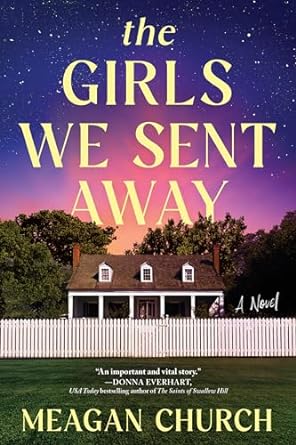
The Girls We Sent Away, by Meagan Church

Photo of the front cover of the novel, The Girls We Sent Away, by Meagan Church
The Girls We Sent Away, by Meagan Church

Switching gears from the calming effects of haiku, The Girls We Sent Away, by Meagan Church, does not deal with a pleasant topic. It is about how in mid-20th-century America, unwed girls who became pregnant were often “sent away” to homes for unwed mothers.

The stigma attached to such events in the 1950s and 1960s was something that middle-class Americans could not deal with. Such girls were hidden away at home or, in many cases including the protagonist in this novel, quietly sent away to facilities just for such situations.

In this novel, Lorraine Delford aspired to be an astronaut in the early days of space exploration. She had the intelligence to do it. She was on track to be the valedictorian of her high school class when all that was shattered.

Lorraine finds herself in the predicament of getting pregnant, being abandoned by the boyfriend, and devastatingly abandoned by her parents. She goes from being the apple of her parents’ eye to being a source of great shame and embarrassment.

Lorraine is hidden away at home until arrangements can be made for her to move into a facility for unwed mothers. All life choices are now made by her parents and the authorities in charge of the dormitory-type home.

She is given little information about what will happen there, and even less information about what her life will be like. She has no say in what happens to her baby. She knows from what happens to other girls that as soon as she has her baby she will disappear without having the chance to say goodbye to her friends.

This book takes Lorraine through the whole process and into her return home to her parents. It is then that she discovers a deep, dark secret her parents have kept from her for her entire life. That secret changes everything.


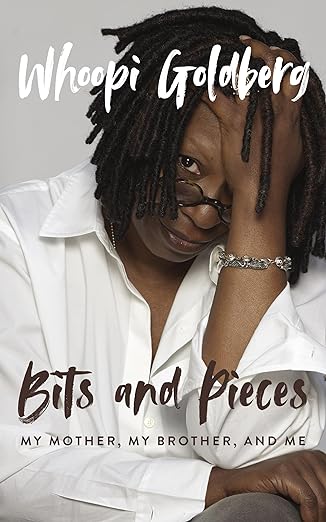
Bits and Pieces:  My Mother, My Brother, and Me, by Whoopi Goldberg

Photo of front cover of Whoopie Goldberg's memoir, Bits and Pieces: My Mother, My Brother, and Me
Bits and Pieces: My Mother, My Brother, and Me, by
Whoopie Goldberg

As a rule, I don’t follow the lives of celebrities. I don’t care about the ins and outs of their lives, unless it is to learn about their philanthropic endeavors. It’s nice to see someone with wealth using it to help less fortunate people or using it to save the planet and its wildlife.

Whoopie Goldberg is an interesting person. She and I are close in age. I have enjoyed her acting and I agree with a lot of her political views. I checked out her memoir, Bits and Pieces:  My Mother, My Brother, and Me, to learn more about her background. Although contemporaries in age, I knew that she and I had very different childhoods.

In this book, Whoopie pulls no punches. She lays out many of the details of her life with frankness that many others would shy away from. She and her brother were very close. She knew he always had her back – as children and as adults.

Their mother was an extraordinary person, to say the least. Raising two children on her own was no easy task in New York City in the 1950s and 1960s, but she worked hard and made sure her children took advantage of every available opportunity for educational and cultural experiences.

Whoopie’s mother and brother have died, so Whoopie is left with a gigantic hole in her heart. They were the two people on Earth who knew her as well as she knew herself. This book conveys to the reader to never limit yourself or those around you. It also conveys to never take for granted the loved ones in your life, for they can be gone in an instant.


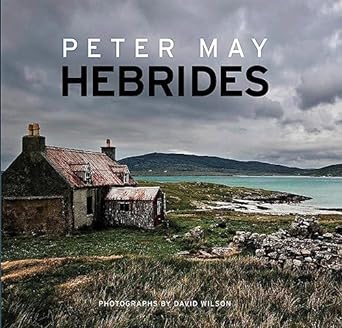
Hebrides, by Peter May

Photo of front cover of Hebrides, by Peter May, a nonfiction book filled with descriptions and photographs of the Hebridean islands of Scotland
Hebrides, by Peter May, with Photographs by David Wilson

This is a fantastic picture book about the Hebrides off the northwestern coast of mainland Scotland. I have visited several islands in the Outer Hebrides and Inner Hebrides, and the gorgeous photographs and detailed descriptions in this book transported me right back there!

Readers might be familiar with the mystery novels written by Peter May. This is the same Peter May. He now lives in the Outer Hebrides, and this book leaves no doubt about his love for the islands.

The Hebrides are sparsely-populated with scatterings of communities among the massive peat bogs from which residents get most of the fuel for heating their homes and for cooking. Here and there along the rugged coast are pristine beaches. The waters of the Atlantic and The Minch are as clear as tap water. You will usually have a beach area all to yourself.

The area is so far north that in the middle of summer there are almost no hours of darkness, which makes for a tourist’s paradise. It’s not easy to get there. You don’t accidentally find yourself on the Isle of Lewis! But the effort is worth it if you seek a quiet place where the people are kind, soft-spoken in their Scottish lilt and their native Gaelic tongue, and the pace is somewhat slow. There are no crowded highways and no chain fast-food restaurants.

It is a spectacular corner of the world, and I will be forever blessed by having spent some time there. If you are planning a trip there or know that you will never get there, I recommend Hebrides, by Peter May to whet your appetite or to make you feel as if you have visited the islands.

P.S. Be sure and pack a heavy jacket, even if you’re going in July or August!


Until my next blog post

Be sure to visit my website: janetmorrisonbooks.com and subscribe to my e-Newsletter. The September issue will be coming out this week. I don’t want you to miss reading about my “field trip” last week to Swannanoa Gap in the mountains of North Carolina where I learned about the construction of the Western North Carolina Railroad in the 1870s.

I hope you have a good book to read.

Hold your family and friends close.

Remember the people of Ukraine.

Janet

This Week in History: 1945

I could not get excited about writing about the August 12, 1898 US annexation of Hawaii for today’s blog post. (I could get excited about Hawaii’s statehood, which happened in my childhood, but its annexation as a territory? Not so much.)

I couldn’t muster the energy to do enough research to write 500 or 1,000 words about the annexation of Hawaii, and I doubted if my blog readers were interested enough to read about it. (If I’m wrong, feel free to look it up.)

In the big scheme of things, the events of the week of August 6-15, 1945 were more momentous than what happened about Hawaii in 1898.

It occurred to me that the 79th anniversaries of the bombing of Hiroshima on August 6, the bombing of Nagasaki on August 9, and the surrender of Japan on August 15, 1945 have barely been mentioned in the United States this week.

The famous bomb dome in Hiroshima. Photo by Griffin Quinn on Unsplash

I watch some programming on a TV station in Tokyo. The news and other programming are available via the public TV system here in metro Charlotte. The dates of the atomic bombs are marked in Japan with solemn government-sponsored gatherings and, no doubt, by many private gatherings and individuals.

The horror is remembered by the Japanese people, but the overriding theme of the coverage I have seen over the last week is peace. The Japanese people know first-hand the horrors of nuclear war, and they are adamant that such weapons should never be used again.

Nagasaki Atomic Bomb Museum Photo by Roméo A. on Unsplash

The dropping of those atomic bombs were horrific events in which hundreds of thousands of innocent people were killed, maimed, severely burned, orphaned, or doomed for various health maladies for the rest of their lives.

It has been said that those bombs resulted in the almost immediate surrender of Japan, thus ending World War II and ultimately saving more lives than they took. I guess we will never know the truth of that reasoning and justification.

I imagine the people who are old enough to remember the events of that week – whether they live in Japan, the United States, or other countries involved in the war in the Pacific Theater — are puzzled over the fact that the world is taking little notice of this week’s 79th anniversaries.

Photo by Sunguk Kim on Unsplash

I suppose there will come a time when September 11 will be just another day in the United States. The Americans who were young children or who were born after September 11, 2001, cannot possibly think of that day the way it is forever etched in my memory.

Life goes on. Events are forgotten. To those of us born after 1945, that year seems like ancient history. That’s just human nature. I was born in the United States in 1953, so I grew up with no concept of what life was like during World War II. But that does not excuse me if I don’t stop and think about the events of 79 years ago.

I owe it to my parents, my aunts and uncles, and even my oldest first cousins – all of whom are dead – to remember the sacrifices they made during World War II, their military service, their work to help build military planes, and their courage to hold things together on the home front – all while not knowing when or how the war would end and not knowing which of their loved ones or friends would not come home.

Since my blog post last Monday

I am feeling better than when I penned my August 5 blog post. I was discouraged by an illness which has taken much from me. However, I have been bolstered by the outpouring of concern I have received from many of my readers. Each day has been better than the one before. I’ve even been able to listen to an entire novel and enjoy it!

Thank you for your support and encouraging words. I always come out of these slumps and return to my “normal,” but each time I experience a relapse I can’t help but wonder if I will come out of it.

Since my last blog post

I hope you got a chance to read my reblogging on Friday of a blog post about Elizabeth Graffreau’s new book, Simple Pleasures: Haiku from the Place Just Right. It was my first attempt at reblogging.

Until my next blog post

Take a few minutes to think about the events of this week in 1945. Let’s continue to give diplomacy and peace a chance.

Peace Memorial Park in Hiroshima Photo by sabari nathan on Unsplash

I hope you have a good book to read. I am easing back into reading this month, for which I am grateful.

Remember the people of Ukraine.

Janet

A Different Kind of “First-Blog-Post-of-the-Month” Blog Post

If you read my blog last week (A Lost Art) or my July e-newsletter, you know I have been decluttering this summer. I have reached an age at which I have realized that I’m not going to live forever and I really don’t want to leave my heirs a massive mess to deal with when I’m gone or incapacitated. Hence… it is time to declutter and part with many of the things, assorted memorabilia, pieces of paper, nice magazines, photographs, and even some of the books I never should have kept in the first place.

It’s time to let someone else get joy from some of my things by taking them to the thrift shop or donating them for a yard sale an organization is holding. It’s time for the recycling center to turn some of them into recycled paper. It is time for the landfill (my least favorite choice) to accept the rest.

In my first blog post of the month, I almost always write about the books I read the previous month. That is not what today’s post is about.

I started reading three or four books in July, but none of them grabbed my interest enough for me to drop everything else and finish reading them. Do you ever have times like that? When nothing feels quite right? When even favorite authors’ newest releases just fall flat?

The entire month of July was like that for me and August has begun in the same way.

Decluttering is exhausting for everyone. Looking at every item and every piece of paper and deciding whether to keep it or let it go is tedious and time consuming. I once again live in the house my parents built when I was seven years old. It is easy for things to accumulate in 64 years!

But that’s not the whole story. In fact, it is just a by-product of the root of the problem.

Photo by Jr Korpa on Unsplash

Some of the challenges of Myalgic Encephalomyelitis

Due to Myalgic Encephalomyelitis, I always have trouble remembering the details of what I just read… and sometimes it is worse than others. I am in one of those worse times now. When it hits, it is unsettling at best and devastating at its worst.

Every time I have experienced this in the 37 years I’ve dealt with this illness, it feels like I will never feel any better than I do at the moment. Perhaps this is the time that I stay stuck forever in the brain fog and debilitating fatigue in which I struggle to put one foot in front of the other. That is the state in which I find myself as I put the finishing touches on this blog post.

As described by the Mayo Clinic, the symptoms of Myalgic Encephalomyelitis vary from one person to another and from one time to another for each individual. Physical and mental activity worsen the person’s fatigue, and rest does not lessen the symptoms.

After 37 years, I no long remember what refreshing sleep feels like. I have very active dreams and my body can’t seem to distinguish between dreamt activity and actual activity. Therefore, I always wake up more exhausted than when I went to sleep. I have to ease into my day and mornings are not good for me.

That makes no sense to someone who has not experienced it, but it is the best way I know to describe my life. As with any other person dealing with a chronic illness, I have to push through each day and do the best I can. This is my life, and I choose to make the best of it.

Part of my brain tells me that I will not stay in this slump forever, so I will hang onto that thought. I have to.

I chose to use the more accurate name for this little-understood syndrome in today’s post rather than my usual use of the American term for it, Chronic Fatigue Syndrome (CFS). That name is degrading to the people who deal with the illness as patients or as medical professionals. It belittles the illness and the patients. It brings on comments like, “I’m tired, too.” Comments like that only serve to make the patient feel less valued as a human being. The CFS moniker for such an all-consuming illness is tantamount to the early name of Multiple Sclerosis: Malingerers Disease.

What did I try to read in July?

One book that I just didn’t have the mental energy for was Reading the Constitution: Why I Chose Pragmatism, Not Textualism, by retired US Supreme Court Justice Stephen G. Breyer. It is a very detailed book about a deep subject. The political scientist in me wanted to read it, but I was too tired to give it the time and concentration it needed. Mr. Breyer is very good at explaining laws and concepts in understandable language.

A political thriller I enjoyed but didn’t have time to finish before it had to be returned to the public library was Phantom Orbit, by David Ignatius. I have enjoyed all of Ignatius’ novels. I’m on the waitlist to check it out again.

Until my next blog post

If you tuned in today eager to see what I read last month, I apologize. If I can snap out of this mental fog, I will blog about the books I read in August in my blog post the first Monday in September 2.

Until then, I hope you have a good book to read.

My planned topic for next week’s blog post is the anniversary of the United States’ annexation of Hawaii as a territory in 1898. Time will tell if I am able to do the necessary research on that subject over the next seven days. If not, I hope to return to the blogosphere in the near future.

And please remember the people of Ukraine.

Janet
A Lost Art

How many of us take the time or even think about handwriting a letter today? It has been so long since I handwrote more than a brief thank-you note, I honestly cannot remember. It is easier to text, email, or type a letter on the computer and print it.

I mentioned in my July e-newsletter that I have been decluttering. I have attempted this chore many times in the past with limited success; however, I am on a tear this time.

I should have taken “before” and “after” pictures. I should have weighed how much stuff I donated to the thrift shop. I should have weighed the two recycle bins that were so heavy with paper and magazines that I could scarcely push them out to the road for pick up. I should have weighed the countless bags of trash. I shredded old documents until I thought our paper shredder would start to smoke.

My parents were in college when The Great Depression began. They had to make their way in this world on little money and no luxuries. Their background meant they instilled in me the value of a dollar and one should never throw away anything because “you might need it or be able to use it later.”

I am once again living in the house they built in 1960, so there are many boxes and closet shelves to go through now.

It is a freeing experience to unburden oneself from the accumulation of stuff. As I blogged about on July 1, 2024 ( Books read in June 2024), I was inspired by reading Stop Buying Bins & Other Blunt but Practical Advice from a Home Organizer, by Bonnie Borromeo Tomlinson.

I’m not saying this is the end-all be-all book about decluttering, downsizing, or rightsizing. All I know is that it was the right book for me at the right time.

One unexpected benefit or result of my current decluttering binge was the rediscovery of handwritten letters. If you have lost a parent and had a good relationship with that person, you have probably felt that tug on your heart when you come across something in their handwriting.

Photo by Aaron Burden on Unsplash

Perhaps you found a recipe your mother wrote on an index card or scrap of paper. Perhaps it was nothing more than your father’s signature on a document. My father was a structural steel draftsman, so he usually printed. I can readily recognize his precise printing, whether it be on a blueprint or genealogy notes he made, but it is special when I find his signature because it, of course, is in cursive.

In going through decades of stuff this summer, I have come across birthday cards signed by my parents, various aunts and uncles, and dear childhood friends who are no longer with us. Some have brought a lump to my throat and a sting to my eyes as tears begin to form. Those cards are set aside and not yet tossed in the trash or recycle bin. Someday that’s where they’ll land, but not today.

The lost art I referenced in today’s blog title is the handwritten letter. I have found many of the letters my mother wrote to me while I was away in college and in my early 20s when I found employment several hours from home. I was struck by the contrast between that time in the 1970s and early 1980s as compared to today.

Today parents text or call their children who are in college or have otherwise left home and struck out to make their way in the world. They think nothing of making that phone call or sending that text. When I was in college and during my young adult years it was expensive to call “long distance.” You had to have a very good reason for calling home when I was in college.

There was one telephone on the wall in the hallway in my freshman dorm. I knew if I received a call from my parents, it was probably to relay bad news or something that couldn’t wait two or three days for them to tell me in a letter. And there were no long conversations because every minute cost money.

I am so glad that’s the way it was because it means today I can reread all those letters my mother wrote. Today’s college students and young adults will not have such tangible memorabilia.

Several years ago, my sister and I helped a friend organize in archival binders and archival sleeves the letters he and his wife wrote to one another while he was in the military service as a fighter pilot in World War II and the Korean War. He will turn 100 years old in October. He calls occasionally to thank us again for what we did. He lives alone and the days and nights are lonely. He says he finds great comfort and joy in opening those binders and reading those letters.

We have photocopies of portions of letters one of our great-grandfathers wrote to his parents and sister while he was serving in the military during the American Civil War. How valuable those letters are to us!

While going through a box of papers last week, I came across a typewritten letter from my eldest first cousin from some 30 years ago. She was much older than I. In that letter, she shared some recollections of her mother’s. (Her mother was my father’s eldest sister and was 14 years older than he.) I had forgotten about the letter, so it was new and fresh as I read it last week.

From the letter I learned that my grandmother won prizes for her jams, jellies, canned fruits, eggs, and Rhode Island chickens. Since my grandmother died 23 years before I was born, I never knew her. However, that one sentence in my cousin’s letter gave me a beautiful glimpse into my grandmother’s life that I would not have known otherwise.

It is nice today that we can call a friend or relative and hear their voice, but in the process of making our communications so easy and instant we have lost the art of letter writing.

Do you still write letters to loved ones and friends who live faraway? Do you still have letters you have received?

For now, I’m holding on to those letters from my mother. The day might come when I’m ready to part with them, but today is not that day.

Until my next blog post

Is there someone who would appreciate a hand-written note or letter from you this week?

I will continue to go through boxes and closets and the basement. This decluttering/rightsizing thing isn’t a sprint; it’s a marathon. I have only just begun!

I hope to get back to work on my Seasonal Affective Disorder devotional book this week.

I hope you have a good book to read.

Don’t forgot the people of Ukraine.

Janet

This Writer Needed a Change of Scenery — Part III

Between the piedmont of North Carolina and the Outer Banks there are many interesting places to visit. Here’s a sampling of the places my sister and I stopped to enjoy in the northeastern coastal plain on our way to and from the Outer Banks a month ago.


Somerset Place State Historic Site and Lake Phelps

On the way, we visited Somerset Place State Historic Site (https://historicsites.nc.gov/all-sites/somerset-place) again and ate a picnic lunch at Pettigrew State Park (https://www.ncparks.gov/state-parks/pettigrew-state-park) on Lake Phelps. Somerset Place is a restored plantation.

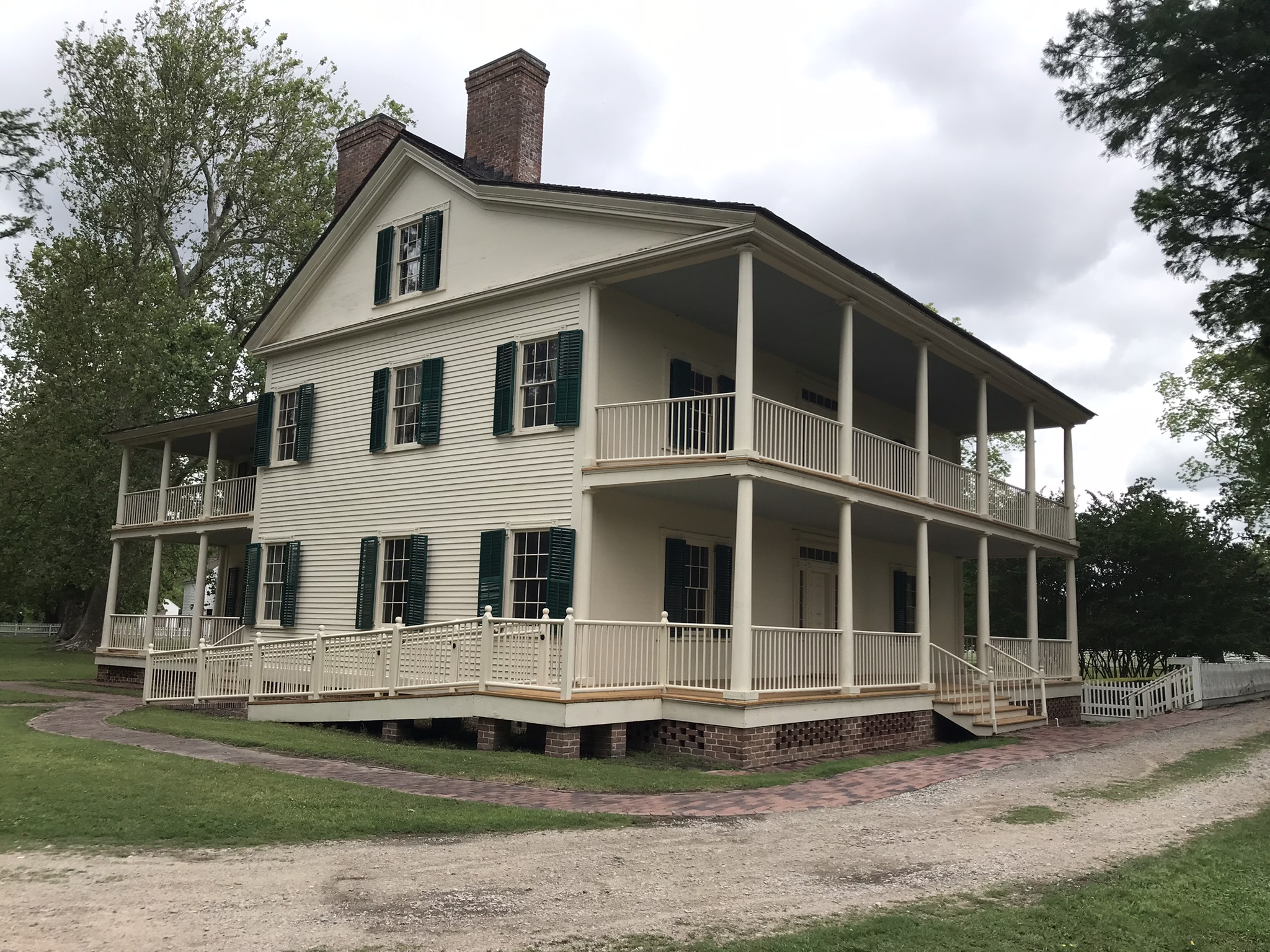
Somerset Place Plantation House

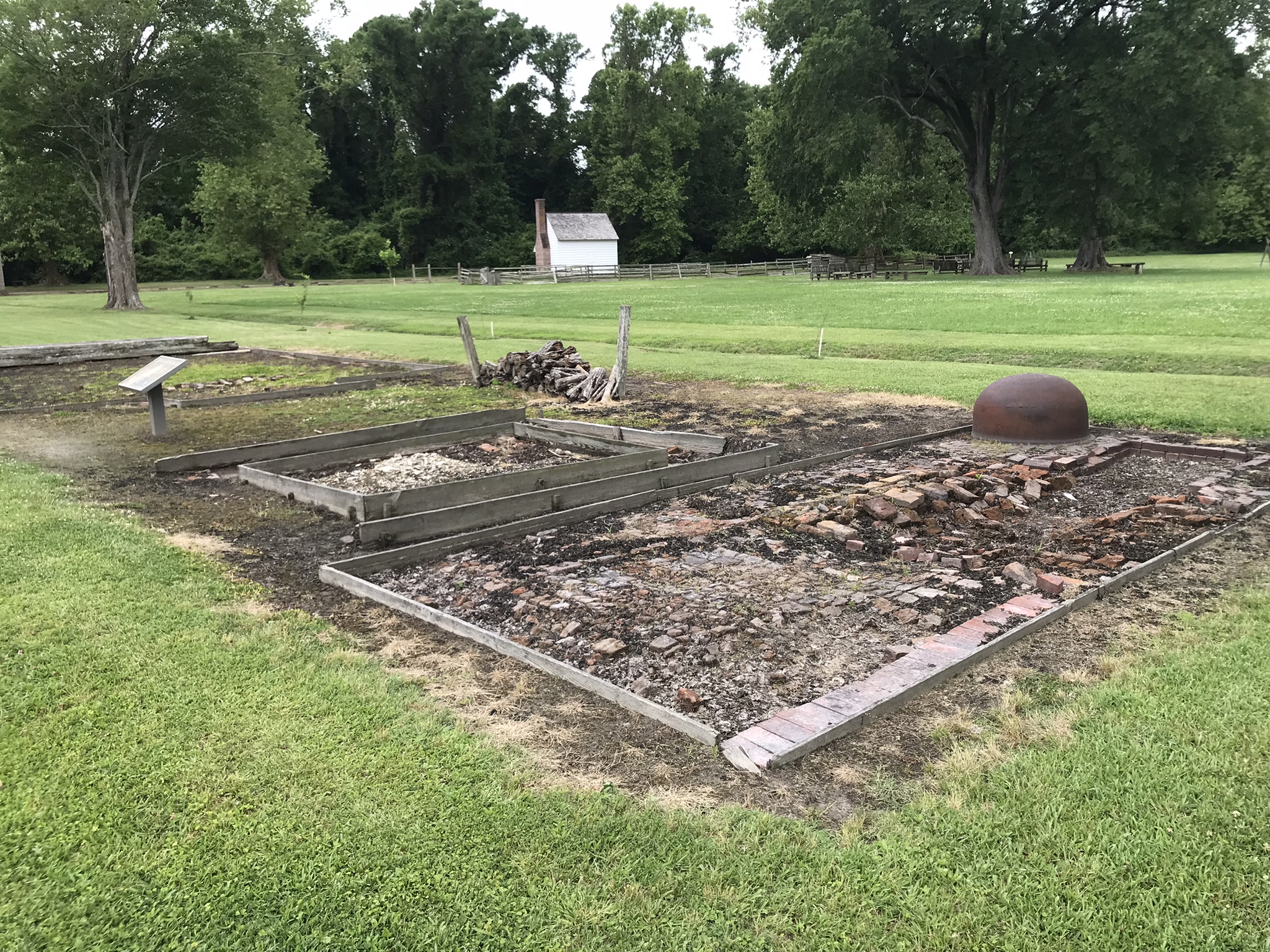
The plantation house was not open for tours on this trip, but we were more interested in seeing some of the slave buildings. The foundations of some of the buildings used by the Africans who were enslaved there in the 18th and early 19th centuries have been excavated. Several have been identified as buildings that were used by the slaves to prepare their midday and communal Sunday meals.

Excavated foundations of buildings at Somerset Place

There was also an on-site jail, stocks, and descriptions of the punishment meted out to some of the slaves who attempted to escape.

Plantation hospital at Somerset Place

Below is a photo of a building called Old Sucky’s House. It is a reconstruction of one of the many dormitory-like structures at Somerset Place that housed as many of 26 people. Old Sucky Davis was known as a matriarch among the hundreds of slaves that were held at Somerset Place.

Old Sucky’s House (Reconstructed) at Somerset Place
Interior of Kitchen House at Somerset Place

Needless to say, Somerset Place was a somber first stop on our trip. If you want to learn more about this plantation, I highly recommend Somerset Homecoming: Recovering a Lost Heritage, by Dorothy Spruill Redford with Michael D’Orso.

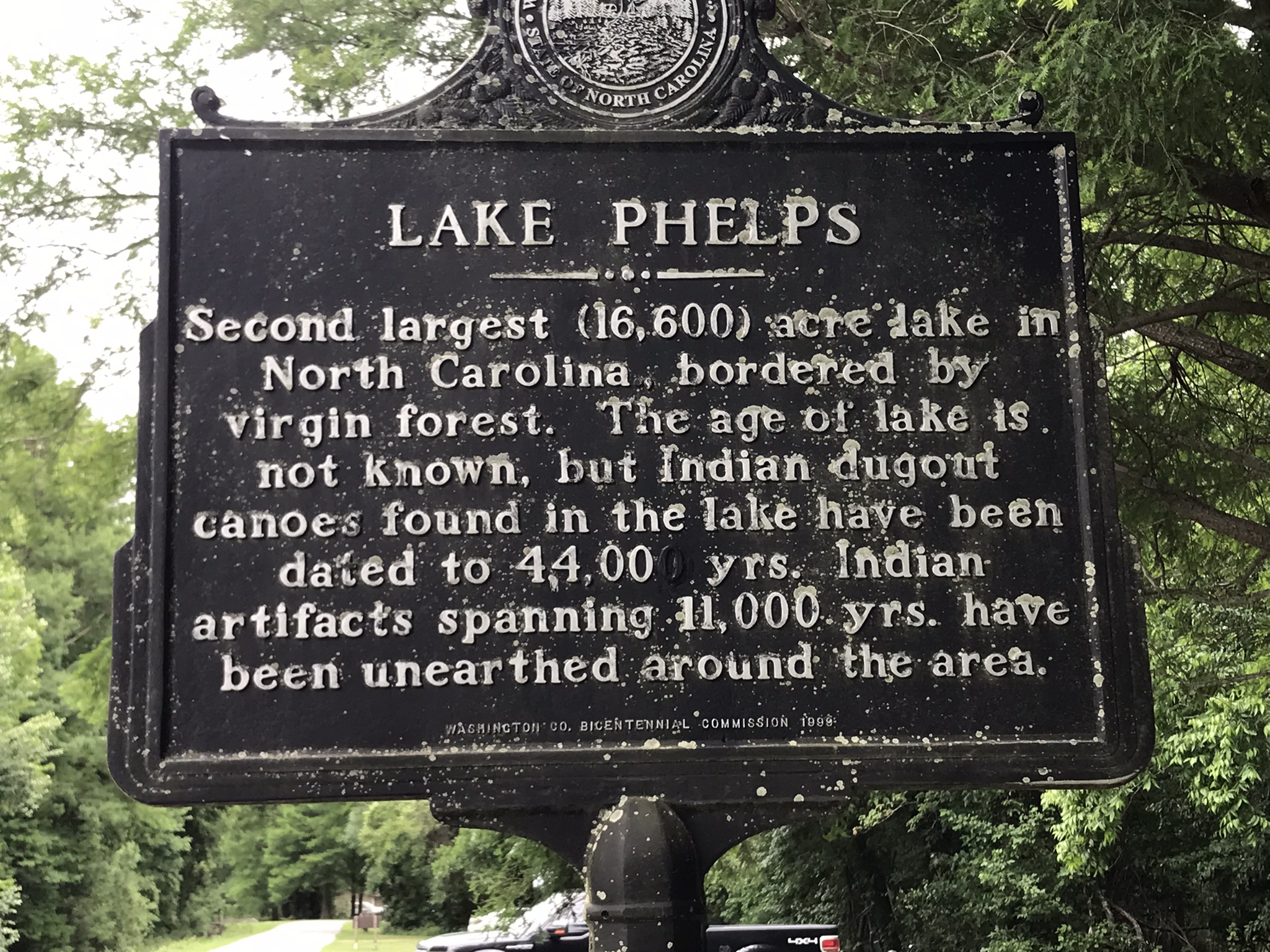
Sign condensing history of Lake Phelps
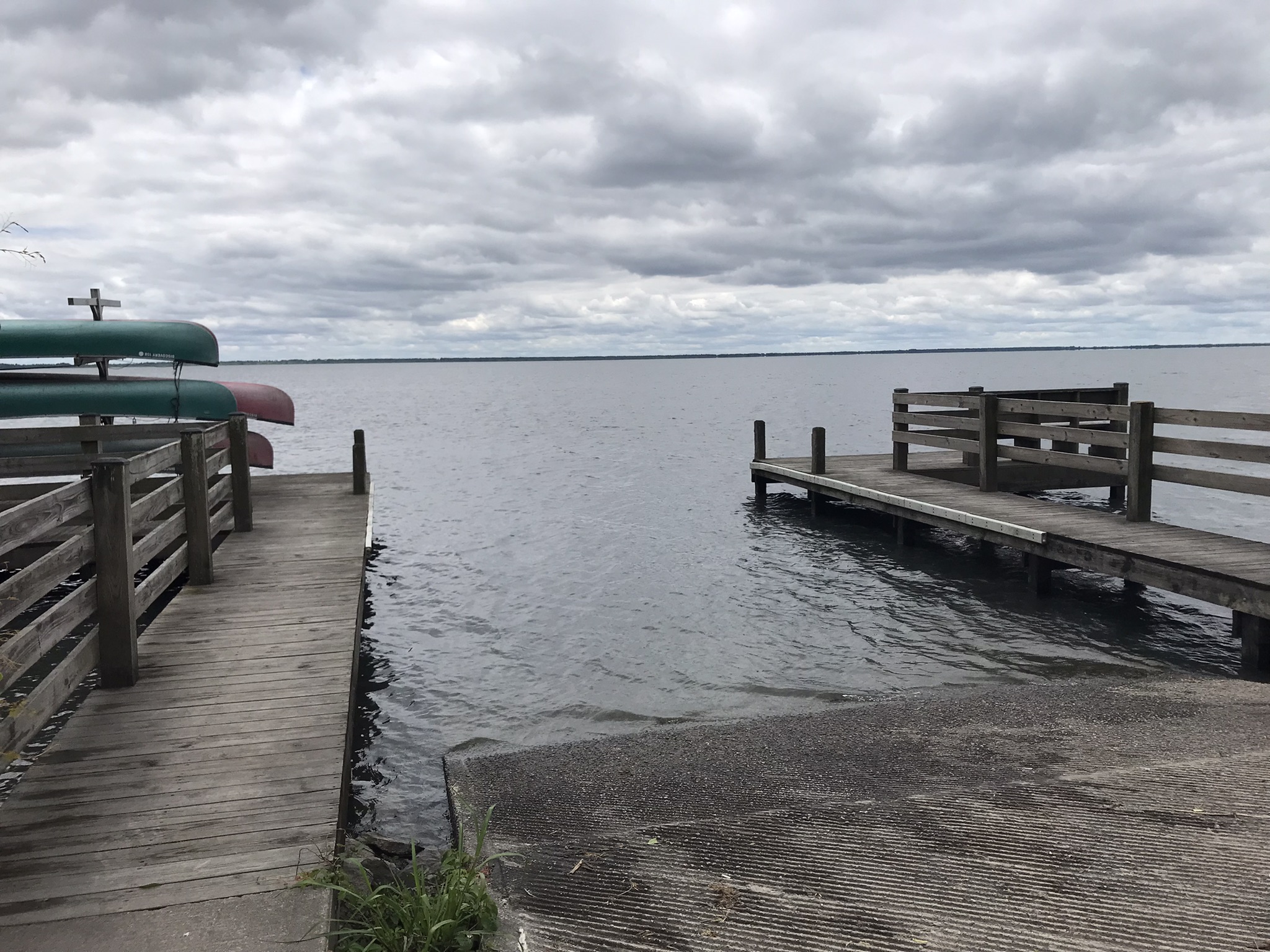
A view of Lake Phelps

Pocosin Lakes National Wildlife Refuge

Our next stop was the visitor center for Pocosin Lakes National Wildlife Refuge on the Scuppernong River in Columbia, NC. This is on the Inner Banks on the Albemarle-Pamlico Peninsula in the northeastern part of the state. In case you are not familiar with the word “pocosin,” it is derived from a Native American word that means “swamp on a hill.”

Welcome Center at Pocosin Lakes National Wildlife Refuge

The refuge has a sponge-like organic soil called peat. It varies in depth there from two inches to 12 feet, and it takes 100 years for one inch of peat to be created. Tree stumps four feet in diameter have been found there which indicates there was once a white cedar and cypress swamp forest there.

See the turtle?

Peat can burn underground and even as it floats on water. Some peat fires here have burned for months on end. As one can imagine, it is difficult to extinguish such a fire. The pond pine and some other plants there depend on fire for their propagation. The heat from fire is necessary for the pond pine cones to release their seeds.

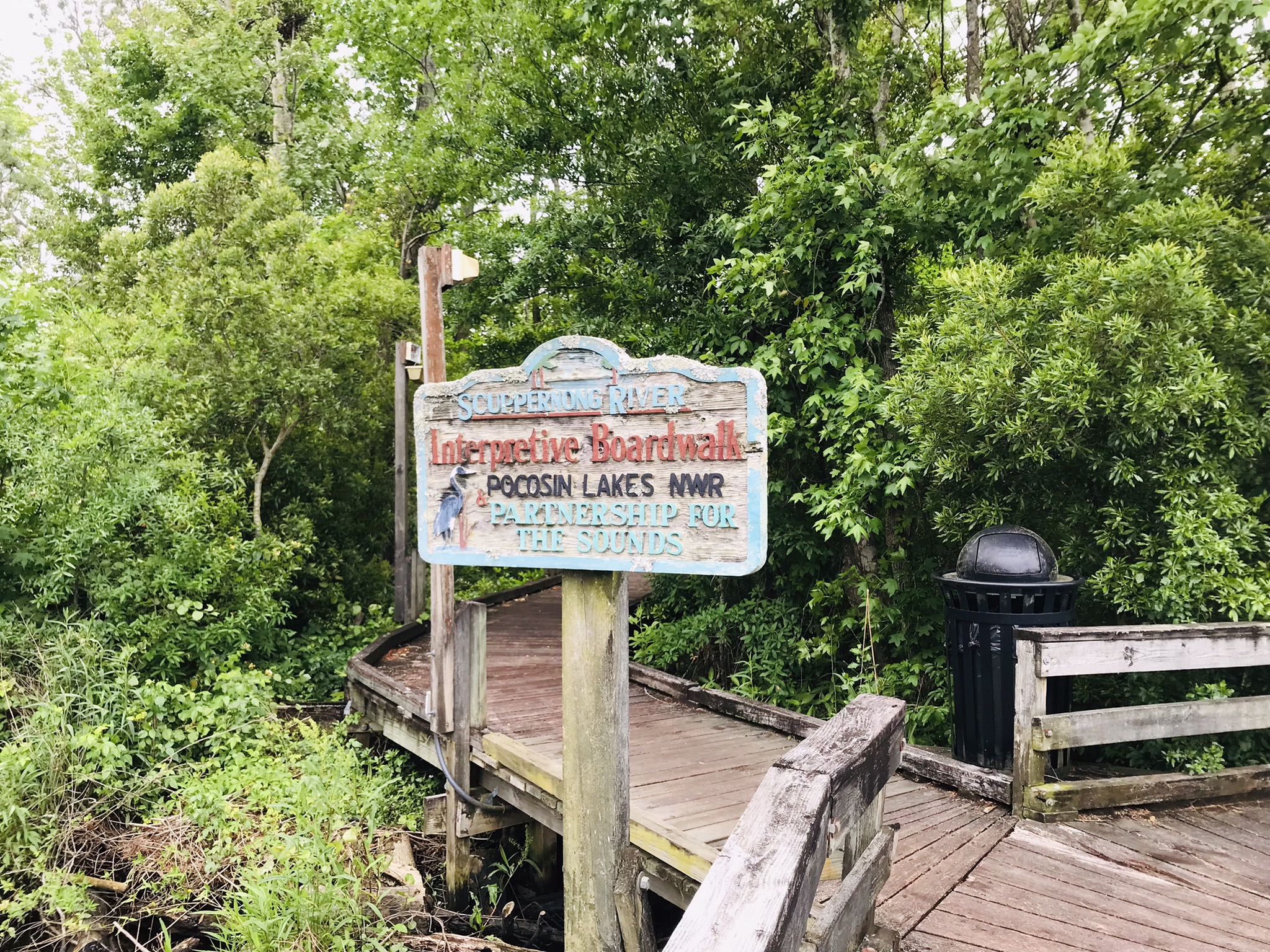
Interpretive Boardwalk at Pocosin Lakes National Wildlife Refuge

Wild irises were in bloom the day of our visit. More than 100,000 ducks, geese, and swans over-winter on the refuge. The refuge and surrounding area are home to an estimated 8,000 black bears. To learn more about the refuge, visit https://www.fws.gov/refuge/pocosin-lakes/about-us.

Wild Irises at Pocosin Lakes National Wildlife Refuge

On the way home, we visited Jarvisburg Historic Colored School, the Great Dismal Swamp Canal (https://dismalswampwelcomecenter.com/), Merchant’s Millpond State Park (https://www.ncparks.gov/state-parks/merchants-millpond-state-park), and Sylvan Heights Bird Park (https://www.shwpark.com/) – three places I’d never made time for before.


Jarvisburg Historic Colored School

First, we stopped at Jarvisburg Historic Colored School at Jarvisburg, NC. (Yes, that’s the official name. I’m not being disrespectful.) Established in 1868, the school building is on the National Register of Historic Places. Unfortunately, it was closed for restoration. (That was a recurring theme on our trip!)

Jarvisburg Historic Colored School, under restoration

Great Dismal Swamp

We saw just a miniscule part of the Great Dismal Swamp, a portion of which is in Virginia. It once covered a million square miles. The canal was created by slave labor in the 1700s. It is unimaginable the miserable work that was in the heat and humidity of northeastern North Carolina, not to mention the poisonous snakes, alligators, and mosquitoes.

Dismal Swamp Canal (a.k.a, Lake Drummond Canal)

Constructed about 1805, the canal is now part of the Intracoastal Waterway and is listed on the National Register of Historic Places. There were five boats and small yachts moored at the landing near the visitor center when we arrived. One was from Maine, one was from Toronto, and one was from Washington State.

Boats and small yachts moored at Great Dismal Swamp Canal Visitor Center

Across the canal is the Dismal Swamp State Park. It has a visitor center and walking trails. Exhibits in the visitor center include wildlife, early Native American, commercial logging in the swamp, and the swamp’s participation in the Underground Railroad during the American Civil War.

Dismal Swamp State Park entrance at canal drawbridge

Unfortunately, every acre of the Great Dismal Swamp has been logged at least once.

When we were leaving the walking trails on the other side of the drawbridge, we got to see a small vessel cross through. The canal traffic has right-of-way over pedestrians, but we were entertained by seeing both ends of the bridge rise while the middle section of it swung to the side.

Dismal Swamp Canal Drawbridge in Operation

Merchant’s Millpond State Park

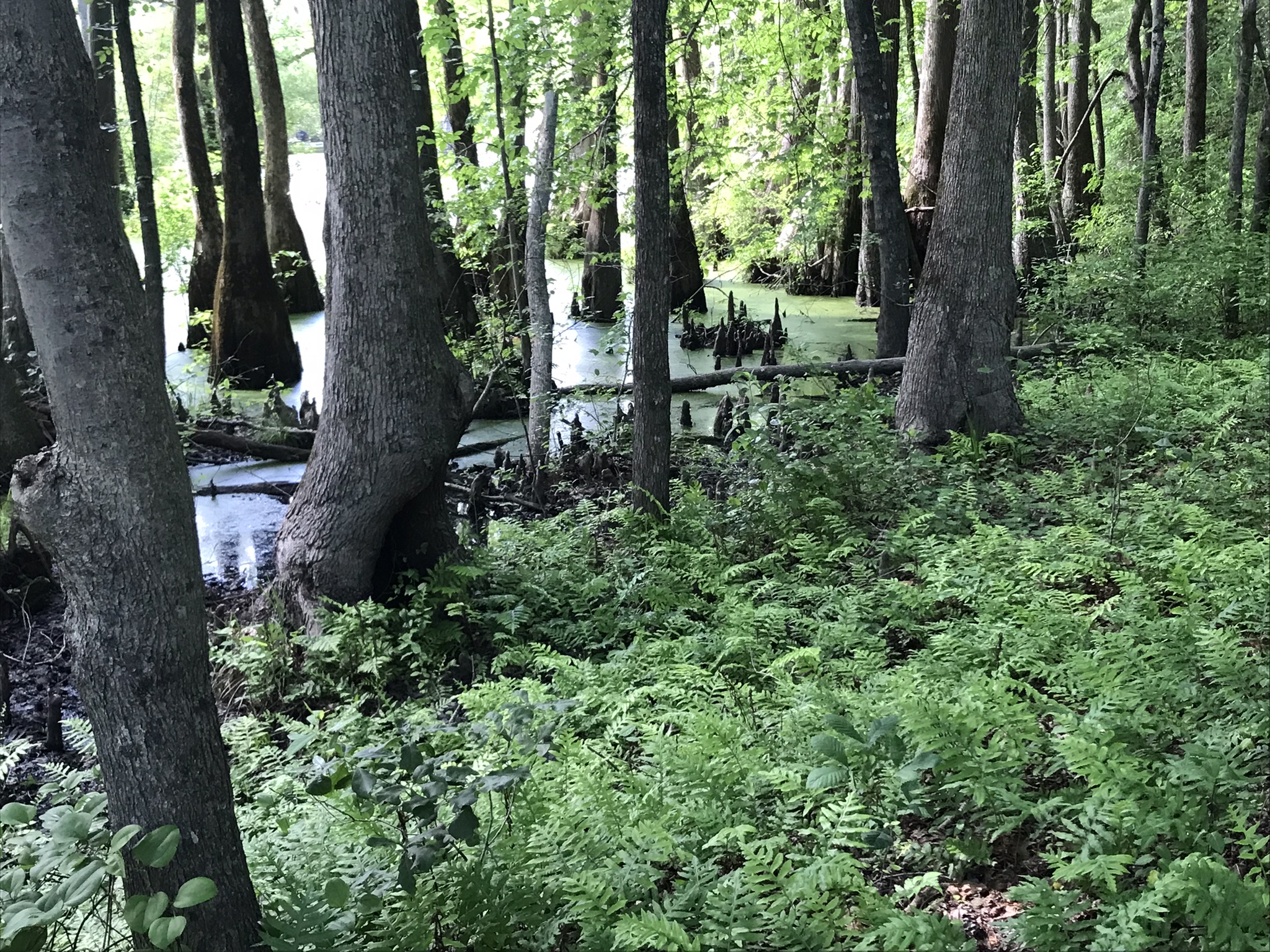
Along Cypress Point Trail in Merchant’s Millpond State Park
A view of Lassister Swamp at Merchant’s Millpond State Park

Merchant’s Millpond State Park is just a few miles west of the Great Dismal Swamp Canal. There is a 19.5-foot dugout canoe from the 1800s on display in the visitor center.

View of Spanish Moss hanging on trees at Merchant’s Millpond State Park
Cypress trees at Merchant’s Millpond State Park

We thoroughly enjoyed walking on the trail there. It was quite something to see. The park includes 3,500 acres, the millpond, and Lassiter Swamp. We did not see any of the native alligators, but that’s okay.

Boat ramp at Merchant’s Millpond State Park
Sky and clouds reflected in water at Merchant’s Millpond State Park

Sylvan Heights Bird Park

East African Crowned Crane

The last destination on our trip before visiting a friend in the Raleigh area was Sylvan Heights Bird Park at Scotland Neck, NC. The Sylvan Heights Bird Park and adjacent Sylvan Heights Avian Breeding Center just might be North Carolina’s best keep secret! In today’s blog post I’m sharing just a small fraction of the photos I took at the park.

Green Peafowl
Demoiselle Crane

It was a perfect last stop on our trip home from the 120-mile string of barrier islands that form the outer coast of North Carolina. Here’s a bit of the history of the park and avian breeding center…

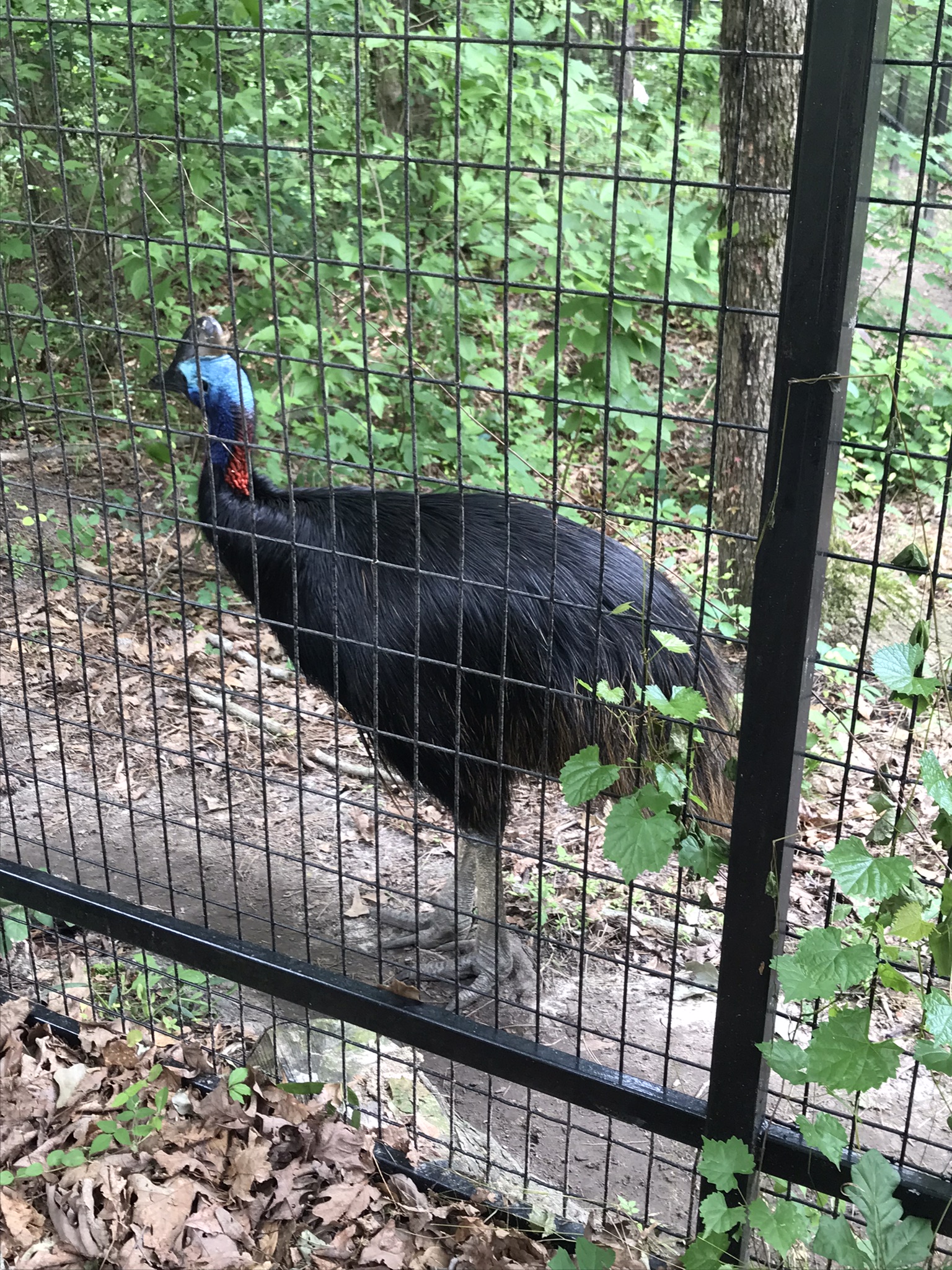
Southern Cassowary

Mike and Ali Lubbock moved to the United States from England in 1981. They had extensive waterfowl knowledge and founded Sylvan Heights Waterfowl in the mountain town of Sylva, NC.

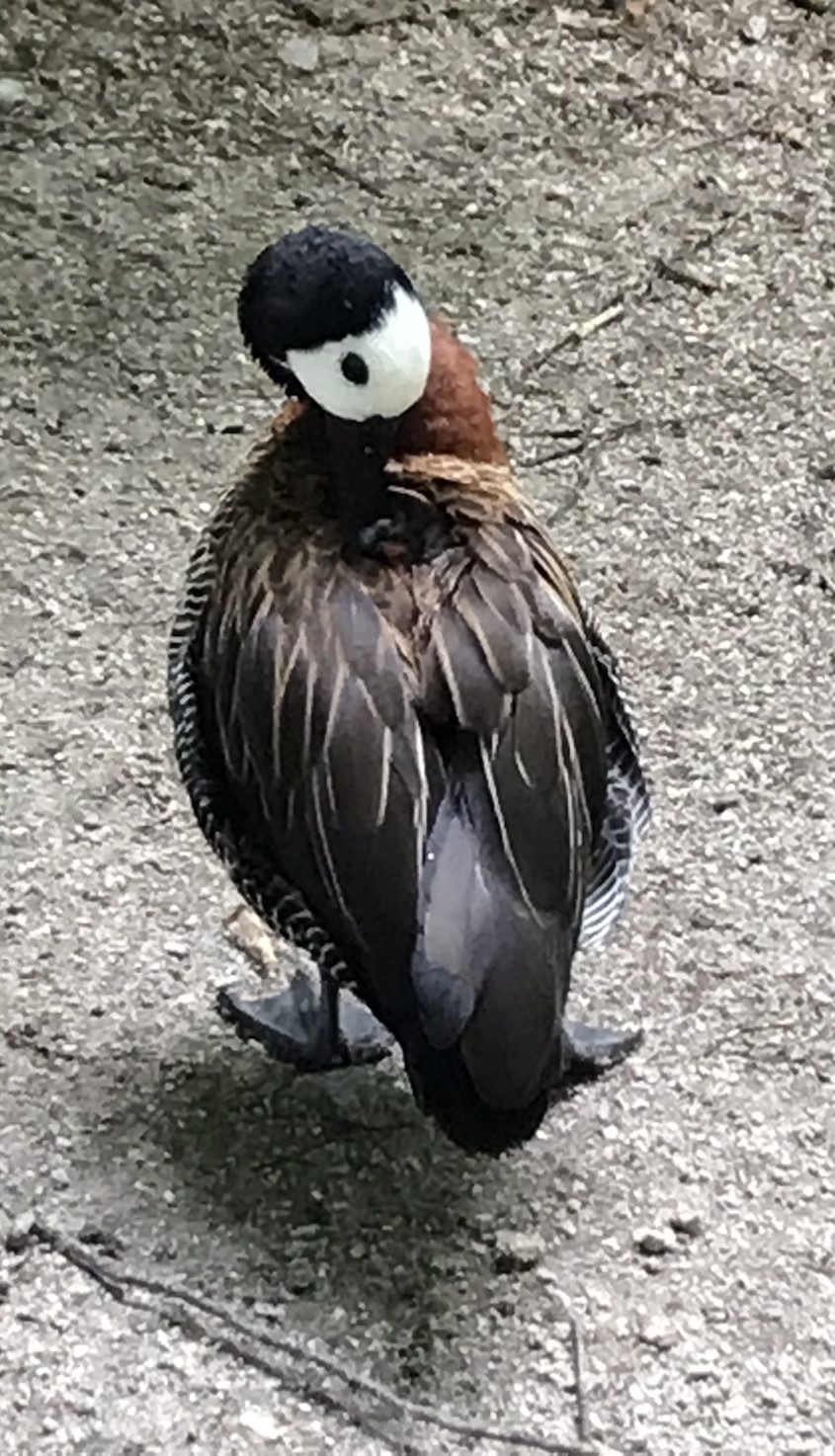
White-faced Whistling Duck

In 1989 the internationally-known aviculturist Lubbocks moved their entire collection and operation to Scotland Neck in northeastern North Carolina where they founded the Sylvan Heights Avian Breeding Center. Today, the center cares for more than 2,500 individual birds, including more than 1,000 hatchlings every year.

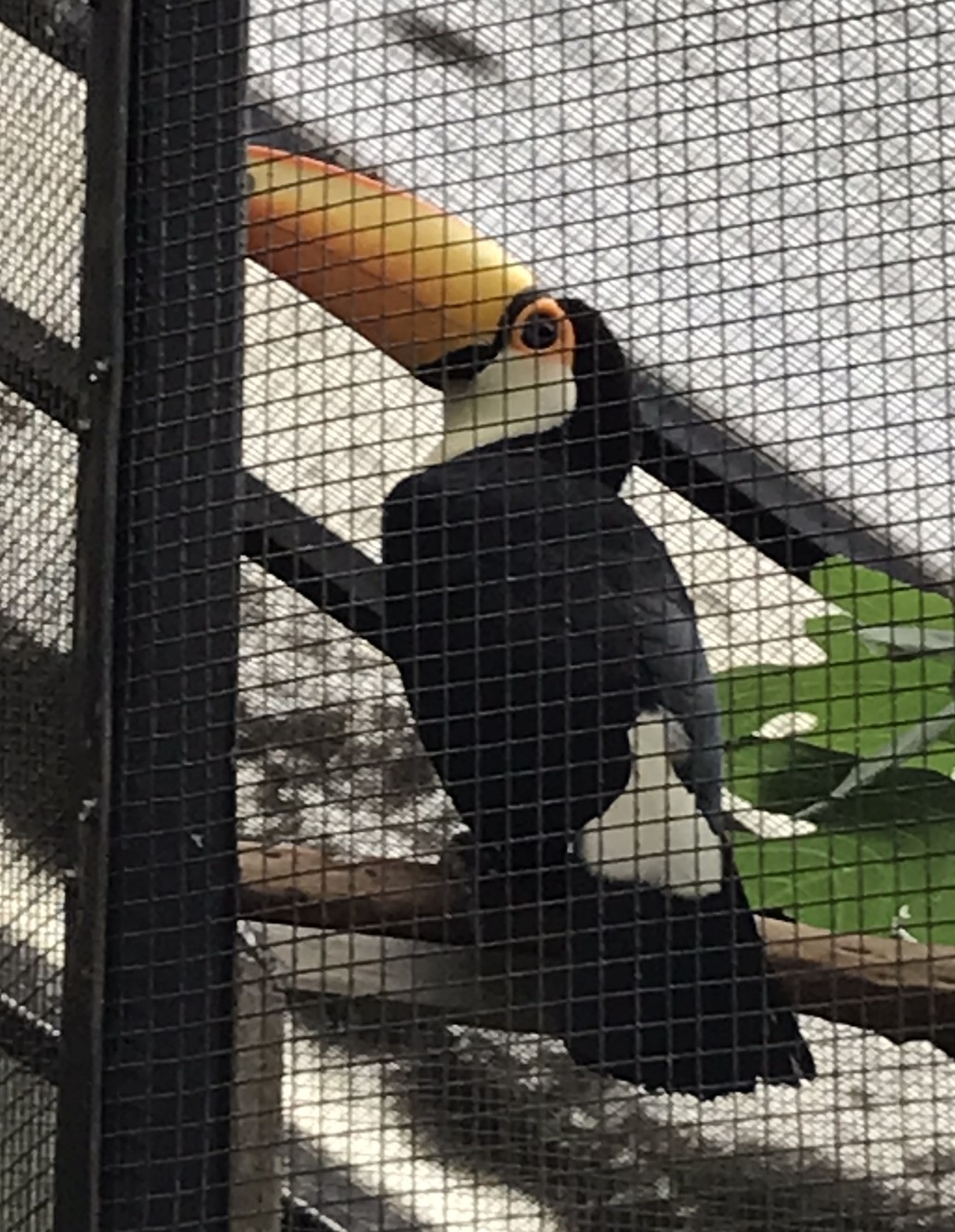
Toco Toucan

The center is an avicultural training site for biologists with an interest in conservation. Professionals from zoos from across the United States go there to learn advanced avian husbandry techniques.

Blue-throated Macaw

Quoting from the website, “Sylvan Heights is home to breeding populations of some of the world’s rarest waterfowl. In some cases, fewer than 250 individuals of these species remain in the wild, and the collaborative captive breeding programs taking place here may be their last barrier against extinction.”

Himalayan Monal – The National Bird of Nepal

Sylvan Heights Bird Park opened in 2006. The park “seeks to advance conservation of waterfowl and wetlands, to act as a local educational resource for avian biology and wetlands ecology, and to serve as an international center for avicultural training and research.”

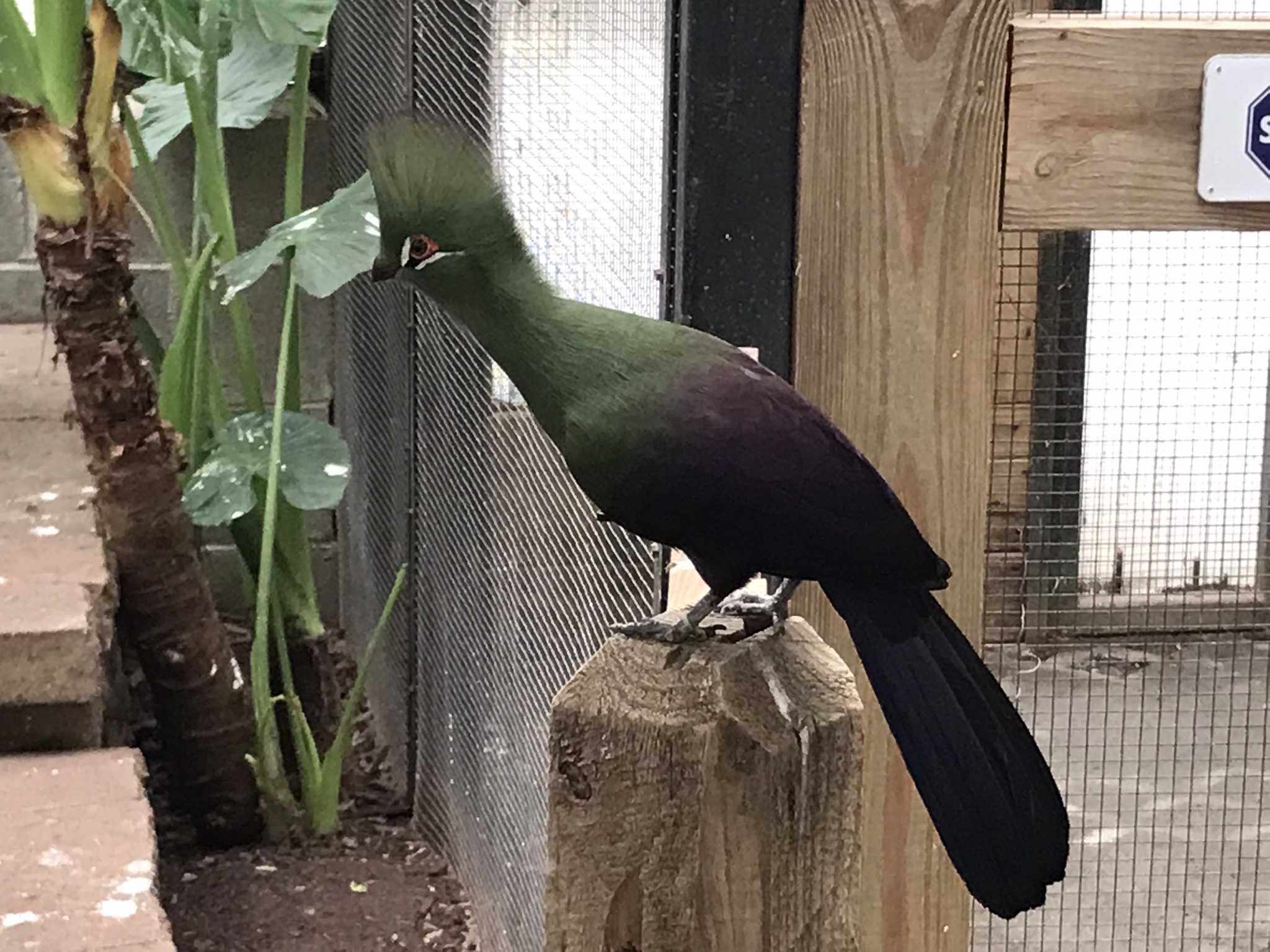
Guinea Turaco (Underneath side of its wings are bright red!)

Sylvan Heights has the largest collection of exotic and rare waterfowl in the world. It houses more than 3,000 birds representing 140 species. Together, the park and the breeding center form the world’s largest waterfowl collection and the second largest collection of birds in the country.

Scarlet Ibis

The Sylvan Heights Avian Breeding Center is not open to the public, due to the nature of its work, but the park is open year-round.

Wetland Bridge in Sylvan Heights Bird Park

Whew! This trip had been on my “bucket list” since before the Covid-19 pandemic. I needed a change of scenery, and this trip delivered! Each day held the promise of walking, enjoying the beauty of nature, peace and quiet, relaxation, and learning something new. What more could someone desire?

Are northeastern North Carolina and the Outer Banks now on YOUR bucket list?


Until my next blog post

In case you missed my two blog posts about that trip, here are the links: https://janetswritingblog.com/2024/05/27/this-writer-needed-a-change-of-scenery-part-i/ and https://janetswritingblog.com/2024/06/03/this-writer-needed-a-change-of-scenery-part-ii/.

Unfortunately, my publisher did not let me compile books of vintage postcards from either the piedmont or coastal plain of North Carolina because the company was not set up to market regional books, but don’t let that stop you from purchasing my vintage postcard book, The Blue Ridge Mountains of North Carolina. Please look for it on Amazon!

My book!

I hope you have a good book to read.

Remember the people of Ukraine.

Janet

This Writer Needed a Change of Scenery — Part II

On the first Monday of each month I usually blog about some of the books I read the previous month. I will write about a couple of the books I read in May in my post on June 17.

Last Monday I blogged about visiting the northern end of the Outer Banks of North Carolina in mid-May. I failed to illustrate Jockey’s Ridge adequately, so here are a few photos to show you just a little of that massive sand dune.

Amateurs learning to hang glide at Jockey’s Ridge in spite of a control burn being conducted that day.
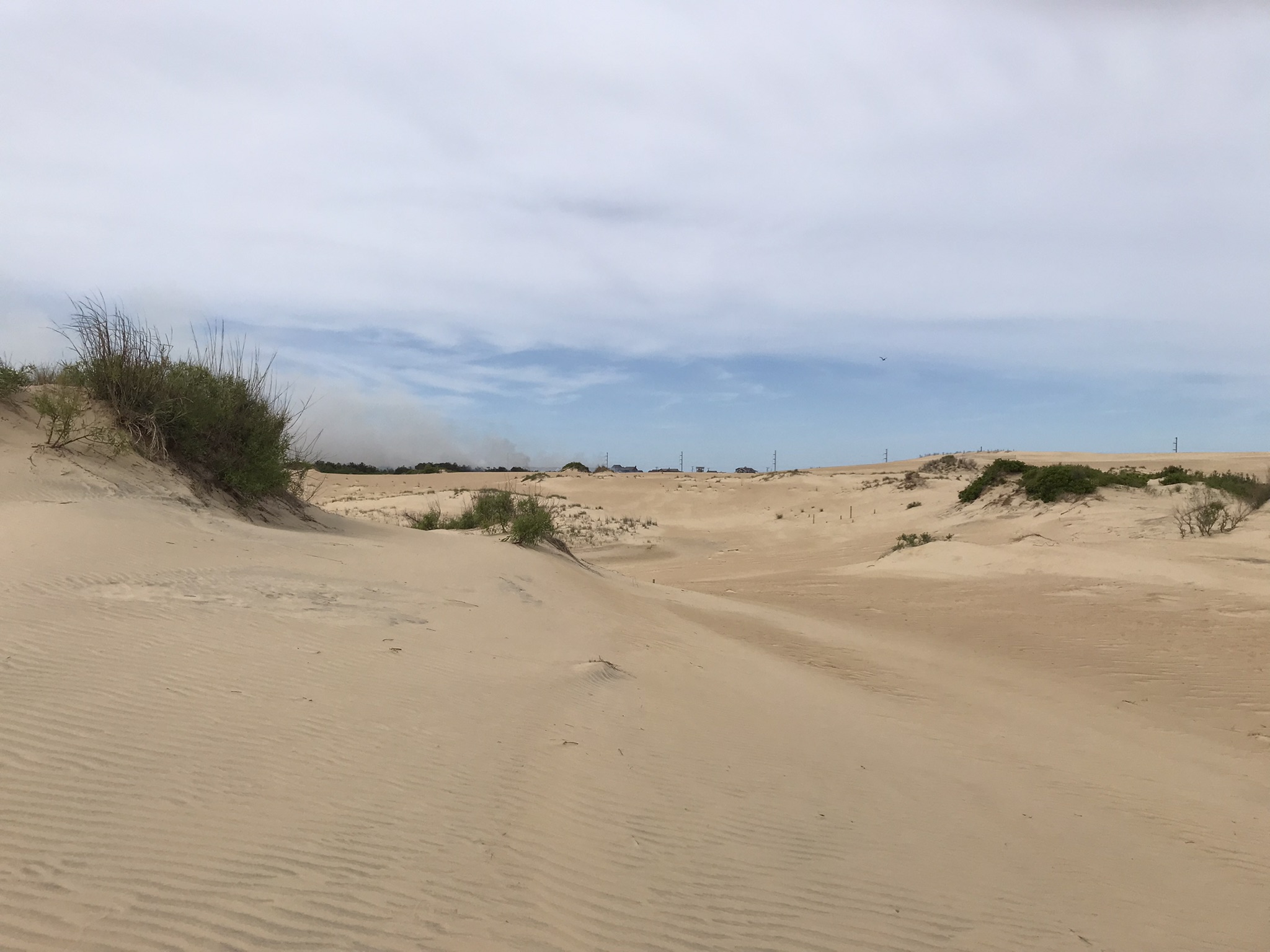
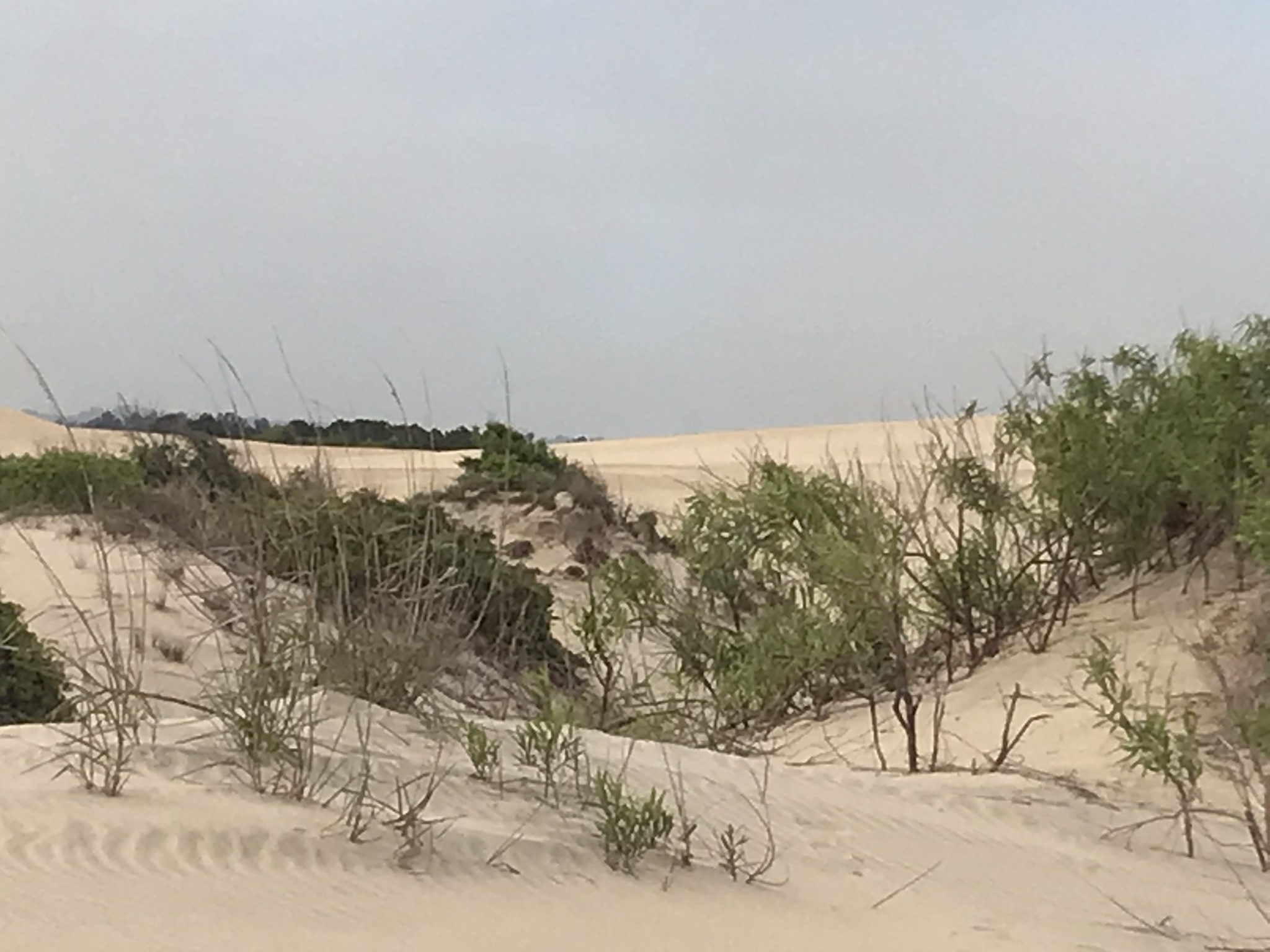
A view of a small portion of Jockey’s Ridge
Another part of Jockey’s Ridge
Yet another view of Jockey’s Ridge.

Jockey’s Ridge State Park covers 427 acres. It is estimated that the dune contains 30 million tons of sand and has been there for 7,000 years. For more information, visit https://www.ncparks.gov/state-parks/jockeys-ridge-state-park.


The southern end of the Outer Banks

The rest of today’s post covers the sights on the southern part of those barrier islands.

I hope you will be inspired by my blog to add the Outer Banks to your “bucket list” as the 120-mile-long string of barrier islands is a natural treasure everyone should get to see at least once.

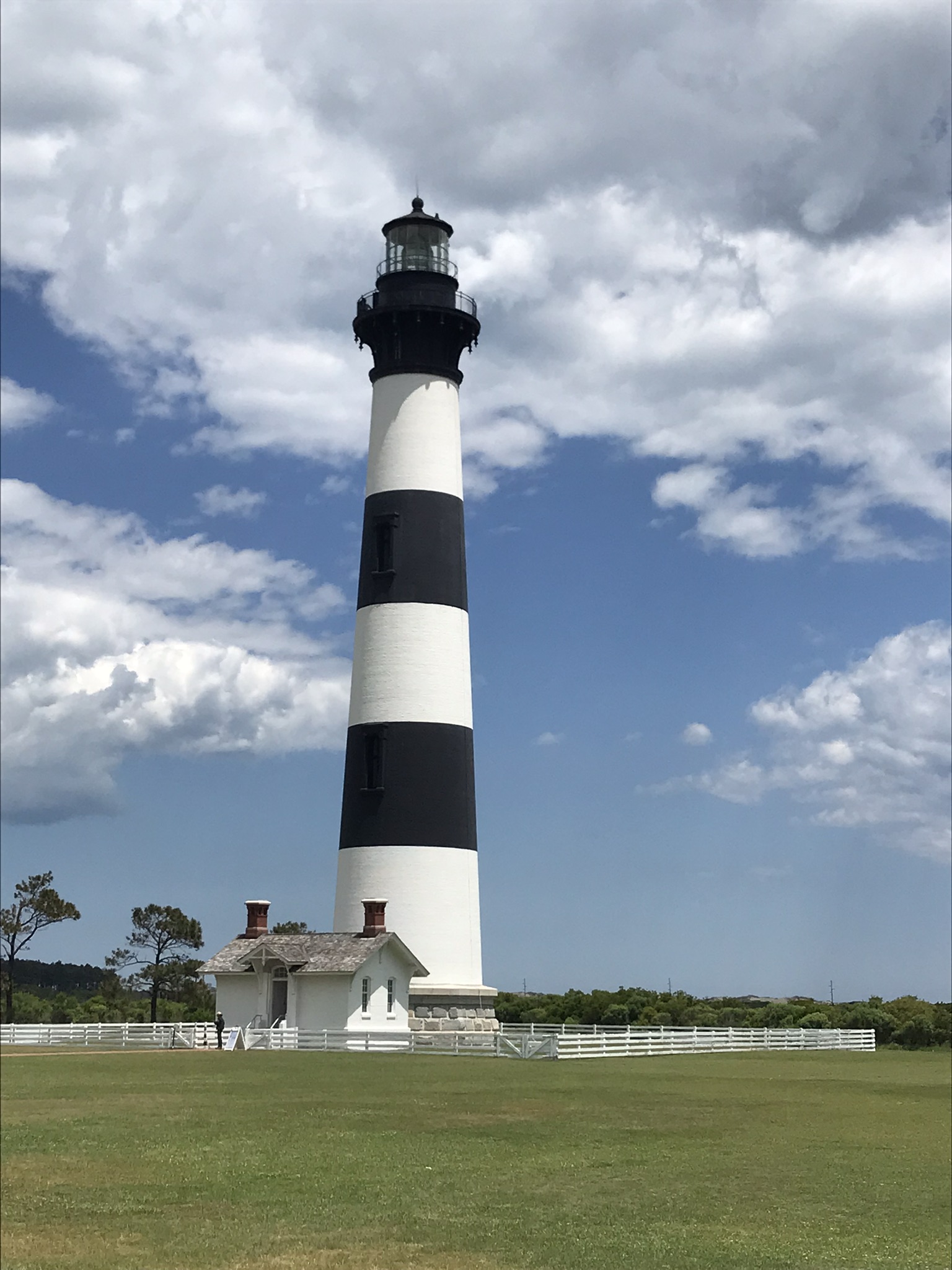
Enjoy the beautiful Bodie Island Lighthouse and adjoining boardwalk trail. https://www.nps.gov/caha/planyourvisit/bils.htm

Bodie Island Lighthouse

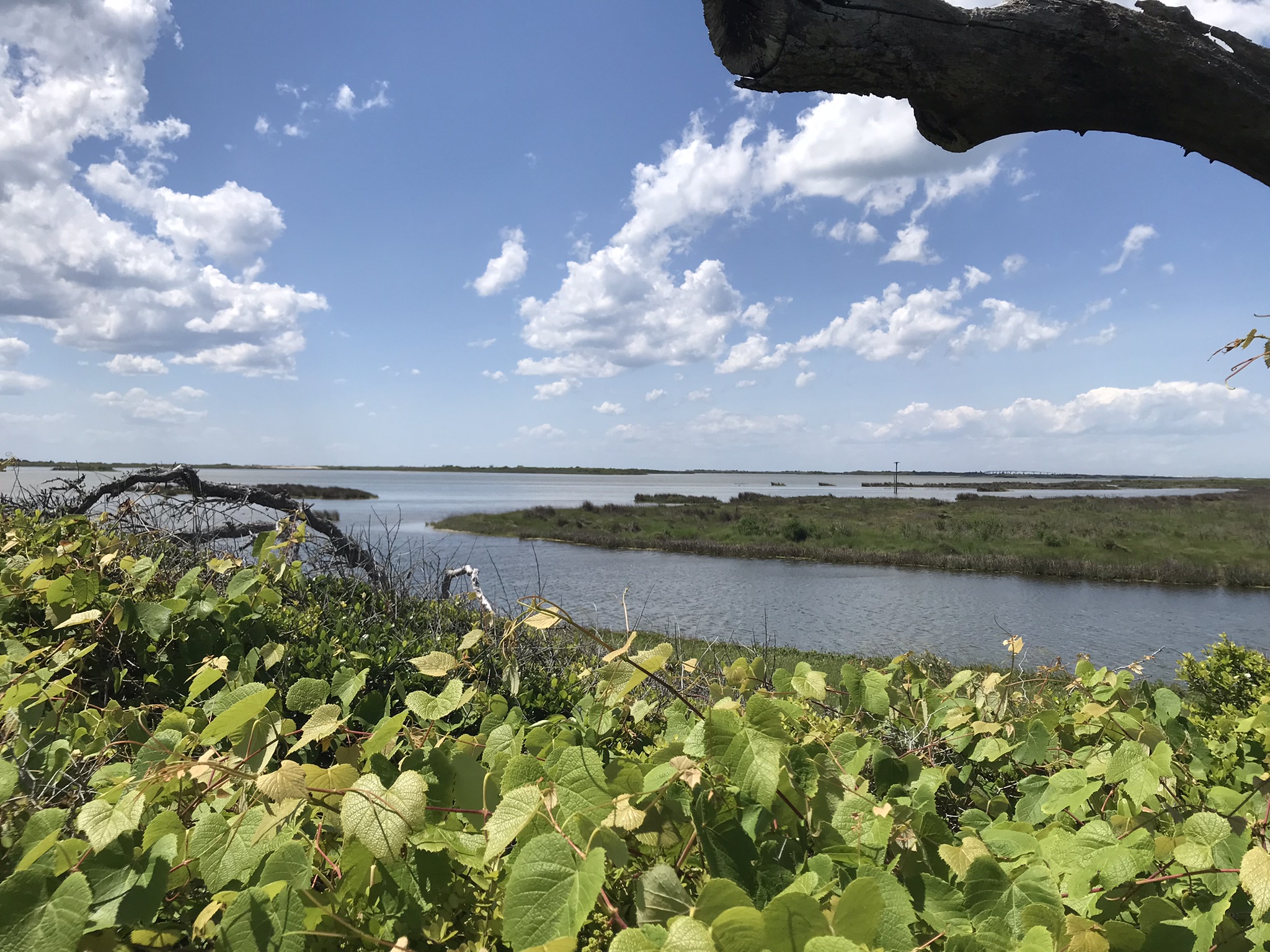
Set aside time to hike in the Pea Island National Wildlife Refuge. https://www.fws.gov/refuge/pea-island

Pea Island National Wildlife Refuge – View from hiking trail

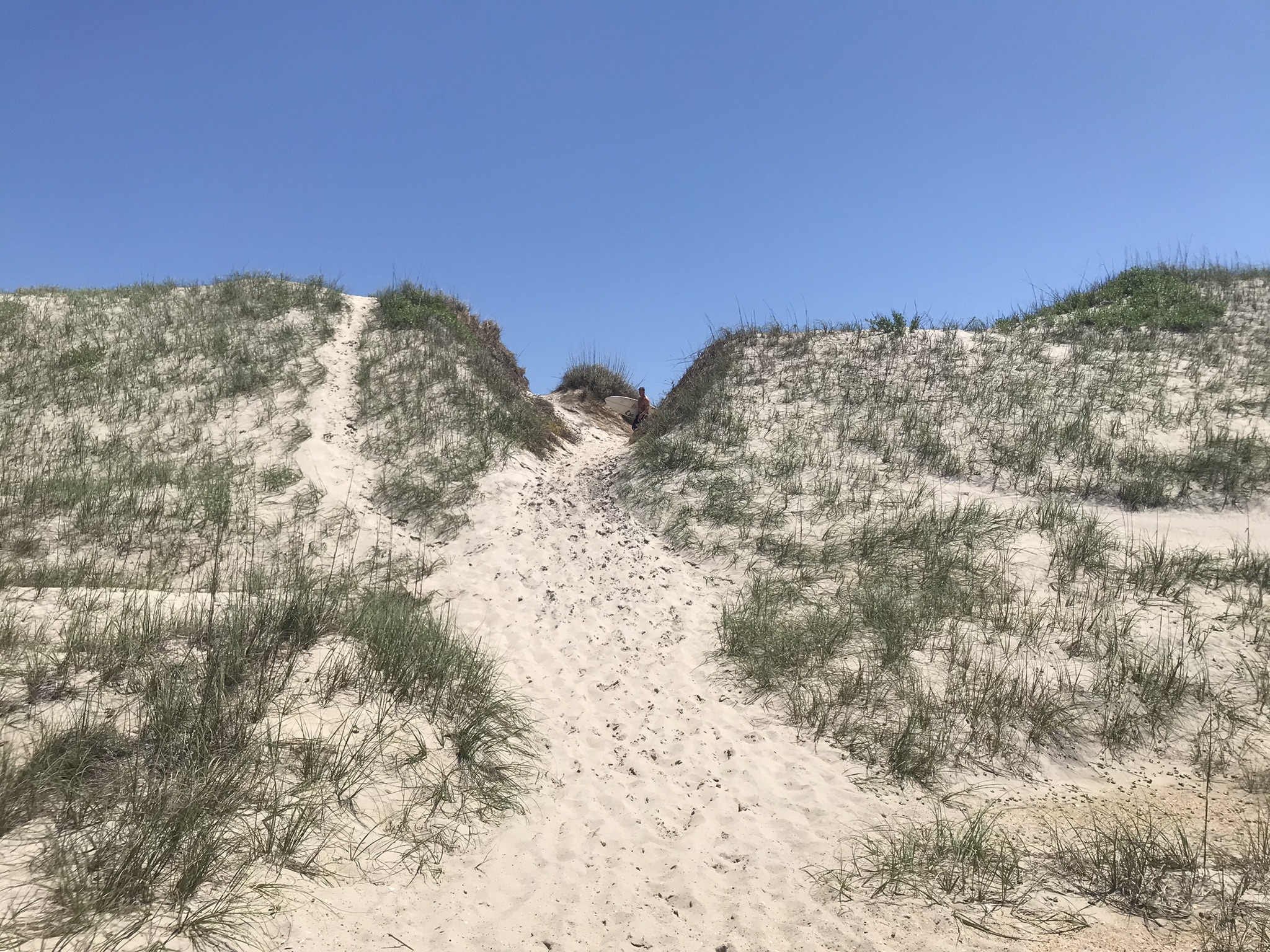
Take advantage of beach access stops along the way to enjoy the sand, the churning Atlantic Ocean, and Pamlico Sound.

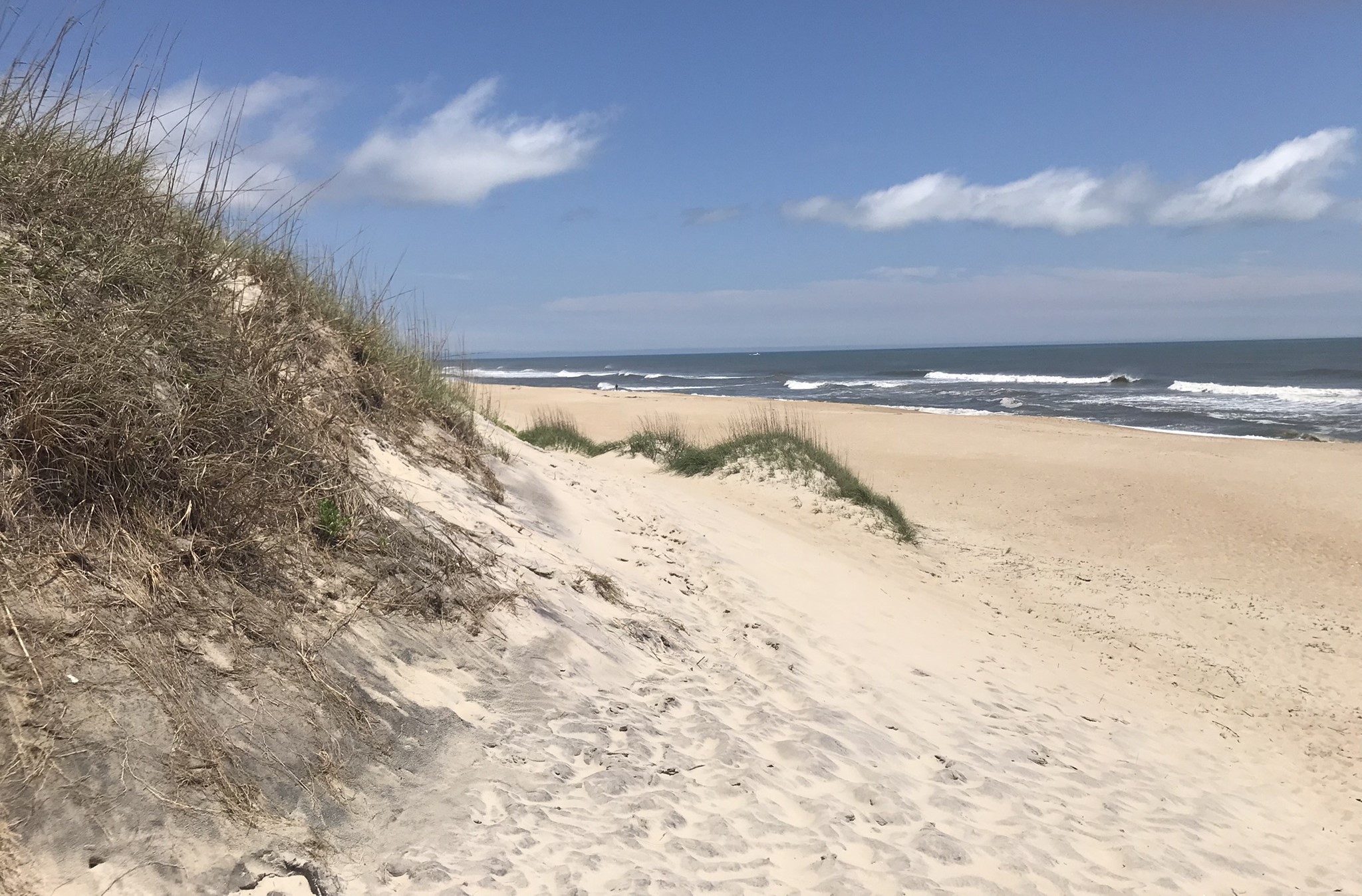
You might have to hike over a sand dune to get to the ocean!
It’s worth the climb!

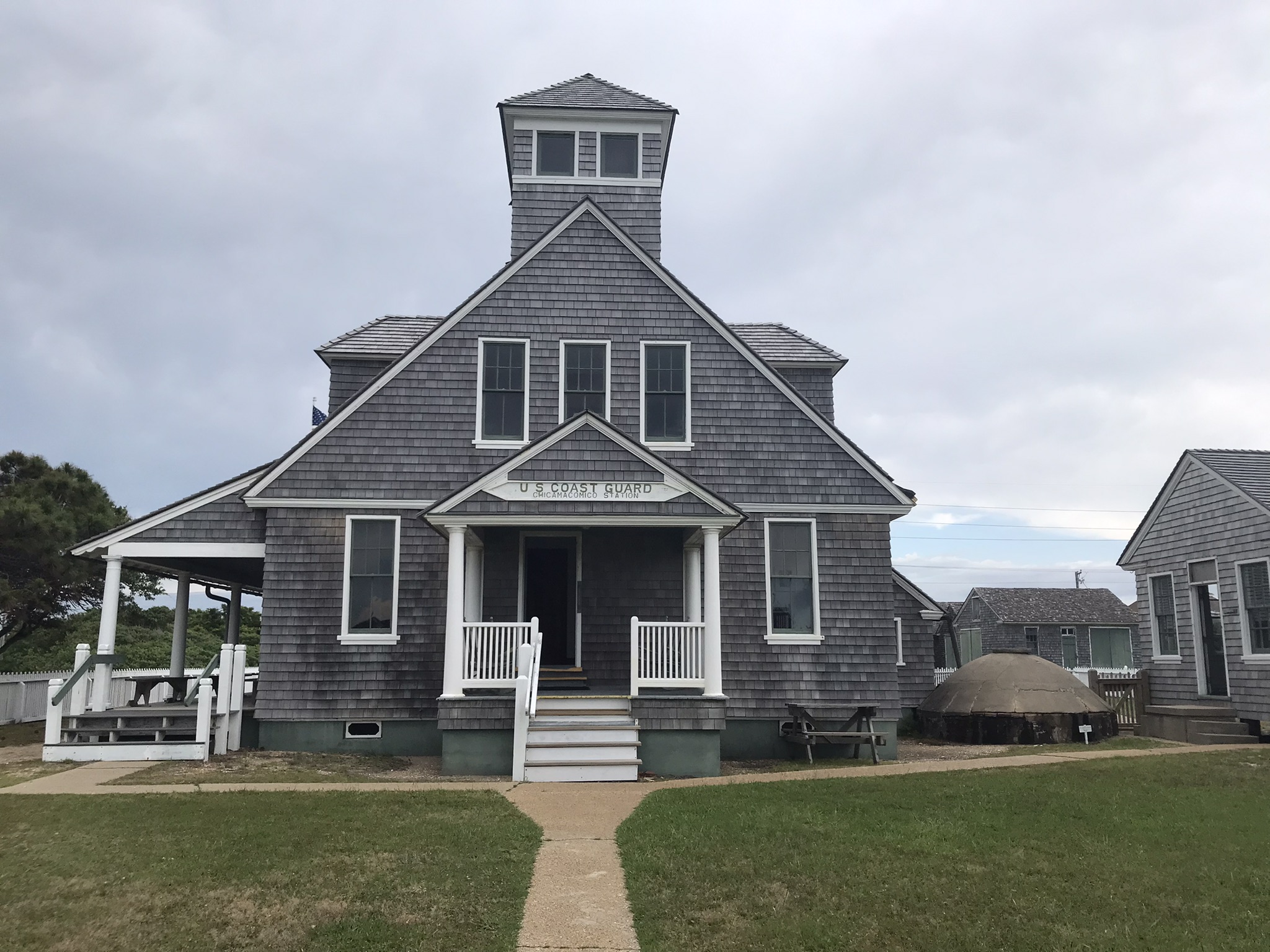
Be sure to visit the Chicamacomico Life-Saving Station in Rodanthe, established 150 years ago, to learn about the bravery of the men who risked their lives for decades to rescue sailors in distress along this “Graveyard of the Atlantic.” The video there is quite informative. For more information to help you plan your visit, this website gives details: https://chicamacomico.org/.

Chicamacomico Life Saving Station

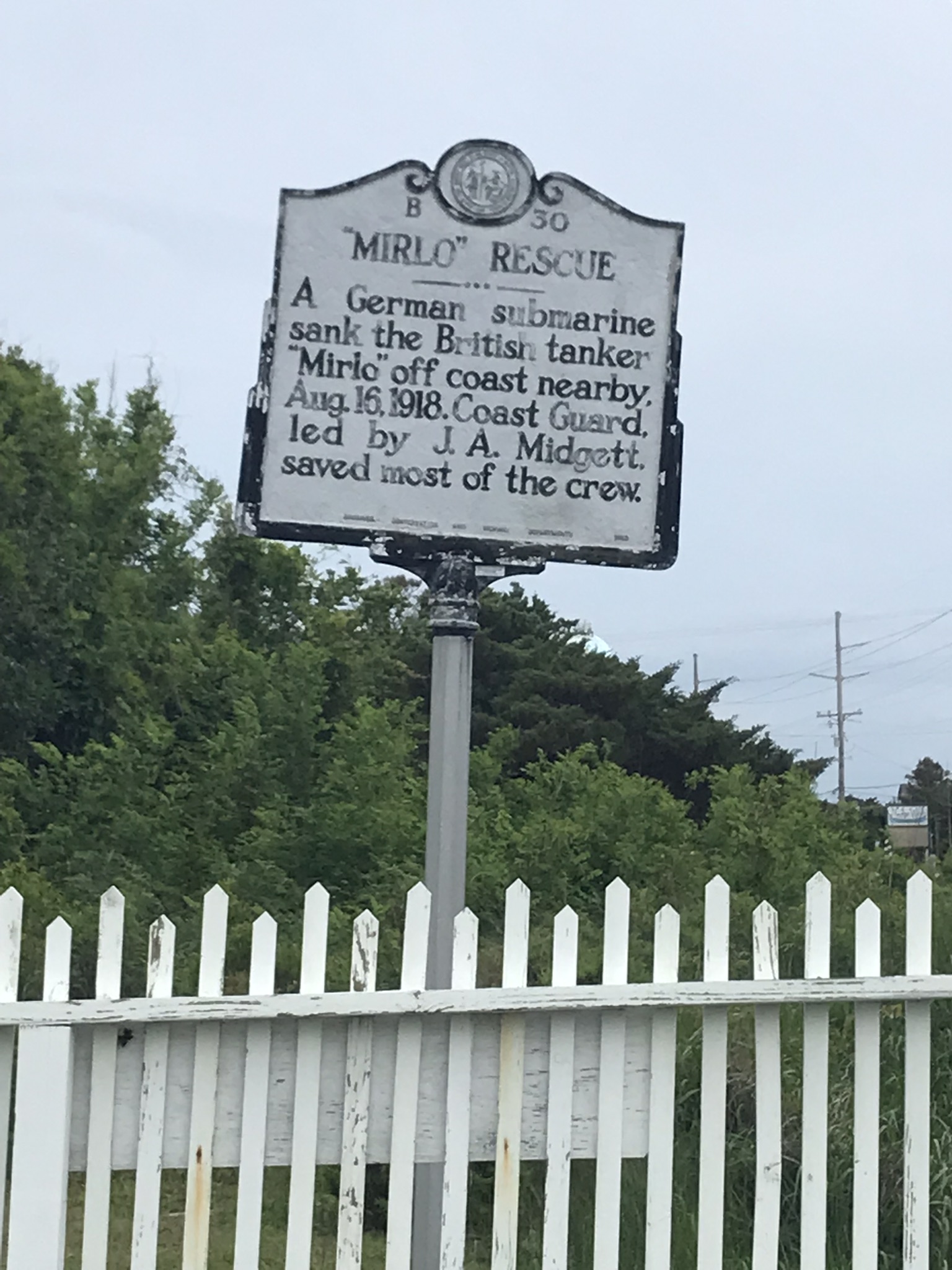
We tend to think of all of World War I taking place faraway in Europe and, indeed, most of it did; however, the Atlantic coast of the US was not immune to attack and the ramifications of sea warfare between Germany and England. Below is a photo of the roadside marker about the nearby sinking of a British tanker, Mirlo, by a German submarine. Coast Guardsmen stationed at Chicamacomico saved most of the tanker’s crew. If you want to read more about the rescue of the Mirlo, I recommend this website: https://www.ncpedia.org/mirlo-rescue.

World War I “Mirlo” Rescue Roadside Marker at Chicamacomico

Rodanthe was in the news again last week because another house fell into the ocean. According to the National Park Service, that’s the sixth privately-owned house to be claimed by the Atlantic in recent years. It makes one wonder why they were allowed to build houses there. Volunteers were sought the following day to clean up pieces of the house and its contents that had been strewn up and down the beach.

I took a picture of several houses the ocean is trying to claim on the beach at Buxton. This situation makes no sense to me.

Looks like some more houses on the Outer Banks are tempting fate!

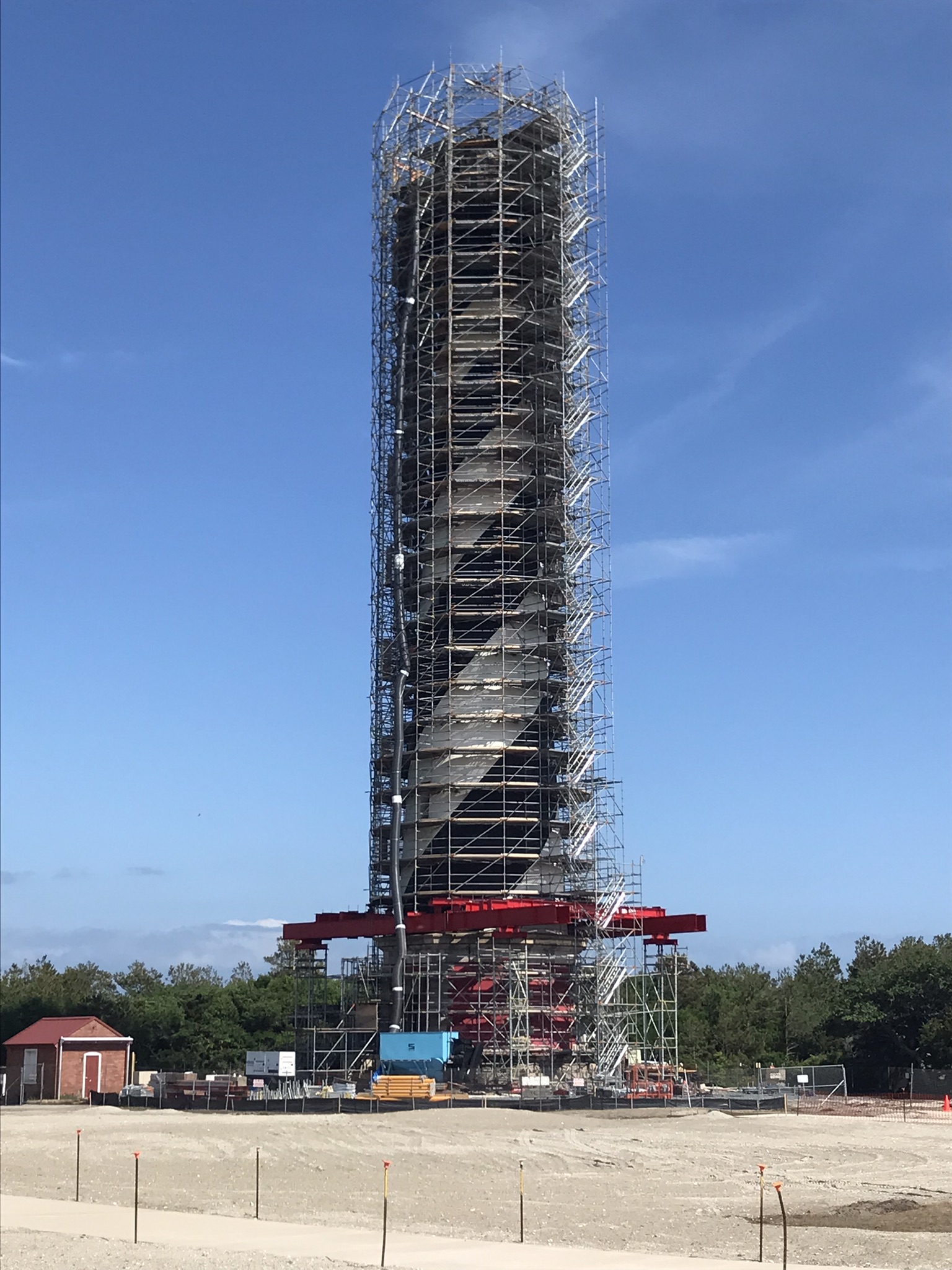
Buxton is home to the glorious Hatteras Lighthouse – at 198.49 feet it is the tallest brick lighthouse in the United States. One word of caution, though: The Hatteras Lighthouse is undergoing two years of restoration and is currently encased in scaffolding.

Cape Hatteras Lighthouse under restoration in May 2024

While it is closed, you can take virtual tour online at http://Cape Hatteras Light Station – Cape Hatteras National Seashore (U.S. National Park Service) (nps.gov). Fortunately, I saw it at its original location before its historic move in 1999 to save it from the ocean. The visitor center is open and you can get close enough to take pictures of the lighthouse during the 18- to 24-month restoration.

The iconic black and white painted swirl just can be seen through the scaffolding, but you might want to wait and visit in the summer of 2026 to see it in all its beauty. If you like lighthouses, you’ll love this one!

(This month’s experience reminded us of our once-in-a-lifetime trip to New York City in the mid-1980s. We rode the Staten Island Ferry so we could see the Statue of Liberty even though it was being restored and was completely encased in scaffolding. We have a knack for seeing national landmarks during their restorations!)

If you go to Hatteras Island now, you can visit the Graveyard of the Atlantic Museum. It has undergone a major remodel and was still closed when I was there on May 16-17. The grand re-opening was held on May 20, so I just missed getting to see the inside of it. Here’s the museum’s website: https://graveyardoftheatlantic.com/. Note that it is not open on weekends or state holidays.

Graveyard of the Atlantic Museum on Hatteras Island

Ocracoke Island

Storms along the Outer Banks wreak havoc with North Carolina Highway 12. Literally! The Department of Transportation constantly must remove sand from the highway, close it due to high water, and – occasionally – relocate the road.

A storm in April 2024 created all kinds of problems along NC-12. It had been restored to good condition down as far as Hatteras Village, but as of three weeks ago the portion on Ocracoke Island (http://First-timers Guide to Ocracoke Island – Visit Ocracoke NC) was still being worked on.

We had planned to take the free NC ferry from Hatteras Island to Ocracoke Island and the fee-supported NC ferry from Ocracoke to the mainland, but due to the one-lane traffic on part of Ocracoke Island we changed those plans and drove back up the Banks to Southern Shores and bridges to the mainland. (Here’s a important website, if you’re planning to use any of the 21 ferries operated by the NC Department of Transportation: https://www.ncdot.gov/travel-maps/ferry-tickets-services/routes/Pages/default.aspx.)

The Outer Banks of North Carolina are truly a national treasure. If you bemoan the fact that you must pay federal income tax, just remember that your hard-earned tax dollars help preserve miles and miles of the Outer Banks of North Carolina.

In fact, I’ve heard it suggested that if you resent paying income tax perhaps you should choose to think that all your tax dollars go to support the national parks, national seashores, and historic sites.

Look for the third and final installment of my blog series about my recent need for a change of scenery next week when I will tell you about the many points of interest we enjoyed on our way to and from the piedmont to the northeastern coastal plain of North Carolina. I think you are in for some surprises!

Until my next blog post

I hope you have a good book to read.

In case you missed the first part of my two-post blog series about the Outer Banks of North Carolina, here’s the link to my May 27, 2024 post: https://janetswritingblog.com/2024/05/27/this-writer-needed-a-change-of-scenery-part-i/.

Remember the people of Ukraine.

Thank you for taking the time to read my blog! When you have a couple of minutes, I invite you to visit my website to see what I was doing prior to my trip and the types of writing I will continue to do: https://www.janetmorrisonbooks.com.

Janet

This Writer Needed a Change of Scenery – Part I

Not wanting to publicize online that I was going out-of-town, you probably did not know that I spent much of the second full week of May on the Outer Banks of North Carolina. Having been there some 25 years ago, a return trip was on my and my sister’s “bucket lists.”

Along Cape Hatteras, NC

We packed so much into our trip that I decided to divide this “travelogue” into two parts. I will share Part II with you on Monday, June 3 and shift my usual “what I read last month” post to Monday, June 10.

Our departure was delayed by 24 hours by a storm that knocked out our electricity for 21 hours and took down literally hundreds of tree limbs in our yard. Yard clean up and some adjustments in our itinerary and reservations meant that we were exhausted when we finally left home, but the trip was salvaged. (And yard clean-up has continued since we returned home. Such is life when you live out in the country and have a yard full of large, old trees.)


The Outer Banks of North Carolina

The Outer Banks of North Carolina (often abbreviated as “OBX” these days) are truly a national natural treasure. They are a 120-mile-long string of barrier islands known as “The Graveyard of the Atlantic.”

Map showing locations of hundreds of shipwrecks along the Outer Banks – “Graveyard of the Atlantic”

Off Cape Hatteras is where the cold waters of the Labrador Stream collide with the warm water of the Gulf Stream. The clashing water and wind there constantly change to shape of the islands. It is said that the only constant on the Outer Banks is that they are constantly changing.

The massive sand dunes at Jockey’s Ridge are in a constant state of flux and shifts in height due to the wind. There’s a reason why the Wright Brothers decided to try out their “flying machine” there at Kitty Hawk in 1903. It seems like the wind never stops blowing.

To give you an example of the changes Mother Nature makes in the islands, the third (and present) Bodie (pronounced “body”) Island Lighthouse was completed in 1872 near the tip of Oregon Inlet. The lighthouse has never moved, but it is now two miles from the inlet! (https://www.nps.gov/caha/planyourvisit/bils.htm)

Bodie Island Lighthouse at dusk

The northern end of the Outer Banks

We knew the northern end of the Outer Banks had been highly developed since we were last there, but it was worse than we anticipated. It’s unfortunate that vacationers and summer-only residents wanted all the conveniences of home. Whether they wanted that or not, that’s what they got.

North from Whalebone Junction to Corolla is wall-to-wall development. It’s a shame what has been built on such a fragile sliver of the coast. The Nags Head Woods Preserve (https://www.nature.org/en-us/get-involved/how-to-help/places-we-protect/nags-head-woods-ecological-preserve/

Nags Head Woods Preserve

is still there protecting Jockey’s Ridge – the tallest living sand dunes in eastern United States. You can try your hand at learning to hang glide at Jockey’s Ridge State Park. (https://www.ncparks.gov/state-parks/jockeys-ridge-state-park)

There used to be miles of vacant land between Kitty Hawk and Duck and Corolla with the Spanish now-wild horses roaming freely. Now there’s a town called Southern Shores which runs into Duck which runs into Corolla. Multimillion dollar homes line NC Highway 12 and leave no vacant land.

The wild horses that have lived there for 400 years have now been corralled and fenced just north of Corolla for their own safety and one must pay a tour company big bucks to ride in a Hummer or a Jeep for a couple of hours in hopes of catching a glimpse of a few of those magnificent animals. We chose not to do that. We choose to remember them the way they used to be. Be sure and visit the gift shop of the Corolla Wild Horse Fund, Inc. (https://www.corollawildhorses.com/) where all proceeds support the maintenance and health of the wild horses.

At the north end of NC-12 there is a tiny parking lot. From there, one can hike and perhaps see some wild horses, but the lot was full when we were there.

We wanted to see the Currituck Beach Lighthouse again. (We love lighthouses!) Due to the growth of surrounding trees and the residential and commercial development in the last 25 years, the lighthouse at Corolla was more difficult to find than it was in the past. Nevertheless, we enjoyed seeing it one last time. (https://obcinc.org/currituck-beach-lighthouse/)

Currituck Beach Lighthouse

Meanwhile, traveling back south to Nags Head and Manteo…

Even if you aren’t interested in fishing, you might enjoy a stroll on Jennette’s Pier https://www.ncaquariums.com/jennettes-pier) at Nags Head. Associated with North Carolina Aquariums, this 1,000-foot-long concrete pier is a nice way to spend a few minutes or more. Fees are charged for fishing, but for $2.00 you can walk the pier and spend as much time as you like enjoying the views of the ocean and beach. The pier and its wooden predecessors have an interesting history.

We also enjoyed the North Carolina Aquarium (https://www.ncaquariums.com/roanoke-island) at Manteo on Roanoke Island. In the summer months there is a famous outdoor drama, “The Lost Colony” on Roanoke Island. That’s where North Carolina native Andy Griffith got his start in acting.

If you plan to visit the Outer Banks to see their stark beauty and leave some of the conveniences of home … well, at home, I recommend you spend two or three days on the northern banks if you must so you can visit the Wright Brothers National Memorial (https://www.nps.gov/wrbr/index.htm)

Wright Brothers Memorial, Kitty Hawk, NC

and the natural grandeur of Jockey’s Ridge,

Small portion of Jockey’s Ridge

the NC Aquarium,

One of the sea turtles at the NC Aquarium on Roanoke Island

and Jennette’s Pier,

Jennette’s Pier at Nags Head, NC

but then leave the traffic and hubbub behind and drive south from Whalebone Junction into the Cape Hatteras National Seashore.

Welcome sign at Cape Hatteras National Seashore

Please read my June 3, 2024 blog post to learn about my favorite part of the Outer Banks – the peaceful, wild, and beautiful southern end.


Until my next blog post

I hope you have a good book to read.

Remember the people of Ukraine.

Thank you for taking the time to read my blog! When you have a couple of minutes, I invite you to visit my website to see what I was doing prior to my trip and the types of writing I plan to continue to do:  https://www.janetmorrisonbooks.com.

Janet

#OnThisDay: Mecklenburg Declaration of Independence, 1775

I have blogged about today’s topic before. I try to always mention it near the anniversary date of the event because it is a little-known fact in US history. Indeed, it rarely gets mentioned even by the local journalists and reporters in the Mecklenburg County, North Carolina area today. (Of course, most of them moved here from other parts of the country and they are not aware of our local history.)

I don’t know that I can improve upon my Mecklenburg Declaration of Independence blog from 2022, so I am taking the liberty to quote from it today.

From my May 23, 2022 blog post, “Mecklenburg Declaration of Independence, 1775”:

Today, my blog is about the Mecklenburg Declaration of Independence in 1775 while present-day Cabarrus County was part of Mecklenburg County and its citizens played just as important a role in the declaration as anyone living in what is present-day Mecklenburg County, North Carolina.

Friday, May 20, 2022 was the 247th anniversary of the signing of the Mecklenburg Declaration of Independence.

A recreation of the Mecklenburg Declaration of Independence

But what about the 1775 Mecklenburg Declaration of Independence?

I blogged about the Mecklenburg Declaration of Independence on May 21, 2018. To refresh your memory, or to introduce you to the topic if you aren’t aware of it, the following nine paragraphs are reblogged from that post:

My immigrant ancestors were among the Scottish Presbyterian pioneers who settled old Mecklenburg County, North Carolina. Years of discontent in the American colonies were piled on top of the anti-British Crown feelings they brought with them across the Atlantic.

Weary of unfair taxes imposed by the Crown and the discrimination they were subjected to as Presbyterians slowly brought the settlers to the boiling point. An example of the persecution these Presbyterians felt were the Vestry and Marriage Acts of 1769. Those acts fined Presbyterian ministers who dared to conduct marriage ceremonies. Only Anglican marriages were recognized by the government.

In May of 1771 a group of young men from the Rocky River Presbyterian Church congregation in the part of Mecklenburg County that later became Cabarrus County, disguised themselves by blackening their faces and under the cover of darkness ambushed a shipment of Royal munitions traveling north on the Great Wagon Road. The supplies were destined for Rowan County to put down the Regulator Movement.

Blowing up three wagons loaded with gunpowder and other supplies, the teens and young men who perpetrated the deed were declared outlaws by the Royal Governor and had to go into hiding until May 20, 1775 when all the citizens of Mecklenburg County were declared to be rebels against the British Crown.

On May 20, 1775, the citizens of Mecklenburg County, North Carolina declared themselves to be free and independent of the rule of Great Britain. It was a sober and sobering declaration not entered into lightly. Those American patriots meant business, and they knew the risks they were taking.

Archibald McCurdy, an Elder in Rocky River Presbyterian Church, heard the document read from the steps of the log courthouse in Charlotte. When he got home, he and his wife, Maggie, listed everyone they knew of who could be trusted in the coming fight for American independence.

No original copies of the Mecklenburg Declaration of Independence survive today. The local copy was lost in a house fire at the home of one of the signers. The copy taken to the Continental Congress in Philadelphia by Captain James Jack on horseback was also lost. Later, signers of the document recreated it from memory.

Nevertheless, those of us who were raised on stories of the Mecklenburg Declaration of Independence and the brave souls who risked their lives to sign it know that the document was real. The blood of the American patriots still flows in our veins and their spirit of freedom still beats in our hearts.

Don’t mess with our freedom of the press, freedom of speech, freedom of religion, or our freedom of assembly!

Until my next blog post

Just for the pleasure of it, read a good book.

Take time for friends and family.

Don’t forget the people of Ukraine.

Janet

Spring Sightings in North Carolina

I considered writing about the Jamestown, Virginia Colony today on the 417th anniversary of its establishment, but I just could not muster enough interest in it this week to do the research necessary to blog about it. (You can thank me now or you can thank me later.)

I am taking the easy way out with my blog this week. Instead of researching the Jamestown Colony or waxing poetic about a book I’ve read, I have chosen to share with you some of the beauty of spring in my own yard.

Spring is by far my favorite season of the year because it follows the “dreaded winter.”

Camellia
Camellia and Honey Bee
Daffodils
George Tabor Azalea
Bearded Iris
Dutch Iris
Rhododendron

What’s not to love?


Until my next blog post

I hope you enjoy the gifts of spring or whatever season it is where you live. (I am well-aware that several of my readers live in Australia, and I don’t envy you of your transition into cold weather.)

I hope you have at least one good book to read this week.

Remember the people of Ukraine.

Janet

Books I Read in April 2024

As you will see from three of the four books I read last month, I chose to concentrate on my writing and historical research in April. Some of the following books might not pique your interest as a reader, but… you never know. I’ll start with the book that falls in a different category.


One Petal at a Time, by Joni Karen Caggiano

One Petal at a Time, by Joni Karen Caggiano

This is a book of poetry and prose written from the depths of pain and abuse. The writer bares her soul in her words earned from years of abuse by two alcoholic parents and further abuse from a male relative. It is difficult to read. I cannot identify with the horrors she writes about. I had a good life as a child and teen, and naively assumed everyone else lived in a calm, comfortable home with loving parents.

The silver lining in Ms. Caggiano’s book is that she eventually found love and has, as an adult, established a loving home for her own family. Others who have or are living in an abusive situation should find hope in Part 3 of this book and be inspired by her example, her statement of faith in God, and the fear that is no longer in her life. She is a retired nurse, a survivor, and an environmental advocate.

 The book cover and interior are masterfully illustrated with the exquisite art of Francisco Bravo Cabrera, who is also known as Bodo Vespaciano. Through black line art he captures the essence of Ms. Caggiano’s words.


Historic Shallow Ford in Yadkin Valley: Crossroads Between East and West, by Marcia D. Phillips

Historic Shallow Ford in Yadkin Valley: Crossroads Between East and West,
by Marcia D. Phillips

The Shallow Ford on the Yadkin River in North Carolina plays a role in the historical novel I’m writing, so imagine my excitement when I discovered this book. It was published in 2022 by The History Press.

The Shallow Ford was a natural crossing of the river and was used by thousands of pioneers traveling on the Great Wagon Road and by armies during the American Revolution and the American Civil War. It was, no doubt, used by native Americans for thousands of years before the era of European settlement.

If you are interested in how the piedmont section of North Carolina was settled, then this book is for you. It mentions the various roads and how roads sprang up from the Great Wagon Road to lead to other parts of the state and adjoining states for commerce.

I was most interested in the first sixty percent of the book for its research value for my writing; however, the entire book gives a detailed look at the settlement, cultural development, and industrial development of the Yadkin Valley, which is more of less the area of present-day Davie, Yadkin, and Rowan counties for the purposes of this book.

The Yadkin River is one of the major rivers in North Carolina. It drains the area from the Blue Ridge Mountains in the northwestern part of the state, through the lower piedmont – including where I live. At its confluence with the Uwharrie River it becomes the Pee Dee River, which is fed by the Rocky River and the Lumber River as it eventually flows into the Atlantic Ocean at Georgetown, South Carolina.

Written by “the keeper of the treasures in the Martin-Wall History Room at the Davie County Public Library,” the book is well-documented. In her work, Marcia D. Phillips had access to a wealth of local history sources as well as having the advantages of living in the area about which she wrote.

This book was a God-send for my research of the Shallow Ford of the Yadkin River.


 In the Hollow of Your Hand: Slave Lullabies, collected and sung by Alice McGill, pictures by Michael Cummings; musical accompaniment on enclosed CD by Nancy Krebs

In the Hollow of Your Hand: Slave Lullabies,
collected by Alice McGill

This is a juvenile picture book that I happened upon at the public library in Charlotte while looking for documented American slavery songs as a part of my research for the historical novels I am writing.

Although it is classified as a Juvenile book, I thoroughly enjoyed it.

The fact that it includes a musical CD with the author giving some narrative and singing the songs that have been passed down through the generations of her North Carolina family is the icing on the cake!

The book and CD include thirteen lullabies endemic to the families of slaves. Each lullaby is beautifully illustrated in the African-American tradition by the artwork of Michael Cummings. The banjo having its roots in the Africans who were brought to the American colonies and states as slaves, it is fitting that Nancy Krebs accompanies Alice McGill’s singing by playing the banjo.

There is pain, sorrow, familial separation, the threat of being sold to another slaveholder, and even death in these lullabies. If not for writers like Alice McGill, these wonderful nuggets from American history would be lost forever.


Painting the Past: A Guide for Writing Historical Fiction, by Meredith Allard.

Painting the Past: A Guide for Writing Historical Fiction,
by Meredith Allard

My sister happened upon this book at the public library and brought it to my attention. It is a good book for someone beginning their journey as a writer of historical fiction and, at the same time, is a good book to remind a veteran historical fiction writer of why they do what they do.

Each chapter is introduced by a quote from a writer. I copied most of those quotes so I’ll have them as reminders when I question what I’m attempting to do as a writer.

The book talks about the joys and challenges faced by historical fiction writers, as well as our responsibilities. It addresses what constitutes historical fiction and how much leeway a writer has in sticking to the truth. A writer of historical fiction should always disclose what is fiction and what is fact.

The author talks about the importance of using trusted sources and how just because something is presented as a fact in a nonfiction book does not mean it is true. (That reminded me of something Sharyn McCrumb said in a speech I heard her make in Wilkes County, North Carolina many years ago. She said something like – and I must paraphrase here — some historical fiction is better-researched than some history books.)

The book addresses what historical fiction has in common with general fiction and how it differs. Lovers of historical fiction expect certain things in the novels they read, and it is incumbent upon the author to meet those expectations. If they don’t deliver, they lose all credibility.

I’ll close with a couple of quotes the author shared in her book. She quotes Guy Vanderhaeghe as follows: “History tells us what people do; historical fiction helps us imagine how they felt.”

And she quotes Isabel Allende as follows: “People have this nostalgic idea that the past was better, but the truth is most folks had very hard lives.”

Until my next blog post

I hope you always have a book that you can’t wait to get back to reading.

Appreciate friends and family.

Remember the people of Ukraine.

Janet