My Take on AI

I receive spam emails almost daily from people wanting to tell me how I can greatly improve my website by using Artificial Intelligence. Trust me. I will never let Artificial Intelligence write content on my website or write my blog posts. Furthermore, I will never let artificial intelligence write a short story or novel and then put my name on it as the author. 

Photo by Andrea De Santis on Unsplash

Here’s an example of the emails I receive offering to help me write: “I have just took an in depth look on your  janetmorrisonbooks.com for the current search visibility and saw that your website could use a boost. We will improve your ranks organically and safely, using state of the art AI and whitehat methods, while providing monthly reports and outstanding support.”

Yikes!

It took me a minute or two to get past, “I have just took…” so I could glance over the rest of the email. I continued to read out of curiosity to see if there were additional grammatical errors. The only thing that would have made this email worse would have been if it had gone on to say, “I had saw….”

Thank you, but I think I’ll just keep plodding along and doing my own writing.

Fortunately, almost 100% of such emails are identified as spam. They don’t clutter up my inbox, but I have to skim over the subject lines before I delete them from the spam box.

Writers Guild of America Strike

On April 18, 2023, the vast majority of members of the Writers Guild of America (WGA) voted to go on strike. Yay for them! They’re striking to get higher pay and guaranteed residuals from the streaming of the TV shows and movies they wrote. I applaud their courage in drawing attention to the way their work is undervalued. They’re being taken advantage of and this was their only choice after negotiations broke down.

Writers never have gotten the respect they deserve because their faces are what people see when they watch a TV show or movie. But make the actors ad lib and see how entertaining that is.

WGA members also don’t want their writing talents replaced by narrative and scripts being written by AI.

Granted, some shows I see advertised don’t appear to have any substance. Maybe the writers of such pitiful TV programming will find another way to make a living during the strike. They should.

Screen Actors Guild Strike

On July 13, 2023, members of the Screen Actors Guild in the United States voted to go on strike for several reasons. One of the reasons was they wanted better protection against AI. They don’t want their images to be hijacked and used in movies or videos without their permission. I’m glad to see the actors standing up against AI.

Another example of AI

I have a new email account with another company since the Windstream data breach fiasco around June 1. One thing I’ve noticed is that it tries to write email content for me. It’s very irritating. It starts throwing out the next three or four words it thinks I want to say. It’s worse than the words my iPhone thinks I want to say next when I’m texting.

The good things about AI

I would be remiss if I didn’t include the other side of the debate. The most promising thing about AI is the ability it will give researchers and medical professionals the ability to access information instantaneously that will potentially lead to new drugs and cures. Of course, how they will keep (or already are keeping) the hackers out of that process remains to be seen.

We all know there are unscrupulous people jumping on the bandwagon to perpetrate harm in other areas of our lives. The MOVEit and Windstream data breaches this summer are proof of that.

AI and the future of writing

Artificial Intelligence writing doctoral theses. Artificial Intelligence writing textbooks. Artificial Intelligence writing term papers. Artificial Intelligence writing essays for university applicants. Artificial Intelligence writing a novel.

Where will it end?

Worse than that, though

These are uncertain times and we haven’t even seen the tip of the iceberg. Just wait until the 2024 US Presidential Election campaign ads are running 24/7 on your TV and you will not be able to tell truth from fiction. You will see and hear candidates for political office doing and saying things they didn’t do and never said. It will all be smoke and mirrors and our very democracy will be at stake. That’s much more serious and dangerous than AI writing novels. It is our democracy being overcome by AI that should have every American’s attention.

Until my next blog post

I hope you’re reading a book that’s so good you didn’t want to put it down to read my blog post! But you did – so thank you! That book, no doubt, was written by a real human being who worked many years to learn and hone their craft so you could hold that book in your hand and be transported to another place and time.

Enjoy your friends and family, even if they don’t agree with you when it comes to politics.

Remember the people of Ukraine and the people on the island of Maui in Hawaii.

Janet

Four Books I Read in June 2023

I didn’t get much fiction read in June, but I read a variety of nonfiction books. I hope you’ll find one in the bunch that piques your interest.


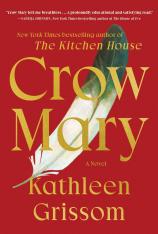
Crow Mary, by Kathleen Grissom

If you like American historical fiction, novels with strong female protagonists, or novels set in the Great Plains in the US and Canada, I think you’ll like this book. Ms. Grissom did a wonderful job of researching the woman on whose life this novel is based – and just as good a job of weaving in the history without creating any “information dumps.”

I enjoyed The Kitchen House, by Ms. Grissom, so I got on the waitlist at the public library for Crow Mary as soon as I heard about it.

Crow Mary, by Kathleen Grissom

In a nutshell, Crow Mary was a woman in the Crow tribe who married a white trader in the early 1870s. His work as a trader took them away from her family and to Canada. They endure disappointment and trials as they try to make a go of it. Crow Mary isn’t going to take any grief from anyone, and she doesn’t shy away from taking matters into her own hands when her husband lets her down or isn’t there to take charge.

The book does a good job of pointing out how white settlers and the white government failed to see Native Americans as people and, therefore, seldom made the effort to take into consideration their intelligence and ways of life.


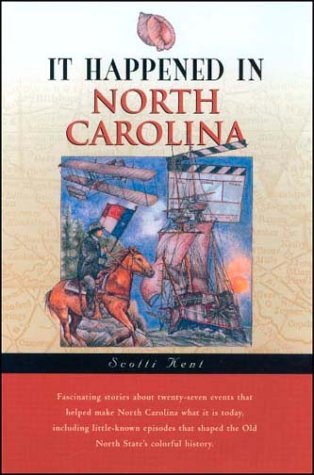
It Happened in North Carolina, by Scotti Kent

This delightful little book is a collection of 27 stories about things that happened in North Carolina. (No surprise there!) Some of the incidents I’d heard of and others I hadn’t. The stories are written in an informal yet informative way that makes the reading pleasurable.

It Happened in North Carolina, by Scotti Kent

The stories are presented in chronological order and start with a description of the Poskito (a renewal celebration) held by the Pee Dee Native Americans in the 13th century A.D. It was quite interesting and prompted me to put a day trip to the Town Creek Indian Mound in Montgomery County, NC on my “field trip” list.

The most heart-breaking story in the book is “The Story of Tsali, 1838” about the terrible mistreatment of the Cherokee Indians in western NC during the administration of President Andrew Jackson.

I was pleased to find two Cabarrus County stories in the book on topics that I wrote at length about in my book, Harrisburg, Did You Know? Cabarrus History, Book 1:  the story of the Cabarrus Black Boys in 1771 and the story of Ellen Harris of the Rocky River Community swallowing a thimble in 1896.

This is a neat little 139-page paperback book. By the way, I purchased the book for a few cents at a book sale held by the public library several years ago when the collection was being severely weeded.

It makes me sad to see books containing local history being pulled from the shelves. I suppose my Harrisburg history books will be sold for a few cents sometime in the not-so-distant future because decision makers see no value in local history books.


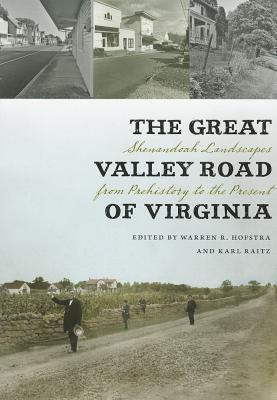
The Great Valley Road of Virginia: Shenandoah Landscapes from Prehistory to the Present, edited by Warren R. Hofstra and Karl Raitz

I happened upon this book as I researched The Great Wagon Road for the novel I’m working on. I took copious notes from the chapter titled, “The Colonial Road.” Other parts of the book were interesting, but it was that third chapter that I very helpful to me. The following chapters dealt with the post-colonial era to the present.

The Great Valley Road of Virginia, edited by Warren R. Hof

Anyone interested in the development of the United States will enjoy this book. It’s full of history and geography and helps the reader visualize how the Virginia portion of the Great Wagon Road took shape.

One point the book reminded me of is that in earlier times the government did not decide where to put roads, did not lay them out, and did not maintain them. Such was the case with The Great Wagon Road. Citizens had to petition the county and then do all the work themselves. Once the work was completed and approved, the county appointed an overseer who was then responsible to get the citizens to maintain the road. One can only imagine how well that worked!

I’m still left to determine how the family in my novel would have traveled from Windy Cove to the Great Wagon Road….


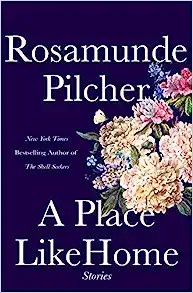
A Place Like Home (short stories), by Rosamunde Pilcher

I thoroughly enjoyed reading all of Rosamunde Pilcher’s Cornwall, England novels back in the 1980s. Reading this collection of her short stories immediately reminded me what an engaging writer she was.

A Place Like Home, by Rosamunde Pilcher

A Place Like Home contains 15 of her short stories. Each one puts the reader right there in England. Ms. Pilcher had a talent for describing the setting and her characters in a way that made you feel like you were there and knew them.


Since my last blog post

I had the pleasure of traveling to Marietta, Georgia the last weekend in June for the wedding of one of my great-nieces! It was a lovely outdoor event and I wouldn’t have missed it for the world. It was nice to spend several days with immediate family for a happy event.

I took the opportunity while in Georgia to visit the Kennesaw Mountain National Battlefield Park. One of my ancestors was wounded in the Kolb’s Farm Battle there on June 22, 1864.


In case I seem confused and distracted…

Unfortunately, the hack experienced in June by Windstream, our household email provider, resulted in the suspension of the Windstream email account my sister and I shared. All the company’s customer service in India can say is, “Yes, Windstream got hacked. We’re sorry.” After having that email address for some 20 years, you can imagine what a tedious chore it has been and will continue to be to change my email address with utility companies, doctors’ offices, insurance companies, relatives, friends, and various organizations.

Within hours of Windstream being hacked, our email and my Facebook and LinkedIn accounts were hacked, so I am no longer on either of those social media platforms. I miss many of my friends, but I don’t plan to get involved with Facebook or LinkedIn again. Due to general frustration, I’ve also closed by Twitter account.

Therefore, as of last week, my only platforms are my blog, my newsletter, and my website.

Speaking of my newsletter… I attempted to send out my Janet Morrison Books July Newsletter on Saturday. However, a box popped up saying that Mailchimp “might be having issues, or it may have moved permanently to a new web address.”

I thought things usually happened in threes, but I’ve honestly lost count of the computer program and app issues I’ve had in the last month. Perhaps God is trying to tell me to stop trying to be a writer. I’m filled with self-doubt, and I’m earnestly seeking His will. I’m hitting roadblocks at every turn. When I started this blog many years ago, my intention was to share with you the ups and downs of being a writer. I’m not whining; I’m telling you like it is.

Photo by Sergey Zolkin on Unsplash

At my age, the technology side of writing is overwhelming. Please be patient with those of us who learned to type on a manual typewriter, learned to “calculate” on a ten-key adding machine, grew up with radio and black-and-white TV, and telephones connected to the wall.


In case I’m able to send out my newsletter…

Among other items of interest, it included details about and photographs from the Open Hearth Cooking Class I took in May at Hart Square Village and my trip to Georgia.


Until my next blog post

Happy 4th of July to my fellow Americans!

Photo by Roven Images on Unsplash

I hope you have a good book to read – one that will take you away from the stresses in your life, entertain you, educate you, and give you a new perspective.

Spend time with friends and family. Remember the treasure they are, even if they don’t agree with you about politics.

Think of the people being hurt by recent rulings by the US Supreme Court. After all, we’re all God’s children.

Remember the people of Ukraine.

Janet
Following up on last week’s blog post: Book Banning

I was gratified by the responses my blog post of last Monday received. Thank you to everyone who responded, and thank you to the ones of you who reblogged my post about book banning. In case you missed it, here’s the link: Book Banning is Democracy Banning!

In last week’s post I listed the 19 books that had been banned the week before by the school board in Hanover County, Virginia. I failed to list other books or tell you how you can find lists of other books that have been challenged in the United States.

You can simply put “Challenged Books” or “Banned Books” in your favorite online search engine. Or, you can look for reputable sites like the American Library Association’s website for intellectual freedom: https://www.ala.org/advocacy/bbooks/

Barnes and Noble has a list of more than 230 challenged books on its website at https://www.barnesandnoble.com/b/banned-books/_/N-rtm.

Imagine if these shelves were empty! (Photo by Rabie Madaci on Unsplash)

Let’s flood our public library systems and bookstores with requests for such books! Here’s a partial list. You might find many others when you do your own search. The following list of 101 books that have been challenged or banned somewhere in the United States is in no particular order.

Hunger Games, by Suzanne Collins

They Both Die at the End, by Adam Silvera

What I Know Now: Letters to My Younger Self, by Ellyn Spragins

The Giver, by Lois Lowry

1984, by George Orwell

The Great Gatsby, by F. Scott Fitzgerald

Fahrenheit 451, by Ray Bradbury

The Lord of the Flies, by William Golding

To Kill a Mockingbird, by Harper Lee

The Glass Castle, by Jeannette Walls

Harry Potter and the Sorcerer’s Stone, by J.K. Rowling

Maus I: A Survivor’s Tale: My Father Bleeds History, by Art Spiegelman

Where the Wild Things Are, by Maurice Sendak

How the Garcia Girls Lost Their Accents, by Julia Alvarez

New Kid, by Jerry Craft

Animal Farm, by George Orwell

The Kite Runner, by Khaled Hosseini

The Handmaid’s Tale, by Margaret Atwood

My Sister’s Keeper, by Jodi Picoult

The Dairy of a Young Girl, by Anne Frank

The Catcher in the Rye, by J.D. Salinger

The Bluest Eye, by Toni Morrison

The 1619 Project: A New Origin Story, by Nicole Hannah-Jones

Brave New World, by Aldous Huxley

The Hate U Give, by Angie Thomas and Amandla Stenberg

Of Mice and Men, by John Steinbeck

Lord of the Flies, by William Golding

This Book is Gay, by Juno Dawaon and David Levit

I Know Why the Caged Bird Sings, by Maya Angelou

Gender Queer: A Memoir, by Maia Kobabe

Hop on Pop, by Dr. Seuss

Their Eyes Were Watching God, by Zora Neale Hurston

How the Word is Passed, by Clint Smith

Twilight, by Stephanie Meye

Beloved, (a Pulitzer Prize Winner) by Toni Morrison

The Pillars of the Earth, by Ken Follett

Girl, Interrupted, by Susanna Kaysen

Where the Sidewalk Ends, by Shel Silverstein

The Grapes of Wrath, (a Pulitzer Prize Winner), by John Steinbeck

The Color Purple, by Alice Walker

Speak, by Laurie Halse Anderson

Slaughterhouse-Five, by Kurt Vonnegut

Lolita, by Vladimir Nabokov

The Absolutely True Diary of a Part-Time Indian, by Sherman Alexie

All American Boys, by Jason Reynolds and Brendan Kiely

The Autobiography of Malcolm X, as told to Alex Haley

A Farewell to Arms, by Ernest Hemingway

The Poet X, by Elizabeth Acevedo

Looking for Alaska, by John Green

Persepolis: The Story of a Childhood, by Margane Satrapi

Midnight in the Garden of Good and Evil, by John Berendt

Class Act: A Graphic Novel, by Jerry Craft

One Flew Over the Cuckoo’s Nest, by Ken Kesey

Monday’s Not Coming, by Tiffany D. Jackson

Fifty Shades of Grey, by E.L. James

The Other Wes Moore, by Wes Moore

Like Water for Chocolate, by Laura Esquivel

What If It’s Us, by Becky Albertalli and Adam Silvera

A Time to Kill, by John Grisham

A Lesson Before Dying, by Ernest J. Gaines

The Da Vinci Code, by Dan Brown

And Tango Makes Three, by Justin Richardson and Peter Parnell

Child of God, by Cormac McCarthy

Feed, by M.T. Anderson

A Separate Peace, by John Knowles

Stamped from the Beginning, by Ibram X. Kendi

Go Ask Alice, by Anonymous

Stranger in a Strange Land, by Robert A. Heinlein

Different Seasons, by Stephen King

For Whom the Bell Tolls, by Ernest Hemingway

The Lord of the Rings, by J.R.R. Tolkien

Native Son, by Richard Wright

Angela Davis: An Autobiography, by Angela Y. Davis

Skeleton Crew: Stories, by Stephen King

Thirteen Reasons Why, by Jay Asher

Stamped: Racism, Antiracism, and You: A Remix of the National Book Award-Winning Stamped from the Beginning, by Jason Reynolds and Ibram S. Kendi

Simon vs. the Homo Sapiens, by Becky Albertalli

All Boys Aren’t Blue: A Memoir, by George M. Johnson

The Red Badge of Courage, by Stephen Crane

Water for Elephants, by Sara Gruen

The Prince of Tides, by Pat Conroy

Tiger Eyes, by Judy Blume

Four Hundred Souls: A Community History of African America, 1719-2019, by Ibram X. Kendi, Keisha N. Blain

A Thousand Acres, a Pulitzer Prize Winner, by Jane Smiley

Kaffir Boy: The True Story of a Black Youth’s Coming of Age in Apartheid South Africa, by Mark Mathabane

Beach Music, by Pat Conroy

The Adventures of Huckleberry Finn, by Mark Twain

Blood in the Water: The Attica Prison Uprising of 1971 and Its Legacy, a Pulitzer Prize Winner, by Heather Ann Thompson

The Tenth Circle, by Jodi Picoult

The Jungle, by Upton Sinclair

Girl With the Blue Earring, by Tracy Chevalier

Catch-22, by Joseph Heller

Palestine, by Joe Sacco

Gone With the Wind, by Margaret Mitchell

Bridge to Terabithia, A Newberry Award Winner, by Katherine Peterson

The Sun Also Rises, by Ernest Hemingway

Addie on the Inside, by James Howe

Call of the Wild, by Jack London

Olive’s Ocean, a Newberry Honor Book, by Kevin Henkes

A Stone in My Hand, by Cathryn Clinton

Tilt, by Ellen Hopkins

How Often Are Books Challenged Where You Live?

There is an interactive map of the United States of the American Library Association’s website, https://www.ala.org/advocacy/bbooks/by-the-numbers. Hover the curser over a state to find basic information about book challenges in that state in 2022.

For instance, in my home state of North Carolina, there were 32 attempts to restrict access to books last year involving 167 titles. The most challenged book in North Carolina was Looking for Alaska, by John Green.

That map revealed some surprises. There were 45 attempts to restrict access to books in Massachusetts last year involving 57 books. In Michigan, the figures were 54 and 359. In Pennsylvania, 56 and 302. In Florida, 35 and 991. But Texas was at the top of the list (or bottom as the case may be) with 93 attempts to restrict access to books in 2022 involving a whopping 2,349 titles!

Photo by Enrique Macias on Unsplash

Different books are listed as the most-challenged book in the various states; however, Florida and Texas agree on The Bluest Eye, by Toni Morrison. I wrote about that book in my blog post last week. I want to say to the book challengers in Florida and Texas, “You’ve got to be kidding!”

If you want to read more about the topic of book banning…

Here’s the link to the website of PEN America. PEN America is made up of more than 7,500 novelists, journalists, nonfiction writers, editors, poets, essayists, playwrights, publishers, translators, agents, and other writing professionals, as well as devoted readers and supporters who join with them to carry out PEN America’s mission to protect free expression in the United States and around the world: https://pen.org/report/banned-in-the-usa-state-laws-supercharge-book-suppression-in-schools/.  

Until my next blog post

I hope you’re reading a book that someone has tried to get banned from a library. Let’s flood our public library systems and bookstores with requests for books that someone doesn’t want us to read!

I hope you make time for friends and family. Read to the children in your life and encourage them to read for fun.

Stop right now and visit my website (https://janetmorrisonbooks.com/) to subscribe to my newsletter. I took a special “field trip” to benefit my historical fiction writing on May 20. I’ll tell you all it in my July newsletter!

Just for signing up, you’ll receive a free downloadable copy of “Slip Sliding Away: A Southern Historical Short Story” to give you a taste of my fiction writing.

Remember the brave people of Ukraine.

Janet

Book Banning is Democracy Banning!

I’d planned to blog about flash fiction today but somehow in the big scheme of things, flash fiction doesn’t seem very important at the moment.

There are a number of trends in the United States that trouble me. The one I’m addressing today is book banning.

When you ban books, you are in fact banning democracy. You don’t see it that way, but you are. You are forcing your will on other people.

You do not have the right to tell anyone besides your minor children what they cannot read. Period.

You can try to force your fear of knowledge on your children until they are 18 years old.

I’m not talking about age appropriateness. I’m talking about banning books so they aren’t available to others in a library, classroom, or other place in which people go to find books.

What are you afraid of?

Are you afraid Little Johnny might find out that he’s not the center of the universe just because his skin is white? Are you afraid Little Mary might find out that there are people in the world whose skin color is different from hers?

Photo by Jason Leung on Unsplash

Are you afraid your teenage child who believes they were born in the wrong-gendered body might find out they are not alone in this world? They already know you have rejected them.

The case in Hanover County, Virginia

Every week I see a headline about another school board voting to ban books. The one I learned about last Thursday is Hanover County, Virginia.

I have visited Hanover County, Virginia. I thought it was beautiful area. In light of what the Hanover County Board of Education did last week, though, the physical beauty I remember about the area is now tarnished. I pity the children of that county, for their right to read is in serious danger has been taken away.

According to reports, the Hanover County, Virginia school board voted 5-2 on June 13, 2023 to adopt a new school library policy. If the reports I’ve read are accurate, the new policy gives board members full discretion over banning books from school libraries, classrooms, school buildings, or school divisions. I’m not sure what a school division is, but apparently it is a place where literature goes to hide.

Photo by Eliabe Costa on Unsplash

By majority vote, the Hanover County, Virginia board of education can remove books from the district’s schools without input from ANYONE. That includes you, parents. The parents who pushed the board to this point probably didn’t anticipate that they themselves would be taken out of the equation. My hunch is that they thought they’d have the inside track on future book bannings. That’s the way it usually works with narrow-minded anti-books people.

The Hanover County, Virginia board of education wasn’t satisfied to stop there. By a majority vote, the board can now dictate “any and all materials of its choosing in the library, classroom, school building(s) and or division.”

According to the Hanover Public Schools website, those school board members are not even elected by the citizens! They are appointed by the County Board of Supervisors. Those seven appointed individuals now have complete authority over every book that will be in your child’s school library and classroom in Hanover County.

How’s that working for you now in Hanover County?

Is that what you wanted?

I couldn’t help but notice the motto of Hanover Public Schools is: “Inspire. Empower. Lead.” What a sad joke that appears to be in light of last Tuesday’s book banning decision! Where is the inspiration?

And where on earth is there any empowerment in the Hanover Public School board’s decision? It seems to me the only people who have been empowered are the APPOINTED members of the school board. You didn’t get to elect them, Hanover County citizens… and you can’t vote against them because their names aren’t going to be on the ballot.

And as far as the “lead” part of the motto goes, this is what you call leadership?

On the Great Seal of the Hanover Public Schools it says, “A Tradition of Excellence.” Was your “tradition of excellence” formed by banning books? I doubt it.

During the same meeting the board voted to ban these 19 books. A Court of Mist and Fury, A Court of Silver Flames, All Boys Aren’t Blue, Choke, Flamer, Haunted, Identical, Let’s Talk About It, Looking for Alaska, Lucky, Me and Earl and the Dying Girl, Red Hood, The Bluest Eye, This Book is Gay, Sold, Tilt, Tricks, Water for Elephants, and Infandous.

Perhaps you’ve read some of those books. We read Water for Elephants, by Sara Gruenin the book club at our church. I don’t remember being scarred for life by it. I’ve also read The Bluest Eye, by Toni Morrison.

In The Bluest Eye, an 11-year-old girl of color struggles with society’s idea of beauty: blond hair and blue eyes. She prays for her eyes to turn blue so she will be considered beautiful.

The Bluest Eye was first published in 1970. The story is set in Lorrain, Ohio in 1941. The book has become a lightning rod for book banning. Reading it gave me some things to think about. It helped me to try to see the world through that 11-year-old girl’s brown eyes.

Photo by Joe Ciciarelli on Unsplash

We’ve come a long way in race relations since 1941. We’ve come a long way in race relations since 1970, when I was in high school. There is no societal benefit, though, in going backwards. There is no societal benefit in banning a book that presents a black child’s perspective on a world that doesn’t accept her humanity.

Why would the Hanover County, Virginia school board members be afraid to leave The Bluest Eye on a school library shelf? Fear.

Fear

Fear. It all comes down to fear.

What a horrible way to live a life… afraid. You ban books and you arm yourself to the teeth because you’re afraid. The most ironic and sad thing about it is that most people advocating for the banning of books today in the United States profess to be Christians.

Photo by M.T ElGassier on Unsplash

Where in the New Testament does it say that Jesus instructed His followers to hate others?

Where in the New Testament does it say that Jesus instructed His followers to live in fear?

Where in the New Testament does it say that Jesus instructed His followers to squelch knowledge?

If you think Jesus would spend His time and energy today banning books and persecuting people whose skin differed from his or who were struggling every day to try to figure out why something about their birth-assigned gender just doesn’t feel right, then you and I aren’t worshipping the same Jesus.

If you think Jesus loves you because you vote Republican and hates you because you vote Democrat, then you and I aren’t worshipping the same Jesus.

I don’t usually preach on my blog, but…

Jesus Christ encourages His followers to love one another… and I don’t think he meant for us ONLY to love the people we agree with. We don’t have to love the language other people use or the evil things they do, but Jesus urges us to love them because we are all creations of God.

One of the first songs I learned as a child, probably right after “Jesus Loves Me,” was “Jesus Loves the Little Children.” It goes something like this: Jesus loves the little children, all the children of the world:  red and yellow, black and white, they are precious in his sight. Jesus loves the little children of the world.

Photo by Joeyy Lee on Unsplash

I’ve tried to cling to those words my whole life. I believe we are all precious in God’s sight. I don’t think God wants us to hate other people. I don’t think God wants us to discriminate against other people based on color, gender, ethnicity, national origin, or any other “box” we tend to people “others” in.

I don’t think God wants us to squelch the opportunity or right other people have to read and learn and think about anything they want to read, learn, or think about.

I don’t understand why there’s an element in the United States today who think the best use of their time is to dictate what anyone else cannot read.

We don’t have to be comfortable with the message within a book, but in the United States of America we have we used to have the right to read.

Book banning is a very slippery slope. You don’t want a book in a school library? How long will it be before you don’t want it in the public library? How long will it be before you have a book burning… you know, like they had in Nazi Germany?

Photo by Brendan Stephens on Unsplash

How long will it be before you decide people of a different skin color don’t have the right to an education… you know like in the United States a century ago? How long until you start burning students alive in a school dormitory like happened at 11:30pm Friday, June 16, 2023 at Lhubiriha secondary school in Mpondwe, Uganda?

Photo by Megan Escobosa Photography on Unsplash

God gave us brains. I think He desires for us to use our brain power to do positive things, not to tear other people apart, but maybe that’s just my opinion.

What do you think?

Since my last blog post

I continue to be frustrated with cyberspace, but life goes on. There are many things more important than having access to Facebook or LinkedIn or Twitter.

Until my next blog post

I hope you have a good book to read – one that will take you away from the stresses in your life, entertain you, educate you, and give you a new perspective. Look for a book that will stretch your mind. Perhaps The Bluest Eye, by Toni Morrison.

Spend time with friends and family. Remember the treasure they are, even if they don’t agree with you about politics.

Remember the people of Ukraine.

Janet

A Wake-Up Call: Let’s Talk about Sleep!

Does this sound like an odd topic for a blog about my journey as a reader and a writer? Please keep reading.

Just as reading The Bill of Obligations, by Richard Haass, prompted me to dedicate an entire blog post to that one book a couple of weeks ago Taking a look at The Bill of Obligations, by Richard Haass, I’ve since read a book that deserves its on post:  Why We Sleep: Unlocking the Power of Sleep and Dreams, by Matthew Walker, Ph.D.

Why We Sleep: Unlocking the Power of Sleep and Dreams, by Matthew Walker, Ph.D.

This is a fascinating book! Who wants to read about sleep? We all should. Most of us don’t get it right. I’ll just hit on some of the highlights or items I found most interesting – or frightening – in the book.

Studies have proven that humans need eight hours of sleep a day. The last two hours of our sleep is when our brains get a memory boost. When we jump start our day by getting up after just six hours of sleep, our concentration and physical limits suffer. Getting less than six hours of sleep is equivalent of going without sleep for 24 hours.

Photo by Hernan Sanchez on Unsplash

Dr. Walker states, “You do not know how sleep-deprived you are when you are sleep deprived.” Driving while sleep-deprived is as dangerous – or even more dangerous – than driving while impaired by drugs or alcohol. Falling asleep at the wheel for two seconds at 30 mph, your vehicle can completely change lanes. An alcohol-impaired driver’s reactions are slow, but a sleeping driver has no reaction.

Dr. Walker says we should not fool ourselves into thinking we can force ourselves to stay awake while driving by turning up the music or opening a car window. Those – and all other such coping practices we’ve probably all used more times than we want to admit – are all myths.

He says we are also only kidding ourselves when we think we can “catch up” on our sleep on the weekend. If we’ve lost sleep during the week, it takes more than three nights of eights of sleep for our brain to get back to the level of performance it had early in the week.

Photo by Brian Matangelo on Unsplash

Although professional athletes team decision-makers can be told how important it is for players to get eight hours of sleep a day in order to be at peak physical and mental performance, few athletes get the sleep they need. Furthermore, getting adequate sleep after a game is even more important than it is prior to a competition because sleep is necessary for a body to recover from the toll a game takes on a body.

Also, Dr. Walker says that getting adequate sleep for several nights or a week prior to getting an influenza vaccine is necessary for a person to get the full immune benefits from the shot.

The second category of findings that grabbed my attention is that a lack of sleep is fast being recognized as a key factor in whether a person will develop Alzheimer’s Disease. He cautions that sleep is not a “magic bullet” against Alzheimer’s Disease, but there are some interesting associations.

Photo by Milad Fakurian on Unsplash

A study found that those people with the most amyloid deposits in the frontal part of the brain also had the least deep end-Rem sleep and, therefore, had the least sleep state in which new memories are cemented.

The lymphatic system sanitizes the brain during sleep. Amyloid protein is removed – as well as tau – in this process which takes place in the last two hours of an eight-hour sleep cycle. Amyloid and tau are associated with Alzheimer’s Disease. This becomes a vicious cycle if you’re not getting enough deep sleep:  more amyloid and tau build up leads to Alzheimer’s Disease, which leads to more amyloid and tau buildup, which leads to worsening of Alzheimer’s Disease, etc.

Dr. Walker addresses those individuals who claim they can get along well – even perfectly – on as little as four or five hours of sleep a day. He says they are only fooling themselves. He points out that US President Ronald Reagan and British Prime Minister Margaret Thatcher both made such claims. They both ended up with Alzheimer’s Disease.

The book also talks about sleep and its relation to cancer, cardiovascular disease, diabetes, and obesity. He says, “Sleep is the bedrock for health.” Sleeping less than six hours a day increases one’s chances of heart trouble by 400%.

Photo by Mpho Mojapelo on Unsplash

The third area of study explained in the book that struck a chord with me was the section about melatonin, electric lights, LED lights, and the short-spectrum blue lights given off by our electronic devices.

The advent of the electric light bulb enabled humans to change night into day in many respects. By doing so, we’ve forced our naturally-made melatonin (which signals our bodies that it’s time to start winding down because it’s getting dark and it’s time to go to sleep) to be delayed by several hours.

Photo by Brooke Cagle on Unsplash

Dr. Walker warns of the harm looking at an electronic tablet late at night is doing more damage to our sleep patterns than we realize. If we look at a tablet until 11:00 pm and then go to bed, our natural melatonin might not kick in for two or three more hours instead of when it should have kicked in – say around nine or ten o’clock.

Have I gotten your attention?

I hope I have hit on some things that made you stop and think. Do you get adequate sleep?

I don’t. I haven’t had a night of restorative sleep since I became ill with chronic fatigue syndrome in 1987. My circadian rhythm is way out of rhythm. I paid for a number of appointments with a sleep specialist a few years ago. Dr. Walker’s book reiterates everything she told me. She told me to dim the lights for 90 minutes before going to bed, to keep my distance from a TV during that time, and to not under any circumstances use the computer or my tablet before going to bed.

The instructions Dr. Daley gave me were tough, but they worked. Eventually, after working on my bad habits for months, I was able to usually go to sleep by 1:00 a.m. instead of 3:00 or 4:00 a.m. I gradually fell back into old habits, though, and now I rarely fall asleep before 2:00 a.m. It’s a daily battle for me to fall asleep. Once I’m asleep, it’s equally as difficult to wake up.

Listening to Dr. Walker’s book – parts of it several times – has reminded me about the damage I’m doing to my health – to my brain, heart, and other organs – in the short term and in the long term.

It won’t be easy, but I must once again train myself to stop sabotaging my health.

I don’t expect or even aspire to ever being someone who goes to bed by 10:00 p.m. so I can wake up refreshed by 7:00 a.m. My physical maladies will never allow me to have restful sleep, but some of my late-night habits aren’t helping matters.

Photo by Aditya Vyas on Unsplash

I need to get back to the light dimming practices, etc. that Dr. Daley recommended so I’ll at least have a chance to get eight hours of sleep every day.

Since my last blog post

Being a writer of historical fiction gives me excuses to do things I wouldn’t otherwise do. If I’m going to have characters in my 18th century novels cooking in a fireplace, I need to know what that was like. I spent the day on Saturday at Hart Square Village near Vale, North Carolina, learning how to cook over an open fire in an 1800s kitchen (which wasn’t easy after only three hours of sleep!).

If you want to hear about my adventure, sign up for my newsletter by visiting my website (https://www.janetmorrisonbooks.com) and clicking on the “Subscribe” button. I’ll write about Saturday’s experience in my Janet Morrison Books Newsletter in July. It was quite am enjoyable day, but I was happy to come home that afternoon to my electric kitchen appliances!

Until my next blog post

I hope you have a fascinating book to read. Please consider reading Dr. Walker’s book, if you tend to not get a full eight hours of sleep every night.

Make time for friends and family – and sleep!

Remember the brave people of Ukraine.

Janet

Have you signed up for my newsletter?

May will be here in a few days, and that means it’s time for my second newsletter. The last two months have flown by!

Photo by Jon Tyson on Unsplash

In case you haven’t signed up for my newsletter yet, it only takes a minute. Go to my website, https://www.janetmorrisonbooks.com, and click on the “Subscribe” button on any page on the site. Verify that you are a human being, and fill in your name and email address. That’s all there is to it.


What’s in it for you?

In return for signing up for my newsletter, you will receive an email from me containing a link for you to use to download a copy of my short story, “Slip Sliding Away: A Southern Historical Short Story.”

Then, every other month you will receive my newsletter in your email inbox.


Why in the world would I have a newsletter?

Come on. Admit it. That question is bouncing around in your head along with, “What could Janet Morrison have to put in a newsletter?”

I’ll address that in a minute, but first let’s discuss the “Why?”

In an effort to get my name out there as a legitimate writer, I’ve spent a good amount of time reading up on author websites and author newsletters. All the writing craft books, free webinars, and courses I’ve taken emphasize the importance of a writer being able to communicate with her audience.

I’m early in the process of finding my audience. My website was redesigned a couple of months ago. In conjunction with the development of the website I now have a way to compile an email list of people who are interested in my books.

I will never send you spam and I will never give away or sell my email list. It is my intention to only email you six times a year to deliver my newsletters to you.


“What could Janet Morrison have to put in a newsletter?”

I primarily want to keep you up-to-date on my writing projects. I’ll include the titles of books my subscribers have recommended, field trips I go on – some for research for my writing and others just for fun or information, my author events, reviews my books have received, and trivia questions that can be answered by reading my books.

I will tell you about short stories and books I’m working on, so you’ll be the first to know how those are coming along and when you can expect them to be published.

You’ll find out that I don’t tell everything I know in my blog posts!


I’m a work in progress…

and so is my author’s platform. I blogged about an author’s platform way back on April 15, 2016 in Update on sorting out social media. I blogged about this subject again on November 29, 2016 in My Author Brand Progress Report – Part 1 (with CORRECTION). The list goes on and on. You’ve seen me struggle with various forms of social media and failing at most of them.

I’m still trying to find my niche. I’ve invested time in Twitter and other social media platforms. I’ve found a few kindred spirits out there, but not a big following.

I’m committing myself to this newsletter. I much prefer that to social media I’m expected to spend hours on each day. I’d rather be writing or reading or a host of other things, so let’s plan to continue with the blog every Monday and then in May, July, September, November, January, March, etc. let’s get together over my newsletter to dig a little deeper into what I’m writing and reading and what you’re reading. And, if you’re also writing, please share that so I can include it. Let’s have some fun with a trivia question in each newsletter. Hint: you’ll probably need to read my books or short stories to find the answers.


What have you been reading lately that you’d recommend?

I want to share your reading recommendations with others on my newsletter list. Join the list and then send me your book recommendations. With your permission, I’ll add your name and recommendations to my next newsletter.


Until my next blog post

I hope you have at least one good book to read.

Make time for family and friends. Fellowship does a body good.

Remember the people of Ukraine.

Janet

Meet & Greet at Second Look Books, April 15th

What?        Author Meet & Greet

Where?      Second Look Books, 4519 School House Commons in Harrisburg

When?       Saturday, April 15, 2023

What Time?         2:00 – 4:00 p.m.

Second Look Books, 4519 School House Commons, Harrisburg, NC

Copies of Harrisburg, Did You Know? Cabarrus History, Book 1 and Book 2 have arrived and been autographed.

Photocopies of my 11×14-inch “Harrisburg in the 1900s” two-map sets have been made.

Business cards and bookmarks are printed.

Saturday, April 15 is the big day for my Meet & Greet at Second Look Books in Harrisburg, North Carolina! I’ll be there from 2:00 p.m. until 4:00 p.m.

Please drop by, even if you’ve already purchased both books.

The bookmarks and Harrisburg maps are free while supplies last.

What maps?

I drew the maps based on detailed memories that Mr. Ira Lee Taylor shared with me while I was writing the “Did You Know? local history column for Harrisburg Horizons newspaper (2006-2012.)

One map covers from along NC-49 to Back Creek. The other map covers from Back Creek to Reedy Creek and where McKee Creek flows into Reedy Creek.

Mr. Taylor told me where such things as the telephone switchboard, spoke factory, two cotton gins, railroad houses, corn fields, cotton fields, and livery stable were in the early 1900s.

He told me where the various stores and post offices were. Being the town’s only mail carrier for several decades, he knew where everybody lived, so I included much of that information The map show where the roads were (and were not) before the coming of the high-speed rail.

In case you arrived in Harrisburg after the two-story red brick old Harrisburg School was torn down, this set of maps will show you the layout of the school grounds. The school property is where School House Commons Shopping Center is now.

The maps also show the locations of the Oak Grove Rosenwald School and the Bellefonte Rosenwald School that you read about in Harrisburg, Did You Know? Cabarrus History, Book 1.

Some things you’ll learn about in my two books

There are stories of local heroism from 1771 and the detailed memories of a World War II US Army veteran who told me about his training for D-Day through to the end of the war.

There are stories about the original Hickory Ridge School, which was a one-room school on Hickory Ridge Road.

There are stories about the Rosenwald Schools that served the black students in the early 1900s.

There are stories about the man from Russia (actually, Ukraine) who settled in Harrisburg in the 1920s to practice medicine until his death in 1960. He was a country doctor who made house calls

There are stories about the construction of the Charlotte Motor Speedway and the first World 600 Race when the track was in such bad shape that chunks of asphalt broke the windshields out of some of the race cars.

There is information about the 22-mile syenite ring-dike that Harrisburg sits in. It’s what remains of an ancient volcano.

Until my next blog post

Remember the people of Ukraine – where Dr. Nicholas E. Lubchenko was born and lived until young adulthood.

I hope to see you on Saturday!

In case you don’t have a good book to read, please consider purchasing my local history books. They’re available in paperback at Second Look Books. They’re also available in paperback and for Kindle from Amazon.

Even if you don’t live or have never lived in Harrisburg, North Carolina, I think you’ll find some interesting stories that you can probably relate to if you are of a certain age. And if you a child, teen, or young adult I think you’ll find it interesting to read about how life used to be in our sleepy little farm village of a couple hundred people in the early 1900s that has grown to nearly 20,000 people in 2023.

What?        Author Meet & Greet

Where?      Second Look Books, 4519 School House Commons in Harrisburg

When?       Saturday, April 15, 2023

What Time?         2:00 – 4:00 p.m.

I hope to see you there!

Janet

Local History is Revealed in National Archives Holdings

The first documented gold discovery in the United States was here in present-day Cabarrus County, North Carolina in 1799. The discovery by a little boy playing in Little Meadow Creek led to gold fever in the area. Numerous gold mines were dug and mined to various levels of success.

In fact, there was enough gold found in the southern piedmont of North Carolina that a branch of the United States Mint was built in Charlotte in 1836 and 1837. It opened for the production of gold coins in 1837.

A trip to the National Archives at Atlanta (which is in the Atlanta suburb of Morrow, Georgia) a few years ago gave me the opportunity to look at ledger books from the Mint in Charlotte. Within those pages I recognized names from my community.

Register of Gold – Branch Mint – Charlotte

I’m blogging about some of that information today to give you an example of the type of documented local history I included in Harrisburg, Did You Know? Cabarrus History, Book 2. Although the book (and Harrisburg, Did You Know? Cabarrus History, Book 1) concentrate on Harrisburg, both books do include articles about other communities in Township One.

One of the communities rich in history in the township is Pioneer Mills. Little more than a quiet crossroads now, it was a center of activity in the mid-1800s after the discovery of gold and the opening of Pioneer Mills Gold Mine.

I recognized names such as John C. Barnhardt from the Pioneer Mills community as taking 123 ounces of amalgam to the Charlotte Mint on August 31, 1843, for which he was paid $2,340.33. That was no small sum of money in 1843!

Robert Harvey Morrison, on whose land the Pioneer Mills Gold Mine was located, was paid more than $4,000 for the gold bars and amalgam he took to the Mint from late in 1846 into early 1850.

Other names I recognized in the Mint ledgers included two other Barnhardts,  Robert R. King, three men with the surname Treloar, and R.B. Northrop.

Comparing US Census records, Charlotte Mint records, and various years of Branson Business Directories helped me get a better idea of what the Pioneer Mills Community must have looked like 150 to 180 years ago. There was a general store, a dry goods store, a blacksmith, a school, and a post office, In 1869, Pioneer Mills Community had three physicians.

Gold mining brought people from Canada, Great Britain, and New York to Pioneer Mills. Gold mining, no doubt, brought some undesirable people into the community, which led the wife of the pastor of Rocky River Presbyterian Church to say in the early 1870s that Pioneer Mills “is no place for a preacher’s son!”

If you’d like to read more about the history and people of Cabarrus County, North Carolina, you might enjoy Harrisburg, Did You Know? Cabarrus History, Books 1 and 2. They are available in paperback at Second Look Books in Harrisburg and in paperback and for Kindle from Amazon.

By the way, you can visit the research room at the National Archives at Atlanta (in Morrow, Georgia) by appointment only. Visit the website for more information:  https://www.archives.gov/atlanta.

Until my next blog post

I hope you have a good book to read.

I hope you spend time with family and good friends.

And, as always, remember the people of Ukraine and count your blessings.

Thank you for taking the time to read my blog.

Janet

#OnThisDay: 8 Valley Forge facts that will actually surprise you on this 245th anniversary

The encampment of the Continental Army at Valley Forge began 245 years ago today. We’re all familiar with the image of George Washington leading his troops across the frigid Delaware River. We know that it was a bitterly cold winter, but there are some interesting facts I hope to surprise you with today.

            1,700 to 2,000 soldiers died of disease at the six-month encampment.

            Food for the troops was scarce. The Oneida delegation, allies of the Patriots, arrived in May 1778 with white corn. Polly Cooper of the delegation instructed them on how to safely prepare the corn for consumption and stayed after most of her fellow Oneidans had left. She received a shawl from Martha Washington in thanks for her assistance.

            In December it went down to 6 degrees F., 12 degrees F. in January, 12 degrees F. in February, and 8 degrees F. in March.

            It was the last time United States soldiers served in a racially-integrated army until the Korean War in the 1950s.

            The volunteer drill master was Baron von Steubon, a Prussian military commander. The Prussian military drills and tactics he taught the troops were used by the United States military for the next 30 years.

            It is thought that 250 to 400 women were in the encampment, serving as cooks, nurses, laundresses, and menders of clothing.

            Mary Ludwig Hayes, a.k.a., Molly Pitcher, was at Valley Forge with her husband. She is remembered for jumping into service to help load a cannon at the Battle of Monmouth Courthouse after her husband was wounded.

            Hannah Till was an enslaved cook for George Washington at Valley Forge. She purchased her freedom a few years later and became a salaried cook.

            We hear a lot about our “forefathers” but not enough about our “foremothers!”


Since my last blog post

Look who’s reading my book! He must have found it on Amazon or in Harrisburg, NC at Second Look Books or Gift Innovations! It’s in short supply in Harrisburg until I get my next shipment. If you prefer an e-book, remember it’s available for e-book and in paperback from Amazon.

Until my next blog post

I hope you have a wonderful Christmas or whatever holidays you are celebrating.

I hope you enjoy time with family and friends.

Remember the suffering people of Ukraine.

I’ll see you again here at my blog on December 26 – the last Monday in 2022!

Janet

My Book is Published!

When I posted my blog on November 28, I didn’t expect to be able to submit my local history book, Harrisburg, Did You Know? Cabarrus History, Book 1 to Amazon for publication that afternoon!

I’m thrilled to announce in today’s blog post that Harrisburg, Did You Know?  Cabarrus History, Book 1 is now available as an e-book and in paperback on Amazon! It contains the first 91 local history columns I wrote for Harrisburg Horizons newspaper. The paperback is indexed and the e-book, of course, is word searchable on your electronic device.

Many of my blog readers live in other parts of the United States, as well as in other countries around the world. You might not think you’d be interested in reading a book about Harrisburg, a town in Cabarrus County, North Carolina. You might be surprised, though.

Topics covered in the book include newspaper article series I wrote about the cotton economy, early mail service, the coming of the North Carolina Railroad in 1854, early telephone service, and the memories of a World War II US Army veteran who shared his memories from being trained for D-Day through the end of the war in Europe. Those series, as well as other articles should be of much wider interest than Cabarrus County or even North Carolina.

For instance, any railroad enthusiast or World War II history buff will enjoy reading those two series of articles. For Revolutionary War history buffs there’s an article about a local man who was a Minuteman and there’s a series of articles about a group of local young men and teenage boys who disguised themselves and blew up a shipment of the Royal Governor’s ammunition that was on its way from Charlotte to Rowan County, NC to put down the Regulator Movement in 1771.

There are articles about the one-room schools of the 1800s and early 1900s, as well as the three Rosenwald Schools that served the black students in this area in the early 20th century.

The Harrisburg area was served for decades until 1960 by a physician from Russia. Anyone who likes to read about the days of the country doctors who made house calls will enjoy the series of articles I wrote about Dr. Nicholas E. Lubchenko.

NASCAR fans will enjoy the articles I wrote about the first World 600 stockcar race held at Charlotte Motor Speedway, which is actually in the Harrisburg community. Some articles on other subjects have a connection with the property where the speedway is, including a visit by George Washington in 1791.

I had the pleasure of interviewing some of my community’s oldest residents and preserving their memories through the local weekly newspaper (which ceased publication a decade ago) and now I’m happy to see their memories in this book. I also drew from old newspapers in Charlotte and Concord, genealogies, US Census records, and other sources.

There are sad stories and there are funny stories. Isn’t that what life is like? Some of our local history and our history as a nation and as human beings in general is sad. Some of it is embarrassing to future generations. What one generation knew as cutting-edge technology makes the 21st century reader laugh.

Something that comes through all the articles is how we’re all alike. Everyone is doing the best they can with what they have. There are people who overcame tremendous odds to accomplish the things they did.

The people I had the privilege to interview were all “salt of the earth” people. They didn’t brag about anything they’d done in their lives. They were all just good, hard-working people who quietly did what they could to make our little corner of North Carolina a great place to live.

Since my last blog post

In addition to getting Harrisburg, Did You Know? Cabarrus History, Book 1 published, I continues to format Book 2 for publication in 2023. So, if you like Book 1, you can start looking forward to Book 2 in a couple of months if all goes as planned.

By the way, I noticed on Saturday that Amazon had dropped the price of the e-book version of my vintage postcard book, The Blue Ridge Mountains of North Carolina from $12.99 to $2.99. I’m not sure what’s going on there, but I have no control over the price of that book since I wasn’t the publisher. For all I know, they’ll change the price again by the time you’re reading this.

Until my next blog post

Thank you for indulging me today for blowing my own horn. This is really exciting for me!

Happy reading!

Remember the brave people of Ukraine as they suffer from the war and bitter cold.

Janet