I write southern historical fiction, local history, and I've written a devotional book. The two novels I'm writing are set in Virginia and the Carolinas in the 1760s. My weekly blog started out to follow my journey as a writer and a reader, but in 2025 it has been greatly expanded to include current events and politics in the United States as I see our democracy under attack from within. The political science major in me cannot sit idly by and remain silent.
Along the lines of yesterday’s blog post, today I’m writing about the lack of a separation of church and state in public education in Oklahoma.
My concern is that once one of the 50 states in our country gets away with the eroding of the separation of church and state, other states with such leanings take note and follow suit.
The separation of church and state is in the very foundation of our country. My sister and I came across a blatant example of how things were in colonial Virginia while we were doing genealogical research.
One of our ancestors was in and out of jail in Virginia in the early 1700s for such things as “playing cards on the Sabbath.” What hit us in the face, though, was that every time he was put in jail for playing cards on the Sabbath, abusing a judge, or not paying his court fine, his fine was that he had to give the Church of England so many pounds of tobacco.
That was the law in colonial days, and it one of the root causes of the American Revolution.
It is no surprise, then, that the first clause in our Bill of Rights – the first clause in the First Amendment to the Constitution of the United States is, “Congress shall make no law respecting an establishment of religion.”
The First Amendment to the Constitution of the United States of America
Ryan Walters in Oklahoma
Oklahoma School Superintendent Ryan Walters said on Friday that his state will no longer give statewide reading and math tests. Each school district will be left to choose what tests to give its students.
So much for trying to have a statewide standard in education.
Walters has been a controversial person as he set out from the beginning to disrupt education in Oklahoma. He made a name for himself by requiring every classroom to be equipped with a Bible with very specific criteria.
Only two Bibles on the market met those criteria: Lee Greenwood’s “God Bless the U.S.A. Bible” (endorsed by Donald Trump, who gets a commission for copies sold) and “We The People Bible” endorsed by Donald Trump, Jr. Greenwood’s Bible sells for $60 and Trump, Jr.’s Bible sells for a mere $90. Walters asked for bids to buy 55,000 of them. (Jesus must be so proud of both of them… er… all three of these men.
Last November, Walters emailed school superintendents across Oklahoma to announce that the State had purchased 500 “God Bless the U.S.A.” Bibles and required that students be shown a prerecorded video of the announcement. That video of Walters included his making accusations against his political opponents and then he transitioned into a prayer for “Trump’s [campaign] Team” and praying against Trump’s opponents. As State School Superintendent, Walters has no power to dictate curriculum.
What are Ryan Walters’ qualifications to be a state school superintendent?
He is a Republican.
He supports the book-banning organization Moms for Liberty.
He requested that teachers show their students a video of him praying for Donald Trump.
He lashes out against “woke ideology.”
He has accused teachers of trying to indoctrinate students.
He labeled the Oklahoma Education Association is a “terrorist organization.”
He says the separation of church and state is a liberal “myth.”
He claims the “left-wing media” hates the Bible.
The Oklahoma Education Association
Take a look at the “Vision, Mission, and Values” of the Oklahoma Education Association on the teachers’ organization website (https://okea.org/about-oea/) and tell me what indicates it is a “terrorist organization.”
Questionable ethics
Speaking at a town hall, Walters responded to, “How does the Tulsa Race Massacre not fall under your definition of critical race theory?” by saying, “Let’s not tie it to the skin color and say that the skin color determined that.”
In May 2022, it was reported by newspapers in Oklahoma that even while working as the state’s Secretary of Education, Walters stayed on as the executive director of Every Kid Counts Oklahoma, a nonprofit organization that was somehow able to pay Walters $120,000 per year. The organization was/is funded by national school privatization proponents and charter school expansion advocates including the Walton Family Foundation and a group funded by Charles Koch.
It seems like an oxymoron for an advocate for the privatization of public schools to hold the office of Secretary of Education for a state. (North Carolina dodged that bullet in the November 2024 election.)
After successfully campaigning for reelection as State Superintendent of Public Instruction in 2022, Walters was fined for 14 violations of Oklahoma political campaign finance ethics rules.
Conclusion
Standardized tests in the United States have been under attack for years. I am not personally qualified to say the tests are good or bad. I believe all such educational resources should be up for constant scrutiny to elevate the education of the children in the United States; however, to just eliminate the testing does not seem to be a good answer.
Leaving curriculum selection and testing up to each little school district is a recipe for disaster. Look at the individuals on your local school board. What are their qualifications for making such decisions?
It’s past time for Americans to start paying more attention to the names on a ballot and not just to those running for President. Government begins on the local level. I caution you against voting for anyone just because they seem to be “a good person.”
There are a lot of Rayn Walters-types running for office in the United States, so be careful who you vote for.
There are lots of wolves walking around in sheep’s clothing.
President Trump just can’t help himself, and I’m going to keep talking about it on my blog as long as I can. The day may come when I don’t have the freedom to do that.
This week has been brutal!
Let’s stop training mental health counselors
Photo by Dan Meyers on Unsplash
Even though every time there is a “lone wolf” terrorist attack or mass shooting in the U.S., there is an outcry for more mental health facilities and more mental health counselling.
So why did Trump stop a $10 million grant program to train mental health counselors?
Trump says he won’t run for a third term
Section 1 of the 22nd Amendment to the United States Constitution seems straightforward to me: “No person shall be elected to the office of the President more than twice, and no person who has held the office of President, or acted as President, for more than two years of a term to which some other person was elected President shall be elected to the office of the President more than once.”
Trump announced on Tuesday that he does not plan to run for a third term as U.S. President.
That’s big of him!
It isn’t known whether he plans to move out of the White House at the end of his second term, or whether he plans to just never leave office.
Anti-Science Trump
Trump has ordered NASA to destroy two satellites that provide detailed information about carbon dioxide and crop health. Just because Trump thinks climate change is a hoax does not make it so.
Farmers, scientists, oil and gas companies, among others, depend on the data gathered by those two satellites.
The American taxpayers paid $750 million for those satellites.
Trump on human biology
Photo by Tim Mossholder on Unsplash
Trump was truly on a roll Tuesday. He appeared on CNBC’s Squawk Box and talked about how he believes undocumented immigrants are naturally made for farm work and people who live in inner cities can’t do it.
You can’t make this stuff up!
Here’s a quote from the show:
“We can’t let our farmers not have anybody,” Trump added of undocumented farm laborers, primarily of Hispanic origin, who are being targeted for deportation by his Department of Homeland Security. “These [are] people that you can’t replace them very easily – you know, people that live in the inner city are not doing that work. They’re just not doing that work. And they’ve tried – we’ve tried, everybody tried. They don’t do it. These people do it naturally, naturally.”
I love how Rolling Stone summed up the incident: “It should go without saying that no group of people feels an intrinsic urge to cultivate the land for sub-livable wages and at constant risk of detainment and deportation, but the president doubled down.”
mRNA vaccine research cancelled
Photo by Mufid Majnun on Unsplash
U.S. Secretary of Health and Human Services Robert F. Kennedy, Jr. announced on Wednesday that the Trump Administration is cancelling $500 million in mRNA vaccine research. Kennedy, a lifelong vaccine-denier, claims there is a more high-tech way to develop vaccines. He also said there is no proof that mRNA vaccines work against respiratory viruses. The National Institutes of Health (NIH) beg to differ, saying the Covid-19 mRNA vaccine saved an estimated 14.4 million lives.
Twenty-two different research projects are being halted, including those studying the possibility of using mRNA vaccines in the treatment of cystic fibrosis and pancreatic cancer.
Who put RFKjr in charge of vaccines? Oh yeah… Donald Trump and the United States Senate.
This decision could wreak havoc with our health and our economy.
Trump pulls United States out of UNESCO
The White House announced yesterday that Trump is withdrawing the United States from the United Nations Educational, Scientific and Cultural Organization (UNESCO).
Trump considers UNESCO to have a “woke” and politically divisive agenda.
This outrageous!
When I wrote The Blue Ridge Mountains of North Carolina for Arcadia Publishing in 2014, I proudly included the following: “The United Nations Educational, Scientific, and Cultural Organization named Grandfather Mountain a member of the international network of Biosphere Reserves in 1992 because it supported 42 rare and endangered species.”
If Trump thinks by pulling the United States out of UNESCO he can erase that, he is wrong. My book stands as is, and I will not edit Grandfather Mountain’s UNESCO designation out of it!
How can one person encapsulate such a level of hatred for the beauty and wonder of the world?
ICE having trouble with recruitment?
Photo by Logan Weaver |on Unsplash
It warms my heart to learn that the U.S. Department of Homeland Security is having trouble recruiting people to be Immigration Customs Enforcement (ICE) agents, but Secretary Kristi Noem has come up with a solution. She announced the lifting of the maximum age cap and the lowering of the minimum age to 18.
Until this week a person could be no older than 40 years old to apply for the job. According to Noem, there is now no age limit and she welcomes teenagers to apply.
What could possibly go wrong with 18- and 80-year-old ICE agents?
Ex-Acting FBI Director Fired
Brian Driscoll was Acting Director of the FBI at the beginning of Trump’s second term, but Driscoll refused to give Trump a list of the FBI agents who worked on the January 6, 2021 attempted coup.
Photo by David Trinks on Unsplash
Kash Patel was eventually named FBI Director, but Driscoll had returned to serve in the agency in another position. That was until yesterday when Trump fired him.
All federal employees take an oath to support and defend the Constitution of the United States of America. But Trump demands loyalty to Donald J. Trump alone. If you remain loyal to the U.S. Constitution, he will fire you.
This is not the way things are supposed to be. Will Americans wake up before it is too late?
Breaking the Constitution to have another census
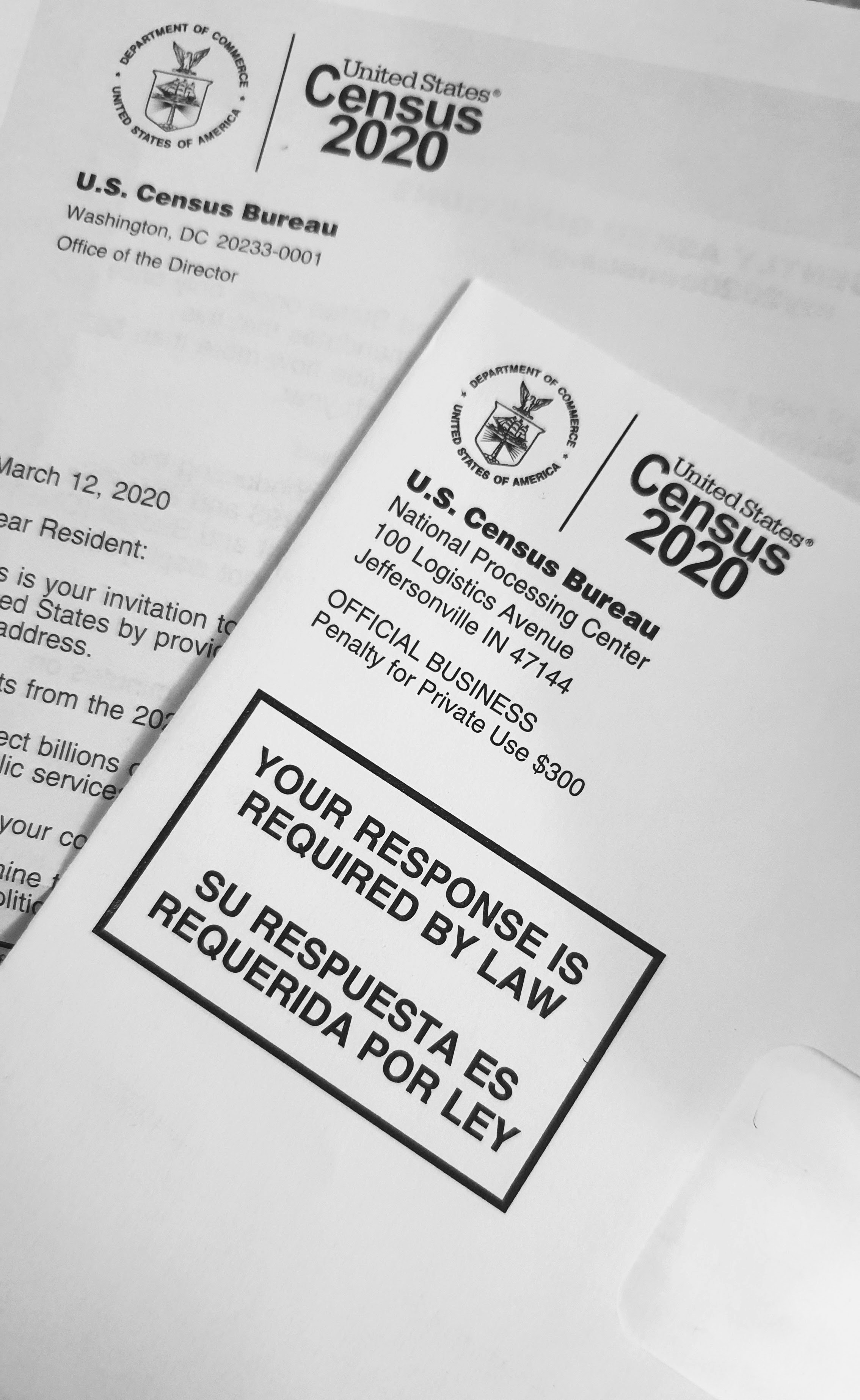
To add a measure of legitimacy to the rigging of the 2026 mid-term elections, Trump is calling for a federal census to be taken this year in which only U.S. citizens will be counted.
Under the law, the census has been taken every 10 years since 1790 and everyone has been counted – not just U.S. citizens.
I guess I need to dust off my passport application and get it submitted as soon as possible, in case my birth certificate does not prove I’m a citizen.
You see, in Texas the Republicans are trying to redraw the U.S. House Districts before the 2026 Congressional election and gerrymander the map to take away five predominantly Democratic districts and convert them into predominantly Republican districts. The bottom line is that Trump does not want to lose the Republican majority currently in the U.S. House.
There has been quite a stir over this very issue in Texas this week, and the U.S. House of Representatives hangs in the balance.
“Why Jefferson, Madison and the Founders Enshrined the Census in our Constitution”
“The U.S. Constitution empowers the Congress to carry out the census in “such manner as they shall by Law direct” (Article I, Section 2). The Founders of our fledgling nation had a bold and ambitious plan to empower the people over their new government. The plan was to count every person living in the newly created United States of America, and to use that count to determine representation in the Congress.
“Enshrining this invention in our Constitution marked a turning point in world history. Previously censuses had been used mainly to tax or confiscate property or to conscript youth into military service. The genius of the Founders was taking a tool of government and making it a tool of political empowerment for the governed over their government.
“They accomplished that goal in 1790 and our country has every 10 years since then. In 1954, Congress codified earlier census acts and all other statutes authorizing the decennial census as Title 13, U.S. Code. Title 13, U.S. Code, does not specify which subjects or questions are to be included in the decennial census. However, it does require the Census Bureau to notify Congress of general census subjects to be addressed 3 years before the decennial census and the actual questions to be asked 2 years before the decennial census.”
Also: “Article I, Section 2 of the U.S. Constitution mandates that an apportionment of representatives among the states must be carried out every 10 years. Therefore, apportionment is the original legal purpose of the decennial census, as intended by our Nation’s Founders. Apportionment is the process of dividing the 435 memberships, or seats, in the U.S. House of Representatives among the 50 states, based on the state population counts that result from each decennial census. The apportionment results will be the first data published from the 2020 Census, and those results will determine the amount of political representation each state will have in Congress for the next 10 years.”
That’s a long explanation, but it is really rather simple that the census be taken every ten years. If Trump thinks it will be simple for every U.S. citizen to produce documented proof of citizenship, he is woefully mistaken.
Someone needs to tell him that the U.S. Congress controls the taking of the U.S. Census – not the temporary occupant of the White House.
Resurrection of Confederate statues
Americans will never be able to move on from it’s 1861-1865 civil war as long as people like Donald Trump keep stoking the fire.
The National Park Service, which is operating with a skeleton crew after Trump eliminated thousands of park staff this year, apparently has enough employees left to reinstall the statue of a member of the Ku Klux Klan on the grounds of the Washington, DC Metropolitan Police Department.
There had been requests made to Congress since 1992 to have the 11-foot statue of Confederate Army Gen. Albert Pike removed, but it stayed in place until the Black Lives Matter Movement.
Pike once wrote about the white race, “white race, and that race alone, shall govern this country. It is the only one that is fit to govern, and it is the only one that shall.”
It sends a chilling message that the Trump Administration is having Pike’s statue put back in place. It sends a strong message to all people of color: Racism is alive and well in the White House.
But that’s not all…
U.S. Secretary of Defense Pete Hegseth, in response to Trump’s “Executive Order On Restoring Truth and Sanity to American History,” is having a 32-foot bronze “Confederate Memorial” rebuilt and reinstalled in Arlington National Cemetery.
Sponsored by the United Daughters of the Confederacy, the statue was installed in 1914 and depicts slaves supporting Confederate soldiers. The statue perpetuates the myth that slaves supported the Confederacy during the Civil War.
But Hegseth didn’t stop by just quietly having the Confederate Memorial reinstalled in Arlington National Cemetery. Apparently not knowing when to stop talking, Hegseth said, “It never should have been taken down by woke lemmings. Unlike the Left, we don’t believe in erasing American history—we honor it.”
That’s rich, coming the week after Trump’s two impeachments were removed from the Presidential Impeachments exhibit at the Smithsonian’s Museum of American History.
You can’t make this stuff up!
Price of prescription drugs
Photo by Ali Rezaei on Unsplash
If someone in my family or circle of friends said that the price of drugs will decrease by 1,500%, I would assume that person had either had a stroke or had some form of dementia.
So why is it that the President of the United States can say that he is decreasing the price of prescription drugs by 1,500% and no one blinks an eye? He has said this several times.
I fear we have become so accustomed to Trump’s lies and nonsensical proclamations and rantings that we just accept it as, “That’s just the way he is.”
This is not something an adult with any level of intelligence or mental capabilities would say. Any fourth grader knows a 1,500% drop in the cost of a candy bar is a mathematical impossibility.
In conclusion
That’s just eleven things the Trump Administration did this week that I thought you might not have heard about.
I’m sorry this post is so long. Don’t blame the messenger.
The justice system in the United States is under attack. This is not a totally silent assault.
Photo on Unsplash
President Trump and his minions freely call judges names. Calling federal judges such things as “leftist” or “radical” or “deranged” or “monsters” or “idiots” has been a Trump rallying cry.
I don’t know if Trump understands the danger in doing this or whether he is just following the lead of his people like Stephen Miller who know it is a basic way to erode confidence and ultimately destroy the rule of law in our country.
A federal judge takes a vow “to follow the rule of law without fear or favor.”
The unique U.S. judiciary
We have a unique judicial system in the United States. Judges are independent of politics – or they used to be. Our judicial system is the envy of other countries where a national leader can call a judge and dictate how they rule on a case. Law students in the former Soviet Union marvel at our independent judiciary.
Attack on Judge Salas’ family
In July 2020, Judge Esther Salas opened the front door of her home in New Jersey and was met with an angry young man with a gun. Salas’ husband was shot and her son, Daniel, was shot and killed.
The cowardly assailant then turned the gun on himself and was dead when police arrived.
But the killer didn’t just wake up one day and decide to try to murder Judge Salas or her family. He was spoon fed hate speech from the President of the United States. If the President says judges are terrible people, it must be true. Right?
But it did not stop there. Not only has it not stopped; it is escalating.
Intimidation by Pizza
After Daniel’s murder, federal judges across the nation started receiving pizza deliveries – pizzas they had not ordered. Pizzas were being delivered “from Daniel.”
The message was clear: “Judge _____, we know where you live.”
Some adult children of federal judges who don’t even live in the same state as their parents have received such pizzas “from Daniel.”
The message to judges is clear: “Judge ____, we know who your children are and we know where they live.”
At least 50 federal judges have received unwanted pizzas “from Daniel.”
It goes beyond Intimidation by Pizza
Federal Judge Jack McConnell has received six death threats. Laura Loomer, one of Trump’s unofficial advisors, and Elon Musk have launched verbal attacks on his daughter.
Judge McConnell has been wrongly accused of judicial misconduct. A member of Congress went so far as posting a “Wanted!” poster in the halls of the U.S. Capitol with Judge McConnell’s photograph. There are unfounded articles of impeachment pending against Judge McConnell.
Federal Judge Robert Lasnik is being asked by younger judges, “How can I keep my family safe?” Judge Lasnik and his adult children have received pizzas “from Daniel.”
Federal Judge John Coughenour says he signed up for this, but his family did not. A SWAT team was sent to his home when someone told police that the judge had murdered his wife. Of course, it was not true. He has been the victim of bomb threats.
Federal Judge Esther Salas grieves that her dead son’s name is being weaponized by the people who hear Trump call judges names and take that as a call to action to intimidate and threaten the lives of judges. She says we need to recognize this for what it is: A real threat to our democracy.
Attacks from the White House are unprecedented
In the decade after the Brown v. Board of Education U.S. Supreme Court ruling in 1954, some judges who tried to enforce the desegregation of public schools ruling were victims of verbal assault; however, Presidents Dwight D. Eisenhower and John F. Kennedy supported the Supreme Court ruling.
For President Trump to now brazenly and proudly criticize court rulings and the judges who make them is unprecedented. Federal judges have never before been attacked by the U.S. President or White House staff.
This is serious. This is unacceptable.
This is a concerted attack on the independent judicial system in the United States of America.
What can we do?
We can educate ourselves about what is happening.
We can tell our friends and relatives what is happening, because this is more widespread than most of us realize.
We can explain to teens and young adults who are too young to know that attacks on judges is not normal that this is a direct result of the reckless behavior of President Trump and those who follow his lead.
We can speak up for justice and the rule of law every time we know it if being attacked.
“We the people” are the United States of America. It behooves each of us to defend the rule of law.
It’s hard to feel sorry for a wealthy university like Duke University that has an enormous endowment; however, the Trump Administration’s current little-publicized attack on the institution raises a larger issue.
Duke University will survive without federal grants, at least for a while. Its endowment can pick up the slack, at least for a while.
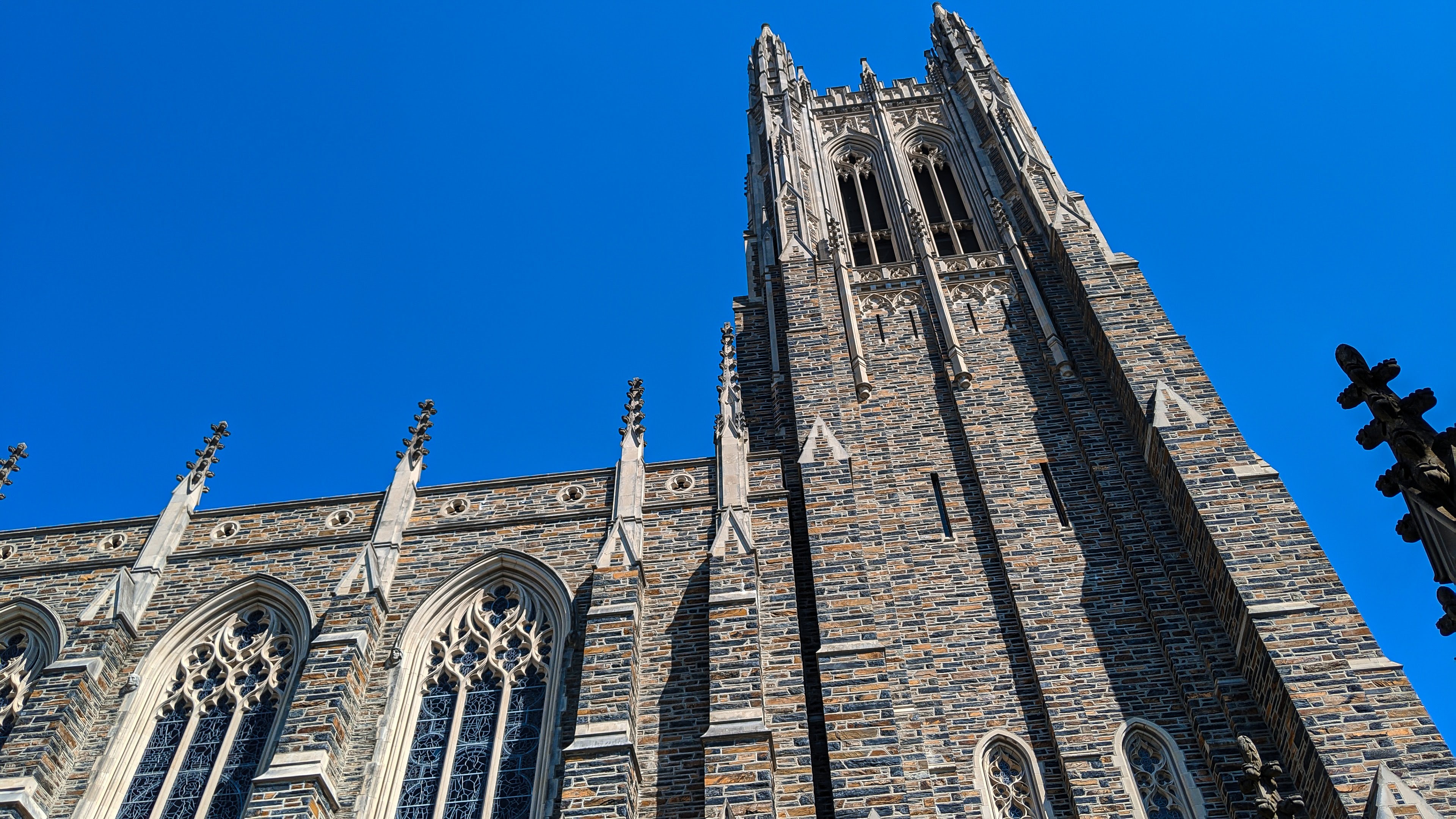
Exterior of Duke Chapel. Photo credit: Chuck Givens on unsplash.com
The larger issue is the Trump Administration’s continual attack on education on all levels. I believe Trump has no interest in education. He has no interest in what any school, college, or university teaches. He says, “I love the uneducated.” It might be the only truth he has ever spoken.
In a democracy, a president does not dictate university admissions or curriculum in public schools or private schools. In today’s United States, though, Trump believes he has that authority.
Last week, U.S. Secretary of Health and Human Services Robert F. Kennedy, Jr. and U.S. Secretary of Education Linda McMahon sent Duke University a letter. Specifically, Kennedy and McMahon threatened the Duke University Medical School and Duke Health (the entire Duke Health healthcare system). If writing letters to threaten universities for having diversity, equity, and inclusion is the only thing the U.S. Department of Education is going to do now, perhaps it needs to be abolished.
The letter alleges that the medical school and healthcare system engage in “wrongful racial preferences” in hiring and admissions. The letter reportedly states, “This vile racism carries a host of excuses and hides behind a smug superiority that such ‘benefitted’ races cannot compete under merit-based consideration.”
Furthermore, the letter says, “Like all racism, ‘affirmative action’ undermines America’s commitment to merit-based justice and violates the nation’s civil rights laws.”
North Carolina Public Radio, WUNC, reports, “Kennedy and McMahon urge Duke administrators set up a ‘Merit and Civil Rights Committee’ to review its diversity policies ‘to avoid invasive federal engagement.’ The secretaries warn the university’s federal funding could be at risk if it doesn’t change course. ‘It is our hope that Duke Medical School and other components of Duke Health will either demonstrate that they merit the privilege of receiving taxpayer support or will enact reforms that make further enforcement efforts unnecessary,’ the letter said.
“McMahon and Kennedy ask the university to respond to the letter within ten business days.”
Earlier this year, nearly 600 Duke employees took voluntary buyouts after Trump slashed research funding. According to WUNC, “Cuts at the National Institutes of Health, along with reductions in Medicare/Medicaid funding could cost the university $350-600 million annually.
Duke plans to lay off more employees between August 5 and August 19.
That’s not just what Duke as an institution and business will lose: Duke Health operates Duke Children’s Hospital, Duke Health Lake Norman Hospital, Duke Raleigh Hospital, Duke Regional Hospital, and Duke University Hospital, as well as 12 urgent care facilities.
But that’s not the only attack on Duke University
The U.S. Department of Education also sent Duke University a letter last week threatening the Duke School of Law’s student-edited Law Journal.
It seems that the law students are too open to diversity, equity, and inclusion.
We have gone from recognizing that the playing field is not level to declaring that it is so level that to give anyone a hand up is a violation of everyone’s civil rights.
The playing field in the United States is not level, folks. For an alleged billionaire living in the White House to proclaim that it is level does not make it so. Someone who was born with a silver (or gold?) spoon in his mouth does not have the right to say that every person in America has an equal opportunity.
Those who say that white privilege does not exist are only fooling themselves. This falls into the category of “alternative facts” that the first Trump White House was famous for giving us.
It is easy in the United States today to place all the blame for our current demise of democracy squarely on Donald J. Trump’s shoulders; however, the Republican-dominated U.S. Senate and U.S. House are equally to blame now because both houses of Congress have supported every single thing Trump has done.
But to blame Trump and the U.S. Congress would be the easy way out.
You Voted or You Didn’t Bother to Vote
Photo by Mike Doherty on Unsplash
The American people voted. They elected Trump. In the 50 states, they elected the 100 U.S. Senators for staggered six-year terms. (One-third of the Senators are elected every two years.) In the 435 Congressional districts, they elected the 435 members of the House of Representatives last November. (They serve two-year terms.)
The American people voted for this, either by casting a vote last November or by not casting a vote last November.
This is on us, y’all.
Us.
The American people: those who either through a place of hate or through ignorance, voted for Trump and Republican Senators and Representatives AND those who were too lazy to cast a vote so they let those who did vote decide my future and yours.
If you voted for Trump and any other Republican, you are complicit. If you did not vote, you are complicit. You relinquished your vote and gave it to your crazy neighbor.
Perhaps you thought “my one vote won’t matter.” People have died to give YOU the right to vote. Don’t EVER take your right to vote for granted.
I say all this to get your attention so I can tell you how the way you voted or the fact that you didn’t bother to vote last November has real world ramifications.
Here’s One Example of Real-World Ramifications
The Trump Regime took control of the Smithsonian Institution in March. Trump claimed that some exhibits were “woke” and, in some instances, showed that the United States is not a perfect country.
Taking books off public school library shelves is not enough for Trump and his ilk. They are actively re-writing history.
The Removal of Trump’s Two Impeachments
The Smithsonian’s National Museum of American History has now removed Trump’s name from the list of four U.S. Presidents who have been impeached. The reason? For aesthetic reasons. Museum officials say his name will be included in the list when the exhibit is redone.
Trump is the only U.S. President to have been impeached twice, but according to the Smithsonian Institution in August 2025, Trump was never impeached at all.
Let that sink in, my fellow Americans.
My Two Questions
If someone who lived in Germany in the 1920s through the 1940s were here today, I would ask them the following question: Does this behavior sound familiar to you?
If you live in the United States of America today, I ask you the following question: How can we make it stop, since we have elected a complicit U.S. Congress?
Just to be clear
Donald J. Trump was impeached on December 18, 2019, on grounds of abuse of power and obstruction of Congress.
Donald J. Trump was impeached a second time on January 13, 2021, on grounds of inciting an insurrection.
But nothing happened to Trump. Nothing.
Trump ran for President again in 2024 and was elected to a second four-year term beginning January 20, 2025.
Trump signed an Executive Ordered called “Restoring Truth and Sanity to American History” on March 27, 2025, in which he directed Vice President J.D. Vance to “remove improper ideology” from every place under the Smithsonian Institution — the museums, research centers, and the National Zoo.
I Have Two More Questions
Don’t you just hate it when the National Zoo includes “woke left-wing radical lunatic” animals?
And don’t you just hate it when the Smithsonian’s Museum of American History tells you the truth?
Next up?
We’ll probably get a new and improved jobs report for the month of July. Trump didn’t like the one issued by Erika McEntarfer, head of the Bureau of Labor Statistics, so he fired her. A clear case of “shoot the messenger.”
Here are some items I did not have room to include in this morning’s blog post.
Artist cancels showing at Smithsonian’s National Portrait Gallery
Photo by Sung Jin Cho on Unsplash
The artist of a 2018 portrait of former First Lady Michelle Obama has withdrawn from her schedule showing at the National Portrait Gallery after being told one of her paintings was not acceptable in light of President Trump’s March Executive Order regarding museums.
Amy Sherald’s painting “Trans Forming Liberty” depicts the Statue of Liberty as a transgender woman. After being told she could not include the painting in her show, Sherald informed the secretary of the Smithsonian in writing that, “it has become clear that the conditions no longer support the integrity of the work as conceived.”
This would have been the first National Portrait Gallery’s showing… ever… by a Black contemporary artist.
The Smithsonian is “disappointed,” but not as disappointed as I am about what the Trump Administration is doing to free expression, science, medical research, and the treasure that was the Smithsonian Institution.
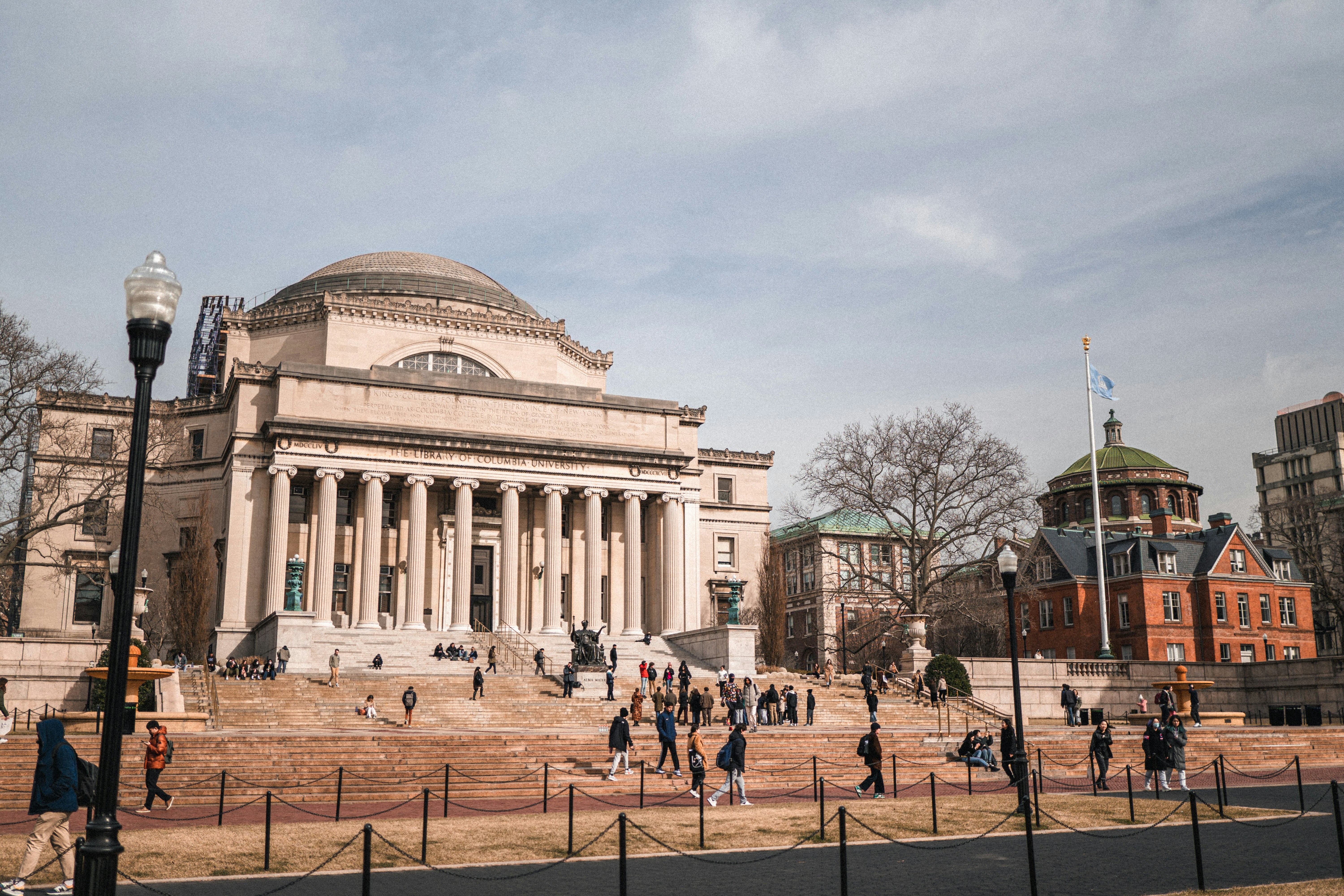
Columbia University caved in to Trump
Photo of part of the Columbia University campus in New York City. Photo by Tobias Pfeifer on Unsplash
So it can continue to admit international students and receive federal funds, Columbia University caved in to the bully. Under the guise of being concerned about Jewish students being discriminated against on Columbia’s campus, the Trump Administration strong-armed the university into bending a knee and paying $220 million for alleged violation of U.S. antidiscrimination laws.
In the agreement last Wednesday, Columbia is supposed to get to keep billions of dollars for research grants. Columbia must revise its admissions policies, campus protest policies, and its curriculum.
The university’s acting president, Claire Shipman, says the agreement protects Columbia’s values and autonomy, but it isn’t clear how that is possible with the Trump Administration dictating admissions, protests, and curriculum.
The Trump Administration calls the agreement “a road map for settlements” as it eyes other colleges accused of not addressing antisemitism.
When the students return to camp in September, it will be interesting to see if they are allowed to protest Israel’s bombing of Gaza and starving the Gazans by restricting food aid.
As I recall, that’s what started this whole thing.
And now Trump has turned his sights on the medical and law schools at Duke University. Anything to disrupt medical care and medical research, I guess. Some 600 Duke University staff have taken early retirement buyouts so far.
A reversal from the U.S. Department of Education
This is the first positive thing I’ve been able to report about the U.S. Department of Education since Inauguration Day. After North Carolina Attorney General Jeff Jackson and 19 other state attorneys general and governors sued the U.S. Department of Education for freezing $5.5 billion nationally, the Department Secretary caved! That means North Carolina will get the $165 million it had counted on until the Trump Administration pulled the plug.
U.S. Aid to Gaza
While in Scotland on Sunday, Trump whined for several minutes because nobody thanked the United States for giving $60 million in aid to Gaza. He claimed that no other country had given Gaza anything.
No one wants to see a U.S. President whine. Of course, he also cheated at golf while in Scotland, too. And he bad-mouthed President Biden, the mayor London, and a bunch of other people.
Is Netanyahu delusional or what?
Netanyahu says there is no starvation in Gaza. The whole world sees it. Even U.S. Representative Marjorie Taylor Green of Georgia admits it is true. It has to be pretty horrific for Marjorie Taylor Green to admit something.
Sadly, the United States is complicit because it continues to support Israel in its war on Gaza. This stopped being “self-defense” a long time ago, Netanyahu. It stopped with the indiscriminate bombing of schools, hospitals, and residential areas. It stopped being self-defense when Israel stopped allowing food and medicine to enter Gaza. The food drop last week was too little, too late – and that’s the nicest thing I can say about it. Israel only did that to try to appease the growing public outcry about the starving children.
Meanwhile, U.S. Representative Randy Fine of Florida, who happens to be Jewish, put this on X on June 2: “Tell your fellow Muslim terrorists to release the hostages and surrender. Until then, #StarveAway.” As far as I can determine, he has not changed his anti-Gaza stance. He would probably say he is just anti-Hamas, but it is the total population of Gaza that is bearing the horrors of this war.
How can someone who is wealthy enough and well enough connected to be elected to the United States Congress and live in the richest country in the world – and probably never missed a meal in his life — have no compassion for starving children?
The level of white privilege and hatred in so many Americans who are in positions of power boggles the mind.
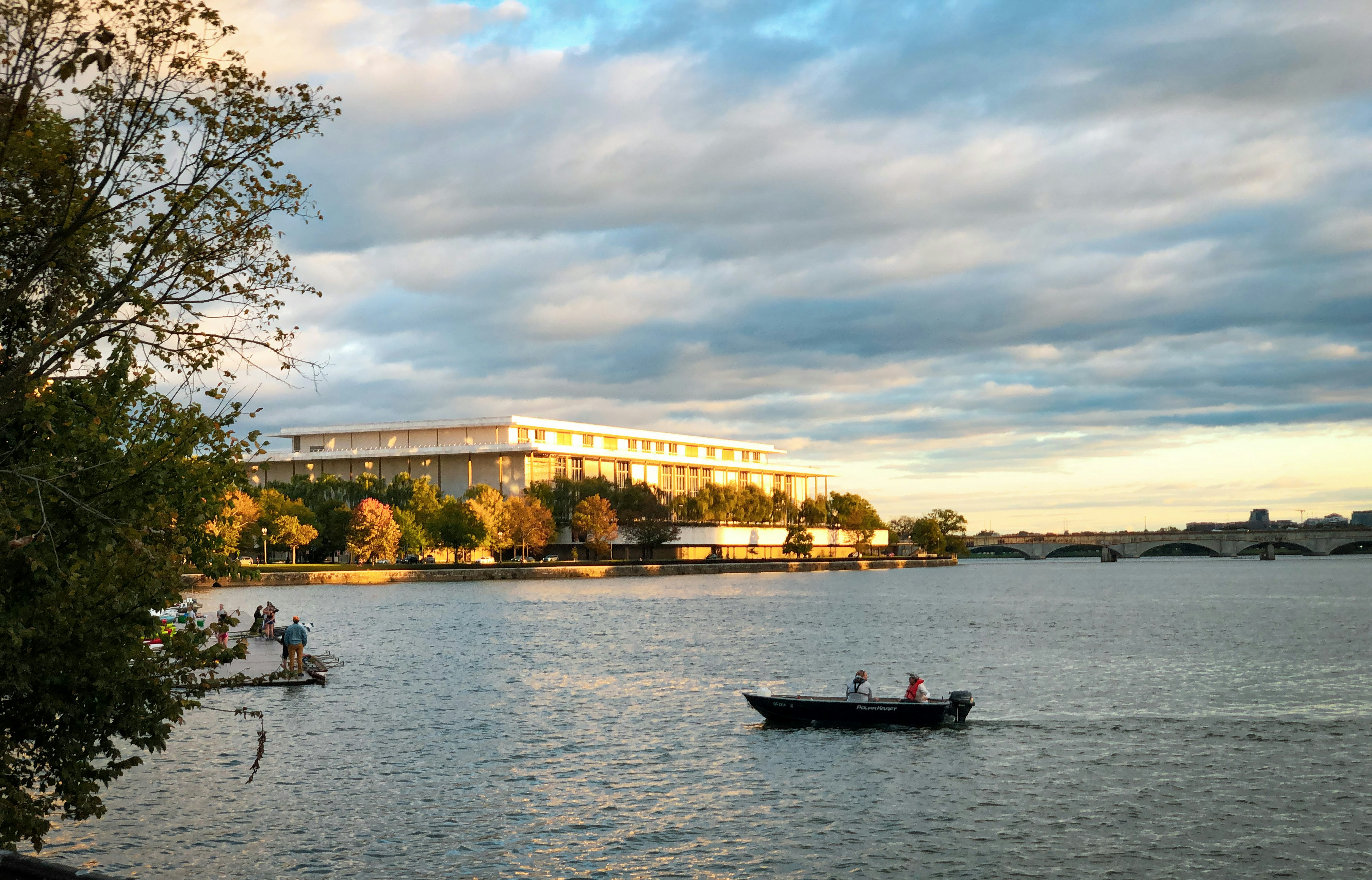
The First Lady Melania Trump Opera House at the John F. Kennedy Center for the Performing Arts
John F. Kennedy Center for the Performing Arts. Photo by Santeri Liukkonen on Unsplash
Yes, you read that correctly. U.S. Representative Mike Simpson of Idaho is chair of the House Interior and Environment Appropriations Subcommittee. He tucked the provision into the fiscal year 2026 Interior, Environment and Related Agencies Appropriations Bill, which passed the Committee on Appropriations 33 to 28.
The proposal was written into the fiscal year 2026 Interior, Environment and Related Agencies Appropriations Bill. The measure was approved by the Committee on Appropriations with a vote of 33 to 28.
One has to wonder how long it will be before the name “TRUMP” will be plastered on the outside of the building in giant gold letters. How long will it be before the Kennedy Center for the Performing Arts is painted gold?
Two Items of Good News
President Trump’s daughter-in-law, Lara Trump, is not running for the United States Senate from North Carolina in 2026.
Former North Carolina Governor Roy Cooper is running for the United States Senate to fill the seat vacated by Thom Tillis in 2026.
Until my next blog post
I hope you are reading a good book.
Don’t forget the people of Ukraine and western North Carolian.
I had never heard of the “Bonus Army” or this incident until I stumbled across it while looking for blog topics I could write about on or near — their anniversary dates. This one belonged on yesterday’s blog but got crowded out by the 157th anniversary of the ratification of the 14th Amendment to the U.S. Constitution.
Since the “Bonus Army” needed its own day on my blog, that’s today’s topic.
Why the name “Bonus Army”
As the federal government is prone to do, it came up with a plan to reward individuals who served in the military during World War I but there was a catch. They couldn’t receive their “bonus” payment until 1945 – nearly 30 years after their combat service.
Established by Congress in 1924, the so-called “Tombstone Bonus” would be paid to World War I veterans in 1945 to thank them for their service.
It brings to mind the case of soldiers who were in the American Revolution in the 1770s but were not eligible for a pension until 1832 when most of them were dead.
There seems to be a pattern here.
But then came The Great Depression
The stock market crashed in 1929, and by 1932 things were not getting any better.
Desperate for financial relief, 400 World War I veterans gathered in Portland, Oregon. Led by veteran Walter M. Waters, on May 17, 1932, they left Portland on a donated train and traveled to Iowa, from where they had to walk and hitchhike the remaining 900 miles to Washington, D.C. to make politicians acknowledge their dire straits.
“Bonus Army” participants demonstrating in front of an empty U.S. Capitol in summer of 1932. (Photo from Library of Congress; taken by Underwood & Underwood)
Other veterans learned of the movement and headed to Washington, D.C. By June 1, 1932, there were 1,500 veterans in the nation’s capital to plead with Congress and President Herbert Hoover to find a way to give them their bonus checks early.
The veterans camped out in various locations across Washington, D.C. The Anacostia Flats site was the largest of their shanty towns at 30 acres. It gained the name “Camp Bartlett” because it was John H. Bartlett, the former Assistant Postmaster General and former Governor of New Hampshire who owned the land and let the veterans camp there.
Anacostia Flats encampment in Washington, D.C. in 1932. (Photo from Library of Congress, from the Harris & Ewing Collection)
On June 1, D.C. Police Superintendent Brigadier General Pelham D. Glassford asked Congress for $75,000 to feed the veterans, but the request was denied.
In mid-June, the U.S. House of Representatives approved the immediate payment of the bonus, but the U.S. Senate rejected it. President Hoover had said he would veto the bill if it passed in both chambers.
Photo taken in 1932 at one of the Bonus Army encampments in Washington, DC. (Photo from Library of Congress; taken by Harris & Ewing, photographer)
Veterans kept coming to Washington to plead their case. By the end of July, 1932, it was estimated that up to 20,000 of them had arrived.
It did not end well
In an action that rattles one’s nerves even to read about it 93 years later, on July 28, 1932, President Hoover ordered the U.S. Army and local police to remove all the protesting veterans from Washington.
General Douglas MacArthur led the mission. George S. Patton, whose name we all know from World War II, also participated. In an ironic turn of events, one of the veterans expelled from the nation’s capital by Patton was Joe Angelo, the soldier who saved Patton’s life in World War I.
Some 3,500 U.S. Army infantry and cavalry troops were called up to rid the city of the marchers. Of that number, 800 were actively used in the mission while the other 2,700 were held in reserve.
Violence ensued as the marchers resisted, but they were no match for the fire power of the U.S. Army. Five tanks manned by soldiers with machine guns, troops using tear gas and bayonets, and troops with torches setting fire to the encampments was more than the unarmed veterans could overcome.
Some of them thought they would be safe at Camp Bartlett, since it was on private land and the order to evacuate had only mentioned federal lands. They soon learned that Camp Bartlett was to be cleared also.
General MacArthur threatened to have a civilian bystander arrested for shouting, “The American flag means nothing to me after this!” at the troops.
One of the marchers, William Hashka of Chicago, was shot and killed near the U.S. Capitol.
Excuses and reactions
In a statement that sounds all too familiar to us in 2025, President Hoover claimed that many of the marchers were not veterans. He said they were Communists and criminals.
Falling in line with Hoover, MacArthur said only ten percent of the marchers were veterans.
Vice President Charles Curtis was heckled about the incident while making a speech in Las Vegas on July 29. He responded with, “You cowards, I’m not afraid of any of you.”
Police Superintendent Glassford said on July 29 that the use of federal troops had caused the trouble and that it could have been handled peacefully.
Does any of this sound familiar to you in 2025?
Some newspapers across the nation endorsed Hoover’s actions, while others called it “sheer stupidity.”
In 1936, the World War I veterans received their bonus, but it took Congress overriding President Franklin D. Roosevelt’s veto to accomplish it.
During World War II, in 1944, Congress passed the G.I. Bill to assist veterans.
Until my next blog post
I hope you have a good book to read.
Don’t forget the people of Ukraine and western North Carolina – or the starving children in Gaza.
If you don’t have time to read the complete list, here are 70 of them:
(I guess it goes without saying that many books on the list were obviously about gender identity, but the following are books that don’t all into that assumed category.)
A History of Racism in America, by Craig E. Blohm;
A Smart Girl’s Guide to Racism & Inclusion: Standing Up to Racism and Building a Better World, by Deana Singh and Shellene Rodney;
Ab(solutely) normal: short stories that smash mental health Stereotypes, by Nora Carpenter and Ricky Callen;
All You Need is Love: Celebrating Families of All Shapes and Sizes, by Shanni Collins;
Anti-Racism: Powerful Voices, Inspiring Ideas, by Kenrya Rankin;
Be Your True Self: Social Justice and You, by Maribel Valdez Gonzalez;
Better Than We Found It: Conversations to Help Save the World, by Frederick Joseph, Porsche Joseph, and Taylor Denise Richarson;
Biased: Uncovering the Hidden Prejudice That Shapes What We See, Thinks, and Do, by Jennifer L. Eberhardt;
Black Friend: On Being a Better White Person, by Frederick Joseph;
Black Lives Matter, by Marty Gitlin;
Bless the Blood: A Cancer Memoir, by Walela Nehanda;
Caste: The Origins of Our Discontents, by Isabel Wilkerson;
Confronting Racism, by Scientific American Editors;
Critical Perspectives on Social Justice, by Jennifer Peters;
Discrimination, by Jacqueline Langwith;
Equality and Diversity, by Charlie Ogden;
Equality, Social Justice, and Our Future, by Sabrina Adams;
Gender Inequality in Sports: From Title IX to World Titles, by Kirstin Cronn-Mills;
Heads Up Sociology, by Chris Yuill and Christopher Thorpe;
How to Be a (Young) Antiracist and How to Be An Antiracist, by Ibram W. Kendi;
I Am An Antiracist Superhero, by Jennifer Nicole Bacon and Leticia Moreno;
It Doesn’t Have to Be Awkward: Dealing with Relationships, Consent, and Other Hard-To-Talk About Stuff, by Drew Pinsky and Paulina Pinsky;
Male Privilege, by Duchess Harris and Heidi Deal;
Me and White Supremacy, by Layla F. Saad;
Racial Bias: Is Change Possible? by Barbara Diggs;
Racial Discrimination, by Peggy J. Parks;
Racial Justice in America: Topics for Change, by Hedreich, Leigh Ann Erickson, and Kelisa Wing;
Racism in America: A Long History of Hate, by Meghan Green;
Say the Right Thing: How to Talk about Identity, Diversity, and Justice, by Kenji Yoshino and David Glasgow;
So You Want to Talk About Race, by Ijeoma Oluo;
Symptoms of Being Human, by Jeff Garvin;
The Antiracism Handbook: Practical Tools to Shift Your Mindset and Uproot Racism in Your Life and Community, by Thema Brayant-Davis and Edith Arrington;
The Antiracist Kid: A Book about Identity, Justice, and Activism, by Tiffany Jewell and Nicole Miles;
The Book of Radical Answers: Real Questions from Real Kids Just Like You, by Sonya Renee Taylor;
The Divide: American Injustice in the Age of the Wealth Gap, by Matt Taibbi and Molly Crabapple;
The Dog Knight, by Jeremy Whitley and Bre Indigo;
The Feeling of Falling in Love, by Mason Deaver;
The Feminism Book, by Georgie Carroll and Hannah McCann;
The Greatest Superpower, by Alex Sanchez;
The New Jim Crow: Mass Incarceration in the Age of Colorblindness, by Michelle Alexander;
The Other Talk: Reckoning With Our White Privilege, by Brendan Kiely;
The Ship We Built, by Lexie Bean and Noah Grigni;
The Sociology Book, by Christopher Thorpe, Chris Yuill, Mitchel Hobbs, Megan Todd, Sarah Temley, and Marcus Weeks;
The Sum of Us: How Racism Hurts Everyone: Adapted for Young Readers, by Heather C. McGhee;
This Book is Anti-Racist, by Tiffany Jewell and Aurelia Durand;
Under the Skin: The Hidden Toll of Racism on American Lives and on the Health of Our Nation, by Lind Villarosa;
We Were Eight Years in Power: An American Tragedy, by Ta-Nehisi Coates;
What is Anti-Racism? by Hendreich Nichols and Kelisa Wing;
What is the Black Lives Matter Movement? by Hendreich Nicols and Kelisa Wing;
What is White Privilege? by Leigh Ann Erickson and Kelisa Wing;
When Women Stood: The Untold Story of Females Who Changed Sports and the World, by Alexandra Powe Allred;
White Fragility: Why It’s So Hard for White People to Talk about Racism, by Robin J. DiAngelo;
White Privilege, by M.T. Blakemore;
White Privilege Unmasked: How to Be Part of the Solution, by Judy Ryde;
J is for Justice! by Veronica Arreola;
Why Are All the Black Kids Sitting Together in the Cafeteria? And Other Conversations About Race, by Beverly Daniel Tatum;
How Can I Be an Ally? by El-Mekki Fatima;
Long Time Coming: Reckoning with Race in America, by Michael Dyson;
How to Fight Racism: A Guide to Standing Up for Racial Justice, by Jemar Tisby;
Racial Justice, by Virginia Loh-hagan;
An ABC of Equality, by Chana Ewing;
Coping with Hate and Intolerance, by Avery Elizabeth Hurt;
Confronting Racism, by Maryellen Lo Bosco;
Respecting Diversity, by Anastasia Suen;
Tell Me Who You Are: Sharing Our Stories of Race, Culture, and Identity, by Winona Guo and Priya Vulchi;
What is Diversity, by David Anthony;
When a Bully is President: Truth and Creativity for Oppressive Times, by Maya Christina Gonzalez;
This is Your Brain on Stereotypes: How Science is Tackling Unconscious Bias, by Tanya Lloyd Kyi and Drew Shannon;
Prejudice, by Izzi Howell;
You Call This Democracy?: How to Fix Our Government and Deliver Power to the People, by Elizabeth Rusch;
There were also seven AP Psychology books on the list.
In conclusion
There is a definite pattern here.
The very topics that are tearing our country apart are being banned from Defense Department schools, grades kindergarten through 12th grade.
Ignoring that racism, diversity, gender inequality, and gender identity exist will not make them go away, no matter how much the white supremacists, misogynists, history deniers, and evangelicals want them to.
If we as citizens of the United States cannot read about our problems and differences, face them, acknowledge them, and have an honest conversation about them, how will we ever overcome them?
Until my next blog post
Find a book on this list and read it!
Remember the people of Ukraine and western North Carolina.
I was flabbergasted a couple of weeks ago to learn that a law had passed in Texas that will turn public school library book selection on its head.
Photo by Vrînceanu Iulia on Unsplash
As of September 1, 2025, school boards in Texas will select all books for public school libraries instead of professional librarians. I’ll bet the Texas state legislators thought it would be easy-peazy, so let’s just let the local school board members do it.
Local school board members tend to be just regular people. Most of them do not have college degrees in library science. Dare I go out on a limb and say that none of them do? How many course hours have they studied library collection development?
Why is it that humans assume their job takes a high degree of training and skill, but no one else’s job carries any requirements?
Since I live with a retired public school librarian, I have a ton of questions.
Can all the local school board members in Texas read on a 12th grade level?
What do they know about reading levels?
What do they know about age appropriateness?
Do they know how time-consuming the book selection process is?
Do they know anything about book selection, such as where to even get a list of books available for school libraries?
Do they know how to balance book selection against a budget?
Do they know who the award-winning authors and illustrators are?
Do they know what books are already on the shelves in all the schools in their district so they can avoid duplication and maintain a balance of subject matter?
Do they know everything that is taught on every grade level so they can be sure to order books that will supplement or enhance what is being taught in every classroom?
Does a school board have to be unanimous and vote on each book?
I could list more questions. Those 10 are just the ones that came to me immediately when I read the news report.
What are they thinking in Monroe County, Tennessee?
I read on Sunday that in a report from PEN America that book banners are going after books about cats. No one seems to know why book banners have a vendetta against our little feline friends, but it is happening in Iowa, Florida, and in Monroe County, Tennessee.
Monroe County has banned almost 600 books from its public schools. The Complete Book of Cats and The New Encyclopedia of the Cat are just two of the cat-related titles being pulled from the school library shelves.
I don’t even know what to say about that. I love dogs. I don’t like cats very much (aside from being fascinated by the beauty of tigers), but I would never want books about cats to disappear from libraries.
But wait! On Monday, I learned that one of the books banned from schools in Monroe County is The Complete Book of Dogs, by Rosie Pilbeam! Now they have gone too far!
You can’t go around banning books about dogs! You just can’t! That’s un-American. Dogs are love universally. Every library in the world should have books about dogs – and even cats.
Why in the name of everything reasonable is Monroe County, Tennessee banning cat and dog “encyclopedias” from school libraries? What if that 8th grader or 12th grader aspires to be a veterinarian? Is that student not supposed to learn about animals until they get to college? How ridiculous!
In what universe does it make sense to ban books about cats and dog?
In what world does it make sense to ban ANY books?
Digging deeper into this on the internet, I found that this is the result of Tennessee’s Age-Appropriate Materials Act, which went into effect this summer.
In addition to apparently any book about cats or dogs, the usual book banners’ target are on the list: To Kill a Mockingbird, Of Mice and Men, Fahrenheit 451, Lord of the Flies, Grapes of Wrath, Hidden Figures, Brave New World, Animal Farm; and Aztec, Inca, and Maya.
In my opinion the book above all others that should not be on anyone’s banned books list is Hidden Figures, by Margot Lee Shetterley. Heaven forbid a young black girl (or brown girl, or white girl) reads that book and is inspired to be a mathematician!
All kidding aside about dogs and cats, how dare they take Hidden Figures off the public school library shelves! How dare they!
There is such a thing as age appropriateness, but books should not be banned anywhere.
What are they afraid of?
Fortunately, Monroe County, Tennessee, only has a population of 46,250 as of the 2020 U.S. Census, so it’s book banning decisions won’t affect a huge number of children. But, since the Tennessee Age-Appropriate Materials Act applies to the entire state, will other county school systems follow Monroe County’s lead and ban the same 574 books?
North Carolina has some faults, but I’m so glad I don’t live in Texas or Monroe County, Tennessee! How embarrassing for the people there.
A bit of good news out of Washington, DC!
North Carolina Attorney General Jeff Jackson announced on Monday that the U.S. Department of Education decided to unfreeze the money it froze a week or two ago that was earmarked for after-school programs. This means North Carolina will get $36 million of the $165 million the Department of Education originally said it was freezing.
Jackson vowed he will see the U.S. Department of Education in court to try to recover the other $130 million.
Until my next blog post
Read anything and everything you can get your hands on.
Don’t let anyone tell you what you should not read.
Look for my blog post tomorrow about the 596 books the U.S Department of Defense has banned this month from the schools it operates for the children of our military personnel.
Remember the people of Ukraine and western North Carolina.
In the old days, if a king didn’t like the court jester’s jokes, he could have him executed. In some countries, that might still be the case.
Photo by Markus Winkler on Unsplash
But in America, we have First Amendment rights guaranteed by the U.S. Constitution… or so we thought until last Thursday.
That was when CBS announced the May 2026 end of “The Late Show with Stephen Colbert.” Colbert will not be replaced. The show will cease to exist.
CBS says it was purely a financial decision, but it seemed more than coincidental for it to happen to a show whose host keeps us laughing five nights-a-week as he masterfully puts a humorous spin on that day’s latest pronouncements and blunders made by Donald Trump.
There is nothing coincidental about it, and we all know it – no matter how many of Trump’s minions get on TV and try to convince us that it was.
Here’s the background, as reported by The Washington Post on July 18:
“On July 1, the announcement came that the network’s parent company, Paramount Global — which needs Donald Trump’s administration to approve the pending sale of the company to Skydance Media — was settling (rather than fighting) the president’s lawsuit over a “60 Minutes” interview of then-candidate Kamala Harris. They will be paying the president $16 million. Before the settlement, CBS News CEO Wendy McMahon and “60 Minutes” executive producer Bill Owens both left (or were made to) after registering their disapproval. Those who remain are clearly shaken. “Can you hold power to account after paying it millions?” John Dickerson, the anchor for “CBS Evening News,” said while reporting on the deal the day the settlement was announced. “Can an audience trust you when it thinks you’ve traded away that trust?”
Photo by DESIGNECOLOGIST on Unsplash
Trump’s cult members go on CNN and try to convince us that Stephen Colbert “isn’t even funny.” The Republicans have lost any sense of humor they ever had. Colbert is hilarious, and he’s been known to poke fun at politicians of all stripes.
Stephen Colbert, from everything I’ve heard, read, and seen is a descent guy. He does not hide his Roman Catholic faith, nor does he use it to shame or beat someone over the head with it. It is just part of his being and he is not ashamed to mention it on occasion when doing so seems appropriate.
He is never mean-spirited in his jokes. He is a consummate professional who goes out in front of a live audience five nights-a-week to offer them a release from the stresses of every day life.
Mr. Colbert’s father and two of his brothers died in a plane crash in 1974 when Colbert was just 10 years old, so he knows loss and grief on a very personal level. It gives him a heartfelt empathy for others. He demonstrates that empathy by sometimes including in the show ways to encourage others to show their empathy and open their wallets to help people in times of a natural disaster.
If you don’t like Stephen Colbert’s jokes, you don’t have to watch his show. As we used to say, “It’s a free country.”
Trump’s track record on humor
Trump proved on live TV in 2016 that he cannot take a joke. When then U.S. President Barack Obama made a light-hearted joke about Trump at the White House Correspondents Dinner, Trump never cracked a smile. If Trump had had even a tiny understanding of the White House Correspondents Dinner, he would have known that (1) it was a huge fundraiser for journalism and related internships and (2) it was an annual dinner dominated by good-hearted political jokes.
There was nothing mean-spirited by Obama’s remarks. He mainly poked fun at himself. That’s what people who have good mental health do. But Trump took it as a serious affront, and he will go to his grave still angry about Obana’s words.
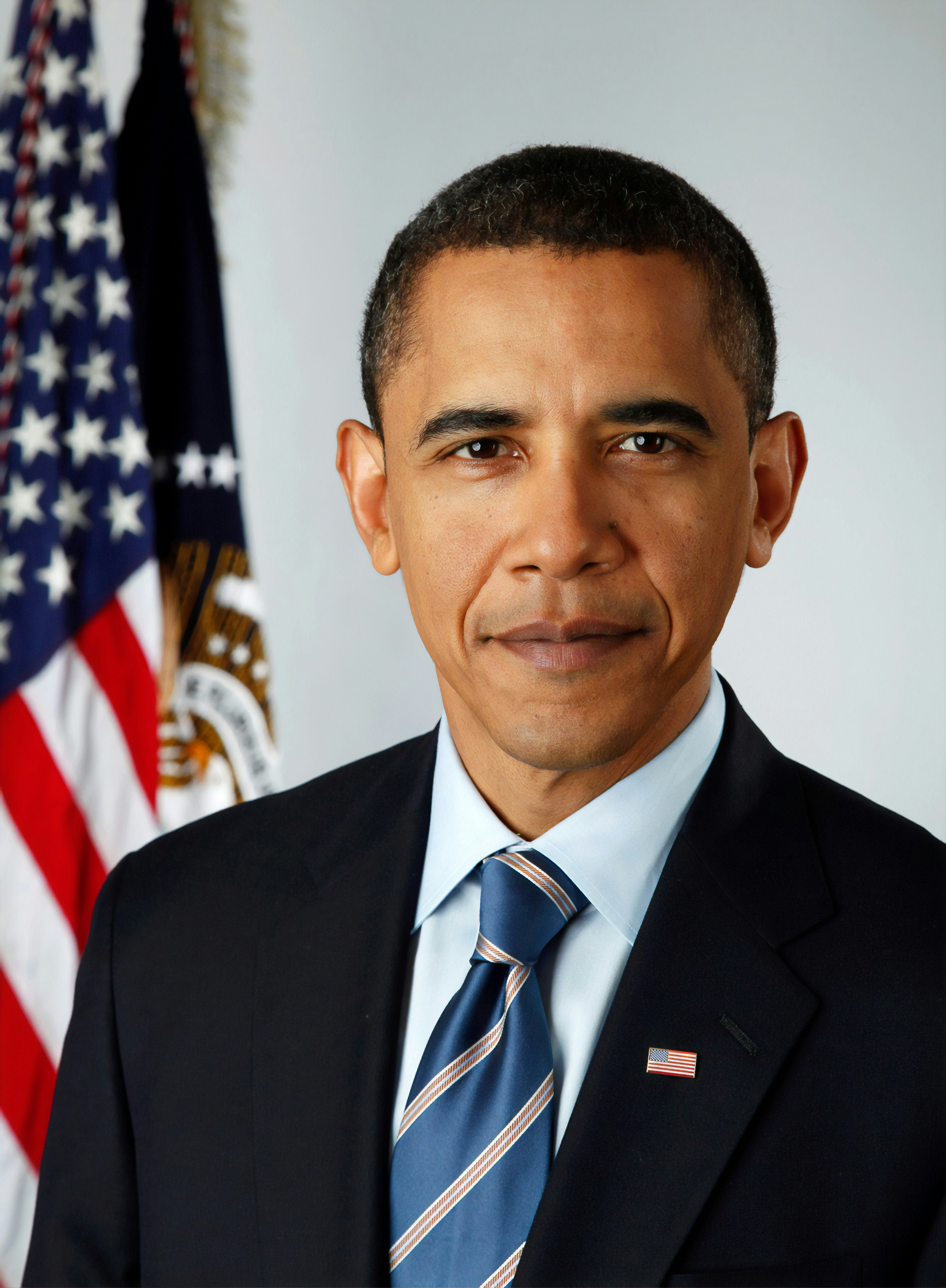
U.S. President Barack Obama. Photo by Library of Congress on Unsplash
A transcript of President Obama’s remarks, along with parenthetical inclusions of when the audience laughed) can be found at https://obamawhitehouse.archives.gov/the-press-office/2016/05/01/remarks-president-white-house-correspondents-dinner. The live television broadcast of the Obama’s remarks that night can also we found on YouTube. You can judge for yourself if President Obama’s remarks were mean-spirited. Here is the joke read by President Obama that made Trump so angry:
“Sitting at the same table, I see Mike Bloomberg. (Applause.) Mike, a combative, controversial New York billionaire is leading the GOP primary and it is not you. (Laughter.) That has to sting a little bit. (Laughter.) Although it’s not an entirely fair comparison between you and the Donald. After all, Mike was a big-city mayor. He knows policy in depth. And he’s actually worth the amount of money that he says he is. (Laughter and applause.)”
Trump sat stone-faced while the audience laughed at the joke. Trump couldn’t find the humor in it, I guess because he knew it was true.
Political humor is as old as mankind. It is unbelievable that someone as old as Donald Trump would not have known that. He clearly didn’t know it in 2016, and he hasn’t learned it yet in 2025.
Back to CBS and “The Late Show with Stephen Colbert,” … Trump went on social media within hours of Thursday’s announcement by CBS. He berated Stephen Colbert and belittled his comedic talents. He celebrated Colbert’s “firing,” and announced that Jimmy Kimmel of “Jimmy Kimmel Live” on ABC will be next.
The bigger picture
This is much bigger than the cancellation of a television show. This is much bigger than the attempt to silence one comedian.
This, my friends, is an attack on our First Amendment right to free speech.
Photo by Brian Wangenheim on Unsplash
It puts that ounce of fear in every decision a commercial television network makes, so they will constantly second guess themselves. It makes television producers think twice before they have a certain guest on a show.
It puts that little bit of intimidation in the mind of a comedian who has built a 40-year career poking fun at every United States President because that’s what we do in America. We make fun of our elected leaders.
One-by-one, Trump plans to rid television in America of comedians who dare to make jokes about him. He as much as said so on his social media platform.
It has come to that.
Here in the United States, we now have a President who thinks he has the authority to run roughshod over anyone and everyone.
He even attacked his own supporters last week when some of them dared to ask for the release of the Epstein files. He immediately called them “stupid.” These are the people who have voted for him three times and would happily vote for him again, but he has turned on them and called them names.
You cross Donald Trump, and you pay the price.
He believes he has the right to dictate every facet of our lives – the polluted air we breathe, the medical care we get or don’t get, and now – the television shows we can’t watch.
He has defunded the Corporation for Public Broadcasting because it received federal funds. Now, he has strong-armed CBS into ending a late-night talk show that has been on the air for decades because the host tells political jokes. CBS claims the decision was strictly financial, but we all know the real reason.
On Monday night, Colbert made a joke about CBS paying Donald Trump $16 million to settle a lawsuit. Three days later, Colbert’s show gets cancelled. You do the math.
Shame on Trump, but the lion’s share of the shame sits on the shoulders of CBS. First, you let him bully you about “60 Minutes” and now you’ve let him dictate your late-night programming.
Where do you think this will end, CBS? You have given in to a bully!
It is sad when an adult not only cannot laugh at himself but only finds humor in the suffering or misfortune of others. It is tragic when that adult is President of the United States.
Many days, 11:30-11:40 p.m. is the only time during the entire day that I find something to laugh about. I might not know or have an interest in his celebrity guests, but I’m tuning in for the show’s opening monologue.
I will continue to watch “The Late Show with Stephen Colbert” every weekday night until May 2026. I’m not sure how I will cope with the Trump regime after that.
Until my next blog post
Keep laughing at politicians.
Keep reading whatever you want to read.
Keep watching whatever you want to watch on TV.
The day may come when you cannot do those things, so don’t take them for granted.
Remember the people of Ukraine. They were living their lives in a democracy one day and the next day Russia started dropping bombs on them.
Remember the people of western North Carolina where people are still recovering from a hurricane and massive flooding that hit ten months ago this week.



















 Janet's Writing Blog