Three Other Books I Read in March 2019

I had so much I wanted to say about the books I read last month, I had to divide my thoughts between two blog posts. Last Monday I wrote about three of the books I read in March [https://janetswritingblog.com/2019/04/01/this-is-not-an-april-fools-day-joke/], so today I write about the other three books.

Jacksonland:  President Andrew Jackson, Cherokee Chief John Ross, and A Great American Land Grab, by Steve Inskeep

Jacksonland, by Steve Inskeep

I can’t remember how I became aware of this book, and I don’t remember what I expected it to be. What it turned out to be was a real eye opener! I consider myself a bit of a student of history, but I had never read the details of how Andrew Jackson speculated on land and grabbed it up by the tens of thousands of acres as a result of the inside track he enjoyed.

The main things I knew about Andrew Jackson were:

  • He was born near the North Carolina – South Carolina border, so both states claim him as theirs;
  • His father died just days before he was born;
  • He was delivered by his Aunt Sarah Hutchinson Lessley, who just happened to be my 5th-great-grandmother;
  • He became famous for his service in the Battle of New Orleans;
  • He was the 7th President of the United States of America;
  • His image appears on the United States $20 bill; and
  • He is blamed for the Cherokee “Trail of Tears” as he forced them off their ancestral lands in western North Carolina and northern Georgia and into a grim and often fatal march to the Oklahoma Territory.

The more I learn about Andrew Jackson, the more I wonder why North and South Carolina fight over him. Let’s just let Tennessee have him, since that’s where he chose to build his estate called The Hermitage. The more I learn about him, the more I wish my ggggg-grandmother had delivered a president of better character. I don’t blame her, though. Her sister, Jean Jackson was in need of a midwife.

What I learned by reading Jacksonland:  President Andrew Jackson, Cherokee Chief John Ross, and A Great American Land Grab, by Steve Inskeep was that President Jackson not only forced the Native Americans off their lands throughout the Southeast, but afterwards he personally gained financially from purchasing thousands of acres of those lands. So did his friends and his wife’s nephew. That’s just the half of it.

Ignorance is bliss. I almost wish I hadn’t read the book.

No, I’m glad I did. I wish I’d known about all this thievery and fraud earlier. It’s amazing the details that are not included or are just mentioned in passing in history textbooks!

The Island of Sea Women, by Lisa See

The Island of Sea Women, by Lisa See

I listened to this historical novel on CD. It is based on the women who live(d) on the island of Jeju off the coast of Korea. The book covers nearly 100 years of life and changes on the island, from the 1930s, through Japanese colonialism, through World War II and the Korean War, to the 21st century.

On Jeju, women learn from a young age how to dive deep into the ocean to harvest certain fish and other sea life. They can hold their breath longer than any other people in the world. They are known as haenyeo. The women do this dangerous work, and their husbands raise their children.

This is a story of friendship and betrayal against a back drop of war and military occupation. I was mesmerized by The Island of Sea Women, by Lisa See.

Due to spending so much time deep in the water, the haenyeo have hearing loss. For this reason, the older women speak loudly. It took me a while to get accustomed to the varying volume of this book on CD, as the narrator went above and beyond the call of duty in demonstrating how much louder the women spoke compared to the other characters. For that reason, it’s not the best choice if you like to listen to a book at bedtime or with ear buds. You, too, could suffer hearing loss!

Jackie Tales:  The Magic of Creating Stories and the Art of Telling Them, by Jackie Torrence

Jackie Tales, by Jackie Torrence

You might recall that I referenced this book in my March 12, 2019 blog post, “Two For Tuesday:  Two Books Written by Women of Color” (https://janetswritingblog.com/2019/03/12/twofortuesday-two-books-written-by-women-of-color/.)

I also referenced The Importance of Pot Liquor, by Jackie Torrence in my blog post on February 19, 2019: “ Two for Tuesday:  Two Books that Remind Me of Someone.” Here’s the link to that post: https://janetswritingblog.com/2019/02/19/two-for-tuesday-two-books-that-remind-me-of-someone/ .

Jackie Torrence was a master storyteller and a reference librarian in High Point, North Carolina. This book includes 16 folk tales along with Ms. Torrence’s stage directions and sidebar comments for each story. I’d never in my life considered being a storyteller until I read this book. I don’t know that this is something I’ll pursue, but the book is so inspiring that it made me entertain the idea!

Even if you just want to be able to read stories to your children or grandchildren with more enthusiasm, facial expression, and use of your hands in a demonstrable way, you can benefit from this book. An alternative title for the book could have been, “The Many Faces of Jackie Torrence” because there are numerous up-close photographs of her extraordinarily expressive face as she told the stories.

In Jackie Tales:  The Magic of Creating Stories and the Art of Telling Them, Ms. Torrence explains what makes a good Jack Tale and what makes a good story. She writes about adjusting stories depending upon the age of her audience and how to (and how not to) hold children’s attention.

If you have an appreciation for the art of storytelling, you will enjoy this book. Look for a copy in used bookstore and online at used bookstores or consortiums such as Advanced Book Exchange.

I read one story each night before going to bed, and I hated to see the book end. It’s one I’ll definitely reread and enjoy just as much the second and third times.

Since my last blog post

I had the pleasure of attending Anna Jean Mayhew’s reading and book signing at Park Road Books in Charlotte on Thursday night. What an enjoyable evening it was as she read from and talked about her latest historical novel, Tomorrow’s Bread. More on that in my blog post on Monday, April 15.

I’ve had a net gain of 8,325 words to my The Doubloon manuscript, bringing my current word count to 30,325. I get to start on Chapter 8 today. I can’t wait!

Until my next blog post

I hope you have a good book to read. I started reading The Irishman’s Daughter, by V.S. Alexander yesterday afternoon. After reading Mr. Alexander’s earlier novels, The Magdalen Girls in 2017 and The Taster last year, I was eager to read his recently-released novel, The Irishman’s Daughter. He writes extraordinary historical fiction.

If you’re a writer, I hope you have quality writing time and your projects are moving right along.

Look for my #TwoForTuesday blog post tomorrow: ­­­­­­­­­­­­­­­­­­­­­­­­­“Two Books with Flowery Language.”  Thank you for providing the writing prompt, Rae, in “Rae’s Reads and Reviews” blog. Here’s a link to her April 1, 2019 blog post in which she listed all the #TwoForTuesday prompts for the month of April: https://educatednegra.blog/2019/04/01/april-two-for-tuesday-prompts/.

Thank you for reading my blog. You could have spent the last few minutes doing something else, but you chose to read my blog.

Let’s continue the conversation

Have you read any of the three books I talked about today? If so, please share your thoughts with me. Have I piqued your interest in reading any of these books?

What are you reading, and would you recommend it?

Janet

This is not an April Fool’s Day Joke

This is not an April Fool’s Day joke. I read six books in March. Six. I set the bar high for myself by reading ten books in February, but I could only manage to read six in March. Today’s blog post is about three of those books. All three are newly-released historical novels.

Tomorrow’s Bread, by Anna Jean Mayhew

I eagerly awaited this second novel by Anna Jean Mayhew, and it was well worth the wait! Tomorrow’s Bread was released on Tuesday.

Tomorrow’s Bread, by Anna Jean Mayhew

I love the main characters! Ms. Mayhew weaves the stories of several families together in Tomorrow’s Bread. She puts names and faces on the destructive aspect of Urban Renewal, which was a program funded by the U.S. Government in the 1960s to remove “blight” from inner cities

Although I was only eight years old in 1961 when the removal of the Brooklyn neighborhood in Charlotte, North Carolina began, I remember the segregated era on the cusp of the Civil Rights Movement.

I know the main streets referenced in Tomorrow’s Bread. I have traveled them all my life and, as a young adult, was employed in several offices that were built as a result of Urban Renewal. I remember separate water fountains for “white” and “colored” in department stores and the so-called “separate but equal” segregated schools.

I remember riding on racially-segregated Charlotte city buses. I clearly remember the time my mother and I got on a bus for me to go to the doctor. All the seats for whites were taken and I didn’t understand why we couldn’t sit in the back of the bus where there were vacant seats. The reverse must have been equally confusing for little black children.

In 1961 I was too young to understand segregation or Urban Renewal and, being white, I didn’t have to understand it.

Tomorrow’s Bread, by Anna Jean Mayhew, is a must read for anyone living in the Charlotte area – especially the young people and those new to the area. To understand some events of today, it’s beneficial to know the history of the city.

Although only someone who lived in the Brooklyn section of Charlotte’s inner city could state this with authority, but as an outsider, I think Ms. Mayhew captured the essence of a place and time not so long ago in our history – yet a place that is gone forever.

Tomorrow’s Bread made me stop and think – like I never had before – about the people who were displaced by Urban Renewal as real flesh and blood individuals. They went from living in a sustainable neighborhood with grocery stores, a doctor, a library, and a church all in walking distance to having to look for affordable housing in neighborhoods that offered none of those things. Loraylee, Hawk, Rev. Eben Polk, Bibi, Uncle Ray, and Jonny No Age will stay with me for a long time.

Thank you, Anna Jean, for writing this novel and for prompting me to give serious thought to a time and federal program in the 1960s that – in the name of giving people a better life – demolished their homes, businesses, and churches and split up families that had been neighbors and friends for generations. It’s not a pleasant read, but it’s a story built around fictional characters you will love and pull for.

Now, I want to know what happened to Loraylee, Hawk, and Archie. Is there a third book in the works, Anna Jean?

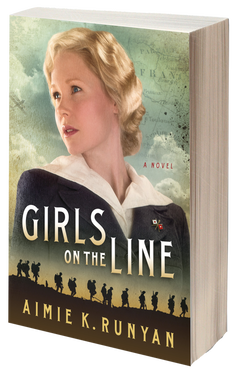
Girls on the Line, by Aimie K. Runyan

This is a historical novel about “the hello girls” – the women who served as military switchboard operators in France and Germany during World War I. The service these women provided was an integral part of the Allies’ ability to defeat Germany in the War. It was something I was not aware of, although I’ve studied history and minored in history in college. It just goes to show how women’s contributions have often been ignored or minimized.

Girls on the Line, by Aimie K. Runyan

I listened to this audio book and found myself listening to “just one more chapter” (and then a couple more) before going to bed at night. I hated to see the book end. It followed Ruby, an experienced telephone switchboard operator, and the six women she supervised in France. Ruby’s brother had been killed in the War and joining the US Army Signal Corps was her way of honoring his memory.

The book tells how the military switchboard operators had to go through rigorous training and had to memorize new codes daily in order to do their jobs. They worked long hours and were always under stress as it was their duty to make sure they correctly and efficiently connected phone calls between generals and other officers.

These women were denied military benefits by the US Army until 1979 – 60 years after their service. Sadly, only 28 of the 228 US Army female switchboard operators lived to see that day.

The story line of the book includes Ruby’s being torn between her less-than-exciting fiancé and the Army medic she met and fell in love with in France. Some of the dialogue between Ruby and Andrew, her new love, is a little sappy but other than that I thoroughly enjoyed the book.

The Glovemaker, by Ann Weisgarber

I had the pleasure of hearing Ann Weisgarber speak several years ago at Main Street Books in Davidson, North Carolina. Her novel, The Promise, had just been released. I purchased a copy, but time got away and too many library books kept coming into my house. Long story, short:  I haven’t read The Promise yet. In fact, The Glovemaker is the first of Ms. Weisgarber’s novels that I’ve read. I want to read all of them.

The Glovemaker, by Ann Weisgarber

Having visited Capitol Reef National Park in Utah, I could really picture in my mind the setting for “The Glovemaker.”, Fruita, (formerly, Junction) Utah is a stark place As I recall from my visit there in 2002, there’s nothing there today but an orchard, an old schoolhouse, and a picnic table – along with sheer rock cliffs, interesting rock formations, dry creek beds, and no trees to speak of aside from the orchard.

I learned some things about Mormons that I hadn’t known before — that there was an underground railroad-type network that assisted Latter Day Saints to a place of safety when they were being tracked down for prosecution for polygamy. I love it when I learn something about history when reading a novel!

The book paints a picture of the hard life the early settlers in that part of Utah had in the 1880s. My heart broke for Deborah Tyler and her brother-in-law, Nels. Deborah watches each day for her husband’s return from his traveling wheelwright work in southern Utah, but the weeks turn into months. Nels loves Deborah but cannot have her because she is married.

There is suspense when a stranger appears at Deborah’s door seeking directions to the safe place and when the US Marshal comes looking for that stranger. Deborah and Nels are forced to lie and keep secrets due to the conflict between Mormons and non-Mormons and the law.

There is also tension among the eight households in Junction due to the secrets being kept and due to differences of opinion about polygamy and other The Church of Jesus Christ of Latter-Day Saints doctrines and practices. Add to that the bitterly cold weather and snow and you have a recipe for good historical fiction.

Since my last blog post

The word count for my The Doubloon manuscript stands just shy of 22,000. That’s a net gain of nearly 8,000 words since last Monday.  I had a good writing week last week.

Until my next blog post

I hope you have a good book to read.

If you’re a writer, I have you have quality writing time and your projects are moving right along.

Thank you for reading my blog. You could have spent the last few minutes doing something else, but you chose to read my blog.

Let’s continue the conversation

Have you read any of the books I talked about today? If so, please share your thoughts with me. Have I piqued your interest in reading any of these books?

What are you reading, and would you recommend it?

Janet

The Other Five Books I Read in February

Last Monday I blogged about five of the ten books I read last month. Today I’m sharing my thoughts about the other five books I read in February. Four of them are nonfiction. Any month I get to read ten books is a good month!

George Washington’s Secret Six:  The Spy Ring that Saved the American Revolution, by Brian Kilmeade and Don Yaeger

George Washington’s Secret Six, by Brian Kilmeade and Don Yaeger

I really liked this book! I was intrigued by the title. Although I always liked studying American history and minored in history in college, this book was full of information I’d either forgotten or never knew.

I’m going to show my ignorance here. The chapter about Benedict Arnold was especially enlightening. We all (I hope!) learned in elementary school that he was a traitor during the American Revolution. I realized when I started reading the chapter about him that that’s all I knew about him. I didn’t know what he did to betray America. If you don’t know the story, I suggest you read this book or do other research on your own. You might be surprised what you learn. Or, maybe I’m the only one who didn’t learn this bit of history.

It saddened me to learn that one of the six American spies was a woman whose name is lost to history. She is only remembered today as Number 355. Each of the spies had a three digit number, just like James Bond of 007 fame! Number 355 was found out by the British and taken prisoner on a ship in New York harbor. It isn’t known if she survived her ordeal as a prisoner of war.

Why are the contributions made by women swept under the rug and not mentioned in history books? I know the answer. I’m just throwing the question out in frustration for you to ponder.

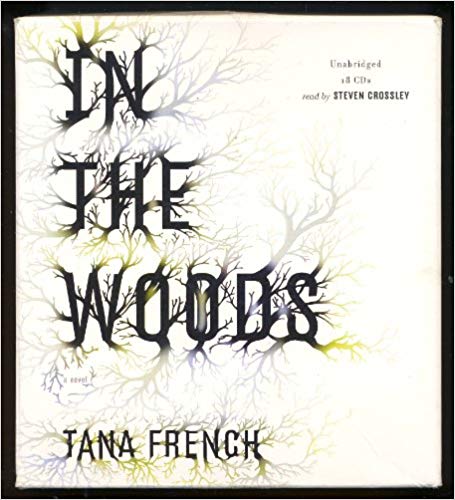
In the Woods, by Tana French

In the Woods, by Tana French

I kept seeing publicity for and reviews for Tana French’s new book, The Witch Elm, and I realized I’d never read any of her books. Instead of starting with her latest, I decided to read In the Woods, which is the first book in her Dublin Murder Squad Series. It was published in 2007, and is set in the Dublin, Ireland area in 1984 and 2004.

The book begins in 1984 with the disappearance of two children and the survival of one of their companions. Then the story shifts to 2004 to Detective Bob Ryan, who sees too many similarities between his experience as that survivor and the mystery of a missing 12-year-old girl.

Bob Ryan keeps his past a secret as he and fellow-detective Cassie Maddox try to solve the girl’s disappearance. Ryan hopes in the process they will also solve the mystery of his own experience as a young boy.

That said, I did not finish reading In the Woods. The premise held such promise, but one-third of the way into the book I lost interest in the conversations the characters had that did not seem to move the story along. I wanted to like the book and read the rest of the series. But alas, there were too many other books calling my name.

Building a Story Brand:  Clarify Your Message So Customers Will Listen by Donald Miller

This book caught my attention because it had “Story Brand” in the title, but I almost didn’t read it since it had “Customers” in the subtitle.  Everywhere the book said, “customer,” I mentally substituted “reader.” That worked pretty well in most cases.

I was unable to download an image of the book for my blog post today.

Here are a few takeaways from the book:

“The fact is, pretty websites don’t sell things. Words sell things.”

“The reality is we aren’t just in a race to get our products to market; we’re also in a race to communicate why our customers need those products in their lives.” (In other words, my challenge is not only getting my novel published, I must also get across to potential readers why they will benefit from reading my book.)

“The first mistake brands make is they fail to focus on the aspects of their offer that will help people survive and thrive.” (In other words, how will reading my novel help the reader thrive? Oh my!)

“The second mistake brands make is they cause their customers to burn too many calories in an effort to understand their offer.” (In other words, I need to be able to “pitch” my novel is as few words as possible.)

“In a story, audiences must always know who the hero is, what the hero wants, who the hero has to defeat to get what they want, what tragic thing will happen if the hero doesn’t win, and what wonderful thing will happen if they do.” (I knew that about stories, but I didn’t know the same was true in retail.)

“If you confuse, you lose.” (Just because I know what I’m trying to say or write doesn’t mean anyone else understands it.)

Becoming, by Michele Obama

Becoming, by Michelle Obama

This was a book that I listened to. It was read by Michelle Robinson Obama, and I thoroughly enjoyed listening to her talk about her growing up years, college years, working so hard to excel in law school, meeting Barack Obama, working in a big law firm and coming to the realization that she was not going to be fulfilled by practicing law, finding a new career path, the struggles of trying so long to have children before Malia and Sasha finally came along, being under a microscope while living in the White House, and how much it hurt when people told lies about her husband and herself.

I know some people do not like Michelle Obama, and I don’t understand why. They might have a better opinion about her if they read – or better yet, listened to – Becoming. I enjoyed every bit of it!

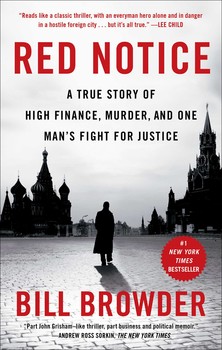
Red Notice:  A True Story of High Finance, Murder, and One Man’s Fight for Justice, by Bill Browder

Red Notice, by Bill Browder

This book was recommended by one of my loyal blog readers, Alison. (She has a keen sense of humor and often reveals it in her blog, “A Pierman Sister” — https://piermanparis.com/.)

Many of the details of how venture investing works were beyond my interest or understanding, but I couldn’t seem to stop reading it.

This is the story of the author’s experience in the world of high finance in eastern Russia. What I know about high finance could easily fit on the head of a pin. I’ve never really needed to know the details of high finance. I don’t move in those circles. Nevertheless, the book is intriguing and sheds some timely light on current USA-Russia interactions.

Red Notice gives insightful background about how Russia transitioned from communism to capitalism and why capitalism doesn’t work in Russia the same way it works in America. There is a different mindset in Russia after decades of communist rule and thought.

I’ll share a few quotes from this political thriller:

“It bears mentioning that in Russia there is no respect for the individual and his or her rights. People can be sacrificed for the needs of the state, used as shields, trading chips, or even simple fodder. If necessary, anyone can disappear.”

“The moral is simple:  when it comes to money, Russians will gladly – gleefully, even – sacrifice their own success to screw their neighbor.”

“The major downside to what I was doing was that I was seriously disrespecting a Russian oligarch in public, and in Russia that had often led to lethal results in the past. The imagination is a horrible thing when it’s preoccupied with exactly how someone might try to kill you.”

Seizing an opportunity that was too good to pass up, Mr. Browder founded what was to become the largest investment fund in Russia after the demise of the Soviet Union. Quoting from Goodreads.com:  “But when he exposed the corrupt oligarchs who were robbing the companies in which he was investing, Vladimir Putin turned on him and, in 2005, had him expelled from Russia.”

Mr. Browder’s offices in Moscow were raided in 2007. His attorney was arrested and eventually murdered by prison guards in 2009. Mr. Browder wrote this book in an effort to bring justice for his deceased lawyer and to expose what takes place in Russian business dealings right up to Vladimir Putin.

This book should give us pause.

Since my last blog post

Two days this past week, no one from the United States has looked at my blog. What’s with that?

Carolyn W. and her team at WordPress.com continued to work on the problem I was having with the “like” buttons on other people’s blogs. They didn’t stop until they’d figured out that it was a browser issue. Now instead of using Firefox, I must use Chrome. Kuddos to WordPress.com’s support chat for getting to the bottom of this!

Until my next blog post

I hope you have a good book to read. I’ll finish reading The Glovemaker, by Ann Weisgarber today. I’ve enjoyed it. It is set in what is now Capitol Reef National Park in Utah – a place I had the pleasure of visiting in 2002.

If you’re a writer, I have you have quality writing time and your projects are moving right along.

Look for my #TwoForTuesday blog post tomorrow:  Two Books Written by Women of Color. Thank you for providing the writing prompt, Rae, in “Rae’s Reads and Reviews” blog.

Thank you for reading my blog. You could have spent the last few minutes doing something else, but you chose to read my blog.

Let’s continue the conversation

Have you read any of the five books I talked about today? If so, please share your thoughts with me. Have I piqued your interest in reading any of these books?

What are you reading, and would you recommend it?

Janet
#TwoForTuesday: Two Books with Strong Female Leads

In honor of Women’s History Month, Rae of Rae’s Reads and Reviews blog chose four women-related #TwoForTuesday blog post prompts for March. Here’s a link to her list, in case you’d like to participate: https://educatednegra.blog/2019/03/03/two-for-tuesday-march-prompts/comment-page-1/#comment-2084.

I enjoyed participating in February so I look forward to blogging the four Tuesdays in March using these prompts.

It was tempting to list two books that readily came to mind, but I decided to give today’s prompt some deeper thought. I reviewed the list of books I’ve read and the two I chose to write about might not be selected by anyone else doing Rae’s #TwoForTuesday challenge.

Climbing Over Grit, by Marzeeh Laleh Chini and Abnoos Mosleh-Shirazi

Climbing Over Grit, by Marzeeh Laleh Chini and Abnoos Mosleh-Shirazi

Few books I read in 2018 left an impression on me like Climbing Over Grit, by Laleh Chini and her son. It left me wondering how any women raised in Iran have the strength, resolve, and grit to overcome the oppression that men inflict on females there.

Quoting from my November 5, 2018 blog post, “Many Good Books Read in October!” (https://janetswritingblog.com/2018/11/05/many-good-books-read-in-october/): 

“I have been following Laleh Chini’s blog, “A Voice from Iran” for quite a while, but I had somehow missed knowing that she was writing a book. When she announced that her book, Climbing Over Grit, was available on preorder, I immediately ordered it. Laleh has a gift for storytelling, so I knew her book would be good.

“Little did I know that Laleh’s book was based on some experiences within her own family! The book is written in first-person point-of-view, but I still didn’t catch on that it was written in her mother’s voice until I came to a page well into the book that said something like, “The second daughter was named Laleh.” I gasped out loud! It was then that I couldn’t put the book down. I finished reading it at 4:30 in the morning.

“I still cringe to think about some of Laleh’s family members being subjected to arranged child marriage and the abuse that often goes along with that practice.

“Fortunately for her readers, Laleh got out of Iran at the age of 16 and came to the United States. She now resides in Canada. The photographs and Iranian folktales she shares in her blog have helped me get a picture of an Iran I didn’t know existed.

“Climbing Over Grit is not a pleasant read, but I highly recommend it to anyone wanting to know more about the child bride culture of Iran. Her blog can be found at https://avoicefromiran.wordpress.com/.”

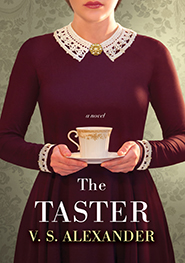
The Taster, by V.S. Alexander

The Taster, by V.S. Alexander

I’m sure somewhere in my study of history I knew that tasters had to sample Adolph Hitler’s food before he ate it, but it wasn’t something I’d given a lot of thought to until I read The Taster, by V.S. Alexander. What The Taster shines a bright light on is the fact that Hitler’s tasters were all women because in his warped mind women were replaceable.

I’ve read The Magdalene Girls and The Taster, by V.S. Alexander and I am impatiently waiting to rise to the top of the waitlist at the library for The Irishman’s Daughter. Alexander is fast becoming one of my favorite historical fiction writers.

I read The Taster a year ago and shared my thoughts about the book in my March 5, 2018 blog post “Reading and Writing in February 2018,” (https://janetswritingblog.com/2018/03/05/reading-and-writing-in-february-2018/.) Feel free to read that entire blog post, if you missed it the first time. The following is a quote from that post:

“The Taster is the story of a young woman in need of a job and living in Hitler’s Germany. The job she got was not a job she wanted. She was selected to be a food and drink taster for Adolph Hitler. Hitler was mortified of being poisoned, so all his food and drink had to be tasted in advance by a replaceable woman. If a taster died, she could be replaced. Hitler, of course, did not see himself as replaceable.”

The life of a food taster for Hitler was beyond stressful, as we can only imagine. The tasters didn’t know from one meal, snack, or reception to the next if that would be their last bit of food or drink.

Until my next blog post

I hope you have a good book to read. As mentioned in my blog post yesterday, https://janetswritingblog.com/2019/03/04/five-of-the-ten-books-i-read-in-february-2019/, I’m reading three good ones:  The Glovemaker, by Ann Weisgarber; Jacksonland, by Steve Instep; and Girls on the Line, by Aimie K. Runyan.

If you’re a writer, I hope you have quality writing time today.

Thank you for reading my blog. You could have spent the last few minutes doing something else, but you chose to read my blog.

Let’s continue the conversation

Have you read Climbing Over Grit or The Taster?

What are two books you would name for having strong female leads?

Janet

Five of the Ten Books I Read in February 2019

Wow! Where do I start? Although it was the shortest month of the year, February was jam-packed with good books. I read a variety of fiction, nonfiction, memoir, and “how-to” books.

Truth be known, I started reading several of the books in January and finished them in February. Each one probably warranted its own blog post, but I’ve condensed my thoughts into two blog posts – today’s and the one on March 11.

Here’s what I thought of each book, in no particular order:


Before and Again, by Barbara Delinsky

Before and Again, by Barbara Delinsky

I enjoyed this novel by Barbara Delinsky about a woman, Mackenzie Cooper, who runs a red light and causes an accident in which her five-year-old daughter is killed. The event results in a divorce and an estrangement between Mackenzie and her mother.

In an effort to leave her sad past behind and start a new life, Mackenzie moves from Massachusetts to Devon, Vermont and adopts a new name. Things go well for her until her ex-husband shows up in the small town where Mackenzie lives. It turns out that Mackenzie isn’t the only resident of Devon living with a secret.

I gave this story of forgiveness four stars on Goodreads.com. I was surprised to see many two-star ratings for it on that site. With an average rating of 3.5 stars out of 5, from the reviews, it appears people either really like it or don’t.

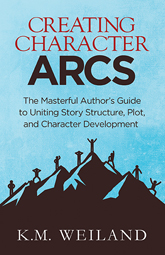
Creating Character Arc:  The Masterful Author’s Guide to Uniting Story Structure, Plot, and Character Development, by K.M Weiland

Creating Character Arcs, by K.M. Weiland

This book is an invaluable resource for anyone writing fiction. It helped me focus on the protagonist in the novel I’m writing and organize her journey step-by-step throughout her story. The questions Ms. Weiland included in her book helped me to know my main character better, which enables me to write with more confidence than I had before.

If you’re learning to write fiction, I highly recommend Creating Character Arc:  The Masterful Author’s Guide to Uniting Story Structure, Plot, and Character Development, by K.M Weiland. Or perhaps you are a fan of fiction and you’re curious about the structure of a good novel. Then, I think you’ll find this “how-to” book interesting.

A Week in Winter, by Maeve Binchy

A Week in Winter, by Maeve Binchy

This book was a bit of a surprise for me. A Week in Winter, by Maeve Binchy was the January selection for the Rocky River Readers Book Club. Since it’s not historical fiction, suspense, or a mystery, I didn’t expect to like it as much as I did. That’s one of the good things about being in a book club. Sometimes members are exposed to a book genre they wouldn’t usually select for themselves.

Although I rarely listen to an audio book, an episode of vertigo prompted me to borrow the book on CD from the public library. The accent of professional reader, Rosalyn Landor, was delightful and helped to keep the setting in Ireland clearly in mind. The fact that I enjoyed listening to a novel was a bonus.

The author, Maeve Binchy, was a master of characterization. Each character has such a unique backstory or quirk, you’ll have no trouble keeping them straight in your head. In A Week in Winter, each of the ten chapters tells the backstory of a different guest or pair of guests at The Stone House on the west coast of Ireland. Ms. Binchy weaves their stories together perfectly as she brings them all together as guests at the inn the first week the old house was open for business.

The Midwife’s Confession, by Diane Chamberlain

The Midwife’s Confession, by Diane Chamberlain

After enjoying listening to the Maeve Binchy book, I decided to give the audio version of The Midwife’s Confession, by Diane Chamberlain a try. Ms.Chamberlain weaves quite a complicated story and cast of characters together in this novel set in Wilmington, Chapel Hill, and Robeson County, North Carolina.

One of three close friends commits suicide, leaving the other two women trying to find clues as to why Nicole felt that taking her own life was the only option she had. Layer by layer they peel back the parts of Nicole’s past they knew nothing about.

There was a horrible accident with a baby Nicole delivered as a midwife. What choice did Nicole make after the accident that changed the course of not on her life but also the lives of other families?

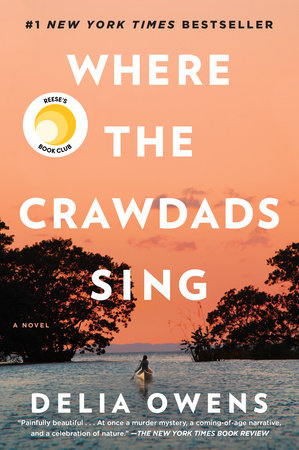
Where the Crawdads Sing, by Delia Owens

Where the Crawdads Sing, by Delia Owens

The prose in this book is beautiful. Delia Owens writes about the fauna of the marshlands of the North Carolina coast from a place of scientific expertise. This is her debut novel, but she has co-authored three nonfiction books about nature in Africa. She worked in Africa as a wildlife scientist but now lives in Idaho.

As an aspiring novelist, I’ve been cautioned about using dialect in my writing. A little bit of it can help put the reader in the location and time of the story; however, using it too much makes the reading more difficult and slow and also pulls the reader out of the story. Where the Crawdads Sing is a perfect example of this mistake.

I loved the descriptions of the wildlife native to the marshes of coastal North Carolina. Ms. Owens painted such a pictures with words that I could have visualized the marshes even if I’d never seen coastal Carolina marshlands.

I loved the story in Where the Crawdads Sing. I was interested in the main character, Kya, from the beginning. It was a real “page turner” due to the life Kya lived and the strong character she was. I devoured the book in 48 hours; however, the dialect was over the top. There was just too much Southern and African-American dialect. The dialect repeatedly slowed me down and pulled me out of the story.

If not for the excessive dialect and the Confederate battle flag being in the county courtroom in 1970, I would have given it six stars out of a possible five.

Until my next blog post

I hope you have a good book to read. I’m reading/listening to The Glovemaker, by Ann Weisgarber; Jacksonland, by Steve Instep; and Girls on the Line, by Aimie K. Runyan.

If you’re a writer, I have you have productive writing time and your projects are moving right along.

Look for my #TwoForTuesday blog post tomorrow:  Two Books with a Strong Female Lead. I’m pleased to participate again this month in the “Rae’s Reads and Reviews” blog #TwoForTuesday challenge. Here’s a link to Rae’s March list, in case you want to participate: https://educatednegra.blog/2019/03/03/two-for-tuesday-march-prompts/comment-page-1/#comment-2084.

Thank you for reading my blog. You could have spent the last few minutes doing something else, but you chose to read my blog.

Let’s continue the conversation

Have you read any of the five books I talked about today? If so, please share your thoughts with me. Have I piqued your interest in reading any of these books?

Janet

#TwoForTuesday: Two Books that Help Me Sleep at Night

I’ve enjoyed participating in the #TwoForTuesday blog prompts in February and can’t wait to see what Rae of Rae’s Reads and Reviews has in store for us in March. Today’s prompt was “Two books that Help you sleep at night.”

If you’ve followed by blog for a few months, you know that I suffer with insomnia. My sleep is way out of whack. I have trouble staying awake during the day and trouble going to sleep at night. My doctor has referred me to a sleep coach. Yes, it’s gotten that bad.

When challenged to write about two books that help me sleep at night, I was hard-pressed to come up with a response. The “two” I settled on are The Bible and just about any audio book. I know – that’s more than two actual books and not very specific, but they’re what I came up with.

1.  The Bible

The Message, by Eugene H. Peterson

This isn’t just the correct “Sunday School” or children’s sermon answer. This is my real answer. My nighttime insomnia aside, the book that allows me to give my troubles and worries to God so I’m not tossing and turning and wringing my hands is The Bible. I still do more than my share of tossing and turning, but it’s not because I despair.

I find The Message:   The Bible in Contemporary Language the easiest to understand and, therefore, the most comforting. The Message is a paraphrase of The Bible and was written by Presbyterian minister Eugene H. Peterson.

2.  Just about any audio book

Until recently, I swore off listening to any books. I found it stressful. I felt like someone was talking “at” me and wouldn’t shut up. Got on my last nerve kind of stress.

Then, I got vertigo. In fact, I had two kinds of vertigo. One has cleared up, but the other still has me in physical therapy. Using the computer and reading tend to trigger an episode. Therefore, I’ve listened to two audio books so far this month plus part of a third. Even the ones I enjoy, eventually put me to sleep.

That’s not what Rae meant!

The #TwoForTuesday challenge in Rae’s Reads and Reviews (https://educatednegra.blog/2019/01/08/two-for-tuesday-prompts/comment-page-1/#comment-1646) wasn’t “two books that put you to sleep.” It was “two books that help you sleep at night.” I understand the difference. I just couldn’t come up with a second book in addition to The Bible.

Let’s continue the conversation

What are two books that help you sleep at night?

Janet
Two for Tuesday: Two Books that Remind Me of Someone

Have you ever read a book and thought one of the characters was a dead ringer for someone you knew?

Today’s #TwoForTuesday writing prompt “two books that remind you of someone,” turned out to be more difficult for me than I had anticipated, but I chose A Man Called Ove, by Fredrik Backman and The Importance of Pot Liquor, by Jackie Seals Torrence. One is a well-known book and the other one not so much.

A Man Called Ove, by Fredrik Backman

A Man Called Ove, by Fredrik Backman

The main character in this book, Ove, reminds me of a relative of mine who I will not identify for obvious reasons.

Ove is a 59-year-old man at odds with the world. From the opening scene of computer-illiterate Ove attempting to buy a computer from a much younger computer geek store assistant to the scenes in which Ove pays his respects to foreign cars, much of his personality and outlook on life resonated with me and brought to mind my relative. That’s what made much of A Man Called Ove so funny to me.

The Importance of Pot Liquor, by Jackie Seals Torrence

The Importance of Pot Liquor, by Jackie Torrence

Chances are, you’ve never heard of this book. Chances are, you have no idea what pot liquor is unless you’re of a certain age and a native of North Carolina or another state in the American South. I’ll start by giving an explanation of “pot liquor.” It has nothing to do with the alcoholic kind of liquor. It is sometimes spelled “pot likker.”

What in the world is pot liquor?

Pot liquor is the liquid left in the pot after beans or other vegetables have been cooked and removed from the pot. I learned the term from my mother who was born more than 100 years ago on a farm and was one of 10 children. In other words, she grew up in a household where no food was wasted.

Therefore, I also grew up in a household where no food was wasted. We would never (and still wouldn’t dream of) pouring pot liquor down the drain. (Well, actually, I don’t drink or save broccoli pot liquor. I have to draw the line somewhere.)

When a pot of beans or other vegetables had been eaten and only the juice remained, my mother would usually offer the “pot liquor” to me. I rarely turned it down. What my mother knew that I didn’t know is that pot liquor is nutritious. It contains the vitamins and minerals that the cooking water leached out of the vegetables. I just thought it tasted good. My favorite has always been black eyed peas.

To this day, I like pot liquor, but now I usually freeze it. I keep a quart container in the freezer in which I add pot liquor from the cooking of various vegetables. This combination of various pot liquors is eventually used when I make homemade vegetable soup or have a recipe that calls for vegetable broth.

A note about the author

The author of The Importance of Pot Liquor, Jackie Torrence, lived in Salisbury, North Carolina, not far from where her slave ancestors lived on Second Creek. Though born with a speech impediment, Ms. Torrence became a master storyteller and traveled the United States performing her stories and teaching others the craft of storytelling. She died in 2004, confined to a wheelchair due to arthritis.

Back to the book title…

With my explanation of pot liquor (which probably made some of you gag) out of the way, let’s get back to the book that reminds me of someone. I read the book in 2011, so I don’t remember the details of the book. That’s all right, because it is the title itself of Jackie Seals Torrence’s 1994 book, The Importance of Pot Liquor, which reminds me of my mother and also of an elderly family friend and distant relative, Miss Eugenia Lore.

Miss Eugenia and “The Wah”

Miss Eugenia was quite a character and very much a product of her generation and family history. She was born in 1888 in Concord, North Carolina. Her father served in the Army of the Confederate States of America during the Civil War. She showed us the canteen he carried in the War which, in her Southern accent, she always referred to it as “The Wah.”

The portrait of Robert E. Lee that hung on her parlor wall had been purchased by her father as part of a fundraiser to secure the money needed to erect a statue of Lee in Richmond, Virginia. If anyone in her presence dared to call it the “Civil War,” she was quick to correct them with the words, “There was nothin’ civil about it!”

Unlike my mother, Miss Eugenia was raised in town. Her mother had “help” as in The Help, by Kathryn Stockett. One time Miss Eugenia made a disparaging remark about pot liquor because no one of her social status would have drunk it, and my mother responded with something like, “Oh, I love pot liquor. You don’t know what you’re missing.” Miss Eugenia was visibly appalled. In her mind, only an African-American household servant would “have” to drink pot liquor.

I agree with my mother. Miss Eugenia didn’t know what she was missing!

Until my next blog post

Thank you, Rae, of “Rae’s Reads and Reviews Blog” for this month’s #TwoForTuesday blog post prompts. I learned about it in her January 8, 2019 blog post:  https://educatednegra.blog/2019/01/08/two-for-tuesday-prompts/comment-page-1/#comment-1646.

Let’s continue the conversation

Thank you for taking the time to read my blog today.

Is there an “Ove” in your family?

Had you ever heard of pot liquor before reading my blog post? Do you like pot liquor or do you find it disgusting?

What is a book that reminds you of someone?

Janet
The Other Three Books I Read in January 2019

One thing all bloggers are told they must do, if they hope to attract readers, is to include images in every post. I’ve worked hard to do this for the last several years. I did it last week when I included images of the books I wrote about; however, as I put the finishing touches on this post last night, I repeatedly got messages from WordPress.com saying “Given your current role, you can only link an image, you cannot upload.” Therefore, in today’s post I’ve included links to images of the books I’m writing about. I’m unsure how this will appear until the post goes online. I have no idea why this has happened.

Since I read 6.25 books in January, I decided to split my comments about them between my blog post on February 4, 2019 and today. I hope you’ll find what I have to say about three of the books I read last month worthwhile. These are discussed in no particular order.

The Banker’s Wife, by Cristina Alger

The Banker’s Wife, by Cristina Alger

The Banker’s Wife was a change of pace for me halfway through January after reading The Library Book. The Banker’s Wife, by Cristina Alger, is a financial thriller. In this novel, Ms. Alger takes us to Paris, Geneva, New York, the Dominican Republic, and the Cayman Islands. Primarily through the eyes of two strong female characters, we get a glimpse of the vicious and deadly world most of us never experience – Swiss bank accounts, the people who have them, the people who assist them, and those who are unfortunate to love someone in either of the other two categories.

If I had done more research about Cristina Alger’s books before reading this 2018 novel, I would have known that it is a sequel to her 2012 debut novel, The Darlings. Now, I want to read that book, although being a North Carolinian, “the Darlings” conjures up visuals in my mind’s eye of that ne’er-do-well Darlin’ family on The Andy Griffith Show of the 1960s. It’s difficult to associate wealth with that name. I’m sorry, it just is. I offer my apologies to all the people with the Darling surname.

The Banker’s Wife is Ms. Alger’s third novel. The book captured my attention early on and the fast-paced writing kept me turning pages to see what was going to happen next – and to find out which characters were dead and which one’s deaths were staged to cover up the real story.

If I Understood You, Would I Have This Look on My Face? by Alan Alda

If I Understood You, Would I Have This Look on My Face? by Alan Alda

This book held some nice surprises for me. I’ve been an Alan Alda fan since the days of the M*A*S*H television series. I became even more endeared to him when in answer to my request that he donate an autographed copy of a book he’d written for an autographed book fundraiser held a few years ago for the Friends of the Harrisburg Library in Harrisburg, North Carolina.

Mr. Alda graciously donated an autographed copy of the script for an episode of M*A*S*H that he wrote. It turned out to be the hit of the fundraiser and resulted in a bidding war between two individuals.

That said, I was drawn to the book by the title and the author’s name. I thought it might be helpful to me as a writer since the book is about communication. It was, but not in the ways I anticipated.

Here are a few of the impressions I took from the book:

                1.  Improvisation not only helps actors, it can help anyone get over their fear of talking in front of a large audience.

                2.  No matter what you’re trying to sell – whether it be a tangible product or an idea – the key is to focus on what the customer is thinking and what he or she needs. As a writer, I need to put myself in the mind of my reader. What does my reader need? What is my reader hoping to gain by reading my words?

                3.  Mr. Alda has concluded that the key to the great success of M*A*S*H was the fact that instead of disappearing into their separate trailers on the studio lot, they gathered their chairs in a circle and talked and laughed together as a group between “takes.” He said the connections    they made off camera carried over when they were in front of the camera. It made them all better actors and their genuine comradery came through to the audience.

                4.  Much of Mr. Alda’s book is about empathy and the importance of empathy in communications. The book offers several things a person can do to increase their empathy for others. Mr. Alda says that true communication cannot take place between two people unless each one       makes an effort to understand the other person and why they think the way they do. I couldn’t help but think of how polarized Americans are politically today. There really is a lack of understanding – or empathy – between The Right and The Left, between Republicans and Democrats. This doesn’t bode well for the 2020 election.

                5.  As a writer, start with what your reader knows. Don’t insult the reader by including basic information.

Now You See Me, by Sharon J. Bolton

Now You See Me, by Sharon J. Bolton

Published in 2011, Now You See Me was the first in Sharon J. Bolton’s Lacey Flint series. Flint is a detective in London. The story opens with her seeing a woman dying while leaning on Flint’s car. This thriller grabbed my attention from the beginning and kept me turning pages well into the night. It’s rare that I read a quarter of a novel in one sitting, but that’s what I did with Now You See Me.

Detective Flint is forced almost immediately to try to discern who she can trust within the Metropolitan Police Department. Is she seen as a crime scene witness, or is she viewed as a murder suspect? She’s very convincing as a witness.

As the story unfolds, it becomes clear that the killer is patterning his actions after Jack the Ripper. (Spoiler alert:  this gets more gruesome than I’m used to reading, but I had to know what happened next.)

What about Flint’s fellow police officer, Joesbury. There’s definitely something weird about him. Is he the killer?

No. Someone else is caught… sort of.

I thought the book came to a good stopping point just shy of halfway through. In fact, I thought I might not keep reading. This seems like the end of the story. I could move on to another book.

But I read a few more pages.  Wow! What a turn of events! I’m glad I kept reading!

Since my last blog post

I continue to do a lot of reading about writing and about blogging in an effort to get better at writing fiction and blogging. I made good progress writing a short story I’m calling “From Scotland to America, 1762,” writing 1,400 words Saturday afternoon.

Until my next blog post

I hope you have a good book to read. I’m reading Before and Again, by Barbara Delinsky; Button Man, by Andrew Gross; and A Week in Winter, by Maeve Binchy.

I rarely listen to a book because I find it irritating to listen to someone talk on and on and on; however, since I’m having a bout with vertigo, I decided to give the Maeve Binchy audio book a try and I’m really enjoying it. It probably has something to do with the lovely accent of the reader, Rosalyn Landor. It’s nice to just shut my eyes and listen.

If you’re a writer, I hope you have quality writing time and plenty of time to read.

Thank you for reading my blog. You could have spent the last few minutes doing something else, but you chose to read my blog. I appreciate it! I welcome your comments.

Let’s continue the conversation

If you’ve read any of the books I mentioned today, let me know what you thought about them.

Janet

3.25 of the 6.25 Books I Read in January 2019

My reading in January brought an interesting mix of fiction and nonfiction. In fact, when I wrote the first draft of this blog post about the 6.25 books I read last month, it was too long for one post. You’re all busy people and you only have so much time to give to reading my blog. Therefore, I’ll write about 3.25 of the 6.25 books today and the other three books next Monday.

At Home on the Kazakh Steppe:  A Peace Corps Memoir, by Janet Givens

At Home on the Kazakh Steppe: A Peace Corps Memoir, by Janet Givens

I thoroughly enjoyed this book from start to finish! Janet Givens gives an informative and entertaining glimpse into the experiences she and her husband had while serving in the Peace Corps in Kazakhstan for two years. I learned a lot about Kazakhstan and the mores of its citizens. Ms. Givens had to learn most of the idiosyncrasies of the Kazahk people the hard way – by trial and error, but she took all her faux pas in stride.

Ms. Givens approached her stint with the Peace Corps with a sense of wonder and adventure. There were many trying days and awkward relationships but by the end of her second year in Kazahkstan, Ms. Givens hated to leave.

I highly recommend this memoir to anyone curious about the work of the Peace Corps or the countries in the former Soviet Bloc.

The Reckoning, by John Grisham

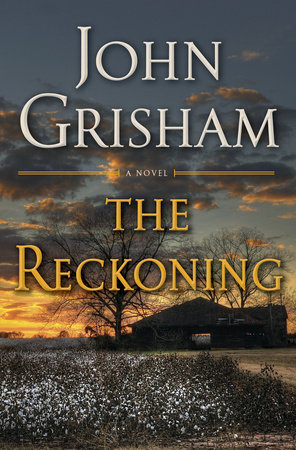
The Reckoning, by John Grisham

The Reckoning is not your typical John Grisham legal thriller. It includes the law and a man who choose to break it and it’s a thriller, but it is very different from Mr. Grisham’s usual offerings. The story opens with  Pete, a World War II hero back home in Mississippi in 1946.

Pete wakes up one morning and decides that is the day. Just that: today is the day. Mr. Grisham pulled me into Pete’s life. Fairly early in the book, we see what Pete does that day that will change his and many other lives forever, but we don’t know why. We have a hunch, though.

The second part of the novel goes back to when Pete met his future life. We learn about the life they made together, but we primarily learn what Pete endured in the Pacific Theatre during the War. It’s not pretty, but it’s authentic. That part of the book at times reads almost like a history book, but Mr. Grisham writes in a way that makes it personal and real.

The third and final section of the book goes back to 1946 for Pete’s college-age son and daughter to pick up the pieces of their lives and try to make sense of what their father did. And that hunch we had in Part One proves not to be correct when the truth comes out in Part Three!

The Reckoning is different from Mr. Grisham’s usual legal thrillers, but I liked it.

The Boat People, by Sharon Bala

The Boat People, by Sharon Bala

Call me old-fashioned, but I’m put off by novels that don’t use quotation marks. It’s irritating, and I shudder to think that might be the wave of the future of publishing. Let’s save some ink and omit the quotation marks! I’d read good things about The Boat People, though, so I persevered.

The book held much promise in the opening chapters as we were introduced to several of the 503 Sri Lankan asylum seekers in a boat as it nears Canada. A father, Mr. Mahindan, and his six-year-old son are the focus of the book. Upon landing in Canada in 2009 they are separated from each other because all women and children are detained in a separate facility from the men. It was immaterial that Mr. Mahindan and his little boy only had each other.

The separation was gut-wrenching and traumatic for both of them. It hit me right in the gut and immediately brought to mind the even more severe and inhumane separation of women from men and children from adults on the US-Mexico border this winter. Just as Canadians couldn’t believe what was happening in their country in 2009, we Americans can’t believe what is happening now along our southern border. Don’t get me started!

I usually don’t mention on my blog the books that I don’t finish reading, but this one held such promise and I just couldn’t stay with it. If you read it, I’d like to hear your thoughts.

I read the first one-fourth of the book (hence, the title of today’s blog post) and just lost interest in the 2002 backstory for this 2009 event. The back-and-forth between the two years didn’t appeal to me. That, combined with the lack of quotation marks delineating dialogue, made me close the book and move on to ….

The Library Book, by Susan Orlean

The Library Book, by Susan Orlean

I read in advance reviews of The Library Book that the event that prompted Susan Orlean to write the book was the April 29, 1986 fire at the Central Los Angeles Public Library that destroyed 400,000 books. An additional 700,000 books were badly damaged. It was (and still is) the largest library fire in the history of the United States. I’m an avid reader and big supporter of public libraries, so I wondered how I could have missed hearing about this tragedy at the time it happened.

It turns out that most people never heard about it because it coincided with the nuclear accident at Chernobyl in Russia. For days and days after the April 25-26 disaster, the nuclear scare predominated the news.

The Library Book not only tells about the fire and the employees and volunteers cleaning up the mess left behind; it also delves into the cause of the fire, and the history of the Los Angeles County Public Library System. Many interesting tidbits about libraries in general are included in the book, and one can tell by the tone of the book and the words used that Ms. Orleans loves and reveres libraries.

The fire, the search for an arsonist, and some of the little known facts and quotes about libraries was interesting and worth the read; however, I got bogged down in the history of the library system in Los Angeles County and found myself skipping paragraphs and, eventually, skipping pages.

I picked back up somewhere along the way and enjoyed the rest of the book. The book reinforced the warm and fuzzy feelings I have about libraries.

Since my last blog post

I’ve done a lot of reading and worked on a short story and my novel’s outline.

I’ve also worked on an extra blog post for tomorrow after reading about Rae’s idea of starting a “Two for Tuesday” tag in her January 8, 2019 blog post, 2019 (https://educatednegra.blog/2019/01/08/two-for-tuesday-prompts/comment-page-1/#comment-1646. Please check in tomorrow to learn about two books that taught me something. #TwoForTuesday

Until my next blog post

I hope you have a good book to read. I’m reading Creating Character Arc:  The Masterful Author’s Guide to Uniting Story Structure, Plot, and Character Development, by K.M Weiland; and Red Notice:  A True Story of High Finance, Murder, and One Man’s Fight for Justice, by Bill Browder.

If you’re a writer, I hope you have productive writing time and lots of time to read.

Thank you for reading my blog. You could have spent the last few minutes doing something else, but you chose to read my blog. I appreciate it! I welcome your comments.

Let’s continue the conversation

If you’ve read any of the books I mentioned today, let me know what you thought about them. Did I “miss the boat” by not finishing The Boat People, by Sharon Bala?

See you tomorrow for a bonus #TwoForTuesday blog post!

Janet

Books I Enjoyed in December 2018

The Dream Daughter, by Diane Chamberlain

Diane Chamberlain broke away from her usual form of writing novels and did a great job with time travel in The Dream Daughterr. The book begins in 1970 with a pregnant woman, Caroline Sears, finding out that her unborn baby has a heart defect.

The Dream Daughter, by Diane Chamberlain

It turns out that Caroline’s brother-in-law has come to 1970 from the future. He knows that if Caroline can find her way to the future, her unborn daughter can have fetal surgery – the unthinkable in 1970.

I won’t give away any details of Caroline’s journey. I’ll just say things don’t go smoothly. This trip across decades will keep you turning pages.

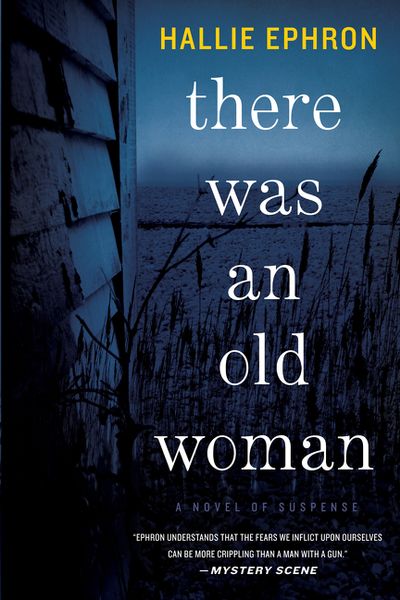
There Was an Old Woman, by Hallie Ephron

The title of this book caught by attention and immediately took me back 60 years to nursery rhymes about the old woman who lived in a shoe and the old woman who swallowed a fly. I’d never read anything by Hallie Ephron, so I decided to give There Was an Old Woman a try.

The story involves multiple generations, with an emphasis on several independent-living octogenarians. Things in the neighborhood keep disappearing. What’s happening? Who is doing this? Is it the strange man across the street?

There Was an Old Woman, by Hallie Ephron

Thrown into the mix is a subplot about the B-25 Mitchell bomber that crashed into the Empire State Building on July 28, 1945. Ms. Ephron sheds a light on that much-forgotten event by making one of the main characters in the book be a survivor of that plane crash. I must admit, I did not know about that tragedy in which 14 people were killed.

There Was an Old Woman is categorized as a thriller, but it did not come across to me as such. It’s more like a neighborhood mystery in which the daughter of one of the 80+-year-olds is forced to come home and deal with her mother’s illness and neglected house. The book has received an interesting mix of 1-star and 5-star reviews, with most reviews falling into the 3- or 4-star categories.

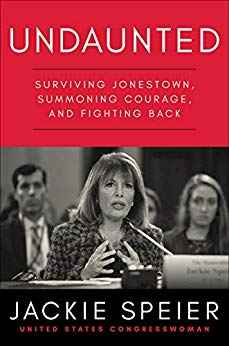
Undaunted: Surviving Jonestown, Summoning Courage, and Fighting Back, by Jackie Speier

I thoroughly enjoyed reading this memoir by United States Representative Jackie Speier of California’s 14th congressional district. I was not aware that Ms. Speier survived the Jonestown Massacre, so that fact alone drew me to this memoir.

Undaunted, by Jackie Speier

What a life Ms. Speier has had! When she was 28 years old, she worked for California Congressman Leo Ryan. She and others accompanied Ryan to Jim Jones’ Peoples Temple in Jonestown, Guyana on November 14, 1978 to rescue individuals being held there against their will.

Those who are old enough to remember that fateful event know that things rapidly soured upon the delegation’s arrival. Congressman Ryan was murdered and Jackie Speier was shot five times and nearly died.

For someone like me who is a history and political “junkie,” this memoir was compelling and inspiring. Ms. Speier writes about her widowhood, motherhood, her lifelong work in politics, and her 40-year determination to overcome the scars she has from her Jonestown experience.

Since my last blog post

I continue to receive encouraging comments in response to my December 17, 2018 blog post, https://janetswritingblog.com/2018/12/17/to-write-or-not-to-write/. I appreciate each and every one of them and each and every one of my blog readers. I have a more positive attitude about my novel in progress since being bolstered up by so many of you over the last three weeks.

The holidays turned out not to be conducive to my getting back to putting words on paper (or the computer screen, as the case may be.) I’ve mulled the story over and over in my mind, though, and I intend to get back to writing that book this week. I need my blog readers to hold me accountable!

I’ve read many helpful blog posts and articles this week about the various facets of writing. One in particular hit a chord with me, but I’ve misplaced the link to it. The piece recommends that an aspiring novelist publish one or more short story collections in order to build readership. I’m kicking around that idea. It makes sense. The theory is that more people will want to buy my novel if they have read and liked my short stories. I needed one more project!

Call me a klutz if you want to, because I think I qualify. In the last four or five days I’ve broken a toe on both feet, but not at the same time. Don’t laugh; broken toes are painful.

Until my next blog post

I hope you have a good book to read. I’m reading The Reckoning, by John Grisham.

If you’re a writer, I hope you have quality writing time. I hope I do, too!

Thank you for reading my blog. You could have spent the last few minutes doing something else, but you chose to read my blog. I appreciate it! I welcome your comments.

Let’s continue the conversation.

Have you read any books recently that you’d recommend to me and my blog readers?

Have any of you writers had experience – good or bad – in publishing short stories to build readership prior to publishing your first novel?

Janet