“Reading Like a Writer”

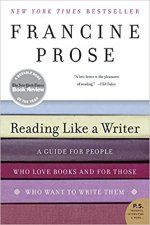
In my last two blog posts I’ve written about the books I read in March. Last Monday’s post was nearing 2,000 words, so I decided to save my comments about Reading Like a Writer:  A Guide for People Who Love Books and for Those Who Want to Write Them, by Francine Prose, for today. I’ll just hit some of the highlights.

Reading Like a Writer 5182EVgCeCL._SX330_BO1,204,203,200_
Reading Like a Writer, by Francine Prose

Chapter One:  Close Reading

I read and took copious notes from the first four chapters of this book and perused the rest of it. As an aspiring author, I loved how the first chapter confirmed that I read like a writer. It’s called “close reading,” and it means reading every word for the pleasure of getting every phrase – being conscious of such things as style, sentence formation, and how the author creates characters.

Based on what Francine Prose wrote, I no longer need to apologize for reading slowly. I’m trying to hone my craft by reading published writers.

Chapter Two:  Words

In the second chapter of Reading Like a Writer, the author recommends that you read slowly enough to read every word. She compares the language a writer uses to the way a composer uses notes and a painter uses paint.

To paraphrase Ms. Prose, reading to appreciate the writing is akin to not only admiring a beautiful painting from afar but also close up so you can see the brushstrokes.

I also appreciated Ms. Prose’s thoughts on the advice often given to writers, which is “Show, don’t tell.” Ms. Prose says this much-repeated advice confuses novice writers. I can vouch for that.

In editing my earlier manuscript for The Spanish Coin (before I started the complete rewrite), I took the “show, don’t tell” advice to the extreme. I was ruthless in cutting narrative, thinking I could best “show” through dialogue. It was all part of the learning process. Ms. Prose’s take on this is that showing is best done through “the energetic and specific use of language.”

Chapter Three:  Sentences

If I had known I would someday want to be a writer, I would have paid more attention in the 8th grade when we had to diagram sentences. I wasn’t very good at it, and I really didn’t see the point.

I hadn’t thought about sentence diagramming in years until I got to the third chapter of Ms. Prose’s book. She wrote about the value of diagramming sentences, and what she said makes sense to me now.

She lamented the fact that students are no longer taught to diagram sentences. Her explanation that sentence diagramming provides for the accounting of every word and provides a way “to keep track of which phrase is modifying which noun” gave me a way of understanding the value of the exercise that I could not have appreciated as an eighth grader.

I probably couldn’t diagram a complex sentence today if my life depended on it, but Ms. Prose might just be onto something when she insinuates that having that skill would help a writer.

This weekend I happened upon an article from the Huffington Post about diagramming sentences. Here’s the link, if you wish to take a look:  https://www.huffingtonpost.com/2014/10/01/diagram-sentence-grammar_n_5908462.html.

A word of warning, though, for those of you of “a certain age.” Reading the Huffington Post article, I soon felt like I’d entered a time warp. I don’t think our sentences had “complements” when I was in the 8th grade.

Chapter Four:  Paragraphs

In the fourth chapter of the book, Ms. Prose quotes master short story writer, Isaac Babel:

“’The breaking up into paragraphs and the punctuation have to be done properly but only for the effect on the reader. A set of dead rules is no good. A new paragraph is a wonderful thing. It lets you quietly change the rhythm, and it can be like a flash of lightning that shows the same landscape from a different aspect.’” – Isaac Babel

In all the various English courses I have taken, I don’t recall any teacher or professor ever saying to break for a new paragraph “only for the effect on the reader.” I’m still letting that sink in. It’s refreshing and freeing to think about it. It is for the writer to determine which rules are dead as far as her editor is concerned.

Chapter Seven:  Dialogue

Characters in a novel should “say what they mean, get to the point, avoid circumlocution and digression.”

Chapter Eight:  Details

Another interesting observation Ms. Prose makes is about details and the truth. She observes that details persuade that the truth is being told.

She points out that a piece of clothing can speak volumes about a character’s circumstances.

Chapter Eleven:  Reading for Courage

Continuing to fly in the face of common advice given to writers of fiction, Ms. Prose suggests that the trend in modern fiction that characters in a novel must be nice in order for the reader to identify with them is possibly not true.

She also says it’s not necessarily true that every loose end in a work of fiction needs to be tied up neatly by the end.

What a relief to read those last two theories! My characters don’t have to be nice in order for the reader to identify with them, and all the loose ends don’t have to be tied up at the end of the novel? This is in opposition to what I learned in fiction writing class back in 2001.

“Words,” by Dr. R. Brown McAlister

Chapter Two in Ms. Prose’s book brought to mind the title of the remarks made by one of the two guest speakers at my high school graduation. Dr. R. Brown McAllister, a beloved icon in Cabarrus County Schools at the time, had retired after many decades of teaching and working as a school administrator, and he had a dry but keen sense of humor. The printed program for the graduation ceremony listed “Words,” by Dr. R. Brown McAllister.

In his deadpan way, Dr. McAllister went to the podium and said something like, “I was asked to talk about words, so here I am.” That was in 1971 and I still don’t know to this day if he was asked to talk about words or to say a few words.

The more I attempt to be a writer and the more I read, the more I appreciate words.

Since my last blog post

I have made a social media plan and made an effort to do more on Twitter (@janetmorrisonbk), my writing-related boards on Pinterest (https://www.pinterest.com/janet5049), and my Janet Morrison, Writer page on Facebook. Implementing the plan will be a challenge but I’m told I must get my name out there if I hope to sell any copies of The Spanish Coin if and when it gets written and published.

I did not get much reading done last week, but I’m trying to learn that I can’t do everything I want to do. I can’t even do everything I need to do.

Until my next blog post

I hope you have a good book to read. I’ve just started reading Every Note Played, by Lisa Genova.

every-note-played-9781476717807_lg
Every Note Played, by Lisa Genova

If you’re a writer, I hope you have quality writing time

If you haven’t signed up for my sometime-in-the-future newsletters, please do so by completing the form below.

Janet

← Back

Thank you for your response. ✨

More March 2018 Reading

March brought a return of cooler weather than we had in February in North Carolina. It also brought a stack of good books. I blogged about some of them last Monday (Some March Reading), and today I’m blogging about the rest of those that I read last month.

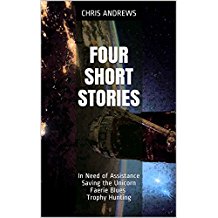
Four Short Stories:  In Need of Assistance, Saving the Unicorn, Faerie Blues, and Trophy Hunting, by Chris Andrews

51dWqbCdhOL._AC_US218_
Four Short Stories: In Need of Assistance, Saving the Unicorn, Faerie Blues, and Trophy Hunting — by Chris Andrews

Science fiction and fantasy are not my reading genres of choice, but Chris Andrews and I connected with each other in the blogosphere as two struggling writers. (Actually, I’m struggling. I’m not so sure about Chris.) We live in different hemispheres but I have learned a great deal from him about writing. He recently published an e-book of four short stories and I was eager to read them.

“In Need of Assistance” leads off the short story collection. Well written and suspenseful, this person (me) who never reads sci-fi got pulled into the story and thought it ended too soon. In other words, I wanted to know what happened next.

The second story in this e-book is “Saving the Unicorn.” It is about a magician who travels 4,000 years back in time to free the last unicorn…. or is it?

“Faerie Blues” is the third story in Chris’ book. The identity of the faerie is a surprise.

The fourth and last story in the book is “Trophy Hunting.” This story is survival of the fittest with a twist.

Following the four short stories are the first seven chapters of Chris’ novel, Divine Prey, which is due for release in May 2018.

The Atomic City Girls, by Janet Beard

eab4a7_c9917d9d0c7541d78ad2e521dec6aa5d~mv2_d_1783_2700_s_2
The Atomic City Girls, by Janet Beard

This historical novel was inspired by the creation of Oak Ridge, Tennessee during World War II and the top-secret work carried on there in the development of the atomic bomb.

Ms. Beard invented characters from all walks of like and guides the reader to like most of them and identify with them as much as is possible for we who live in a different time. I liked that she included the black people as well as the white people who lived and worked at Oak Ridge because, as much as they had in common, their housing and treatment by the US Army was quite different. It was in the racially segregated South and the book stands as witness to the prejudice and unequal treatment that existed legally at that time.

The author included not only Christians but an atheist and a Jewish physicist. This book’s cast of characters runs the gamut from redneck bigot to the Jewish scientist whose family had surely died in Germany during the War. True to the history of the facility at Oak Ridge, some characters are poorly educated while others are highly educated, but the emphasis is on the everyday people who worked there and did not know what they were working on.

Ms. Beard follows each character and through them she allows the reader to experience World War II on the home front in the USA and through the stress and struggles of the people who worked in complete secrecy at Oak Ridge. She brings to life the inevitable inner conflicts experienced by some of the scientists who worked there and at Los Alamos, New Mexico as they were simultaneously excited by the physics of the atomic bomb and yet horrified by the realities of what the unleashing of such a weapon would mean and the suffering it would cause for thousands of innocent people.

I never had really thought about how conflicted some of those scientists must have felt. I’d also never given much thought to how many thousands of people worked at Oak Ridge and the majority not knowing they were working on developing an atomic bomb until the day the first one was dropped on Hiroshima.

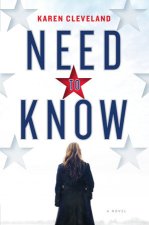
Need to Know, by Karen Cleveland

9781524797027
Need to Know, by Karen Cleveland

This is a debut novel by Karen Cleveland. It has received rave reviews from highly-respected authors, so I was eager to read this espionage thriller. After having read it, all I can say is, “Wow!”

Written by a former CIA analyst, this novel has a female CIA analyst working in a division studying Russia and looking for Russian sleeper cells in the USA. I don’t want to spoil the story for you, so I’ll just say her marriage and work ethic are tested to the limit.

This novel will make you wonder who you can trust. It is the story of betrayal on many levels, and it will keep you turning pages and wishing you didn’t have to stop to eat, sleep, or work. If you like to read espionage thrillers, you will love this book.

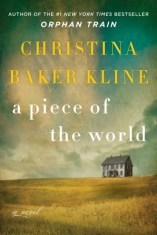
A Piece of the World, by Kristina Baker Kline

167463
A Piece of the World, by Christina Baker Kline

We’re all familiar with Andrew Wyeth’s most famous painting, “Kristina’s World.” This historical novel is based on the imaginary life of the woman lying in a semi-prone position in the grass on the hillside below the house in that painting.

The author, who also wrote The Orphan Train, did a beautiful job developing the characters in A Piece of the World. They were so believable, the reader will forget the book is fiction. The woman in the painting, Kristina, becomes increasingly disabled due to an unknown condition affecting her legs. She lives in the grey clapboard house on the hill as depicted in the painting. Unable and unwilling to empathize with their daughter, Kristina’s parents do little to try to get her help.

Drawn to the feel and essence of the old house, Andrew, the son of artist N.C. Wyeth comes and asks if he can paint. He sketches and paints Kristina’s brother, but the brother has little patience for posing so Kristina becomes his most consistent model. He continues his work for years.

Kristina falls in love, but is it with Andrew? I’ll leave that for you to discover if you choose to read the book.

Another Ocean to Cross, by Ann Griffin

Another Ocean to Cross by Ann Griffin
Another Ocean to Cross, by Ann Griffin

After reading Ann Griffin’s guest blog post on Writers in the Storm about how to or how not to use family history in your fiction (http://writersinthestormblog.com/2017/12/writing-fiction-using-family-history/), I pre-ordered her debut historical novel, Another Ocean to Cross. I followed her blog and she, subsequently, followed mine.

In Another Ocean to Cross, Ann Griffin weaves a compelling story about 18-year-old Renata Lowenthal, a Jewish woman desperate to escape Germany in 1938 as Hitler makes life ever-more tenuous for the Jewish population. Renata is an artist and her gentile boyfriend is in the military. He has to leave Munich, but he is smuggling Renata’s renderings of the Third Reich’s mistreatment of Jews to journalists in Switzerland.

No matter what the world throws at Renata, she meets the challenge.

The descriptions in this book are vivid and draw on all the senses. Being about the Jews who escaped to Egypt, this book enlightened me about an aspect of World War II that I hadn’t known much about.

Renata struggles to convince her parents that it is imperative that they get out of Germany and try to get to Palestine before it’s too late to escape. The tale Ms. Griffin spins will keep you turning the pages of this book and staying up at night to read just one more chapter. I will not give more details because you will want to read this novel and I don’t want to take away any suspense for you. It will take you and Renata to some surprising locations.

Reading Like a Writer:  A Guide for People Who Love Books and for Those Who Want to Write Them, by Francine Prose

In case your eyes have glazed over, I’ll save my comments about this book until next Monday’s blog post.

Since my last blog post

I have continued to read about writing and study areas I need help with. I have worked on my outline for The Spanish Coin, the working title for what I hope will be my first novel.

One of my readers reported difficulty in getting my comments section below to work. If you have trouble with it, too, please send me a message through the contact form/newsletter sign-up sheet below. I’m sorry for any inconvenience.

My blog steadily attracts more readers and followers, which is gratifying. One new reader and follower, Neil, also signed up for my sometime-in-the-future newsletters. Thank you, Neil.

Until my next blog post

I hope you have a good book to read. I’m reading The Last Child, by John Hart, so I’ll be ready to read The Hush in a few weeks.

If you’re a writer, I hope you have productive writing time

If you haven’t signed up for my sometime-in-the-future newsletters, please do so by completing the form below.

Janet

← Back

Thank you for your response. ✨

Some March Reading

I usually wait until the first Monday of the next month to blog about books I read this month, but I’ve read so many good books in March I decided to split them up between today’s blog and my April 2, 2018 blog post.

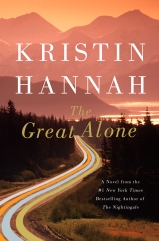
The Great Alone, by Kristin Hannah

After reading Kristin Hannah’s best-selling novel, The Nightingale, last year, I eagerly awaited the release of The Great Alone. What a masterpiece! I don’t want to spoil the story for you if you haven’t read it.

9780312577230
The Great Alone, by Kristin Hannah

I’ll just state the basic description – that it is the story of a troubled Vietnam War veteran and POW survivor who took his wife and daughter to Alaska to escape the craziness he saw in life in the lower 48 states.

Ill-prepared for life in the wilds of Alaska, things went from bad to worse for the family. Domestic abuse is a thread that weaves throughout the novel. Can love outlast the horrors this family lives with?

The Tuscan Child, by Rhys Bowen

This historical novel alternated between World War II and 1973. After the death of her father, 25-year-old Joanna travels from London to a remote village in Tuscany where her father’s fighter plane was shot down in 1944.

tuscanchild-200
The Tuscan Child, by Rhys Bowen

Since her father’s death, Joanna has found an undeliverable and returned-to-send letter he wrote to an Italian woman named Sofia. In the letter, he references “our beautiful baby boy” who is hidden away where no one but he and Sofia can find him.

Joanna had no knowledge of this woman named Sofia until discovering the letter in her father’s belongings after his death. Who was Sofia, and is “our beautiful baby boy” a half-brother Joanna knows nothing about?

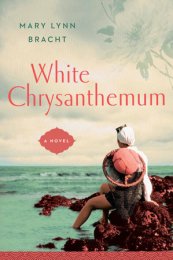
White Chrysanthemum, by Mary Lynn Bracht

This historical novel was a difficult read for me because the subject matter was so bleak, violent, and sad; however, I’m glad I read it. I learned a great deal of history.

9780735214439
White Chrysanthemum, by Mary Lynn Bracht

White Chrysanthemum is about man’s inhumanity to man – or more specifically, man’s inhumanity to woman. The novel was inspired by the plight of Korean girls and young women who were abducted by the occupying Japanese soldiers during World War II. The girls and young women were physically- and sexually-abused and were forced to be “comfort women” for the Japanese soldiers.

This is also a story of the human spirit and what it is able to endure due to the innate will to live. It is also about the love two sisters share for each other and how they long to be reunited.

It is not for the faint of heart, but I recommend it to anyone who wants to have a better understanding of the early- to mid-20th century history of Korean-Japanese relations. As recently as 2015, the treatment of Korean girls and women by Japanese soldiers from the late 1930s through the Second World War was being swept under the rug.

In 2015, the governments of Japan and South Korea agreed “to remove the Statue of Peace [in Seoul] and never speak of the ‘comfort women’ again” according to the timeline in the back of Mary Lynn Bracht’s book. Thanks to her novel, a whole new generation will learn about his piece of history.

The Nordic Theory of Everything: In Search of a Better Life, by Anu Partanen

I checked this book out because the title intrigued me. The author grew up in Finland but moved to the USA as a young adult. This book is her perspective on the social and governmental differences between the two countries.

NordicTheoryofEverything-bookimage
The Nordic Theory of Everything: In Search of a Better Life, by Anu Partanen

The prologue was interesting in that Ms. Partanen expressed her surprise in finding that Americans are less free and independent than the people of her home country. Her opinion is that

  1. the fact that most Americans’ health care is dependent upon their employer, we in the USA are tied to our jobs;
  2. Americans are sometimes forced to stay in unhappy marriages because the income tax laws are written to reward couples filing jointly;
  3. the tax laws in America encourage young adults to depend upon their parents for paying for college and supporting them financially in other ways past the age of 18; and
  4. the policies of the US government saddle parents with too much expense in the raising of children and saddle too many middle-age adults with the financial burden of caring for their elderly parents.


Ms. Partanen boiled all this down to what she calls The Nordic Theory of Love.

My brief summary doesn’t do justice to this 450-page book, but maybe I have piqued your interest. I enjoyed a couple of days’ break from reading depressing World War II novels, but about halfway through Ms. Partanen’s book I decided I’d rather read fiction. Some short stories and novels were vying for my attention.

Since my last blog post

I’ve worked on letters to send to 40 bookstores to encourage them to place spring orders for my 2014 vintage postcard book, The Blue Ridge Mountains of North Carolina, I’ve done a lot of reading, and I’ve studied book marketing and writing in deep point-of-view.

Until my next blog post

If you haven’t already signed up for my sometime-in-the-future newsletters, please fill out the form below.

I hope you have a good book to read. I’m reading A Piece of the World, by Christina Baker Kline. Perhaps you’ll want to read one of the books I wrote about today.

If you’re a writer, I hope you have quality writing time.

Janet

← Back

Thank you for your response. ✨

Reading and Writing in February 2018

In my January 8, 2018 blog post (2018 Reading, Writing, & Living Plans) I expressed a need to be accountable to my blog readers. In order to do that, I said I’d set monthly writing goals. I gave you an embarrassing writing progress report in my February 5, 2018 blog post (Reading and Writing in January 2018). February was productive, but not in word count.

My goal was to write 6,000 words in the rewrite of my novel in February. That just didn’t happen, but I nearly finished the character profiles and settled on the location and the theme. That might not sound like much, but it wasn’t easy. More on that later.

Writing Goal for March:  Finish writing the scenic plot outline

My reading in February

Although I read six books in February, my “want to read” list had a net gain of ­­16. Like I wrote on February 5, this trend is unsustainable. With so many good books being written, though, I don’t know how to reduce my list. In my younger adult days I didn’t make time to read fiction, so I have a lot of catching up to do.

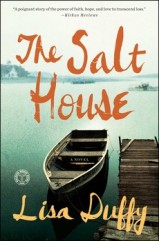
The Salt House, by Lisa Duffy

the-salt-house-9781501156557_lg
The Salt House, by Lisa Duffy

This was Ms. Duffy’s debut novel. It was published in 2017 and was recommended by my friend, Karen. Set in Maine, The Salt House follows each member of a grieving family the summer after the toddler in the family died unexpectedly. Each chapter is written from the point-of-view of a different family member. The father, the mother, and the two surviving daughters each handle their grief in their own way in this well-written novel. Grief can pull a family apart or pull them closer together. It can even erupt in violence.

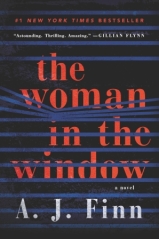
The Woman in the Window, by A.J. Finn

186105
The Woman in the Window, by A.J. Finn

This debut novel by A.J. Finn hit the bestseller lists and hasn’t slowed down in popularity. This psychological thriller will keep you guessing. It will even make you doubt what you think you see, think you hear, and think you know. In the process, it is a study in agoraphobia.

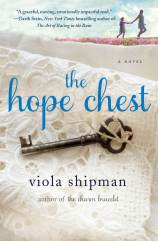
The Hope Chest, by Viola Shipman

9781250105073
The Hope Chest, by Viola Shipman

This is a novel about a woman with ALS and the items in her hope chest – items collected as far back as early childhood. Ill now with a terminal illness, she looks at each item and remembers what each one means and why she kept it. This was the book read by the Rocky River Readers Club in February.

Incidentally, The Hope Chest was written by Wade Rouse who adopted the pen name “Viola Shipman” to honor the memory of his grandmother.

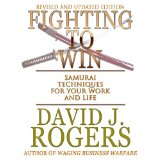
Fighting to Win:  Samurai Techniques For Your Work and Life, by David J. Rogers           

fighting-to-win-amazon
Fighting to Win: Samurai Techniques For Your Work and Life, by David J. Rogers

This book was instrumental in getting me back to work on my novel. I wrote an entire blog post about it on February 19, 2018 (Using Samurai Techniques in Writing), so I won’t repeat my thoughts on the book here. Please read that earlier blog post, though, and see if it sounds like this book could help you.

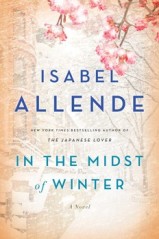
In the Midst of Winter, by Isabel Allende

in-the-midst-of-winter-9781501178139_lg
In the Midst of Winter, by Isabel Allende

I gave In the Midst of Winter, by Isabel Allende, five stars in my review on Goodreads.com. In the Midst of Winter weaves together the lives of strangers. Each of the protagonists have unfortunate backgrounds. They discover common ground and form a bond while getting deeper and deeper in covering up a murder.

Ms. Allende did a brilliant job gradually bringing in backstory that included revolution in Chile, human trafficking in the USA, the horrors many Latinos face as they desperately try to cross into the USA, and life in the shadows for people who have come to the USA illegally.

Many others on Goodreads.com have given this novel three stars, saying they were disappointed with it. Maybe it’s the history buff in me that prompted me to give it five stars.

In his November 21, 2017 review in The Washington Post, (https://www.washingtonpost.com/entertainment/books/its-a-snowy-day-in-brooklyn-and-theres-love-in-the-air–and-a-body-in-the-trunk/2017/11/21/bb8643d0-cda2-11e7-81bc-c55a220c8cbe_story.html?utm_term=.3b398baedf24) Ron Charles wrote the following:

“The emotional range of Isabel Allende’s new novel is stretched so wide that it’s a miracle the book’s spine doesn’t break. We’re used to dark comedies, the ironic mingling of humor and despair, but In the Midst of Winter is a light tragedy, an off-kilter mix of sweetness and bleakness held together only by Allende’s dulcet voice.”

In the Midst of Winter was translated from Spanish to English by Nick Caistor and Amanda Hopkinson.

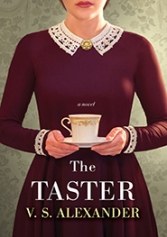
The Taster, by V.S. Alexander

9781496712271
The Taster, by V.S. Alexander

I read V.S. Alexander’s debut novel, The Magdalen Girls last March and got my name on the wait list at the public library for his second book, The Taster, as soon as it appeared “on order” on the electronic card catalog. (See my April 1, 2017 blog post, The Authors I Read in March, if you want to read my thoughts on The Magdalen Girls.)

As with Alexander’s first novel, I had to keep reminding myself that The Taster was a work of fiction. Alexander writes so convincingly that I felt as if I were reading an eyewitness account.

The Taster is the story of a young woman in need of a job and living in Hitler’s Germany. The job she got was not a job she wanted. She was selected to be a food and drink taster for Adolph Hitler. Hitler was mortified of being poisoned, so all his food and drink had to be tasted in advance by a replaceable woman. If a taster died, she could be replaced. Hitler, of course, did not see himself as replaceable.

Since my last blog post

I have received helpful feedback from friends in Australia, Scotland, and Belgium after they read my February 26, 2018 post, Hook in Charles Frazier’s Nightwoods. Thank you, Chris, Iain, and Beth!

Chris Andrews immediately recognized my blunder in summing up the theme of my work-in-progress, The Spanish Coin, in one word. Thank you Chris, for pulling me out of the ditch and putting me back on track!

Thank you, Ann, for signing up for my planned future newsletters.

Until my next blog post

I hope you have a good book to read. I’m reading The Great Alone, by Kristin Hannah and Four Short Stories: In Need of Assistance, Saving the Unicorn, Faerie Blues, and Trophy Hunting, by Chris Andrews. This is a collection of four sci-fi short stories by my Australian writer friend. For those of us in the USA, Chris’s e-book is available on Amazon.com.

51dWqbCdhOL._AC_US218_
Four Short Stories: In Need of Assistance, Saving the Unicorn, Faerie Blues, and Trophy Hunting — by Chris Andrews
9780312577230
The Great Alone, by Kristin Hannah

If you are a writer, I hope you have productive writing time.

If you have not yet signed up for my planned future author newsletters, please take a minute to fill out the form below. I promise my newsletters will be few and far between and your email address will not be used by anyone but me. Thanks!

Janet

← Back

Thank you for your response. ✨

Using Samurai Techniques in Writing

Based on the title alone, I doubt that I would have considered reading Fighting to Win:  Samurai Techniques For Your Work and Life, by David J. Rogers. After all, what could I possibly learn from Samurai Techniques that I could apply to my life at my age?

fighting-to-win-amazon
Fighting to Win: Samurai Techniques For Your Work and Life, by David J. Rogers

I follow David J. Rogers’s blog and he follows mine. Visiting his website,  https://davidjrogersftw.com, I discovered his books and decided to give this one a try.

It turned out that the timing was perfect. My writing had floundered for nearly a year since I came to the conclusion last April that I needed to make such massive changes in the manuscript of my historical novel work-in-progress, The Spanish Coin, that it amounted to a complete rewrite. This was devastating. I had written 120,000 words and edited it down to 96,000. I knew my characters better than I knew some of my close relatives. I was overwhelmed by the prospect of starting over, and I wrote almost nothing but my blog for the next 10 months.

I’ve always been a world-class procrastinator, so I put my novel on the back burner along with a number of other projects including some areas of housekeeping. Then, I read Fighting to Win: Samurai Techniques For Your Life and Work. I started putting into practice some of those techniques long before I finished reading the book. For one thing, I had to get my spirit in the right place. I had to move from, “I probably can’t do this” to “I can do this!”

Examples (and I’m simplifying and paraphrasing) of Samurai principles and techniques that I’ve come away with after reading David’s book include the following: keep one’s body, mind, emotions, and spirit under control; never let your fears get the best of you; don’t personalize problems or opponents (i.e., it’s a problem, not your problem); don’t whine; when you have a task to do, concentrate on it; do the most difficult or most feared task first and get it over with; always strive for self-improvement; and never hesitate or procrastinate.

The book prompted me to evaluate what is holding me back externally (such as having a chronic illness) and internally (such as fear of failure). A fiction writer does or doesn’t make her living, as the case may be, by asking, “What if?” in order to make her protagonist’s life as difficult as possible; however, she can be paralyzed in her personal life if she dwells too much on the “what-ifs” of life. (I need to make a sign that reminds me of that every day.)

After identifying my “inner dragons,” I was prompted to list the things in my life that I’ve been avoiding instead of doing. It turned out to be a longer list than I anticipated, but I’ve begun to put some Samurai techniques and principles into practice. By attacking the items on my list in an orderly fashion I’ve already made some incremental progress toward getting some things off the list. Ironically, this is pretty much the way my mother approached life and her tasks. She never knew she was using Samurai techniques! Her philosophy of life was, “You do what you have to do and you don’t complain about it.”

The most rewarding aspect of reading David’s book is that I got my focus back on my novel! Writing is hard work, but I have regained the joy of writing this month thanks in great part to reading this book. By focusing on my book idea again and determining a logical order in which to “attack” the work of writing a novel, I have made a good start and I no longer feel overwhelmed by the entirety of the task.

David’s book gives the history of the Samurai in bits and pieces, and I found that aspect very interesting. About all I knew about the Samurai was what I picked up in 1980 by watching the TV miniseries “Shōgun” starring Richard Chamberlain. Since I’m a history buff, I enjoyed the historical aspect of the book, too. It includes many intriguing examples.

If I can overcome my fear of failure, as well as my fear of success (yes, you heard me right!) and my fear of having to pitch my book to literary agents, I just might get my novel written and published, get some quilts finished, lose some weight, and get the clutter in my house under control.

David J. Rogers is going to be surprised when he reads this blog post. I hope I have described portions of his book accurately. In fewer than 1,000 words, I have merely touched on a few of the highlights and lessons in his book.

Since my last blog post

I have joyfully worked on my novel, done some reading, and attended five basketball games in a weekend tournament in Charlotte that one of my great-nieces played in, after which I crashed twice for hours due to Chronic Fatigue Syndrome. It’s been a great week! The crocuses and daffodils are blooming, promising that spring is on the way.

Until my next blog post

I hope you have a good book to read. I’m into several books to varying degrees. The one I’m most enjoying is In the Midst of Winter, by Isabel Allende.

If you’re a writer, I hope you have productive writing time.

If you’d like to be on my mailing list for future news about my writing, please fill out the form below. I thank those of you who have already done so.

Janet

← Back

Thank you for your response. ✨

Reading and Writing in January 2018

January is over, so it’s time for me to “fess up” about how I spent the month. Perhaps a better way to say that is “what I accomplished.” In my January 8, 2018 blog post (2018 Reading, Writing, & Living Plans) I felt I needed to be accountable to my blog readers. In order to do that, I said I’d set monthly writing goals. For January, I set a modest goal of adding 2,000 to the scenic plot outline for my historical novel, The Spanish Coin.

My writing

For starters, I failed miserably on reaching my 2,000-word goal. What I did, though, was brainstorm about story location. I continue to wrestle with what direction to take in re-writing my historical novel manuscript. The working title remains The Spanish Coin.

Historical novel progress

In January I settled on a location for the story. At least, I hope I will not change from this latest locale. I did some 1700s research on the place and worked on the story’s timeline. Location plays an important role in historical fiction. The era for the novel is the 1760’s, which is a decade earlier than my original plan.

Spanish Coin location reveal

Curious about the story’s setting?  The Camden District of South Carolina. Choosing a location for the story has freed me to proceed with the outline.

Goal for February

I tend to write detailed outlines, so I’ll go out on a limb and set a goal of 6,000 words for February.

My reading

I got my concentration back and had fun reading in January. I read what I wanted to read instead of tying myself down to any particular reading challenge.

That said, I picked up the rules for the 2018 reading challenges for the public libraries in Harrisburg and Mint Hill (I couldn’t help myself!), but I don’t plan to let them dictate what I read. With 500+ books on my “want to read” list, though, I might meet those two challenges without really trying. Incidentally, even though I read seven books in January, my “want to read” list had a net gain of 39. I realize this is not sustainable. I would have to be a speed reader and live to be a centenarian to finish my ever-growing list.

52 Small Changes: One Year to a Happier, Healthier You, by Brett Blumenthal

The book title says it all. I took note of the suggested change for each week. This week seems like a good week to start, since I didn’t begin in January. This week’s small change:  Drink enough water to stay hydrated. I’m told I should drink approximately 80 ounces of water every day. Since I normally drink less than half that amount, this constitutes more than a “small” change for me.

The Rooster Bar, by John Grisham

This latest John Grisham novel took a little different tack from his earlier books in that The Rooster Bar is about a group of law school dropouts practicing law without licenses. I found it to be more humorous than other Grisham novels I’ve read, but it was still full of suspense.

Perennial Seller: The Art of Making and Marketing Work that Lasts, by Ryan Holiday

I blogged about this book on January 22, 2018, so I direct you to that blog post if you missed it: (Works That Last.)

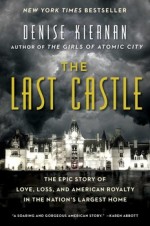
The Last Castle: The Epic Story of Love, Loss, and American Royalty in the Nation’s Largest Home, by Denise Kiernan

the-last-castle-9781476794044_lg
The Last Castle, by Denise Kiernan

I’ve been reading so many novels the last couple of years that I’d forgotten how long nonfiction book titles tend to be. Or maybe it’s just the three I read in January.

I thoroughly enjoyed reading this book about the Vanderbilt family and the Biltmore Estate. Living in North Carolina, I have toured the Biltmore House four times. The first time was on a sixth grade field trip. Motion sickness on the bus as it wound around the endless curves on old US-74 east of Asheville is my main memory from that day, but I digress.

My other visits to the Biltmore Estate have been very enjoyable. Reading this book made me want to plan another trip to Asheville and tour the mansion again. It is a delightful book.

Before We Were Yours, by Lisa Wingate

9780425284681
Before We Were Yours, by Lisa Wingate

This novel was inspired by the shocking history of the Tennessee Children’s Home Society during the first half of the 20th century. It is a gripping story and is expertly written. It is not a happy read, but I highly recommend this book.

The King of Lies, by John Hart

This was the January book choice of the Rocky River Readers Book Club. The novel is set in Salisbury, North Carolina, so I was familiar with some of the streets and buildings referenced in the book. It’s fun sometimes to read a book set in a location you have visited.

I though Mr. Hart could have omitted some of the “woe is me” theme in the first third of the book. The narrator’s whining about the wealthy people in this small town got old after a while. If you’ll hang in there, though, you’ll probably get so involved in trying to identify the killer that you’ll get to the point you can’t put the book down. You’ll think several times that you’ve figured out the villain’s identity but, chances are, you haven’t.

Nightwoods, by Charles Frazier

This novel has been on my “to read” list for several years, so I felt a sense of accomplishment when I finally read it. It is set in the mountains in western North Carolina.

Nightwoods is a tale about a woman who unexpectedly “inherits” her deceased sister’s twin boy and girl. The children give their aunt/new mother a challenge every day – and then her late sister’s widowed husband/killer comes to try to get the large sum of money he thinks the children took with them. The children are wild and uncommunicative. Add to that the fact that the aunt has no idea why her ne’er do well ex-brother-in-law has suddenly shown an interest in his children and has come to hunt them down.

What about December?

I just remembered that I never did blog about the books I read in December. They were a mixed bag of novels:  The Quantum Spy, by David Ignatius; Hardcore Twenty-Four, by Janet Evanovich; and The Secret, Book and Scone Society, by Ellery Adams.

David Ignatius’s political thrillers never disappoint me. The Quantum Spy was no exception.

The last two Stephanie Plum novels by Janet Evanovich disappointed me. I used to eagerly await her annual next installment of these funny novels, but “Twenty-Three” and “Twenty-Four” were too predictable.

The Ellery Adams novel is an entertaining read about four women who want to form a friendship, but each one is required to reveal a secret about herself before they can truly trust one another.

Until my next blog post

I hope you have a good book to read. I’m reading Fighting to Win: Samurai Techniques for Your Work and Life, by my fellow-blogger David J. Rogers; The Salt House, by Lisa Duffy, which was recommended by my friend Karen; Beartown, by Frekrik Backman, which is the February pick for The Apostrophe S Coffee Chat online book community; and The Woman in the Window, by A.J. Finn. That’s about one book too many for me to read at the same time, but they are different enough that I’m not getting the story lines confused.

If you’re a writer, I hope you have productive writing time.

If you subscribed to my mailing list last week, you renewed my faith in mankind. Thank you, Vicki, Colby, Katrina, and Glen!

In case you haven’t signed up for my mailing list, you have another opportunity to do so using the fill-in form below. I appreciate it!

Janet

← Back

Thank you for your response. ✨

Works That Last

You’ve heard the saying, “A job worth doing is worth doing well.” That’s one of those old sayings that will always ring true. I was reminded of that saying a couple of weeks ago as I read Perennial Seller:  The Art of Making and Marketing Work That Lasts, by Ryan Holiday.

9780143109013
Perennial Seller: The Art of Making and Marketing Work that Lasts, by Ryan Holiday

As a writer, the book spoke to me, but it can be applied to any walk of life. By “work that lasts,” Mr. Holiday refers to a creative work or product that isn’t a “flash in the pan.” It is a work that might not be an overnight sensation, but it steadily draws an audience or buyers. It is a book that you want to read again. You recommend it to friends. It does not depend on hype or fancy advertising, but rather builds a fan base via word of mouth.

Part 1 – The Creative Process

Mr. Holiday quotes his mentor, Robert Greene, as saying, “ʻIt starts by wanting to create a classic.’” Mr. Holiday maintains that this doesn’t happen by accident. It happens when you study the classics in your field, and it demands that you know your purpose in creating the book, the painting, or a gadget that will someday make people wonder how they lived without it.

While creating your work, Mr. Holiday says you must ask yourself, “What am I willing to sacrifice in order to do it?”

He also writes about identifying your audience, and the importance of aiming at that target audience instead of the masses. For instance, in my case, I need to be able to say, “I am writing The Spanish Coin for these people. I can’t wait until I have finished writing the novel (or even the outline) before knowing for whom I am writing. I would love to think that everyone will want to read my book, but if I write it with that in mind, Mr. Holiday says I will have written it for no one.

“Who is this for?” is just one of the questions you must ask yourself during the creative process. Another question you must answer is, “How will it improve the lives of the people who buy it?”

Mr. Holiday takes it another step as he offers a list of four more questions that go deeper. They are along the lines of, “What sacred cows am I slaying?” The writers of classics don’t play it safe!

Part 2

The second part of Perennial Seller:  The Art of Making and Marketing Work That Lasts addresses “Positioning:  From Polishing to Perfecting to Packaging.” This cannot be left to chance. If not positioned for success by making it the best you can make it and packaging it in the best possible light, your hard work of creating will be for naught.

For a writer, this means that the editing of your book will take a long time. Your manuscript means a lot to you. You have to make sure it will also mean a lot to others – for years to come. You want it to stand out.

Mr. Holiday talks about the importance of a writer finding a good editor and being able to take constructive criticism. He writes, “Only you know how to fix it – but you’ll only find out what’s wrong if you open yourself up to collaboration and input.”

I should make a sign that features that quote and put it by the computer where I do my writing. Along with that, I need a sign with the following quote from Mr. Holiday’s book:  “Nobody creates flawless first drafts. And nobody creates better second drafts without the intervention of someone else. Nobody.”

The book goes on to address the writer or inventor being able to succinctly fill in the blanks in the following sentence:  “This is a ______ that does _______. This helps people ______.” You must know into which genre your book falls. If you aren’t clear in your own mind how to fill in these blanks about your manuscript, you need to “adjust either the audience or the product until there’s a perfect match. The intended audience is the final blank” in the above two-sentence exercise.

Until you determine who your book is for and what it will do for them, you are aiming at a target you can’t see. Chances are, you won’t hit the target.

Once you identify your target audience, you need to find them and quantify them. I found Mr. Holiday’s personal example for this a bit off-putting. He wrote, “Who is buying the first one thousand copies of this thing?” It’s daunting to think of 1,000 people who will want to buy my novel, but I read on and it got worse.

Mr. Holiday wrote, “For books the superagent and publishing entrepreneur Shawn Coyne (Robert McKee, Jon Krakauer, Michael Connelly) likes to use ten thousand readers as his benchmark. That’s what it takes, in his experience, for a book to successfully break through and for the ideas in it to take hold.”

With those numbers in the back of my mind, I will continue to work on the scenic plot outline for the rewriting of my manuscript titled The Spanish Coin. Another important point Mr. Holiday makes is that the book you write is not only competing with every other book that’s ever been written but with every book that will be written in the future. It’s enough to make me want to throw away my keyboard and concentrate on reading, sleeping, eating, and sewing.

Today’s blog post has hit just a few highlights of Perennial Seller:  The Art of Making and Marketing Work That Lasts, by Ryan Holiday. If you aspire to be a writer, artist, or an inventor, I recommend you read this book. (Disclaimer:  I have not been compensated in any way for endorsing this book. I read it and got a lot out of it. Come to think of it, word of mouth is important!)

There’s a Part 3?

In this blog post I didn’t even get to Part 3 of the book. Part 3 is about marketing, where he says people do actually judge a book by its cover and the writer must put as much energy into marketing or they do in creating the book. Most writers would rather spend their time writing and leave the marketing to salespeople, but that’s not the way it works. Even bestselling authors have to make personal appearances and pitch their latest books.

And Part 4?

I didn’t get to write about Part 4 of Perennial Seller:  The Art of Making and Marketing Work That Lasts, by Ryan Holiday in today’s blog. It’s about “Platform: From Fans to Friends and a Full-Fledged Career.”

Ryan Holiday packs a lot into a relatively small (231-page) book — far too much for me to cover in a blog post.

Until my next blog post

I hope you have a good book to read. I’m finishing The King of Lies, by John Hart, for tonight’s meeting of the Rocky River Readers Book Club. If you’re in the Harrisburg/Concord area, you are welcome to join us for our discussion tonight at 7pm at Rocky River Presbyterian Church at 7940 Rocky River Road, Concord, North Carolina  28025.

If you’re a writer, I hope you have quality writing time.

I’m told that I need to start building a mailing list. If my blog disappears, I want to be able to communicate with you. I promise not to burden you with a bunch of e-mail. In the event I have an announcement to make or I start writing a newsletter, I want to be able to send it to you. Please fill out the contact form found below. At least, I hope it appears below. (You know I’m not computer savvy!)

Janet

← Back

Thank you for your response. ✨

Did You Meet Your 2017 Reading Challenge?

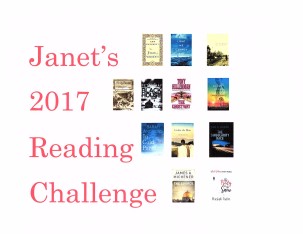
As 2017 approached, I took ideas from other reading challenges and developed “Janet’s 2017 Reading Challenge.” If you took my challenge, [Want a reading challenge for 2017?] I commend and thank you. I had some success with this challenge, but I fell short in many areas.

img086

Here’s a recap of Janet’s 2017 Reading Challenge, and a report of sorts on how I did.


  1. A book of poetry – I did well with this for a few months. I read a poem every day, but then I missed a few days and this fell off my radar. The book of poetry I chose was A Little Book of Cherished Poems, compiled by Kay Anne Carson. Reading poetry is supposed to help me be a better writer, even though I’m not a poet.


  1. A Sci-Fi book – As I said in my blog on December 26, 2017, I’m not a sci-fi fan and this didn’t happen.


  1. A nonfiction book – I read several, but the one I’ll list here is Killers of the Flower Moon: The Osage Murders and the Birth of the FBI, by David Grann.


  1. Books by 12 authors I’ve never read – This one was easy. Of the 63 books I read in 2017, 43 of them were written by authors I’d never read before. The following are 12 examples:

The Body in the Snow (A Bebe Bollinger Murder Mystery), by Christoph Fischer;

The Underground Railroad:  A Novel, by Colson Whitehead;

If the Creek Don’t Rise, by Leah Weiss;

A Mother’s Promise, by Sally Hepworth;

Right Behind You, by Lisa Gardner;

Irena’s Children, by Tilar J. Mazzeo;

All the Light We Cannot See, by Anthony Doerr;

The Magdalen Girls, by V.S. Alexander;

Grief Cottage, by Gail Godwin;

The Midnight Cool, by Lydia Peelle;

The Nightingale, by Kristen Hannah; and

Hatteras Light, by Philip Gerard.


  1. A novel set in each of the seven continents – I read the following:

North America – too numerous to list here;

South America – State of Wonder, by Ann Patchett;

Europe – There were many good ones, including The Saboteur, by Andrew Gross; The      Chilbury Ladies’ Choir, by Jennifer Ryan; and The Magdalen Girls, by V.S. Alexander; and The Orphan’s Tale, by Pam Jenoff.

Asia – I started reading The Tea Girl of Hummingbird Lane, by Lisa Lee. I didn’t get it    finished. It’s still on my “want to read” list.

Africa – The Lost History of Stars, by Dave Boling;

Australia – The Light Between Oceans, by M.L. Stedman.

Antartica – I wanted to read In Cold Pursuit (Em Hansen Mysteries), by Sarah Andrews. I didn’t get around to it.


  1. A novel by a North Carolina author – This one was easy. There are an abundance of good writers in North Carolina. To name just two novels I read by North Carolina authors in 2017: The Silent Sister, by Diane Chamberlain and Chasing the North Star, by Robert Morgan.


  1. A novel set in North Carolina – The Stolen Marriage, by Diane Chamberlain, and The Last Ballad, by Wiley Cash, to name just two.


  1. Re-read a favorite book – I couldn’t decide between The Help, by Kathryn Stockett; Roots, by Alex Haley; Tom Sawyer, by Mark Twain; and The Adventures of Huck Finn, by Mark Twain, so I didn’t re-read any of them. There were too many new books I wanted to read.


  1. A book written in the 1700s – I never got around to this one.


  1. A book written in the 1800s – I never got around to this one.


  1. A book written in the 1900s – I can’t believe I never got around to this one. It seems like just yesterday it was 1999. I did read Bird-by-Bird: Some Instructions on Writing and Life, by Anne Lamott, 1994; but my intention was to read a novel written in the 1900s.


  1. A biography, autobiography, or memoir – In Order to Live: A North Korean Girl’s Journey to Freedom, by Yeonmi Park. (I highly recommend this one.)


  1. A book about a religion other than my own – I wanted to read If the Oceans Were Ink: An Unlikely Friendship and a Journey to the Heart of the Quran, by Carla Power, but didn’t get to it.


  1. A book that might change my mind – I read Same Kind of Different as Me, by Ron Hall and Denver Moore. This book helped me to see homeless people in a new light. Tears We Cannot Stop: A Sermon to White America, by Michael Eric Dyson, gave me a lot to think about and helped me be more cognizant of the advantages I’ve had in my life in America due to white privilege.


  1. A book just for fun – I read Turbo Twenty-Three by Janet Evanovich and Hardcore Twenty-Four, by Janet Evanovich. Both were disappointing because after this many books in the Stephanie Plum Series, the plot is too predictable. The next time I want to read an entertaining book, I might go with Mark Twain.


  1. A book that will teach me a new skill – Since I am losing my hearing and don’t know what the future holds, I thought it might be a good idea to learn sign language. I soon discovered this was easier said than done at the age of 64. I have sporadically studied The American Sign Language Phrase Book, by Louie J. Fant.


  1. A book that was originally written in a language other than English – A Man Called Ove, by Fredrik Backman.


  1. A book written in Spanish (a language I haven’t studied since 1973) – I started re-reading Don Quijote de la Mancha, by Miguel de Cervantes, in January. That’s as far as I got.


  1. A book published in 1953 (the year I was born) – It’s not easy to find books that old! Go Tell it on the Mountain, by James Baldwin, was on my list. I didn’t get it read.


  1. A book that is the first in a series I haven’t read any of before – I started reading Death of a Gossip, by M.C. Beaton, but it didn’t grab my interest.


  1. The second book in a series of which I’ve read the first book — Everything Over Glory, by Kathleen Grissom


  1. A book written by an author I’ve met – The 13th Target, by Mark de Castrique.


  1. A book of short stories – Nothing Gold Can Stay: Stories, by Ron Rash.


  1. A book published in 2017 – I read several, but one I haven’t mentioned yet for this challenge is Here and Gone, by Haylen Beck (a.k.a. Stuart Neville.) I thought this was a terrific thriller.


  1. A book about the craft of writing historical fiction – I intended to read The Art and Craft of Writing Historical Fiction: Researching and Writing Historical Fiction, by James Alexander Thom. I started reading it and taking notes. Somewhere along the way, I misplaced it. Still looking for it. Surely, it’s here somewhere.


  1. A Nobel Prize winner – Well, this is embarrassing. <crickets chirping>


  1. A political thriller – The Quantum Spy, by David Ignatius.

How did you do?

If you participated in a reading challenge in 2017, how did you do? This isn’t a competition. I just hope you enjoyed the books you read.

Until my next blog post

I wish you a Happy New Year!

I wish you many good books to read. I’m reading The Rooster Bar, by John Grisham.

If you’re a writer, I wish you quality writing time and publication.

Janet

Some Good New Books

I’ve read some very good books this year, and it’s been a pleasure to share my thoughts about them on my blog. Today’s blog post highlights the five novels I read in October. Four of them (Love and Other Consolation Prizes, by Jamie Ford; The Deep Dark Descending, by Allen Eskens; The Last Ballad, by Wiley Cash; and The Stolen Marriage, by Diane Chamberlain) were published in October. The other book, News of the World, by Paulette Jiles, was published in October of 2016.

 Love and Other Consolation Prizes, by Jamie Ford

9780804176750
Love and Other Consolation Prizes, by Jamie Ford

I eagerly awaited the release of Jamie Ford’s latest novel, Love and Other Consolation Prizes, and it did not disappoint. After hearing Mr. Ford speak at the Bookmarks Festival of Books and Authors in Winston-Salem, North Carolina in September, I really looked forward to reading this book. My September 18, 2017 blog post, Bookmarks Festival of Books and Authors, was about that festival and the seven authors I got to hear speak.

Historical fiction is near and dear to my heart, so it’s no wonder that I enjoyed reading Love and Other Consolation Prizes. Mr. Ford took a reference to an actual shocking event at the 1909 Alaska-Yukon-Pacific Exposition held in Seattle, Washington and created a powerful story about the young boy named Ernest who was raffled off at the Exposition. Yes. You read that correctly. Something different was raffled off each day of the fair, and one day it was an orphaned child!

The Chinese slave trade around the turn of the 20th century and the thriving red light district of Seattle in the early 1900s provided the perfect backdrop for this book. Mr. Ford gives us chapters set in 1909-1911 and chapters set in 1962 around the World’s Fair in Seattle so we can follow the amazing fictional life of Ernest – a mixed race boy from China.

 The Deep Dark Descending, by Allen Eskens

deep-dark-descending-225
The Deep Dark Descending, by Allen Eskens

I became a fan of Allen Eskens’s writing when I read his first novel, The Things We Bury. I’ve now read all four of his novels. Here are the links to my blog posts that talked about his first three novels:  The Life We Bury, by Allen Eskens; What I read in January; My writer’s notebook; and What I Read in April  ­.

The Deep Dark Descending is a dark story of just how deeply a person can descend when his anger, bitterness, and desire for revenge become an obsession.

In this novel, Minneapolis homicide detective Max Rupert sets out to find and punish the person or persons who murdered his wife. The case had been ruled an accident, but Rupert could not accept that.

The Deep Dark Descending takes the reader to the frigid Minnesota-Canada border and a frozen lake. Put this novel on your winter reading list.

The Last Ballad, by Wiley Cash

lastballadhc_c
The Last Ballad, by Wiley Cash

The Last Ballad is author Wiley Cash’s newly-released novel. It is set in Gaston County, North Carolina and is based on the life of textile millworker Ella May Wiggins. Ms.Wiggins was murdered in Gastonia, North Carolina in 1929 during a riot that resulted from efforts to organize the millworkers into a union. Labor unions have never been popular in the state, and that was definitely the case in the textile industry in the early 20th century.

Although I grew up an hour from Gastonia, I had never heard about this incident. In fact, Wiley Cash is a native of Gastonia and he only recently learned of it.

The Last Ballad takes the reader into a world of poverty inhabited by both black and white millworkers in the 1920s. Ms. Wiggins was a white single mother who lived in an otherwise black neighborhood. She was instrumental in trying to get her black neighbors and co-workers the right to strike for better wages. The white workers didn’t have the right to strike either, but until Ms. Wiggins pushed the point, the possibility of black workers going on strike was unimaginable in that time and place.

This is a story of a woman’s courage as she fought for better working and living conditions for her children and her neighbors.

The Stolen Marriage, by Diane Chamberlain

newcoverTSM
Diane Chamberlain Author Event The Stolen Marriage, by Diane Chamberlain

After having met Diane Chamberlain at the On the Same Page Book Festival in West Jefferson, North Carolina last year (Diane Chamberlain Author Event )and enjoying two of her other novels (Pretending to Dance A Novel’s First Line and The Secret Sister Books I’ve been reading), I got on the waitlist for The Stolen Marriage as soon as it was “on order” at the public library. The novel’s October 3, 2017 release date finally arrived!

I love it when I can read an expertly-written novel and learn something at the same time. Like Wiley Cash’s The Last Ballad, Diane Chamberlain’s The Stolen Marriage delivered in a big way. I regret that I cannot read The Stolen Marriage again for the first time. It was that good!

The Stolen Marriage was inspired by the true story of the citizens of Hickory, North Carolina building – and getting up and running – a hospital for polio patients in just 54 hours in 1944. Being a native of North Carolina, born in 1953, this is another piece of history that I didn’t know. It was an amazing feat in this small town in Catawba County, and it was covered by Life magazine. In historical literature, it is referred to as “The Miracle in Hickory.”

The fictional story Ms. Chamberlain created around this event is one of trust, love, and betrayal. There are numerous plot twists in this novel. It will keep you up at night turning pages.

 News of the World, by Paulette Jiles

6.png
News of the World, by Paulette Jiles

The premise and title of News of the World, by Paulette Jiles, intrigued me when I read a blurb about it, so I borrowed it from the public library.

This is a tale of a fictional character known as Captain Kidd who traveled around Texas in the 1800s getting paid to have public readings of articles from various newspapers. Many people were illiterate and newspapers were rare in the region.

Captain Kidd agrees to return Johanna, a young white girl, to her family in southwest Texas. Years earlier, Johanna had been kidnapped by the Kiowa tribe of Native Americans. Being raised by the Native Americans, Johanna had no recollection of the habits and mores of her white family.

Johanna and Captain Kidd had a shaky and unpredictable relationship as Kidd tried his best to fulfill his promise to return Johanna to her family. Their journey across Texas is filled with misunderstandings, attacks by outsiders, challenging traveling conditions, and additional attempts to kidnap Johanna. The two of them gradually learn how to communicate and co-exist.

News of the World is the second novel I’ve read recently that did not use quotation marks in dialogue. I guess I’m just old-fashioned, but I don’t like this practice. When I have to stop and think or reread something in a novel to figure out what’s narration and what’s dialogue or who’s talking, it pulls me out of the story and reminds me I’m reading. I’m sure dropping all the quotation marks saved the publisher some money, but I hope this doesn’t become common practice.

Until my next blog post

I hope you have a good book to read. I seem to have trouble “getting into” a book at the moment. I’m more in the mood to write than to read, so I’m taking advantage of that. The last several days I’ve worked on the timeline and outline for my historical novel I’m calling The Spanish Coin. I’ll keep you posted.

If you are a writer, I hope you have quality writing time.

Janet


Correlation Between Writing and Azheimer’s?

In addition to the novels I’m reading this month, I read The End of Memory: A Natural History of Aging and Alzheimer’s, by Jay Ingram. After finding a connection between writing and Alzheimer’s Disease, I decided to give this book attention in a blog post by itself.

The author, Jay Ingram, has no medical training; however, he is a science writer and was the co-host and producer of Discovery Channel Canada’s “Daily Planet” program. The book is well-documented with sources to back up his writing.

9781466887916
The End of Memory: A Natural History of Aging and Alzheimer’s, by Jay Ingram

The book gives good explanations of plaques and tangles, which are the hallmarks of Alzheimer’s. It goes into more scientific detail than I wanted to process, but it appeared to give a good overview of where Alzheimer’s knowledge stood at the time of its publication in 2014.

The more I read in the book, the more I came to realize just how complicated the research is. The cause of the disease remains elusive. Do the plaques and tangles cause Alzheimer’s? Or does Alzheimer’s cause the plaques and tangles? Why do some people with numerous plaques and tangles in their brains show no signs of having Alzheimer’s?

The End of Memory: A Natural History of Aging and Alzheimer’s gives good explanations of what is known about the disease and pulls no punches when it comes to how far we probably still are from identifying its cause. In the meantime, drugs attempt to treat the symptoms.

As a writer, I was intrigued by Chapter Nine about the Nuns Study. I’m referring to the 1990s study directed by Dr. David Snowdon with 678 School Sisters of Notre Dame. As Mr. Ingram explained, “They’d have their lives measured, their minds challenged, and in the end, their brains autopsied.”

The ninth chapter of the book is about some of the study findings. The study result that grabbed my attention was that it found a correlation between the idea density in essays the nuns wrote when they were 20 to 22 years old and their incidence of dementia 60 or 70 years later.

Idea density is defined as how many ideas are expressed in every 10 words. According to the Nuns Study, as reported by Jay Ingram in The End of Memory: A Natural History of Aging and Azheimer’s, the lower the idea density in an essay written as a young adult, the higher the likelihood of developing Alzheimer’s Disease 60 or 70 years later.

The biographical essays the nuns had written in their early 20s were also evaluated for grammatical complexity. Mr. Ingram wrote, “Grammatical complexity challenges working memory as you struggle either to follow someone else’s edifice of a sentence or to keep your own words under control. Each additional clause soaks up mental resources.”

Working memory generally decreases with age, of course, but no correlation was found in the Nun Study between grammatical complexity and the chance of getting Alzheimer’s. Mr. Ingram stated in the book, “Only idea density has that mysterious relationship.”

The correlation between idea density and Alzheimer’s might turn out to mean nothing. Most of us don’t have copies of essays we wrote when we were 20 years old. I’m glad I don’t. I might be embarrassed by my writing skills at that age. If my idea density was low at age 20, I don’t want to know at 64 that there is a higher probability that I’ll develop Alzheimer’s than if I’d been a better writer back then.

That is just one example of the complexities of Alzheimer’s Disease and the effort to determine cause and effect. The End of Memory: A Natural History of Aging and Alzheimer’s tells about numerous other studies and their findings. Some recent studies indicate that the “epidemic” of Alzheimer’s might be slowing. Drug and other treatment trials continue.

The book addresses the part DNA might play in the disease as well as some information about treatments. It tells about the theory from the 1970s into the 1990s that aluminum causes Alzheimer’s. Other food items have been considered for possible connections with the disease.

Mr. Ingram tells about Suzanne de la Monte of Brown University and her theory that there might be a connection between sugar and Alzheimer’s. In fact, her article in a 2012 issue of Current Alzheimer’s Research makes the case for thinking of Alzheimer’s as possibly being Type 3 Diabetes.

According to Mr. Ingram’s book, Alzheimer’s accounts for 65-75% of all dementia cases, but we need to be mindful that 25-35% of dementia cases are not connected to Alzheimer’s Disease.

I found this book to be enlightening and helpful. I am not an authority on Alzheimer’s Disease, but I was impressed with the documentation Mr. Ingram gives. It was the most thorough book about Alzheimer’s that I found at the public library from the last several years of publication.

Until my next blog post

I hope you have a good book to read. I’m reading The Deep Dark Descending, by Allen Eskens and News of the World, by Paulette Jiles.

If you’re a writer, I hope you have productive writing time.

Janet