I write southern historical fiction, local history, and I've written a devotional book. The two novels I'm writing are set in Virginia and the Carolinas in the 1760s. My weekly blog started out to follow my journey as a writer and a reader, but in 2025 it has been greatly expanded to include current events and politics in the United States as I see our democracy under attack from within. The political science major in me cannot sit idly by and remain silent.
This is the 18th day of the A to Z Blog Challenge, so I decided to give a status report on my 2017 Reading Challenge. I have completed the following 12 of the 28 categories in my challenge, which I announced on my blog on December 27, 2016 [https://janetswritingblog.com/2016/12/27/reading-challenge-for-2017/.]
A nonfiction book
A novel by a North Carolina author
A biography, autobiography, or memoir
A book that might change my mind
A book just for fun
The second book in a series of which I’ve read the first book
A book of short stories
A book published in 2017
A book about the craft of writing historical fiction
A Nobel Prize winner
A political thriller, and
A sequel to a book I’ve read
In addition, I’ve made good progress toward completing #4 on my challenge – “Books by 12 authors I’ve never read.” I’ve read nine already.
Number 5 on my challenge is “A novel set in each of the seven continents.” I’ve read eight books set in North America and four set in Europe. I’m currently reading a novel set in Australia.
With the year almost one-third behind us, I feel like I’m on track to meet my 2017 Reading Challenge. It’s been fun, and I look forward to more good books in the coming months.
Read the USA Reading Challenge
I’m also hoping to meet the “Read the USA” reading challenge sponsored by the Mint Hill Branch of the Public Library of Charlotte and Mecklenburg County. I’ve read novels set in New Jersey, Minnesota, Oregon, and Vermont.
Friends of the Harrisburg Library Reading Challenge
I’ve completed only two of the 12 categories in Friends of the Harrisburg Library Reading Challenge. There’s a lot of duplication between it and my own reading challenge, so I think I might meet that challenge by the end of the year, too.
Are you participating in a reading challenge this year? How are you doing? Are you enjoying your challenge or do you find it too confining?
Until my next blog post
I hope you have a good book to read. If you’re a writer, I hope you have productive writing time.
Today is the first day of the 2017 A to Z Blog Challenge. The challenge is for a blogger to blog on 26 specific days in the month of April. If that weren’t enough, there is a big caveat: Each day’s blog must be based on the next letter of the English alphabet in chronological order. Therefore, today’s blog has to have something to do with the letter “A.”
Blogging from A to Z Challenge Badge 2017
Since my first blog each month is about the books I read in the preceding month, I’ve tweaked my usual post title to read, “The Authors I Read in March” instead of the usual, “What I Read in March.” Without further ado, let’s get to those authors and their books. I had a rewarding month of reading in March!
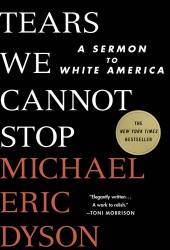
Tears We Cannot Stop: A Sermon to White America
One of the categories I included in my 2017 Reading Challenge was to read a book that might change my mind. Tears We Cannot Stop: A Sermon to White America, by Michael Eric Dyson definitely fit the bill. Reading this nonfiction book still haunts me four weeks later. Page after page, it drove home to me how those of us who are white in America take for granted our white privilege. It even goes farther than that. For the most part, we aren’t even aware of our white privilege.
An example is that, as a small child, I was told by my parents that if I ever got separated from them out in public to look for a police officer. I was told that police officers were my friend. A police officer would always help me. It has taken me to middle age to recognize that children of color in America are not told that. Their parents and grandparents have not been able to trust law enforcement officers, so they cannot be told to automatically trust such people in authority.
If I am driving and see a police car in my rear view mirror, my eyes immediately drop to the speedometer even if I’m fairly certain I’m not speeding. For a split second, I’m afraid I might be doing something wrong. “Afraid” is probably too strong a word. It’s just a fraction of a second when I think I might get a speeding ticket, but with a glance at the dial on the dashboard I’m reassured that I’m not breaking any laws and I am perfectly safe. It is impossible for me to put myself in skin of a darker shade than my Scots-Irish heritage gave me. The emotions a person of color must feel when being approached by a police officer is something I cannot identify with because I am Caucasian.
These are just two examples. The roots of this problem run deep into the foundations of our country. Tears We Cannot Stop: A Sermon to White America, by Michael Eric Dyson made me think about these issues in more depth than I had otherwise been forced to think about them. Just by being born with white skin in America has given me privileges that I have been oblivious to all my life. It is that white privilege itself that has made my oblivion possible.
It’s not enough for me to be aware of my white privilege. It is my responsibility to work for social justice.
Michael Eric Dyson is a sociology professor at Georgetown University in Washington, DC. This is the first one of his books that I’ve read. I wanted to read it after seeing him interviewed by Tavis Smiley on PBS.
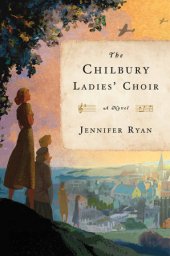
The Chilbury Ladies’ Choir
The Chilbury Ladies’ Choir, by Jennifer Ryan is a 2017 novel that is getting much-deserved praise. I gravitated to it because it is a work of historical fiction. Set in the early days of World War II in England, it is a story of how a group of women found their voices and their strengths after all the able-bodied men in the village were called away to fight the Nazis. Each of the women came about this epiphany in her own way and at her own pace. Subjects such as abortion, black market dealings, and the British class system are among the topics woven into this novel.
A native of Kent, England, author Jennifer Ryan lives in the United States. Her earlier career was as a nonfiction book editor. She wrote The Chilbury Ladies’ Choir in the form of letters and documents, much in the vein of The Guernsey Literary and Potato Peel Pie Society, by Annie Barrows and Mary Ann Shaffer. Like that 2008 novel, the characters I met in this debut novel by Jennifer Ryan will stay with me for a long time.
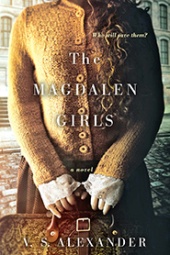
The Magdalen Girls
The next book I read in March was The Magdalen Girls, by V.S. Alexander. It is not the kind of book I would say I enjoyed; however, the story was compelling and I had trouble putting it down. I will be haunted by the characters in this novel. It is a dark tale based on the homes for “wayward girls” in Great Britain in the 1960s and beyond. This story is based specifically in 1964.
The Magdalen Girls paints a painful picture of the nuns who ran this particular convent and “home” (“prison” would be more accurate!) for girls and women deemed too much of a temptation for boys and men. As with any good work of fiction, just when the reader thinks things can’t possibly get worse for 16-year-old Teagan and her fellow “Magdalens,” things get progressively worse until this reader can scarcely stand to turn to the next page. The Mother Superior/Sister Anne is hiding a secret that is tearing her to pieces. Unfortunately, her way of coping with her own demons is to heap abuse upon the girls and young women under her care.
Upon entering the confines of the convent, the girls are stripped of their dignity and their identities. They are assigned new names and are never to refer to themselves or others again by their birth names. The book shines a bright light on the double standard held worldwide that girls and women must always live to a higher standard than boys and men and bear the punishment even when the male is an adult and the female is a minor.
V.S. Alexander’s next novel, The Taster, due out in January, 2018, is about one of the women who had to taste Adolf Hitler’s food in order to ensure that he wasn’t being poisoned. I’ll be on the wait list for it as soon as it shows up in the public library’s catalog. That’s just how good Ms. Alexander’s writing was in The Magdalen Girls. It wasn’t a pleasant read for its subject matter, but the writing was so vivid that I felt like I was imprisoned at the convent along with Teagan, Nora, Lea, and all the others.
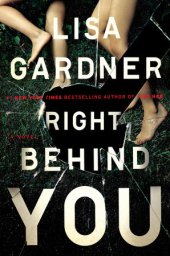
Right Behind You
The next book that rose to the top of my wait list at the public library was Right Behind You, by Lisa Gardner. Although this is her seventh and latest (2017) installment in her Quincy and Rainie FBI profiler thrillers series, it is the first book I’ve read by Ms. Gardner. This novel made me want to read more of her books. Perhaps I should go back and read the first book in this series, The Perfect Husband, which was published in 2004.
Right Behind You is the frightening tale of a brother and sister who are separated from each other into numerous foster homes after the murder of their father. The girl is nurtured by loving foster parents, while the boy is not so fortunate. He never receives the psychological care and support he needs as a result of his father’s gruesome death. That propels him onto a path of trouble, violence, and the over-riding guilt of not being able to protect his little sister.
I don’t want to reveal other details of the book, in case you haven’t read it yet but wish to do so.
One of my objectives when I created my 2017 Reading Challenge was to read many authors I had not read before. That’s what prompted me to look for a book by Lisa Gardner. I can recommend her to other readers now. I’ll read more of her novels as time allows. “So many books! So little time!”
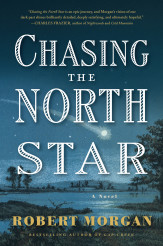
Chasing the North Star
For the March meeting of Rocky River Readers Book Club, each member of the group was asked to read any book of their choice written by Robert Morgan. I’ve read a number of novels by this North Carolina author, in addition to Boone: A Biography, which is a biography of Daniel Boone. For book club, I read Morgan’s latest novel, Chasing the North Star.
A slave on a plantation in South Carolina, Jonah runs away on his 18th birthday. The book follows Jonah and a female runaway slave, Angel, on their dangerous trek north to freedom. At times, the story got slowed down with details of the tree branches encountered as one runs through the woods. That aside, I soon became invested in both Jonah and Angel as I cheered them on and tried to will them to reach Pennsylvania, New York, and Canada.
Robert Morgan will be the guest speaker at the public library in Concord, North Carolina on Saturday, April 22, 2017. It was in preparation for that author event that Rocky River Readers chose to read books by him in March. I look forward to hearing Mr. Morgan talk about his writing.
My next blog post
My next blog post is scheduled for Monday, April 3, and it must have something to do with the letter, “B.”
Until my next blog post
I hope you have a good book to read. (I’m reading The Heavens May Fall, by Allen Eskens.) If you’re a writer, I hope you have quality writing time.
I surprised myself by reading seven books in the short month of February. I’m having a good time reading a variety of books this year and stretching my subject matter a little.
The Underground Railroad, by Colson Whitehead
The Underground Railroad, by Colson Whitehead, was the first book I read in February. It had been on my reading list since last summer. After having been on the wait list for it at the public library for weeks, it just happened to rise to the top and come to my Kindle Fire the day before I finished reading Glory Over Everything, by Kathleen Grissom in January https://janetswritingblog.com/2017/02/03/what-i-read-in-january-2017/. While I was still in an Underground Railroad frame of mind, I got to read Mr. Whitehead’s book. As with Glory Over Everything, I highly recommend The Underground Railroad. Both books were well-researched and well-written – just what fans of historical fiction love.
In Search of Mockingbird, by Loretta Ellsworth
In Search of Mockingbird was a huge switch in gears for me. I’d read about the book and, although it was a YA (Young Adult) novel, I was intrigued by the premise. It was worth checking out from the public library just to see how a YA book is written and to see how Ms. Ellsworth developed the story.
Erin runs away from home on the eve of her 16th birthday. She is angry with her father for waiting until that day to give her the diary that her late mother write. Erin’s favorite book is To Kill a Mockingbird and her heart’s desire is to meet Harper Lee. The diary reveals that Erin’s mother, who died when Erin was one week old, aspired to be a writer. Erin wants to be a written, too. The revelation that her mother wanted to be a writer and also loved To Kill a Mockingbird – along with her anger that her father waited 16 years to tell her about the diary – propel Erin to runaway from home in Minnesota and buy a bus ticket to Monroeville, Alabama to try to meet Harper Lee. Along the way she befriends some interesting people and learns some valuable lessons even while she teaches those new and older acquaintances some life lessons.
The Getaway Car, by Ann Patchett
This is a delightful book in which Ann Patchett humorously tells what she has learned about the craft and art of writing. She is quick to caution that every writer must find his own writing process, but she tells what she has done that worked and what did not work. I found myself highlighting many of her experience gems. I thoroughly enjoyed this book, and I know I will refer back to it often to reread the sentences and paragraphs I highlighted.
Nothing Gold Can Stay: Stories, by Ron Rash
This collection of 14 short stories by Ron Rash was a delight. When my book club read his novel, Serena, several years ago, I was the only person in the group that liked it. I haven’t enjoyed any of his other novels as much. Since one of my goals in 1027 is to read a short story every week, I decided to check Nothing Gold Can Stay out of the public library.
I haven’t read many short stories in a long time, and I was pleasantly surprised by my journey back into them. If you like authentic Appalachian Mountains fiction, I think you’ll like this collection of stories.
The 13th Target, by Mark de Castrique
This political thriller presents a cloak-and-dagger scenario about the Federal Reserve and its far-reaching power and influence within and outside the USA. Published in 2012, it weaves together the timely concerns of terrorism and the financial crisis in the USA. Mr. de Castrique keeps the reader guessing who knows what and who the “good guys” and “bad guys” are. Russell “Rusty” Mullins, a former Secret Service agent, is the protagonist Mr. de Castrique introduces in The 13th Target.
The Singularity Race, by Mark de Castrique
This is Mark de Castrique’s second political thriller. If you follow my blog, you’ll recall that he and this book were the topic of my blog post on February 28 https://janetswritingblog.com/2017/02/28/author-visit-from-mark-de-castrique/. Mr. de Castrique was the guest speaker at the February meeting of Rocky River Readers Book Club on February 27.
The Singularity Race stands alone, but you might want to read The 13th Target first in order to meet the main character, Russell “Rusty” Mullins. In The Singularity Race, the former Secret Service agent gets involved in an artificial intelligence case in which someone is trying to kill a Chinese computer expert visiting the USA.
The Secret Language of Dogs, by Victoria Stilwell
I am a dog lover from before I can remember. There is a black-and-white photo of a two- or three-year-old Janet crying her eyes out while burying her face in the thick fur of her brother’s collie named Pal. I am told that Pal was my go-to guy any time I got my feelings hurt. My life has been blessed and enriched by a wonderful line of family dogs, so I was drawn to this book.
Among other things, I learned the following from reading The Secret Language of Dogs:
When my dog is smelling something and refusing to come to me, he’s not being obstinate; he’s on brain overload.
Dogs are not color blind; they can see shades of green and blue.
A dog has much better peripheral vision than a human.
A dog’s vision is typically around 20/75, which means a dog must be 20 feet away from something in order to see what a human with 20/20 vision can see at a distance of 75 feet. (No wonder my dog can’t see the deer I’m pointing to in the backyard!)
A dog has 1,700 papillae (taste buds), while a human has 9,000. (Maybe that helps explain a dog’s ability to eat another animal’s poop!)
Although a dog’s fully-developed hearing allows it to hear at a frequency of 45,000 hertz – more than twice the frequency heard by humans – puppies are deaf when born.
Like humans, most dogs have a lateral preference, meaning they have a dominant right or left paw. (Who knew? I’d certainly never thought about that, even though I’ve had many dog companions throughout my life. The last dog that adopted me appears to be right-pawed.)
Oh — and the secret language of dogs? I learned that when my dog goes belly-up, he’s not asking for a tummy rub; he’s saying, “I want to be left alone!” Oh dear!
Other reading
In addition to the above books, I read at least one poem every day. Poets such as Robert Louis Stevenson; Elizabeth Barrett Browning; Carl Sandburg; George Darley; Robert Burns; William Wordsworth; William Shakespeare; and Ella Wheeler Wilcox.
I also read The Gospel of Mark and half of The Gospel of Luke. I feel like my blog readers are holding me accountable on reading a chapter in the Bible every day. I’ve tried many new years to do that, but I’ve never made it all the way through 365 days. This year, so far, so good!
What have you read lately?
I’m interested to know what you are reading or have read recently. Feel free to leave a comment or connect with me on social media.
Until my next blog post
I hope you have a good book to read. If you’re a writer, I hope you have quality writing time.
Armed with my 2017 Reading Challenge, I started January with excitement to plunge into another year of reading. I was not disappointed.
Glory Over Everything: Beyond The Kitchen House, by Kathleen Grissom
The first novel I read in January was Glory Over Everything: Beyond The Kitchen House, by Kathleen Grissom. I enjoyed Ms. Grissom’s The Kitchen House last October, but this sequel was really outstanding. I’m partial to historical fiction, and Glory Over Everything delivered on all counts — history, sense of time and place, and suspense.
I recommend that you read The Kitchen House first and follow it soon with Glory Over Everything because there are lots of characters and connections to remember. The sequel is the story of a light-skinned man passing as white in the 1820s and 1830s who, while doing a good deed, is hunted down as a runaway slave in northeastern North Carolina and its Great Dismal Swamp. Numerous people aid his attempt to escape via the Underground Railroad. More details might spoil the book for you.
A Body in the Snow: A Bebe Bollinger Murder Mystery, by Christoph Fischer
I believe it was via Twitter that I learned of Christoph Fischer and his e-book, A Body in the Snow: A Bebe Bollinger Murder Mystery. Intrigued by a mystery written by a new writer, I was eager to read this book. Mr. Fischer did a good job with character development. Each of his main characters had distinguishing habits, quirks, and personalities. He managed a large cast of characters.
This story, set in Wales during a snowstorm, kept me guessing. First, I was wondering whose body would be found in the snow, and then I kept trying to figure out who the murderer way. The book was published by Createspace Independent Publishing Platform last September, and it has a great cover. You can’t judge a book by its cover, but this indie book has a very eye-catching one.
All the Light We Cannot See, by Anthony Doerr
Yes, I finally got back to the top of the public library system’s waitlist for All the Light We Cannot See, by Anthony Doerr. After having read one-third of it in 2016, I had some trouble getting back into the story in January. I should have taken the time to start over instead of jumping in where I left off weeks ago.
Set in France during the German occupation in World War II, it is a Pulitzer Prize winning novel about a blind girl whose father makes a miniature replica of the city they live in so she can memorize the streets and buildings and find her way around. The chapter titled, “Number 4 rue Vanborel” is several pages of exquisite prose describing what is left behind in a city after the bombs of war. It is an almost poetic list of phrases and words that illustrate the small things left behind — the pieces that someone will have to pick up someday so the city can live again.
Irena’s Children, by Tilar J. Mazzeo
Continuing in the World War II vein, I read Irena’s Children, by Tilar J. Mazzeo. It is the true story of Irena Stanislawa Krzyzanowska Sendler, who saved 2,500 Jewish children in Warsaw, Poland from certain death in the Nazi concentration camps.
Irena’s father was a physician. Unlike many Polish doctors of the day, he did not mind treating Jewish patients. Many of them were too poor to pay him anything. He was an activist for equal rights and an eight-hour workday. He died of typhoid fever when Irena was just six years old, but she had inherited his compassionate heart.
For centuries, Poland had struggled for independence from neighboring Germany and Russia. At the University of Warsaw, Jews had to sit on the left and Roman Catholics on the right. Irena chose to sit with her Jewish classmates and was, therefore, beaten along with them in the riots of 1935. She was suspended from the university for marking through “Aryan” on her student identification card.
The book chronicles the German occupation of Warsaw, their forcing all Jews in the city to move into the worse part of town — which became known as the Warsaw Ghetto. The systematic rounding up of Jews to be transported to the Treblinka concentration camp consumed Irena’s life. Being a social worker/public health specialist gave her the opportunity to visit the ghetto to see to the health of the residents. This enabled her to learn the people, identify the children, and create a network for smuggling the children out. As if that weren’t enough, on flimsy cigarette paper she made secret lists of the children’s identities in a code she developed.
Turbo Twenty-Three, by Janet Evanovich
After reading two “heavy” books about World War II, I welcomed the chance to read Janet Evanovich’s latest novel in her Stephanie Plum series. I discovered her books several years ago. Since then I have read all 23 of them. I don’t have as many laugh-out-loud moments while reading her most recent books as when reading the earlier ones, but I still look forward to them as a fun read.
Stephanie Plum is a white accident-prone bounty hunter in Trenton, New Jersey. Her sidekick is a large black woman who used to be a prostitute. To say Lula has an attitude would be an understatement.
Stephanie is in love with two men. One is a police officer she’s known since first grade. He has trouble with commitment. The other man she is in love with has a chiseled body like a Greek god, owns a security company with resources the CIA would envy, and he has no interest in marriage and a family.
Turbo Twenty-Three includes Stephanie’s cousin the bail bondsman she works for, Stephanie’s parents, and her Grandma Mazur — who attends wakes at the local funeral home to try to pick up men. This particular novel involves a clown and the mysterious murders of several employees of an ice cream plant.
Sell Your Story in a Single Sentence, by Lane Shefter Bishop
I was so impressed with this book that I wrote my blog post about it on January 17. I won’t repeat that post, but I invite you to read it if you haven’t already done so. If you are a writer or have a curiosity about the process an author goes through in creating a book, you might enjoy reading that earlier blog post. It is an instructional book about the process of writing a logline. A logline is a single sentence that identifies a story’s protagonist, what the protagonist wants, and what’s at stake.
Other reading in January
In addition to the above books, in January I read a chapter in the Bible every day. This is something I’ve set out to do on many first days of January. I regret to admit that I have not made it through an entire year yet. I hope 2017 will be different. This time I started with the New Testament, which I believe will be easier to stick with than the Old Testament. In January I read all of the Book of Matthew and started on the Book of Mark.
I am also reading a poem every day in 2017, or at least I have so far. Reading from A Little Book of Cherished Poems, compiled by Kay Anne Carson, I read poems by such poets as Frost, Tennyson, Longfellow, and many poets and poems I had not read before.
Until my next blog post
Until my next blog post, I hope you have a good book to read. If you’re a writer, I hope you have productive writing time.
I’ve struggled over what to blog about today. It’s my custom for my first blog post of a new month to be about what I read the previous month. It has occurred to me that my blog readers might not care what I read.
Three books read
I only read the following three books in December: Without Mercy, by Jefferson Bass; The Ghosts of Belfast, by Stuart Neville; and Silent Night, Deadly Night, by Richard L. Mabry, M.D.
Jefferson Bass is one of my favorite author or, more accurately, author teams. (More on that later.) Conversely, I had never read books by Stuart Neville or Richard L. Mabry, M.D. before.
Silent Night, Deadly Night, by Richard L. Mabry, M.D.
I follow Richard L. Mabry, M.D.’s blog. He is a retired physician whose new occupation is that of medical mystery writer. His medical expertise gives him a unique perspective on what violent murder does to the human body. In this Christmas novel, an older woman’s body is found in the snow. There are twists and turns as it becomes obvious that someone is also trying to kill her heirs.
The Ghosts of Belfast, by Stuart Neville
Stuart Neville was recommended to me by my ophthalmologist. My doctor, who guided me through my 2016 bout with shingles in my right eye (and will continue to direct my care as the pain and itching is lapping over into 2017) is a collector of first editions of mystery novels. At my most recent appointment he noticed I had a book with me and inquired about its title and author. It was The One Man, by Andrew Gross. When I explained the premise of the book to him, he asked if I had read any Stuart Neville books. I had not, so we both came out of my appointment with notes about new authors to try. He said that The Ghosts of Belfast was perhaps Mr. Neville’s best book, so I checked it out at the public library.
The protagonist in The Ghosts of Belfast is tormented and egged on by the ghosts of the 12 people he killed during the conflicts between the Protestants and Catholics in Northern Ireland. The only way he can escape from the 12 ghosts is to kill the men who forced him to kill them. There was more violence in The Ghosts of Belfast than I usually read, but the story line kept me too interested to not finish it. It was the first novel in Mr. Neville’s Jack Lennon Investigations Series.
Without Mercy, by Jefferson Bass
As stated earlier, Jefferson Bass is one of my favorite author duos. Jon Jefferson is the writer and Dr. William Bass is the expert adviser, forming the pen name, Jefferson Bass. Dr. Bass started the The Body Farm at the University of Tennessee at Knoxville in 1971 to advance the study of human decomposition and forensic science.
I have read all of The Body Farm series of novels by Jefferson Bass. If forensic science interests you and you enjoy reading mysteries, I recommend this series of books. I also recommend that you read them in their order of publication. It’s not absolutely necessary; however, in some cases it is helpful to know the personal and professional history of protagonist, Dr. Bill Brockton.
Without Mercy repeated a little too much of Dr. Brockton’s history to suit me. At times it seemed the rehashing of murder cases from earlier books in the series was being used to stretch this book. That was disappointing. The author’s note at the end of the novel indicated that Jefferson Bass, like Dr. Bill Brockton, was taking a sabbatical, leaving me to wonder if Without Mercy will be the last book written by this entertaining writing team. I hope not, because by next fall I’ll be going through “Jefferson Bass withdrawal” and yearning for another dose of East Tennessee murder drama.
Until my next blog post. . . I hope you have a good book to read and, if you’re a writer, I wish you productive writing time.
I read three novels in November. The first one was The One Man, by Andrew Gross. Some of you are probably familiar with some of the thrillers he wrote with James Patterson, but I was not aware of his writing. I can’t remember how I heard about The One Man, but the premise intrigued me. I look forward to reading more of Mr. Gross’s books.
The One Man, by Andrew Gross
The One Man is a gripping historical thriller. I’m drawn to historical fiction, but most of the historical novels I’ve read do not fall into the category of thriller. The One Man is a real page turner. It is set during World War II as Hitler’s Germany and the Allies were both trying to develop a bomb the likes of which the world had never seen.
The premise of the book is that only two men in the world know how to separate Uranium-235 from Uranium-238. One of the men is German. The other one is a Jewish physicist being held in the Auschwitz concentration camp. He is “the one man” the United States needs if the Allies are to win the war. But how could the United States possibly get anyone out of Auschwitz? They needed to find “the one man” who could pull it off. If you want to go on this nail-biting ride, I recommend you read The One Man. In case you enjoy audio books, this one has excellent reviews as the narrator is Edoardo Ballerini.
Ruin Falls, by Jenny Milchman
I read Ruin Falls primarily to fulfill a category on the 2016 Mint Hill Public Library 2016 Reading Challenge. Having enjoyed reading Jenny Milchman’s Under the Cover of Snow several years ago, I selected another book by her in the category, “read something by an author who has the same initials as you.” In Ruin Falls, two children of a couple mysteriously disappear in the middle of the night from their hotel room. Were they kidnapped or did they runaway? Ms. Milchman weaves a story that points out how our lives can be ruined by things that happen to us and how we don’t know other people as well as we think. The title is a bit of a play on words leading up to a suspenseful encounter at a waterfall called Ruin Falls.
The Risin, by Ron Rash
The Risin, by Ron Rash was the other novel I read in November is a coming of age book. It follows the lives of two brothers from Sylva, North Carolina. Sylva is a small town in the Appalachian Mountains and just a few miles from Western Carolina University where Ron Rash teaches. One brother is a well-respected neurosurgeon, while the other one is a ne’er-do-well. One of them has a closely guarded secret from their teen years in Sylva in the 1970s – a secret kept from the other brother for decades.
In closing
If you like the information I share in my blog, please share it and your comments on social media. You’ll find the icons below. If you’d like to receive an e-mail every time I publish a new blog post, please supply your e-mail address in the upper right sidebar or by clicking on the “Follow” button if you are a blogger on WordPress.
Until my next blog post in a few days, I hope you have a good book to read. If you are a writer, I hope you also have some quality writing time.
As is my custom, my first blog post of a new month is about what I read in the previous month.
The Kitchen House, by Kathleen Grissom
The first book I read in October was The Kitchen House, by Kathleen Grissom. It was the most absorbing story I’ve read in quite a while. Set in Virginia in the 1790s, it opens with Lavinia, an 11-year-old orphan girl from Ireland who is relegated to the kitchen house on a plantation. The house slaves soon become the only family Lavinia knows.
Ms. Grissom did an excellent job developing all the characters in this her first novel. From the ship’s captain who owns the plantation, his drug-addicted wife, their son, the house slaves, some of the field slaves, the overseer, and a white neighbor, each of these main characters were carefully fleshed out by the author. There are many tangled relationships among this cast of characters. As the story unfolds, the reader learns that some relationships are not as they seem. As an adult plantation mistress, Lavinia learns that she is no more free than the slaves.
I highly recommend The Kitchen House. It’s a real page turner! It was the October selection by the Rocky River Readers Book Club. I’m so glad one of the club members recommended this work of historical fiction.
It is my understanding that Kathleen Grissom had not intended to write a sequel to The Kitchen House until her readers demanded to know what happened to the characters after that first book ended. What a great compliment for a first-time author! I look forward to reading the sequel, Glory Over Everything: Beyond the Kitchen House.
Redemption Road, by John Hart
I also read Redemption Road, by North Carolina author John Hart. A much different read than The Kitchen House, reading this literary thriller took me a little out of my comfort zone. It took me a few pages to get into the book, but then I was hooked and I became intrigued to find out how each of the main characters found redemption. It was darker and contained more graphic violence than most books I read, but I’m trying to stretch myself this year and read books from some genres to which I don’t normally gravitate.
Redemption Road reminded me that every person has baggage. It forced me to think about the fact that we encounter individuals every day who are suffering in silence due to physical abuse or other secrets they harbor. We all seek acceptance and the approval of others on some level. If we’re lucky, we find redemption — which should not be confused with revenge. We need to be patient with one another and not so quick to judge, since we don’t know what emotional, physical, or mental burden another human being is living with.
The Other Einstein, by Marie Benedict
Reminiscent of Clara in the novel Clara and Mr. Tiffany, this historical novel is based on the lives of Albert Einstein and his first wife, Mileva “Mitza” Maric. She was a brilliant physicist and mathematician in her own right, but as the years went by she lived more and more in Albert’s shadow. In fact, she was more gifted in math than her famous husband, whom she met at university in Zurich, Switzerland. Since at least the 1990s, there has been speculation that Mitza Einstein had a bigger hand — perhaps even the major hand — in much of the work for which her husband was credited. Perhaps it was Mitza who formulated the Theory of Relativity, but in the early 1900s it was nearly impossible for a woman to be recognized for intellectual accomplishments.
Mrs. Lee and Mrs. Gray, by Dorothy Love
I read the first 11 chapters of Mrs. Lee and Mrs. Gray, by Dorothy Love before it had to be returned to the public library. I hope to get back to it soon. It is based on the relationship between Mrs. Robert E. Lee and a slave named Selina Norris Gray.
There are too many good books out there calling my name and too little time for this slow reader to get to them all.
Until my next blog post in a few days, I hope you have a good book to read and, if you’re a writer, quality writing time.
My first blog post each month is about the books I read during the previous month. Maybe my comments about those books will prompt you to read (or not read) one of my choices.
The Woman in Cabin 10
The first book I finished reading in September was the psychological crime thriller, The Woman in Cabin 10, by Ruth Ware. This novel took me out of my reading comfort zone. Early on lots of characters were introduced and it was a little daunting to keep them straight; however, each one’s personality soon came through and prevented confusion. The author is British, so occasionally there was a word that prompted me to use the definition feature on my e-reader. Reading The Woman in Cabin 10 makes me want to read Ruth Ware’s first novel, In a Dark, Dark Wood, even though its review are all over the place.
Prayers the Devil Answers
The second book I read in September was Prayers the Devil Answers, by Sharyn McCrumb. Inspired by on event that took place in Kentucky in 1936, this novel is the story of a woman who became a county sheriff in Tennessee after her husband’s death. Albert, her husband, had only been the county sheriff for a short time when it became ill and died in a few days. His widow, Ellie, quickly figured out that she needed to find a way to support herself and their two children.
As only Sharyn McCrumb can do, she spins a story about a strong female protagonist and backs up the tale with numerous threads that made up the fiber of the fearlessly independent residents of the southern Appalachian Mountains in the days of the Great Depression. The story includes murder and betrayal and, all the while, Ellie faces a task that will test her mettle. To tell you more would spoil the book for you.
Child 44
The other book I read in September was Child 44, by Tom Rob Smith. It is a murder mystery/historical thriller set in the former Soviet Union in the 1950s. I discovered Child 44 in a roundabout way. I started reading The Secret Speech, by Tom Rob Smith only to find out I had started reading the second book of the Child 44 Trilogy. I stopped reading The Secret Speech and checked out Child 44. Mr. Smith paints a picture of what Stalin’s Russia must have been like. No one trusted anyone and members of the secret police were everywhere.
The main plot is the story of Leo Demidov taking it upon himself to track down a serial killer. The State denied that any of the murders could be connected and, in fact, denied that most of them had occurred. Although some details were unpleasant to read, I found this novel to be a page-turner.
Child 44 was Tom Rob Smith’s debut novel. All quotes are in italics, which sometimes pulled me out of the story; however, from a writer’s point of view, I recognize that eliminated the necessity for quotation marks. That format distracted me. It also made it difficult at times to remember who was speaking.
Until my next blog post in a few days, I hope you have a good book to read and, if you are a writer, I hope you have quality writing time.
As has become my custom, my first blog in a new month is about the books I read in the previous month. After not being able to read for a couple of months due to illness, I have relished every minute I have been able to read since my eye recovered.
Storm Damage
July was a busy month. We are still cleaning up the storm damage the trees in our yard experienced due to high winds on several occasions. Dead limbs are still falling out of trees when there is a breeze and sometimes bringing down healthy limbs with them. If you’ve never lived out in the country with dozens of large old trees, you can’t fully appreciate what I’m talking about. It has been exhausting. I often fall asleep when I sit down to read or to catch up on work on the computer.
July Books
All that said, I only completed two books in July — Don’t Go, by Lisa Scottoline and The Truth According to Us, by Annie Barrows. I am reading several other books and will share my thoughts about them later. As I have stated before, I enjoy reading more than one book at a time.
Don’t Go
Lisa Scottoline is becoming one of my favorite fiction writers. Her books usually tug at your heartstrings and lead you down multiple roads as a mystery is solved. Don’t Go did not disappoint. A murder takes place (or was it an accident?) and for the next 300+ pages you are trying to figure out “whodunnit.” Just when you think you have the mystery solved, Ms. Scottoline takes you down a different path.
The Truth According to Us
In The Truth According to Us, Annie Barrows gives us a glimpse of life in a small town in Appalachia during the Great Depression era. She includes the conflict that can arise when there is an effort to unionize the employees of a textile mill in The South. The overriding story line, though, is relationships and information that family members can hide from other family members. The Truth According to Us is about family secrets. The truth as we know it might not be the truth at all.
Most Wanted
As July drew to a close, I finally reached the top of the public library’s waitlist for Most Wanted, by Lisa Scottoline. I read the first half of the novel in early May before I got shingles, and I looked forward to reading the rest of the book to see how Ms. Scottoline twisted and turned the plot to ultimately solve the mystery presented in the book. I finished reading Most Wanted earlier this week, but it goes on my August list for next month’s first blog.
Until I blog again, I wish you an enjoyable book to read and productive writing if that is your calling. If you wish to share this blog on social media, please feel free to do so.
Due to having shingles in my right eye, I read very little in May and the first half of June; therefore, I decided to wait until July to blog about what I read in May and June. It’s a short list. In fact, I only read one complete book during that time. I will write about it today and save the three novels I’m reading until my “What I read in July” blog in August.
The first week in May I read Outlining Your Novel: Map Your Way to Success, by K.M. Weiland. The book surprised me in that it went into all aspects of writing a novel all woven together as they pertain to the outline.
In the book’s introduction, Ms. Weiland states, “Craft is all about organization, and that’s where the outline — the map — becomes so important.” She points out that outlines can help a writer determine point of view. She says that each writer must discern what methods of outlining or organization work best for him or her. An outline can take various forms from the formal outline we were taught in school, to notes, to a bunch of Post-It Notes. I found this reassuring, since the very word “outline” has struck fear in my heart since the third grade.
Ms. Weiland’s book goes well beyond the outline. She devotes one chapter to “Crafting Your Premise.” She defines premise as “a single sentence that conveys the plot and the theme.” Once the premise is established, you can start putting ideas and scenes on paper. As the outline takes shape, she says a writer should keep in mind things such as “motive, desire, goal, conflict, and theme.”
She addresses character backstory in Chapter Six. She gives a wonderful example. If you give a character a scar, you must know how he got the scar and why. Although most backstory will not make it onto the pages of your novel, you — the author — must know the backstory because it influences the character’s personality and how she or he reacts to conflict. She writes in some detail how an author should write backstory, keeping in mind that the reader is not very interested in what happened before the book but is generally much more interested in what’s going to happen next. A good writer knows how to strike a balance.
Ms. Weiland says that about a fourth of the way into the story, there must be an inciting event that changes the protagonist forever. She writes, “This event shapes your character’s existence throughout your book.” This statement made me immediately look at my manuscript for The Spanish Coin. The inciting event in my manuscript occurs about 15% into the story, so that might be something I will need to adjust.
Chapter Seven of Ms. Weiland’s book is devoted to the recommendation that you interview each character. By asking your characters probing questions you will discover secrets they hold, their beliefs, and what they are passionate about. Having this information will help you write multidimensional characters. Sample questions are included. I found the sample questions helpful. Many of them, such as, “Does he like his name?” I wouldn’t have thought to ask.
Ms. Weiland also goes into detail about the importance of setting and how to make the setting come alive for the reader. In fact, she writes, “If you can bring the setting to life as a character in its own right, you’ll be that much closer to creating a story your readers will never forget.”
I don’t want to steal Ms. Weiland’s thunder or run the risk of quoting too much of the book here. Suffice it to say that I highly recommend Outlining Your Novel: Map Your Way to Success. I have only hit some of the highlights of this nuts and bolts book about how to write a novel.
Since this blog post turned into a book review of sorts, I will state that I was not asked to review the book and I am in no way being compensated for giving it a positive review. I wish I had read it before I started writing the manuscript for my hope-to-be-published historical novel, The Spanish Coin!





 Janet's Writing Blog