I write southern historical fiction, local history, and I've written a devotional book. The two novels I'm writing are set in Virginia and the Carolinas in the 1760s. My weekly blog started out to follow my journey as a writer and a reader, but in 2025 it has been greatly expanded to include current events and politics in the United States as I see our democracy under attack from within. The political science major in me cannot sit idly by and remain silent.
I am working my way through How to Write The Short Story, by Jack M. Bickham. As the title indicates, it is a book I expect to enhance my short story writing skills. However, the first 14 pages surprised me by offering self-inventory guidelines that I think anyone – not just writers – can benefit from practicing.
Mr. Bickham was the author of 75 novels and a host of books about the craft of writing.
It would not be fair to the current owner of Mr. Bickham’s copyright to the book for me to list all 10 steps in his guidelines for self-evaluation, but I’ll try to hit enough high spots to pique your interest even if you aren’t a writer.
Since I thought I could read this 200-page book in several days, imagine my surprise when I spent that amount of time working my way through the first 14 pages!
The root premise of How to Write The Short Story is that writers cannot write to their best form without knowing what they are passionate about deep down inside. The book systematically walks the reader through Mr. Bickham’s theory of how to do a thorough self-evaluation.
The secondary premise of the book is that once writers seriously go through this exercise and the remaining recommended steps in the book, they will be able to draw on their responses to write any story.
Mr. Bickham recommends jotting down on index cards (the book was published in 1994 when personal computers were still in their infancy) the reader’s responses to the series of questions he provides. He wants this information to be written in a form that can be accessed occasionally to remind yourself what makes you tick. Your responses might be added to or deleted as you live your life.
Mr. Bickham also strongly recommends that you not move on to the next step until you have completed the prior step. Even so, I don’t think I should take the liberty of listing all 10 steps. From the five steps I’m listing, you will get the jest of the exercise and perhaps be interested enough to look for the book.
Photo by Simone Secci on Unsplash
Step 1
The first step in this self-evaluation is to write down 10 “things or ideas or places or actions that you feel very deeply about.” You might want to stop reading this blog post and do this step. You need to take your time and really think about what you feel deeply about. You might easily think of three to five things, but then it can take some thought to come up with the other five to seven ideas or places or actions. If taken seriously, this should prompt you to identify your core values.
Step 3
What are five ideas or concept in which you deeply believe? This is different from Step 1, but there will probably be some overlap.
Step 8
Write a paragraph about an event that brought you great sadness.
Step 9
Describe “a time and place that made you very angry.”
Step 10
Write about “a time and place that frightened you.”
I found this exercise helpful, did you?
If you are like me, it has been a long time – if ever – that you took the time to honestly address the above questions and requests.
Did you discover any surprises?
Since my last blog post
I have added several thousand words to the manuscript for The Heirloom after finding some historical information that was helpful and specific to the story. It was rewarding to put words on the page.
I visited Hart Square Village in Vale, North Carolina once again. I took a lot of pictures, learned about the composition of daubing used by the early settlers in the Catawba Valley, and learned about the best practices there today for the preservation of 200-year-old log structures. Again… useful for me to know as a writer of southern colonial American history.
Until my next blog post
Get back to that book you started reading but put aside.
The first Monday of the month seems to roll around faster and faster, and it’s time for me to blog about all or some of the books I read the preceding month. Today’s post is about three of the six books I read in March. I plan to blog about the other three on April 15.
I started last month reading an incredible and much-anticipated novel. Would the rest of the books I read in March measure up to the bar set by Kristin Hannah?
Read on to find out.
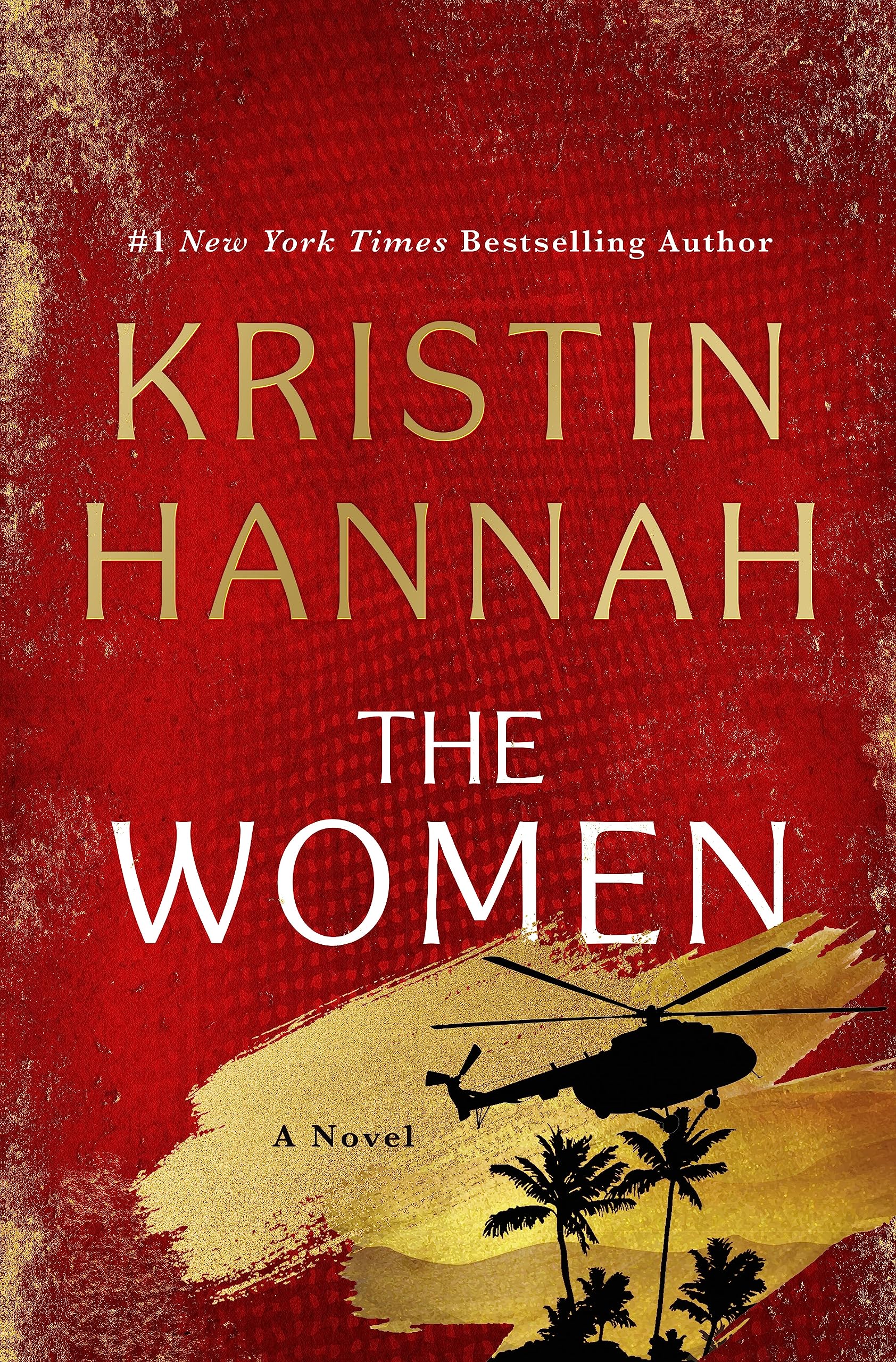
The Women, by Kristin Hannah
The Women, by Kristin Hannah
I got on the waitlist for this novel as soon as it showed up in the Charlotte-Mecklenburg Public Library online catalog. That was months ago. Last time I checked on Friday evening, there were 4,314 people on that waitlist for the 873 copies in multiple formats. It seems to grow longer each day, so I was fortunate to get to read it soon after it was released.
Unless you live under a rock or have absolutely no interest in historical fiction, you probably know that The Women is about the American women who served in the military in-country (Vietnam) during the Vietnam War. That’s all I knew about it until I really got into the 468-page novel.
I don’t recall the last time I was so affected by a novel. Ms. Hannah writes in a way that puts the reader inside the main character, Frankie, a US Army nurse. This book grabbed me by the throat. I felt like I was right there in a US Army hospital or MASH unit during the war. It brought back memories of watching the news reports of the war on TV every night in my teenage and college years. The names of places and battles I had not thought about in decades were suddenly fresh again.
The book starts out to follow this young nurse throughout her tour of duty. I don’t want to give anything away, but I want to share that it also follows her return to the United States. These were the days of a lot of anti-war protests and the Vietnam veterans did not receive a hero’s welcome when they came home. To compound that situation, people repeatedly told Frankie she wasn’t a veteran because “there weren’t any women in Vietnam.”
Frankie went through loss after loss. Every time I thought things were finally going to go well for her, she suffered another setback.
This is an amazingly well-researched and well-written novel. Ms. Hannah’s descriptions of unspeakable combat injuries and the overwhelming number of severely injured soldiers and civilians the doctors and nurses had to deal with will take your breath away.
It seems impossible to me that the 1960s and early 1970s now qualify for historical fiction. It’s the first time I’ve been so taken aback by reading an historical novel set in my lifetime.
I especially recommend this novel to anyone with a romanticized concept of war.
The Children’s Blizzard, by David Laskin
The Children’s Blizzard, by David Laskin
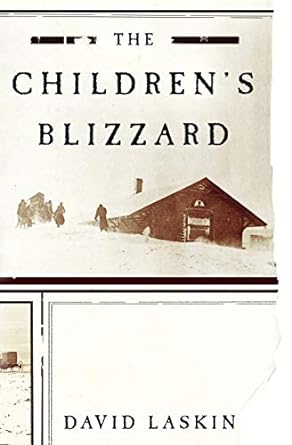
I mentioned this book on my blog on March 11, 2024 (#OnThisDay: The Blizzard of 1888) but saved the details for today. This is a nonfiction book that reads like a novel. I love this kind of creative nonfiction!
The book emphasizes the fact that the temperatures were unseasonably warm on the morning the blizzard hit, so the school children had not worn their heaviest winter clothes. That fact put them at greater risk than on a normal January day.
I will quote a little from the prologue to give you the flavor of David Laskin’s writing style.
“On January 12, 1888, a blizzard broke over the center of the North American continent. Out of nowhere, a soot gray cloud appeared over the northwest horizon. The air grew still for a long, eerie measure, then the sky began to roar and a wall of ice dust blasted the prairie. Every crevice, every gap and orifice instantly filled with shattered crystals, blinding, smothering, suffocating, burying anything exposed to the wind. The cold front raced down the undefended grasslands like a crack unstoppable army. Montana fell before dawn; North Dakota went while farmers were out doing their early morning chores; South Dakota, during morning recess; Nebraska as school clocks rounded toward dismissal. In three minutes, the front subtracted 18 degrees from the air’s temperature…. Before midnight, windchills were down to 40 below zero…. By morning… hundreds of people lay dead…, many of them children who had fled – or been dismissed from – country schools….”
In the early pages of the book, the author explains that many of the people affected by this storm were immigrants from eastern Europe. They had taken advantage of the Homestead Act, which gave each one 160 acres of land in the region in exchange for a small filing fee and a promise to farm their land for five years. This was a recipe for every family to be isolated and children to have to walk miles to the nearest one-room school.
Much to my surprise, there was a national weather service in 1888. It was attached to the US Army. Such things as barometric pressure, wind speed, and temperatures were recorded and tracked, but this storm out-paced the warning system of flags emblazoned with a single black square and the telegraph system. I dare say it was a monstrous storm moving with such speed that it would challenge 2024 technology to sufficiently warn the populous.
The book gives details about specific families and individuals in the early chapters and then moves into how each one was affected by the storm.
The details of how individual school teachers – many of whom were scarcely older than their students – were faced with impossible decisions of whether to keep their students in the school houses where they were at risk of freezing to death or to send the children out to walk home at the risk of freezing to death.
The individual stories Mr. Laskin shares in this book are powerfully written and show us feats of heroism by children and adults alike. It was a mix of quick thinking and sheer luck that saved the ones who survived. Many survivors lost limbs to frostbite. Many who survived hypothermia succumbed to the warming of their bodies after being rescued.
The author weaves in details of how weather systems are created and how they interact with each other, as well as interesting details of the process the human body goes through when subjected to various temperatures that take the body below 95 degrees F.
People whose ancestors lived in the Great Plains states in January 1888 still tell the stories about this storm. It was interviews and family records that enabled Mr. Laskin to include such details in his book.
This is the first book by David Laskin that I have read. I will definitely look for his other books.
The Wisdom of Trees: Mysteries, Magic, and Medicine, by Jane Gifford
The Wisdom of Trees, by Jane Gifford
I happened upon this book at the public library. The title caught my eye. Trees fascinate me. I am intrigued by the different properties each species has. Since I am writing historical fiction set in the backcountry of Virginia and the Carolinas in the 1700s, I need some knowledge of trees and how they were used by pioneers.
My Morrison ancestors worked with trees a lot and were, no doubt, very knowledgeable about which trees were best used for what purpose. My grandfather had a sawmill. My father enjoyed woodworking and made some beautiful furniture.
Unfortunately, I was not interested in the properties of trees until recent years, so I have had to read and take notes about things my ancestors just knew. It was a necessity for pioneers, farmers, sawmillers, and woodworkers to know about trees. At a glance, my father could identify any tree by its leaf or its bark and any piece of lumber by its color, grain, or fragrance.
I have only recently been able to identify an ash tree, and there are many on our property. My newfound interest in ash trees is a result of many of them succumbing to the invasive emerald ash borer that was introduced from its native range in Asia. This is a costly loss to our environment.
Ash trees were so plentiful here 100 years ago that there was a factory in Harrisburg, North Carolina that made baseball bats and spokes for wagon wheels. (I write about that in Harrisburg, Did You Know? Cabarrus History, Book 2, which is available from Amazon and at Second Look Books in Harrisburg.)
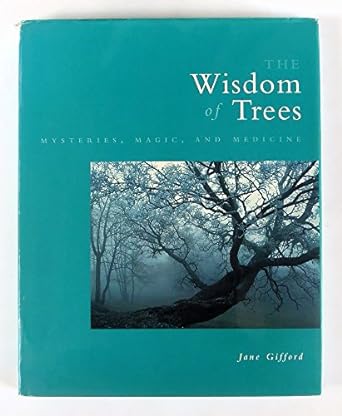
Back to The Wisdom of Trees: Mysteries, Magic, and Medicine, by Jane Gifford… in the words from page six: “This book celebrates the enormous cultural and medicinal value of the trees most familiar to modern-day Europe from the point of view of our Celtic ancestors.” It goes into some history of the Druids, poets in Ireland, and the basic Celtic tree alphabet. In other words, the book was not what I thought it was going to be. Only a few species of trees were addressed, and some of them are not found in North Carolina.
For the information the book covered, it is probably a good resource. I’m not sure I learned anything that will help me in writing historical fiction set in North Carolina.
Since my last blog post
I attended a book discussion at the public library in Harrisburg. Homegoing, by Yaa Gyasi was selected as this year’s “Big Read” by the National Endowment of the Arts (NEA). I have not finished reading the novel, but I thoroughly enjoyed the group discussion. The library branch manager had listened to the book and said the recording was outstanding.
Homegoing, by Yaa Gyasi
Until my next blog post
Read a good book or two.
Support your local public library and independent bookstore.
Check with your local public library system to see if it is offering special programming in conjunction with the NEA’s “Big Read.”
On March 4, 2024, I blogged about three of the 5.4 books I read in February. After writing about #OnThisDay anniversary topics the last two Mondays, today I get to tell you about the other 2.4 books I read last month.
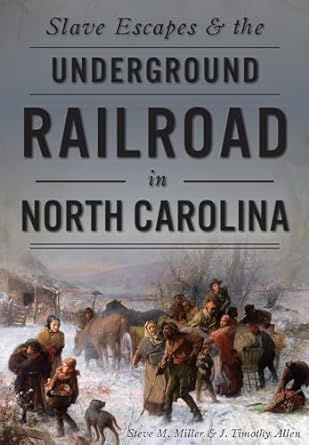
Slave Escapes & the Underground Railroad in North Carolina, by Steve M. Miller & J. Timothy Allen
Slave Escapes & the Underground Railroad in North Carolina, by Steve M. Miller & J. Timothy Allen
Most documented history of the Underground Railroad concentrates on how it operated in the northern states. This is understandable, considering the very secret nature of the operation. As you can tell from the title, this book is almost exclusively about the Underground Railroad in North Carolina.
This was an enlightening book, just as I anticipated. Much of it is about the part Quakers in North Carolina played in the so-called Underground Railroad. I knew that there were many Quaker early settlers in the Guilford County section of North Carolina, but I was surprised to learn that there were many Quaker settlers in the northeastern region of the state.
Another thing I learned from reading the book is that some Quakers owned slaves. The denomination gradually changed its attitude about slavery, which necessitated some creativity in how to deal with the matter. Quakers agreed to manumit their slaves in 1774, but some of their heirs refused to do so.
The book references various colonial and state laws enacted regarding slavery in North Carolina since the late 1600s. One of the laws I had never heard of was the Slave Code Act of 1741 which required local sheriffs who held runaway slaves to give descriptive details of those slaves to churches, and the churches “were then obligated to post them in an ‘open and convenient place’ for two months.” [Thank goodness we have separation of church and state now!]
The book talks about how the Great Dismal Swamp in northeastern North Carolina was a haven for runaway slaves and a hell for some area enslaved individuals. The remoteness and dense vegetation in the swamp provided hiding places for escaped slaves to take refuge; however, slave labor was used – at the cost of many slaves’ lives – to building the Dismal Swamp Canal.
Examples of newspaper notices about runaway slaves are included. Although it is assumed that all runaway slaves headed north, this book explains that some headed east in an effort to get on ships to various destinations, some fled to Tennessee, and others tried to make their way to New Orleans to board ships.
Another thing I learned from the book is that the Underground Railroad was used by white people during the Civil War. Quakers, Union sympathizers, and Confederate deserters were known to have used the system.
Summary of Miriam Margolyes’s This Much Is True
Miriam Margolyes is a British actor with an interesting life’s story. Unable to find her memoir, This Much Is True, at the public library, I settled for reading Summary of Miriam Margolyes’s This Much Is True. It was available from Charlotte-Mecklenburg Library through Hoopla.
I enjoyed the summary and it satisfied my curiosity about Ms. Margolyes’s life. I must admit that I was not that familiar with her until recently watching a “Lost in Scotland” PBS series. I had no idea how many movies and TV shows she had appeared in until I read this book.
Between Earth and Sky, by Amanda Skenandore
Between Earth and Sky, by Amana Skenandore
This was the February book for Rocky River Readers Book Club in Harrisburg, NC. I read the first 40% of it before I found part of the story line to be implausible. Others in the book club loved it. There was a lot of discussion, especially by two of the members who were all fired up about the story.
I was interested in the beginning because it was about the terrible treatment of the Native American children at a school run by white people in 1889. That is a topic we all need to be educated about. Other library books were begging for my time, though, which gave me an excuse not to finish reading the novel.
From the discussion at the book club meeting, the 60% of the novel I did not get to read apparently contained some interesting dilemmas for the main characters. I do not want to cast aspersions on the book. If you are interested in reading about the way indigenous peoples were treated in the United States in the late 1800s, I recommend this novel.
Since my last blog post
One of my regular blog readers asked me what happened to Clarence Earl Gideon after the Gideon v. Wainwright US Supreme Court ruling I blogged about last week (#OnThisDay: Gideon v. Wainwright). I realized I was remiss in not including that information in that post.
Mr. Gideon appeared in court in Florida for a retrial in August 1963. That time, he had legal counsel and was acquitted by the jury. He was never in trouble with the law again, as far as I could learn. He died of cancer in 1972 at the age of 61.
Thank you, FictionFan, for asking the follow-up question. By the way, if you enjoy reading thoughtful and honest book reviews of a wide range of genres, I recommend you visit https://fictionfanblog.wordpress.com/ to see what she is reading.
Until my next blog post
I hope you are reading a good book.
Remember the people of Ukraine and all the places in the world where innocent people are suffering.
I am wearing my historian hat today to write another #OnThisDay blog post. Sometimes I’m quite familiar with the topics covered in my occasional #OnThisDay blog posts, but today’s subject was one I knew nothing about. I need a topic like that to come along once in a while to keep my research juices flowing.
The Blizzard of 1888
I had never heard of the Great Blizzard of 1888 until I stumbled upon it in a reference book that lists events of note for every day of the year. It turns out that the blizzard in March 1888, also known as the Great White Hurricane, was not measured in feet like the snow in the Sierra Nevada ten days ago. However, it was a paralyzing blizzard in the Northeast US and eastern Canada.
Photo by Christian Spuller on unsplash
It was unseasonably mild leading up to the March 1888 blizzard. Temperatures plummeted and it snowed for a day and a half. Many people were stranded at their places of employment. It is said that prisons and hotels were crowded with people seeking shelter from the storm.
Snow depths from 10 to 58 inches accompanied by sustained 45 mile-per-hour winds created 50-foot snow drifts. It took eight days to clear the New York-New Haven rail line at Westport, Connecticut. Telegraph service infrastructure was knocked out in Montreal and from Washington, DC to Boston for days. In fact, the disabling of rail and telegraph lines by that storm prompted authorities in New York City to start working toward moving of some of those services underground.
More than 400 people died as a result of the blizzard, including 100 seamen as more than 200 ships were grounded or wrecked. Immobilized fire stations prevented firefighters from responding to fires. Loss of property to fires alone during the blizzard amounted to $25 million (in 1888 dollars), which is the equivalent of $810 million in 2024.
The Children’s Blizzard of 1888
In researching the Great Blizzard of 1888, I found information about another blizzard that year and a book about it – The Children’s Blizzard, by David Laskin. I read the book and thought it would be interesting to supplement what I had learned about The Blizzard of 1888 with a few details about The Children’s Blizzard.
Photo by Laura Ockel on Unsplash
To my surprise, The Children’s Blizzard, by David Laskin captivated my interest. The stories about the so-called Children’s Blizzard dwarfed the more famous “Blizzard of 1888” in the northeastern states. Granted, the snow drifts in the northeast might have been higher than in the Children’s Blizzard in the Plains states two months earlier, but the sheer brutality and suddenness of the storm in Montana, the Dakota Territory, Nebraska, and Minnesota made the one in the northeast pale in comparison.
The snowstorm on January 12, 1888 in the Plains was called the Children’s Blizzard because so many school children were caught off-guard in their one-room schoolhouses that mild winter day when a monster blizzard roared in at break-neck speed. In today’s meteorological parlance, it would probably be described as a “perfect storm,” as all the forces of nature converged to create a blizzard beyond comprehension.
Photo by Zac Durant on Unsplash
Like the Blizzard of 1888 in the northeastern states and eastern Canada, the Children’s Blizzard was preceded by at least a few hours of mild weather. This lulled people, except for the most seasoned Plains residents, into a false sense of security. Folks across the Plains welcomed a morning when the temperatures did not dictate the wearing of their heaviest winter clothing. Children were glad to have a pleasant morning on which to walk to school.
The state of weather prediction in 1888 did not afford the people enough – and in some cases, not any – warning that within several hours a dramatic drop in temperature and blinding snow would engulf them.
I will write more about The Children’s Blizzard, by David Laskin in my blog post scheduled for the first Monday in April.
Until my next blog post
Never be without a book to read. I hope you are reading one now that you don’t want to put down.
Don’t forget to visit https://www.janetmorrisonbooks.com to subscribe to my e-newsletter and to read about the books and short stories I’ve written.
Remember the people of Ukraine who have been fighting for their lives and democracy for two years now. Can the members of the US Congress not see what Putin is doing?
Remember the innocent people in Gaza who it appears more convincing by the day are the victims of a genocide. I do not condone in any way the terrorist attack on Israel on October 7, 2023; however, that event does not warrant the wholesale bombing of millions of innocent people. This war will not lead to peace in the Middle East. It will lead to countless generations of hatred on the part of survivors and the descendants of those who are murdered. And that hatred will be turned against not only Israel but also on the countries that enable Israel.
You and I don’t have to agree on politics but, at least for now, I am free to state my opinions. I hope you are free to state yours.
February was another interesting reading month for me, even though I did not read as many books as in January. Here’s my take on three of the 5.4 books I read last month.
Fortune Favors the Dead, by Stephen Spotswood
Fortune Favors the Dead, by Stephen Spotswood
I was not familiar with Stephen Spotswood’s writing until I read about Fortune Favors the Dead in an e-newsletter from Main Street Books in Davidson, North Carolina. This is the first book in a four-book mystery series and was recommended by the bookstore’s staff.
The novel is written in first-person in the voice of Willowjean “Will” Parker, a teen with several years of experience working for a circus. In her employment with the circus, Will has learned many skills (such as knife-throwing) and life lessons. Through those experiences she comes to be employed as an assistant for private investigator Lillian Pentecost in New York.
Ms. Pentecost is a well-respected investigator. She and Will get involved in investigating the Collins family of Collins Steel. As one expects in a mystery, there are many secrets and a couple of murders. A clairvoyant is involved, as well as a college professor.
The story held my interest throughout. It is written with humor and suspense, and it will keep you guessing.
The Kingdom, The Power, and The Glory: American Evangelicals in an Age of Extremism, by Tim Alberta
The Kingdom, The Power, and The Glory, by Tim Alberta
Where do I begin?
This book tries to get to the heart of a question I have wondered about and to which I have been unable to find a satisfying answer: How did so many evangelical Christians in the United States get so far removed from the teachings of Jesus Christ?
I really want to know. I want to understand what happened and why.
Written by the son of an Evangelical Presbyterian pastor, Tim Alberta set out to discern the answer. For starters, I find “Evangelical Presbyterian” to be a bit of an oxymoron. Presbyterians by nature are not what I would call evangelical. I’m a member of a church affiliated with the Presbyterian Church USA, which is a much more liberal denomination than the Evangelical Presbyterian church.
This book is fascinating. The author’s theory is that for many evangelicals in the United States, America is their kingdom. They see the United States as a nation set apart and uniquely blessed by God. But this love of country has transitioned into nationalism bordering on idolatry. He documents case after case where worship services look and sound more like political rallies than places where “love your neighbor” is proclaimed.
The book looks at famous televangelists as well as not-so-famous preachers and congregations that are focused on winning at all costs and praising their political darlings instead of God. They have somehow forgotten that the kingdom that Jesus Christ promised was not the kingdom of the United States.
The author was hit in the gut by the extremism and hatred in the fractured right-wing of the conservative evangelicals when he attended his father’s funeral. His father had been pastor of the church where the funeral was held. When speaking to the author as he stood in the receiving line, a number of church members took that opportunity to verbally attack him for the stand he had taken in favor of leaving politics out of American Christianity and unflattering revelations he had made in his earlier book about a twice impeached, 91 times indicted US president.
More people than Mr. Alberta could count spoke to him that day not to offer condolences but to attack him. It was on that day that Mr. Alberta saw the true colors of these people, many of whom he had known all his life. He set out that day to try to determine how and when the conservative right-wing segment of American Christianity went so horribly off the rails and lost sight of the teachings of Jesus Christ.
The people this book is about are the people who claim to be Christians (and in their hearts they believe they are Christians), but they have lost sight of people who are not exactly like them. They have confused their worldview with Christianity. They have lost sight of love your neighbor as you love yourself. They not only don’t want to welcome the stranger or the foreigner, they hate them and wish them harm. They have gotten so obsessed with arming themselves to the teeth that they have lost sight of the Prince of Peace.
The most frightening part of all is that they have proclaimed a foul-mouthed, hate-spewing former US president as their savior. He has tricked them into thinking he is one of them.
If you wonder what has happened to many American evangelical Christians, I think you will find this book to be thought provoking.
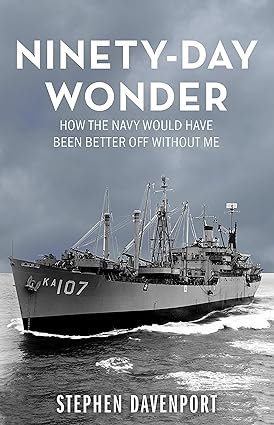
Ninety-Day Wonder: How the Navy Would Have Been Better Off Without Me, by Stephen Davenport
Ninety-Day Wonder: How The Navy Would Have Been Better Off Without Me, by Stephen Davenport
I learned of this book from Liz Gauffreau’s January 24, 2024 blog post: https://lizgauffreau.com/2024/01/24/bookreview-ninety/. Mr. Davenport’s book is a memoir of his years in the U.S. Navy in the early 1950s. It is a humorous telling of the way he more or less bumbled his way through the service. He tells of bungled practice runs of amphibious landings off Morehead City, North Carolina and how he was often put into situations where he did not know what he was doing.
Mr. Davenport entered Reserve Officer Candidate School in 1951 but, when he was thrown into various situations where he was the ranking officer, he often learned the hard way that the enlisted sailors until his command were more familiar with the tasks at hand than he was. Hence, the graduates of the Reserve Officer Candidate School were called “Ninety-Day Wonders,” and perhaps are to this day.
Liz Gauffreau gives a more detailed overview of the book than I have here. She is more adept at writing book reviews. I highly recommend that you check out her blog, or poetry, and her other writing.
Until my next blog post
I hope you have at least one good book to read. Support your local public library and your local independent bookstore!
Please visit my website, https://www.janetmorrisonbooks.com and subscribe to my e-newsletter. If you were a subscriber as of last Thursday, you received my March newsletter on Friday. Among other things, I wrote about and shared photos from my recent hike on the Hector Henry Greenway on the Carolina Thread Trail and its connection to my articles in Harrisburg, Did You Know? Cabarrus History, Book 2 about the bridges over Rocky River in Cabarrus County in the 1870s. You never know what you’re going to miss if you aren’t receiving my newsletters!
Remember the people of Ukraine and the innocent people suffering in Gaza.
This is a first! I’ve never read so many books in one month that I had to dedicate three blog posts to those books the following month!
Saving Grayson, by Chris Fabry
Saving Grayson, by Chris Fabry
I requested this book at the public library after reading that it was about a man with Alzheimer’s Disease. This terrible disease has struck my immediate family and I’m trying to learn as much about the condition as possible.
It wasn’t until I brought the book home that I saw that Jerry B. Jenkins had anything to do with it. The author credits Mr. Jenkins as giving him invaluable editorial advice. The front cover says, “Jerry Jenkins Presents.”
I’m not a fan of Jerry B. Jenkins’ Left Behind books. I think his books blurred the lines between fiction and nonfiction and too many people latched onto that series as being nonfiction. I tried to put those feelings aside and started reading Saving Grayson.
I immediately became invested in the main character, Grayson “Gray” Hayes; however, by the time I was one-third into the novel I was no longer able to suspend disbelief.
There were too many instances where Gray was doing and saying things that a person in his stage of Alzheimer’s Disease would not be able to do. I know that every case of Alzheimer’s Disease is uniquely manifested, but for Gray to be able to go from hardly recognizing his traveling companion to climbing up the concrete embankment under an interstate bridge to give a mattress and advice to a homeless man was difficult for me to believe.
After his dog was hit and killed on the highway after he’d completely lost track of the beloved pet after getting out of his van which had run out of gas – the van he was driving without a driver’s license – and telling a police officer he didn’t know Josh, the traveling companion he’d sneaked away from, but the next minute was able to give a stranger marital advice in nuanced language… I decided I didn’t need to finish reading the book. I carefully select the books I have time to read, so I’m always disappointed when I decide I can’t finish a book.
Perhaps from my description you will know if this book is your “cup of tea.”
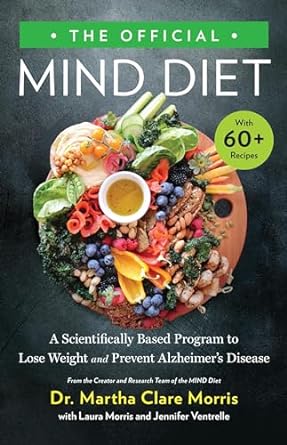
The Official Mind Diet: A Scientifically Based Program to Lose Weight and Prevent Alzheimer’s Disease, by Dr. Martha Clare Morris
The Official Mind Diet: A Scientifically Based Program to Lose Weight and Prevent Alzheimer’s Disease, by Dr. Martha Clare Morris
I have been semi-following the MIND Diet for a year or two, but it was not until last month that I read The Official Mind Diet: A Scientifically Based Program to Lose Weight and Prevent Alzheimer’s Disease, by Dr. Martha Clare Morris, the diet’s creator. It is the potential for delaying the onset of Alzheimer’s Disease that drew me to the diet. It is named one of the best diets by scientists, doctors, and organization such as the Alzheimer’s Association. It combines the Mediterranean and DASH diets, and I find it relatively easy to follow. It’s a lot of common sense and information we all know but most of us have chosen not to follow. It isn’t a diet you must strictly follow. Following it to various degrees is supposed to help you.
The MIND Diet has recommendations for how many servings of leafy green vegetables, other vegetables, certified extra-virgin olive oil, and whole grains you should eat every day and how many servings of berries, nuts and seeds, fish, poultry, and beans and legumes you should eat every week. There is a list of things you should limit, such as red meat and processed meat, butter and stick margarine, full-fat cheese, fried food, and sweets. No surprises there!
If you are interested in giving yourself a chance at avoiding or at least postponing the onset of Alzheimer’s Disease, I highly recommend this book. Whatever steps you can take in following the recommendations of this book will be positive.
Annals of Bath County, Virginia, by Oren Morton
Annals of Bath County, Virginia, by Oren Frederic Morton
I read this book for free online via Internet Archives. I needed the information it held so I could more effectively write the first chapter in my historical novel, The Heirloom. Since the history of Bath County, Virginia is of limited interest to the readers of my blog, I’ll just leave it at that. It was a Godsend for me, however!
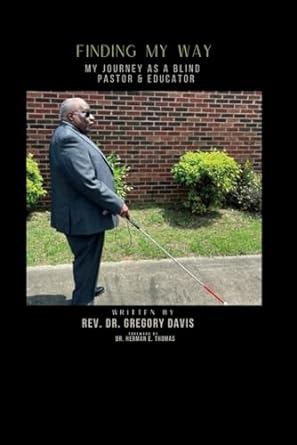
Finding My Way: My Journey as a Blind Educator & Pastor, by Dr. Gregory Davis
Finding My Way: My Journey as a Blind Pastor & Educator, by Rev. Dr. Gregory Davis
I dedicated my January 15, 2024 blog post to this book. I’m so excited by this book, I’m writing about it again today.
This is a book of the Rev. Dr. Gregory Davis’ memoirs. I don’t care what you have accomplished in your life, this book will leave you feeling like you should have done more. To say it is inspirational is an understatement.
Dr. Davis completely lost his sight as a teenager. He never once used blindness as an excuse or a crutch. In the book he chronicles his childhood; his time as a student at the Governor Morehead School for the Blind in Raleigh, North Carolina; his time as a student at Central Piedmont Community College in Charlotte; his time as a student at the University of North Carolina at Charlotte; and his time in the School of Divinity at Duke University.
Everywhere he studied, he excelled not only as a student but also as a leader. He served in student government associations and all along the way encouraged other students to be all they could be.
Originally aspiring to be an attorney, he came to realize that God meant for him to be a Minister of the Gospel and a college professor. He taught and mentored at the University of North Carolina at Charlotte, and he also served as pastor of Bellefonte Presbyterian Church, USA in Harrisburg, North Carolina for nearly 30 years.
I have been acquainted with Dr. Davis for nearly 30 years and I knew he was a remarkable person; however, I had no idea about most of his challenges and accomplishments until I read his book. If you want to read about someone beating the odds in life and never giving up, you need to read this book.
By the way, did I mention that Dr. Davis accomplished all this while not only being blind but also being a black man?
January brought me lots of books and time to read them. Last week’s blog post talked about three books I read last month. Today’s blog is about three other books I read. Next week, I’ll blog about the other four books I read in January.
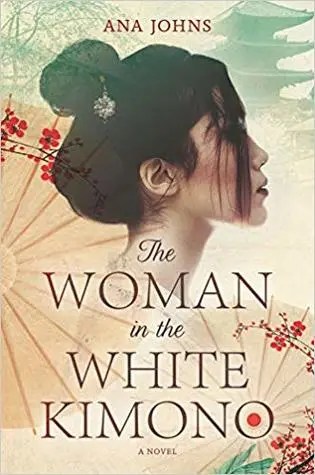
The Woman in the White Kimono, by Ana Johns
The Woman in the White Kimono, by Ana Johns
It is not often I get to read a book that I hate to put down – one I just have to read “one more chapter” before stopping to do something else. The Woman in the White Kimono was one of those novels.
I learned about this historical novel by being a member of the Historical Fictionistas group on Goodreads.com.
This is one of the best historical novels I’ve read in a long time. Well-researched, it takes the stories of mixed-race babies born to Japanese women and American military personnel before, during, and after the post-World War II Allied Occupation of Japan. There were 10,000 such babies, and the ones that survived were ostracized.
This novel grew out of the author’s own father’s story. Hearing bits and pieces of his story spurred her on to do extensive research in Japan and weave a compelling piece of fiction.
This is a can’t-put-downable novel of racial prejudice and the power of love. I don’t usually like novels with alternating timelines, but this one worked – and maybe wouldn’t have worked well chronologically.
In additional being based on good research, I was captivated by the beautifully-written prose.
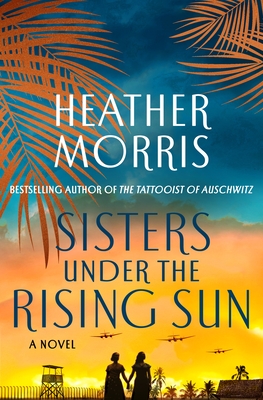
I praised each of those books, and I recommend Sisters Under the Rising Sun to you, too.
Heather Morris, a New Zealand author, has a way of taking a great amount of information from historical research and in-depth interviews with the survivors of an event – or their descendants – and turning their experiences into unforgettable historical fiction.
Sisters Under the Rising Sun is the story of 65 nurses in the Australian military and some British, American, and Dutch civilians who were captured by the Japanese and held prisoner for three years and seven months on Sumatra, Indonesia during World War II. Although only 24 of the 65 nurses and an undisclosed number of civilians survived the war, this is the remarkable story of their heroism, tenacity, and dedication to each other. It is a story of sisterhood and self-sacrifice. It is based on real people and their experiences under horrendous conditions.
More than 65 individuals are mentioned by name in the narrative portion of this book, so I recommend that you keep a running list of characters as they are introduced because, unless you read the Author’s Notes at the end of the novel first, you won’t know which characters you need to remember.
There are a couple of biological sisters whose stories are woven throughout the book as well as the stories of the Australian nurses. It is the practice in Australia to refer to a nurse as “Sister,” so the title of the book has a double meaning.
There has been a spate of World War II novels published over the last few years, so you might be growing weary of them. I recommend you read one more: Sister Under the Rising Sun, by Heather Morris.
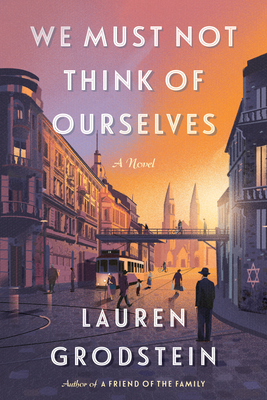
We Must Not Think of Ourselves, by Lauren Grodstein
We Must Not Think of Ourselves, by Lauren Grodstein
Although a novel, the author bases this book on real life accounts she has researched. The premise is that certain Jews in Warsaw, Poland were selected to write notes about their treatment and what they observed starting in 1940 so, if they were survived by their notes, the world would eventually learn what persecutions the Jews endured under Nazi Germany. The project was called Oneg Shabbat.
The story follows a Jewish widower, Adam Paskow, who had been an English teacher and was fluent in five languages. The gradual persecution of the Jews is chronicled as one right after another is taken from them until their homes and businesses were confiscated and they were forced behind locked gates into crowded and deplorable circumstances in what came to be called the Warsaw Ghetto.
The author artfully takes written accounts from many people and turns them into Adam’s story and reflections. The narrative chapters are interspersed with interview-type chapters.
I liked how the author, through dialog at the Oneg Shabbat meetings, included bits of news about the war. For instance, by the spring of 1941 the Oneg Shabbat participants knew about the gas chambers at Auschwitz. That information filtered down from Polish resistance spies, POW escapees, and Russian soldiers captured by the British.
One thing that comes through in the book is how the people of Poland were wondering why the United States wasn’t yet willing in 1941 to send troops to help them. They reasoned that if they knew it in the Warsaw Ghetto, surely the United States knew it. They wondered why the US was willing to help convey ships across the Atlantic Ocean while unwilling to commit troops to the war.
Interwoven throughout the novel is the love story of Adam and his wife, Kasia. She dies before he is forced into the ghetto to live in a cramped apartment with strangers. Over time, he and Sala fall in love; however, Sala’s husband lives there, too, which creates an awkward situation. Adam and Sala’s story reflects the desperation and hopelessness the Jews lived with. It was a hopelessness that grew by the day.
The people in the ghetto survived by selling or bartering with their meager possessions. Adam carefully sold every item of his wife’s that he’d been able to take into the ghetto. Will he have anything of value left in the end to secure papers that will give him a chance to escape from Poland before he’d shipped to Auschwitz?
Until my next blog post
I hope you have a good book to read. I’m reading a novel and a nonfiction book.
Being a cold month and more than a little wet in North Carolina, January turned out to be a great 31 days of reading opportunities for me. Today I’m blogging about three of the 10 books I read last month. I’ll blog about the other books February 11 and 19.
As I often have in the past, I begin this post about the books I’ve read by stating that I am not a book reviewer. True book reviewers have some rules they go by. I have no such rules; I just write my reactions to the books I read. Sometimes my political leanings come through. I majored in political science in college. I can’t help myself!
I enjoy a variety of genres. Much of my reading is more or less dictated by when my name reaches the top of the waitlist at the public library. If not for the public library, my reading selections would be severely limited. Never miss a chance to support your local public library!
That said, here are my thoughts about three of the books I read in January.
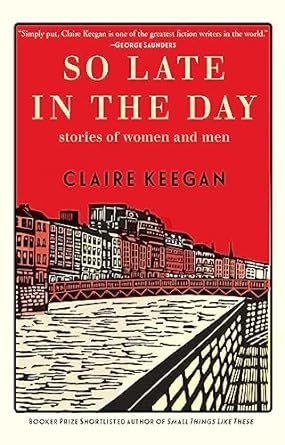
So Late in the Day: Stories of Women and Men, by Claire Keegan
So Lat in the Day: Stories of Women and Men, by Claire Keegan
This book is made up of three short stories, each taking a look at the relationships between women and men – each from a different perspective. The publisher calls this book a “triptych of stories about love, lust, betrayal, and the ever-intriguing interchanges between women and men.”
The first story shares the title of the book. In it, Ms. Keegan, an Irish author, explores what Irishmen think of women in general. What she portrays is a man who never in any way thinks of a woman as his equal. It is demonstrated through a love story that goes sour when the bride-to-be sees the groom-to-be for what he is. Underlying the story is the premise that this man is the way he is because that’s what his father was like.
“The Long and Painful Death” is the second story in this book. It’s about a writer who goes to live in the basement of a house on an island to be the writer-in-residence for two months. She has a strange encounter with a scary German man.
“Antartica” is the third story. It’s a dark tale about a married woman who goes to London under the guise of doing Christmas shopping for her husband and children, but in reality she goes to find out what it would be like to sleep with a different man. This tale begins nicely and (spoiler alert!) ends badly.
Vitiligo Made Me Beautiful, by Laleh Chini
Vitiligo Made Me Beautiful, by Laleh Chini
This is the latest book published by my dear blogger friend, Laleh Chini. Although the book is meant for children ages 7-12 years of age, it can serve as a reminder to adults, too, that we need to always be kind to one another.
The main character in the book is a little girl who wakes up one day with white patches on her skin. A few days later she is diagnosed with Vitiligo. It is a condition in which patches of a person’s skin lose their color. This, of course, is especially difficult for a person with dark skin.
In the book, the little girl’s classmates rally around her as they focus on what they like about her and her qualities and talents. Don’t we adults need to do that more often, too?
If you want to read a compelling book by Laleh Chini, I recommend Climbing Over Grit. It is the story of her mother’s growing up years in Iran and the child bride culture there. Fortunately, Laleh’s family escaped life under that regime when she was 16 years old, and they made their way to the United States. Here’s the link to Climbing Over Grit: https://www.amazon.com/dp/9176375536/. It won the Canada Book Award
Climbing Over Grit, by Marzeeh Laleh Chini & Abnoos Mosleh-Shirazi
If you’d like to read what I said about Climbing Over Grit on my blog right after I read it, please follow this link to my November 5, 2018 post: Many Good Books Read in October!
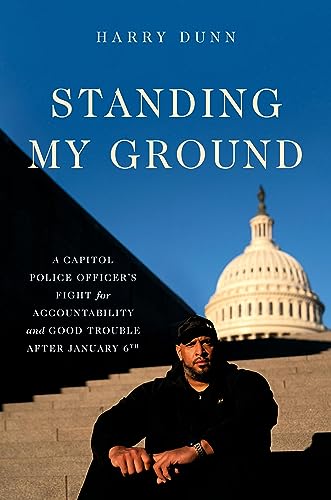
Standing My Ground: A Capitol Police Officer’s Fight for Accountability and Good Trouble After January 6th, by Harry Dunn
Standing My Ground: A Capitol Police Officer’s Fight for Accountability and Good Trouble After January 6th, by Harry Dunn
Harry Dunn was on duty at the US Capitol on January 6, 2021 – that infamous day of the insurrection and attempted coup. I’ll never be able to erase the images of that day as I watched TV in horror.
In his book, Mr. Dunn talks about the honor it is to serve as a US Capitol police officer. He talks about our country’s history and how proud he has always been to serve in that complex government building, to protect the US Constitution and the people inside that building. He talks about how he enjoys interacting with people who visit that building.
And he talks about the unexpected vicious attack on our democracy on January 6, 2021 and how it has changed him forever. He talks about the violence and the racial slurs, the bear spray, the WD-40 spray, the pepper spray, the beatings, and the hatred the mob showed toward police officers and our country that day.
He talks about the fact that some in the mob were already convicted felons with a history of violence. He talks about some in the mob being swept up in the moment after being hoodwinked by Trump’s big lie.
He talks about the fragility of democracy.
This is a gutsy, no-holds-barred, raw book. I highly recommend it, especially if you have any doubts about what happened on January 6, 2021.
Since my last blog post
I learn from comments from readers of my blog. One of the comments I got in response to last week’s post prompted me to add a postscript to that blog post. I’m afraid my reference to the side effects of my second Shingrix injection might deter others from getting the Shingles vaccination. That was not my intent. I had Shingles in my right eye a few years ago. It felt like a knife in my eye for weeks; therefore, I was eager to get the Shingrix vaccine as soon as it was available free of charge for Medicare patients. The discomfort of the side effects of the shot pale in comparison to the pain of having Shingles, so please talk to your doctor about the Shingrix two-injection vaccine, and take it if you are a good candidate for it.
My research about the route of The Great Wagon Road/The Carolina Road in Virginia continues as I work on my historical novel tentatively titled The Heirloom.
Until my next blog post
You have no idea how much I appreciate the moral support my blog readers give me – even when I fail to read all their blog posts!
I hope you have at least one good book to read.
I hope you will pay attention to reputable news sources and keep up with the events in the world. If you are a citizen of the USA, I pray you will do so to be an informed voter this year more than ever before.
Remember the people of Ukraine as they are the only ones standing between Vladimir Putin and his invasion of NATO countries. When a dictator or a dictator-wannabe announces his plans, believe him.
If you read my blog regularly, you know I usually wait until a new month to blog about the books I read the previous month. Today I’m making an exception. Last week I read a book by a local blind pastor, and I didn’t want to wait until February to tell you about it.
The title of the book is Finding My Way: My Journey as a Blind Pastor & Educator, by Dr. Gregory Davis.
Finding My Way: My Journey as a Blind Pastor & Educator, by Rev. Dr. Gregory Davis
Living in the same community and being a member of a Presbyterian church just up the road from Bellefonte Presbyterian, where Dr. Greg Davis was pastor for nearly 30 years until his retirement in 2017, I have been acquainted with him for several decades.
I knew from the beginning that he was a professor at the University of North Carolina at Charlotte (UNCC) in addition to being the pastor of the Bellefonte congregation. I knew from the beginning that he was completely blind. What I did not know until I read his book is that he lost his sight as a teen and overcame innumerable odds to accomplish many things beyond my imagination.
Being labeled as “mentally retarded” (the vernacular in the 1960s) at the Governor Morehead School for the Blind in Raleigh, NC, he matriculated at Central Piedmont Community College in Charlotte to attain his GED, take college courses, and became the first African-American president of the student body of the college. He went on to not only be the first black student to graduate with a Bachelor of Arts degree in Religious Studies from UNCC, but he was also a leader on campus. Actually, to say he was a leader on campus is a gross understatement.
He went on to graduate from the Duke University Divinity School in 1979.
He started teaching at UNCC in 1979 and remained on the faculty there for 29 years. Not only was he a faculty member, he was a student advisor, counselor, and advocate. He was instrumental in starting numerous programs at the university.
Dr. Davis knew he was called to be a pastor, but he kept running into roadblocks. It seemed that many congregations were hesitant to accept a blind pastor. Fortunately, for him and Bellefonte Presbyterian Church, that congregation saw his potential and issued a call for him to be their pastor. He served in that capacity for 27 years and led the congregation through growth, new ministries, and two massive building programs.
By his example and courage he has touched thousands of lives.
Having worked hard and had many times of self-doubt in undergraduate and graduate school as a sighted person, I am in awe of all the obstacles Dr. Gregory Davis overcame as a student in the 1960s and 1970s. Those were the days before personal computers. Those were the days of tape recorders, manual Braille typewriters, and massive volumes of Braille dictionaries and the Bible.
Dr. Davis’s dedication to education as a student and as a teacher is nothing short of remarkable – as was his dedication to God and to the congregation of Bellefonte Presbyterian Church. Now, in his retirement, Dr. Davis has blessed us with this book. I highly recommend it to everyone. It’s available from Amazon in paperback as well as e-Book.
Since my last blog post
Our property was unscathed by Tuesday’s massive storm; however, it seems our landline phone service won’t be restored until this week. Parts of the area received in excess of four or five inches of rain in 24 hours, which resulted in local creeks flooding some roads. Electricity was knocked out in areas, resulting in some traffic lights still not working on Thursday night.
It was disorienting. I look forward to some semblance of “normal” returning this week.
I had a delightful conversation with Dr. Greg Davis on Friday.
Until my next blog post
Get your free library card and start using it! Go to your local public library and be amazed at the resources it offers.
It looks like I’ll be masking up again for a little while. Three respiratory illnesses are making the rounds. After having Covid in December, I’m not interested in catching the other two!
Due to having Covid, I postponed my usual first-Monday-of-the-month blog about the books I read in December to today. I’m still struggling with the symptoms, but I know this will pass. I’m grateful for the vaccines that kept me from having a worse case.
Today’s blog post is about three very different books I read last month. I hope at least one of them will pique your interest.
Dangerous Women, by Mark de Castrique
Dangerous Women, by Mark de Castrique
Mark de Castrique is a North Carolina author who has published several different novel series. Dangerous Women is the second book in his newest series. I blogged about Secret Lives in my June 5, 2023 blog post, Three Books I Read in May 2023.
The two books in this series (so far!) don’t have to be read in order, but it might help you to know the background of 75-year-old ex-FBI protagonist Ethel Crestwater when you read Dangerous Women. Ethel is still the sharpest knife in the drawer and she is compelled to get involved in certain cases. She runs a boarding house and most of her tenants are active FBI agents.
Mark de Castrique has a talent for weaving humor and politics into his stories, which makes for entertaining and intriguing reading. (He’s also a very nice guy!)
The Cave: A Secret Underground Hospital and One Woman’s Story of Survival in Syria, by Amani Ballour, MD with Rania Abouzeid
The Cave, by Amani Ballour, M.D. with Rania Abouzeid
This book will grab you by the throat from the beginning!
I won an Advance Reader’s Edition of the book through a giveaway on Goodreads.com. Reading The Cave has been a wake-up call for me. I pride myself in keeping up with current events and what is going on in the world, but I must admit that the suffering of Syrians under the regime of Bashar al-Assad had fallen off my radar.
In The Cave, Dr. Amani Ballour reminded me in the most graphic and vivid terms of the horrendous cruelty Assad has reigned down on the citizens of his country.
The book opens with the sarin Assad attacked his people with on August 21, 2013 and how Dr Ballour and her colleagues struggled to treat the victims in the underground hospital called The Cave. Dr. Ballour writes about how difficult it was for her as a woman to pursue an education and a medical degree.
Dr. Ballour tells in chronological order the horrors of years of bombing and the scarcity of food, electricity, and medical supplies. She tells about how Assad’s propaganda spread word that she was a liar as she risked her life by giving interviews to every media outlet that would interview her.
In 2018, Dr. Ballour – who had become director of The Cave – was finally forced to flee the hospital after Assad’s army invaded the area on the ground. She tried three times to cross into Turkey to escape the Assad regime. It was eventually due to her never-ceasing efforts to bring the world’s attention to the plight of the Syrian people that she became a refugee in the United States in 2021.
National Geographic Society published Dr. Ballour’s book and filmed a documentary about The Cave that was nominated for an Academy Award.
Backed by the governments of Russie and Iran, Bashar al-Assad continues to persecute, torture, and murder Syrians while the world turns a blind eye.
Oath and Honor: A Memoir and a Warning, by Liz Cheney
Oath and Honor: A Memoir and a Warning, by Liz Cheney
Speaking of wake-up calls… Oath and Honor, by Liz Cheney, should serve as a wake-up call for the American people.
I don’t agree with most of Liz Cheney’s stands on political issues; however, I don’t doubt her patriotism and abiding love for the United States and our country’s Constitution for one minute. I admire her for how she has chosen country over the Republican Party and her own position in the GOP. She tried to warn her colleagues in Congress about the threat Donald Trump posed to our democracy leading up to his attempted coup on January 6, 2021. Her warnings continue to fall on deaf ears – or worse… they continue to fall on the ears of members of the U.S. Congress who are so afraid of Trump and his supporters who don’t have enough backbone to stand up for democracy.
In Oath and Honor, Liz Cheney gives a blow-by-blow account of the January 6, 2021 attack on the U.S. Capitol and the failed attempt by Trump and his minions to stop Congress’ duty to certify the results of the 2020 presidential election. She names names and one of the surprises is how much the current Speaker of the House, Mike Johnson (who I’d never heard of until his election to that high position on October 25, 2023) supports Trump’s big lie that the 2020 election was stolen. (The book had already been written and Ms. Cheney had no way of knowing Mike Johnson was going to be elected Speaker of the House when she wrote extensively about his actions, inactions, and words regarding The Big Lie and January 6, 2021.)
Liz Cheney’s book probably won’t change any minds. People who see her as a turncoat won’t read her book. That will not silence her, though, as she has pledged to do all she can to make sure Donald Trump is never elected U.S. president again.
I highly recommend this book, but I’m afraid the people who most need to read it will not. They have “drunk the Kool-Aid” and have closed their minds to the ugly truth about the danger Donald Trump is.
Since my last blog post
I went down a rabbit hole on the Internet and stumbled upon Annals of Bath County, Virginia, by Oren Morton. Written in 1917, it contained a wealth of information I desperately needed to enhance the writing of the early portions of The Heirloom – the historical novel I’m writing. It was the very material I’ve been looking for in all the wrong places for a year or more.
Until my next blog post
I hope you stay well.
I hope to get my January newsletter written and sent out this week.
If you have access to everything you want to read, take advantage of that privilege.















 Janet's Writing Blog