5 Historical Novels I Read in April 2021

April brought me a boatload of good historical novels! I’m not sure what next month holds, but it will be difficult for May to match what I got to read in April. If you know me, you know that historical fiction is my preference in literature. It’s a joy when so many good new historical novels are released (or reach the top of my waitlist at the public library) at the same time.


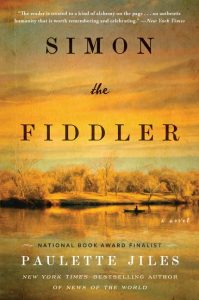
Simon the Fiddler by Paulette Jiles

You may recall that I read News of the World, by Paulette Jiles in October 2017 and blogged about it on November 6, 2017 in Some Good New Books. Also, I blogged about a favorite quote from that book on May 14, 2018 in The Lampasas County Asylum. Perhaps you’ve seen the movie that’s been made by the same name, News of the World, starring Tom Hanks. I haven’t seen it yet.

One of the things I like about Paulette Jiles’ writing is how she manages to sneak in bits of humor. Simon the Fiddler is by no means a comedy, yet Simon’s sense of humor comes through and makes him a very likeable fellow.

Simon the Fiddler, by Paulette Jiles

The story takes place at the end of the American Civil War. Simon has managed to escape being conscripted by the Confederate Army until a barroom brawl in Victoria, Texas in March 1865. His life of flitting around making somewhat of a living playing his fiddle is briefly interrupted by a stint in a Confederate regimental band.

After the war, Simon sets his sights on buying land in Texas, building a house, and settling down to create a family. Along the way he meets up with a variety of musicians and a beautiful young lady from Ireland whose life in America is so awful she wishes she’d never left her home country. She steals Simon’s heart.

Every time you think things can’t get worse for poor Simon, something worse happens. Such is the bedrock of fiction, and so goes this tale.

I invite you to come along for the ride with Simon, his companions, and the love of his life. Does he get what he’s been seeking all his life by the time you reach the last page of the book? You’ll have to read it for yourself to find out.

I enjoyed listening to Simon the Fiddler on CD. The professional reader is Grover Gardner.


Yellow Wife, by Sadeqa Johnson

Sadeqa Johnson was inspired to write this historical novel after learning about the life of Mary Lumpkin. Mary Lumpkin was a 12-year-old slave of Robert Lumpkin in Virginia. She bore him at least five children.

Ms. Johnson did extensive research into the lives of Robert Lumpkin and Mary Lumpkin and has woven a gripping novel that will keep you turning pages and yearning for something good to happen to Mary. The book contains many scenes of unthinkable beatings and the torture of slaves. Mr. Lumpkin owned a jail where slaves were sent for punishment, and Mr. Lumpkin delighted in inflicting that punishment. He absolutely delighted in it. I didn’t know that slave jails existed until I read this book.

Yellow Wife, by Sadeqa Johnson

Ms. Johnson put herself in the body of Mary Lumpkin and, thereby, puts the reader there, too. As much as is possible, Ms. Johnson helps us to put ourselves in the shoes of a slave woman who is at the mercy of her master and is put in an awkward position with her fellow slaves because she is seen as the favored one. All the while, her heart is broken because she can’t be with the man she truly loves and who truly loves her. For Mr. Lumpkin, Mary is a wife of convenience.

Yellow Wife is not a pleasant read, but it is based on a true story – one we as Americans should know about and not forget. It’s part of our history.


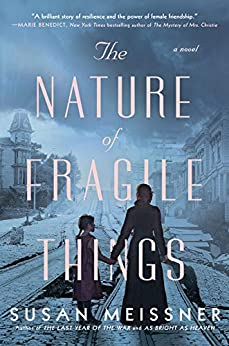
The Nature of Fragile Things, by Susan Meissner

I highly recommend this historical novel set in San Francisco in 1906 – the year of the Great San Francisco Earthquake.

Sophie lives in the north of Ireland and seeks a better life in America. She joins her brother in New York City, but he soon falls in love and moves to Canada. Sophie’s life as a single young female Irish immigrant in the big city leaves her desperate for a better life. She answers a mail-order bride ad and travels to San Francisco to marry a widower who has promised her a stable life and a ready-made family: a five-year-old daughter. Sophie’s dream has come true. She longs to be a mother, but she’s been told she can physically never have her own child.

From the beginning in San Francisco there are clues that her husband, Martin Hockings might not be all he’s cracked up to be on paper, but Sophie tries her best to adapt and be patient with him and his daughter, who won’t talk.

The Nature of Fragile Things, by Susan Meissner

From there, the book takes off in unexpected directions – and the earthquake hasn’t even occurred yet. Hold on for the ride as a pregnant stranger shows up at Sophie’s door one day asking for a Martin Hockings. Don’t jump to conclusions, though; it’s not what you’re thinking. Sophie’s life unravels quickly from this point. Her discoveries take her and Martin’s little girl through the harrowing earthquake and on a journey to Arizona see what they can find out about the girl’s dead mother.

I hope I haven’t told you too much. There are more secrets in this book than “all get out.”

(If the idiom, “all get out” leaves you scratching your head, please read my March 29, 2021 blog post for clarification: #Idiom: As All Get Out.)

If you are a fan of historical fiction, you’ll love The Nature of Fragile Things, by Susan Meissner!


The Lost Girls of Paris, by Pam Jenoff

I don’t know why it took me until now to read The Lost Girls of Paris, by Pam Jenoff. I added it to my To Be Read List after reading a good review of it on https://jennifertarheelreader.com/ way back in February 2019.

You might recall that I blogged about The Orphan’s Tale, by Pam Jenoff in my August 7, 2017 blog post, Late July Reading. I enjoyed that book, so that adds to the mystery of why I waited until last month to read The Lost Girls of Paris. Being historical fiction, Ms. Jenoff’s books are right down my alley.

The Lost Girls of Paris, by Pam Jenoff

The Lost Girls of Paris transports you to France in 1944. It’s about young women who volunteered to be radio operators behind enemy lines during World War II. Participants were carefully chosen and trained. They knew they were putting their lives on the line in the Allies’ attempt to defeat Nazi Germany.

A woman looks in an abandoned suitcase at Grand Central Station in New York City and discovers photographs of 12 women. She sets out on a mission to find the owner of the suitcase, and she wants to know something about the women in the photographs. Her research leads her to Washington, DC and on an on-the-ground search for the woman who trained and led the group.

There are twists, turns, courage, fear, loyalty, and betrayal in this novel that will keep you turning the pages.

By the way, Pam Jenoff has a new historical novel on the way: The Woman with the Blue Star is scheduled for release on May 4, 2021. I’m on the waitlist for it at the public library.


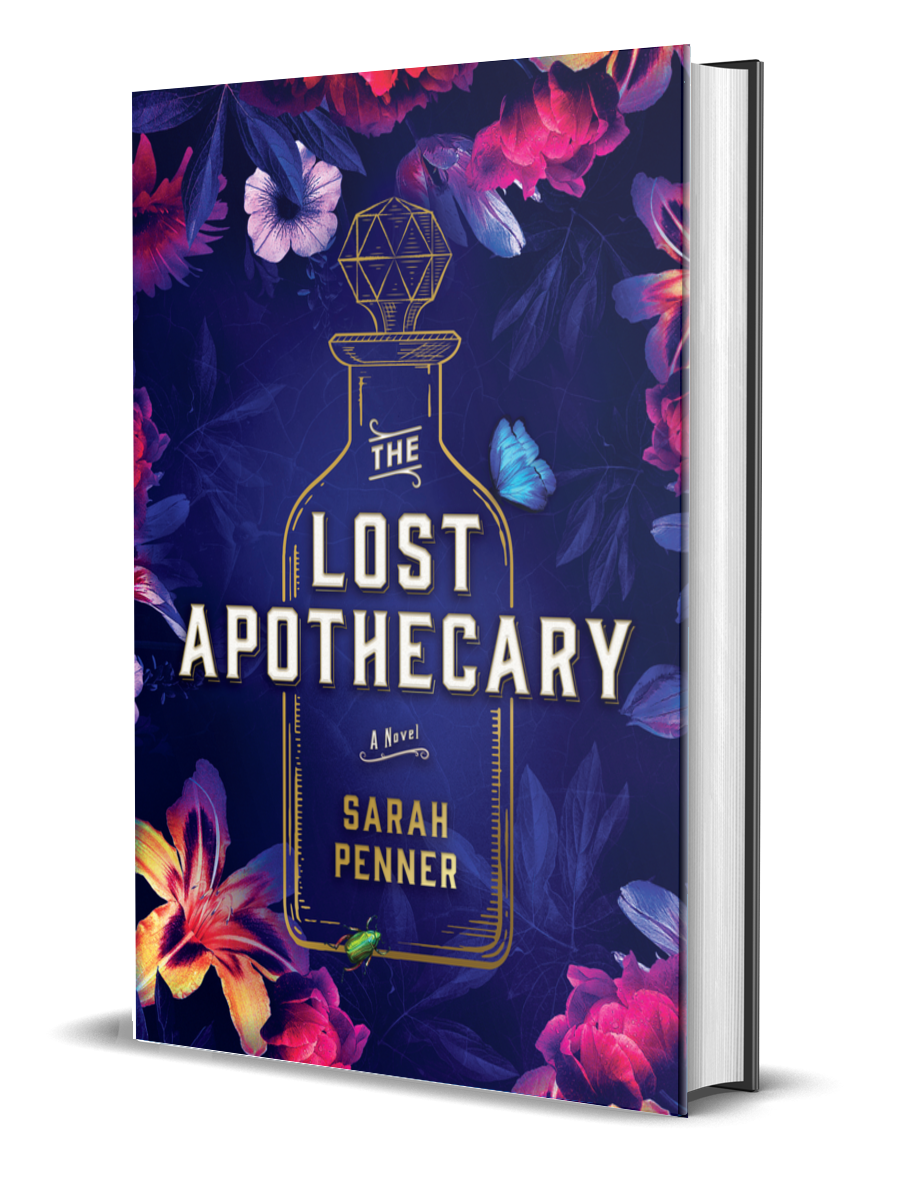
The Lost Apothecary, by Sarah Penner

I listened to The Lost Apothecary, by Sarah Penner on CD. I usually don’t enjoy novels that take two different timelines, but this one really held my interest. A secret apothecary in London in 1791 caters to women who need an herbal way to get rid of the oppressive men in their lives. An innocent mistake made by a 12-year-old girl who takes a serious interest in learning the apothecary trade turns the 18th century story on it’s head and threatens to be the end of the hidden business.

The Lost Apothecary, by Sarah Penner

In comes a present-day young woman, Caroline, from the United States. She has a variety of personal issues to sort out and, early in her visit to London finds an intriguing medicine bottle on the bank of the Thames. This launches Caroline on a mission to find out all she can about the apothecary whose stamp in on the bottle.

The novel is well-researched and is sure to be of interest to anyone with a curiosity about herbal remedies and herbal poisons used in secret in 18th century England.


Since my last blog post

I’ve been dealing with an allergic reaction to poison oak. It hasn’t been fun, but the prednisone injection is helping. I’d forgotten just how intense the itching sensation is once one is exposed to the innocent-looking plant.


Until my next blog post

I hope you have a good book or two to read this week. Maybe you’ll get to read one of the three books I wrote about today. Next Monday I’ll blog about the other books I read in April.

Make time to relax and enjoy a hobby.

Stay safe and well – and please wear a mask when necessary.

Note: May is Get Caught Reading Month! Have you been caught yet?

Janet

6 Books I Read in March 2021

I didn’t think March could match February in the books I got to read, but I was wrong. Good books just keep being published, and I’m having a wonderful time reading them.


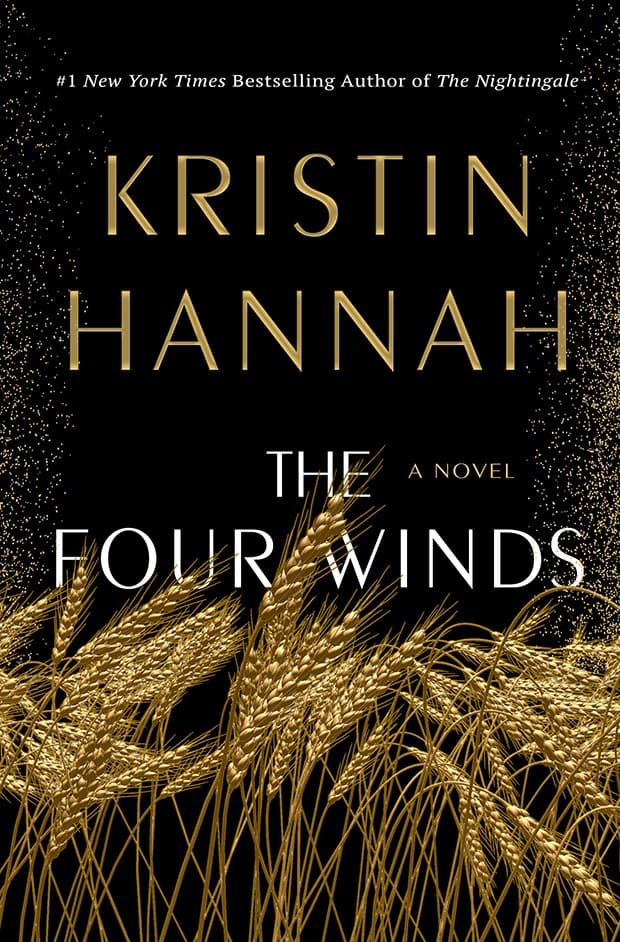
The Four Winds, by Kristin Hannah

The Four Winds, by Kristin Hannah

What a wonderful historical novel! In my opinion, The Four Winds is even better than Ms. Hannah’s 2015 novel, The Nightingale.

The Four Winds plunges the reader into the Dust Bowl and The Great Depression and never lets go. It’s been decades since I read The Grapes of Wrath, by John Steinbeck, but The Four Winds put me in the dust, grit, and terror of that time even more than the Steinbeck classic. Maybe that has something to do with my age when I read each book, but somehow The Four Winds made a stronger impact on me.

This novel follows Elsa, a young woman starved for love. She throws caution to the wind, for once in her life, and it turns out to have dire consequences. I don’t want to give the story away, so I’ll just say it follows Elsa through the Dust Bowl in Texas and a desperate journey to California in hopes of a better and a healthier life. The book illustrates the difficult lives of migrant workers and how promises and dangers of unionization in the 1930s. There are strong secondary characters in the book.

I blogged about The Nightingale, by Kristin Hannah in my June 2, 2017 blog post, You Need to Read These Books! and The Great Alone, by Kristin Hannah in my March 26, 2018 blog post, Some March Reading, in case you want to know what I thought about them.


Daylight, by David Baldacci

Does Atlee Pine find her sister?
Daylight, by David Baldacci

If you’ve been following David Baldacci’s Atlee Pine series, you’ll love this book. This novel reveals many details about Atlee’s parents and childhood. She continues to search for her twin sister, Mercy, who was abducted from their bedroom when they were six years old. Her journey takes her into some very dark places and danger lurks at every turn.

Will Atlee find Mercy in Daylight? You need to read it for yourself to find out! This is Baldacci at his best.


52 Small Changes for the Mind, by Brett Blumenthal

52 Small Changes for the Mind, by Brett Blumenthal

This is a self-help book that probably should be read a week at a time over 52 weeks, but I had checked it out from the library. I read it over several days and took notes so I can slowly absorb the points it makes that I can benefit from. Many of the recommendations are things I’m already doing, but several really stepped on my toes and got my attention.

Here are a few examples from the book:

Week 9 – “Kick indecision.” Don’t waste time trying to make the perfect choice.

Week 14 – “Silence your inner critic.”

Week 15 – “Go beyond your comfort zone.”

Week 27 – “Minimize screen time.” (I thought this just applied to teens and young adults who spend too much time on their cell phones, but this segment made me realize that I’m guilty of spending too much time on the computer and using my tablet.

Week 39 – Recognize your fears and confront them.

Week 49 – “Deal with [your] demons.”

There are helpful tools and resources at the back of the book.


Soul of a Woman, by Isabel Allende

The Soul of a Woman, by Isabel Allende

This turned out to be a surprisingly short book. I checked it out as an MP3 from the public library and listened to the entire book in an afternoon.

Ms. Allende begins the book with some experiences from her childhood and life in several countries, but the bulk of the book is about the status of women throughout the world.

She addresses all manner of abuses women endure at the hands of men and sometimes at the hands of other women. She writes about how tradition perpetuates the practice of female mutilation in parts of the world, how women are invisible in some regions due to Islamic law and practice, and how female babies are not valued and are sometimes killed in some cultures and countries simply due to their gender. She addresses human trafficking. She writes about how women the world over must struggle for every inch of progress they make in the business world.

Ms. Allende established The Isabel Allende Foundation in 1996 to pay homage to her daughter, Paula, who died at the age of 29 in 1992. The foundation works for the empowerment of girls and women through nonprofits in Chile and the San Francisco Bay Area. To read more about the foundation, go to https://isabelallende.org.


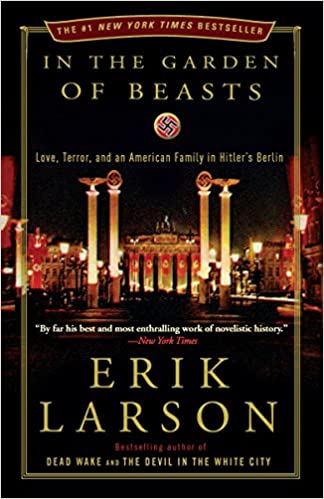
In the Garden of Beasts, by Erik Larson

In the Garden of Beasts, by Erik Larson

I think I’ve read all of Erik Larson’s books now, until Thunderstruck is released later this year. Yes, I’m on the waitlist for it at the public library.

My earlier attempt to read In the Garden of Beasts didn’t work out. I just couldn’t get into the book. Although the premise of this book should be equally as gripping as his other books, even the second time around it didn’t hold my interest quite as well as Isaac’s Storm (Three Books Read in December 2020) or Dead Wake: The Last Crossing the Lusitania (4 Books I Read in February 2021.)

In the Garden of Beasts is the story of William Edward Dodd, US Ambassador to Berlin from 1933 until 1937, during the rise of Adoph Hitler. His mid-20s daughter, Martha – who is estranged from her husband — accompanies him and becomes quite a liability as she soaks in the nightlife of the city and forms a romantic relationship with a Russian.

Dodd was a professor, a thrifty, unassuming man – much the opposite of his daughter. He was the butt of jokes among his peers in Berlin because he insisted on driving his old car and wearing the clothes he’d worn as a professor back in the Midwest. Martha inherited none of her father’s personality traits.

This is a nonfiction book, meticulously researched, as are all of Erik Larson’s books. I learned a lot from the book. It was interesting to get a glimpse of the rising of the Third Reich from the perspective of an American living in Berlin.


The Train to Crystal City: FDR’s Secret Prisoner Exchange Program and America’s Only

Family Internment Camp During World War II, by Jan Jarboe Russell

FDR's Secret Prisoner Exchange Program and America's Only Family Internment Camp During World War II
The Train to Crystal City, by Jan Jarboe Russell

You may recall that in my February 8, 2021 blog post, 4 Books I Read in February 2021, one the books I wrote about was the novel The Last Year of the War, by Susan Meissner.

As soon as news broke that Japan had attacked Pearl Harbor, the lives of all Japanese immigrants and Americans of Japanese descent were at risk. The FBI started arresting the men for no reason other than their ancestry.

I learned a lot from this book. One thing I hadn’t known about was the Asian Exclusion Act, passed in 1924, which made it illegal for Japanese immigrants to become US citizens.

Here’s a quote from pages 28-29 of the book about the steps President Franklin D. Roosevelt took to create a vehicle through which a hostage exchange program could be put into place in the event the United States entered World War II:

“On September 1, 1939, the day German tanks, infantry, and cavalry invaded Poland with 1.5 million troops, Roosevelt created a highly secretive division within the Department of State called the Special Division. He ordered this division to identify American civilians… who were currently in Japan and Germany and who would be in danger when the United States joined the war…. More than 100,000 American civilians were in harm’s way. A few months later, Roosevelt authorized the Special War Problems Division to find Japanese and Germans in America and in Latin America who could be used as hostages in exchange for the more valuable of the Americans…. In 1940, [FBI Director J. Edgar] Hoover installed the first group of FBI agents in Latin America. Based on the FBI reports, Roosevelt was convinced that Germans and Japanese in Latin America were a direct threat to hemispheric security.”

In addition, FDR formed an agreement with Peru that paved the way for 1,800 Japanese Peruvians with no ties to the U.S. to be brought to internment camps in Texas and other states. Pressure was put on other Latin American countries to do the same. All except Argentina, Mexico, and Brazil complied and deported Germans. Those three nations had internment camps of their own.

The men held in the internment camps were given an ultimatum. If they wanted to be reunited with their families — and these reunions had to take place inside the camp at Crystal City, Texas – they had to sign papers stating that they would relocate to their ancestral home country after the war. Imagine living for decades in the United States and then having to relocate to Germany or Japan as soon as World War II was over. Families were forced to make unimaginable choices in order to stay together.

I could go on and on, but perhaps I’ve given you enough detail that you will want to read the book for yourself. It was a real eye opener for me!


Until my next blog post

How is D.E.A.R. (Drop Everything and Read) Month going for you? I hope you have one or more good books to read this month.

Spend some time enjoying a hobby this week.

Keep wearing a mask, even if you’ve been vaccinated against Covid-19, so we can get back to doing all the things we like to do – like seeing relatives we haven’t seen in almost 18 months.

Note: National Library Week in the USA started yesterday. Support your local public library!

Janet

4 Other Books I Read in February 2021

Last week I blogged about four of the books I read last month. Today, I write about the other four books I read in February.


The Unwilling, by John Hart

The Unwilling, by John Hart

John Hart being a southern piedmont North Carolina writer, I looked forward to his new novel, The Unwilling. It did not disappoint. I listened to it on CD. It is a slice of American history when we were divided over the Vietnam War.

It is a riveting story about three brothers. Two were in the military and served in Vietnam. One didn’t survive the war, and the other one came home with problems for the rest of his life. Their youngest brother, Gibby, is the main character. At 18 years old, he is struggling to find his way in life. His mother is over-protective, and his father is a police detective in Charlotte. His parents want him to stay away from the middle brother, Jason, but Gibby can’t help but idolize him and is drawn to hang out with him. This leads to untold trouble.

The seedy, corruptive underbelly of the prison systems comes into play in a gruesome way. This novel is not for the squeamish, but the story really drew me in, and I couldn’t stop listening to it because I wanted to know what was going to happen next to Gibby and Jason. If you like a coming-of-age story wrapped in a police thriller, set in the winding down years of the Vietnam War, with some troubled family dynamics and prison time thrown in, this should be your next read.

Mr. Hart’s inspiration for this novel was Hugh Thompson, the US Army helicopter pilot credited with stopped the My Lai Massacre on March 16, 1968. It is not a war story per se but is the story of what a soldier sees and does that follows him or her home — the things those who have not been there cannot imagine; but more than that, it is a story of a small city in which the evil one fears isn’t always faraway but sometimes just up the street.


Southern Writers on Writing, edited by Susan Cushman

Southern Writers on Writing, edited by Susan Cushman

This delightful book is a collection of 26 essays by Southern writers, each giving their unique take on writing and how The South influences their writing.

One of my favorite essays in the book is “Southern Fiction: A Tool to Stretch the Soul and Soften the Heart,” by author Julie Cantrell.

Ms. Cantrell hails from Louisiana and writes vividly in her essay about the extremes of life in her home state. I love what she writes about Southern fiction about halfway down page 53 in the book:

“In literature, the South works as a lure by tapping all the senses. When we set a story here, we not only deliver a cast of colorful characters, we share their sinful secrets while serving a mouth-watering meal. We draw readers in with soul-stirring music and landscapes that would make anyone want to disappear beneath the mossy oaks. The South offers a fantasy, a place where time slows and anxieties melt like the ice in a glass of sugar cane rum.”

On page 54, Ms. Cantrell writes: “Many in life say the earth is our mother. If that’s the case, then the South is the lap into which we all crawl to hear her story…. The South is nothing less than a sanctuary for story. It is the porch swing, the rocking chair, the barstool, the back pew. It is everything that made me and shaped me and saved me. As a southern writer, I aim only to invite my readers to enter this sacred space.”

And then I read “The Burden of Southern Literature,” by Katherine Clark. She concisely explained how Southern literature came to be – how the South was looked down on after the Civil War and why would anyone want to read about such a place? Southern writers were weighed down by the region’s history. Writers like William Faulkner struggled to “strike a chord with a national audience.” Then, Faulkner and other southern writers learned to embrace the South and their southern-ness.

Ms. Clark writes on page 56, “Now, at the beginning of the twenty-first century, the writer in the South is not plagued by the burden of southern history, but by the burden of southern literature. Our literary tradition is revered all over the world and has produced many of the best writers to come out of our country. Southern literature is the strongest tradition in American literature, and one of the greatest gifts that American culture has given the world.”

What the southern writer is left with today is the burden not so much of the history of the South, but the wealth of literature that has come out of the South. To paraphrase Ms. Clark, it is inspiring and intimidating. I can vouch for that!

I also liked what Ms. Clark writes about not wallowing in what she calls, “southern-ness.” Here’s a little of what she writes on the topic:

“Whereas 100 years ago, writers had to learn to embrace the differences of the South, nowadays the tendency can be to positively wallow in the eccentricities and grotesqueries of the southern experience, usually of an earlier era. We shouldn’t be wallowing in southern-ness, and we don’t need to embrace it either, because that’s been done. That’s a given now, thanks to our great literary ancestors. Our job today is not to stick to the foundation they laid for us, but to use it as a springboard launching us in the new and different directions demanded by a changing culture.”

River Jordan, another author contributing to Southern Writers on Writing, writes the following about how she can tell when she’s reading the work of a southern writer and when she’s reading the work of New York writer: “…when I read a writer from say New York I think, oh, they are so smart. I could swear I actually hear their brain ticking. But when I read a southern writer I can feel their heart beating. That’s how I know it’s southern. By the heartbeat.”

Ms. Jordan also writes the following about the danger of southern writing disappearing as our lifestyles change: “When the porches all finally disappear, when the backyard steps are replaced with the kind of yards manicured to perfection, then the days of real southern writers will shift and slip away. Assimilation will be complete and southern will be no more.”

I hope she’s wrong, but I worry about the assimilation. I worry as I hear aspects of southern accents disappearing. I worry when I notice that my great-nieces in metro Atlanta sound much less southern than I do.

Speaking of southern accents, the next contributor in Southern Writers on Writing is Lee Smith. I love to hear her talk. Her contribution to the book is from her book, Dimestore: A Writer’s Life, which I thoroughly enjoyed reading five or six years ago. Ms. Smith is southern through-and-through, and her writing oozes “southern.”

About writing, Ms. Smith writes, “Whether we are writing fiction or nonfiction, journaling or writing for publication, writing itself is an inherently therapeutic activity. Simply to line up words one after another upon a page is to create some order where it did not exist, to give a recognizable shape to the chaos of our lives.”


30 Short Stories, by Laleh Chini

30 Short Stories, by Laleh Chini

My blogger friend, Laleh Chini, just keeps writing books. You may recall in last week’s blog post (4 Books I Read in February 2021) I told you about her new novel, Soroosh. Also, I’ve blogged about her book Climbing Over Grit in my November 5, 2018 blog post, Many Good Books Read in October!

Laleh is a fantastic storyteller. 30 Short Stories is her new picture book. I don’t often read picture books now, but I just had to purchase and read Laleh’s. Although written for children, this book can be enjoyed by people of all ages. Each of the 30 stories teaches a life lesson. My favorite was the last story in the book, “Racism.” In it, Laleh relates a story of how as a Muslim from Iran she experienced racism in a store in Canada, where she has lived for decades. It’s heartbreaking.

In the spirit of cultural acceptance and respecting and valuing people, no matter their ethnicity or religion, I recommend this book to everyone who is open to seeing that people are just people. We need to take a step back and stop making snap judgments about people just because they are of a different culture than ours.


Greenlights, by Matthew McConaughey

Greenlights, by Matthew McConaughey

From TV interviews, I know that actor Matthew McConaughey is a good storyteller. Wanting to hear his book in his own voice, I got on the waitlist for the CD edition of Greenlights at the public library as soon as it showed up on the online catalog.

I must admit that listening to Greenlights on CD was probably not the best way to read the book. Mr. McConaughey is an enthusiastic storyteller, and he relates many very entertaining stories in Greenlights; however, as a good storyteller is prone to do, Mr. McConaughey varies the volume of his voice greatly as he spins a yarn. This can create discomfort while listening to the book on CD.

I read a review on Goodreads.com that gave the book a very high rating and recommended listening to it instead of reading it but with the caveat that it should be listened to in a quiet environment. That’s good advice. I would also say you shouldn’t attempt to listen to it with headphones or earbuds. Also, trying to listen to it in one room while someone is trying to sleep in the next room is not a good idea. Just sayin’.

I also admit that I have moderate hearing loss, but I don’t think that was the root of the problem I had in listening to Greenlights. If I set the volume to a comfortable level for the shouting, I could not hear much of the rest of the book. This meant I couldn’t hear the near-whisper parts at all. I had to constantly adjust the volume, so the CD edition of the book was a great disappointment.

Early on, the book talks about Mr. McConaughey’s home life as a child and teen. His parents had a volatile relationship, which couldn’t help but have a profound effect on him. He relates some very funny experiences he had as an exchange student in Australia. In fact, that was my favorite part of the book. He tells interesting and humorous stories about his world travels and how he more or less fell into the occupation of actor.

The overriding theme of the book is that we should learn from all life’s experiences. Don’t let the obstacles in life keep you down. Learn from them and keep going.

If you’re a Matthew McConaughey fan, you’ll enjoy reading the book. Listening to it? Maybe not so much.


Since my last blog post

I’m still reading good books and working on my historical novel manuscript for a partial critique by a professional editor.

I got my second Moderna Covid 19 shot on Saturday. I’m grateful that I live in a country where such things are available, and I’m grateful to all the people who worked to develop and distribute the vaccine. I had some unpleasantness for about 48 hours after the shot, but it surely beats contracting a bad case of Covid-19.

On Wednesday night, I enjoyed participating in the third virtual gathering of a group discussing Janet Givens’ book, LEAPFROG: How to have a civil conversation during an uncivil era. We had an interesting conversation about racial prejudice and our common humanity. I mentioned Ms. Givens’ book in my blog posts on January 18, 2021 ( Fictional Characters Can Take on Lives of Their Own), on December 14, 2020 (Favorite Books Read in 2020), and on April 13, 2020 (LEAPFROG and The Immoral Majority.)


Until my next blog post

I hope you have a good book to read. I’m listening to In the Garden of Beasts, by Erik Larson, and I’m reading Cicely Tyson’s memoir, Just As I Am. Other library books are piling up and calling my name. What a wonderful “problem” to have!

I hope you have some time for creativity and hobbies this week.

Wear a mask and get vaccinated as soon as that’s possible for your age and location so we can rediscover “normal.”

Janet

4 Books I Read in February 2021

Thank you for your patience, if you’ve been eagerly awaiting an extra week to find out what I read last month. If you don’t know what I’m talking about, please read my blog post from last Monday, #OnThisDay: Articles of Confederation & Why They Had to Be Replaced.

Without further explanation, I’ll launch right into my impressions of four of the eight books I read in February.


The Last Year of the War, by Susan Meissner

The Last Year of the War, by Susan Meissner

I listened to this novel. It was mesmerizing. It is told from the point-of-view of an American woman, Elise, whose father immigrated from Germany. Due to lies a neighbor boy told about her father during World War II, she (as a teen) and her parents were scooped up and sent to a family internment camp in Texas. Her best friend there was an American teenage girl of Japanese descent.

I was immediately drawn into the story as the book starts with Elise as an older woman suffering from dementia. More than perhaps anything else I’ve read, the author put me inside the body of this woman who knew she was losing her memory but refused to give in to the disease. She even had a name for her memory-deficient self — Agnes.

Her coping skills were quite impressive. Elise got on a plane to track down her long-loss internment camp friend so they would reconnect before she completely lost her memory. I was right there with her on her physical journey, and then the book took me on a trip through their experiences in the internment camp.

I was unaware of this family internment camp in Crystal City, Texas. After giving the reader an idea of what life was like in the camp – where German- and Japanese-Americans were held captive until they could be sent to their ancestral countries in exchange for Americans who had been caught behind enemy lines when the war started, the novel takes you on Elise’s journey as she and her family spend the last year of the war living in Germany. It then follows Elise’s life after the war and ends by jumping back to the beginning of the book in Los Angeles in 2010 on her trip to look for her long-lost Japanese-American friend, Mariko Inoue.

It was a lovely story to listen to. It was well-written and I found myself pulling for Elise from the first page to the last page. I found myself listening to it at bedtime and struggling to stay awake long enough to listen to just one more chapter. If you’re an avid reader, you know what I mean.

If you want to know more about the Crystal City, Texas internment camp, Jan Jarboe Russell has written a nonfiction book about it, The Train to Crystal City: FDR’s Secret Prisoner Exchange Program and America’s Only Family Internment Camp During World War II.


Soroosh, by Laleh Chini

Soroosh, by Laleh Chini

Laleh Chini is a blogger I follow. Soroosh is Laleh’s new novel. In the beginning, Soroosh is a 10-year-old boy who has to become the man of the house and find a way to support his mother and younger siblings. Living in the port city of Abadan, Iran — home to an enormous refinery — Soroosh’s mother is between the proverbial rock and a hard place as she isn’t allowed to work or go into public places alone since she’s a woman in a Muslim country.

Soroosh takes his new role very seriously and starts brainstorming to figure out a way to earn money to support the family. He starts by purchasing handmade Persian rugs one at a time from a woman and sitting by the side of the street to sell them. He is industrious and a good salesperson.

Mid-way through the book, Soroosh is a young adult and has continued to work hard to provide for his s extended family. I don’t want to give the plot away, so I won’t give more story details. Always eager to step out of his comfort zone, Soroosh is constantly looking for a way to expand his business interests so he can help others – whether that is providing jobs or bringing in enough income that he and his wife can do charity work.

Although Soroosh and his family face many challenges and sad events, it is an uplifting story of what persons of strong faith can do when they work hard, remember their meager beginnings, and look for ways to give back to society.

Ms. Chini is an excellent storyteller, which comes through in this novel. She writes in a way that enables the reader to visualize the scenes she describes. Written in first-person, it reads like a memoir as it follows Soroosh for decades of his life. I’m impressed at Ms. Chini’s ability to write a novel in English, as it was a second language for her. She also brings in some history and historic sites as Soroosh travels for his business endeavors, as Iran has such a rich and long history.


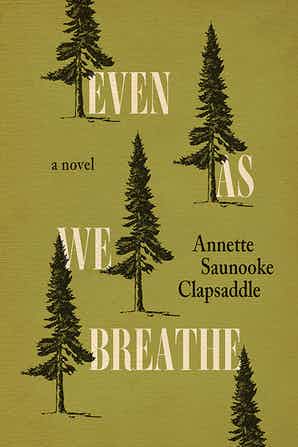
Even As We Breathe, by Annette Saunooke Clapsaddle

Even As We Breathe, by Annette Saunooke Clapsaddle

I can’t remember how I heard about this book, but I’m so glad I did. It is the kind of novel that’s hard to put down. The characters are developed well and I really wanted both of the main characters to find happiness and what they were looking for.

A young Cherokee man, Cowney Sequoyah, and a young Cherokee woman, Essie Stamper, get jobs working at the Grove Park Inn in Asheville, North Carolina, during World War II. The resort had been taken over by the US Government and housed foreign diplomats and their families.

Even As We Breathe is the story of the pull the Qualla Boundary has on Cowney and Essie. (The Qualla Boundary is the land trust in North Carolina that the descendants of the Cherokee people who hid out in the Great Smoky Mountains to avoid the Trail of Tears to Oklahoma in 1838 live on.) Even as they yearn to get away from Cherokee and the Qualla Boundary, they are drawn to it. The story shines a light on the white world’s prejudice against Cherokee Indians in the World War II era.

(Before you get upset that I use the term “Indian” instead of the politically-correct term “Native American,” when I did the research for my book, The Blue Ridge Mountains of North Carolina, I learned that, since the term Native American can be used to describe anyone born in America, the North American Indian Women’s Association recommends using the term American Indians. Therefore, I use the word Indian in this blog post and I used it in my vintage postcard book referenced herein.)

There are many, many layers to this story. Cowney’s club foot prevents his being able to serve in the US military during the war, which is a constant guilt he must deal with. There are family secrets that unfold throughout the book. His Uncle Bud plays heavily in Cowney’s life – and not in a good way.

The young daughter of one of the diplomats disappears. Through a series of bad decisions made by Cowney, Essie, and one of the US soldiers on duty at the Grove Park Inn – and the fact that Cowney is a Cherokee Indian and, thereby, is immediately suspect – things go badly for Cowney.

I hope I’ve given you enough information to make you want to read the book and not enough details to spoil it for you. Perhaps I especially enjoyed this book since I live in North Carolina and have visited Cherokee and Asheville many times, but I think you’ll like it, too.

The author, Annette Saunooke Clapsaddle is a member of the Eastern Band of Cherokee Indians and holds degrees from Yale and the College of William and Mary.

Below is a postcard of the Grove Park Inn that I included in my vintage postcard book, The Blue Ridge Mountains of North Carolina, published by Arcadia Publishing. If you’re interested in learning more about the Great Smoky Mountains, Cherokee and the Qualla Boundary, and Asheville, my book is available on Amazon and from the publisher.

A portion of a linen vintage postcard of Grove Park Inn.

Since I was on the waitlist at the public library for The Last Year of the War and Even As We Breathe for quite some time, it was coincidental that I read them at the same time and both were set against the backdrop of internment during World War II. Another Cherokee connection was in Step into the Circle: Writers in Modern Appalachia, edited by Amy Greene and Trent Thomson, which I read in January. (See my February 8, 2021 blog post, 4 Other Books I Read in January 2021.) My favorite part of that book was the section about Cherokee translator Marie Junaluska.


Dead Wake: The Last Crossing of the Lusitania, by Erik Larson

Dead Wake: The Last Crossing of the Lusitania, by Erik Larson

I can’t say enough about the way Erik Larson writes nonfiction books. He has a way of bringing history alive and holding me spellbound. Granted, I’m a bit of a history buff, but I think many of you would enjoy this book even if you don’t think you would.

The Lusitania was an ocean liner of the Cunard Cruise Line out of England. Ignoring the danger all British ships – military and otherwise – faced from German U-boats in 1915 (during World War I, of course), the Lusitania sailed out of New York City toward Liverpool, England, with more than 1,900 people on board.

Mr. Larson researched the backgrounds of the people who sailed on that voyage of the Lusitania and shares with us tidbits of their lives and why some were going to England. He weaves into the book the hot potato issue of the day: Were cruise ships fair game for German U-boats?

Germany maintained that they were fair game because they were probably carrying munitions as well as passengers.

Tension grows chapter-by-chapter as we alternate between seeing the war and enemy ships from the perspective of the captain of U-Boat 20 and from the perspective of passengers on and the captain of the Lusitania.

I found listening to Dead Wake: The Last Crossing of the Lusitania to be a painless way to learn details about its fateful voyage as well as more than I’d known before about German U-boats and torpedoes. The book goes beyond the sinking of the Lusitania as US President Woodrow Wilson hesitated to enter the war. In fact, it was two years after the sinking of the ocean liner before US troops arrived in England to help “the mother country” out of its dire situation.

Since my last blog post

I’ve had more books vying for my attention than I had time to read or listen to them. At the same time, I’m getting the first 50 pages of my manuscript for my historical novel The Doubloon (or perhaps The Spanish Coin) ready for a professional critique. It’s time to take the plunge!

Spring is in the air here in North Carolina. The daffodils are blooming. They’ve been the harbinger of spring my entire life. I can still remember running into the house clutching a fistful of daffodils and announcing to my mother, “The daffodils are blooming! The daffodils are blooming!” I suppose I’ve had Seasonal Affective Disorder all my life. They just didn’t have a name for it until recent years.

Until my next blog post

I hope you have one or more good books to read this week. Maybe one of the books I wrote about today will catch your eye.

If you’re a writer or other artist, I hope you have productive creative time.

I hope you stay safe and well. I’ll get my second Covid shot before my next blog post. I’m excited about that and the promise it brings. I’ll keep wearing a mask and maintain social distancing as long as necessary, though. I hope you can get vaccinated soon.

Janet
4 Other Books I Read in January 2021

My custom is to share with you my thoughts about the books I read during one calendar month in my first blog of the following month. Last Monday’s post, My thoughts on Stones from the River, by Ursula Hegi, was about the novel Stones from the River, by Ursula Hegi. In today’s post, I’ll tell you what I thought about the other four books I read in January. It’s a nice mix of fiction and nonfiction books.

After the attempted coup at the US Capitol on January 6, it was difficult to concentrate. My reading suffered, but my writing time suffered even more. I was surprised at the end of the month to discover I’d read five books.

I ran into some problems while trying to insert images of the books I’m blogging about today. Ironically, (or not?) the message I got when I tried to copy the publisher’s image of The Spy and the Traitor said “for security reasons” I was not allowed to use it. I had to laugh. I could download it to my computer, but I couldn’t insert it in today’s blog post. It’s recommended that all blog posts have images, so I’m disappointed to present a post today that has no illustrations.


The Spy and the Traitor: The Greatest Espionage Story of the Cold War, by Ben MacIntyre

On a scale of one-to-five stars, I give this nonfiction book six stars. The research that backs up this detailed account of the life of double-agent Oleg Gordievsky is stunning. The book reads like a spy novel but is all the more riveting because the reader knows it is true.

I learned about this book when I saw a list of the top five books of 2020 that Bill Gates recommended. This one sounded intriguing, and it didn’t disappoint.

Oleg Gordievsky started out as a KGB agent. Fascinated by the West, though, he read and learned all he could about Great Britain. He also read works of such Soviet dissidents as Aleksandr Solzhenitsyn, even though reading those works or having them in your possession was against the law in the Soviet Union. Gordievsky’s world opened up when he landed an assignment in England. It is there that he became a double agent and became the crown jewel in Great Britain’s MI6 spy network.

I learned how close we came to nuclear war in 1983 when the Soviet Union misinterpreted a NATO war game with the code name ABLE ARCHER 83. The book says on page 181, “Both Reagan and Thatcher understood the Cold War in terms of a Communist threat to peaceful Western democracy; thanks to Gordievsky, they were now aware that Soviet anxiety might represent a greater danger to the world than Soviet aggression.”

It is not common for an individual spy to have a profound impact on world history, but Oleg Gordievsky falls into that category. As the book says of Gordievsky on page 183, “…he opened up the inner workings of the KGB at a pivotal juncture in history, revealing not just what Soviet intelligence was doing (and not doing), but what the Kremlin was thinking and planning, and in so doing transformed the way the West thought about the Soviet Union. He risked his life to betray his country, and made the world a little safer.”

The story is far from over at that point, and the book takes the reader on an edge-of-your-seat nail-biting ride. Will Gordievsky be outed? Will Great Britain succeed in smuggling him out of the Soviet Union? What happens to his wife and daughters? Who turns out to be an American double agent? Is that spy still alive and, if so, where is he? Is Gordievsky still alive and, if so,  where is he?

All these questions and more are answered in the book, but I don’t want to spoil the fun for you. I highly recommend The Spy and the Traitor: The Greatest Espionage Story of the Cold War, by Ben MacIntyre. I listened to the book on CD while keeping a print copy in front of me. That made it easier for me to keep up with the unpronounceable Russian names.


My Grandmother Asked Me to Tell You She’s Sorry, by Fredrik Backman

Told from the point-of-view of seven-year-old Elsa, this is another somewhat quirky novel from Fredrik Backman. I think it was clever for Mr. Backman to give us a novel told from a child’s viewpoint. It was an interesting read, but not one of my favorite novels.

I listened to this book on CD. My favorite part of the book turned out to be the first disc, as it included Elsa’s feisty grandmother before she died. It was funny. Elsa’s grandmother wasn’t a typical grandmother or a typical old woman. She delighted in upsetting the powers that be. She thrilled at dragging Elsa into her various escapades.

Since both of my grandmothers died before I was born, I had trouble identifying with Elsa. I don’t have a firm grasp of the personalities of either of my grandmothers; however, since they were farm wives and were born in the second half of the 19th century, they probably didn’t resemble Elsa’s grandmother in any way, shape, or form.

Of course, the reason for this novel was not to entertain the reader with the antics of an old lady. It was to show the ramifications of a life lived as this woman lived it. This woman lived her entire life insulting people, but somewhere deep down inside she wanted to apologize. The burden of making those apologies fell on her granddaughter.


Step into the Circle: Writers in Modern Appalachia, edited by Amy Greene and Trent Thomson

This is a book of profiles about nine writers of present-day Appalachia written by writers of present-day Appalachia. It is beautifully illustrated with photographs of the writers and the mountains from which they came. The writers highlighted are Wendell Berry, Crystal Wilkinson, Ron Rash, Adriana Trigiani, Silas House, George Ella Lyon, Frank X. Walker, Marie Junaluska, and Lee Smith.

Some of these writers were familiar to me, while others were not. I was glad to learn about each of them; however, the book did not live up to its promise as far as I was concerned. At least one of the “profiles” turned out to be more about the profiler than the writer being profiled. Therefore, the book ended on a sour note for me. Nevertheless, it’s worth checking out of the public library and giving it your attention.

The book addresses the influence of an author’s geographic upbringing and the importance of writing the truth that one knows. The importance of Appalachian writers to write the truth in order to dispel the myths about the people of Appalachia is an overriding theme.

The most interesting profile for me was that of Marie Junaluska, a Cherokee language teacher and translator.


The Fix, by David Baldacci

I’m attempting to whittle away at the 300 books on my To Be Read list (TBR.) I thought it might be a good idea to try to read one book from my TBR each month. But then I did the math and discovered that, at that rate, it will take me 25 years to read those 300 books. That doesn’t sound doable because I would be 103 years old by then. Also, I tend to add more than one book to my TBR each month, so the list is literally never-ending.

The Fix has been on my TBR for several years. It is the third in David Baldacci’s Amos Decker series. Labeled a thriller, I found The Fix to be more of a spy mystery. It did not keep me on the edge of my chair anxious to see what happened next. Perhaps it just wasn’t the right time for me to read this book, since I had trouble concentrating all month.

I’ve listened to many novels in the last year or two, which is quite a change for me. A lot depends on the professional recording reader. In addition to that, something that jumped out at me in listening to The Fix was how the “he said/she said” tags can distract. When reading a print book, our eyes often leap over those tags. In listening to The Fix, I was very distracted by them. There were several readers – male and female. When I female voice read a line, it was terribly jarring to have the male reader follow it by saying, “she said.” It reminded me that I was listening to a book – and that’s not a good thing. I’m not sure what the remedy is for this, but it continually took me out of the story in this novel.


National Grammar Day in the USA

No, that’s not the name of a book. Today is National Grammar Day in the United States It gives me an opportunity to share with you something I learned recently from a blog post.

I took courage from reading Melissa Donovan’s December 15, 2020 blog post. She opened my eyes to the difference between grammar rules and grammar guidelines. Here’s a link to her blog post: Grammar Guidelines Versus Grammar Rules | Writing Forward.

If grammar grabs your attention, please take time to read Ms. Donovan’s blog post. Like me, you might be surprised to learn that some things you think are grammar rules are just guidelines. You must follow the rules, but you don’t have to follow the guidelines. I wish someone had told me that years ago.

I have stressed over some guidelines because I thought they were rules. One of my favorites is that you should never end a sentence with a preposition. It turns out that rule of earlier centuries is now a guideline. Hurrah! I’ve twisted myself into a pretzel on occasion trying not to break that guideline because I thought it was a rule. What I’ve ended up with are awkward sentences. From now on, I’ll end sentences with a preposition when it makes better sense to do so.

And, by the way, you probably noticed that I used the numeral “4” in my blog post title today instead of “four.” I was taught to write out numbers one through nine in a written document – and always when it is the first word in a title or sentence — and to use numerals for 10 and higher.

I learned recently though, that when writing the title of a blog post, I should always use numerals because they make a bigger impact. They help my SEO (Search Engine Optimization). In those mysterious algorithms of cyberspace, they help my blog posts move up and get seen. They grab a person’s attention. That’s what “they” say.

Bear with me, folks. I’m in my 60s (or sixties?) and I’m trying to learn new things and adapt to the world of technology. When I was born, black and white television, black and white photography, and manual typewriters were cutting edge. And Caribbean was pronounced Ca-rah-be-in.


Since my last blog post

I’ve continued to read and I have some excellent books to share with you in March when I blog about the books I read in February. I have been entertained and educated by these books, and the month is just one-week old. I’ve read two historical novels this week that I can’t wait to tell you about.

I tried my hand at a new recipe for no-knead whole wheat sandwich bread. It held much promise in the beginning, but it turned out the size of half-of-a-sandwich bread. It tastes okay, but looks pitiful. I was disappointed but had to laugh.

We came within a few miles of having snow on Saturday night but only got rain. That’s the way it often is in the piedmont of North Carolina.


Until my next blog post

I hope you have at least one good book to read this week – one that will not only entertain you but also educate you. Our learning should never end.

Wear a mask and get the Covid-19 vaccination as soon as it’s your turn and you can get an appointment.

Stay safe, and be respectful of others’ desire to stay safe and well.

Janet
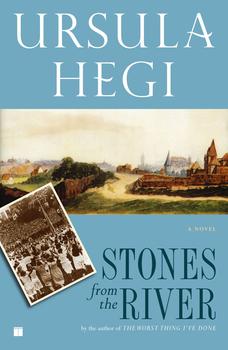
My thoughts on Stones from the River, by Ursula Hegi

I finished reading Stones from the River, by Ursula Hegi a few days ago. It made such an impression on me that I decided to write about it today and share my thoughts on the other books I read in January in next Monday’s blog post.

I enjoy following the blogs of book reviewers. Their reviews often pique my interest in books I might have otherwise overlooked. From a review, I can be fairly sure a particular book is or isn’t for me. My fellow blogger, Stella Maud Maurer (https://stellamaudmaurer.wordpress.com/,) wrote about author Ursula Hegi a couple of months ago. It was that blog post that nudged me to read Stones from the River.

I don’t consider myself a book reviewer. I just enjoy sharing my impressions of the books I read. I don’t abide by the rules that book reviewers adhere to. (And if you think I shouldn’t have ended that sentence with a preposition, I’m excited to tell you that I recently learned that “rule” is now just a “guideline.” Look for more on that in a future blog post.)

Stones from the River, by Ursula Hegi

Stones from the River, by Ursula Hegi

After reading Stella’s blog post, I wanted to read something by Ursula Hegi. I decided to start with the first novel in her Borgdorf Cycle series, Stones from the River. It wasn’t long before I was captivated by her prose.

Oh, to be able to write descriptions like Ms. Hegi does! She deftly weaves phrases of description into sentences in a way that you hardly notice. I admit, I was reading the book as a writer and not as a reader. The writing really isn’t supposed to pull the reader out of the story, but I just couldn’t help myself.

Trudi, the main character, is a little person. Her mother had what sounds like post-partem depression after Trudi’s birth. Her father, Leo, never gave up on bringing his wife and their daughter into a loving relationship. As a young girl in the late 1910s in Germany, Trudi yearns to grow tall. Her childhood isn’t an easy one, not only because she is different but because her mother is different, too. Her mother’s depression spirals out of control and she takes to hiding under the house, sometimes taking Trudi with her.

And then there’s the neighbor boy, Georg, whose mother wants him to be a girl. She dresses him like a girl and doesn’t cut his hair. Trudi starts to realize that she’s different, her mother’s different, and Georg is also different.

Through it all, Trudi has a priceless sense of humor that comes through especially in her dealings with her friend, Ingrid. Ingrid is tall and beautiful. Trudi would give anything to look like Ingrid; however, Ingrid thinks Trudi is the lucky one.

Trudi works in her father’s “pay library.” 1933 brings Hitler’s orders to destroy all books written by the great authors and thinkers of the day. She and her father hide some of his prized books under rental books in boxes. After all, what better place to hide books than in a library?

One day, Trudi discovers a woman and her little boy hiding under the house that she and her father still share along with the pay-library. They start hiding Jews in their cellar.

Due to her small stature, Trudi never expected to find romantic love. That yearning for love and a family of her own is a thread throughout the novel. I’ll just leave it at that and not spoil the story for you if you wish to read it.

This is a story of the unpredictability of life. It’s a story of thinking you know someone, but then realizing you don’t really know them. The constant backdrop was Nazi Germany. Step-by-step, day-by-day, year-by-year life became more precarious not only for the Jews but for everyone living in Germany in the 1930s and 1940s. Every word and action was suspect, and you never knew who was listening and watching.

What struck me, though, about this novel was the parallels I saw between Germany in the 1930s until the end of World War II and the United States in 2020 and 2021. If I’d read it when it was published in 1994, it wouldn’t have affected me like it did as I read it in December 2020 and January 2021. Over and over, sentences and paragraphs jumped out at me as if to say, “Wake up, America!”

It’s almost as if Ursula Hegi wrote pointed phrases and sentences in Stones from the River to serve as a cautionary tale for Americans living in the last five years.

The following sentence from Stones from the River stopped me in my tracks, since it rang so true for the United States in 2020: “She fought him by reminding herself what her father had said to Emil Hesping – that they lived in a country where believing had taken the place of knowing.” It seemed in 2020 and still today that nearly half of Americans believed what they were being told by the right-wing media and the Trump Administration instead of believing what they should have known to be true – what they saw and heard with their own eyes and ears. I’m not sure how that gets corrected, but I pray it will be.

There were several other quotes from the book that caught my attention. These three, in light of January 6, 2021: (1) “…breaking of windows….”  (2) “Maybe now, she thought, now in the blaze of fire, they surely would have to see. But it was as if they’d come to take the horrible for granted, mistaking it for the ordinary.” And (3) “Their allegiance to one powerful leader now became their excuse: since they had not made decisions but merely obeyed orders, they were not to blame.”

And this quote from the book parallels the fear some members of Congress now live with because they know that some other members of Congress wish them dead: “‘The Jews in this country,’ she corrected him one Saturday afternoon when he followed her into the garden, lecturing her, ‘are Germans and far more decent than those – those friends of yours who terrorize them –.’”

Since my last blog post

I almost finished the research necessary for the writing of one of my historical short stories. A little more research is needed in order to fill in some blanks. The story morphed into an essay. I had a lot of fun writing the 2,800-word piece on Saturday. The point-of-view “character” is a house. No more clues. I hope before the year is out, I’ll get to turn my stories and essays into a book. You’ll learn it here first, so don’t miss any of my blog posts!

Until my next blog post

Note: Tomorrow through February 8 is “Read an E-Book Week”.  If you’ve been wanting to take the plunge and try reading a book on your electronic device, this is the perfect week to do it. Don’t be an “I only read printed books” snob.

Note: Next Saturday, February 6 is “Take Your Child to the Library Day”. If your local public library is open and you feel safe to take your child there, perhaps you can do so. But if the Covid-19 pandemic has closed your library to in-person service – or you don’t feel safe going there yet – take next Saturday as an opportunity to explore the online resources your local public library system offers. Get your child excited about using the library online now and in-person as soon as that is safe. It will be a gift that keeps on giving for the rest of their lives.

I hope you have a good book to read (in print or on an electronic device) or a good one to write.

Wear a mask and get the Covid-19 vaccination as soon as it’s your turn and you can get an appointment.

Stay safe, and be respectful of others’ desire to stay safe and well.

Janet

Other Books Read in December 2020

I saved two books I read in December for today’s blog post, not wanting to make last week’s post too long. One is a new novel and the other was from my to-be-read (TBR) list. I continue to add more books to my TBR than I check off. That’s just the way it is. My TBR hovers around 300, give or take 10-20 books. I need to ignore the number. Stressing over it isn’t beneficial.

The following two books transported me to England and Mississippi in December without leaving the Covid-19-free safety of my home.

Then She Was Gone, by Lisa Jewell

The first book I read by British author Lisa Jewell was The Family Upstairs in November 2019. I didn’t particularly enjoy listening to that book because one of the characters had a limited vocabulary. By that, I’m referring to the fact that the character used “the f-word” to such excess that I found it distracting. (Here’s the link to my blog post about the books I read in November 2019: Four Other Books I Read in November 2019.) Nevertheless, I decided to give Lisa Jewell another chance, so I listened to her new novel, And Then She Was Gone. I’m glad I did.

Then She Was Gone, by Lisa Jewell

Then She Was Gone is a cleverly-developed psychological thriller. A little girl disappears shortly after her tutor is let go. The little girl’s mother never gives up hope of finding her daughter. Many years later she is introduced to a young girl. She is the spitting image of her missing daughter. I was hooked by this story early on, and I wanted to see it through to the end. The longer I listened to this book, the more I was eager to see what would happen next.

Having a female predator made this novel different from the norm. We just don’t expect a woman to fill that role in real life or in fiction. Did the tutor have something to do with the little girl’s disappearance? If so, why did she do it? There are some surprises in the end that made me wish I had time to reread the book from the beginning to look for bits of foreshadowing I possibly missed the first time.

The Appeal, by John Grisham

This novel by John Grisham has been on my TBR for years. I finally got around to reading it. Actually, I listened to it. Michael Beck does such a good job recording John Grisham’s books, I’ve come to prefer to listen to his novels instead of reading the printed word.

The Appeal deals with a number of trials and appeals. The main one is an appeal filed after a jury in Mississippi finds a chemical company guilty of causing a cluster of cancer cases. The owner of the company decides to “purchase” a seat on the Mississippi State Supreme Court.

This book shines a bright light on the problems that can be created by making judgeships elected positions. When a judge is put in the position of needing to raise money for his or her campaign, it opens the door for all kinds of corruption. Mr. Grisham usually has a point he wants to get across, and I believe that was the one that stood out in The Appeal.

There is also a moral dilemma revealed near the end of the book.

Since my last blog post

Since my last blog post, insurrectionists and domestic terrorists stormed the US Capitol on January 6, 2021. I’m so angry and stunned that I’m still searching for words to attempt to describe how I feel. I’ve tried very hard the last four years not to make comments about politics in my blog posts; however, what happened last Wednesday, January 6, 2021, in Washington, DC was done at the direction and encouragement of Donald J. Trump, Sr., the sitting president of the United States of America.

It was a failed coup. There is no punishment for Trump and his enablers that is equal to their crimes.

The United States Capitol Photo credit: Ajay Parthasarathy on unsplash.com

I can almost forgive the people who voted for Trump in 2016. With time, maybe I’ll be able to completely forgive them. For the people who voted for him again in November 2020, you knew exactly what you were voting for and you got it on January 6. Unfortunately, we all got it on January 6—and we didn’t deserve it. As a Christian, I’m supposed to forgive you. Let’s just say I’m a work in progress. May God have mercy on my soul. May God have mercy on you.

Until my next blog post

I hope you have a good book to read or a good one to write – or both.

Make time to do something you’re really passionate about. For me, that’s writing.

Wear a mask, and get the Covid-19 vaccination as soon as you’re eligible. That’s still a few weeks or months away for me.

Thank you for taking the time to read my blog post today.

Janet

Three Books Read in December 2020

This is the first Monday of the month, so it’s time for me to blog about the books I read in December. Through the books I read in December, I traveled to Mississippi, Japan, Texas, Pennsylvania, and England. The beauty of reading is that you can see the world without ever leaving your easy chair. In December, I traveled the world without running the risk of catching Covid-19.

I don’t claim to be a book reviewer. Book reviewers have rules or guidelines they should follow. I don’t follow those guidelines; I just share my thoughts about the books I read. Below are my thoughts about the books that took me to Japan, Pennsylvania, and Texas in my easy chair in December.

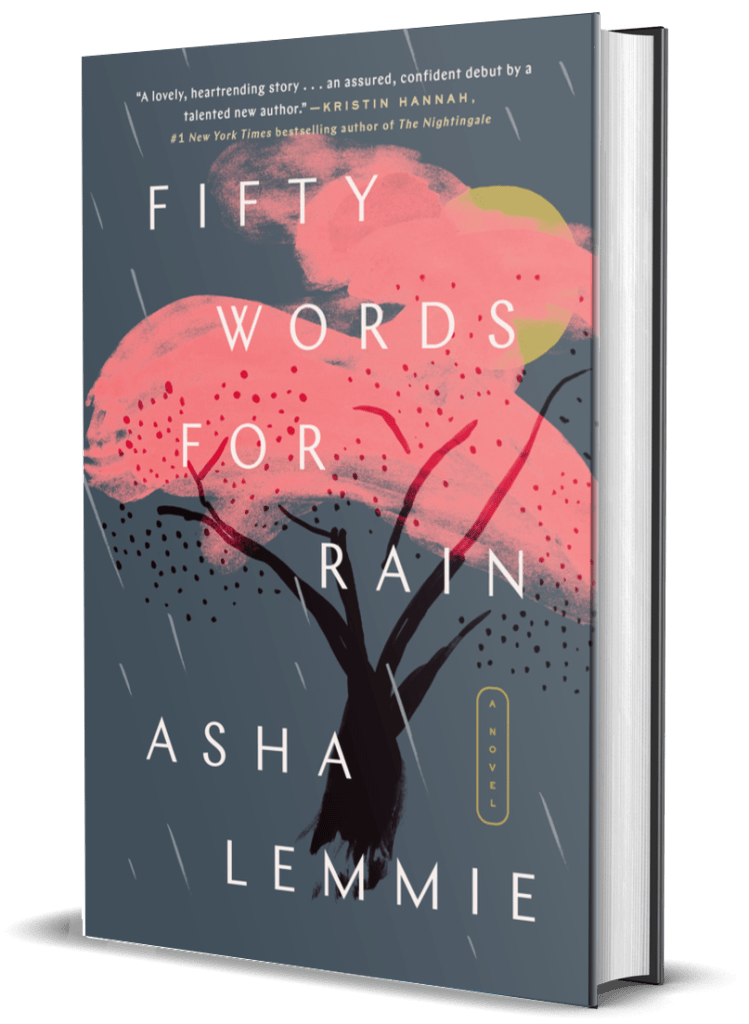
Fifty Words for Rain, by Asha Lemmie

As usual, I checked out too many books from the public library at one time and didn’t get this one finished before it disappeared from my tablet and returned to that public library in the sky! I immediately got back on the waitlist for it. It was two or three weeks before I got to check it out again. That isn’t the ideal way to read a book, but Fifty Words for Rain had enough of a hold on me that I definitely wanted to finish it.

Fifty Words for Rain,
by Asha Lemmie

The second time around, I got the MP3 audio version of the book. Since it had been several weeks since I’d read the first half of the book, I decided to listen to it from the beginning. Although familiar, listening to the novel made the story fresh and new for me, and I was soon hooked on it again.

The place is Japan. The time is 1948. The background for the novel is that a woman from a well-to-do family of pre-war royalty had a baby girl nick-named Nori that was fathered by an American GI. Considering the anti-American sentiments that the Japanese held immediately after World War II, that was bad enough; however, to make matters worse for Nori, her American soldier father was of African descent. In a country like Japan, where there has been little mixing of the races over the centuries, this mixed-race girl was an outcast.

Nori’s mother drops her off outside her parents’ estate, never to return. Nori has to introduce herself to her grandparents. To say they aren’t pleased with the situation would be a gross understatement. Being dropped off at the grandparents’ home is literally just the beginning of this story of abandonment, prejudice, concealment, physical abuse, freedom, prostitution, the human spirit, hope, obligation, and family ties.

This debut novel by Asha Lemmie is beautifully-written. I look forward to Asha Lemmie’s second novel – whatever it is or whenever it’s written and published.

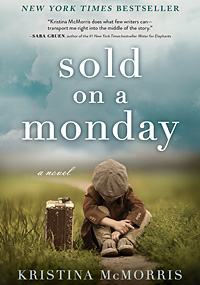
Sold on a Monday, by Kristina McMorris

The spark of inspiration behind this novel was a photograph that appeared in a 1948 magazine. It was a photograph of a sign that read: “Children for Sale.” That, the book’s title, and the book’s cover prompted me to add Sold on a Monday to my to-be-read list in 2018, the year it was published. In reviewing my TBR list last month, I decided it was time to read it. I checked out the MP3 of the book to listen to on my tablet.

Just like with Fifty Words for Rain, by Asha Lemmie, I knew Sold on a Monday, by Kristina McMorris deserved a second chance. I kept falling asleep while listening to Sold on a Monday – to the point that it made no sense. This is not a reflection on the book. It’s a reflection on what can happen when you have chronic fatigue syndrome and you want to sleep 24 hours-a-day.

Sold on a Monday,
by Kristina McMorris

The novel went back to the library, but the premise of the book wouldn’t let me go. I checked out the MP3 version again and gave it my full attention. It is a multi-layered book that takes you on a journey at break-neck speed. No wonder I couldn’t make sense of it the first time I slept through parts of it! If you skip a page or let your mind wonder for a few minutes, you’ll miss something important to the plot. There is not an unnecessary word in the whole book.

Ms. McMorris set the novel in Philadelphia early in the Great Depression. A newspaper reporter just can’t quite land that elusive story that will make his career. He takes a picture of a little boy and girl with a sign that reads, “Children for Sale.” The reporter makes a series of bad decisions, but he eventually becomes obsessed with tracking down the children. There are more twists and turns to this story than I could possibly comment on here – plus, that would spoil the book for you.

The crux of the novel is to show how a bad decision by an individual can have dire and tragic ramifications for other people.

The story that was the inspiration of this book reminded me of an incident that happened to a couple of friends of mine a decade or so ago. They went on a mission trip to a Native American reservation in the western part of the United States. A mother on the reservation offered to sell them her son. I was jarred by the story when my friends told me, and the thought of it still jars me today.

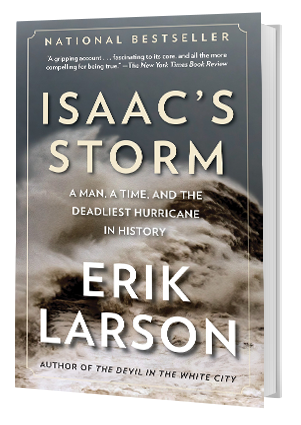
Isaac’s Storm: A Man, A Time, and the Deadliest Hurricane in History, by Erik Larson

This history of the deadly hurricane that all but wiped out Galveston, Texas in September 1900 was written in 1999, but the book just recently came to my attention. I’m becoming quite an admirer of writer Erik Larson. He writes history that reads like fiction. He gets into the nitty-gritty details that most history books skip over.

It was believed in meteorological circles at the turn of the 20th century that hurricanes were unlikely to hit the Texas coast. Combine that delusion with the lack of radar systems we depend on today, and you have the makings of a perfect storm.

Isaac’s Storm, by Erik Larson

Isaac Cline of Galveston thought he knew all there was to know about hurricanes. He didn’t think Galveston would ever be hit by a hurricane.

Cuba had warned the United States that a strong hurricane was heading into the Gulf of Mexico, but arrogance made US weather officials more than hesitant to take advice from Cuba. With black storm clouds approaching and huge waves crashing, many people went out to see what was happening along the oceanfront. Children delighted in playing the water as streets several blocks from the ocean filled with water. Businessmen went about their day as if nothing ominous was bearing down on their city.

The hurricane slammed into Galveston with virtually no warning, killing more than 6,000 and possibly as many as 10,000 people. Nearly a century before hurricanes were rated by intensity or named, the Galveston hurricane would easily be considered a Category 4 storm today.

It remained a ferocious storm all the way across the US, wreaking havoc in the Midwest. It brought hurricane force winds to cities such as Chicago and Buffalo. A steamship was almost sunk by the storm on Lake Michigan. Telegraph service across the Midwest and northeastern US was severely crippled with so many telegraph poles blown down. The storm continued on across Prince Edward Island and spun across the North Atlantic, sinking 16 ships. It was last witnessed as it made its way into Siberia.

Erik Larson researched newspaper accounts, letters written by Isaac Cline, telegrams, US Weather Bureau records, and the memories of the hurricane survivors.

To read about two of Erik Larson’s other books, follow this link to my February 3, 2020 blog post, Three Books I Read in January 2020 when I read The Devil in the White City: Murder, Magic and Madness and the Fair that Changed America and this link to my July 27, 2020 blog post, Three Other Books Read in June 2020 when I read The Splendid and the Vile. All three of his books that I’ve read are shining examples of creative nonfiction.

Since my last blog post

I started the new year by decluttering. It was time to go through file folders and discard, recycle, or shred a lot of paper. The biggest pile was for the shredder. It felt good to get rid of some papers in order to make room for, you guessed it, more papers. This is never going to end. In my dreams, I’m a minimalist, but only in my dreams.

And that new baby cousin arrived on January 2 – a healthy boy. It was great to hear some good news.

Until my next blog post

I hope you have a good book to read or write.

I hope you have lots of creative time to do the things you really enjoy.

Wear a mask.

Count your blessings.

Look for my blog post next Monday when I’ll tell you about the other books I read in December.

Janet

Favorite Books Read in 2020

A friend recently called and asked me to recommend a good book to her. This is akin to asking someone to name their favorite child. There’s never one definitive answer. My first inclination was to tell her about the last book I read, And the Crows Took Their Eyes, by Vicki Lane; however, I didn’t know her tastes in reading well enough to recommend a book with such a vivid and harsh title.

I looked back over the 50+ books I’ve read this year, and soon came up with quite a list of books to recommend to Kathy. I hoped by adding brief descriptions, she’d be able to choose one or more books she’d enjoy. I half-jokingly told her my list might make it into my blog in a couple of weeks. Here it is, in no particular order, in case you need a recommendation for a good book to read or give a friend.


And the Crows Took Their Eyes, by Vicki Lane – Historical fiction at its best! Based on true Civil War story of neighbor against neighbor in Madison County, NC. Some gory parts, but the story is gripping and the writing is excellent. For a little more about this book, please read my December 7, 2020 blog. Here’s the link: Books Read in November 2020­­­­­.

And the Crows Took Their Eyes, by Vicki Lane

A Time for Mercy, by John Grisham – Grisham’s new legal suspense novel. A teen kills his mother’s abusive boyfriend. Will the teen get the death penalty?
The Book of Lost Names, by Kristin Harmel – First book I’ve read by her, and I was very impressed. Story of children being smuggled into Switzerland to escape the Nazis. A woman develops a way to code their names so they won’t be lost to history.
A coded list of names of Jewish children smuggled out of France.
The Book of Lost Names, by Kristin Harmel

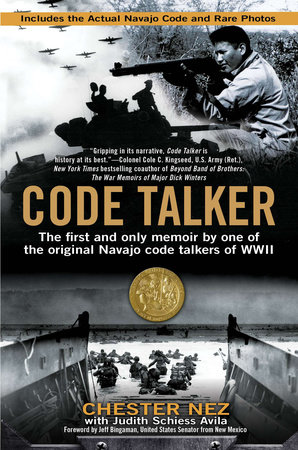
Code Talker, by Chester Nez – Memoir by one of the World War II Navajo Code Talkers. Fascinating story!

Code Talker, by Chester Nez with Judith Schiess Avila

The Butterfly Daughter, by Alice Monroe – This novel weaves the annual journey of the monarch butterflies from Mexico to the US with a young woman who wants to make the trip to the place in Mexico where her grandmother (or was it her mother?) grew up near the place where the butterflies overwinter. Many twists and turns in this story.

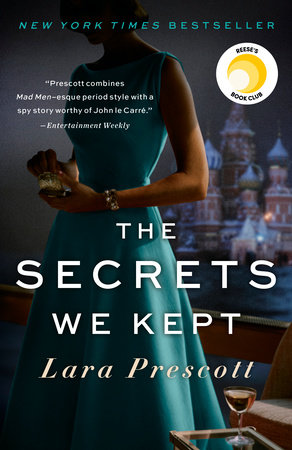
The Secrets We Kept, by Lara Prescott – Story of how the CIA tried to fight the Cold War with Russia by using the novel Dr. Zhivago. Trying to win the cold war with literature. Who knew? Dr. Zhivago couldn’t be published in Russia, so the US was determined to smuggle it out.

The CIA and Dr. Zhavago
The Secrets We Kept, by Lara Prescott

We Wear the Mask: 15 True Stories of Passing in America, edited by Brando Skyhorse and Lisa Page – These stories opened my eyes to the many ways people put up a false front they present to the public in order to pass as something they aren’t. Some of these I’d never thought about before.

Mrs. Lincoln’s Sisters, by Jennifer Chiaverini – As the title indicates, it’s about Mary Todd Lincoln’s sisters and their relationships with each other and with her. It goes into more detail than I’d read before about Mary Todd Lincoln’s mental illness and drug abuse.

Shiner, by Amy Jo Burns – Except for the fact that I’m terrified of snakes and the main character’s father is a snake-handling self-proclaimed preacher, I really enjoyed this book. It’s Amy Jo Burns’ first novel, and I can’t wait to see what she gives us next! Very well written and suspenseful.

Debut novel by Amy Jo Burns
Shiner, by Amy Jo Burns

The Splendid and the Vile, by Erik Larson – This is a nonfiction book about Winston Churchill that reads like a novel. I found it interesting to learn about the personal connections he had with some of the wealthy people in America. Last week, Bill Gates named it as one of the five books he recommends from 2020.

#TheSplendidandtheVile #ErikLarson
The Splendid and the Vile, by Erik Larson

The Man from Spirit Creek, by Barbara Kyle – This is a contemporary Canadian western suspense. Takes place in Alberta. Has to do with oil rigs and sabotage. More light-hearted reading, though, than some of the other books I’ve listed.

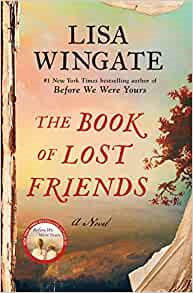
The Book of Lost Friends, by Lisa Wingate – This is a fascinating novel based on something I knew nothing about from the history of the South after the Civil War. It’s about black families trying to reconnect with relatives and friends they were separated from due to slavery. Notices of “Lost Friends” were put in some newspapers. This book sheds light on a post-slavery topic I’m embarrassed to say I’d never really given much thought to. Shame on me!

#LisaWingate #TheBookOfLostFriends
The Book of Lost Friends, by Lisa Wingate

Big Lies in a Small Town, by Diane Chamberlain – Diane Chamberlain is becoming one of my favorite authors. She lives in NC. This novel takes place in Edenton, NC in 1940 and 2018 and is about race relations and outsiders and jealousy. An intriguing story.

Big Lies in a Small Town, by Diane Chamberlain

Call the Nurse: True Stories of a Country Nurse on a Scottish Isle, by Mary J. MacLeod – Delightful true stories of a nurse whose family moves to a remote island in Scotland and, due to her experience as a nurse, she pretty much becomes the doctor on the island.

The Last Train to London, by Meg Waite Clayton – This novel takes you to Germany in 1938. Through several real people, Ms. Clayton weaves a suspenseful story of the Kindertransport effort through which 10,000 Jewish children were saved from certain death in Nazi Germany. Those 10,000 children were taken by train from Germany to The Netherlands and from there to England. It’s based on the real Vienna Kindertransport effort led by Geertruida Wijsmuller-Meijer of Amsterdam, who had begun rescuing smaller groups of children as early as 1933.

The rescue of Jewish children from Nazi Germany
The Last Train to London, by Meg Waite Clayton

LEAPFROG: How to Hold a Civil Conversation in an Uncivil Era, by Janet Givens – The letters stand for Listen, Empathize, Assess, Paraphrase, Facts, Respect, Observation, and Gratitude. It would be good if every American read this book during these polarized times. Or perhaps that difficult conversation you need to have with a relative or friend isn’t about politics. Maybe it’s about race. No matter what that important conversation is about, this book will give you stable, non-threatening ground to stand on as you approach the other person. Or maybe you tend to come across too forceful in your daily dealings with co-workers and need a little help navigating your workday. Good advice in this book. Easier said than done, though.

LEAPFROG: How to hold a civil conversation in an uncivil era, by Janet Givens, M.A.

Since my last blog post

Thank you, Kathy, for prompting me to make the above list!

I’ve dabbled in genealogy research a little. It’s always vying for my attention. I’ve worked on a couple of historical short stories. It’s fun when I can combine my family history research with my fiction writing!

Until my next blog post

I hope you have a good book to read. I’m reading……

I hope you have rewarding creative time.

I hope you wear a mask in public or otherwise when around people with whom you don’t live. Just think how much better our lives will be this time next year, if we all just do the commonsense things to slow the spread of the Covid-19 virus.

Look back over the books you read in 2020. What were your favorites? I’d like to hear from you.

Janet

Books Read in November 2020

As has become my routine, my first blog of the month is about the books I read the previous month. I read a couple of good books in November, so I’m eager to tell you what I thought about them. As sometimes happens, more than one book with difficult topics presented themselves at the same time. This was a month of unpleasant topics, but the writing was excellent.


And the Crows Took Their Eyes, by Vicki Lane

You must read this book! It is historical fiction at its best.

And the Crows Took Their Eyes, by Vicki Lane

The name of this historical novel might be a turn-off for some people but, if you are a true fan of historical fiction, you must read this book. If you desire to learn more about the American Civil War, you must read this book. Vicki Lane has done a masterful job of weaving the story of the war in the mountains of North Carolina through the voices of five point-of-view characters.

This is a story that the history books rarely mention. If it’s mentioned, it is glossed over and allotted one sentence. I remember reading references in history textbooks such as, “Brother turned against brother” and “Neighbor turned against neighbor.”

Those descriptions of what actually happened in places like Madison County, North Carolina, don’t hold a candle to the depth of hate and evil that took place there. And the Crows Took Their Eyes, by Vicki Lane, puts flesh and bones, horror, heartache, and names on such mundane statements that you’ll find in history books.

Ms. Lane’s novel is based on a true story, and four of her five main characters were real people. It is not pleasant reading, but it is artfully written. The suspense slowly builds until unspeakable evil takes place. And the Crows Took Their Eyes is the perfect title for this tale of hate and revenge.

Oh, how I wish I could write historical fiction like Vicki Lane does!


A Time for Mercy, by John Grisham

I listened to this latest legal thriller by John Grisham. Michael Beck always does an outstanding job reading Mr. Grisham’s novels for the audio editions. He outdid himself on this one with the numerous accents. And Mr. Grisham outdid himself with some gut-wrenching courtroom testimony.

A Time for Mercy gets into some tough subjects. A boy kills his mother’s abusive boyfriend. To give more details here would be revealing too much, and I don’t want to spoil the book for you. It is a gripping story with many layers. I highly recommend it.


Since my last blog post

I finished writing a couple of historical short stories. I now have five stories completed and six others in various stages of planning and researching. Maybe I’ll get a collection of short stories published in 2021.

It has been refreshing to spend more time writing lately. I realized that I am happiest when I’m writing.


Until my next blog post

I hope you have a good book to read. I’m reading Fifty Words for Rain, by Asha Lemmie.

I hope you have quality, imaginative, and satisfying creative time, no matter where your creative interests lie.

Wear your mask and try to stay well until we all get through the Covid-19 pandemic.

Janet