Jane Renwick Smedburg Wilkes’ Legacy

Sometimes topics for my blog just fall into my lap. That was the case with today’s post about Jane Renwick Smedburg Wilkes.

As I was doing the research for yesterday’s blog about Good Samaritan Hospital in Charlotte, I was led to do some research about a July 17, 1911, train wreck near Hamlet, North Carolina. The train wreck research led me to a Richmond County Daily Journal newspaper article (https://www.yourdailyjournal.com/news/108231/pair-of-researchers-seeking-more-information-on-train-wreck-from-1111-years-ago) which provided additional information about the hospital. The link is a little elusive, but I hope you can find it if you want to read more about the train wreck.

I am a Carolina Panthers fan, but I can’t afford to go to their games or to anything else at Bank of America Stadium; therefore, I have not seen the historical marker pictured in that online newspaper article. None of my online research about the hospital mentioned Jane Renwick Smedburg Wilkes.

That historical marker reads: “Good Samaritan Hospital (1891-1961) Site of the first independent private hospital in North Carolina built exclusively for African-Americans. Established by Jane Renwick Smedburg Wilkes of St. Peter’s Episcopal Church. One of the oldest black hospitals then in operation in the U.S.”

When I saw Jane Renwick Smedburg Wilkes’ name on that historical marker, I knew there had to be a story there.

As much as I just wanted to tell her story today, it soon became obvious that I could not tell her story without also telling a little bit about her husband. Since I had never heard of either of them, I had a lot to learn. There were some serendipitous findings along the way.

I was born in Charlotte and have lived most of my life in or near the city, but until a couple of weeks ago I’d never heard of Jane and Jack Wilkes. Jane’s is not the kind of name one easily forgets once they have heard it. The fact that I had never heard of her makes me sad, but it mainly makes me a little angry. I should have known her name and a little about what she did.

An online search of her name brought up so many articles and resources that I began to wonder how I would be able to condense her life into one blog post.

Reading that titles of some of the online articles about Jane piqued my interest and curiosity. She was born on November 22, 1827, in New York City to a wealthy family. She was one of 13 children and grew up on the family estate in the Catskill Mountains.

So how did she end up in Charlotte, North Carolina, being a nurse to Confederate soldiers, and establishing a hospital for black people?

My hunch was that marriage must have brought Jane to Charlotte, so I started my research there. Her story takes a strange turn.

This gets a little involved, but bear with me. In 1853, Charles Wilkes and a firm in New York entered an agreement and established The Capps Gold Mine Company. (You may recall that the first gold discovery in the United States was in Cabarrus County, North Carolina, in 1799. Cabarrus is the county immediately east of Charlotte. Goldmining in the area in the early decades of the 19th century necessitated the establishment of a branch of the United States Mint in Charlotte. The area was a hotbed of mining activity until the Civil War pretty much put a halt to mining.)

Charles Wilkes’s wife’s uncle, James Renwick, owned the land where the St. Catharine’s Gold Mine and St. Catharine’s Mill were in western Mecklenburg County (the county of which Charlotte is the county seat.) Silver, pyrite, and chalcopyrite were also mined there.

It turns out that Jane married Charles Wilkes’ son, Captain John “Jack” Wilkes, on April 20, 1854. Jane and Jack just happened to be first cousins, but I’m not going down that rabbit hole other to say they had nine children. Also, I can’t resist to comment that it is just the South that is the butt of jokes about cousins marrying cousins, but Jane and Jack were both from New York. Just sayin’.

I don’t know the details of it, but Jack Wilkes ended up coming to North Carolina to manage his father’s property. It took some digging, but I finally figured out how Jane of the wealthy Catskills family ended up in Charlotte.

After living near St. Catharine’s Mill, in the 1870s Jane and Jack moved into Charlotte and lived on West Trade Street. When I read that Jack owned and managed a flour mill, an iron mill, and a cotton mill, I had to delve into that part of their story.

An unexpected connection with my family

Reading that Jack Wilkes owned and managed an iron mill in Charlotte sent me on a search to find out more about that. My father was a structural steel draftsman. He worked for a few years in the 1960s as a draftsman at Mecklenburg Iron Works, which I knew at that time had been in operation for more than 100 years.

Sure enough, it turns out that Jack Wilkes acquired Mecklenburg Iron Works in 1859. There is proof that it was in business at least as early as 1846. My father’s connection with a company owned by the husband of Jane Renwick Smedburg Wilkes made me even more regretful that I had not learned about her before now.

Through my father’s employment at Mecklenburg Iron Works, I knew that the company made cannonballs for the Confederacy during the Civil War. The company also manufactured the gold stamp mill still in operation for demonstration purposes at the Reed Gold Mine State Park in Cabarrus County.

Jane and Jack’s married life

It pained me to learn that Jane and Jack owned more than 30 slaves. Many of them worked in their mills. That was interesting to learn because I tend to associate slaves in the United States in the 17th century and the first two-thirds of the 19th century as living and working on plantations. I honestly had never thought about any of those slaves working in factories.

And how was it that Jane and her husband owned more than 30 slaves, yet she ended up helping to establish Good Samaritan Hospital in Charlotte in 1891 to serve the black people of North Carolina?

Jack and Jane sided with the South in the Civil War, but tow of Jane’s brothers fought in the Union Army and Jack’s father gave monetary support and supplies to the Union.

It sounds like the classic “brother against brother” kind of story associated with the American Civil War!

During the Civil War, the Confederate Government took over Mecklenburg Iron Works and it was used as a naval ordnance depot. Wilkes got the factory back after the war ended in 1865 and changed production from cannonballs to agricultural equipment. The company was sold to Carolina Steel Corporation in the 1960s.

Back to Jane Renwick Smedburg Wilkes, the original subject of today’s post

Jane joined St. John’s Episcopal Church in High Shoals, North Carolina. High Shoals is in Gaston County, just west of Charlotte. It was originally a textile community. I don’t know if Jack joined the church there or not. When they moved to Charlotte, they both became members of St. Peter’s Episcopal Church where Jane served as president of the church’s Aid Society.

During the Civil War, Jane volunteered at several of the camps in Charlotte where wounded Confederate soldiers were brought. The experience made a deep impression on her. Soon after the war she started leading the effort to build a civilian hospital in Charlotte.

Jane was the leading voice, apparently, in the establishment of St. Peter’s Hospital for white people in 1876. With that accomplished, she started working for the construction of a hospital to serve black people. The result was Good Samaritan Hospital, which was the topic of my blog post yesterday, https://janetswritingblog.com/2025/07/14/getting-a-local-history-lesson-in-a-round-about-way/.

In 2014, Charlotte Trail of History installed an 800-pound, 7.5-foot-tall statue of Jane Renwick Smedburg Wilkes just off East Morehead Street near the address 1445 Harding Place in Charlotte.

When I set out to find out something about Jane Renwick Smedburg Wilkes, I had no idea what a journey it would be! Thank you, Tangie Woods, for prompting me to go down this path.

Until my next blog post

If you have a good book to read, consider yourself fortunate. Many people in the world don’t have that luxury.

Don’t forget the people of Ukraine and western North Carolina.

Janet

Getting a local history lesson in a round-about way

Two weeks ago today, I read one of Tangie Woods’ informative blog posts (https://tangietwoods.blog/2025/06/30/dr-william-b-sawyer-founder-of-first-hospital-for-black-americans-miami-fl/).

Tangie’s blog was about the man who, in 1920, started the first hospital for black people in Miami. After reading her post, I wanted to find out more about the first hospital for blacks in my area.

You just never know where a little research is going to take you. I started out looking for the history of Good Samaritan Hospital in Charlotte and in the process I learned about a train wreck in 1911, the murder by a mob in 1913, and a woman who was instrumental in the establishment of the hospital. The hospital and that July 17, 1911, train wreck are connected, so I decided to write about both during this anniversary week.

I was aware of Good Samaritan Hospital because it was still in existence when I was growing up. It makes me feel ancient to remember that when I was born there was still racial segregation in medical care.

Good Samaritan Hospital, or “Good Sam” as it was affectionately called, was built in Charlotte in 1891 after the project was spearheaded by the congregation of St. Peter’s Episcopal Church. The first hospital for white people in Charlotte, St. Peter’s Hospital, was built in 1876.

I learned much from an online article written by Brandon Lunsford (https://charlottemuseum.org/learn/articles/good-samaritan-hospital/). Lunsford is the archivist for Johnson C. Smith University.

In the beginning, Good Samaritan Hospital had 20 beds. A School of Nursing was established there in 1903, which trained nurses for the next 50 years.

With the help of the Duke Foundation and the Colored Sunday School Union, it more than doubled in size in 1925. A major expansion was completed in 1937, bringing the bed count to 100.


Good Samaritan Hospital’s response to a train wreck

The importance of Good Samaritan being the only hospital to serve black people in North Carolina was brought to the forefront on July 17, 1911, when a freight train and a passenger train collided head-on near Hamlet, North Carolina, some 75 miles east of Charlotte.

Brandon Lunsford’s article indicates that 83 black patients were brought from the train wreck to Good Samaritan Hospital. Eighty of the 83 survived their injuries. The way in which medical care was given to the victims of the train wreck raised Good Samaritan’s reputation.

I found conflicting information about the number of people injured in the train wreck. Brandon Lunsford reports that 83 black passengers (and I’m thinking there were probably railway employees included in that number transported to Good Samaritan Hospital in Charlotte), while another online article (https://www.yourdailyjournal.com/news/108231/pair-of-researchers-seeking-more-information-on-train-wreck-from-1111-years-ago) says that 25 people were injured.

(I don’t have the time right now to take a deep dive into that discrepancy. It could be something as simple as a typographical error in the resource material used for either article. I hope it is not because so many of those injured were black people. I couldn’t help but wonder if the early newspaper accounts only reported the number of white people injured. I’ll leave it to someone else to go down that rabbit hole.)

Regardless of the total number injured, all of the black people injured in the accident had to be transported 75 miles to Charlotte to the only hospital serving black patients in the North Carolina, and Good Samaritan Hospital should be remembered and celebrated for that.

The Richmond County, NC newspaper article cited above states, “Many of the injured were members of St. Joseph’s AME Church. They were located in an inferior, wooden passenger train [car] due to segregation laws at the time.”


Back to the history of Good Samaritan Hospital

Good Samaritan Hospital was in the news again on August 26, 1913. Brandon Lunsford’s article reports the following: “A mob of about thirty-five armed men stormed the hospital and captured a black man named Joe McNeely, who was arrested five days earlier for the shooting of Charlotte policeman L.L. Wilson. McNeely, who was also shot and recovering at Good Samaritan, was dragged out into the street by the angry mob, shot and mortally wounded. No one was ever convicted for McNeely’s death, and the crime remains an ugly mark on Charlotte’s history.” (That is another piece of local history I was not aware of.)

The Episcopal churches in Charlotte continued to support and take administrative responsibilities for Good Samaritan Hospital in to the 1950s, but the financial burden was making that increasingly difficult.

In 1961, the City of Charlotte and Charlotte Memorial Hospital took ownership of Good Samaritan. Its name was changed to Charlotte Community Hospital. It closed in 1982 and became the Magnolias Rest Home.

To make land available for the construction of Bank of America Stadium (formerly, Ericsson Stadium), the former Good Samaritan Hospital was demolished in 1996.


Good Samaritan Hospital Historical Marker

The Richmond County Daily Journal article cited above includes a photograph of the historical marker outside Bank of America Stadium in downtown Charlotte. It reads as follows: “Good Samaritan Hospital (1891-1961) Site of the first independent private hospital in North Carolina built exclusively for African-Americans. Established by Jane Renwick Smedburg Wilkes of St. Peter’s Episcopal Church. One of the oldest black hospitals then in operation in the U.S.”


Jane Renwick Smedburg Wilkes?

Who was Jane Renwick Smedburg Wilkes and why am I just now hearing about her?

You’ll have to read my blog post scheduled for tomorrow to find out who she was.


Hurricane Helene Update

The North Carolina Department of Transportation has changed how it is reporting road closures on its website, so my weekly updates will change accordingly. At least, I could not find the detail presented in quite the same way as it was in the past. Also, there was lots of flooding in the northern piedmont and eastern parts of the state due to Tropical Storm Chantal last week.

As of Friday, 37 roads in North Carolina were still closed due to Hurricane Helene and 50 had limited access. Five road were reopened last week.

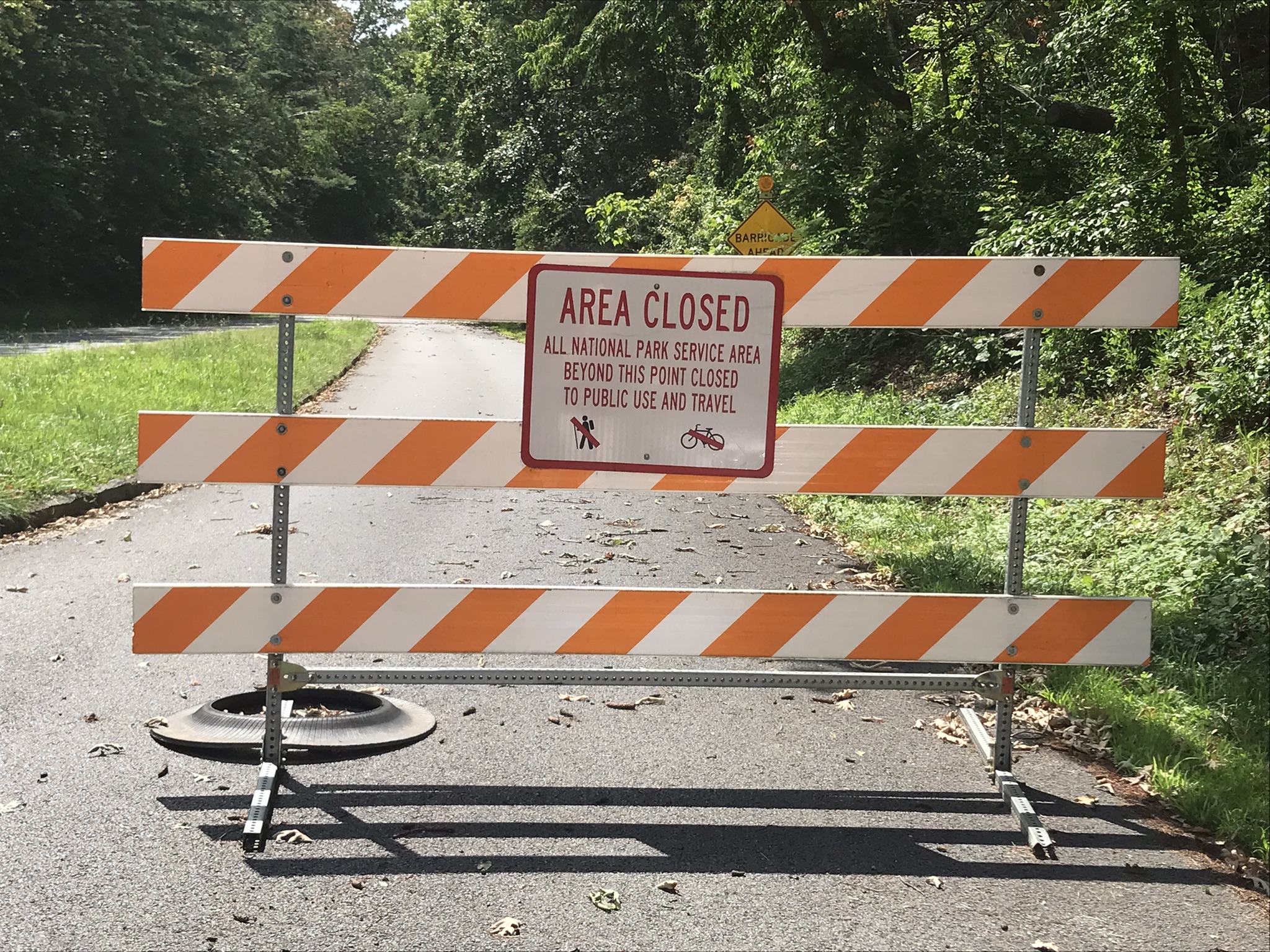
Of course, I-40 through the Pigeon River Gorge is still just two lanes with a 35-mph speed limit, and most of the Blue Ridge Parkway in North Carolina is still closed.


Until my next blog post

I hope you have a good book to read.

Remember the people of Ukraine and western North Carolina.

Janet

Just because I’m not blogging every day about politics…

Just because I’m not blogging every day about politics, don’t assume I’m no longer paying attention to current events and government actions in the United States. I suppose my post last Thursday night proved that, though. I can only hold it in for so long, folks!

After spending an inordinate amount of time taking notes, checking sources, and writing blog posts for the last six months, I have now made time for what I prefer to do with my time: getting my devotional book published and marketed, and getting my historical novel and historical short stories written so they can be published. Those works in progress are near and dear to my heart.

For what it’s worth, I continue to let my US Senators and US Representative know where I stand on the issues. Sometimes they respond. I almost wish they wouldn’t, because their responses just make me angrier.

I wrote about politics in my July 3 blog post, but I did not address specific Congressional votes, US Supreme Court rulings, or Presidential Executive Orders. Here are a few of the matters that have been on my radar lately. One or two of them might be news to you because, other than Alligator Alcatraz, they did not get a lot of press coverage.


Teaching reading: “radical left agenda”

This news came to light last Thursday: The White House wants to slash funding to states for literacy programs, English language instruction, and after-school programs because “they promote a radical left agenda”. If that is approved, it will cost North Carolina $168 million in lost funds.

Photo of a young boy reading a book in silouette with a beautiful sunset in the background
Photo by Aaron Burden on Unsplash

This “radical left agenda” broken record is wearing thin with me. If teaching someone to read or teaching an immigrant English is “radical left agenda,” then call me a radical leftist! I’ll wear that badge proudly! Since when is teaching someone to read a radical idea? If it is, I guess I was radicalized in Mrs. Caldwell’s first grade classroom in 1959.

When did reading become “radical left agenda?” One of my college friends in the early 1970s had a 30-year career as a reading teacher. I don’t know where she stands politically now, but in the 1970s she supported Jesse Helms. You couldn’t get any more “right” on the political spectrum than that!

I’m glad I learned to read when I did, before teaching reading was outlawed.


Trump v. Casa

I am terribly upset by the US Supreme Court 6-3 decision in Trump v. Casa on June 27, 2025. It gives President Trump the freedom to issue thousands more Executive Orders without having to worry that a US District Court judge will issue any injunctions. It is an alarming green light for Presidential power and abuse of power.


Job Corps

There are at least 21,000 students currently doing coursework and hands-on training through Job Corps. It was started as part of President Lyndon B. Johnson’s War on Poverty in the 1960s as a career training program for low-income and at-risk youth.

Everyone does not need a college degree to prepare for a chosen job. Job Corps is a program that helps fill in the gap so low-income youth can get the training they need to get a better job.

Even though Job Corps directly puts young people on track to qualify for manufacturing and other jobs, the Trump Administration has “paused” the program because somebody up there thinks the program’s results are poor and we need to do something about budget deficits. (After all, Congress just added $3 trillion to our national debt last week and cuts have to be made somewhere. We certainly can’t make billionaires pay their fair share in taxes!)

The Job Corps program was abruptly stopped, as is typical of the Trump Administration. They didn’t take time to assess the program and to look at changes that could enhance it. And all this was done while the same Trump Administration is crying for trained workers to work all the “beautiful” factories the Trump Administration says it is bringing back to America.

Common sense would tell me as a former public administrator that if a program isn’t showing positive results, you need to look at it and see what needs to be fixed. Make those changes and try to get the program back on a positive note. If all that fails, then scrap the program.

It feels like we’re returning to “the good old days” of the 1950s and 1960s when in the southern piedmont of North Carolina, 16-year-old couldn’t wait to quit high school and go to work for Cannon Mills for minimum wage. With Trump attacking every level of education, is this the deja vu we have to look forward to?


Natasha Bertrand of CNN

A few days ago White House Press Secretary launched a barrage of verbal attacks on CNN reporter Natasha Bertrand. Criticizing reporters for reporting the “facts” manufactured by the Trump Administration which she represents was not becoming or professional.

But the Trump Administration is like a dog with a bone. Once they latch onto a person or a group of people to attack, they just can’t help themselves. They continue to go for the jugular.

Trump went off the rails in his Cabinet meeting on Monday as he, unprompted, dragged Natasha Bertrand’s name through the mud.  As with Karoline Leavitt’s unprofessional and purely political attacks on the reporter last week, Trump followed suit in his Cabinet meeting and said Bertrand should be fired. It is beside the point that she reported an assessment made by the Trump Administration. He went on to attack the media in general and threatened that “I think changes are gonna be made to the media.” Since he oversees the Federal Communications Commission – which grants and renews (or does not renew) broadcast TV licenses, I think we can safely see that his words qualify as a threat to TV networks that do not report the news with the slant he wants.

Trump especially delights in criticizing intelligent and professional women. They intimidate him because he can’t do what they do. For one thing, they speak in complete sentences.


“Alligator Alcatraz”

The development of the so-called Alligator Alcatraz Detention Center in the Everglades would have been bad enough without President Trump and Secretary of Defense Hegseth joking about the detainees needing to learn how to run in a zipzag motion while being chased by alligators. Not to mention the pythons.

Photo of an alligator
Photo by Kyaw Tun on Unsplash

These are human beings, and I don’t see anything funny about the entire immigration situation.

Over the last two or three days there have been reports of inhumane conditions at the facility, but I will withhold details until they are substantiated.

(A piece of advice for Secretary of Homeland Security Kristi Noem: Women who refuse to dress in proper business attire will never be taken seriously by their male colleagues. Just sayin’.)


Jackie Kennedy’s White House Rose Garden is Gone

The iconic White House Rose Garden established in 1961 by First Lady Jacquelyn Kennedy is no more. Trump said the grass was always wet and wreaked havoc with high-heel shoes. (Don’t you just hate it when nature does that to you!)

Close-up photo of a red rose
Photo by Reanimated Man X on Unsplash

Trump had the entire rose garden and that stretch of lush, green lawn at the White House dug up and paved over.

For someone who calls random things like legislation “beautiful,” the man clearly doesn’t know beauty when he sees it. To him, only money, oil rigs, military tanks, detention centers, other man-made things, masked ICE agents, and an occasional nude model or porn star is beautiful.


Chickens in California

Photo of chickens in the grass
Photo by Thomas Iversen on Unsplash

Since Trump puts no value on life – human, animal, or plant – on Wednesday his administration sued California over its regulation of eggs and chicken farms. The reason? According to Reuters, because “the state’s anti-animal cruelty laws created ‘unnecessary red tape’ that had raised egg prices throughout the U.S.”


Let’s just blackmail another country

President Trump is clamping tariffs on Brazil, although Brazilians purchased $3 billion more in goods from the US in the first five months of 2025 than Americans bought from Brazil. There’s that, so we must look deeper into Trump’s “reasoning” for issuing this tariff. And, if you haven’t heard about it, you’re not going to believe it.

Instead of sending Brazil his usual tariff form letter, Trump sent a letter explaining that he is placing a 50% tariff on imported Brazilian goods because he thinks former president, Jair Bolsonaro, is being treated unfairly. Bolsonaro has been indicted for trying to overturn the 2022 election in Brazil.

I guess for Trump it just felt like “déjà vu all over again” and he feels compelled to come to his friend’s aid. In his tariff letter, Trump stated, “This Trial should not be taking place. It is a Witch Hunt that should end IMMEDIATELY!”

One headline I saw said that the letter looked like it was written by a fifth grader, but I think that’s unfair to fifth graders.


By the way, they speak English in Liberia

In one of a long line of embarrassing things Donald Trump has said, yesterday he put on his condescending voice and complimented President Joseph Boakai of Liberia for speaking such beautiful English. He asked President Boakai if he was educated. He asked him where he learned to speak such beautiful English. He told President Boakai that he spoke better English than some of the people around the table where they were sitting.

That last sentence was definitely true, for President Boakai speaks in complete sentences and President Trump does not.

By the way, President Trump, English is the official language of Liberia.

You can’t make this stuff up.


Ridiculous distractions in June

With the Sean “Diddy” Combs trial and the Jeff Bezos wedding over with, maybe journalists can get back to real life and reporting the news we need.


Until my next rant blog post

I’m glad I have more years behind me than I have in front of me.

I hope you have a good book to read.

Don’t take freedom for granted.

Remember the people of Ukraine and western North Carolina.

(I have not forgotten and I’m not ignoring the flood victims in Texas; however, I will leave it to bloggers in that state to blog about the recovery in the coming months. Since I live in North Carolina, I will continue to give updates on the recovery in my state.)

Janet

Thoughts about the “Big, Beautiful Bill”

I didn’t plan to blog today, but the I received an email from my Congressional Representative. (I refer to him as “Representative” only because that is his title. He represents me in name only.)

My frustration and disgust with the way things are going in the United States this year builds up in me until I just have to rant. I tried to wait a whole week, but it didn’t work out. I really am trying to be a better person, but the powers that be are making it ever so difficult.

I originally titled today’s post, “Thoughts about Trump’s “Big, Beautiful Bill,” but then I realized that it’s not Trump’s bill any more. Both houses of Congress now own it. And every U.S. Representative seat and one-third of the U.S. Senate seats will be up for grabs in November 2026. It’s interesting how all but a handful of the Republicans gleefully voted for it.

Photo Credit: Andra C. Taylor Jr on unsplash.com

The Big, Beautiful Bill

The so-called Big, Beautiful Bill was narrowly passed by the House of Representatives and was sent to the Senate. The Senate made some changes to it and it passed by one vote only because Vice President J.D. Vance voted to break the tie after Senator Lisa Murkowski of Alaska caved in to pressure from her fellow Republicans.

At least in the end, North Carolina Senator Thom Tillis decided to come down on the right side of history. He voted against the bill on the Senate’s final vote because he knew it would take Medicaid coverage away from probably more than 600,000 North Carolinians and possibly result in the closure of some rural hospitals.

The bill then returned to the House of Representatives where it was once again approved by a narrow margin. President Trump signed it into law on Friday with his big, beautiful black Sharpie pen while fighter jets flew over the White House. All his celebrations seem excessive, very expensive, and “in your face” to most Americans.

Polls showed that 60% of Americans were against the bill, but Donald Trump rules and 99% of the Republicans in the House and Senate fall in line without question. After all, they left their consciences at the door when they went in to cast their votes.


Speaking of the Big, Beautiful Bill, according to US Senator Ted Budd…

I received a newsletter from Ted Budd, one of the US Senators from North Carolina. This is how he explained how wonderful Trump’s Big, Beautiful Bill is and why he voted for the bill that increased our national debt by more than $3 trillion:

“This week, the Senate amended and passed President Trump’s ‘One Big Beautiful Bill,’ which included major reforms to slow the ballooning cost of government programs and root out waste, fraud, and abuse.

“The bottom line is this – the ‘One Big Beautiful Bill’ lowers taxes for families, makes our country safer and more secure, and unleashes economic growth for the future.

I voted in favor of the One Big Beautiful Bill Act because the people of North Carolina deserve more of their hard-earned wages, a more secure border, a reinvigorated military, responsible spending reforms for government programs, and a thriving economy.

  • “Helping Americans keep more money in their pockets by extending key provisions of President Trump’s 2017 Tax Cuts and Jobs Act. Preventing the largest tax increase in American history will save the average North Carolinian $2,474 in 2026.
  • “Working families will receive significant savings with the increase and permanence of the child tax credit, expanded tax credits for paid leave, enhanced 529 savings accounts, and additional childcare access.
  • “This legislation lowers taxes for seniors relying on Social Security.

“AND SO MUCH MORE …”

Yeah, right, Senator Budd. You just keep believing that.

Interesting that he forgot to mention what the bill did to Medicaid recipients in North Carolina and the national debt.


U.S. Representative Mark Harris’ email about the Big, Beautiful Bill

The icing on the cake for me was when I received a response on Tuesday from US Representative Mark Harris. I had emailed him (again… and again) imploring him to represent the people of the 8th District of NC instead of Donald Trump.

Since he is (or was) a Baptist minister, I finally even pulled the Christianity card on him … to no avail. With the fraud that surrounded his campaign a few years ago in which his own son testified against him and which forced him to drop out of that race, I was not surprised that my words about “caring for the least of these” fell on deaf ears.

His response to me was, in part: “On July 3, 2025, I proudly voted in favor of the Senate Amendment to H.R. 1 when it passed the House by a vote of 218 to 214. It was signed into law by President Trump on July 4, 2025. With this crucial reconciliation package across the finish line, President Trump will be empowered to continue leading America into a new golden age.

“First and foremost, this legislation unlocks President Trump’s America First agenda and will help keep our economy strong by lowering taxes for individuals, families, and small businesses.”

After listing a few of the wonderful ways the bill will make us all rich again in this “golden age” he wrote, “Additionally, the bill fulfills our promise to keep our communities safe and our country sovereign. It fully funds our border security by providing $175 billion to hire of thousands of new ICE agents, add detention beds, bring on more immigration judges to streamline the deportation of illegal aliens, and complete a strong and secure border wall.”

Jesus must be so proud of him!

Mr. Harris, I’m sure you will seek reelection in 2026, because you obviously have no shame and haven’t read the New Testament in a very long time. You are actually proud of voting for $175 billion to hire thousands of new ICE agents and add detention beds!

Mr. Harris, will the thousands of new ICE agents be as heartless and cowardly as the ones we already have who are afraid to show their faces? Will they be as sick as the officers who showed up in Los Angeles this week just to intimidate families enjoying an afternoon in a public park?

Everything about this “Big, Beautiful Bill” makes me sick. It reeks of turning America into a police state. The rich get richer, the poor get poorer, the sick get sicker, and no one but the wealthiest among us know who or what they can depend on.

Mr. Harris’ email sent me right over the edge last night. I’ve never felt so un-represented in my life.


Until my next blog post

I hope you have a good book to read.

Do what you can to give aid and comfort to the people affected by the flood in Texas.

Remember the people of Ukraine and western North Carolina.

Janet

Two Other Books I Read in June 2025

After my blog post for yesterday got too long for anyone to want to read, I split it up into two posts.

The books I write about today will sound familiar to those of you who follow my blog, but I think both warrant a revisit.


White Hoods and Broken Badges, by Joe Moore

Photo of book cover for White Robes and Broken Badges by Joe Moore
White Robes and Broken Badges,
by Joe Moore

If this book sounds familiar, it might because I blogged about it on October 7, 2024, in What I Read Last Month & a Hurricane Helene Update .  I read it again last month because on my recommendation it was the June book for the book club I’m in.

It was sobering the first time I read it, but it was even more chilling to read it during Donald Trump’s second term in the White House. All the things Moore anticipated and predicted about a second Trump term are coming to fruition right before our eyes.

We are in a bad place in the United States, and we have the 2024 voters to blame. I’m beyond mincing words about the people who brought authoritarianism down upon us when they put on their red MAGA baseball caps and voted last fall.

After reading White Hoods and Broken Badges, I have a better understanding of just how deeply embedded in our government and all levels of law enforcement the Ku Klux Klan and all the various allied white supremacy and white nationalist people are.

Moore says whereas the KKK and militia groups like the Proud Boys used to not mix or associate with each other, now they have joined forces under a common cause: the destruction of our democracy. Their goal is a second civil war in the US, and it has already started. All it needed was the blessing of a second Trump term as US President.

Moore says that whereas it used to be that white supremacist tried to infiltrate law enforcement, now there are people in law enforcement who recruit them. Therein lies the KKK’s power. He writes about the part white nationalist groups played in the January 6, 2021, insurrection and how they fueled the mob attack on the US Capitol.

He went so far as to state, “It’s estimated that somewhere between half and three quarters of all self-identifying Republicans either identify as white nationalists or hold white nationalist beliefs. That means as much as 30 percent of the United States population wants to see the country burn.”

 He knows whereof he speaks. As a confidential informant for the FBI, he infiltrated the KKK twice over a ten-year period. He and his family are living under assumed names.

Please read this book. The statistics I’ve cited are in the opening pages of the book. The book itself is a well-written account of Moore’s time infiltrating the KKK and the things he witnessed. You won’t be able to be complacent after reading it.


How We Learn to Be Brave: Decisive Moments in Life and Faith, by Mariann Edgar Budde.

Photo of the cover of How We Learn to Be Brave by Mariann Edgar Budd
How We Learn to Be Brave: Decisive Moments in Live and Faith, by Mariann Edgar Budde

I blogged about the fourth chapter in this book in my June 20, 2025 blog post, Reacting to the Cards You Are Dealt. I invite you to read that book and the post I wrote in response to reading the fourth chapter. I hope to eventually read the entire book.


Until my next blog post

Get a good book to read. Your local public library has lots of them, and a library card is free!

Don’t forget the people of Ukraine and western North Carolina.

Janet

Two of Four Books I Read in June 2025

This has not been a good reading year for me when it comes to fiction. You may recall that I did not read any novels in April and only read a couple of books in May. There are plenty of wonderful novels out there, I’m just not in a good place mentally right now to concentrate on a plot and enjoy them. The memory problems caused by Chronic Fatigue Syndrome are a daily frustration.

Nevertheless, my blog today is about two of the four books I read or attempted to read in the month of June. I will blog about the other two tomorrow.


My Name is Emilia Del Valle, by Isabel Allende

I thought this would be the historical novel that would rescue me from my drought of reading since January 20, but not even Isabel Allende could do that.

Photo of the front cover of My Name is Emilia del Valle, by Isabel Allende
My Name is Emilia Del Valle, by Isabel Allende

I enjoyed the first half of the book, but then I was too distracted by current affairs to concentrate on the war in Chile in the 1890s. I wanted to see if Emilia would locate her biological father in Chile and, if she did, I wanted to see how that meeting took place and if they formed a relationship. (Spoiler alert: After that meeting took place, I began to lose interest in the rest of the plot.”

I cheered Emilia on because she was a female trying to be a writer. I cheered her n when she got a job as a reporter for The Daily Examiner in San Francisco, for that would unheard of for any newspaper in the US in the 19th century.

It was disappointing for me when I lost interest in the story. That’s not a reflection on the writing, for Isabel Allende is a wonderful novelist. Some of her other novels have held me spellbound. I think it just was not the right time for me to read this book.

Please don’t let my comments deter you from reading it.


Who Is Government?: The Untold Story of Public Service, edited by Michael Lewis, with essays by Michael Lewis, Casey Cep, Dave Eggers, John Lanchester, Geraldine Brooks, Sarah Vowell, and W. Kamau Bell

This book pulled at my heartstrings, because in my early adult life I was a public servant. That was what I prepared myself for in six years of college. As is true for most public servants/government employees in the United States, I had little interest in politics.

If that statement sounds strange to you, then you have a misunderstanding of how government in the United States works.

If that statement sounds strange to you, you need to read Who Is Government?

Photo of front cover of Who is Government? edited by Michael Lewis
Who Is Government? The Untold Story of Public Service, edited by Michael Lewis.

This book is a collection of stories about specific unsung heroes who work in our government. None of them wanted fame or fortune. You don’t know their names.

They were just doing their jobs, all the while dodging the arrows being shot at them daily by a general populous who choose to believe and perpetuate the myth that all government employees are incompetent and lazy.

The writers of Who Is Government? beg to differ with that long-standing misconception of government employees.

The essays in this book are about a government employees who did such things as:

  • Figuring out how to make “roofs” in coal mines so they would not collapse – a problem that has killed thousands of coal miners worldwide;
    •  Figuring out an almost flawless way to run the National Cemetery Administration so that the 140,000 veterans and their families are interred annually are treated with the utmost precision and care as well as immaculately maintaining the final resting place for more than 4 million other veterans in our 155 national cemeteries;
    •  Figuring out how to build the future Nancy Grace Roman Space Telescope “which will have a panoramic field of vision a hundred times greater than the Hubble Space Telescope” and will perform something called starlight suppression to enable us to see behind and around faraway stars;
    •  Keeping track of every statistic imaginable, which is what the Consumer Price Index actually is – and it doesn’t just happen – it takes lots of government employees measuring things and keeping meticulous records that an individual could never do but all our lives are affected by that number; 
    •  Catching and arresting cyber criminals who are defrauding people or perpetuating pedophilia on the internet and the dark web;
    •  Overseeing and accomplishing the digitalization so far of 300 million of the 13 billion government documents so that every American, regardless of their location, will have access to all the records housed by the National Archives and Records Administration;
    •  Working in the US Department of Justice (I hope Olivia still has a job there!) in the antitrust section because she sees helping to enforce antitrust laws as a way to make sure one person’s American Dream does not “impede on other people’s American Dream”; and
    •  Helping doctors find new treatments for rare deadly diseases. (I sincerely hope Heather still has her job, but I’m not optimistic.)

Each of the above stories is fascinating. Each one renews my faith in the United State Government and serves as a reminder that ours is a “government if the people, by the people, and for the people” as so eloquently stated by Abraham Lincoln in The Gettysburg Address.

As I stated a few paragraphs ago, the writers of Who Is Government beg to differ with that long-standing misconception of government employees being incompetent and lazy – that misconception that the Trump Administration and the teenagers working for Elon Musk latched onto with all their might and money this year. And thousands of hard-working, knowledgeable, dedicated, non-political government employees lost their careers.

The brain-drain and experience-drain that resulted from the massive firings and layoffs in the US Government and the trickle down through various state and local government programs won’t be recognized or calculated in its entirety for decades.

In many cases, we will never know what we lost. We will never know the cures for cancer or Alzheimer’s Disease that were missed because the researchers that were on the cusp of those discoveries were let go in the name of “government efficiency.”

We won’t be able to ever recover the beauty and plants and animals that have been and will be lost to mining and deforestation in the name of “government efficiency” and “Make America Great Again.”

If I sound bitter, it is because I am. If I sound unforgiving, it is because I am.

Who Is Government? should be required-reading for all Americans – or at least for everyone in Congress and in the Trump Administration. If they read it, they might not be so quick to paint all government employees with that “incompetent, inefficient, and lazy” brush.

I will close by quoting a paragraph in The Cyber Sleuth” essay in Who Is Government? written by Geraldine Brooks. That essay tells how effective Jarod Koopman and his cyber crime team at the Internal Revenue Service (IRS) have been in catching criminals ranging from bitcoin fraudsters to pedophiles.

This is my favorite paragraph in the book: “The next time a politician or a pundit traduces the IRS, or JD Vance suggests firing half the civil service and putting in ‘our people,’ consider whether a system that filled out its ranks with a new batch of political loyalists every four years would have the expertise of these dedicated lifelong civil servants.”

In 2016, many Trump supporters said, “We need a businessman in the White House.”

I might not be the sharpest knife in the drawer, but I’d like to know what business fires their employees without any consideration of their value or merit every four years just so they can hire all new people. I don’t think that business would last long. That business model makes no sense for a for-profit enterprise and it certainly makes no sense for the United States Government.


Hurricane Helene Update

As of Friday, of the 1,448 roads in North Carolina that were closed due to Hurricane Helene last September, 1,409 were fully open, 39 were closed, 50 had partial access, and one was closed to truck traffic. Eight roads reopened last week.

The statistics posted online by the NC DOT are a little difficult to follow as it is unclear in the chart by geographical divisions which roads are completely closed and which ones of partially closed, etc. Five US highways, three state highways, and 43 state roads are indicated on the chart without explanation of exact closure status.

I-40 is still just one lane in each direction with a 35-mph speed limit, and most the Blue Ridge Parkway in NC is still closed. That road is not included in the DOT chart since it is a federal park-maintained road.


Until my next blog post

Keep reading for pleasure.

Hold your family and friends close.

Remember the people of Ukraine and western North Carolina.

And remember the people of Texas where there was devastating flooding in the wee, dark hours of Friday morning. The death toll continues to rise as I write this, and there are still 11 missing from Camp Mystic along the Guadelupe River. From my Hurricane Helene update above, we know they have a long, difficult road ahead.

Janet

Going forward as Americans

In yesterday’s blog post, A 4th of July like no other, I lamented the fact that I do not feel celebratory on this United States Independence Day.

Here are my thoughts on this 4th of July – the 249th birthday of America.

Purple letters spelling out freedom on a black background
Photo by Kristina V on Unsplash

Never take your freedom to read whatever you want to read for granted. People have died to protect that freedom, and there are people and organizations that think they have the right to take that freedom away from you.

Never take your freedom to practice the religion of your choice – or to practice no religion at all – for granted. People have died to protect that freedom, but there are some people who think they can force their warped brand of Christianity on all our citizens.

Never take your freedom of assembly for granted. People have died to protect that freedom, but there are people who want to limit our access to gathering if our ideas don’t align with theirs.

Never take your freedom to complain, grumble, criticize, question, and protest against your elected officials for granted. People have died while protesting and people have died to protect that freedom. If we lose that freedom, we have lost our democracy.

Never take your freedom to vote for granted. People have died to protect that freedom, but there are loud voices in our country today who want to put many hoops for us to jump through in order to vote. They want to make it such a cumbersome process that we will miss a step or just give up. They try to convince us that voter fraud is rampant, but investigations have proven it rarely happens.

Never take the freedom of the press for granted. People have died to protect that freedom. The freedom of the press is under attack by the President Donald J. Trump, by his press secretary Karoline Leavitt, and by Secretary of Defense Pete Hegseth. But they are wrong. The press is not “the enemy of the people!” It is incumbent upon each and every one of us to defend and protect the press. If we lose that precious freedom in the United States, we will most assuredly lose all our other freedoms.

Remember the people of Ukraine and western North Carolina.

Keeping silent is being complicit

Resist!

Rise up!

Speak up!

Speak out!

Get into good trouble!

That’s how Independence Day 2025 needs to be celebrated… while we still can.

Janet

A 4th of July like no other

Tomorrow marks the 249th birthday of the United States of America. It was on July 4, 1776 that our national Declaration of Independence was signed in Philadelphia.

Photo of dark clouds over the dome of the US Capitol Building
Photo by Kyle Mills on Unsplash

This has been a tough year so far. In the months leading up to July 4, I wasn’t sure how festive this year’s celebration would or could be. Many of us are embarrassed by the actions and words of the current US President, the US Congress, and the US Supreme Court.

Many of us are worried about the future of our country and its standing in the world. Many of us are worried about our financial security as individuals. Many of us are grieving for the rights and benefits we and the poorest of the poor in the world have lost at the hands of the Turmp Administration. People are starving and dying unnecessary of preventable diseases because the aid that the United States had funded and promised has been halted in the name of efficiency, waste, fraud, and diversity.

What should I blog about just hours before Independence Day?

A week or so ago, I decided to mark this Independence Day by posting “A Light and Lively Look at Independence Day in America.” I had the whole post written, illustrated, and scheduled for 5 a.m., July 4, 2025.

I included links to comedian Nate Bargatze’s skits on the iconic TV show, “Saturday Night Live” or “SNL.” Both skits featured Bargatze as General George Washington and four regular SNL cast members (Bowen Yang, Mikey Day, Kenan Thompson, and James Austin Johnson) as American soldiers under his command in 1776 and 1777.

Bargatze’s trademark deadpan delivery made the skits hilarious. I thought sharing links to video recordings of the skits would be a good way to remind Americans that we need to laugh at ourselves. We shouldn’t take ourselves too seriously.

But as the days went by this week, I had a nagging feeling that I could not in good conscience go forward with that post tomorrow. It didn’t feel right. We have nothing to laugh about on this Independence Day.

Our country is in a precarious place. Our democracy and everything we thought we knew about our country are crumbling in front of our eyes.

This is my 73rd Independence Day. Until this year, it has always been a happy day – a day to be proud of my country, a day to pick wild blackberries, a night to hold a sparkler with close adult supervision when I was a young child, a day to go to a parade, a day to eat hotdogs and hamburgers, a day to watch a fireworks display, a day to sing patriotic songs, a day to wave the flag, a day to celebrate our freedoms.

Not this year. Now, none of that feels right. Oh, we still have some freedoms, but the current U.S. President and his minions have them in a vice grip. They are tightening the screws more each day. Those freedoms are being crushed and trampled on.

The last straw for me was seeing “Alligator Alcatraz” on TV and hearing some Republicans in high places of power making jokes about it. They’re making jokes about how the alligators and pythons will keep the detainees in line.

They joke about how the human beings detained there — and yes, although they are here illegally, they are human beings – will have to learn to run in a zigzag fashion while being chased by alligators. They joke about how security will be a small expense because the alligators and pythons work for free. They are human beings with names and families and very few of them are criminals. Coming into the United States without the proper paperwork is not a felony. It is a misdemeanor.

Even with all that “free” security provided by wildlife, we are told that “Alligator Alcatraz” will cost the American taxpayers $450 million-a-year. Florida will pay that upfront and then be reimbursed by FEMA. Personally, I don’t think that was why the Federal Emergency Management Administration was intended for. Even so, the cost in money is beside the point.

This “Alligator Alcatraz” detention center looks like a concentration camp. The human beings will be kept in cages – just like the first Trump Administration kept detainees in the first time. The wire cages are inside tents, and the Trump Administration claims these tents can survive a category 2 hurricane. We might find out over the next five months if that claim is valid.

While in Florida to visit “Alligator Alcatraz” in the Everglades, Trump was asked by a reporter how long individuals would be held there. He gave a long and typically incoherent response that did not address the question at all. He talked about how he lives in Florida and will spend “a lot of time here…” and how he has redecorated the Oval Office. It was a bizarre response to a simple question, but in its bizarre-ness it was one of his typical nonsensical “weaves”

Where are the people who called President Joe Biden incompetent? Where are they now that we have a U.S. President who is incapable of forming a complete sentence or staying on topic?

But that is not my main point.

My thoughts today and each day this week as I anticipated the 4th of July are… disbelief and horror. I am horrified that the United States of America is constructing a concentration camp – just as it did during World War II. Then the camps were built to restrict the movement of people of Japanese descent. In 2025, they are for anyone with brown skin or a Spanish accent.

The photographs of the masked ICE agents are horrifying. They look exactly like the masked Boko Haram self-proclaimed jihadist militant group in Nigeria, except those thugs were black and most of the ICE agents are white. What they have in common in addition to their face coverings is a penchant for terrorizing people, including little children. What they appear to have in common is hate and a personal delight in inflicting pain and terror.

Police officers in the United States don’t wear face masks. People who are ashamed of what they are doing wear face masks. People who don’t want to be caught or recognized wear face masks. Have the dark face coverings of ICE agents in 2025 replaced the white hoods of the Ku Klux Klan? The sight of the masked ICE agents triggers that comparison in my mind, and the first word that comes to mind is “cowardice.”

What kind of person – mostly men – takes a job as an ICE agent? Who takes a job in which they have to trade their souls for a mask and a pair of handcuffs or wad of zip ties? Are they so filled with hate and racism that they enjoy terrorizing families and children?

And those ICE agents? They will, no doubt, say they were just following orders. If that lame excuse rings a bell, it is because that’s what Hitler’s henchmen cried at the Nuremberg Trials in 1945 and 1946.

I don’t recognize this America. I don’t understand this America. I cannot celebrate this America.

Janet

#OnThisDay: 26th Amendment Ratified, 1971 – Part Two

As I indicated in my blog post yesterday, #OnThisDay: 26th Amendment Ratified, 1971 – Part One, when I started researching the history of the 1971 ratification of the 26th Amendment, which lowered the voting age in federal elections in the US from 21 to 18 years of age, I got in over my head quickly and the blog post grew like topsy.

Therefore, I split the post into two posts. My post yesterday gives important background information which helps to put today’s post in perspective.

Starting with the beginning of America’s involvement in World War II, here is how the 26th Amendment finally came about. As I said in yesterday’s blog post, the military draft and the setting of the voting age in the United States became intertwined decades ago.


World War II

Japan attacked Pearl Harbor in Hawaii on December 7, 1941. Congress gave President Franklin D. Roosevelt the authority to send US military personnel anywhere in the world. The distinctions between draftees, regular army, National Guardsmen, and Reservists were removed for the war. They were all part of the army.

Eleven months after the attack on Pearl Harbor, Congress lowered the draft age to 18 and raised the upper limit to the age of 37.

Also in 1942, West Virginia Congressman Jennings Randolph introduced a bill in the House of Representatives to lower the voting age from 21 to 18. That was the first of 11 times that Randolph would introduce such legislation in his political career which eventually found him in the US Senate.

It seems that Randolph had a particular faith in the youth of America. He is quoted as saying that American young people, “possess a great social conscience, are perplexed by the injustices in the world and are anxious to rectify those ills.”

What seems idiotic to us in 2025 is the fact that black men were not considered for the draft until 1943. The so-called reasoning for that was the assumption that white men and black men could not work together in a military setting and white racists believed that black men were not capable of serving in the military!

As a result, in 1943 a racial quota system was put in place under which black men were drafted in numbers to coincide with their percentage of the general population. At that time, just over ten percent of the US population was black.

But even with this new quota, black soldiers were restricted to serving in “labor units.” That changed, though, as World War II progressed and they were needed in combat positions.

President Franklin D. Roosevelt lowered the minimum age for the age to the age of 18 during World War II, but the minimum voting age held at the age of 21. At that time voting age was set by each state.

The slogan, “Old enough to fight, old enough to vote” gained momentum in 1943, and George became the first state to lower voting age for state and local elections from 21 to 18.

By the end of World War II, of the 34 million men registered for the draft, 10 million had been inducted into the military.

Post-World War II until the Korean War

In 1947, President Harry S. Truman asked Congress to let the 1940 Selective Training and Service Act expire and recommended that the US military could rely on voluntary enlistments.

However, in 1948, the minimum number of military personnel was not reached, so Truman asks for the draft to be reinstated. The new act called for the drafting of men between 19 and 26 years old for twelve months of active service.

Korean War (June 25, 1950-July 27, 1953)

Mean between 18½ and 35 were drafted for an average of two years. Men who had served in World War II were not required to sign up for the Korean War draft; however, I know a fighter pilot who served in World War II who was called back into active service during the Korean War. (By the way, he is 100 years old now.)

The Universal Military Training and Service Act passed in 1951. It required men from 18 to 26 years old to register. The next year, Congress enacted the Reserve Forces Act. It required every draftee and every enlisted man to an eight-year military service obligation. That obligation meant that after their term of active duty, they were assigned to standby reserve and knew they could be called back into active duty upon a declaration of war or a national emergency.

Post-Korean War until Vietnam War

In his 1954 State of the Union address, President Dwight D. Eisenhower said, “For years our citizens between the ages of 18 and 21 have, in time of peril, been summoned to fight for America. They should participate in the political process that produces this fateful summons.”

Jennings Randolph (mentioned above in the US Congress in the 1940s) was a Democrat. As a US Army General, Dwight Eisenhower had led US forces in the European Theatre in World War II and was a Republican. So why did it take until 1971 for the 26th Amendment to the US Constitution to come about?

Vietnam War, Civil Rights, and Voting Rights

The US provided military advisors in South Vietnam beginning in the early 1950. The war in North and South Vietnam, Cambodia, and Laos continued.

President Lyndon B. Johnson started pressuring Congress to let him send active-duty troops to Vietnam after a military incident in the Gulf of Tonkin on August 2, 1964. The US was carrying out a covert amphibious operation near North Vietnamese territorial waters. North Vietnam responded, and then based on skewed intelligence the US falsely claimed that another incident occurred on August 4, 1964.

There was very little support in the US for America to send troops to fight in that war, but what a tangled web we weave once we set out to deceive!

The first US Marines landed in DaNang, South Vietnam on March 8, 1965. The first anti-war demonstrations took place in the US since the end of the Civil War. Ironically, that was the same day that the US Supreme Court handed down its decision in US v. Seeger, which broadened the definition of conscientious objection but it was still based on religious beliefs.

Although President Johnson appointed a study commission to come up with changes to the Selective Service system, the war raged on and thousands of young men left the US to avoid the draft.

Photo by Ryan Stone on Unsplash

The Civil Rights Act of 1964 make discriminatory practices based on race illegal; however, some states continued to enforce poll taxes and literacy tests. That necessitated the adoption of the 24th Amendment to the US Constitution in 1964 which outlawed poll taxes.

Some states still had literacy tests that had to be passed before a person could register to vote. It was seen as a way to prevent black people from voting. Therefore, the Voting Rights Act of 1965 was necessary. It prohibits any racial discrimination in voting in the United States.

Photo of people -- mostly black people -- marching with signs demanding the right to vote.
Photo by Unseen Histories on Unsplash

And yet, if you were under 21 years old, you could be drafted and sent to fight in Vietnam but you still could not vote.

In 1969, President Richard M. Nixon ordered a “random selection” lottery system for the draft in place of drafting men at the age of 19. In 1970, Nixon wanted Congress to end student deferments.

On June 15, 1970, in US v. Welsh, the US Supreme Court ruled that men holding ethical and moral beliefs against the war could be exempt as conscientious objectors.

The US Supreme Court handed down its decision in Oregon v. Mitchell (a case brought by Oregon, Arizona, Texas, and Idaho) on December 21, 1970. In a 5 to 4 decision, the Court ruled that the federal government can set voting age in federal elections but not on the state and local level. It also made it illegal for states to require passage of a literacy test in order for an individual to register to vote. Oregon v. Mitchell

There was no end in sight for the US sending troops, which included female nurses, to Vietnam, but they could not vote until they reached the age of 21. Sadly, many of the soldiers in all the wars up to and including most of the war in Vietnam never got the chance to vote because they died before the 26th Amendment was ratified.

Photo of a section of the Vietnam Memorial wall in Washington, DC with flowers laid at the base
Photo by Ryan Stone on Unsplash

Ratification of the 26th Amendment

Under increasing pressure to lower the federal voting age to 18, on March 10, 1971, the US Senate unanimously voted in favor of the proposed 26th Amendment. Thirteen days later, the US House of Representatives voted overwhelmingly in favor of it. It went to the states for ratification, and in a record-setting two months, the required three-fourths of the state legislatures ratified the amendment. It went into effect on July 1, 1971, and President Nixon signed it into law on July 5, 1971.

Photo of a white banner with the letters V O T E in big black ink.

Post-Vietnam War (for a military and draft perspective)

A cease-fire was reached between the US and North Vietnam on January 27, 1973, and US prisoners-of-war began to return home. The last US combat troops left South Vietnam on March 29, 1973.

The 1967 Selective Service Act, which had been extended by Congressional action, was allowed to expire in 1973. Therefore, the draft ended.

The United States operates with an all-volunteer armed forces now; however, all male citizens between 18 and 26 years of age are required to register for the draft and are liable for training and service until they reach the age of 35.


Until my next blog post

Keep reading that novel or nonfiction book that has you captivated. We all need an escape from daily worries and current events.

Never take your family or friends for granted.

Don’t forget the people of Ukraine and western North Carolina.

Janet

#OnThisDay: 26th Amendment Ratified, 1971 – Part One

I can always remember the year the 26th Amendment to the United States Constitution was ratified. It lowered the legal voting age in the United States from 21 years old to the age of 18.

Photo by Element5 Digital on Unsplash

The argument that ultimately won the day and the ratification of the 26th Amendment was that if 18-year-olds were old enough to fight a war in Vietnam, they were old enough to vote.

I just happened to turn 18 years old in 1971. My high school male classmates were receiving draft notices (and at least two of the females in my senior class did, too, because their first names could also be the first names of males), so the argument made sense to me.

What puzzled me was the fact that 18-year-old males had been drafted and sent to war as early as 1778, so why did the voting age not get lowered to 18 before the last years of the Vietnam War?

To find the answer to that question, I went down a rabbit hole. When will I learn that nothing has a simple answer?

It turns out that the question of the draft and the question of at what age an American should be given the right to vote have been intertwined for a very long time and started coming to a head during World War II.

I found it impossible to address the voting age without addressing the age of conscription.

Keep in mind that until 1920 women could not vote in the United States, and black men were not drafted until 1943. And black men and women were not allowed to vote in various states until the 1960s despite the adoption of the 15th Amendment in 1870 which gave black men the right to vote.

Depending upon your age, this might seem like ancient history, but I assure you it is not.

I have divided today’s post by wars or eras up to but not including World War II, in case you aren’t interested in the total progression of this and how the 26th Amendment became part of the US Constitution in 1971.

Tomorrow’s post will pick up with World War II to the ratification of the 26th Amendment.


Revolutionary War

A regular army (the Continental Army) was raised from 1775 until 1783 by men who enlisted given cash bonuses and a promise of land “on the western waters) when the war was over.

My great-great-great-great-grandfather Morrison’s youngest brother took advantage of that offer. After 84 months of service, he was awarded 640 acres of land “on the western waters”, i.e. in Tennessee. Six of his 11 children pulled up stakes in piedmont North Carolina and moved to that land approximately 400 miles away in Tennessee.

War of 1812

The US Government recruited men to serve for 13 months. They were given a $16 sign-up bonus and were promised three months’ pay and 160 acres of land after their service. The US Congress authorized President James Madison to call up 100,000 militiamen from the states, but some of the states refused to cooperate.

Mexican War (1846-1848)

One-year enlistment times for many troops expired and military operations had to wait for replacements to arrive.

Civil War

In the North, Congress authorized President Abraham Lincoln to draft men from 20 to 45 years old. For $300, a rich man could hire another man to serve in his place. Draft riots occurred for four days in New York City on July 13, 1863, after Governor Horatio Seymour declared the conscription act unconstitutional. Government offices were burned, shops were looted, and black men and anyone else refusing to join the protest were tortured. Less than two weeks after the Battle of Gettysburg, New York soldiers there were called home to put down the riot. Approximately 1,000 people died! Governor Seymour finally gave in and the draft in New York started again.

In the South, the Congress of the Confederate States of America passed a conscription law in April 1862. All white men ages 18 to 35 were required to serve for three years in the military. As in the North, substitutes were allowed which contributed to low morale and low number. That eventually resulted in conscription between the ages of 17 and 50. By 1865, slaves were being called into service.

Spanish-American War (1898)

The US Congress made all white men between the ages of 18 and 45 subject to the draft.

World War I

In May 1917, the Selective Service Act was passed by the US Congress. It established local, district, state, and territorial civilian boards to register white men between the ages of 21 and 30 to serve in World War I. There was widespread opposition to the Act which resulted in tens of thousands of men applying for exemptions. More than 250,000 men did not even register. Arrests were made, including one round-up of 16,000 men in New York City in 1918. In light of all that, all attempts to set up military training standards and service were defeated in Congress in the years immediately after the war.

The National Defense Act of 1920

That act established a system of voluntary military service. After all, World War I/The Great War was supposed to be “the war to end all wars.”

Leading up to World War II

The US was reticent to get involved militarily in World War II. The Burke-Wadsworth Act passed in both houses of the US Congress in September 1940. It imposed the first peacetime military draft in US history. In December 1940, all white men ages 21 to 36 were required to register for the draft. Although 20 million men fell into that category, half of them were rejected for military service during the first year due to either health reasons or illiteracy. (An astounding 20 percent of them were illiterate!)


Hurricane Helene Update

Surprise news: I-40 reopened on Friday, just two days after Tennessee Department of Transportation indicated they were trying to get it reopened by July 4.

More good news: Chimney Rock State Park has reopened after being closed for nine months due to hurricane damage to the park and the Town of Chimney Rock.

As of Friday, 62 roads in North Carolina were still closed due to Hurricane Helene. That count included five US highways, nine state highways, and 48 state roads.

Like my report as of Friday, June 20 showed an increase in closures due to Hurricane Helene over the Friday before, this report is a slight increase in closures over the one for June 20. There is no explanation, just a chart showing each category of closures by NC DOT district. I assume some damages were longer showing up than others and/or some roads that were passable for the months immediately after the storm have now been closed for repairs.


Until my next blog post, which will be tomorrow

I hope you have a good book to read.

Keep family and friends close in your thought, prayers, and activities.

Remember the people of Ukraine and western North Carolina.

Janet