What I Read Last Month & a Hurricane Helene Update

I did more reading in September than this blog post will reflect, but there was only one book I read from cover-to-cover: White Robes and Broken Badges, by Joe Moore.

White Robes and Broken Badges, by Joe Moore

Photo of book cover for White Robes and Broken Badges by Joe Moore
White Robes and Broken Badges, by Joe Moore

This nonfiction book will stay in my mind forever. The author infiltrated the Ku Klux Klan (KKK) for the Federal Bureau of Investigation (FBI) not once but twice. He infiltrated it both times to a level never done before, gaining access to the top echelon in the organization.

I’ve never known many details about the workings of the KKK. Never needed to. Never wanted to. However, considering where society in America stands today, it seemed like a good time to get better educated about the threat the KKK holds.

This book sheds light on just how insidious the work of the KKK is and how many its members are employed as law enforcement officers in our country. It is widespread and probably even more of a problem than the FBI knows.

It was through the undercover work of “Joe Moore” that the FBI was alerted that the problem is greater than had been realized. Joe was not an FBI agent. He was recruited by them because of his skill set.

After infiltrating the organization the first time, Joe never imagined he would be called on to do it a second time. But he was so good at it, the FBI needed him. Joe and his wife and children sacrificed a lot for what he did. Ultimately, they lost their home, most of their earthly possessions, their family connections, and friends in a matter of several hours.

The book is chilling. I know of no better word to describe the effect it had on me. Chilling. The details should make every law-abiding citizen in the country – no matter your color, race, ethnicity, or nationality – shiver.

After reading this book, I now have a better understanding of why black people in the United States do not trust law enforcement officers. How can they, when they don’t know in a traffic stop whether they are being pulled over by an honest police officer or sheriff’s deputy or if they’re being pulled over by a member of the KKK who just doesn’t happen to be hiding under a white hood?

It has always seemed a great sign of cowardice that when members of the KKK do their dirty work, they hide in their white robes. If you’re doing something you shouldn’t be doing, though, I suppose you don’t want to reveal your identity.

These are misguided people, and as a Christian I am offended that they use the cross as their symbol. Jesus Christ died on a cross for me (and for them!), so how dare they desecrate that symbol of Christ’s great sacrifice!

I highly recommend this book. It is not a pleasant read, but how do we improve as a society if we bury our heads in the sand and don’t open ourselves up to what is going on not only in the shadows but also in broad daylight?

I learned about this book while listening to National Public Radio (NPR) in August (https://www.npr.org/2024/08/12/g-s1-16223/white-robes-and-broken-badges-exposes-the-inner-workings-of-the-ku-klux-klan)

Update on Hurricane Helene in Western North Carolina

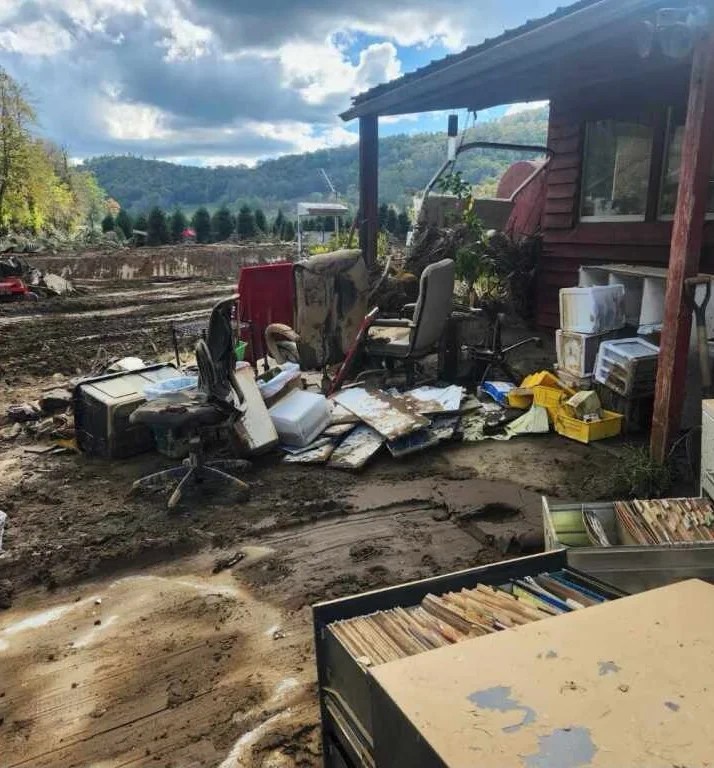
I wish I could include photographs, but I don’t want to run the risk of sharing an image that is undocumented or not in the public domain. You can use some of the links below if you wish to see pictures.

Another reason I am not including photos is that I know from my own experience after Hurricane Hugo in 1989 that pictures don’t do a disaster justice. Unless you are in the middle of a natural disaster and destruction is all you can see, hear, smell, or touch in any direction, you can’t grasp the enormity of the situation.

I know that Hurricane Helene left a wide path of destruction in Florida, Georgia, South Carolina, Tennessee, and Virginia; however, I have lived in North Carolina all my life – four of my 71 years in the mountains. The mountains are near and dear to my heart. I will blog about North Carolina and leave it to people in those other states to blog about the conditions in their states.

A couple of my blog readers said they hoped I would continue to shine a light on the destruction caused by Hurricane Helene in the mountains of North Carolina on September 26.

I do not live in the disaster zone. I’m about 100 miles east of the mountains. We just had a lot of rain, some wind, and a lot of tree branches to pick up and deal with. That is ongoing, but that and our 13-hour power outage pale in comparison to what happened in our beautiful Appalachian Mountains.

Ten days after the storm, many areas of the mountains are still inaccessible. Damage assessments are still being made. Recovery will be measured in years, not months. Some locations were wiped off the map and will not be restored because the landscape has been changed completely and forever.

The United States Geological Survey has identified 244 landslides caused in the Southeast by Hurricane Helene. Most of those are in North Carolina. More landslides will, no doubt, occur in the coming weeks with additional rainfall and freezing conditions.

As of the data I found last night, the death toll in North Carolina so far was 115, with 72 of those being in Buncombe County. There are still people unaccounted for. Many communities still have no water or sewer service. Cell phone service was spotty before the storm and restoration has been slow.

Hundreds and hundreds of power poles and thousands of miles of overhead power lines are down. Thousands of people are homeless. You might grow weary of hearing about it, but many of the people of western North Carolina are in dire straits.

As always, though, the worst of nature brings out the best in most people. The outpouring of support has been amazing. Electrical workers have come from all over the country and from Canada. Four hundred nurses have arrived in Asheville from as far away as Alaska to pitch in and help local medical personnel who have worked around the clock since September 26 even though most of them have catastrophic damage at their own homes.

Pack mules are being utilized to haul water, non-perishable food, and other necessities into the steep and rugged terrain where vehicles cannot gain access.

Two interstate highways are closed. I-40 near the Tennessee state line will probably be closed for a year. Repairs to I-26 might allow it to reopen next March. Roads and bridges washed away, houses, cars, and businesses floated away, and overnight all the necessities most of us take for granted every day vanished.

The area of devastation in western North Carolina alone covers more than 600 square miles, and it is not flat land! Every mile of those 600 square miles is not devastated. The severity of destruction various from place to place as rain totals were, of course, higher in some places than in others. Also, some areas of the mountains received more rain than others in the days leading up to the arrival of Hurricane Helene. Elevations range from around 1,500 feet to more than 6,000 feet. The destruction is unprecedented. Since 1916, all floods in western and piedmont North Carolina have been measured against The Flood of 1916. Future floods will be measured against The Flood of 2024 because by all statistics it surpassed the one in 1916.

Classes at my alma mater, Appalachian State University in Boone, have been cancelled until at least October 16. (That’s three weeks of fall semester lost.) Students at Lees-McRea College in nearby Banner Elk were evacuated by air to Hickory. Classes have been cancelled at Western Carolina University in Cullowhee the University of North Carolina at Asheville, Montreat College, Warren-Wilson College, Mars Hill University, and numerous community colleges. Blue Ridge Community College in Flat Rock, NC is closed indefinitely. Some county school systems are unable to announce when they will reopen.

The beautiful Blue Ridge Parkway that I’ve waxed poetic about so many times is closed indefinitely. US-441/Newfound Gap Road through Great Smoky Mountains National Park has reopened; however, it was not designed to handle commercial traffic, so it is not an alternate to I-40 or I-26 for large trucks. Sadly, a few people decided that did not apply to them, so they attempted to drive on Newfound Gap Road. Two serious accidents resulted – one caused by a car hauler. The highway will be closed to all traffic from 10pm until 7:30 a.m. until further notice. (https://www.nps.gov/grsm/learn/news/update-on-us441-newfound-gap-road-overnight-closure.htm)

The images coming out of the mountains are gut-wrenching. The needs are great and will continue to be for a long, long time. I hesitate to start naming charities because there are hundreds of reputable ones that are on-site and providing remarkable goods and services. World Central Kitchen (https://wck.org/), the Cajun Navy from Louisiana, Mountain Mule Packer Ranch (https://www.mountainmulepackers.com/), the Red Cross, and Samaritan’s Purse are just a few.

The Manna Food Bank (https://www.mannafoodbank.org/) which serves the Asheville and surrounding areas lost their facility and its contents. Brother Wolf Animal Rescue (https://www.bwar.org/) was flooded out but the 150 animals they were housing on September 26 were rescued by volunteers. Organizations like food banks and animal rescues need to be rebuilt and aren’t necessarily eligible for government assistance. (I saw on the Brother Wolf Animal Rescue website last night that donations to that organization are currently being matched!)

The Appalachian State University Disaster Fund (https://www.appstate.edu/disaster-relief/) is another organization for you to consider. It has stepped up to assist students, staff, and faculty members who have lost their homes. The fund also provides much-needed counselling for those traumatized by the storm.

Atrium Medical Center in Charlotte has set up its mobile hospital in Tryon in Polk County. Many towns and counties across the state have sent teams of medical personnel and swift water rescue teams to assist with the aftermath of the storm. The National Guard and 1,000 active-duty personnel from Fort Liberty (formerly, Fort Bragg) were deployed and have been on the ground since weather allowed access. Numerous restaurants are giving out free meals as they are able to prepare food.

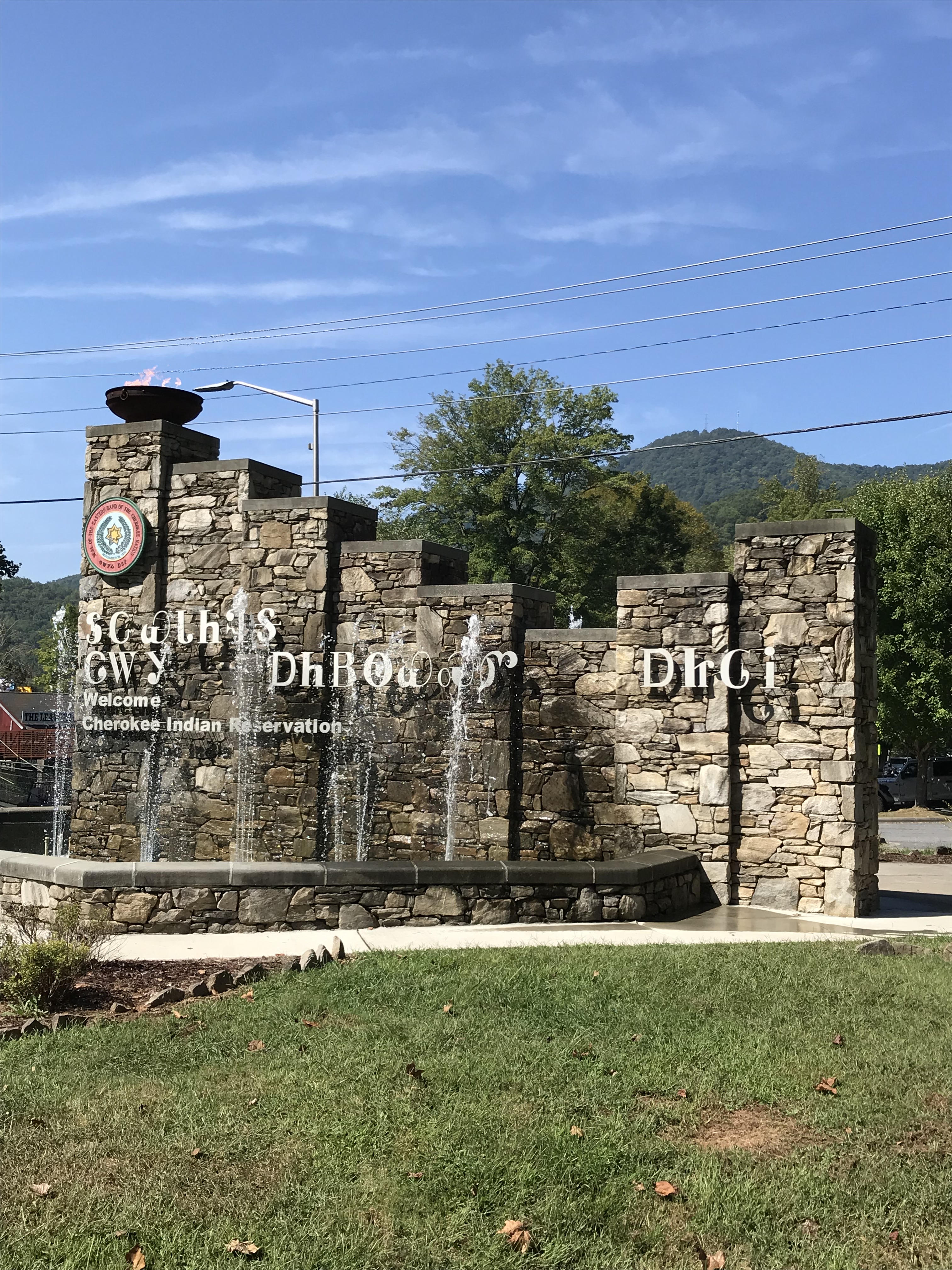
Having just visited Boone and West Jefferson on September 12-13 and having visited Hendersonville, Asheville, Bryson City, and Cherokee this summer, it is difficult to grasp the scope of the damage. I drove on the Blue Ridge Parkway from Asheville to its southern end at Great Smoky Mountains National Park in June. I drove from Hickory through Old Fort, Black Mountain, Asheville, and Canton and into Tennessee on I-40 the last week in August.

I always breathe a sigh of relief when I make it through that treacherous stretch of I-40 approaching Tennessee because rock slides are not unusual. To know that part of that interstate literally washed away 10 days ago is hard to get my head around, though.

Know that any support you can give to the people of western North Carolina is appreciated.

Since my last blog post

I was told (again) in a webinar last week that the purpose of a blog is to solve someone else’s problem. Until I figure out how to do that, I’ll just keep blogging like I have for the last 10+ years. As of last week, I have 1,200 subscribers to my blog, so maybe I’m doing all right. If you came to my blog today seeking a solution to a problem, you are probably disappointed.

On the other hand, if you were looking for a way to lend a little aid to people trying to rebuild their lives after Hurricane Helene, I hope one of the organizations I mentioned today struck a nerve with you.

Until my next blog post

I hope you have a good book to read, a roof over your head, enough food to eat, and clean water to drink.

If all you are hearing is that FEMA and all levels of government are failing to respond to those affected by Hurricane Helene, then you are listening to the wrong sources. More than a week of lies about this from the immediate-past-twice-impeached-34-times-indicted-president is wearing thin here in North Carolina. Please fact check your sources and get your news from a variety of reputable news media.

Hold your friends and family close, for we never know what tomorrow will bring.

Don’t forget the people of Ukraine or the people of western North Carolina.

Janet

Best laid plans…

Do you ever over-organize your life?

I’m a planner. A list maker extraordinaire. The trouble is, I tend to think I can do more in a day than I actually can accomplish. Every. Single. Day.

Several inexpensive and two free online writing courses came along at the same time, and I took the bait.

As if that weren’t enough… along came Hurricane Helene.

I had a full schedule of webinars to participate in and other writing-related things I wanted/needed to do.

The rain poured on Thursday, and that was from a whole different weather system. They said it had nothing to do with Helene… that Helene’s winds and rain bands would arrive overnight and last most of the day Friday.

I got up early Friday morning to listen to the news and weather reports. It was still raining, but I thought we were probably going to be all right. Just as I started to put a pot of water on the cooktop to boil for a nice oatmeal and blueberry breakfast… the power went off.

I forget how addicted I am to writing at the computer… until the power goes off.

I’m trying to take the high road and not whine about the power being off for 14 hours. I live out in the country and have a well so when the electricity is off I don’t have any water. Things get interesting fairly quickly. However, this was a minor inconvenience compared to the widespread flooding and devastation that has and continues to occur in western North Carolina.

I live about 500 miles from where Hurricane Helene made landfall on the Gulf coast of Florida. It was hard to grasp that Helene would still be packing such a punch when she got to North Carolina, even though meteorologists warned that this could be a rain event of historic proportions in the mountains of the state.

Hurricane Helene and her remnants caused devastation in biblical proportions over hundreds and hundreds of miles. What I experienced here in the piedmont doesn’t hold a candle to what happened in the Appalachian Mountains 100 miles to the west.

Asheville, North Carolina is getting the bulk of the media coverage, so you might not be aware that the entirety of western North Carolina is in a world of hurt right now. Some areas received over 25 inches of rain from Helene.

Chunks of I-40 were washed away by flood waters while other sections are under mudslides. Virtually every highway and country road in the mountains were or still are impassable. (That total was 400 on Friday and Saturday, but dropped to 280 yesterday.) Town after town after town in addition to Asheville experienced record-breaking flooding. Not to mention all the nooks and crannies that aren’t towns but tiny communities. Many areas have not been accessed yet as I write this.

Roads are gone. Communications are down or spotty at best. The situation is dire and becomes more dangerous by the day.

Two weeks ago I blogged about my visit to my alma mater, Appalachian State University, in Boone, North Carolina (Who says you can’t go home again? Revisiting a university campus). Seeing aerial pictures of the Town of Boone under water has been gut wrenching the past days. The 21,000 students must be shell-shocked! I would have been if this had happened while I was a student there.

If you have subscribed to my monthly e-newsletter, earlier in September you read about my “field trip” to Swannanoa, North Carolina. I gave some of the history of the construction of the Western North Carolina Railroad through Swannanoa Gap in the 1870s. Sadly, the sketchy reports coming out of the Swannanoa/Black Mountain/Montreat/Old Fort area a few miles east of Asheville indicate that those particular towns are suffering severely from the flooding and landslides caused by Hurricane Helene.

The quaint small town of Chimney Rock was practically wiped off the map. Isolated communities and small towns are scattered throughout western North Carolina. The death toll is rising as search and rescue operations continue. Even the interstate highways are steep and winding.

Almost every one of the mountain towns I can think of was flooded on Friday. Cell, landline service, and electricity were knocked out. I’ve seen pictures of almost every town I can think of being under water.

Although served by two interstate and several US highways, on Friday and Saturday the city of Asheville (population 95,000) was only accessible by air.

I’m afraid the news cycle will transition to the fighting in the Middle East and back to the coming US elections. The public will soon forget Hurricane Helene. Or, there will be another natural disaster that needs our attention.

The devastation from Hurricane Helene covers hundreds of square miles in western North Carolina.

As the area slowly recovers over the coming months and years — when you know you won’t be in the way of first responders and second and third responders — visit the area and patronize the small businesses. Eat at the diners instead of the chain restaurants. Shop at the little shops and independent bookstores instead of at the big-box stores.

Western North Carolina’s economy depends on tourism. Autumn is the biggest tourist season as the native hardwood forests put on a colorful show. Tourists will not be visiting the area this fall because so many of the roads are in shambles.

Western North Carolina is famous for its apples. This is the beginning of apple season. Many orchards were severely damaged last week, but if you have the opportunity to purchase apples from North Carolina this fall or any time in the future, do so to help the farmers get back on their feet.

Western North Carolina is also famous for its Christmas trees. Many of the fir and spruce trees that have graced the White House through the years were grown in North Carolina. If you can buy a tree from North Carolina in December, do so.

Western North Carolina is known for its artisans. Quilt makers, glass blowers, textile artists, weavers, woodcrafts people, painters, musicians, potters, makers of corn husk dolls, knitters, and crocheters depend on tourists to purchase their wares. But now many of their retail outlets are gone. Seek them out online on marketplaces such as Etsy.com.

Mountaineers are sturdy, intelligent, talented, resilient, resourceful people. They roll with the punches during winter blizzards and hard times, and many of them are about as self-sufficient as a person can be in the 21st century. But when they experience a 1,000-year flood followed by the remnants of a hurricane all in the span of three days that affects every community in the region, they need a hand up. They don’t want our pity. They need our support.

If you are so moved and are able, do what you can to help the hurting people of southern Appalachia. Donate what you can to a reputable charitable organization of your choice.

Since my last blog post

I got to visit a veteran of World War II and the Korean War last week who celebrated his 100th birthday this weekend. How many people get to do that?

Until my next blog post

I’m writing this on September 29 and scheduling it for September 30. A fiber optics cable is being moved a couple of miles up the road and my internet service is going to be interrupted any minute now for an undetermined length of time. Not that Windstream gave us any warning. If not for word-of-mouth, we would have been blindsided. On second thought, I think I’ll just go ahead and hit the “publish” button and not rely on the “schedule” button! So much for my best laid plans for tomorrow!

Until my next blog post

I hope you have a good book to read.

Don’t take your family or friends for granted.

Remember the people of Ukraine and the people of western North Carolina.

Janet

#OnThisDay: Lewis & Clark Expedition Completed, 1806

I wish more emphasis had been put on Lewis & Clark’s Corps of Discovery when I was in school. Living in North Carolina, it just wasn’t taught much. I suppose in the Midwest and Great Plains states it was and is taught in detail.

Today marks the 218th anniversary of the conclusion of Meriwether Lewis and William Clark’s grand trek into the great unknown in search of the Northwest Passage.

I learned more about the Lewis & Clark Expedition from watching Ken Burns’ documentary film than I learned in school. Ken Burns has a gift for weaving story, quotes, and geographic images together in a comprehensive telling of particular times or events in American history.

The When and the Why

US President Thomas Jefferson is remembered for his curiosity. Since the 1400s, explorers had dreamed of finding Northwest Passage – a waterway across North America from the Atlantic to the Pacific. President Jefferson wanted the Pacific coast of North America to be found, and he was convinced that a group of explorers would find it if they could just cross the Mississippi River and follow the Missouri River across the lands included in the Louisiana Purchase.

Meriwether Lewis and William Clark led the group that was assembled to explore the region. It was a vast unknown to the European settlers. What the Corps of Discovery did was comparable to the space exploration of our time, except Lewis & Clark did not have computers to guide them. They really didn’t know what the terrain and weather would be like once they ventured very far beyond St. Louis.

In the spring of 1804, at the direction of President Jefferson, this band of intrepid explorers set out on a journey of unknown time and distance. (I guess it is sort of like the two astronauts who are going to be on the International Space Station for eight months instead of the originally planned eight days.)

How does one pack for such an adventure? What thoughts went through their minds as they headed west, not knowing if or when they would see their families again?

The Preparation

For starters, I will point out that the Corps of Discovery was made up of Lewis, Clark, and nearly four dozen men. As I recall, in school we were led to believe that it was just Messrs. Lewis and Clark and that they were joined by a Native American young woman, Sacagawea, somewhere along the way.

They spent the winter of 1803-1804 on the Illinois side of the Mississippi River in a collection of huts they built. It was called Camp Debois. Among the supplies they gathered in preparation for their journey were nearly two tons of flour, nearly two tons of salt pork, 50 pounds of coffee, and 100 gallons of whiskey.

Information was gathered from fur traders, and the men were drilled, for this was comparable to a military mission and a chain of command was integral if the expedition had any chance of being successful.

The How

They started out in a keelboat with two large canoes. Lewis was accompanied by a Newfoundland dog named Seaman who reportedly caught squirrels, beaver, and an antelope. They had been told they would encounter numerous nations of “savages” who would not welcome white men. The message they carried was that all the land within sight in all directions belonged to the United States of America.

Seaman proved his worth not only as hunting squirrels for the men to eat, but also as a guard dog. There were instances when Seaman scared off an angry buffalo and even kept grisly bears at bay.

On November 15, 1805, Lewis and Clark reached the Pacific Ocean at the mouth of the Columbia River in present-day Washington. That was one year, six months, and one days after they began their journey.

What they did not find

They did not find a waterway connecting the Atlantic and the Pacific.

What they found

Photo by Markus Spiske on Unsplash

What they found was the Great Plains, the majestic Rocky Mountains, unknown plants and animals, and native peoples who were curious about them and not hostile as had been expected.

Photo by Aida L on Unsplash

They found the kindness of strangers.

Photo by Boston Public Library on Unsplash

They found a native woman named Sacagawea who would guide them and save their very lives.

They found a vast and wondrous land that none of them could have imagined.

Photo of the flat Great Plains landscape with an angry black cloud looming with a bolt of lightning striking the ground
Photo by Greg Johnson on Unsplash

They found a vast land of unlimited promise.

Photo by Jamie Pilgrim on Unsplash

The documentation they brought to President Jefferson

President Jefferson sent Lewis & Clark and their crew off with explicit instructions as to record keeping. Jefferson even devised a complicated code matrix they were to use if they needed to try to send secret messages back to Washington.

They were to record in great detail the geography; animals; soil; crops; natural plants; minerals; and human inhabitants and their languages, populations, food, clothing, religions, and their interest in commerce.

Journals were kept, along with meticulous records of what they saw that would be of scientific and future exploration benefit.

The completion of the expedition

The Corps of Discovery returned to St. Louis at noon on September 23, 1806. Lewis immediately wrote a long letter to President Jefferson informing him of their return and that they had indeed reached the Pacific Ocean, although not by water the entire way. Included in the letter was the news that instead of taking half a day to cross the western Continental Divide, it had involved crossing 60 miles of treacherous snow-covered mountains.

Since my last blog post

I had the privilege of telling the 37 members of the Leadership Cabarrus Class of 2025 about the history of Harrisburg last Tuesday. Organized by Rowan-Cabarrus Community College, it was an interesting group of people from various walks of life who are relative newcomers to Cabarrus County. I was allotted 20 minutes to give them the highlights of Harrisburg’s rich history.

I’m not much of a public speaker, but I went through my two local history books, Harrisburg, Did You Know? Cabarrus History, Books 1 and 2 and made notes from some of the highlights I thought would be of interest to the group. It was a congenial group and I enjoyed the experience. It had been a couple of years since I had spoken to a large group of people.

Until my next blog post

As always, I hope you have a good book to read.

Make time for friends and family.

Don’t forget the people of Ukraine, as another harsh winter is approaching.

Janet

Who says you can’t go home again? Revisiting a university campus

When I was a freshman at Appalachian State University in 1971, there were 7,800 students. Before I graduated four years later, the university chancellor had announced that enrollment would be permanently capped at 10,000.

Fast forward to the 2024-2025 academic year, and Appalachian has more than 21,000 students. I visited the campus last week, and I can testify to that!

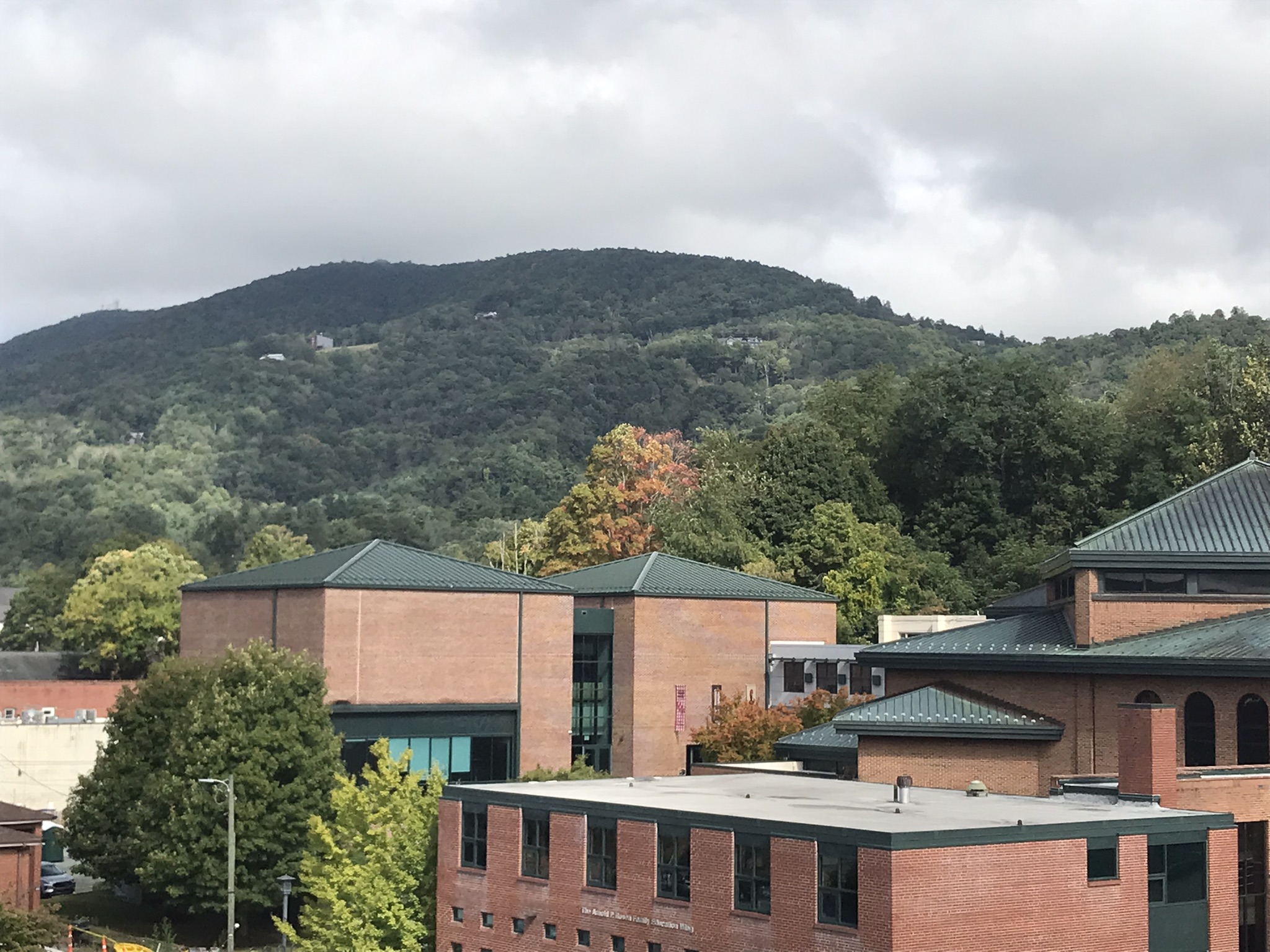
View of Rich Mountain from Appalachian State University Campus

The campus is in a valley at the foot of beautiful Rich Mountain and Howard’s Knob. It’s where Daniel Boone camped sometimes and the mountain is supposedly named for one of his friends with the surname Rich.

Photo of outside of Belk Library and Information Commons
A view of Belk Library and Information Commons

My sister and I were treated to a tour of Belk Library and Information Commons during our visit last week. Marie, being a Library Science major alum of ASU, she was particularly interested to see the great leaps in technology the library offers since her student days there in the mid-1960s.

Photo of lobby at main entrance to Belk Library and Information Center
Lobby at main entrance to Belk Library and Information Center

3-D printers in the library’s Makerspace

One of the statues outside the library

Photo of statue of little boy lying on his stomach and reading Jack Tales
Statue outside library. The little boy is reading Jack Tales.

The library where I spent many hours reading materials that various professors would put on reserve there for on-site-only reading has been converted to classrooms.

Anne Belk Hall (formerly, Belk Library in the 1970s

The building where I majored in Political Science in the 1970s has been replaced by one of many parking decks on campus. Parking decks weren’t needed when my sister and I were students. Very few students could afford to have a car. We walked everywhere we went and thought nothing of it, since none of our friends had a car.

All four of the dormitories I lived in while a student are still there – even East Residence Hall, which I suppose is now the oldest dormitory on campus.

Whereas almost all students back in the day lived in dormitories, most of them now live in apartments. The town of Boone is covered in apartments and restaurants, and much of the old charm of the college town is gone. In the 1960s and 1970s, all the students were on a meal plan and ate in the cafeteria. There was no money for eating out except for the occasional going in together in the dorm on a Saturday night and ordering a pizza.

When someone in the dorm had a birthday, their friends would chip in and buy a square Pepperidge Farms cake at the Winn-Dixie just off campus.

The downtown Boone business district hasn’t changed as much as the campus and the rest of the town in 50 years. Mast General Store still beckons shoppers and The Appalachian movie theater has been refurbished and still offers students and the public the latest in movies as well as other cultural programs. I doubt admission is still 50 cents, though.

My favorite memory of The Appalachian Theater was going to see “Dr. Zhivago” there for 50 cents and having to sit on the front row. Talk about feeling like you are in the middle of the action! (And in the middle of a blizzard in Russia!)

The student infirmary where I worked the night shift on Fridays and Saturdays my last three months on campus was in the former hospital. The nurse I worked with was very compassionate. We were rarely very busy. If we had no patients coming in by around 2:00 or 3:00 a.m., she would let me take a nap. It wasn’t easy to sleep, though, because the pipes carrying the heat from the campus heat plant to the radiators were constantly banging above my head.

When my shift ended 7:00 a.m. I would trudge through the snow to my dorm where I would immediately fall into bed. Minimum wage was around $2.00 an hour then, but that $32 I made on those 10 to 12 weekends was a Godsend and helped me start socking away money to pay for graduate school.

The Daniel Boone Inn still draws crowds of repeat diners for family-style old-time country and mountain cooking. I couldn’t afford to eat there as a student, but my friends took me out for dinner there on my last Saturday on campus at the end of winter quarter in 1975. We enjoyed a huge meal of fried chicken, mashed potatoes and gravy, country ham, green beans, corn, slaw, stewed apples, and cornbread as we watched snow falling outside.

I wrapped up all the leftover fried chicken on the serving platter and took it to the student infirmary when I went there to work at 11:00 that night. It was, of course, my last night to work there. The nurse I worked with and I would drool over the Kentucky Fried Chicken commercials on our little black-and-white TV every weekend night, so I thought it was apropos for me to take fried chicken for the two of us to munch on that night. The joke was on both of us, as she showed up that night with a bucket of Kentucky Fried Chicken! We ate chicken until we were about to explode! What memories!

I didn’t get to eat at the Daniel Boone Inn last week. At this point in my life, I just don’t need to pig-out on so much food. But I have the memories of that night in 1975 with my friends, the nurse at the infirmary, and all that fried chicken!

Until my next blog post

I hope you have a good book to read. I’ve read some good ones already this month!

If you haven’t already purchased a copy, I invite you to buy The Blue Ridge Mountains of North Carolina, the vintage postcard book I wrote for Arcadia Publishing. If you’ve spent time in the Appalachian mountains, no doubt these postcards will trigger some memories for you. The book is available as an e-book and in paperback from Amazon.

Make time for friends and family, and make sure they all have a copy of my book!

Don’t forget the people of Ukraine.

Janet

#OnThisDay: U.S. Civil Rights Act of 1957

When I think of the Civil Rights Act, I think of the one in 1964, but it was in 1957 that the first major civil rights bill was passed by Congress since the Reconstruction Era following the American Civil War.

The Civil Rights Act of 1957 went into effect 67 years ago today on September 9, 1957.

Photo of black and white Americans marching with protest signs demanding voting rights and an end to police brutality
Photo by Unseen Histories on Unsplash

What it did, in a nutshell

It made it a federal crime to try to prevent someone from voting.

It created the Civil Rights Commission in the Executive Branch of the U.S. Government.

It created the Civil Rights Division of the U.S. Department of Justice.

What led up to this Act

In 1954, the United States Supreme Court ruled in Brown v. Board of Education that racial segregation was illegal in public schools. Change was slow to come.

Nine black students volunteered to desegregate the all-white Central High School in Little Rock, Arkansas. They were met with the National Guard, which had been called out by Governor Orval Faubus, and an angry mob. Two weeks later the nine students, who became known as the Little Rock Nine, tried again to gain entrance to the school. They were able to enter the school but had to be removed for their safety.

U.S. President Dwight D. Eisenhower ordered federal troop to escort the nine students to and from class at the school. The publicity of the troubles at Little Rock helped bring the issue of racial desegregation and voting rights to a head.

President Eisenhower pressured Congress to enact civil rights legislation. The result was the Civil Rights Act of 1957.

The wheels of justice turn slowly

We all know that deep-rooted cultural and racial prejudices are slow to change. It would be the late 1960s before true racial desegregation would be accomplished across the United States. For example, the county in which I live in North Carolina instituted voluntary school desegregation in 1965. The following school year, it was mandatory.

And it was, no doubt, that long before all black citizens felt safe to go their polling places to cast their ballots. I can’t help but think some of them do not yet feel completely safe.

And in 2024, a presidential election year, there are still threats – spoken and unspoken — and insidious state laws making it more difficult for citizens to vote when we should be making it easier. The false accusations of voter fraud have resulted in many state legislatures enacting numerous new restrictions to allegedly fix a problem that does not exist.


Until my next blog post

I hope you’re reading a good book!

Make time for friends and family.

Don’t forget the people of Ukraine.

Janet

Books I Read in August 2024

After not finding anything that grabbed my attention enough to finish reading it in July, it was refreshing to get back into reading in August. My interests are varied, as you will see by the four books I read last month.


Simple Pleasures: Haiku from The Place Just Right, by Elizabeth Gauffreau

Photo of book cover for Simple Pleasures: Haiku From The Place Just Right, by Elizabeth Gauffreau
Simple Pleasures: Haiku From The Place Just Right, by Elizabeth Gauffreau

This is a wonderful collection of 53 haiku! If you aren’t familiar with the haiku form of poetry, this book by Elizabeth Gauffreau would be the perfect introduction for you.

Elizabeth writes in the haiku form of five syllables in the first line, seven syllables in the second line, and five syllables in the third line. Haiku is defined by syllables and a precise choosing of words, but that is not the essence of the art form.

As I understand it, — and I’m no authority — the essence of haiku is the creation of a compact choice of words that convey a feast for the senses. As a writer, I am always taken aback when I read haiku. I marvel at how eloquently and concisely a complete idea or image is written by the poet.

In Simple Pleasures: Haiku from The Place Just Right, Elizabaeth Gauffreau pairs each poem with a photograph from New England, so the book gives the bonus of specific places and images important to the poet. The reader can see what types of places in nature inspire Elizabeth in her writing.

This is a book I will read over and over. It is the perfect book to sit down with when you need a few minutes to relax or calm down after a trying experience. You can read the book in one sitting, or you can read it one poem at a time. Either way, you will savor the gift that it is.


The Girls We Sent Away, by Meagan Church

Photo of the front cover of the novel, The Girls We Sent Away, by Meagan Church
The Girls We Sent Away, by Meagan Church

Switching gears from the calming effects of haiku, The Girls We Sent Away, by Meagan Church, does not deal with a pleasant topic. It is about how in mid-20th-century America, unwed girls who became pregnant were often “sent away” to homes for unwed mothers.

The stigma attached to such events in the 1950s and 1960s was something that middle-class Americans could not deal with. Such girls were hidden away at home or, in many cases including the protagonist in this novel, quietly sent away to facilities just for such situations.

In this novel, Lorraine Delford aspired to be an astronaut in the early days of space exploration. She had the intelligence to do it. She was on track to be the valedictorian of her high school class when all that was shattered.

Lorraine finds herself in the predicament of getting pregnant, being abandoned by the boyfriend, and devastatingly abandoned by her parents. She goes from being the apple of her parents’ eye to being a source of great shame and embarrassment.

Lorraine is hidden away at home until arrangements can be made for her to move into a facility for unwed mothers. All life choices are now made by her parents and the authorities in charge of the dormitory-type home.

She is given little information about what will happen there, and even less information about what her life will be like. She has no say in what happens to her baby. She knows from what happens to other girls that as soon as she has her baby she will disappear without having the chance to say goodbye to her friends.

This book takes Lorraine through the whole process and into her return home to her parents. It is then that she discovers a deep, dark secret her parents have kept from her for her entire life. That secret changes everything.


Bits and Pieces:  My Mother, My Brother, and Me, by Whoopi Goldberg

Photo of front cover of Whoopie Goldberg's memoir, Bits and Pieces: My Mother, My Brother, and Me
Bits and Pieces: My Mother, My Brother, and Me, by
Whoopie Goldberg

As a rule, I don’t follow the lives of celebrities. I don’t care about the ins and outs of their lives, unless it is to learn about their philanthropic endeavors. It’s nice to see someone with wealth using it to help less fortunate people or using it to save the planet and its wildlife.

Whoopie Goldberg is an interesting person. She and I are close in age. I have enjoyed her acting and I agree with a lot of her political views. I checked out her memoir, Bits and Pieces:  My Mother, My Brother, and Me, to learn more about her background. Although contemporaries in age, I knew that she and I had very different childhoods.

In this book, Whoopie pulls no punches. She lays out many of the details of her life with frankness that many others would shy away from. She and her brother were very close. She knew he always had her back – as children and as adults.

Their mother was an extraordinary person, to say the least. Raising two children on her own was no easy task in New York City in the 1950s and 1960s, but she worked hard and made sure her children took advantage of every available opportunity for educational and cultural experiences.

Whoopie’s mother and brother have died, so Whoopie is left with a gigantic hole in her heart. They were the two people on Earth who knew her as well as she knew herself. This book conveys to the reader to never limit yourself or those around you. It also conveys to never take for granted the loved ones in your life, for they can be gone in an instant.


Hebrides, by Peter May

Photo of front cover of Hebrides, by Peter May, a nonfiction book filled with descriptions and photographs of the Hebridean islands of Scotland
Hebrides, by Peter May, with Photographs by David Wilson

This is a fantastic picture book about the Hebrides off the northwestern coast of mainland Scotland. I have visited several islands in the Outer Hebrides and Inner Hebrides, and the gorgeous photographs and detailed descriptions in this book transported me right back there!

Readers might be familiar with the mystery novels written by Peter May. This is the same Peter May. He now lives in the Outer Hebrides, and this book leaves no doubt about his love for the islands.

The Hebrides are sparsely-populated with scatterings of communities among the massive peat bogs from which residents get most of the fuel for heating their homes and for cooking. Here and there along the rugged coast are pristine beaches. The waters of the Atlantic and The Minch are as clear as tap water. You will usually have a beach area all to yourself.

The area is so far north that in the middle of summer there are almost no hours of darkness, which makes for a tourist’s paradise. It’s not easy to get there. You don’t accidentally find yourself on the Isle of Lewis! But the effort is worth it if you seek a quiet place where the people are kind, soft-spoken in their Scottish lilt and their native Gaelic tongue, and the pace is somewhat slow. There are no crowded highways and no chain fast-food restaurants.

It is a spectacular corner of the world, and I will be forever blessed by having spent some time there. If you are planning a trip there or know that you will never get there, I recommend Hebrides, by Peter May to whet your appetite or to make you feel as if you have visited the islands.

P.S. Be sure and pack a heavy jacket, even if you’re going in July or August!


Until my next blog post

Be sure to visit my website: janetmorrisonbooks.com and subscribe to my e-Newsletter. The September issue will be coming out this week. I don’t want you to miss reading about my “field trip” last week to Swannanoa Gap in the mountains of North Carolina where I learned about the construction of the Western North Carolina Railroad in the 1870s.

I hope you have a good book to read.

Hold your family and friends close.

Remember the people of Ukraine.

Janet

#OnThisDay: 19th Amendment to U.S. Constitution, 1920

The 19th Amendment: The right of citizens of the United States to vote shall not be denied or abridged by the United States or by any State on account of sex.

Congress shall have power to enforce this article by appropriate legislation.

It was 104 years ago today that women in the United States finally got the right to vote. The year 1920 might seem like ancient history to some of you, but I always think of it in terms of my mother having her eighth birthday that autumn.

Early- to mid-1800s

Women getting the right to vote came after a long, hard fight. In the early- and mid-1800s, women advocated for the abolition of slavery. Their speeches evolved into words in support of women’s suffrage. Two such women, Elizabeth Cady Stanton and Lucretia Mott, organized a women’s suffrage convention in Seneca Falls, New York in 1848.

Sojourner Truth and Sarah Redmond, two former slaves – who could not vote because of their race and their gender – organized women’s suffrage conventions. Slowly, it was becoming more of a public issue of discussion.

Post American Civil War/Reconstruction Era

The State of Michigan allowed women to vote in school board elections after the Civil War.

With the passage of Reconstruction Era U.S Constitutional Amendments granting black men the right to vote came contentious political and public discourse because it brought to the forefront that women still could not vote. As a result of their disfavor with women still not being granted the right to vote, Susan B. Anthony and Elizabeth Cady Stanton left the American Equal Rights Association (AERA), which they had founded in 1866, and formed the National Woman Suffrage Association (NWSA) in 1869. Later that year, women who thought it more plausible to push for women’s suffrage by getting it adopted state-by-state formed the American Women Suffrage Association.

The Territory of Wyoming (it was not yet a state) granted women full voting rights in 1869. The Territory of Utah followed Wyoming in 1870, but Congress took that right away in 1887.

Photo of an "I Voted" sticker on a woman's finger
Photo by Joshua Sukoff on Unsplash

Virginia Minor of Missouri, after being denied the right to vote in 1872, took her complaint to the U.S. Supreme Court. Minor maintained that the 14th Amendment gave her the right to vote because it stated that “no State shall make or enforce any law which shall abridge the privileges or immunities of citizens of the United States.”

In a classic example of the high court going by the “letter of the law” instead of taking a more pragmatic stance, the Court, in its majority decision in Minor v Happersett, said that the right to vote was not a necessary privilege of citizenship because it was not a right included when the U.S. Constitution was ratified in 1788.

The “bottom line” of this decision was that states did indeed have the authority to deny women the right to vote. Let that sink in for a few minutes.

Late 1800s

In 1878 and again in 1887, there were efforts in Congress to introduce a women’s suffrage amendment, but they failed.

The AERA and NWSA merged in 1890, but some of the leaders worked to exclude black women from participating in events. In 1896, the black women formed the National Association of Colored Women to advocate for women’s voting rights along with other issues that were important to women of color.

Photo of a woman putting her ballot in the voting box
Photo by Unseen Histories on Unsplash

In 1896, the Constitution of the State of Utah once again gave female citizens the right to vote.

1910s

By 1916, 11 western states had granted women the right to vote, but petitions to Congress and litigation in federal courts repeatedly came up short. In the election in Montana that year, Jeannette Rankin was elected to Congress. She was the first women elected to the U.S. House of Representatives.

The joint resolution to propose a women’s suffrage amendment (See the 1878 and 1887 references above) was reintroduced in the U.S. House of Representatives in 1917 – thirty years after it had last been shot down. Proponents of states’ rights argued that the passage of such an Amendment would interfere with each state’s authority to dictate the composition of its electorate and that it would also disrupt the traditional family. Some lawmakers opposed it because they feared it would give black women the right to vote.

(Does anything about the states’ rights argument sound familiar? The current U.S. Supreme Court in 2023 conveniently decided to give states the authority to pass laws about women’s health.)

Photo of turn of the 20th century women
Photo by Library of Congress on Unsplash

The opposition was narrowly defeated as a two-thirds majority voted to pass the proposed Amendment on January 10, 1918. The Senate debated the joint resolution for months with many of the same arguments that had been overcome in the House. President Woodrow Wilson spoke in favor of the Amendment on October 31, 1918, citing the contributions women had made on the home front during World War I.

The following day, the resolution was defeated in the Senate. It failed again in the Senate on February 10, 1919. But President Wilson called a special session of Congress in May 1919. The House passed the 19th Amendment on May 21, 1919, and it was approved by the Senate on June 4, 1919.

During World War I, some of the views of gender roles in the country began to change as women took on many of the jobs that had earlier been considered men’s work. The 19th Amendment was proposed in Congress in June 1919.

August 26, 1920

It took 14 months for a three-fourths majority of states to accept the 19th Amendment. It was ratified on August 18, 1920 and on August 26, 1920, U.S. Secretary of State Bainbridge Colby certified that the Amendment had been ratified.

Photo of "I Voted" stickers
Photo by Element5 Digital on Unsplash

Obstacles such as poll taxes and literacy tests continued to prevent many black women and other females of color from voting until the 24th Amendment was ratified in 1964 and enforced by the Voting Rights Act in 1965.

Since my last blog post

I’ve been reading several books, pushing myself to do some yard work, and watching some online videos about the craft of writing. I’m motivated to get back to work on my novel!

Until my next blog post

I hope you have a good book to read.

Don’t take your family for granted.

Remember the people of Ukraine.

Janet

#OnThisDay: The USS Constitution Engaged the British, 1812

Have you ever been to Boston Harbor to see the USS Constitution? It is the world’s oldest warship that is still afloat and can operate under its own power.

The USS Constitution
Photo by Catherine Kerr on Unsplash

One of six ships commissioned in 1794 by the United States, it was built in Boston in 1797. The three-masted wooden war ship was nicknamed “Old Ironsides.”

Why did I blog about the USS Constitution today?

Today is the 212th anniversary of the first time the USS Constitution engaged in battle against a British warship. That ship was the HMS Guerriere.

Just the facts, ma’am

In researching today’s topic, I found the website for Naval History and Heritage Command (https://www.history.navy.mil/browse-by-topic/ships/original-frigates/uss-constitution-americas-ship-of-state/background-for-media/fact-sheet.html) and I recommend it if you are interested in some of the minute details of the USS Constitution. On that site you will find the ship’s measurements and many details that mean little to me because I know almost nothing about ships.

I few of the facts grabbed my attention, though. I had no idea how large the USS Constitution is. It boggles my mind to think of some of the ship’s statistics considering it was built in the late 18th century.

For instance, it is 305 feet long! That’s a little more than the length of an American football field. Its main mast is now 172 feet tall. It has 48 sails, which is equal to an acre of canvas.

The USS Constitution with Boston in the background.
Photo by David Trinks on Unsplash

In 1812, the crew of the USS Constitution was more than 405 sailors and marines. What surprised me the most, though, was that today it has a crew of three officers and more than 85 enlisted U.S. Navy men and women.

Since my last blog post

We continue to have a lot of rain in the southern piedmont of North Carolina. We have a rain gauge in our yard. From July 12 through August 12 we had a little more than 16 inches of rain! We have some beautiful green moss and a variety of colorful mushrooms in our yard. I wish we could send some of this rain to put out some wild fires in the western states.

School started in the county in which I live last Tuesday, which served as a rude awakening for me that the summer months are flying by much faster than I would like.

Until my next blog post

I hope you are reading a good book that you’re eager to get back to when you finish reading my blog post.

Spend time with friends and family.

Remember the people of Ukraine.

If you’ve ever visited the USS Constitution, I’d love to hear what your memories are. What about it impressed or surprised you the most?

Janet

This Week in History: 1945

I could not get excited about writing about the August 12, 1898 US annexation of Hawaii for today’s blog post. (I could get excited about Hawaii’s statehood, which happened in my childhood, but its annexation as a territory? Not so much.)

I couldn’t muster the energy to do enough research to write 500 or 1,000 words about the annexation of Hawaii, and I doubted if my blog readers were interested enough to read about it. (If I’m wrong, feel free to look it up.)

In the big scheme of things, the events of the week of August 6-15, 1945 were more momentous than what happened about Hawaii in 1898.

It occurred to me that the 79th anniversaries of the bombing of Hiroshima on August 6, the bombing of Nagasaki on August 9, and the surrender of Japan on August 15, 1945 have barely been mentioned in the United States this week.

The famous bomb dome in Hiroshima. Photo by Griffin Quinn on Unsplash

I watch some programming on a TV station in Tokyo. The news and other programming are available via the public TV system here in metro Charlotte. The dates of the atomic bombs are marked in Japan with solemn government-sponsored gatherings and, no doubt, by many private gatherings and individuals.

The horror is remembered by the Japanese people, but the overriding theme of the coverage I have seen over the last week is peace. The Japanese people know first-hand the horrors of nuclear war, and they are adamant that such weapons should never be used again.

Nagasaki Atomic Bomb Museum Photo by Roméo A. on Unsplash

The dropping of those atomic bombs were horrific events in which hundreds of thousands of innocent people were killed, maimed, severely burned, orphaned, or doomed for various health maladies for the rest of their lives.

It has been said that those bombs resulted in the almost immediate surrender of Japan, thus ending World War II and ultimately saving more lives than they took. I guess we will never know the truth of that reasoning and justification.

I imagine the people who are old enough to remember the events of that week – whether they live in Japan, the United States, or other countries involved in the war in the Pacific Theater — are puzzled over the fact that the world is taking little notice of this week’s 79th anniversaries.

Photo by Sunguk Kim on Unsplash

I suppose there will come a time when September 11 will be just another day in the United States. The Americans who were young children or who were born after September 11, 2001, cannot possibly think of that day the way it is forever etched in my memory.

Life goes on. Events are forgotten. To those of us born after 1945, that year seems like ancient history. That’s just human nature. I was born in the United States in 1953, so I grew up with no concept of what life was like during World War II. But that does not excuse me if I don’t stop and think about the events of 79 years ago.

I owe it to my parents, my aunts and uncles, and even my oldest first cousins – all of whom are dead – to remember the sacrifices they made during World War II, their military service, their work to help build military planes, and their courage to hold things together on the home front – all while not knowing when or how the war would end and not knowing which of their loved ones or friends would not come home.

Since my blog post last Monday

I am feeling better than when I penned my August 5 blog post. I was discouraged by an illness which has taken much from me. However, I have been bolstered by the outpouring of concern I have received from many of my readers. Each day has been better than the one before. I’ve even been able to listen to an entire novel and enjoy it!

Thank you for your support and encouraging words. I always come out of these slumps and return to my “normal,” but each time I experience a relapse I can’t help but wonder if I will come out of it.

Since my last blog post

I hope you got a chance to read my reblogging on Friday of a blog post about Elizabeth Graffreau’s new book, Simple Pleasures: Haiku from the Place Just Right. It was my first attempt at reblogging.

Until my next blog post

Take a few minutes to think about the events of this week in 1945. Let’s continue to give diplomacy and peace a chance.

Peace Memorial Park in Hiroshima Photo by sabari nathan on Unsplash

I hope you have a good book to read. I am easing back into reading this month, for which I am grateful.

Remember the people of Ukraine.

Janet

We get by with a little help from our fellow bloggers!

Liz Gauffreau is a blogger friend of mine. This week she launched her new book, Simple Pleasures: Haiku from the Place Just Right. It is a collection of 53 of her original haiku. Each one is paired with a photograph from her love of nature and the world’s beauty.

If you aren’t familiar with haiku, please give this concise form of poetry a try.

You will find Liz’s book to be calming, refreshing, and thought-provoking. It will transport you to another place where you can sit quietly, take a deep breath, and relax.

This is the first time I’ve ever tried to reblog another blogger’s post, so Liz and Joy, I hope this works!

Janet