I write southern historical fiction, local history, and I've written a devotional book. The two novels I'm writing are set in Virginia and the Carolinas in the 1760s. My weekly blog started out to follow my journey as a writer and a reader, but in 2025 it has been greatly expanded to include current events and politics in the United States as I see our democracy under attack from within. The political science major in me cannot sit idly by and remain silent.
In memory of the 2,977 innocent victims who died 22 years ago today in the Twin Towers in New York, the crash of hijacked United Airlines Flight 93 in Shanksville, Pennsylvania, and The Pentagon in Washington, DC.
Photo by Jametlene Reskp on Unsplash
Photo by Aidan Bartos on Unsplash
Photo by Fiona Murray on Unsplash
A day that all of us who were alive on that day will forever remember with unspeakable sadness.
Here it is, the first Monday in September. Where did the summer go? We still have some warm – probably even hot – days ahead, but school is back in session, today is Labor Day in the United States, and for all practical purposes, today marks the unofficial end of summer. I always hate to see it go, but that’s just me.
I read an assortment of books in August, and today I’ll tell you about them. I hope at least one of them will pique your interest. If you’ve read any of them, I’d like to know how you liked them.
The Paris Agent, by Kelly Rimmer
The Paris Agent, by Kelly Rimmer
I get excited when Kelly Rimmer writes a new book. She’s one of my go-to authors when it comes to historical fiction. The first novel of hers that I read was The Things We Cannot Say. I blogged about that novel September 9, 2019 (#BringBackOurGirls.) The next month I read Before I Let You Go (see my October 7, 2019 blog post: Thrillers and a Dark Novel I Read Last Month.)
I listened to Rimmer’s novel, Truths I Never Told You in March 2021, but I failed to blog about it after I finished it. I blogged about The Warsaw Orphan in my July 12, 2021 post, 4 Other Books I Read in June 2021. I read The German Wife by her last August and blogged about it on September 5, 2022 (Four of Eight Books Read in August 2022).
I didn’t realize I’d read six of Kelly Rimmer’s novels until I did a search of my blog posts. I guess you could say I like her writing.
I listened to The Paris Agent on CD from the public library. In her latest historical novel, Kelly Rimmer weaves a story involving two timelines. I usually don’t care for books that yank me back and forth between two different eras, but The Paris Agent was masterfully written and the format worked for me.
Noah Ainsworth was a British spy in France during World War II. In 1970, he is still struggling to make sense of his memories and the gaps in his memories caused by a head injury in the line of duty. His daughter, Charlotte, is determined to unravel the bits and pieces of his memory, official records, and memories of her father’s contemporaries.
The book takes the reader on a journey of questions, hope, love, misunderstandings, dead ends, and answers. As with Rimmer’s other novels, I recommend this one.
Darkness Visible: A Memoir of Madness, by William Styron
Darkness Visible: A Memoir of Madness, by William Styron
You might be familiar with the author William Styron. He wrote Sophie’s Choice, which was made into a movie. What you might not know is that he had a life-altering battle with severe depression.
Darkness Visible: A Memoir of Madness is the story of his depression. I have relatives who have and still are battling depression. It is a serious illness and deserves a more serious-sounding name. I have heard depression described by the people in the throes of their battles and I have read about it, but nothing has brought the wide scope of symptoms the disease can cast on a person’s mind and body like this book did.
Being a professional writer, Mr. Styron was able to express some of the things he endured with style and grace and carefully-chosen words. It is not a pleasant subject, but it is an illness that affects more people than we probably realize.
I encourage you to read this book, especially if someone you love is suffering with depression. Each case is unique, so the symptoms Mr. Styron had are not necessarily the symptoms your loved one has. But maybe reading this memoir will enlighten you and help you understand just a little of what your friend, co-worker, or relative faces every day as they try to put on a happy face and act like nothing is wrong.
Don’t ever belittle anyone who is depressed. Don’t ever say, “He is just depressed.” Don’t tell a depressed person to “just snap out of it.” Don’t ever minimize their suffering. Mr. Styron gives hope in the end. He got the professional help and medication he needed, and now he can look back on that horrible time and write about it.
Blowback: A Warning to Save Democracy From the Next Trump, by Miles Taylor
Blowback: A Warning to Save Democracy From the Next Trump, by Miles Taylor
I was reading this book on August 14, 2023 – the day the indictments came down from Fulton County, Georgia against Donald Trump and 18 others. The author, Miles Taylor, worked in the Department of Homeland Security in the Trump Administration. He hoped from the beginning that Donald Trump would “rise to the occasion” or that some adults would influence him. Neither happened.
Taylor thought by staying in the administration but publishing warnings under the pseudonym “Anonymous” he could bring enough exposure to the corruption in the Trump White House to prompt Congress and others in high positions of authority in the government to reign in the extremist radical ideas Trump espoused. It didn’t work out that way, and in October of 2020, Taylor went public and Trump was openly out for revenge.
Among other things, as “Anonymous,” Taylor had made it known that behind Trump’s back various Cabinet members were saying how incompetent he was.
Taylor explains in the prologue that “blowback” is the term used in national security circles “to describe unintended consequences, the failure to anticipate the repercussions when we make a choice.” Hence, the title of his book.
He says our generation of Americans will be known by future generations by the words, “They did not listen.”
He wrote the book to warn the American public about what is at stake if Trump is elected in 2024 or a more competent Trump-wannabe is ever elected. He addresses the various “guardrails” in place to safeguard our democracy and how they were weakened by the actions of Trump and his supporters.
I know what I write here won’t change any minds. Mr. Taylor probably knows his book won’t change any minds. The people who still support Trump apparently aren’t going to change their minds no matter what he says, does, or is convicted of. And they will go to the polls in 2024 and vote for him again even as they must hold their noses to shield themselves from the stench of his behavior – behavior they would not tolerate from their own family members or an employee.
If you want an inside look at what went on in the White House during the Trump Administration, you might be interested in this book. It is incumbent upon every American to pay attention to what has happened, what is happening, and what will continue to happen in the political arena. It is our responsibility. After all, ours is, to quote the Gettysburg Address, “…government of the people, by the people, and for the people….” We are the government.
Educate yourself before you vote. The depth of Trump’s incompetence illustrated by example after example in this book is mind blowing. From asking if hurricanes really spin to wanting to tell people in the path of a Category 4 hurricane to stay home and ride it out, to suggesting that fire trucks could be parked near the border with Mexico so cows could climb the ladders on the trucks to get over the border wall and graze along the Rio Grande…. You can’t make this stuff up.
Mastering Suspense, Structure & Plot: How to Write Gripping Stories That Keep Readers on the Edge of Their Seats, by Jane K. Cleland
Mastering Suspense Structure & Plot, by Jane K, Cleland
In this book about the craft of writing, Ms. Cleland starts out by remind writers to know their readers and give them what they want. She suggests that a writer look at six or more bestsellers in their genre and then analyze them based on such things as sexual content, violence, setting, and pace. She writes about the overarching thematic question posed at the beginning of a novel that must be answered by the end of the book. In terms of structure, she writes about linear and nonlinear structure, and she recommends that a writer select the best structure for the story they’re telling.
In the section of her book about creating suspense, she gives numerous examples of how that can be done. She says “The most common way to create suspense is to let your reader share a character’s anxiety.” It’s easier said than done, but she offers a lot of pointers.
In talking about settings, Ms. Cleland encourages writers to only include the things your point-of-view character sees, hears, touches, smells and only the kinds of places that character would go.
In the fifth chapter, Ms. Cleland writes about how to layer in two subplots. This was a helpful chapter for me, as I have a couple of subplots in one of the novels I’ve drafted. I hope I’ve woven them in appropriately.
She writes about isolating your characters. Each person reacts differently to be physically or socially isolated. She touches on red herrings and how to use them.
You get the picture. If you’re still learning the art and craft of writing fiction, I recommend Jane K. Cleland’s book.
Since my last blog post
I edited one of my short stories, created the cover for it on Bookbrush.com, finished formatting it on Atticus.io, and submitted it to Amazon for publication as an e-book only. It should be available today for $2.99. The name is “Ghost of the Battle of Guilford Courthouse: An American Revolutionary War Ghost Story.” I’m not a believer in ghosts, but please read the Author’s Note at the end of the story to find out what prompted me to write a ghost story.
Ghost of the Battle of Guilford Courthouse: An American Revolutionary War Ghost Story, by Janet Morrison
My sister and I finished proofreading the recipes in and wrote the introduction for The Aunts in the Kitchen: Southern Family Recipes. Getting the photography done for the front and back covers is next on our list. We hope to have the paperback and e-book available on Amazon by November.
I finished writing my September newsletter. I hope you’ve subscribed. It comes out every other month. When you visit my website, https://www.janetmorrisonbooks.com, you can click on the subscribe button and receive a free downloadable copy of my short story, “Slip Sliding Away.”
Until my next blog post
I hope you’re reading a book that is so engrossing you didn’t want to put it down to read my blog.
Don’t forget to order “Ghost of the Battle of Guilford Courthouse: An American Revolutionary War Ghost Story” on Amazon!
Make time for friends and family. They won’t always be here.
Remember the people of Ukraine, Maui, and Florida.
The novels I’ve drafted or at least outlined are not going to be short. They aren’t going to be 1,000-page tomes (300,000 words!) like the Outlander series by Diana Gabaldon either. A sweet spot for historical novels falls somewhere between 90,000 and 120,000 words. I’m aiming for the low 90,000s.
At the other extreme is the genre called flash fiction or minimalist fiction. By definition, flash fiction falls somewhere between six words and usually 1,000 words. There are some 1,500-word exceptions.
For me, it’s easier to write a story of thousands of words than one of a thousand words. It’s a challenge to develop characters and a plot in 1,000 words.
But I mentioned a starting point of six words. The example of such a concise story is attributed to Ernest Hemingway, although, the efficacy of that attribution is not proven. Nevertheless, here is that six-word piece of flash fiction:
“For sale: baby shoes, never worn.”
Wow! You would be hard pressed to find six words that pack more of a punch! The author could have gone on to explain why the baby shoes had never been worn, but isn’t it more effective to let the reader’s mind fill in the blanks?
Photo by Drew Hays on Unsplash
In fact, it would have been easier for the writer to elaborate. Boiling down an entire story into six words is nearly impossible. I can’t imagine that I’d ever be able to do it, but fiction writers today are encouraged to delete all unnecessary words – to make every word count.
That’s the lesson flash fiction teaches a writer, so I think it’s a good exercise for aspiring novelists to practice.
I submitted a 28-word story to an “On the Premises” mini-contest in May. The guidelines were to write in any genre a story of 25 to 50 words in which two opposing points of view were shown. It was an interesting exercise. My first two versions were exactly 50 words. I continued to pare down the unnecessary words. Satisfied with my eighth version of the story, I hit the “submit” button.
Here’s the story I submitted:
This house has stories to tell. Close your eyes. Just listen. You hear that? Children laughing and playing.
Yeah, then going off to war and not coming home.
Photo by Anne Nygård on Unsplash
The winner out of the 212 entries was announced on May 10. My story wasn’t the winner. Perhaps I edited out too many words. I’ll keep trying.
Or, you can go to your public library system’s online catalog and do a search for it – or ask a librarian for suggestions. If you prefer, you can do a search on Amazon or a general search in your favorite search engine.
Since my last blog post
I finished writing the first draft of a devotional book designed especially for people who have Seasonal Affective Disorder in the colder months of the year.
With the family cookbook my sister and I have compiled finally formatted, we started the tedious proofreading phase.
I started proofreading the historical short stories I’ve finished writing.
Until my next blog post
I hope you’re reading a book that is so engrossing you didn’t want to put it down to read my blog.
Don’t forget to subscribe to my newsletter by visiting https://www.janetmorrisonbooks.com. Thank you! I plan to send out my September newsletter the first week of the month. Remember, subscribers to my newsletter receive a free downloadable short story I wrote: “Slip Sliding Away”, which takes place in the Appalachian Mountains in the 1870s.
Make time for friends and family. They won’t always be here.
Remember the people of Ukraine, Maui, and Jacksonville, Florida.
When I was planning my blog post topics for August, I considered writing about today being the 64th anniversary of the statehood of Hawaii. I thought the 64th anniversary was a ho-hum time to draw attention to it, so I planned to write about a different subject today.
Then the wildfires erupted on Maui. Fanned by hurricane-force winds, the fires became a raging inferno and in the blink of an eye, at least 1,100 human lives were lost (as 114 deaths have been documented and more then 1,000 people are still unaccounted for as I write this.) Thousands of homes and businesses were destroyed and thousands of people were left not only homeless but with nowhere to work.
A 200-year-old church sanctuary was destroyed, as well as the local public library – along with everything else in the town of Lahaina.
There is speculation that the fire was sparked by a tree connecting with a power line. However it started, it was fed by low level winds created by Hurricane Dora some 300 miles away and another weather system thousands of miles to the north. The converging wind circulations of the two weather systems created a recipe for disaster.
Should someone or a government agency have seen it coming and issued warnings? That’s not for me to say. This isn’t the time to place blame. The wounds are still too raw. I’m sure the situation is being carefully investigated. I hope the result will be improvements that will give residents and tourists in the future a better chance to evacuate.
Hawaiians should be celebrating the islands’ statehood today, but instead they are in mourning for the lives, beautiful landscape, jobs, history, and property lost in the wildfire.
It’s too early to tell the prognosis of the massive 150-year-old banyan tree on Front Street in Lahaina. I understand it was quite a local landmark.
Lahaina was the ancient capital of the Kingdom of Hawaii, which makes the total destruction of the town even more painful and significant.
I’m old enough that I remember when Hawaii became the 50th state in the United States. We heard about it at home and we talked about it at school. It happened during the first week when I was in the first grade. It was a big deal.
Hawaii is 5,000 miles (or 8,000 kilometers) from North Carolina. I didn’t know anyone who had been there on vacation and couldn’t dream in 1959 that I would ever know anyone to do so. Even by the black-and-white photographs we saw, we could tell it was an exotic place of incredible beauty.
Photo by Neora Aylon on Unsplash
Hawaii still holds a mystique for me and probably most Americans in the other 49 states. I don’t expect to ever visit the state, but the photographs of the lush green of the land and azure Pacific Ocean waters on all sides bring the word “paradise” to mind.
A sizeable portion of paradise on Maui got burned beyond recognition just over a week ago. The landscape is changed forever. I’m sure people will rebuild most of the structures that were destroyed, but lives and artefacts cannot be replaced. The history of the place will only live in the hearts and minds of the people who knew the area before the sudden fire.
Since my last blog post
I finally finished formatting The Aunts in the Kitchen: Southern Family Recipes except for the introduction through the help of Atticus.io. It was beginning to look like it was only going to be an e-book, but technical difficulties caused by my ignorance were eventually ironed out. My sister and I hope to publish the cookbook on Amazon in paperback as well as for Kindle in November. I’ll let you know when it is available.
Until my next blog post
I hope you have a good book to hold your interest this week. I hope it inspires, educates, and entertains you.
Appreciate your friends and relatives, even if they disagree with you politically.
Remember the people of Ukraine and the Island of Maui in Hawaii.
I receive spam emails almost daily from people wanting to tell me how I can greatly improve my website by using Artificial Intelligence. Trust me. I will never let Artificial Intelligence write content on my website or write my blog posts. Furthermore, I will never let artificial intelligence write a short story or novel and then put my name on it as the author.
Photo by Andrea De Santis on Unsplash
Here’s an example of the emails I receive offering to help me write: “I have just took an in depth look on your janetmorrisonbooks.com for the current search visibility and saw that your website could use a boost. We will improve your ranks organically and safely, using state of the art AI and whitehat methods, while providing monthly reports and outstanding support.”
Yikes!
It took me a minute or two to get past, “I have just took…” so I could glance over the rest of the email. I continued to read out of curiosity to see if there were additional grammatical errors. The only thing that would have made this email worse would have been if it had gone on to say, “I had saw….”
Thank you, but I think I’ll just keep plodding along and doing my own writing.
Fortunately, almost 100% of such emails are identified as spam. They don’t clutter up my inbox, but I have to skim over the subject lines before I delete them from the spam box.
Writers Guild of America Strike
On April 18, 2023, the vast majority of members of the Writers Guild of America (WGA) voted to go on strike. Yay for them! They’re striking to get higher pay and guaranteed residuals from the streaming of the TV shows and movies they wrote. I applaud their courage in drawing attention to the way their work is undervalued. They’re being taken advantage of and this was their only choice after negotiations broke down.
Writers never have gotten the respect they deserve because their faces are what people see when they watch a TV show or movie. But make the actors ad lib and see how entertaining that is.
WGA members also don’t want their writing talents replaced by narrative and scripts being written by AI.
Granted, some shows I see advertised don’t appear to have any substance. Maybe the writers of such pitiful TV programming will find another way to make a living during the strike. They should.
Screen Actors Guild Strike
On July 13, 2023, members of the Screen Actors Guild in the United States voted to go on strike for several reasons. One of the reasons was they wanted better protection against AI. They don’t want their images to be hijacked and used in movies or videos without their permission. I’m glad to see the actors standing up against AI.
Another example of AI
I have a new email account with another company since the Windstream data breach fiasco around June 1. One thing I’ve noticed is that it tries to write email content for me. It’s very irritating. It starts throwing out the next three or four words it thinks I want to say. It’s worse than the words my iPhone thinks I want to say next when I’m texting.
The good things about AI
I would be remiss if I didn’t include the other side of the debate. The most promising thing about AI is the ability it will give researchers and medical professionals the ability to access information instantaneously that will potentially lead to new drugs and cures. Of course, how they will keep (or already are keeping) the hackers out of that process remains to be seen.
We all know there are unscrupulous people jumping on the bandwagon to perpetrate harm in other areas of our lives. The MOVEit and Windstream data breaches this summer are proof of that.
AI and the future of writing
Artificial Intelligence writing doctoral theses. Artificial Intelligence writing textbooks. Artificial Intelligence writing term papers. Artificial Intelligence writing essays for university applicants. Artificial Intelligence writing a novel.
Where will it end?
Worse than that, though
These are uncertain times and we haven’t even seen the tip of the iceberg. Just wait until the 2024 US Presidential Election campaign ads are running 24/7 on your TV and you will not be able to tell truth from fiction. You will see and hear candidates for political office doing and saying things they didn’t do and never said. It will all be smoke and mirrors and our very democracy will be at stake. That’s much more serious and dangerous than AI writing novels. It is our democracy being overcome by AI that should have every American’s attention.
Until my next blog post
I hope you’re reading a book that’s so good you didn’t want to put it down to read my blog post! But you did – so thank you! That book, no doubt, was written by a real human being who worked many years to learn and hone their craft so you could hold that book in your hand and be transported to another place and time.
Enjoy your friends and family, even if they don’t agree with you when it comes to politics.
Remember the people of Ukraine and the people on the island of Maui in Hawaii.
Although it’s already the seventh day of the month, it’s the first Monday of August. Therefore, it’s time for me to tell you about some of the books I read in July. I didn’t read as many books as I do some months, but I read one by Jennifer Coburn that I’m eager to tell you about.
Cradles of the Reich, by Jennifer Coburn
Cradles of the Reich, by Jennifer Coburn
If you follow my blog, you know my favorite genre is historical fiction. I happened upon the title of this book quite by chance and was prompted to investigate it. I checked it out of the public library and read it on my Kindle.
Cradles of the Reich, by Jennifer Coburn is a wonderful piece of historical fiction research and writing. It brought to my attention a secret baby breeding scheme conducted in Nazi Germany in the 1930s and 1940s. It started in 1935 and was called Lebensborn, which translates in English as Spring of Life.
In an effort to bring about the master white race Hitler dreamed of, young German girls and women were put in maternity homes where they had sex with German Army officers and other officials of the Third Reich.
There were at least 10 such Lebensborn homes were also where pregnant girls and young women who were not married were taken to be cared for and indoctrinated about the Reich, to be wined and dined, to be trained to be perfect German women, and to deliver their babies to be put up for adoption.
Cradles of the Reich follows the lives of three diverse girls and women whose paths cross in one of those maternity homes. The chapters move from one character to another, which at times pulled me out of the story.
A statement the author makes in her “Author’s Note” in the back of the book sent a chill down my spine as I immediately thought of the loss of autonomy women in the United States have experienced in 2023: “It is my hope that this novel about three German women provides fodder for discussions about the social environments that allow women’s bodies to be politicized and commoditized.”
Along those same lines, I found the following words in her “Dear Reader” section in the back of the book where she addressed questions early readers of the novel had asked her to be a chilling reminder of how it is incumbent upon us to stay vigilant: “Writing about man’s inhumanity to man was sobering…. But once I learned about this horrific program, I felt compelled to write about it because the most effective way to prevent the rise of fascism is to recognize its early warning signs. A key move in every dictator’s playbook is to control women’s reproductivity either by mandatory abortion or forced childbirth.”
I would add that it doesn’t have to be a dictator; it can be the US Supreme Court or a state legislature. Such government actions are insidious and usually presented under the guise of being for your own protection or for the protection of someone else.
Silver Alert, by Lee Smith
Silver Alert, by Lee Smith
I heard Lee Smith interviewed about her new novel on “Friends and Fiction” on Facebook on May 24, 2023. I love to hear Lee Smith’s buttery southern accent. It was hilarious to hear her tell what inspired the novel and the fun she had writing it.
The book is about a senior citizen in Florida taking a road trip with a much younger woman.
It hurts me to write my honest reaction to Silver Alert. There were so many “F-bombs” in the first two chapters that I decided to just return it to the library. The language distracted from the story and was excessive. I was very disappointed in Lee Smith’s latest novel. She is a better writer than this book demonstrates.
Granted, there are people out there who have such a limited vocabulary that they depend on expletives and F-bombs to communicate with others. Lee Smith is not one of those people.
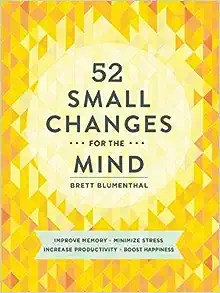
52 Small Changes for the Mind, by Brett Blumenthal
52 Small Changes for the Mind, by Brett Blumenthal
I must be losing it! I read this book. It all sounded new to me. I took some notes. Last week I found I’ve read the book and taken notes not once but twice before. Perhaps three times will be the charm.
The book contains a lot of sound advice that ideally the reader will put into practice one small change every week for a year. I keep reading the entire book in a few days. That must be why it’s not sticking with me.
Books I read to help my writing:
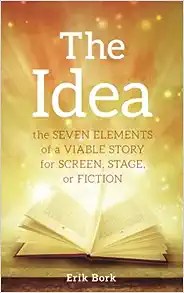
The Idea: The Seven Elements of a Viable Story for Screen, Stage, or Fiction, by Erik Bork. This book is about how the idea is at the core of all writing.
The Idea: The Seven Elements of a Viable Story for Screen, Stage, or Fiction, by Erik Bork
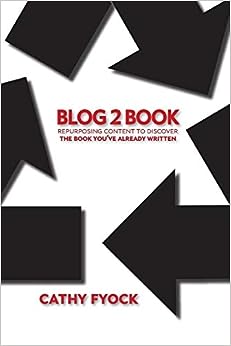
Blog2Book, by Cathy Fyock. This book tells a blogger how to take their blog posts and turn them into a book. I’m not sure that will be the case for me. I write about too many different topics.
Blog2Book: Repurposing Content to Discover the Book You’ve Already Written, by Cathy Fyock
Since my last blog post
I enjoyed the discussions my blog post sparked last week. I’ll get off my soapbox now and let everyone calm down. Just don’t forget to keep you eyes and ears open for future developments as we try to keep our right to read.
I’ve also gotten back to work on a Christian devotional book I’m writing. The tentative title is I Need The Light: 26 Devotionals to Help You Through Winter. I hope to have it out by the fall of 2024.
Just when I thought I was getting the ramifications from Windstream’s data breach sorted out, last week I received a letter telling me that all my personal and medical data had potentially been compromised in a data breach at MOVEit and Maximus, a company that stores Medicare records. It took them two months to let the specific Medicare patients know. I guess I need to just accept it as part of life in the 21st century.
Until my next blog post
Keep reading everything you want to read. I hope you hurried through my blog post today because you have a book you’re eager to return to. I’m listening to The Paris Agent, by Kelly Rimmer.
A few weeks ago I blogged about book banning. (See Book Banning is Democracy Banning! June 19, 2023.) I planned to blog about “How do you decide what to read next?” on July 14, but my computer had other ideas. I’m saving that post for August because I felt compelled to take a different approach today.
Book challenges and book banning
I didn’t plan to bash anyone in this post; however, I keep reading about more and more cases of book challenges and book banning across the United States and how various state legislatures (Arkansas, to name one) are passing laws that are putting our society on the slippery slope of censorship.
Fortunately, on Saturday, in response to a lawsuit filed by libraries, librarians, bookstore, and publishing companies, a federal judge temporarily blocked portions of Act 372 in Arkansas, which would criminalize librarians who knowingly let a minor see objectionable sexual content.
Senate Bill 90 in North Carolina is tame by comparison to Arkansas’s Act 372, which had been scheduled to become law tomorrow. NC Senate Bill 90 is still under review and, if signed into law, will add new constraints on public libraries and public school libraries, and will add additional hoops through which librarians, school superintendents, and local school boards must jump. As if their jobs weren’t challenging enough!
Warren County, Virginia and the Houston Independent School District in Texas have been in the news recently, too, on this topic.
This terrifies me! This is the United States of America, and a vocal narrow-minded group of people are yanking local and state governing bodies around as if they have rings in their noses.
Book by book…
Book by book, library by library, school system by school system, the whittling away of our right to read is eating away the foundations on which our country was founded. If not for public education in the United States, how many of our citizens would know how to read?
Public education is under attack by many state legislatures, including the one here in North Carolina. Vouchers to give parents money to send their children to private school? Give me a break! Why would a state legislature give money for private education when one of its responsibilities is to fund and support public education?
The ignorant few will soon decide what we can read and cannot read. Politicians are usurping the roll of professional librarians in deciding which books can go on library shelves.
Pay attention! What’s happening in your state and in your county? The state legislature in North Carolina has a history of voting in the dead of the night. You just never know what you’re going to wake up to in the morning.
This leads me to the question I ask in the blog post title today: Who decides what you can and cannot read?
There’s a connection between today’s question and the current trend toward banning books in the United States.
Do you want politicians deciding what you can and cannot read? Do you want local politicians deciding what your child can or cannot read?
Since my last blog post
I didn’t intend to take a three-week break from blogging this month, but my computer had other ideas. I won’t bore you with the details. I’ll just say, it was unsettling and frustrating being unable to log into my WordPress account for 18 days.
I hope you missed me. I missed y’all!
Until my next blog post
If you haven’t subscribed to my newsletter through my website, https://www.janetmorrisonbooks.com, please do so before you miss any more newsletters. For subscribing, you’ll receive a free downloadable copy of “Slip Sliding Away: A Southern Historical Short Story,” so you can get a feel for my historical fiction writing.
I hope you have a good book to read and time to read it. Read! Read! Read! And please support your local public library!
Make time for friends and relatives, even if you don’t agree with them about politics.
June turned out to be a strange month of reading for me. If my blog post last week didn’t convince you of that, just wait until you read today’s post.
Yellowface, by R.F. Kuang
Yellowface, by R.F. Kuang
I heard R.F. Kuang interviewed about her new novel on “Friends and Fiction” on Facebook on May 24, 2023 – the same night Lee Smith was a guest. The New York Times called it, “a blistering satire about publishing.”
This novel might appeal more to writers than “normal” readers. It’s about two young women who barely know one another. One is an outrageously successful author, while the other on is living hand to mouth. When the successful writer chokes to death, the other writer steals her unfinished manuscript and gets it published under her name. No one will be the wiser… or will they?
One of the threads throughout the book is racism. Not the usual way we tend to think of racism: white versus black. The racism running through this book is white versus Asian.
There was an unexpected twist at the end of the book.
I Will Find You, by Harlan Coben
I Will Find You, by Harlan Coben
It had been a while since I’d read a Harlan Coben novel, so I decided to give his new one a try. I listened to it on CD. The nine discs last just a little more than 10 hours, so I was able to set aside time to listen to one disc per day.
In this novel, David Burroughs is wrongly imprisoned for killing his three-year-old son. But did his son really die? After five years in prison, David is determined to find his son.
Time Management for Writers, by Sandra Gerth
Time Management for Writers, by Sandra Gerth
I needed this! I have all the time in the world, and yet I don’t seem to get anything accomplished. This little gem of a book gave me some practical suggestions and a systematic way to organize my time. I read it the first week in June, so I’ve had almost month to work out some new scheduling ideas. I say “almost a month” because I spent five days in Georgia to attend the wedding of one of my great-nieces.
The book addresses such time killers as email and social media and recommended that those things only be checked twice a day. It suggested “bundling” similar tasks such as working on the content for several blogs on the same day, selecting the photographs to illustrate those posts another time or day, and scheduling the blogs another time.
I’ve always given myself goals for when to complete certain tasks involved in writing a book or short story, but this book was a strong reminder that I need to be serious about those “deadlines” and be accountable to someone else for meeting those goals.
If you feel overwhelmed, this book might help you even if you aren’t a writer.
Grow Your Own Herbs: The 40 Best Culinary Varieties for Home Gardens, by Susan Belsinger and Arthur O. Tucker
This is a book I checked out from the public library to look for some specific information I need for the historical novel I’m writing. I decided to include it in today’s blog post because some of my readers might be interested in the book.
I you have any interest in growing herbs and using them in your kitchen, I recommend this book. It contains detailed information for growing, harvesting, and using 40 herbs. It includes recipes for herb butters, pastes, oils, and vinegar infusions.
The 180-page section about those 40 herbs is beautifully illustrated and organized in a way that makes it easy to find specific information you’re looking for. It made me wish I could grow all 40 of them! Unfortunately, I don’t have much of a green thumb when it comes to growing herbs.
Three books I won’t elaborate on because I read them for research purposes:
The Ultimate Guide to Old-Fashioned Country Skills, edited by Abigail R. Gehring
Edible Paradise: How to Grow Herbs, Flowers, Veggies and Fruit in Any Space, by Vera Greutink
How to Write a Series: A Guide to Series Types and Structure plus Troubleshooting Tips and Marketing Tactics, by Sara Rosett (Kindle) – This was a second reading of this book. I read it the first time in December 2021 and wrote about it in my January 3, 2022 blog post, Books Read in December 2021.
Books I didn’t finish reading in June and why:
Loyalty, by Jodi Picoult
I made the mistake of requesting this novel on CD from the public library. I eagerly popped the first disc into my CD player and settled back to enjoy another Jodi Picoult novel. Unfortunately, right off the bat, the narrator in his Italian accent (which should have been – and maybe was – a good match for a story set in Sicily) immediately read a list of the characters in the book along with their occupations or how they were related to the other characters.
After listening to a seemingly endless cast of characters whose names I’d never be able to understand or remember, I stopped the CD before getting to the first chapter.
I should have counted the characters. I’m guessing there must have been 20 or so.
Reading the novel might be easier than listening to it, but I don’t plan to try.
The Castle Keepers, by Aimie K. Runyan, J’nell Ciesielski, and Rachel McMillan
This book is a collection of three novellas written by Aimie K. Runyan, J’nell Ciesielski, and Rachel McMillan. When I first read about the book, I was under the conception that each author wrote one novella, and perhaps that’s true. My surprise, upon getting the book from the public library was to learn that it is not revealed which author wrote which novella in the collection.
The book follows one family. The first novella takes place in 1870. The second novella is set in 1917, and the last one is set in 1945. Most of the reviews I read mentioned that the first two novellas were better than the third one.
Due to the small print and my attention being pulled to historical research, I ended up returning this book to the public library unread. Maybe I can give it another try at a later date.
The Lost English Girl, by Julia Kelly and The Midwife of Auschwitz, by Anna Stuart
I returned these two historical novels to the public library after realizing I wasn’t going to have time to read them, even though the Julia Kelly book was large print. Maybe another time will work for me to read and enjoy them.
Since my last blog post
I was able to send out my Janet Morrison Books July 2023 Newsletter after overcoming some technical issues. I hope you received your issue via email. If you have subscribed, please visit http://www.janetmorrisonbooks.com and click on the “subscribe” button. As a bonus, you’ll receive a downloadable copy of “Slip Sliding Away: A Southern Historical Short Story” I enjoyed writing.
Yardwork keeps calling my name, but with the heat index of around 100 to 106 degrees F. nearly every day, I have to pick and choose the time of day and length of time I work. Progress has been at a snail’s pace.
I’ve been working on several historical short stories.
Until my next blog post
I hope you have a good book to read – one that will whisk you away from the stresses in your life, entertain you, educate you, and give you a new perspective. I’m reading Cradles of the Reich, an historical novel about part of Hitler’s plan for creating a master race, by Jennifer Coburn.
Cradles of the Reich, by Jennifer Coburn
Spend time with friends and family. Remember the treasure they are, even if they don’t agree with you about politics.
I didn’t get much fiction read in June, but I read a variety of nonfiction books. I hope you’ll find one in the bunch that piques your interest.
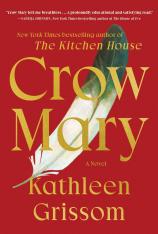
Crow Mary, by Kathleen Grissom
If you like American historical fiction, novels with strong female protagonists, or novels set in the Great Plains in the US and Canada, I think you’ll like this book. Ms. Grissom did a wonderful job of researching the woman on whose life this novel is based – and just as good a job of weaving in the history without creating any “information dumps.”
I enjoyed The Kitchen House, by Ms. Grissom, so I got on the waitlist at the public library for Crow Mary as soon as I heard about it.
Crow Mary, by Kathleen Grissom
In a nutshell, Crow Mary was a woman in the Crow tribe who married a white trader in the early 1870s. His work as a trader took them away from her family and to Canada. They endure disappointment and trials as they try to make a go of it. Crow Mary isn’t going to take any grief from anyone, and she doesn’t shy away from taking matters into her own hands when her husband lets her down or isn’t there to take charge.
The book does a good job of pointing out how white settlers and the white government failed to see Native Americans as people and, therefore, seldom made the effort to take into consideration their intelligence and ways of life.
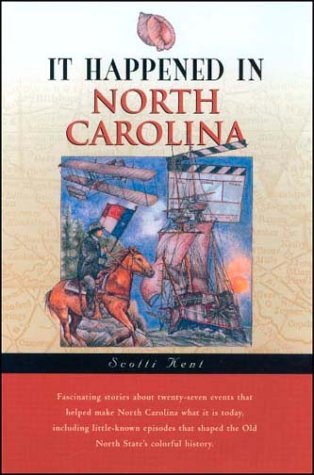
It Happened in North Carolina, by Scotti Kent
This delightful little book is a collection of 27 stories about things that happened in North Carolina. (No surprise there!) Some of the incidents I’d heard of and others I hadn’t. The stories are written in an informal yet informative way that makes the reading pleasurable.
It Happened in North Carolina, by Scotti Kent
The stories are presented in chronological order and start with a description of the Poskito (a renewal celebration) held by the Pee Dee Native Americans in the 13th century A.D. It was quite interesting and prompted me to put a day trip to the Town Creek Indian Mound in Montgomery County, NC on my “field trip” list.
The most heart-breaking story in the book is “The Story of Tsali, 1838” about the terrible mistreatment of the Cherokee Indians in western NC during the administration of President Andrew Jackson.
I was pleased to find two Cabarrus County stories in the book on topics that I wrote at length about in my book, Harrisburg, Did You Know? Cabarrus History, Book 1: the story of the Cabarrus Black Boys in 1771 and the story of Ellen Harris of the Rocky River Community swallowing a thimble in 1896.
This is a neat little 139-page paperback book. By the way, I purchased the book for a few cents at a book sale held by the public library several years ago when the collection was being severely weeded.
It makes me sad to see books containing local history being pulled from the shelves. I suppose my Harrisburg history books will be sold for a few cents sometime in the not-so-distant future because decision makers see no value in local history books.
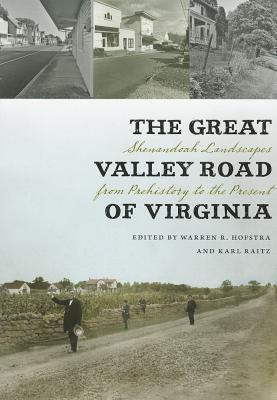
The Great Valley Road of Virginia: Shenandoah Landscapes from Prehistory to the Present, edited by Warren R. Hofstra and Karl Raitz
I happened upon this book as I researched The Great Wagon Road for the novel I’m working on. I took copious notes from the chapter titled, “The Colonial Road.” Other parts of the book were interesting, but it was that third chapter that I very helpful to me. The following chapters dealt with the post-colonial era to the present.
The Great Valley Road of Virginia, edited by Warren R. Hof
Anyone interested in the development of the United States will enjoy this book. It’s full of history and geography and helps the reader visualize how the Virginia portion of the Great Wagon Road took shape.
One point the book reminded me of is that in earlier times the government did not decide where to put roads, did not lay them out, and did not maintain them. Such was the case with The Great Wagon Road. Citizens had to petition the county and then do all the work themselves. Once the work was completed and approved, the county appointed an overseer who was then responsible to get the citizens to maintain the road. One can only imagine how well that worked!
I’m still left to determine how the family in my novel would have traveled from Windy Cove to the Great Wagon Road….
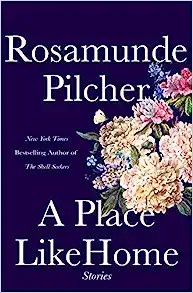
A Place Like Home (short stories), by Rosamunde Pilcher
I thoroughly enjoyed reading all of Rosamunde Pilcher’s Cornwall, England novels back in the 1980s. Reading this collection of her short stories immediately reminded me what an engaging writer she was.
A Place Like Home, by Rosamunde Pilcher
A Place Like Home contains 15 of her short stories. Each one puts the reader right there in England. Ms. Pilcher had a talent for describing the setting and her characters in a way that made you feel like you were there and knew them.
Since my last blog post
I had the pleasure of traveling to Marietta, Georgia the last weekend in June for the wedding of one of my great-nieces! It was a lovely outdoor event and I wouldn’t have missed it for the world. It was nice to spend several days with immediate family for a happy event.
I took the opportunity while in Georgia to visit the Kennesaw Mountain National Battlefield Park. One of my ancestors was wounded in the Kolb’s Farm Battle there on June 22, 1864.
In case I seem confused and distracted…
Unfortunately, the hack experienced in June by Windstream, our household email provider, resulted in the suspension of the Windstream email account my sister and I shared. All the company’s customer service in India can say is, “Yes, Windstream got hacked. We’re sorry.” After having that email address for some 20 years, you can imagine what a tedious chore it has been and will continue to be to change my email address with utility companies, doctors’ offices, insurance companies, relatives, friends, and various organizations.
Within hours of Windstream being hacked, our email and my Facebook and LinkedIn accounts were hacked, so I am no longer on either of those social media platforms. I miss many of my friends, but I don’t plan to get involved with Facebook or LinkedIn again. Due to general frustration, I’ve also closed by Twitter account.
Therefore, as of last week, my only platforms are my blog, my newsletter, and my website.
Speaking of my newsletter… I attempted to send out my Janet Morrison Books July Newsletter on Saturday. However, a box popped up saying that Mailchimp “might be having issues, or it may have moved permanently to a new web address.”
I thought things usually happened in threes, but I’ve honestly lost count of the computer program and app issues I’ve had in the last month. Perhaps God is trying to tell me to stop trying to be a writer. I’m filled with self-doubt, and I’m earnestly seeking His will. I’m hitting roadblocks at every turn. When I started this blog many years ago, my intention was to share with you the ups and downs of being a writer. I’m not whining; I’m telling you like it is.
At my age, the technology side of writing is overwhelming. Please be patient with those of us who learned to type on a manual typewriter, learned to “calculate” on a ten-key adding machine, grew up with radio and black-and-white TV, and telephones connected to the wall.
In case I’m able to send out my newsletter…
Among other items of interest, it included details about and photographs from the Open Hearth Cooking Class I took in May at Hart Square Village and my trip to Georgia.
I hope you have a good book to read – one that will take you away from the stresses in your life, entertain you, educate you, and give you a new perspective.
Spend time with friends and family. Remember the treasure they are, even if they don’t agree with you about politics.
Think of the people being hurt by recent rulings by the US Supreme Court. After all, we’re all God’s children.
I was gratified by the responses my blog post of last Monday received. Thank you to everyone who responded, and thank you to the ones of you who reblogged my post about book banning. In case you missed it, here’s the link: Book Banning is Democracy Banning!
In last week’s post I listed the 19 books that had been banned the week before by the school board in Hanover County, Virginia. I failed to list other books or tell you how you can find lists of other books that have been challenged in the United States.
You can simply put “Challenged Books” or “Banned Books” in your favorite online search engine. Or, you can look for reputable sites like the American Library Association’s website for intellectual freedom: https://www.ala.org/advocacy/bbooks/
Imagine if these shelves were empty!
(Photo by Rabie Madaci on Unsplash)
Let’s flood our public library systems and bookstores with requests for such books! Here’s a partial list. You might find many others when you do your own search. The following list of 101 books that have been challenged or banned somewhere in the United States is in no particular order.
Hunger Games, by Suzanne Collins
They Both Die at the End, by Adam Silvera
What I Know Now: Letters to My Younger Self, by Ellyn Spragins
The Giver, by Lois Lowry
1984, by George Orwell
The Great Gatsby, by F. Scott Fitzgerald
Fahrenheit 451, by Ray Bradbury
The Lord of the Flies, by William Golding
To Kill a Mockingbird, by Harper Lee
The Glass Castle, by Jeannette Walls
Harry Potter and the Sorcerer’s Stone, by J.K. Rowling
Maus I: A Survivor’s Tale: My Father Bleeds History, by Art Spiegelman
Where the Wild Things Are, by Maurice Sendak
How the Garcia Girls Lost Their Accents, by Julia Alvarez
New Kid, by Jerry Craft
Animal Farm, by George Orwell
The Kite Runner, by Khaled Hosseini
The Handmaid’s Tale, by Margaret Atwood
My Sister’s Keeper, by Jodi Picoult
The Dairy of a Young Girl, by Anne Frank
The Catcher in the Rye, by J.D. Salinger
The Bluest Eye, by Toni Morrison
The 1619 Project: A New Origin Story, by Nicole Hannah-Jones
Brave New World, by Aldous Huxley
The Hate U Give, by Angie Thomas and Amandla Stenberg
Of Mice and Men, by John Steinbeck
Lord of the Flies, by William Golding
This Book is Gay, by Juno Dawaon and David Levit
I Know Why the Caged Bird Sings, by Maya Angelou
Gender Queer: A Memoir, by Maia Kobabe
Hop on Pop, by Dr. Seuss
Their Eyes Were Watching God, by Zora Neale Hurston
How the Word is Passed, by Clint Smith
Twilight, by Stephanie Meye
Beloved, (a Pulitzer Prize Winner) by Toni Morrison
The Pillars of the Earth, by Ken Follett
Girl, Interrupted, by Susanna Kaysen
Where the Sidewalk Ends, by Shel Silverstein
The Grapes of Wrath, (a Pulitzer Prize Winner), by John Steinbeck
The Color Purple, by Alice Walker
Speak, by Laurie Halse Anderson
Slaughterhouse-Five, by Kurt Vonnegut
Lolita, by Vladimir Nabokov
The Absolutely True Diary of a Part-Time Indian, by Sherman Alexie
All American Boys, by Jason Reynolds and Brendan Kiely
The Autobiography of Malcolm X, as told to Alex Haley
A Farewell to Arms, by Ernest Hemingway
The Poet X, by Elizabeth Acevedo
Looking for Alaska, by John Green
Persepolis: The Story of a Childhood, by Margane Satrapi
Midnight in the Garden of Good and Evil, by John Berendt
Class Act: A Graphic Novel, by Jerry Craft
One Flew Over the Cuckoo’s Nest, by Ken Kesey
Monday’s Not Coming, by Tiffany D. Jackson
Fifty Shades of Grey, by E.L. James
The Other Wes Moore, by Wes Moore
Like Water for Chocolate, by Laura Esquivel
What If It’s Us, by Becky Albertalli and Adam Silvera
A Time to Kill, by John Grisham
A Lesson Before Dying, by Ernest J. Gaines
The Da Vinci Code, by Dan Brown
And Tango Makes Three, by Justin Richardson and Peter Parnell
Child of God, by Cormac McCarthy
Feed, by M.T. Anderson
A Separate Peace, by John Knowles
Stamped from the Beginning, by Ibram X. Kendi
Go Ask Alice, by Anonymous
Stranger in a Strange Land, by Robert A. Heinlein
Different Seasons, by Stephen King
For Whom the Bell Tolls, by Ernest Hemingway
The Lord of the Rings, by J.R.R. Tolkien
Native Son, by Richard Wright
Angela Davis: An Autobiography, by Angela Y. Davis
Skeleton Crew: Stories, by Stephen King
Thirteen Reasons Why, by Jay Asher
Stamped: Racism, Antiracism, and You: A Remix of the National Book Award-Winning Stamped from the Beginning, by Jason Reynolds and Ibram S. Kendi
Simon vs. the Homo Sapiens, by Becky Albertalli
All Boys Aren’t Blue: A Memoir, by George M. Johnson
The Red Badge of Courage, by Stephen Crane
Water for Elephants, by Sara Gruen
The Prince of Tides, by Pat Conroy
Tiger Eyes, by Judy Blume
Four Hundred Souls: A Community History of African America, 1719-2019, by Ibram X. Kendi, Keisha N. Blain
A Thousand Acres, a Pulitzer Prize Winner, by Jane Smiley
Kaffir Boy: The True Story of a Black Youth’s Coming of Age in Apartheid South Africa, by Mark Mathabane
Beach Music, by Pat Conroy
The Adventures of Huckleberry Finn, by Mark Twain
Blood in the Water: The Attica Prison Uprising of 1971 and Its Legacy, a Pulitzer Prize Winner, by Heather Ann Thompson
The Tenth Circle, by Jodi Picoult
The Jungle, by Upton Sinclair
Girl With the Blue Earring, by Tracy Chevalier
Catch-22, by Joseph Heller
Palestine, by Joe Sacco
Gone With the Wind, by Margaret Mitchell
Bridge to Terabithia, A Newberry Award Winner, by Katherine Peterson
The Sun Also Rises, by Ernest Hemingway
Addie on the Inside, by James Howe
Call of the Wild, by Jack London
Olive’s Ocean, a Newberry Honor Book, by Kevin Henkes
A Stone in My Hand, by Cathryn Clinton
Tilt, by Ellen Hopkins
How Often Are Books Challenged Where You Live?
There is an interactive map of the United States of the American Library Association’s website, https://www.ala.org/advocacy/bbooks/by-the-numbers. Hover the curser over a state to find basic information about book challenges in that state in 2022.
For instance, in my home state of North Carolina, there were 32 attempts to restrict access to books last year involving 167 titles. The most challenged book in North Carolina was Looking for Alaska, by John Green.
That map revealed some surprises. There were 45 attempts to restrict access to books in Massachusetts last year involving 57 books. In Michigan, the figures were 54 and 359. In Pennsylvania, 56 and 302. In Florida, 35 and 991. But Texas was at the top of the list (or bottom as the case may be) with 93 attempts to restrict access to books in 2022 involving a whopping 2,349 titles!
Photo by Enrique Macias on Unsplash
Different books are listed as the most-challenged book in the various states; however, Florida and Texas agree on The Bluest Eye, by Toni Morrison. I wrote about that book in my blog post last week. I want to say to the book challengers in Florida and Texas, “You’ve got to be kidding!”
If you want to read more about the topic of book banning…
Here’s the link to the website of PEN America. PEN America is made up of more than 7,500 novelists, journalists, nonfiction writers, editors, poets, essayists, playwrights, publishers, translators, agents, and other writing professionals, as well as devoted readers and supporters who join with them to carry out PEN America’s mission to protect free expression in the United States and around the world: https://pen.org/report/banned-in-the-usa-state-laws-supercharge-book-suppression-in-schools/.
Until my next blog post
I hope you’re reading a book that someone has tried to get banned from a library. Let’s flood our public library systems and bookstores with requests for books that someone doesn’t want us to read!
I hope you make time for friends and family. Read to the children in your life and encourage them to read for fun.
Stop right now and visit my website (https://janetmorrisonbooks.com/) to subscribe to my newsletter. I took a special “field trip” to benefit my historical fiction writing on May 20. I’ll tell you all it in my July newsletter!
Just for signing up, you’ll receive a free downloadable copy of “Slip Sliding Away: A Southern Historical Short Story” to give you a taste of my fiction writing.









 Janet's Writing Blog