Books I Read in August 2024

After not finding anything that grabbed my attention enough to finish reading it in July, it was refreshing to get back into reading in August. My interests are varied, as you will see by the four books I read last month.


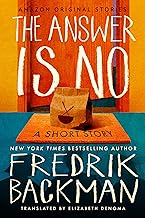
Simple Pleasures: Haiku from The Place Just Right, by Elizabeth Gauffreau

Photo of book cover for Simple Pleasures: Haiku From The Place Just Right, by Elizabeth Gauffreau
Simple Pleasures: Haiku From The Place Just Right, by Elizabeth Gauffreau

This is a wonderful collection of 53 haiku! If you aren’t familiar with the haiku form of poetry, this book by Elizabeth Gauffreau would be the perfect introduction for you.

Elizabeth writes in the haiku form of five syllables in the first line, seven syllables in the second line, and five syllables in the third line. Haiku is defined by syllables and a precise choosing of words, but that is not the essence of the art form.

As I understand it, — and I’m no authority — the essence of haiku is the creation of a compact choice of words that convey a feast for the senses. As a writer, I am always taken aback when I read haiku. I marvel at how eloquently and concisely a complete idea or image is written by the poet.

In Simple Pleasures: Haiku from The Place Just Right, Elizabaeth Gauffreau pairs each poem with a photograph from New England, so the book gives the bonus of specific places and images important to the poet. The reader can see what types of places in nature inspire Elizabeth in her writing.

This is a book I will read over and over. It is the perfect book to sit down with when you need a few minutes to relax or calm down after a trying experience. You can read the book in one sitting, or you can read it one poem at a time. Either way, you will savor the gift that it is.


The Girls We Sent Away, by Meagan Church

Photo of the front cover of the novel, The Girls We Sent Away, by Meagan Church
The Girls We Sent Away, by Meagan Church

Switching gears from the calming effects of haiku, The Girls We Sent Away, by Meagan Church, does not deal with a pleasant topic. It is about how in mid-20th-century America, unwed girls who became pregnant were often “sent away” to homes for unwed mothers.

The stigma attached to such events in the 1950s and 1960s was something that middle-class Americans could not deal with. Such girls were hidden away at home or, in many cases including the protagonist in this novel, quietly sent away to facilities just for such situations.

In this novel, Lorraine Delford aspired to be an astronaut in the early days of space exploration. She had the intelligence to do it. She was on track to be the valedictorian of her high school class when all that was shattered.

Lorraine finds herself in the predicament of getting pregnant, being abandoned by the boyfriend, and devastatingly abandoned by her parents. She goes from being the apple of her parents’ eye to being a source of great shame and embarrassment.

Lorraine is hidden away at home until arrangements can be made for her to move into a facility for unwed mothers. All life choices are now made by her parents and the authorities in charge of the dormitory-type home.

She is given little information about what will happen there, and even less information about what her life will be like. She has no say in what happens to her baby. She knows from what happens to other girls that as soon as she has her baby she will disappear without having the chance to say goodbye to her friends.

This book takes Lorraine through the whole process and into her return home to her parents. It is then that she discovers a deep, dark secret her parents have kept from her for her entire life. That secret changes everything.


Bits and Pieces:  My Mother, My Brother, and Me, by Whoopi Goldberg

Photo of front cover of Whoopie Goldberg's memoir, Bits and Pieces: My Mother, My Brother, and Me
Bits and Pieces: My Mother, My Brother, and Me, by
Whoopie Goldberg

As a rule, I don’t follow the lives of celebrities. I don’t care about the ins and outs of their lives, unless it is to learn about their philanthropic endeavors. It’s nice to see someone with wealth using it to help less fortunate people or using it to save the planet and its wildlife.

Whoopie Goldberg is an interesting person. She and I are close in age. I have enjoyed her acting and I agree with a lot of her political views. I checked out her memoir, Bits and Pieces:  My Mother, My Brother, and Me, to learn more about her background. Although contemporaries in age, I knew that she and I had very different childhoods.

In this book, Whoopie pulls no punches. She lays out many of the details of her life with frankness that many others would shy away from. She and her brother were very close. She knew he always had her back – as children and as adults.

Their mother was an extraordinary person, to say the least. Raising two children on her own was no easy task in New York City in the 1950s and 1960s, but she worked hard and made sure her children took advantage of every available opportunity for educational and cultural experiences.

Whoopie’s mother and brother have died, so Whoopie is left with a gigantic hole in her heart. They were the two people on Earth who knew her as well as she knew herself. This book conveys to the reader to never limit yourself or those around you. It also conveys to never take for granted the loved ones in your life, for they can be gone in an instant.


Hebrides, by Peter May

Photo of front cover of Hebrides, by Peter May, a nonfiction book filled with descriptions and photographs of the Hebridean islands of Scotland
Hebrides, by Peter May, with Photographs by David Wilson

This is a fantastic picture book about the Hebrides off the northwestern coast of mainland Scotland. I have visited several islands in the Outer Hebrides and Inner Hebrides, and the gorgeous photographs and detailed descriptions in this book transported me right back there!

Readers might be familiar with the mystery novels written by Peter May. This is the same Peter May. He now lives in the Outer Hebrides, and this book leaves no doubt about his love for the islands.

The Hebrides are sparsely-populated with scatterings of communities among the massive peat bogs from which residents get most of the fuel for heating their homes and for cooking. Here and there along the rugged coast are pristine beaches. The waters of the Atlantic and The Minch are as clear as tap water. You will usually have a beach area all to yourself.

The area is so far north that in the middle of summer there are almost no hours of darkness, which makes for a tourist’s paradise. It’s not easy to get there. You don’t accidentally find yourself on the Isle of Lewis! But the effort is worth it if you seek a quiet place where the people are kind, soft-spoken in their Scottish lilt and their native Gaelic tongue, and the pace is somewhat slow. There are no crowded highways and no chain fast-food restaurants.

It is a spectacular corner of the world, and I will be forever blessed by having spent some time there. If you are planning a trip there or know that you will never get there, I recommend Hebrides, by Peter May to whet your appetite or to make you feel as if you have visited the islands.

P.S. Be sure and pack a heavy jacket, even if you’re going in July or August!


Until my next blog post

Be sure to visit my website: janetmorrisonbooks.com and subscribe to my e-Newsletter. The September issue will be coming out this week. I don’t want you to miss reading about my “field trip” last week to Swannanoa Gap in the mountains of North Carolina where I learned about the construction of the Western North Carolina Railroad in the 1870s.

I hope you have a good book to read.

Hold your family and friends close.

Remember the people of Ukraine.

Janet

#OnThisDay: 19th Amendment to U.S. Constitution, 1920

The 19th Amendment: The right of citizens of the United States to vote shall not be denied or abridged by the United States or by any State on account of sex.

Congress shall have power to enforce this article by appropriate legislation.

It was 104 years ago today that women in the United States finally got the right to vote. The year 1920 might seem like ancient history to some of you, but I always think of it in terms of my mother having her eighth birthday that autumn.

Early- to mid-1800s

Women getting the right to vote came after a long, hard fight. In the early- and mid-1800s, women advocated for the abolition of slavery. Their speeches evolved into words in support of women’s suffrage. Two such women, Elizabeth Cady Stanton and Lucretia Mott, organized a women’s suffrage convention in Seneca Falls, New York in 1848.

Sojourner Truth and Sarah Redmond, two former slaves – who could not vote because of their race and their gender – organized women’s suffrage conventions. Slowly, it was becoming more of a public issue of discussion.

Post American Civil War/Reconstruction Era

The State of Michigan allowed women to vote in school board elections after the Civil War.

With the passage of Reconstruction Era U.S Constitutional Amendments granting black men the right to vote came contentious political and public discourse because it brought to the forefront that women still could not vote. As a result of their disfavor with women still not being granted the right to vote, Susan B. Anthony and Elizabeth Cady Stanton left the American Equal Rights Association (AERA), which they had founded in 1866, and formed the National Woman Suffrage Association (NWSA) in 1869. Later that year, women who thought it more plausible to push for women’s suffrage by getting it adopted state-by-state formed the American Women Suffrage Association.

The Territory of Wyoming (it was not yet a state) granted women full voting rights in 1869. The Territory of Utah followed Wyoming in 1870, but Congress took that right away in 1887.

Photo of an "I Voted" sticker on a woman's finger
Photo by Joshua Sukoff on Unsplash

Virginia Minor of Missouri, after being denied the right to vote in 1872, took her complaint to the U.S. Supreme Court. Minor maintained that the 14th Amendment gave her the right to vote because it stated that “no State shall make or enforce any law which shall abridge the privileges or immunities of citizens of the United States.”

In a classic example of the high court going by the “letter of the law” instead of taking a more pragmatic stance, the Court, in its majority decision in Minor v Happersett, said that the right to vote was not a necessary privilege of citizenship because it was not a right included when the U.S. Constitution was ratified in 1788.

The “bottom line” of this decision was that states did indeed have the authority to deny women the right to vote. Let that sink in for a few minutes.

Late 1800s

In 1878 and again in 1887, there were efforts in Congress to introduce a women’s suffrage amendment, but they failed.

The AERA and NWSA merged in 1890, but some of the leaders worked to exclude black women from participating in events. In 1896, the black women formed the National Association of Colored Women to advocate for women’s voting rights along with other issues that were important to women of color.

Photo of a woman putting her ballot in the voting box
Photo by Unseen Histories on Unsplash

In 1896, the Constitution of the State of Utah once again gave female citizens the right to vote.

1910s

By 1916, 11 western states had granted women the right to vote, but petitions to Congress and litigation in federal courts repeatedly came up short. In the election in Montana that year, Jeannette Rankin was elected to Congress. She was the first women elected to the U.S. House of Representatives.

The joint resolution to propose a women’s suffrage amendment (See the 1878 and 1887 references above) was reintroduced in the U.S. House of Representatives in 1917 – thirty years after it had last been shot down. Proponents of states’ rights argued that the passage of such an Amendment would interfere with each state’s authority to dictate the composition of its electorate and that it would also disrupt the traditional family. Some lawmakers opposed it because they feared it would give black women the right to vote.

(Does anything about the states’ rights argument sound familiar? The current U.S. Supreme Court in 2023 conveniently decided to give states the authority to pass laws about women’s health.)

Photo of turn of the 20th century women
Photo by Library of Congress on Unsplash

The opposition was narrowly defeated as a two-thirds majority voted to pass the proposed Amendment on January 10, 1918. The Senate debated the joint resolution for months with many of the same arguments that had been overcome in the House. President Woodrow Wilson spoke in favor of the Amendment on October 31, 1918, citing the contributions women had made on the home front during World War I.

The following day, the resolution was defeated in the Senate. It failed again in the Senate on February 10, 1919. But President Wilson called a special session of Congress in May 1919. The House passed the 19th Amendment on May 21, 1919, and it was approved by the Senate on June 4, 1919.

During World War I, some of the views of gender roles in the country began to change as women took on many of the jobs that had earlier been considered men’s work. The 19th Amendment was proposed in Congress in June 1919.

August 26, 1920

It took 14 months for a three-fourths majority of states to accept the 19th Amendment. It was ratified on August 18, 1920 and on August 26, 1920, U.S. Secretary of State Bainbridge Colby certified that the Amendment had been ratified.

Photo of "I Voted" stickers
Photo by Element5 Digital on Unsplash

Obstacles such as poll taxes and literacy tests continued to prevent many black women and other females of color from voting until the 24th Amendment was ratified in 1964 and enforced by the Voting Rights Act in 1965.

Since my last blog post

I’ve been reading several books, pushing myself to do some yard work, and watching some online videos about the craft of writing. I’m motivated to get back to work on my novel!

Until my next blog post

I hope you have a good book to read.

Don’t take your family for granted.

Remember the people of Ukraine.

Janet

#OnThisDay: The USS Constitution Engaged the British, 1812

Have you ever been to Boston Harbor to see the USS Constitution? It is the world’s oldest warship that is still afloat and can operate under its own power.

The USS Constitution
Photo by Catherine Kerr on Unsplash

One of six ships commissioned in 1794 by the United States, it was built in Boston in 1797. The three-masted wooden war ship was nicknamed “Old Ironsides.”

Why did I blog about the USS Constitution today?

Today is the 212th anniversary of the first time the USS Constitution engaged in battle against a British warship. That ship was the HMS Guerriere.

Just the facts, ma’am

In researching today’s topic, I found the website for Naval History and Heritage Command (https://www.history.navy.mil/browse-by-topic/ships/original-frigates/uss-constitution-americas-ship-of-state/background-for-media/fact-sheet.html) and I recommend it if you are interested in some of the minute details of the USS Constitution. On that site you will find the ship’s measurements and many details that mean little to me because I know almost nothing about ships.

I few of the facts grabbed my attention, though. I had no idea how large the USS Constitution is. It boggles my mind to think of some of the ship’s statistics considering it was built in the late 18th century.

For instance, it is 305 feet long! That’s a little more than the length of an American football field. Its main mast is now 172 feet tall. It has 48 sails, which is equal to an acre of canvas.

The USS Constitution with Boston in the background.
Photo by David Trinks on Unsplash

In 1812, the crew of the USS Constitution was more than 405 sailors and marines. What surprised me the most, though, was that today it has a crew of three officers and more than 85 enlisted U.S. Navy men and women.

Since my last blog post

We continue to have a lot of rain in the southern piedmont of North Carolina. We have a rain gauge in our yard. From July 12 through August 12 we had a little more than 16 inches of rain! We have some beautiful green moss and a variety of colorful mushrooms in our yard. I wish we could send some of this rain to put out some wild fires in the western states.

School started in the county in which I live last Tuesday, which served as a rude awakening for me that the summer months are flying by much faster than I would like.

Until my next blog post

I hope you are reading a good book that you’re eager to get back to when you finish reading my blog post.

Spend time with friends and family.

Remember the people of Ukraine.

If you’ve ever visited the USS Constitution, I’d love to hear what your memories are. What about it impressed or surprised you the most?

Janet

This Week in History: 1945

I could not get excited about writing about the August 12, 1898 US annexation of Hawaii for today’s blog post. (I could get excited about Hawaii’s statehood, which happened in my childhood, but its annexation as a territory? Not so much.)

I couldn’t muster the energy to do enough research to write 500 or 1,000 words about the annexation of Hawaii, and I doubted if my blog readers were interested enough to read about it. (If I’m wrong, feel free to look it up.)

In the big scheme of things, the events of the week of August 6-15, 1945 were more momentous than what happened about Hawaii in 1898.

It occurred to me that the 79th anniversaries of the bombing of Hiroshima on August 6, the bombing of Nagasaki on August 9, and the surrender of Japan on August 15, 1945 have barely been mentioned in the United States this week.

The famous bomb dome in Hiroshima. Photo by Griffin Quinn on Unsplash

I watch some programming on a TV station in Tokyo. The news and other programming are available via the public TV system here in metro Charlotte. The dates of the atomic bombs are marked in Japan with solemn government-sponsored gatherings and, no doubt, by many private gatherings and individuals.

The horror is remembered by the Japanese people, but the overriding theme of the coverage I have seen over the last week is peace. The Japanese people know first-hand the horrors of nuclear war, and they are adamant that such weapons should never be used again.

Nagasaki Atomic Bomb Museum Photo by Roméo A. on Unsplash

The dropping of those atomic bombs were horrific events in which hundreds of thousands of innocent people were killed, maimed, severely burned, orphaned, or doomed for various health maladies for the rest of their lives.

It has been said that those bombs resulted in the almost immediate surrender of Japan, thus ending World War II and ultimately saving more lives than they took. I guess we will never know the truth of that reasoning and justification.

I imagine the people who are old enough to remember the events of that week – whether they live in Japan, the United States, or other countries involved in the war in the Pacific Theater — are puzzled over the fact that the world is taking little notice of this week’s 79th anniversaries.

Photo by Sunguk Kim on Unsplash

I suppose there will come a time when September 11 will be just another day in the United States. The Americans who were young children or who were born after September 11, 2001, cannot possibly think of that day the way it is forever etched in my memory.

Life goes on. Events are forgotten. To those of us born after 1945, that year seems like ancient history. That’s just human nature. I was born in the United States in 1953, so I grew up with no concept of what life was like during World War II. But that does not excuse me if I don’t stop and think about the events of 79 years ago.

I owe it to my parents, my aunts and uncles, and even my oldest first cousins – all of whom are dead – to remember the sacrifices they made during World War II, their military service, their work to help build military planes, and their courage to hold things together on the home front – all while not knowing when or how the war would end and not knowing which of their loved ones or friends would not come home.

Since my blog post last Monday

I am feeling better than when I penned my August 5 blog post. I was discouraged by an illness which has taken much from me. However, I have been bolstered by the outpouring of concern I have received from many of my readers. Each day has been better than the one before. I’ve even been able to listen to an entire novel and enjoy it!

Thank you for your support and encouraging words. I always come out of these slumps and return to my “normal,” but each time I experience a relapse I can’t help but wonder if I will come out of it.

Since my last blog post

I hope you got a chance to read my reblogging on Friday of a blog post about Elizabeth Graffreau’s new book, Simple Pleasures: Haiku from the Place Just Right. It was my first attempt at reblogging.

Until my next blog post

Take a few minutes to think about the events of this week in 1945. Let’s continue to give diplomacy and peace a chance.

Peace Memorial Park in Hiroshima Photo by sabari nathan on Unsplash

I hope you have a good book to read. I am easing back into reading this month, for which I am grateful.

Remember the people of Ukraine.

Janet

We get by with a little help from our fellow bloggers!

Liz Gauffreau is a blogger friend of mine. This week she launched her new book, Simple Pleasures: Haiku from the Place Just Right. It is a collection of 53 of her original haiku. Each one is paired with a photograph from her love of nature and the world’s beauty.

If you aren’t familiar with haiku, please give this concise form of poetry a try.

You will find Liz’s book to be calming, refreshing, and thought-provoking. It will transport you to another place where you can sit quietly, take a deep breath, and relax.

This is the first time I’ve ever tried to reblog another blogger’s post, so Liz and Joy, I hope this works!

Janet

A Different Kind of “First-Blog-Post-of-the-Month” Blog Post

If you read my blog last week (A Lost Art) or my July e-newsletter, you know I have been decluttering this summer. I have reached an age at which I have realized that I’m not going to live forever and I really don’t want to leave my heirs a massive mess to deal with when I’m gone or incapacitated. Hence… it is time to declutter and part with many of the things, assorted memorabilia, pieces of paper, nice magazines, photographs, and even some of the books I never should have kept in the first place.

It’s time to let someone else get joy from some of my things by taking them to the thrift shop or donating them for a yard sale an organization is holding. It’s time for the recycling center to turn some of them into recycled paper. It is time for the landfill (my least favorite choice) to accept the rest.

In my first blog post of the month, I almost always write about the books I read the previous month. That is not what today’s post is about.

I started reading three or four books in July, but none of them grabbed my interest enough for me to drop everything else and finish reading them. Do you ever have times like that? When nothing feels quite right? When even favorite authors’ newest releases just fall flat?

The entire month of July was like that for me and August has begun in the same way.

Decluttering is exhausting for everyone. Looking at every item and every piece of paper and deciding whether to keep it or let it go is tedious and time consuming. I once again live in the house my parents built when I was seven years old. It is easy for things to accumulate in 64 years!

But that’s not the whole story. In fact, it is just a by-product of the root of the problem.

Photo by Jr Korpa on Unsplash

Some of the challenges of Myalgic Encephalomyelitis

Due to Myalgic Encephalomyelitis, I always have trouble remembering the details of what I just read… and sometimes it is worse than others. I am in one of those worse times now. When it hits, it is unsettling at best and devastating at its worst.

Every time I have experienced this in the 37 years I’ve dealt with this illness, it feels like I will never feel any better than I do at the moment. Perhaps this is the time that I stay stuck forever in the brain fog and debilitating fatigue in which I struggle to put one foot in front of the other. That is the state in which I find myself as I put the finishing touches on this blog post.

As described by the Mayo Clinic, the symptoms of Myalgic Encephalomyelitis vary from one person to another and from one time to another for each individual. Physical and mental activity worsen the person’s fatigue, and rest does not lessen the symptoms.

After 37 years, I no long remember what refreshing sleep feels like. I have very active dreams and my body can’t seem to distinguish between dreamt activity and actual activity. Therefore, I always wake up more exhausted than when I went to sleep. I have to ease into my day and mornings are not good for me.

That makes no sense to someone who has not experienced it, but it is the best way I know to describe my life. As with any other person dealing with a chronic illness, I have to push through each day and do the best I can. This is my life, and I choose to make the best of it.

Part of my brain tells me that I will not stay in this slump forever, so I will hang onto that thought. I have to.

I chose to use the more accurate name for this little-understood syndrome in today’s post rather than my usual use of the American term for it, Chronic Fatigue Syndrome (CFS). That name is degrading to the people who deal with the illness as patients or as medical professionals. It belittles the illness and the patients. It brings on comments like, “I’m tired, too.” Comments like that only serve to make the patient feel less valued as a human being. The CFS moniker for such an all-consuming illness is tantamount to the early name of Multiple Sclerosis: Malingerers Disease.

What did I try to read in July?

One book that I just didn’t have the mental energy for was Reading the Constitution: Why I Chose Pragmatism, Not Textualism, by retired US Supreme Court Justice Stephen G. Breyer. It is a very detailed book about a deep subject. The political scientist in me wanted to read it, but I was too tired to give it the time and concentration it needed. Mr. Breyer is very good at explaining laws and concepts in understandable language.

A political thriller I enjoyed but didn’t have time to finish before it had to be returned to the public library was Phantom Orbit, by David Ignatius. I have enjoyed all of Ignatius’ novels. I’m on the waitlist to check it out again.

Until my next blog post

If you tuned in today eager to see what I read last month, I apologize. If I can snap out of this mental fog, I will blog about the books I read in August in my blog post the first Monday in September 2.

Until then, I hope you have a good book to read.

My planned topic for next week’s blog post is the anniversary of the United States’ annexation of Hawaii as a territory in 1898. Time will tell if I am able to do the necessary research on that subject over the next seven days. If not, I hope to return to the blogosphere in the near future.

And please remember the people of Ukraine.

Janet

A Lost Art

How many of us take the time or even think about handwriting a letter today? It has been so long since I handwrote more than a brief thank-you note, I honestly cannot remember. It is easier to text, email, or type a letter on the computer and print it.

I mentioned in my July e-newsletter that I have been decluttering. I have attempted this chore many times in the past with limited success; however, I am on a tear this time.

I should have taken “before” and “after” pictures. I should have weighed how much stuff I donated to the thrift shop. I should have weighed the two recycle bins that were so heavy with paper and magazines that I could scarcely push them out to the road for pick up. I should have weighed the countless bags of trash. I shredded old documents until I thought our paper shredder would start to smoke.

My parents were in college when The Great Depression began. They had to make their way in this world on little money and no luxuries. Their background meant they instilled in me the value of a dollar and one should never throw away anything because “you might need it or be able to use it later.”

I am once again living in the house they built in 1960, so there are many boxes and closet shelves to go through now.

It is a freeing experience to unburden oneself from the accumulation of stuff. As I blogged about on July 1, 2024 ( Books read in June 2024), I was inspired by reading Stop Buying Bins & Other Blunt but Practical Advice from a Home Organizer, by Bonnie Borromeo Tomlinson.

I’m not saying this is the end-all be-all book about decluttering, downsizing, or rightsizing. All I know is that it was the right book for me at the right time.

One unexpected benefit or result of my current decluttering binge was the rediscovery of handwritten letters. If you have lost a parent and had a good relationship with that person, you have probably felt that tug on your heart when you come across something in their handwriting.

Photo by Aaron Burden on Unsplash

Perhaps you found a recipe your mother wrote on an index card or scrap of paper. Perhaps it was nothing more than your father’s signature on a document. My father was a structural steel draftsman, so he usually printed. I can readily recognize his precise printing, whether it be on a blueprint or genealogy notes he made, but it is special when I find his signature because it, of course, is in cursive.

In going through decades of stuff this summer, I have come across birthday cards signed by my parents, various aunts and uncles, and dear childhood friends who are no longer with us. Some have brought a lump to my throat and a sting to my eyes as tears begin to form. Those cards are set aside and not yet tossed in the trash or recycle bin. Someday that’s where they’ll land, but not today.

The lost art I referenced in today’s blog title is the handwritten letter. I have found many of the letters my mother wrote to me while I was away in college and in my early 20s when I found employment several hours from home. I was struck by the contrast between that time in the 1970s and early 1980s as compared to today.

Today parents text or call their children who are in college or have otherwise left home and struck out to make their way in the world. They think nothing of making that phone call or sending that text. When I was in college and during my young adult years it was expensive to call “long distance.” You had to have a very good reason for calling home when I was in college.

There was one telephone on the wall in the hallway in my freshman dorm. I knew if I received a call from my parents, it was probably to relay bad news or something that couldn’t wait two or three days for them to tell me in a letter. And there were no long conversations because every minute cost money.

I am so glad that’s the way it was because it means today I can reread all those letters my mother wrote. Today’s college students and young adults will not have such tangible memorabilia.

Several years ago, my sister and I helped a friend organize in archival binders and archival sleeves the letters he and his wife wrote to one another while he was in the military service as a fighter pilot in World War II and the Korean War. He will turn 100 years old in October. He calls occasionally to thank us again for what we did. He lives alone and the days and nights are lonely. He says he finds great comfort and joy in opening those binders and reading those letters.

We have photocopies of portions of letters one of our great-grandfathers wrote to his parents and sister while he was serving in the military during the American Civil War. How valuable those letters are to us!

While going through a box of papers last week, I came across a typewritten letter from my eldest first cousin from some 30 years ago. She was much older than I. In that letter, she shared some recollections of her mother’s. (Her mother was my father’s eldest sister and was 14 years older than he.) I had forgotten about the letter, so it was new and fresh as I read it last week.

From the letter I learned that my grandmother won prizes for her jams, jellies, canned fruits, eggs, and Rhode Island chickens. Since my grandmother died 23 years before I was born, I never knew her. However, that one sentence in my cousin’s letter gave me a beautiful glimpse into my grandmother’s life that I would not have known otherwise.

It is nice today that we can call a friend or relative and hear their voice, but in the process of making our communications so easy and instant we have lost the art of letter writing.

Do you still write letters to loved ones and friends who live faraway? Do you still have letters you have received?

For now, I’m holding on to those letters from my mother. The day might come when I’m ready to part with them, but today is not that day.

Until my next blog post

Is there someone who would appreciate a hand-written note or letter from you this week?

I will continue to go through boxes and closets and the basement. This decluttering/rightsizing thing isn’t a sprint; it’s a marathon. I have only just begun!

I hope to get back to work on my Seasonal Affective Disorder devotional book this week.

I hope you have a good book to read.

Don’t forgot the people of Ukraine.

Janet

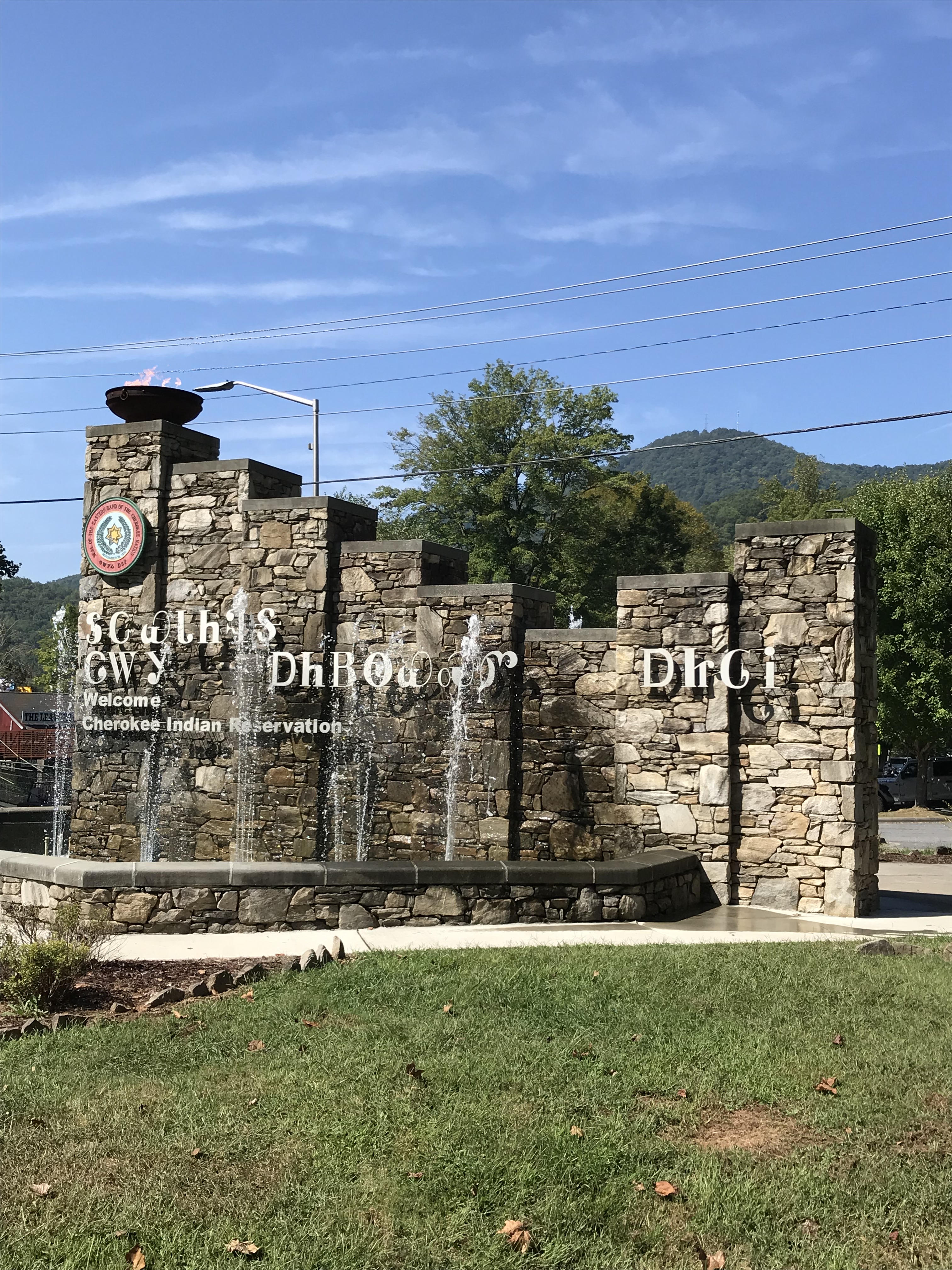
Exploring Qualla Boundary

Several weeks ago, my sister and I spent several days in Cherokee, North Carolina. We have visited Cherokee many times, but I had never seen the “Unto These Hills” outdoor drama. Since the drama was rewritten a few years ago to give a truer presentation of the Cherokee Indian perspective on their history, I was eager to see it.

A leisurely drive on the Blue Ridge Parkway is always an activity we enjoy, so we got on the parkway on the southern edge of Asheville and took it to its end at Soco Gap. We went through 15 tunnels on that 80 or so southernmost miles of the Blue Ridge Parkway. Various wildflowers, including the Flame Azalea (or native/wild azalea) was at or just past its peak.

Flame Azalea along the Blue Ridge Parkway
National Park Service sign noting the highest elevation on the Blue Ridge Parkway Motor Road at 6,053 feet.

We had perfect weather all week, including the night we had tickets to see “Unto These Hills.” The acting was superb. It was amazing to see the history of the Cherokee people presented in two hours.

The play emphasized how the Cherokee and the European explorers, traders, and settlers had a congenial relationship in the beginning. It wasn’t until the Europeans started cheating the Cherokee and tricking them into poor decisions and hollow treaties that things deteriorated.

Another scene from “Unto These Hills”
A scene from a visit to the White House in the “Unto These Hills” outdoor drama

The last straw, of course, was when the United States forced the Cherokee to give up their beautiful and lush ancestral lands for what turned out to be a death march to the Indian Territory of present-day Oklahoma. They were promised a good life, but it was just another broken promise by the white man.

A scene from “Unto These Hills” outdoor drama in Cherokee, NC

The Cherokee people who refused to leave the Great Smoky Mountains hid in the hills. It is the descendants of those brave souls who now populate the Qualla Boundary and are officially known as the Eastern Band of the Cherokee Indians.

By visiting the Museum of the Cherokee Indian and the Oconaluftee Indian Village, you can learn a great deal about the Cherokee Indians’ rich history and traditions. For instance, they lived in houses, not teepees. They did not wear elaborate feather headdresses like the Plains Indians. Cherokee men back in the day were up to seven feet tall and the women averaged only a few inches shorter.

An example of a Cherokee house from an earlier century. (The cutaway is not a window; it is there to show the wall’s construction. Cherokee houses did not have windows because they were only used for sleeping. All their work was done outside.)
Weaving display at Oconaluftee Indian Village in Cherokee, NC
A pottery display and demonstration at Oconaluftee Indian Village in Cherokee, NC

Many Cherokee people continue to master the time-honored crafts of making clay pottery, intricate bead work, exquisite basketweaving, and wood carving. It takes weeks and sometimes months for the native plants and other natural resources for these items to be gathered and prepared, not to mention the intricate work to create the finished products. Those priceless items can be admired and purchased at the Qualla Arts and Crafts Mutual, Inc.

Cherokee ceremonial masks were made from various natural resources, including wood and even hornets’ nests (as seen on the left in the photo.)

Although some of the signage indicates otherwise, the Qualla Boundary is not a reservation. The Cherokee people own their land and the Qualla Boundary is held in trust for them by the United States Government.

The Cherokee not only had their own written language; they also had their own newspaper starting February 21, 1828. Although the United States Government tried to eradicate the Cherokee language and traditions, that policy failed. Today the Cherokee language is making a comeback. There is even a Cherokee immersion school in which only Cherokee is spoken.

On our recent visit, we used Cherokee as our base. One day we drove through the center of the Great Smoky Mountains National Park to and including Little River Road and Clingman’s Dome and back to Cherokee.

Another day we drove 10 miles to Bryson City, North Carolina and the Deep Creek entrance to the Great Smoky Mountains National Park. We hiked to three waterfalls we’d never seen before and enjoyed learning lots of facts about the park along the way to two of them with a park ranger.

When planning your trip, check online for the planned hikes and lectures offered by park rangers at the Oconaluftee Visitors Center near Cherokee, NC, the Sugarlands Visitors Center near Gatlinburg, Tennessee, Cades Cove near Townsend, Tennessee, and at the Deep Creek entrance to the park at Bryson City.

The Cherokee honor water and the residents and visitors alike are blessed to have the Oconaluftee River flowing right through the town of Cherokee. This shallow, wide, rocky river is the perfect place for tubing and splashing around in the water. I have memories of enjoying the river on my first trip to Cherokee when I was a young girl.

Deep Creek in the section of the national park is a popular creek for tubing. Many families were taking advantage of the creek for tubing on the very warm day we were there. If I were just younger and braver…. It looked like a lot of fun!

People tubing on Deep Creek near Bryson City, NC in Great Smoky Mountains National Park

All that hiking and tubing will make you hungry. My sister and I enjoyed the buffet at Granny’s Kitchen Restaurant on US-19 North going from Cherokee toward Maggie Valley. The wife in the couple who own and operate the restaurant is a Cherokee Indian. It is said if you want to find a good place to eat, look where the locals eat. This was certainly the case at Granny’s. (I am receiving no compensation for publicizing the restaurant. It is a good value and experience for the money. You will not leave hungry!)

People from all over the United States enjoy the Blue Ridge Parkway, the Qualla Boundary, and the Great Smoky Mountains National Park. We kept track of the different license plates we saw. When the trip was over, we had seen cars from 42 of the 50 states and several from Ontario, Canada.

Great Smoky Mountains National Park is the most-visited national park in the country. People are drawn to it by its beauty and biodiversity.

If you wish to learn more about Cherokee, the Great Smoky Mountains National Park, and the Blue Ridge Parkway, I recommend my vintage postcard book, The Blue Ridge Mountains of North Carolina. I packed as many facts and as much history into the book as Arcadia Publishing would allow. The book is available in paperback and e-Book from Amazon.


Since my last blog post

I continue to declutter by going through closets, old magazines, and boxes of memorabilia, photographs, newspaper clippings, and recipes. It is satisfying to look at what I’ve accomplished. My fiction writing has suffered for it, but this really needed to be done.


Until my next blog post

Keep reading and traveling every chance you get.

Visit your local public library, if you are fortunate enough to have one. If you haven’t visited it recently, you might be surprised to find some of the things it offers: Internet access, free access to software such as Ancestry.com, magazines you would like to read but cannot afford to subscribe to, music CDs, used books for sale, a magazine swap, ….

Remember the people of Ukraine.

Janet

#OnThisDay: Apollo-Soyuz Test Project, 1975

This was not planned, but when I started to write this blog post I realized the event whose anniversary we mark today happened 200 years and one week after the historic petition I blogged about last Monday. It’s nice when serendipity happens.

Whereas last Monday’s blog post was about a petition written in 1775 as the American colonies were on the verge of war with Great Britain, today we jump forward to mark an historic joint space exploration venture between the United States and the Soviet Union.

Both events now seem like ancient history in light of where space exploration has taken us today, so it is sobering for me to realize the event I write about today happened a couple of months after I graduated from college. It seems like just yesterday! The passage of time is beyond my understanding.


What was the Apollo-Soyuz Test Project?

The Apollo-Soyuz Test Project was the first multinational space exploration project.


Photo of the night sky filled with stars
Photo by Jack Cohen
on Unsplash

A little background

What made the Apollo-Soyuz Test Project particularly surprising and interesting was that the two participating countries – the United States and the Soviet Union – had been serious and unfriendly competitors in space travel since the late 1950s. The era was known as “the space race.” Each of the countries was determined to beat the other one in reaching every progression in space travel with the ultimate goal of putting a human being on the moon.

This is an over-simplification, but with the United States putting humans on the moon in 1969, the space race transitioned into a posture of sharing knowledge. It was an outgrowth of the “Détente” that started in 1969. Détente brought about more relaxed relations between the US and the Soviet Union.


Things get real in 1973

In the first half of 1973 the two countries announced the names of the astronauts and cosmonauts for the project as follows:

U.S. Commander Thomas P. Stafford

U.S. Command Module Pilot Vance D. Brand

U.S. Docking Module Pilot Donald K. “Deke” Slayton

US backup crew:  Alan L. Bean, Ronald E. Evans, and Jack R. Lousma

Soviet Commander Aleksei A. Leonov

Soviet Flight Engineer Valeri N. Kubasov

Soviet backups: Anatoli V. Filipchenko and Nikolai N. Rukavishnikov

The crews trained together for the first time at NASA’s Johnson Space Center in Houston, Texas in July 1973.

Some details of the project


Soyuz

Launch: July 15, 1975, at 8:20 a.m. EDT
Launch Site: Baikonur Cosmodrome, Kazakhstan
Flight Crew: Alexey A. Leonov, Valery N. Kubasov
Landing: July 21, 1975

Apollo

Launch: July 15, 1975, at 3:50 p.m. EDT
Launch Site: Launch Complex 39, Kennedy Space Center, Florida
Flight Crew: Thomas P. Stafford, Vance D. Brand, Donald K. Slayton
Landing: July 24, 1975

Mission

Docking Time: July 17, 1975, at 12:12 p.m. EDT
Undocking Time: July 19, 1975, at 11:26 a.m. EDT
Total Duration of Joint Activities: 19 hours, 55 minutes
Orbital Inclination: 51.8 degrees

(Source: The Apollo-Soyuz Mission – NASA)

Both spacecraft made orbital adjustments over the first two days to pave the way for the two vehicles to dock in space. People all over the world watched the docking at 12:12 p.m. Eastern Daylight Time, July 15, 1975. Hatches on both vehicles were opened at 3:17 p.m.

Celebratory handshakes and commemorative gifts were exchanged between the astronauts and cosmonauts. U.S. President Gerald Ford and Soviet Communist Party General Secretary Leonid Brezhnev called them to express their congratulations. The astronauts and cosmonauts shared a meal and the hatches were closed for the day.

The following day Brand joined Kubasov in the Soyuz and Leonov joined Stafford and Slayton in the Apollo spacecraft. TV interviews and tours were given, experiments were conducted, and lunch was eaten. Afterwards, Kubasov and Brand left the Soyuz and joined Slayton in the Apollo. Leonov and Stafford then spent time in the Soyuz.

By mid-afternoon the historic exchanges were completed, there was another round of handshakes and goodbyes were said.

At 8:02 a.m., July 19, 1975 the spacecraft were undocked.

Quoting from the NASA website: “As the Apollo capsule backed away, it blocked the sun from the Soyuz vehicle, creating the first human-made eclipse and enabling the cosmonauts to photograph the sun’s corona. The two spacecraft then docked once more, with final undocking at 11:26 a.m.


The end of the successful project

The Soviet cosmonauts continued to conduct life-science experiments for another day. The Soyuz 19 landed near its target on July 21, 1975. It was the first time a Soviet space mission launch and landing were televised.

The Apollo capsule remained in orbit with the astronauts carrying out space-science and Earth-observing experiments for five days after the undocking. It was the last planned ocean landing for U.S. human spaceflight. Splashdown occurred at 5:18 p.m., Eastern Daylight Time on July 24, 1975.


Until my next blog post

What happened on Saturday was an attack on democracy. Let’s hope this week is less eventful than the weekend.

I hope you have a good book to read.

Enjoy some time with your friends and family.

Don’t forget the people of Ukraine.

Janet

#OnThisDay: Olive Branch Petition, 1775

On July 8, 1775, the Second Continental Congress adopted the so-called Olive Branch Petition as sort of a last-ditch effort to avoid war with Great Britain. It was written by John Dickinson of Pennsylvania. He hoped against hope that America would not break with its mother country.

Photo by Shahan Khan on Unsplash

The petition’s words were couched in language meant to convince King George III that the colonies did not want to break away but that Britain’s actions had forced her “still faithful Colonists” to arm themselves in self-defense. It mentions the “distress” the very thought of such a break was causing the colonists.

The petition ended with, “That your Majesty may enjoy long and prosperous reign, and that your descendants may govern your Dominions with honour to themselves and happiness to their subjects, is our sincere prayer.”

Photo by Donovan Reeves on Unsplash

This was just a scant three months after American militiamen had fought British troops at Lexington and Concord, Massachusetts. Colonists’ beef was primarily with Parliament. There was still hope among same of them that King George surely wanted only the best for his subjects – even those across the Atlantic.

On September 8, 1775, Richard Penn and Authur Lee, representing the Continental Congress, traveled to England to present the petition to King George III. But King George refused to accept the petition.

Photo by Mark Stuckey on Unsplash

When word came to the colonies that the king had refused to even receive the petition, the tide turned and the colonists realized the king did not have their best interest at heart.

Photo by Rusty Watson on Unsplash

The rest, as they say, is history.

Until my next blog post

I hope you are reading a good book.

Remember the people of Ukraine.

Janet