Books Read in January 2022

I had the pleasure of reading a variety of books in January. Each one was interesting in its own way.

In my December 6, 2021 blog post, Books Read in November 2021, I made less-than-glowing remarks about Wiley Cash’s When Ghosts Come Home. I’m rectifying the situation today.

When Ghosts Come Home, by Wiley Cash
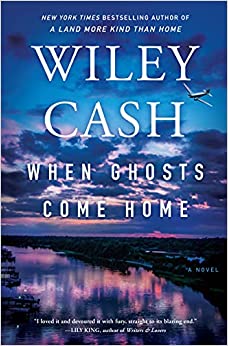
When Ghosts Come Home, by Wiley Cash

I owed it to myself and Wiley Cash to give this novel a second chance. I checked out the large print edition of the book from the public library in January and started reading it again. I’m so glad I did!

I think part of my problem in November was that I read the first chapter or two and didn’t get back to it for a week or so. Since the third chapter was about a new set of characters with no obvious connection to the characters in the first couple of chapters, the book sort of fell apart for me. I figured out the connection a little later, but by then I’d lost interest in the story.

Getting back to this novel in January was a real treat. I was able to give it enough attention in longer blocks of time to get into the storyline, make the connections, and care what happened to the characters.

I had to find out why Rodney Bellamy was at the airstrip that night. I had to find out what happened to Janelle’s kid brother, Jay. I had to know if Winston’s daughter, Colleen, was going to get her life back together after losing her baby. I had to find out how Winston, the county sheriff on the coast of North Carolina, got all the crimes and problems sorted out. I had to find out what part FBI Agent Tom Gross played in all this.

Determined to tie all the loose ends together, the end of the book kept me reading until 3:00 a.m. I’m back on track now with Wiley Cash and look forward to his next novel.

There is an element of racial tension woven throughout When Ghosts Come Home. The following is a very telling quote from the book. Ed Bellamy is referring to the white Marines he served alongside in Vietnam.

“But I knew something else my white buddies didn’t know: I knew what it meant to be hunted…. I still know what it means to be hunted. All these years later, we’re still being hunted.”

I’ve read all his earlier novels: A Land More Kind Than Home, The Dark Road to Mercy, and The Last Ballad.

I read A Land More Kind Than Home in 2015 before I started commenting other than mentioning the titles on my blog about the books I was reading.

In February 2016, I read The Dark Road to Mercy. Here’s the link to the blog post in which I commented on it: Some books I read in February

I commented on The Last Ballad in my blog post on November 6, 2017: Some Good New Books.


These Precious Days, by Ann Patchett
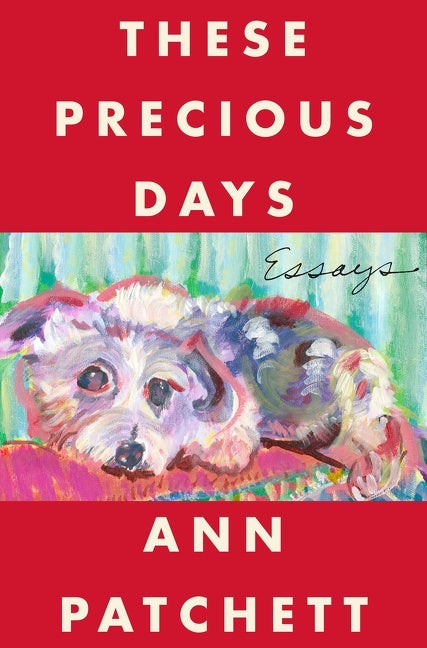
These Precious Days: Essays, by Ann Patchett

I was surprised when I looked back through my blog posts to find that this is the fifth Ann Patchett book I’ve read. I’ll give you the links to those earlier four blog posts in case you’d like to read what I had to say about her other books.

To refresh my memory and yours about the Ann Patchett books I’ve read, here are my nutshell descriptions and the links to the blog posts in which I wrote about them:

(1) The Getaway Car is a book in which Ms. Patchett humorously tells what she has learned about the craft and art of writing. What I read in February 2017

(2) State of Wonder is a novel set in Brazil. It involves a pharmaceutical firm in Minnesota and the jungle along the Amazon River. Some Great September Reads

(3) The Dutch House is about a dysfunctional family in which the mother leaves and never returns. There are many layers to this story and the house itself is as important as any character. I highly recommend you listen to the CD of this book which is read by Tom Hanks. I stretched my reading horizons in November

(4) Bel Canto is a novel based on the 1996 hostage situation at the home of an ambassador in Peru. Eight Books I Read in March 2020

(5) Commonwealth was a novel that didn’t grab my interest and I didn’t listen to all of it. It involved drunks at a christening party. I couldn’t identify with that. Books Read in May 2020

Ann Patchett is an essayist in addition to being a novelist. These formats take two different writing skills. She’s a master of both. I enjoyed listening to These Precious Days, which is a collection of essays. She reveals some of her past in an entertaining way and with humor. If you’re an Ann Patchett fan, you’ll love this book.

I connected with her on several levels in this book. We’re both writers, although she’s light years ahead of me. We both knit – or do so rarely and not as well as those knitting experts in Scotland. Neither of us have children to dote on or depend upon to help care for us in our dotage.

It is a book about friends and family and those ties that bind us and help us along through life’s ups and downs. It was one of those books that left me wanting more when it ended.


When We Cease to Understand the World, by Benjamin Labatut; translated from Spanish into English by Adrian Nathan West
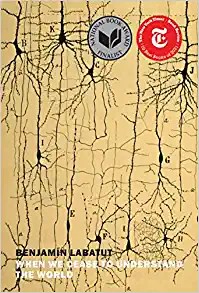
When We Cease to Understand the World, by Benjamin Labatut

My cousin, Jerome Williams, recommended this book. I failed to have it on my to-be-read list, although it was shortlisted for the 2021 National Book Award for Translated Literature. The author, Benjamin Labatut, is Chilean.

This novel reads like a nonfiction book. In it, Señor Labatut writes about various scientists and mathematicians who have had to wrestle with the moral ramifications of their discoveries. In some cases, their discoveries were meant for good but have been used as weapons of mass destruction and untold suffering. Some of these men lost their minds or were mentally tormented by the ways in which their discoveries were used.

There are unexpected twists and turns as years and decades pass, and we’re left to wonder what great wonders and what horrific demented uses of those great wonders lie in the future.

Thanks for the recommendation, Jerome. You have good taste in literature.


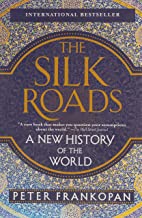
The Silk Roads: A New History of the World, by Peter Frankopan

As I’ve mentioned before, this book isn’t a fast read. It’s a history book and it packs a tremendous amount of information and insight into its more than 600 pages. Trying to read the regular print edition was taxing on my eyes, so I got on the waitlist for the Kindle edition. I rose to the top of the list early in January and was eager to pick up where I’d left off in November.

Other books also reached the top of the library waitlists, though, and I was distracted. The Silk Road isn’t the kind of book you can read in snippets. I’ll keep reading it, probably throughout 2022.


Since my last blog post

I’ve been researching the Great Wagon Road and some of old trails associated with it. In case you’re interested in learning more about the Great Wagon Road, I recommend that you look at the PiedmontTrails.com website (https://piedmonttrails.com/) and look for Piedmont Trails on YouTube. Carol, who spearheads the Great Wagon Road Project, has lots of information that she freely shares. The Great Wagon Road Project is documenting the 800-mile wagon road that went from Pennsylvania to Augusta, Georgia in the 1700s and early 1800s.

I’m doing this research in conjunction with the historical novels I’m attempting to write. I had planned to start writing the rough draft of Book One with the working title The Heirloom, but there’s a technical issue with my computer regarding margins. I hesitate to start the rough draft until I can get my margins set at a reasonable setting. I’ve never had this problem before.

Until my next blog post

I hope you have a good book to read and a hobby to enjoy.

Stay safe and well.

Janet

My Recent Discovery of OpenLibrary.org

I love how things seem to just happen. Things I couldn’t anticipate because I didn’t know they existed. Serendipity.

OpenLibrary.org

Photo credit: Emil Widlund on unsplash.com

In the process of looking for an out-of-print genealogy book a couple of weeks ago, I quite by chance saw a reference to OpenLibrary.org. I’d never heard of it, so I typed in into a search engine to investigate it. What a treasure!

The website’s self-description reads as follows: “Open Library is an initiative of the Internet Archives, 501(c)(3) non-profit, building a digital library of Internet sites and other cultural artifacts in digital form. Other projects include the Wayback Machine, archive.org and archive-it.org.

I haven’t taken the time to explore archive-it.org, archive.org, or the Wayback Machine, but I learned from the video overview that the Wayback Machine gives you a way to go back in time and see what a particular website looked like years ago.

After signing up with my email address and a password, I gained free access to 4 million books, including that out-of-print genealogy book! It wasn’t available from Amazon.com and it wasn’t even available from my go-to used books website, abe.com. (The Advanced Book Exchange rarely lets me down.)

On OpenLibrary.org, I was able to access the entire genealogy book and do all the research I needed to do in just a couple of hours. It didn’t cost me a penny. I remember a time not so long ago when being able to do that from the comfort of my home – or from anywhere else, for that matter – was the stuff of science fiction.

If you can’t find the book you’re looking for on OpenLibrary.org, they even have a way for you to sponsor a book, and then it will be available to you and everyone else.

I’m getting no financial or other benefit from blogging about OpenLibrary.org. I just wanted to share with you a free resource that might help you.

Since my last blog post

Photo credit: NisonCo PR and SEO on unsplash.com

I watched a free 90-minute webinar on Tuesday about Amazon Optimization by Geoff Affleck. It was aimed at self-publishing authors. I don’t know yet how I’ll get my novel series published, but I took lots of notes for future reference if I go that route. Also, I picked up some pointers that I can do to my Amazon Author page now.

The Heirloom

I read every chance I got last week, and I worked on my scenic plot outline for Book One in my series (possibly titled, The Heirloom) every day except Sunday. I try not to work on the Sabbath. The word count for the scenic plot outline stood at more than 12,000 as of Saturday night. I’m enjoying my research on the Great Wagon Road and some of the trails that crossed or veered off of it.

Thank you, Beverley in the British Virgin Islands – and a blogger friend of mine – for firmly encouraging me to stop reading so much and make time for my writing. I’m happier now and have more direction in my life.

My sister and I continue to work on photo albums together while we listen to a book, listen to music, or watch TV.

Until my next blog post

I hope you have a good book to read. I continue to have more books than I can get to, but I’m dedicated now to writing six days a week.

Stay warm. Stay safe. Stay healthy.

Janet
#OnThisDay (Tomorrow): Robert Burns’ Birthday

Robert Burns was born on January 25, 1759 in Ayrshire, Scotland.

A friend of mine from Campbeltown, Scotland, asked me if I liked to read the poems of Robert Burns. I had to admit that I couldn’t understand most of them.

Although written in English, and I’m an English speaker, the English Robert Burns used in the second half of the eighteenth century in Scotland was a far cry from the English I use and speak as an American in 2022.

I love to hear the soft, lilting tongue of Lowland Scots spoken. It’s lovely. It’s, no doubt, the way my Morrison ancestors spoke, for they were lowlanders and not Gaelic-speaking highlanders.

It’s lovely to hear a Scottish accent, whether highlander or lowlander; however, the heavier the accent, the harder it is to understand some words. In addition to that, the Scots have words for things that we don’t use in America.

When it comes to reading something written in Scots, some words just don’t translate well to my ears. That brings me back to Robert Burns.


Photo credit: Gary Ellis on unsplash.com

“Auld Lang Syne”

The most famous poem associated with by Robert Burns is, no doubt, the one that’s sung on New Year’s Eve. The words of “Auld Lang Syne.” The Scottish pronunciation is ‘o:l(d) lan’ səin. I must admit, this doesn’t help me at all. My source was quick to point out that we should note that Syne is pronounced like an s and not like a z. The rough translation is Long, long ago; or old long time; or good old time.

It seems that it’s an ancient song and in 1788 Robert Burns was the first person to write down the words. That was when he submitted the words to the Scots Musical Museum.

Did you know the song has four verses? Here they are in Scots, followed in more understandable English, thanks for the Scotland.org website The History and Words of Auld Lang Syne | Scotland.org.

Should auld acquaintance be forgot,

And never brought to mind?

Should auld acquaintance be forgot,

And auld lang syne.

Chorus

For auld lang syne, my jo,

For auld lang syne,

We’ll tak a cup o’ kindness yet,

For auld lang syne.

And surely ye’ll be your pint-stowp!

And surely I’ll be mine!

And we’ll tak a cup o’ kindness yet,

For auld lang syne.

Chorus

We twa hae run about the braes

And pu’d the gowans fine;

But we’ve wander’d mony a weary foot

Sin auld lang syne

Chorus

We twa hae paidl’d i’ the burn,

Frae mornin’ sun till dine;

But seas between us braid hae roar’d

Sin auld lang syne.

Chorus

And there’s a hand, my trusty fiere!

And gie’s a hand o’ thine!

And we’ll tak a right guid willy waught

For auld lang syne.

Chorus


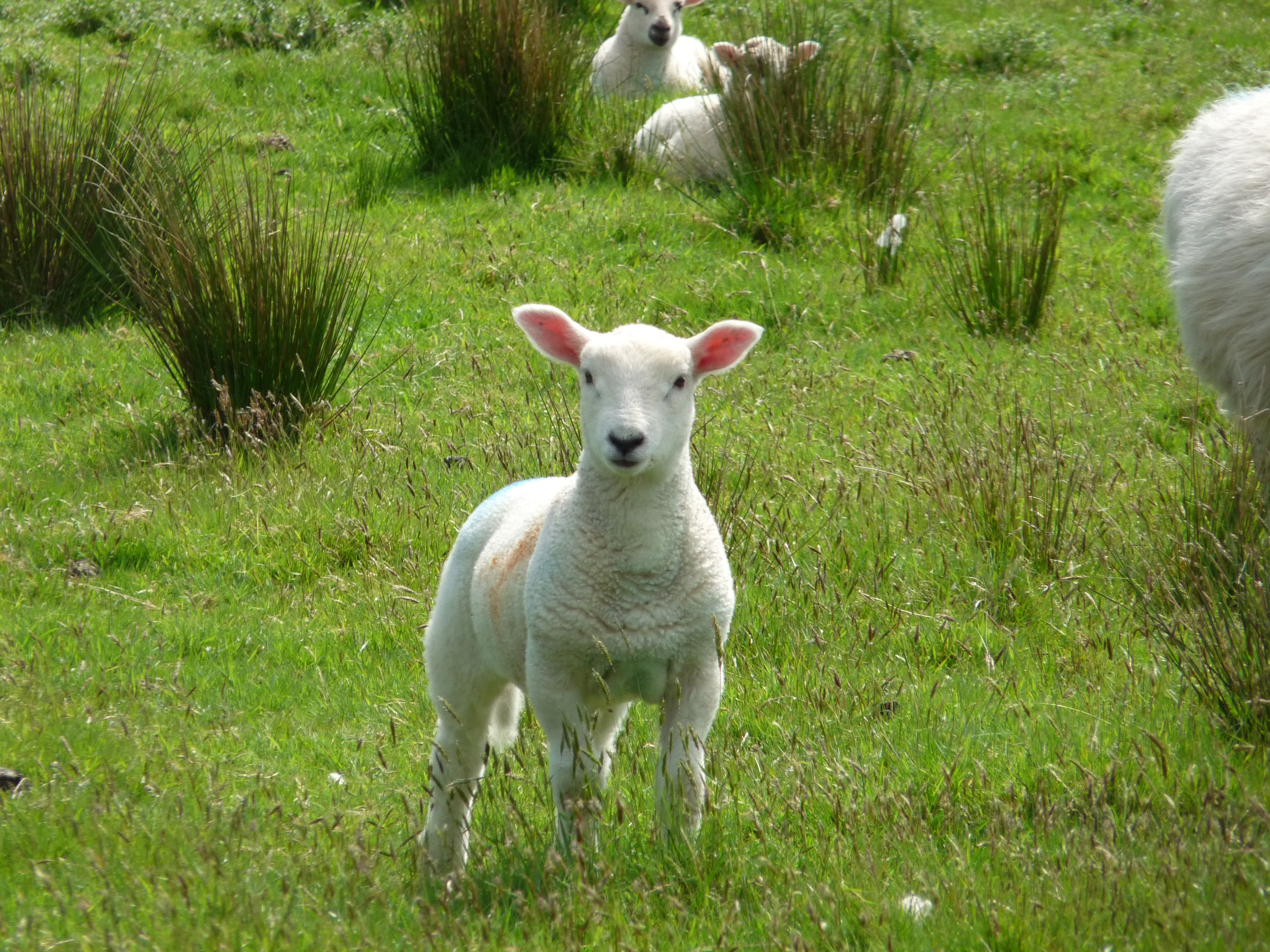
Scottish Lamb. Photo credit: Gibbon Fitzgibbon on unsplash.com

A modern translation of “Auld Lang Syne”:

Should old acquaintance be forgot,

And never brought to mind?

Should old acquaintance be forgot,

And long, long ago.

Chorus

And for long, long ago, my dear

For long, long ago,

We’ll take a cup of kindness yet,

For long, long ago.

And surely you’ll buy your pint-jug!

And surely I’ll buy mine!

And we’ll take a cup of kindness yet,

For long, long ago.

Chorus

We two have run about the hills

And pulled the daisies fine;

But we’ve wandered manys the weary foot

Since long, long ago.

Chorus

We two have paddled in the stream,

From morning sun till dine;

But seas between us broad have roared

Since long, long ago.

Chorus

And there’s a hand, my trusty friend!

And give us a hand of yours!

And we’ll take a deep draught of good-will

For long, long ago.

Chorus


Oh, My Love is Like a Red, Red Rose

Photo credit: Serafima Lazarenko

“Oh, My Love is Like a Red, Red Rose” is my favorite Robert Burns poem – partly because it’s more understandable than most of his – and because the sentiment is beautiful. Here are the words:

O my Luve is like a red, red rose

That’s newly sprung in June;

O my Luve is like the melody

That’s sweetly played in tune.

So fair art thou, my bonnie lass,

So deep in luve am I;

And I will luve thee still, my dear,

Till a’ the seas gang dry.

Till a’ the seas gang dry, my dear,

And the rocks melt wi’ the sun;

I will love thee still my dear,

While the sands o’ life shall run.

And fare thee weel, my only luve!

And fare thee weel awhile!

And I will come again, my luve,

Though it were ten thousand mile.

You can find it sung by various artists on YouTube.


Happy 263rd Birthday, Robert Burns

Scottish Bagpiper. Photo credit: Lynda Hinton on unsplash.com

It’s a tradition that many Scottish organizations, such as the Robert Burns Society, celebrate the bard’s birthday with a fancy dinner. This involves a bagpiper “piping in” the traditional Scottish dish, haggis. I’ve never been to one of those dinners.

When I visited Scotland, I was determined to have as many Scottish experiences as possible. I ate haggis. Now I can say, “I’m a haggis eater,” which you’re supposed to say with a deep voice and much gusto.

I’ve eaten haggis. I don’t have to do that again, if you get my drift.

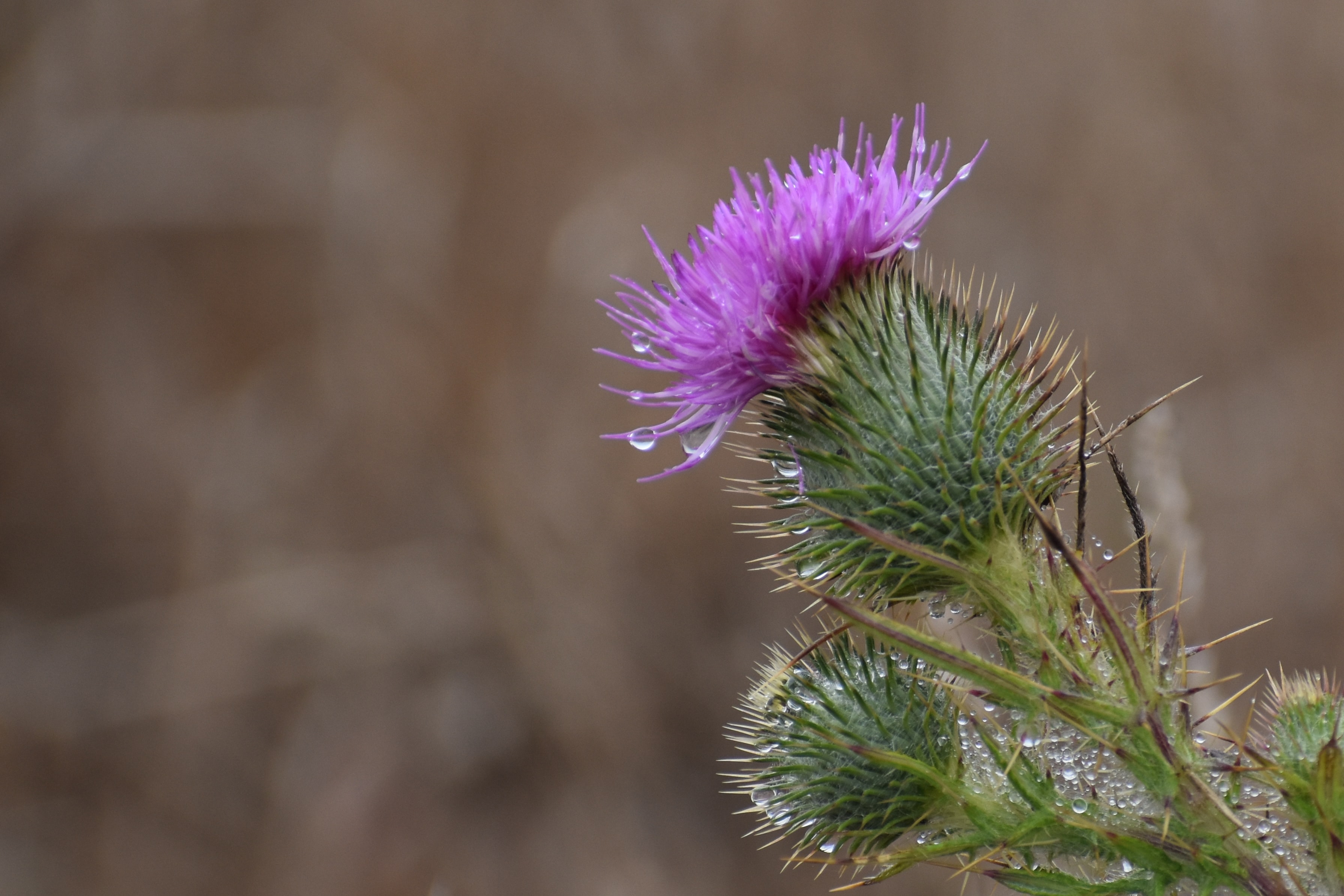
Thistle. Photo credit: Elisa Stone on unsplash.com

Since my last blog post

A blogger friend of mine, Francisco Bravo Cabrera, is a man of many talents. He paints, he writes poetry, he makes music, he puts together extraordinary art history videos, and he shares his talents on his blog. Here’s the link to one of his recent posts: https://paintinginvalencia.wordpress.com/2022/01/16/jazzart-phase-iii/

Since I blogged last Monday, I learned that he has launched a new endeavor by joining Fine Art America. Here’s a link to Francis’ Fine Art America page where you can view and purchase examples of his digital art on a vast variety of items ranging from wall canvas to notecards:  Francisco Bravo Cabrera Art | Fine Art America. Best of luck with this new opportunity, Francis!

I started writing the scenic plot outline for what I want to be “Book One” in my planned novel series. The scene-by-scene “outline” now stands at more than 3,700 words. I’m considering the working title, The Heirloom. The manuscript I’ve been blogging about for years with the working title of either The Doubloon or The Spanish Coin will be “Book Two.”

My blog post last week was “liked” and commented on by an honest-to-gosh published novelist, D. Wallace Peach. Her comment made my day and encouraged me that I’m on the right track with novel structure. Thank you, Diana!

My decluttering project at home continues. I went through bags, drawers, and boxes of old craft supplies. It felt good to discard dried-up fabric paint, craft glue, and sundry supplies I know I’ll never use. Usable items I’m no longer interested in or motivated to use will be donated to several people and a re-sell organization. The process freed up a drawer in a chest of drawers, making room for more things I probably should throw away or donate.

I worked on my next three blog posts.

I also did some reading. I gave When Ghosts Come Home, by Wiley Cash, another chance and loved it. More on that in my February 7, 2022 blog post.

Oh – and I actually got to spend some time on genealogy, one of my most rewarding hobbies.

In spite of some health concerns within my family, the Covid-19 pandemic, natural disasters, and the threat of war in eastern Europe, I had a good week. For me, 2022 is getting off to a productive start.


Until my next blog post

I hope you have a good book to read and a hobby to enjoy.

Stay safe and well, and let me know what you’ve been doing.

Janet

Highland “Coo.” Photo credit: James Toose on unsplash.com

Trying to Get Novel Structure Right

Several times in my blog posts in December I mentioned that I was working on novel structure. Thanks to the writings of K.M. Weiland online and in her books, the light bulb finally came on in my head. Everything fell into place and made sense. At least, I think everything fell into place.

As a reader of fiction, I just knew when I liked a story and when I didn’t. I never gave the structure of a novel any thought. I didn’t know a novel was supposed to hang on a framework. Call me slow, but I just didn’t.

Over the years, I’ve read about novel structure; however, I started writing a novel without giving structure any thought. I thought the words would just naturally flow in chronological order and, when I had written 100,000 or so of them, it would be a novel.

That’s an over-simplification, but it’s not too far off the point.

Photo credit: Alain Pham on unsplash.com

I read numerous articles that said a novel has to have a beginning, a middle, and an end. Well, duh! Of course. How hard can that be, right?

But there’s a lot more to novel structure than that – and I’m still learning.

I worked on the manuscript for the novel mentioned above for more years than I want to admit. (The working title is either The Spanish Coin or The Doubloon.) Then, I made some major changes in the story because what I thought was a fact turned out to be a legend. There was an ounce of truth in it, but I didn’t want to perpetuate a myth.

I didn’t write for about a year. I didn’t think I could face starting over, but that’s what I did early in 2019. New story, new characters, same old location, and same time period.

Yet again, I plunged into writing without any structure. I wrote a long and detailed outline and thought I had everything right. Some 90,000 words later, in December 2021 the concept of novel structure kept gnawing at me. It wouldn’t let me go until I put everything else aside and focused on it.

When I thought I had a fairly good grasp of novel structure, I set about to compare it to my manuscript. I was relieved to discover I had some things in the correct order and the correct place. There were some scenes, though that had to be moved. That was a scary proposition! Thank goodness for the “cut and paste” buttons on the computer. If this had happened to me in 1990, I probably would have just thrown the manuscript and my typewriter in the trash.

So, what are the basics of novel structure, as I understand them?

Photo credit: Ricardo Gomez Angel on unsplash.com

Remember – I’m still trying to grasp all the details and nuances. Don’t use me as your source. Please use K.M. Weiland’s books and online articles as your source if you plan to follow this structure to write a novel. Here’s the link to her website: https://www.kmweiland.com/book/structuring-your-novel/. Here’s the link to her series of online articles about novel structure: https://www.helpingwritersbecomeauthors.com/secrets-story-structure-complete-series/.

The following percentages are approximations, and the explanations are very brief and written to the best of my understanding.

Hook – Close enough to the beginning to “hook” the reader.

Inciting Event – Approximately 12% into the novel. Introduction to the main conflict.

Key Event – The protagonist’s response to the inciting event.

1St Plot Point – Approximately 25% into the novel. Ms. Weiland calls this the “Doorway of No Return.’ This is when the protagonist decides she’s all in. There’s no turning back.

1st Pinch Point – Approximately 37% into the novel. This is a small turning point. The protagonist is “pinched” by the force of the antagonist.

The Midpoint/2nd Plot Point – Approximately 50% into the novel. (No surprise there.) Internal and external conflict come together and the point of the story comes together. New information is revealed to the protagonist resulting in a paradigm shift. She has a clearer understanding of the threat against her.

2nd Pinch Point – Approximately 62% into the novel. The protagonist realizes like never before just what is at stake.

3rd Plot Point – Approximately 75% into the novel. Ms. Weiland says this includes the “dark night of the soul.” The protagonist must decide if she has it in her to keep fighting for her goal. She might make some progress toward reaching her goal, but then there will be a “low moment” where a lie she’s been telling herself all this time will die. She must face the facts.

Climax – Approximately 88% into the novel. This is where the protagonist confronts the antagonist and we find out if she achieves her goal.

Resolution – Loose ends from the story are tied up, unless the book ends with a cliffhanger to entice the reader to want to know more about this character.

It almost takes the fun out of writing a novel! Writing is hard work, but I’m happiest when I’m writing.

Where my novel stands now

As I mentioned in last week’s blog post, I’ve been inspired to write a novel series. After brainstorming the backstories of my protagonist in The Spanish Coin/The Doubloon, I realized her backstory would make a good novel.

Photo credit: Aaron Burden on unsplash.com

I don’t outline my writing projects in a rigid outline form like I was taught in school. I outline in paragraphs, throwing in bits and pieces of dialogue. The first draft of my outline for “Book One” now stands at nearly 4,000 words, and I’m eager to expand that into a scenic plot outline. (That outline is also in paragraph form, but gets into more detail than the first outline.) Next, comes the writing of Book One.

Book One takes my protagonist back to her childhood in Virginia, moving to Salisbury, North Carolina in 1766, and meeting her first husband. The Spanish Coin/The Doubloon will be the second book in the series. I have the bare bones of the third, fourth, and fifth books planned.

Call me overly optimistic, but that’s where things stand today. If my novel(s) never see the light of day, at least I’ve had the utter enjoyment of researching and writing them.

Since my last blog post, in addition to the above outlining

I’ve done a lot of decluttering since last Monday’s post. I’m getting to the age when I need to think about the fact that someday someone is going to have to dispose of my stuff. I need to make that task as easy for him/her/them as I can. I organized my stash of fabric and filled one large plastic storage bin with “unfinished sewing/quilting projects.”

I scanned some old photographs using the Photomyne app on my cell phone. I watched an hour-long webinar about organizing a large collection of photographs.

It seems like half the things I do these days are to decrease the amount of “stuff” my niece and nephew will have to deal with when I’m gone. I’m not trying to be morbid, but the closer I get to 70 the more I need to realize I’m not going to live forever. I’ve already lived longer than my father.

Until my next blog post

I hope you have a good book to read.

I hope to spend as much time writing as I do reading in the coming week. I hope you also have productive creative time.

Stay safe and well. Let me know what you’ve been doing.

Janet

5 Books I Didn’t Finish Reading in December 2021

I set out to blog about Thomas Paine’s pamphlet, “Common Sense,” which was published on this date in 1776. Common sense seems to be in short supply these days, so I thought the topic was appropriate; however, I opted for another topic.

Last week’s blog post was about the books I read in December. Today I’ll tell you about the books I attempted to read last month but, for various reasons, didn’t finish. The problem was me, so I wanted to share my thoughts about them. You might find a gem among them that you’ll enjoy reading.

Having Chronic Fatigue Syndrome, I find mental work just as tiring as physical activity. I quite honestly ran out of mental energy by the last week of December and had to face the facts of my circumstances.

I trudged to the public library and returned a tote bag full of books.


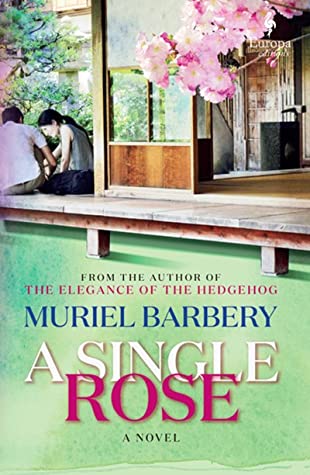
A Single Rose, by Muriel Barbery and translated from French by Alison Anderson

A Single Rose, by Muriel Barbery

I have fellow blogger Davida Chazan of Israel to thank for bringing this author and novella to my attention. She reviewed this book in her “The Chocolate Lady” blog post on September 14, 2021.

Ms. Barbery’s exquisite prose immediately immerses the reader in the beauty of Japan. It begins with a field of 1,000 peonies. Since the peony is one of my favorite flowers, I was hooked.

Rose is approaching her fortieth birthday when a lawyer summons her to Kyoto for the reading of her father’s will. She and her father have been estranged for many years, so Rose goes with many feelings of emptiness and foreboding.

However, her father has left an itinerary for his assistant to guide Rose through. The journey laid out by her father leads her to meet various people in his life and Rose comes to capture some of what she has missed out on due to the estrangement.

As Ms. Chazan wrote in her blog post (and I couldn’t have said it better,) the descriptive prose is written in a “sparse, yet extremely evocative style.”

I had to keep reminding myself that this was an English translation of a book originally written in French. I can’t read the original language, but it appears to me that the translator, Alison Anderson, did a meticulous job. The prose is extraordinary.

As with a few other books I wanted to read last month, I didn’t get to finish this one.

If you’d like to read Ms. Chazan’s full blogpost about this novella, here’s the link: https://tcl-bookreviews.com/2021/09/14/among-the-flowers-2/.


The Dictionary of Lost Words, by Pip Williams

The Dictionary of Lost Words, by Pip Williams

This historical novel is about the compilation of the first edition of the Oxford English Dictionary and how dictionaries have historically been compiled by men. I don’t mean to throw all men “under the bus,” but it is something to consider. Men determined which words should be included in dictionaries and men determined their meanings.

The Dictionary of Lost Words, by Pip Williams sheds light on how the Oxford English Dictionary was compiled around the turn of the 20th century by a handful of men who worked in a shed. Esme was a little girl who sat under their work table and gathered slips of paper the men let fall to the floor – sometimes on purpose and sometimes by accident. Esme started collecting those slips of paper – those words – in secret and hiding them in a box owned by her household’s bondsmaid.

The book follows Esme from early childhood through early adulthood as she decides to make her own dictionary – a dictionary of lost words.

Spending too much time reading other books meant I didn’t finish reading The Dictionary of Lost Words before it disappeared from my Kindle and went back to that great library in cyberspace.

Reviews I’ve read have pointed out that the first third of the book moves rather slowly. I agree with that, as we follow Esme day in and day out as she goes to the shed – called the Scriptorium – to sit under the table. She eventually is old enough to be trusted with running errands to a library and to the press. She wants to know how books are physically made but finds that this isn’t work girls are supposed to be interested in.

That notion connects directly to the overall message of the novel. It’s the belief by men 100 years ago that women just weren’t cut out to be interested in or have the mental ability to work in many occupations. What a waste over the thousands of years of history! It boggles the mind, and it infuriates me that there are people – both men and women – who still hold to those misguided beliefs.

Don’t get me started!


The Stranger in the Lifeboat, by Mitch Albom

The Stranger in the Lifeboat, by Mitch Albom

I’ve enjoyed several of Mitch Albom’s books, but this one just didn’t make sense to me. Perhaps I’m just dense. I just made it through the first couple of chapters.


Go Tell the Bees That I Am Gone, by Diana Gabaldon

Go Tell the Bees That I Am Gone, by Diana Gabaldon

Whether it’s due to my Chronic Fatigue Syndrome, my habit of trying to read too many books, the season of the year, or whatever… I just couldn’t read this 900-page novel. I love the Outlander series by Diana Gabaldon, but I had to throw in the towel after reading the first 200 pages of Go Tell the Bees That I Am Gone.

It was me, not the book. I tried listening to it on CD, but my hearing problems made it too difficult to follow the accents. I checked out the book from the public library and started over. I was really drawn in by the continuing story of Jamie and Claire, but my eyes started to rebel. Life is too short.

I guess I’ll have to wait until the TV series catches up with the book.


Call Us What We Carry, by Amanda Gorman

Call Us What We Carry, by Amanda Gorman

I admit I’m not a big poetry reader. I wanted to like this book of poetry by Amanda Gorman after being impressed with her at the Inauguration of President Joe Biden; however, I just couldn’t get into it on the written page.


Since my last blog post

I’ve attempted to organize myself week-by-week to get some projects completed in 2022. I’m a list maker, so doing such a thing gives me a sense of accomplishment. Now, if I can only stick to this plan….

A few months ago, I paid a few dollars for InfoStack 4.0. It includes many online writing classes and writing webinars. Over the weekend, I finally got around to listening to the 3.5-hour webinar about writing a book series. It was fantastic and now I’m brainstorming using my novel-in-progress as the second book in a series. I don’t know if I can pull this off, but I won’t know until I try.


Until my next blog post

I hope you have a good book to read. I’m giving When Ghosts Come Home, by Wiley Cash another chance. This time, it’s in large print. Also, I have Peter Frankopan’s The Silk Roads: A New History of the World from the library on my Kindle.

The risk of catching Covid-19 has me more or less hibernating again (or should I say still?) The pandemic seems to never end, but I believe better days lie ahead.

Janet

Books Read in December 2021

December brought me too many books. What a nice problem to have! By the last week of the month, I felt overwhelmed and decided to return several unfinished books to the public library.

Here are my takeaways from the five books I finished reading last month.


Three Sisters, by Heather Morris

Three Sisters, by Heather Morris

Three Sisters is the third in a series of historical novels by Heather Morris, and I’ve thoroughly enjoyed all of them. If you’re a fan of World War II-era historical fiction or, specifically, novels regarding the treatment of people of the Jewish faith during that era, you should try Heather Morris’ books.

In my November 5, 2018 blog post, Many Good Books Read in October!, I wrote about The Tattooist of Auschwitz. I wrote about Cilka’s Journey in my December 2, 2019 blog post, I stretched my reading horizons in November.

Like her first two novels, Three Sisters is about Jews surviving the Holocaust. Cibi, Magda, and Livia survive the horrors of Auschwitz and two of them go on to help build the new Jewish state of Israel after World War II.

Each of Ms. Morris’ books is a story of the indominable human spirit. Knowing they are based on true stories and real people make them all the more compelling. Two of the sisters in Three Sisters are still alive in their late 90s and living in Israel.


The City of Mist, by Carlos Ruiz Zafón

The City of Mist, by Carlos Ruiz Zafon

A cousin, Jerome Williams, introduced me to the writings of Spanish author Carlos Ruiz Zafón a couple of years ago.  I read The Shadow of the Wind by Señor Zafón in November 2019 and wrote about it in my December 2, 2019 blog post, I stretched my reading horizons in November. (Sound familiar? That’s also when I read Cilka’s Journey, by Heather Morris.)

Señor Zafón died June 19, 2020, at the age of 55. He wrote the 11 short stories in The City of Mist for intended publication after his death. The book was published in November 2021.

The stories are, for the most part, set in Barcelona and are set at various times over the last 600 years. They are more macabre than I usually read, but I’d liked The Shadow of the Wind. When I discovered The City of Mist quite by accident while searching the online public library catalog for short stories, I immediately checked it out. I listened to the audiobook on Overdrive. It was excellently read.

If you enjoy short stories and don’t mind if they’re much on the dark side, you’d probably like The City of Mist. Though dark and often dealing with death, Señor Zafón’s sense of humor did come out several times in the collection. An example of his ability to slide a bit of humor into an otherwise serious story is the tenth story in the book, “Gaudi in Manhattan” in which he has a bit of fun with the English language.


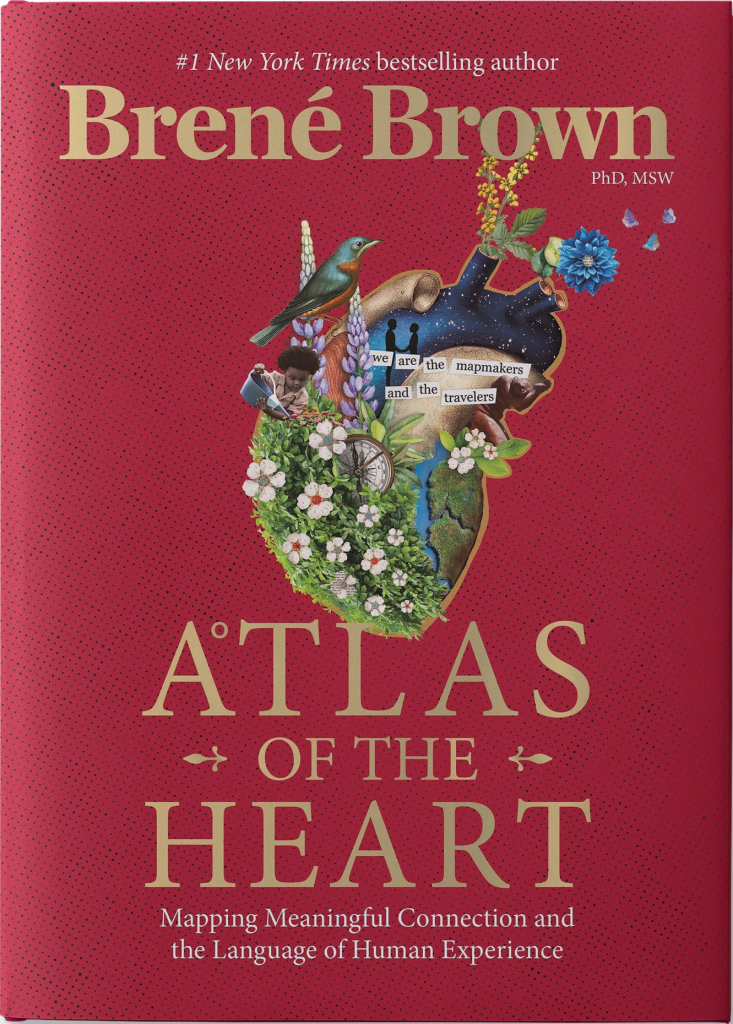
Atlas of the Heart: Mapping Meaningful Connection and the Language of Human Experience, by Brené Brown

Atlas of the Heart, by Brene Brown

Brené Brown has a way of getting down to the nitty-gritty and expressing her thoughts and research in a way I think just about everyone can relate. Her latest book, Atlas of the Heart: Mapping Meaningful Connection and the Language of Human Experience, helped me personally and helped me with my writing.

This book is about human emotions and behavior. She takes each one on individually, but the book is divided in chapters by groupings of those emotions.

The surprise for me was how the way she addressed certain emotions/behaviors played right into what I’m trying to convey in the novel I’m writing. I love when that happens.

Some of the things she writes about in this book shed light on some things going on in the political arena in the United States. She did this without calling names, but some passages helped me understand the actions of a certain past US President and his diehard followers. It didn’t make me feel any better about the recent past or the future, but it gave me some insight.


How to Write a Series: A Guide to Series Types and Structure Plus Troubleshooting Tips and Marketing Tactics, by Sara Rosett

How to Write a Series, by Sara Rosett

Fairly early on as I started working on my novel (working title either The Spanish Coin or The Doubloon), I started visualizing it as the first book in a series. Reading How to Write a Series…, by Sara Rosettlast month was quite helpful.

The book made me aware of a few things I hadn’t considered. One thing that has concerned me about the protagonist in my manuscript is that she doesn’t have a robust character arc. How to Write a Series made me see that it’s all right for a character to have a flat arc.

There are basically two kinds of series: (1) multi-protagonist and (2) single protagonist. I foresee my series – if I can pull it off – to be a single protagonist series. There are two types of single protagonist series: (1) flat arc protagonist and (2) robust arc protagonist.

One thing I’ve spent time contemplating in the last several weeks is how many books I think I can plot using the protagonist in my current manuscript and how I can make her strong enough to carry multiple books.

Just because I’m sitting, looking off in the distance, doesn’t mean I’m not working!


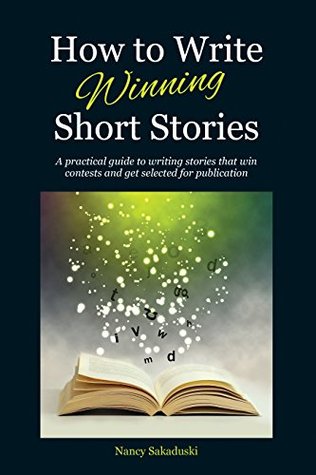
How to Write Winning Short Stories: A Practical Guide to Writing Stories that Win Contests and Get Selected for Publication, by Nancy Sakaduski

How to Write Winning Short Stories, by Nancy Sakaduski

I’ve written several short stories, two of which have been published. I’m working toward publishing a collection of short stories as soon as I have enough finished to make a good little e-book.

I happened upon this book at the public library and found it beneficial not only in writing short stories but in writing a novel. It’s a good “nuts and bolts” book of basics about writing fiction with an emphasis on short stories, but I found many useful tips and recommendations I can apply to novel writing.

Since my last blog post

I learned something about the celebration of Christmas that necessitated my moving a scene in the novel I’m writing from Christmas Day to New Year’s Day. It has to do with the Protestant Reformation and traditions in Scotland. I really should have known.

I’ve been going through my novel’s manuscript with K.M. Weiland’s writings about novel structure in mind, making adjustments here and there. Finishing that process gave me a sense of accomplishment.

When I checked some of the statistics for my blog on December 31, I was astonished to learn that people in 77 countries visited my blog in 2021. The most surprising was the 27 visits from within China.

Until my next blog pot

I hope you have a good book to read.

I plan to continue editing my novel. It’s been fun to get back to writing about trying to read too many books last month!

In 2022, let’s all seek peace and understanding.

Janet
How I’m Ending 2021

I struggled over a topic for today’s blog post. I looked back to see what I blogged about in my year-end blog posts since 2016. It was interesting to read about where my thoughts were the last week of December over the last five years.

Photo credit: Guneet Jassal on unsplash.com

December 2016

I made up a reading challenge for 2017.

Photo by Ed Robertson on Unsplash

December 2017

I reported that I’d checked off only 12 of the 19 items on my self-inflicted reading challenge. The title of the post was “Pros and Cons of Reading Challenges.” I found several of each.
December 2018

Here’s the link to my last blog post in 2018, 15 Books that Entertained, Educated, or Changed Me in 2018. I couldn’t believe it had been more than three years since I read some of those books. Some were still fresh in my mind.

December 2019

I was feeling self-reflective as 2019 came to a close. My last post that year was Contentment and Peace in 2020. I thought if I got my to-be-read book list under control, found my niche as a blogger, got my novel on the road to publication, and made time for hobbies, I would find peace and contentment in 2020.

December 2020

At the end of 2020, I decided to look back over the year and answer the question Did I Find Contentment and Peace in 2020?. Of the four prerequisites I listed in the previous paragraph, I didn’t accomplish any.

In all fairness, I didn’t anticipate breaking my leg in January 2020. I didn’t anticipate not being able to put any weight on my right leg for 13 weeks after the break. I didn’t anticipate having a pulmonary embolism in February 2020. I didn’t anticipate the Covid-19 pandemic hitting with full force in March 2020. I didn’t anticipate the death of my lifelong best friend in July 2020.

It was a rough year for every one of us. Interestingly enough, though, in my last blog post of 2020, I concluded that I was fairly content and at peace.

Looking ahead to 2022

As 2021 draws to a close, I don’t have any New Year’s Resolutions to break in 2022. I don’t have a magic number of books I want to read next year or an arbitrary set of categories in which I want to read.

Too many people got sick this year, and too many of them died. It looks like 2022 might bring more of the same.

I think I’ll just keep doing the best I can every day. I’m tired. How about you?

Since my last blog post

I would be remiss if I didn’t mention a mistake I made in last week’s blog post, “Responses to “Am I a Sun or Just Another Star?” I misspelled Rebecca Cuningham’s last name. I put two n’s in it instead of just one. I apologize to Rebecca and to any readers who had trouble finding her online due to my error. Check out her blog at fakeflamenco.com. Rebecca spent a semester studying abroad in Toledo. We’ll all look forward to her memoir, Supergringa in Spain.

My sister and I had a nice and quiet Christmas Day. Due to the uptick in Covid-19 cases, we decided to go back to participating in worship services via Facebook, even though we’re fully-vaccinated and boosted. We both have underlying conditions that increase our risk of serious illness if we catch the virus.

I’ve done a lot of reading, but I don’t think I can finish reading the 900-page Go Tell the Bees That I Am Gone, by Diana Gabaldon. My eyes are giving out!

#reading #books
Photo by Aaron Burden on Unsplash

Until my next blog post

I plan to do the best I can each day. I want to read when I feel like it, write when I can, and stop eating so many Christmas cookies.

I hope you have a good book to read.

Janet

Responses to “Am I a Sun or Just Another Star?”

I considered writing about the Louisiana Purchase today. You know, that 828,000 square miles (or 2,140,000 kilometers) of central and northwestern present-day United States of America purchased from France in 1803 during the Thomas Jefferson Administration? It’s a fascinating topic, but I decided to set it aside in favor of writing a follow-up to last week’s blog post, “Am I a Sun or Just Another Star?”

Was that a collective sigh of relief I heard from the blogosphere?

In answer to last week’s question, I admitted I’m just another star in the blogosphere, and I’m okay with that. Of the 40,320,000 blog posts published every week, I would be delusional to think my one measly post stood out in the crowd.

I wrote that blog experts tell people like me that we have to find our niche. Often times it seems those experts are pushing me to find something to write about that no one else is writing about. The advice that always stops me in my tracks is the ever-popular: Your blog must solve someone’s problems.

I have enough trouble solving my own problems without taking on someone else’s. Perhaps if I had a product to sell or stellar advice to offer on a particular subject, my blog could solve someone’s problem. That’s not going to happen.

At the end of last week’s post, I asked for feedback about my blog. I wanted to know what you like and what you don’t like about my blog, so I could make adjustments to make my blog more appealing. I thank each one of you who took the time to leave a comment.

In a nutshell, people seem to like my blog topics just the way they are. “Whew!” No one had the courage to tell me to stop writing about my long-suffering novel. And no one said my “OnThisDay” posts need to bite the dust. I usually get lots of “likes” when I blog about the books I’ve read, so I think that first-of-the-month topic is safe, too.

Photo credit: neonbrand-3gznpblimwc-unsplash

Here are some of the people who gave me feedback last week:

Jo (stillrestlessjo.com blog)

Jo, an Englishwoman living in Portugal wrote the following: “Something that captures my interest, and holds it, and isn’t trying to sell me something. You pretty much succeeded, Janet. Good luck with the book.” Jo’s photos from Portugal are fascinating. I’ll never get there in person, so her pictures bring the southern coast of that country to me.

Randall Anderson

Randall from the state of Georgia wrote that each blog he follows reflects the individual blogger, and that’s what he likes about blogs. Randall specifically commented that he enjoys my blog posts about the books I read because he can compare notes on the ones he’s read and sometimes discovers something he wants to read.

Francisco Bravo Cabrera (paintinginvalencia.wordpress.com)

Francisco in Valencia, Spain is one of my loyal readers. He offers encouragement every week as I aspire to be a novelist. His blog brings art history and music to me that have greatly broadened my horizons. He recently redesigned his blog. He never ceases to amaze me with his talent as a painter, a poet, and his ability to enhance his blog with music and graphics. Francis and I have a bit of a mutual admiration society going on. He flatters me by saying he’s amazed at how many books I read and says I write about them and about history in a way that he envies. The truth of the matter is, every one of his blog posts amazes me.

Laleh Chini (lalehchini.com)

Laleh, a native of Iran who lives in Canada, is another loyal follower of my blog. She encourages me to keep writing, and I’m encouraged by the several books she has written and published in the last few years. The stories she shares from her native Iran often remind me of the parables of Jesus. Her stories remind me that human beings are very much the same all over the world, regardless of nationality or religion. Laleh is a fantastic storyteller and freely shares her talent on her blog.

Neil Scheinin (yeahanotherblogger.com)

And then there’s Neil Scheinin. His blog always brings a smile to my face. He describes his blog as “an award-free/tag-free/challenge-free/etc.-free blog,” and I love that. (I’m tempted to steal that description, Neil!) Neil goes with the flow. His laid-back, self-deprecating style draws me in every time. The last time I checked, his December 7, 2021 blog post had 141 “likes.” Just for comparison, I do cartwheels (well, I would if I could) when I get more than 10 likes.) In his response to my blog post last week, Neil rightly pointed out that WordPress gives bloggers a wonderful platform for expressing ourselves and he added that it has brought to his attention that there are many good writers out there.

S.J. Schwaidelson wifelyperson.blogspot.com AND sjschwaidelson.com

S.J. Schwaidelson took more than a few minutes to write a sincere and thoughtful response to my blog post last week. She’s a New York native who has made her home in Minnesota for many years. She’s a novelist, current events blogger, and playwright. She shared with me the three main things she’s learned from her two blogs. Yes, you heard me right: she writes two very different blogs. She started her first blog after her husband, Ziggy’s death: wifelyperson.blogspot.com. After her third novel was published, she launched her new blog about being an author. You can find it through sjschwaidelson.com.

Rebecca Cuningham (fakeflamenco.com)

Rebecca Cuningham and I have recently found some common interests and started following each other’s blogs. Rebecca writes from Wisconsin. Her blog brings to life her many interests and talents. She shares her vast knowledge of history, her travel experiences, her humor, and life in Wisconsin – all through her descriptions and photographs. Rebecca sets the bar high for me when it comes to writing about history. She’s fluent in English and Spanish and, like Francis Cabrera, she blogs in both languages.

Trish Deveneau (trishdeveneau.com)

Trish Deveneau is a retired teacher, writer of creative nonfiction, blogger, and once-again resident of New York. Her comment last week was so well thought out and beautifully written that I not only will share it here, but I also printed it and taped it to the top of my computer screen. She wrote: “I enjoy blogs that are written from the heart as well as the head, that make me think about things in a new way or expose me to ideas that I haven’t yet bumped into. And of course, I am looking for prose that makes me sit up and take notice!” Please visit Trish’s blog. She writes from her heart and from her head and will expose you to ideas you probably haven’t bumped into yet.

Shelly DS (growingwithspawn.com)

Shelly dropped by my blog yesterday for the first time. I love hearing from new readers! Shelly’s words of wisdom in her comment included the following: “focus on our own niches than to be trying to conquer the universe… that’s the best way to add value!” Absolutely, Shelly! Your comment reminded me of the old saying, “Bloom where you’re planted.” Every blogger needs to do his or her own thing and have fun with it.

Photo by Kaitlyn Baker on Unsplash

As for me…

Blogging is a creative outlet for me, but it comes with a responsibility. It takes a reader a few minutes to read a blog post. Everyone’s time is limited and valuable, so I appreciate every time my blog is read.

I’m fortunate to have some loyal blog readers. I count them as friends. I value their time, their “likes,” and their comments. A bonus this past week was hearing from several new people. I feel like I’m constantly adding to my circle of blogging friends.

Knowing I have readers and friends throughout the United States and around the world makes the pandemic, conflicts, and other crises of life in 2021 a little easier to take.

By the way, I didn’t try to put true links to the blogs of my referenced respondents because I was afraid I’d mess someone’s link up. I hope I’ve included enough information that you can find each of their blogs by using a search engine.

Since my last blog post

In addition to reading the comments my blog received and responding to each of them, I also found time to read and write. A lot of my public library waitlisted books came in. One of them is Diana Gabaldon’s latest novel, Go Tell the Bees That I Am Gone. It’s 900 pages and I have three weeks to read it – along with a stack of other books. Wish me luck!

I dived into the writings of K.M. Weiland and suddenly some elements of novel structure fell into place for me. It was truly one of those “aha” moments and it felt like a weight was lifted off my back. I didn’t add to my word count this week, but what I finally learned about novel structure was priceless. I’d read all that structure stuff many times before, but last week I was finally able to visualize my manuscript in that framework and that made a world of difference.

Between breaking a 10-year-old crown while eating pizza, having to get it replaced, learning that an acquaintance has Covid-19 and is on a ventilator in ICU, running out of my medicine that keeps my Seasonal Affective Disorder under control, and finding out that our dog’s heart is three times its normal size, it’s been a trying week; however, all I need to do is to think of the thousands of people who were left homeless by tornadoes in Kentucky and five other states last week, and I realize how blessed I am.

Life goes on for me. Tomorrow is promised to no one, but today I continue to live my life and enjoy the benefits it gives me. I have a roof over my head and access to more food than I should or need to eat. I live in a place of relative peace and quiet. All those blessings probably put me in the top one percent of all the people in the world. I truly don’t know how fortunate I am.

Until my next blog post

I hope you have at least one good book to read. I have so many to choose from that it makes selecting just one difficult. Hence, I usually have several books going at the same time. (Thank you, free public library systems!)

Note: Tomorrow is National Short Story Day in the United States. Support your local library and short story writer by reading a short story. With some hard work and a bit of luck, maybe I’ll have a collection of short stories to offer you next year when Short Story Day rolls around.

If you’re of the Christian faith, I hope you have a very meaningful Christmas Day on Saturday.

Janet

P.S. When I previewed this post to see how it would look on a tablet or smaller mobile device, it looked terrible. There were no margins! I hope that’s not the way it will look published!

Am I a sun or just another star?

I read a thought-provoking blog post on January 22, 2020 – yes, nearly two years ago! I made a note about it in case I wanted to write about it in a future blog post.

That blog post was written by Cristian Mihai for his Art of Blogging blog. The name of the post was “Blogging Mindset – You Are a Blogstar.” 

Photo credit: Davide Cantelli on upsplash.com

In the blog post, Cristian Mihai compared the blogosphere to the number of stars in our galaxy. He recommended that I, as a blogger, try to be the sun so I won’t be overlooked like the other billions of stars.

Photo credit: Klemen Vrankar on unsplash.com

Instead of emphasizing the need to get more followers than other bloggers, in this particular post Mr. Mihai wrote: “And yes, it takes back-breaking amounts of work to stand out, to be relevant to your readers, but if you turn yourself into a sun, no matter how small your audience is, you’ll find out that the benefits of blogging are more numerous than you ever thought possible.”

Speaking for myself, I want to attract blog followers who will also want to purchase my novel when I get it published. The trick is to find a balance between my journey as a writer, my lifelong interest in American history, my love of reading, and my long-range goal of providing you with historical fiction you love to read.

It’s a winding path. The path has been fraught with detours and incidents that appeared to be deadends.

Experts in blogging tell us that a blogger needs to solve a problem for the reader. In his August 12, 2019 blog post, “Blogging is All About Problem Solving,” Christian Mihai stated, “Now, what problems are you solving by blogging? That’s a serious question, and you should think about it, because your success depends on what you answer.”

This question has buzzed around my head for more than two years. I’m just trying to write a good historical novel, so how will tales of my journey solve anyone’s problems?

The best answer I’ve been able to come up with is this: 

While I try to write the best historical novel you’ve ever read that’s populated by unforgettable characters — each playing their part in a story that will linger in your head long after you’ve finished reading it – I must convey to you through my blog posts that I have writing skills that are worthy of your time and hard-earned money, and that I know the history of a time and place so well that I can transport you there with my words.

No pressure there!

My Conclusion

I appreciate each and every one of you who have stuck with me since I started my blog June 24, 2010. I have my nephew-in-law to thank for setting up the website (http://janetmorrisonbooks.com) through which my sister and I publicize and sell our three Morrison genealogy books. Shortly after designing our website, he told me I should blog. The idea had never occurred to me.

When I started my blog, I didn’t know what I was doing. Some days, I still feel like that, but this is my 548th blog post. My posts were erratic in the beginning. I tried many different schedules. I settled on posting every Monday morning beginning June 26, 2017. That has worked well for me, but I wonder if I need to adjust that schedule again.

I keep promising you a novel. Hold on tight. The road will continue to be bumpy, but I believe there is light (and a novel) at the end of the tunnel.

I’ve concluded that, in light of Christian Mihai’s blog post referenced in the beginning of this blog post, I’m a star and not a sun.

Every minute of every day, 4,000 blog posts are published. There are more than 570 million active blogs in the world today. I don’t know how many suns there are in that 570 million, but I don’t expect Janet’s Writing Blog to ever qualify as a sun. For the time being, I’m happy to just be a star in the blogosphere.

Since my last blog post

Since last Monday, I’ve read Three Sisters, by Heather Morris, and The City of Mist, a collection of 11 short stories by Carlos Ruiz Zafón. I’ve also read How to Write Winning Short Stories, by Nancy Sakaduski and How to Write a Series: A Guide to Series Types and Structure Plus Troubleshooting Tips and Marketing Tactics, by Sara Rosett.

I continue to work on my novel. Do I dare consider it might be the first book in a series? If that’s a possibility, it will influence some of the details and plot lines it. Part of me thinks it’s presumptuous of me to think in terms of a series when it has taken me more than a decade to write the first book and it’s still in the editing stage.

Until my next blog post

In case you want to check out Cristian Mihai’s blog, you can reach it through his website: https://cristianmihai.net/. He’s been a full-time blogger for nine years.

I hope you have a good book to read and find fulfillment in your activities.

For those of us who are Christians, this is the Advent Season. I wish you joy, hope, and peace in the days leading up to Christmas Day.

Let’s continue the conversation

What do you look for in a blog? What do you look for in MY blog? I really need to know. What do you like about my blog? Do you wish I’d write more posts about a particular topic? Do you want me to continue my occasional “#OnThisDay” posts? Are you sick and tired of hearing about the novel I’m writing?

Janet

Books Read in November 2021

It seems impossible that today could be the first Monday in December. That means I’m supposed to tell you about the books I read in November.

I happily spent more time working on my novel manuscript last month than reading, but I’ll fill you in on what I did read.

When Ghosts Come Home, by Wiley Cash

When Ghosts Come Home, by Wiley Cash

I’ve enjoyed everything else I’ve read by Wiley Cash. He’s a North Carolina author whose novels are set in North Carolina. They are places I’m familiar with and there’s something special about that. That said – and you may have guessed where I’m going with this – I didn’t like When Ghosts Come Home so much.

It’s set on Oak Island, North Carolina, and I could almost smell the saltwater air while reading the first half of the book. That’s all I can comment on, because I just didn’t have the interest or time to read the second half. I’m curious to know what was on that plane that crashed on page one, but the tremendous amount of backstory in the next chapters became a distraction.

Curious to know if I had the same reaction to the book as others, I read many online reviews. It turns out that many readers have given the novel five-star reviews, but a number have given it one- or two-star reviews for much the same reason I lost interest in the book. As of Saturday afternoon, 1,955 people had reviewed it on Goodreads.com, giving the book an average of 3.77 stars on a five-star scale.

I looked forward to reading this book, and got on the waitlist for it at the public library months ago. It makes me sad not to give it a glowing review. Since it’s received so many five-star reviews, maybe I need to put it on the back burner for a little while and give it another chance later.

The Silk Roads: A New History of the World, by Peter Frankopan

The New Silk Road: A New History of the World, by Peter Frankopan

I’m still making my way through this extraordinary book. Thank you, Chris Andrews, for recommending it to me.

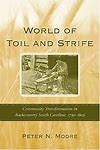
World of Toil and Strife: Community Transformation in Backcountry South Carolina, 1750-1805, by Peter N. Moore

World of Toil and Strife: : Community Transformation in Backcountry South Carolina, 1750-1805, by Peter N. Moore

I’ve read this book before, but I’m getting even more out of it the second time around. It zeros in on the history of the location where my historical novel, The Doubloon (or, The Spanish Coin) is set in 1769. Bits of information in the book are enriching the story I’m writing and also giving me insight into the place in which some of my ancestors lived in the 1760s and 1770s.

If you have an interest in colonial American life in the far-inland portion of South Carolina along the North Carolina border, I believe you would enjoy this book.

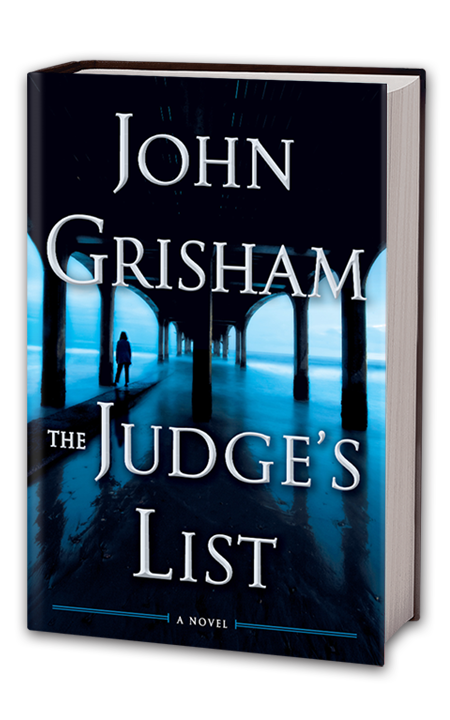
The Judge’s List, by John Grisham

The Judge’s List, by John Grisham

John Grisham’s latest novel of legal suspense, The Judge’s List, was a welcome change of pace from the other books I was reading in November. I was on the public library waitlist for the book on CD for months and was able to check it out just a few days ago.

I found myself thinking I’d listen to just one more CD before bedtime but listening to a second or third one instead. It’s that kind of book. It’s Grisham at his best.

The story line is so convincing, it makes me wonder if a judge could actually get away with having such a double life. Also, what this judge is able to do on his computer gives me pause and makes me want to never get on the internet again!

Since my last blog post

I’ve tried to be more organized in reading other blogs. I try to read and comment on at least two or three blogs each weekday. I read more than three, but I try to leave thoughtful comments on at least two or three every day. It means a lot to me to receive comments on my blog, so I want to give some level of encouragement to other bloggers I enjoy following.

I worked on my novel. Making revisions isn’t as much fun as writing the first draft, but it has been easier than I anticipated. I’ve changed some characters’ names and made adjustments in the storyline based on recent research.

I spent some time on one of my hobbies – genealogy. My best “find” was a Revolutionary War Military Pay Voucher for one of my ancestors. Sewing has been another hobby of mine, but I’ve neglected it for several years. I literally blew the dust off my sewing machine cover last week and made a Christmas present for someone.

I also put some thought into the historical short stories I’ve written or plan to write. If I can get myself organized, I want to publish some of them in e-book form in 2022. I’ll keep you posted.

The colder, windy weather and seasonal allergies are keeping me indoors most of the time. I’m fortunate to have the option of staying inside where it’s warm.

Until my next blog post

I hope you have at least one good book to read. As in November, I have too many books vying for my attention and time to do them all justice. It’s a wonderful predicament to be in. I’m so blessed to live in a country where I have free access to a world of books through the public library system.

Thanks for taking the time to read my blog post today.  See you next week.

Janet