Do you have a TBDWIROOSMTTL list?

Disclaimer:  Today’s post is just for laughs.

Photo by Zbysiu Rodak on Unsplash.

My head is exploding! Don’t get me wrong – I wouldn’t want to go back to the life my fore-mothers lived.

They cooked over an open fire, and they had no matches. They beat their clothes clean on a rock in a creek after making their own soap. They got their news when it was weeks or months old — or not at all.

Most of them back through the centuries couldn’t read or write. They had almost none of the things I take for granted; however, they weren’t bothered with social media. For that, many days, I envy them.

I remember the days before social media. My great-nieces are in high school and college. They do not.


Subreddits

I’ve whined about social media before, and I’ll probably whine about it again if I continue to write a blog. The latest thing that got my ire up about social media is something called Subreddits.

Actually, Subreddits themselves did not get my ire up, since I didn’t know what they were. What grabbed my attention and, for a while at least, served as the proverbial last straw for me, was they (i.e., Subreddits) were just one more thing about which I had been blissfully ignorant. One more word I didn’t know. One more thing that meant the world was whizzing past me.


My #TBDWIROOSMTTL List

I’ve had a vague idea about Reddit for a year or so. It was something on my ever-growing to-be-done-when-I-run-out-of-social-media-things-to-learn list. That’s my “TBDWIROOSMTTL” List.


Back to Reddits

I’m not picking on Reddit. I actually have no opinion about Reddit. I’ve never tried it. I have enough trouble keeping up with several social media outlets without adding one more to the mix. I just never gave much thought to Reddit.

Then, one day in October while I was on vacation, I explored some of the never-used features on my iPhone. I discovered that, if I had a clue how to work the thing, I could create a Subreddit. It was a new word for me. I didn’t have a clue what a Subreddit was or why or if I needed to create one.


Janice Wald’s blog post about Subreddits

Lo and behold, just three days later, Janice Wald’s “Mostly Blogging” blog post (https://www.mostlyblogging.com/r-nsfw-gif-hot-subreddits/) was about Subreddits. There was that word again, and I still didn’t know what it was.

Curiosity got the best of me. With a blog post title like, “These 26 Subreddits will Make You Know More,” by Janice Wald, how could I resist? I had to find out how Subreddits could “make” me know more. I’m sort of from the camp of people who say, “You can’t make me!” so that alone in the title intrigued me.

Right off the bat, the blog post said that I needed to use Subreddits if I expected to have any success online, but I still didn’t know what a Subreddit was. I read on.

Soon, more new words were being thrown at me. “Redditors” (Reddit users) to name one. I learned that there are more than 138,000 Subreddits. Boy, did I feel stupid!

Ms. Wald’s blog post listed four reasons why I should use Reddit:

                1.  Reference information for blog posts.

                2.  Learn about your content area.

                3.  Network.

                4.  Blog promotion.

That list was very convincing. As a blogger and an aspiring novelist, I need all four of those things. I read on.

Ms. Wald went on to list the 26 favorite Subreddits of the 26 Redditors she surveyed. The list ran the gambit from r/houseplants to r/Howard Stern, but somewhere in the middle I found a possible home for myself.

In the coming days I might explore Reddit and check out Subreddits like r/askhistorians and r/blogging. When I read that the r/blogging Subreddit already had more than 40,000 members, though, it made me realize how I will forever play catch-up when it comes to social media.


Until my next blog post

I hope you have a good book to read. I’m reading ­­­­­­­­­­­­­­­­­­­­­­ The Water Dancer, by Ta-Nehisi Coates and The Family Upstairs, by Lisa Jewell.

If you’re a writer, I hope you have quality writing time.

Thank you for reading my blog. You could have spent the last few minutes doing something else, but you chose to read my blog.


Let’s continue the conversation

Whining about social media doesn’t make it better. Whining about it doesn’t make it go away. Perhaps my whining about it today brought a smile to your face.

How do you cope with the ever-expanding world of social media? How do you keep up? How do you try to keep up? Do you try to keep up? Should I just stop while I’m behind? Do you have a “TBDWIROOSMTTL” list?

Janet

#OnThisDay: Time Zones, Mickey Mouse, Push-Button Phones, & Daguerrerotype?

Occasionally, I write about little-known facts in history. These sometimes fall on the anniversary of the event. Today’s blog post falls on the 136th anniversary of railroads adopting standard time zones in the United States. It’s Mickey Mouse’s 91st birthday, and it was 56 years ago today that the first push-button telephones went into service for the first time as an alternative to rotary-dial phones. This is the 230th anniversary of the birth of Louis Jacques Mande Daguerre.

Mickey Mouse

Walt Disney’s first animated cartoon talking picture, Steamboat Willie, debuted at the Colony Theatre in New York City on November 18, 1928. It was also Mickey Mouse’s debut. The rest, as they say, is history.

Push-Button Telephones

As stated above, push-button telephone service was introduced on November 18, 1963. There was a catch, though. That service was only available in Carnegie and Greensburg, Pennsylvania in the beginning. “Touch Tone” service was available for a fee.

It took a while for this new-fangled technology to reach rural North Carolina where I lived. In 1963, I think our family was on a 10- or 12-party line and we definitely still had a rotary phone.

Daguerreotype

Louis Jacques Mande Daguerre was born in France on November 18, 1789. He was a “Jack of all trades” or – perhaps more-accurately, a master of all trades. He was a physicist, a tax collector, a scene painter for theaters, and the inventor of the daguerrerotype photographic process.

Standard US Time Zones

Photo by Jon Tyson on Unsplash.com

In an era when time can be measured in nanoseconds, jiffies, zeptoseconds, and yactoseconds, I think the advent of standard time zones deserves a few minutes of our time today. It was on November 18, 1883 that the railroads in the United States put into practice the four time zones of 15 degrees each that Charles Ferdinand Dowd had first proposed.

Can you imagine what it was like before time zones were standardized? Even after the railroads adopted standard time zones in 1883, localities were not required to follow suit. In fact, it wasn’t until 1918 that the Standard Time Act was passed, setting four standard time zones in the United States.

Until my next blog post

I hope you have a good book to read. I’m reading ­­­­­­­­­­­­­­­­­­­­­The Dutch House, by Ann Patchett and The Water Dancer, by Ta-Nehisi Coates.

If you’re a writer, I hope you have productive writing time.

Thank you for reading my blog. You could have spent the last few minutes doing something else, but you chose to read my blog.

Janet

How to Visit Scotland, Aspen, Atlanta, Kentucky, Virginia, Syria, Turkey, and England in a Month by Never Leaving Home!

The books I read in October took me on a virtual world tour!

I’m a newsaholic, and October was packed with “breaking news” here in the United States every day. It was a juggling act for me to keep up with the news, write my blog posts, and read as many books as I could. I hope my remarks about the books I read last month will pique your interest in one or more of the books or authors.

I had such a pleasant time reading books in October that I had to break my blog post into two posts. In case you missed it, here’s a link to last Monday’s post: https://janetswritingblog.com/2019/11/04/a-new-favorite-novel/.


One Mile Under, by Andrew Gross

One Mile Under, by Andrew Gross

This 2015 environmental thriller by Andrew Gross started with a mysterious death in Aspen, Colorado and morphed into the story of a rural/farm area where a fracking operation had moved in, promised the residents more money than they could make farming under the current drought conditions. Andrew Gross’ serial protagonist Ty Hauck is drawn into the murder mystery by his niece, Danielle.

I’ve given away enough of the story to maybe interest you in reading the book. Is there a connection between a rafter’s death on the river and the growing conflict between the residents and the fracking company? Water – clean water – becomes a valuable commodity pitting residents against the fracking company, citizens against citizens, and citizens against the local government.

Other books I’ve read by Andrew Gross include The One Man, see https://janetswritingblog.com/2016/12/06/what-i-read-in-november/; The Sabateur, see https://janetswritingblog.com/2017/10/09/more-great-september-reads/; and The Fifth Column, see https://janetswritingblog.com/2019/10/07/thrillers-and-a-dark-novel-i-read-last-month/.


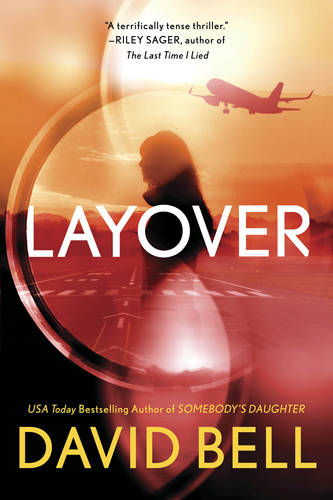
Layover, by David Bell

Layover, by David Bell

Layover, by David Bell, is based on the premise that a businessman who travels by air a lot in his work strikes up a conversation with a woman who is also traveling through the Atlanta airport. In a couple of hours they become romantically involved – or, at least the man does.

That’s when things start deteriorating. He changes his flight and follows the woman to her destination. Of course, this has trouble written all over it. He can tell the woman is running away from something, but she won’t tell him what it is. Then, she disappears.

If I tell you the rest of the story, it will spoil the book for you. Suffice it to say a dead body is involved, and everyone isn’t who you think they are.


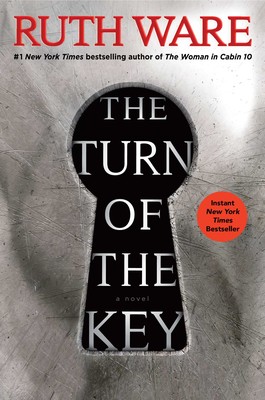
The Turn of the Key, by Ruth Ware                

The Turn of the Key is the third thriller I’ve read by Ruth Ware. The others were The Woman in Cabin 10, see https://janetswritingblog.com/2016/10/04/what-i-read-in-september/ , and The Death of Mrs. Westaway, https://janetswritingblog.com/2018/10/01/fiction-nonfiction-read-in-september-2018/ see.) She has written five novels.

The Turn of the Key, by Ruth Ware

In The Turn of the Key, a young woman in England quits her nursery school job in order to accept a position as a nanny to three children in a remote, isolated area in the Scottish Highlands. The description had me at “isolated area in the Scottish Highlands.” That’s all I needed to know.

Little does Rowan Caine know when she accepts the nanny job, she is entering a nightmare.

The book is written in the form of a letter that Rowan writes from prison to the lawyer she desperately wants to defend her in court. A child is dead, and Rowan is charged with murder.

This novel is unputdownable. It’s a tragic story on many levels and speaks to the dysfunction so prevalent in our society. There is nothing uplifting about this novel, so just know that ahead of time if you think you might want to read it. I’m not necessarily drawn to such novels, but I don’t avoid them either. I had to keep reading this one in order to find out which little girl was murdered and who murdered her. There was an additional twist to Rowan’s background that isn’t revealed until near the end. Maybe I’d slow, but I didn’t see it coming!


Burying the Bitter: A Boutique Series Short, by Tonya Rice

I “met” Tonya Rice online recently. We follow each other on Twitter and we follow one another’s blogs. Her blog about books, reading, and writing is “Front Porch, Sweet Tea, and a Pile of Books.” You might want to check in out. Here’s the link: https://tonyarice.wordpress.com/.

You might want to look for her short, Burying the Bitter: A Boutique Series Short on Amazon.com. It retails for $2.99 but, the last time I looked, it was available for free on Kindle. She also has a paperback book that includes this Burying the Bitter: A Boutique Series Short and other stories.

Ms. Rice’s other novels in the Boutique Series are Without Your Goodbye: A Novelette and Grand Opening: A Boutique Series #1 – A Novella, which I look forward to reading.

Burying the Bitter: A Boutique Series Short, by Tonya Rice

Ms. Rice’s Boutique Series stories and novels are set in her hometown of Richmond, Virginia. Burying the Bitter introduces us to Eveline, who grew up in Richmond and now lives in Atlanta. She is called home for Uncle Neville’s funeral. She and her female cousins are not enamored with this highly-thought of uncle because he molested them when they were young. Eden’s Jolie Boutique comes into play as that is where last minute clothing for the funeral must be purchased. An old love interest from high school days, Dodge Mallory, just happens to attend the funeral, and he and Eveline become reacquainted. I’m sure Dodge will show up again in Ms. Rice’s books and stories that follow this one.

After the funeral, Eveline confronts her mother about the sexual abuse she and her cousins suffered at the hands of Uncle Neville 20 years ago. How will her mother react?


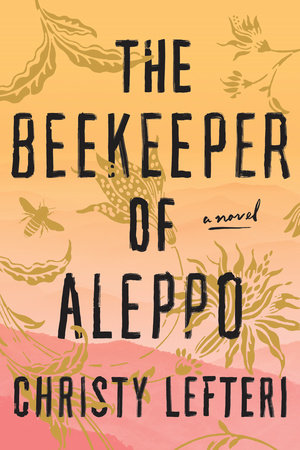
The Beekeeper of Aleppo, by Christy Lefteri

The Beekeeper of Aleppo, by Christy Lefteri

I was intrigued by the title of this book when I first heard about it. It was an interesting book, and it held my attention. The Beekeeper of Aleppo follows and man and his wife who have to flee Aleppo, Syria after the man’s livelihood of beekeeping and selling honey is destroyed and his wife is blinded by the bomb blast or the trauma of the bomb blast that kills their son. She is an artist, so losing her eyesight signaled the end of her career.

The novel follows the couple as they struggle to get to Great Britain where they plan to seek asylum. They go through many life-threatening events and stay in countless refugee camps as they cross Turkey and Greece in their effort to get to England.

The author has first-hand experience in the region working with refugees, so she is able to write with authority about the experiences such people endure. The people in this book were just average everyday people whose lives were torn apart by war. What surprised me in the book was the fact that some of the refugees had cell phones and were able to email relatives occasionally.


Until my next blog post

I hope you have a good book to read. I’m listening to Heads You Win, by Jeffrey Archer after having several days that I didn’t get to read anything.

If you’re a writer, I hope you have quality writing time.

Thank you for reading my blog. You could have spent the last few minutes doing something else, but you chose to read my blog.


Let’s continue the conversation

Have you read any of the books I talked about today? I’d love to know what you liked or didn’t like about them. What are you reading this week?

Janet

A New Favorite Novel?

A New Favorite Novel?

What a great time I had reading books in October! Many books are published in the fall of the year. I’d been on the waitlist for months for some of those books as well as others. Of course, they all became available at the same time. “Too many books, too little time” kicked in big time!

Today’s blog post is about what is possibly my new favorite book and one of the other books I read in October. My blog post next Monday will catch you up on the other books I read last month.

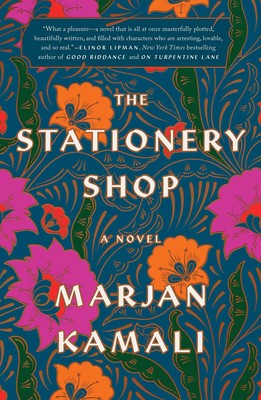
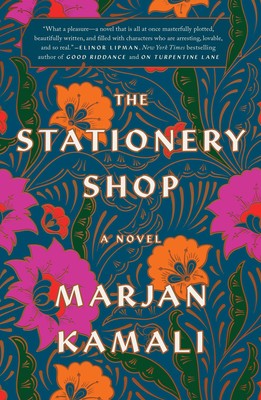
The Stationery Shop, by Marjan Kamali

I can’t say enough about this book! It just may be my new favorite novel. This is a story that will stay with me forever. It is a tragic story in many ways, but oh how lovely! I listened to it on CD. Mozhan Marno did a superb job reading it.

The Stationery Shop, by Marjan Kamali

This historical novel takes us back to 1953 in Tehran, Iran. There is a chance meeting between a young man and a young woman in a stationery shop where books are also sold. Since the young man’s mother has already selected the woman she wants her son to marry, she is none too happy when he announces his plans to marry this woman of lower economic status he met at the stationery shop.

Marjan Kamali includes just enough 20th century Iranian history to set the stage for this story of love, betrayal, and a never-ending love between two people. You will discover connections between different characters as you read. It is a rich book, beautifully written.

I’m eager now to read Marjan Kamali’s debut novel, Together Tea, and I can’t wait to see what she writes for us next!


The Ragged Edge of Night, by Olivia Hawker

This book was a big surprise. I read that Olivia Hawker had a new book, One for the Blackbird, One for the Crow, coming out on October 8. I’m on the waitlist at the library for it. One for the Blackbird, One for the Crow sounded interesting, so I looked to see what else she had written.

I listened to her first book, The Ragged Edge of Night, on CD. It was beautifully written, and I learned from the notes at the end of the book that it was based on a true story from Ms. Hawker’s husband’s family. It was beautifully read by Nick Sandys and the author, Olivia Hawker.

The Ragged Edge of Night, by Olivia Hawker

This book contained some of the most moving and beautiful prose of any novel I’ve read. The premise of the book is that Elisabeth Herter, a widow with three children, is looking for a man to help her with the responsibility of raising her three children. Along comes Anton Starzmann, a former Franciscan friar who has been stripped of his occupation and his school by the Nazis in 1942 Germany.

Elisabeth and Anton start corresponding. They meet in person and agree to marry. Anton cannot father children due to an injury, but that suits Elisabeth just fine. They will marry, be companions, and raise her children. These are desperate times.

That’s the plot, and it’s a beautiful story. What struck me about The Ragged Edge of Night was how Olivia Hawker wrote Anton’s gut-wrenching fear that Hitler and the Nazis were entrenched until the end of time so beautifully that I was brought to tears. Through her writing, Ms. Hawker put me in Hitler’s Germany. Even though I knew Hitler was brought down in the end, she put me in 1942 when I had no way of knowing that.

That’s what good historical fiction does. It puts you in the story and in the time and place, so you don’t know what the future holds.

I wish I could quote extensively from the book in order to give you the true flavor of the prose, but I’ll settle for the following few sentences from Anton’s point-of-view as he implores God to help him make sense of what is happening in Germany in 1942. This prose I found so beautiful is in chapter six. Here’s a chopped-up transcript from that chapter:

“The bells will ring, even after The Reich has fallen. Everything that is in me that is sensible, everything that is rational can’t believe it’s true. The Reich will never fall…. But when in moments of quiet, in my stillness of despair, I dare to ask what yet may be…. Christ Jesus, I always believed you were merciful, but this is a monstrous cruelty to make me dream of a time when evil may fall…. I cannot help but know it, against all sense, I believe somewhere beyond the ragged edge of night, light bleeds into this world.”

From Chapter 6, The Ragged Edge of Night, by Olivia Hawker

I hope those six sentences I pulled out of a long prayer I transcribed from the CD entice you to read the book. Writers are advised to put the reader in the scene. This, to me, is a prime example of just that.

My only criticisms of the CD are (1) Every time the children in the story spoke, it was at full blast and (2) Some of the audio segments were longer than 30 minutes. The wide range of volume is an irritating and uncomfortable situation for people who are hearing-impaired. The excessively long audio segments present a problem on some CD players. More than once when I couldn’t listen to the end of a segment, I had to listen to the entire segment a second time in order to get to the end of it.


Since my last blog post

A fibromyalgia flare has knocked the props out from under me as we transition from summer into winter. (I think we often just skip right over fall here in North Carolina.) Eye pain has forced me to listen to books more than read them.

As you know, listening to books is not my reading format of choice. It’s going better than I expected, though. In fact, I believe listening to the CD recording of The Ragged Edge of Night possibly gave me a richer reading experience than I would have had if I’d read the words myself. That astounds me and gives me a new appreciation for audio books.

I want to read The Stationery Shop and The Ragged Edge of Night again. It’s rare that I find a book that I want to read a second time.


Until my next blog post

I hope you have a good book to read. I’m listening to Heads You Win, by Jeffrey Archer­­­­­­­­­­­­­­.

If you’re a writer, I hope you have productive writing time.

Thank you for reading my blog. You could have spent the last few minutes doing something else, but you chose to read my blog. Don’t be shy – share this blog post on social media.


Let’s continue the conversation

I’m always interested to know what my blog readers are reading. Please share that in the comments below or on my social media platforms.

Janet

Great Smoky Mountains, Revisited! (Part 2 of 2)

Today’s blog post is a continuation of my blog post last Monday, https://janetswritingblog.com/2019/10/21/great-smoky-mountains-revisited-part-1-of-2/. It is about my recent trip to Great Smoky Mountains National Park and is illustrated with pictures of several of the postcards included in my vintage postcard book, The Blue Ridge Mountains of North Carolina, and photographs I took on my trip in September.


Black Bears!

Here’s a picture of one of the many black bear postcards in my vintage postcard book, The Blue Ridge Mountains of North Carolina.

PHOTO OF LINEN-FINISH POSTCARD OF A BLACK BEAR IN GREAT SMOKY MOUNTAINS NATIONAL PARK

And here are pictures of the bears I saw on this trip to the Great Smoky Mountains. The first picture is of a black bear, probably about two years old, after it crossed the road in front of our car. It completely ignored us, which was fine with us! (All these bear photos were taken from inside our car and using the zoom feature on my cell phone camera. As I stated in last Monday’s blog post, it’s against the law to willingly get within 150 feet of an elk or black bear in Great Smoky Mountains National Park.)

#BlackBears in #GSMNP
BLACK BEAR, PERHAPS TWO YEARS OLD, PHOTOGRAPHED IN GREAT SMOKY MOUNTAINS, 2019
#blackbears in #GSMNP
WELL-CAMOUFLAGED FEMALE BLACK BEAR IN GREAT SMOKY MOUNTAINS NATIONAL PARK. HER TWO CUBS WERE IN THE BUSHES UP THE MOUNTAINSIDE.

If the car in front of us hadn’t stopped, we might have driven right by this mother bear and her two cubs. The mother was down in a ditch. After a couple of minutes, her two cubs came running down the hill. It was difficult to get good pictures due to the trees and undergrowth.


November 2016 Fire Damage

One of the iconic places in the park is Chimney Tops. I was sad to see that the late November 2016 wildfires had engulfed this double-peaked mountain in Swain County, North Carolina. The “up side” is that today the granite folds and rough edges of Chimney Tops are visible because the trees on the mountain were destroyed in the fires.

Here, I compare the photographs I took in September 2019 with a 1936 real photograph postcard I used in my vintage postcard book:

Chimney Tops in Great Smoky Mountains National Park
Picture of a 1936 real photograph postcard of “Newfound Gap Highway” and “Chimney Tops.”
#ChimneyTops #Wildfire damage from 2016 as photographed in 2019
Chimney Tops in Great Smoky Mountains National Park in September 2019, still recovering from 2016 wildfires.
Mountainside vegetation burned off this mountain in 2016 #wildfires.
This mountainside, scarred by the 2016 wildfires, now shows off the rough, rocky folds that trees hid before the fires.
Evidence of more 2016 fire damage in Great Smoky Mountains National Park.

Clouds in a Valley

Valley #cloud in #GSMNP
Cloud in a valley in Great Smoky Mountains National Park on September 15, 2019.

We were in the right place at the right time for this photo of white clouds down in a valley in the park.


Why are they called the Great Smoky Mountains?

As I stated in my book, “The Great Smoky Mountains are called “smoky” due to the fog that rises from the valleys and mountainsides.”

These mountains were suffering under drought conditions when I visited the park in September 2019. August, September, and early October were very dry. My sister and I couldn’t help but notice there was very little of the typical wisps of fog when we were there a month ago. In fact, we only saw a little of it on our last day in the park. Here’s a photograph I took, but it isn’t a good representation of the multitude of wisps of fog that gave this sub-range of the Appalachian Mountains their name.

How the Great Smoky Mountains got their name.
A fair, but not great, example of how the Great Smoky Mountains got their name. Photo taken in September 2019.

Summary

I hope you can hear the babbling brooks and smell the wildflowers of Great Smoky Mountains National Park sometime. It is truly a national treasure. In fact, it is a global treasure. I’m fortunate to live just a few hours from this national park.

Great Smoky Mountains National Park was designated a World Heritage Site in 1983.
We owe a debt of gratitude to the men who served in the Civilian Conservation Corps and helped build Great Smoky Mountains National Park.

Unlike many national parks in the United States, no admission fees are charged for entrance into the Great Smoky Mountains National Park. Many families were displaced when the park land was purchased. Before agreeing to sell their land to the U.S. Government, those families (most of whom were poor farmers) made the government agree that no admission to the park would ever be charged.


Since my last blog post

Since my last blog post, my sister and I spent several days on the coast of South Carolina. We enjoyed fresh seafood in Calabash, North Carolina.


Until my next blog post

I hope you have a good book to read. I’m reading The Beekeeper of Aleppo, by Christy Lefteri.

If you’re a writer, I hope you have quality writing time.

Thank you for reading my blog. You could have spent the last few minutes doing something else, but you chose to read my blog.


Let’s continue the conversation

Have you visited the Great Smoky Mountains? If so, what were your impressions of it? What was the highlight of your trip?


The Blue Ridge Mountains of North Carolina on the shelf at Lake Junaluska Bookstore.

As I stated in my blog post last Monday, https://janetswritingblog.com/2019/10/21/great-smoky-mountains-revisited-part-1-of-2/, I hate to “blow my own horn,” but I’d be remiss if I didn’t take this opportunity to tell you how you can have your own copy of my vintage postcard book, The Blue Ridge Mountains of North Carolina, published by Arcadia Publishing in 2014.

Don’t let the name fool you, it covers all the mountainous counties in western North Carolina and the three counties in eastern Tennessee that are partially in Great Smoky Mountains National Park.  Electronic and paperback copies are available from Amazon.com. Paperback copies are available from the publisher at https://www.arcadiapublishing.com/, at quality bookstores, or from me personally.

Janet

Great Smoky Mountains, Revisited (Part 1 of 2)

Sign on US-441/Newfound Gap Road to alert visitors that they are entering the national park.

Several weeks ago I took a vacation from blogging, writing, and all social media. It was wonderful! I hope you can try it sometime.

My sister and I spent a week in and around the Great Smoky Mountains National Park in Tennessee and North Carolina.

For seven days, I didn’t check my blog for comments. I didn’t text. I didn’t call anyone. I didn’t Tweet. It was fabulous!


“The Great Smoky Mountains lay in the middle of the Cherokee Indians’ territory in the mid-1600s when Spanish explorer Hernando de Soto arrived.”

page 69, The Blue Ridge Mountains of North Carolina, by Janet Morrison.
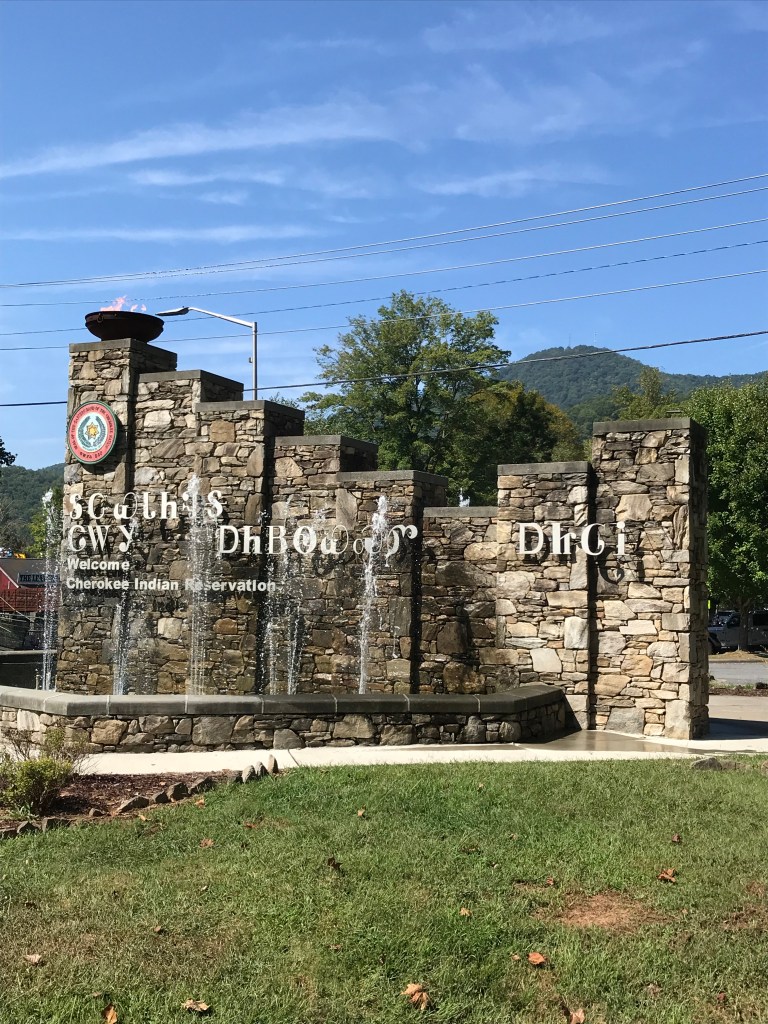
“Welcome to Cherokee Indian Reservation” sign in Cherokee and in English

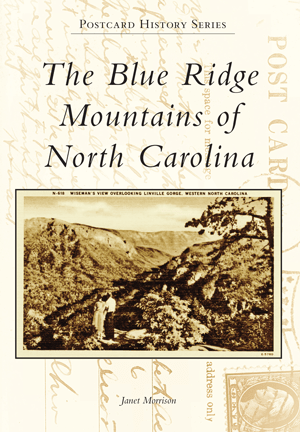
The Blue Ridge Mountains of North Carolina, by Janet Morrison

Since the park was included in my vintage postcard book, The Blue Ridge Mountains of North Carolina, I enjoy visiting the park to see what has changed and what has remained the same since my childhood and since my book’s publication in 2014.

Today and next Monday, I’ll share some highlights from my trip, including a few of the pictures I took. I’ll also include photographs of some of the vintage postcards from my book, which is pictured to the right.


Elk!

Elk were reintroduced into the Great Smoky Mountains in 2001 and 2002. I’d never seen an elk until this recent trip! What a thrill it was to see a herd of elk, including this buck, in the river that runs behind the Oconoluftee Visitor Center near the main North Carolina entrance to Great Smoky Mountains National Park just north of Cherokee, NC! This bull was a jaw-dropping sight as he surveyed his herd of female elk (cows) cooling off in this cool mountains stream. (It was late afternoon and in the mid-90s F.)

An elk bull in Great Smoky Mountains National Park

It is illegal to willingly get within 150 feet of an elk or black bear in Great Smoky Mountains National Park. Don’t worry, I was behind a fence that was guarded by a park ranger, and I used the zoom feature on my cell phone camera.

Sign reminding visitors that elk are back in the park.

For more information about the reintroduction of elk in Great Smoky Mountains National Park and the safeguards people should take when seeing them, go to https://www.nps.gov/grsm/learn/nature/elk.htm.


The Loop/Helix

One of the most famous construction features on US-441/Newfound Gap Road, which traverses Great Smoky Mountains National Park from one side to the other is “The Loop.” The highway tunnels under itself to form a helix.

Here are pictures of two of the three postcards of “The Loop” in my vintage postcard book.

This is a photo of a 1936 “real photograph postcard” of “The Loop” on Newfound Gap Road in Great Smoky Mountains National Park.
This is a photo of another 1936 “real photograph postcard” of “The Loop” on Newfound Gap Road in Great Smoky Mountains National Park.

The next two paragraphs are quotes from the captions I wrote for the three postcards on pages 80-81 of my book:

“Newfound Gap Road in Great Smoky Mountains National Park tunnels under itself, forming a helix. The design replaced two dangerous switchbacks on the old Tennessee Highway 71, which was built in the 1920.”

Signage to alert drivers that they are approaching “The Loop” on Newfound Gap Road in Great Smoky Mountains National Park

“These black-and-white glossy real-photo postcards were made in 1936. The Great Smoky National Park Roads & Bridges portion of the Historic American Engineering Record of the National Park Service gives many details about the Loop. Probably designed by Charles Peterson, the Loop was constructed in 1935 by C.Y. Thomason Company of Greenwood, South Carolina, at a cost of $77,644. Stone quarried nearby and reinforced concrete were used in the construction of the bridge portion, which is 95 feet long, 42 feet wide, and 21 feet high in the center of the arch.”

Since its construction in 1935, trees and other natural vegetation has been allowed to grow and flourish. I appreciate that; however, it makes it almost impossible now to fully see and admire this engineering feat. It might still be possible to see the entire Loop from Chimney Tops Mountain nearby, but it’s impossible to get a satisfactory photograph of it from ground level due to the trees. Therefore, I had to settle for the above picture of The Loop signage.

The first time I rode through The Loop was at the age of nine. It’s still a thrill, 57 years later!


Babbling Brooks

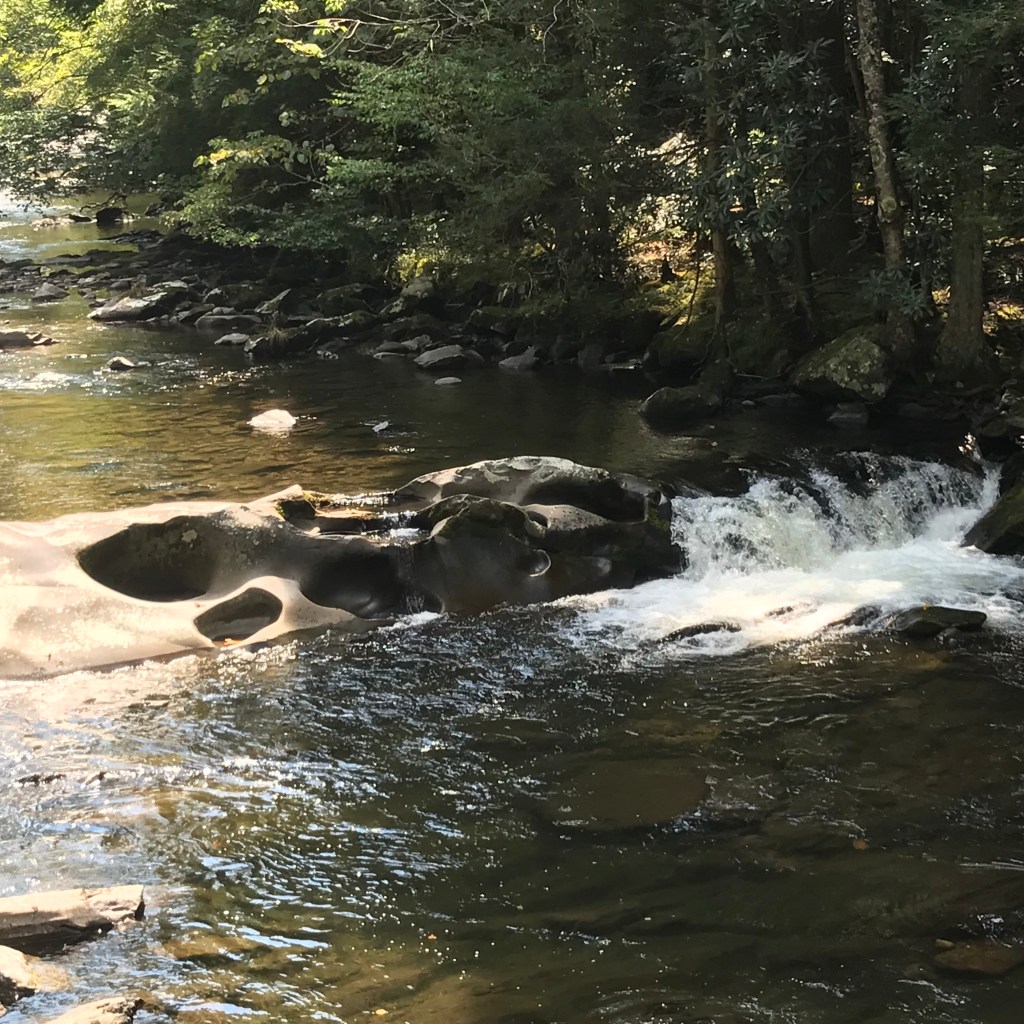
A stream in Great Smoky Mountains National Park

One of my favorite features in Great Smoky Mountains National Park is all the babbling brooks. Little River Road runs parallel to the Little River for many miles in the park between Sugarlands Visitor Center and Cades Cove. Little River and the other streams in the park are full of bounders and rocks of all sizes, indicating the history of these mountains from the Ice Age.

Another stream in Great Smoky Mountains National Park


Since my last blog post

It took much patience and persistence (and some grinding of my teeth), but I eventually worked out a new way of inserting photographs in my blog posts last Tuesday. What a relief, to be able to present today’s post and next Monday’s the way I had envisioned! I hope you enjoy the photographs today.

I had the opportunity to watch and listen to another free webinar about the craft of writing on Monday. It was about Author Accelerator’s “Inside Outline” tool. It piqued my interest. Of course, to use the tool I’d have to pay a fee, so I haven’t made that commitment. If you, like I, are learning to write a book, you might want to look into this tool at https://www.authoraccelerator.com/. The tool was developed by Jennie Nash.


Until my next blog post

I hope you have a good book to read. I’m reading The Ragged Edge of Night, by Olivia Hawker.

If you’re a writer, I hope you have productive writing time.

Thank you for reading my blog. You could have spent the last few minutes doing something else, but you chose to read my blog.

Watch for my blog post next Monday. It is a continuation of today’s post and will feature black bears, the double-peaked mountain called Chimney Tops, damage from the late November 2016 wildfires, babbling brooks, white clouds down in a valley one morning, and why the Great Smoky Mountains have that moniker.


A few words about my book

I hate to “blow my own horn.” I’d be remiss, though, if I didn’t take this opportunity to tell you how you can have your own copy of my vintage postcard book, The Blue Ridge Mountains of North Carolina, published by Arcadia Publishing in 2014.

Don’t let the name of the book fool you, it covers all the mountainous counties in western North Carolina and the three counties in eastern Tennessee that are partially in Great Smoky Mountains National Park.  Electronic and paperback copies are available from Amazon.com at https://www.amazon.com. Paperback copies are available from the publisher at https://www.arcadiapublishing.com/, at quality bookstores, or from me personally.


Let’s continue the conversation

Have you visited the Great Smoky Mountains? If so, what were your impressions of it? What was the highlight of your trip? Did you see any black bears? Did you see elk? Did you hike? Did you go camping? The recreational opportunities in the Great Smoky Mountains are unlimited! I’d love to hear about your experiences there.

Also, please let me know how you usually view my blog. Do you look at it on your desktop computer, on a tablet, or on your phone?

I’m trying to be more cognizant of the fact that a growing number of people are reading blogs on their phones. The layout of the blog translates differently on the various formats.

For instance, what looks good on a cell phone, doesn’t look quite as good on a desktop computer. Today’s blog post falls into that category. I’ve spent a lot of time on it, trying out “spacers” and “separators.” I’ve never used those tools before. Your patience is appreciated as I learn and experiment with some new blogging techniques.

Remember, I’m a writer — not a computer whiz. This is all part of my journey as a writer, which is what my blog is about.

Thank you for sharing my blog with your friends — in person and on social media!

Janet

#FixYourNovel #3: Reading, Listening, or Watching a Novel?

Personal experience tells me it is a rare novel that will hold my attention well enough to be listened to instead of being read in printed form. I came to that conclusion as I wrote my September 2, 2019 blog post. In case you missed it, I wrote about two books I read in August and the audio book I stopped listening to at the halfway point. Here’s a link to that post:  https://janetswritingblog.com/2019/09/02/3-5-of-the-5-5-books-i-read-in-august-2019/.

Since then, I’ve had several good experiences with audible books. I enjoyed listening to Before I Let You Go, by Kelly Rimmer and The Fifth Column, by Andrew Gross in September (https://janetswritingblog.com/2019/10/07/thrillers-and-a-dark-novel-i-read-last-month/) and The Stationery Shop, by Marjan Kamali this month.

I’ve come to the conclusion that, second to the quality of the writing itself, the verbal delivery of the audio book professional reader is of utmost importance. If I start to listen to a book but find the voice of the reader to be irritating or the volume of the reader’s voice is all over the place, I can’t continue to listen. I’m hearing-impaired, so I appreciate a steady volume on TV, the radio, music, and audio books.

We all learn in different ways, and I think my own non-scientific experiment in reading vs. listening demonstrates that fact. Taking that train of thought another step tells me that the same is surely true for children and how they learn. For children who have trouble reading, what if their textbooks could be available in audio? It seems to me this is worth a try.

Today’s blog post is the third in a series of posts I’ve written or plan to write about specific steps a novelist should take in the process of taking a manuscript on the journey from rough draft to publication.

Here are the links to the earlier blog posts in my #FixYourNovel series:

https://janetswritingblog.com/2019/07/15/fixyournovel-2-scene-outline/

https://janetswritingblog.com/2019/05/27/fixyournovel-1-read-it-aloud/

What’s the “listenability” of this novel?

In case you’re wondering, yes, “listenability” is a real word. I thought I’d coined a new word, but then I found it in the dictionary. What I mean by “listenability” is this:  Does this book give the same depth of reading experience in audio form as it does in printed format?

With what I recently learned about the difference in reading a book and listening to a book, I need to look at the hook and scene and chapter beginnings in the novel I’m writing to see if they work well for the book listener. This prompted me to do a little research.

Writing advice from Jules Horn

I first brought up this issue in my May 13, 2019 blog post, https://janetswritingblog.com/2019/05/13/how-listening-to-a-book-and-reading-a-book-differ/. In that blog post I referenced a piece Jules Horn wrote about attunement. Ms. Horn is an expert on method writing. Her website is https://www.method-writing.com/.

She read my May 13 blog post and took time to respond to my invitation for my blog readers to give me feedback on the opening line of my novel manuscript. I was thrilled to hear from her, as she graciously gave me specific advice about the sentence I’d written.

Ms. Horn recommended that, with audio in mind, I consider breaking up the sentence. She pointed out that breaking up the sentence into two or more sentences would help the reader to “see” each part of it. To refresh your memory, here’s the way I had written the opening of my manuscript as referenced in my May 13, 2019 blog post:

“Sarah McCorkle dropped her sewing basket at the sight of her husband lying face down between the stone hearth and his desk, sending thread, needles, and thimbles crashing and scattering on the wide planks of the pine floor.”

Ms. Horn told me that it would be easier for the reader to “see” each part of that sentence if I broke it down as if in camera shots. She also gave me a link to another post on her website to reinforce this recommendation: https://www.method-writing.com/camera-shots-advanced-fiction-technique/. She even suggested I try performing the opening of my manuscript. (Watch out, Hollywood, here I come!)

Research statistics

Sandra Beckwith’s August 21, 2019 blog post, “5 Way to Make Your Book Relevant to the Media” on the Build Book Buzz website (https://buildbookbuzz.com/5-ways-to-make-your-book-relevant-to-the-media/) included a link to an April 24, 2019 press release by Michele Cobb, Executive Director of Audio Publishers Association.

That press release reported that a 2019 survey conducted by Audio Publishers Association and The Infinite Dial Survey by Edison Research and Triton Digital found that 50% of Americans 12 years old or older have listened to an audiobook.

This growing trend is partially due to the advances in technology which have enabled publishers to distribute books in numerous formats. We’ve gone from the founding of the company Books on Tape in 1975 to people in 2019 being able to listen to books wirelessly on various electronic devices. (That probably sounds like a long time to you, but those 44 years have flown by for me. I graduated from college in 1975.)

Chad R. Allen’s writing advice

In an email named “My Top Piece of Writing Advice” on August 7, 2019, Chad R. Allen stated that his top piece of advice for writing is to “be concrete.” The email focused on a third way to look at a novel’s manuscript:  “Is it filmable? If a piece of writing is filmable, you can be sure it’s concrete.”

Mr. Allen is a writer, editor, speaker, and writing coach. He compared types of writing to a pyramid. Abstract writing (writing that “doesn’t show or engage the imagination”) is at the top. He wrote, “The bottom of the pyramid is concrete writing. It shows or illustrates. It does engage the imagination; it helps me to see (or hear or smell or taste or touch) something.”

My favorite of the points Mr. Allen made in his email are the following:

“The best communicators (I think this is probably true of speakers and writers) push as much of their content to the bottom of the pyramid as possible.”

“But more often than not the way to engage readers and hold their interest is to invite them into a scene.”

“Your job as a writer is to create an experience the reader doesn’t want to quit. Often the best way to do that is with concrete writing.”

Mr. Allen gives the following examples of concrete writing:  stories, metaphors, illustrations, dialogue, images, and sensory writing (writing that engages the five senses.)

That brings us back to Mr. Allen’s statement, “Is it filmable? If a piece of writing is filmable, you can be sure it’s concrete.”

I don’t want to steal all Mr. Allen’s thunder, but he made numerous good points in his email that I want to hold onto.

He related an example from Natalie Goldberg’s Writing Down the Bones in which she wrote about enjoying a story someone told her. When she repeated the story to her friends, they found it boring. She later realized that the difference was that she was telling the story from the outside. Her friend had told her the story from the inside out.

Mr. Allen wrote in his email, “In other words, get into the narrative. Write it from the inside so that others can experience it with you. Don’t just convey information. Get into it and invite readers to get into it with you.”

Chad Allen offered incredible advice in his August 7, 2019 email to me, including the following:  “Do a story/image audit of a given chapter. Note the places where you go on for a while without a story or image or sound, and try to find ways to add them in. Even better: replace the non-narrative material with narrative material.

“If you’re writing history, instead of recounting facts, try imagining a scene and bringing us into it. David McCullough and Jeff Shaara have made a career of this.

“Ask yourself, ‘Is there a way to unpack this principle with a story or metaphor or illustration?’ A metaphor or image can do a lot of work for you.

“As you shape your content to be more and more concrete, you’ll be creating an experience that readers relish.”  

As I continue to evaluate every scene in my manuscript for The Doubloon, I think about how each one would come across on the written page and how it would sound if in an audio recording.

Mr. Allen’s website is https://www.chadrallen.com/.

What about a podcast?

Here’s another possibility: podcast your blog or your book. I haven’t ventured into the world of podcasting, but here’s an interesting and encouraging article presented by Nina Amir and written by Jay Artale about using a podcast as a way to market your book or get your blog out to people who prefer audio content to the written word: https://howtoblogabook.com/free-podcast-share-book-blog-content/. There is much to consider, but Ms. Artale makes it sound like it’s not as difficult as I thought. There are free software programs to get you started. It’s something for bloggers to consider.

Since my last blog post

Last week I had the good fortune of listening to a virtual summit for authors. It was hosted by Tara R. Alemany of Emerald Lake Books (https://emeraldlakebooks.com/) and Mark Gerber of Emerald Lake Books. It was free! All I had to do was sign in on my computer, listen, and take notes. Each weekday there were four sessions on a wide range of topics of interest to writers.

In addition, on Tuesday, I listened to a free webinar hosted by Author Accelerator (https://www.authoraccelerator.com/.) It highlighted OneStopForWriters.com’s “Character Development Tool.” (A subscription is required in order to access OneStopForWriters.com’s resources.)

Many of the features of the “Character Development Tool” duplicate some of the processes I’ve already gone through on the historical novel I’m writing, but I can see it could potentially help me make sure my protagonist has an arc. Look for more on that in my blog post about Characterization, tentatively scheduled for November 11, 2019.

After five consecutive days of listening to and watching the virtual summit and Tuesday’s webinar, I thought my brain might explode. That didn’t happen until Saturday, when my computer refused to let me download photographs from my hard drive to my blog.

A blogger should always have a “Plan B,” and that’s where I had to go this weekend. Today’s blog post was partially written and planned for a few weeks from now. I pulled it out and prepared it for today. As I write this, I’m unable to insert photo from my hard drive into my WordPress.com blog post. I’ve read that a blog should have at least one image, but this one will not. It’s not from my lack of trying.

The reason I had to go with “Plan B” is that today’s scheduled blog post was “Great Smoky Mountains, Revisited – Part 1,” and it was going to include numerous photographs. I hope to use it next Monday, if I can get the bugs worked out of my computer.

Until my next blog post

I hope you have a good book to read. I’m reading The Turn of the Key, by Ruth Ware.

If you’re a writer, I hope you have quality writing time.

Thank you for reading my blog. You could have spent the last few minutes doing something else, but you chose to read my blog.

Let’s continue the conversation

Would you rather listen to or read a book? Would you rather listen to a podcast of a blog or read the blog?

Janet

Thrillers and a Dark Novel I Read Last Month

In my first blog post each month I usually write about the books I read the previous month. This month is no different. I’ve read and enjoyed many historical novels this year. My second favorite genre is thrillers. In September I got to read two newly released historical thrillers. I hope you’ll find at least one book in the following list that you’d like to read.

One Good Deed, by David Baldacci

2019 #thriller by #Baldacci
One Good Deed, by David Baldacci

I decided to read David Baldacci’s latest thriller, One Good Deed, because it’s been quite a while since I read one of his books. This was a good one for me to choose, because Baldacci introduces a new protagonist in this novel. Aloysius Archer is a World War II veteran and has just been released from prison after serving a term for a crime he did not comment.

Archer is a good-hearted man who, for various reasons, continues to make bad decisions throughout the book. His heart is always in the right place, though, so the reader forgives him for those poor choices and pulls for him to come out on top and not end up in prison again. He befriends a detective, Irving Shaw, who immediately sees the traits in Archer that would make him a good detective.

There are a few murders and a couple of people disappear along the way, but Archer never gives up on finding the truth – even when it means he must accept the fact that he is easily suckered in by a pretty face. It’s a real page-turner that I read in one weekend. Those of you who know it sometimes takes me two months to read a book will appreciate what a high compliment that is for One Good Deed.

Before I Let You Go, by Kelly Rimmer

Two sisters. One baby. An impossible choice.
Before I Let You Go, by Kelly Rimmer

I listened to Before I Let You Go, by Kelly Rimmer on CD. It was a dark story about how one sister dealt with her sister’s drug addiction. It is a timely subject, and the book demonstrates how very difficult tough love is.

For me, the book repeatedly brought to mind a case of drug addiction in my family and how one lethal overdose can leave a family in a dark pit that is perhaps impossible to climb out of. The subject matter wasn’t pleasant to read, but the bonds of family were well demonstrated.

The storyline of this novel includes the birth of an innocent baby. The infant has to go through painful withdrawal before it can become healthy enough to thrive.

Someone Knows, by Lisa Scottoline

A secret kept by #teens.
Someone Knows, by Lisa Scottoline

I really wanted to like this novel, but it was just too much work for me. The story is told from 10 points-of-view. I couldn’t keep that many main characters straight in my mind.

The plot line might appeal more to a young adult audience because it revolves around some mistakes made by a group of teens and the secret they have to live with.

The Fifth Column, by Andrew Gross

A #thriller about #NaziSympathizers in the US in #1939.
The Fifth Column, by Andrew Gross

The Fifth Column is Andrew Gross’ latest thriller. The name of the novel comes from “the fifth column” meaning a group inside a larger group that supports an outside group or country. In this instance, the Fifth Column was the Nazi-sympathizers in the United States as World War II raged in Europe.

Mr. Gross takes you back to February of 1939 when more than 20,000 Nazis and Nazi sympathizers in khaki uniforms and waving Nazi flags gathered for a rally at Madison Square Garden in New York City. I hadn’t known about that, so I learned something right off the bat from the book’s introduction.

This novel tells the story of America’s hesitancy to get involved in World War II. Memories of “The Great War”/”The War to End All Wars”/World War I were still fresh from just a decade before. Some saw President Franklin D. Roosevelt’s “New Deal” programs as socialism. The much-celebrated American pilot Charles Lindbergh voiced pro-Nazi opinions. Germany was bombing London and stories of the abuse and murder of Jews in Europe were spreading across the Atlantic. Jews in New York City were being harassed. Families could go to Nazi-sponsored camps in New Jersey and on Long Island where children were taught the Nazi salute and Nazi doctrine. It was a time when people increasingly didn’t know whom they could trust.

The Fifth Column, by Andrew Gross rests on that background. It is a story brought to life by the author. The protagonist, Charlie Mossman, gets in over his head when he stands up for a Jewish bar owner when a group of Nazi thugs come into his establishment to make fun of him. Someone is killed and Charlie goes to prison.

When Charlie comes home from prison, his wife has created a new life for herself. Charlie soon becomes suspicious that his wife and young daughter’s neighbors in the apartment building are German spies. He goes to great lengths to find evidence to support his hunch.

The plot thickens after Charlie has a chance meeting with Noelle, a graduate student from France. Noelle says she knows people who can help Charlie. This seems too good to be true. Is it?

Although the plot unfolds in a predictable way, I enjoyed the book. The CD edition is read by Edoardo Ballerini. I continue to surprise myself by enjoying some audio books.

Since my last blog post

Yesterday afternoon I had the privilege of attending a birthday party for a man celebrating his 100th birthday. He is a mild-mannered man who fought in World War II and has been active in his church his entire life. He has inspired countless people to get involved in Habitat for Humanity by the example he has set for the last 40 years. It’s not often I am invited to a “Happy 100th Birthday” party! Happy 100th Birthday, Mr. William King McCachren, Sr.!

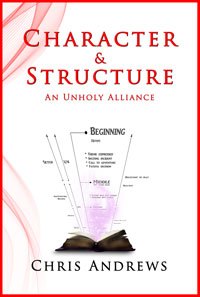
I continue to work my way through Chris Andrews’ writing “how-to” book, Character and Structure:  An Unholy Alliance. To read about that book, read my last blog post, https://janetswritingblog.com/2019/09/30/character-and-structure-by-chris-andrews/ and/or visit Mr. Andrews’ website, https://www.chrisandrews.me/.

Late in August, I purchased an online writing course by C.S. Lakin, “Emotional Mastery for Fiction Writers.” The link to that course sat on the back burner until several days ago. I think the course and Mr. Andrews’ book will dovetail nicely and help me to be a better fiction writer. I hope to finally start the C.S. Lakin course this week.

Until my next blog post

I hope you have a good book to read. I’m reading The Stationery Shop, by Marjan Kamali and Layover, by David Bell.

If you’re a writer, I hope you have productive writing time.

Thank you for reading my blog. You could have spent the last few minutes doing something else, but you chose to read my blog.

Let’s continue the conversation

What are you reading? What have you read recently that you’d recommend to others?

Janet

Character and Structure, by Chris Andrews

Character & Structure: An Unholy Alliance, by Chris Andrews

I ditched my original plan for today’s blog post yesterday afternoon after reading the first seven chapters of Chris Andrews’ new writing “how-to” book, Character & Structure:  An Unholy Alliance. The book was released on Friday. Since I’d preordered it for my tablet, it downloaded at 12:01 a.m.

Chris Andrews is an Australian fantasy author. He has much more experience than I have in writing fiction. He has helped me a lot on my journey as a writer.

This book is aimed at writers, but I can imagine a fan of fiction also reading it and getting a better understanding of what goes into writing a novel. Clue:  There’s more to it than typing.

In Character & Structure:  An Unholy Alliance, Mr. Andrews writes about how important it is for a novelist to reach his or her readers by getting them emotionally invested. You can write a book with perfect punctuation about a perfect person with a perfect life but, if you don’t write it in a way that prompts your reader to care what happens to this character, your novel will fail. Your character must face challenges and problems. Otherwise, no one will care.

The following are two quotes from Mr. Andrews’ book:

“Mastering the mechanics of writing doesn’t automatically provide the entertainment factor.”

“You’re the architect, so unless you’re building your story purely for yourself, you need to consider your audience.”

Character & Structure:  An Unholy Alliance reminds writers that readers come to a novel with certain expectations regarding structure. If a writer is going to deviate from the expected structure of a novel, he or she better be an outstanding writer to pull it off. Different genres adhere to set patterns or sequences of plot. Readers are uncomfortable with any deviation and book sales and reviews will reflect that.

As Mr. Andrews states early in the book, “This book will help you balance your story so the beginning, middle and end work to your advantage [and] create the emotional high and low points your audience expects.”

He addresses how authors approach the writing of a novel in different ways. Some writers are outliners, while others are “pantsters.” (Outliners map out their story before they write it. Pantsters write by the seat of their pants.)

Mr. Andrews writes, “One process favours emotion while the other is all about logic. You need to be a master of both and that means doing the things you don’t want to do.”

I’m an outliner. That doesn’t mean I adhere to the rigid way I was taught in elementary school to outline. When I’m plotting a story or novel, I outline with sentences and paragraphs, scene-by-scene. That’s what works for me, so my bigger challenge is mastering emotion.

Character & Structure:  An Unholy Alliance is the first writing “how-to)” book I’ve read that focuses on this important aspect of creative writing. I wish Mr. Andrews had written it a few years ago! As I continue to edit and polish the manuscript for what I hope will be my first novel, The Doubloon OR The Spanish Coin, I will keep the lessons learned from this book in mind as I work to put more emotion in my writing. If my readers don’t care about my characters, my book won’t be successful on any level.

Mr. Andrews states, “It depends on your own strengths and weaknesses, but whichever path you take the end game encompass character, conflict and a coherent and emotionally engaging structure that makes your audience feel what you want them to feel.”

Also, “Applying character to structure is an unholy alliance as far as many writers are concerned. Doing it well is the foundation of creating a long and successful career.”

Mr. Andrews’ book has helped me have a greater understanding of and appreciation for the necessity of a marriage between character and plot in a work of fiction.

In his book, Mr. Andrews gives questions that fiction writers should ask about their manuscripts in order to get insight into the stories they’re writing.

Here’s one last quote from Character & Structure:  An Unholy Alliance“Combining story (what happens to your characters) and structure (how it happens) means finding the answers that will help you emotionally engage your audience.”

Can you believe all that came just from reading the first two chapters of the book?

The book goes on to say a writer needs to put himself or herself in the place of a character and in the place of the reader. How will your story come across? What will make your reader care about your character(s)? Will your reader be satisfied with how the core problem your character faces is resolved? What’s at stake for your character?

In addition to giving us questions to ask about our manuscripts, he provides entertaining exercises for writers to do in order to consider how character and structure are presented in a variety of well-known novels. He challenges the writer to back off from their story’s details and to look at the whole story as the Norse God Loki could.

If you look at your story or manuscript as a whole and see a perfect world, you’re looking at a world that will bore your reader. That’s the last thing you want! Mr. Andrews then offers a list of things you need to answer or address regarding your book in order to – as we would say in a baseball analogy in the United States – “cover all the bases.”

That brings us to the end of the sixth of 32 chapters in Character & Structure:  An Unholy Alliance. I can’t wait to see how much I learn from the remaining 26 chapters! But don’t expect me to summarize the rest of the book for you. You need to buy it for yourself. It’s available in ebook and paperback format on Amazon.com.

If you’re a fiction writer, I recommend that you purchase it and slowly and thoughtfully work your way through it. That’s what I’ll be doing in the coming weeks. I trust my novel in progress will benefit greatly from the pointers in this book.

Since my last blog post

I enjoyed some wonderful time with three precious family members who live 300 miles away, so I don’t get to see them often.

Before and after their visit, I did a lot of reading.

Until my next blog post

If you’re interested in learning more about Chris Andrews and his novels, visit his website at https://www.chrisandrews.me/.

I hope you have a good book to read. I just finished listening to The Fifth Column, a historical thrilled by Andrew Gross and have started listening to The Stationery Shop, by Marjan Kamali.

If you’re a writer, I hope you have quality writing time.

Thank you for reading my blog. You could have spent the last few minutes doing something else, but you chose to read my blog.

Next Monday’s blog post will be about the other books I read in September.

Let’s continue the conversation

If you’re a writer, are you an outliner or a pantster? Do you find it easier to get the mechanics of a story right or do you prefer writing the emotion?

If you’re a fiction reader, does it upset you when an author deviates too much from the expected? For instance, if you like to read romance, does it upset you if a romance novel doesn’t have a happy ending? That’s what is meant by deviating from reader expectations.

Janet

No one is going to tell me what I can’t read!

I recently read a startling article about the government authorities in Turkey ordering the destruction of more than 300,000 books because they contained the name of a Muslim cleric, Fethullah Gulen, with whom the leaders of Turkey disagreed.

Turkey maintains that Gulen instigated a failed coup attempt in 2016. He now lives in the state of Pennsylvania in the United States of America. This widespread destruction of books even went so far as to include any book in which the word “Pennsylvania” appeared.

I gasped!

This is Banned Books Week in the United States.

The last week in September is a time set aside for us to give thought to the dangers of the banning and destruction of books. Banned Books Week is sponsored by the American Library Association to bring attention to what is at risk if books are censored. The association’s Office of Intellectual Freedom publishes a list of the top 10 books that are challenged each year.

According to the http://www.ala.org/advocacy/bbooks/frequentlychallengedbooks/top10 website, “The ALA Office for Intellectual Freedom tracked 347 challenges to library, school and university materials and services in 2018.” The site says that 483 books were challenged or banned in 2018.

Examples of banned or challenged books

Here are just a few books that have either been banned or were threatened with censorship since 2009, along with the reasons given on the ALA website:

Captain Underpants series written and illustrated by Dav Pilkey
Reasons: series was challenged because it was perceived as encouraging disruptive behavior, while Captain Underpants and the Sensational Saga of Sir Stinks-A-Lot was challenged for including a same-sex couple;

Thirteen Reasons Why by Jay Asher
Reasons: banned, challenged, and restricted for addressing teen suicide;

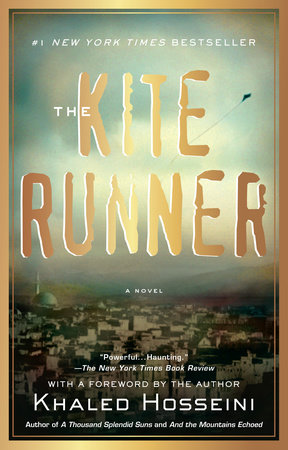
The Kite Runner, by Khaled Hosseini

The Kite Runner written by Khaled Hosseini
This critically acclaimed, multigenerational novel was challenged and banned because it includes sexual violence and was thought to “lead to terrorism” and “promote Islam”;

To Kill a Mockingbird, by Harper Lee

To Kill a Mockingbird written by Harper Lee
This Pulitzer Prize-winning novel, considered an American classic, was challenged and banned because of violence and its use of the N-word;

Fifty Shades of Grey, by E. L. James
Reasons: sexually explicit, unsuited to age group, and other (“poorly written,” “concerns that a group of teenagers will want to try it”);

The Holy Bible
Reasons: religious viewpoint;

The Bluest Eye, by Toni Morrison

The Bluest Eye, by Toni Morrison
Reasons: sexually explicit, unsuited for age group. Additional reasons: “contains controversial issues”;

The Hunger Games, by Suzanne Collins
Reasons: religious viewpoint, unsuited to age group;

The Glass Castle, by Jeanette Walls
Reasons: offensive language, sexually explicit;

Beloved, by Toni Morrison
Reasons: sexually explicit, religious viewpoint, violence;

Brave New World, by Aldous Huxley
Reasons: insensitivity, nudity, racism, religious viewpoint, sexually explicit;

The Catcher in the Rye, by J.D. Salinger
Reasons: offensive language, sexually explicit, unsuited to age group;

My Sister’s Keeper, by Jodi Picoult

My Sister’s Keeper, by Jodi Picoult
Reasons: homosexuality, offensive language, religious viewpoint, sexism, sexually explicit, unsuited to age group, violence; and

The Color Purple, by Alice Walker
Reasons: offensive language, sexually explicit, unsuited to age group.

Which book on the list surprised you the most?

I was most surprised to find My Sister’s Keeper, by Jodi Picoult on the list. I’ve read eight of her novels. My Sister’s Keeper deals with organ donation. Jodi Picoult’s novels make the reader think. The protagonist usually faces a moral dilemma.

I’ve read most of the books on the above list. It’s frightening to see a list like this – to know that someone thought a particular book was so offensive to them that they thought NO ONE should have the opportunity to read it.

It’s human nature to do what one is told not to do. I understand that when a parent or other community member asks for a book to be removed from a middle school or high school library, the fuss usually brings so much attention to the book that the students will go to great lengths to read it.

If you live in a free society, you may read anything you want to read. That is a precious gift your government protects for you, so never take it for granted.

Since my last blog post

I took a week off from writing, blogging, and all forms of social media and went to the Great Smoky Mountains National Park. It was unseasonably warm and dry, which doesn’t bode well for the coming “fire season.”

It was great to get away to a place where development is outlawed – to drive for miles and miles and see nothing but mountains and trees. To be in a place that was so quiet you could hear a babbling brook. I’ll blog more about my trip at a later date and share some photos.

Until my next blog post

Do a Google or other search engine search for “banned books.” Select one you’ve never read, and read it. Or reread one you’ve read and try to identify what someone else found offensive about it. Celebrate your right to read!

I hope you have a good book to read. I’m reading The Bookshop at Water’s End, by Patti Callahan Henry. It’s the book for discussion tonight at Rocky River Readers Book Club. If you’re local, feel free to join us at 7pm at Rocky River Presbyterian Church, 7940 Rocky River Road, Concord, NC.

If you’re a writer, I hope you have productive writing time. After a week of vacation, I need to get back to my writing this week.

Thank you for reading my blog. You could have spent the last few minutes doing something else, but you chose to read my blog.

Let’s continue the conversation

What’s your favorite banned book? Do you remember the first banned book you read? Were you aware that it had been banned on some level, and was that the reason you read it?

Janet