The Other Three Books I Read in January 2019

One thing all bloggers are told they must do, if they hope to attract readers, is to include images in every post. I’ve worked hard to do this for the last several years. I did it last week when I included images of the books I wrote about; however, as I put the finishing touches on this post last night, I repeatedly got messages from WordPress.com saying “Given your current role, you can only link an image, you cannot upload.” Therefore, in today’s post I’ve included links to images of the books I’m writing about. I’m unsure how this will appear until the post goes online. I have no idea why this has happened.

Since I read 6.25 books in January, I decided to split my comments about them between my blog post on February 4, 2019 and today. I hope you’ll find what I have to say about three of the books I read last month worthwhile. These are discussed in no particular order.

The Banker’s Wife, by Cristina Alger

The Banker’s Wife, by Cristina Alger

The Banker’s Wife was a change of pace for me halfway through January after reading The Library Book. The Banker’s Wife, by Cristina Alger, is a financial thriller. In this novel, Ms. Alger takes us to Paris, Geneva, New York, the Dominican Republic, and the Cayman Islands. Primarily through the eyes of two strong female characters, we get a glimpse of the vicious and deadly world most of us never experience – Swiss bank accounts, the people who have them, the people who assist them, and those who are unfortunate to love someone in either of the other two categories.

If I had done more research about Cristina Alger’s books before reading this 2018 novel, I would have known that it is a sequel to her 2012 debut novel, The Darlings. Now, I want to read that book, although being a North Carolinian, “the Darlings” conjures up visuals in my mind’s eye of that ne’er-do-well Darlin’ family on The Andy Griffith Show of the 1960s. It’s difficult to associate wealth with that name. I’m sorry, it just is. I offer my apologies to all the people with the Darling surname.

The Banker’s Wife is Ms. Alger’s third novel. The book captured my attention early on and the fast-paced writing kept me turning pages to see what was going to happen next – and to find out which characters were dead and which one’s deaths were staged to cover up the real story.

If I Understood You, Would I Have This Look on My Face? by Alan Alda

If I Understood You, Would I Have This Look on My Face? by Alan Alda

This book held some nice surprises for me. I’ve been an Alan Alda fan since the days of the M*A*S*H television series. I became even more endeared to him when in answer to my request that he donate an autographed copy of a book he’d written for an autographed book fundraiser held a few years ago for the Friends of the Harrisburg Library in Harrisburg, North Carolina.

Mr. Alda graciously donated an autographed copy of the script for an episode of M*A*S*H that he wrote. It turned out to be the hit of the fundraiser and resulted in a bidding war between two individuals.

That said, I was drawn to the book by the title and the author’s name. I thought it might be helpful to me as a writer since the book is about communication. It was, but not in the ways I anticipated.

Here are a few of the impressions I took from the book:

                1.  Improvisation not only helps actors, it can help anyone get over their fear of talking in front of a large audience.

                2.  No matter what you’re trying to sell – whether it be a tangible product or an idea – the key is to focus on what the customer is thinking and what he or she needs. As a writer, I need to put myself in the mind of my reader. What does my reader need? What is my reader hoping to gain by reading my words?

                3.  Mr. Alda has concluded that the key to the great success of M*A*S*H was the fact that instead of disappearing into their separate trailers on the studio lot, they gathered their chairs in a circle and talked and laughed together as a group between “takes.” He said the connections    they made off camera carried over when they were in front of the camera. It made them all better actors and their genuine comradery came through to the audience.

                4.  Much of Mr. Alda’s book is about empathy and the importance of empathy in communications. The book offers several things a person can do to increase their empathy for others. Mr. Alda says that true communication cannot take place between two people unless each one       makes an effort to understand the other person and why they think the way they do. I couldn’t help but think of how polarized Americans are politically today. There really is a lack of understanding – or empathy – between The Right and The Left, between Republicans and Democrats. This doesn’t bode well for the 2020 election.

                5.  As a writer, start with what your reader knows. Don’t insult the reader by including basic information.

Now You See Me, by Sharon J. Bolton

Now You See Me, by Sharon J. Bolton

Published in 2011, Now You See Me was the first in Sharon J. Bolton’s Lacey Flint series. Flint is a detective in London. The story opens with her seeing a woman dying while leaning on Flint’s car. This thriller grabbed my attention from the beginning and kept me turning pages well into the night. It’s rare that I read a quarter of a novel in one sitting, but that’s what I did with Now You See Me.

Detective Flint is forced almost immediately to try to discern who she can trust within the Metropolitan Police Department. Is she seen as a crime scene witness, or is she viewed as a murder suspect? She’s very convincing as a witness.

As the story unfolds, it becomes clear that the killer is patterning his actions after Jack the Ripper. (Spoiler alert:  this gets more gruesome than I’m used to reading, but I had to know what happened next.)

What about Flint’s fellow police officer, Joesbury. There’s definitely something weird about him. Is he the killer?

No. Someone else is caught… sort of.

I thought the book came to a good stopping point just shy of halfway through. In fact, I thought I might not keep reading. This seems like the end of the story. I could move on to another book.

But I read a few more pages.  Wow! What a turn of events! I’m glad I kept reading!

Since my last blog post

I continue to do a lot of reading about writing and about blogging in an effort to get better at writing fiction and blogging. I made good progress writing a short story I’m calling “From Scotland to America, 1762,” writing 1,400 words Saturday afternoon.

Until my next blog post

I hope you have a good book to read. I’m reading Before and Again, by Barbara Delinsky; Button Man, by Andrew Gross; and A Week in Winter, by Maeve Binchy.

I rarely listen to a book because I find it irritating to listen to someone talk on and on and on; however, since I’m having a bout with vertigo, I decided to give the Maeve Binchy audio book a try and I’m really enjoying it. It probably has something to do with the lovely accent of the reader, Rosalyn Landor. It’s nice to just shut my eyes and listen.

If you’re a writer, I hope you have quality writing time and plenty of time to read.

Thank you for reading my blog. You could have spent the last few minutes doing something else, but you chose to read my blog. I appreciate it! I welcome your comments.

Let’s continue the conversation

If you’ve read any of the books I mentioned today, let me know what you thought about them.

Janet

Two for Tuesday — Two Books that Taught Me Something

In “Rae’s Reads and Reviews blog post on January 8, 2019 (https://educatednegra.blog/2019/01/08/two-for-tuesday-prompts/comment-page-1/#comment-1646), Rae mentioned her idea of starting a “Two for Tuesday” tag.

I thought she was launching the idea, but I found a link (https://educatednegra.blog/2018/07/19/what-is-two-for-tuesday/) to her July 17, 2018 blog post in which she talked about it. She invited other bloggers to participate, and I took the bait. She supplies the writing prompts. All I have to do is share my thoughts. How hard can that be, right?

Today is the first day of this #TwoForTuesday adventure for me. The prompt is:  Two Books that Taught Me Something.” That sounded easy until I tried to narrow it down to two books.

The first 11 books that came to mind

I made a list of books that taught me something. I thought of the following 11 books right off the bat (in no particular order):

Whose Gospel?  A Concise Guide to Progressive Protestantism, by James A. Forbes, Jr.

Still Alice, by Lisa Genova

Killers of the Flower Moon:  The Osage Murders and the Birth of the F.B.I., by David Grann

Lessons from a Sheep Dog, by Phillip Keller

Unthinkable Choice, by Sampson and Lee Ann Parker

Picking Cotton, by Jennifer Thompson-Cannino and Ron Cotton

Left to Tell:  Discovering God Amidst the Rwandan Holocaust, by Immaculee Ilibagiza

The Third Reconstruction, by The Rev. Dr. William J. Barber

The Story of the Covenant:  Fifty Years of Fighting Faith, by T. Ratcliff Barnett

The Gift of Fear, by Gavin de Becker

Tears We Cannot Stop:  A Sermon to White America, by Michael Eric Dyson

Then, I narrowed it down to two books

Both books are nonfiction. Both books taught me that, with God’s help, people can withstand much more than seems possible and then come out stronger than they thought they could ever be.

Unthinkable Choice, by Sampson and Lee Ann Parker

Left to Tell:  Discovering God Amidst the Rwandan Holocaust, by Immaculee Ilibagiza

Unthinkable Choice, by Sampson and Lee Ann Parker

I personally know the authors of Unthinkable Choice. If you want to read a book by a couple who overcome the impossible and the unthinkable, this is the book for you. Sampson and Lee Ann take turns by chapter telling their story.

Sampson made an unthinkable choice and had Lee Ann’s support throughout his battle to survive the consequences of that choice. Sampson’s story begins with a horrendous farm accident. Lee Ann’s story begins the moment she is notified of Sampson’s accident. After reading this book, I think you’ll agree that Sampson has the right name.

Please read this book of true courage.

Left to Tell:  Discovering God Amidst the Rwandan Holocaust, by Immaculee Ilibagiza with Steve Erwin

I’ve seen Immaculee Ilibagiza interviewed on television. Hers is another jaw-dropping true story of courage and beating the odds. She survived the 1994 Rwandan Holocaust by hiding with seven others in the tiny bathroom of a Hutu pastor’s house for an astounding 91 days. She lost most of her relatives during the three-month slaughter of nearly 1 million Tutsis.

If you haven’t read Left to Tell:  Discovering God Amidst the Rwandan Holocaust, I highly recommend that you do so.

Until my next blog post

I hope you have at least one good book to read. Please consider Unthinkable Choice and Left to Tell. They are both true stories that will stay with you forever and, hopefully, inspire you to get through the hardest times in your life.

If you’re new to my blog, thank you for finding it. I blog on Mondays and, at least through the month of February, also on Tuesdays. Thanks for stopping by for #TwoForTuesday!

Let’s continue the conversation

What are two books that taught you something?

Janet

3.25 of the 6.25 Books I Read in January 2019

My reading in January brought an interesting mix of fiction and nonfiction. In fact, when I wrote the first draft of this blog post about the 6.25 books I read last month, it was too long for one post. You’re all busy people and you only have so much time to give to reading my blog. Therefore, I’ll write about 3.25 of the 6.25 books today and the other three books next Monday.

At Home on the Kazakh Steppe:  A Peace Corps Memoir, by Janet Givens

At Home on the Kazakh Steppe: A Peace Corps Memoir, by Janet Givens

I thoroughly enjoyed this book from start to finish! Janet Givens gives an informative and entertaining glimpse into the experiences she and her husband had while serving in the Peace Corps in Kazakhstan for two years. I learned a lot about Kazakhstan and the mores of its citizens. Ms. Givens had to learn most of the idiosyncrasies of the Kazahk people the hard way – by trial and error, but she took all her faux pas in stride.

Ms. Givens approached her stint with the Peace Corps with a sense of wonder and adventure. There were many trying days and awkward relationships but by the end of her second year in Kazahkstan, Ms. Givens hated to leave.

I highly recommend this memoir to anyone curious about the work of the Peace Corps or the countries in the former Soviet Bloc.

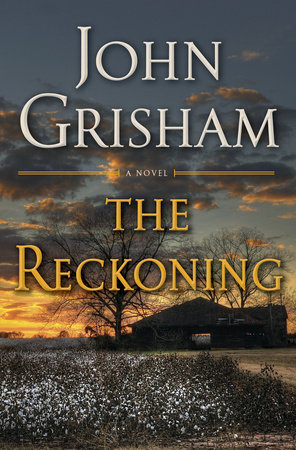
The Reckoning, by John Grisham

The Reckoning, by John Grisham

The Reckoning is not your typical John Grisham legal thriller. It includes the law and a man who choose to break it and it’s a thriller, but it is very different from Mr. Grisham’s usual offerings. The story opens with  Pete, a World War II hero back home in Mississippi in 1946.

Pete wakes up one morning and decides that is the day. Just that: today is the day. Mr. Grisham pulled me into Pete’s life. Fairly early in the book, we see what Pete does that day that will change his and many other lives forever, but we don’t know why. We have a hunch, though.

The second part of the novel goes back to when Pete met his future life. We learn about the life they made together, but we primarily learn what Pete endured in the Pacific Theatre during the War. It’s not pretty, but it’s authentic. That part of the book at times reads almost like a history book, but Mr. Grisham writes in a way that makes it personal and real.

The third and final section of the book goes back to 1946 for Pete’s college-age son and daughter to pick up the pieces of their lives and try to make sense of what their father did. And that hunch we had in Part One proves not to be correct when the truth comes out in Part Three!

The Reckoning is different from Mr. Grisham’s usual legal thrillers, but I liked it.

The Boat People, by Sharon Bala

The Boat People, by Sharon Bala

Call me old-fashioned, but I’m put off by novels that don’t use quotation marks. It’s irritating, and I shudder to think that might be the wave of the future of publishing. Let’s save some ink and omit the quotation marks! I’d read good things about The Boat People, though, so I persevered.

The book held much promise in the opening chapters as we were introduced to several of the 503 Sri Lankan asylum seekers in a boat as it nears Canada. A father, Mr. Mahindan, and his six-year-old son are the focus of the book. Upon landing in Canada in 2009 they are separated from each other because all women and children are detained in a separate facility from the men. It was immaterial that Mr. Mahindan and his little boy only had each other.

The separation was gut-wrenching and traumatic for both of them. It hit me right in the gut and immediately brought to mind the even more severe and inhumane separation of women from men and children from adults on the US-Mexico border this winter. Just as Canadians couldn’t believe what was happening in their country in 2009, we Americans can’t believe what is happening now along our southern border. Don’t get me started!

I usually don’t mention on my blog the books that I don’t finish reading, but this one held such promise and I just couldn’t stay with it. If you read it, I’d like to hear your thoughts.

I read the first one-fourth of the book (hence, the title of today’s blog post) and just lost interest in the 2002 backstory for this 2009 event. The back-and-forth between the two years didn’t appeal to me. That, combined with the lack of quotation marks delineating dialogue, made me close the book and move on to ….

The Library Book, by Susan Orlean

The Library Book, by Susan Orlean

I read in advance reviews of The Library Book that the event that prompted Susan Orlean to write the book was the April 29, 1986 fire at the Central Los Angeles Public Library that destroyed 400,000 books. An additional 700,000 books were badly damaged. It was (and still is) the largest library fire in the history of the United States. I’m an avid reader and big supporter of public libraries, so I wondered how I could have missed hearing about this tragedy at the time it happened.

It turns out that most people never heard about it because it coincided with the nuclear accident at Chernobyl in Russia. For days and days after the April 25-26 disaster, the nuclear scare predominated the news.

The Library Book not only tells about the fire and the employees and volunteers cleaning up the mess left behind; it also delves into the cause of the fire, and the history of the Los Angeles County Public Library System. Many interesting tidbits about libraries in general are included in the book, and one can tell by the tone of the book and the words used that Ms. Orleans loves and reveres libraries.

The fire, the search for an arsonist, and some of the little known facts and quotes about libraries was interesting and worth the read; however, I got bogged down in the history of the library system in Los Angeles County and found myself skipping paragraphs and, eventually, skipping pages.

I picked back up somewhere along the way and enjoyed the rest of the book. The book reinforced the warm and fuzzy feelings I have about libraries.

Since my last blog post

I’ve done a lot of reading and worked on a short story and my novel’s outline.

I’ve also worked on an extra blog post for tomorrow after reading about Rae’s idea of starting a “Two for Tuesday” tag in her January 8, 2019 blog post, 2019 (https://educatednegra.blog/2019/01/08/two-for-tuesday-prompts/comment-page-1/#comment-1646. Please check in tomorrow to learn about two books that taught me something. #TwoForTuesday

Until my next blog post

I hope you have a good book to read. I’m reading Creating Character Arc:  The Masterful Author’s Guide to Uniting Story Structure, Plot, and Character Development, by K.M Weiland; and Red Notice:  A True Story of High Finance, Murder, and One Man’s Fight for Justice, by Bill Browder.

If you’re a writer, I hope you have productive writing time and lots of time to read.

Thank you for reading my blog. You could have spent the last few minutes doing something else, but you chose to read my blog. I appreciate it! I welcome your comments.

Let’s continue the conversation

If you’ve read any of the books I mentioned today, let me know what you thought about them. Did I “miss the boat” by not finishing The Boat People, by Sharon Bala?

See you tomorrow for a bonus #TwoForTuesday blog post!

Janet

I took Mliae’s January challenge

I have discarded, recycled, or set aside to donate more items this month than I can count. All as a result of Mliae’s blog post on December 31, 2018:  https://lifexperimentblog.com/2018/12/31/happy-new-year-2019/.

Mliae challenged her blog readers to get rid of one item every day in January. I missed many days, but made up for it on others. It feels good to get rid of some clutter. Thank you, Mliae!

I finally got around to shredding my income tax records and bank statements from the year 1999 through 2010. That’s not a typo. 1999.

Think back to 1999, if you can. In those days, the bank sent you a statement every month along with all your cancelled checks. The bank and I have come a long way since 1999:  from cancelled checks to online bill pay.

In some ways, I’m organized. I keep each year’s income tax instructions and paperwork together with a rubber band. In theory, this would make it easy to discard (shred) the oldest year’s paperwork when adding the newest year’s records; however, I never put my plan into practice.

Hence, I hadn’t gotten rid of any of those records in 20 years even though we’re required to only keep our income tax records for seven years. It was time to tackle that box of income tax records! I started that project on Friday afternoon and finished it Saturday night. I thought our poor wee paper shredder was going to blow up!

I am reminded of a line I like from At Home on the Kazakh Steppe:  A Peace Corps Memoir, by Janet Givens:

“… if nothing else, a useful reminder early on that the more I can let go of the old, the more room there is for the new.”

In writing that, Ms. Givens was not referring to getting rid of physical items in order to make room for new things. She was writing about a revelation she had in the early days as a Peace Corps volunteer in Kazakhstan.

Ms. Givens realized that she needed to let go of preconceived ideas and the way she had done things back home in the United States so she could learn the culture of the Kazakh people.

The above quote from Ms. Givens’ memoir struck a chord with me. As I let go of some physical items this month, I made a conscious effort to let go of preconceived ideas.

I want to learn something each day. I want to be open to new ways and new ideas. As my 66th birthday approaches, I don’t want to be “a stick in the mud” or “stuck in a rut.”

Since my last blog post

My vertigo is improving. The things the physical therapist has me doing are definitely making a difference.

Until my next blog post

I look forward to seeing if Mliae will issue a February challenge. Nevertheless, I plan to continue to tackle the clutter that has accumulated.

I hope you have a good book to read. I just finished reading Now You See Me, by Sharon Bolton.

If you’re a writer, I hope writing brings you joy. I hope you have quality writing time this week.

Thank you for reading my blog. You could have spent the last few minutes doing something else, but you chose to read my blog. I appreciate it! I welcome your comments.

Let’s continue the conversation.

Are you a keeper of things? I think I got it honestly from both parents. They were in college when The Great Depression hit in 1929. Their young adult years were lean and full of struggle. “Waste not, want not,” must have been what they lived by. I never heard either of them say those words, but they raised their children not to waste anything.

By my parents’ example, I learned at an early age not to throw away anything that I could possibly need or find a use for later. Hence, the stack of printer paper that has only been used on one side. The other side can be used for all kinds of things – like writing the plot outline for a novel.

Hence, the used letter envelopes on which grocery lists can be written on the back while the inside conveniently holds discount coupons. And those twist-ties that come on the bag in which sliced bread is purchased? Yes, I’m guilty. There is a place set aside for them in one of the kitchen drawers.

What about you? Are you a keeper or a minimalist?

Janet

How to Recapture the Joy of Writing

If you read my December 17, 2018 blog post, https://janetswritingblog.com/2018/12/17/to-write-or-not-to-write/, you know that I was considering giving up my ambition of writing and publishing a novel.

After much prayer, soul searching, reading some blogs and articles about writing – as well as reading many encouraging comments from my blog readers – I have decided to recommit to writing my southern historical novel.

Working title: The Spanish Coin OR The Doubloon

The working title of my book is The Spanish Coin, which refers to a gold Spanish coin – a doubloon – that shows up in a Carolina backcountry community in the 1760s. There is a murder, after which the coin is missing. Is there anyone in the small community who is not a viable suspect?

That’s the story I’ve been working on off and on for more than 10 years. I’m not getting any younger, so I’d really like to finish writing it. I would also love to get it published. That’s why I wanted to recapture my joy of writing.

Extrinsic vs. Intrinsic Rewards

Several hours after posting my blog on December 17, 2018, I read an article that was just what I needed. The link to “How to Restore Your Love of Writing” is https://writersinthestormblog.com/2018/12/how-to-restore-your-love-of-writing/. The article was written by Colleen M. Story, and it addressed much of the problem I wrote about on December 17, 2018.

In her blog post, Ms. Story explains that there are two kind of rewards writers seek: extrinsic and intrinsic. Extrinsic refers to the rewards the world gives us, while intrinsic refers to the rewards we get from within ourselves.

First, I needed to discern which type of rewards I wanted. Ms. Story offered several questions that I asked myself. Those questions led me to conclude that money would be great, but that’s not what is driving me. It is a sense of accomplishment that I seek.

What led me to start writing in the first place? It wasn’t money. Those who think, “I’ll be a writer and get rich” are setting themselves up for crushing disappointment. Some writers make the big bucks, but they are the exception.

What led me to start writing was an innate desire to put my thoughts on paper. I kept journals as a teenager and sporadically as an adult. I took a creative writing class in high school, but I never considered writing as a possible career.

Another blog post I found helpful

Several days later, I read the December 19, 2018 Writers in the Storm blog post:  https://writersinthestormblog.com/2018/12/top-10-writing-success-tips-from-ray-bradbury/. In it, Jenny Hansen lists her 10 favorite writing success tips from author Ray Bradbury. The five that resonated with me were the following:

            Do the work.

            Do what you love.

            Embrace your emotions.

            Read.

            Get out of your own way.

And, of course, my blog readers inspired me

I received a number of comments about my December 17, 2018 blog post, and I took encouragement from each one of you.

Since my last blog post

I have started writing a short story set in colonial America. I’d like to publish a book of short stories set in colonial America – my favorite place and time in history.

Until my next blog post

I’ll try to take Ray Bradbury’s advice and get out of my own way.

I hope you have a good book to read. I’m reading If I Understood You, Would I Have This Look on My Face? My Adventures in the Art and Science of Relating and Communicating, by Alan Alda.

If I Understood You, Would I Have This Look on My Face?, by Alan Alda

If you’re a writer, I hope you know why you’re writing. I hope writing gives you joy.

Thank you for reading my blog. You could have spent the last few minutes doing something else, but you chose to read my blog. I appreciate it! I welcome your comments.

Let’s continue the conversation.

Have you ever lost the joy you once had for an artistic endeavor, a favorite hobby or pastime, or your once much-enjoyed career? How were you able to recapture that joy?

Janet

How to State the Obvious

I keep a notebook in which I write down sentences I like in the books I read. There’s method to my madness. I’m trying to learn how to write good prose.

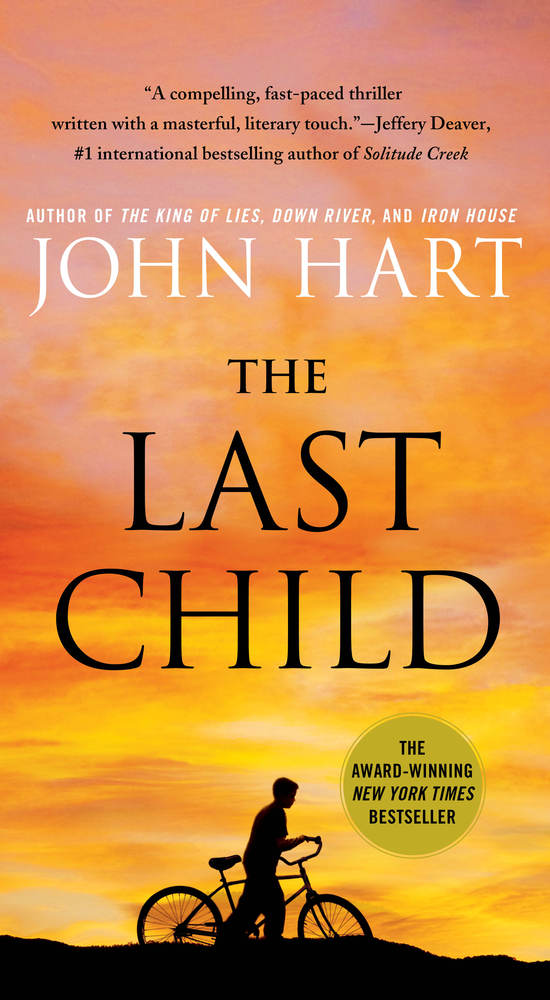
In my May 7, 2018 blog post, https://janetswritingblog.com/2018/05/07/reading-in-april-2018/, I wrote about reading The Last Child, by John Hart. In that novel a sentence jumped out at me as a clever way to state the obvious.

The Last Child, by John Hart

“He reached inside and caught the bat where it leaned against the doorjam. It had dents and scars from a time he beat the television to death over a fumble in a playoff game.” ~ from The Last Child, by John Hart

What a great way to say Burton “Jar” Jarvis is crazy without saying, “Jar is crazy.”

Since my last blog post

I have worked on my novel outline and rewritten the first scene. I think I have some plot problems figured out. If you’ve read my blog recently, you know this is a breakthrough for me. For instance, in my December 17, 2018 blog post, https://janetswritingblog.com/2018/12/17/to-write-or-not-to-write/, I revealed that I was having doubts about finishing my novel. I hadn’t seriously worked on it since June.

Being the early days of a new year, I was also inspired to weed three cookbooks out of my collection. You have no idea how surprising and necessary this accomplishment is. It’s a start.

Determined to get back to my genealogy hobby, I scanned more than 100 family photos into my genealogy software program.

Until my next blog post

I hope you have a good book to read. I’m reading In the Woods, by Tana French.

If you’re a writer, I hope you have productive writing time.

Thank you for reading my blog. You could have spent the last few minutes doing something else, but you chose to read my blog. I appreciate it! I welcome your comments.

Let’s continue the conversation.

What are your hobbies?

What are you reading?

What are you writing?

Like “Jar,” have you ever beaten a TV to death over something that came on the screen that you didn’t like? If you have, you probably need to be in therapy instead of reading my blog. Correction: You probably need to be in therapy in addition to reading my blog. Please don’t stop reading my blog!

Janet

Books I Enjoyed in December 2018

The Dream Daughter, by Diane Chamberlain

Diane Chamberlain broke away from her usual form of writing novels and did a great job with time travel in The Dream Daughterr. The book begins in 1970 with a pregnant woman, Caroline Sears, finding out that her unborn baby has a heart defect.

The Dream Daughter, by Diane Chamberlain

It turns out that Caroline’s brother-in-law has come to 1970 from the future. He knows that if Caroline can find her way to the future, her unborn daughter can have fetal surgery – the unthinkable in 1970.

I won’t give away any details of Caroline’s journey. I’ll just say things don’t go smoothly. This trip across decades will keep you turning pages.

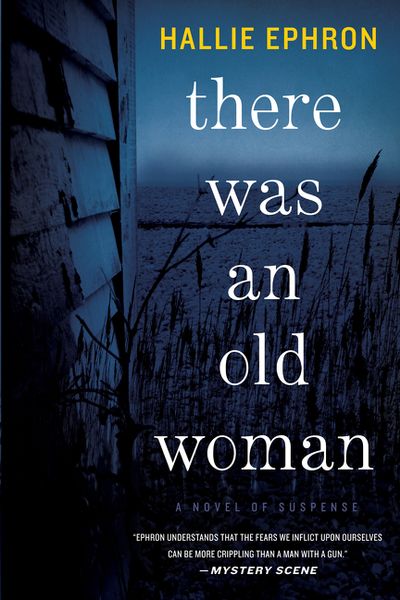
There Was an Old Woman, by Hallie Ephron

The title of this book caught by attention and immediately took me back 60 years to nursery rhymes about the old woman who lived in a shoe and the old woman who swallowed a fly. I’d never read anything by Hallie Ephron, so I decided to give There Was an Old Woman a try.

The story involves multiple generations, with an emphasis on several independent-living octogenarians. Things in the neighborhood keep disappearing. What’s happening? Who is doing this? Is it the strange man across the street?

There Was an Old Woman, by Hallie Ephron

Thrown into the mix is a subplot about the B-25 Mitchell bomber that crashed into the Empire State Building on July 28, 1945. Ms. Ephron sheds a light on that much-forgotten event by making one of the main characters in the book be a survivor of that plane crash. I must admit, I did not know about that tragedy in which 14 people were killed.

There Was an Old Woman is categorized as a thriller, but it did not come across to me as such. It’s more like a neighborhood mystery in which the daughter of one of the 80+-year-olds is forced to come home and deal with her mother’s illness and neglected house. The book has received an interesting mix of 1-star and 5-star reviews, with most reviews falling into the 3- or 4-star categories.

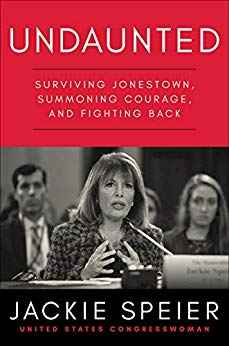
Undaunted: Surviving Jonestown, Summoning Courage, and Fighting Back, by Jackie Speier

I thoroughly enjoyed reading this memoir by United States Representative Jackie Speier of California’s 14th congressional district. I was not aware that Ms. Speier survived the Jonestown Massacre, so that fact alone drew me to this memoir.

Undaunted, by Jackie Speier

What a life Ms. Speier has had! When she was 28 years old, she worked for California Congressman Leo Ryan. She and others accompanied Ryan to Jim Jones’ Peoples Temple in Jonestown, Guyana on November 14, 1978 to rescue individuals being held there against their will.

Those who are old enough to remember that fateful event know that things rapidly soured upon the delegation’s arrival. Congressman Ryan was murdered and Jackie Speier was shot five times and nearly died.

For someone like me who is a history and political “junkie,” this memoir was compelling and inspiring. Ms. Speier writes about her widowhood, motherhood, her lifelong work in politics, and her 40-year determination to overcome the scars she has from her Jonestown experience.

Since my last blog post

I continue to receive encouraging comments in response to my December 17, 2018 blog post, https://janetswritingblog.com/2018/12/17/to-write-or-not-to-write/. I appreciate each and every one of them and each and every one of my blog readers. I have a more positive attitude about my novel in progress since being bolstered up by so many of you over the last three weeks.

The holidays turned out not to be conducive to my getting back to putting words on paper (or the computer screen, as the case may be.) I’ve mulled the story over and over in my mind, though, and I intend to get back to writing that book this week. I need my blog readers to hold me accountable!

I’ve read many helpful blog posts and articles this week about the various facets of writing. One in particular hit a chord with me, but I’ve misplaced the link to it. The piece recommends that an aspiring novelist publish one or more short story collections in order to build readership. I’m kicking around that idea. It makes sense. The theory is that more people will want to buy my novel if they have read and liked my short stories. I needed one more project!

Call me a klutz if you want to, because I think I qualify. In the last four or five days I’ve broken a toe on both feet, but not at the same time. Don’t laugh; broken toes are painful.

Until my next blog post

I hope you have a good book to read. I’m reading The Reckoning, by John Grisham.

If you’re a writer, I hope you have quality writing time. I hope I do, too!

Thank you for reading my blog. You could have spent the last few minutes doing something else, but you chose to read my blog. I appreciate it! I welcome your comments.

Let’s continue the conversation.

Have you read any books recently that you’d recommend to me and my blog readers?

Have any of you writers had experience – good or bad – in publishing short stories to build readership prior to publishing your first novel?

Janet

15 Books that Entertained, Educated, or Changed Me in 2018

Books can entertain, educate, or even change one’s thinking.

When I looked back over the list of the 56 books I read in 2018, I was amazed at the variety and the things I learned. I learned some history while I was entertained, and I hope I learned something about writing. Several of the books changed my thinking. You can’t ask a book to give you more than that.

The books that entertained, educated, or changed me or my thinking in 2018 are listed here in alphabetical order by author.

Fascism:  A Warning, by Madeleine Korbel Albright

The Taster, by V.S. Alexander

The Atomic City Girls, by Janet Beard

White Chrysanthemum, by Mary Lynn Bracht

Climbing Over Grit, by Laleh Chini and Abnoos Mosleh-Shirazi

Another Ocean to Cross, by Ann Griffin

Sea Prayer, by Khaled Hosseini

The Tattooist of Auschwitz, by Heather Morris

A Bigger Table:  Building Messy, Authentic, and Hopeful Spiritual Community, by John Pavlovitz

Fighting to Win:  Samurai Techniques For Your Work and Life, by David J. Rogers

The Broken Girls, by Simone St. James

Undaunted:  Surviving Jonestown, Summoning Courage, and Fighting Back, by Jackie Speier

The Death of Mrs. Westaway, by Ruth Ware

Educated:  A Memoir, by Tara Westover

Before We Were Yours, by Lisa Wingate

Since my December 17, 2018 blog post

My December 17, 2018 blog post was more than a bit pessimistic. The title described my current dilemma:  https://janetswritingblog.com/2018/12/17/to-write-or-not-to-write/.

I have heard from a number of you since then. You have offered encouragement and helped prop me up. Knowing I have blog readers in quite a few countries from around the world in addition to those in the US who cared enough to take time to leave comments has boosted my morale and helped me to determine that I must continue to work on that historical novel I’ve worked on off and on for a decade.

Even if there are days I can only write for 15 minutes, then that’s what I’ll do in 2019. Slowly but surely, I will finish writing that book!

For those of you who read my blog from last Monday, https://janetswritingblog.com/2018/12/24/do-you-believe-in-miracles/, I hope you were moved by this real life story from 40 years ago.

Until my next blog post

At Home on the Kazakh Steppe: A Peace Corps Memoir, by Janet Givens

I hope you have a good book to read. I’m reading At Home on the Kazakh Steppe:  A Peace Corps Memoir, by Janet Givens. I’m thoroughly enjoying it. You can check out her website at https://janetgivens.com/.

If you’re a writer, I hope you have productive writing time.

Thank you for reading my blog. You could have spent the last few minutes doing something else, but you chose to read my blog. I appreciate it and I welcome your comments.

Let’s continue the conversation.

What are some of the books that educated you or changed your life or your thinking?

Happy New Year!

Janet

Do you believe in miracles?

I used to think that miracles all happened 2,000 years ago when Jesus Christ physically walked the earth as a man. Since December 25, 1978, I’ve known better.

My brother’s family (him, his wife, 12-year-old son, and 10-year-old daughter) drove from Georgia to North Carolina for Christmas. Beth – the daughter – had been sick and they’d given her aspirin and put her to bed at the home of my sister-in-law’s parents. It was the afternoon before Christmas.

A couple of hours later, they tried to wake Beth up, but she was unconscious. They rushed her to the nearest hospital. The doctors and nurses were baffled as to what could be wrong with Beth. At random times, she would scream out and it would take several adults to hold her in the hospital bed.

Suddenly, on that evening – Christmas Eve – the pediatrician on the case suddenly remembered having seen a similar case while in medical school. He ordered specific lab tests and rushed the vials to the lab himself.

When he came back to Beth’s room, he told her parents and brother that there was an ambulance waiting to take Beth and her mother to Duke Hospital in Durham, North Carolina. He told them that Beth had Reyes Syndrome. He told them that some children survive it and some don’t. There was no cure for it, and he couldn’t guarantee that Beth would survive the trip to Duke.

My brother and nephew drove the 125 miles to Durham after being told not to even think about trying to keep up with the ambulance.

Arriving safely at Duke, Beth was placed in the intensive care unit for children. The family was told there was nothing to do but pray and wait. Pray, we all did.

The next morning was, of course, Christmas Day. After a sleepless night, my mother, sister, and I rose early and drove to Durham. This was before cell phones and texting, so during that two-hour trip we had no idea what was happening with Beth. We didn’t know if she would still be alive when we got there.

When we arrived at Duke Hospital’s pediatric ICU, we were greeted with smiles. While the nurse was in the room checking on another patient that morning, Beth woke up and asked, “Has Santa Claus come yet?”

Little was known then about Reyes Syndrome. The connection between it and children taking aspirin had not been established. None of us had even heard of the illness.

The doctors at Duke kept Beth for more than a week to continue to test and observe her. They followed her grades in school for a year. They were looking for any sign of brain damage. There was none. They told Beth’s parents that they had never seen a child come out of a Reyes Syndrome coma so suddenly or completely. They said there was no medical explanation for it.

Beth returned to Georgia and continued to have a perfect record in school. She went on to university and earned a degree in math before having a rewarding career in Information Technology with a major airline. She married and is the mother of two high school and college age daughters.

I cannot imagine how our lives would have changed if Beth had died in 1978. She is a joy in the life of everyone she knows. I can’t imagine life without her husband and their two daughters.

And I can’t let a single Christmas pass without remembering Christmas of 1978 when I learned that miracles do still happen.

Janet

To write or not to write

With just two weeks remaining in 2018, I’m taking stock of my life. I’m at a crossroads of sorts. I feel like I’ve floundered much of this year. I’ve lost sight of my purpose. I haven’t worked on my historical novel manuscript since June.

I’ve been a bit of a caregiver for my sister for the last six weeks since she had surgery. As she daily regains energy and feels more like herself, it becomes acutely clear to me the difference between a typical illness or surgery and a chronic illness.

I heard someone 20 years my senior recently lament her lack of energy after having surgery. Such comments as, “I just want my energy back” stuck in me like a dagger. A chronic illness robbed me of my energy in 1987. It never came back. Chances are it never will.

I’m taking stock this month. Do I have what it takes to write a novel? The desire is there, but it takes hundreds of hours of mental work to write a novel. I have worked on it off and on for more than a decade.

The pressure I’m putting on myself about writing that novel is just that – pressure that I’m putting on myself. I want something to show for my life. I want to see that book on the shelf, my name on the spine. But that’s not enough. That’s not the reason one should try to write a novel.

 In order to write a novel, a person has to have a fire in his or her soul, a passion for the story, the realization that they can’t not write the book. Pardon the double negative, but I’ve heard it expressed in those terms so many times. “I have to write because I can’t not write.”

There is a story in me that’s been trying to see the light of day for more than 10 years. Only time will tell if I have what it takes to put the words on paper and push it out the door.

Until my next blog post

I hope you have a good book to read.I just finished reading The Dream Daughter, by Diane Chamberlain. Unlike any of Ms. Chamberlain’s earlier novels, this one has to do with time travel. That came as a surprise to me. I like the idea of time travel, and Ms. Chamberlain did a great job with this story.

I was eager to start reading Jodi Picoult’s latest novel, A Spark of Light. The premise held promise and I thought if any writer could write a soul-searching novel about abortion, it would be Ms. Picoult. I was disappointed in the book. I think I would have liked it if it had been written in chronological order; however, it covers 11 hours, begins with hour number 10, and works its way backwards to hour number one, which is followed by hour number 11. The way the material was presented did not appeal to me. I was tempted to read the chapters in reverse order, but I wasn’t in the mood to do that after having started with the first chapter.

If you’re a writer, I hope you have quality writing time and the physical energy to reach your goals.

Thank you for reading my blog. You could have spent the last few minutes doing something else, but you chose to read my blog. I appreciate it! I welcome your comments.

I’ll try to write a more upbeat blog next week. When I started blogging more than seven years ago, the purpose of my blog was to share my journey as a writer. The journey has stalled recently, but maybe I’ll get my second wind in 2019.

Let’s continue the conversation.

Have you read A Spark of Light, by Jodi Picoult? What did you think of it? Did you find its being written “backwards” appealing or confusing? I have enjoyed every other Jodi Picoult book I’ve read, so I was surprised when I had no desire to read beyond the second chapter of this one. The book has gotten mixed reviews online.

If you’re a writer, what pulls you out of the pit of self-doubt when discouragement tries to overwhelm you?

Janet