I write southern historical fiction, local history, and I've written a devotional book. The two novels I'm writing are set in Virginia and the Carolinas in the 1760s. My weekly blog started out to follow my journey as a writer and a reader, but in 2025 it has been greatly expanded to include current events and politics in the United States as I see our democracy under attack from within. The political science major in me cannot sit idly by and remain silent.
As is obvious from the title, today’s #TwoForTuesday blog
post prompt is Two Books Written by Women of Color. Thank you, Rae of Rae’s
Reads and Reviews blog for supplying the prompt.
I’ve chosen two books that have nothing in common except
they’re both written by women of color.
Left to Tell: Discovering God
Amidst the Rwandan Holocaust, by Immaculee Ilibagiza
Left to Tell, by Immaculee Ilibagiza
Of the nearly one million Rwandans who lost their lives in
the 1994 genocide in that country, college student Immaculee Ilibagiza lost
most of her relatives. This book is her telling of the story. Indeed, she believes she was “left to tell.”
Ms. Ilibagiza and seven other women hid in the bathroom in a
local pastor’s house for 91 days during the violence. During her ordeal she was
able to come to understand the true meaning of forgiveness. Afterwards, she
sought out and forgave her family’s killers.
This is an extraordinary story!
Jackie Tales: The Magic of
Creating Stories and the Art of Telling Them, by Jackie Torrence
Jackie Tales, by Jackie Torrence
Switching gears completely from Left to Tell, the other book I’m highlighting today is Jackie Tales: The Magic of Creating Stories and the Art of
Telling Them, by Jackie Torrence. Ms. Torrence was a reference librarian in
High Point, North Carolina and a master storyteller.
This delightful book not only includes 16 folk tales but
also has Ms. Torrence’s stage directions so the reader can learn many
techniques of good storytelling.
With an introduction by Ossie Davis and a host of up-close
photographs illustrating the wonderfully expressive face of Ms. Torrence, this
book is a real gem for anyone aspiring to be a writer, a storyteller, or an
entertaining reader to children.
Ms. Torrence had quite a gift and the storytelling world
will never forget her. I found myself laughing out loud as I read each of the
stories in this book. Bravo!
Until my next blog
post
Keep reading!
Let’s continue the
conversation
Have you read either of today’s books?
Have you ever considered honing your storytelling talent and
sharing your gift with others?
Last Monday I blogged about five of the ten books I
read last month. Today I’m sharing my thoughts about the other five books I
read in February. Four of them are nonfiction. Any month I get to read ten
books is a good month!
George
Washington’s Secret Six: The Spy Ring
that Saved the American Revolution,
by Brian Kilmeade and Don Yaeger
George Washington’s Secret Six, by Brian Kilmeade and Don Yaeger
I really liked this book! I was intrigued by the
title. Although I always liked studying American history and minored in history
in college, this book was full of information I’d either forgotten or never
knew.
I’m going to show my ignorance here. The chapter about
Benedict Arnold was especially enlightening. We all (I hope!) learned in
elementary school that he was a traitor during the American Revolution. I
realized when I started reading the chapter about him that that’s all I knew
about him. I didn’t know what he did to betray America. If you don’t know the
story, I suggest you read this book or do other research on your own. You might
be surprised what you learn. Or, maybe I’m the only one who didn’t learn this bit
of history.
It saddened me to learn that one of the six American
spies was a woman whose name is lost to history. She is only remembered today
as Number 355. Each of the spies had a three digit number, just like James Bond
of 007 fame! Number 355 was found out by the British and taken prisoner on a
ship in New York harbor. It isn’t known if she survived her ordeal as a
prisoner of war.
Why are the contributions made by women swept under
the rug and not mentioned in history books? I know the answer. I’m just
throwing the question out in frustration for you to ponder.
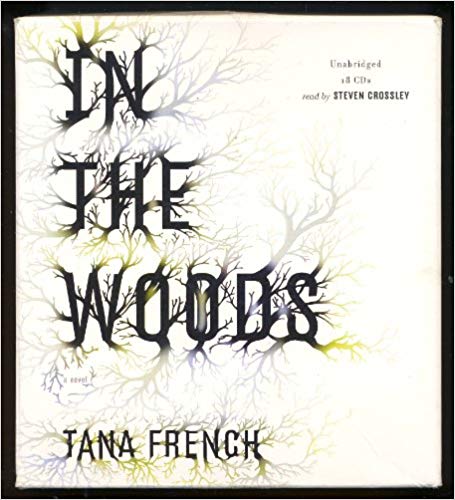
In
the Woods,
by Tana French
In the Woods, by Tana French
I kept seeing publicity for and reviews for Tana
French’s new book, The Witch Elm, and
I realized I’d never read any of her books. Instead of starting with her
latest, I decided to read In the Woods,
which is the first book in her Dublin Murder Squad Series. It was published in
2007, and is set in the Dublin, Ireland area in 1984 and 2004.
The book begins in 1984 with the disappearance of two
children and the survival of one of their companions. Then the story shifts to
2004 to Detective Bob Ryan, who sees too many similarities between his
experience as that survivor and the mystery of a missing 12-year-old girl.
Bob Ryan keeps his past a secret as he and fellow-detective
Cassie Maddox try to solve the girl’s disappearance. Ryan hopes in the process
they will also solve the mystery of his own experience as a young boy.
That said, I did not finish reading In the Woods. The premise held such
promise, but one-third of the way into the book I lost interest in the
conversations the characters had that did not seem to move the story along. I
wanted to like the book and read the rest of the series. But alas, there were
too many other books calling my name.
Building
a Story Brand: Clarify Your Message So
Customers Will Listen
by Donald Miller
This book caught my attention because it had “Story Brand” in the title, but I almost didn’t read it since it had “Customers” in the subtitle. Everywhere the book said, “customer,” I mentally substituted “reader.” That worked pretty well in most cases.
I was unable to download an image of the book for my blog post today.
Here are a few takeaways from the book:
“The fact is, pretty websites don’t sell things. Words
sell things.”
“The reality is we aren’t just in a race to get our
products to market; we’re also in a race to communicate why our customers need
those products in their lives.” (In other words, my challenge is not only
getting my novel published, I must also get across to potential readers why
they will benefit from reading my book.)
“The first mistake brands make is they fail to focus
on the aspects of their offer that will help people survive and thrive.” (In
other words, how will reading my novel help the reader thrive? Oh my!)
“The second mistake brands make is they cause their
customers to burn too many calories in an effort to understand their offer.”
(In other words, I need to be able to “pitch” my novel is as few words as
possible.)
“In a story, audiences must always know who the hero
is, what the hero wants, who the hero has to defeat to get what they want, what
tragic thing will happen if the hero doesn’t win, and what wonderful thing will
happen if they do.” (I knew that about stories, but I didn’t know the same was
true in retail.)
“If you confuse, you lose.” (Just because I know what
I’m trying to say or write doesn’t mean anyone else understands it.)
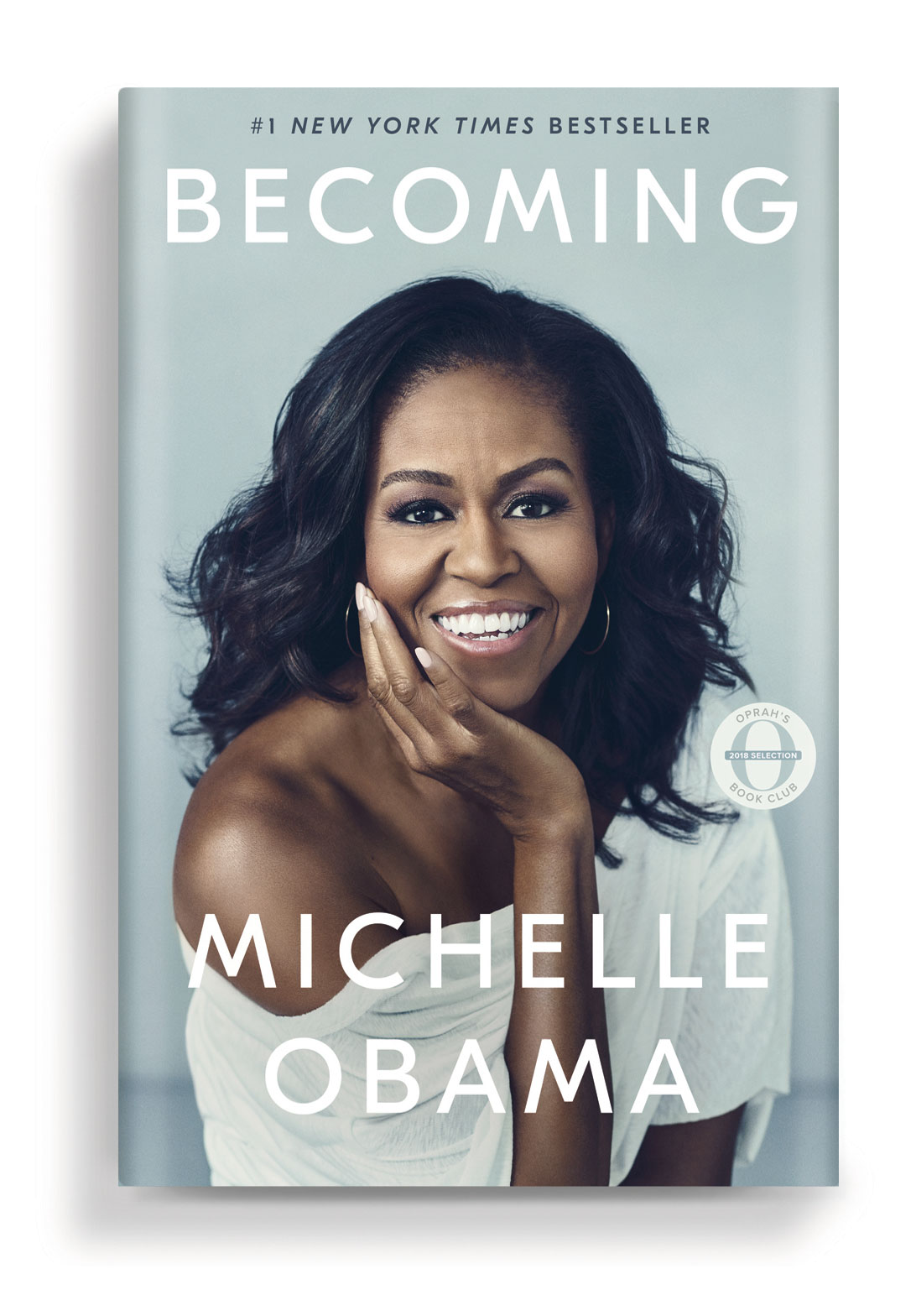
Becoming, by Michele Obama
Becoming, by Michelle Obama
This was a book that I listened to. It was read by Michelle Robinson Obama, and I thoroughly enjoyed listening to her talk about her growing up years, college years, working so hard to excel in law school, meeting Barack Obama, working in a big law firm and coming to the realization that she was not going to be fulfilled by practicing law, finding a new career path, the struggles of trying so long to have children before Malia and Sasha finally came along, being under a microscope while living in the White House, and how much it hurt when people told lies about her husband and herself.
I know some people do not like Michelle Obama, and I don’t understand why. They might have a better opinion about her if they read – or better yet, listened to – Becoming. I enjoyed every bit of it!
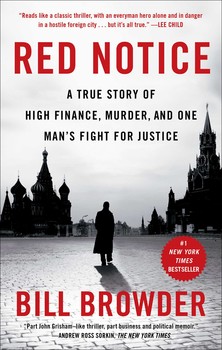
Red
Notice: A True Story of High Finance,
Murder, and One Man’s Fight for Justice,
by Bill Browder
Red Notice, by Bill Browder
This book was recommended by one of my loyal blog readers, Alison. (She has a keen sense of humor and often reveals it in her blog, “A Pierman Sister” — https://piermanparis.com/.)
Many of the details of how venture investing works
were beyond my interest or understanding, but I couldn’t seem to stop reading
it.
This is the story of the author’s experience in the
world of high finance in eastern Russia. What I know about high finance could
easily fit on the head of a pin. I’ve never really needed to know the details
of high finance. I don’t move in those circles. Nevertheless, the book is
intriguing and sheds some timely light on current USA-Russia interactions.
Red
Notice gives insightful background about how Russia
transitioned from communism to capitalism and why capitalism doesn’t work in
Russia the same way it works in America. There is a different mindset in Russia
after decades of communist rule and thought.
I’ll share a few quotes from this political thriller:
“It bears mentioning that in Russia there is no
respect for the individual and his or her rights. People can be sacrificed for
the needs of the state, used as shields, trading chips, or even simple fodder.
If necessary, anyone can disappear.”
“The moral is simple:
when it comes to money, Russians will gladly – gleefully, even –
sacrifice their own success to screw their neighbor.”
“The major downside to what I was doing was that I was
seriously disrespecting a Russian oligarch in public, and in Russia that had
often led to lethal results in the past. The imagination is a horrible thing
when it’s preoccupied with exactly how someone might try to kill you.”
Seizing an opportunity that was too good to pass up,
Mr. Browder founded what was to become the largest investment fund in Russia
after the demise of the Soviet Union. Quoting from Goodreads.com: “But when he exposed the corrupt oligarchs
who were robbing the companies in which he was investing, Vladimir Putin turned
on him and, in 2005, had him expelled from Russia.”
Mr. Browder’s offices in Moscow were raided in 2007. His
attorney was arrested and eventually murdered by prison guards in 2009. Mr.
Browder wrote this book in an effort to bring justice for his deceased lawyer
and to expose what takes place in Russian business dealings right up to
Vladimir Putin.
This book should give us pause.
Since
my last blog post
Two days this past week, no one from the United States
has looked at my blog. What’s with that?
Carolyn W. and her team at WordPress.com continued to
work on the problem I was having with the “like” buttons on other people’s
blogs. They didn’t stop until they’d figured out that it was a browser issue.
Now instead of using Firefox, I must use Chrome. Kuddos to WordPress.com’s
support chat for getting to the bottom of this!
Until
my next blog post
I hope you have a good book to read.
I’ll finish reading The Glovemaker, by Ann Weisgarber today. I’ve
enjoyed it. It is set in what is now Capitol Reef National Park in Utah – a place
I had the pleasure of visiting in 2002.
If you’re a writer, I have you have
quality writing time and your projects are moving right along.
Look for my #TwoForTuesday blog post
tomorrow: Two Books Written by Women of Color. Thank you for providing
the writing prompt, Rae, in “Rae’s Reads and Reviews” blog.
Thank you for reading my blog. You
could have spent the last few minutes doing something else, but you chose to
read my blog.
Let’s
continue the conversation
Have you read any of the five books I talked about
today? If so, please share your thoughts with me. Have I piqued your interest
in reading any of these books?
I enjoyed participating in February so I look forward
to blogging the four Tuesdays in March using these prompts.
It was tempting to list two books that readily came to
mind, but I decided to give today’s prompt some deeper thought. I reviewed the
list of books I’ve read and the two I chose to write about might not be selected
by anyone else doing Rae’s #TwoForTuesday challenge.
Climbing
Over Grit,
by Marzeeh Laleh Chini and Abnoos Mosleh-Shirazi
Climbing Over Grit, by Marzeeh Laleh Chini and Abnoos Mosleh-Shirazi
Few books I read in 2018 left an impression on me like
Climbing Over Grit, by Laleh Chini
and her son. It left me wondering how any women raised in Iran have the
strength, resolve, and grit to overcome the oppression that men inflict on
females there.
“I have been following Laleh Chini’s blog, “A Voice from Iran” for quite a
while, but I had somehow missed knowing that she was writing a book. When she
announced that her book, Climbing Over Grit, was available on
preorder, I immediately ordered it. Laleh has a gift for storytelling, so I
knew her book would be good.
“Little did I know that Laleh’s book was based on some experiences within
her own family! The book is written in first-person point-of-view, but I still
didn’t catch on that it was written in her mother’s voice until I came to a
page well into the book that said something like, “The second daughter was
named Laleh.” I gasped out loud! It was then that I couldn’t put the book down.
I finished reading it at 4:30 in the morning.
“I still cringe to think about some of Laleh’s family members being
subjected to arranged child marriage and the abuse that often goes along with
that practice.
“Fortunately for her readers, Laleh got out of Iran at the age of 16 and
came to the United States. She now resides in Canada. The photographs and
Iranian folktales she shares in her blog have helped me get a picture of an
Iran I didn’t know existed.
“Climbing Over Grit is not a pleasant read, but I highly recommend
it to anyone wanting to know more about the child bride culture of Iran. Her
blog can be found at https://avoicefromiran.wordpress.com/.”
The
Taster, by V.S. Alexander
The Taster, by V.S. Alexander
I’m sure somewhere in my study of history I knew that
tasters had to sample Adolph Hitler’s food before he ate it, but it wasn’t
something I’d given a lot of thought to until I read The Taster, by V.S. Alexander. What The Taster shines a bright light on is the fact that Hitler’s
tasters were all women because in his warped mind women were replaceable.
I’ve read The
Magdalene Girls and The Taster,
by V.S. Alexander and I am impatiently waiting to rise to the top of the
waitlist at the library for The Irishman’s
Daughter. Alexander is fast becoming one of my favorite historical fiction
writers.
I read The
Taster a year ago and shared my thoughts about the book in my March 5, 2018
blog post “Reading and Writing in February 2018,” (https://janetswritingblog.com/2018/03/05/reading-and-writing-in-february-2018/.)
Feel free to read that entire blog post, if you missed it the first time. The
following is a quote from that post:
“The Taster is the story of a young woman in need of a job and
living in Hitler’s Germany. The job she got was not a job she wanted. She was
selected to be a food and drink taster for Adolph Hitler. Hitler was mortified
of being poisoned, so all his food and drink had to be tasted in advance by a
replaceable woman. If a taster died, she could be replaced. Hitler, of course,
did not see himself as replaceable.”
The life of a food taster for Hitler was beyond
stressful, as we can only imagine. The tasters didn’t know from one meal,
snack, or reception to the next if that would be their last bit of food or
drink.
Wow! Where do I start? Although it was the shortest month of the year, February was jam-packed with good books. I read a variety of fiction, nonfiction, memoir, and “how-to” books.
Truth be known, I started reading several of the books in January and finished them in February. Each one probably warranted its own blog post, but I’ve condensed my thoughts into two blog posts – today’s and the one on March 11.
Here’s what I thought of each book, in no particular
order:
Before
and Again, by Barbara Delinsky
Before and Again, by Barbara Delinsky
I enjoyed this novel by Barbara Delinsky about a woman,
Mackenzie Cooper, who runs a red light and causes an accident in which her
five-year-old daughter is killed. The event results in a divorce and an
estrangement between Mackenzie and her mother.
In an effort to leave her sad past behind and start a
new life, Mackenzie moves from Massachusetts to Devon, Vermont and adopts a new
name. Things go well for her until her ex-husband shows up in the small town
where Mackenzie lives. It turns out that Mackenzie isn’t the only resident of
Devon living with a secret.
I gave this story of forgiveness four stars on
Goodreads.com. I was surprised to see many two-star ratings for it on that
site. With an average rating of 3.5 stars out of 5, from the reviews, it
appears people either really like it or don’t.
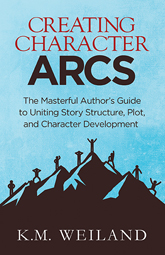
Creating
Character Arc: The Masterful Author’s
Guide to Uniting Story Structure, Plot, and Character Development, by K.M Weiland
Creating Character Arcs, by K.M. Weiland
This book is an invaluable resource for anyone writing
fiction. It helped me focus on the protagonist in the novel I’m writing and
organize her journey step-by-step throughout her story. The questions Ms.
Weiland included in her book helped me to know my main character better, which
enables me to write with more confidence than I had before.
If you’re learning to write fiction, I highly
recommend Creating Character Arc: The Masterful Author’s Guide to Uniting Story
Structure, Plot, and Character Development, by K.M Weiland. Or perhaps you
are a fan of fiction and you’re curious about the structure of a good novel.
Then, I think you’ll find this “how-to” book interesting.
A
Week in Winter,
by Maeve Binchy
A Week in Winter, by Maeve Binchy
This book was a bit of a surprise for me. A Week in Winter, by Maeve Binchy was
the January selection for the Rocky River Readers Book Club. Since it’s not
historical fiction, suspense, or a mystery, I didn’t expect to like it as much
as I did. That’s one of the good things about being in a book club. Sometimes
members are exposed to a book genre they wouldn’t usually select for
themselves.
Although I rarely listen to an audio book, an episode
of vertigo prompted me to borrow the book on CD from the public library. The
accent of professional reader, Rosalyn Landor, was delightful and helped to
keep the setting in Ireland clearly in mind. The fact that I enjoyed listening to a novel was a bonus.
The author, Maeve Binchy, was a master of
characterization. Each character has such a unique backstory or quirk, you’ll
have no trouble keeping them straight in your head. In A Week in Winter, each of the ten chapters tells the backstory of a
different guest or pair of guests at The Stone House on the west coast of
Ireland. Ms. Binchy weaves their stories together perfectly as she brings them
all together as guests at the inn the first week the old house was open for
business.
The
Midwife’s Confession,
by Diane Chamberlain
The Midwife’s Confession, by Diane Chamberlain
After enjoying listening to the Maeve Binchy book, I
decided to give the audio version of The
Midwife’s Confession, by Diane Chamberlain a try. Ms.Chamberlain weaves
quite a complicated story and cast of characters together in this novel set in
Wilmington, Chapel Hill, and Robeson County, North Carolina.
One of three close friends commits suicide, leaving
the other two women trying to find clues as to why Nicole felt that taking her
own life was the only option she had. Layer by layer they peel back the parts
of Nicole’s past they knew nothing about.
There was a horrible accident with a baby Nicole
delivered as a midwife. What choice did Nicole make after the accident that
changed the course of not on her life but also the lives of other families?
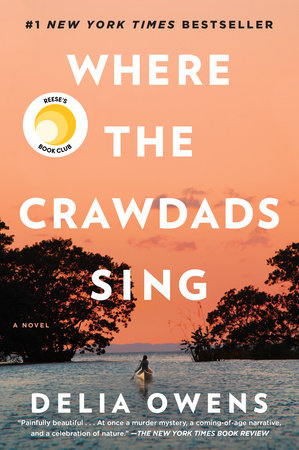
Where
the Crawdads Sing,
by Delia Owens
Where the Crawdads Sing, by Delia Owens
The prose in this book is beautiful. Delia Owens
writes about the fauna of the marshlands of the North Carolina coast from a
place of scientific expertise. This is her debut novel, but she has co-authored
three nonfiction books about nature in Africa. She worked in Africa as a
wildlife scientist but now lives in Idaho.
As an aspiring novelist, I’ve been cautioned about
using dialect in my writing. A little bit of it can help put the reader in the
location and time of the story; however, using it too much makes the reading more
difficult and slow and also pulls the reader out of the story. Where the Crawdads Sing is a perfect
example of this mistake.
I loved the descriptions of the wildlife native to the
marshes of coastal North Carolina. Ms. Owens painted such a pictures with words
that I could have visualized the marshes even if I’d never seen coastal
Carolina marshlands.
I loved the story in Where the Crawdads Sing. I was interested in the main character,
Kya, from the beginning. It was a real “page turner” due to the life Kya lived
and the strong character she was. I devoured the book in 48 hours; however, the
dialect was over the top. There was just too much Southern and African-American
dialect. The dialect repeatedly slowed me down and pulled me out of the story.
If not for the excessive dialect and the Confederate
battle flag being in the county courtroom in 1970, I would have given it six
stars out of a possible five.
Until
my next blog post
I hope you have a good book to read. I’m reading/listening
to The Glovemaker, by Ann Weisgarber;
Jacksonland, by Steve Instep; and Girls on the Line, by Aimie K. Runyan.
If you’re a writer, I have you have productive writing
time and your projects are moving right along.
Thank you for reading my blog. You could have spent the last few minutes
doing something else, but you chose to read my blog.
Let’s
continue the conversation
Have you read any of the five books I talked about
today? If so, please share your thoughts with me. Have I piqued your interest
in reading any of these books?
I’ve enjoyed participating in the #TwoForTuesday blog
prompts in February and can’t wait to see what Rae of Rae’s Reads and Reviews
has in store for us in March. Today’s prompt was “Two books that Help you sleep
at night.”
If you’ve followed by blog for a few months, you know that I suffer with insomnia. My sleep is way out of whack. I have trouble staying awake during the day and trouble going to sleep at night. My doctor has referred me to a sleep coach. Yes, it’s gotten that bad.
When challenged to write about two books that help me sleep
at night, I was hard-pressed to come up with a response. The “two” I settled on
are The Bible and just about any audio book. I know – that’s more than two
actual books and not very specific, but they’re what I came up with.
1. The Bible
The Message, by Eugene H. Peterson
This isn’t just the correct “Sunday School” or children’s sermon answer. This is my real answer. My nighttime insomnia aside, the book that allows me to give my troubles and worries to God so I’m not tossing and turning and wringing my hands is The Bible. I still do more than my share of tossing and turning, but it’s not because I despair.
I find The Message: The Bible in Contemporary Language the easiest to understand and, therefore, the most comforting. The Message is a paraphrase of The Bible and was written by Presbyterian minister Eugene H. Peterson.
2. Just about any audio book
Until recently, I swore off
listening to any books. I found it stressful. I felt like someone was talking
“at” me and wouldn’t shut up. Got on my last nerve kind of stress.
Then, I got vertigo. In fact, I had two kinds of vertigo. One has cleared up, but the other still has me in physical therapy. Using the computer and reading tend to trigger an episode. Therefore, I’ve listened to two audio books so far this month plus part of a third. Even the ones I enjoy, eventually put me to sleep.
Writing about a story’s hook, Karen Cogan
stated in the closing paragraph of her post, “How to Set the Right Tone for
Your Novel” on the Southern Writers: Suite T blog on December 19, 2018:
“The
point is that your reader should never be misled for the sake of an enticing
beginning. Certainly, you want an interesting opening. All you must do is to
think carefully about your genre for the hook that draws readers into your
novel.” For instance, a romance novel should not begin with the gory details of
a murder. (Here’s the link to that blog post:
https://southernwritersmagazine.blogspot.com/2018/12/how-to-set-right-tone-for-your-novel.html.)
If you’ve followed my blog for a few
months, you know that I’m fascinated by the opening lines of novels. Although
the “hook” can be more than just the opening line or paragraph, I can usually
tell by the first sentence if I’m starting to read a book that I’ll finish.
Sometimes I’m fooled. Most of the time, I find that the opening sentence or paragraph is an invitation to a place or time I’ve never been – like a murder scene, the life of a person making a gut-wrenching decision, the colonial days in America, or perhaps the home front or battlefields of a great war.
As an aspiring novelist, I want to
learn what makes a great hook and what doesn’t.
Today I’m highlighting the opening sentence
in She Rides Shotgun, by Jordan
Harper:
“His skin told his history in tattoos
and knife scars.” ~ first sentence in She
Rides Shotgun, by Jordan Harper
That hook describes Crazy Craig Hollington,
president of the Aryan Steel prison gang. No surprise there. Chances are, this
is not going to be a Sunday afternoon picnic kind of a story.
She Rides Shotgun, by Jordan Harper
This isn’t typical of my reading choices, but I was drawn to it when I read that it won the 2018 Edgar Award for Best First Novel. I wrote the following about the book in my June 4, 2018 blog post, “Reading in May 2018” (see https://janetswritingblog.com/2018/06/04/reading-in-may-2018.)
“After reading the opening description of a white supremacist gang in a prison in Chapter 0 (yes, Chapter 0), I wasn’t sure I could hang in there to keep reading. I continued to read, and I was soon invested in 11-year-old Polly.
“Polly is kidnapped at school by the
father she barely knows and is suddenly thrown into a life of crime. The book
takes the reader along for a rollercoaster ride as Polly quickly becomes
streetwise in order to survive.”
I think, “His skin told his history in
tattoos and knife scars” was a good indication for what was to come in She Rides Shotgun.
Since
my last blog post
I’ve been racing against the clock to try to read or listen to umpteen books before they have to return to the library or disappear from my Kindle. Too many books, too little time. Look for my blog posts on March 4 and 11, 2019 to see what I read this month.
Update
on Decluttering
In case anyone out there is interested, I’m continuing to do
battle with clutter. I’ve been inspired this year by Mliae’s blog: https://lifexperimentblog.com/2019/02/22/february-declutter-update/.
She was kind enough to list my blog in her February 22, 2019 blog post, which
prompted me to offer an update on my decluttering progress today.
Sometimes mail piles up. Opened, unopened, it doesn’t make a difference. I know the rule of thumb is to only touch a piece of paper once. Some days go well. I open the mail and immediately put it in the paper shredder, a file folder, or the recycle bin. Other days… not so much.
This month I’ve put 22 catalogs in the recycling bin. My goal is to get off as many catalog mailing lists as possible.
I’ve set aside 28 books to donate to the April 6 used book
sale at my church. Granted, those 28 books are still piled on the hearth, but
at least I know they’re getting new homes in April.
Until
my next blog post
I hope you have a good book to
read. I just finished listening to George
Washington’s Secret Six: The Spy Ring
That Saved the American Revolution, by Brian Kilmeade and Don Yaeger. I’m
trying to finish reading In the Woods,
by Tana French before it disappears from my Kindle on Thursday.
If you’re a writer, I hope you
have quality writing time and that you’re good at writing hooks.
Thank you for reading my blog.
You could have spent the last few minutes doing something else, but you chose
to read my blog.
In case you’re having a problem with “Like” button: After two days (or more) of not being able to leave a “Like” on other people’s blogs, I finally asked the kind support staff at WordPress what I was doing wrong.
Someone answered me right away on Chat and said they’re making some changes to the code that governs the “Like” button, so that service has been and will be erratic for a while.
Have you ever read a book and thought one of the characters
was a dead ringer for someone you knew?
Today’s #TwoForTuesday writing prompt “two books that remind
you of someone,” turned out to be more difficult for me than I had anticipated,
but I chose A Man Called Ove, by
Fredrik Backman and The Importance of Pot
Liquor, by Jackie Seals Torrence. One is a well-known book and the other
one not so much.
A Man Called Ove, by Fredrik Backman
A Man Called Ove, by Fredrik Backman
The main character in this book, Ove, reminds me of a
relative of mine who I will not identify for obvious reasons.
Ove is a 59-year-old man at odds with the world. From the opening scene of computer-illiterate Ove attempting to buy a computer from a much younger computer geek store assistant to the scenes in which Ove pays his respects to foreign cars, much of his personality and outlook on life resonated with me and brought to mind my relative. That’s what made much of A Man Called Ove so funny to me.
The Importance of Pot Liquor, by Jackie Seals Torrence
The Importance of Pot Liquor, by Jackie Torrence
Chances are, you’ve never heard of this book. Chances are,
you have no idea what pot liquor is unless you’re of a certain age and a native
of North Carolina or another state in the American South. I’ll start by giving
an explanation of “pot liquor.” It has nothing to do with the alcoholic kind of
liquor. It is sometimes spelled “pot likker.”
What in the world is
pot liquor?
Pot liquor is the liquid left in the pot after beans or other vegetables have been cooked and removed from the pot. I learned the term from my mother who was born more than 100 years ago on a farm and was one of 10 children. In other words, she grew up in a household where no food was wasted.
Therefore, I also grew up in a household where no food was
wasted. We would never (and still wouldn’t dream of) pouring pot liquor down
the drain. (Well, actually, I don’t drink or save broccoli pot liquor. I have
to draw the line somewhere.)
When a pot of beans or other vegetables had been eaten and only the juice remained, my mother would usually offer the “pot liquor” to me. I rarely turned it down. What my mother knew that I didn’t know is that pot liquor is nutritious. It contains the vitamins and minerals that the cooking water leached out of the vegetables. I just thought it tasted good. My favorite has always been black eyed peas.
To this day, I like pot liquor, but now I usually freeze it.
I keep a quart container in the freezer in which I add pot liquor from the
cooking of various vegetables. This combination of various pot liquors is
eventually used when I make homemade vegetable soup or have a recipe that calls
for vegetable broth.
A note about the author
The author of The Importance of Pot Liquor, Jackie Torrence, lived in Salisbury, North Carolina, not far from where her slave ancestors lived on Second Creek. Though born with a speech impediment, Ms. Torrence became a master storyteller and traveled the United States performing her stories and teaching others the craft of storytelling. She died in 2004, confined to a wheelchair due to arthritis.
Back to the book title…
With my explanation of pot liquor (which probably made some of you gag) out of the way, let’s get back to the book that reminds me of someone. I read the book in 2011, so I don’t remember the details of the book. That’s all right, because it is the title itself of Jackie Seals Torrence’s 1994 book, The Importance of Pot Liquor, which reminds me of my mother and also of an elderly family friend and distant relative, Miss Eugenia Lore.
Miss Eugenia and “The
Wah”
Miss Eugenia was quite a character and very much a product
of her generation and family history. She was born in 1888 in Concord, North
Carolina. Her father served in the Army of the Confederate States of America
during the Civil War. She showed us the canteen he carried in the War which, in
her Southern accent, she always referred to it as “The Wah.”
The portrait of Robert E. Lee that hung on her parlor wall
had been purchased by her father as part of a fundraiser to secure the money
needed to erect a statue of Lee in Richmond, Virginia. If anyone in her
presence dared to call it the “Civil War,” she was quick to correct them with
the words, “There was nothin’ civil about it!”
Unlike my mother, Miss Eugenia was raised in town. Her
mother had “help” as in The Help, by
Kathryn Stockett. One time Miss Eugenia made a disparaging remark about pot
liquor because no one of her social status would have drunk it, and my mother responded
with something like, “Oh, I love pot liquor. You don’t know what you’re
missing.” Miss Eugenia was visibly appalled. In her mind, only an
African-American household servant would “have” to drink pot liquor.
I agree with my mother. Miss Eugenia didn’t know what she
was missing!
Sometimes I get carried away and forget my blog is for you. It’s not for me. You have a limited amount of time to read, so I’m flattered that you read my blog posts.
If my blog doesn’t fill a need of yours, then reading it is a waste of your time. The pressure is on me every week to inspired you, make you laugh, give you something to think about, or at least put a smile on your face.
Although
I’ve been blogging for almost nine years, I’m still learning. If there is
something on my blog page that isn’t of benefit to my readers, I need to delete
it.
Deleted national flags widget
In an effort
to declutter my blog on February 4, I deleted the widget that showed the flags
of all the countries in which my blog readers reside. I realized that showing
those 93 flags was for my own edification, not yours. That widget was providing
information that you probably didn’t care about. I’m a geography nerd, so I
found it very interesting.
Actually, I
found it shocking and a bit frightening to know that people in that many
countries had looked at my blog at least once. The biggest surprise was when
the flag of the People’s Republic of China first appeared.
My most popular posts
In place of
the national flags widget, I added a widget that lists my 10 most popular blog
posts. This should help my new reader find some of my best posts, and it will help
me see at a glance the topics that garner the most interest.
An unexpected source
I knew my
blog was for my readers, but it wasn’t until I started reading Building a StoryBrand: Clarify Your Message So Customers Will Listen,
by Donald Miller that I was prompted to try to view my website and my blog
through the eyes of a first-time visitor.
Everywhere Building a StoryBrand says, “customer,” I mentally substitute “reader.” Sometimes it works better than others. Although Mr. Miller’s book targets business owners, it made me ask myself how my website and blog portray me as a writer. I’ll continue to make changes that help first-time visitors become loyal readers.
Mr. Miller says a person should be able to look at my blog or my website and know within five seconds what I’m about.
That book prompted me to ask myself, “What does my reader need?” and “What is my reader hoping to gain by reading my words?” Mr. Miller’s book dovetails into Mr. Alda’s book and reinforces what Mr. Alda said about communication.
The purpose of my website and blog
Mr. Miller’s
book prompted me to state the purpose of my website and blog in one sentence.
When I got to the heart of what I’m trying to accomplish, this is what I
concluded:
The purpose
of my website and blog is to show you that I write with authority and skill
and, therefore, you can trust that my writing is worthy of your time.
If it sounds
like I’m boasting, that’s not my intent. I’m setting the bar high for myself,
and will read that purpose every day when I sit down at the keyboard.
Until my next blog post
I hope you
have a good book to read. I just finished listening to The Midwife’s Confession, by Diane Chamberlain. (Audio books come
in handy when a reader has vertigo.)
If you’re a
writer, I hope you have productive writing time.
Thank you for reading my blog.
You could have spent the last few minutes doing something else, but you chose
to read my blog.
What are you hoping to find in my blog? A smile? Humor? Something to ponder? Inspiration? My take on a book I’ve read? Samples of my fiction writing? A variety of these?
My third grade teacher, Miss Ruth Jarrell, was a soft-spoken woman with beautiful handwriting. When a student asked Miss Jarrell how long she’d been teaching, she said that was her 13th year. We thought she was ancient if she’d been a teacher that long. It was only when I was in my mid-30s that I realized I was as old as Miss Jarrell had been when she taught me. Thirty-five no longer seemed old.
Another thing I remember Miss Jarrell for was her reading to us. If we behaved in the school cafeteria, she would read to us when we returned to our classroom after lunch.
White Squaw: The True Story of
Jennie Wiley, by Arville Wheeler
White Squaw: The True Story of Jennie Wiley, by Arville Wheeler
The book Miss Jarrell read to us that is still vivid in my
memory was White Squaw: The True Story of Jennie Wiley, by
Arville Wheeler. Jennie was abducted by Native Americans in 1789 in Bland
County, Virginia and taken to Kentucky. After almost a year in captivity,
Jennie escaped and was helped back to her husband in Virginia.
The word “squaw” is offensive to us today, but since the
word is part of the book’s title, I decided to write about it anyway. Any book
that one has fond memories of more than 50 years after hearing it read deserves
recognition.
Teachers never know which seeds they plant in their
students’ minds will take root and flourish. It was only when I was thinking
about today’s topic that I realized White
Squaw was my introduction to historical fiction. Miss Jarrell didn’t live
to see me pursue a career as a writer of history and historical fiction.
Follow the River: A Novel Based on the True Ordeal of Mary Ingles, by James Alexander Thom
Follow the River: A Novel Based on the True Ordeal of Mary Ingles, by James Alexander Thom
Twenty or more years ago, Janie Snell, a friend of mine who
lives in Ohio, recommended that I read Follow
the River, by James Alexander Thom. It is a novel based on the experiences
of Mary Ingles – not to be confused with Mary Ingles Wilder of Little House on
the Prairie fame.
This Mary Ingles lived in the Blue Ridge Mountains of
Virginia. She was kidnapped by Shawnee Native Americans in 1755. After being
held captive for months, she escaped her captors and by herself followed the
Ohio, Kanawha, and New Rivers back to her home.
It is merely coincidental that White Squaw and Follow the
River are about white women who were abducted by Native Americans in the
1700s. They are the two books that instilled in me a love of books – a love of
reading.
If allowed to name
four books
If today’s blog topic prompt had been “Four Books That
Helped Me Fall in Love with Reading,” the other two I would have written about
would have been Roots, by Alex Haley
and Centennial, by James A. Michener.
Three of the four books I’ve mentioned today were read when
I was an adult. It was as an adult that I started reading fiction. As a young
adult, I was a snob – a nonfiction snob. I thought reading fiction was a waste
of time. When I had time to read for pleasure, I wanted to read something true,
something real.
I have to laugh at my old self. I still enjoy an occasional
history or political science book, but now I prefer fiction. My sister thinks
it’s hilarious that I’m now trying to write fiction after all those years of
turning my nose up at fiction and the people who read it.
Since my last blog
post
I’m relieved that the glitch I was dealing with when I prepared yesterday’s blog post has been resolved, so I was able to include images in today’s post.
Let’s continue the
conversation
Which two books helped you fall in love with reading?