I write southern historical fiction, local history, and I've written a devotional book. The two novels I'm writing are set in Virginia and the Carolinas in the 1760s. My weekly blog started out to follow my journey as a writer and a reader, but in 2025 it has been greatly expanded to include current events and politics in the United States as I see our democracy under attack from within. The political science major in me cannot sit idly by and remain silent.
The year 2024 has been a difficult one for many people. It has been stressful for most of us, but I’m better off than a lot of people. Here’s a brief review of 2024 from my viewpoint in North Carolina.
Travel: My sister and I took advantage of the Covid-19 pandemic being over and vaccines continuing to be available – along with relatively good health – and we took trips to Great Smoky Mountains National Park and Cherokee in the western part of NC as well as a long-anticipated return trip to the Outer Banks of NC in the early part of the summer.
Welcome Sign at Great Smoky Mountains National Park
Black Bear, perhaps two years old, photographed in Great Smoky Mountains National Park
Elk, photographed in Great Smoky Mountains National Park
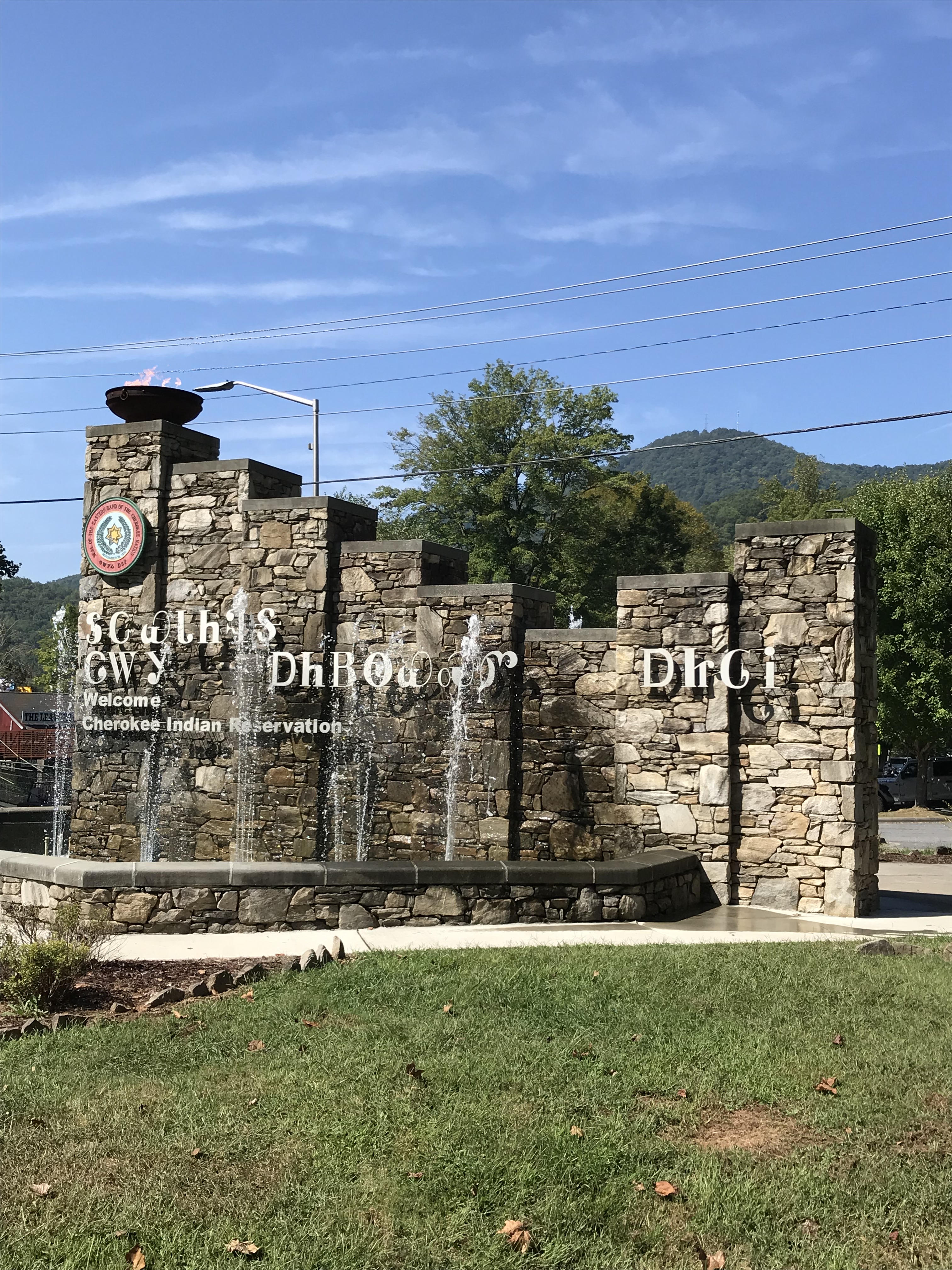
Welcome sign at Cherokee, NC
Welcome sign at Cape Hatteras National Seashore
We visited Boone and the campus of our alma mater, Appalachian State University, just two weeks before much of western NC was ravaged by Hurricane Helene. We continue to count our blessings that we did our traveling in the months and weeks before the hurricane.
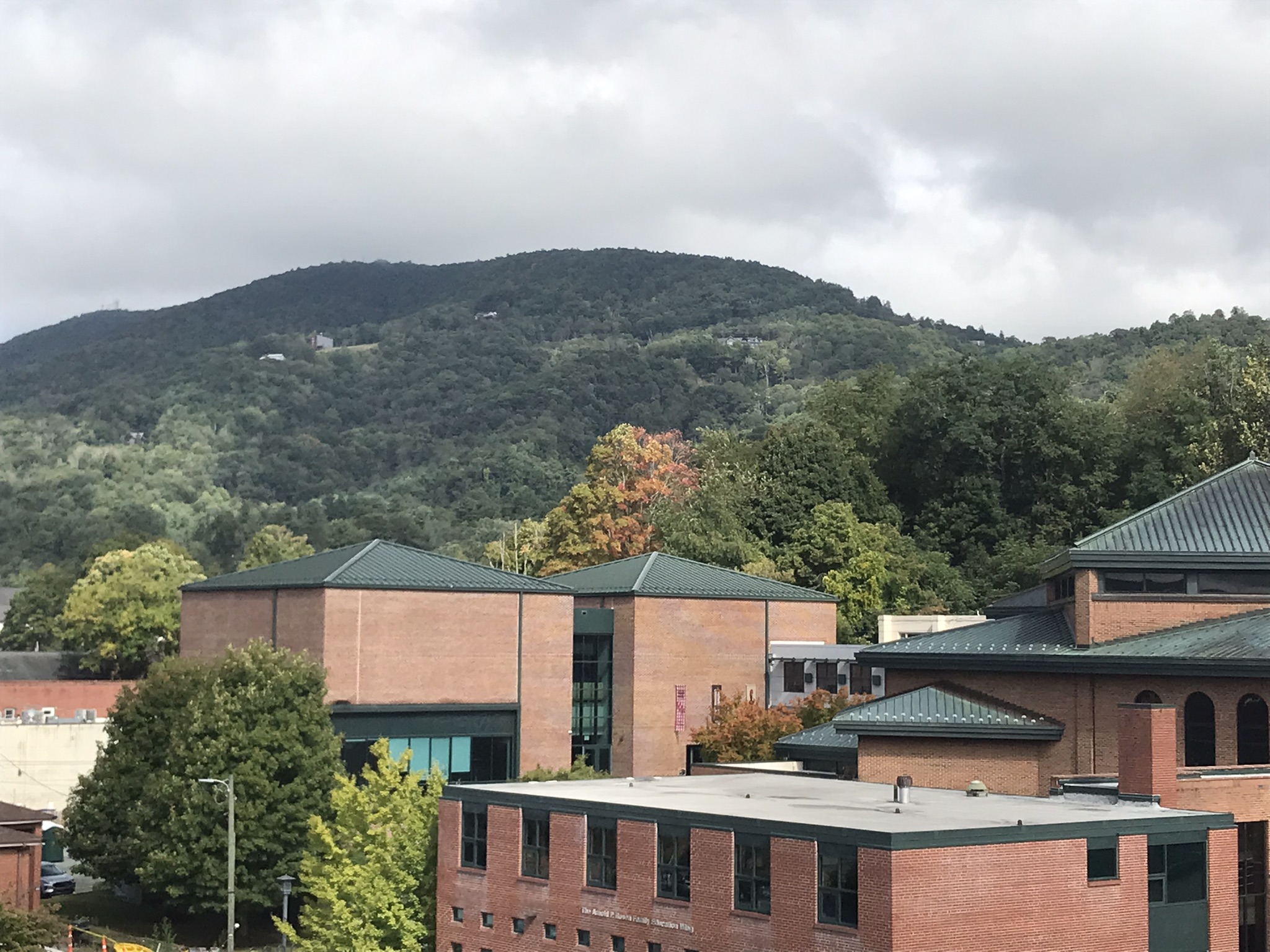
A view of Rich Mountain from the Appalachian State University campus
Hurricane Helene: September brought a “perfect storm” of days of heavy rain followed by Hurricane Helene to western North Carolina. It is the most destructive storm to hit the state in recorded history. The statistics and photographs are impossible to get one’s head around.
Of the 1,329 roads that were closed due to the flooding and landslides on September 25-26, 183 of them remain closed as of Friday, including Interstate 40 near the border with Tennessee.
I saw a video made on Wednesday of several miles of US-19 in Ramseytown, NC. You can’t even tell there was ever a road there, and it is unimaginable that the little Cane River running alongside it is capable of rising so high and doing so much damage.
Last week, 10,000 tulip bulbs were delivered to Swannanoa, NC – a gift from the head of a bulb company in The Netherlands. Next April, Swannanoa will look quite different than it has since September 25th!
A hint of what to expect in Swannanoa next spring!
Photo by Krystina Rogers on Unsplash
People from all over the US and world have pulled together to help western NC begin to recover from the September storm. I’ve tried to highlight examples in my weekly blog posts. I’m not equipped to show the full picture. I’ve merely tried to keep a light shining on the situation as it disappears from the news headlines.
US Presidential Election: We survived a US Presidential campaign that seemed to last for a decade. Now we’ll get to see if our democracy and our country’s long-standing ties with other countries will survive the results.
Award for my local history books: I received The North Carolina Society of Historians Journalism Award of Excellence for Harrisburg, Did You Know? Cabarrus History, Book 1 and Harrisburg, Did You Know? Cabarrus History, Book 2 in November.
My Writing: I’ve made a lot of progress over the last couple of months on my devotional book, I Need The Light: 26 Weekly Devotionals to Help You Through the Cold Months. Work continues on my historical novel with the working title The Heirloom. Stay tuned!
If you haven’t subscribed to my e-newsletter yet, please click on the “Subscribe” button on my website: https://www.janetmorrisonbooks.com. You’ll receive a free downloadable copy of my historical short story, “Slip Sliding Away” and my e-newsletters.
In November I changed my newsletter from a several-page every-other-month format to a short weekly email.
Social Media: Technology is still pulling me into the 21st century, but I’m kicking and screaming. My new endeavor this year was Instagram. I try to share quotes I like (many of them from books I’ve read), information about my website and blog, as well as publicity for my books. I’m trying not to not come across too salesy.
Until my next blog post
I hope you have a good book to read.
I hope you’ve had an enjoyable holiday season so far.
Remember the people of Ukraine and western North Carolina where it is mighty cold for the next several months.
With seven weeks remaining in the 2024 Atlantic hurricane season, today I’m writing about a hurricane in 1837.
An update about the status of Hurricane Helene cleanup in western North Carolina is also included in today’s post, since I live in that state.
The October 8, 1837 Hurricane in North Carolina
While planning my trip to the Outer Banks of North Carolina last May, I read about some of the shipwrecks that justify the Outer Banks’ moniker, The Graveyard of the Atlantic. In the process, I learned about one of the great hurricanes of the 19th century.
One of the ships that met a watery grave off the Outer Banks was a side-wheeled steam packet named Home.
The ship, on her third voyage from New York City to Charleston, South Carolina, was fast but no match for a hurricane. In fact, it was designed for river sailing and never should have been in the Atlantic Ocean – much less in the vicinity of where the warm waters of the Gulf Stream and the cold waters of the Labrador Stream collide off the Outer Banks.
She would have been an elegant river vessel but was sorely lacking in design features needed for sailing the Atlantic.
Hurricanes were not usually named in 1837 like they are today, but the one that took out the Home was called “Racer’s Storm.” It became known as “Racer’s Storm” because it damaged the HMS Racer in the Caribbean.
“Racer’s Storm” or “Racer’s Hurricane” formed in the Caribbean Sea around September 25, 1837, striking Jamaica and Cuba before entering the Gulf of Mexico. It dumped torrential rain along the northeastern coast of Mexico. Next, the coast of the then Republic of Texas was left in shambles. Buildings all along the Gulf of Mexico coast were ravaged. It traveled across southern Georgia and emerged on that state’s Atlantic coast.
I have read that heavy rains and winds destroyed sugar and cotton crops throughout the southeastern states and high winds were reported as far inland as eastern Tennessee.
Reports indicate that there were three lifeboats and only two life preservers onboard the Home. It sprang a leak on the night of October 8. By morning, virtually all passengers were ordered to help the crew bail water. Captain Carleton White tried in vain to get the vessel to slightly more safety on the Sound side of the barrier island, but the 220-foot ship was overwhelmed and torn to pieces.
Ninety people perished in the shipwreck and 30 survived. Among the survivors was Captain White.
Captain White was one of eight or ten people who clung to the vessel’s forecastle and made it safely to shore on that piece of the packet.
“Racer’s Storm” lasted so long (at least 15 days) and wreaked havoc over such a wide area that it became the benchmark for hurricanes in the 1800s.
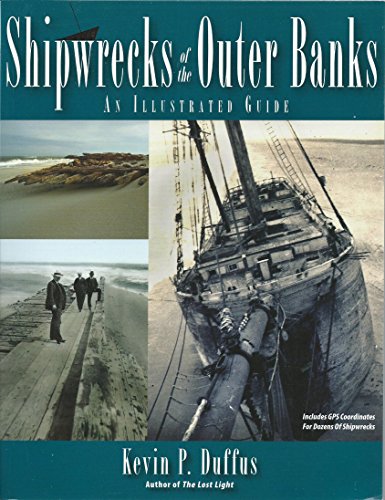
According to Shipwrecks of the Outer Banks: An Illustrated Guide, by Kevin P. Duffus, “As a result of the Home disaster, Congress passed legislation which required an equal number of life preservers for each person on board a U.S. flag vessel.”
Shipwrecks of the Outer Banks: An Illustrated Guide, by Kevin P. Duffus
Hurricane Helene Cleanup Update on Western North Carolina
Ways to Support Children and An Independent Bookstore in Brevard, NC as it tries to help children affected by the hurricane: Highland Books in Brevard, North Carolina has reopened. This independent bookstore depends on the fall tourist season and holiday shopping, but this year there will be no autumn tourists due to all the flooding and damage caused by Hurricane Helene in Transylvania County. (No, I’m not making that up. That’s the name of the county.)
Leslie Logemann, the owner hopes to have enough business not to have to let any of her staff go. Highland Books was kind enough to sell my vintage postcard book, The Blue Ridge Mountains of North Carolina when it was published in 2015, so there’s a special place in my heart for the shop. I follow Highland Books on Instagram and saw this the other day:
“HALLOWEEN BOOK DRIVE If you are able, we hope you’ll consider helping us make Halloween a little brighter for a local child who has been impacted by Hurricane Helene.
Visit our website (or stop by the store), choose any Halloween (or other) book to donate, and we’ll give you 20% OFF. Use code HALLOWEEN & mention it’s for donation.
THANK YOU for considering! Offer valid through 10/25/24.”
If this particular event pulls at your heartstrings, here’s the website through which you can place an online order: https://www.highlandbooksonline.com/.
Also, through October 31, any order of $25 or more ships FREE, in case you want to do some early Christmas shopping or just want to support an independent bookstore in western North Carolina!
Additional Updates on the ground…
Current weather conditions: Wind Advisory issued from 2:00 this morning until noon today for Avery, Buncombe, Burke Mountains, McDowell Mountains, Mitchell, Rutherford Mountains, and Yancey counties.
Although some politicians and “news” organizations have reported to the contrary… as of last Wednesday, October 8, FEMA had spent $60 million in NC resulting from Hurricane Helene. FEMA had helped 126,000 people in the state and provided temporary housing for 2,500 people. FEMA, the NC National Guard, and the 82nd Airborne Division of the US Army are still on the ground and in the air aiding western North Carolina.
Electricity: With the help of 21,000 storm restoration personnel from across the US and Canada, as of Friday, Duke Energy had restored power to more than 2.6 million homes and businesses in NC and SC. However, much infrastructure restoration work remains to be done in the mountains. You can visit at https://www.duke-energy.com/info/carolinas-restoration for updates. With temperatures dipping below freezing this week, the situation is becoming more dire.
Water system in Asheville: As of 1 a.m. last Thursday, the North Fork’s 36-inch bypass line to the water distribution system was connected. Full service restoration is still weeks away. The EPA and engineering firms are helping Water Resources work toward clearing up the highly murky water in North Fork’s reservoir, according to the Asheville Fire Department Facebook page.
A mobile post office has been set up in Marshall, NC because the post office there was destroyed by the flood.
Mountain Mule Packer Ranch: The mules and their handlers returned home in the piedmont of NC for the weekend for some much-needed rest, but they will return to the mountains to continue their volunteer service of taking supplies into areas still inaccessible by motor vehicle.
Public School Systems: I checked on 10 school systems in western NC yesterday. Two reopened on October 8, several are reopening sometime this week; however, the systems in a few counties are still in dire straits. Just to give you an idea about the recovery situation 19 days after Hurricane Helene hit western NC…
All students have been accounted for in Avery County. Once water and electricity have been completely restored, authorities will announce reopening. With so many roads and bridges washed away, school bus service will be a challenge for a long time.
Ashe County Schools remain closed at least through this week. Updates will be made as possible. Bus routes are being planned in coordination with the NC Department of Transportation.
Although 44 of the 45 schools in Buncombe County now have power, on 13 schools have water.
Schools in Watauga County are still closed this week. Weekly updates will be issued as progress is made.
Colleges and universities:
Appalachian State University in Boone: The campus reopened for students to return as of 5:00 p.m. on Friday. Classes will resume in all but Rankin Hall on October 16.
Asheville-Buncombe Technical Community College: Closed until at least October 28.
Blue Ridge Community College: Reopening today.
Lees-McRae College: Classes will be conducted online through November 4.
Mars Hill University: Classes resume today.
Montreat College: Online classes begin today. Return to campus tentatively set for October 21.
The University of North Carolina at Asheville – Instruction and coursework will resume online on October 28 and will remain online for the remainder of fall semester.
Warren Wilson College: “Class will resume October 21 online. Our plan is to be in-person starting on October 28, if water service is restored. The City of Asheville Water Resources has announced that progress is being made. Therefore, we are optimistic but cautious.”
The Orchard at Altapass: “Due to ongoing road conditions, lack of water, and power in many areas, and the fact that Helene was hungry for all of our apples, we will remain closed to the public for the remainder of the season.”
IV Bag Manufacturer: Baxter International makes 60% of the IV bags used in the United States at its plant in Marion, NC. Hospitals are beginning to ration IV bags because that manufacturing plant is still closed due to damage from Hurricane Helene.
Fundraising Concert
North Carolina natives Eric Church and Luke Coombs announced an October 26 “Concert for Carolina” at Bank of America Stadium in Charlotte to raise funds for various organizations in western NC, including Manna Food Bank in Asheville. I mentioned it in my blog last Monday, What I Read Last Month & a Hurricane Helene Update. With headliners including James Taylor, Keith Urban, and Sheryl Crow, the concert is, of course, sold out, but check the website (https://www.concertforcarolina.com/) for future announcements about an auction and a raffle.
Until my next blog post
I hope you have a good book to read, a roof over your head, clean water to drink, and electricity.
I’m a planner. A list maker extraordinaire. The trouble is, I tend to think I can do more in a day than I actually can accomplish. Every. Single. Day.
Several inexpensive and two free online writing courses came along at the same time, and I took the bait.
As if that weren’t enough… along came Hurricane Helene.
I had a full schedule of webinars to participate in and other writing-related things I wanted/needed to do.
The rain poured on Thursday, and that was from a whole different weather system. They said it had nothing to do with Helene… that Helene’s winds and rain bands would arrive overnight and last most of the day Friday.
I got up early Friday morning to listen to the news and weather reports. It was still raining, but I thought we were probably going to be all right. Just as I started to put a pot of water on the cooktop to boil for a nice oatmeal and blueberry breakfast… the power went off.
I forget how addicted I am to writing at the computer… until the power goes off.
I’m trying to take the high road and not whine about the power being off for 14 hours. I live out in the country and have a well so when the electricity is off I don’t have any water. Things get interesting fairly quickly. However, this was a minor inconvenience compared to the widespread flooding and devastation that has and continues to occur in western North Carolina.
I live about 500 miles from where Hurricane Helene made landfall on the Gulf coast of Florida. It was hard to grasp that Helene would still be packing such a punch when she got to North Carolina, even though meteorologists warned that this could be a rain event of historic proportions in the mountains of the state.
Hurricane Helene and her remnants caused devastation in biblical proportions over hundreds and hundreds of miles. What I experienced here in the piedmont doesn’t hold a candle to what happened in the Appalachian Mountains 100 miles to the west.
Asheville, North Carolina is getting the bulk of the media coverage, so you might not be aware that the entirety of western North Carolina is in a world of hurt right now. Some areas received over 25 inches of rain from Helene.
Chunks of I-40 were washed away by flood waters while other sections are under mudslides. Virtually every highway and country road in the mountains were or still are impassable. (That total was 400 on Friday and Saturday, but dropped to 280 yesterday.) Town after town after town in addition to Asheville experienced record-breaking flooding. Not to mention all the nooks and crannies that aren’t towns but tiny communities. Many areas have not been accessed yet as I write this.
Roads are gone. Communications are down or spotty at best. The situation is dire and becomes more dangerous by the day.
Two weeks ago I blogged about my visit to my alma mater, Appalachian State University, in Boone, North Carolina (Who says you can’t go home again? Revisiting a university campus). Seeing aerial pictures of the Town of Boone under water has been gut wrenching the past days. The 21,000 students must be shell-shocked! I would have been if this had happened while I was a student there.
If you have subscribed to my monthly e-newsletter, earlier in September you read about my “field trip” to Swannanoa, North Carolina. I gave some of the history of the construction of the Western North Carolina Railroad through Swannanoa Gap in the 1870s. Sadly, the sketchy reports coming out of the Swannanoa/Black Mountain/Montreat/Old Fort area a few miles east of Asheville indicate that those particular towns are suffering severely from the flooding and landslides caused by Hurricane Helene.
The quaint small town of Chimney Rock was practically wiped off the map. Isolated communities and small towns are scattered throughout western North Carolina. The death toll is rising as search and rescue operations continue. Even the interstate highways are steep and winding.
Almost every one of the mountain towns I can think of was flooded on Friday. Cell, landline service, and electricity were knocked out. I’ve seen pictures of almost every town I can think of being under water.
Although served by two interstate and several US highways, on Friday and Saturday the city of Asheville (population 95,000) was only accessible by air.
I’m afraid the news cycle will transition to the fighting in the Middle East and back to the coming US elections. The public will soon forget Hurricane Helene. Or, there will be another natural disaster that needs our attention.
The devastation from Hurricane Helene covers hundreds of square miles in western North Carolina.
As the area slowly recovers over the coming months and years — when you know you won’t be in the way of first responders and second and third responders — visit the area and patronize the small businesses. Eat at the diners instead of the chain restaurants. Shop at the little shops and independent bookstores instead of at the big-box stores.
Western North Carolina’s economy depends on tourism. Autumn is the biggest tourist season as the native hardwood forests put on a colorful show. Tourists will not be visiting the area this fall because so many of the roads are in shambles.
Western North Carolina is famous for its apples. This is the beginning of apple season. Many orchards were severely damaged last week, but if you have the opportunity to purchase apples from North Carolina this fall or any time in the future, do so to help the farmers get back on their feet.
Western North Carolina is also famous for its Christmas trees. Many of the fir and spruce trees that have graced the White House through the years were grown in North Carolina. If you can buy a tree from North Carolina in December, do so.
Western North Carolina is known for its artisans. Quilt makers, glass blowers, textile artists, weavers, woodcrafts people, painters, musicians, potters, makers of corn husk dolls, knitters, and crocheters depend on tourists to purchase their wares. But now many of their retail outlets are gone. Seek them out online on marketplaces such as Etsy.com.
Mountaineers are sturdy, intelligent, talented, resilient, resourceful people. They roll with the punches during winter blizzards and hard times, and many of them are about as self-sufficient as a person can be in the 21st century. But when they experience a 1,000-year flood followed by the remnants of a hurricane all in the span of three days that affects every community in the region, they need a hand up. They don’t want our pity. They need our support.
If you are so moved and are able, do what you can to help the hurting people of southern Appalachia. Donate what you can to a reputable charitable organization of your choice.
Since my last blog post
I got to visit a veteran of World War II and the Korean War last week who celebrated his 100th birthday this weekend. How many people get to do that?
Until my next blog post
I’m writing this on September 29 and scheduling it for September 30. A fiber optics cable is being moved a couple of miles up the road and my internet service is going to be interrupted any minute now for an undetermined length of time. Not that Windstream gave us any warning. If not for word-of-mouth, we would have been blindsided. On second thought, I think I’ll just go ahead and hit the “publish” button and not rely on the “schedule” button! So much for my best laid plans for tomorrow!
Until my next blog post
I hope you have a good book to read.
Don’t take your family or friends for granted.
Remember the people of Ukraine and the people of western North Carolina.
When I was a freshman at Appalachian State University in 1971, there were 7,800 students. Before I graduated four years later, the university chancellor had announced that enrollment would be permanently capped at 10,000.
Fast forward to the 2024-2025 academic year, and Appalachian has more than 21,000 students. I visited the campus last week, and I can testify to that!
View of Rich Mountain from Appalachian State University Campus
The campus is in a valley at the foot of beautiful Rich Mountain and Howard’s Knob. It’s where Daniel Boone camped sometimes and the mountain is supposedly named for one of his friends with the surname Rich.
A view of Belk Library and Information Commons
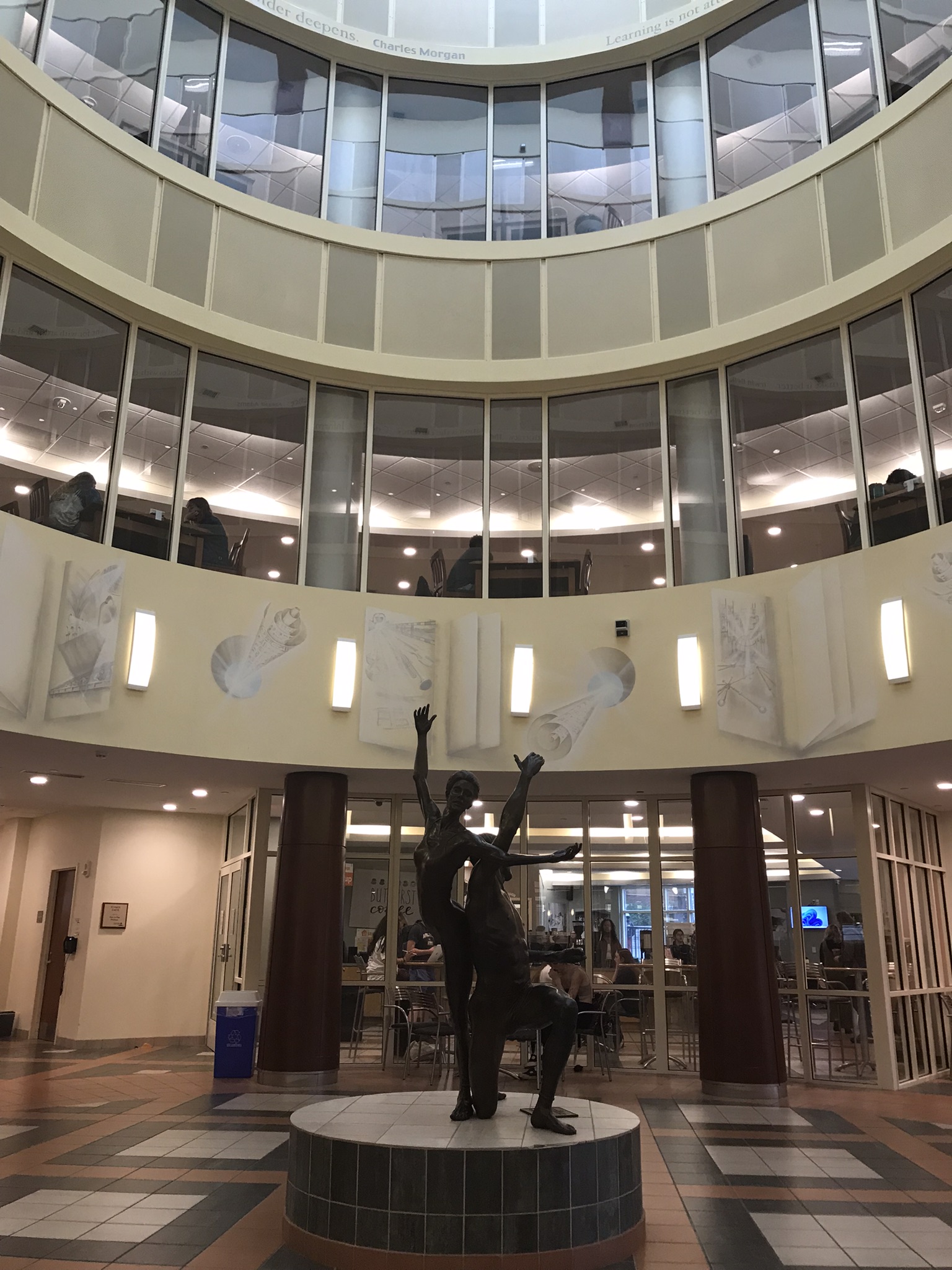
My sister and I were treated to a tour of Belk Library and Information Commons during our visit last week. Marie, being a Library Science major alum of ASU, she was particularly interested to see the great leaps in technology the library offers since her student days there in the mid-1960s.
Lobby at main entrance to Belk Library and Information Center
3-D printers in the library’s Makerspace
One of the statues outside the library
Statue outside library. The little boy is reading Jack Tales.
The library where I spent many hours reading materials that various professors would put on reserve there for on-site-only reading has been converted to classrooms.
Anne Belk Hall (formerly, Belk Library in the 1970s
The building where I majored in Political Science in the 1970s has been replaced by one of many parking decks on campus. Parking decks weren’t needed when my sister and I were students. Very few students could afford to have a car. We walked everywhere we went and thought nothing of it, since none of our friends had a car.
All four of the dormitories I lived in while a student are still there – even East Residence Hall, which I suppose is now the oldest dormitory on campus.
Whereas almost all students back in the day lived in dormitories, most of them now live in apartments. The town of Boone is covered in apartments and restaurants, and much of the old charm of the college town is gone. In the 1960s and 1970s, all the students were on a meal plan and ate in the cafeteria. There was no money for eating out except for the occasional going in together in the dorm on a Saturday night and ordering a pizza.
When someone in the dorm had a birthday, their friends would chip in and buy a square Pepperidge Farms cake at the Winn-Dixie just off campus.
The downtown Boone business district hasn’t changed as much as the campus and the rest of the town in 50 years. Mast General Store still beckons shoppers and The Appalachian movie theater has been refurbished and still offers students and the public the latest in movies as well as other cultural programs. I doubt admission is still 50 cents, though.
My favorite memory of The Appalachian Theater was going to see “Dr. Zhivago” there for 50 cents and having to sit on the front row. Talk about feeling like you are in the middle of the action! (And in the middle of a blizzard in Russia!)
The student infirmary where I worked the night shift on Fridays and Saturdays my last three months on campus was in the former hospital. The nurse I worked with was very compassionate. We were rarely very busy. If we had no patients coming in by around 2:00 or 3:00 a.m., she would let me take a nap. It wasn’t easy to sleep, though, because the pipes carrying the heat from the campus heat plant to the radiators were constantly banging above my head.
When my shift ended 7:00 a.m. I would trudge through the snow to my dorm where I would immediately fall into bed. Minimum wage was around $2.00 an hour then, but that $32 I made on those 10 to 12 weekends was a Godsend and helped me start socking away money to pay for graduate school.
The Daniel Boone Inn still draws crowds of repeat diners for family-style old-time country and mountain cooking. I couldn’t afford to eat there as a student, but my friends took me out for dinner there on my last Saturday on campus at the end of winter quarter in 1975. We enjoyed a huge meal of fried chicken, mashed potatoes and gravy, country ham, green beans, corn, slaw, stewed apples, and cornbread as we watched snow falling outside.
I wrapped up all the leftover fried chicken on the serving platter and took it to the student infirmary when I went there to work at 11:00 that night. It was, of course, my last night to work there. The nurse I worked with and I would drool over the Kentucky Fried Chicken commercials on our little black-and-white TV every weekend night, so I thought it was apropos for me to take fried chicken for the two of us to munch on that night. The joke was on both of us, as she showed up that night with a bucket of Kentucky Fried Chicken! We ate chicken until we were about to explode! What memories!
I didn’t get to eat at the Daniel Boone Inn last week. At this point in my life, I just don’t need to pig-out on so much food. But I have the memories of that night in 1975 with my friends, the nurse at the infirmary, and all that fried chicken!
Until my next blog post
I hope you have a good book to read. I’ve read some good ones already this month!
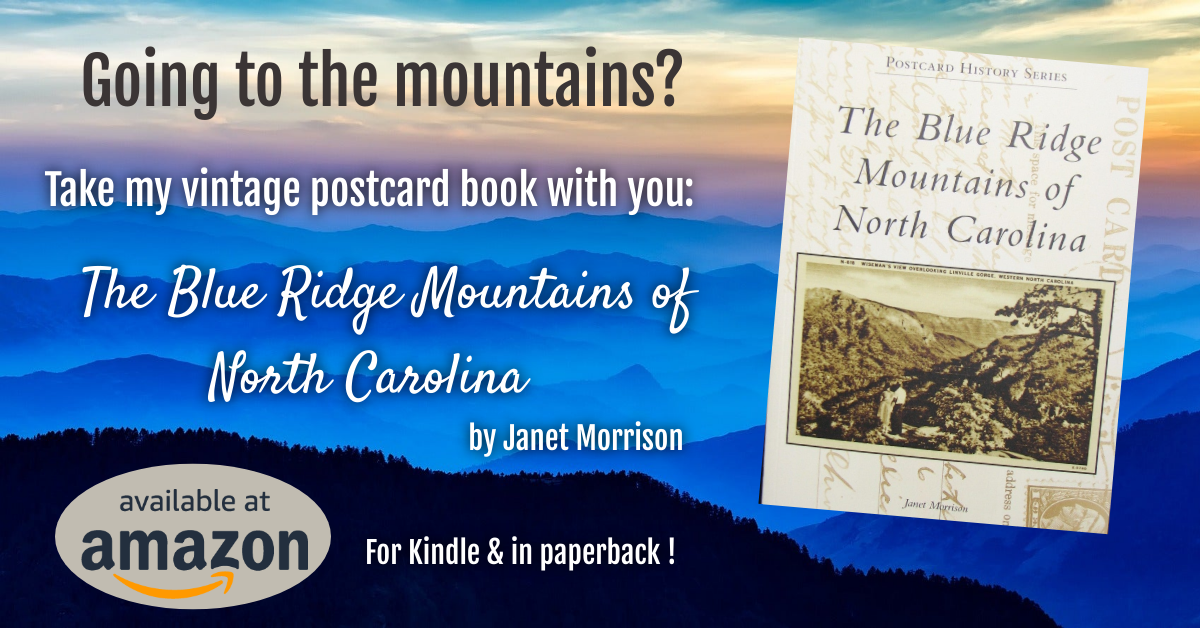
If you haven’t already purchased a copy, I invite you to buy The Blue Ridge Mountains of North Carolina, the vintage postcard book I wrote for Arcadia Publishing. If you’ve spent time in the Appalachian mountains, no doubt these postcards will trigger some memories for you. The book is available as an e-book and in paperback from Amazon.
Make time for friends and family, and make sure they all have a copy of my book!










 Janet's Writing Blog