Too Busy Playing Golf and Banning Books

I look back fondly on “the good old days” when I wrote a weekly blog. I hoped to limit myself to just two posts this week, but things quickly got out of hand.

In case you’ve missed a post, this week I’ve blogged about the three books I read last month, and Harriet Tubman and slavery being temporarily scrubbed from the “Underground Railroad” webpage of the National Park Service. Some 130,000 government webpages have gone dark since January 20, 2025. Sort of a digital book burning, don’t you think?

Tomorrow’s blog post will be about a variety of things going on in the Trump Administration along with an update on the status of Mr. Abrego Garcia. On Friday I plan an open letter to Trump supporters.

Last week, the No Dollars for Dictators Act before the US Senate got almost no attention. That and the hypocrisy of the Party of Family Values (i.e., Republican Party) in the US House of Representatives begged for a blog post. Those are the two items I started with for today’s post, but it grew in direct proportion to the news coming out of Washington. In fact, I’ve split it between today and tomorrow.

Today’s post underwent a lot of additions and editing. I hope I caught all my typos and grammatical errors.


What’s going on?

We’ve all been distracted by wildfires, tornadoes, floods, volcano eruptions, earthquakes, tariffs, massive federal employee firings, and massive layoffs in the automobile and related industries. It’s impossible to catch all the news, so in my blog today and tomorrow I will mention a few that I have heard or read about.

The massive tariffs on 185 countries took effect at 12:01 a.m. Thursday, April 3 and by Friday afternoon, April 4 the President was on his way to a four-day golf weekend in Florida where he miraculously won his own tournament. (You know how you have to let a toddler win a game so they won’t cry? Just sayin’.)

His golf game prevented his being able to go to Dover Air Force Base in Delaware on Friday to accept the bodies of the four US soldiers from Camp Stewart, Georgia, who died in Lithuania. We all have our priorities. Thank you, Lithuania, for the respectful ceremony you had to send the soldiers’ bodies home. That’s the way dead soldiers should be honored.

On March 26, Trump called himself “the fertilization president” (which was beyond creepy!) but on April 2 he cut all the funding for the Department of Health and Human Resources office that monitors the success rates at the in vitro fertilization (IVF) clinics across the nation. Patients considering IVF used to find such information helpful in selecting a clinic… back in the day… you know, back in March, 2025.

We’re left to wonder if Trump (a) was just saying what his audience wanted to hear on March 26, or (b) he still doesn’t know what IVF is, or (c) he already knew the office was going to be shut down a week later, or (d) he didn’t and still doesn’t care. Based on his track record, my hunch is that all those scenarios are true.

The US eventually sent three people to Myanmar to help with earthquake recovery. They worked for a company under contract with the government. They’ve already been fired and the contract cancelled.
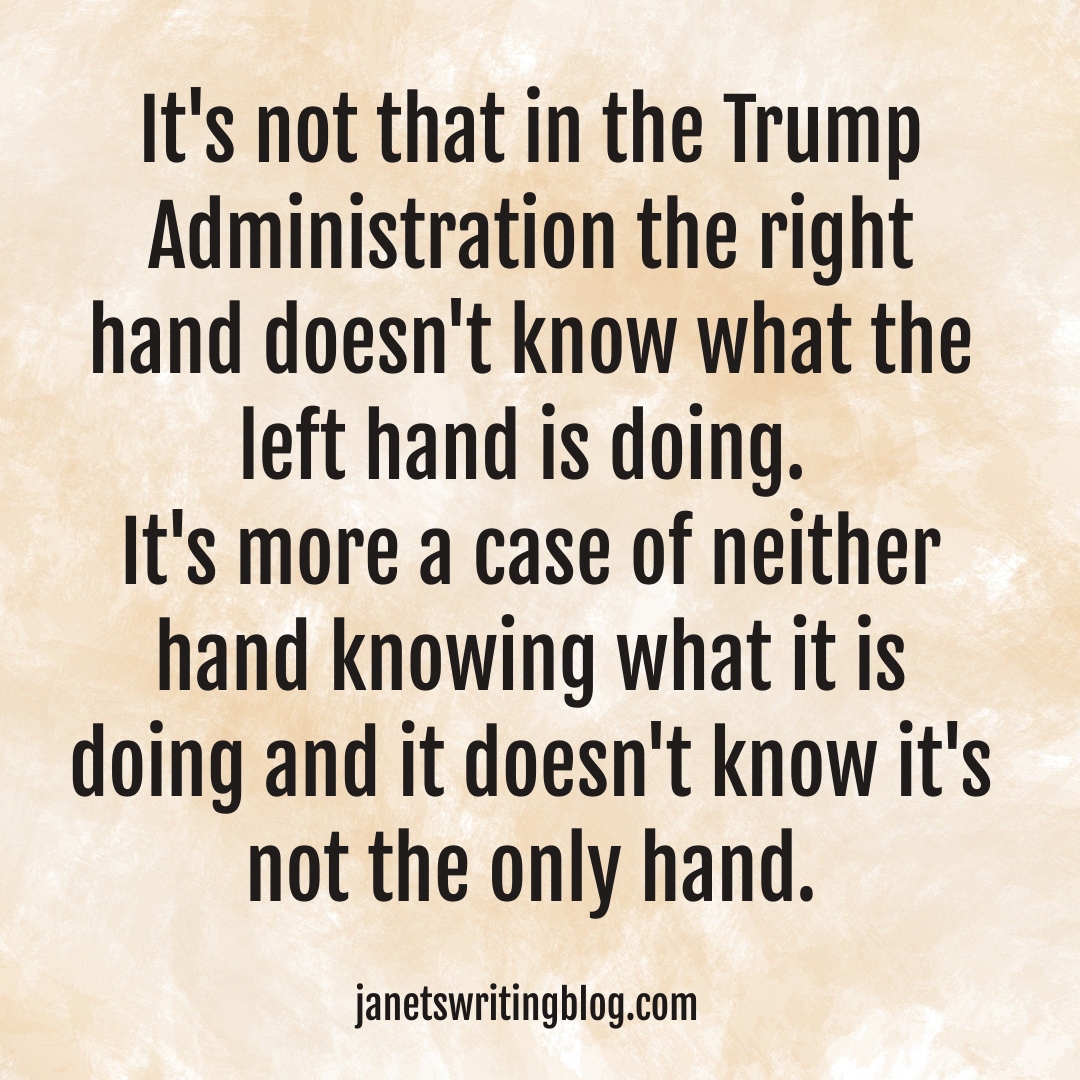
And the little bit of food aid the US State Department originally said they would keep giving after USAID was trashed? They’ve already pulled the plug on that.

On Air Force on this past Sunday, Trump was asked about sending US-born prisoners to prisons in other countries. He told reporters that he is open to the idea. In fact, he said, “I love that.” He also said that the tariffs were “going very well.” It makes you wonder where he gets his information. Perhaps from all the “yes men” who surrounded him.

The Harriet Tubman/Underground Railroad webpage I wrote about yesterday has been restored, but most of the 130,000 government web pages that have gone dark under the Trump Administration have not been restored, and there’s no reason to think they will be. This amounts to a digital book burning.

The Defense Department removed the Holocaust remembrance pages from its website in the name of “Diversity, Equity, and Inclusion.” History is being erased before our very eyes, folks.

Maya Angelou’s autobiography, I Know Why the Caged Bird Sings and books about the Holocaust, histories of feminism, civil rights, and racism were among 381 titles removed from the Nimitz Library at the  U.S. Naval Academy last week.

A few of the other books on the list:

  • Tears We Cannot Stop: A Sermon to White America, by Eric Michael Dyson
  • The Difference: How the Power of Diversity Creates Better Groups, Firms, Schools, and Societies, by Scott E. Page
  • No Common Ground: Confederate Monuments and the Ongoing for Social Justice, by Karen L. Cox
  • Colorization: One Hundred Years of Black Films in a White World, by Wil Havgood
  • How to Be an Antiracist, by Ibram X. Kendi

I read No Common Ground: Confederate Monuments and the Ongoing for Social Justice, by Karen L. Cox in July 2021 an wrote about it in my August 2, 2021, blog post, 2 Books about Racial Injustice. I was literally reading the book as a statue of Robert E. Lee sitting on his horse, Traveler, was being taken down in Richmond, Virginia, so it was a hot topic.

In No Common Ground, Dr.Karen L. Cox writes about the history of the Confederate statues, and I came to understand that they weren’t erected to honor the Confederate soldiers and officers as much as they were built out of a place of hate. Please take time to read my takeaways from reading the book four years ago.

The author, Karen L. Cox, is a professor emerita of history at the University of North Carolina at Charlotte where she taught from 2002 until 2024. She is currently writing a book about the Great Migration, the Black press, and early Chicago jazz through the tragic Rhythm Club fire, which took the lives of more than 200 African Americans in Natchez, Mississippi in 1940. It will probably be banned by the Trump Administration, too.

I listened to How to Be an Antiracist, by Ibram X. Kendi in June 2020 and wrote about in in my July 20, 2020 blog post, Three Books Read in June 2020. I invite you to read that blog post. I started my comments saying, “There are many eye-opening things to take from Ibram X. Kendi’s book, How to Be An Antiracist, but the most important lesson I learned from reading it is the difference being “not racist” and “antiracist.” I’ve been guilty of saying, “I’m not a racist.” It’s possible I’ve even said, although I hope I haven’t, “I’m not a racist, but….” “But” says, “Oh yes you are!”

In the words of Mr. Kendi in his book, “What’s the problem with being ‘not racist?’ It is a claim that signifies neutrality…. The opposite of racist isn’t not racist it is antiracist.”

I’ve read I Know Why the Caged Bird Sings, by Maya Angelou, and I thought I’d read Tears We Cannot Stop: A Sermon to White America, by Eric Michael Dyson. I haven’t found Mr. Dyson’s book on my list of books read or in my old blog posts, so maybe I meant to read it but never got around to it.

The US Naval Academy is essentially the midshipmen’s university, so what university would ban books? The Trump Administration has a basic lack of understanding of the purpose of higher education. Midshipmen should have easy access to any book they want to read! After all, they are 18 to 22 years old and can make their own decisions about many things, including which books to read.

I cannot understand why anyone thinks books should be banned from the Nimitz Library.


To my Republican friends and relatives who voted for Trump, “Is this what you thought you were voting for?”

I sincerely hope this level of cruelty isn’t what you wanted. If it is, I had no idea how miserable your life was.


The No Dollars for Dictators Act

As the stock market continued to be in free fall due to the tariff announcement, the US Senate had important business to tend to: “The No Dollars for Dictators Act.” It was introduced by Senator John Kennedy (R-LA) and co-sponsored by Senators Rick Scott (R-FL), Marsha Blackburn (R-TN), Jim Justice (R-WV), John Barrasso (R-WY), and Chuck Grassley (R-IA).

Senator Scott was quoted as saying, “The No Dollars for Dictators Act will protect U.S. tax dollars from fueling the evils of dictators or terrorists who seek to destroy our way of life.” It wasn’t voted on.

Supposedly aimed at China, Iran, Venezuela, Russia, and Syria, it begs the question, “Why isn’t Donald Trump’s name on that list?” He’s doing more to “destroy our way of life” than any of the countries on the list.

Just wondering….


A Proposal to Allow New Parents to Vote by Proxy in the US House

And while we’re talking about the US Congress… As of April 1, we know that it was quite all right for old white men in the US House of Representatives to vote in absentia during the Covid-19 pandemic, but female members of the House cannot vote in absentia the day after they’ve had a baby.

Speaker of the House Mike Johnson suddenly sent the House members home on April 1 to block a vote that would allow US Representatives (male or female) to vote by proxy for up to three months after the birth of a child.

The House did not meet for the rest of the week because Johnson was afraid the bill might be brought to a vote.

A strange compromise has been reached between Johnson and Representative Anna Paulina Luna, who was pushing for the right to vote by proxy. Luna announced the compromise on Sunday, April 6.

This is how CBS News reported the “deal” reached by the two: “a deal to use vote pairing – an agreement between an absent member and a member who is physically present and plans to vote on the opposite side of the question, effectively canceling out the vote. The present member casts their vote, then withdraws it and announces that they have paired with the absent member. The vote is not included in the vote total, but their positions are published in the Congressional Record.”

WHAT?

It sounds to me like not only does the new parent’s vote now not count, but a Representative on the opposite side of an issue must also, in effect, forfeit their vote. Having their positions recorded in the Congressional Record means very little. Every word uttered on the floor of Congress is recorded and published daily in the Congressional Record, but no one reads it.

Am I missing something? This sounds convoluted to me and the end result is that the new parent essentially still doesn’t get to vote. And the wording is troubling. The new parent has to find someone who “plans” to vote in the opposite way. It sounds like they aren’t bound by their “plans.”

What about the logistics? What if that new parent is in labor or their spouse is in labor?. That time isn’t conducive for the Representative or the spouse to be calling around to find a Representative on the opposite side of the issue who is amenable to forfeiting their vote.

Surely, this could have been handled better! Let’s be honest. All that was wanted was for a nursing mother to be able to cast her vote from home instead of bringing her infant with her to the floor of Congress so she could cast a vote. That’s really what this boils down to, but most of the men in Congress would rather that she just stay home and keep her mouth shut. They don’t want her in Congress. Period.


Mid-Term Elections Reminder

Here’s a reminder for US Representatives and voters:  Mid-term elections are scheduled for November 3, 2026, and all 435 seats in the House of Representatives will be up for grabs!

Some voters are paying attention. Many members of Congress and some members of the media like to say that only people “who live inside the Beltway” around Washington, DC ever pay attention or care what’s happening there. They might be surprised 19 months from now just how much we have seen, heard, and remember.

Millions of Americans took to the streets in non-violent protests on April 5. There is a ray of hope!


Until my next blog post tomorrow

I hope you have a good book to read.

Pay attention.

Remember the people of Kentucky, Myanmar, Thailand, Ukraine, and western North Carolina.

Janet

Following up on last week’s blog post: Book Banning

I was gratified by the responses my blog post of last Monday received. Thank you to everyone who responded, and thank you to the ones of you who reblogged my post about book banning. In case you missed it, here’s the link: Book Banning is Democracy Banning!

In last week’s post I listed the 19 books that had been banned the week before by the school board in Hanover County, Virginia. I failed to list other books or tell you how you can find lists of other books that have been challenged in the United States.

You can simply put “Challenged Books” or “Banned Books” in your favorite online search engine. Or, you can look for reputable sites like the American Library Association’s website for intellectual freedom: https://www.ala.org/advocacy/bbooks/

Barnes and Noble has a list of more than 230 challenged books on its website at https://www.barnesandnoble.com/b/banned-books/_/N-rtm.

Imagine if these shelves were empty! (Photo by Rabie Madaci on Unsplash)

Let’s flood our public library systems and bookstores with requests for such books! Here’s a partial list. You might find many others when you do your own search. The following list of 101 books that have been challenged or banned somewhere in the United States is in no particular order.

Hunger Games, by Suzanne Collins

They Both Die at the End, by Adam Silvera

What I Know Now: Letters to My Younger Self, by Ellyn Spragins

The Giver, by Lois Lowry

1984, by George Orwell

The Great Gatsby, by F. Scott Fitzgerald

Fahrenheit 451, by Ray Bradbury

The Lord of the Flies, by William Golding

To Kill a Mockingbird, by Harper Lee

The Glass Castle, by Jeannette Walls

Harry Potter and the Sorcerer’s Stone, by J.K. Rowling

Maus I: A Survivor’s Tale: My Father Bleeds History, by Art Spiegelman

Where the Wild Things Are, by Maurice Sendak

How the Garcia Girls Lost Their Accents, by Julia Alvarez

New Kid, by Jerry Craft

Animal Farm, by George Orwell

The Kite Runner, by Khaled Hosseini

The Handmaid’s Tale, by Margaret Atwood

My Sister’s Keeper, by Jodi Picoult

The Dairy of a Young Girl, by Anne Frank

The Catcher in the Rye, by J.D. Salinger

The Bluest Eye, by Toni Morrison

The 1619 Project: A New Origin Story, by Nicole Hannah-Jones

Brave New World, by Aldous Huxley

The Hate U Give, by Angie Thomas and Amandla Stenberg

Of Mice and Men, by John Steinbeck

Lord of the Flies, by William Golding

This Book is Gay, by Juno Dawaon and David Levit

I Know Why the Caged Bird Sings, by Maya Angelou

Gender Queer: A Memoir, by Maia Kobabe

Hop on Pop, by Dr. Seuss

Their Eyes Were Watching God, by Zora Neale Hurston

How the Word is Passed, by Clint Smith

Twilight, by Stephanie Meye

Beloved, (a Pulitzer Prize Winner) by Toni Morrison

The Pillars of the Earth, by Ken Follett

Girl, Interrupted, by Susanna Kaysen

Where the Sidewalk Ends, by Shel Silverstein

The Grapes of Wrath, (a Pulitzer Prize Winner), by John Steinbeck

The Color Purple, by Alice Walker

Speak, by Laurie Halse Anderson

Slaughterhouse-Five, by Kurt Vonnegut

Lolita, by Vladimir Nabokov

The Absolutely True Diary of a Part-Time Indian, by Sherman Alexie

All American Boys, by Jason Reynolds and Brendan Kiely

The Autobiography of Malcolm X, as told to Alex Haley

A Farewell to Arms, by Ernest Hemingway

The Poet X, by Elizabeth Acevedo

Looking for Alaska, by John Green

Persepolis: The Story of a Childhood, by Margane Satrapi

Midnight in the Garden of Good and Evil, by John Berendt

Class Act: A Graphic Novel, by Jerry Craft

One Flew Over the Cuckoo’s Nest, by Ken Kesey

Monday’s Not Coming, by Tiffany D. Jackson

Fifty Shades of Grey, by E.L. James

The Other Wes Moore, by Wes Moore

Like Water for Chocolate, by Laura Esquivel

What If It’s Us, by Becky Albertalli and Adam Silvera

A Time to Kill, by John Grisham

A Lesson Before Dying, by Ernest J. Gaines

The Da Vinci Code, by Dan Brown

And Tango Makes Three, by Justin Richardson and Peter Parnell

Child of God, by Cormac McCarthy

Feed, by M.T. Anderson

A Separate Peace, by John Knowles

Stamped from the Beginning, by Ibram X. Kendi

Go Ask Alice, by Anonymous

Stranger in a Strange Land, by Robert A. Heinlein

Different Seasons, by Stephen King

For Whom the Bell Tolls, by Ernest Hemingway

The Lord of the Rings, by J.R.R. Tolkien

Native Son, by Richard Wright

Angela Davis: An Autobiography, by Angela Y. Davis

Skeleton Crew: Stories, by Stephen King

Thirteen Reasons Why, by Jay Asher

Stamped: Racism, Antiracism, and You: A Remix of the National Book Award-Winning Stamped from the Beginning, by Jason Reynolds and Ibram S. Kendi

Simon vs. the Homo Sapiens, by Becky Albertalli

All Boys Aren’t Blue: A Memoir, by George M. Johnson

The Red Badge of Courage, by Stephen Crane

Water for Elephants, by Sara Gruen

The Prince of Tides, by Pat Conroy

Tiger Eyes, by Judy Blume

Four Hundred Souls: A Community History of African America, 1719-2019, by Ibram X. Kendi, Keisha N. Blain

A Thousand Acres, a Pulitzer Prize Winner, by Jane Smiley

Kaffir Boy: The True Story of a Black Youth’s Coming of Age in Apartheid South Africa, by Mark Mathabane

Beach Music, by Pat Conroy

The Adventures of Huckleberry Finn, by Mark Twain

Blood in the Water: The Attica Prison Uprising of 1971 and Its Legacy, a Pulitzer Prize Winner, by Heather Ann Thompson

The Tenth Circle, by Jodi Picoult

The Jungle, by Upton Sinclair

Girl With the Blue Earring, by Tracy Chevalier

Catch-22, by Joseph Heller

Palestine, by Joe Sacco

Gone With the Wind, by Margaret Mitchell

Bridge to Terabithia, A Newberry Award Winner, by Katherine Peterson

The Sun Also Rises, by Ernest Hemingway

Addie on the Inside, by James Howe

Call of the Wild, by Jack London

Olive’s Ocean, a Newberry Honor Book, by Kevin Henkes

A Stone in My Hand, by Cathryn Clinton

Tilt, by Ellen Hopkins

How Often Are Books Challenged Where You Live?

There is an interactive map of the United States of the American Library Association’s website, https://www.ala.org/advocacy/bbooks/by-the-numbers. Hover the curser over a state to find basic information about book challenges in that state in 2022.

For instance, in my home state of North Carolina, there were 32 attempts to restrict access to books last year involving 167 titles. The most challenged book in North Carolina was Looking for Alaska, by John Green.

That map revealed some surprises. There were 45 attempts to restrict access to books in Massachusetts last year involving 57 books. In Michigan, the figures were 54 and 359. In Pennsylvania, 56 and 302. In Florida, 35 and 991. But Texas was at the top of the list (or bottom as the case may be) with 93 attempts to restrict access to books in 2022 involving a whopping 2,349 titles!

Photo by Enrique Macias on Unsplash

Different books are listed as the most-challenged book in the various states; however, Florida and Texas agree on The Bluest Eye, by Toni Morrison. I wrote about that book in my blog post last week. I want to say to the book challengers in Florida and Texas, “You’ve got to be kidding!”

If you want to read more about the topic of book banning…

Here’s the link to the website of PEN America. PEN America is made up of more than 7,500 novelists, journalists, nonfiction writers, editors, poets, essayists, playwrights, publishers, translators, agents, and other writing professionals, as well as devoted readers and supporters who join with them to carry out PEN America’s mission to protect free expression in the United States and around the world: https://pen.org/report/banned-in-the-usa-state-laws-supercharge-book-suppression-in-schools/.  

Until my next blog post

I hope you’re reading a book that someone has tried to get banned from a library. Let’s flood our public library systems and bookstores with requests for books that someone doesn’t want us to read!

I hope you make time for friends and family. Read to the children in your life and encourage them to read for fun.

Stop right now and visit my website (https://janetmorrisonbooks.com/) to subscribe to my newsletter. I took a special “field trip” to benefit my historical fiction writing on May 20. I’ll tell you all it in my July newsletter!

Just for signing up, you’ll receive a free downloadable copy of “Slip Sliding Away: A Southern Historical Short Story” to give you a taste of my fiction writing.

Remember the brave people of Ukraine.

Janet

What I Read in March 2023 & My Thoughts about Book Banning

After reading three good historical novels in February, I was disappointed that I didn’t get to read as much in March. That’s just the way it goes. As I try to do every month when I blog about the books I read the previous month, I repeat that I am not a book reviewer. I merely like to share with you what I read. Perhaps your interest will be piqued and you’ll decide to read some of the books I’ve enjoyed.


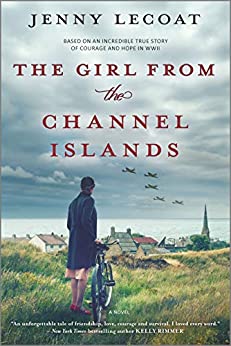
The Girl From the Channel Islands, by Jenny Lecoat

The Girl From the Channel Islands, by Jenny Lecoat

I listened to this historical novel on CD borrowed from the public library. I enjoy listening to a disc late at night, even though I have to deal with an occasional scratch on the disc which causes me to miss bits of the story.

Hedy Bercu, the protagonist in this novel, flees Austria in 1938 to escape the Nazis. She thinks she’ll be safe in Great Britain’s Channel Islands but, as World War II drags on and the islands are occupied by Germany, Hedy lives in constant fear that the wrong people will discover that she is Jewish.

The author, Jenny Lecoat, was born in the Channel Islands 16 years after some members of her family were deported by the Nazis and taken to concentration camps due to their resistance activities. This is Ms. Lecoat’s debut novel. I look forward to reading whatever she has in store for us next.


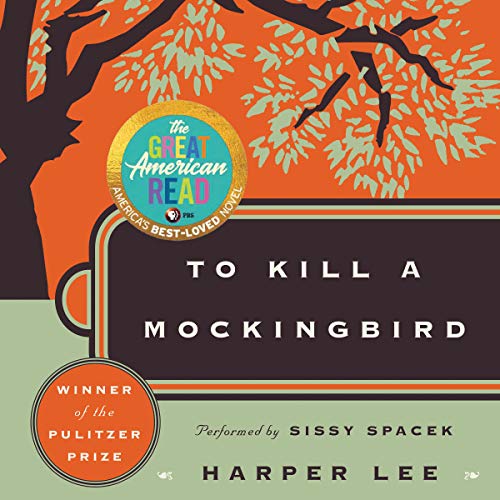
To Kill a Mockingbird, by Harper Lee

To Kill a Mockingbird, by Harper Lee

Although Banned Books Weeks is six months away, the increasing attacks on books in the United States prompted me to reread Harper Lee’s masterpiece. Instead of reading it in printed form this time, I decided to listen to Sissy Spacek’s performing of it on CD. I haven’t quite finished it, but I decided to include it in today’s post so The Girl From the Channel Islands wouldn’t have to stand alone.

It baffles me why people in 2023 want to ban To Kill a Mockingbird from school and public library shelves because it portrays the discrimination black people suffered in the 1920s or 1930s and, because at the same time, it portrays a white lawyer defending a black man who has been wrongfully arrested and charged.

I am against all book banning. One only needs to look at what happened in Germany in the 1930s to see what the results are.

If you don’t want your child to read a certain book, that’s your prerogative; however, you don’t have the right to dictate what anyone other than yourself and your children read.

Just because you are offended by a word in a book doesn’t make it a bad book. If you think you can erase the history of slavery, prejudice, and civil war in the United States by removing those references from books, you are mistaken.

If you think by removing sex education from school curriculum you will end all teen pregnancies, you’re only fooling yourself.

People who are afraid of knowledge and try to force their fears on the masses are the most dangerous people in the world.


Since my last blog post

I’ve tried to start overcoming the toll the challenges of the last eight months have taken on my limited energy.  Getting my two local history books published and working toward the publication of a family cookbook have been fun, challenging, frustrating, draining, and rewarding — all at the same time. April 25 will mark the 36th anniversary of when I first became ill with Chronic Fatigue Syndrome. Please don’t laugh. It’s a real illness. I have pushed myself too much since last July to accomplish some long-term dreams to get my local history writings published, and now I’m paying the price.

I’ll continue to push myself because that’s what I do and I don’t know how to live otherwise; however, in the coming weeks I’ll try to be a little kinder to myself and take some time to smell the roses.


Until my next blog post

I’ll start preparing for my Author Meet & Greet scheduled for April 15 at Second Look Books in Harrisburg, North Carolina.

I’ll reevaluate the family cookbook my sister and I have compiled. I’ve encountered a problem in the formatting for a paperback edition, so it might just be an e-book. That would be disappointing.

I hope you have a good book to read. If you’ve purchased Harrisburg, Did You Know? Cabarrus History, Book 1 and Book 2, I hope you’re enjoying them.

If you’ve subscribed to my newsletter and, therefore, downloaded a free copy of my southern historical short story, “Slip Sliding Away,” I hope you’ve enjoyed that small sample of my fiction writing.

Remember the three children and three adults murdered in that private school in Nashville, Tennessee. Remember how your local, state, and national politicians vote on assault-style weapons designed for war when the next election rolls around.

Remember the people of Ukraine.

Janet