Books Banned at U.S. Department of Defense Schools

Not to be outdone by the State of Tennessee (see yesterday’s blog post: https://janetswritingblog.com/2025/07/24/public-school-libraries-in-texas-and-monroe-county-tennessee/), the U.S. Department of Defense is doubling down on books in the schools it operates for children of military personnel.

Black and White photo of an old outdoor sign that says, "Books"
Photo by Paolo Chiabrando on Unsplash

On July 14, 2025, the Defense Department banned 596 books from its schools.

Here’s an article about it: https://www.military.com/daily-news/2025/07/14/here-are-596-books-being-banned-defense-department-schools.html.

Here’s a link to the court case with a list of the 596 books: https://drive.google.com/file/d/1iKxUEllBpsap4cmH_vfWtzv0h069jkSc/view. (If this link does not work, you can get to it through the military.com article linked above.)


If you don’t have time to read the complete list, here are 70 of them:

(I guess it goes without saying that many books on the list were obviously about gender identity, but the following are books that don’t all into that assumed category.)

A History of Racism in America, by Craig E. Blohm;

A Smart Girl’s Guide to Racism & Inclusion: Standing Up to Racism and Building a Better World, by Deana Singh and Shellene Rodney;

Ab(solutely) normal: short stories that smash mental health Stereotypes, by Nora Carpenter and Ricky Callen;

All You Need is Love: Celebrating Families of All Shapes and Sizes, by Shanni Collins;

Anti-Racism: Powerful Voices, Inspiring Ideas, by Kenrya Rankin;

Be Your True Self: Social Justice and You, by Maribel Valdez Gonzalez;

Better Than We Found It: Conversations to Help Save the World, by Frederick Joseph, Porsche Joseph, and Taylor Denise Richarson;

Biased: Uncovering the Hidden Prejudice That Shapes What We See, Thinks, and Do, by Jennifer L. Eberhardt;

Black Friend: On Being a Better White Person, by Frederick Joseph;

Black Lives Matter, by Marty Gitlin;

Bless the Blood: A Cancer Memoir, by Walela Nehanda;

Caste: The Origins of Our Discontents, by Isabel Wilkerson;

Confronting Racism, by Scientific American Editors;

Critical Perspectives on Social Justice, by Jennifer Peters;

Discrimination, by Jacqueline Langwith;

Equality and Diversity, by Charlie Ogden;

Equality, Social Justice, and Our Future, by Sabrina Adams;

Gender Inequality in Sports: From Title IX to World Titles, by Kirstin Cronn-Mills;

Heads Up Sociology, by Chris Yuill and Christopher Thorpe;

How to Be a (Young) Antiracist and How to Be An Antiracist, by Ibram W. Kendi;

I Am An Antiracist Superhero, by Jennifer Nicole Bacon and Leticia Moreno;

It Doesn’t Have to Be Awkward: Dealing with Relationships, Consent, and Other Hard-To-Talk About Stuff, by Drew Pinsky and Paulina Pinsky;

Male Privilege, by Duchess Harris and Heidi Deal;

Me and White Supremacy, by Layla F. Saad;

Racial Bias: Is Change Possible? by Barbara Diggs;

Racial Discrimination, by Peggy J. Parks;

Racial Justice in America: Topics for Change, by Hedreich, Leigh Ann Erickson, and Kelisa Wing;

Racism in America: A Long History of Hate, by Meghan Green;

Say the Right Thing: How to Talk about Identity, Diversity, and Justice, by Kenji Yoshino and David Glasgow;

So You Want to Talk About Race, by Ijeoma Oluo;

Symptoms of Being Human, by Jeff Garvin;

The Antiracism Handbook: Practical Tools to Shift Your Mindset and Uproot Racism in Your Life and Community, by Thema Brayant-Davis and Edith Arrington;

The Antiracist Kid: A Book about Identity, Justice, and Activism, by Tiffany Jewell and Nicole Miles;

The Book of Radical Answers: Real Questions from Real Kids Just Like You, by Sonya Renee Taylor;

The Divide: American Injustice in the Age of the Wealth Gap, by Matt Taibbi and Molly Crabapple;

The Dog Knight, by Jeremy Whitley and Bre Indigo;

The Feeling of Falling in Love, by Mason Deaver;

The Feminism Book, by Georgie Carroll and Hannah McCann;

The Greatest Superpower, by Alex Sanchez;

The New Jim Crow: Mass Incarceration in the Age of Colorblindness, by Michelle Alexander;

The Other Talk: Reckoning With Our White Privilege, by Brendan Kiely;

The Ship We Built, by Lexie Bean and Noah Grigni;

The Sociology Book, by Christopher Thorpe, Chris Yuill, Mitchel Hobbs, Megan Todd, Sarah Temley, and Marcus Weeks;

The Sum of Us: How Racism Hurts Everyone: Adapted for Young Readers, by Heather C. McGhee;

This Book is Anti-Racist, by Tiffany Jewell and Aurelia Durand;

Under the Skin: The Hidden Toll of Racism on American Lives and on the Health of Our Nation, by Lind Villarosa;

We Were Eight Years in Power: An American Tragedy, by Ta-Nehisi Coates;

What is Anti-Racism? by Hendreich Nichols and Kelisa Wing;

What is the Black Lives Matter Movement? by Hendreich Nicols and Kelisa Wing;

What is White Privilege? by Leigh Ann Erickson and Kelisa Wing;

When Women Stood: The Untold Story of Females Who Changed Sports and the World, by Alexandra Powe Allred;

White Fragility: Why It’s So Hard for White People to Talk about Racism, by Robin J. DiAngelo;

White Privilege, by M.T. Blakemore;

White Privilege Unmasked: How to Be Part of the Solution, by Judy Ryde;

J is for Justice! by Veronica Arreola;

Why Are All the Black Kids Sitting Together in the Cafeteria? And Other Conversations About Race, by Beverly Daniel Tatum;

How Can I Be an Ally? by El-Mekki Fatima;

Long Time Coming: Reckoning with Race in America, by Michael Dyson;

How to Fight Racism: A Guide to Standing Up for Racial Justice, by Jemar Tisby;

Racial Justice, by Virginia Loh-hagan;

An ABC of Equality, by Chana Ewing;

Coping with Hate and Intolerance, by Avery Elizabeth Hurt;

Confronting Racism, by Maryellen Lo Bosco;

Respecting Diversity, by Anastasia Suen;

Tell Me Who You Are: Sharing Our Stories of Race, Culture, and Identity, by Winona Guo and Priya Vulchi;

What is Diversity, by David Anthony;

When a Bully is President: Truth and Creativity for Oppressive Times, by Maya Christina Gonzalez;

This is Your Brain on Stereotypes: How Science is Tackling Unconscious Bias, by Tanya Lloyd Kyi and Drew Shannon;

Prejudice, by Izzi Howell;

You Call This Democracy?: How to Fix Our Government and Deliver Power to the People, by Elizabeth Rusch;

There were also seven AP Psychology books on the list.


In conclusion

There is a definite pattern here.

The very topics that are tearing our country apart are being banned from Defense Department schools, grades kindergarten through 12th grade.

Ignoring that racism, diversity, gender inequality, and gender identity exist will not make them go away, no matter how much the white supremacists, misogynists, history deniers, and evangelicals want them to.

If we as citizens of the United States cannot read about our problems and differences, face them, acknowledge them, and have an honest conversation about them, how will we ever overcome them?


Until my next blog post

Find a book on this list and read it!

Remember the people of Ukraine and western North Carolina.

Janet

These 13 things bring me hope

You will see from today’s list that it doesn’t take much to make me happy these days. I will take little victories for democracy any time I can find them.

Writing blog post after blog post about bad and unjust things going on in America lately, I was determined to blog about things that bring me hope.

Today’s post is, unfortunately, not as long as any of my posts about the things that worry and frighten me, but today is dedicated to things that bring me hope.

It serves as a reminder that, just like the seven recipients of the 2025 Goldman Environmental Prize that I blogged about yesterday, Environmental Justice, sometimes it just takes one person to take a stand and make a difference.

Photo of a stack of books
Photo by Claudia Wolff on Unsplash
  • Twelve children of active-duty US military personnel in the US, Japan, and Italy are suing US Secretary of Defense Pete Hegseth for removing books about race and gender from Pentagon schools.
  • At 1:00 a.m. (ET) on Saturday, April 19, the US Supreme Court issued a ruling that blocks the Trump Administration from sending any more migrants to El Salvador under further notice. Not that a US Supreme Court ruling will stop him.
  • On April 18, Judge Amy Berman Jackson held an emergency hearing about the impending firings of 1,483 employees of the Consumer Finance Protection Bureau. She halted the employees’ access to their computers until an evidentiary hearing can be held on April 28 with witness testimony.
  • Under the lame guise of fighting antisemitism, the Trump Administration continues to attack universities every day. BUT… the faculty senates of the universities in the “Big 10 Conference” are creating a Mutual Academic Defense Compact (MADC). It’s sort of a mini-NATO. Under the agreement, if the Trump Administration attacks one of the member universities, it will be considered an attack on all member universities. The resolution is in response to the Trump Administration’s “legal, financial and political” attacks on academic freedom and universities’ missions. Yes, folks, it has come to this! This give me hope that other conferences throughout the US will create Mutual Academic Defense Compacts.
  • Millions of Americans held peaceful protests across the country on Saturday.
  • CBS News reports that District of Columbia US District Judge Royce Lamberth has ordered the Trump Administration to rehire all Voice of America, Radio Free Asia and Middle East Broadcasting Network staff at least for the time being. He also ordered all Congressional funding must resume to those outlets. A Voice of America journalist and her colleagues filled a suit against Kari Lake, the acting CEO of the US Agency for Global Media – a supposedly independent federal agency that oversees public service media networks. With Kari Lake in charge, thought, there’s no chance for it to act independently of Trump. The judge granted a preliminary injunction. A preliminary injunction was not granted to Radio Free Europe because it filed a separate lawsuit. 
  • The April 20 deadline for US Secretary of Defense Pete Hegseth and US Secretary of Homeland Security to give President Trump a joint report about border security was extended. In that report, they are supposed to state whether or not they think the President should invoke the Insurrection Act. That Act would give him the authority to declare martial law. The extended deadline for the report gave us a breather! We just don’t know what the new deadline is… or if Pete Hegseth will still be Secretary of Defense long enough to participate.
  • Three students in the Rutherford County, Tennessee School District and PEN America (a writers’ organization) are suing the school board for removing more than 150 books from school libraries. The lawsuit was filed with the US District Court Middle District of Tennessee at Nashville. The removals were based on a list circulated by Moms for Liberty instead of school board members or apparently anyone connected with the school district reading the books themselves. Moms for Liberty is known for pushing book bans based on their belief that reading a book will contaminate a child’s mind. They believe they have the right to dictate what all children should not read. Bizarrely, one of its chapters in Indiana quoted Hitler’s “He alone, who OWNS the youth, GAINS the future” statement from a 1935 Nazi rally.
  • On April 17, four members (sadly, but predictably all Democrats) of the US House of Representatives Committee on House Administration signed a letter addressed to Vice President J.D. Vance asking him to reject possible changes made in the 21 museums, 14 libraries and research centers, and the National Zoo – all part of the Smithsonian Institution. As Vice President, Vance is a member of the Smithsonian’s board of regents. In a March 27, 2025, Executive Order titled “Restoring Truth and Sanity to American History” and prompted by Lindsey Halligan, Esq. of Colorado beauty pageant fame, Trump wants to eliminate “divisive” and “anti-American” content from the Smithsonian and restore “monuments, memorials, statues, and markers” that have been removed from public spaces since 2020. The Executive Order gives Vance the authority to determine what content is “improper.”
  • An indigenous woman has been named the new president of Fort Lewis College in Durango, Colorado. Dr. Heather Shotton is Wichita and Affiliated Tribes and a Kiowa and Cheyenne descendant. What makes this especially notable is the fact that Fort Lewis College started out as a military fort from 1878 until 1891. Ironically, the fort was built to protect white settlers from Indian raids. In 1892, it was turned into a federal Indian boarding school and served in that capacity until 1909. Approximately 1,100 children attended the Fort Lewis Indian Boarding School, and at least 31 of them died there. Here’s a link to an article that gives more information about the dark days of the boarding school: https://www.cpr.org/2023/10/03/state-investigation-report-released-indian-boarding-schools/.
  • CBS and other news outlets reported that an article documenting the career of Nicole Malachowski, the first female US Air Force Thunderbird pilot, is back online. That gives me a fraction of an ounce of hope, but it should never have been removed! Women and ethnic minorities who have served with honor in the US military should not have to go through the humiliation and disappointment of seeing records of their accomplishments removed from government website. They or others on their behalf should not have to raise cane and make such a stink that the government finally caves in and puts the information back online. What we have here is much larger than one person’s military record being trashed. What we have is an attack on Diversity, Equity, and Inclusion because apparently some white men are so insecure they just cannot tolerate a woman or a person of color being recognized for accomplishments that they themselves did not attain. It especially stinks coming from a US President who did not serve in the military. One person’s record being put back on a website is not sufficient. Some of the pages still cannot be opened. And what about all the people whose records were taken down and have not been restored to a place of honor?
  • This one might surprise you, but I found hope on Wednesday when Ukrainian President Zelensky rejected the peace agreement that Trump thought he could force on Ukraine. Trump thought Zelensky would roll over and play dead and agree to giving Russia everything. Trump has no understanding of Zelensky’s love of country. He cannot identify with that concept. Trump’s claim that Russia’s “concession” is not taking all of Ukraine is reprehensible.
  • And last, but not least, there are rumblings that Pete Hegseth might be on his way out as Defense Secretary! He must have one of those “Friends & Family” Plans so he can share real-time bombing details with his wife, brother, and his personal lawyer on his cell phone. Even a child knows when to keep a secret.

Until my next blog post… tomorrow

I hope you are reading a good book that you don’t want to put down long enough to read my blog.

Remember the people of Ukraine, Myanmar, and western North Carolina.

Janet
One of the Most Banned Books in the US: Sold, by Patricia McCormick

It is seldom that a character in a book grabs me by the throat and won’t let me go, but that’s exactly what happened the moment I started reading Sold, by Patricia McCormick.

Sold, by Patricia McCormick

In case you don’t know, this is one of the most banned books in the United States. Knowing that makes me furious and heart-broken.

Sold, by Patricia McCormick was a National Book Award Finalist for Young People’s Literature.

This book is categorized as a YA (Young Adult) book. I think it should be required reading for “young adults” which includes teens. In fact, I think it should be required reading for ‘tweens.”

If a girl is old enough to be sold into the sex trade, by golly she is old enough to read this book!

I have blogged about book banning several times recently, and I will probably blog about it in the future. It is a practice I do not understand. It is a practice I abhor. It is a practice that, if left unchallenged, will destroy our democracy. Organizations such as Moms for Liberty are trying to take our liberty away under the guise of looking out for children.

Where I come from, you don’t look out for children by taking books away from them. If your narrow-minded self wants to take books away from your own children, you have the right to do that. However, you don’t have the right to take books away from all children.

According to PEN America, Sold, by Patricia McCormick is tied for the sixth most banned book in the United States. It is banned in 11 school districts in six states.

In Sold, Lakshmi, a 12-year-old girl in Nepal is sold by her stepfather. She is taken to India where she is locked in a brothel. She is tricked into thinking that if she works in the brothel long enough, she will eventually be able to pay off the “debt” she owes the madam.

This, of course, is a myth. It works sort of like the tenant farmer system in the United States. The farm owner keeps adding charges to the tenant’s account, so the tenant never gets out of debt. In Sold, the madam keeps adding charges for clothes, make up, electricity, etc. to Lakshmi’s account. Lakshmi thinks part of the money she is earning is going to her mother. She wants her mother to be able to replace the thatched roof on their house with a tin roof. Of course, none of the money she’s earning is being sent to her mother.

This book is written in a short pieces. Each piece gives the reader another glimpse into the miserable life Lakshmi endures.

There is a satisfying ending, in case you shy away from books that don’t resolve in a way you wish; however, most girls like Lakshmi do not experience a happy ending.

The author’s note at the end of the book gives the following statistics (among others) for the time of its writing (2006):

“Each year, nearly 12,000 Nepali girls are sold by their families, intentionally or unwittingly, into a life of sexual slavery in the brothels in India. Worldwide, the U.S. State Department estimates that nearly half a million children are trafficked into the sex trade annually.”

“It won’t happen to my child.”

If you don’t want your 12-year-old daughter to know there is such a thing as sex trafficking, that’s your prerogative. Bury your head in the sand and hers, too, while you’re at it.

That does not mean she won’t fall victim to this sickening crime one day.

Don’t you owe it to her to tell her there are dangerous people out there who are very charming — some are even women — but don’t have her best interest at heart? Just because she doesn’t know sex trafficking exists doesn’t mean she won’t learn about it the hard way.

Since my last blog post

I’ve worked to make my books more visible on Pinterest. Since a free workshop about Pinterest for authors offered by Bookbrush.com helped me realize that Pinterest is a search engine and not social media, I’ve tried to utilize the platform more than I have in the past to publicize my writing. Visit my boards and pins on Pinterest at https://www.pinterest.com/janet5049/.

I found another local independent bookstore that takes self-published books that are published by Kindle Direct Publishing on consignment! I hope to be able to announce in a future blog post that The Aunts in the Kitchen: Southern Family Recipes is available at Main Street Books in Davidson, North Carolina!

I continued to try to get back on Facebook, but there are several forces beyond my control working against me – including the iCloud. All this nearly six-month long saga started with a data breach at Windstream. I miss being able to publicize my blog, website, books, and short stories on Facebook.

Until my next blog post

If Sold is not on the shelf for circulation in your local library system, request that the system purchase it. That is exactly what I did. I hope it will soon be available in the Cabarrus County Public Library system.

I hope you will read Sold, by Patricia McCormick.

For a 2020 US State Department report about human trafficking in Nepal, go to https://www.state.gov/reports/2020-trafficking-in-persons-report/nepal/. For a US State Department report on global human trafficking, so to https://www.state.gov/humantrafficking-about-human-trafficking/#human_trafficking_U_S. The statistics are overwhelming!

Look for other often-challenged or banned books and make a point to buy them or check them out of the library. Together, we can make a statement louder than that of Moms for Liberty – just like voters across the nation did in last Tuesday’s local school board elections.

Spend time in person or virtually with friends and family, even if they have views that are different from yours. Try to find a way to engage them in conversation about those topics. Try to understand why they believe what they believe.

Last, but not least… remember the people of Ukraine and the Middle East who are victims of dictators, terrorists, and wars they didn’t ask for.

Janet

A Recent Attack on an Historical Novel

Here I go again, blogging about book banning. It’s too important to sweep under the rug.

Today’s blog post is longer than most of mine, but this is a topic that is near and dear to my heart. It is a topic that is indicative of the trouble our world is in today.

A small but vocal segment of our society believes it is wrong to teach young people about slavery, the Holocaust, or any part of history that makes them uneasy. They start by asking that books be removed from public school libraries and classrooms. They complain if certain books and plays written by Shakespeare are read in the classroom or assigned as required reading. Then they move on to public libraries. Then they start attacking authors and book publishers.

They believe that their freedom of speech trumps my freedom to read. They believe they have the right to deny you and me the right to read anything we want. Some of them don’t mind using violence to get their point across.

Photo by Kristina V on Unsplash

As I stated in an earlier blog post, they have the right to regulate what their own children read, but they don’t have the right to deny my great-nieces the right to read what they want and need to read.

Where does it end? Just look at 1930s Germany, if you want to know. Just look at countries where groups like the Taliban have gained political control.

It’s time for reasonable people to pay attention

I hear too many people say, “I never use the public library. I buy the books I want to read.” As a writer, I want people to purchase my books. I also want public libraries to purchase my books. But that’s not the point.

The point is that public libraries are integral to the very foundation of our country and our society. I read an article last week that quoted the American Library Association (ALA) as reporting that book challenging at public libraries in 2022 amounted to 16% of all book challenges in the United States, but in 2023 public libraries are receiving approximately 50% of the book challenges in the US.

Let that sink in. Also, let it sink in that the Proud Boys have disrupted reading hours at public libraries and librarians have received death threats. Is that what you want at your local public library?

Well-meaning, misguided people are taking away your right to read. Many of them are even doing it in the name of God. It makes them feel good to say that. It makes them feel good to say they’re doing it “to protect the children.”

I understand the need for age-appropriate books; however, today’s right-wing activists are hiding behind that political campaign sound bite and are using it to nitpick and challenge every book that comes down the pike. Their “holier than thou” attitude is wearing thin with me.

They’re on a mission to dumb us down, to dictate what we can and cannot have access to, to limit our intellectual potential. They are on a mission to erase the ugly and uncomfortable parts of our nation’s history.

Many historical novels have been challenged and banned in various places over the years, and it seems like all fiction is fair game for the book banners today. In my blog post today I highlight three historical novels that have been challenged and banned in various locations.

These three immediately came to mind

To Kill a Mockingbird, by Harper Lee
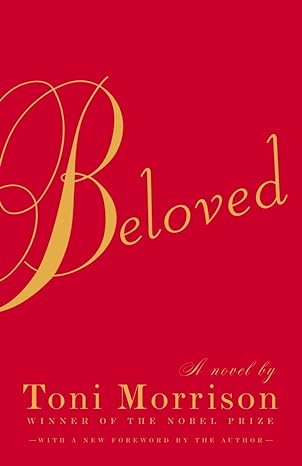
Beloved, by Toni Morrison
The Grapes of Wrath, by John Steinbeck

I have read each of those novels and not one of them warped my mind. Were you damaged by reading any of these novels? I doubt it. Were you moved to understand and see the world differently by reading these novels? Probably.

To Kill a Mockingbird teaches us about racial discrimination and injustice while also teaching us that Atticus Finch had integrity and maybe we should, too.

Beloved teaches us about the horrors of slavery and that the horrors did not end with the Civil War. It teaches us the lengths desperate people will go to prevent their children from being enslaved and living in horrible circumstances. That’s being demonstrated daily at the US-Mexican border.

The Grapes of Wrath teaches us what can happen after a decade of affluence and decadence and a time of drought as it illustrates a side of life during The Great Depression.

It’s one thing to read that thousands of people lost their farms and everything they had during the “Dust Bowl,” but it’s altogether different to read The Grapes of Wrath and live with the novel’s characters.

The Snow Forest, by Elizabeth Gilbert

In July of this year, an historical novel scheduled to be released in February 2024 was attacked on the author’s Goodreads account to the point that she chose to cancel its publication.

Elizabeth Gilbert, who wrote Eat, Pray, Love had written a novel set in Russia in the 1930s. With all the current interest in the war in Ukraine today, it would seem an opportune time to release a book set in 1930s Russia.

But author Elizabeth Gilbert learned that was not the case. She got so much blowback from her fans, that she pulled The Snow Forest even after some of her readers had pre-ordered the book. Her fans in Ukraine (or at least enough of them) said it was not the right time to release a book set in Russia. In response, the author suspended the publication of the book.

Author Alina Adams’s Thought on this

I read a blog post by author Alina Adams who was born in Odessa, Ukraine. Ms. Adams’ post maintains that historical fiction can make an important statement about the world and not just be a source of entertainment.

Ms. Adams wrote, “And as someone who loves to read historical fiction taking place all over the world in all sorts of different time periods, I am wary of a mindset which might lead to authors and publishers censoring themselves, shying away from setting stories in regions where there is ongoing political strife.”

In addition to specific examples of historical novels that have been challenged and banned, Ms. Adams’ blog post contained several succinct statements about the potential historical fiction holds, including the following: “Sometimes, historical fiction can tell a truth non-fiction isn’t equipped to deliver.” Also, “It doesn’t just make you think, it makes you feel. And it makes you empathize.”

My thoughts on this

Reading an historical novel might not change your political stance or religious beliefs but, if you give it a chance, it just might help you see the other side of an issue.

It might at least help you realize that people with views that oppose yours are not necessarily your enemies. They just might be human beings with a different perspective and life experience.

Please take a couple of minutes to read Alina Adams’ complete blog post from July 27, 2023 on M.K. Tod’s blog, A Writer of History: Why Historical Fiction Must Keep Tackling Controversial Topics | A Writer of History.

A quote from author Barbara Kyle

I printed this quote from Barbara Kyle and have it taped to my computer:

“The move to self-censorship for fear of ‘cultural appropriation’ is a sad state of affairs. Author Morgan Jones eloquently champions the opposite position: ‘Fiction remains the best means we have of finding connection where there seems to be none; and the novel, of all forms, encourages a search that’s deep and sustained. By reading (or writing) one, you’ve travelled somewhere else. You’ve moved, if only slightly, toward others. In a world that finds and increasingly exploits division and difference, this is an invaluable, precious exercise.”

Since my last blog post

Marie and I finished proofreading and creating the cover for our upcoming cookbook, The Aunts in the Kitchen: Southern Family Recipes. We submitted it to Amazon on Friday and requested a proof copy. It should arrive this week and, if we are pleased with it, we’ll give Amazon the go ahead to publish it. Look for an update and perhaps a cover reveal in next Monday’s blog post.

Until my next blog post

Be aware of what is going on in your community and state related to book challenges and book bannings. Speak up for books. Speak up for the freedom to read. Speak up for public libraries and librarians.

Have you ordered my American Revolution e-ghost story?  “Ghost of the Battle of Guilford Courthouse: An American Revolutionary War Ghost Story” is available from Amazon, along with my other books: https://www.amazon.com/dp/B0CH7JCP11/. It’s only available as an e-Booklet.

“Ghost of the Battle of Guilford Courthouse: An American Revolutionary War Ghost Story,” by Janet Morrison

If you don’t have a good book to read, visit your local public library. Or, from the comfort of your home, go to its website and search for books you would like to read or subjects you want to learn more about. You will be amazed at what is available at your fingertips!

Take time for friends and family.

Thank you for taking time to read this long blog post.

Remember the people of Ukraine, Maui, Libya,….

Janet

Who decides what you have access to at the library?

A few weeks ago I blogged about book banning. (See Book Banning is Democracy Banning! June 19, 2023.) I planned to blog about “How do you decide what to read next?” on July 14, but my computer had other ideas. I’m saving that post for August because I felt compelled to take a different approach today.


Book challenges and book banning

I didn’t plan to bash anyone in this post; however, I keep reading about more and more cases of book challenges and book banning across the United States and how various state legislatures (Arkansas, to name one) are passing laws that are putting our society on the slippery slope of censorship.

Fortunately, on Saturday, in response to a lawsuit filed by libraries, librarians, bookstore, and publishing companies,  a federal judge temporarily blocked portions of Act 372 in Arkansas, which would criminalize librarians who knowingly let a minor see objectionable sexual content.

Senate Bill 90 in North Carolina is tame by comparison to Arkansas’s Act 372, which had been scheduled to become law tomorrow. NC Senate Bill 90 is still under review and, if signed into law, will add new constraints on public libraries and public school libraries, and will add additional hoops through which librarians, school superintendents, and local school boards must jump. As if their jobs weren’t challenging enough!

Warren County, Virginia and the Houston Independent School District in Texas have been in the news recently, too, on this topic.

This terrifies me! This is the United States of America, and a vocal narrow-minded group of people are yanking local and state governing bodies around as if they have rings in their noses.


Book by book…

Book by book, library by library, school system by school system, the whittling away of our right to read is eating away the foundations on which our country was founded. If not for public education in the United States, how many of our citizens would know how to read?

Public education is under attack by many state legislatures, including the one here in North Carolina. Vouchers to give parents money to send their children to private school? Give me a break! Why would a state legislature give money for private education when one of its responsibilities is to fund and support public education?

The ignorant few will soon decide what we can read and cannot read. Politicians are usurping the roll of professional librarians in deciding which books can go on library shelves.

Pay attention! What’s happening in your state and in your county? The state legislature in North Carolina has a history of voting in the dead of the night. You just never know what you’re going to wake up to in the morning.

This leads me to the question I ask in the blog post title today: Who decides what you can and cannot read?

There’s a connection between today’s question and the current trend toward banning books in the United States.

Do you want politicians deciding what you can and cannot read? Do you want local politicians deciding what your child can or cannot read?


Since my last blog post

I didn’t intend to take a three-week break from blogging this month, but my computer had other ideas. I won’t bore you with the details. I’ll just say, it was unsettling and frustrating being unable to log into my WordPress account for 18 days.

I hope you missed me. I missed y’all!


Until my next blog post

If you haven’t subscribed to my newsletter through my website, https://www.janetmorrisonbooks.com, please do so before you miss any more newsletters. For subscribing, you’ll receive a free downloadable copy of “Slip Sliding Away: A Southern Historical Short Story,” so you can get a feel for my historical fiction writing.

I hope you have a good book to read and time to read it. Read! Read! Read! And please support your local public library!

Make time for friends and relatives, even if you don’t agree with them about politics.

Remember the brave people of Ukraine.

Janet

Following up on last week’s blog post: Book Banning

I was gratified by the responses my blog post of last Monday received. Thank you to everyone who responded, and thank you to the ones of you who reblogged my post about book banning. In case you missed it, here’s the link: Book Banning is Democracy Banning!

In last week’s post I listed the 19 books that had been banned the week before by the school board in Hanover County, Virginia. I failed to list other books or tell you how you can find lists of other books that have been challenged in the United States.

You can simply put “Challenged Books” or “Banned Books” in your favorite online search engine. Or, you can look for reputable sites like the American Library Association’s website for intellectual freedom: https://www.ala.org/advocacy/bbooks/

Barnes and Noble has a list of more than 230 challenged books on its website at https://www.barnesandnoble.com/b/banned-books/_/N-rtm.

Imagine if these shelves were empty! (Photo by Rabie Madaci on Unsplash)

Let’s flood our public library systems and bookstores with requests for such books! Here’s a partial list. You might find many others when you do your own search. The following list of 101 books that have been challenged or banned somewhere in the United States is in no particular order.

Hunger Games, by Suzanne Collins

They Both Die at the End, by Adam Silvera

What I Know Now: Letters to My Younger Self, by Ellyn Spragins

The Giver, by Lois Lowry

1984, by George Orwell

The Great Gatsby, by F. Scott Fitzgerald

Fahrenheit 451, by Ray Bradbury

The Lord of the Flies, by William Golding

To Kill a Mockingbird, by Harper Lee

The Glass Castle, by Jeannette Walls

Harry Potter and the Sorcerer’s Stone, by J.K. Rowling

Maus I: A Survivor’s Tale: My Father Bleeds History, by Art Spiegelman

Where the Wild Things Are, by Maurice Sendak

How the Garcia Girls Lost Their Accents, by Julia Alvarez

New Kid, by Jerry Craft

Animal Farm, by George Orwell

The Kite Runner, by Khaled Hosseini

The Handmaid’s Tale, by Margaret Atwood

My Sister’s Keeper, by Jodi Picoult

The Dairy of a Young Girl, by Anne Frank

The Catcher in the Rye, by J.D. Salinger

The Bluest Eye, by Toni Morrison

The 1619 Project: A New Origin Story, by Nicole Hannah-Jones

Brave New World, by Aldous Huxley

The Hate U Give, by Angie Thomas and Amandla Stenberg

Of Mice and Men, by John Steinbeck

Lord of the Flies, by William Golding

This Book is Gay, by Juno Dawaon and David Levit

I Know Why the Caged Bird Sings, by Maya Angelou

Gender Queer: A Memoir, by Maia Kobabe

Hop on Pop, by Dr. Seuss

Their Eyes Were Watching God, by Zora Neale Hurston

How the Word is Passed, by Clint Smith

Twilight, by Stephanie Meye

Beloved, (a Pulitzer Prize Winner) by Toni Morrison

The Pillars of the Earth, by Ken Follett

Girl, Interrupted, by Susanna Kaysen

Where the Sidewalk Ends, by Shel Silverstein

The Grapes of Wrath, (a Pulitzer Prize Winner), by John Steinbeck

The Color Purple, by Alice Walker

Speak, by Laurie Halse Anderson

Slaughterhouse-Five, by Kurt Vonnegut

Lolita, by Vladimir Nabokov

The Absolutely True Diary of a Part-Time Indian, by Sherman Alexie

All American Boys, by Jason Reynolds and Brendan Kiely

The Autobiography of Malcolm X, as told to Alex Haley

A Farewell to Arms, by Ernest Hemingway

The Poet X, by Elizabeth Acevedo

Looking for Alaska, by John Green

Persepolis: The Story of a Childhood, by Margane Satrapi

Midnight in the Garden of Good and Evil, by John Berendt

Class Act: A Graphic Novel, by Jerry Craft

One Flew Over the Cuckoo’s Nest, by Ken Kesey

Monday’s Not Coming, by Tiffany D. Jackson

Fifty Shades of Grey, by E.L. James

The Other Wes Moore, by Wes Moore

Like Water for Chocolate, by Laura Esquivel

What If It’s Us, by Becky Albertalli and Adam Silvera

A Time to Kill, by John Grisham

A Lesson Before Dying, by Ernest J. Gaines

The Da Vinci Code, by Dan Brown

And Tango Makes Three, by Justin Richardson and Peter Parnell

Child of God, by Cormac McCarthy

Feed, by M.T. Anderson

A Separate Peace, by John Knowles

Stamped from the Beginning, by Ibram X. Kendi

Go Ask Alice, by Anonymous

Stranger in a Strange Land, by Robert A. Heinlein

Different Seasons, by Stephen King

For Whom the Bell Tolls, by Ernest Hemingway

The Lord of the Rings, by J.R.R. Tolkien

Native Son, by Richard Wright

Angela Davis: An Autobiography, by Angela Y. Davis

Skeleton Crew: Stories, by Stephen King

Thirteen Reasons Why, by Jay Asher

Stamped: Racism, Antiracism, and You: A Remix of the National Book Award-Winning Stamped from the Beginning, by Jason Reynolds and Ibram S. Kendi

Simon vs. the Homo Sapiens, by Becky Albertalli

All Boys Aren’t Blue: A Memoir, by George M. Johnson

The Red Badge of Courage, by Stephen Crane

Water for Elephants, by Sara Gruen

The Prince of Tides, by Pat Conroy

Tiger Eyes, by Judy Blume

Four Hundred Souls: A Community History of African America, 1719-2019, by Ibram X. Kendi, Keisha N. Blain

A Thousand Acres, a Pulitzer Prize Winner, by Jane Smiley

Kaffir Boy: The True Story of a Black Youth’s Coming of Age in Apartheid South Africa, by Mark Mathabane

Beach Music, by Pat Conroy

The Adventures of Huckleberry Finn, by Mark Twain

Blood in the Water: The Attica Prison Uprising of 1971 and Its Legacy, a Pulitzer Prize Winner, by Heather Ann Thompson

The Tenth Circle, by Jodi Picoult

The Jungle, by Upton Sinclair

Girl With the Blue Earring, by Tracy Chevalier

Catch-22, by Joseph Heller

Palestine, by Joe Sacco

Gone With the Wind, by Margaret Mitchell

Bridge to Terabithia, A Newberry Award Winner, by Katherine Peterson

The Sun Also Rises, by Ernest Hemingway

Addie on the Inside, by James Howe

Call of the Wild, by Jack London

Olive’s Ocean, a Newberry Honor Book, by Kevin Henkes

A Stone in My Hand, by Cathryn Clinton

Tilt, by Ellen Hopkins

How Often Are Books Challenged Where You Live?

There is an interactive map of the United States of the American Library Association’s website, https://www.ala.org/advocacy/bbooks/by-the-numbers. Hover the curser over a state to find basic information about book challenges in that state in 2022.

For instance, in my home state of North Carolina, there were 32 attempts to restrict access to books last year involving 167 titles. The most challenged book in North Carolina was Looking for Alaska, by John Green.

That map revealed some surprises. There were 45 attempts to restrict access to books in Massachusetts last year involving 57 books. In Michigan, the figures were 54 and 359. In Pennsylvania, 56 and 302. In Florida, 35 and 991. But Texas was at the top of the list (or bottom as the case may be) with 93 attempts to restrict access to books in 2022 involving a whopping 2,349 titles!

Photo by Enrique Macias on Unsplash

Different books are listed as the most-challenged book in the various states; however, Florida and Texas agree on The Bluest Eye, by Toni Morrison. I wrote about that book in my blog post last week. I want to say to the book challengers in Florida and Texas, “You’ve got to be kidding!”

If you want to read more about the topic of book banning…

Here’s the link to the website of PEN America. PEN America is made up of more than 7,500 novelists, journalists, nonfiction writers, editors, poets, essayists, playwrights, publishers, translators, agents, and other writing professionals, as well as devoted readers and supporters who join with them to carry out PEN America’s mission to protect free expression in the United States and around the world: https://pen.org/report/banned-in-the-usa-state-laws-supercharge-book-suppression-in-schools/.  

Until my next blog post

I hope you’re reading a book that someone has tried to get banned from a library. Let’s flood our public library systems and bookstores with requests for books that someone doesn’t want us to read!

I hope you make time for friends and family. Read to the children in your life and encourage them to read for fun.

Stop right now and visit my website (https://janetmorrisonbooks.com/) to subscribe to my newsletter. I took a special “field trip” to benefit my historical fiction writing on May 20. I’ll tell you all it in my July newsletter!

Just for signing up, you’ll receive a free downloadable copy of “Slip Sliding Away: A Southern Historical Short Story” to give you a taste of my fiction writing.

Remember the brave people of Ukraine.

Janet

Book Banning is Democracy Banning!

I’d planned to blog about flash fiction today but somehow in the big scheme of things, flash fiction doesn’t seem very important at the moment.

There are a number of trends in the United States that trouble me. The one I’m addressing today is book banning.

When you ban books, you are in fact banning democracy. You don’t see it that way, but you are. You are forcing your will on other people.

You do not have the right to tell anyone besides your minor children what they cannot read. Period.

You can try to force your fear of knowledge on your children until they are 18 years old.

I’m not talking about age appropriateness. I’m talking about banning books so they aren’t available to others in a library, classroom, or other place in which people go to find books.

What are you afraid of?

Are you afraid Little Johnny might find out that he’s not the center of the universe just because his skin is white? Are you afraid Little Mary might find out that there are people in the world whose skin color is different from hers?

Photo by Jason Leung on Unsplash

Are you afraid your teenage child who believes they were born in the wrong-gendered body might find out they are not alone in this world? They already know you have rejected them.

The case in Hanover County, Virginia

Every week I see a headline about another school board voting to ban books. The one I learned about last Thursday is Hanover County, Virginia.

I have visited Hanover County, Virginia. I thought it was beautiful area. In light of what the Hanover County Board of Education did last week, though, the physical beauty I remember about the area is now tarnished. I pity the children of that county, for their right to read is in serious danger has been taken away.

According to reports, the Hanover County, Virginia school board voted 5-2 on June 13, 2023 to adopt a new school library policy. If the reports I’ve read are accurate, the new policy gives board members full discretion over banning books from school libraries, classrooms, school buildings, or school divisions. I’m not sure what a school division is, but apparently it is a place where literature goes to hide.

Photo by Eliabe Costa on Unsplash

By majority vote, the Hanover County, Virginia board of education can remove books from the district’s schools without input from ANYONE. That includes you, parents. The parents who pushed the board to this point probably didn’t anticipate that they themselves would be taken out of the equation. My hunch is that they thought they’d have the inside track on future book bannings. That’s the way it usually works with narrow-minded anti-books people.

The Hanover County, Virginia board of education wasn’t satisfied to stop there. By a majority vote, the board can now dictate “any and all materials of its choosing in the library, classroom, school building(s) and or division.”

According to the Hanover Public Schools website, those school board members are not even elected by the citizens! They are appointed by the County Board of Supervisors. Those seven appointed individuals now have complete authority over every book that will be in your child’s school library and classroom in Hanover County.

How’s that working for you now in Hanover County?

Is that what you wanted?

I couldn’t help but notice the motto of Hanover Public Schools is: “Inspire. Empower. Lead.” What a sad joke that appears to be in light of last Tuesday’s book banning decision! Where is the inspiration?

And where on earth is there any empowerment in the Hanover Public School board’s decision? It seems to me the only people who have been empowered are the APPOINTED members of the school board. You didn’t get to elect them, Hanover County citizens… and you can’t vote against them because their names aren’t going to be on the ballot.

And as far as the “lead” part of the motto goes, this is what you call leadership?

On the Great Seal of the Hanover Public Schools it says, “A Tradition of Excellence.” Was your “tradition of excellence” formed by banning books? I doubt it.

During the same meeting the board voted to ban these 19 books. A Court of Mist and Fury, A Court of Silver Flames, All Boys Aren’t Blue, Choke, Flamer, Haunted, Identical, Let’s Talk About It, Looking for Alaska, Lucky, Me and Earl and the Dying Girl, Red Hood, The Bluest Eye, This Book is Gay, Sold, Tilt, Tricks, Water for Elephants, and Infandous.

Perhaps you’ve read some of those books. We read Water for Elephants, by Sara Gruenin the book club at our church. I don’t remember being scarred for life by it. I’ve also read The Bluest Eye, by Toni Morrison.

In The Bluest Eye, an 11-year-old girl of color struggles with society’s idea of beauty: blond hair and blue eyes. She prays for her eyes to turn blue so she will be considered beautiful.

The Bluest Eye was first published in 1970. The story is set in Lorrain, Ohio in 1941. The book has become a lightning rod for book banning. Reading it gave me some things to think about. It helped me to try to see the world through that 11-year-old girl’s brown eyes.

Photo by Joe Ciciarelli on Unsplash

We’ve come a long way in race relations since 1941. We’ve come a long way in race relations since 1970, when I was in high school. There is no societal benefit, though, in going backwards. There is no societal benefit in banning a book that presents a black child’s perspective on a world that doesn’t accept her humanity.

Why would the Hanover County, Virginia school board members be afraid to leave The Bluest Eye on a school library shelf? Fear.

Fear

Fear. It all comes down to fear.

What a horrible way to live a life… afraid. You ban books and you arm yourself to the teeth because you’re afraid. The most ironic and sad thing about it is that most people advocating for the banning of books today in the United States profess to be Christians.

Photo by M.T ElGassier on Unsplash

Where in the New Testament does it say that Jesus instructed His followers to hate others?

Where in the New Testament does it say that Jesus instructed His followers to live in fear?

Where in the New Testament does it say that Jesus instructed His followers to squelch knowledge?

If you think Jesus would spend His time and energy today banning books and persecuting people whose skin differed from his or who were struggling every day to try to figure out why something about their birth-assigned gender just doesn’t feel right, then you and I aren’t worshipping the same Jesus.

If you think Jesus loves you because you vote Republican and hates you because you vote Democrat, then you and I aren’t worshipping the same Jesus.

I don’t usually preach on my blog, but…

Jesus Christ encourages His followers to love one another… and I don’t think he meant for us ONLY to love the people we agree with. We don’t have to love the language other people use or the evil things they do, but Jesus urges us to love them because we are all creations of God.

One of the first songs I learned as a child, probably right after “Jesus Loves Me,” was “Jesus Loves the Little Children.” It goes something like this: Jesus loves the little children, all the children of the world:  red and yellow, black and white, they are precious in his sight. Jesus loves the little children of the world.

Photo by Joeyy Lee on Unsplash

I’ve tried to cling to those words my whole life. I believe we are all precious in God’s sight. I don’t think God wants us to hate other people. I don’t think God wants us to discriminate against other people based on color, gender, ethnicity, national origin, or any other “box” we tend to people “others” in.

I don’t think God wants us to squelch the opportunity or right other people have to read and learn and think about anything they want to read, learn, or think about.

I don’t understand why there’s an element in the United States today who think the best use of their time is to dictate what anyone else cannot read.

We don’t have to be comfortable with the message within a book, but in the United States of America we have we used to have the right to read.

Book banning is a very slippery slope. You don’t want a book in a school library? How long will it be before you don’t want it in the public library? How long will it be before you have a book burning… you know, like they had in Nazi Germany?

Photo by Brendan Stephens on Unsplash

How long will it be before you decide people of a different skin color don’t have the right to an education… you know like in the United States a century ago? How long until you start burning students alive in a school dormitory like happened at 11:30pm Friday, June 16, 2023 at Lhubiriha secondary school in Mpondwe, Uganda?

Photo by Megan Escobosa Photography on Unsplash

God gave us brains. I think He desires for us to use our brain power to do positive things, not to tear other people apart, but maybe that’s just my opinion.

What do you think?

Since my last blog post

I continue to be frustrated with cyberspace, but life goes on. There are many things more important than having access to Facebook or LinkedIn or Twitter.

Until my next blog post

I hope you have a good book to read – one that will take you away from the stresses in your life, entertain you, educate you, and give you a new perspective. Look for a book that will stretch your mind. Perhaps The Bluest Eye, by Toni Morrison.

Spend time with friends and family. Remember the treasure they are, even if they don’t agree with you about politics.

Remember the people of Ukraine.

Janet

What I Read in March 2023 & My Thoughts about Book Banning

After reading three good historical novels in February, I was disappointed that I didn’t get to read as much in March. That’s just the way it goes. As I try to do every month when I blog about the books I read the previous month, I repeat that I am not a book reviewer. I merely like to share with you what I read. Perhaps your interest will be piqued and you’ll decide to read some of the books I’ve enjoyed.


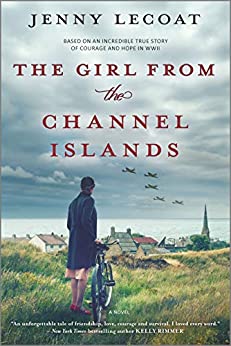
The Girl From the Channel Islands, by Jenny Lecoat

The Girl From the Channel Islands, by Jenny Lecoat

I listened to this historical novel on CD borrowed from the public library. I enjoy listening to a disc late at night, even though I have to deal with an occasional scratch on the disc which causes me to miss bits of the story.

Hedy Bercu, the protagonist in this novel, flees Austria in 1938 to escape the Nazis. She thinks she’ll be safe in Great Britain’s Channel Islands but, as World War II drags on and the islands are occupied by Germany, Hedy lives in constant fear that the wrong people will discover that she is Jewish.

The author, Jenny Lecoat, was born in the Channel Islands 16 years after some members of her family were deported by the Nazis and taken to concentration camps due to their resistance activities. This is Ms. Lecoat’s debut novel. I look forward to reading whatever she has in store for us next.


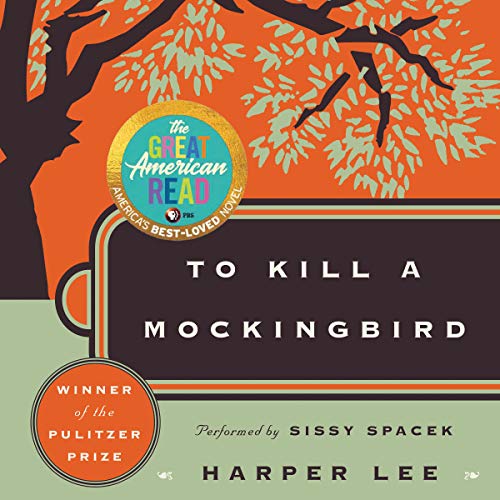
To Kill a Mockingbird, by Harper Lee

To Kill a Mockingbird, by Harper Lee

Although Banned Books Weeks is six months away, the increasing attacks on books in the United States prompted me to reread Harper Lee’s masterpiece. Instead of reading it in printed form this time, I decided to listen to Sissy Spacek’s performing of it on CD. I haven’t quite finished it, but I decided to include it in today’s post so The Girl From the Channel Islands wouldn’t have to stand alone.

It baffles me why people in 2023 want to ban To Kill a Mockingbird from school and public library shelves because it portrays the discrimination black people suffered in the 1920s or 1930s and, because at the same time, it portrays a white lawyer defending a black man who has been wrongfully arrested and charged.

I am against all book banning. One only needs to look at what happened in Germany in the 1930s to see what the results are.

If you don’t want your child to read a certain book, that’s your prerogative; however, you don’t have the right to dictate what anyone other than yourself and your children read.

Just because you are offended by a word in a book doesn’t make it a bad book. If you think you can erase the history of slavery, prejudice, and civil war in the United States by removing those references from books, you are mistaken.

If you think by removing sex education from school curriculum you will end all teen pregnancies, you’re only fooling yourself.

People who are afraid of knowledge and try to force their fears on the masses are the most dangerous people in the world.


Since my last blog post

I’ve tried to start overcoming the toll the challenges of the last eight months have taken on my limited energy.  Getting my two local history books published and working toward the publication of a family cookbook have been fun, challenging, frustrating, draining, and rewarding — all at the same time. April 25 will mark the 36th anniversary of when I first became ill with Chronic Fatigue Syndrome. Please don’t laugh. It’s a real illness. I have pushed myself too much since last July to accomplish some long-term dreams to get my local history writings published, and now I’m paying the price.

I’ll continue to push myself because that’s what I do and I don’t know how to live otherwise; however, in the coming weeks I’ll try to be a little kinder to myself and take some time to smell the roses.


Until my next blog post

I’ll start preparing for my Author Meet & Greet scheduled for April 15 at Second Look Books in Harrisburg, North Carolina.

I’ll reevaluate the family cookbook my sister and I have compiled. I’ve encountered a problem in the formatting for a paperback edition, so it might just be an e-book. That would be disappointing.

I hope you have a good book to read. If you’ve purchased Harrisburg, Did You Know? Cabarrus History, Book 1 and Book 2, I hope you’re enjoying them.

If you’ve subscribed to my newsletter and, therefore, downloaded a free copy of my southern historical short story, “Slip Sliding Away,” I hope you’ve enjoyed that small sample of my fiction writing.

Remember the three children and three adults murdered in that private school in Nashville, Tennessee. Remember how your local, state, and national politicians vote on assault-style weapons designed for war when the next election rolls around.

Remember the people of Ukraine.

Janet