Rosenwald Schools

In yesterday’s blog post, I wrote about the passage of the 15th Amendment to the U.S. Constitution in 1870. It, on paper at least, gave black men in our country the right to vote.

Of course, voting was just one of the ways that people of color were discriminated against in the United States. Today’s post looks at a very important and impactful way in which one man set out to try to level the playing field when it came to education.

Julius Rosenwald was the president of Sears, Roebuck, and Company. Mr. Rosenwald, a white man of the Jewish faith, read Booker T. Washington’s autobiography, Up From Slavery, in 1910. The book opened Rosenwald’s eyes to the inequities between the education of white children and black children.

Rosenwald got involved financially and served on the Tuskegee Institute Board of Directors. In 1912, Rosenwald gave $25,000 to Tuskegee to help it build private schools for black children across the nation. Rosenwald gave his permission for $2,500 of that gift to be used to build five public schools for black children near Tuskegee, Alabama.

The idea and project grew perhaps beyond the two men’s imaginations or expectations. Over the next 30 years, 4,977 Rosenwald Schools, 217 homes for teachers, and 163 shop buildings were built in 15 states.

There were 787 Rosenwald schools built in North Carolina, which was more than in any other state. Eleven of them were here in Cabarrus County. Three of them were in the Harrisburg section of the county, and it is those schools – Bellefonte, Morehead, and Oak Grove – that I focused on in my three-part newspaper series in 2006, which I later published in Harrisburg, Did You Know? Cabarrus History, Book 1. I do not have a photograph of any of those schools.

I drove by the Bellefonte Rosenwald School many times, but I did not know it was a Rosenwald School. In fact, I had not heard of Rosenwald Schools until about 20 years ago. I did not know Bellefonte was a Rosenwald School until after it had been burned down for practice by the fire department. That whole story is a sad situation. People making those decisions had no idea the value of the building. I think the architect’s sketch and floor diagram below are the plans used in the construction of the Bellefonte Rosenwald School.
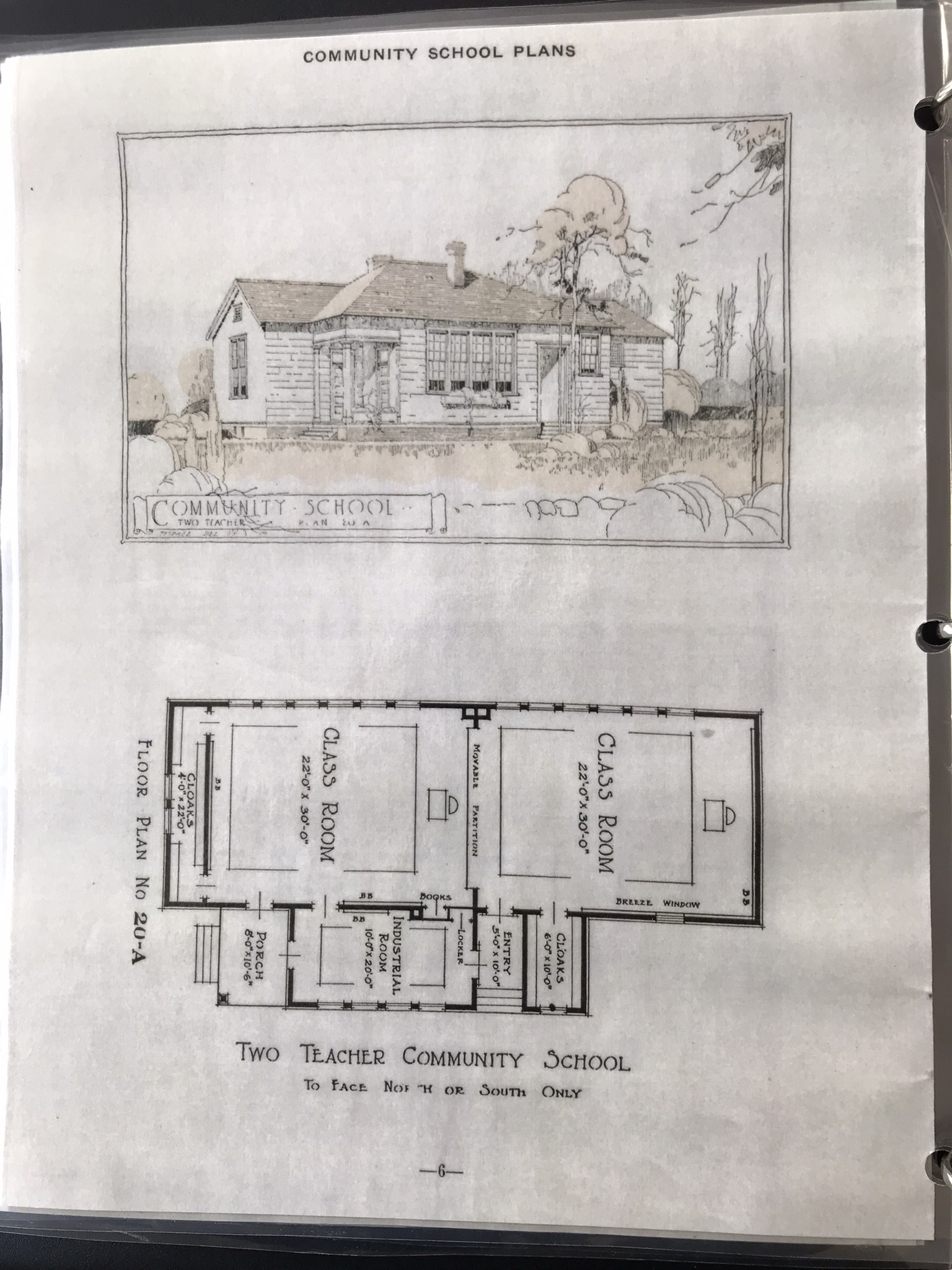
Possible design of the Bellefonte Rosenwald School at Harrisburg, NC.

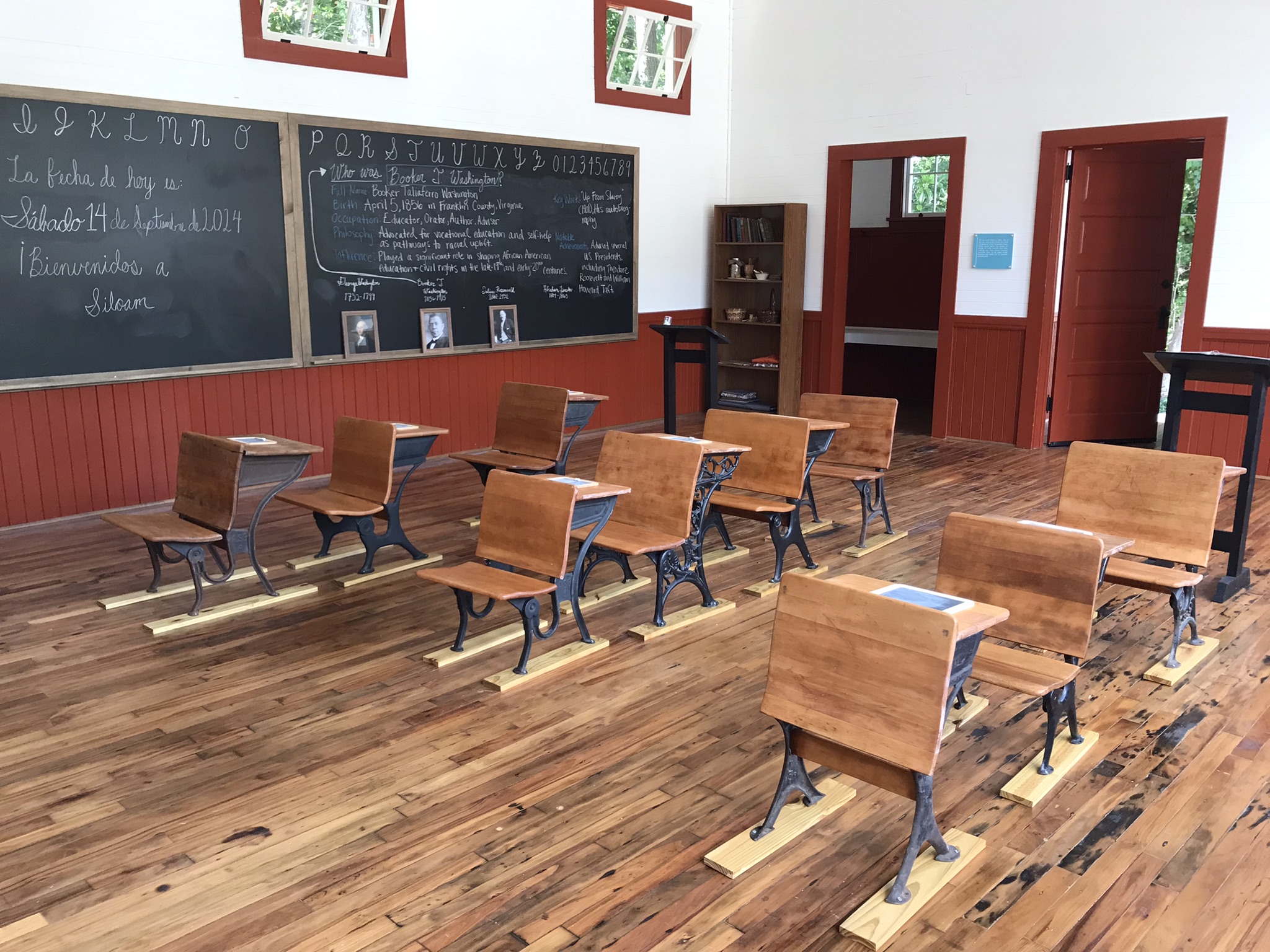
The Bellefonte Rosenwald School had two classrooms, whereas some of the schools had just one classroom. In 2023, the abandoned one-classroom Siloam (or Salome) Rosenwald School was moved from its original location in eastern Mecklenburg County, NC to the campus of the Charlotte Museum of History. It was restored and I took the photographs below in September 2024. (The museum’s website identifies it as Siloam School, but it was originally located on Salome School Road.)

Restored Siloam Rosenwald School moved to campus of Charlotte History Museum and restored in 2024
Classroom in restored Siloam Rosenwald School in Charlotte, NC, 2024

In 2006, I had the privilege of interviewing two women and one man, all in their 90s at the time, who had attended the three Rosenwald Schools in Harrisburg, NC. It was wonderful – and heartbreaking – to hear some of their memories of those days of racial segregation in our schools. I’m glad I talked to them when I did, for they are gone now. Much of their oral history would be gone with them, if I had not taken copious notes and published their memories.
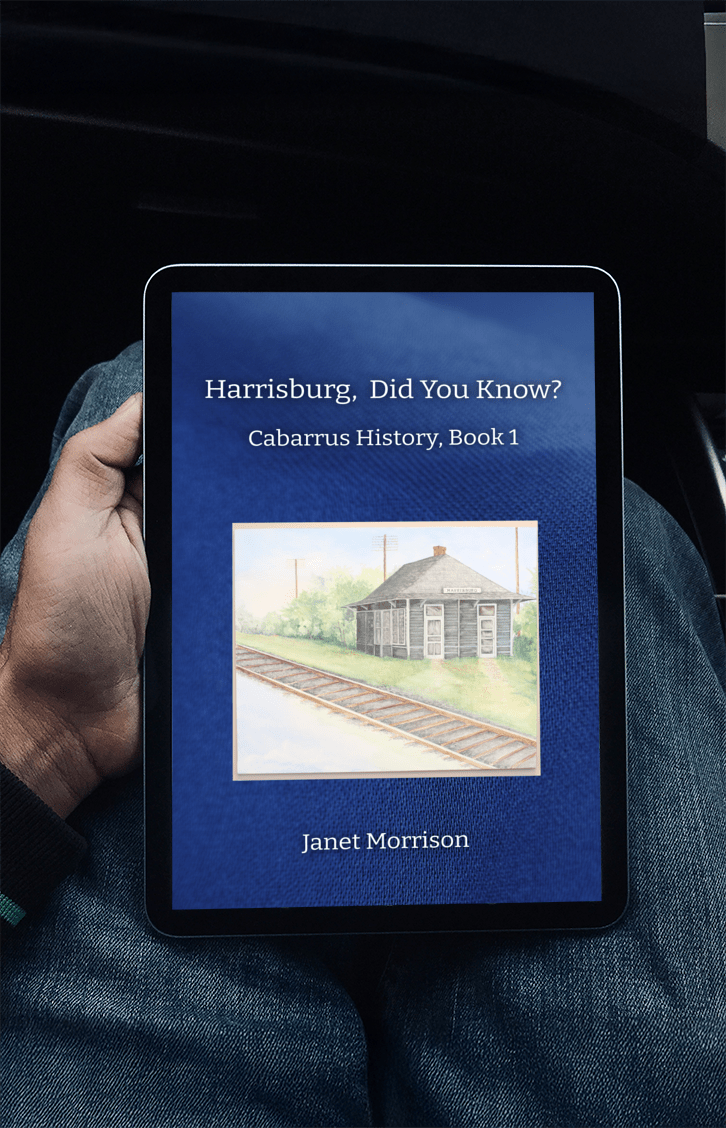
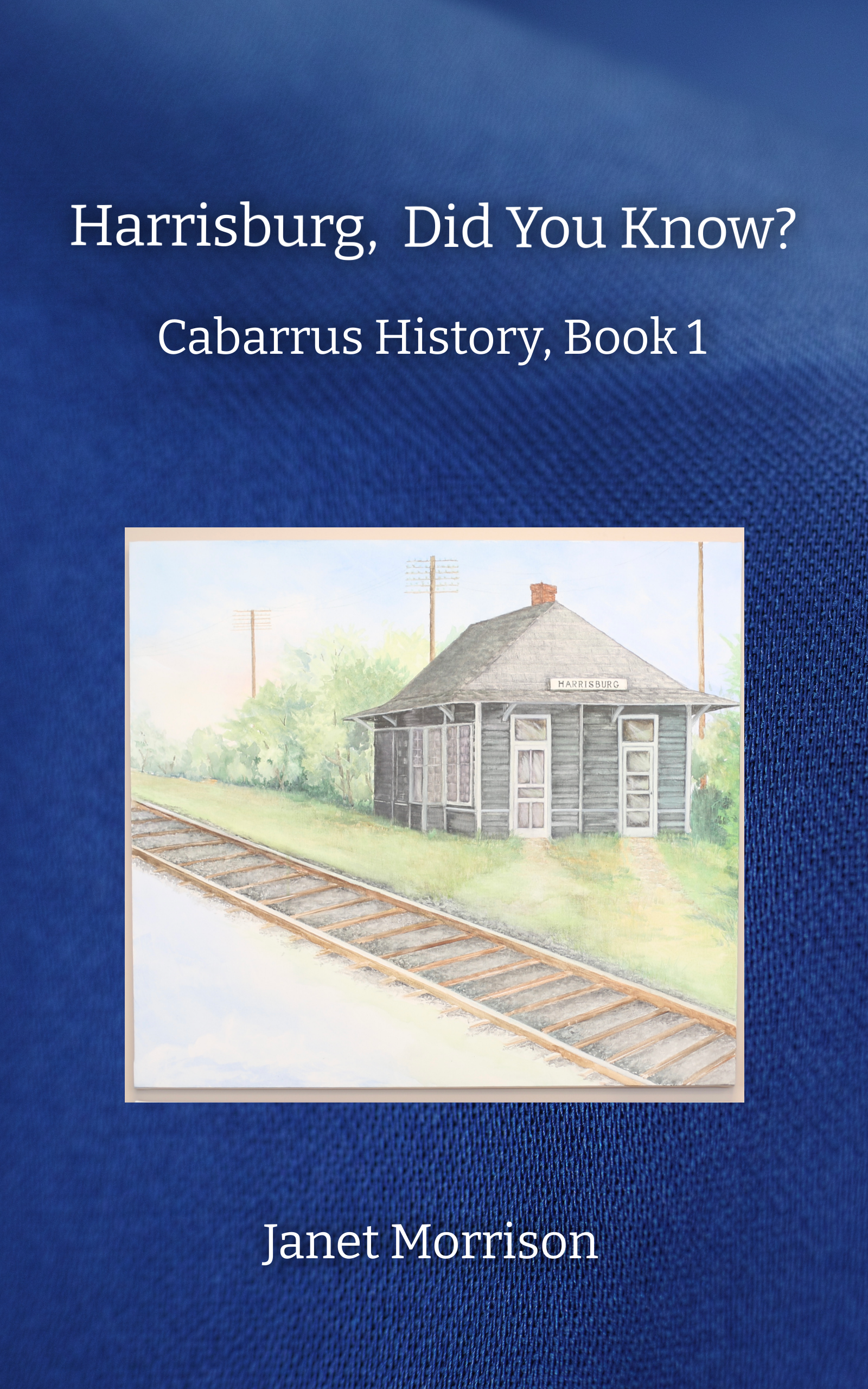
Harrisburg, Did You Know? Cabarrus History, Book 1, by Janet Morrison

If you would like to read more about Rosenwald Schools in general, including how they were funded and supported by their communities, along with some details about the three located in the Harrisburg section of Cabarrus County, North Carolina, look for Harrisburg, Did You Know? Cabarrus History, Book 1 on Amazon in paperback and e-book and at Second Look Books in Harrisburg in paperback.

Janet

All history is local, but no history is just local.

Puzzling banner at U.S. Department of Education

In celebration of the 250th anniversary of the signing of the Declaration of Independence, the U.S. Department of Education has chosen a questionable way to display its mindset. I suppose it accurately portrays the mindset of the Trump Administration, but one-third of the presentation seems odd, inappropriate, and partisan to me.

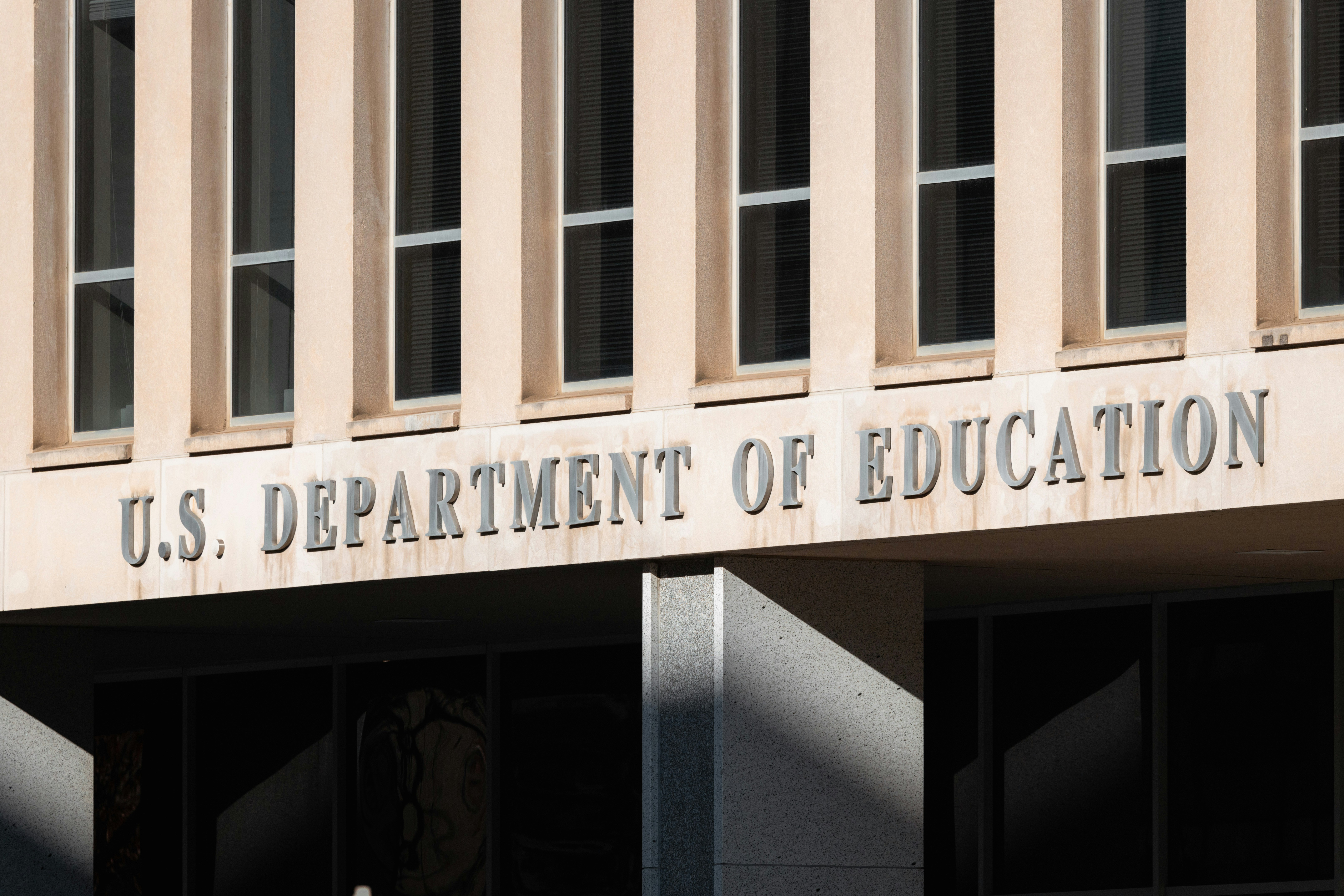
I did not find a photograph of the building including the banners I am referring to, so this picture will have to suffice. If you have not seen the banners I’m blogging about today, you can find various pictures by using a search engine.

U.S. Department of Education office in Washington, DC.
Photo by Andy Feliciotti on Unsplash

Keep in mind that Donald Trump promised in his campaign to abolish the Department of Education. As a first step toward doing that, his nominee to head the department was a woman whose administrative work experience was in the wrestling industry. Her job description was essentially: ‘Demolish the department you oversee.”

Since his inauguration in January 2025, Trump and his Department of Education have attacked education on every turn. But one of the three banners now hanging from the Lyndon Baines Johnson Department of Education headquarters in Washington, DC surely wins the prize for the most inappropriate way the department could have marked our country’s 250th birthday.

(I take that back. The most inappropriate banner would have been one of King George III of Great Britain.)

Two of the banners make sense. Booker T. Washington and Catharine Beecher had huge influence and impacts on education in the United States. But what did Charlie Kirk do for education?

Charlie Kirk founded Turning Point USA, a conservative nonprofit organization. Through Turning Point, Kirk held political debates on some college campuses. I do not see how that in any way qualified him for the third place in a total of three banners at the Department of Education. Surely there was someone else in American history who contributed more to public education than Charlie Kirk.

Julius Rosenwald readily comes to mind. Rosenwald was the financial and driving force behind the building of approximately 5,000 schools for black students when schools for non-white citizens were not supported by the government. I wrote a series of newspaper articles about Rosenwald Schools. (Those articles are included in my book, Harrisburg, Did You Know? Cabarrus History, Book One, available on Amazon.)

Photo of the front cover of Harrisburg, Did You Know? Cabarrus History, Book 1, by Janet Morrison
Harrisburg, Did You Know? Cabarrus History, Book 1, by Janet Morrison

Or perhaps a better choice than Charlie Kirk would have been a banner filled with the multi-racial, multi-ethnic faces representing the millions of teachers who have taught generations of Americans.

The banner displaying the stern and threatening face of Donald Trump hanging off the side of the U.S. Department of Justice headquarters marking our 250th birthday is reminiscent of the images I have seen of dictators adorning buildings in China and North Korea, except the facial features of those dictators are not as menacing as the images of Trump.

It is the image of himself that Trump chose to represent his second term in office. His squinty eyes project a sense of foreboding. I imagine it scares children. There is nothing comforting or reassuring about it.

When I saw pictures of that banner of Trump at the Department of Justice, I do not recall mentioning it on my blog, but what has been done at the Department of Education caused that image to come back to mind.

I do not recall other U.S. Presidents hanging banners of their faces on government buildings. Much of this seems like a frivolous waste of money. Am I wrong about that? It seems un-American and creepy to me for a U.S. President to plaster his name and glaring face on so many things.

The Trump Administration turning our nation’s 250th birthday into a political prop and personal display should come as no surprise. It would have been a perfect opportunity for the administration to put politics aside and celebrate like we did our 200th birthday in 1976, but they just cannot do that.

That is unfortunate, especially for the children and young adults who could have learned so much from a year-long true celebration. An organized year-long celebration could have inspired patriotism. I just don’t see the boxing or wrestling match planned for what’s left of the White House lawn doing that, but I digress.

Meanwhile, every day the Trump Administration gives us a different explanation for why we bombed Iran on Saturday morning. They apparently expect the American people to get as excited as they are about this war without telling us the same story twice about why they started this war. In fact, Secretary of Defense Pete Hegseth told us that we did not start it.

Janet

The government should be afraid of its citizens, not the other way around.