Saturday’s 1st Anniversary of Hurricane Helene

If you’re tired of reading my blog posts about Hurricane Helene, just imagine how tired of the slow road to recovery the residents of western North Carolina are.

Saturday marked the one-year anniversary of Hurricane Helene ravaging much of western North Carolina. As I wrote this on Saturday, North Carolina was in a State of Emergency in preparation for a possible hit from what was developing into Tropical Storm or Hurricane Imelda.

As you can imagine, the word “hurricane” rattles us in North Carolina – all 500 miles or so from the Outer Banks to the Tennessee line.

I have tried to include a report on the area’s recovery every Monday in my blog. You may be tired of reading about it, but I believe it is important for me to use my little blog to remind all of us that it takes years for people and a landscape to recover from a natural disaster.

We tend to have short attention spans now, and there are so many things happening in our country and world that news organizations cannot dwell on the past.

We tend to think in terms of hurricanes being a coastal threat, but most of Hurricane Helene’s rath was visited upon the Blue Ridge Mountains in western North Carolina, some 500 miles north of where it made landfall on the Gulf coast and dumped up to 31 inches of rain on a rugged, remote terrain. It was a “perfect storm” of wind and rain coming on the heels of several days of heavy rain.

It is estimated that Hurricane Helene did $60 billion in damage to North Carolina alone. Florida, Georgia, South Carolina, and Tennessee also had damage, but my state’s damage was so severe that I have chosen to concentrate on it.

Likewise, I have primarily reported on the status of road repairs. That is not to ignore the fact that damage to homes, businesses, and lives is even more important. It is just not possible for me to gather details about the recovery of those aspects of life. I hope my weekly updates about the repair and reconstruction of our roads and highways have served as an indicator that people’s lives are still in disarray.

Today I will share with you a sampling of the damage, the progress being made, and the never-give-up spirit of the people of western North Carolina. There have been many milestones in the recovery, but there is still a long way to go.

Please don’t forget the people.

A NASA photo looking down on a hurricane
Photo by NASA on Unsplash Not Hurricane Helene.

Coal deliveries via rail

WLOS-TV in Asheville reported that a CSX coal train arrived in Spruce Pine on Thursday – the first train headed south to arrive in Spruce Pine since Hurricane Helene hit a year ago. Sixty miles of CSX railroad tracks were severely damaged in the storm.

Fish hatchery

The North Carolina Wildlife Resources Commission reports that the Armstrong State Fish Hatchery in McDowell County, which was nearly destroyed by the hurricane, is anticipated to be fully operational in November. More than 600,000 hatchery fish died in the storm. The facility was partially operational last spring.

“Each dollar anglers spend to fish for mountain trout in North Carolina returns $1.93 to its economy and results in a $1.38 billion impact, according to new data from the North Carolina Wildlife Resources Commission (NCWRC).”

Federal Emergency Management Agency

Some people are still living in FEMA housing. In fact, people are in some cases opting to purchase the FEMA trailers to continue to live in.

WBTV in Charlotte reported that “state officials estimated as of Wednesday, Sept. 24, North Carolina had received federal funds to cover about 10.6% of the state’s total $60 billion Helene damage estimate.”

The station’s online report quoted an Avery County elected official as saying, “They keep changing the goalposts.” There is growing frustration in Avery and Yancey counties after FEMA denied funding for debris removal that local officials thought were eligible for reimbursement. Mountains of tree debris create fire hazard during dry spells in such heavily wooded areas.

Local officials in mountain counties are complaining about how slow the paperwork is being processed by FEMA along with inconsistency in guidelines. A FEMA spokesperson decline an interview with WBTV and offered no explanation of the cleanup projects in Avery County.

Veterans Restoration Quarters

Asheville Buncombe Community Christian Ministry’s decades-old transitional shelter for homeless veterans was severely damaged and uninhabitable after the hurricane.

The more than 250 residents were evacuated during the hurricane induced flooding of the Swannanoa River during the storm. Water was more than a foot deep as the last evacuation bus pulled away from the property.

The WBTV report stated, “The timeline for reopening the Veterans Restoration Quarters is likely years away and is estimated to cost at least $13 million.”

Food relief

Last week 1,800 boxes of groceries were packed by volunteers in Charlotte and distributed near Asheville by MANNA FoodBank, Second Harvest Food Bank of Metrolina, and Food Lion.

The CEO of MANNA FoodBank was quoted in a WSOC-TV report as saying, “And what we’re seeing is the highest need for emergency food assistance that we’ve ever seen in our 42-year history.”

Beloved Asheville

Excerpts from Beloved Asheville’s website: https://www.belovedasheville.com/:

“We became a major distribution hub sharing life-saving supplies with 15,000 people a day in impacted zones from Marshall to Chimney Rock, Barnardsville, Burnsville, Spruce Pine, Pensacola, Waynesville, Marion, Old Fort, Black Mountain, Swannanoa, Asheville, and Fairview–towns big and small and mountain hollers. We shared millions of pounds of food, millions of gallons of water, and millions of necessities from hygiene, first aid, and tools for clean up and repairs.”

“We know it will take years to heal these mountains and our people. And we are committed to be here for the long-haul until the last nail. And we need people to join us in this commitment. We carry deep wounds from this storm, but we are stronger than we could have ever imagined. We know that together we can restore, heal, and rebuild this beautiful land and lift up our mountain neighbors. We invite you to join this movement to heal Appalachia.”

Brother Wolf Animal Rescue

Excerpts from Brother Wolf Animal Rescue’s newsletter last Thursday, looking back over the year since Hurricane Helene completely wiped out their facility…

“We lost neighbors, communities were swept away, and Brother Wolf’s entire campus…everything we had built since 2007, was swallowed by floodwaters. Every physical asset we relied on to save lives was gone overnight.”

“The day before the storm hit, something extraordinary happened. In just two hours, 100 animals were urgently evacuated from our shelter and carried into the arms of loving foster homes, saving them from a fate we can’t bear to think of.”

“In the days after, with no power, no water, no internet, our staff met in parking lots and drove through broken roads to orchestrate the transport of 150 animals out of the disaster zone. With partners, we treated over 1,200 injured pets—covered in fish hooks, with broken bones, sick from toxic floodwaters—and stood beside their families as they survived a nightmare.”

“These are the facts, but no list of numbers can tell the whole story. Because the hurricane did not end when the waters receded.It is still here. It is in us. It will be with us forever—a lasting scar and, somehow, a guide for what’s to come.

“And through all of it, the animals have been our compass. 

“When people think of animal rescue, they often picture the animal being saved. The dog carried out of floodwaters, the sick cat adopted from an overflowing shelter. And yes—that is true, we do save them; but what is just as true is how those same animals save us.”

“Today, one year later, the world feels heavy – full of griefs far beyond our own. In this shared sorrow, we’ve discovered that even as we mourn what was lost, animals are finding new beginnings. Families are laughing again. Neighbors are still helping neighbors. And together, we are slowly healing.”

“The ASPCA opened their doors to us, temporarily sharing their space so we never had to stop helping animals. Not for One. Single. Day.”

“As we look ahead, we carry both the weight of what was lost and the bright hope of what is to come. The road to rebuilding will be long, but also filled with possibility—and we are more certain than ever that the future holds incredible things for Brother Wolf, for the animals, and for our community.

“A new chapter is unfolding for Brother Wolf, and your kind heart is woven into the fabric of our story. Your belief in us has carried us through the darkest year of our lives, and together we are stepping into a future brighter than we could have ever imagined. Our story continues, written in every life touched, and enduring beyond storms and time: in saving them, we save each other too.”

Jake Jarvis of Precision Grading

I have mentioned Jake Jarvis of Precision Grading of Saluda, North Carolina, several times on my blog since September 27, 2024. I continue to follow him on Facebook. He is still out and about with his heavy equipment in the mountains of North Carolina every day, helping people and not charging them a penny unless that have insurance money with which to pay him.

Hurricane Helene Update at the end of Year One of Recovery

As of Friday, 38 roads in North Carolina were still closed due to Hurricane Helene. That count included five US highways, two state highways, and 31 state roads. That’s the same as last Friday’s NCDOT report. Progress seems slow, but remember that more than 1,400 roads were closed a year ago Saturday.

Of course, sections of the Blue Ridge Parkway in North Carolina will remain closed for another year or more, and I-40 at the Tennessee line will continue to be just two lanes at 35 miles-per-hour for a couple more years while five miles of the highway are being rebuilt in the Pigeon River Gorge.

Janet

Books I Read in February 2025 & Hurricane Helene Update

I read three books last month that I want to share with you today. The three are very different from each other, so perhaps at least one of them with pique your interest. I recommend each of them.

After my comments about the books I read, I have my weekly update on Hurricane Helene recovery in western North Carolina. I look forward to the day that I no longer need to report on that September 2024 natural disaster.


I Was Anastasia, by Ariel Lawhon

Photo of the cover of I Was Anastasia, by Ariel Lawhon
I Was Anastasia,
by Ariel Lawhon

I was so impressed with Ariel Lawhon’s writing style and writing voice while reading The Frozen River in January, that I requested I Was Anastasia from the public library.

Reading this novel transported me back to the book and movie, Dr. Zhivago.

The Romanov family ruled Russia from 1613 until 1917. In 1918, Bolshevik revolutionaries executed Nicholas II, his wife, and their five children by firing squad. History tells us there were no survivors.

The Anastasia in this novel is the alleged daughter of Czar Nicholas II.

Anastasia’s survival of the Romanov family being executed by a firing squad has remained one of those mysteries of the last 100 years. Is it fact or fiction? Is it what would be called an urban legend today or a conspiracy theory or the truth?

The Serviceberry: Abundance and Reciprocity in the Natural World, by Robin Wall Kimmerer

Photo of the front cover of The Serviceberry: Abundance and Reciprocity in the Natural World, by Robin Wall Kimmerer
The Serviceberry: Abundance and Reciprocity in the Natural World, by Robin Wall Kimmerer

I was on the waitlist for this book for so long that I forgot what it was about. It was worth the wait, though, as this 118-page book was a fast read and thought-provoking.

The author is a member of the Citizen Potawatomi Nation and is a professor of Environmental Biology at The State University of New York. She pulls on the wisdom in those Potawatomi Nation roots to offer us a path to economies of sharing and reciprocity. Ms. Kimmerer’s premise is that Mother Earth holds all the resources we need.

The problem comes in when people see those resources as commodities instead of gifts. When something is a commodity, the idea of scarcity enters the picture. Scarcity triggers greed. When a resource is valued as a gift, it is treated with respect and is cared for.

The title of the book comes from the Serviceberry, which she calls a “calendar plant.” The author encourages us to adopt the wisdom of earlier times when we enjoyed only the seasonal produce. Referring to the seasonal practices of traditional Indigenous People, she writes, “Eating with the seasons is a way of honoring abundance, by going to meet it when and where it arrives.”

She writes, “We force the food to come to us, at considerable financial and ecological costs, rather than following the practice of taking what has been given to us, each in its own time.”

I must admit that I love the convenience of freezing the blueberries I pick in July so I can enjoy them on my oatmeal and in muffins throughout the winter, but do I really need to have access to watermelon from southern Mexico in January?

Taking the ideas presented in The Serviceberry: Abundance and Reciprocity in the Natural World, by Robin Wall Kimmerer to heart even in small, incremental ways by each of us could have a impact on how we view the gifts of the Earth.

The Lady’s Handbook for Her Mysterious Illness: A Memoir, by Sarah Ramey

Photo of the front cover of The Lady's Handbook for Her Mysterious Illness, by Sarah Ramey
The Lady’s Handbook for Her Mysterious Illness,
by Sarah Ramey

I learned about this book through Ann Patchett on Instagram. Ms. Patchett, in addition to being a well-respected author, owns Parnassus Bookstore in Nashville, Tennessee. She and her dog post videos on Instagram highlighting books she wants to publicize.

Little did I know when I requested The Lady’s Handbook for Her Mysterious Illness: A Memoir, by Sarah Ramey from the public library that it was going to in a multitude of ways describe my own health journey!

Ms. Ramey has some health problems I do not have; however, we share the diagnosis of Chronic Fatigue Syndrome/Myalgic Encephalomyelitis. In her book, Ms. Ramey details the physically- and emotionally-painful 14 years it took for her to get a diagnosis. I can identify with her journey, although it did not take me that long to get a diagnosis.

As Ann Patchett did, I recommend this book to everyone.

If you have not personally experienced years of being brushed off by doctors who are ignorant of this or some other mysterious illness, if you have never been told by a doctor that your painful and debilitating symptoms “are all in your head and you need to see a psychiatrist,” consider yourself lucky. Whether you know it or not, you probably know someone who has had such an experience.


Hurricane Helene Update

Interstate 40 in the Pigeon River Gorge in western NC: A full five months since Hurricane Helene dumped up to three feet of rain and hurricane-force winds on western North Carolina, on Saturday, March 1, one lane of I-40 in each direction opened with a 35-mph speed limit. The lanes are narrow and they’re separated by a 9-inch wide and 9-inch high median. Tractor-trailer trucks are allowed, but most truck drivers interviewed by a Charlotte TV station said they will avoid that part of the interstate.

Alongside these rebuilt/repaired lanes, the original east-bound side of I-40 will be rebuilt from the Pigeon River up. It is said now that it will take two or three more years to completely rebuild and reopen I-40 in western North Carolina.

As of Saturday, 148 roads in North Carolina were still closed due to Hurricane Helene. That count included 11 US highways, 16 state highways, and 121 state roads. That is an overall decrease of seven in the last week.

Sadly, a number of wildfires have broken out in Polk and Buncombe counties (and maybe others) over the weekend in the areas that have suffered so much from the hurricane damage. It will take years and years for all the trees that were downed by the hurricane to be cleared up. Until then, they lie as dead wood on the forest floors.

Nantahala National Forest: Perhaps Elon Musk didn’t hear President Trump say in January that he was going to take care of western North Carolina that was ravaged by Hurricane Helene last September. He claimed that President Biden hadn’t helped western North Carolina at all.

Here is an example of how President Trump is helping western North Carolina recover from that natural disaster: Last week 17 federal employees working to continue to clean up the 531,148- acre Nantahala National Forest lost their jobs because some teenaged computer nerds working for Elon Musk are being paid to eliminate the federal work force. I guess rich people and geeks don’t appreciate our national parks and forests – the enjoyment they bring to taxpayers and the tax dollars they generate from the tourists who spend money for lodging, food, and shopping in the surrounding areas.

Nantahala National Forest ranges in elevation from 1,200 feet to 5,800 feet. Recreational activities include whitewater rafting and camping. There are more than 600 miles of trails for hikers, horse-back riders, mountain bikers, and off-highway vehicle riders.

Great Smoky Mountains National Park

As of Friday, 12 National Park Service employees stationed in Great Smoky Mountains National Park had lost their jobs. I can’t help but wonder if one or more of them assisted me in some way when I visited the park last summer.

Perhaps the park ranger who led a group of us on a hike to see three remote waterfalls lost her dream job last week. No doubt most, if not all of those 12 people, were still working to clear hiking trails and rebuild foot bridges damaged or destroyed by Hurricane Helene.

Visited by more than 13 million people in 2023, Great Smoky Mountains National Park is the most-visited US national park. It covers 552,427 acres in NC and TN.

Blue Ridge Parkway

At least one National Park Service employee assigned to the Blue Ridge Parkway lost their job last week. I report on the post-Helene status of the Blue Ridge Parkway almost every week in my blog. How are repairs and the rebuilding of that road and strip of right-of-way supposed to be accomplished with fewer employees than it had before the hurricane?

As I reported on February 17, 2025: “The flooding and wind from Hurricane Helene last September caused 48 landslides in one 38-mile section of the parkway between Asheville and Linville. There are no estimates for when those 38 miles will be completely rebuilt or if all of it can even be rebuilt, but it will not happen in 2025.”

While I’m on the topic of National Park Service cuts… six employees assigned to Cape Hatteras National Seashore lost their jobs last week. The Outer Banks of North Carolina were not damaged by Hurricane Helene, but the Cape Hatteras National Seashore is a fragile, beautiful, and wild strip of land that is buffeted by the part of the Atlantic Ocean known as “the Graveyard of the Atlantic” due to its storms and hundreds of shipwrecks.

The Blue Ridge Parkway, Great Smoky Mountains National Park, and Cape Hatteras National Seashore are among the most-visited parks in the United States. The statistics I include today are just a few of the some 1,000 national park service employees and 3,400 national forest service employees Elon and Trump are letting go.

You know the National Forest Service slogan: “Only you can prevent forest fires”? It is true today, and apparently only you can put out a fire in a national forest. The employees have been fired in the name of government efficiency.

WNC Nature Center in Asheville will reopen on March 17. The 42-acre park includes the 100-year-old Recreation Park Zoo and the Nature Center which opened in 1977. The center showcases wildlife of the Southern Appalachian Mountains. As western NC slowly reopens to visitors, check out the center’s website (https://wildwnc.org/) and start planning your vacation!

Innovative Bridge Company of Petal, Mississippi has built 40 bridges in seven western NC counties since Hurricane Helene. The company had never done disaster recovery work until the City of Asheville and the NC Department of Transportation reached out to them last October.

The company repurposes flat rail cars and boxcars into foot bridges and vehicular traffic bridges. These temporary emergency bridges will be in place until permanent bridges can be constructed over the next two-to-three years. There are two short videos on the company’s website showing the work they’re doing in western NC.

Precision Grading of Saluda, NC continues to donate his time, materials, and equipment to help individuals at no cost to them. He is doing this through his own money and donations from the public. So far, he has done this hard work for more than 150 days.

The 21st Century Packhorse Librarian continues to take, organize, and distribute book donations to put books in the homes of people who lost their access to books or income due to the disaster.

Brother Wolf Animal Rescue in Asheville is continuing to work from temporary quarters. After five months of fundraising, the organization is looking for a safe location where they can rebuild.


Until my next blog post

Thank you for reading my blog.

I hope you have a good book to read to take your mind off what happened at the White House on Friday.

Remember the people of Ukraine and western North Carolina.

Janet

The Importance of Marbury v. Madison Today

This is a timely anniversary date that landed in my lap!

The US Supreme Court heard the arguments for the Marbury v. Madison case on February 11, 1803, and handed down its decision 222 years ago today on February 24, 1803. That’s a quick turn around compared to today’s Supreme Court!

A photo of the US Supreme Court building.
The US Supreme Court Building.
(Photo by Tim Mossholder on Unsplash.)

It isn’t often that one hears a reference made to this US Supreme Court case, but a news commentator on TV mentioned it just 11 days ago and another one mentioned it four or five days ago. I chose Marbury v. Madison for today’s blog post when I created my 2025 editorial calendar last year. Talk about serendipity! Little did I know last fall what a place we would be politically today.

In a nutshell, Marbury v. Madison established the right of the courts to determine constitutionality of the actions of the Executive and Legislative branches of government in the United States.

The three branches of the federal government are equal; however, the Judicial branch has the authority to rein in the other two branches when they take actions deemed to be in conflict with the United States Constitution.

Photo of a top spinning in perfect balance.
And image of what balance looks like. (Photo by Christophe Hautier
on Unsplash.)

Until January 20, 2025, I took Marbury v. Madison for granted. I will never take it for granted again.

When I started writing today’s post a week ago, I copied what the National Archives website said about Marbury v. Madison and saved it as a Word document in case the National Archives website disappeared. (The USAID website disappeared for a while before being moved to the US State Department website. Incidentally, as I wrote this paragraph on Friday afternoon, a judge ruled that the Trump Administration can proceed to dismantle USAID.) Trump fired the National Archivist about 10 days ago. We historians fear that he or Elon will torch the National Archives. That’s one way to erase history, but I digress. (It is a real fear, though.)

Back to Marbury v. Madison

Quoting the National Archives website (https://www.archives.gov/milestone-documents/marbury-v-madison) because I cannot state the case’s background any better: “In 1801, outgoing President John Adams had issued William Marbury a commission as justice of the peace — but the new Secretary of State, James Madison, refused to deliver it. Marbury then sued to obtain it. With his decision in Marbury v. Madison, Chief Justice John Marshall established the principle of judicial review, an important addition to the system of “checks and balances” created to prevent any one branch of the Federal Government from becoming too powerful.”

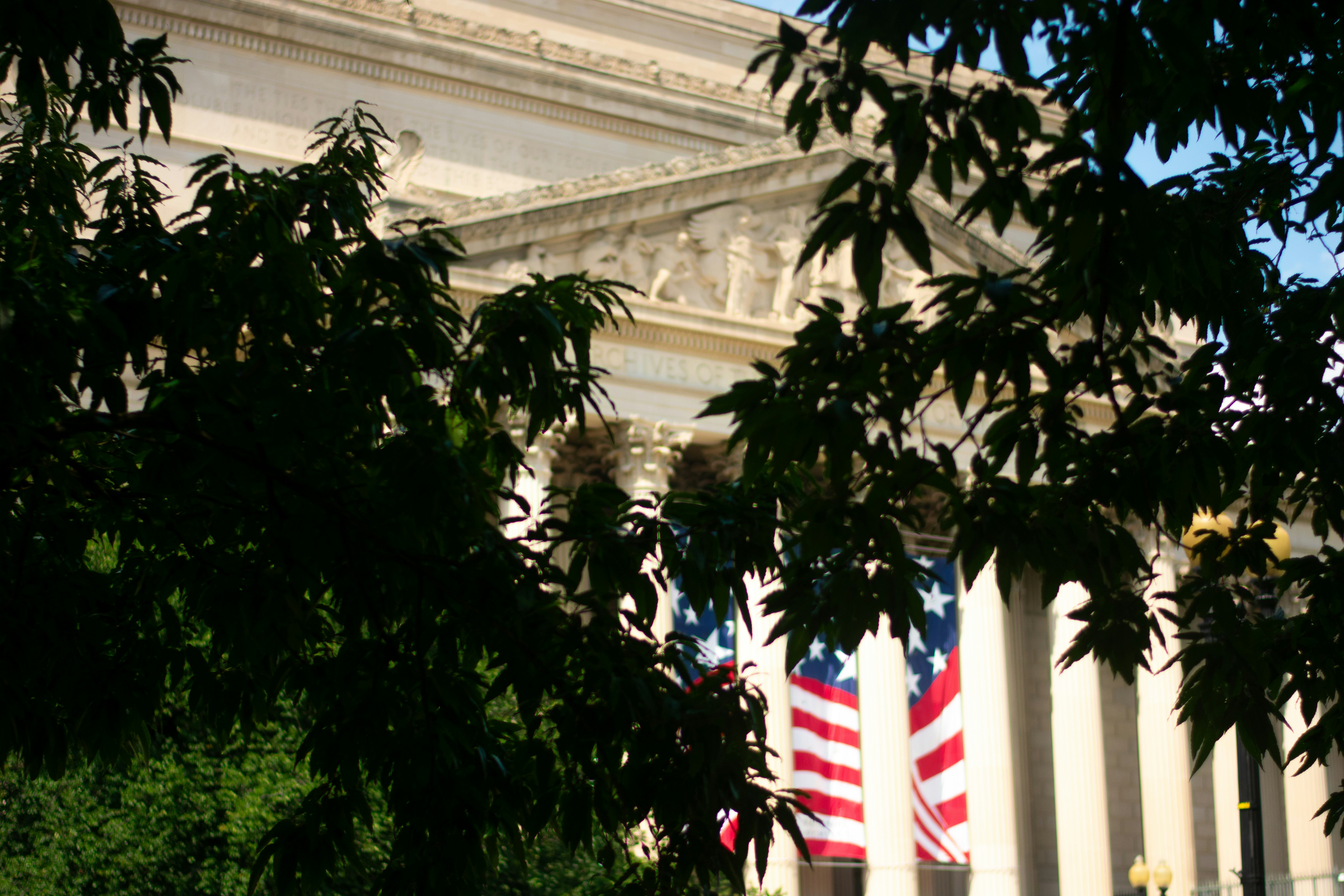
Photo of the National Archives building in Washington, DC
US National Archives, Washington, DC. (Photo by Juliana Uribbe on Unsplash.)

Also, quoting from the National Archives website: “‘A Law repugnant to the Constitution is void.’ With these words written by Chief Justice Marshall, the Supreme Court for the first time declared unconstitutional a law passed by Congress and signed by the President.”

I think some folks living and working on Pennsylvania Avenue in Washington, D.C. need to read up on this. We now have a US President who wrote on social media nine days ago, “He who saves his Country does not violate any Law.” It’s up for debate whether he is doing anything to save our country, but the frightening thing is that he has put in writing that he is above the law.

He also said that when it comes to agencies of the Executive Branch only he and the US Attorney General can interpret laws. That might be in conflict with the principle established by Marbury v. Madison.

It is the US Supreme Court that will ultimately decide if the US President does anything that is unconstitutional.

The US Constitution gave the President the power to veto an act of Congress and appoint federal judges with the advice and consent of the US Senate, and it gave Congress the power to impeach the President or a judge. The powers of the Supreme Court were not spelled out in such detail. When Marbury v. Madison came along in 1803, Chief Justice Marshall – who strongly believed that the Supreme Court was equal in power to the Executive and Legislative branches – led the court in seizing the opportunity to establish the principle of Judicial Review.

The US Supreme Court’s authority to declare federal or state laws unconstitutional has never been seriously challenged. I hope that will still be true in 2029.

In case you’re wondering what happened to William Marbury…

With the decision made in the Marbury v. Madison case, the Secretary of State was directed to deliver to William Marbury his commission as a justice of the peace for the county of Washington, in the District of Columbia.

In the big scheme of things, I wonder if the parties involved in this case had any idea going into it that it was destined to be a landmark decision.

In conclusion

I still have freedom of speech and I will continue to use my blog as a platform to share my opinions and my research into the US. Constitution. Those of you who have been reading my blog for more than 10 years know that is nothing new. I just feel more compelled now to blog about the US Constitution.

The words of the preamble to the US Constitution with a slightly blurred image of the American flag in the background.
Preamble to the Constitution of the United States of America

My college major was political science, and I regret that I only took one Constitutional Law course. In fact, I was so intimidated by the subject that I procrastinated taking the required course until my final quarter. (The university was on the quarter system then instead of the semester system.)

As it turned out, the course was fascinating and I wished I’d taken it earlier so I would have had time to take more constitutional law courses. I readily admit that one constitutional law course does not a constitutional law expert make, but I’m trying to shine a light on the document.


Hurricane Helene Update

As of Friday, 155 roads in North Carolina are still closed due to Hurricane Helene, including Interstate 40 near the Tennessee line. That is a decrease of 14 in the last week, inspite of snow and some sub-zero wind chills. This week’s count consists of 1 interstate highway (I-40), 11 US highways, 17 state highways, and 126 state roads. (To give some perspective, it has now been five months since the hurricane.)

I failed to report in last Monday’s blog post that Eric Church’s foundation, Chief
Cares, has purchased land in Avery County, NC and hopes to place 40 modular homes to house families that lost their homes due to Hurricane Helene. A road must be built and water and sewer lines installed. Church and his foundation hope to secure land in adjoining counties so they can provide more housing for hurricane victims. Church and fellow-country music singer Luke Combs organized and spearheaded a concert at Bank of America Stadium in Charlotte last October to raise money for hurricane relief.

The work of Brother Wolf Animal Rescue and The 21st Century Packhorse Librarian continue and will appreciate your support for the foreseeable future.

Jake Jarvis of Precision Grading in Saluda continues to work in the area every day free-of-charge with his heavy earth-moving equipment. He has built bridges, reconstructed driveways and private roads, and excavated places for homes to be rebuilt. The last couple of weeks have been challenging due to ice, snow, and high winds.


Until my next blog post

I hope you have a good book to read. Next Monday I plan to blog about the books I’ve read in February.

Value your freedoms, family, and friends.

Remember the people of Ukraine and western North Carolina.

Janet

Books Read in January and Hurricane Helene Update

January turned out to be a good reading month for me, and I have much to report on Hurricane Helene recovery in western North Carolina. I’ll jump right in and tell you about some of the books I read.


The Frozen River, by Ariel Lawhon

Photo of front cover of the book The Frozen River, by Ariel Lawhon.
The Frozen River,
by Ariel Lawhon

My sister recommended that I read this historical novel. Finally, when it was chosen as the January read for the book club we’re in, I checked it out. I immediately fell in love with the way Ariel Lawhon writes.

The novel is set in Maine in the 1700s. The story switches from one decade to another, not necessarily in chronological order. That’s not my favorite way to read a story, but this one worked better for me than others I’ve read.

The story is inspired by Martha Ballard, a real-life midwife in Maine at that time. As Lawhon explains in her author’s notes at the back of the book, she did take creative license in some areas to make it a more manageable story. That said, the book is well-researched and in the author notes Lawhon explains why the book sometimes deviates from the facts. After all,… it is fiction!

The novel includes murder, rape, attempted rape, young love, vengeance, lying, under-handed business dealings, the unique lifestyle along a river that freezes over in winter, and the birth of numerous babies. There is conflict between Martha Ballard and a young, inexperienced physician who moves to the town. There are court cases, and there are judges of questionable character. There is a lot going on in this novel!

As an aspiring novelist, I plan to read The Frozen River again just to study how it is written.

I highly recommend The Frozen River to anyone who likes to read historical fiction set in 18th century America.


The Lion Women of Tehran, by Marjan Kamali

Photo of front cover of book, The Lion Women of Tehran, by Marjan Kamali
The Lion Women of Tehran,
by Marjan Kamali

This novel follows the friendship of two people through the 1950s, 1960s, and 1970s against the backdrop of what was happening in Iran. Iran went from being under the rule of the Shah to being under the rule of the Ayatollah Ruhollah Khomeini.

For those of you who might not have lived through those three decades… It was under the Ayatollah Ruhollah Khomeini that women lost all their rights. The radical Islamic view that women are put on earth for one purpose – to wait on and obey men and bear their children – is what Iran has turned into. They are not to be seen. It wasn’t enough that they had to wear the hijab in public. As of a couple of weeks ago, windows in their homes through which it would be possible for a man to see them were outlawed. Let that sink in!

Back to the novel… In The Lion Women of Tehran, we see two young girls become friends although Ellie is from a privileged family and Homa is from a poor family. Ellie, in fact, defies her mother’s wishes that she not befriend someone from the poor part of town.

Ellie and Homa share their dreams of attending college and becoming professionals in a modern Iran. Homa even aspires to get a law degree and someday be a judge. This is a reasonable aspiration for a girl in Iran at that time. Girls are seeing women have jobs they\ had been excluded from until the somewhat enlightened time of the early 1960s.

The book follows the ups and downs of Ellie and Homa’s friendship and the challenges of the cultural and governmental restrictions on women and free speech.

Spoiler Alert: When the novel comes to an end, one of the two – women now – has escaped to the United States. The aspiring lawyer has been raped in prison for protesting injustice and she reaches out to her now-estranged friend in America to help her get her teenaged daughter out of Iran.

The Lion Women of Tehran had an especially chilling affect on me because I was reading during the first week of Trump’s second administration when we were witnessing what it looks like when a country’s leader daily pushes the limits of the power of the office he or she holds – even in a democracy.  

This is the second novel I’ve read by Marjan Kamali. In October 2019, I read The Stationery Shop. (See my November 4, 2019 blog post, A New Favorite Novel? in which I told how impressed I was with Marjan Kamali’s writing.)


How to Stand Up to a Dictator, by Maria Reesa

Photo of the front cover of the book, How to Stand Up to a Dictator: The Fight for Our Future, by Maria Reesa
How to Stand Up to a Dictator: The Fight for Our Future, by Maria Reesa

I wish I could take credit for reading I Was Anastasia and How to Stand Up to a Dictator in the same month, but I was at the mercy of the waitlists at the public library. Sometimes things just fall into place through no effort of our own!

After hearing Maria Reesa interviewed on NPR and learning that she had written a book, I immediately got on the waitlist for it at the public library.

Maria Reesa is from The Philippines. She was awarded The Nobel Peace Prize in 2021 for her courageous work at a journalist.

In her book, How to Stand Up to a Dictator, Reesa writes from her own experience. She was arrested for reporting the truth – a truth that ex-President Rodrigo Duterte of The Philippines did not want people to know.

Meticulously written, the book points out how in many ways what happens in politics in The Philippines eventually happens in politics in the United States. That was a revelation for me, but the examples she gave painted a compelling picture.

Near the end of the book, Reesa gives the 10-Point Plan to Address the Information Crisis that she and fellow-2021 Nobel Peace Prize recipient Dmitry Muratov presented at the Freedom of Expression Conference, Nobel Peace Center, Oslo, Norway, on September 2, 2022.

In a nutshell, points 1-3 call on transparency and a consideration for human rights by tech companies, right to privacy of citizens to be beefed up, and public condemnation of attacks on journalists.

Points 4 through 9 are directed at the European Union, and point 10 calls on the United Nations to “Create a special Envoy of the UN Secretary-General focused on the Safety of Journalists (SESJ) who would challenge the current status quo and finally raise the cost of crimes against journalists.”

Reesa calls on young people to put their phones down and focus on the people they love. She writes, “You find meaning by choosing where to spend your precious time.” We can all benefit by taking that to heart. She told a high school audience that they can’t find meaning on social media.

She writes about how social media can easily be hijacked by individuals and elected officials with ill intent, and how misinformation spreads like wildfire while fact-checking and retractions never spread as quickly or easily as lies.

Reesa says if the rest of the world wants to know what unbridled social media will do to their country, all they need to do is look at what happened in The Philippines.

In 2012, Reesa cofounded a digital only news website in the Philippines called Rappler. Rappler has exposed corruption and manipulation in government and in technology companies.

She warns, “the Philippines is ground zero for the terrible effects that social media can have on a nation’s institutions, its culture, and the minds of its populace. Every development that happens in my country eventually happens in the rest of the world – if not tomorrow, then a year or two later.”

She goes on to say, “This book is my attempt to show you that the absence of rule of law in the virtual world is devastating.” She warns us, “Don’t become a Monster to Fight a Monster. Embrace Your Fear.”


Blogging for Authors, by Barb Drozdowich

Photo of front cover of the book Blogging for Authors, by Barb Drozdowich
Blogging for Authors,
by Barb Drozdowich

Reading this book made me aware of some ways I’m falling down on the job when it comes to my blog. The author says that an author’s blog is “… by far the most important method of communicating with your readers.” She also says, “… you want readers to be able to Google the genre they read and find your site in a search.”

Since I write local history and historical fiction, there’s a slim-to-none chance someone will find my blog by typing either of those topics in a search engine. Just for fun, I tried.

I have tried to blog about historical events to convey my lifelong foundation in the study of history and my ability to do historical research. I’ve blogged about the craft of writing as I continue to learn more about it every day. I hope I’ve been successful, but now I might need to consider how to express how those things are converging in my effort to write my first historical novel. Stay tuned!


Hurricane Helene Update

As of Friday, 171 roads in North Carolina are still closed due to Hurricane Helene, including Interstate 40 near the Tennessee line, but that’s a decrease of 12 since the Friday before. That count consists of one interstate, 12 US, 19 state highways, and 139 state roads. There is no estimate for when the Blue Ridge Parkway in North Carolina will be fully reopened.

WLOS in Asheville reported that the Biltmore Estate donated at least 40 hotel rooms of furniture to the Habitat for Humanity Restore to resell. All proceeds from items sold at a Habitat for Humanity Restore, of course, funds new home construction.

WLOS is also reporting a new partnership in Haywood County between Mountain Project and Habitat for Humanity as others to build 10 homes specifically for families impacted by Hurricane Helene.

Verizon has partnered with ForgiveCo, a public benefit corporation, to pay off $10 million in debts owed by 6,500 people in the 39 North Carolina counties impacted by Hurricane Helene. A Verizon spokesperson said the company thought they needed to do more than restore customers’ telephone service. The debt forgiveness recipients were randomly selected.

The newspaper in Boone, The Watauga Democrat, reported that NC Gov. Josh Stein announced a joint $30 million small business grant program with Dogwood Health Trust to support small businesses affected by Hurricane Helene.

Businesses with annual revenue up to $2.5 million are eligible for grants up to $50,000 from the Western North Carolina Small Business Initiative Grant Program. Dogwood Health Trust, a private foundation, created the Western North Carolina Small Business Initiative last fall in response to the Hurricane Helene disaster.

Businesses in the 28 counties and the Eastern Band of Cherokee Indians covered by President Biden’s federal disaster declaration or in Dogwood Health Trust’s 18-county footprint and that meet revenue requirements are eligible to apply for a grant.

Governor Stein announced that the State of North Carolina is awarding $3 million to Baptists on Mission and $3 million to Habitat for Humanity NC for their housing repair initiatives in the western part of the state.

Photo of a man using a power saw to cut a piece of lumber
Photo by Greyson Joralemon on Unsplash

The Boone newspaper reported stated: “In the wake of Helene, impacted businesses lost $13 billion in revenue. These grants will help businesses make payroll, pay operating expenses, and stabilize the local economy as tourism slowly ramps up again.”

The work of Brother Wolf Animal Rescue and The 21st Century Packhorse Librarian continue and will appreciate your support for the foreseeable future.

Jake Jarvis of Precision Grading in Saluda continues to work in the area every day free-of-charge with his heavy earth-moving equipment. He has built bridges, reconstructed driveways and private roads, and excavated places for homes to be rebuilt.

It is said that no good deed goes unpunished. After doing what he thought was due diligence, Mr. Jarvis was scammed out of $77,000 he paid for a bulldozer in Texas. He wanted a larger bulldozer so he could help more people. A friend of his has set up a GiveSendGo fundraiser to help Mr. Jarvis replace the money he pulled out of savings for the bulldozer which never was delivered.


Until my next blog post

I hope you have a good book to read. If you’re a fan of historical fiction, I highly recommend The Frozen River. If you are concerned about the role of social media in our world and particularly in our politics, I highly recommend How to Stand Up to a Dictator.

It has been a tough week since last Monday’s blog post. The airplane and helicopter collision in Washington, DC; the Medivac plane crash in Philadelphia; wildfires in some of the Hurricane Helene-ravaged parts of western North Carolina;….

Remember the people of Ukraine and all the places where people are suffering through no fault of their own.

Janet

What I read in December 2024

After not reading a single book in its entirety in November, I hit the ground running in December. Last month I read a variety of genres and book lengths.

The Road to Wisdom: On Truth, Science, Faith, and Trust, by Francis S. Collins

Photo of front cover of The Road to Wisdom: On Truth, Science, Faith, and Trust, by Francis S. Collins
The Road to Wisdom: On Truth, Science, Faith, and Trust, by Francis S. Collins

To refresh your memory, Dr. Francis S. Collins is a geneticist who has discovered genes that cause various genetic diseases. He was Director of the National Institutes of Health (NIH) from 2009 until 2021. Prior to that, he headed the NIH’s National Human Genome Research Institute.

I had the good fortune to hear Dr. Francis S. Collins speak at Queens University of Charlotte years ago. He was a captivating and down-to-earth speaker. He spoke about how the more he learned about science, the more he believed that God created all things.

It is a point he repeats in this book. He says that there are just too many facets of nature that were created with a degree of precision that could not have happened by chance. Knowing that about him, I eagerly awaited the book to be ordered by the public library.

In the book, he addresses truth, science, faith, and trust individually and how each one contributes to the others and to wisdom. He is concerned about the public’s growing mistrust of science and how scientists and physicians such as Dr. Fauci have become scapegoats for science deniers and far too many politicians.

I highly recommend this book!


“The Answer is No,” a short story by Fredrik Backman

“The Answer is No: A Short Story,” by Fredrik Backman

This short story by the author of A Man Called Ove, is in somewhat the same vein as that novel. The main character in “The Answer is No,” just tries to have a quiet day with no contact with other human beings. He experiences one interruption after another and discovers that saying “No” is futile. He gets pulled/pushed into one neighborhood problem after another. You find yourself simultaneously laughing and feeling sorry for him.

Incidentally, the book is free to read through Kindle Unlimited and $1.99 to purchase for Kindle.


Framed, by John Grisham and Jim McCloskey

Framed, by John Grisham and Jim McCloskey

This latest book by John Grisham along with Jim McCloskey will tempt you to lose all your faith in our judicial system – from corrupt police officers to corrupt lawyers to corrupt judges… one comes away from this nonfiction book of case after case where justice was miscarried.

John Grisham and Jim McCloskey take turns writing the chapters in this book. Each chapter is about a different true example of how corrupt people on various levels have miscarried justice on purpose.

It is a sobering book. The doom and gloom of each chapter had a cumulative effect on me. I recommend you read it, but it is not a pleasant read.


“Bangkok Has Him Now: How Would You Escape?” by Emma Dhesi

“Bangkok Has Him Now: A Short Story,” by Emma Dhesi

This is a short story – a thriller short story – by a Scottish author, Emma Dhesi. I have been fortunate to watch and listen to several online writing workshops conducted by Emma Dhesi. Reading this fast-paced thriller short story was the first time I took the opportunity to read something she wrote and published. It grabbed me by the throat from the beginning and held my interest throughout.

Hurricane Helene Update

As of Friday, 184 roads in NC, including a portion of I-40 near the Tennessee line, remained closed due to the damage wreaked by Hurricane Helene. Snow has now been added to the equation and will be a given for much of the next two-to-three months.

Most of the Blue Ridge Parkway remains closed, with no estimate of when it will be fully reopened.

All the people living in temporary housing – in RVs, campers, FEMA trailers, etc. and those still waiting for repairs to the houses they’re still living in are feeling the brunt of the winter cold.

I haven’t mentioned Jake Jarvis of Precision Grading in a few weeks, but that man has hardly missed a single day since September 25 in his one-man effort to help as many people in western North Carolina as possible. He is not charging for his time or materials and he is, no doubt, wearing out his equipment.

I follow Precision Grading on Facebook. The photographs of some of the places he has taken his heavy equipment are astounding. He appears to do all this with a wonderful attitude. Thursday night he posted that it was Day 104 post Helene. That day he had cut a new driveway for a woman in Bat Cave, NC who had only had access through a neighbor’s property until then. Her driveway had been cut in half by landslides and volunteers trying to help her had been scared off by the 100-foot drop off. Jake was able to cut a new driveway for her, so she can now safely access her own home more than three months after the storm. This is just one example of the work Jake has doing. If you wish to donate to help him cover the cost of materials, fuel, and equipment maintenance, his address is Precision Grading, 99 Polaris Drive, Saluda, NC  28773.

The work of Brother Wolf Animal Rescue and The 21st Century Packhorse Librarian continue and will appreciate your support for the foreseeable future. You can search for them and Precision Grading online for more information.

Until my next blog post

I hope you have a good book to read.

As western North Carolina and other areas continue to recover from Hurricane Helene, our hearts hurt for the people affected by the wildfires in California. We know recovery will take years and their lives will never be the same. Life is fragile. Everything we know can change in the blink of an eye.

Take care of each other.

Remember the people of Ukraine, too.

Janet

#OnThisDay: 4th Anniversary of the Attempted Coup

What happened in Washington, DC four years ago today is too important for me to overlook for this blog.

          Just like September 11, 2001 is forever etched in my mind, so too is January 6, 2021. There are some things you just cannot unsee.

          On September 11, 2001 I stood in front of my TV in horror as I watched the second plane crash into the World Trade Center. On January 6, 2021 I stood (yes, stood!) in front of my TV in horror as I watched insurrectionists storm the US Capitol at the encouragement of Donald Trump.

          Until 2021, the meeting of the US Congress to certify the electoral votes in the recent presidential election was a mundane, rubber-stamp kind of meeting. Most citizens weren’t even aware that such a meeting took place. It usually received no more than a brief mention on TV news broadcasts.

Photo by Andra C Taylor Jr on Unsplash

          Until 2021.

          I will never forget the images of the rioters storming the US Capitol, bashing in windows, attacking police officers, calling for the hanging of Vice President Mike Pence, breaking into offices to break and steal whatever they could, and eventually breaking into the chambers of the House of Representatives to pillage.

          All that at the invitation and encouragement of a sitting US president who could not accept defeat at the ballot box and refused for several hours to call for the rioters to stop.

          What a disgrace!

          I fully expect the certifying of the 2024 presidential election results to go smoothly and peacefully today. Joe Biden won in 2020. It is a sad truth that Donald Trump won in 2024. I accept the 2024 election results, although my heart cannot accept the fact that half the country wanted a man with such a void of moral character to once again occupy the White House.

Photo by Brendan Beale on Unsplash

Hurricane Helene Update:

          Three months ago, I naively thought as time passed my Hurricane Helene Updates in my weekly blog posts would decrease in length. I knew recovery would take years, but I misjudged how many stories of recovery I would continue to read about and want to share with you.

          Some updates are daunting, but others shine a light on the undaunted spirit of humanity. In 2025, I will continue to share with you not only how our government agencies but also individual human beings rise to the occasion in the aftermath of disasters.

          Today is the 147th anniversary of the birth of American poet Carl Sandburg, so I’ll take this opportunity to catch you up on what happened to the grounds at his home in Flat Rock, NC during Hurricane Helene in September. The Carl Sandburg Home National Historic Site is closed indefinitely except for a hiking trail which reopened on December 23. The trail from the main parking lot to the home sustained severe erosion and damage during the storm. It is my understanding that the house itself is okay, but it will remain closed until the park’s main sewer line and other infrastructure repairs and rebuilding can take place. There is no estimated reopening date for the home. The site averages 150,000 visitors annually.

          From a post I saw on Facebook on Thursday: “Boone, NC officials have confirmed that 62 members of the Pennsylvania Amish community have completed the construction of 12 tiny homes in western North Carolina in under 48 hours. The total cost of the project was over $300,000, all of which was donated by the Amish community.” It snowed in Boone on Friday, and much of the mountainous part of NC was under a winter storm warning yesterday and all day today. All this week will be very cold.

          As of December 25, Brother Wolf Animal Rescue https://www.bwar.org/had moved into its temporary location, and as of December 30 the 501(c)3 organization which has save more than 100,000 animals since 2007, had raised 91% of the $1.5 million it hoped to raise by the end of 2024 to fund the first phase of rebuilding its facility in a new location in Asheville. Its old facility was completely wiped out in the September flood.

          The 21st Century Packhorse Librarian reported the following for the last three months of 2024:  738 brand new books were donated from the Amazon wish list and “thousands upon thousands” of gently-used books were donated and distributed to the homes that needed them most. The work continues! https://981theriver.com/news/228822-woman-brings-free-books-to-appalachia-as-modern-packhorse-librarian/

          As of Friday, 185 roads in NC, including a portion of I-40 near the Tennessee line, remained closed due to the damage wreaked by Hurricane Helene.

          Most of the Blue Ridge Parkway remains closed, with no estimate of when it will be fully reopened.

          Three inches of rain in parts of the mountains last week caused additional flooding and the washing away of several temporary bridges.

          The NC Department of Transportation will use a federal grant to launch a pilot program to strategically place “drones-in-a-box” in preparation for future natural disasters. The drones will be remotely launched after a storm to assess damages and to deliver such emergency supplies as insulin. The program will begin in Lumberton, NC, which is in the eastern part of the state and prone to flooding from Atlantic hurricanes.

Until my next blog post

If you visited my blog today expecting to find out which books I read in December, please come back next week for that information.

I hope you have a good book to read.

Hold your family close.

Remember the people of Ukraine and western North Carolina.

Janet

#OnThisDay: Statue of Liberty Dedicated, 1886 & a Hurricane Helene Update

Lots of Americans have Statue of Liberty stories. It was a welcome sight for many immigrants coming into the port at New York City. It was a welcome sight for one of my first cousins when he came home from serving in the US Army in Europe during World War II. And it was a thrill when I saw it from a Staten Island Ferry back in the mid-1980s.

The statue was being restored and prepared for its centennial when I saw it from afar. It was closed to visitors and completely encased in scaffolding. I could barely tell Lady Liberty was in there, yet it was still a thrill to see this national landmark and prized gift from the people of France.

The Statue of Liberty was dedicated by President Grover Cleveland 138 years ago today. Imagine the excitement on that day and the days leading up to the event as people watched the progression of the construction process!

Never having seen it close up, it’s difficult for me to grasp the size of the 151-foot- tall statue. I read that the American people paid for the granite foundation and pedestal, while the people of France paid for the statue itself.

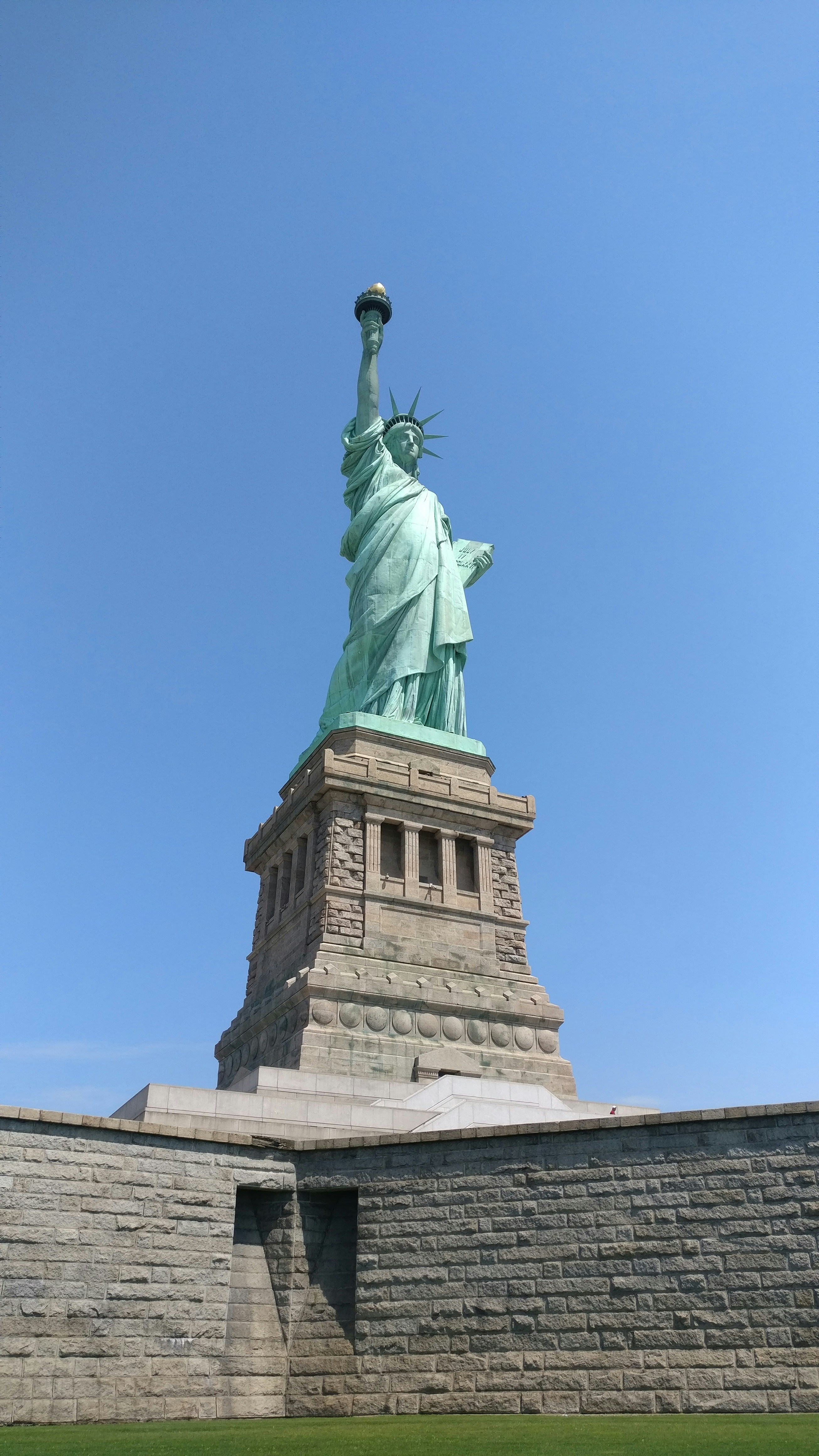
Photo of the Statue of Liberty
Photo by Vinayak Sharma on Unsplash

The statue was sculpted by a Frenchman, Frederic Auguste Bartholdi, who consulted with Gustave Eiffel about structural issues.

In doing research for this blog post I also learned that William Tecumseh Sherman of American Civil War fame (though more infamous here in The South!) selected the site for the statue.

The statue is made of copper sheeting over an iron framework. The flame of the torch held by Lady Liberty is coated in gold leaf. The seven spikes on her crown represent the seven seas and seven continents. The tablet she holds represents knowledge and is inscribed with the date of our country’s Declaration of Independence.

The Statue of Liberty is an international symbol of liberty and the freedoms we enjoy as citizens of the United States of America.


Hurricane Helene Update on Western North Carolina

I hoped today’s update would be shorter than the previous ones I’ve given, but there is a lot to report. If your time and interest are limited, please take advantage of the headings in bold print. Much of today’s update is positive, while some of it is daunting.

Governor Roy Cooper announced that first responders and others have come from 39 states to help with rescue and recovery efforts in western NC! Thank you to each of you!

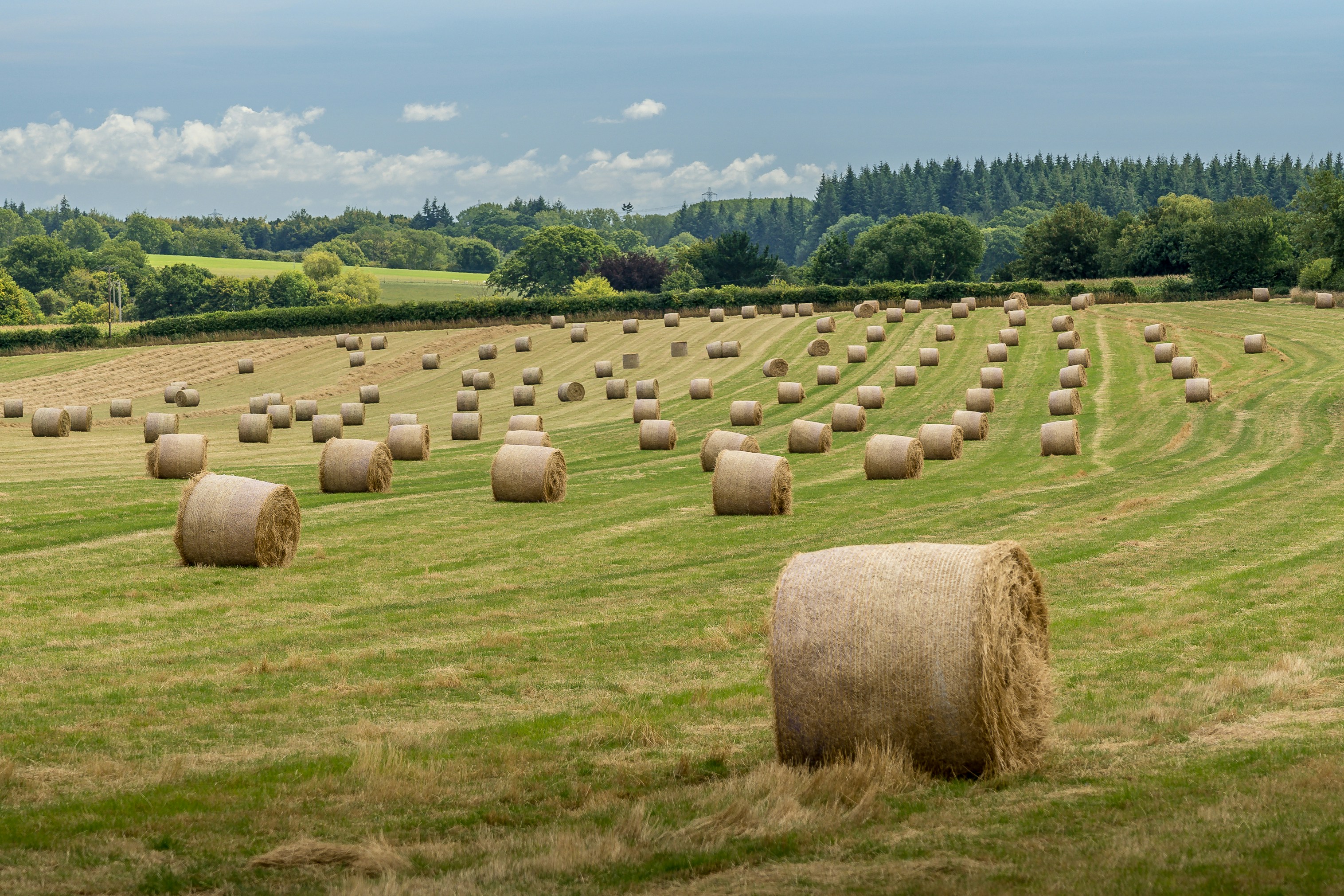
Hay bales: Last week I reported on hay bales coming from farmers in Ohio and Pennsylvania. Add Kentucky to that list… and no doubt other states I just didn’t hear about. I read a report online from the newspaper in Boone that more than 50 tractor trailer loads of hay bales came to Watauga County from Ohio! They also brought feed for various farm animals, tarps, baby supplies, and posts and barbed wire for fencing.

Photo of a field dotted with big round bales of hay
Photo by Nick Fewings on Unsplash

I read a report from Haywood County, about 100 miles south of Watauga, on smokymountainnews.com,. That county’s Agricultural Extension Office knew hay was coming and worked out the logistics of storage and distribution. The agent there said some farmers lost more than 300 bales in the flood.

Farmers helping farmers…. It’s what they do!

Precision Grading:  I’ve been following a small grading company, Precision Grading, in Saluda, NC on Facebook, and I’m just blown away by what this man is doing. He has worked free-of-charge with his bulldozer and backhoe 12 hours a day since the storm to help individuals with debris pickup on their land, cutting new driveways for them, and literally cleaning out the Green River.

If you’ve ever driven I-26 between Asheville, NC and Greenville, SC, you probably remember the section that traverses the Green River Gorge. The bridge is so high, you can’t see the river below. There are runaway truck ramps along the southbound lanes. That area is more isolated than Asheville, Chimney Rock, and Bat Cave, so it is not getting any media attention. This man is not charging anyone for his work, except for the occasional job that insurance is paying for. He says the work is gut wrenching because everything he pulls out of the river was someone’s car, house, or prized possession.

If you would like to support Jake Jarvis’ work, you can send a check to Precision Grading, 99 Polaris Drive, Saluda, NC  28773. He did not want to take donations but finally concluded that donations will enable him to do more work for people in need without charging them. Fuel and maintenance on his heavy equipment is not cheap. I do not know him personally, so do your own research about him.

It is heart-warming, especially in today’s political environment to see that a disaster brings out the best in most people.

Brother Wolf Animal Rescue is still accepting monetary donations to enable the 501(c)3 nonprofit organization to rebuild on higher ground in Asheville. They lost all physical assets in the flood. Here’s the link to their website (https://www.bwar.org/) where you can donate and read about their work. There’s a touching story about Gandolf, a dog rescued from the flood waters.

Statistics: The death toll from Hurricane Helene in NC now stands at 98.

The estimated damage from Hurricane Helene in North Carolina is a staggering $53 billion.

Roads: The storm severely impacted approximately 5,000 miles of state-maintained roads in western North Carolina. Interstates 26 and 40 are still closed near the TN line. A total of 404 roads remain closed.

Electricity: I’ve seen videos online of power poles being brought in by helicopter to places inaccessible by vehicle. One Duke Energy representative said the helicopters make it possible to set a pole in an hour instead of what would be a 10-hour job. The terrain is challenging under the best circumstances, so the helicopters have been a game changer.

Water system in Asheville: My sister learned from a friend there last week that they can flush toilets now, which is a huge milestone for the residents. Here’s the link to an informative briefing by City of Asheville Water Resources on October 25: https://www.youtube.com/watch?v=e6EH3zKjaGE). You’ll learn in this 6.5-minute briefing how the Hurricane Helene flood catastrophe could have been “exponentially worse” if the government had not put in an auxiliary/emergency spillway as a safeguard less than four years ago!

(If you’re a nerd about such things, as I am, here’s a link to a document about the planning and construction of that spillway by McGill Associates: https://www.mcgillassociates.com/north-fork-auxiliary-spillway-and-embankment-improvement-project/.

Blue Ridge Parkway: There is no estimated reopening date for the beautiful parkway. Portions of it that are used by residents to get from one side to the other for work or school are receiving top priority in reopening efforts. A 20-mile stretch near Grandfather Mountain opened last Wednesday. The other 250 miles in NC remain closed.

Public School Systems: Just to give you an idea about the recovery situation 32 days after Hurricane Helene hit western NC…

Avery County. Schools are scheduled to reopen on November 6.

Ashe County. Schools are scheduled to reopen on tomorrow.

Buncombe County. Schools reopened on Friday.

Watauga County. Schools reopened on Thursday.

With so many roads still closed, the school systems have had to scramble to work out bus routes and designated pick-up and drop-off locations.

Colleges and universities:

Asheville-Buncombe Technical Community College: Classes resume today because the campus now has power, non-potable water, and internet.

Lees-McRae College in Banner Elk: Classes will be conducted online through November 4.

Warren Wilson College: In-person classes resume today. Still under a boil water order, the college has secured potable water for meal preparation from their food provider.

IV Bag Manufacturer:  Through the US Department of Health and Human Services, President Biden invoked the Defense Production Act so Baxter International will have priority access to specific material needed so it can get back to production. One production line is scheduled to start operations this week.

World Central Kitchen (WCK) is still serving the people in western NC and eastern TN. First Lady Dr. Jill Biden volunteered at their walk-up meal, fruit, and water distribution site in Asheville on Friday. According to the WCK website (https://www.worldcentralkitchen.org/en-us/news/jill-biden-visits-wck-asheville-north-carolina) , since the September 25 flood, “With 84 restaurant partners in North Carolina and Tennessee, we’ve served 979,976 meals to date in the southeastern US. Given the ongoing challenges with water access, we’ve also channeled our efforts to distribute more than 768,000 gallons of potable water in North Carolina alone…. In areas like Swannanoa, Hendersonville, Burnsville, Marshall, Yancey County, and more, power and water restoration is slowest, and we expect our support to be needed there for longer.”

Fundraising Concert

Ironically, the “Concert for Carolina” at Bank of America Stadium in Charlotte on Saturday started at 7pm after a two-hour rain and lightning delay… the first rain the area has had since Hurricane Helene in September. I got to watch the live stream and heard/saw portions of it mixed in with a lot of buffering. It was the best concert ever!

Organized by Luke Combs and Eric Church, all artists (including the Avett Brothers, James Taylor, Keith Urban, Sheryl Crow, Billy Strings, Scottie McCreery, Chase Rice, and Parmalee) donated their time and talents so all proceeds and donations could go to help specific organizations in western North Carolina.

The concert raised $24,513,185, included $1 million donated by Dolly Parton. A surprise during the concert was when Nicole Kidman joined her husband on stage and announced that it was his birthday. Then, Eric Church led the 82,000 people in attendance in singing “Happy Birthday to You” to Keith Urban.

Tourism: I found a list online last Thursday of 10 towns in western NC that were still “closed to visitors” and four towns (including Asheville) that were “open with limitations.” Towns are beginning to open back up to visitors, but many rural areas are still very much in recovery mode… and will be for months, if not years. Check reliable sources before making travel plans.

Maybe next Monday’s update will be shorter!

Until my next blog post

Don’t forget to sign up for my e-Newsletter by visiting https://janetmorrisonbooks.com/ and clicking in “Subscribe.” You’ll receive a free downloadable copy of my “Slip Sliding Away” short story. My next e-Newsletter will be sent to you during the first full week of November. Teaser: My “field trip” report this time is Boone’s Cave Park on the Yadkin River.

I hope you have a good book to read. I have several I’m trying to finish by Thursday, so I can blog about them next Monday.

Remember the people of Ukraine and Western North Carolina.

Janet

What I Read Last Month & a Hurricane Helene Update

I did more reading in September than this blog post will reflect, but there was only one book I read from cover-to-cover: White Robes and Broken Badges, by Joe Moore.

White Robes and Broken Badges, by Joe Moore

Photo of book cover for White Robes and Broken Badges by Joe Moore
White Robes and Broken Badges, by Joe Moore

This nonfiction book will stay in my mind forever. The author infiltrated the Ku Klux Klan (KKK) for the Federal Bureau of Investigation (FBI) not once but twice. He infiltrated it both times to a level never done before, gaining access to the top echelon in the organization.

I’ve never known many details about the workings of the KKK. Never needed to. Never wanted to. However, considering where society in America stands today, it seemed like a good time to get better educated about the threat the KKK holds.

This book sheds light on just how insidious the work of the KKK is and how many its members are employed as law enforcement officers in our country. It is widespread and probably even more of a problem than the FBI knows.

It was through the undercover work of “Joe Moore” that the FBI was alerted that the problem is greater than had been realized. Joe was not an FBI agent. He was recruited by them because of his skill set.

After infiltrating the organization the first time, Joe never imagined he would be called on to do it a second time. But he was so good at it, the FBI needed him. Joe and his wife and children sacrificed a lot for what he did. Ultimately, they lost their home, most of their earthly possessions, their family connections, and friends in a matter of several hours.

The book is chilling. I know of no better word to describe the effect it had on me. Chilling. The details should make every law-abiding citizen in the country – no matter your color, race, ethnicity, or nationality – shiver.

After reading this book, I now have a better understanding of why black people in the United States do not trust law enforcement officers. How can they, when they don’t know in a traffic stop whether they are being pulled over by an honest police officer or sheriff’s deputy or if they’re being pulled over by a member of the KKK who just doesn’t happen to be hiding under a white hood?

It has always seemed a great sign of cowardice that when members of the KKK do their dirty work, they hide in their white robes. If you’re doing something you shouldn’t be doing, though, I suppose you don’t want to reveal your identity.

These are misguided people, and as a Christian I am offended that they use the cross as their symbol. Jesus Christ died on a cross for me (and for them!), so how dare they desecrate that symbol of Christ’s great sacrifice!

I highly recommend this book. It is not a pleasant read, but how do we improve as a society if we bury our heads in the sand and don’t open ourselves up to what is going on not only in the shadows but also in broad daylight?

I learned about this book while listening to National Public Radio (NPR) in August (https://www.npr.org/2024/08/12/g-s1-16223/white-robes-and-broken-badges-exposes-the-inner-workings-of-the-ku-klux-klan)

Update on Hurricane Helene in Western North Carolina

I wish I could include photographs, but I don’t want to run the risk of sharing an image that is undocumented or not in the public domain. You can use some of the links below if you wish to see pictures.

Another reason I am not including photos is that I know from my own experience after Hurricane Hugo in 1989 that pictures don’t do a disaster justice. Unless you are in the middle of a natural disaster and destruction is all you can see, hear, smell, or touch in any direction, you can’t grasp the enormity of the situation.

I know that Hurricane Helene left a wide path of destruction in Florida, Georgia, South Carolina, Tennessee, and Virginia; however, I have lived in North Carolina all my life – four of my 71 years in the mountains. The mountains are near and dear to my heart. I will blog about North Carolina and leave it to people in those other states to blog about the conditions in their states.

A couple of my blog readers said they hoped I would continue to shine a light on the destruction caused by Hurricane Helene in the mountains of North Carolina on September 26.

I do not live in the disaster zone. I’m about 100 miles east of the mountains. We just had a lot of rain, some wind, and a lot of tree branches to pick up and deal with. That is ongoing, but that and our 13-hour power outage pale in comparison to what happened in our beautiful Appalachian Mountains.

Ten days after the storm, many areas of the mountains are still inaccessible. Damage assessments are still being made. Recovery will be measured in years, not months. Some locations were wiped off the map and will not be restored because the landscape has been changed completely and forever.

The United States Geological Survey has identified 244 landslides caused in the Southeast by Hurricane Helene. Most of those are in North Carolina. More landslides will, no doubt, occur in the coming weeks with additional rainfall and freezing conditions.

As of the data I found last night, the death toll in North Carolina so far was 115, with 72 of those being in Buncombe County. There are still people unaccounted for. Many communities still have no water or sewer service. Cell phone service was spotty before the storm and restoration has been slow.

Hundreds and hundreds of power poles and thousands of miles of overhead power lines are down. Thousands of people are homeless. You might grow weary of hearing about it, but many of the people of western North Carolina are in dire straits.

As always, though, the worst of nature brings out the best in most people. The outpouring of support has been amazing. Electrical workers have come from all over the country and from Canada. Four hundred nurses have arrived in Asheville from as far away as Alaska to pitch in and help local medical personnel who have worked around the clock since September 26 even though most of them have catastrophic damage at their own homes.

Pack mules are being utilized to haul water, non-perishable food, and other necessities into the steep and rugged terrain where vehicles cannot gain access.

Two interstate highways are closed. I-40 near the Tennessee state line will probably be closed for a year. Repairs to I-26 might allow it to reopen next March. Roads and bridges washed away, houses, cars, and businesses floated away, and overnight all the necessities most of us take for granted every day vanished.

The area of devastation in western North Carolina alone covers more than 600 square miles, and it is not flat land! Every mile of those 600 square miles is not devastated. The severity of destruction various from place to place as rain totals were, of course, higher in some places than in others. Also, some areas of the mountains received more rain than others in the days leading up to the arrival of Hurricane Helene. Elevations range from around 1,500 feet to more than 6,000 feet. The destruction is unprecedented. Since 1916, all floods in western and piedmont North Carolina have been measured against The Flood of 1916. Future floods will be measured against The Flood of 2024 because by all statistics it surpassed the one in 1916.

Classes at my alma mater, Appalachian State University in Boone, have been cancelled until at least October 16. (That’s three weeks of fall semester lost.) Students at Lees-McRea College in nearby Banner Elk were evacuated by air to Hickory. Classes have been cancelled at Western Carolina University in Cullowhee the University of North Carolina at Asheville, Montreat College, Warren-Wilson College, Mars Hill University, and numerous community colleges. Blue Ridge Community College in Flat Rock, NC is closed indefinitely. Some county school systems are unable to announce when they will reopen.

The beautiful Blue Ridge Parkway that I’ve waxed poetic about so many times is closed indefinitely. US-441/Newfound Gap Road through Great Smoky Mountains National Park has reopened; however, it was not designed to handle commercial traffic, so it is not an alternate to I-40 or I-26 for large trucks. Sadly, a few people decided that did not apply to them, so they attempted to drive on Newfound Gap Road. Two serious accidents resulted – one caused by a car hauler. The highway will be closed to all traffic from 10pm until 7:30 a.m. until further notice. (https://www.nps.gov/grsm/learn/news/update-on-us441-newfound-gap-road-overnight-closure.htm)

The images coming out of the mountains are gut-wrenching. The needs are great and will continue to be for a long, long time. I hesitate to start naming charities because there are hundreds of reputable ones that are on-site and providing remarkable goods and services. World Central Kitchen (https://wck.org/), the Cajun Navy from Louisiana, Mountain Mule Packer Ranch (https://www.mountainmulepackers.com/), the Red Cross, and Samaritan’s Purse are just a few.

The Manna Food Bank (https://www.mannafoodbank.org/) which serves the Asheville and surrounding areas lost their facility and its contents. Brother Wolf Animal Rescue (https://www.bwar.org/) was flooded out but the 150 animals they were housing on September 26 were rescued by volunteers. Organizations like food banks and animal rescues need to be rebuilt and aren’t necessarily eligible for government assistance. (I saw on the Brother Wolf Animal Rescue website last night that donations to that organization are currently being matched!)

The Appalachian State University Disaster Fund (https://www.appstate.edu/disaster-relief/) is another organization for you to consider. It has stepped up to assist students, staff, and faculty members who have lost their homes. The fund also provides much-needed counselling for those traumatized by the storm.

Atrium Medical Center in Charlotte has set up its mobile hospital in Tryon in Polk County. Many towns and counties across the state have sent teams of medical personnel and swift water rescue teams to assist with the aftermath of the storm. The National Guard and 1,000 active-duty personnel from Fort Liberty (formerly, Fort Bragg) were deployed and have been on the ground since weather allowed access. Numerous restaurants are giving out free meals as they are able to prepare food.

Having just visited Boone and West Jefferson on September 12-13 and having visited Hendersonville, Asheville, Bryson City, and Cherokee this summer, it is difficult to grasp the scope of the damage. I drove on the Blue Ridge Parkway from Asheville to its southern end at Great Smoky Mountains National Park in June. I drove from Hickory through Old Fort, Black Mountain, Asheville, and Canton and into Tennessee on I-40 the last week in August.

I always breathe a sigh of relief when I make it through that treacherous stretch of I-40 approaching Tennessee because rock slides are not unusual. To know that part of that interstate literally washed away 10 days ago is hard to get my head around, though.

Know that any support you can give to the people of western North Carolina is appreciated.

Since my last blog post

I was told (again) in a webinar last week that the purpose of a blog is to solve someone else’s problem. Until I figure out how to do that, I’ll just keep blogging like I have for the last 10+ years. As of last week, I have 1,200 subscribers to my blog, so maybe I’m doing all right. If you came to my blog today seeking a solution to a problem, you are probably disappointed.

On the other hand, if you were looking for a way to lend a little aid to people trying to rebuild their lives after Hurricane Helene, I hope one of the organizations I mentioned today struck a nerve with you.

Until my next blog post

I hope you have a good book to read, a roof over your head, enough food to eat, and clean water to drink.

If all you are hearing is that FEMA and all levels of government are failing to respond to those affected by Hurricane Helene, then you are listening to the wrong sources. More than a week of lies about this from the immediate-past-twice-impeached-34-times-indicted-president is wearing thin here in North Carolina. Please fact check your sources and get your news from a variety of reputable news media.

Hold your friends and family close, for we never know what tomorrow will bring.

Don’t forget the people of Ukraine or the people of western North Carolina.

Janet