I write southern historical fiction, local history, and I've written a devotional book. The two novels I'm writing are set in Virginia and the Carolinas in the 1760s. My weekly blog started out to follow my journey as a writer and a reader, but in 2025 it has been greatly expanded to include current events and politics in the United States as I see our democracy under attack from within. The political science major in me cannot sit idly by and remain silent.
The year 2024 has been a difficult one for many people. It has been stressful for most of us, but I’m better off than a lot of people. Here’s a brief review of 2024 from my viewpoint in North Carolina.
Travel: My sister and I took advantage of the Covid-19 pandemic being over and vaccines continuing to be available – along with relatively good health – and we took trips to Great Smoky Mountains National Park and Cherokee in the western part of NC as well as a long-anticipated return trip to the Outer Banks of NC in the early part of the summer.
Welcome Sign at Great Smoky Mountains National Park
Black Bear, perhaps two years old, photographed in Great Smoky Mountains National Park
Elk, photographed in Great Smoky Mountains National Park
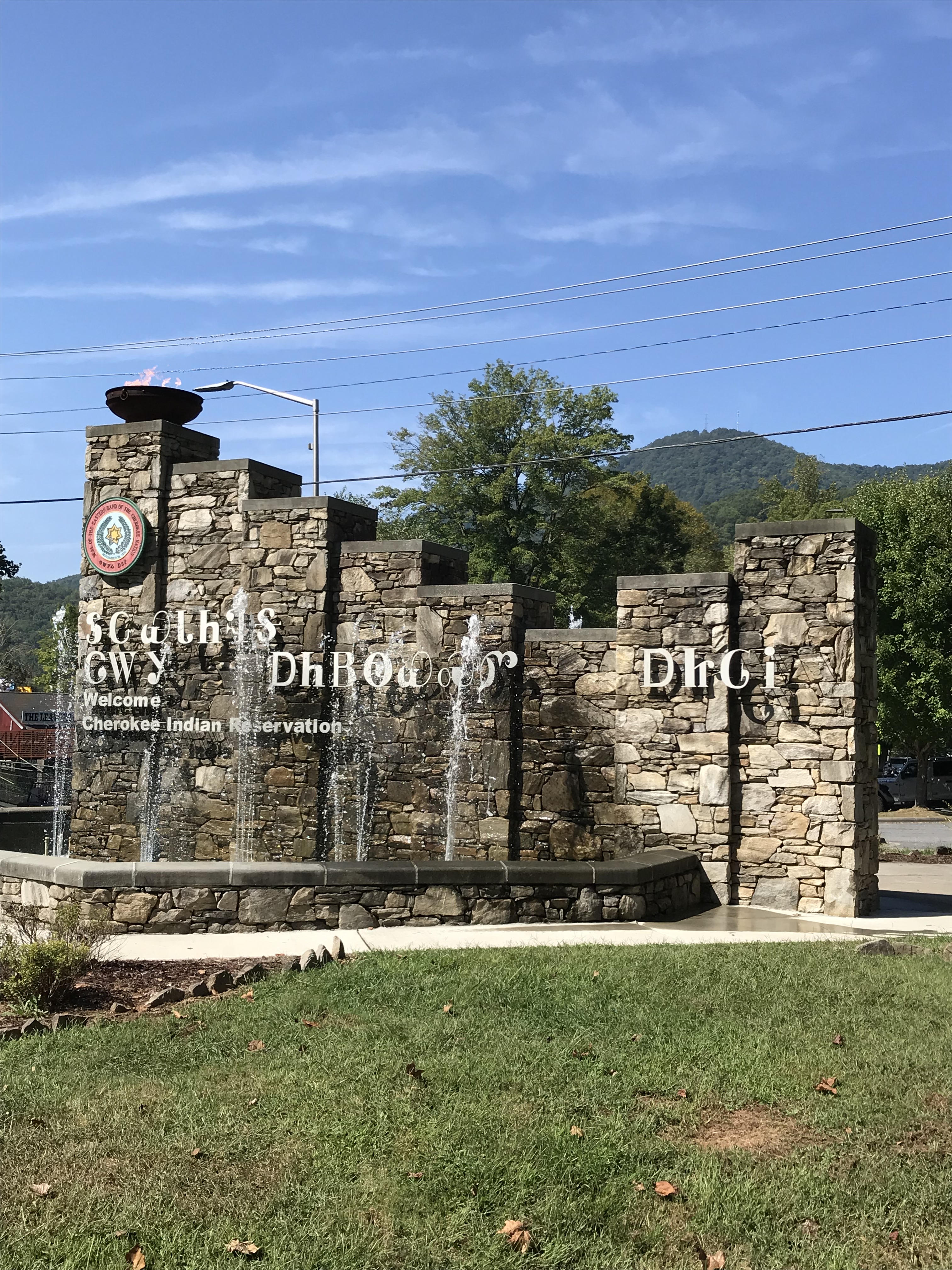
Welcome sign at Cherokee, NC
Welcome sign at Cape Hatteras National Seashore
We visited Boone and the campus of our alma mater, Appalachian State University, just two weeks before much of western NC was ravaged by Hurricane Helene. We continue to count our blessings that we did our traveling in the months and weeks before the hurricane.
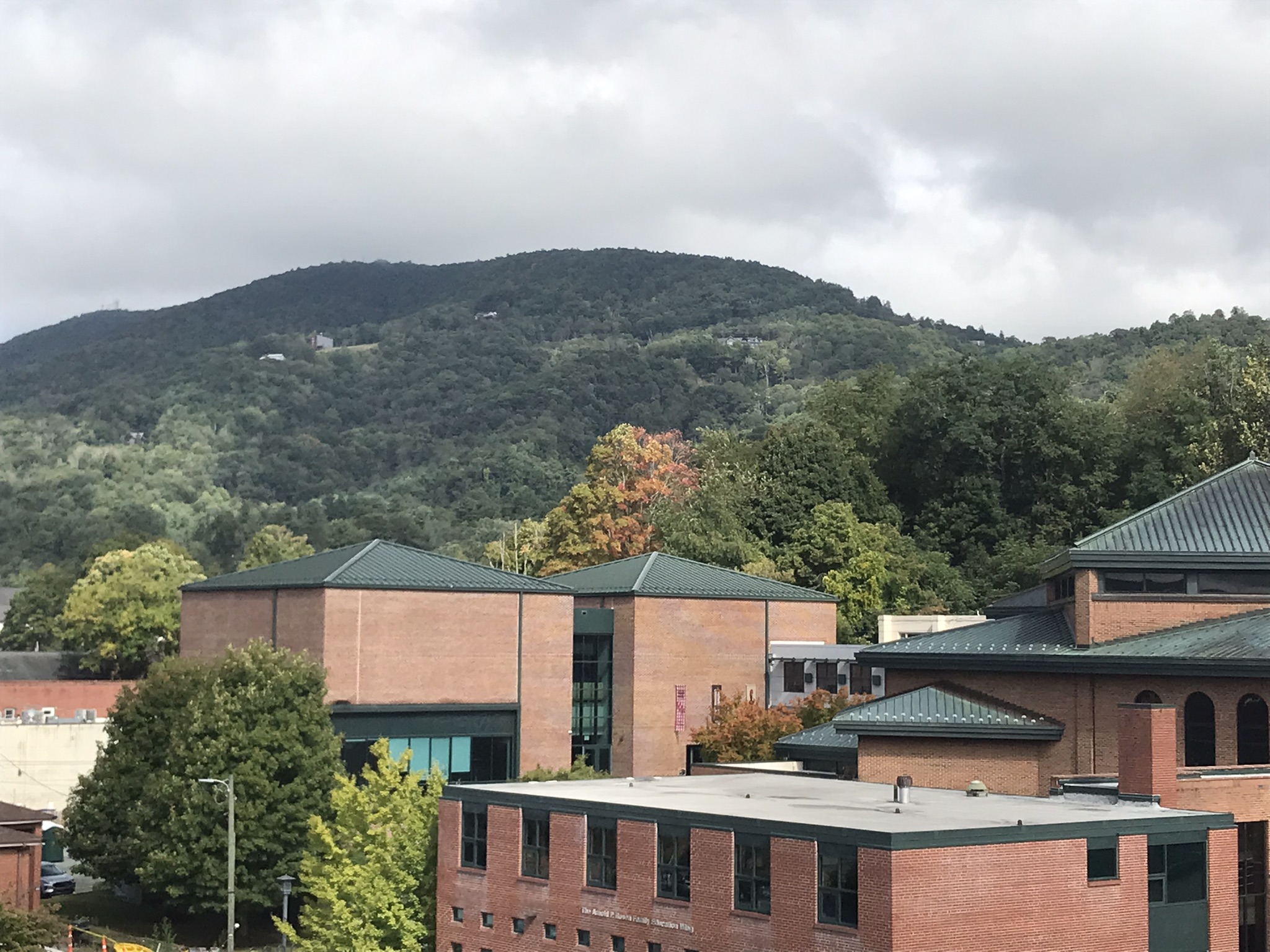
A view of Rich Mountain from the Appalachian State University campus
Hurricane Helene: September brought a “perfect storm” of days of heavy rain followed by Hurricane Helene to western North Carolina. It is the most destructive storm to hit the state in recorded history. The statistics and photographs are impossible to get one’s head around.
Of the 1,329 roads that were closed due to the flooding and landslides on September 25-26, 183 of them remain closed as of Friday, including Interstate 40 near the border with Tennessee.
I saw a video made on Wednesday of several miles of US-19 in Ramseytown, NC. You can’t even tell there was ever a road there, and it is unimaginable that the little Cane River running alongside it is capable of rising so high and doing so much damage.
Last week, 10,000 tulip bulbs were delivered to Swannanoa, NC – a gift from the head of a bulb company in The Netherlands. Next April, Swannanoa will look quite different than it has since September 25th!
A hint of what to expect in Swannanoa next spring!
Photo by Krystina Rogers on Unsplash
People from all over the US and world have pulled together to help western NC begin to recover from the September storm. I’ve tried to highlight examples in my weekly blog posts. I’m not equipped to show the full picture. I’ve merely tried to keep a light shining on the situation as it disappears from the news headlines.
US Presidential Election: We survived a US Presidential campaign that seemed to last for a decade. Now we’ll get to see if our democracy and our country’s long-standing ties with other countries will survive the results.
Award for my local history books: I received The North Carolina Society of Historians Journalism Award of Excellence for Harrisburg, Did You Know? Cabarrus History, Book 1 and Harrisburg, Did You Know? Cabarrus History, Book 2 in November.
My Writing: I’ve made a lot of progress over the last couple of months on my devotional book, I Need The Light: 26 Weekly Devotionals to Help You Through the Cold Months. Work continues on my historical novel with the working title The Heirloom. Stay tuned!
If you haven’t subscribed to my e-newsletter yet, please click on the “Subscribe” button on my website: https://www.janetmorrisonbooks.com. You’ll receive a free downloadable copy of my historical short story, “Slip Sliding Away” and my e-newsletters.
In November I changed my newsletter from a several-page every-other-month format to a short weekly email.
Social Media: Technology is still pulling me into the 21st century, but I’m kicking and screaming. My new endeavor this year was Instagram. I try to share quotes I like (many of them from books I’ve read), information about my website and blog, as well as publicity for my books. I’m trying not to not come across too salesy.
Until my next blog post
I hope you have a good book to read.
I hope you’ve had an enjoyable holiday season so far.
Remember the people of Ukraine and western North Carolina where it is mighty cold for the next several months.
Several weeks ago, my sister and I spent several days in Cherokee, North Carolina. We have visited Cherokee many times, but I had never seen the “Unto These Hills” outdoor drama. Since the drama was rewritten a few years ago to give a truer presentation of the Cherokee Indian perspective on their history, I was eager to see it.
A leisurely drive on the Blue Ridge Parkway is always an activity we enjoy, so we got on the parkway on the southern edge of Asheville and took it to its end at Soco Gap. We went through 15 tunnels on that 80 or so southernmost miles of the Blue Ridge Parkway. Various wildflowers, including the Flame Azalea (or native/wild azalea) was at or just past its peak.
Flame Azalea along the Blue Ridge Parkway
National Park Service sign noting the highest elevation on the Blue Ridge Parkway Motor Road at 6,053 feet.
We had perfect weather all week, including the night we had tickets to see “Unto These Hills.” The acting was superb. It was amazing to see the history of the Cherokee people presented in two hours.
The play emphasized how the Cherokee and the European explorers, traders, and settlers had a congenial relationship in the beginning. It wasn’t until the Europeans started cheating the Cherokee and tricking them into poor decisions and hollow treaties that things deteriorated.
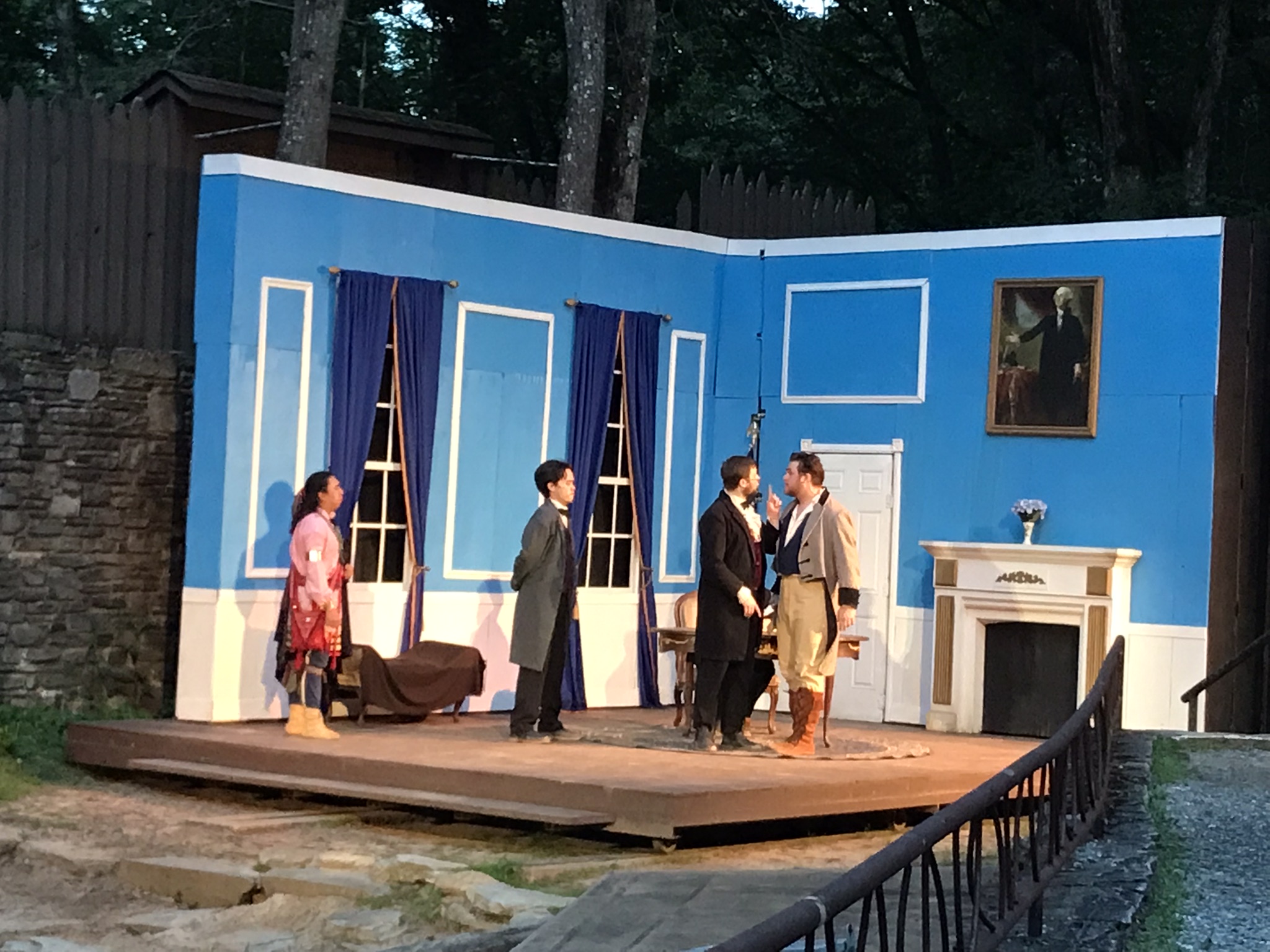
Another scene from “Unto These Hills”
A scene from a visit to the White House in the “Unto These Hills” outdoor drama
The last straw, of course, was when the United States forced the Cherokee to give up their beautiful and lush ancestral lands for what turned out to be a death march to the Indian Territory of present-day Oklahoma. They were promised a good life, but it was just another broken promise by the white man.
A scene from “Unto These Hills” outdoor drama in Cherokee, NC
The Cherokee people who refused to leave the Great Smoky Mountains hid in the hills. It is the descendants of those brave souls who now populate the Qualla Boundary and are officially known as the Eastern Band of the Cherokee Indians.
By visiting the Museum of the Cherokee Indian and the Oconaluftee Indian Village, you can learn a great deal about the Cherokee Indians’ rich history and traditions. For instance, they lived in houses, not teepees. They did not wear elaborate feather headdresses like the Plains Indians. Cherokee men back in the day were up to seven feet tall and the women averaged only a few inches shorter.
An example of a Cherokee house from an earlier century. (The cutaway is not a window; it is there to show the wall’s construction. Cherokee houses did not have windows because they were only used for sleeping. All their work was done outside.)
Weaving display at Oconaluftee Indian Village in Cherokee, NC
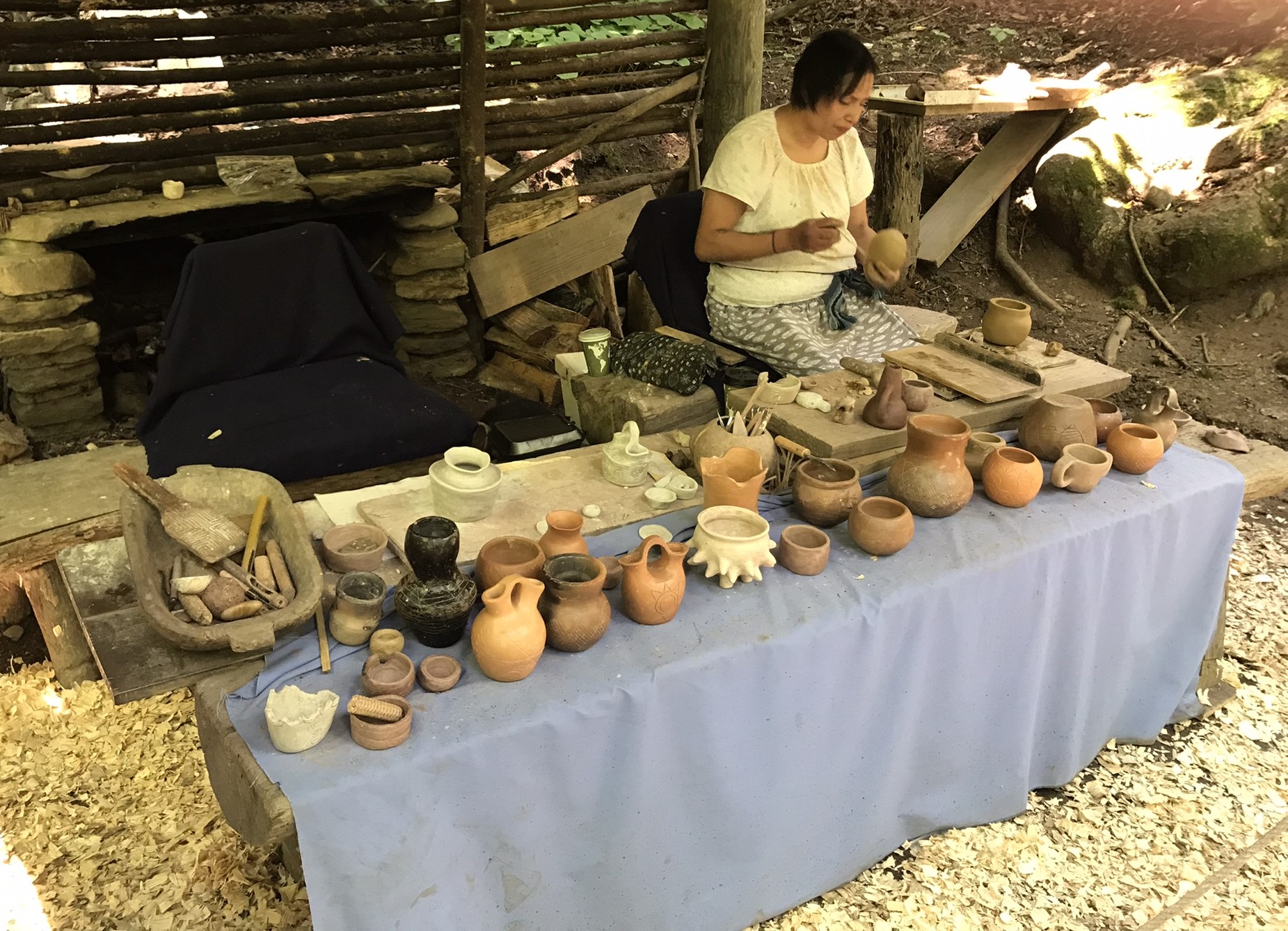
A pottery display and demonstration at Oconaluftee Indian Village in Cherokee, NC
Many Cherokee people continue to master the time-honored crafts of making clay pottery, intricate bead work, exquisite basketweaving, and wood carving. It takes weeks and sometimes months for the native plants and other natural resources for these items to be gathered and prepared, not to mention the intricate work to create the finished products. Those priceless items can be admired and purchased at the Qualla Arts and Crafts Mutual, Inc.
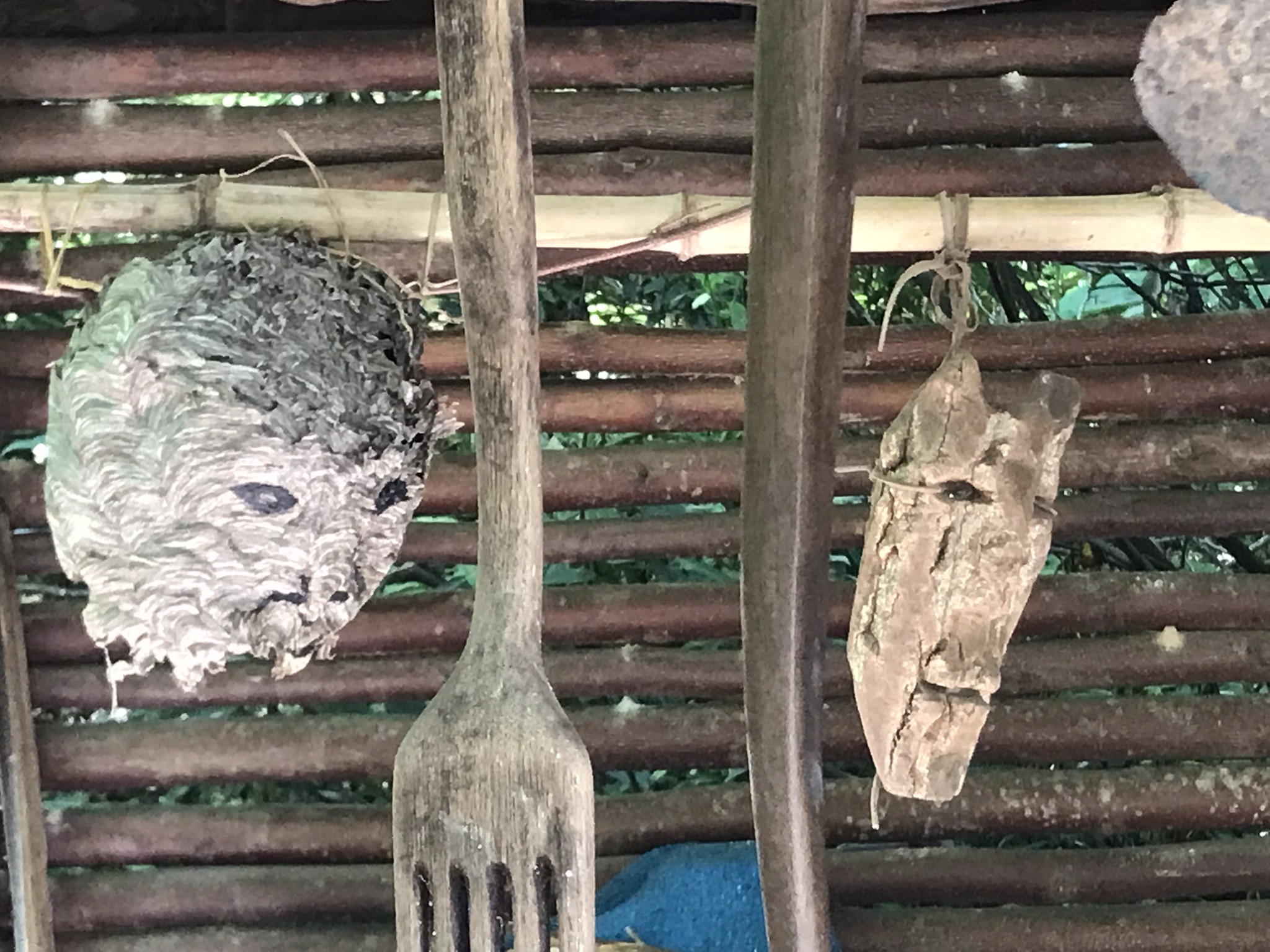
Cherokee ceremonial masks were made from various natural resources, including wood and even hornets’ nests (as seen on the left in the photo.)
Although some of the signage indicates otherwise, the Qualla Boundary is not a reservation. The Cherokee people own their land and the Qualla Boundary is held in trust for them by the United States Government.
The Cherokee not only had their own written language; they also had their own newspaper starting February 21, 1828. Although the United States Government tried to eradicate the Cherokee language and traditions, that policy failed. Today the Cherokee language is making a comeback. There is even a Cherokee immersion school in which only Cherokee is spoken.
On our recent visit, we used Cherokee as our base. One day we drove through the center of the Great Smoky Mountains National Park to and including Little River Road and Clingman’s Dome and back to Cherokee.
Another day we drove 10 miles to Bryson City, North Carolina and the Deep Creek entrance to the Great Smoky Mountains National Park. We hiked to three waterfalls we’d never seen before and enjoyed learning lots of facts about the park along the way to two of them with a park ranger.
When planning your trip, check online for the planned hikes and lectures offered by park rangers at the Oconaluftee Visitors Center near Cherokee, NC, the Sugarlands Visitors Center near Gatlinburg, Tennessee, Cades Cove near Townsend, Tennessee, and at the Deep Creek entrance to the park at Bryson City.
The Cherokee honor water and the residents and visitors alike are blessed to have the Oconaluftee River flowing right through the town of Cherokee. This shallow, wide, rocky river is the perfect place for tubing and splashing around in the water. I have memories of enjoying the river on my first trip to Cherokee when I was a young girl.
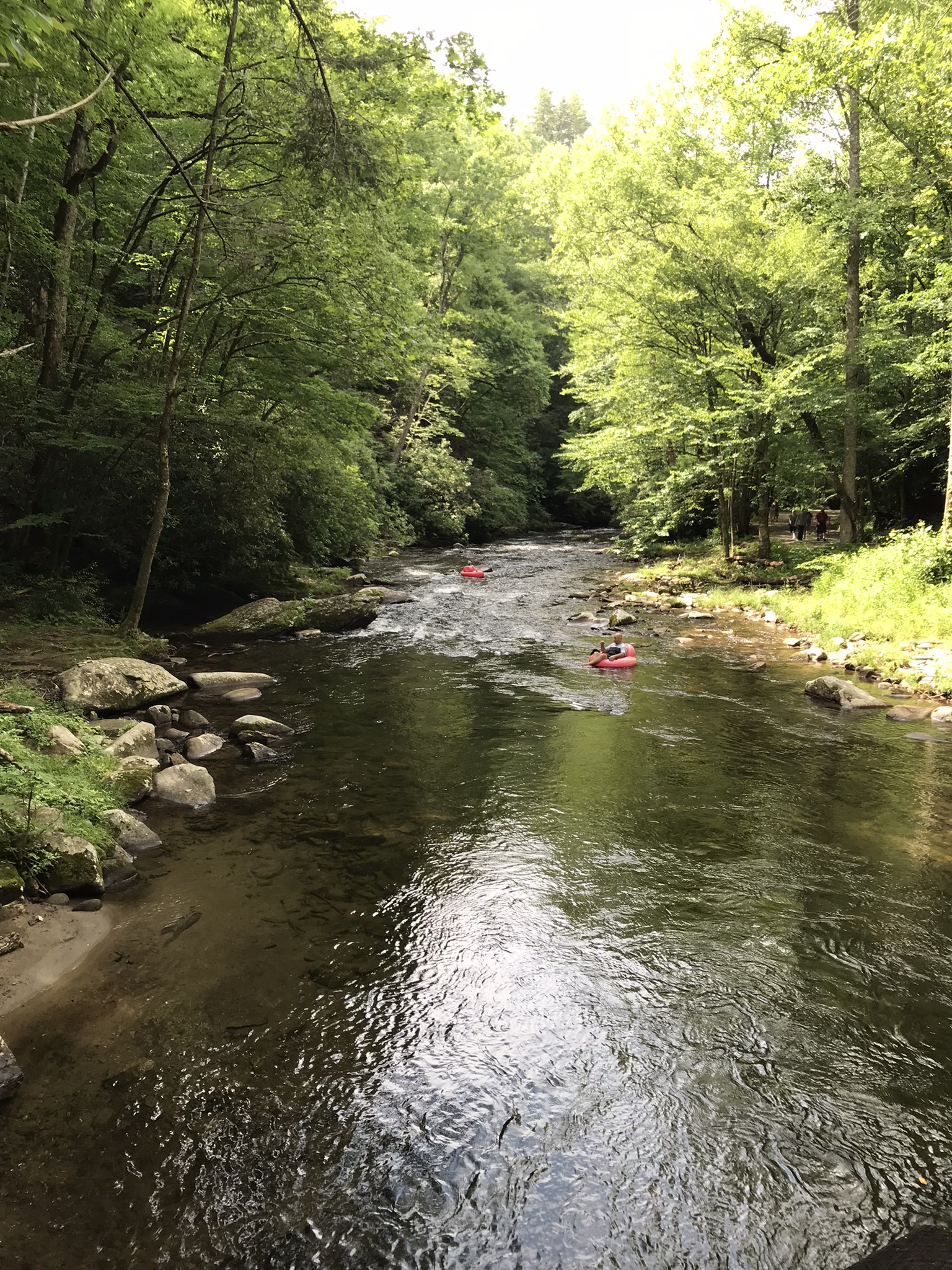
Deep Creek in the section of the national park is a popular creek for tubing. Many families were taking advantage of the creek for tubing on the very warm day we were there. If I were just younger and braver…. It looked like a lot of fun!
People tubing on Deep Creek near Bryson City, NC in Great Smoky Mountains National Park
All that hiking and tubing will make you hungry. My sister and I enjoyed the buffet at Granny’s Kitchen Restaurant on US-19 North going from Cherokee toward Maggie Valley. The wife in the couple who own and operate the restaurant is a Cherokee Indian. It is said if you want to find a good place to eat, look where the locals eat. This was certainly the case at Granny’s. (I am receiving no compensation for publicizing the restaurant. It is a good value and experience for the money. You will not leave hungry!)
People from all over the United States enjoy the Blue Ridge Parkway, the Qualla Boundary, and the Great Smoky Mountains National Park. We kept track of the different license plates we saw. When the trip was over, we had seen cars from 42 of the 50 states and several from Ontario, Canada.
Great Smoky Mountains National Park is the most-visited national park in the country. People are drawn to it by its beauty and biodiversity.
If you wish to learn more about Cherokee, the Great Smoky Mountains National Park, and the Blue Ridge Parkway, I recommend my vintage postcard book, The Blue Ridge Mountains of North Carolina. I packed as many facts and as much history into the book as Arcadia Publishing would allow. The book is available in paperback and e-Book from Amazon.
Since my last blog post
I continue to declutter by going through closets, old magazines, and boxes of memorabilia, photographs, newspaper clippings, and recipes. It is satisfying to look at what I’ve accomplished. My fiction writing has suffered for it, but this really needed to be done.
Until my next blog post
Keep reading and traveling every chance you get.
Visit your local public library, if you are fortunate enough to have one. If you haven’t visited it recently, you might be surprised to find some of the things it offers: Internet access, free access to software such as Ancestry.com, magazines you would like to read but cannot afford to subscribe to, music CDs, used books for sale, a magazine swap, ….
August 25, 2019 will mark the fifth anniversary of the
publication of my vintage postcard book, The
Blue Ridge Mountains of North Carolina. To mark this milestone, I’m testing
your knowledge of some of the interesting facts I included in the book.
The Blue Ridge Mountains of North Carolina by Janet Morrison
The book covers the 23 westernmost counties in North Carolina and the three counties in eastern Tennessee in which a portion of the Great Smoky Mountains National Park is located. If you have the book, you have my permission to cheat. That’s only fair to those of you who purchased my book. I’ll ask a few questions. You’ll find the answers in my blog post on August 19, 2019.
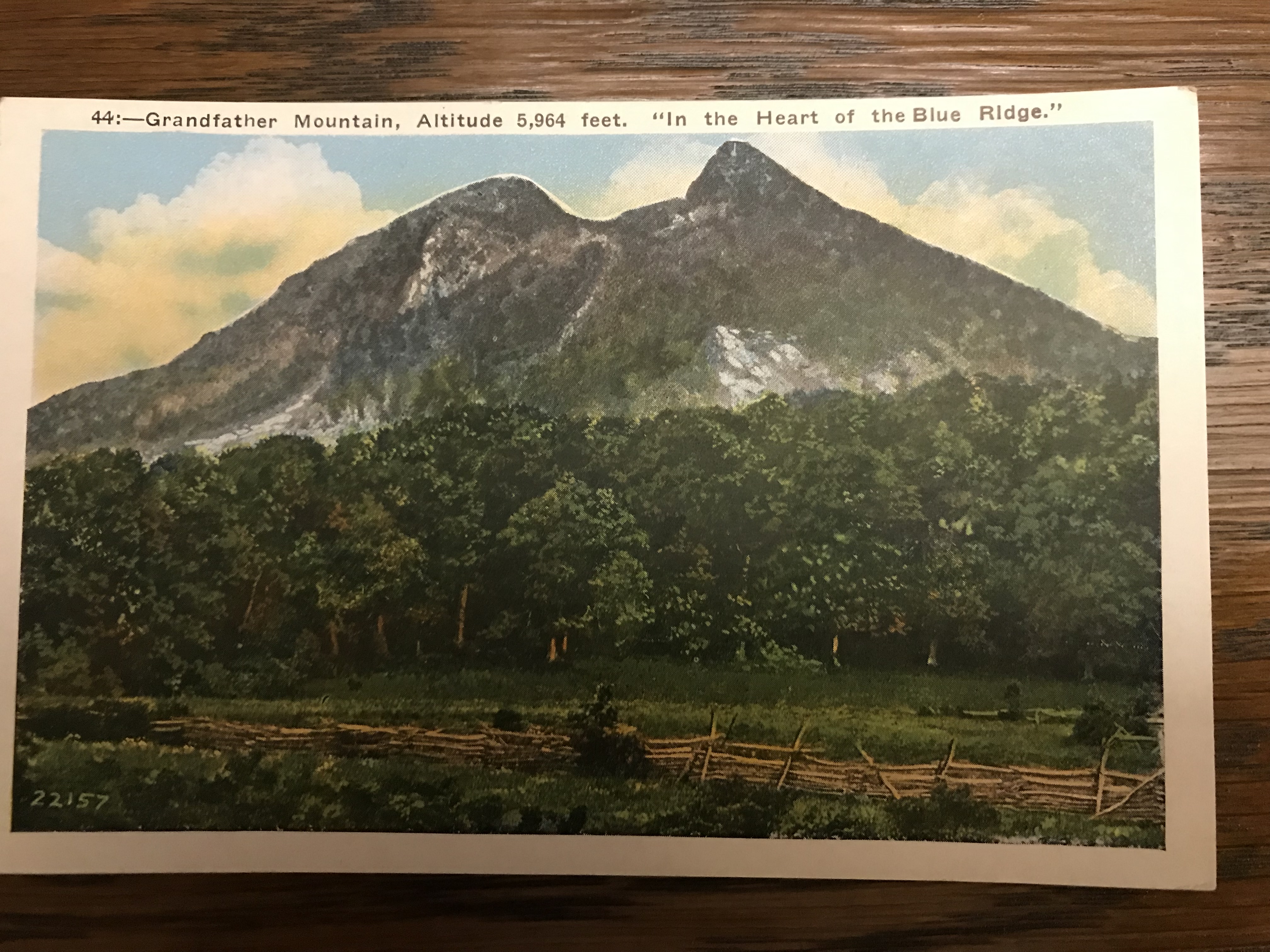
Although most of the original postcards are in color, they appear in black and white in both of the book’s formats. I tried to include pictures of several of the postcards in today’s blog post, but due to technical problems I was only able to post one vintage postcard image.
Here are the
questions:
1. Why was
Grandfather Mountain named a member of the international network of Biosphere
Reserves in 1992?
Grandfather Mountain, North Carolina
2. What does Linville Falls in North Carolina have in common
with Niagara Falls?
3. How did Edwin
Wiley Grove make his fortune which enabled him to build the Grove Park Inn in
Ashevile, North Carolina?
4. What part did the
Civilian Conservation Corps (CCC) play in the construction of the Blue Ridge
Parkway during The Great Depression?
5. When George W.
Vanderbilt purchased Mt. Pisgah in 1897, what grand plan did the mountain
become part of temporarily?
6. What groups of
people were housed at Assembly Inn in Montreat, North Carolina in 1942?
7. Jerome Freeman
bought 400 acres of land in Rutherford County, North Carolina that included the
Chimney Rock around 1870 for $25. How much did the State of North Carolina pay
for Chimney Rock Park in 2007?
8. What new breed of
hunting dog was developed by a German pioneer family in the late 1700’s in the
Plott Balsams subrange of the Blue Ridge Mountains?
9. What is an early
20th century feat of engineering on the Newfound Gap Road in Great
Smoky Mountains National Park?
10. How fast can a
black bear run?
11. It is illegal in
Great Smoky Mountains National Park to willfully get within how many feet of a
black bear?
12. What is the name
of the 57,000 acres of land purchased by the Cherokee in the 1800s and held in
trust by the United States Government?
13. Is Qualla
Boundary technically a reservation?
14. Did the Cherokee
people lived in tipis?
15. What forest
contains one of the largest groves of old-growth trees in the Eastern United
States?
16. What
hydroelectric dam was used in the 1993 Harrison Ford movie, The Fugitive?
17. What is the
tallest dam east of the Rocky Mountains in the United States?
18. One of the oldest
postcards in my book is of Cullowhee Normal School in the mid- to late-1920s.
What is the name of that school today?
19. Started in 1935,
the Blue Ridge Parkway’s “missing link” was completed in 1987. What is the
connecting one-fourth-mile long piece that filled the “missing link” called?
In case you’d like to take the easy way out and find the answers to all these questions in one book, you may order The Blue Ridge Mountains of North Carolina, by Janet Morrison, in paperback or e-book from Amazon.com, request it at your local bookstore, or order it directly from https://www.arcadiapublishing.com/. Time is short. I’ll supply the answers in my blog post next Monday, August 19.
The contract I signed with Arcadia Publishing was for five
years, so you’d better get a copy of the book while it’s still being published.
Since my last blog
post
I discovered that the links that I had on my blog to my presence on several social media networks were not working properly, except for the one to my Pinterest account. Therefore, I removed the links to Facebook, Twitter, and LinkedIn. I’ll announce in a future blog post when those links are up and running again.
Until my next blog
post
If you’d like to follow me on Twitter, @janetmorrisonbk. If you’d like to follow my business page on Facebook, it’s Janet Morrison, Writer. If you’d like to follow me on LinkedIn, go to https://www.linkedin.com/in/janet-morrison-writer.
I hope you have a good book to read. I’m reading Searching for Sylvie, by Jean Kwok.
If you’re a writer, I hope you have quality writing time.
Thank you for taking the time to read my blog. You could have spent the last
few minutes doing something else, but you chose to read my blog.
Let’s continue the conversation
Please don’t include any of the trivia answers in your comments. If you want to indicate how many of them you think you know the answers to, you may indicate that number or the numbers of the questions you think you can answer.
Read my book or read my blog post next Monday for all the answers.










 Janet's Writing Blog