
As I indicated in my blog post yesterday, #OnThisDay: 26th Amendment Ratified, 1971 – Part One, when I started researching the history of the 1971 ratification of the 26th Amendment, which lowered the voting age in federal elections in the US from 21 to 18 years of age, I got in over my head quickly and the blog post grew like topsy.
Therefore, I split the post into two posts. My post yesterday gives important background information which helps to put today’s post in perspective.
Starting with the beginning of America’s involvement in World War II, here is how the 26th Amendment finally came about. As I said in yesterday’s blog post, the military draft and the setting of the voting age in the United States became intertwined decades ago.
World War II
Japan attacked Pearl Harbor in Hawaii on December 7, 1941. Congress gave President Franklin D. Roosevelt the authority to send US military personnel anywhere in the world. The distinctions between draftees, regular army, National Guardsmen, and Reservists were removed for the war. They were all part of the army.
Eleven months after the attack on Pearl Harbor, Congress lowered the draft age to 18 and raised the upper limit to the age of 37.
Also in 1942, West Virginia Congressman Jennings Randolph introduced a bill in the House of Representatives to lower the voting age from 21 to 18. That was the first of 11 times that Randolph would introduce such legislation in his political career which eventually found him in the US Senate.
It seems that Randolph had a particular faith in the youth of America. He is quoted as saying that American young people, “possess a great social conscience, are perplexed by the injustices in the world and are anxious to rectify those ills.”
What seems idiotic to us in 2025 is the fact that black men were not considered for the draft until 1943. The so-called reasoning for that was the assumption that white men and black men could not work together in a military setting and white racists believed that black men were not capable of serving in the military!
As a result, in 1943 a racial quota system was put in place under which black men were drafted in numbers to coincide with their percentage of the general population. At that time, just over ten percent of the US population was black.
But even with this new quota, black soldiers were restricted to serving in “labor units.” That changed, though, as World War II progressed and they were needed in combat positions.
President Franklin D. Roosevelt lowered the minimum age for the age to the age of 18 during World War II, but the minimum voting age held at the age of 21. At that time voting age was set by each state.
The slogan, “Old enough to fight, old enough to vote” gained momentum in 1943, and George became the first state to lower voting age for state and local elections from 21 to 18.
By the end of World War II, of the 34 million men registered for the draft, 10 million had been inducted into the military.
Post-World War II until the Korean War
In 1947, President Harry S. Truman asked Congress to let the 1940 Selective Training and Service Act expire and recommended that the US military could rely on voluntary enlistments.
However, in 1948, the minimum number of military personnel was not reached, so Truman asks for the draft to be reinstated. The new act called for the drafting of men between 19 and 26 years old for twelve months of active service.
Korean War (June 25, 1950-July 27, 1953)
Mean between 18½ and 35 were drafted for an average of two years. Men who had served in World War II were not required to sign up for the Korean War draft; however, I know a fighter pilot who served in World War II who was called back into active service during the Korean War. (By the way, he is 100 years old now.)
The Universal Military Training and Service Act passed in 1951. It required men from 18 to 26 years old to register. The next year, Congress enacted the Reserve Forces Act. It required every draftee and every enlisted man to an eight-year military service obligation. That obligation meant that after their term of active duty, they were assigned to standby reserve and knew they could be called back into active duty upon a declaration of war or a national emergency.
Post-Korean War until Vietnam War
In his 1954 State of the Union address, President Dwight D. Eisenhower said, “For years our citizens between the ages of 18 and 21 have, in time of peril, been summoned to fight for America. They should participate in the political process that produces this fateful summons.”
Jennings Randolph (mentioned above in the US Congress in the 1940s) was a Democrat. As a US Army General, Dwight Eisenhower had led US forces in the European Theatre in World War II and was a Republican. So why did it take until 1971 for the 26th Amendment to the US Constitution to come about?
Vietnam War, Civil Rights, and Voting Rights
The US provided military advisors in South Vietnam beginning in the early 1950. The war in North and South Vietnam, Cambodia, and Laos continued.
President Lyndon B. Johnson started pressuring Congress to let him send active-duty troops to Vietnam after a military incident in the Gulf of Tonkin on August 2, 1964. The US was carrying out a covert amphibious operation near North Vietnamese territorial waters. North Vietnam responded, and then based on skewed intelligence the US falsely claimed that another incident occurred on August 4, 1964.
There was very little support in the US for America to send troops to fight in that war, but what a tangled web we weave once we set out to deceive!
The first US Marines landed in DaNang, South Vietnam on March 8, 1965. The first anti-war demonstrations took place in the US since the end of the Civil War. Ironically, that was the same day that the US Supreme Court handed down its decision in US v. Seeger, which broadened the definition of conscientious objection but it was still based on religious beliefs.
Although President Johnson appointed a study commission to come up with changes to the Selective Service system, the war raged on and thousands of young men left the US to avoid the draft.

The Civil Rights Act of 1964 make discriminatory practices based on race illegal; however, some states continued to enforce poll taxes and literacy tests. That necessitated the adoption of the 24th Amendment to the US Constitution in 1964 which outlawed poll taxes.
Some states still had literacy tests that had to be passed before a person could register to vote. It was seen as a way to prevent black people from voting. Therefore, the Voting Rights Act of 1965 was necessary. It prohibits any racial discrimination in voting in the United States.

And yet, if you were under 21 years old, you could be drafted and sent to fight in Vietnam but you still could not vote.
In 1969, President Richard M. Nixon ordered a “random selection” lottery system for the draft in place of drafting men at the age of 19. In 1970, Nixon wanted Congress to end student deferments.
On June 15, 1970, in US v. Welsh, the US Supreme Court ruled that men holding ethical and moral beliefs against the war could be exempt as conscientious objectors.
The US Supreme Court handed down its decision in Oregon v. Mitchell (a case brought by Oregon, Arizona, Texas, and Idaho) on December 21, 1970. In a 5 to 4 decision, the Court ruled that the federal government can set voting age in federal elections but not on the state and local level. It also made it illegal for states to require passage of a literacy test in order for an individual to register to vote. Oregon v. Mitchell
There was no end in sight for the US sending troops, which included female nurses, to Vietnam, but they could not vote until they reached the age of 21. Sadly, many of the soldiers in all the wars up to and including most of the war in Vietnam never got the chance to vote because they died before the 26th Amendment was ratified.
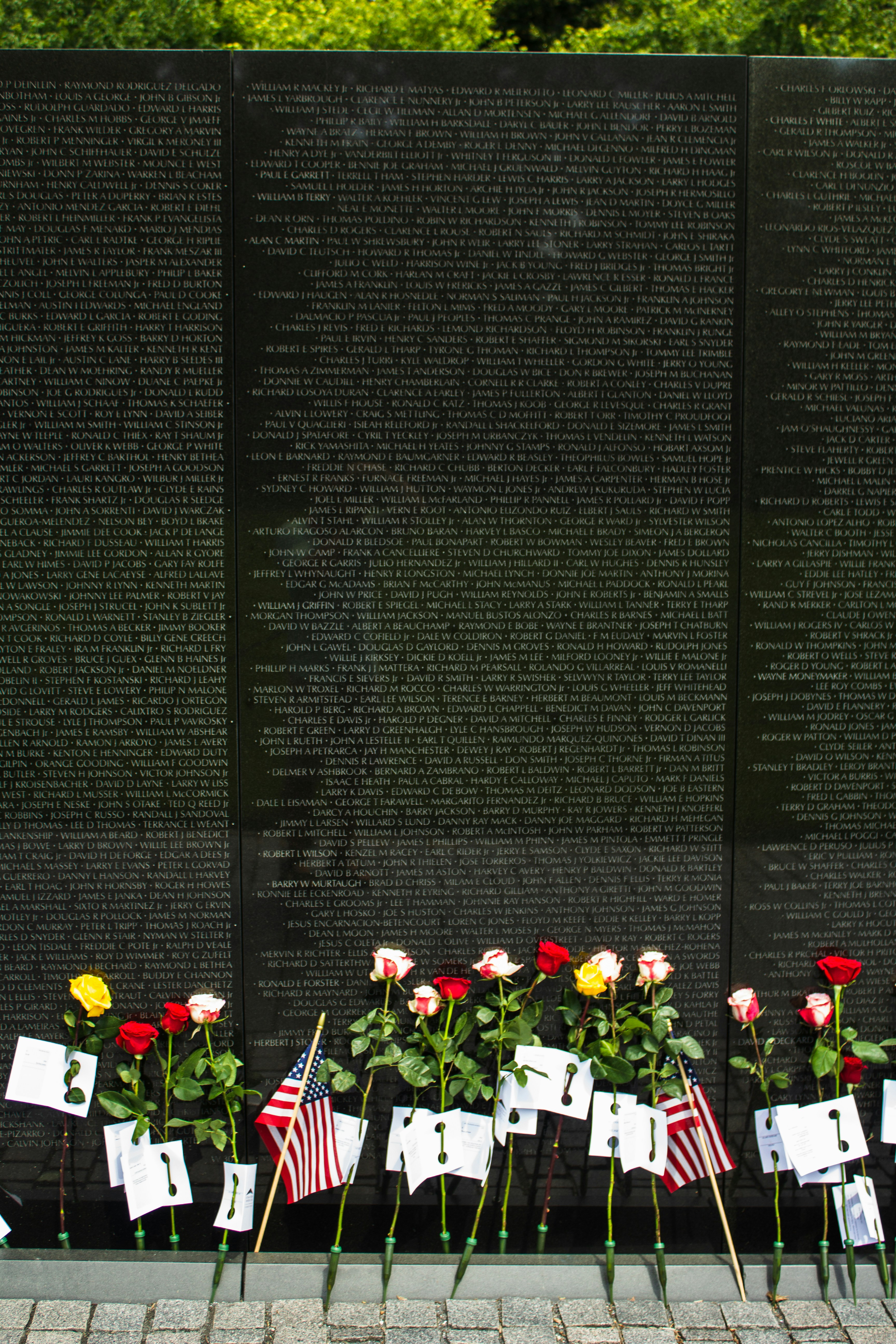
Ratification of the 26th Amendment
Under increasing pressure to lower the federal voting age to 18, on March 10, 1971, the US Senate unanimously voted in favor of the proposed 26th Amendment. Thirteen days later, the US House of Representatives voted overwhelmingly in favor of it. It went to the states for ratification, and in a record-setting two months, the required three-fourths of the state legislatures ratified the amendment. It went into effect on July 1, 1971, and President Nixon signed it into law on July 5, 1971.

Post-Vietnam War (for a military and draft perspective)
A cease-fire was reached between the US and North Vietnam on January 27, 1973, and US prisoners-of-war began to return home. The last US combat troops left South Vietnam on March 29, 1973.
The 1967 Selective Service Act, which had been extended by Congressional action, was allowed to expire in 1973. Therefore, the draft ended.
The United States operates with an all-volunteer armed forces now; however, all male citizens between 18 and 26 years of age are required to register for the draft and are liable for training and service until they reach the age of 35.
Until my next blog post
Keep reading that novel or nonfiction book that has you captivated. We all need an escape from daily worries and current events.
Never take your family or friends for granted.
Don’t forget the people of Ukraine and western North Carolina.
Janet


 Janet's Writing Blog