One Decision Changed the Course of History

Perhaps you need to be of a certain age to recognize the name of Hyman G. Rickover. Or perhaps you are not aware that he was born in Russia on this date in the year 1900.

His parents made the decision to leave Russia and settle their family in Chicago in 1906. When I read that, it struck me how just one decision made by an individual or a couple can change the course of history.

Statue of Liberty Photo by tom coe on Unsplash

Rickover graduated from the US. Naval Academy. He went on to work his way up through the ranks to head the Naval Reactors Branch of the U.S. Atomic Energy Commission and head of the U.S. Navy’s Nuclear Power Division. He was instrumental in the design and construction of the USS Nautilus, the world’s first nuclear-powered submarine.

He was known as a blunt man who sometimes butted heads with political leaders. Nevertheless, he went down in history as “Father of the Nuclear Navy.” The Soviet Union was unable to match the nuclear power held by the US military during the Cold War, and Admiral Rickover’s contributions and service were very much credited with that standing.

Admiral Rickover served in the United States Navy for 63 years, retiring in 1982.

Imagine how world history might have taken a different turn in the 1950s and beyond if Rickover’s parents had decided to stay in Russia in 1906.


Some reflections

After thinking about how one decision can change or set the path for the rest of our lives, as it did for Hyman G. Rickover and his parents, I thought about the decision made by my ancestors.

What about the day in the mid-1700s when my Morrison great-great-great-great-grandparents decided to leave Scotland and sail to America?

What about the day they decided to purchase land in the wilderness of North Carolina and set out down the Great Wagon Road from Pennsylvania?

What about the day my father applied for a job at Martin Aircraft in Middle River, Maryland and uproot his young family at the start of World War II?

What about the day he and Mama decided to move back to North Carolina as soon as the war was over?

What about the day Grandpa Morrison decided how to divide his farm among his three sons. His decision about what land to give his youngest son determined where I grew up and once again live today!

If my father had inherited the land Grandpa left to Uncle Gene, my parent’s house would have been destroyed by a tornado in the 1940s.

If my father had inherited that part of the farm instead of Uncle Gene, he would have rebuilt that house after the tornado just as Uncle Gene and Aunt Louise did. In that case, I would now be faced with the imminent construction of an 1,100-house development literally in my back yard. Thanks to Grandpa’s decision, I will live around the corner from that massive development and will, for the time being, still enjoy the beauty, tranquility, and wildlife of the woods behind my house.

Decisions.

And those are just examples from my Morrisons. My life and world view have been molded by the thousands of decisions made by all my ancestors. The same is true for you. Have you ever stopped to think about that?

Sometimes we agonize over a decision, and sometimes we make a choice on a whim. We usually have no idea how our decisions will affect those who come after us. We can make their lives easier or more difficult. We all just do the best we can with the information we have at the time.

Try not to judge your ancestors, and grant yourself forgiveness and grace for the choices you wish you hadn’t made. You did the best you could at the time. Like your ancestors, you did not have a crystal ball to see into the future.


Hurricane Helene Update

At the request of NC Gov. Josh Stein, FEMA’s Transitional Shelter Assistance program extended coverage of temporary housing in rental units/motels until May 26, 2025, for people who lost their homes in September in western NC due to Hurricane Helene. The coverage had been scheduled to end on January 18. With sub-zero temperatures and windchills in the negative double digits for days, people being turned out of temporary rental housing would have been another disaster for those individuals and families. Temporary housing assistance will not automatically be extended for everyone. Each case is periodically reviewed.

President Trump visited the Asheville area on Friday and talked about water in California, making Canada the 51st state, and what a good-looking guy Franklin Graham is. When he managed to focus on where he was, he said several times that he would be going out “to the site,” which sounds like the disaster was limited to one location. It actually covers hundreds of square miles of pockets of destruction in a challenging terrain.

Trump also said that NC had been treated “very unfairly” by FEMA, but the mayor of Asheville said she wasn’t sure what he was basing that remark on. Trump said he wants to overhaul FEMA or perhaps get rid of it. He left the impression that FEMA hasn’t done anything to help western NC since Hurricane Helene. He wants money to go through “us” (did he mean him? He said, “through us”) directly to the states and not through FEMA. He also talked about putting a litmus test on states before they could get federal disaster funds.

(I’m sure FEMA is not perfect, but to claim the agency has failed NC just is not true. There is confusion over what FEMA’s role is in a disaster. It will be interesting to see how disasters in the future are addressed if FEMA is overhauled or dismantled. There’s always room for improvement.)

As of Friday, 183 roads in North Carolina are still closed due to Hurricane Helene, including Interstate 40 near the Tennessee line. There is no estimate for when the Blue Ridge Parkway in North Carolina will be fully reopened.

In these remaining 183 cases, it’s not just a matter of resurfacing a road, some cases involve reconstructing entire roadbeds (many on the side of mountains), reconstruction of infrastructure, and reconstruction of bridges. County roads, state highways, and Interstates 26 and 40 have been affected.


Until my next blog post

Thank you for taking the time to read my blog.

I hope you are reading a good book. I just finished reading The Frozen River, by Ariel Lawhon, and I highly recommend it to anyone who enjoys historical fiction.

What decision(s) have you and your ancestors made that you realize now had long-range and perhaps unanticipated ramifications?

Remember the people of Ukraine, western North Carolina, and Los Angeles County.

Janet

#OnThisDay: Berlin Airlift, 1948

When I read that today was the 76th anniversary of the Berlin Airlift, I must admit my mind was a little short on details. One of the perks of writing this blog is that I get to study events in history and then share what I have learned.

Three of my last four blog posts have been light-hearted as I regaled you with details of my recent trip to the Outer Banks of North Carolina. It was a fun trip and I enjoyed sharing my memories and photographs with you; however, it is time for me to return to real life with my blog and other aspects of my life.

I learned a lot about the Berlin Airlift so I could blog about it today. If you, like me, were born after 1948, you maybe never studied mid-20th century history when you were in school.

Background

At the Potsdam Conference at the end of World War II, it was agreed that Germany would be divided into four parts for the country’s transition into a post-war economy and government. The United States, Great Britain, France, and the Soviet Union were designated to occupy the four sectors. The city of Berlin, which sits in the center of Germany, was also divided into four sectors with the same plan for occupation.

The Russian sector covered the eastern half of Berlin and the other three countries split up the western half.

Under the plan, it was the responsibility of the Allied countries to support the German people in their designated sectors with food, medical supplies, and fuel until Germany could recover from its defeat in the war.

Berlin was in the middle of the Soviet-controlled sector of the country. In hindsight it is easy for me to see that this situation had trouble written all over it, but I must be reminded that the Soviet Union, France, Great Britain, and the United States were allies in World War II. That is difficult to get my mind around, since I grew up during the so-called “Cold War” of the 1950s and 1960s.

The straw that broke the camel’s back

The United States, Great Britain, and France introduced a new currency – the Deutschmark – in an effort to revive the German economy. The Soviet Union balked at the proposal because it wanted to continue to bring Germany to its knees.

In response to the monetary proposal made by the Western Allies, the Soviet Union imposed a blockade of Berlin on June 24, 1948 after giving the Western Allies just 24 hours’ notice.

It was on that day, 76 years ago today, that the roads and waterways into Berlin were closed to American, British, and French access.

The Soviets wanted to starve West Berliners and through the very threat of starvation wanted to force West Berliners into coming across to the Soviet side.

Photo by Marisol Benitez on Unsplash.

The blockade meant that the Western Allies could no longer bring supplies in via roads or the rivers. For a while, East and West Berliners could freely move from one sector to another. Many of them needed to travel into the opposing sector for jobs.

But in October 1948 new regulations prohibited free movement. Seventy-one roadblocks were set up and everyone wishing to cross into or out of the Soviet-occupied sector was searched.

The solution

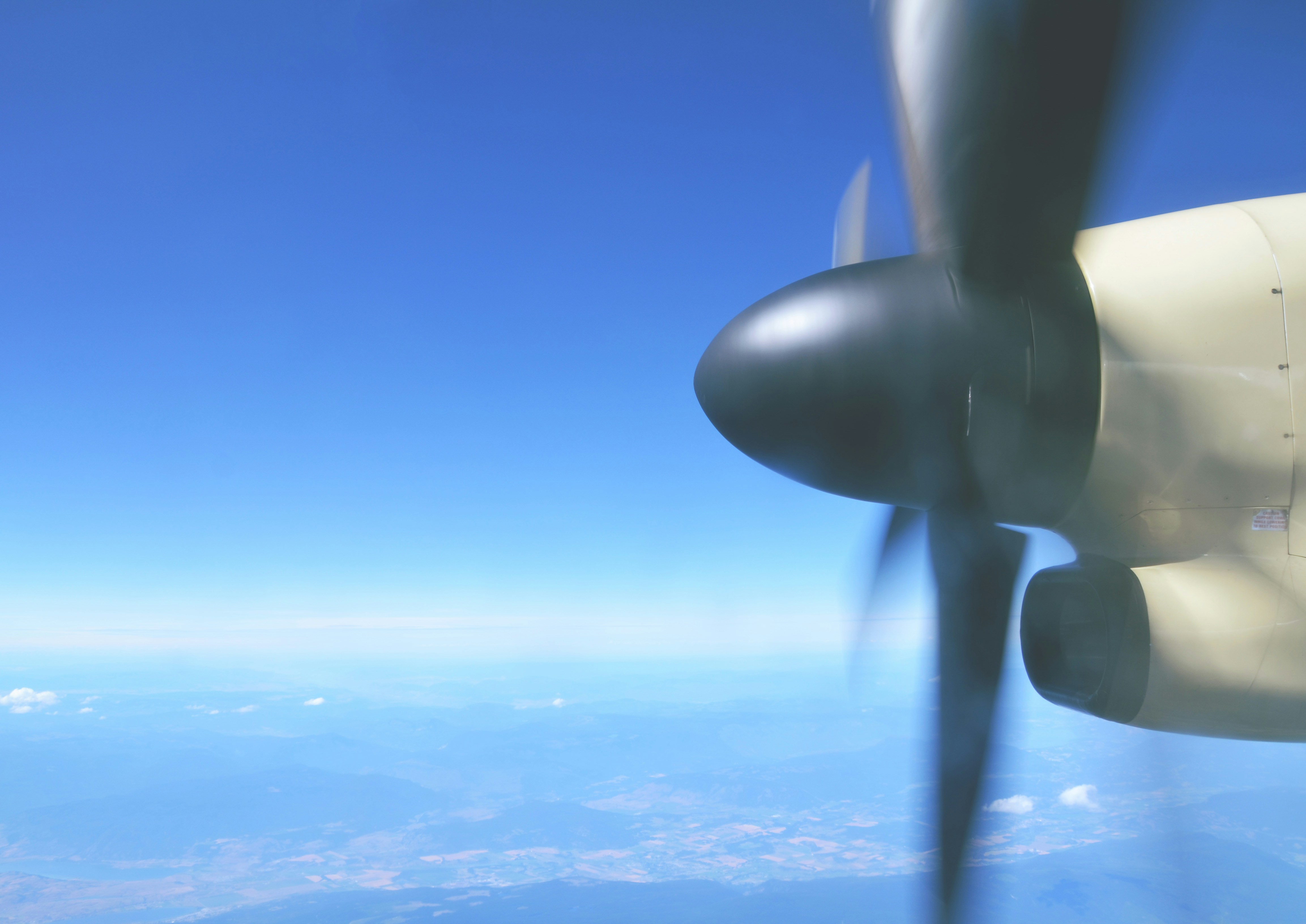
The solution to the Soviet-imposed blockade was the Berlin Airlift. The Germans called it Luftbrücke which translates into English as “airbridge.”

I have found conflicting statistics about the Berlin Airlift, which lasted until the blockade was lifted on May 12, 1949. Allied planes were constantly landing around-the-clock at airfields in Berlin. One source said it was every three minutes, and another source said at its busiest a plane was landing every 45 seconds.

Photo by Christina Sicoli on Unsplash

It was described as a constant noise, but it was a noise that reminded Berliners that they had not been abandoned by the United States, Great Britain, or France when the Soviet Union left them out to dry. They were not at the mercy of the Soviet Union.

It is said that the airlift brought more than food, medical supplies, and fuel into Berlin. Perhaps most importantly, it brought Berliners hope. The Berliners did not just sit idly by waiting for help. More than 10,000 of them worked at the airfields in various support positions to keep the airlift running as smoothly as possible.

The North Atlantic Treaty Organization (NATO) was created on April 4, 1949, which sent a strong message to the Soviet Union and, no doubt, prompted an end to the blockade five weeks later.

After the Berlin Airlift

West Germany was established as a democratic state two weeks after the end of the Berlin Airlift. Soon thereafter, East Germany was created.

For those of you too young to remember and who have not studied post-World War II world history, West Germany continued to exist as a free country and East Germany existed as a communist country until the reunification of Germany on October 3, 1990.

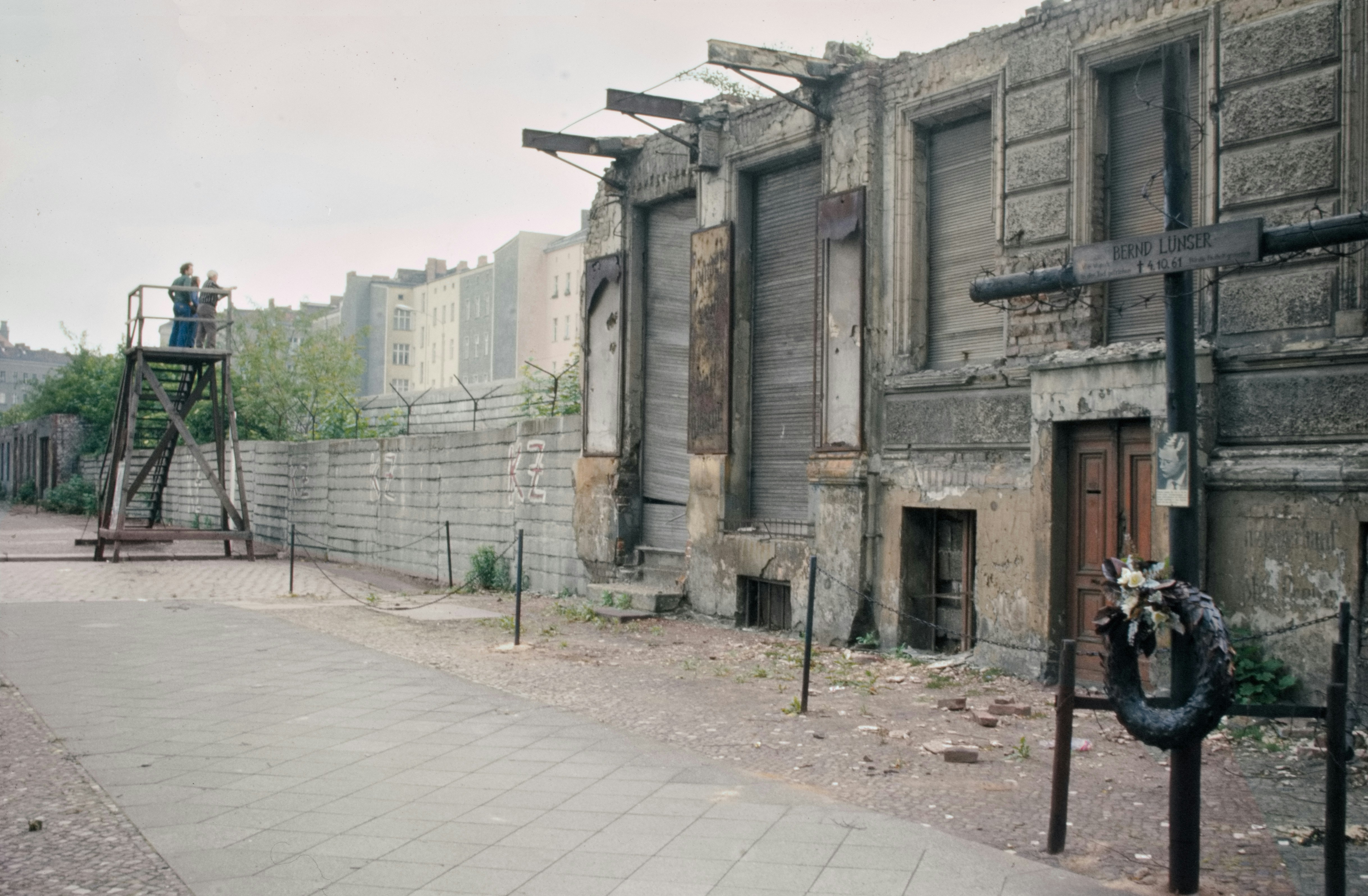
East Germany had to put a stop to East Germans fleeing to West Berlin. The Berlin Wall went up literally overnight on August 12, 1961 and encircled West Berlin until 1989. Overnight tens of thousands of West Berliners lost their jobs in East Berlin because the wall could not be crossed.

A small section of the Berlin Wall. Photo by Immo Wegmann on Unsplash.

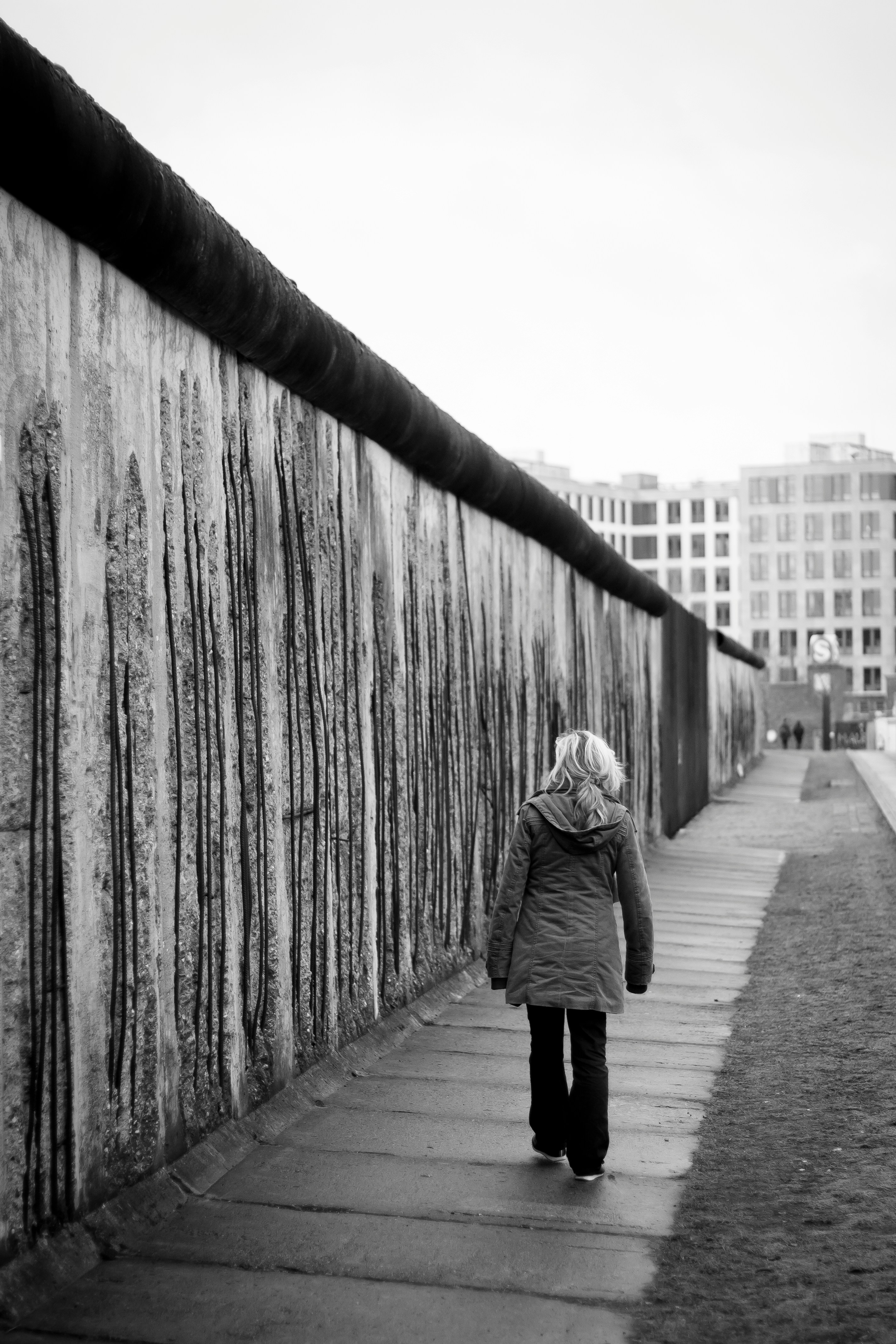
The Berlin Wall was a series of concentric barriers – a concrete wall with guard towers, anti-vehicle trenches, beds of nails and barbed wire. It was rare for anyone to successfully cross the wall. At least 171 people were killed trying to escape East Berlin.

The Berlin Wall. Photo by Tomas Val on Unsplash.

The tearing down of the Berlin Wall

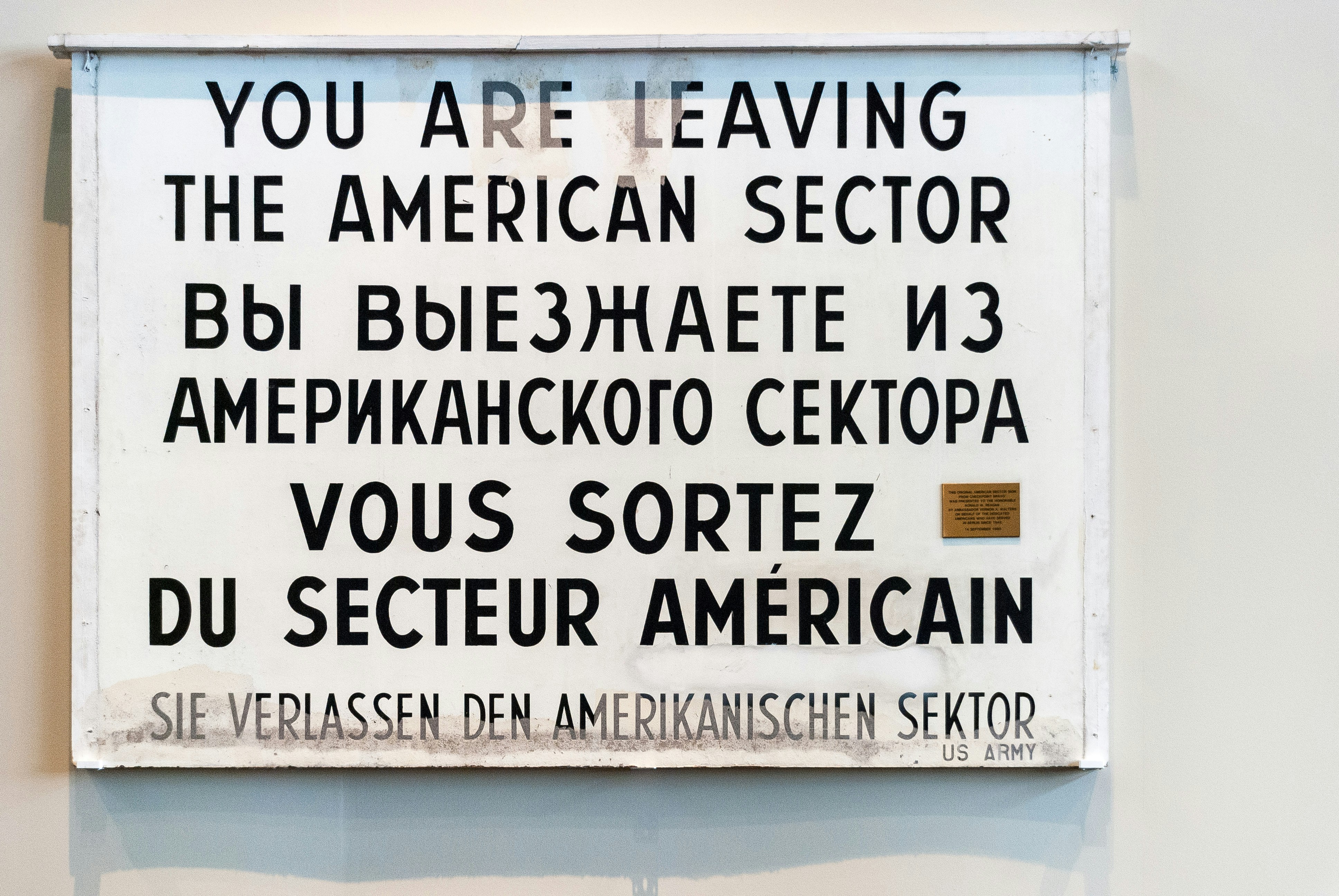
Sign at “Checkpoint Charlie” in Berlin. Photo by Etienne Girardet on Unsplash.

On November 9, 1989 the East German Community Party announced new policies regarding border crossings and the gates were opened.

People took picks and hammers and started tearing down the concrete wall. Bulldozers pushed down sections of the wall until it was gone.

After 44 years, Berlin once again became one city. And Germany was finally once again one sovereign country.

In conclusion

This is a condensed version of what happened and all sources do not agree on every date. If you wish to do your own research, there are many books that offer the details and idiosyncrasies of the airlift. Check the public library and the internet for a list of reputable sources.

Until my next blog post

Thank you for taking the time to read my blog today.

My next blog post will be on July 1. June just flew by!

I hope you have a good book to read – one that you don’t want to put down!

Value the time you have with friends and family.

Remember the people of Ukraine.

Janet