“You Couldn’t Help But Like Bob” — historical short story

Today I am introducing you to the main character in “You Couldn’t Help But Like Bob,” the second story in my new book, Traveling Through History: A Collection of Historical Short Stories.
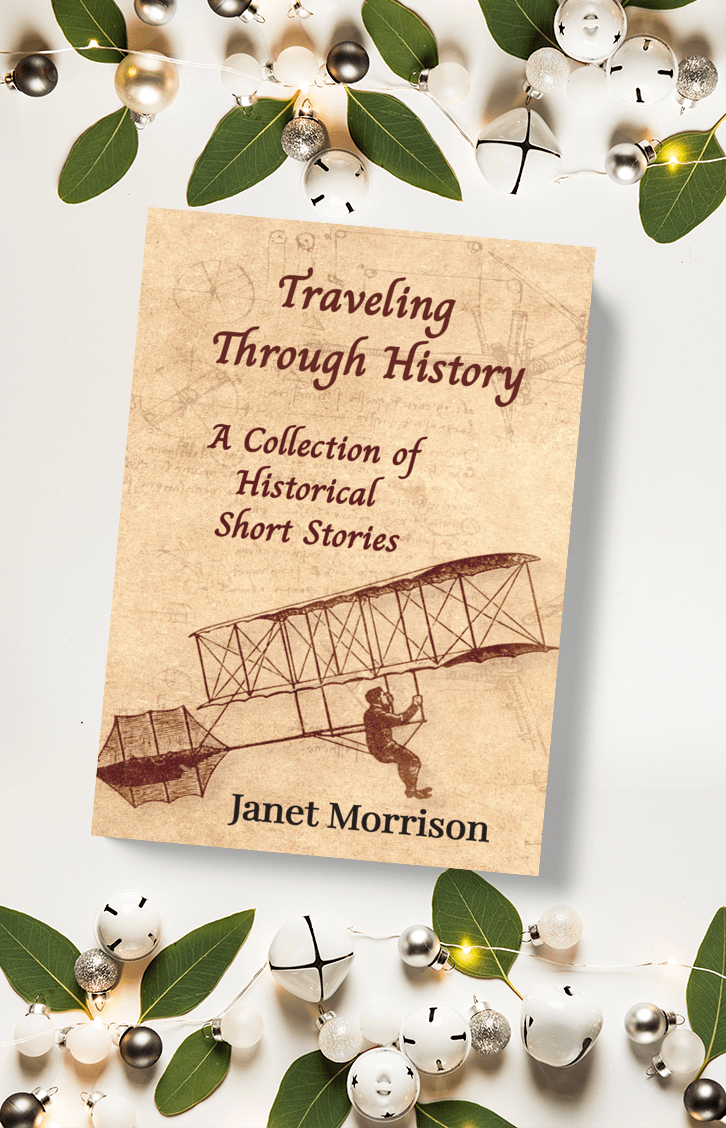
Photo of the front cover of Traveling Through History: A Collection of Historical Short Stories, by Janet Morrison

Genealogy has been a hobby of mine since I was a young adult. Robert Dooling is the most colorful of my ancestors that I have found so far. He immigrated from Ireland to America in the early 1700s and settled in Virginia.

Some people would be embarrassed at discovering one of their great-great-great-great-great-grandfathers was on the wrong side of the law in Colonial Virginia, but that just made Robert Dooling that much more interesting to me. To my way of thinking, that’s a lot better than just knowing an ancestor’s birth and death dates.

I devoured the colonial court records, eagerly searching for every tidbit or reference to Robert. As far as I know, he never did anything too serious. Perhaps his worst offence was “abusing” a Justice of the Peace. (I’m not clear on what constituted “abusing” a Justice of the Peace in Tappahannock, Virginia in the early 18th century.

I had fun creating a fictional story about this man I only know on paper, but his blood runs through my veins and I’m grateful to know more about him than just his name.

Here are the opening lines in the story:

“You couldn’t help but like Bob. Unless he owed you money. Unless you were a Justice of the Peace in Essex County, Virginia in the early 1700s.

“Even so, you just couldn’t help but like Bob.

“To say Bob was irritating would be an understatement, but you couldn’t stay made at him for long. Unless he owned you money or tobacco. Unless you were a Justice of the Peace, tired of seeing him dragged into your court room.”

I hope you will enjoy reading the story as much as I enjoyed writing it.

After you read “You Couldn’t Help But Like Bob” in Traveling Through History: A Collection of Historical Short Stories, you’ll know more about him. I hope you will like him, too!

I case you missed my November 24, 2025, blog post about the first story in my new book, here’s the link: “The Tailor’s Shears” – Historical Short Story.

Where you can find my new book

Traveling Through History: A Collection of Historical Short Stories is available on Amazon, or ask for it at your favorite independent bookstore.

For my readers in North Carolina, the book is now available at Second Look Books in Harrisburg.

Thank you for supporting my writing! If you enjoy my book, a rating or review on Amazon or Goodreads would be greatly appreciated.

Janet

How Can Genealogy Influence Historical Fiction?

Since I have published very little historical fiction, you probably haven’t read anything yet that was influenced or inspired by my genealogy; however, I hope to remedy that with the publication of a collection of my short stories in 2024.

I’ll give you an example. People often ask fiction writers where they get their ideas. The answers run the gamut, but I have drawn on research into my family history for at least one historical short story.

Many people like to brag about their Scottish ancestors living in castles. Folks, why would someone leave a castle in Scotland in the 1700s and come to America to start life over as a farmer? Just sayin.’

Eilean Donan Castle in Scotland (Photo credit: Nicholad Beel on Unsplash.com
Eilean Donan Castle in Scotland (Photo credit: Nicholas Beel on Unsplash.com

I brag on most of my ancestors because they were farmers. They were farmers in Scotland and Ireland, and they bought land to farm when they got to America.

Cornfield. Photo Credit: Steven Weeks on Unsplash.com
Photo Credit: Steven Weeks on Unsplash.com

After having grown up out in the country and worked a vegetable garden, I have immense respect and admiration for anyone who is able to support a family and make a living by farming – especially back in the days before tractors and other mass-produced farm equipment.

Today I’m blogging about one of my immigrant ancestors who inspired me to write a short story.

He left Ireland (we think) and came to Virginia in the early 1700s. He had obviously not lived in a castle. Doing research on him in coastal Virginia was an eye-opening adventure. By following all the government records I could find about him, I learned a great deal of early Virginia history.

His court records made the fact that in colonial Virginia there was no separation of church and state very real to me. When said ancestor found himself on the wrong side of the law, he was fined a certain poundage of tobacco (or “tobo”) to be paid to the Anglican church.

Tobacco hanging in a barn to cure. Photo Credit: Rusty Watson on Unsplash.com
Photo Credit: Rusty Watson on Unsplash.com

I learned that tobacco was as good as money in colonial Virginia. My g-g-g-g-g-grandfather was on the wrong side of the law more than once, and he was always fined a certain number of pounds of tobacco.

Just so you’ll know, he wasn’t a terrible or dangerous person. He was fined for such offenses as playing cards on the Sabbath. You can read what I think will be an entertaining story about him in my (hopefully) upcoming book in 2024, Traveling through History: A Collection of Historical Short Stories.

You might want to subscribe to my every-other-month e-Newsletter so you can learn more about the research I do. One thing I love about writing historical fiction is the research it requires.

Visit my website, https://www.janetmorrisonbooks.com and click on the “Subscribe” button. You’ll immediately receive a free downloaded copy of my short story, “Slip Sliding Away” – a Southern historical short story set in the Appalachian Mountains in the 1870s.

Since my last blog post

Drumroll! Main Street Books in Davidson, North Carolina has accepted The Aunts in the Kitchen: Southern Family Recipes on consignment for the next six months. Marie and I are excited about this new opportunity.

I appreciate the comments some of you let after reading my blog last Monday about book banning – specifically, Sold, by Patricia McCormick. I’m glad I introduced the book to some of you.

In last Monday’s blog, I indicated that I had submitted a request to the Cabarrus County Public Library for Sold to be ordered. One of the librarians thanked me for bringing it to her attention. It seems that the system used to have a copy. After it was lost, they failed to order a replacement copy. That is now being rectified.

See? Sometimes all you need to do is ask your local library system to consider adding a book to the collection. In a time when too many people do nothing but criticize “the government” and express their disrespect for government employees, I’m giving a shout-out for the Cabarrus County Public Library System and its dedicated employees

Until my next blog post

I wish my fellow Americans a wonderful Thanksgiving holiday this week. It’s good that we set aside a day every year to stop and think about all we have to be thankful for.

I hope you have a good book and time to read it. If there’s a book you wish you can check out of your local public library but it’s not in the system, request that it be purchased. Your request might be turned down due to monetary restraints or another reason, but you won’t know until you try.

Remember the people of Ukraine and other parts of the world where innocent citizens are suffering due to the actions of dictators and terrorists.

Janet