
When I read that today is the anniversary of the 1777 birth of Roger Brooke Taney, I wondered why his birthday appeared on any lists. When I learned that Mr. Taney was a US Supreme Court Chief Justice when the landmark Dred Scott decision was made, I knew there was a story behind the story.
We are all products of the times in which we live but, fortunately, we can be influenced by forces other than majority or peer pressure. We each have freewill to come to our own conclusions and beliefs.
Some US Supreme Court Justices try harder than others to disregard their personal backgrounds and experiences when considering a case. Some don’t seem to try at all in the 2020s.

Let’s learn who Dred Scott was, and then we’ll look at how the life experiences of Roger Brooke Taney and the other six Justices in majority vote probably played into the US Supreme Court Dred Scott v. Sandford case.
Settle in. This gets complicated.
Who was Dred Scott?
Dred Scott was born a slave in Southampton County, Virginia around 1799. He moved to Alabama with his owner, Peter Blow, in 1818. In 1830, he moved to St. Louis, Missouri where Mr. Blow ran a boarding house.
Dr. John Emerson purchased Mr. Scott after Mr. Blow died in 1832. Dr. Emerson took Mr. Scott to Illinois and later to the Wisconsin Territory. Illinois was a free state, and slavery was illegal in the Wisconsin Territory.
Mr. Scott married Harriet Robinson, who was also a slave. Ms. Robinson’s owner sold her to Dr. Emerson. Things got more and more confusing in the ensuing years after Dr. Emerson moved back to St. Louis, but hired out Mr. and Mrs. Scott, leaving them in Wisconsin.
Dr. Emerson moved to Louisiana. He married Eliza (Irene) Sandford in 1838. Dred Scott went there, but shortly thereafter the Emersons and their slaves, including Mr. Scott, moved back to Wisconsin.
Dr. Emerson was discharged from the US Army in 1842 and – you guessed it – he and his wife and the Scotts moved back to St. Louis. Mr. and Mrs. Scott, by then, had two daughters.
Dr. Emerson seemed to have financial problems, so he and his wife moved to Iowa. It is unclear whether the Scotts went with them or if they were hired out and remained in Missouri.
When Dr. Emerson died in 1843, the Scotts and all his other slaves became the property of his widow, Irene Sandford. She moved back to St. Louis, retained ownership of the Scotts, and hired them out.
Mr. Scott tried repeatedly to purchase his freedom from Irene, but she would not hear of it.

Dred and Harriet Scott lawsuits
Dred and Harriet Scott separately filed lawsuits against Irene Emerson in April 1846. They were firmly based on two Missouri statutes. One allowed anyone of any color to sue for wrongful enslavement. The other statute said that any slave transported to a free territory automatically became free and would remain free even when taken back into a slave state.
The Scotts’ church, abolitionists, and you’ll never guess who: Dred’s previous owner’s family, the Blows, gave their support. Since neither Mr. or Mrs. Scott could read or write, they needed all kinds of support to fight their cases.
The St. Louis Circuit Court ruled against the Scotts in 1847, on a technicality. The cases were heard again in 1850 and the Scotts won their freedom. That should have been the end of it, but it wasn’t.
Irene Emerson appealed to the Missouri Supreme Court. That court combined the two cases and reversed the decision of the lower court in 1852, making the Scotts slaves again!
Then, Irene Emerson transferred ownership of the Scotts to her brother, John Sandford, or so was thought. (Actually, the transfer did not happen, but that’s why the case was called Dred Scott v. Sandford as the Scotts’ legal struggle continued.)
In 1853, Dred Scott filed a federal lawsuit with the United States Circuit Court for the District of Missouri. The case was heard in May 1854, and the court ruled against Mr. Scott.
The Dred Scott Decision/Dred Scott v. Sandford

Later that year, Mr. Scott appealed his case to the US Supreme Court. The case gained support and notoriety by the time the Justices heard the case in 1856. A curious aside is that by then, Irene Sandford Emerson had married Calvin Chaffee. An abolitionist, Mr. Chaffee was also a US Congressman.
When Mr. Chaffee learned that Irene still owned Dred Scott and his family, he sold the Scotts to Taylor Blow, the son of Scott’s original owner, Peter Blow.
On March 6, 1857, the US Supreme Court announced its 7-2 decision in favor of Mr. Sandford.
On May 26, 1857, Taylor Blow freed the Dred Scott family. Sadly, Mr. Scott died of tuberculosis just 16 months after finally becoming a free man.
What was Chief Justice Roger Brooke Taney’s background?
Roger Brooke Taney was born in Maryland on March 17, 1777. He was educated in France. After coming home from France, he graduated from Dickinson College in Pennsylvania, and studied law with Judge Jeremiah Chase of the Maryland General Court.
In 1806 he married Francis Scott Key’s sister, Anne.
He had a private law practice. After being nominated by President Andrew Jackson, Roger Taney was sworn in as Chief Justice of the US Supreme Court in March 1836, replacing John Marshall.
Oh… and did I mention that he was a slave owner?
But what was Roger Taney’s personal track record with slaves?
Taney freed seven of his slaves on July 14, 1818. He also provided for the emancipation of the three older children of one of his freed slaves at later dates – one of them would be freed in 1836 at age 25, one in 1843 at the age of 30, and the other one in 1845 at the age of 30.
As a young lawyer, Taney was quoted as calling slavery a “blot on our national character,” but by 1857 (the year of the Dred Scott decision) he was an advocate in favor of slavery. It was then that he called the abolitionist movement “northern aggression.”
He wrote for the majority in favor of Dred Scott’s owner in Dred Scott v. Sandford.
Taney seemed to be conflicted on the subject of slavery. Yes, he gradually freed his slaves, but why did he drag it out over 27 years? If he was indeed against slavery as a young man, what didn’t he free all his slaves at that time instead of waiting until 1845 to free the last one? He made the children remain slaves until they were 25 to 30 years old. Where is the humanity in that?
What about the six Justices who sided with Chief Justice Taney?
Justice John Catron, a lifelong slave owner, joined in the majority opinion.
Justice Peter V. Daniel, who owned slaves throughout his adult life, joined in the majority opinion.
Justice Samuel Nelson voted with the majority but disagreed with Chief Justice Taney’s reasoning. Justice Nelson maintained that the states had the right to determine whether slavery was legal within their boundaries and that the federal government did not have the authority to tell the states what to do in that matter.
Justice Robert Cooper Grier voted with the majority and concurred that slaves were not citizens.
Justice James M. Wayne was a lawyer, politician, and judge from Savannah, Georgia. I did not find that he owned slaves. He agreed with President Andrew Jackson on the forced removal of Indians to the Oklahoma Territory. Surprisingly, he was against the formation of the Confederate States of America.
Justice John A. Campbell was a lawyer in Georgia and Alabama. Even though Justice Campbell did not believe that the Court could determine whether Dred Scott was a citizen, he agreed with the Chief Justice on most other points. He agreed that, as a slave under Missouri law, Mr. Scott could not sue in federal court.
The Majority Opinion of the US Supreme Court in Dred Scott v. Sandford
Although basing its decision on what was stated in the US Constitution at that time, the words are chilling. I’ll share just a fraction of the decision here.
Writing for the majority in the Dred Scott case, Chief Justice Taney stated, “A free negro of the African race, whose ancestors were brought to this country and sold as slaves, is not a ‘citizen’ within the meaning of the Constitution of the United States.
“When the Constitution was adopted, they were not regarded in any of the States as members of the community which constituted the State, and were not numbered among its ‘people or citizen.’ Consequently, the special rights and immunities guarantied to citizens do not apply to them.
“And not being ‘citizens’ within the meaning of the Constitution, they are not entitled to sue in that character in a court of the United States, and the Circuit Court has not jurisdiction in such a suit. The only two clauses in the Constitution which point to this race, treat them as persons whom it was morally lawful to deal in as articles of property and to hold as slaves.”
And, “The plaintiff having admitted, by his demurrer to the plea in abatement, that his ancestors were imported from Africa and sold as slaves, he is not a citizen of the State of Missouri according to the Constitution of the United States, and was not entitled to sue in that character in the Circuit Court. This being the case, the judgment of the court below, in favor of the plaintiff of the plea in abatement, was erroneous.”
Chief Justice Taney said in the majority decision that slaves were property and the ownership of slaves was on the same footing as the ownership or anything else. It said, that the courts could not at that time, under the Constitution, deprive a citizen of their property. It said that just because a citizen took their property into “a particular Territory of the United States,” (Rock Island, Illinois) did not mean they did not still own that property.
The majority decision referred to the Missouri Compromise, enacted in 1820, which admitted Missouri to the Union as a state allowing slavery, but it outlawed slavery from the rest of the Louisiana Purchase lands located north of the southern border of Missouri (the 36-degree 30-minute parallel.)
In the Dred Scott decision, the court ruled that the Missouri Compromise (which had been repealed by the Kansas-Nebraska Act of 1854) was unconstitutional and, therefore, Dred Scott and his family “were not made free by being carried into this territory….”
Background of the 36-degree 30-minute parallel
Since our current president likes to call borders artificial lines drawn by someone with a ruler decades ago, I looked into the history of the 36-degree 30-minute parallel. It was originally drawn as the boundary between the Colonies of Virginia and North Carolina. Later, it was extended to be the border between Kentucky and Tennessee. When the Missouri Compromise came along, that line was extended to balance the number of states that allowed slavery and the states that did not allow slavery.
The moral of the story
The next time there is a vacancy on the US Supreme Court or on your state’s Supreme Court, you need to pay attention. Dig into the nominee’s background and let your elected officials know what your concerns are or if you think that nominee will make be a fair, honest, law-abiding Justice with integrity. Watch the Congressional hearings and listen carefully to the nominee’s answers – to what they say and what they don’t say. Watch their body language. Are they at ease? Do they smirk? Do they easily lose their cool?
Hurricane Helene Update
As of Friday, 152 roads in North Carolina were closed due to Hurricane Helene damage and repairs. That count included 11 US highways, 17 state highways, and 124 state roads. This is an overall increase over a couple of weeks ago.
Asheville’s application for a $225 million Disaster Recovery Block Grant from the US Department of Housing and Urban Development (HUD) is in limbo because it includes a $15 million Small Business Support Program that would prioritize Minority and Women Owned Businesses. The City, which sustained more than $1 billion in damage in Hurricane Helene, has been given until April to submit a plan that is in line with Trump’s anti-minority and anti-women regime.
Keep in mind that the application was submitted last year according to the regulations that were in place at the time. Does anyone else found it ironic that HUD Secretary Scott Turner, who is a black man, wrote that “DEI [Diversity, Equity, and Inclusion] is dead at HUD”?
As employees of the National Park Service and National Forestry Service are fired by the Trump Administration in the name of “waste and fraud,” you can expect to see fewer post-Helene clean-up activities in the parks and forests in western North Carolina.
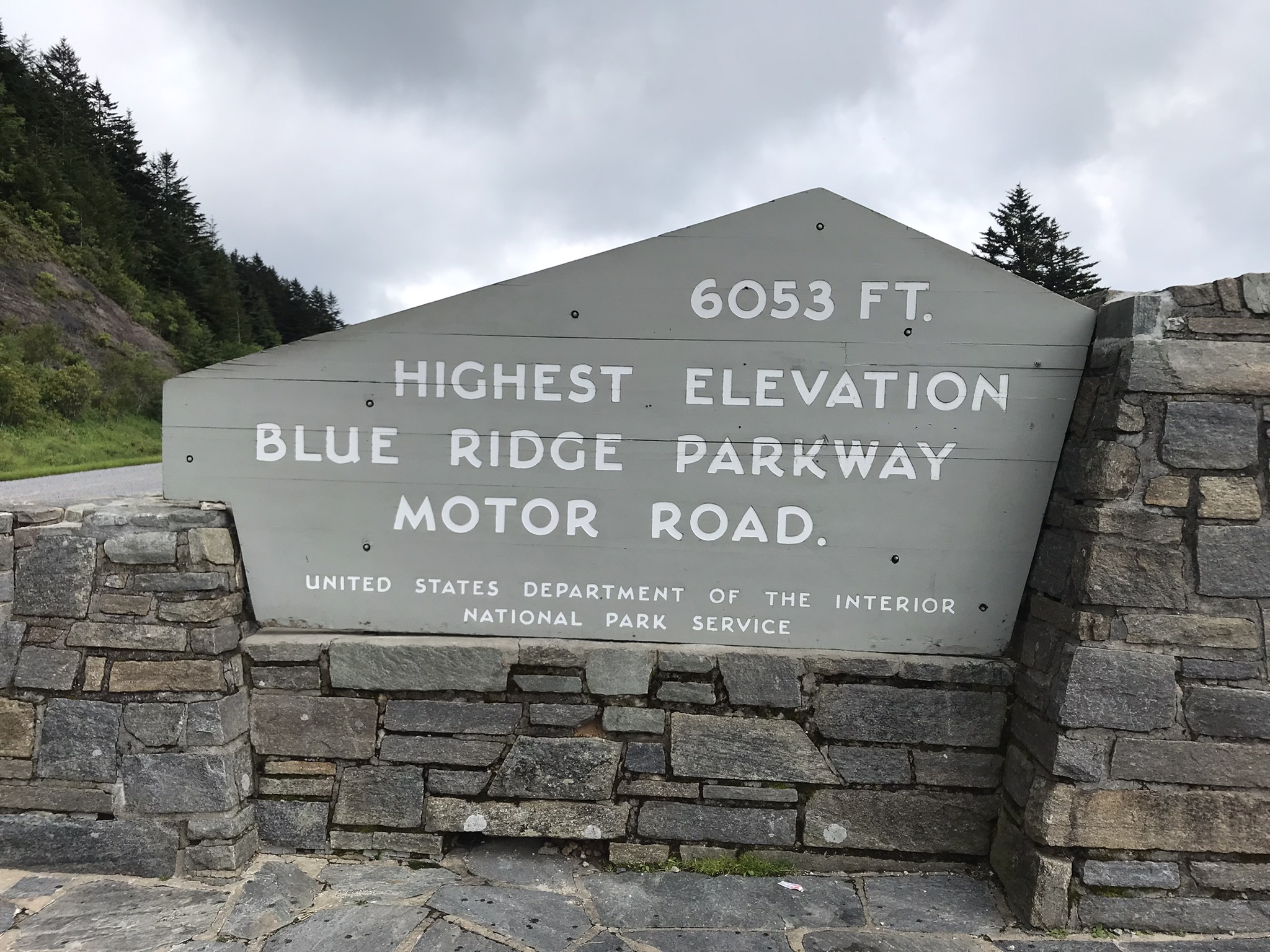
As you plan a trip to the mountains in western North Carolina this spring, here’s a link to important details about the Blue Ridge Parkway: https://www.nps.gov/blri/planyourvisit/helene-recovery-projects-at-a-glance.htm. We probably need to continue to plan our mountain visits avoiding most of the parkway.
Since my last blog post
I heard from a number of you in reference to my March 10, 2025, blog post. I heard from fellow-Americans, and I heard from people in various parts of Europe and the Caribbean.
It seems we still have a lot in common with our European allies (I can’t bring myself to refer to them as “former allies” yet): We’re all deeply concerned – and dare I say scared – over the current political situation into which the US President has thrown us.
The people in Mexico, Canada, and Europe did not ask for this… and half of the Americans didn’t ask for or vote for this. The brave people of Ukraine certainly didn’t ask for and don’t deserve this chaos.
Until my next blog post
I hope you find a good book to read that will inform you and/or give you a few hours to escape into a fictional place or time.
We didn’t all vote for this, but we’re all in it together now. We’ll be watching in the coming days, months, and years to see how the US Supreme Court will rule on cases resulting from the chaos we’ve been thrown into since January 20th.

I hope my next blog post will be shorter than this one. It depends on what’s going on.
Please remember the people of Ukraine and western North Carolina… and all the people terrorized by tornadoes over the weekend.
Janet


 Janet's Writing Blog