Trump Continues to Attack Universities and Our Health

It’s hard to feel sorry for a wealthy university like Duke University that has an enormous endowment; however, the Trump Administration’s current little-publicized attack on the institution raises a larger issue.

Duke University will survive without federal grants, at least for a while. Its endowment can pick up the slack, at least for a while.
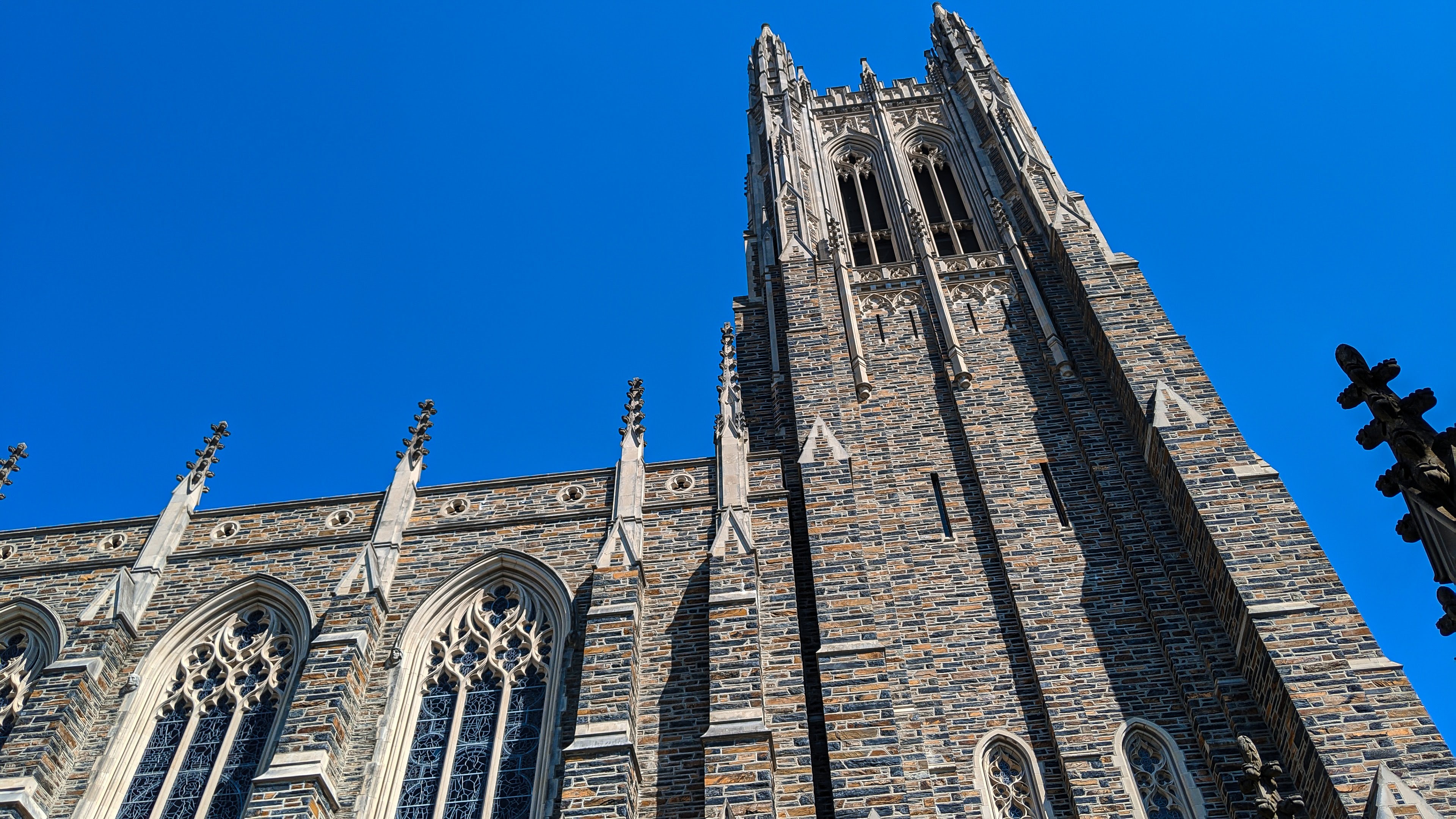
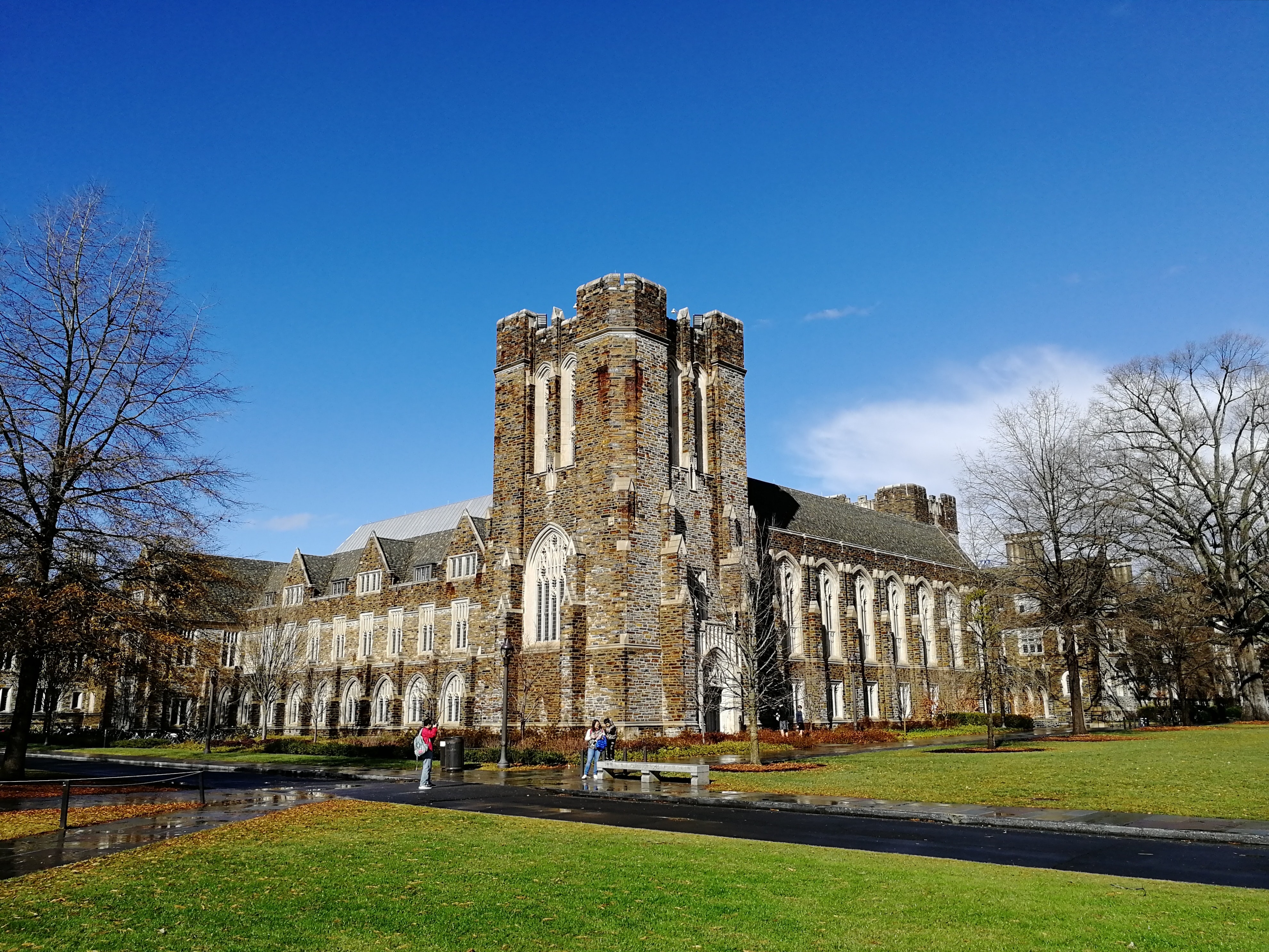
Exterior of Duke Chapel. Photo credit: Chuck Givens on unsplash.com

The larger issue is the Trump Administration’s continual attack on education on all levels. I believe Trump has no interest in education. He has no interest in what any school, college, or university teaches. He says, “I love the uneducated.” It might be the only truth he has ever spoken.

In a democracy, a president does not dictate university admissions or curriculum in public schools or private schools. In today’s United States, though, Trump believes he has that authority.

Last week, U.S. Secretary of Health and Human Services Robert F. Kennedy, Jr. and U.S. Secretary of Education Linda McMahon sent Duke University a letter. Specifically, Kennedy and McMahon threatened the Duke University Medical School and Duke Health (the entire Duke Health healthcare system). If writing letters to threaten universities for having diversity, equity, and inclusion is the only thing the U.S. Department of Education is going to do now, perhaps it needs to be abolished.

The letter alleges that the medical school and healthcare system engage in “wrongful racial preferences” in hiring and admissions. The letter reportedly states, “This vile racism carries a host of excuses and hides behind a smug superiority that such ‘benefitted’ races cannot compete under merit-based consideration.”

Furthermore, the letter says, “Like all racism, ‘affirmative action’ undermines America’s commitment to merit-based justice and violates the nation’s civil rights laws.”

North Carolina Public Radio, WUNC, reports, “Kennedy and McMahon urge Duke administrators set up a ‘Merit and Civil Rights Committee’ to review its diversity policies ‘to avoid invasive federal engagement.’ The secretaries warn the university’s federal funding could be at risk if it doesn’t change course. ‘It is our hope that Duke Medical School and other components of Duke Health will either demonstrate that they merit the privilege of receiving taxpayer support or will enact reforms that make further enforcement efforts unnecessary,’ the letter said.

“McMahon and Kennedy ask the university to respond to the letter within ten business days.”

Earlier this year, nearly 600 Duke employees took voluntary buyouts after Trump slashed research funding. According to WUNC, “Cuts at the National Institutes of Health, along with reductions in Medicare/Medicaid funding could cost the university $350-600 million annually.

Duke plans to lay off more employees between August 5 and August 19.

That’s not just what Duke as an institution and business will lose: Duke Health operates Duke Children’s Hospital, Duke Health Lake Norman Hospital, Duke Raleigh Hospital, Duke Regional Hospital, and Duke University Hospital, as well as 12 urgent care facilities.

But that’s not the only attack on Duke University

The U.S. Department of Education also sent Duke University a letter last week threatening the Duke School of Law’s student-edited Law Journal.

It seems that the law students are too open to diversity, equity, and inclusion.

We have gone from recognizing that the playing field is not level to declaring that it is so level that to give anyone a hand up is a violation of everyone’s civil rights.

The playing field in the United States is not level, folks. For an alleged billionaire living in the White House to proclaim that it is level does not make it so. Someone who was born with a silver (or gold?) spoon in his mouth does not have the right to say that every person in America has an equal opportunity.

Those who say that white privilege does not exist are only fooling themselves. This falls into the category of “alternative facts” that the first Trump White House was famous for giving us.

Want to learn more? Here’s a link: https://www.wunc.org/education/2025-07-30/duke-university-dei-federal.

Janet

More Matters of Concern

Here are some items I did not have room to include in this morning’s blog post.


Artist cancels showing at Smithsonian’s National Portrait Gallery

Photo of the National Portrait Gallery in Washington, DC
Photo by Sung Jin Cho on Unsplash

The artist of a 2018 portrait of former First Lady Michelle Obama has withdrawn from her schedule showing at the National Portrait Gallery after being told one of her paintings was not acceptable in light of President Trump’s March Executive Order regarding museums.

Amy Sherald’s painting “Trans Forming Liberty” depicts the Statue of Liberty as a transgender woman. After being told she could not include the painting in her show, Sherald informed the secretary of the Smithsonian in writing that, “it has become clear that the conditions no longer support the integrity of the work as conceived.”

This would have been the first National Portrait Gallery’s showing… ever… by a Black contemporary artist.

The Smithsonian is “disappointed,” but not as disappointed as I am about what the Trump Administration is doing to free expression, science, medical research, and the treasure that was the Smithsonian Institution.


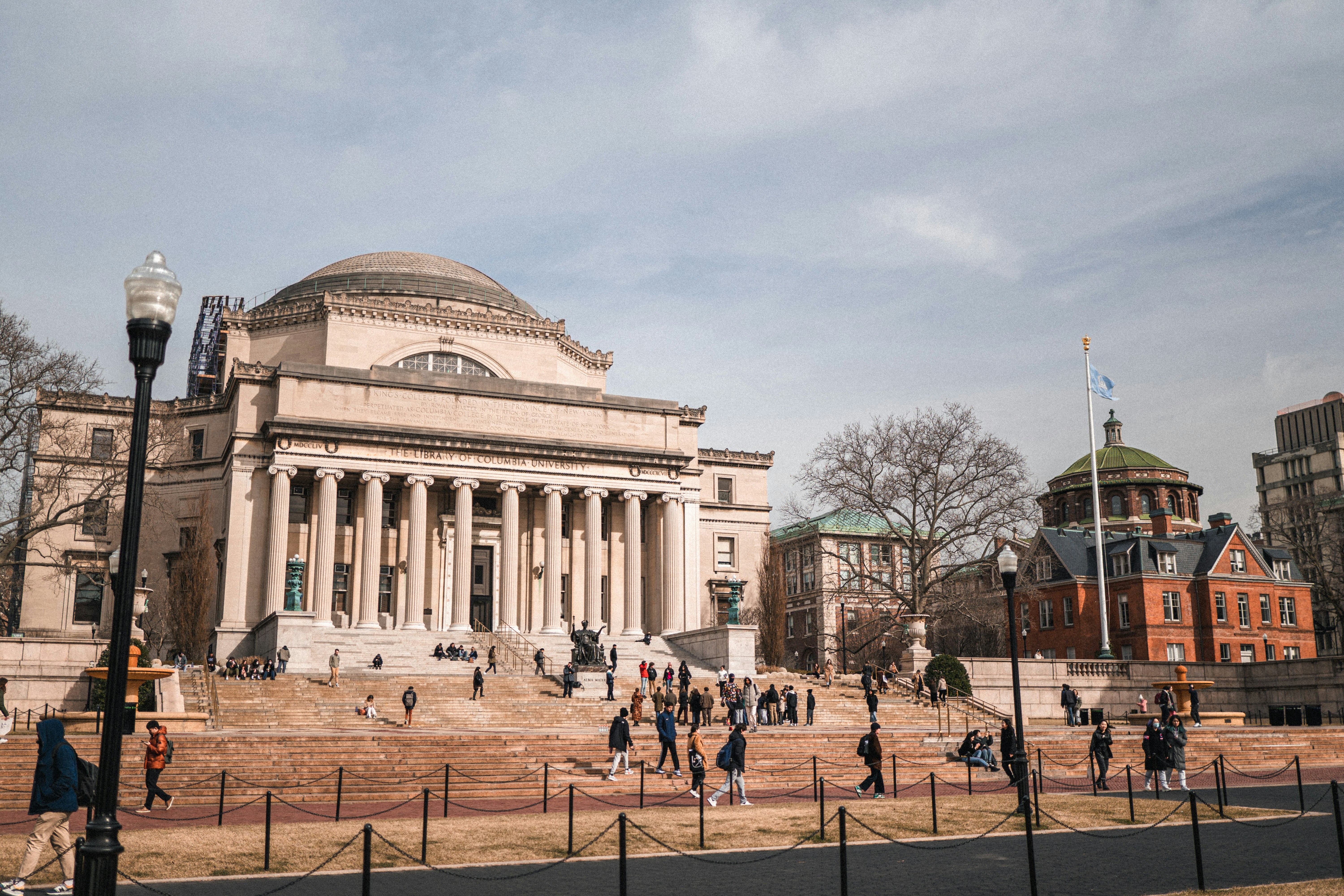
Columbia University caved in to Trump

Photo of part of the Columbia University campus in New York City. Photo by Tobias Pfeifer on Unsplash

So it can continue to admit international students and receive federal funds, Columbia University caved in to the bully. Under the guise of being concerned about Jewish students being discriminated against on Columbia’s campus, the Trump Administration strong-armed the university into bending a knee and paying $220 million for alleged violation of U.S. antidiscrimination laws.

In the agreement last Wednesday, Columbia is supposed to get to keep billions of dollars for research grants. Columbia must revise its admissions policies, campus protest policies, and its curriculum.

The university’s acting president, Claire Shipman, says the agreement protects Columbia’s values and autonomy, but it isn’t clear how that is possible with the Trump Administration dictating admissions, protests, and curriculum.

The Trump Administration calls the agreement “a road map for settlements” as it eyes other colleges accused of not addressing antisemitism.

When the students return to camp in September, it will be interesting to see if they are allowed to protest Israel’s bombing of Gaza and starving the Gazans by restricting food aid.

As I recall, that’s what started this whole thing.

And now Trump has turned his sights on the medical and law schools at Duke University. Anything to disrupt medical care and medical research, I guess. Some 600 Duke University staff have taken early retirement buyouts so far.


A reversal from the U.S. Department of Education

This is the first positive thing I’ve been able to report about the U.S. Department of Education since Inauguration Day. After North Carolina Attorney General Jeff Jackson and 19 other state attorneys general and governors sued the U.S. Department of Education for freezing $5.5 billion nationally, the Department Secretary caved! That means North Carolina will get the $165 million it had counted on until the Trump Administration pulled the plug.


U.S. Aid to Gaza

While in Scotland on Sunday, Trump whined for several minutes because nobody thanked the United States for giving $60 million in aid to Gaza. He claimed that no other country had given Gaza anything.

No one wants to see a U.S. President whine. Of course, he also cheated at golf while in Scotland, too. And he bad-mouthed President Biden, the mayor London, and a bunch of other people.


Is Netanyahu delusional or what?

Netanyahu says there is no starvation in Gaza. The whole world sees it. Even U.S. Representative Marjorie Taylor Green of Georgia admits it is true. It has to be pretty horrific for Marjorie Taylor Green to admit something.

Sadly, the United States is complicit because it continues to support Israel in its war on Gaza. This stopped being “self-defense” a long time ago, Netanyahu. It stopped with the indiscriminate bombing of schools, hospitals, and residential areas. It stopped being self-defense when Israel stopped allowing food and medicine to enter Gaza. The food drop last week was too little, too late – and that’s the nicest thing I can say about it. Israel only did that to try to appease the growing public outcry about the starving children.

Meanwhile, U.S. Representative Randy Fine of Florida, who happens to be Jewish, put this on X on June 2: “Tell your fellow Muslim terrorists to release the hostages and surrender. Until then, #StarveAway.” As far as I can determine, he has not changed his anti-Gaza stance. He would probably say he is just anti-Hamas, but it is the total population of Gaza that is bearing the horrors of this war.

How can someone who is wealthy enough and well enough connected to be elected to the United States Congress and live in the richest country in the world – and probably never missed a meal in his life — have no compassion for starving children?

The level of white privilege and hatred in so many Americans who are in positions of power boggles the mind.


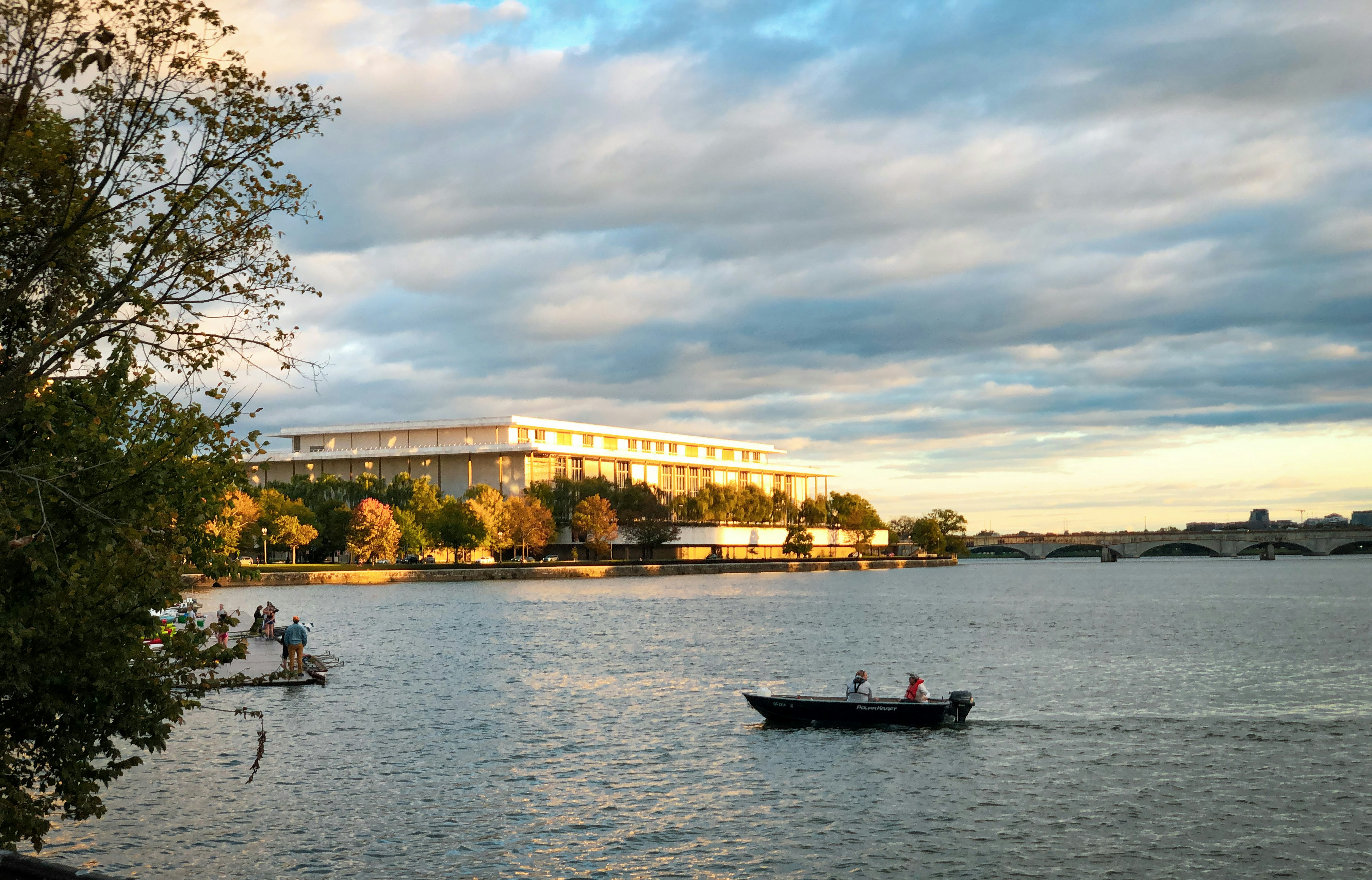
The First Lady Melania Trump Opera House at the John F. Kennedy Center for the Performing Arts

Photo of Kennedy Center for the Performing Arts
John F. Kennedy Center for the Performing Arts.
Photo by Santeri Liukkonen on Unsplash

Yes, you read that correctly. U.S. Representative Mike Simpson of Idaho is chair of the House Interior and Environment Appropriations Subcommittee. He tucked the provision into the fiscal year 2026 Interior, Environment and Related Agencies Appropriations Bill, which passed the Committee on Appropriations 33 to 28.

The proposal was written into the fiscal year 2026 Interior, Environment and Related Agencies Appropriations Bill. The measure was approved by the Committee on Appropriations with a vote of 33 to 28.

One has to wonder how long it will be before the name “TRUMP” will be plastered on the outside of the building in giant gold letters. How long will it be before the Kennedy Center for the Performing Arts is painted gold? 


Two Items of Good News

President Trump’s daughter-in-law, Lara Trump, is not running for the United States Senate from North Carolina in 2026.

Former North Carolina Governor Roy Cooper is running for the United States Senate to fill the seat vacated by Thom Tillis in 2026.


Until my next blog post

I hope you are reading a good book.

Don’t forget the people of Ukraine and western North Carolian.

Janet

A Book by a Blind Pastor & Educator

If you read my blog regularly, you know I usually wait until a new month to blog about the books I read the previous month. Today I’m making an exception. Last week I read a book by a local blind pastor, and I didn’t want to wait until February to tell you about it.

The title of the book is Finding My Way: My Journey as a Blind Pastor & Educator, by Dr. Gregory Davis.

Finding My Way: My Journey as a Blind Pastor & Educator, by Rev. Dr. Gregory Davis
Finding My Way: My Journey as a Blind Pastor & Educator,
by Rev. Dr. Gregory Davis

Living in the same community and being a member of a Presbyterian church just up the road from Bellefonte Presbyterian, where Dr. Greg Davis was pastor for nearly 30 years until his retirement in 2017, I have been acquainted with him for several decades.

I knew from the beginning that he was a professor at the University of North Carolina at Charlotte (UNCC) in addition to being the pastor of the Bellefonte congregation. I knew from the beginning that he was completely blind. What I did not know until I read his book is that he lost his sight as a teen and overcame innumerable odds to accomplish many things beyond my imagination.

Being labeled as “mentally retarded” (the vernacular in the 1960s) at the Governor Morehead School for the Blind in Raleigh, NC, he matriculated at Central Piedmont Community College in Charlotte to attain his GED, take college courses, and became the first African-American president of the student body of the college. He went on to not only be the first black student to graduate with a Bachelor of Arts degree in Religious Studies from UNCC, but he was also a leader on campus. Actually, to say he was a leader on campus is a gross understatement.

He went on to graduate from the Duke University Divinity School in 1979.

He started teaching at UNCC in 1979 and remained on the faculty there for 29 years. Not only was he a faculty member, he was a student advisor, counselor, and advocate. He was instrumental in starting numerous programs at the university.

Dr. Davis knew he was called to be a pastor, but he kept running into roadblocks. It seemed that many congregations were hesitant to accept a blind pastor. Fortunately, for him and Bellefonte Presbyterian Church, that congregation saw his potential and issued a call for him to be their pastor. He served in that capacity for 27 years and led the congregation through growth, new ministries, and two massive building programs.

By his example and courage he has touched thousands of lives.

Having worked hard and had many times of self-doubt in undergraduate and graduate school as a sighted person, I am in awe of all the obstacles Dr. Gregory Davis overcame as a student in the 1960s and 1970s. Those were the days before personal computers. Those were the days of tape recorders, manual Braille typewriters, and massive volumes of Braille dictionaries and the Bible.

Dr. Davis’s dedication to education as a student and as a teacher is nothing short of remarkable – as was his dedication to God and to the congregation of Bellefonte Presbyterian Church. Now, in his retirement, Dr. Davis has blessed us with this book. I highly recommend it to everyone. It’s available from Amazon in paperback as well as e-Book.

Since my last blog post

Our property was unscathed by Tuesday’s massive storm; however, it seems our landline phone service won’t be restored until this week. Parts of the area received in excess of four or five inches of rain in 24 hours, which resulted in local creeks flooding some roads. Electricity was knocked out in areas, resulting in some traffic lights still not working on Thursday night.

It was disorienting. I look forward to some semblance of “normal” returning this week.

I had a delightful conversation with Dr. Greg Davis on Friday.

Until my next blog post

Get your free library card and start using it! Go to your local public library and be amazed at the resources it offers.

It looks like I’ll be masking up again for a little while. Three respiratory illnesses are making the rounds. After having Covid in December, I’m not interested in catching the other two!

Remember the people of Ukraine.

Janet

You should know who Julian Francis Abele was

Everyone reading my blog has probably heard of Duke University. It’s a world-renowned university located in Durham, North Carolina. You might not know of its meager beginnings, and you might not know that the architect responsible for its magnificent West Campus was a black man.

I’ve lived in North Carolina my entire life, and I only recently learned who Julian Francis Abele was.

First, here’s a very brief early history of the university.

In 1838, a subscription-supported school called Brown’s Schoolhouse was established in the Randolph County community of Trinity. The school’s name changed a couple of times over the years but was settled as Trinity College in 1859.

In 1892, Trinity College moved to Durham, North Carolina. With heavy financial support from Washington Duke and Julian S. Carr – both Methodists – the name was changed to Duke in December 1924. That was then James B. Duke, son of Washington Duke, established The Duke Endowment. It was a $40 million trust fund set up for its interest to be divided between various hospitals, orphanages, the Methodist Church, three colleges, and the university to be built around Trinity College. In today’s dollars, the $40 million endowment would be equivalent to more than $630 million.

But what did Julian Francis Abele have to do with this?

Julian Francis Abele was born April 30, 1881 in Philadelphia, Pennsylvania – so this Saturday will be the 141st anniversary of his birth. In 1902, Abele was the first black graduate of the University of Pennsylvania School of Design. All four years of undergraduate school there, Abele worked in the mornings as a designer at the Louis Hickman Architectural Firm and took afternoon and evening classes at the university.

Horace Trumbauer, a nationally-recognized Philadelphia architect, hired Abele. He sent Abele to study abroad for three years. Upon returning from Europe in 1906, Abele joined Trumbauer’s firm and by 1909 had become the company’s chief designer. When Trumbauer died in 1938, Abele became head of the company.

The company designed numerous buildings in Philadelphia, a number of mansions in Newport and New York, and the Widener Memorial Library at Harvard University.

But my interest in writing about Julian Francis Abele today is his contributions to the gorgeous English Gothic and Georgian buildings at Duke University. Over the 30-year period of 1924 to 1954, he was the primary designer of the university’s West Campus.

Photo credit: Pattern on unsplash.com

If you’ve not had the pleasure of visiting Duke University…

Photographs of the buildings on the Duke University campus don’t do justice to the beauty of the architecture. The centerpiece of the campus and grandest example of Julian Francis Abele’s work is Duke Chapel.

Exterior of Duke Chapel. Photo credit: Chuck Givens on unsplash.com

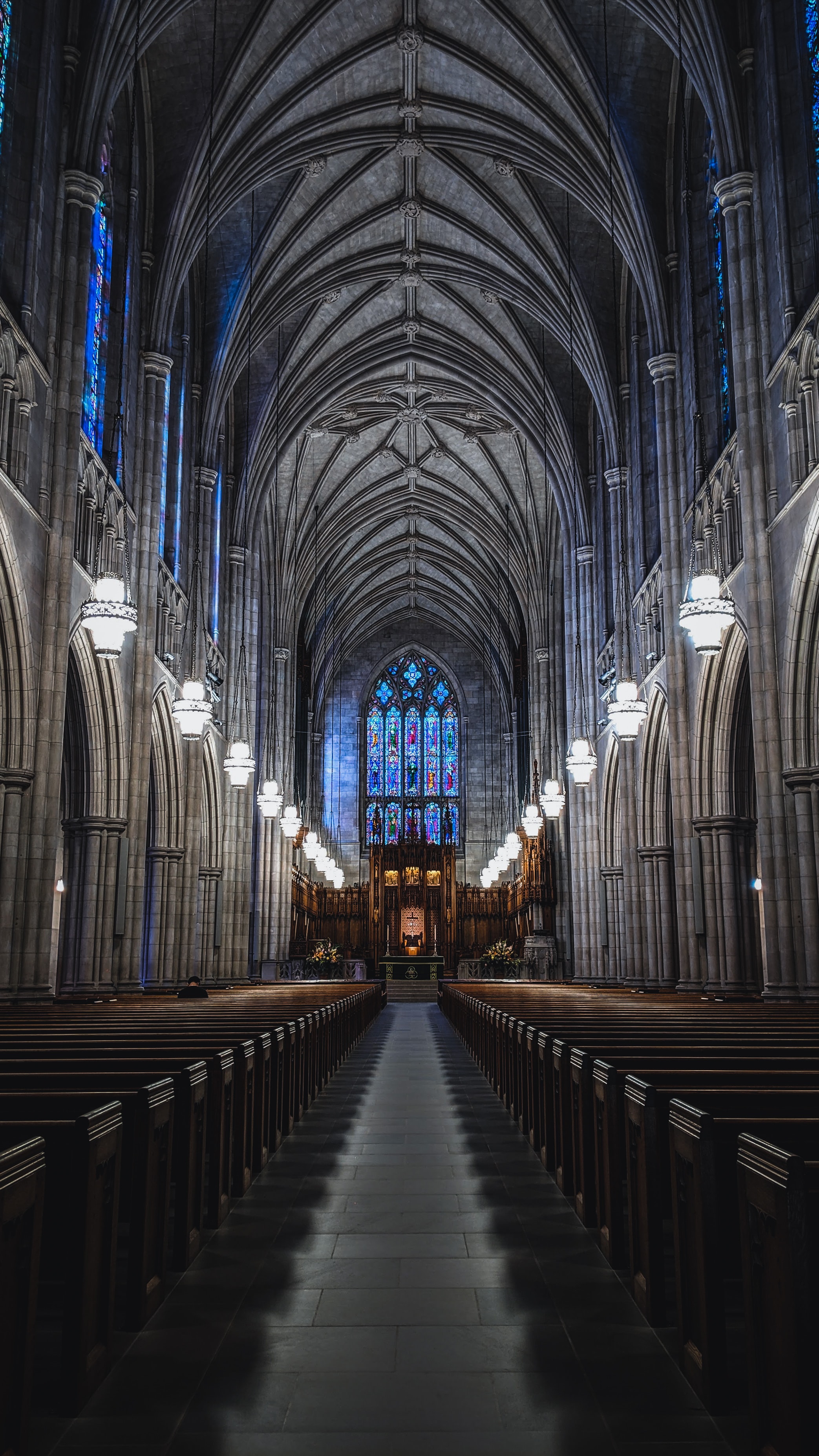
“Chapel” in this case is an understatement, for the chapel is more of a cathedral than a chapel in the common sense of the word. The chapel interior is 63 feet wide, 291 feet long, and the nave proper is 73 feet tall.

Inside Duke Chapel. Photo credit: Chuck Givens on unsplash.com

Standing on the highest point on the planned campus in 1925, James B. Duke said that it was on that place that the chapel should be built. It would be the highest point and the center of the campus. The cornerstone was laid in 1930, and it is said that students enjoyed watching the stone cutters and the progression of construction of the chapel over the next two years. Little did those white students know that the chief designer of the edifice was a black man.

In fact, it wasn’t until Julian Francis Abele’s granddaughter, Susan Cook, brought to public light in 1986 that a person of color had designed the magnificent focal point of the Duke campus. While students protested apartheid in South Africa, Susan Cook wrote a letter to the student newspaper to make it known that her grandfather had designed their beloved West Campus.

Portraits of Abele now hang in the main administration building on campus and in the Gothic Reading Room in Rubenstein Library alongside those of former Duke presidents and board chairs. In 2016, and the main quadrangle on campus, which stretches from the Clocktower Quad to the Davison Quad – and to the Chapel Quad – was named the Abele Quad.

As quoted from https://today.duke.edu/2016/03/abele, upon the naming of the Abele Quad in 2016, Duke University President Richard H. Brodhead said, “Julian Abele brought the idea of Duke University to life. It is an astonishing face that, in the deepest days of racial segregation, a black architect designed the beauty of this campus. Now, everyone who lives, works, studies and visits the heart of Duke’s campus will be reminded of Abele’s role in its creation.”

Shocking to our 21st century minds, is the fact that the racial prejudices of the early- and mid-20th century deterred Mr. Abele from visiting the Duke University campus to see his designs come to fruition and caused him not to be admitted to the American Institute of Architects until 1942.

Mr. Abele died in Philadelphia on April 23, 1950, which was 72 years ago this past Saturday.

Visit Duke University in person or virtually

If you’re ever zipping along on Interstates 40 or 85 in Durham, take several hours to leave the hustle and bustle behind and visit the Duke University campus. Duke Chapel is open every day from 10:00 a.m. until 6:00 p.m. Stroll around the campus and be sure to visit the Sarah P. Duke Gardens. (Visit https://gardens.duke.edu/ for information about parking and what’s in bloom.)

Visit https://chapel.duke.edu/about-chapel/history-architecture to take a virtual tour of the Duke University campus and to watch a tour of Duke Chapel. Scroll down to the bottom of the page and click on the links to various aspects of the chapel to learn more about the 77 stained-glass windows, the portal, the carillon, and the four pipe organs (including the diminutive 2014 153-wooden pipe positive organ that can be moved about within the chapel for small concerts.

Since my last blog post

I continue not to be at my best, but as energy allows I work on my novel, read, or do online research.

Until my next blog post

I hope you have a good book to read.

Remember the people of Ukraine and count your blessings.

Janet