
There are more pressing worries today in the Middle East than what is happening at the Smithsonian Institute, but I am posting this as planned.
I mentioned my concerns about the Smithsonian Institution in my March 31, 2025, blog post, Words Trump wants federal agencies to “limit or avoid”, but like many parts of the US Government that don’t directly affect our lives on a daily basis, the Smithsonian has dropped from the headlines.

Photo by Sara Cottle on Unsplash
My only other substantive mention of the Smithsonian in my blog since then was on June 3, 2025, when I wrote, “On Friday, Trump fired Kim Sajet, the Director of the Smithsonian’s National Portrait Gallery. She had held the position for 12 years. Her crime, according to Trump was for being ‘a highly partisan person, and a strong supporter of DEI.’”
President Trump replaced Ms. Sajet with Lindsey Halligan, Esq.
I have wondered since then what Ms. Halligan is up to, but I’m afraid to ask. Plus, who would I ask? My United States Senators and my US Representative certainly would not know.
Just out of curiosity, I wondered what Lindsey Halligan’s qualifications were for being named Director of the Smithsonian’s National Portrait Gallery. I found most of my answers in The Washington Post’s online article on April 21, 2025: https://www.msn.com/en-us/news/politics/she-told-trump-the-smithsonian-needs-changing-he-s-ordered-her-to-do-it/ar-AA1DiUy4.

Photo by Sung Jin Cho on Unsplash
On March 27, President Trump signed an Executive Order titled “Restoring Truth and Sanity to American History.” I don’t know about you, but as a student of history, the title alone makes me cringe.
It turns out there is one person mentioned by name in that Executive Order: Lindsey Halligan, Esq.
The Executive Order states that Halligan will consult with Vice President J.D. Vance to “remove improper ideology” from Smithsonian properties. That sounds like she is going to have some say so in more than the National Portraits Gallery.
So, again, what are her qualifications? I ask, because so many of Trump’s appointees have no qualifications for their jobs. You know who they are, and they know who they are.
According to Maura Judkis’s article in The Washington Post, Halligan is a Trump attorney who moved to Washington in January. She visited the Smithsonian museums of Natural History, American History, and American Art and she did not like what she saw.
It seems that she thought the Smithsonian was “weaponizing history.” To me, those words coming from a Trump associate translate into “We don’t want to be reminded that America was never perfect.” Halligan told the newspaper that she reported her concerns to the President.
Poof! She is now consulting with the Vice President to apparently rid the Smithsonian of collections and exhibits that offend her sensitivities.
But how did she get in a position to have such a level of access to and influence over Donald Trump? She competed in the Miss Colorado USA Pageant back in 2009 when Trump co-owned the parent organization of the Miss Universe pageant, for which the state Miss USA pageants is a preliminary event.
Ms. Halligan might be a well-qualified attorney. What she knows about art or portraits was not covered in the newspaper article.
The Smithsonian’s Mission
According to the website for The Smithsonian Institution (https://www.si.edu/), its purpose is: “The increase and diffusion of knowledge.”
The Smithsonian’s stated vision: “Through our unparalleled collections and research capabilities, and the insight and creativity we foster through art, history, and culture, the Smithsonian strives to provide Americans and the world with the tools and information they need to forge Our Shared Future.”
In other words, the Smithsonian Institution is for the whole world. Keep that in mind, as we delve into what Lindsey Halligan did not like when she visited a few of its museums in January.
What is “improper ideology” at the Smithsonian?
More troublesome than Ms. Halligan’s credentials is, “What is considered ‘improper ideology’ for the Smithsonian?”
I will quote two paragraphs from Maura Judkis’s newspaper article:
“During her visits to the museums, Halligan says she saw ‘exhibits that have to do with either another country’s history entirely or art and sculpture that describes on the placards next to it that America and sculpture are inherently racist,’ though she did not offer specific details.
“She says she also saw exhibitions that did not focus on America at all. ‘There’s a lot about other countries’ history that has nothing to do with America, and I think, you know, America is so special,’ she says, adding: ‘We should all be focused on how amazing our country is and how much America has to offer.’”
What happens to the history of slavery in the US?
Today we mark the 160th anniversary of the day that the last black slaves in the state of Texas found out that they were free: June 19, 1865. That’s the day U.S. Army Major General Gordon Granger ordered the final enforcement of the Emancipation Proclamation in Texas. It is now a recognized holiday known as Juneteenth, a portmanteau of “June” and “nineteenth.”
But what is happening to the history of slavery in the United States, when the Trump Administration wants to erase all traces of the unpleasant chapters in our national history?
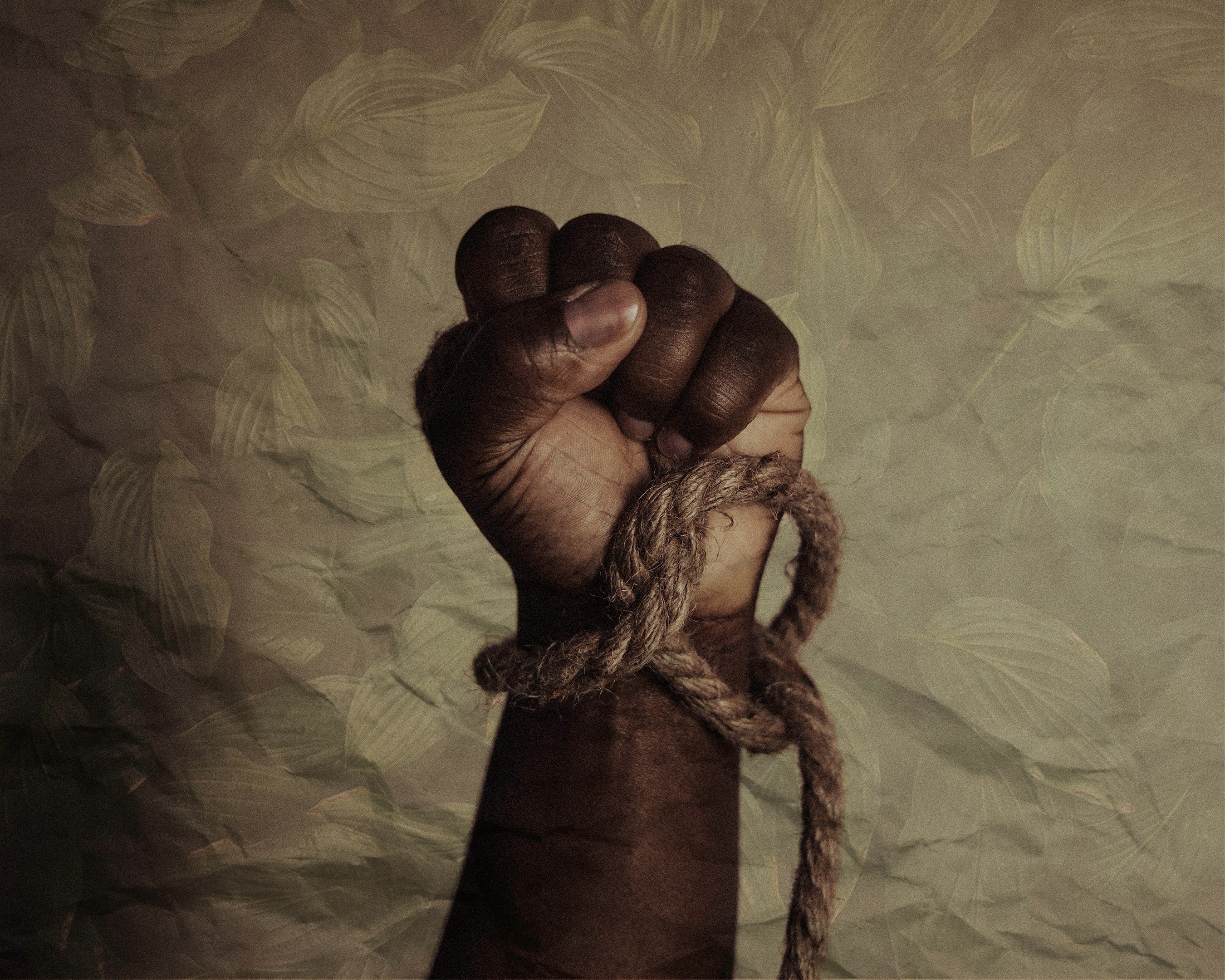
We know certain museum exhibits have been removed from the Smithsonian. What happened to them? Were they thrown in the trash?
We know the Trump Administration doesn’t want any mention of slavery in our children’s history textbooks or any discussion of such things in our classrooms because it might make the white children feel bad. That is absurd, short-sighted, and evil.
Need we know more?
If you want to know more, Ms. Judkis’s article gives many more details, but I think those two paragraphs tell us everything I need to know.
Ms. Halligan’s statements as quoted above are in direct conflict with the stated purpose and vision of the Smithsonian.
I hope when the Trump regime is a distant memory, people who have knowledge of world history and how to operate museums will be able to piece the Smithsonian back together.
Crackdown on ideology to the extreme
It has been reported that there are now signs up (or will be soon) at the National Zoo in Washington, DC instructing visitors to report anything they see that they think is in conflict with the ideology of the US Government.
It is a zoo, people! It. is. a. zoo.
This does not bode well for Bao Li and Qing Bao, the two pandas on loan from China. I hope they will keep their anti-American thoughts to themselves!

If they aren’t careful, Trump will place a tariff on them like he did that island inhabited only by penguins.
You can read more about the Executive Order on the White House website: https://www.whitehouse.gov/fact-sheets/2025/03/fact-sheet-president-donald-j-trump-restores-truth-and-sanity-to-american-history/.
Until my next blog post
Read everything you can get your hands on. Watch a little bit of the news every day.
Learn the history of your country and the world. Your democracy and way of life might depend on that someday. The knowledge of history needs to influence for whom you vote on every level of government.
Do whatever you can to make this world a better place.
Remember the people of Ukraine and eastern Tennessee and western North Carolina. I-40 in Cocke County, Tennessee sustained major flooding again yesterday and a new landslide. The interstate highway is closed in both directions near the TN/NC line until damage can be cleaned up and assessed. Motorists must use I-40 to I-81 in TN to I-26 to Asheville, NC to I-40. The Hurricane Helene saga continues. That area just can’t seem to get a break as we approach ten months since the hurricane.
Janet


 Janet's Writing Blog