Great publicity I got today in Spain!

Francisco Bravo Cabrera graciously featured me and my new book, Traveling Through History: A Collection of Historical Short Stories on his e-zine in Spain (LatinosUSA (English Edition/Masticadores) this morning at 8:00 a.m. Madrid Time!

Francisco Bravo Cabrera is a bit of a Renaissance man. He is an artist, a poet, a writer, and a musician. He is based in Valencia, Spain, but has also lived in Miami, Florida. His blog, JaZzArt en Valencia, can be found at https://paintinginvalencia.com/, and his work can also be found on https://www.fineartamerica.com.

I cut and pasted Francisco’s magazine article about my new book below, but two of the photographs did not copy. Here’s the link, if you want to see the original for yourself: https://latinosenglishedition.wordpress.com/?p=8436.

New Historical Fiction by Janet Morrison (Editor Francisco Bravo Cabrera)

Published by valenciartist on 3 de diciembre de 2025

(Photo: Janet Morrison/provided by Janet Morrison)

As a big fan of history and novels, there is no genre that fascinates me more than «historical fiction,» therefore I would like to feature today a historical fiction writer from North Carolina (US), Janet Morrison, who has just released a new book, Traveling Through History: A Collection of Historical Short Stories. I am sure it can easily be found in Amazon or in your neighbourhood book store.

I have asked Janet to bring us a synopsis of the 13 stories included in the book. And although she thought it a bit tricky, I think she has covered them in a concise way.

Traveling Through History: A Collection of Historical Short Stories, by Janet Morrison, will transport you from 17th century Scotland to 20th century America! The more than one dozen short stories are set in Scotland, Pennsylvania, Maryland, Virginia, North Carolina, and South Carolina.

Each story includes author’s notes, so you will learn what inspired the story, how the story is based in history but is a work of fiction.

There are stories set in Colonial America and the American Revolutionary War Era. One story is the fictitious letter an American Civil War soldier wrote to his parents. Another story follows a slave who contemplates escaping. A couple of the stories are set in the southern Appalachian Mountains – one during a blizzard in the 1870s and involves a dog and a bear during The Great Depression. There is one ghost story. In another story, a girl in foster care discovers the dignity a suitcase can bring. The final story in the book is told by an old farmhouse that remembers the family it sheltered in the 1800s.

+++

Janet Morrison’s educational background is in political science and history. She has worked as a local government administrator, a travel agent, and a newspaper columnist. She enjoys writing historical fiction and local history at her home in North Carolina. Her vintage postcard book, The Blue Ridge Mountains of North Carolina was published in 2015. Since then, she has published two local history books, a devotional book, and a cookbook. Janet uses her blog, https://www.janetswritingblog. com, as a platform to write about the books she reads, events in history, and politics. The most rewarding thing about her blog is that it has made it possible for her to make friends around the world. When she has spare time, she loves researching her genealogy and learning to play the dulcimer. Be sure to visit https://www. janetmorrisonbooks.com to learn more about her books and to subscribe to her newsletter.

+++++

I would like to thank Janet so much for her participation in today’s episode and to remind her that she is welcome here any time. I am sure that we will all enjoy reading this historical fiction book as well as the other books she has written.

AND

If you are a writer, a poet or an artist (in any of the arts) and would like to appear in our magazine LatinosUSA (English Edition), please contact me, Francisco Bravo Cabrera, editor: ArribaPamplona@gmail.com

(Editor: Francisco Bravo Cabrera)

CHEERS


Muchas gracias, Francisco, for giving me and my book such great publicity today!

Janet

Books I Read in April 2024

As you will see from three of the four books I read last month, I chose to concentrate on my writing and historical research in April. Some of the following books might not pique your interest as a reader, but… you never know. I’ll start with the book that falls in a different category.


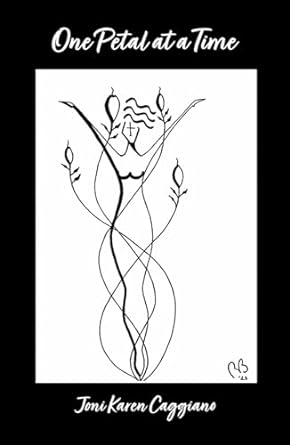
One Petal at a Time, by Joni Karen Caggiano

One Petal at a Time, by Joni Karen Caggiano

This is a book of poetry and prose written from the depths of pain and abuse. The writer bares her soul in her words earned from years of abuse by two alcoholic parents and further abuse from a male relative. It is difficult to read. I cannot identify with the horrors she writes about. I had a good life as a child and teen, and naively assumed everyone else lived in a calm, comfortable home with loving parents.

The silver lining in Ms. Caggiano’s book is that she eventually found love and has, as an adult, established a loving home for her own family. Others who have or are living in an abusive situation should find hope in Part 3 of this book and be inspired by her example, her statement of faith in God, and the fear that is no longer in her life. She is a retired nurse, a survivor, and an environmental advocate.

 The book cover and interior are masterfully illustrated with the exquisite art of Francisco Bravo Cabrera, who is also known as Bodo Vespaciano. Through black line art he captures the essence of Ms. Caggiano’s words.


Historic Shallow Ford in Yadkin Valley: Crossroads Between East and West, by Marcia D. Phillips

Historic Shallow Ford in Yadkin Valley: Crossroads Between East and West,
by Marcia D. Phillips

The Shallow Ford on the Yadkin River in North Carolina plays a role in the historical novel I’m writing, so imagine my excitement when I discovered this book. It was published in 2022 by The History Press.

The Shallow Ford was a natural crossing of the river and was used by thousands of pioneers traveling on the Great Wagon Road and by armies during the American Revolution and the American Civil War. It was, no doubt, used by native Americans for thousands of years before the era of European settlement.

If you are interested in how the piedmont section of North Carolina was settled, then this book is for you. It mentions the various roads and how roads sprang up from the Great Wagon Road to lead to other parts of the state and adjoining states for commerce.

I was most interested in the first sixty percent of the book for its research value for my writing; however, the entire book gives a detailed look at the settlement, cultural development, and industrial development of the Yadkin Valley, which is more of less the area of present-day Davie, Yadkin, and Rowan counties for the purposes of this book.

The Yadkin River is one of the major rivers in North Carolina. It drains the area from the Blue Ridge Mountains in the northwestern part of the state, through the lower piedmont – including where I live. At its confluence with the Uwharrie River it becomes the Pee Dee River, which is fed by the Rocky River and the Lumber River as it eventually flows into the Atlantic Ocean at Georgetown, South Carolina.

Written by “the keeper of the treasures in the Martin-Wall History Room at the Davie County Public Library,” the book is well-documented. In her work, Marcia D. Phillips had access to a wealth of local history sources as well as having the advantages of living in the area about which she wrote.

This book was a God-send for my research of the Shallow Ford of the Yadkin River.


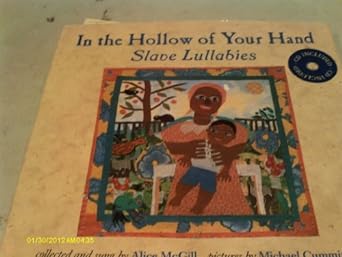
 In the Hollow of Your Hand: Slave Lullabies, collected and sung by Alice McGill, pictures by Michael Cummings; musical accompaniment on enclosed CD by Nancy Krebs

In the Hollow of Your Hand: Slave Lullabies,
collected by Alice McGill

This is a juvenile picture book that I happened upon at the public library in Charlotte while looking for documented American slavery songs as a part of my research for the historical novels I am writing.

Although it is classified as a Juvenile book, I thoroughly enjoyed it.

The fact that it includes a musical CD with the author giving some narrative and singing the songs that have been passed down through the generations of her North Carolina family is the icing on the cake!

The book and CD include thirteen lullabies endemic to the families of slaves. Each lullaby is beautifully illustrated in the African-American tradition by the artwork of Michael Cummings. The banjo having its roots in the Africans who were brought to the American colonies and states as slaves, it is fitting that Nancy Krebs accompanies Alice McGill’s singing by playing the banjo.

There is pain, sorrow, familial separation, the threat of being sold to another slaveholder, and even death in these lullabies. If not for writers like Alice McGill, these wonderful nuggets from American history would be lost forever.


Painting the Past: A Guide for Writing Historical Fiction, by Meredith Allard.

Painting the Past: A Guide for Writing Historical Fiction,
by Meredith Allard

My sister happened upon this book at the public library and brought it to my attention. It is a good book for someone beginning their journey as a writer of historical fiction and, at the same time, is a good book to remind a veteran historical fiction writer of why they do what they do.

Each chapter is introduced by a quote from a writer. I copied most of those quotes so I’ll have them as reminders when I question what I’m attempting to do as a writer.

The book talks about the joys and challenges faced by historical fiction writers, as well as our responsibilities. It addresses what constitutes historical fiction and how much leeway a writer has in sticking to the truth. A writer of historical fiction should always disclose what is fiction and what is fact.

The author talks about the importance of using trusted sources and how just because something is presented as a fact in a nonfiction book does not mean it is true. (That reminded me of something Sharyn McCrumb said in a speech I heard her make in Wilkes County, North Carolina many years ago. She said something like – and I must paraphrase here — some historical fiction is better-researched than some history books.)

The book addresses what historical fiction has in common with general fiction and how it differs. Lovers of historical fiction expect certain things in the novels they read, and it is incumbent upon the author to meet those expectations. If they don’t deliver, they lose all credibility.

I’ll close with a couple of quotes the author shared in her book. She quotes Guy Vanderhaeghe as follows: “History tells us what people do; historical fiction helps us imagine how they felt.”

And she quotes Isabel Allende as follows: “People have this nostalgic idea that the past was better, but the truth is most folks had very hard lives.”

Until my next blog post

I hope you always have a book that you can’t wait to get back to reading.

Appreciate friends and family.

Remember the people of Ukraine.

Janet

#OnThisDay (Tomorrow): Robert Burns’ Birthday

Robert Burns was born on January 25, 1759 in Ayrshire, Scotland.

A friend of mine from Campbeltown, Scotland, asked me if I liked to read the poems of Robert Burns. I had to admit that I couldn’t understand most of them.

Although written in English, and I’m an English speaker, the English Robert Burns used in the second half of the eighteenth century in Scotland was a far cry from the English I use and speak as an American in 2022.

I love to hear the soft, lilting tongue of Lowland Scots spoken. It’s lovely. It’s, no doubt, the way my Morrison ancestors spoke, for they were lowlanders and not Gaelic-speaking highlanders.

It’s lovely to hear a Scottish accent, whether highlander or lowlander; however, the heavier the accent, the harder it is to understand some words. In addition to that, the Scots have words for things that we don’t use in America.

When it comes to reading something written in Scots, some words just don’t translate well to my ears. That brings me back to Robert Burns.


Photo credit: Gary Ellis on unsplash.com

“Auld Lang Syne”

The most famous poem associated with by Robert Burns is, no doubt, the one that’s sung on New Year’s Eve. The words of “Auld Lang Syne.” The Scottish pronunciation is ‘o:l(d) lan’ səin. I must admit, this doesn’t help me at all. My source was quick to point out that we should note that Syne is pronounced like an s and not like a z. The rough translation is Long, long ago; or old long time; or good old time.

It seems that it’s an ancient song and in 1788 Robert Burns was the first person to write down the words. That was when he submitted the words to the Scots Musical Museum.

Did you know the song has four verses? Here they are in Scots, followed in more understandable English, thanks for the Scotland.org website The History and Words of Auld Lang Syne | Scotland.org.

Should auld acquaintance be forgot,

And never brought to mind?

Should auld acquaintance be forgot,

And auld lang syne.

Chorus

For auld lang syne, my jo,

For auld lang syne,

We’ll tak a cup o’ kindness yet,

For auld lang syne.

And surely ye’ll be your pint-stowp!

And surely I’ll be mine!

And we’ll tak a cup o’ kindness yet,

For auld lang syne.

Chorus

We twa hae run about the braes

And pu’d the gowans fine;

But we’ve wander’d mony a weary foot

Sin auld lang syne

Chorus

We twa hae paidl’d i’ the burn,

Frae mornin’ sun till dine;

But seas between us braid hae roar’d

Sin auld lang syne.

Chorus

And there’s a hand, my trusty fiere!

And gie’s a hand o’ thine!

And we’ll tak a right guid willy waught

For auld lang syne.

Chorus


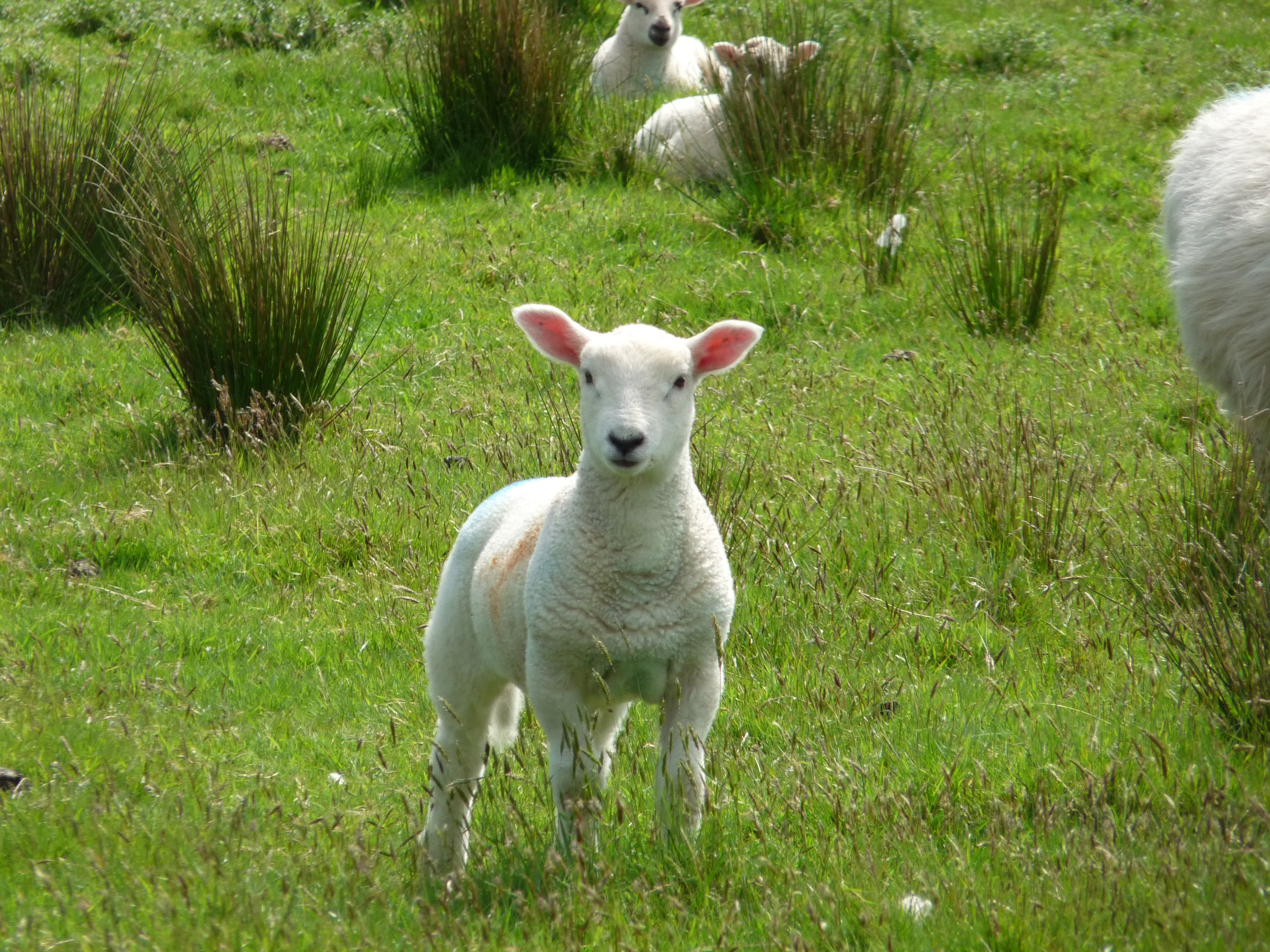
Scottish Lamb. Photo credit: Gibbon Fitzgibbon on unsplash.com

A modern translation of “Auld Lang Syne”:

Should old acquaintance be forgot,

And never brought to mind?

Should old acquaintance be forgot,

And long, long ago.

Chorus

And for long, long ago, my dear

For long, long ago,

We’ll take a cup of kindness yet,

For long, long ago.

And surely you’ll buy your pint-jug!

And surely I’ll buy mine!

And we’ll take a cup of kindness yet,

For long, long ago.

Chorus

We two have run about the hills

And pulled the daisies fine;

But we’ve wandered manys the weary foot

Since long, long ago.

Chorus

We two have paddled in the stream,

From morning sun till dine;

But seas between us broad have roared

Since long, long ago.

Chorus

And there’s a hand, my trusty friend!

And give us a hand of yours!

And we’ll take a deep draught of good-will

For long, long ago.

Chorus


Oh, My Love is Like a Red, Red Rose

Photo credit: Serafima Lazarenko

“Oh, My Love is Like a Red, Red Rose” is my favorite Robert Burns poem – partly because it’s more understandable than most of his – and because the sentiment is beautiful. Here are the words:

O my Luve is like a red, red rose

That’s newly sprung in June;

O my Luve is like the melody

That’s sweetly played in tune.

So fair art thou, my bonnie lass,

So deep in luve am I;

And I will luve thee still, my dear,

Till a’ the seas gang dry.

Till a’ the seas gang dry, my dear,

And the rocks melt wi’ the sun;

I will love thee still my dear,

While the sands o’ life shall run.

And fare thee weel, my only luve!

And fare thee weel awhile!

And I will come again, my luve,

Though it were ten thousand mile.

You can find it sung by various artists on YouTube.


Happy 263rd Birthday, Robert Burns

Scottish Bagpiper. Photo credit: Lynda Hinton on unsplash.com

It’s a tradition that many Scottish organizations, such as the Robert Burns Society, celebrate the bard’s birthday with a fancy dinner. This involves a bagpiper “piping in” the traditional Scottish dish, haggis. I’ve never been to one of those dinners.

When I visited Scotland, I was determined to have as many Scottish experiences as possible. I ate haggis. Now I can say, “I’m a haggis eater,” which you’re supposed to say with a deep voice and much gusto.

I’ve eaten haggis. I don’t have to do that again, if you get my drift.

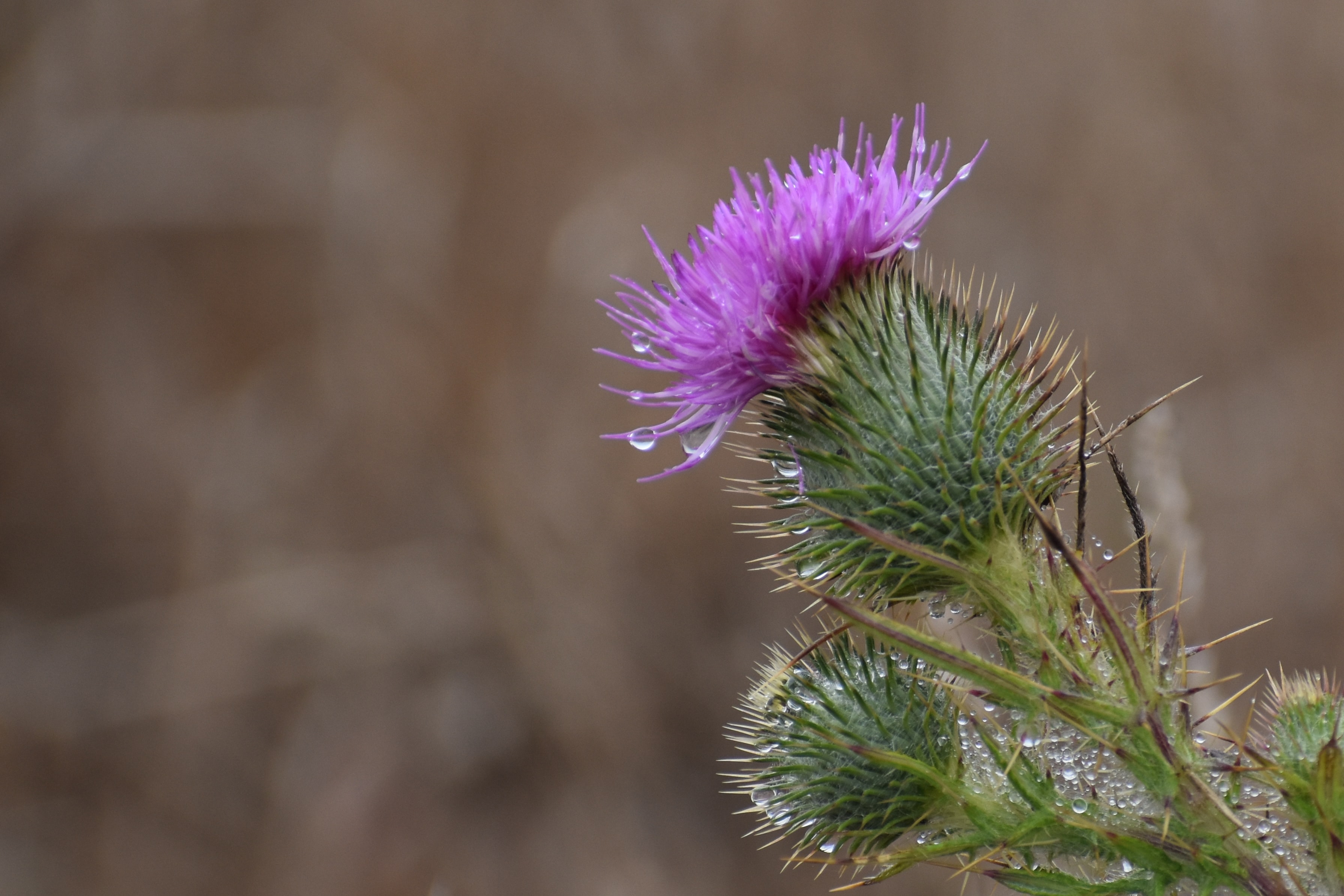
Thistle. Photo credit: Elisa Stone on unsplash.com

Since my last blog post

A blogger friend of mine, Francisco Bravo Cabrera, is a man of many talents. He paints, he writes poetry, he makes music, he puts together extraordinary art history videos, and he shares his talents on his blog. Here’s the link to one of his recent posts: https://paintinginvalencia.wordpress.com/2022/01/16/jazzart-phase-iii/

Since I blogged last Monday, I learned that he has launched a new endeavor by joining Fine Art America. Here’s a link to Francis’ Fine Art America page where you can view and purchase examples of his digital art on a vast variety of items ranging from wall canvas to notecards:  Francisco Bravo Cabrera Art | Fine Art America. Best of luck with this new opportunity, Francis!

I started writing the scenic plot outline for what I want to be “Book One” in my planned novel series. The scene-by-scene “outline” now stands at more than 3,700 words. I’m considering the working title, The Heirloom. The manuscript I’ve been blogging about for years with the working title of either The Doubloon or The Spanish Coin will be “Book Two.”

My blog post last week was “liked” and commented on by an honest-to-gosh published novelist, D. Wallace Peach. Her comment made my day and encouraged me that I’m on the right track with novel structure. Thank you, Diana!

My decluttering project at home continues. I went through bags, drawers, and boxes of old craft supplies. It felt good to discard dried-up fabric paint, craft glue, and sundry supplies I know I’ll never use. Usable items I’m no longer interested in or motivated to use will be donated to several people and a re-sell organization. The process freed up a drawer in a chest of drawers, making room for more things I probably should throw away or donate.

I worked on my next three blog posts.

I also did some reading. I gave When Ghosts Come Home, by Wiley Cash, another chance and loved it. More on that in my February 7, 2022 blog post.

Oh – and I actually got to spend some time on genealogy, one of my most rewarding hobbies.

In spite of some health concerns within my family, the Covid-19 pandemic, natural disasters, and the threat of war in eastern Europe, I had a good week. For me, 2022 is getting off to a productive start.


Until my next blog post

I hope you have a good book to read and a hobby to enjoy.

Stay safe and well, and let me know what you’ve been doing.

Janet

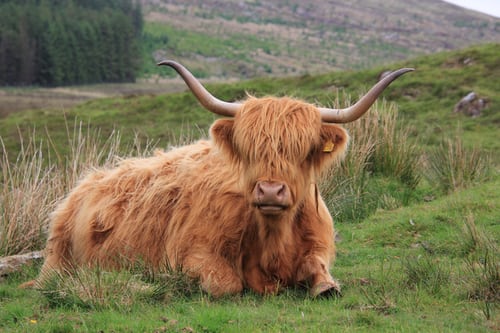
Highland “Coo.” Photo credit: James Toose on unsplash.com

Responses to “Am I a Sun or Just Another Star?”

I considered writing about the Louisiana Purchase today. You know, that 828,000 square miles (or 2,140,000 kilometers) of central and northwestern present-day United States of America purchased from France in 1803 during the Thomas Jefferson Administration? It’s a fascinating topic, but I decided to set it aside in favor of writing a follow-up to last week’s blog post, “Am I a Sun or Just Another Star?”

Was that a collective sigh of relief I heard from the blogosphere?

In answer to last week’s question, I admitted I’m just another star in the blogosphere, and I’m okay with that. Of the 40,320,000 blog posts published every week, I would be delusional to think my one measly post stood out in the crowd.

I wrote that blog experts tell people like me that we have to find our niche. Often times it seems those experts are pushing me to find something to write about that no one else is writing about. The advice that always stops me in my tracks is the ever-popular: Your blog must solve someone’s problems.

I have enough trouble solving my own problems without taking on someone else’s. Perhaps if I had a product to sell or stellar advice to offer on a particular subject, my blog could solve someone’s problem. That’s not going to happen.

At the end of last week’s post, I asked for feedback about my blog. I wanted to know what you like and what you don’t like about my blog, so I could make adjustments to make my blog more appealing. I thank each one of you who took the time to leave a comment.

In a nutshell, people seem to like my blog topics just the way they are. “Whew!” No one had the courage to tell me to stop writing about my long-suffering novel. And no one said my “OnThisDay” posts need to bite the dust. I usually get lots of “likes” when I blog about the books I’ve read, so I think that first-of-the-month topic is safe, too.

Photo credit: neonbrand-3gznpblimwc-unsplash

Here are some of the people who gave me feedback last week:

Jo (stillrestlessjo.com blog)

Jo, an Englishwoman living in Portugal wrote the following: “Something that captures my interest, and holds it, and isn’t trying to sell me something. You pretty much succeeded, Janet. Good luck with the book.” Jo’s photos from Portugal are fascinating. I’ll never get there in person, so her pictures bring the southern coast of that country to me.

Randall Anderson

Randall from the state of Georgia wrote that each blog he follows reflects the individual blogger, and that’s what he likes about blogs. Randall specifically commented that he enjoys my blog posts about the books I read because he can compare notes on the ones he’s read and sometimes discovers something he wants to read.

Francisco Bravo Cabrera (paintinginvalencia.wordpress.com)

Francisco in Valencia, Spain is one of my loyal readers. He offers encouragement every week as I aspire to be a novelist. His blog brings art history and music to me that have greatly broadened my horizons. He recently redesigned his blog. He never ceases to amaze me with his talent as a painter, a poet, and his ability to enhance his blog with music and graphics. Francis and I have a bit of a mutual admiration society going on. He flatters me by saying he’s amazed at how many books I read and says I write about them and about history in a way that he envies. The truth of the matter is, every one of his blog posts amazes me.

Laleh Chini (lalehchini.com)

Laleh, a native of Iran who lives in Canada, is another loyal follower of my blog. She encourages me to keep writing, and I’m encouraged by the several books she has written and published in the last few years. The stories she shares from her native Iran often remind me of the parables of Jesus. Her stories remind me that human beings are very much the same all over the world, regardless of nationality or religion. Laleh is a fantastic storyteller and freely shares her talent on her blog.

Neil Scheinin (yeahanotherblogger.com)

And then there’s Neil Scheinin. His blog always brings a smile to my face. He describes his blog as “an award-free/tag-free/challenge-free/etc.-free blog,” and I love that. (I’m tempted to steal that description, Neil!) Neil goes with the flow. His laid-back, self-deprecating style draws me in every time. The last time I checked, his December 7, 2021 blog post had 141 “likes.” Just for comparison, I do cartwheels (well, I would if I could) when I get more than 10 likes.) In his response to my blog post last week, Neil rightly pointed out that WordPress gives bloggers a wonderful platform for expressing ourselves and he added that it has brought to his attention that there are many good writers out there.

S.J. Schwaidelson wifelyperson.blogspot.com AND sjschwaidelson.com

S.J. Schwaidelson took more than a few minutes to write a sincere and thoughtful response to my blog post last week. She’s a New York native who has made her home in Minnesota for many years. She’s a novelist, current events blogger, and playwright. She shared with me the three main things she’s learned from her two blogs. Yes, you heard me right: she writes two very different blogs. She started her first blog after her husband, Ziggy’s death: wifelyperson.blogspot.com. After her third novel was published, she launched her new blog about being an author. You can find it through sjschwaidelson.com.

Rebecca Cuningham (fakeflamenco.com)

Rebecca Cuningham and I have recently found some common interests and started following each other’s blogs. Rebecca writes from Wisconsin. Her blog brings to life her many interests and talents. She shares her vast knowledge of history, her travel experiences, her humor, and life in Wisconsin – all through her descriptions and photographs. Rebecca sets the bar high for me when it comes to writing about history. She’s fluent in English and Spanish and, like Francis Cabrera, she blogs in both languages.

Trish Deveneau (trishdeveneau.com)

Trish Deveneau is a retired teacher, writer of creative nonfiction, blogger, and once-again resident of New York. Her comment last week was so well thought out and beautifully written that I not only will share it here, but I also printed it and taped it to the top of my computer screen. She wrote: “I enjoy blogs that are written from the heart as well as the head, that make me think about things in a new way or expose me to ideas that I haven’t yet bumped into. And of course, I am looking for prose that makes me sit up and take notice!” Please visit Trish’s blog. She writes from her heart and from her head and will expose you to ideas you probably haven’t bumped into yet.

Shelly DS (growingwithspawn.com)

Shelly dropped by my blog yesterday for the first time. I love hearing from new readers! Shelly’s words of wisdom in her comment included the following: “focus on our own niches than to be trying to conquer the universe… that’s the best way to add value!” Absolutely, Shelly! Your comment reminded me of the old saying, “Bloom where you’re planted.” Every blogger needs to do his or her own thing and have fun with it.

Photo by Kaitlyn Baker on Unsplash

As for me…

Blogging is a creative outlet for me, but it comes with a responsibility. It takes a reader a few minutes to read a blog post. Everyone’s time is limited and valuable, so I appreciate every time my blog is read.

I’m fortunate to have some loyal blog readers. I count them as friends. I value their time, their “likes,” and their comments. A bonus this past week was hearing from several new people. I feel like I’m constantly adding to my circle of blogging friends.

Knowing I have readers and friends throughout the United States and around the world makes the pandemic, conflicts, and other crises of life in 2021 a little easier to take.

By the way, I didn’t try to put true links to the blogs of my referenced respondents because I was afraid I’d mess someone’s link up. I hope I’ve included enough information that you can find each of their blogs by using a search engine.

Since my last blog post

In addition to reading the comments my blog received and responding to each of them, I also found time to read and write. A lot of my public library waitlisted books came in. One of them is Diana Gabaldon’s latest novel, Go Tell the Bees That I Am Gone. It’s 900 pages and I have three weeks to read it – along with a stack of other books. Wish me luck!

I dived into the writings of K.M. Weiland and suddenly some elements of novel structure fell into place for me. It was truly one of those “aha” moments and it felt like a weight was lifted off my back. I didn’t add to my word count this week, but what I finally learned about novel structure was priceless. I’d read all that structure stuff many times before, but last week I was finally able to visualize my manuscript in that framework and that made a world of difference.

Between breaking a 10-year-old crown while eating pizza, having to get it replaced, learning that an acquaintance has Covid-19 and is on a ventilator in ICU, running out of my medicine that keeps my Seasonal Affective Disorder under control, and finding out that our dog’s heart is three times its normal size, it’s been a trying week; however, all I need to do is to think of the thousands of people who were left homeless by tornadoes in Kentucky and five other states last week, and I realize how blessed I am.

Life goes on for me. Tomorrow is promised to no one, but today I continue to live my life and enjoy the benefits it gives me. I have a roof over my head and access to more food than I should or need to eat. I live in a place of relative peace and quiet. All those blessings probably put me in the top one percent of all the people in the world. I truly don’t know how fortunate I am.

Until my next blog post

I hope you have at least one good book to read. I have so many to choose from that it makes selecting just one difficult. Hence, I usually have several books going at the same time. (Thank you, free public library systems!)

Note: Tomorrow is National Short Story Day in the United States. Support your local library and short story writer by reading a short story. With some hard work and a bit of luck, maybe I’ll have a collection of short stories to offer you next year when Short Story Day rolls around.

If you’re of the Christian faith, I hope you have a very meaningful Christmas Day on Saturday.

Janet

P.S. When I previewed this post to see how it would look on a tablet or smaller mobile device, it looked terrible. There were no margins! I hope that’s not the way it will look published!