What I read in December 2024

After not reading a single book in its entirety in November, I hit the ground running in December. Last month I read a variety of genres and book lengths.

The Road to Wisdom: On Truth, Science, Faith, and Trust, by Francis S. Collins

Photo of front cover of The Road to Wisdom: On Truth, Science, Faith, and Trust, by Francis S. Collins
The Road to Wisdom: On Truth, Science, Faith, and Trust, by Francis S. Collins

To refresh your memory, Dr. Francis S. Collins is a geneticist who has discovered genes that cause various genetic diseases. He was Director of the National Institutes of Health (NIH) from 2009 until 2021. Prior to that, he headed the NIH’s National Human Genome Research Institute.

I had the good fortune to hear Dr. Francis S. Collins speak at Queens University of Charlotte years ago. He was a captivating and down-to-earth speaker. He spoke about how the more he learned about science, the more he believed that God created all things.

It is a point he repeats in this book. He says that there are just too many facets of nature that were created with a degree of precision that could not have happened by chance. Knowing that about him, I eagerly awaited the book to be ordered by the public library.

In the book, he addresses truth, science, faith, and trust individually and how each one contributes to the others and to wisdom. He is concerned about the public’s growing mistrust of science and how scientists and physicians such as Dr. Fauci have become scapegoats for science deniers and far too many politicians.

I highly recommend this book!


“The Answer is No,” a short story by Fredrik Backman
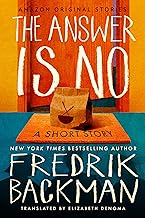
“The Answer is No: A Short Story,” by Fredrik Backman

This short story by the author of A Man Called Ove, is in somewhat the same vein as that novel. The main character in “The Answer is No,” just tries to have a quiet day with no contact with other human beings. He experiences one interruption after another and discovers that saying “No” is futile. He gets pulled/pushed into one neighborhood problem after another. You find yourself simultaneously laughing and feeling sorry for him.

Incidentally, the book is free to read through Kindle Unlimited and $1.99 to purchase for Kindle.


Framed, by John Grisham and Jim McCloskey

Framed, by John Grisham and Jim McCloskey

This latest book by John Grisham along with Jim McCloskey will tempt you to lose all your faith in our judicial system – from corrupt police officers to corrupt lawyers to corrupt judges… one comes away from this nonfiction book of case after case where justice was miscarried.

John Grisham and Jim McCloskey take turns writing the chapters in this book. Each chapter is about a different true example of how corrupt people on various levels have miscarried justice on purpose.

It is a sobering book. The doom and gloom of each chapter had a cumulative effect on me. I recommend you read it, but it is not a pleasant read.


“Bangkok Has Him Now: How Would You Escape?” by Emma Dhesi

“Bangkok Has Him Now: A Short Story,” by Emma Dhesi

This is a short story – a thriller short story – by a Scottish author, Emma Dhesi. I have been fortunate to watch and listen to several online writing workshops conducted by Emma Dhesi. Reading this fast-paced thriller short story was the first time I took the opportunity to read something she wrote and published. It grabbed me by the throat from the beginning and held my interest throughout.

Hurricane Helene Update

As of Friday, 184 roads in NC, including a portion of I-40 near the Tennessee line, remained closed due to the damage wreaked by Hurricane Helene. Snow has now been added to the equation and will be a given for much of the next two-to-three months.

Most of the Blue Ridge Parkway remains closed, with no estimate of when it will be fully reopened.

All the people living in temporary housing – in RVs, campers, FEMA trailers, etc. and those still waiting for repairs to the houses they’re still living in are feeling the brunt of the winter cold.

I haven’t mentioned Jake Jarvis of Precision Grading in a few weeks, but that man has hardly missed a single day since September 25 in his one-man effort to help as many people in western North Carolina as possible. He is not charging for his time or materials and he is, no doubt, wearing out his equipment.

I follow Precision Grading on Facebook. The photographs of some of the places he has taken his heavy equipment are astounding. He appears to do all this with a wonderful attitude. Thursday night he posted that it was Day 104 post Helene. That day he had cut a new driveway for a woman in Bat Cave, NC who had only had access through a neighbor’s property until then. Her driveway had been cut in half by landslides and volunteers trying to help her had been scared off by the 100-foot drop off. Jake was able to cut a new driveway for her, so she can now safely access her own home more than three months after the storm. This is just one example of the work Jake has doing. If you wish to donate to help him cover the cost of materials, fuel, and equipment maintenance, his address is Precision Grading, 99 Polaris Drive, Saluda, NC  28773.

The work of Brother Wolf Animal Rescue and The 21st Century Packhorse Librarian continue and will appreciate your support for the foreseeable future. You can search for them and Precision Grading online for more information.

Until my next blog post

I hope you have a good book to read.

As western North Carolina and other areas continue to recover from Hurricane Helene, our hearts hurt for the people affected by the wildfires in California. We know recovery will take years and their lives will never be the same. Life is fragile. Everything we know can change in the blink of an eye.

Take care of each other.

Remember the people of Ukraine, too.

Janet

#OnThisDay: The US Constitutional Amendment that Put an End to Poll Taxes

I majored in political science in college, but I’d be hard pressed off the top of my head to tell you  what the 24th Amendment to the United States Constitution is about. Its ratification was completed on January 23, 1964 when South Dakota became the 38th state to ratify it. The 59th anniversary of its ratification prompted me to blog about the amendment today.

What the 24th Amendment prohibits

It prohibits the United States Congress and any state in the union from basing a person’s right to vote for US President, US Vice President, US Senate, or US House of Representatives in a primary or other election based on the payment of any tax.

Photo by The New York Public Library on Unsplash

Why the 24th Amendment came about

In the late 1890s and until just after the turn of the 20th century, former Confederate States adopted so-called poll taxes. The laws varied from state to state, but they were created as a way to prevent many black people and poor white people from voting. This was a way the states circumvented the 15th Amendment to the US Constitution, which prohibits a person being prevented from voting based on “race, color, or previous condition of servitude.” The 15th Amendment said nothing about taxes.

The constitutionality of poll taxes was upheld by the US Supreme Court in Breedlove v. Suttles in 1937. In that case, Nolan Breedlove, a 28-year-old white man refused to pay the $1.00 per year poll tax in Georgia. By not paying the poll tax, Mr. Breedlove was not allowed to register to vote in any election in the state.

Mr. Breedlove filed a lawsuit against Mr. T. Earl Suttles, the Fulton County, Georgia Tax Collector, arguing that the poll tax was in violation of the 14th and 19th Amendments to the US Constitution. Hence, the name of the US Supreme Court case. The Breedlove v. Suttles decision was eventually overturned, but the case serves as an example of the US Supreme Court making wrong decisions sometimes

The Breedlove v. Suttles decision was unanimous! The Court concluded that the “privilege of voting is not derived from the United States, but is conferred by the state, and, save as restrained by the Fifteenth and Nineteenth Amendments and other provisions of the Federal Constitution, the state may condition suffrage as it deems appropriate.”

It was a case, like we’ve seen in other cases as recently as 2022, where the US Supreme Court took the easy way out and clung to the “states’ rights” doctrine.

How the 24th Amendment became the law of the land

After decades of some politicians ignoring the issue of poll taxes and a few politicians pushing for the abolishment of such taxes, Congress finally proposed the 24th Amendment at the prompting of President John F. Kennedy. The amendment was submitted to the states on September 24, 1962 after a vote of 295 to 86 in the US House of Representatives and a vote of 77 to 16 in the US Senate.

Illinois was the first state to ratify the amendment in November 1962 and South Dakota was the 38th state to ratify it on January 23, 1964. That 38th vote was all that was needed.

The aftermath of ratification of the 24th Amendment

Some states were slow to ratify the amendment even after its national ratification was final in 1964. Some states were slow to amend their constitutions to be in compliance with the federal amendment. Always looking for ways to get around the law, some states continued to require racial minority citizens to pass senseless tests in order to earn the right to vote.

People who want to keep other US citizens from voting have turned to more subtle (and some not-so-subtle) forms of voter intimidation. They’ve felt emboldened over the last seven years and the pendulum is swinging toward bolder attempts to scare certain people away from the voting booth. This is an attack on our democracy.

Our democracy depends on each of us defending the right of all citizens to vote.

Since my last blog post

As my new website has transitioned from the design phase to the development phase, I continued to write new content for the site.

It seemed like I had to learn some new technology every day. There is still more I will have to learn. I hope this is good for my brain cells. It isn’t good for my emotional stability or my disposition.

It’s been gratifying to see how well received my local history book, Harrisburg, Did You Know? Cabarrus History, Book 1 has been on Amazon and in the local bookstore, Second Look Books. Thank you to everyone who has purchased it! Don’t be shy about rating it or even leaving a short review of it on Amazon!

My sister and I took a much-needed break on Saturday afternoon and went to see the movie, “A Man Called Otto.” Tom Hanks was perfect in the role of Otto. The movie is based on the book, A Man Called Ove, by Fredrik Backman. I read the book back in 2017 and I’ve remembered it ever since. Here’s the link my June 2, 2017 blog post in which I wrote about the book: You Need to Read These Books!  I recommend the book and the movie.

Until my next blog post

I hope you have a good book to read. While you’re at it, please read one for me. I haven’t had much time to read lately.

Thank you for taking the time to read my blog.

Remember the brave people of Ukraine.

Janet

You Need to Read These Books!

I had another good month of reading in May. I’m on a roll for 2017! If I were a faster reader, I could devour more books. In the meantime, though, I’ll enjoy as many as I can.

A Man Called Ove, by Fredrik Backman

I’m running out of superlatives for the books I’ve read this year. I kept hearing about A Man Called Ove, by Fredrik Backman, so I got on the waitlist for it at the public library. It’s a popular book, so it took a while for my name to gravitate to the top of the list.

a-man-called-ove-9781476738024_lg

I thoroughly enjoyed this book. At times outrageously funny and at times heartwarming and touching, it held my interest from start to finish. Ove is a 59-year-old man. I could see my father, my brother, and even myself in him. I could see myself in his late wife when he recalled how it drove him up the wall because she delighted in planning the details of a trip to the extreme. That’s me! Thank goodness I have a sense of humor! Poor Ove is at odds with the world and having trouble keeping up with the modern world. For the most part, he’s not even trying to keep up.

The author, Fredrik Backman, is from Sweden, where his books have gained much acclaim. I am amazed at how well the humor in this book translated so well from Swedish into English. Although I don’t speak or read Swedish, I don’t believe the book lost anything in the translation. I look forward to reading Mr. Backman’s other books.

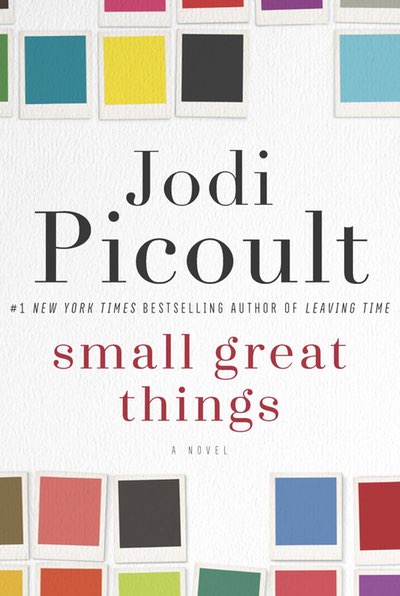
Small Great Things, by Jodi Picoult

Maybe it’s because Mother’s Day was approaching when I was reading this book, or maybe the sentence would have struck me like a ton of bricks any time of the year. Ms. Picoult has an uncommon gift when it comes to writing. Her books tackle some of the most heart-wrenching issues of our day, and she has a wonderful way with words.

small-great-things-hc-400w

I featured the following sentence in my Being the Balloon blog post on May 5, 2017:

“What it’s like to be the balloon, when someone lets go of the string.”   – from Small Great Things, by Jodi Picoult

The context of that sentence is that Ruth, the protagonist who is a seasoned labor and delivery nurse, a mother, and the widow of an American soldier killed in Afghanistan, reacts to the death of her mother with, “What it’s like to be the balloon, when someone lets go of the string.”

I highly recommend Small Great Things. In it, Ms. Picoult takes on the issue of race in America, and she has an uncanny talent for getting inside the skin of individuals from one end of that spectrum to the other in Small Great Things. The line that I focused on from the book in my blog on May 5 speaks to the humanity of us all.

In a nutshell, Small Great Things is about an African-American nurse in Connecticut who is barred from caring for the newborn infant of a white supremacist couple. Author Jodi Picoult masterfully writes from the point-of-view of the nurse, the white-supremacist father, and the white lawyer who defends the nurse. There is an explosive trial during which all kinds of raw emotions erupt. I think we all can learn some life lessons by reading and pondering Small Great Things, by Jodi Picoult!

The Hidden Life of Trees, by Peter Wohlleben

I kept hearing good things about this book, which had been translated into English from its original German. I finally got it from the public library, but with too many other books to read and a lot I was trying to learn about the craft or writing. Therefore, I only got 40% of the book read before I had to return it to the library for the next person on the wait list. I will definitely check it out again so I can finish it.

index

The Hidden Life of Trees:  How They Feel, How They Communicate – Discoveries from a Secret World might not appeal to everyone, but I thought it was very interesting. That might be because I grew up and again live out in the country. My parents instilled an appreciation and respect for trees in us. We have a variety of trees in our yard – dogwood, pine, ash, poplar, cedar, several varieties of oak, mulberry, sycamore, black walnut, sweet gum, holly, persimmon, and maple.

I thought I knew a lot about trees until I started reading Peter Wohlleben’s book. I now know that there’s a whole world out there I can’t see or hear. The book explains how certain tree species work together and how other tree species work against one another. It talks about how trees pump water out of the ground. It talks a lot about fungi and how fungal networks underground help trees in numerous ways. It really is quite fascinating!

The Nightingale, by Kristin Hannah

I highly recommend The Nightingale, by Kristin Hannah. It is a historical novel about two sisters in France during the German occupation in World War II. The sisters cope with the occupation and resulting cruelties of war very differently.

Nightingale-PB-658

One sister joins the French Resistance and risks her life helping shot down Allied airmen across the Pyrennes and into Spain. The other sister’s nerves and wits are pushed to the limits as two German officers are billeted in her home. The book was inspired by a 19-year-old Belgian woman, Andrée De Jongh, who created an escape route out of Nazi-occupied France.

This book will pull on all your emotions. When the characters are cold and hungry – which was most of the time – you will feel cold and hungry, although I’m certain that I truly can’t imagine the level of hunger or fear the people who lived through the ordeal actually endured.

When we study World War II or hear stories about it, the emphasis is almost always on the battles. The Nightingale gives a paints a picture of life on the home front in France. It was this month’s book for discussion by Rocky River Readers Book Club. Everyone at our meeting had only praise for the book – how much it taught us and how well-written it was.

Homegoing, by Yaa Gyasi

This historical novel is Yaa Gyasi’s debut as a fiction writer. It is different from any novel I’ve ever read. It is set in Africa. As part of my 2017 Reading Challenge I wanted to read a book set on each of the continents this year, so I was drawn to this novel. Unfortunately, I couldn’t finish reading it before it was due at the public library.

9781101971062

Each chapter is about a different member of this family. It is about family ties and the horrible conditions in the slave trade. It puts a human face on slavery – a subject we tend to think of in terms of numbers and not the families that were torn apart in Africa. If I get a chance, I’d like to check this book out again.

The Tea Girl of Hummingbird Lane, by Lisa See

Like Homegoing and The Hidden Life of Trees, I didn’t get to finish reading The Tea Girl of Hummingbird Lane before it had to be returned to the library. I couldn’t renew any of the three books because there were people on the wait list. The part of The Tea Girl of Hummingbird Lane that I got read was fascinating in how it shed light on some of the superstitions held by the Chinese. I had no idea!

51nbXr3ZbXL._SY346_

The novel follows a young Chinese girl who is painfully aware from birth that she is not valued because she is female. Her family has to walk for hours to pick tea leaves for a meager amount of income. It is a difficult life. Her mother is the local midwife and she tells her daughter that she must follow in her footsteps in that occupation.

There is a ray of hope, though, because the girl’s teacher tells her that she can leave the harsh mountain environment and make something of herself. I look forward to checking the book out again in order to see how her life turns out!

Until my next blog post

I hope you have a good book to read. I have come to the conclusion this week that I am trying to read too many books and not spending enough time on my writing. My goal in June is to strike a happy medium.

If you’re a writer, I hope you have productive writing time. I’m writing bios of my characters in the “new and improved” The Spanish Coin.

Janet