They erased his words

In case you live in a so-called “Blue State” – one that is not controlled by the Republican Party – you might think that most of the authoritarianism exists on the federal government level.

I live in a state that elected a Democrat for Governor last year (thank goodness!), a Democrat for Lt. Governor (and, therefore, President of the State Senate), and a Democrat for State Attorney General, but our General Assembly – State Legislature – is dominated by Republicans.

Last week, to ensure that President Trump will endorse Phil Berger in the 2026 election, the North Carolina General Assembly voted to redraw/re-gerrymander the U.S. Congressional Districts in our State. Phil Berger is President Pro-Tempore of the N.C. State Senate. He represents the 26th District in the State Senate.
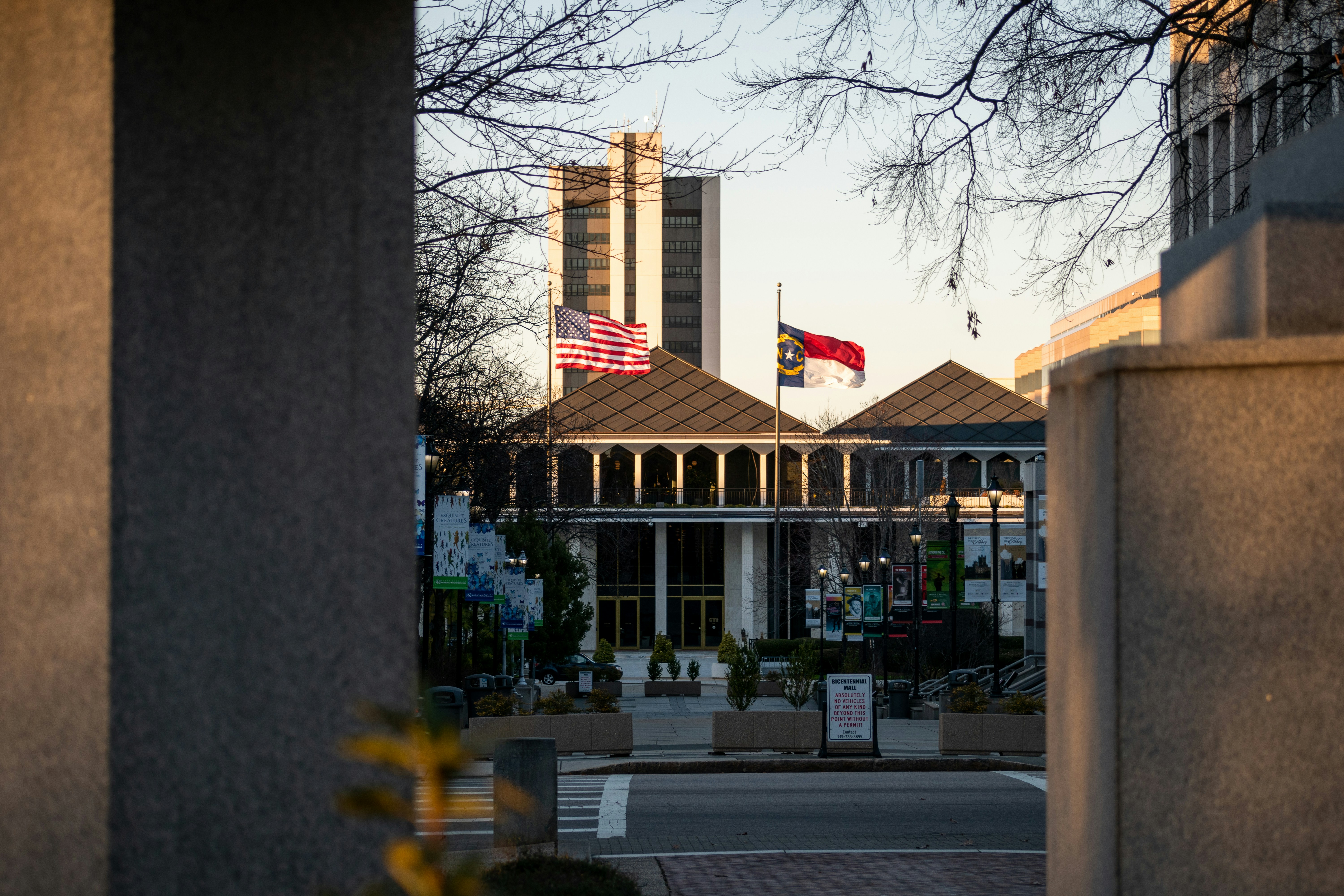
Photo of part of hte North Carolina Legislative Building in Raleigh
Photo by Elijah Mears on Unsplash

Before last week, North Carolina had 10 Congressional seats held by Republicans and four seats held by Democrats. That wasn’t good enough for Trump, even though he only received 50.86% of the popular vote in North Carolina on November 5, 2024. Trump and his supporters call 50.86% “a mandate.”

Before last week’s vote to blatantly gerrymander North Carolina “because California redrew its map in favor of the Democrats” Don Davis, who just happens to be one of only two black North Carolinians in the U.S. House of Representatives. Under the new map, it will be nigh unto impossible for Don Davis to keep his seat in Congress in the 2026 election.

Before last week, I did not know who Michael Garrett was.

North Carolina State Senator Michael Garrett of Greensboro, who represents the 27th State Senate District in the General Assembly, made a speech on the floor of the Senate chambers. Since the Republicans in the North Carolina Senate voted to strike it from the record, it has been put on YouTube. I invite you to listen to it: https://www.youtube.com/watch?v=WY8KNA-qTdg (Sen. Michael Garrett Delivers Powerful Speech Against Republican Rigged Maps.)

Senator Garrett’s response to his speech being stricken

In response to his speech being stricken from the official government record, I will share what Mr. Garrett wrote on his NC Senate Facebook page. I copied the following from https://www.democraticunderground.com/106913604. That website says it copied the following “from Michael Garrett NC Senate FB page on NC redistricting,” and I am bringing it to your attention today. Here it is:

“They Were So Afraid, They Erased the Words.”

“Yesterday, I stood on the Senate floor and spoke truth about what happened in North Carolina. About democracy being stolen in broad daylight. About rigged maps and broken promises. About betraying every sacrifice ever made for the right to vote.

“Then something extraordinary happened.

“Senator Grafstein moved that my remarks be spread upon the journal, entered into the permanent record of this body. This is routine. It happens constantly. It’s almost always done without objection, a simple courtesy extended across party lines for speeches on both sides.

“The Republicans immediately objected.

“They forced a vote. And on a straight party line, they voted to keep my words out of the permanent record.

“In my entire time in the Senate, I have never seen this happen.

“Let that sink in for a moment.

“They rigged the maps. Then they voted to erase any record of someone calling them out for it.


“This isn’t about me. This is about what their fear reveals.

“They weren’t afraid of my words because they were false, they were afraid because they were true. They weren’t blocking the record to protect themselves, they were doing it because they know history will judge them harshly for what they did yesterday.

“They stood on that floor, voted to rig our elections at Trump’s command, and then, in the very next breath, tried to memory-hole anyone who dared to say it out loud.

“That’s not the behavior of people confident in their principles. That’s the behavior of people ashamed of their actions.

“If what they did was righteous, they’d want it documented. If their cause was just, they’d welcome debate for the permanent record. If they believed they were serving North Carolina, they’d let history judge them on the merits.

“But they don’t believe any of that. They know what they did was wrong. They know they sold out democracy. They know they chose Trump over the people of North Carolina. They know they stole voices and rigged maps and betrayed their oaths.

“And they’re so ashamed, so terrified that future generations will read what was said and render judgment, that they won’t even let the words stand in the record.

“But you can’t erase truth by blocking it from a journal.

“You can’t make democracy’s defenders disappear by parliamentary procedure. You can’t memory-hole a movement by refusing to record it.

“Those words were said. Thousands watched online. The press reported it. North Carolinians heard it. And now millions more will hear about it, because their attempt to silence it only amplified the message.

“They tried to bury the truth. Instead, they proved it.

“Their fear is our proof. Their shame is our vindication.

“Because you don’t try to erase words from the record unless those words have power. You don’t vote on party lines to block routine motions unless you’re terrified of what they represent. You don’t abandon decades of Senate courtesy unless you know, deep in your bones, that history will not be kind.

“They are losing, and they know it.

“Not today’s vote, they won that. They got their rigged maps. They’ll steal their seats. They’ll cling to power for a few more years.

“But they’re losing the war that matters. The war for legitimacy. The war for history’s judgment. The war for the hearts and minds of the next generation watching this unfold.
“This weekend, millions marched saying “America has no kings.” Yesterday, North Carolina Republicans proved exactly why those marches were necessary. They rigged our elections, tried to erase any record of opposition, then went home thinking they’d won.

“They have no idea what’s coming.

“Because every time they silence a voice, ten more rise up. Every time they rig a map, a thousand more people organize. Every time they betray democracy, a million more Americans understand: this is the fight of our generation, and surrender is not an option.

“Their fear means we’re winning. Their desperation means our movement has power. Their need to erase us from the record means they hear us perfectly, and what they hear terrifies them.

“So we get louder. We organize harder. We fight fiercer.

“They can block words from a journal, but they cannot block the march of justice. They can erase speeches from the record, but they cannot erase the promise from the hearts of a people who refuse to bow to kings.

“They were so afraid of the truth, they voted to erase it from history.

“That tells you everything about the weakness of their cause and everything about the power of ours.

“Yesterday, truth was spoken. Today, they’re still trying to silence it. Tomorrow, we rise louder than before.

“The fight continues. The promise endures. And every desperate attempt they make to silence us only proves we’re saying exactly what they fear most:

“Their time is ending. Democracy’s reckoning is coming. And no rigged map, no stolen vote, no erased record can stop a people who refuse to be silent.

“We’re just getting started.

“#NoKings #NCPolitics #DefendDemocracy #TheyreAfraid #Democracy #WeAreWinning”

Take courage from Michael Garrett’s words

No matter where in the world you live, take courage from Michael Garrett’s words, even though the Republicans in the North Carolina State Senate did not want you to hear them.

As NC Senator Michael Garrett said, the politicians are choosing their voters instead of the voters choosing their politicians.

The wheels are falling off the bus rapidly.

Janet

2 Books about Racial Injustice

There was a common theme in two books I read in July. They weren’t books I read for pleasure. They were books I read because I knew I should read them. I needed to open my eyes.

I needed to remove those rose-colored glasses through which one sees old southern plantations like “Tara” of Gone With the Wind fame, where white slave owners and slaves were all just one big happy family. The only bad guys in most of those stories were the occasional evil-minded heavy-handed overseer.

That’s the fiction we’ve grown up reading. It’s the fiction we’ve grown up watching on TV and on the big silver screens in movie theaters. But it’s fiction.

There’s nothing particularly wrong in settling down to read Gone With the Wind, but it isn’t a history book. It’s fiction. Too often we let fiction color our perceptions of how things were “in the good old days.” They weren’t “good old days” for everyone.

It’s like watching reruns of The Andy Griffith Show or Father Knows Best and yearning for life to return to how it was in the 1950s and 1960s. But life wasn’t good for everyone in those decades. If you were in the white majority then in the United States, you probably have pretty good memories of those decades. If you are a person of color who grew up or were an adult in that era, your memories are probably tainted by incidents and even everyday occurrences that were meant to “keep you in your place.”

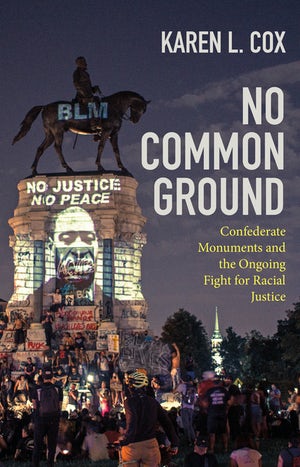
Two of the books I read in July were No Common Ground: Confederate Monuments and the Ongoing Fight for Racial Justice, by Karen L. Cox and Caste: The Origins of Our Discontents, by Isabel Wilkerson. Racial injustice is the common thread the two books share. They weren’t pleasant reading, but they were enlightening and enriching reading. I highly recommend both.


No Common Ground: Confederate Monuments and the Ongoing Fight for Racial Justice, by Karen L. Cox

Karen L. Cox is a history professor at the University of North Carolina at Charlotte. During the shut-down days of the Covid-19 pandemic, I heard her interviewed online. I immediately got on the waitlist at the library for her latest book, No Common Ground: Confederate Monuments and the Ongoing Fight for Racial Justice. Due to that same pandemic, the library was very slow to receive the book order. Nevertheless, it was well worth the wait.

No Common Ground: Confederate Monuments and the Ongoing Fight for Racial Justice, by Karen L. Cox

Written by a history professor, the 178-page text is indexed and thoroughly annotated with source notes and references. There is an extensive bibliography.

As the opening words of the inside fold of the book jacket states, “When it comes to Confederate monuments, there is no common ground. Polarizing debates over their meaning have intensified into legislative maneuvering to preserve the statues, legal battles to remove them, and rowdy crowds taking matters into their own hands. These conflicts have raged for well over a century—but they’ve never been as intense as they are today.”

The day I started reading No Common Ground, July 9, 2021, was the day a video clip on the news on TV shows a crane removing a statue of Robert E. Lee sitting on his horse, Traveler, from its place in Richmond, Virginia. It was noted that a statue of “Stonewall” Jackson would come down next.

We’ve seen many such news reports over the last couple of years as more and more people are realizing that these statues that many of us thought of as just part of the landscape and markers of our history were, in fact, very offensive to our fellow citizens of color.

Dr. Cox’s book examines the history of Confederate monuments and the mindset of the generations of southerners who erected them. Her book brings that history forward to the points of disagreement those statues represent today.

The book explains how Ladies Memorial Associations sprang up throughout the former Confederate states immediately after the Civil War. They were groups of white southern women who led the way in raising awareness and money to bring home the bodies of many Confederate soldiers who had died on battlefields far from home. Theirs was seen as “holy work.”

Those organizations morphed into the United Daughters of the Confederacy (UDC) in 1894. It was the UDC that is responsible for the majority of Confederate monuments. The organization’s main purpose was educating children about their revisionist version of the history of the Confederate States of America, and erecting ever-taller, ever-larger monuments in public places such as county courthouse lawns ran a close second.

As Jim Crow laws gained authority in the 1890s and the lynching of black citizens became more common, the UDC dedicated more and more monuments. Fiery speeches and big celebrations accompanied those dedication ceremonies and they drew huge crowds.

Robert E. Lee thought the constructing of great Confederate monuments was “antithetical to a peaceful reconciliation” after the Civil War, but some southerners were undeterred. Lee died in 1870, and as soon as Reconstruction ended in 1877 state legislatures got involved in building statues of Lee.

A 109-foot tall $36,474 (an estimated $945,000 in today’s dollars) monument to Lee was unveiled in 1884 in New Orleans at the World’s Industrial and Cotton Centennial Exposition. Not to be outdone, the city of Richmond unveiled its massive statue of Lee sitting atop his horse, Traveler, in 1890.

The Confederate monument building really came into its own around 1895 and continued until World War II, only interrupted during that time by the World War I years. Between 1900 and 1940, more than 550 Confederate monuments were erected.

No Common Ground doesn’t end there, but I’ll stop there. I wanted to share some of the things I learned about the history of the Confederate monuments that have been much in the news in the last several years as there’s been a push to tear them down. If you’ve paid attention, you already know about those recent events.

I read No Common Ground because I wanted to know the history of the Confederate monuments. The more I learn, the more I know there’s really no place for them in our world today. They were built more out of hate than honor. They were built as tangible symbols of white supremacy, and such symbols should not be tolerated today.

I hope I’ve shared enough from the book to make you want to read it. When you know better, you (should) do better.


Caste: The Origins of Our Discontents, by Isabel Wilkerson

If you are serious about figuring out what’s at the root of our discontents in today’s society in the United States, read this book.

Caste: The Origins of Our Discontents, by Isabel Wilkerson

I’d never thought about our having a caste system in the United States. That was something they had in India, but not here! But the more I got into Isabel Wilkerson’s book, Caste: The Origins of Our Discontents, the more I thought she made a very good point. We don’t call it a caste system, and we don’t like to talk about having a class system, but I believe Ms. Wilkerson is correct in her deductions after her extensive research.

This is a hard pill for most of us to swallow. We like to think of America as being a beacon of liberty and individual freedoms. Compared to many other nations, it is; however, follow Ms. Wilkerson as she methodically lays out her thesis and you will, possibly, also conclude that we have our own brand of a caste system here. It’s not as rigid and blatant as the caste system in India, but it is written on our souls.

Those of us who are Caucasian don’t want to be told we’re racist. Even the most “woke” and antiracists among us, though, must admit that we have enjoyed countless privileges that were and continue to be afforded us simply due to the light hues of our skin and the texture of our hair.

I shuddered as I read parts of Ms. Wilkerson’s book. She related stories of terror, abuse, torment, and murder that have occurred throughout our nation’s history – but were not included in those written histories. The shameful acts of discrimination and physical violence against people of color in the United States continue today. It is incumbent upon all of us to speak out against it.

Once you know injustices are happening, you simply can’t turn a blind eye. It’s easy to use the excuse, “What can one person do?” We must move beyond the excuses and find ways to fight injustice.

As many state legislatures in the United States are enacting laws to make it harder for people to vote, it is our obligation to make it known to lawmakers and our fellow citizens that this isn’t right.

Be an informed citizen. The state legislators who are pushing laws of voter suppression don’t advertise it. They usually work quietly and, literally, under the cover of darkness. Before you know it, it’s done. It’s the law.

They use that favorite lie that there is rampant voter fraud. The truth is that there is rampant voter suppression. Creating US Congressional districts “with surgical precision” as was done in North Carolina needs to be held up to the light. The only case of fraud perpetrated in the 2018 election in North Carolina was perpetrated by a candidate’s campaign – and that candidate was a member of the political party that cries first and loudest about voter fraud.

What will you say when your grandchildren ask you what you did to stop racial injustice?

Since my last blog post

I’ve received many supportive and conversation-starting comments about last Monday’s blog post. I appreciate the interest that post created and every comment.

I’ve studied setting in fiction writing – setting in general and rural pioneer setting in particular. I’m making my way through C.S. Lakin’s book, Layer Your Novel.

Until my next blog post

I plan to continue to study setting and scene construction.

I hope you have a good book to read. If you can get your hands on a copy of Caste: The Origins of Our Discontents, by Isabel Wilkerson, I highly recommend it.

Janet