The Coming of the Railroad in 1854

I wrote a local history column for Harrisburg Horizons newspaper from May 2006 through December 2012. Before you residents of Harrisburg, Pennsylvania get too excited, I will clarify that this free weekly newspaper existed in Harrisburg, North Carolina.

Of the 175 newspaper columns I wrote, six were a series of articles I wrote about “The Coming of the Railroad.” This is an important local topic for without the North Carolina Railroad there would be no Town of Harrisburg, NC today.

It’s hard to imagine the town without a railroad today, even though in an effort to establish “high-speed” rail between Charlotte and Raleigh, the at-grade railroad crossings in Harrisburg were replaced with bridges in 2013. That’s a story for another day.

Imagine a rural farming community in 1854, about halfway between Charlotte and Concord. Was everyone excited about the coming of the railroad? Farmers were probably not happy about the piercing whistles of the steam engines scaring their livestock, but they were possibly pacified by the fact that the depot planned for the community would give them a convenient way to sell their agricultural products.
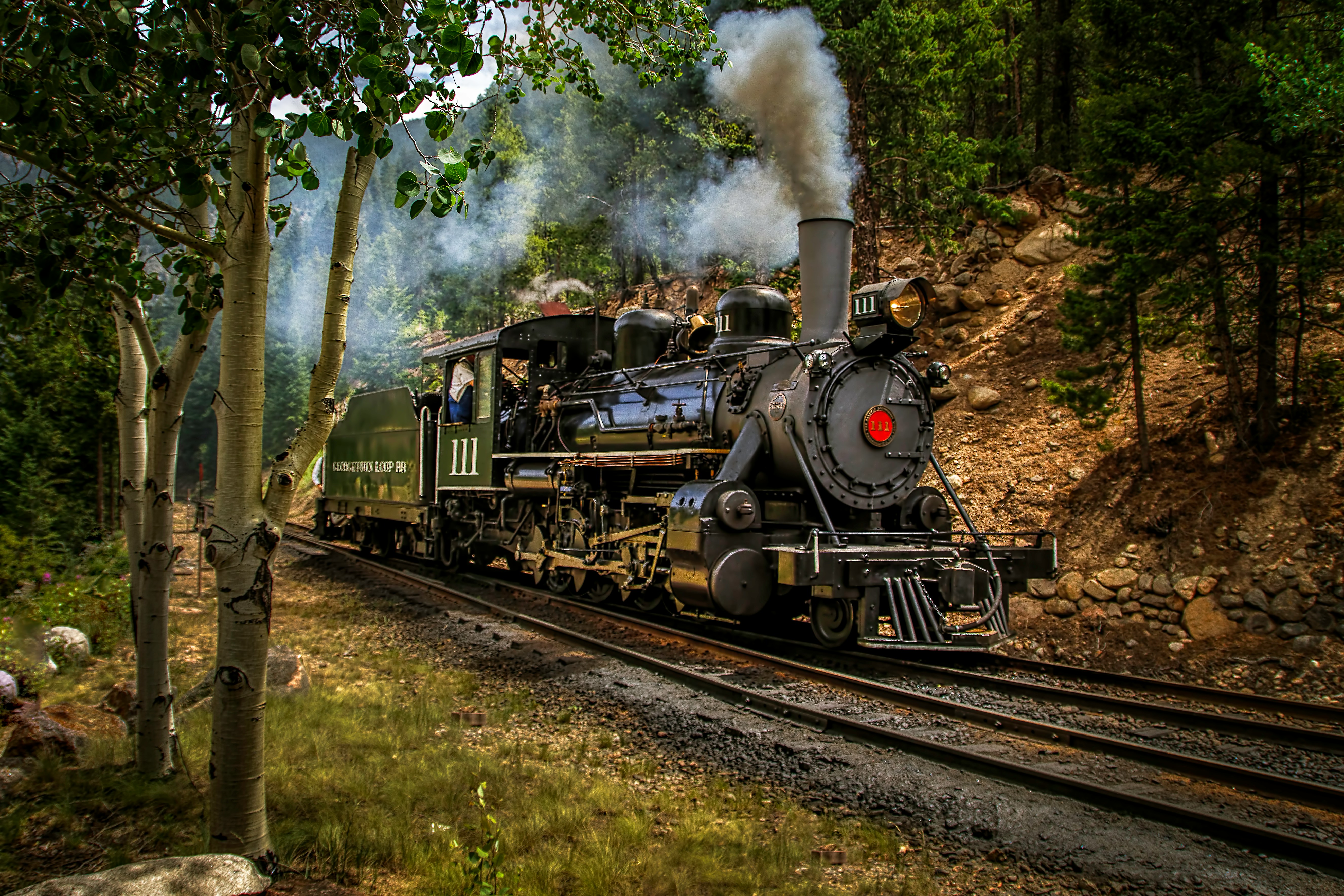
Photo of a steam train
Photo by Claud Richmond on Unsplash. (NOT a photo of a Harrisburg, NC steam train.)

Prior to the coming of the railroad, it is said that it sometimes cost a farmer half his profits to transport his produce to market by wagon. Poor roads and distances to markets prohibited the transporting of perishables very far.

Although Charlotte has a population of a million people now, in 1854 it had a whopping 1,000. The State of North Carolina decided it would be good for the economy to construct a railroad from Goldsboro, in the eastern part of the state, to Charlotte in the southern piedmont.

The State sold bonds in New York City to finance the project. Ten thousand shares were sold at $100 each.

Goldsboro was chosen because it had rail service to the port at Wilmington, NC. A railroad from the south to Charlotte and one from the north to Danville, Virginia, which threatened to extend a line to Charlotte, would surely mean that goods from western North Carolina would be shipped to Virginia or to the port at Charleston, South Carolina.

It was understood from the beginning that much of the construction labor for the project would be undertaken by slaves of property owners living along the rail right-of-way. Some of the slave owners were paid on a yearly basis for supplying their slaves for the project.

I found it interesting that wrought iron T-rails manufactured in Wales were used in the initial construction of the 223-mile-long railroad. The rails weighed 60 pounds per yard and were brought in through the port at Charleston.

In the early 1850s, a steam locomotive needed on average a cord of wood (that’s a stack of wood eight feet long, four feet wide, and four feet high) and 1,000 gallons of water for every twenty-five miles. A tender could carry that much wood and water. That is what dictated the approximate distances between some train stations.

That’s how the little farming community of Harrisburg, North Carolina got a train depot and the designation as Harris Depot on maps.

If you are interested in learning more about the North Carolina Railroad and the ways the coming of the railroad and depot changed life in a farming community in the early 1850s, look for my book, Harrisburg, Did You Know? Cabarrus History, Books 1 and 2. Book 1 contains the first 94 local history articles I wrote, including the series about the railroad. Book 2 contains the other 84 local history articles I wrote, including more articles that reference the railroad.

Topics in the two books include such things as the blowing up of the King’s gun powder in 1771, a minuteman in the American Revolution, President George Washington’s 1791 visit, the 22-mile ring dyke the town sits in, general stores, family-owned groceries stores, education in the 1800s and three Rosenwald Schools, how the town got phone service and electricity, our Ukrainian doctor (Nicholas E. Lubchenko) who escaped from the Russian Army, the cotton economy of the area until the mid-20th century, Hurricane Hugo in 1989, floods, earthquakes, the building of roads and bridges, the changes necessitated by the high-speed rail project, mail service from the 1800s until the early 21st century, the construction of the Charlotte Motor Speedway and the running of the first World 600 NASCAR race in 1960… and much more.

Here are the links for purchasing the books on Amazon:
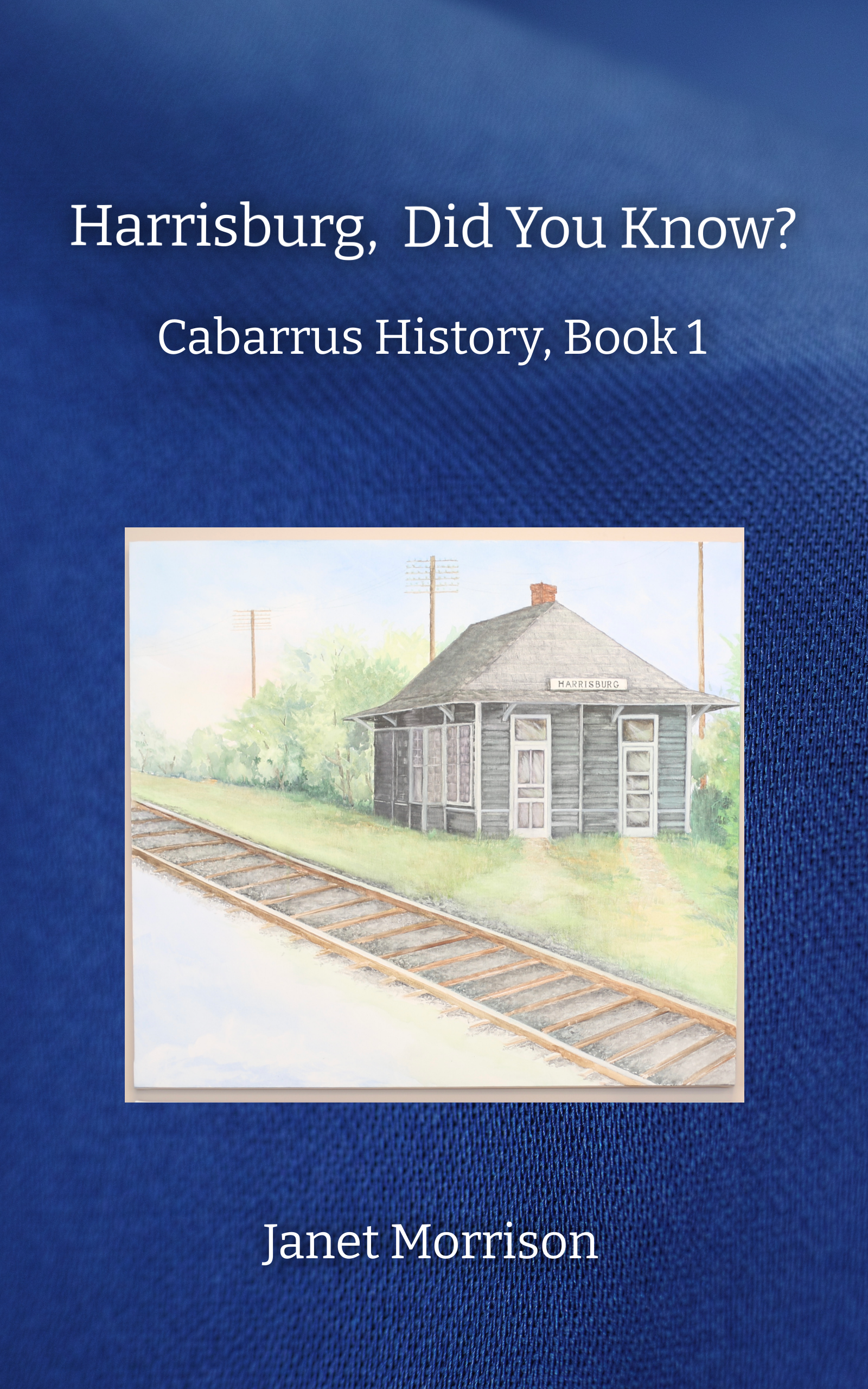
Photo of the front cover of Harrisburg, Did You Know? Cabarrus History, Book 1, by Janet Morrison
Harrisburg, Did You Know? Cabarrus History, Book 1,
by Janet Morrison

Book 1, in paperback: https://www.amazon.com/Harrisburg-Did-You-Know-Cabarrus/dp/1888858044/

Book 1, in e-book: https://www.amazon.com/Harrisburg-Did-You-Know-Cabarrus-ebook/dp/B0BNK84LK1/

Photo of front cover of Harrisburg, Did You Know? Cabarrus History, Book 2, by Janet Morrison
Harrisburg, Did You Know? Cabarrus History, Book 2,
by Janet Morrison

Book 2, in paperback: https://www.amazon.com/Harrisburg-Did-You-Know-Cabarrus/dp/B0BW2QMLHC/

Book 2, in e-book: https://www.amazon.com/Harrisburg-Did-You-Know-Cabarrus-ebook/dp/B0BXBQ1F79/

If you live in the Harrisburg, NC area, you can find the books in paperback, Tuesday through Saturday, at Second Look Books, 4519 School House Commons.

I hope my blog post today whetted your appetite for reading more about the history of our little town of 20,000 now. I imagine many of our local stories are similar to ones in your town’s history.

Janet

The government should be afraid of its citizens, not the other way around.

No Place for Preacher’s Son?

Today’s blog post is an edited local history newspaper column I wrote for the August 23, 2006 edition of Harrisburg Horizons newspaper, Harrisburg, North Carolina. Appearing in the newspaper as “Pioneer Mills:  No Place for a Preacher’s Son,” it paints a picture of the Rocky River and Pioneer Mills communities in Cabarrus County in the 1870s.

Manse wasn’t ready!

The Rev. Joseph B. Mack came from Charleston, South Carolina in 1871 to be the pastor of Rocky River Presbyterian Church. When he and his family arrived, the manse the congregation was building for his family to live in was not completed.

Church members Robert Harvey Morrison and his wife, the former Mary Ann Stuart, moved their family into a tenant house and gave the new minister’s family their home in the Pioneer Mills community. This was no small sacrifice because the manse was not completed until 1873! The Morrisons’s two youngest children, an 18-year-old daughter and a 16-year-old son were still in the household, and Mr. and Mrs. Morrison were in their 50s.

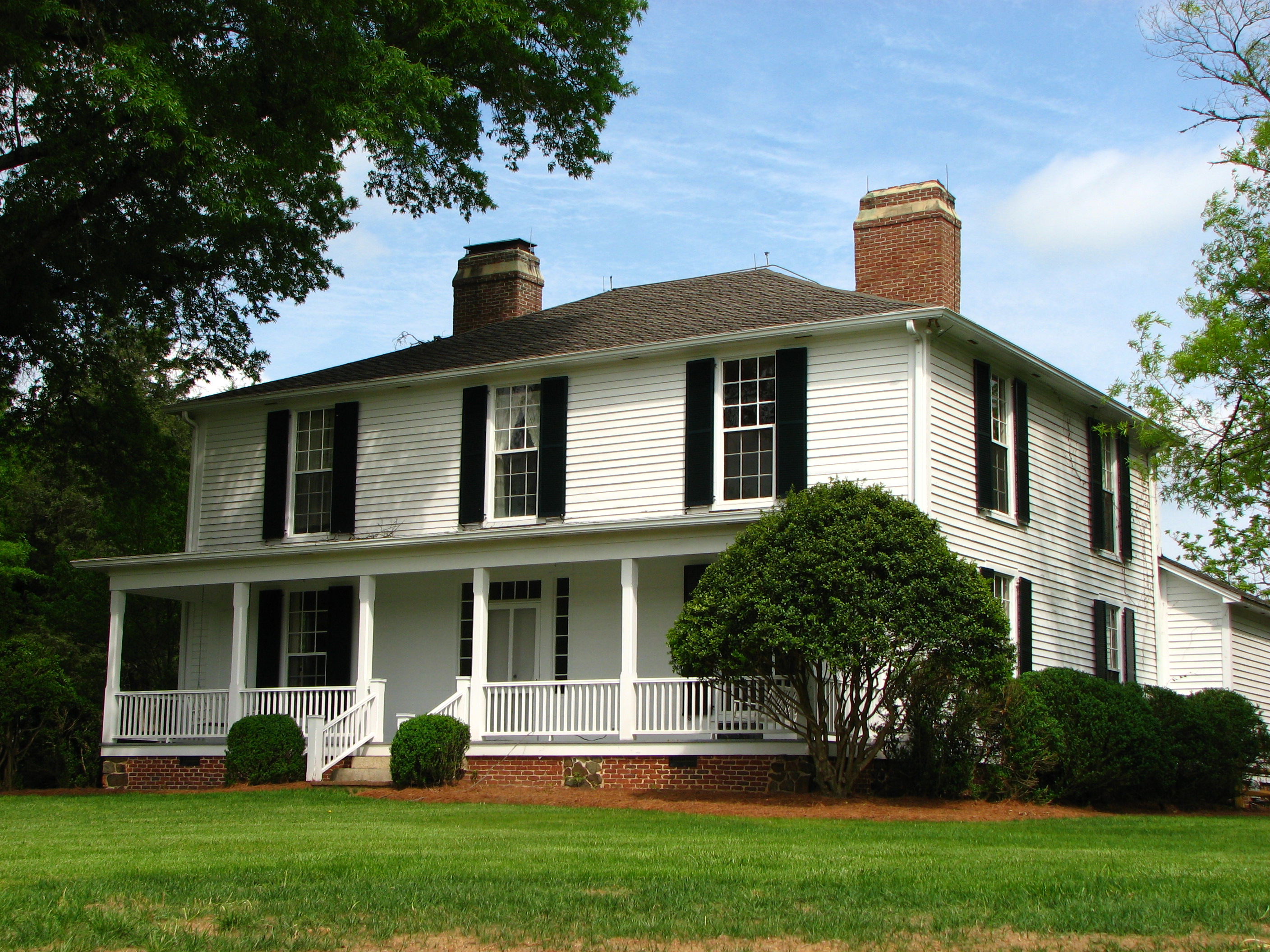
Robert Harvey Morrison House
Robert Harvey Morrison Home, built circa 1846. (Photograph taken by Janet Morrison, May 3, 2008.)

The Robert Harvey Morrison home was built as early as 1846 when he inherited the land from his father. The house and its numerous out-buildings have been on the National Register of Historic Places since 1990.

In case you’re wondering

Robert Harvey Morrison was a relative of mine but not a direct ancestor. In the 1800s my part of the family didn’t live in grand houses like the one pictured. Gold was never found on the property my part of the family owned. There was a gold mine on the land that Robert Harvey Morrison inherited from his father.

Pioneer Mills was a gold-mining boom town in the early- to mid-19th century. It was apparently still a rip-roarin’ place in 1871.

Dr. William Mack’s memories in 1912

A special homecoming was held at the church on August 12, 1912. Rev. Mack’s son, Dr. William Mack, was unable to attend. He sent his regrets from New York and put some of his childhood memories on paper. Fortunately for us, his letter to homecoming master of ceremonies Mr. Morrison Caldwell was printed in the Concord newspapers the following week.

Dr. Mack wrote, “My first Rocky River recollection is of getting off the train at Harris Depot [now, Harrisburg, NC] and going in the dark to the home of Uncle Solomon Harris.” I don’t believe Dr. Mack was related to Mr. Harris. This was probably a term of endearment and respect.

He continued, “There we met Ed and ‘Little Jim’ (to distinguish him from ‘Big Jim,’ the son of Mr. McKamie Harris.) Uncle Solomon had the biggest fire-place I ever saw; it seemed as big as a barn door.

“Shortly afterwards we went to Pioneer Mills….  There… was the old Gold mine, Barnhardt’s store and McAnulty’s shoemaker shop…. While there I decided to become either a merchant or shoemaker, for Barnhardt’s store and McAnulty’s shop kindled young ambitions; better to ‘keep store’ or ‘mend shoes,’ than as a preacher’s son to be moving around from place to place.

“But Pioneer Mills was ‘no place for a preacher’s son.’ Soon we moved again; this time to the brand new brick parsonage, close by the church. We used to go to church in a big closed carriage drawn by two mules; now, every Sunday, we walked to church, going down a steep hill, across a branch, and through the grove to the famous old house of worship.”

Dr. Mack’s letter also read, “Those were happy years; happy in springtime with its apple blossoms, song birds, morning-glories and Tish McKinley’s Sassafras tea; happy in the summertime, with its blackberries and plums, its bob-whites in the wheat fields, its lightning and thunder storms, its bare-footed boys and girls, and its bitter quinine to keep off third-day chills; happy in the autumn time, with its white fields of unpicked cotton and its beautiful trees with leaves of myriad hues; and happy in the wintertime, with its snows, its big hickory back-logs, its boys in boots red-topped and toes brass-tipped, its red-cheeked girls in wraps and ‘choke rags,’ and its Christmas Holidays and turkeys.”

Dr. Mack’s colorful memories paint an idyllic picture of life in Township One in Cabarrus County in the early 1870s. I hope the children growing up here in the 21st century will have equally-as-fond memories of this place.

My sources

My sources for this blog post were the following:  The Presbyterian Congregation on Rocky River, by Thomas Hugh Spence, Jr, 1954; The Concord Daily Tribune, August 16, 1912; The Concord Times, August 19, 1912; http://www.hpo.ncdcr.gov/nr/CA0498.pdf (photocopy of the National Register of Historic Places Registration Form for Robert Harvey Morrison Farm and Pioneer Mills Gold Mine); and Descendants of James & Jennet Morrison of Rocky River, by Alice Marie Morrison and Janet Sue Morrison.

Until my next blog post

Please share this or any of my other blog posts on social media by using the buttons below. Thank you!

I hope you have a good book to read. If you’re a writer, I hope you have productive writing time.

Janet