I write southern historical fiction, local history, and I've written a devotional book. The two novels I'm writing are set in Virginia and the Carolinas in the 1760s. My weekly blog started out to follow my journey as a writer and a reader, but in 2025 it has been greatly expanded to include current events and politics in the United States as I see our democracy under attack from within. The political science major in me cannot sit idly by and remain silent.
I wrote a local history column for Harrisburg Horizons newspaper from May 2006 through December 2012. Before you residents of Harrisburg, Pennsylvania get too excited, I will clarify that this free weekly newspaper existed in Harrisburg, North Carolina.
Of the 175 newspaper columns I wrote, six were a series of articles I wrote about “The Coming of the Railroad.” This is an important local topic for without the North Carolina Railroad there would be no Town of Harrisburg, NC today.
It’s hard to imagine the town without a railroad today, even though in an effort to establish “high-speed” rail between Charlotte and Raleigh, the at-grade railroad crossings in Harrisburg were replaced with bridges in 2013. That’s a story for another day.
Imagine a rural farming community in 1854, about halfway between Charlotte and Concord. Was everyone excited about the coming of the railroad? Farmers were probably not happy about the piercing whistles of the steam engines scaring their livestock, but they were possibly pacified by the fact that the depot planned for the community would give them a convenient way to sell their agricultural products.
Photo by Claud Richmond on Unsplash. (NOT a photo of a Harrisburg, NC steam train.)
Prior to the coming of the railroad, it is said that it sometimes cost a farmer half his profits to transport his produce to market by wagon. Poor roads and distances to markets prohibited the transporting of perishables very far.
Although Charlotte has a population of a million people now, in 1854 it had a whopping 1,000. The State of North Carolina decided it would be good for the economy to construct a railroad from Goldsboro, in the eastern part of the state, to Charlotte in the southern piedmont.
The State sold bonds in New York City to finance the project. Ten thousand shares were sold at $100 each.
Goldsboro was chosen because it had rail service to the port at Wilmington, NC. A railroad from the south to Charlotte and one from the north to Danville, Virginia, which threatened to extend a line to Charlotte, would surely mean that goods from western North Carolina would be shipped to Virginia or to the port at Charleston, South Carolina.
It was understood from the beginning that much of the construction labor for the project would be undertaken by slaves of property owners living along the rail right-of-way. Some of the slave owners were paid on a yearly basis for supplying their slaves for the project.
I found it interesting that wrought iron T-rails manufactured in Wales were used in the initial construction of the 223-mile-long railroad. The rails weighed 60 pounds per yard and were brought in through the port at Charleston.
In the early 1850s, a steam locomotive needed on average a cord of wood (that’s a stack of wood eight feet long, four feet wide, and four feet high) and 1,000 gallons of water for every twenty-five miles. A tender could carry that much wood and water. That is what dictated the approximate distances between some train stations.
That’s how the little farming community of Harrisburg, North Carolina got a train depot and the designation as Harris Depot on maps.
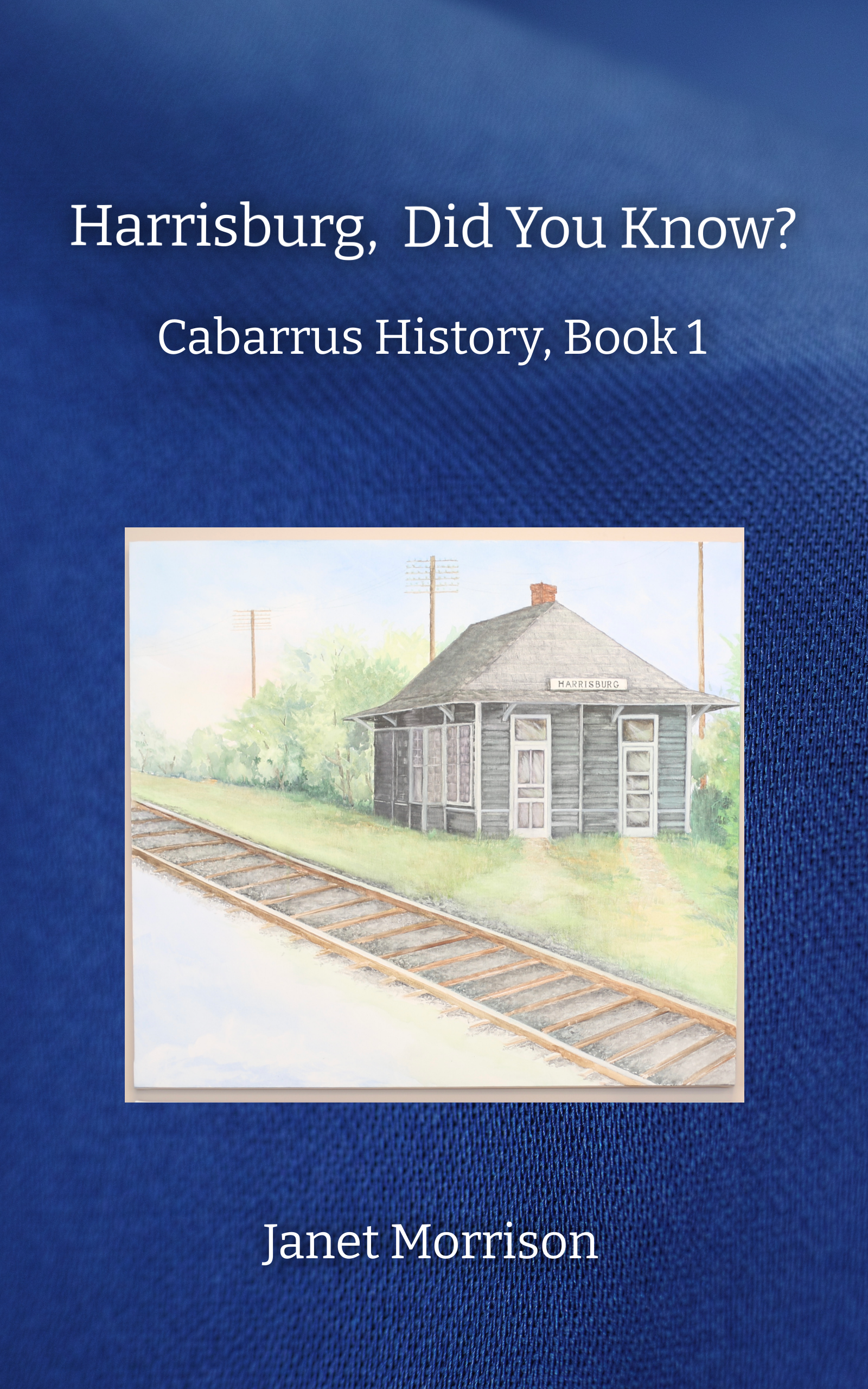
If you are interested in learning more about the North Carolina Railroad and the ways the coming of the railroad and depot changed life in a farming community in the early 1850s, look for my book, Harrisburg, Did You Know? Cabarrus History, Books 1 and 2. Book 1 contains the first 94 local history articles I wrote, including the series about the railroad. Book 2 contains the other 84 local history articles I wrote, including more articles that reference the railroad.
Topics in the two books include such things as the blowing up of the King’s gun powder in 1771, a minuteman in the American Revolution, President George Washington’s 1791 visit, the 22-mile ring dyke the town sits in, general stores, family-owned groceries stores, education in the 1800s and three Rosenwald Schools, how the town got phone service and electricity, our Ukrainian doctor (Nicholas E. Lubchenko) who escaped from the Russian Army, the cotton economy of the area until the mid-20th century, Hurricane Hugo in 1989, floods, earthquakes, the building of roads and bridges, the changes necessitated by the high-speed rail project, mail service from the 1800s until the early 21st century, the construction of the Charlotte Motor Speedway and the running of the first World 600 NASCAR race in 1960… and much more.
Here are the links for purchasing the books on Amazon:
Harrisburg, Did You Know? Cabarrus History, Book 1, by Janet Morrison
If you live in the Harrisburg, NC area, you can find the books in paperback, Tuesday through Saturday, at Second Look Books, 4519 School House Commons.
I hope my blog post today whetted your appetite for reading more about the history of our little town of 20,000 now. I imagine many of our local stories are similar to ones in your town’s history.
Janet
The government should be afraid of its citizens, not the other way around.
Since November 25, I’ve blogged once-a-week about one of the stories in my new book, Traveling Through History: A Collection of Historical Short Stories. The fifth story in the book is “From Scotland to America: A 1762 Immigration Story.”
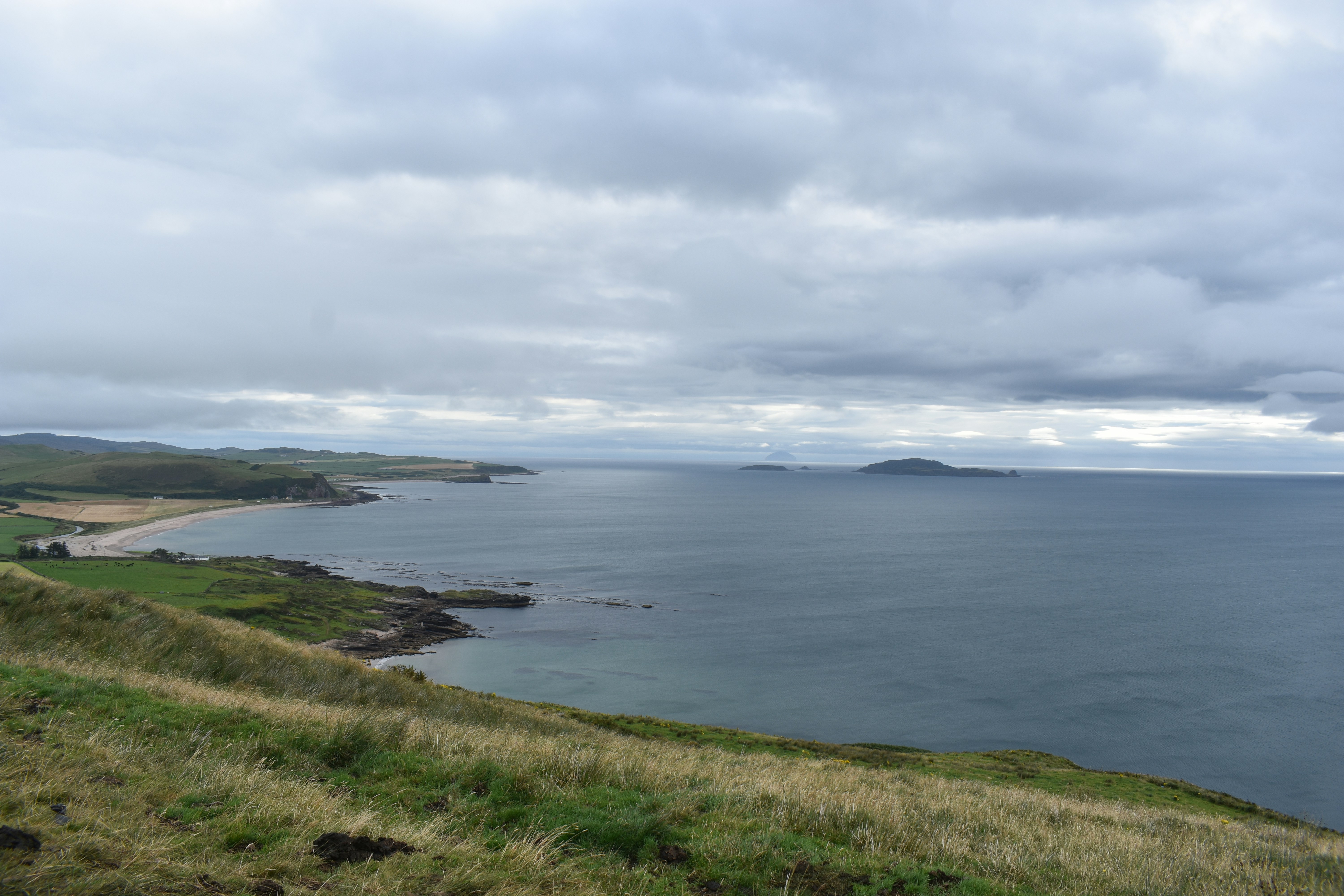
Somewhere on the Kintyre Peninsula of Scotland. Photo by Andrew Hall on Unsplash. (Andrew, we might be cousins!)
I know baptismal dates and marriage dates for my ancestors in Campbeltown and Southend, Scotland, but I don’t know when the three brothers set sail to America. I don’t know how long they lived in Pennsylvania before taking the Great Wagon Road south to the Rocky River Community in present-day Cabarrus County, North Carolina, but I had fun imagining their journey for this short story.
I’m privileged to live on a little piece of land that has passed down through seven generations to my sister and me from the 1760s. We’ve been to Scotland and visited the farms where they were tenants of the Duke of Argyll in the late 1600s and early 1700s. I feel a bond with them. Writing “From Scotland to America” was one small way for me to pay homage to them. I grew closer to them as I pondered their lives, what they saw, what they did, how they must have marveled at “the New World” and how they must have missed their homeland and living by the sea.
This story is entirely fiction except for their names, where they lived in Scotland, and from whom my great-great-great-great-grandfather purchased his first piece of land in North Carolina.
The three brothers came from a place where no common people owned their own land, so it must have been an unimaginable accomplishment to come to America and purchase land. That was something none of their ancestors could have done!
You can find the paperback at Second Look Books in Harrisburg, NC, or ask for it at your local independent bookstore. Bookstores can order it from IngramSpark.
Don’t forget to look for my other books, all available on Amazon: I Need The Light! 26 Weekly Devotionals to Help You Through Winter; I Need The Light! Companion Journal and Diary; The Aunts in the Kitchen: Southern Family Recipes (compiled along with my sister, Marie); Harrisburg, Did You Know? Cabarrus History, Book 1; and Harrisburg, Did You Know? Cabarrus History, Book 2.
The following genealogy books that my sister and I compiled are available through my website (https://www.janetmorrisonbooks.com): Descendants of John & Mary Morrison of Rocky River; Descendants of James & Jennet Morrison of Rocky River; and Descendants of Robert & Sarah Morrison of Rocky River.
By the way, don’t forget the people of Ukraine and their struggle to remain a free and independent nation.
I considered saving today’s topic for my July 7 planned blog post about the books I am reading in June, but I decided it deserved its own post.
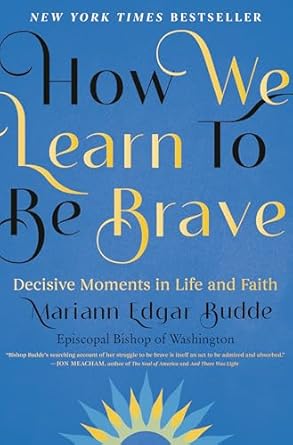
Last week, I read the fourth chapter in How We Learn to Be Brave: Decisive Moments in Life and Faith, by Mariann Edgar Budde.
How We Learn To Be Brave, by Mariann Edgar Budde
If the author’s name sounds familiar, it is because she is the Bishop of the Episcopal Diocese of Washington, D.C. and the Washington National Cathedral. She spoke boldly in the worship service on President Trump’s Inauguration Day in January 2025, and was sharply criticized by Trump for her courage.
My sister read this book and encouraged me to at least read the fourth chapter before she returned it to the public library. She said it reminded her of me and some of my life experiences. I took time to read that 34-page chapter titled, “Accepting What You Do Not Choose.”
My story (well, part of it)
At the age of 25 I accepted the fact that I had a medical problem that was incurable but could be treated with a series of surgeries. It meant that I would never have a chance to have children. Less than ten years later I accepted the fact that I had chronic fatigue syndrome and fibromyalgia, neither of which can be cured and treatment of the symptoms is poor at best.
What I was able to accept has astounded my sister. She knows better than anyone else how much physical pain I tolerate and the fatigue that makes it difficult for me to get up and face each day. She says she has asked God, “Why Janet?” but I just find that odd because I have never asked God, “Why me?”
I admit that when I get frustrated over the memory problems that accompany chronic fatigue syndrome that cause me to make mistakes and have to repeat various tasks, I do sometimes ask God why life has to be so hard.
But I’ve never asked God why I had endometriosis, a ten-pound ovarian cyst, fibroid tumors, chronic fatigue syndrome, fibromyalgia, chronic corneal erosion, and so forth. Why would I do that? Stuff happens. God never promised us that life would be a bed of roses. He promised He would always be with us. Diseases happen. Accidents happen. No one has a perfect life, so why would I expect my life to be perfect?
My father was my example
My example was my father. He was just 61 years old when he was diagnosed with multiple myeloma. I had just started my sophomore year in college. He lived for almost five more years. The chemotherapy acted like fertilizer on his cataracts and he went blind. Blindness was harder for him to accept than his cancer because there was nothing he could do to fight blindness.
He insisted on having cataract surgery against his doctors’ recommendations, but it was unsuccessful. But in those five years of sickness and eventual legal blindness, I never once heard my father ask, “Why me?” That just was not the way he approached his medical diagnoses. He continued to work every day until his eyesight made it impossible for him to drive.
What Bishop Budd’s 4th chapter had to say
I read the fourth chapter in Bishop Budde’s book, and it was comforting. She writes from a place of physical pain that I did not know she had. The book gave me some things to think about. It is always helpful to listen to another person’s perspective.
Budde writes several pages about the Rev. Dr. Martin Luther King and how he accepted the life he was dealt. She writes about acting from a place of love and putting the other person ahead of ourselves. Instead of being like the Levite and the priest in the story of the Good Samaritan, we should strive to be like the Good Samaritan.
The Levite and the priest in the story saw the man who needed help, but they were afraid of what could happen to them if they stopped to help the man. But if we try to adopt the mindset of the Good Samaritan, when we see someone who needs help or an injustice, we should ask ourselves, “What will happen to them if I don’t act?”
That is the question I have asked myself daily since January 20, 2025. What will happen to my country, to my great-nieces, to their future children, if I don’t act?
With Episcopal Bishop Michael Curry’s words in mind from Prince Harry and Meghan Markle’s wedding ceremony, Budde writes, “When we choose love in response to what we wish we could change but can’t; when we choose love as our response to the world as it is, not as what we wish it were; when we choose love over denial, or anger, or cynicism and withdrawal, we share in God’s redeeming of our world. It doesn’t make the work any easier, but it gives our efforts a sense of purpose that can carry us through. Through our imperfect efforts, God’s grace shines through us in ways we may never know or fully understand.”
Budde closes the fourth chapter with the following words:
“Our lives are full of unforeseen choices, struggles, and callings. Sometimes we can overcome these obstacles, and sometimes we must make peace with them…. Accepting what we did not choose involves a leap of faith that God is present and at work in ways that we cannot comprehend…. This kind of acceptance is not passive or fatalistic, but rather a courageous choice at a decisive moment to embrace the places we are broken as an integral part of a courageous life.”
I didn’t feel courageous at age 24 but maybe I am at 72
I don’t consider that I was courageous in accepting my physical limitations. It never occurred to me that I had a choice, so what would have been the point of fighting or lashing out at God about them?
Another participant in a Chronic Fatigue Syndrome support group in the 1980s who every month angrily said, “I refuse to be sick! I’m not going to put up with this. The rest of you can be sick if you want to, but I refuse.” I don’t know what became of her. I hope she was able to find a place of acceptance and contentment.
There was another participant in the support group who presented herself as a wealthy middle-age woman who enjoyed playing tennis every day. She could no longer play tennis and it crushed her spirit. She committed suicide.
I did not choose to have Chronic Fatigue Syndrome since April 26, 1987, but here I am.
On the other hand, I did not choose to have Donald Trump as my President, and it is taking a degree of courage for me to express my concerns in my blog. I don’t personally know but a few of the people who read my blog. WordPress tells me that people in 81 countries have read my blog just in 2025. People who may wish me harm for my opinions might read my blog. A few trolls have read it and left unpleasant comments.
I’m happy to engage in a “conversation” about the topics in my blog, but when a comment turns into a personal attack or accusations about my credibility or motives, I draw the line and I delete them. I do not owe my time and limited energy to someone who merely wants to pick a fight.
The bottom line
“The bottom line” is that we do not choose many of the things that happen to us, but we can always choose how we react to them. Our experiences make us who we are. If I had not had some medical problems, I would not be the person I am today.
We can look for constructive and creative things to do when we have physical or career setbacks. If I had not been forced to give up my chosen career due to my health at the age of 34, I might not have taken a writing course at the age of 48.
If I had not taken that writing course, I would not have had the confidence to write a local history column for the newspaper at the age of 53 to 59. If I had not taken that writing course, I would not have started a blog at the age of 60.
If I had not written 175 local history articles for the newspaper, I wouldn’t have been able to self-publish them in two books (Harrisburg, Did You Know? Cabarrus History, Books 1 and 2). If I hadn’t wanted to publish those articles in book form, I wouldn’t have learned how to format a book on the computer so I could self-publish on Kindle Direct Publishing.
If I had not taken that writing course or published those two history books, I would not have published two short stories on Amazon… or a cookbook with my sister in 2023.
If I had not taken that writing course, I would not be writing an historical novel now at the age of 72.
If I had not had Chronic Fatigue Syndrome, Fibromyalgia, and Seasonal Affective Disorder and learned how to write and self-publish, I would not have just finished writing a devotional book. I hope to publish I Need The Light in August, so stay tuned!
God did not wish for me to have any of my physical maladies, but he gave me the Holy Spirit. The Holy Spirit gives me the gumption to get up every day (although some days I don’t get up until the afternoon) and to seek God’s will in my life.
It is through The Trinity — God, Jesus Christ, and the Holy Spirit — that I have the energy and creative motivation many days to read, write, interact with the friends I’ve made around the world through my blog, sometimes dabble in genealogy, and occasionally keep learning to play the dulcimer – a musical instrument I took up in middle age.
It is through The Trinity that I was given an interest in history and political science. It is those lifelong interests that compel me to pay attention to current events. The current events in my country are sources of much stress and concern.
I see the democracy in which I have thrived all my life under attack now from within. My government is turning against its citizens and the things we value. I did not vote for any of this, but the situation is the one I’ve been dealt.
It is up to me how I react.
Some days I wish I could just turn off the news. Some days I wish I could listen to the news and then just go about my business and not be concerned. Lots of people seem to be able to do that. I am not one of them. (I am simultaneously envious of them and frustrated with them!)
The reelection of Donald Trump has upended my little weekly blog (and, therefore, my life) into an almost daily report (some say “rant”) about the dismantling of our democracy. Nothing about 2025 is what I had planned for myself, but life happens.
Now you see
So now, 1,900 words later, you see why I decided to give the fourth chapter of Bishop Mariann Edgar Budde’s book, How We Learn to Be Brave: Decisive Moments in Life and Faith, its own blog post.
Some of you might think my life is too much of an open book. I get it. Some people don’t want anyone to know they have medical problems. I don’t share that information about myself to get your sympathy. That’s not what this is about. But perhaps someone else with health problems at a young age (or at any age) can take some measure of encouragement from my blog today or from the devotional book I will blog more about later.
It’s all about faith and where we get out courage to keep putting one foot in front the other. It’s about how we react to whatever comes our way.
What are your priorities?
What creative and constructive ways have you found to express yourself and react to the life you have been given?
It’s never too late to find your voice.
It has been my experience that when life circumstances close a door, God always opens a window… or even a bigger door.
Until my next blog post
Keep reading and paying attention to what’s happening in your country and the world. Being a citizen is not a spectator sport!
Remember the brave people of Ukraine, and don’t forget the people in western North Carolina who are still recovering from last September’s hurricane and record-setting flooding and landslides… as well as a new flood and landslide two days ago just over in Tennessee which has closed I-40 to all traffic (again) for a couple of weeks.
Where? Second Look Books, 4519 School House Commons in Harrisburg
When? Saturday, April 15, 2023
What Time? 2:00 – 4:00 p.m.
Second Look Books, 4519 School House Commons, Harrisburg, NC
Copies of Harrisburg, Did You Know? Cabarrus History, Book 1 and Book 2 have arrived and been autographed.
Photocopies of my 11×14-inch “Harrisburg in the 1900s” two-map sets have been made.
Business cards and bookmarks are printed.
Saturday, April 15 is the big day for my Meet & Greet at Second Look Books in Harrisburg, North Carolina! I’ll be there from 2:00 p.m. until 4:00 p.m.
Please drop by, even if you’ve already purchased both books.
The bookmarks and Harrisburg maps are free while supplies last.
What maps?
I drew the maps based on detailed memories that Mr. Ira Lee Taylor shared with me while I was writing the “Did You Know? local history column for Harrisburg Horizons newspaper (2006-2012.)
One map covers from along NC-49 to Back Creek. The other map covers from Back Creek to Reedy Creek and where McKee Creek flows into Reedy Creek.
Mr. Taylor told me where such things as the telephone switchboard, spoke factory, two cotton gins, railroad houses, corn fields, cotton fields, and livery stable were in the early 1900s.
He told me where the various stores and post offices were. Being the town’s only mail carrier for several decades, he knew where everybody lived, so I included much of that information The map show where the roads were (and were not) before the coming of the high-speed rail.
In case you arrived in Harrisburg after the two-story red brick old Harrisburg School was torn down, this set of maps will show you the layout of the school grounds. The school property is where School House Commons Shopping Center is now.
The maps also show the locations of the Oak Grove Rosenwald School and the Bellefonte Rosenwald School that you read about in Harrisburg, Did You Know? Cabarrus History, Book 1.
Some things you’ll learn about in my two books
There are stories of local heroism from 1771 and the detailed memories of a World War II US Army veteran who told me about his training for D-Day through to the end of the war.
There are stories about the original Hickory Ridge School, which was a one-room school on Hickory Ridge Road.
There are stories about the Rosenwald Schools that served the black students in the early 1900s.
There are stories about the man from Russia (actually, Ukraine) who settled in Harrisburg in the 1920s to practice medicine until his death in 1960. He was a country doctor who made house calls
There are stories about the construction of the Charlotte Motor Speedway and the first World 600 Race when the track was in such bad shape that chunks of asphalt broke the windshields out of some of the race cars.
There is information about the 22-mile syenite ring-dike that Harrisburg sits in. It’s what remains of an ancient volcano.
Until my next blog post
Remember the people of Ukraine – where Dr. Nicholas E. Lubchenko was born and lived until young adulthood.
I hope to see you on Saturday!
In case you don’t have a good book to read, please consider purchasing my local history books. They’re available in paperback at Second Look Books. They’re also available in paperback and for Kindle from Amazon.
Even if you don’t live or have never lived in Harrisburg, North Carolina, I think you’ll find some interesting stories that you can probably relate to if you are of a certain age. And if you a child, teen, or young adult I think you’ll find it interesting to read about how life used to be in our sleepy little farm village of a couple hundred people in the early 1900s that has grown to nearly 20,000 people in 2023.
What? Author Meet & Greet
Where? Second Look Books, 4519 School House Commons in Harrisburg
The first documented gold discovery in the United States was here in present-day Cabarrus County, North Carolina in 1799. The discovery by a little boy playing in Little Meadow Creek led to gold fever in the area. Numerous gold mines were dug and mined to various levels of success.
In fact, there was enough gold found in the southern piedmont of North Carolina that a branch of the United States Mint was built in Charlotte in 1836 and 1837. It opened for the production of gold coins in 1837.
A trip to the National Archives at Atlanta (which is in the Atlanta suburb of Morrow, Georgia) a few years ago gave me the opportunity to look at ledger books from the Mint in Charlotte. Within those pages I recognized names from my community.
Register of Gold – Branch Mint – Charlotte
I’m blogging about some of that information today to give you an example of the type of documented local history I included in Harrisburg, Did You Know? Cabarrus History, Book 2. Although the book (and Harrisburg, Did You Know? Cabarrus History, Book 1) concentrate on Harrisburg, both books do include articles about other communities in Township One.
One of the communities rich in history in the township is Pioneer Mills. Little more than a quiet crossroads now, it was a center of activity in the mid-1800s after the discovery of gold and the opening of Pioneer Mills Gold Mine.
I recognized names such as John C. Barnhardt from the Pioneer Mills community as taking 123 ounces of amalgam to the Charlotte Mint on August 31, 1843, for which he was paid $2,340.33. That was no small sum of money in 1843!
Robert Harvey Morrison, on whose land the Pioneer Mills Gold Mine was located, was paid more than $4,000 for the gold bars and amalgam he took to the Mint from late in 1846 into early 1850.
Other names I recognized in the Mint ledgers included two other Barnhardts, Robert R. King, three men with the surname Treloar, and R.B. Northrop.
Comparing US Census records, Charlotte Mint records, and various years of Branson Business Directories helped me get a better idea of what the Pioneer Mills Community must have looked like 150 to 180 years ago. There was a general store, a dry goods store, a blacksmith, a school, and a post office, In 1869, Pioneer Mills Community had three physicians.
Gold mining brought people from Canada, Great Britain, and New York to Pioneer Mills. Gold mining, no doubt, brought some undesirable people into the community, which led the wife of the pastor of Rocky River Presbyterian Church to say in the early 1870s that Pioneer Mills “is no place for a preacher’s son!”
If you’d like to read more about the history and people of Cabarrus County, North Carolina, you might enjoy Harrisburg, Did You Know? Cabarrus History, Books 1 and 2. They are available in paperback at Second Look Books in Harrisburg and in paperback and for Kindle from Amazon.
By the way, you can visit the research room at the National Archives at Atlanta (in Morrow, Georgia) by appointment only. Visit the website for more information: https://www.archives.gov/atlanta.
Until my next blog post
I hope you have a good book to read.
I hope you spend time with family and good friends.
And, as always, remember the people of Ukraine and count your blessings.
I’m pleased to announce that not only did my second proof copy of Harrisburg, Did You Know? Cabarrus History, Book 2 arrive in a timely manner, but it was also in fairly good order!
The cover is now a reddish-brown instead of dark brown. (I don’t think I’ll try to self-publish any more books with a red cover! We all learn from our mistakes.)
There were still a few formatting errors that resulted from the last “chapter” (my research notes) being almost 30,000 words in length, but at least Carl Higgins’ World War II B-26 bomber was flying horizontally on page 467.
Although the manuscript was proofread and corrected several times, three typos got past me. I strive for perfection, but I’ve yet to see a perfectly printed book. I can live with three typos in a 536-page book.
Available on Amazon!
Harrisburg, Did You Know? Cabarrus History, Book 2 is now available in paperback and for Kindle from Amazon. Click on https://www.amazon.com/dp/B0BW2QMLHC/ for the paperback or click on https://www.amazon.com/dp/B0BXBQ1F79/ for the Kindle book. I shortened the Amazon URL so they wouldn’t look so intimidating. If they don’t work, just put the name of the book in a search on Amazon.
Available soon at Second Look Books!
The paperback book will be available in a few weeks at Second Look Books in Harrisburg.
The first issue of my newsletter!
Those of you who read my blog post last Monday and subscribed to my newsletter before March 1, received the first issue of the Janet Morrison Books Newsletter (clever name, eh?) on Friday. I hope you enjoyed the variety of information it contained.
If you’ve read my vintage postcard book, The Blue Ridge Mountains of North Carolina, you were able to answer the trivia question near the end of the newsletter.
Please subscribe to my newsletter & receive a free short story!
I’m working hard to get my writing career off the ground, so please subscribe to my newsletter. I plan to send out a newsletter every other month, so be sure and visit my website, https://www.janetmorrisonbooks.com and subscribe so you won’t miss another issue. You’ll also receive a downloadable copy of my short story, “Slip Sliding Away: A Southern Historical Short Story.”
Thanks for being on this journey with me!
All these recent accomplishments are the culmination of a lifetime of studying local history and learning how to research and document it and 22 years of studying the craft of writing.
It’s been a bumpy journey. Thank you for having faith in me and offering encouraging words along the way! I have some loyal lifelong friends and just as loyal friends I’ve made through my blog and Facebook. I value each and every one of you.
Buckle up! I’m just getting started!
I’m working on a family cookbook, more historical short stories, and an historical novel. With my two local history books and first short story published, I look forward to concentrating on my fiction writing.
Until my next blog post
I hope you have a good book (or historical short story!) to read.
This should have been a very short blog post. Two or three paragraphs should have covered the story. Actually, if that had been the case, I would have chosen a different topic for the post. I hadn’t planned to blog about this today.
When I started writing my blog more than 10 years ago, I set out to chronicle my journey as a reader and a writer. It’s been a bumpy ride and there have been detours, successes, and obstacles. I’ve tried to share my ups and downs.
Today’s post is about last week’s stress. Last week’s stress has lapped right over into this week. I’d like to think there’s light at the end of this tunnel, but after what I’ve been through, it’s hard to be optimistic.
Photo by Brett Jordan on Unsplash
Today’s post falls in the category of “you can’t make this stuff up.”
Here’s the timeline as tracked on Amazon.com:
February 19
Having submitted the formatted copy of Harrisburg, Did You Know? Cabarrus History, Book 2 to Amazon for publication, I ordered a proof copy. After having some technical difficulties with several photographs in the book, I especially wanted to be sure they were going to be oriented correctly in the printed book.
I also ordered two paperback copies of Slip Sliding Away: A Southern Historical Short Story, but those two books had to be purchased as a separate order.
Amazon chose to combine the orders and deliver (or attempt to deliver) the three books to me via the United States Postal System, otherwise known as “carrier facility.”
February 21
9:11 pm Order left carrier facility, Concord, NC.
This is when I had a feeling that things had gone awry. Since Amazon does not print books at its facility in Concord, NC, which is about 12 miles from my house, I wondered why Concord was the first point of transit. The first point of transit should have been Amazon – not the US Postal Service. My books are usually printed either of Columbia, South Carolina or Indianapolis, Indiana.
February 22
Unspecified time Carrier picked up package in Columbia, SC (about 90 miles south of me.)
8:18 a.m. Package arrived at Amazon facility, Concord, NC (about 15 miles north of me.) [This is great! Maybe my proof copy and the short stories will arrive today or tomorrow at the latest! Life is good!]
February 23
6:18 a.m. Package arrived at carrier facility, Walkertown, NC (about 80 miles north of me.) [What?]
6:32 p.m. Package arrived at carrier facility, Harrisburg, NC (Post office is five miles from me. I live on a Harrisburg mail route.) [I’m not sure how it traveled 75 miles in 14 minutes, but okay. Whatever.]
7:47 p.m. Package arrived at carrier facility, Greensboro, NC (about 85 miles northeast of me.) [Wait a minute! Something’s not right.]
But I don’t want a refund. I want my books!
You know you’re in trouble when Amazon tells you on Thursday that you can request a refund if your package doesn’t arrive by Tuesday.
A refund won’t do me any good. I need to receive the proof copy before I can give Amazon the go ahead to start selling it. More importantly, I can’t order author copies to supply Second Look Books in Harrisburg until the book “goes live” on Amazon. Then, it takes about four weeks for me to receive the author copies, and my “Meet & Greet” at Second Look Books is scheduled for April 15.
February 24
5:19 a.m. Package left Amazon facility, Concord, NC (about 15 miles northeast of me.)
9:21 a.m. Package arrived at USPS distribution center, Charlotte, NC (about 18 miles west of me.)
February 25
3:15 a.m. After spending 18 hours at the USPS distribution center in Charlotte, the package left.
3:20 a.m. Five minutes later, it left again. (I’m not making any of this up!)
7:07 a.m. After traveling about 15 miles, package arrived nearly four hours later at the USPS in Harrisburg, NC.
7:18 a.m. Package is out for delivery “by 8 p.m. tonight.”
3:20 p.m. Package arrives at my house! According to the back page, the books were printed in Columbia, SC on February 20, 2023. There was only one 2×4-inch gaping hole in the package right over the cover of the Harrisburg book. These books have seen parts of North Carolina I’ve never seen. As far as I know, I’ve never been to Walkertown. I looked it up. It’s between Winston-Salem and Virginia.
Alas, I had the books in my hands.
I quickly turned to page 465 in the Harrisburg book to make sure Carl Higgins’ B-26 bomber was shown correctly; but, no! In the image, the plane is heading straight up instead of to the left.
Various subheadings in the book appear at the bottom of one page instead of at the top of the next page, although I painstakingly made sure that none of the subheadings were at the bottom of a page when I submitted the formatted manuscript to Amazon. Likewise, all images were oriented in the correct manner when they left my computer.
And did I mention that the cover is dark brown instead of red?
Photo by Taylor Deas-Melesh on Unsplash
I discovered, though, that the errors (except for the color of the cover) were my fault due to my lack of technical knowledge. If I’d been more in tune with general computer technology, I would have realized that I had created a problem… all the problems in the way the book was printed… except for the brown cover on the red book.
I still hold Amazon and the USPS responsible for shipping my book all over North and South Carolina for nearly a week. The best I can figure, the USPS transported it around 425 miles to get it 90 miles from Columbia, SC to Harrisburg, NC. If I could have received it five days ago, I’d probably have all the problems worked out in the formatting by now and would still be on schedule for publication.
Instead of giving Amazon the go ahead on March 1 to publish my book, I’m now working to correct errors. Then, I’ll submit the revised version. Then, with a great sense of foreboding, I’ll pay to get ANOTHER proof copy of the Harrisburg book. And I’ll wait who know how long for it to arrive. Then, if it is in good order, I’ll order author copies. Then, I’ll wait four weeks for them to arrive. Will they arrive in time for the “Meet & Greet” at Second Look Books on April 15th?
If I were a betting person, I wouldn’t bet on it.
Since my last blog post
Besides following the day-to-day saga of the trip the proof copy of my book has been on, I did some yard work. It’s been unseasonably warm here in North Carolina. I was surprised to see two black snakes on Wednesday. I’ve never seen a snake in February (or March!) before. It’s unusual to see one in April.
My email provider is a company called Windstream. There are many things I’d like to say about Windstream, but I won’t. Suffice it to say that on Saturday night, just five hours after I received the awful proof copy of my Harrisburg Book 2, Windstream downloaded into my inbox the last 4,449 emails I had already received. As we say in the South, “Bless their hearts!” Again, you can’t make this stuff up.
Until my next blog post
I hope you have a good book to read. I plan to write about the books I read in February.
If you’re looking for a good historical short story, just visit https://www.janetmorrisonbooks.com and subscribe to my newsletter. You’ll be rewarded with a free e-copy of a short story I had fun writing, “Slip Sliding Away: A Southern Historical Short Story.”
Also, hurry and subscribe before March 1, in order to receive my first newsletter!
I hope to have a corrected copy of Harrisburg, Book 2 completed, submitted to Amazon, and have a new proof copy of it in my hands by the time I blog again on March 6. I can only hope.
Thank you for reading my blog!
Don’t forget the brave people of Ukraine who have been under unwarranted attack by Putin for a year.
In celebration of the unveiling of my newly-redesigned website, I’m announcing a giveaway! Who can pass up free stuff?
Today’s blog post will be short because I want you to spend some time exploring my website.
The home page of my redesigned website!
What’s free?
Just for visiting my website and clicking on the “Subscribe” button, I’ll send you a FREE E-Copy of one of my short stories: “Slip Sliding Away: A Southern Historical Short Story.” It’s set in the southern Appalachian Mountains in 1875. I hope you’ll enjoy it.
This is the cover of the short story if you prefer to purchase it on Amazon.
Please rate or review the short story
If you like the story, please consider going on Amazon.com and rating it or even leaving a brief review. That would be great and I would truly appreciate it!
History in Photographs
History in Photographs page on my redesigned website!
One particular page on my website that I want to draw your attention to is “History in Photographs.” On that page you’ll find pictures of various historical sites and items that are representative of the 1700-1900 era of American history I’m most drawn to and prompted to write about.
Since my last blog post
In addition to my newly-designed website going “live,” I finally received a refund for the damaged copies of Harrisburg, Did You Know? Cabarrus History, Book 1 that I received in December. I emailed the company again and my request finally landed with the right person!
It was a great week!
Until my next blog post
Please visit https://www.janetmorrisonbooks.com and subscribe to my newsletter! I anticipate sending out the first newsletter in March and follow a schedule of every other month.
I hope you have a good book (or short story!) to read.
Thank you for reading my blog and for visiting my website. Don’t forget to SUBSCRIBE to my newsletter to get my free short story!
And as always, remember the suffering people in Ukraine, Turkey, and Syria.
Ms. Story hit on some important points and helped me not to feel quite so intimidated by the whole author platform thing. Her article touched on the “whys” and the “wherefores” of an author platform. It boils down to anything and everything you do to attract readers.
She talked about five ways an author’s platform can help your career. They all made sense. Then she listed 14 examples of things a writer can do to attract readers. I was happy to see “Blog” on the list, but the wheels fell off my wagon when I got to “YouTube site.” Yikes! Moving on down the list (because, after all, I can’t do all 14 of them) I came to “Newsletter.” I’ve toyed with that idea, but I haven’t attempted that avenue yet.
When my redesigned website gets up and running (soon!), I will start asking people to sign up for my email list/newsletter. More to come on that in the coming weeks.
Ms. Story also had “E-books” and “Social Media” on her list. I’ve mentioned my lack of comfort with social media in many blog posts. There’s certainly more work for me to do there.
On the E-book front, I’ve written a southern historical short story that I plan to give away as an e-book to everyone who signs up for my mailing list. Stay tuned for my announcement about that when my new website is ready.
Blog and Social Media: Is it Both or Either/Or?
Photo Credit: Elena Mozhvilo on unsplash.com
I recently listened to a Penny Sansevieri of https://www.amarketingexpert.com on this topic. It unburdened me! I learned that more and more authors don’t have a desire or the time to be on social media. Whew! What a relief! I’ve read and heard a thousand times that authors have to be active on social media.
I’ve tried to be active on Twitter. It’s just not my thing. It’s a chore. It’s something I have to put on my to-do list, but usually it gets pushed to another day. And Instagram? I created an account several years ago, but I’ve never used it. By that, I mean I’ve never logged in to my account a single time.
I enjoy putting things on Pinterest, but I’m more likely to pin a recipe than something writing-related. Last week I read a theory that Pinterest might be an author’s best friend when it comes to social media. I like Pinterest, so that was encouraging.
When Penny Sansevieri said I don’t have to do social media, I wanted to jump up and down. If I blog on a regular basis (check!), update my website (check! Being done!) and stay active on Pinterest (fairly easy!), all I need to add is a newsletter.
With that in mind, I looked back at the “Next Steps” section in my January 30, 2023 blog post. I was tempted to strike through numbers 5 and 6 (find out where my target reader hangs out and hang out there), but I’m pretty sure historical fiction fans hang out on Goodreads. I like Goodreads. I just need to get more serious about it.
My takeaways from the podcast were (1) Since I blog every week, I don’t have to have a presence on social media; (2) I need to upgrade my author website; (3) I must have a newsletter with updates on what I’m doing and teasers about what’s coming; (4) I need a magnet to attract people to my newsletter; (5) I must have information in the back of my books with links to my website, blog, and any social media I want to participate in; (6) I mustn’t overlook local events and local media; and (7) I need to engage with influencers.
Where do I go from here?
With the new advice from Penny Sansevieri’s podcast that I just need to choose those activities I’m comfortable with and focus on them, I don’t feel overwhelmed now. (Well, not completely overwhelmed.) I will stop feeling guilty for not Tweeting every day.
You wouldn’t believe how much weight just got taken off my shoulders!
Photo Credit: Jacob Kiesow on unsplash.com
I’ve Been Part Way Down That Road Before
I could be the poster child for how not to build an author’s platform. I’ve given half-hearted effort in the past to everything on Kimberly Grabas’ list I shared in m January 30, 2023 blog post. I’ve let excuses like lack of technical expertise derail my good intentions.
Reading the articles I referenced today and two weeks ago and listening to the podcast I mentioned were extremely helpful. Those actions, plus taking Tim Grahl’s “Launch a Bestseller” course, prompted me to make a plan and set goals and deadlines for myself.
It’s all paid off. I put my nose to the grindstone last fall and self-published a 500-page local history book in November. I’ll have a revamped website later this month. Then I’ll be able to start compiling a mailing list. I’ll give away an e-short story. I expect to have my second local history book available by the first of April.
Since my last blog post
I’m still dealing with the problems I blogged about last week, but I’m trying not to be as upset about them. Several of you have reached out to me about the issues with suggestions and empathy. Thanks to each of you!
My sister and I continue to proofread the manuscript for Harrisburg, Did You Know? Cabarrus History, Book 2.
Harrisburg, Did You Know? Cabarrus History, Book 1 continues to sell well at Second Look Books in Harrisburg and on Amazon.
The daffodils are blooming, so spring must be on the way!
Until my next log post
Thank you for dropping by my blog. I truly appreciate the time you took to read my post today. If you have friends who might enjoy it, please tell them about it.
I hope you have a good book to read. I’m listening to The Home for Unwanted Girls, by Joanna Goodman. I recommend it. It’s historical fiction based on a real life experience and is set in 1950s Quebec. Saskia Maarleveld is the reader on the book on CD. She does wonderful work! I’m beginning to seek out books she’s recorded.
Remember the suffering people in Ukraine, Turkey, and Syria.
In my first blog of the month I almost always write about the books I read the previous month. If I did that today, this would be my shortest blog post ever.
Near the end of this post, I’ll do just that; however, first I need to let off some steam.
January was a month filled with distractions and frustrations. The redesigning of my website has gone more slowly than I had hoped, mainly because I’m not very computer savvy. There were answers to technical questions I couldn’t readily figure out.
Plus, I had to learn a lot of technology in January so I can enable readers to subscribe to my email list and receive a free ebook, That’s still a work in progress because the good people at the very well-known email marketing service I’m using required me to fill out a long survey before they can answer two of my three basic questions. At least, they seemed basic to me.
I’m still not sure I’ve figured out how to give away the ebook. Maybe I’ll have to just reward my subscribers with a link to it so they can purchase it on Amazon for 99 cents. At least that remains an option.
Bless their hearts, the folks at the very well-known email marketing service I’m using are more interested in such things as my top three goals, how many subscribers I’ll be downloading (right now, it looks like zero), and what software I anticipate “integrating” with them. I’ve already asked them about Zapier, but they can’t answer me until I fill out the survey and tell them the best time to call me. I thought my question about Zapier was a yes or no question. Apparently, I was wrong.
Due to my moderate hearing loss and the fact that I just prefer having answers in writing, I much prefer answers in writing. I wish I’d gone with ConvertKit. Perhaps there’s still that option – which I told the good people at the very well-known email marketing service in my last email to them on Friday.
On an equally frustrating note, the very well-known print-on-demand company that prints my books has also forced me to learn more technology than I ever wanted to know. However, even with my best efforts in responding to each of their emails and supplying them with 20+ digital photographs, all the order numbers, etc. more times than I can remember since January 5, I have now given up on ever being reimbursed for the 14 damaged books I received on December 21, 2022 because there was no packing material in the boxes.
I worked my way up to a supervisor, but she has chosen not to respond to my latest plea for a refund. I paid the cost of printing, tax, and shipping for those books but I can’t sell them. And who wants to give away a damaged book that has your name on it as the author?
Harrisburg, Did You Know? Cabarrus History, Book 1 is selling very well at Second Look Books in Harrisburg, but I dread all future shipments of it and of Book 2, which I hope to have published by April. It sort of takes the fun out of being an author.
(By the way, don’t bother to send the very well-known print-on-demand company that prints my books photos of the condition the box is in when you receive damaged author copies or a photo of the inside of the box showing the four inches of empty space in which your $25 books were allowed to bounce around in while they were in transit for 600 miles from Indianapolis because the company doesn’t want to know such things. You have the benefit of learning from my silly assumptions that someone in the company would want to know why so many of the books they print arrive at the author’s home in unsellable condition. But if they don’t have to issue a refund to the author, I guess they really don’t need to know what the books arrived damaged.)
I spent the entire month of January formatting Harrisburg, Did You Know? Cabarrus History, Book 2, trying my best to learn how to giveaway an ebook via a very well-known email marketing service, and attempting to get a refund from the company that prints my books for 14 unsellable copies of Book 1. That left very little time for reading for pleasure, but numerous opportunities for screaming.
Photo by Simran Sood on Unsplash
What I read in January 2023
However, when I wasn’t screaming, I read part of The Shadow Box, by Louanne Rice. It was the January book for the Rocky River Readers book club. Time ran out and I didn’t get to finish it.
I tried to read one chapter in Black Raven, by Ann Cleeves every night. Unfortunately, I only got to do that for three nights before the ebook went back to the public library.
I read Chasing the Ripper: A Kindle Single, by Patricia Cornwell. She wrote it in 2014 about her research about Jack the Ripper after her book, Portrait of a Killer: Jack the Ripper – Case Closed was published. This 57-page Kindle Single was interesting even though I haven’t read her Portrait… book. Her Kindle Single is sort of a prelude to her 2017 book, Ripper: The Secret Life of Walter Sickert. The Kindle Single made me curious about the details Ms. Cornwell has pieced together lending credence to the theory that British artist Walter Sickert was indeed Jack the Ripper.
The other book I actually read in its very short entirety was The Boy, the Mole, the Fox and the Horse, by Charlie Mackesy. I can’t describe it better than the blurb on Amazon, so I’ll just quote it, in case you aren’t familiar with the wee book: “From the revered British illustrator, a modern fable for all ages that explores life’s universal lessons, featuring 100 color and black-and-white drawings.”
What I’d thought about blogging about today
An alternative subject for today was the 89th anniversary of the ratification of the 20th Amendment to the US Constitution. I hesitated to write about that, since just two weeks ago I blogged about the ratification of the 24th Amendment in #OnThisDay: The US Constitutional Amendment that Put an End to Poll Taxes. Plus, I couldn’t seem to set aside enough quiet time to refresh my memory about the 20th Amendment enough to blog about it. Please take time to Google it and refresh your memory. That’s all I had time to do.
Until my next blog post
I hope you have a good book to read. I’m listening to The Diamond Eye, by Kate Quinn. I’m thoroughly enjoying it, and I hope to have time to finish listening to it.
Take time to relax. If you figure out how to do that while dealing with this technologically-mishandled world, please let me know your secret.
And in all seriousness, I remind you and myself not to forget the freezing, suffering, weary, much-abused-by-Putin-and-his-henchmen, and terrorized people of Ukraine.
My problems don’t hold a candle to what the Ukrainians are dealing with 24/7. Remembering that helps put my concerns in perspective. Come to think of it, I have nothing to scream about.
















 Janet's Writing Blog